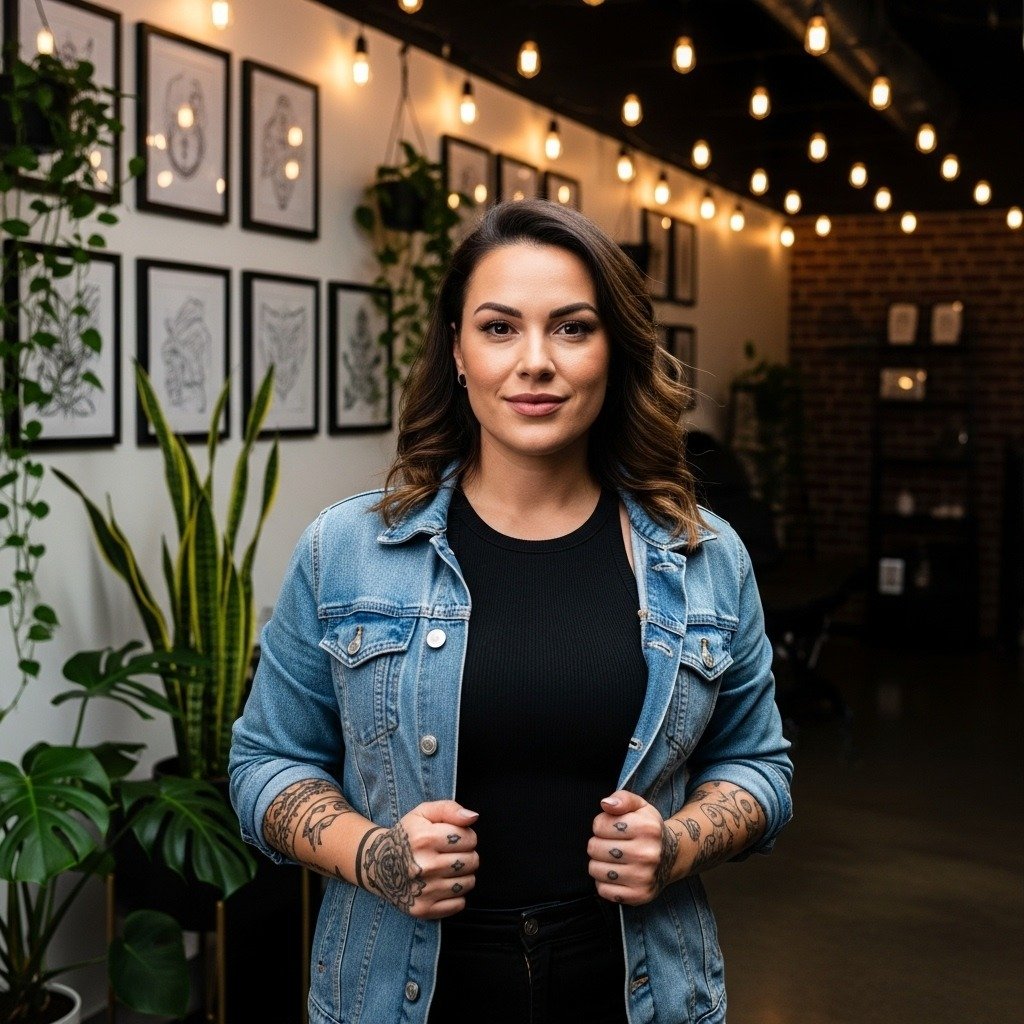
Sun tattoos keep popping up on wrists, collars, and thighs because they read well at a range of sizes and mix easily with other motifs. What looks great on a flat forearm can fail on a stretchy ribcage. This list picks 19 sun designs you can show your artist, with placement notes, aging realities, what to ask for in the consult, and outfit ideas that actually frame the ink.
1. Fine Line Minimalist Sun Circle
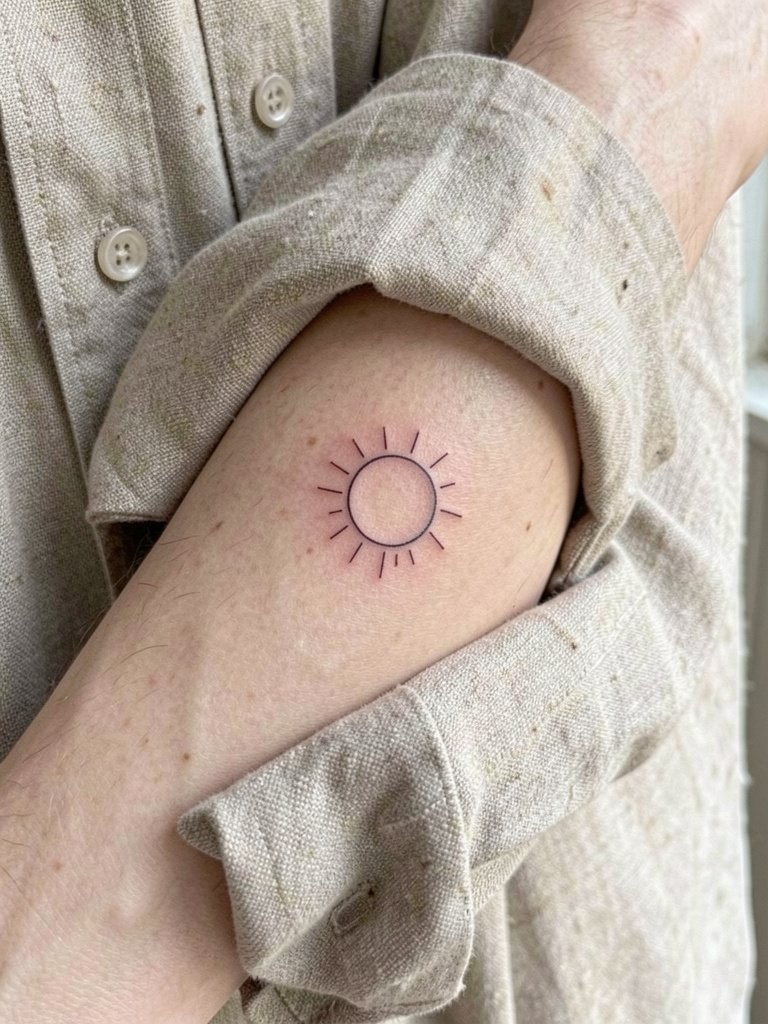
This small circle reads modern because the linework is deliberate and airy. Pick a hair heavier needle weight than the feather-thin Pinterest references so the rays still read at year two. Bring two reference photos at different scales so the artist can show how the same motif looks at one inch versus three inches. Expect a quick session and light sting on the wrist. Healed at six months the ring looks crisp. At two to five years finer rays can soften if they were rendered too thin. For showing it off, wear a linen button down shirt women with the cuff rolled so the wrist sits in natural light.
2. Geometric Sun with Six-Pointed Star Rays
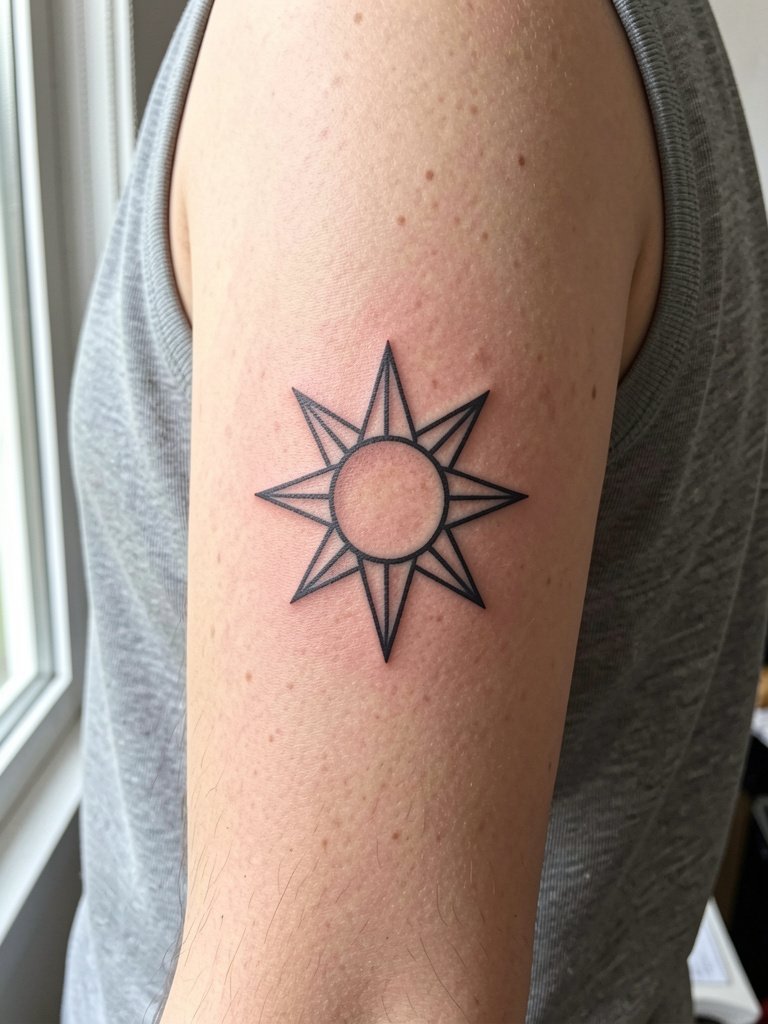
Sacred-geometry suns need breathing room. The mistake is requesting a tiny star and expecting it to stay crisp. Ask the artist to map the angles onto a 2.5 to 3 inch stencil so rays have spacing to age. Geometric work shows blowout quickly when the machine tracks too deep. For longevity, request a slightly heavier line weight and crisp negative-space breaks between rays. Session time is usually one hour for a mid-forearm piece. To echo the clean geometry, pair it with a sleeveless tank top women that keeps the forearm silhouette simple.
3. Blackwork Dense Ray Sun
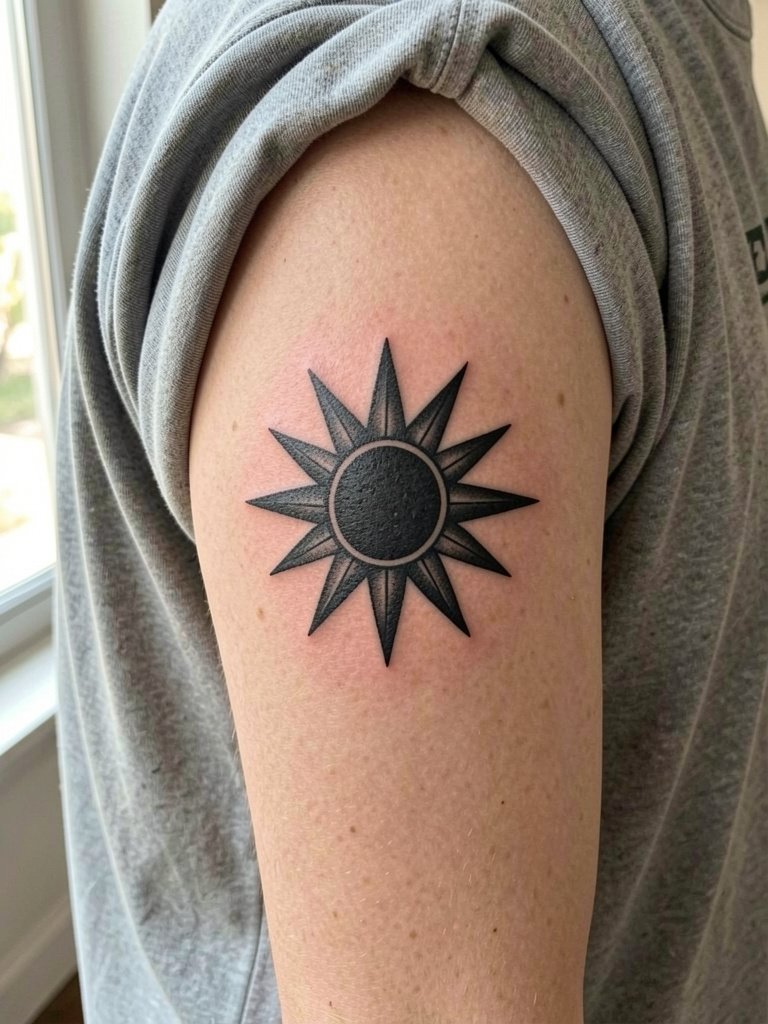
This is for someone who wants a statement that reads from a distance. The common error is asking for a heavy fill on thin skin near the elbow. Put this on the outer upper arm where saturation holds best. During the consult, specify crisp edge control and plan for a single solid pass so saturation is consistent. Expect a heavier tattoo feel in the chair for an hour or two. On darker skin tones this style preserves contrast better than pale washes. For casual wear, a solid color t-shirt women keeps the blackwork reading strongly.
4. Ornamental Sun Mandala
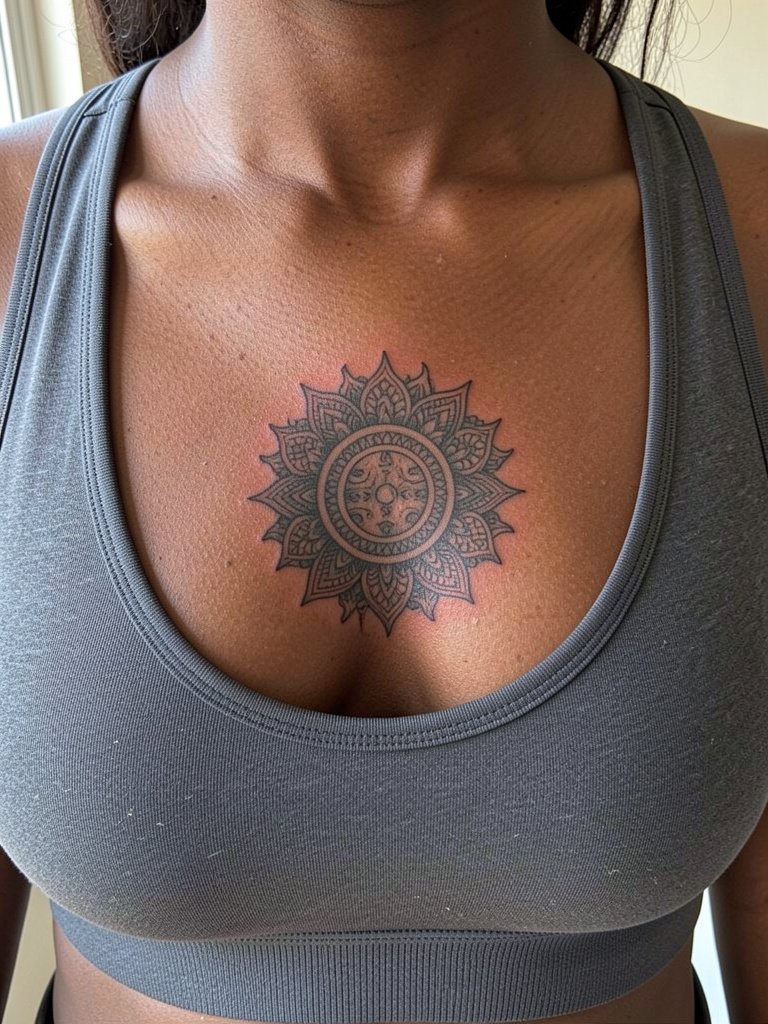
Complex mandalas need scale to keep inner motifs legible. If you want this on the sternum, bring layered references that show the exact petal spacing you like. A common version that ages poorly is one drawn too small, where inner dots and tiny filigree collapse into smudged texture at two years. This placement can be tender, expect intermittent breaks during a long session. Discuss symmetry checkpoints with the artist so they calibrate the stencil on both sides of the chest. For after sessions where you want a subtle echo, a sun pendant necklace women frames the mandala without covering it.
5. Realism Sunrise Landscape
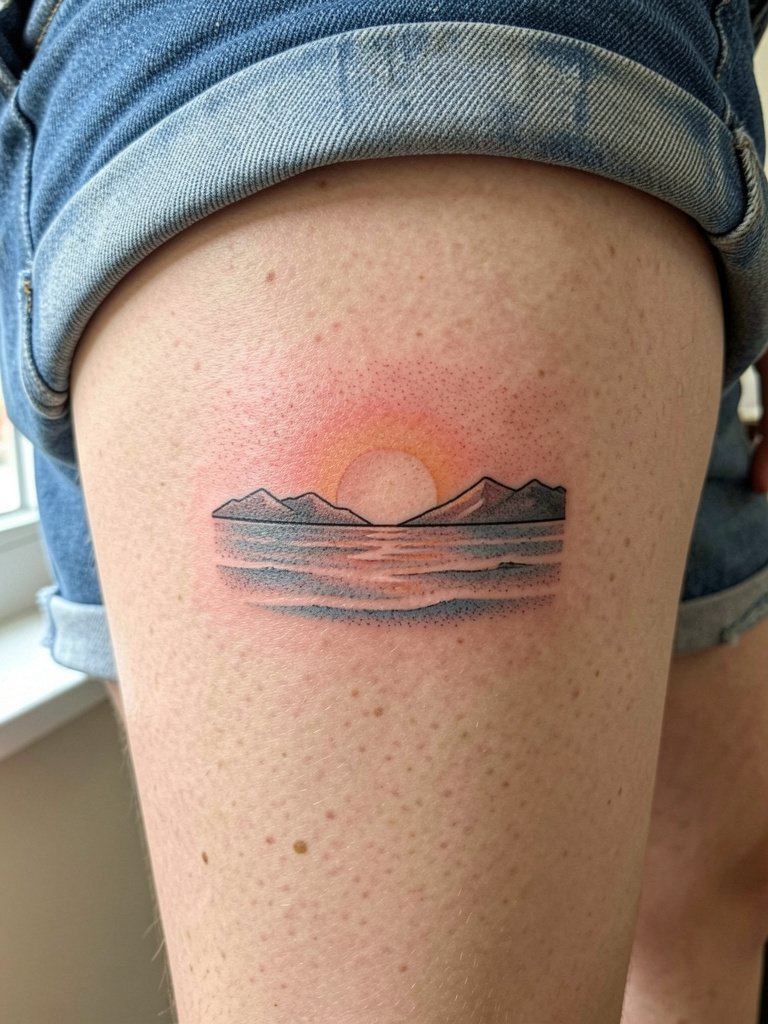
Realism eats time. If you want a cinematic sunrise, plan for multiple sessions and expect longer chair time. Ask for a healed reference from the artist showing the same color palette on similar skin tone because color reads differently across skin. Realistic color gradients can soften on darker tones, so ask about contrast points rather than exact color matches. This looks great with summer shorts. For session day wear, pull on denim shorts women so the thigh is accessible and nothing compresses the area.
6. Dotwork Sun with Stippled Rays
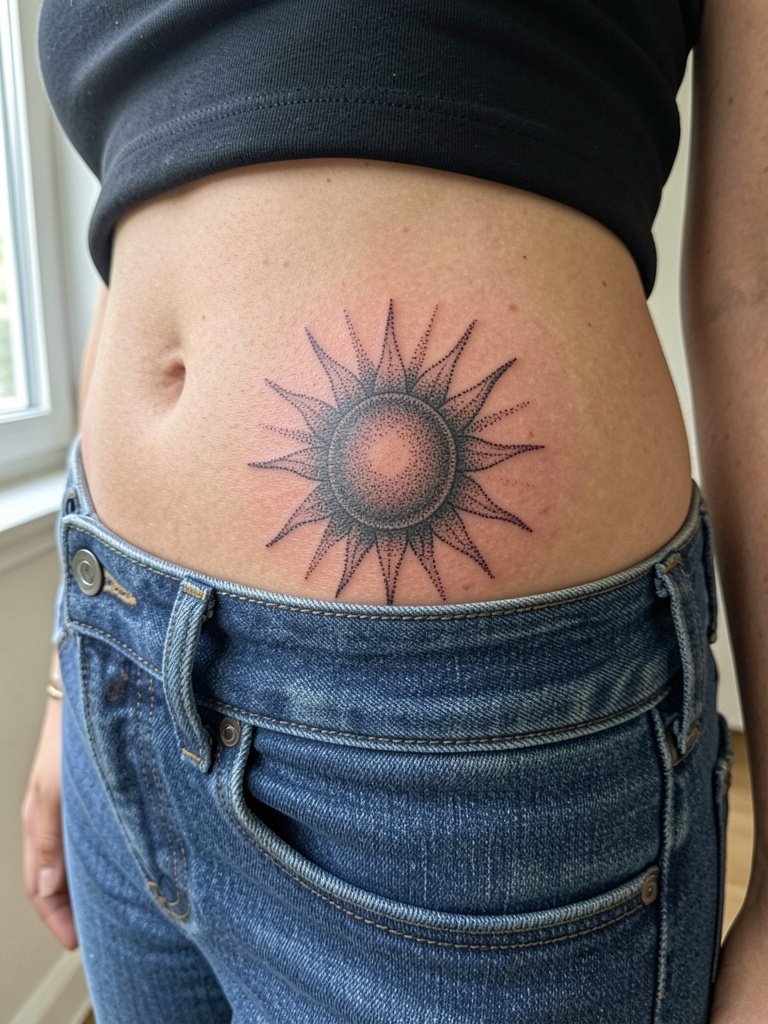
Dotwork creates texture without hard outlines. Ask for a stipple density map at the consult so the artist shows where dots will cluster and where negative skin will read. The hip can smear with body movement if the dot spacing is too tight. This style benefits from slightly larger scale than the micro-dot Pinterest images so the texture survives at year three. Session wear should be loose bottoms you can roll down slightly without tugging the skin. Consider low-rise jeans that sit below the ink so the area breathes during healing.
Session Day Picks
The wrist and hip pieces above heal differently from larger chest work. These picks smooth the first week and help with common early issues for ideas 1 through 6.
-
Japanese tattoo balm. A thinner balm option that soaks in fast and is useful in the days after you move off the thick ointment stage.
-
Australian tattoo aftercare balm. Non-greasy formulas that reduce surface shine so textured work like dotwork photographs more clearly.
-
Mad Rabbit Tattoo Salve Light. The lighter salve variety keeps delicate linework from feeling overly slick while you sleep.
-
Hustle Butter Deluxe. A plant-based option many clients use after the first few days when the thick layer has been wiped away.
-
Aquaphor Healing Ointment. A traditional first-two-day barrier some artists recommend for locking in moisture on fresh linework.
7. Watercolor Sun with Soft Bleeds
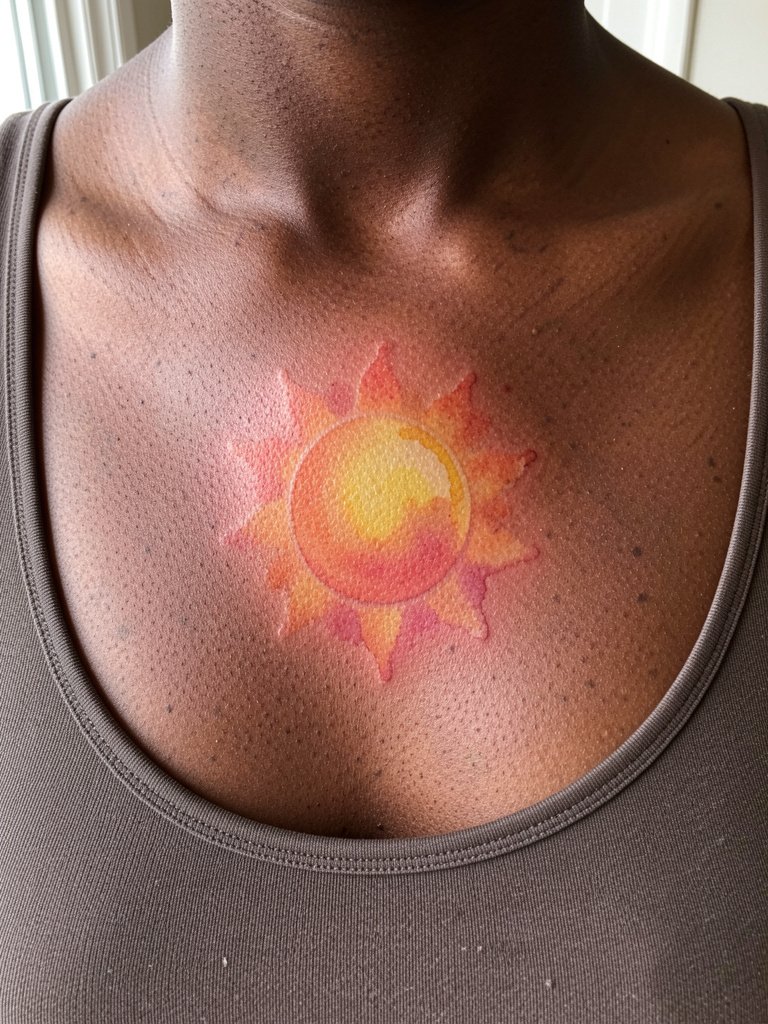
Watercolor looks painterly but fades faster than blackwork. If you want this approach, request higher-contrast anchor points around the center so the color reads in photos. A common problem is asking for soft washes on deeper skin where they photograph as muted smudges. Talk through color saturation targets and ask to see healed color examples on similar skin. For the session, wear a delicate choker necklace or silk camisole after healing so the color sits next to complementary textures.
8. Sun and Moon Balance Inkling
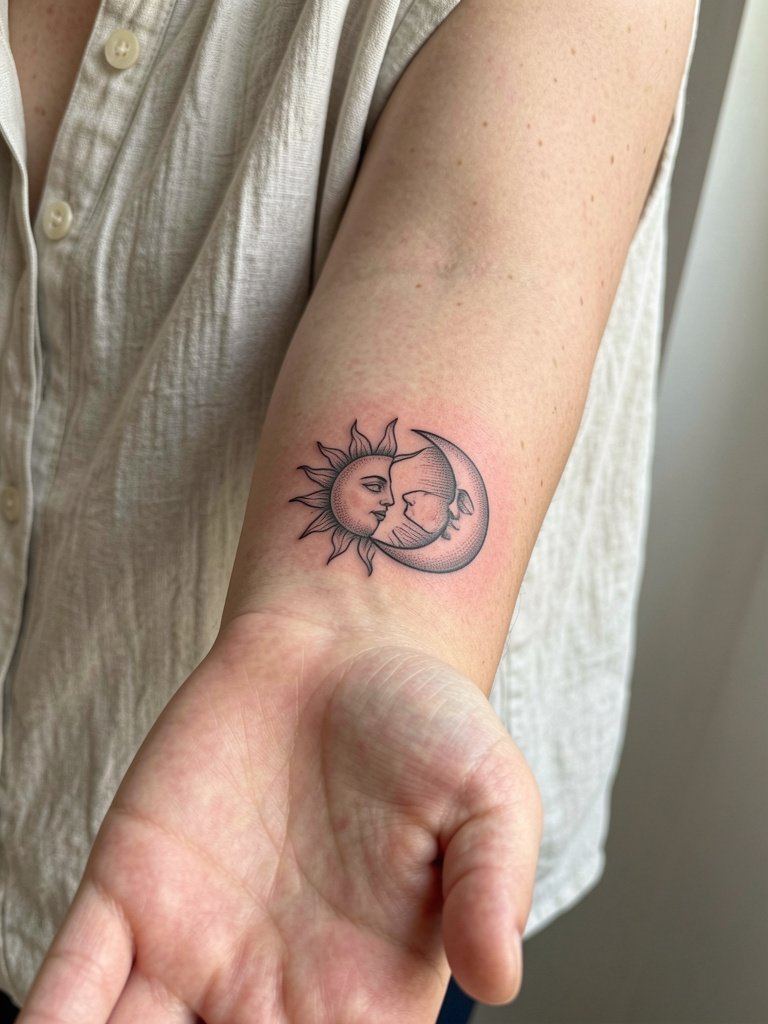
This paired motif reads well in single-needle or slightly bolder linework. The design lives or dies by scale and contrast. Bring two reference images showing the face detail you prefer and ask the artist to test how the eyes and mouth read at different stencil sizes. Expect an hour session and gentle soreness where the inner arm is soft. This placement photographs nicely outdoors during golden hour without needing bright color.
9. Partial Eclipse Sun
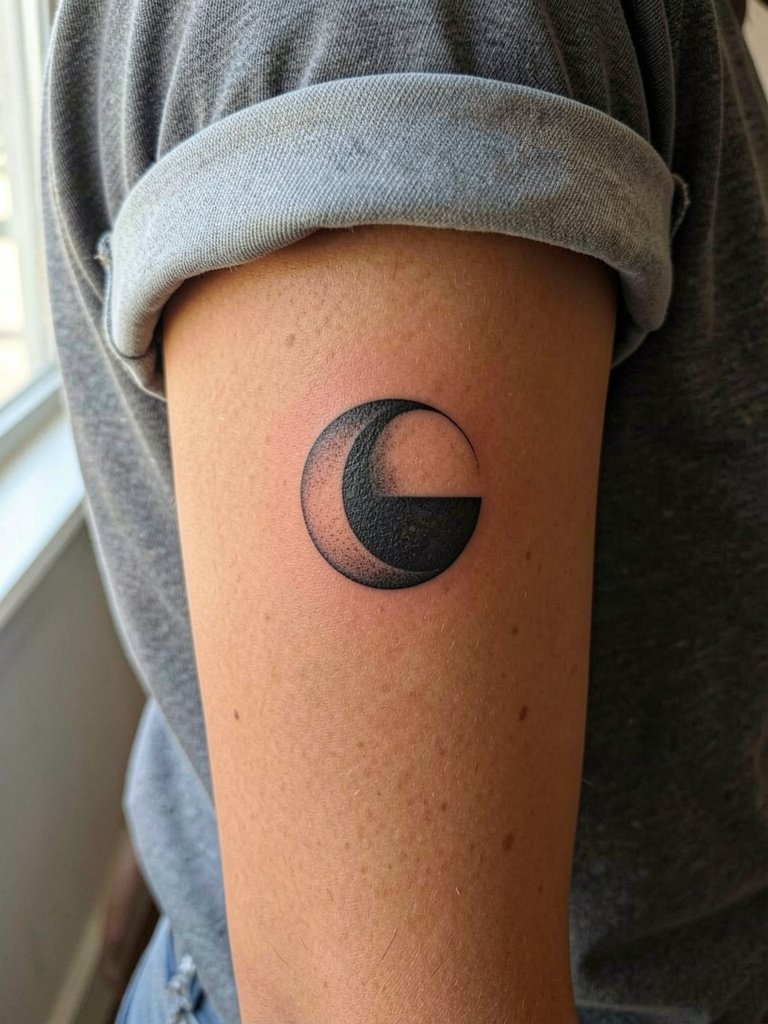
A partial eclipse is a strong minimalist choice. The key is crisp negative space against the black disc so the crescent remains visible as ink settles. If the crescent is drawn too thin it will collapse into the black at two years. Ask for defined margins and a small test of solid fill before committing. For comfort, wear a short sleeve top women that gives the artist clear access and avoids rubbing the fresh skin.
10. Neo-Traditional Sun with Bold Outlines
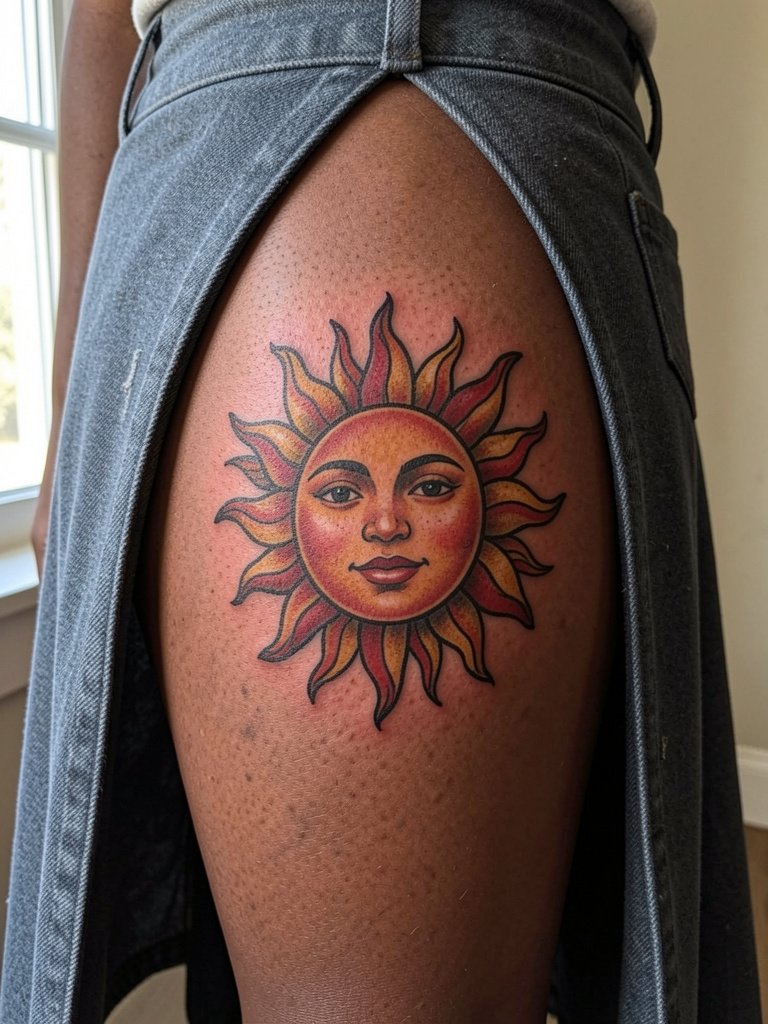
This style modernizes classic tattoo color work. Inner-thigh skin is sensitive and moves with sitting and walking. Request color swatches applied to a healed example on similar skin so you and the artist agree on saturation goals. The common mistake is compressing too much color into a thin stencil. Plan for two-hour blocks and wear loose bottoms so the area is accessible without pressure. For reveals, a high waist skirt women can be pulled slightly higher for a discreet show.
11. Micro-Realism Tiny Sun
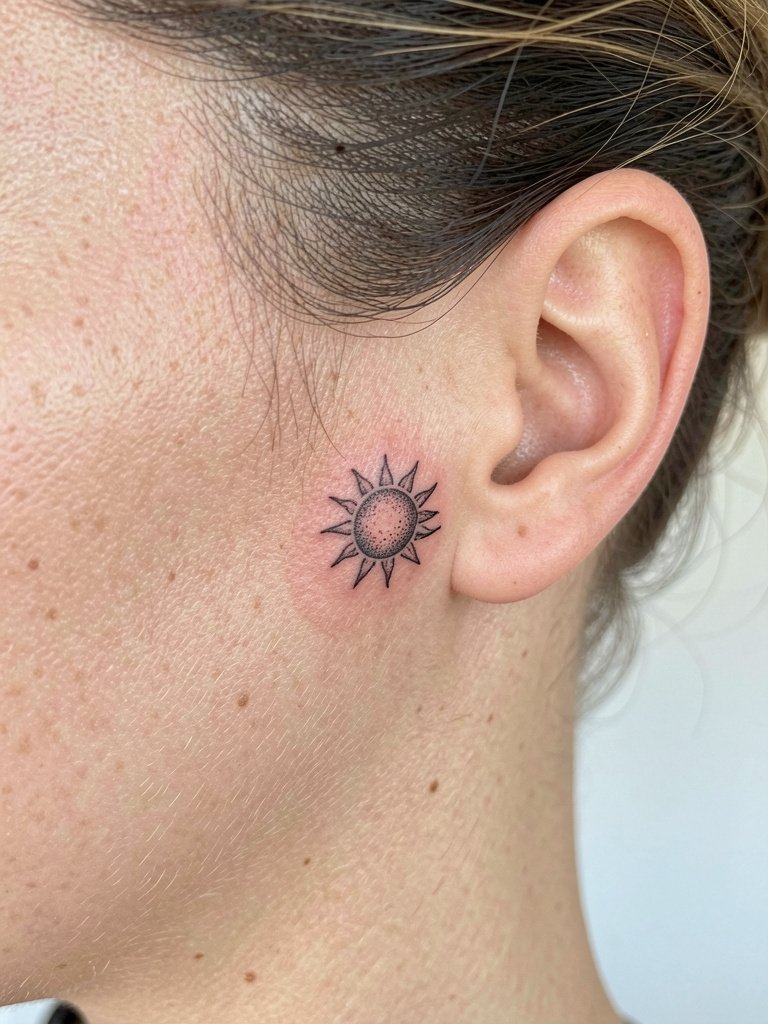
Tiny realism requires an artist who shows healed work at the same scale. The usual error is expecting ultra-micro detail to read in photos later. Bring healed micro-realism examples and ask for a demonstration of how the dot density will translate once healed. Sessions are quick but require a steady hand. This spot heals well if you sleep carefully and avoid hair products on the fresh area. A thin ear cuff or short haircut highlights the placement without covering the ink.
12. Sun with Integrated Floral Rays
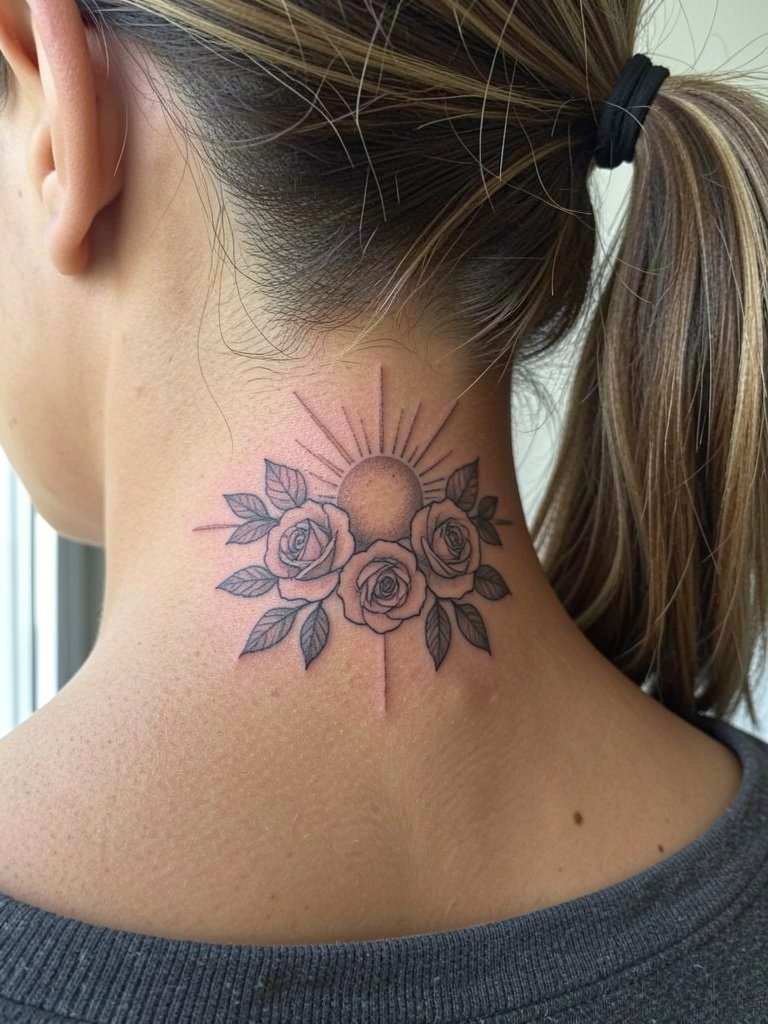
Petal rays soften the celestial symbol and read very well on the nape. The common mistake is asking for super-fine single-needle petals that vanish under movement. Ask the artist to show how a 0.35mm line weight will hold compared with single-needle lines. This placement favors short updos during warm months so the piece is visible. Consider pairing it visually with a thin gold chain necklace that sits just below the tattoo when your hair is up.
13. Tattooed Sun with Tarot Star Rays
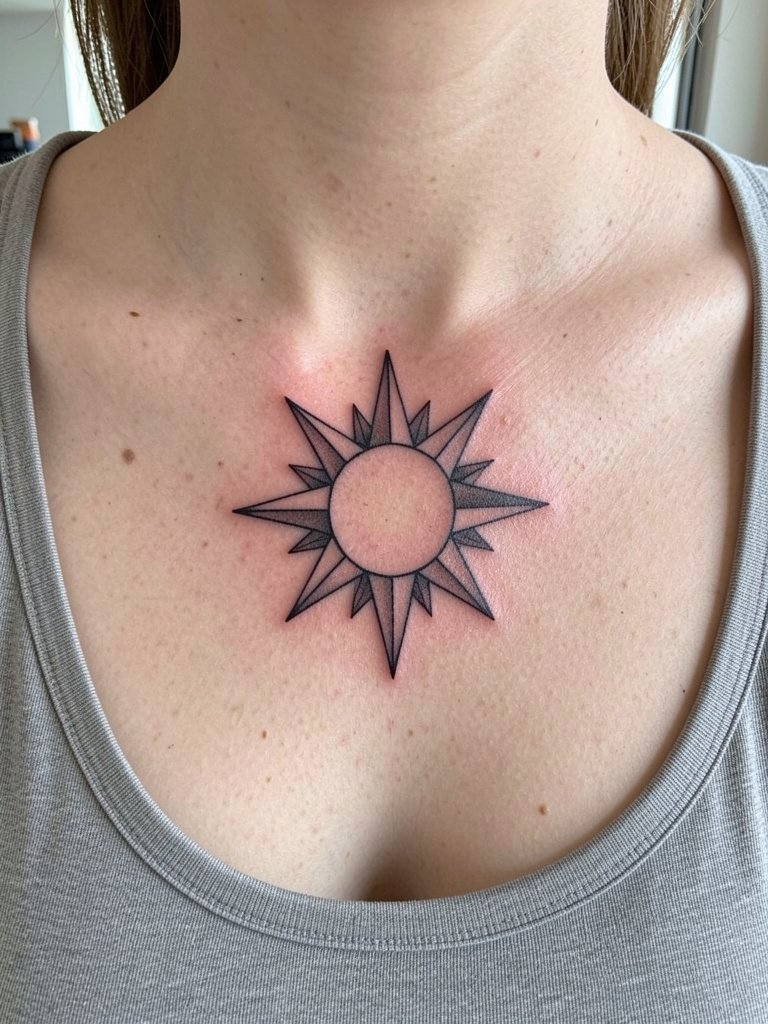
Tarot-inspired rays need mathematical spacing. The mistake is compressing too many points into a small collarbone piece. Ask for an enlarged stencil preview so you can see the negative spaces between star points. Precise angles read best when the piece is at least two inches across. For presentation, a scoop-neck top frames the collarbone and lets the geometry sit in view without competing details.
14. Sun Face with Whimsical Rays
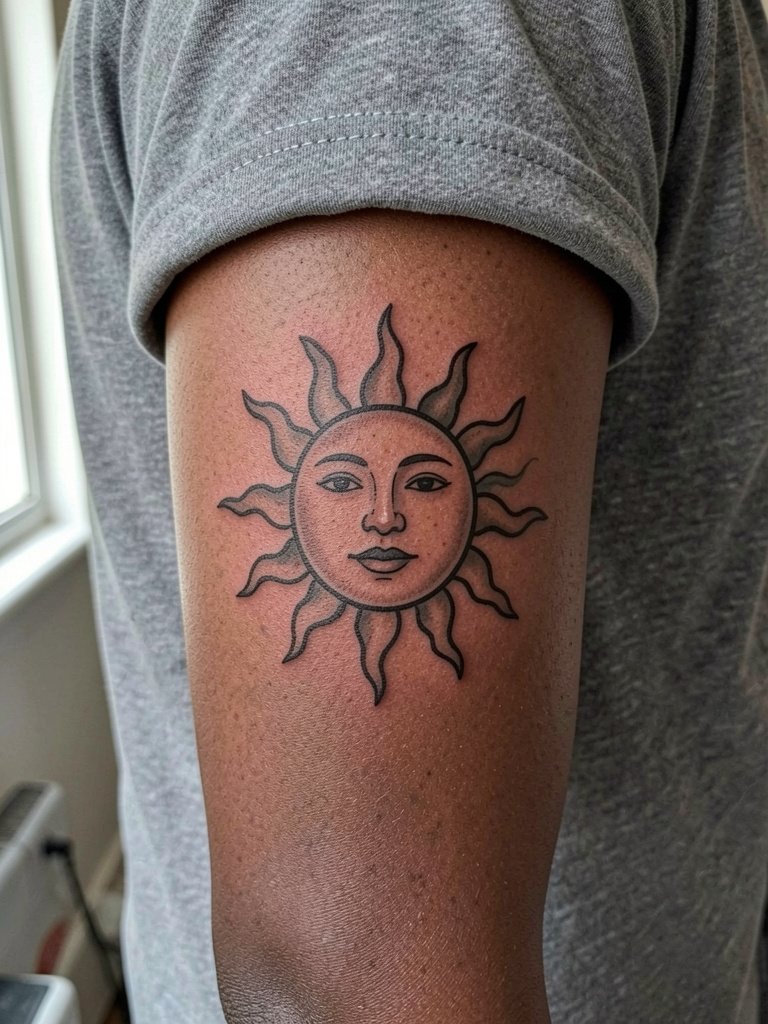
A sun face brings personality but scale matters. If the face is too small the features blur into a smudge. Request a stencil where the facial lines are slightly thicker than your reference so eyes and mouth keep their shape over years. The inner arm is a forgiving canvas for playful work, though it can be tender. For the session, a loose short-sleeve tee is ideal so the artist can access the area without tight seams.
15. Sunset Gradient Sun
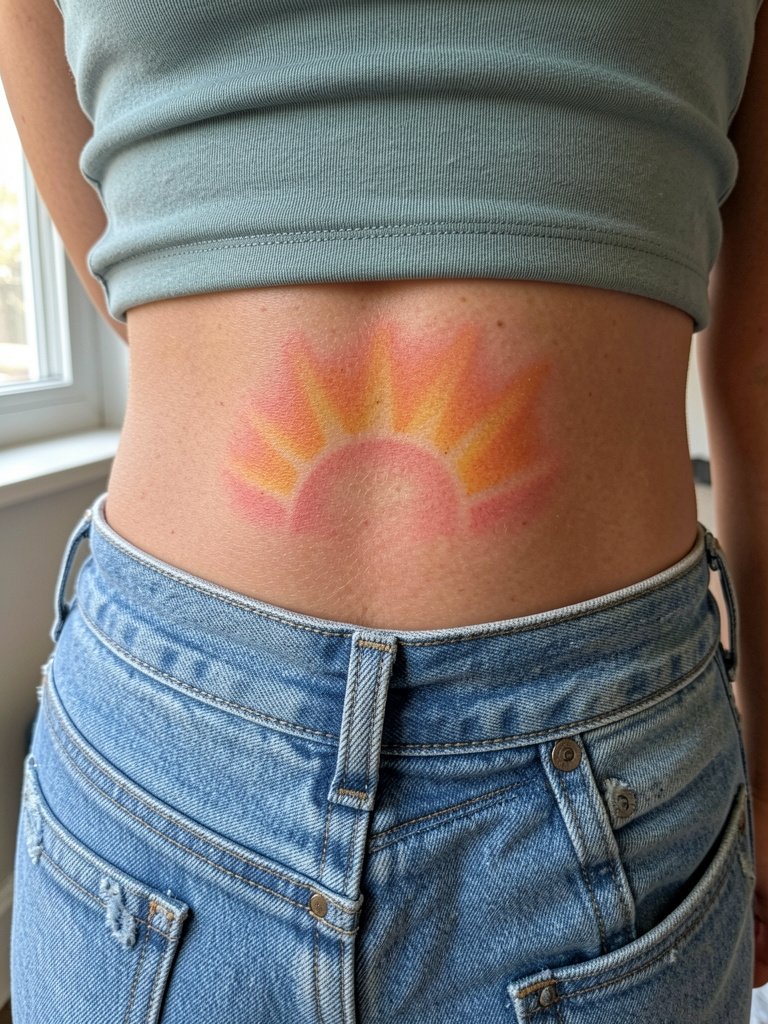
Gradient color needs deliberate saturation stops. On the lower back the skin is less mobile than ribs and retains soft blends well. Ask the artist to show healed gradient examples so you understand how pinks and oranges will sit on your skin tone. The session is two hours or longer depending on size. For wardrobe, low-rise tops or a cropped sweater that reveals the small of the back highlights the soft color.
16. Ribcage Crescent Sun
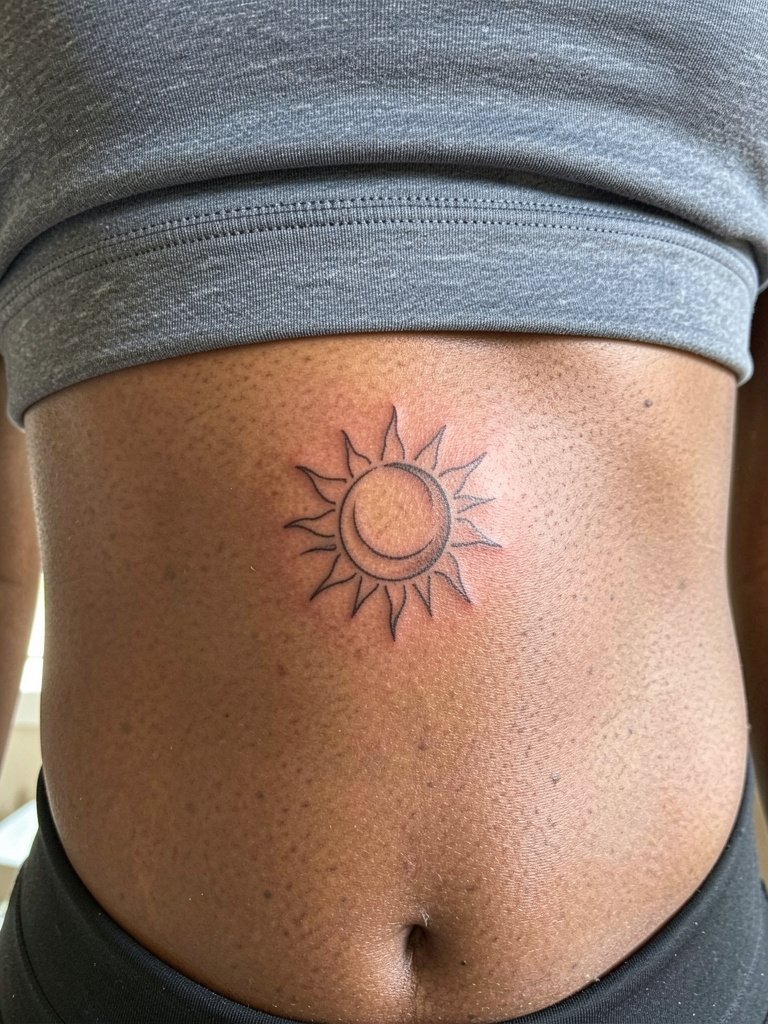
Fine line on the ribs provokes a split opinion among artists. One camp argues the constant stretch and compression in that area blurs single-needle lines inside two years. The other camp counters that using slightly heavier line weight and measured spacing lets fine-line work settle cleanly, and they often show three-year healed photos as proof. If you want this placement, request the artist demonstrate the proposed line weight on a similar patch of skin and plan a six to twelve month touch-up if micro-softening appears.
17. Pixel Sun Micro Dot on Finger
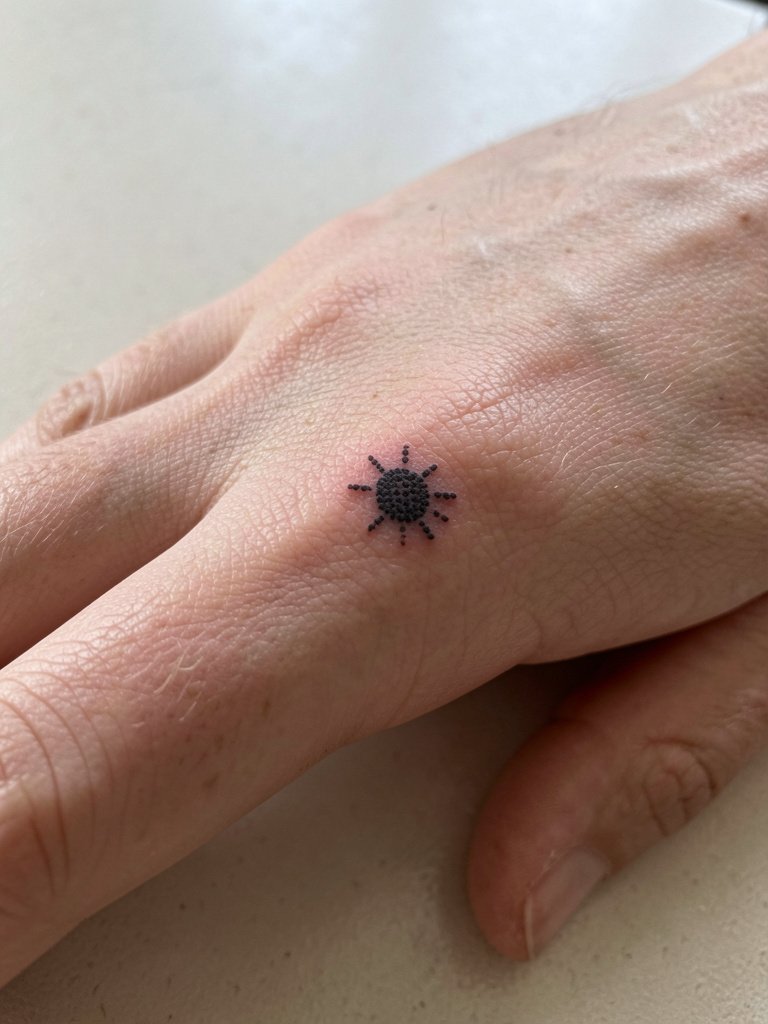
Fingers are high-friction zones. Tiny pixel suns can look great off the cuff but they tend to lose crispness faster than forearm work. Ask the artist about touch-up frequency for finger placements and plan on seasonal refreshes. Session time is short but the aftercare window is delicate because of frequent washing. Rings and constant hand use affect healing, so avoid tight rings on that finger the first two weeks.
18. Bold Sun for Darker Skin Tones
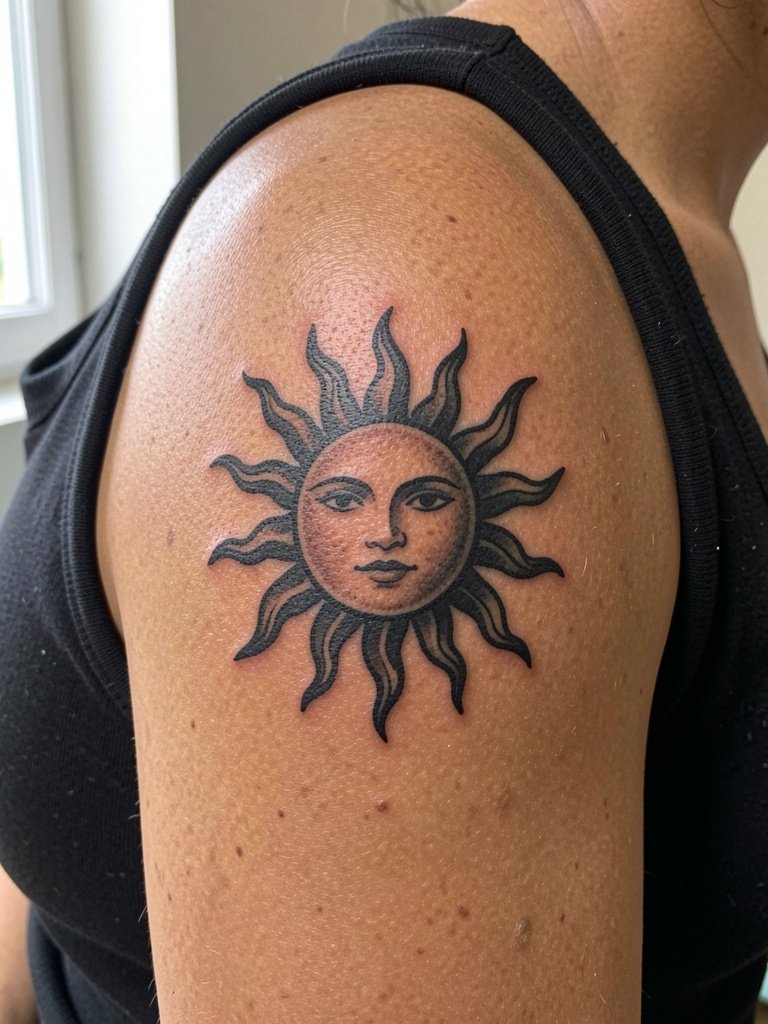
On darker skin, prioritize contrast. Thinner grey washes and soft watercolor often photograph as washed out. Ask the artist to focus on bold outlines and strategic negative space so the motif reads in low light and in photos. Solid black fills and crisp edges are reliable. For showing it off pick high-contrast clothes like a black tank top women that make the silhouette pop.
19. Sun and Stars Ankle Cluster
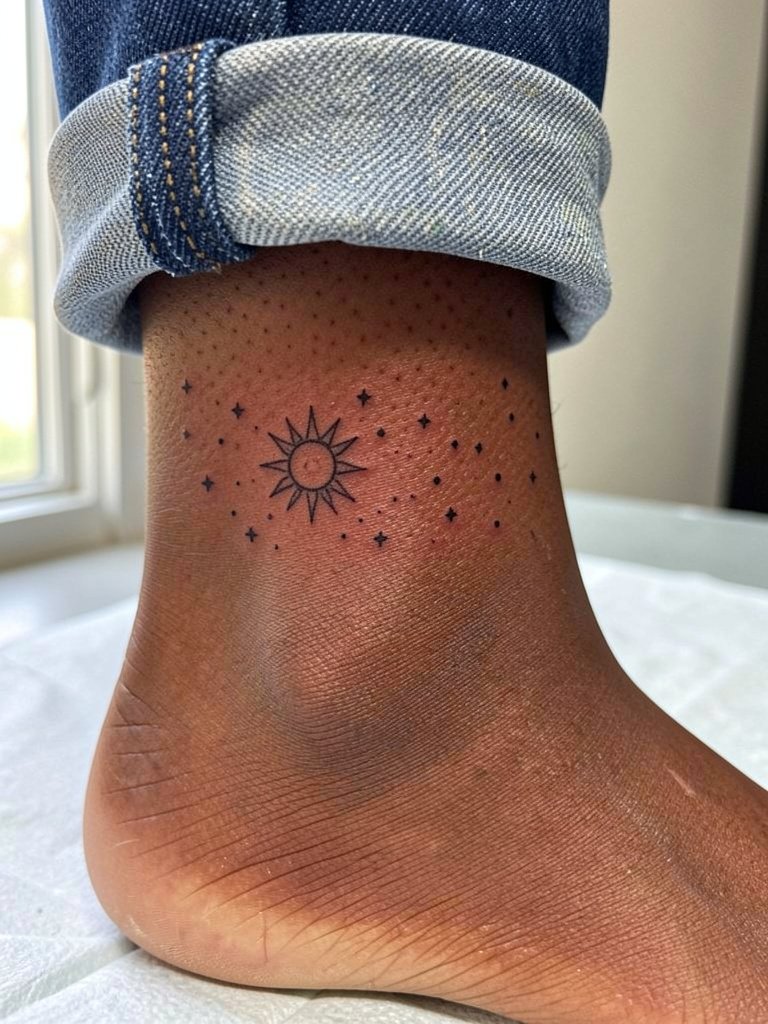
Ankle work must survive footwear friction. Place the sun slightly higher than the bone prominence so socks and shoes rub less. Ask the artist to map the placement against your typical shoe height to avoid constant rubbing. Touch-ups are common for ankle pieces because of daily wear. For styling, roll the cuff on jeans to showcase the cluster with a casual vibe.
Frequently Asked Questions
Q: How much does a sun tattoo cost for different sizes?
A: Small, dainty sun tattoos often fall in the $100–$200 range for walk-in or minimum appointments. Medium geometric or dotwork pieces frequently land around $250–$450 when they need an hour or two. Larger realism or sternum mandala work can range $600–$1,200 and may require multiple sessions. Remember shops have minimums and hourly rates vary by city and artist expertise.
Q: Which sun styles work best on darker skin tones?
A: High-contrast blackwork and bold neo-traditional fills generally read best on deeper skin because they preserve definition in photos. Avoid subtle watercolor washes for visible placements unless the artist shows healed examples on similar skin. For session day wear choose solid, contrasting tops like a black tank top women so the healed piece reads clearly in everyday outfits.
Q: The Aquaphor versus balm debate feels loud. What should I know?
A: One camp recommends a thick petroleum-based ointment for the first two to three days to create a protective barrier on fresh ink. The opposing camp favors thinner plant-based balms earlier in the healing window to avoid surface clogging and bubbling. Both approaches have results and risks. Plan a short follow-up check at seven days with your artist to see whether a switch in product type would improve healing for your skin.
Q: How often will I need a touch-up for fine-line sun work?
A: Fine-line tattoos commonly benefit from a touch-up in the six to twelve month window, especially on high-movement areas like wrists and ribs. Geometric pieces with ample spacing often hold longer. Micro-realism and micro-dots may need periodic refreshes every one to three years depending on location and daily wear.
Q: Where can I find artists and healed examples without naming individual shops?
A: Search hashtags like #suntattoo, #finelinesuntattoo, and #geometricsuntattoo on Instagram and TikTok, then filter by location to find artists near you. Tattoodo lets you search by keyword combinations such as "fine line sun wrist" or "blackwork sun ribcage" and shows healed portfolio examples. Reddit threads on r/tattoos and r/TattooDesigns surface peer recommendations and healed photos across skin tones. Booksy and the Inked App both filter studios by specialty if you want a more local search.
Q: What should I wear to a session for different placements?
A: Wear loose shorts for thigh or hip sessions and low-rise jeans that sit below hip tattoos. For sternum or upper chest slots choose a strapless top or an open button-down so the artist has access. For neck and nape pieces pull your hair into a natural updo. Plan clothing that the artist can move around without tugging the tattooed skin.