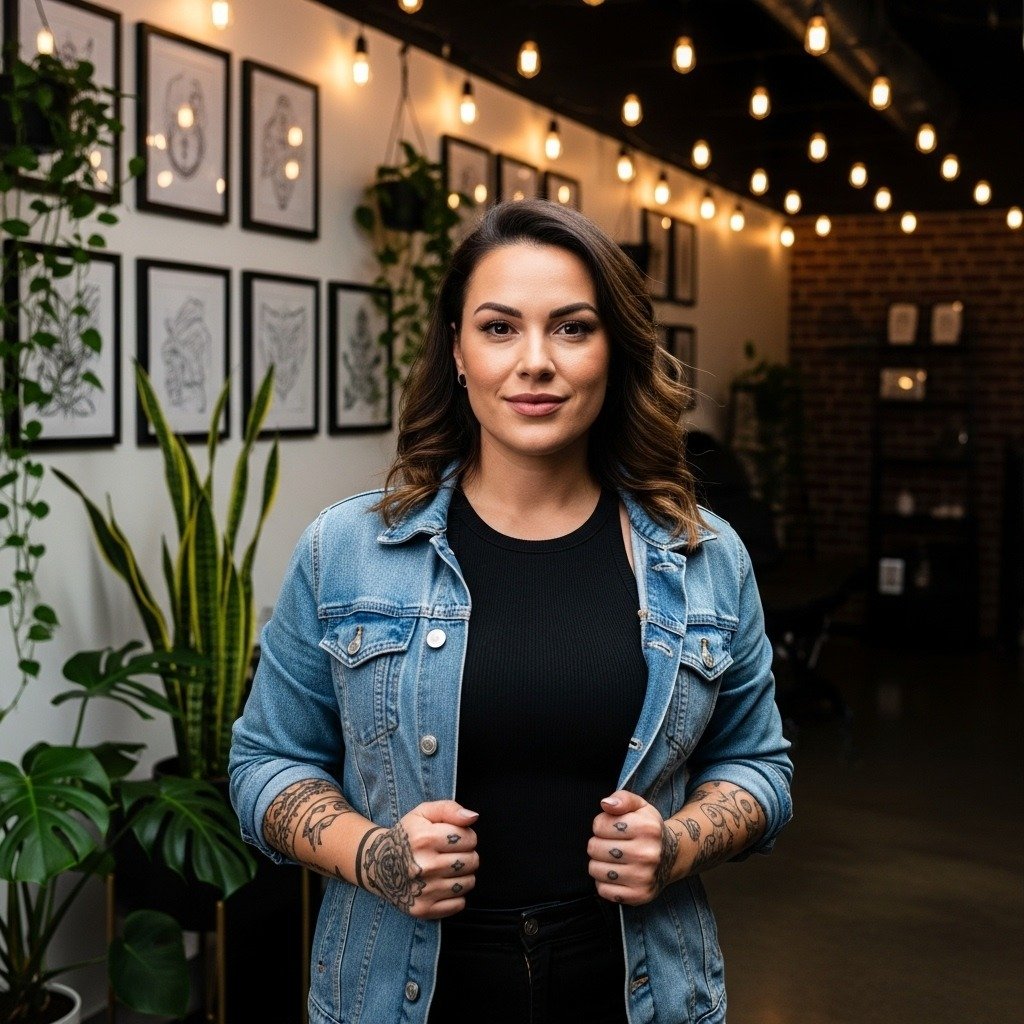
Sun tattoos for women are often pictured as tiny crescents on wrists, but small scale is not the only route to a radiant result. The sun motif can read soft and timeless or bold and graphic depending on spacing, lineweight, and placement choices. Read these ideas with an eye for how each option heals, what to ask for in the consult, and how certain wardrobe choices show the piece off.
1. Tiny Crescent on the Inner Wrist
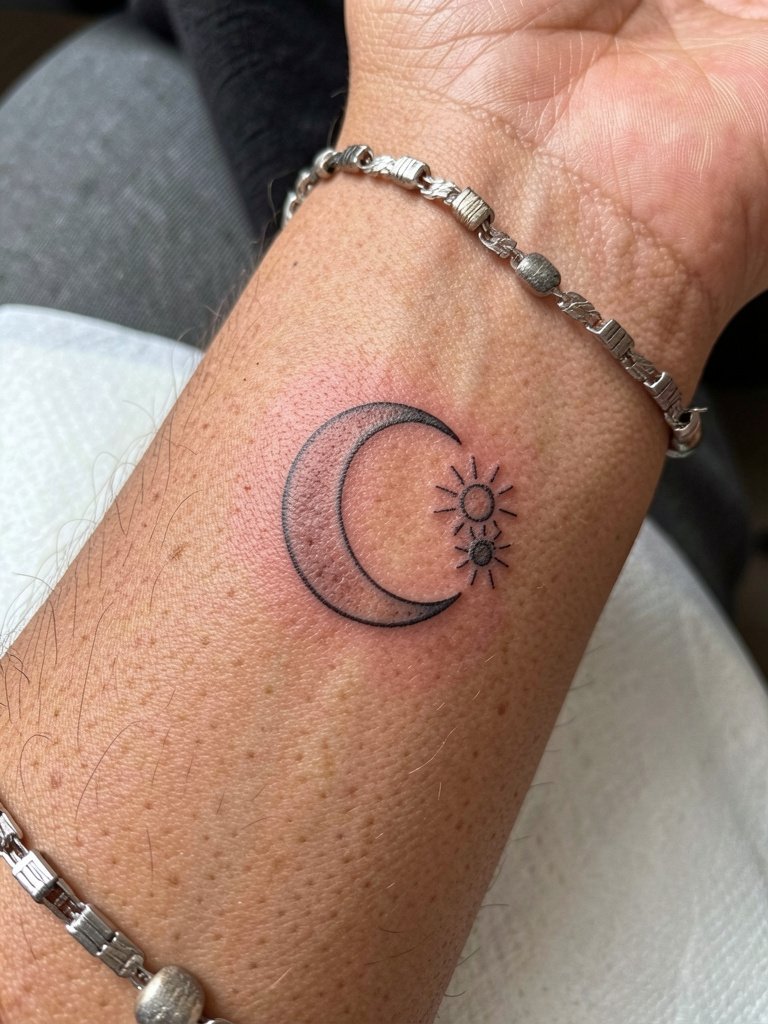
A tiny crescent on the inner wrist reads delicate at first but needs deliberate lineweight to last. I recommend a hair heavier line than your reference, the underside of the forearm tends to blur the finest single-needle work by year three. During your consult, bring one reference at two scales so the artist can show how the crescent reads at one inch versus two inches. Common mistake is asking for micro detail without spacing, which risks loss of the spike rays. Session time is usually short, under an hour, with low pain. After six months the edges soften slightly, and a touch-up around year two will keep the silhouette crisp.
2. Radiant Ankle Band with Mini Suns
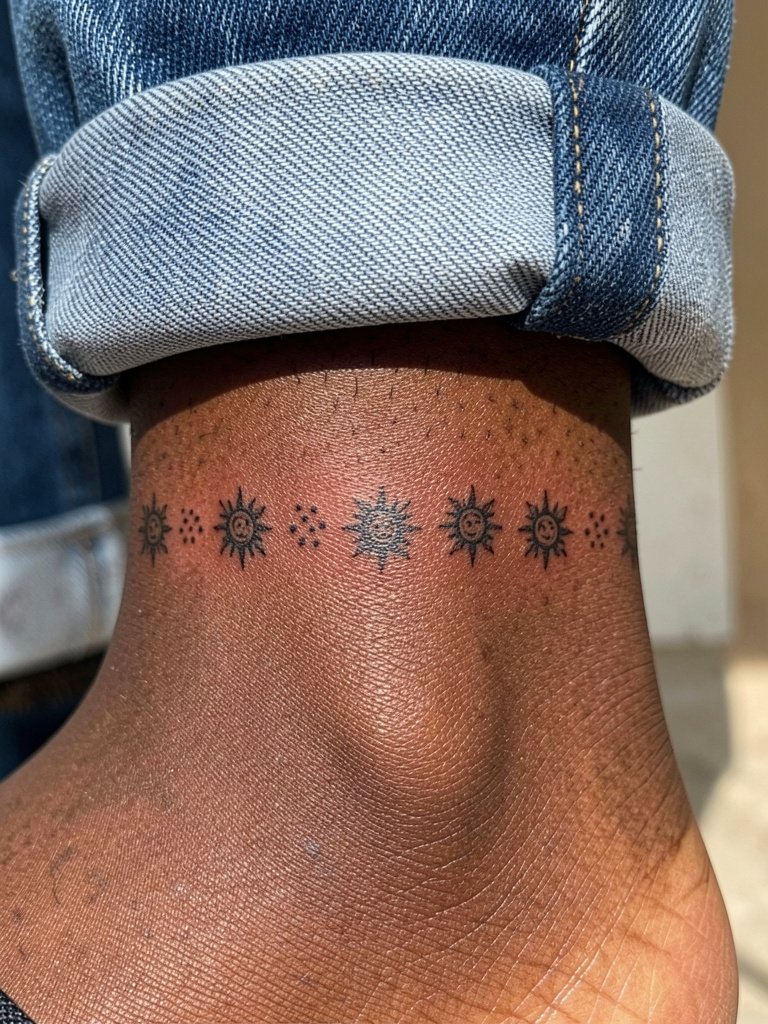
An ankle band of tiny suns makes a subtle statement that moves with footwear. The ankle sees constant friction from socks and shoes so I suggest slightly bolder dots and short rays rather than ultra-thin spikes. Tell the artist you want extra spacing between suns so the band reads from a distance, and expect an hour to 90 minutes for placement and stencil adjustments. A frequent mistake is letting the band be too tight to the bone, which causes the edge to blur into the ankle crease. For showing the piece, cuffed jeans or open-back sandals frame the design well, try ankle-revealing cuffed jeans.
3. Small Sunburst Behind the Ear
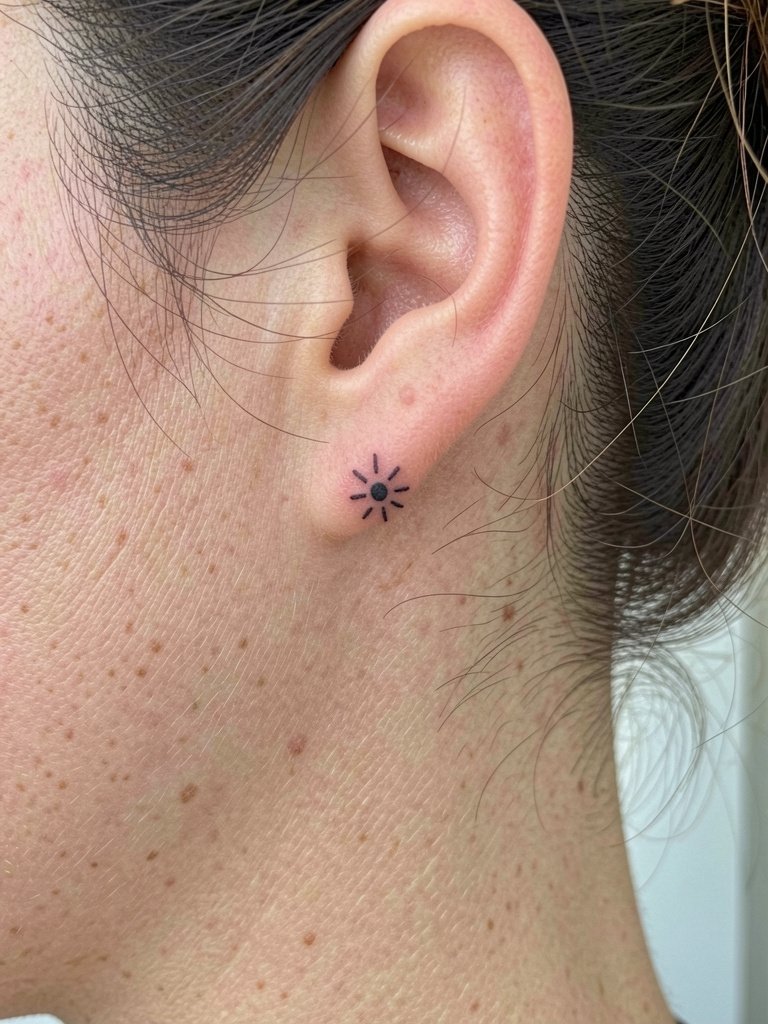
Behind-the-ear sunbursts are subtle and seasonally show off with short hair or updos. The skin there is thin so fine single-needle work can remain crisp if given space. Before the appointment, wear hair up and avoid heavy earrings so the artist can photograph placement. Expect a sting but very short session time of under 30 minutes. If the design is requested too small, the rays can merge with hairline texture over time. For evenings when you want a peek of the ink, pair with simple stud earrings or an adjustable hair claw that keeps hair neatly off the nape.
4. Bold Neo-Traditional Sun on the Shoulder Blade
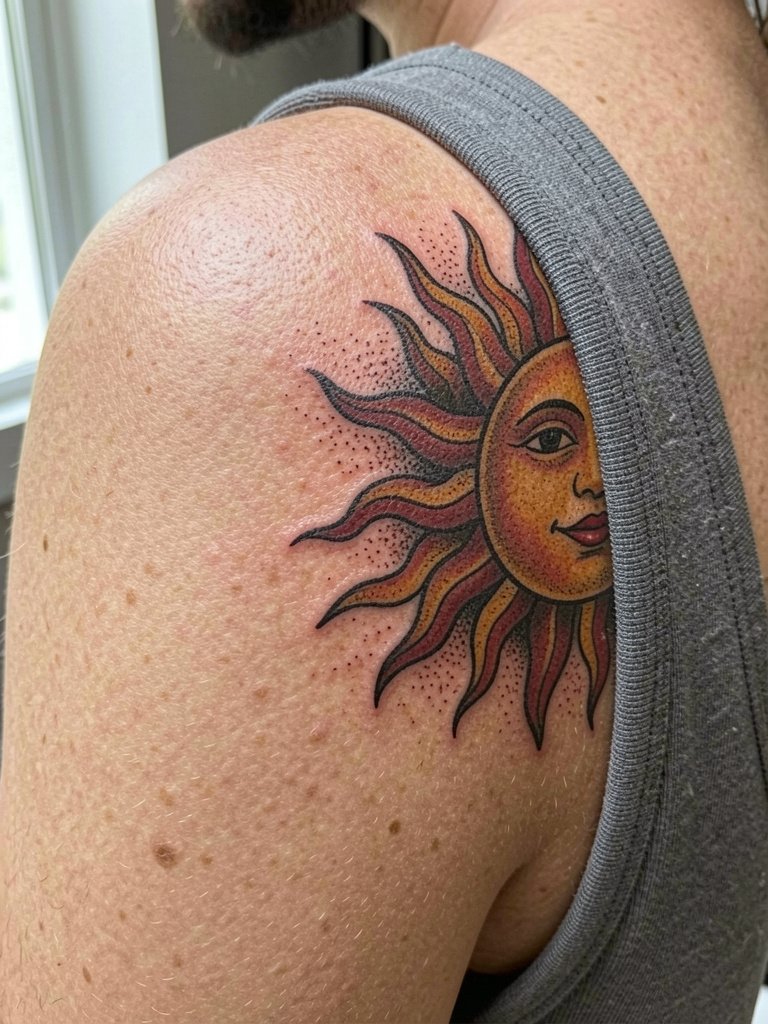
A neo-traditional sun on the shoulder blade holds up well thanks to bold outlines and saturated fills. I suggest asking for a slightly higher saturation in the first session so color fades into a rich tone rather than disappearing. Shoulder blade sessions are moderate pain and often take two to three hours depending on color. One mistake is choosing pastel fills that look great fresh but wash out into mottled patches by year five. This placement pairs with tank tops and open-back dresses for a visible silhouette, try an open-back midi dress for balance.
5. Minimalist Sun on the Outer Finger
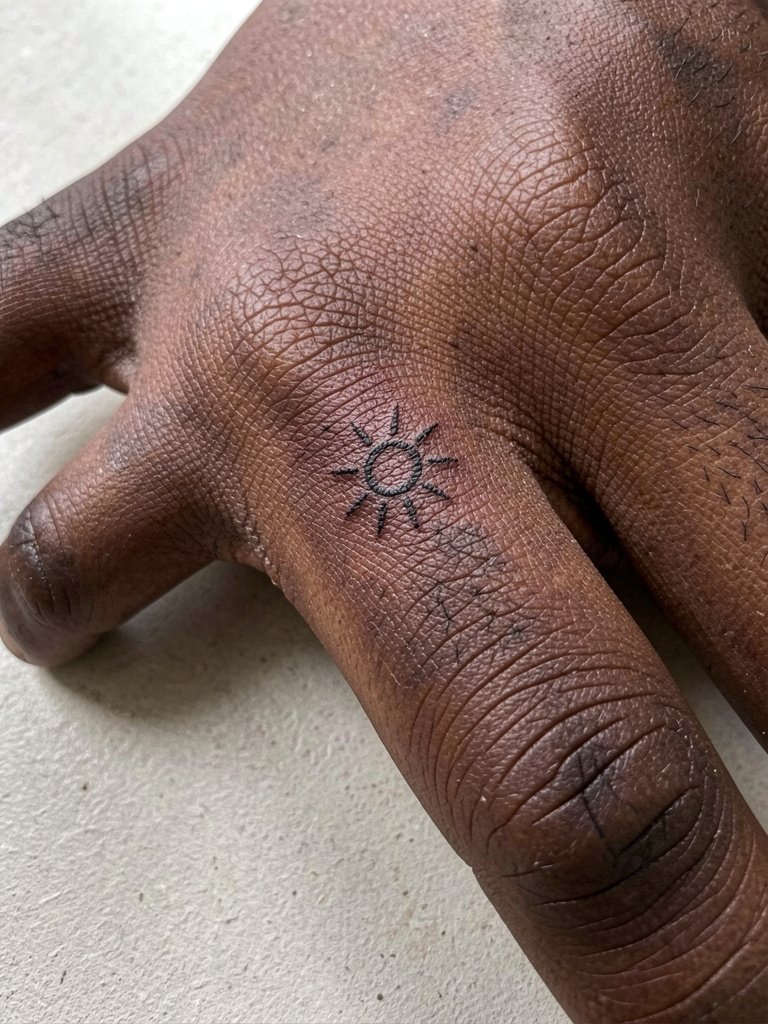
Finger sun pieces read intimate but they face the highest fade and blowout risk from constant hand use. For this placement, request slightly thicker rays and expect yearly touch-ups for saturation. The session is quick but painful because fingers are bony and thin. A common mistake is asking for single-needle micro rays that disappear into wear. Wear rings that avoid direct coverage of the tattoo so the skin can breathe. For styling, thin stacking rings or a minimalist midi ring set frames the finger without rubbing the ink.
6. Tiny Solar Glyph on the Collarbone
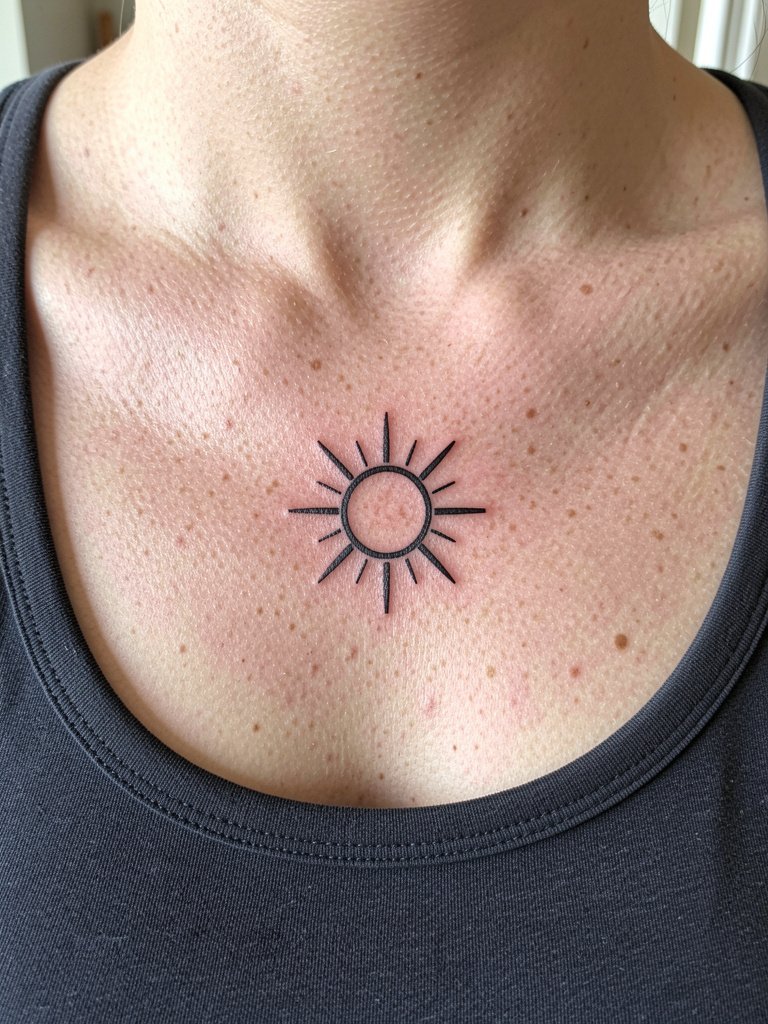
A solar glyph on the collarbone is a classic placement for visibility and jewelry layering. Have the artist mark the exact center point while you sit upright and relaxed so the piece aligns with clothing necklines. A too-small glyph will lose radial detail as the collarbone shifts with posture, so request clear spacing between rays. Pain is moderate because of thin skin and proximity to bone. This area usually needs a touch-up between two and four years for crisp edges. Pair with delicate layerable chains and try a thin pendant necklace that sits just above the ink.
Pre-Session Picks
The wrist, finger, and collarbone pieces above have different access needs and friction concerns, so a few items keep the session smooth and the first days tidy.
- Stencil transfer paper kit. Lets you preview placement on skin for small suns and glyphs so you can adjust spacing before the needle starts.
- Topical numbing cream. Applied 45 minutes before can ease wrist and finger sensitivity without interfering with the artist's line depth.
- Thin protective film roll. Keeps ankle and finger pieces protected from friction during the first week of healing.
- Fragrance-free body wash. Gentle cleansing prevents irritation for shallow linework on chest and collarbone.
- Healing ointment balm. A thin layer for days two to five helps retain moisture for small single-needle work without clogging the skin.
7. Sun Mandala on the Inner Forearm
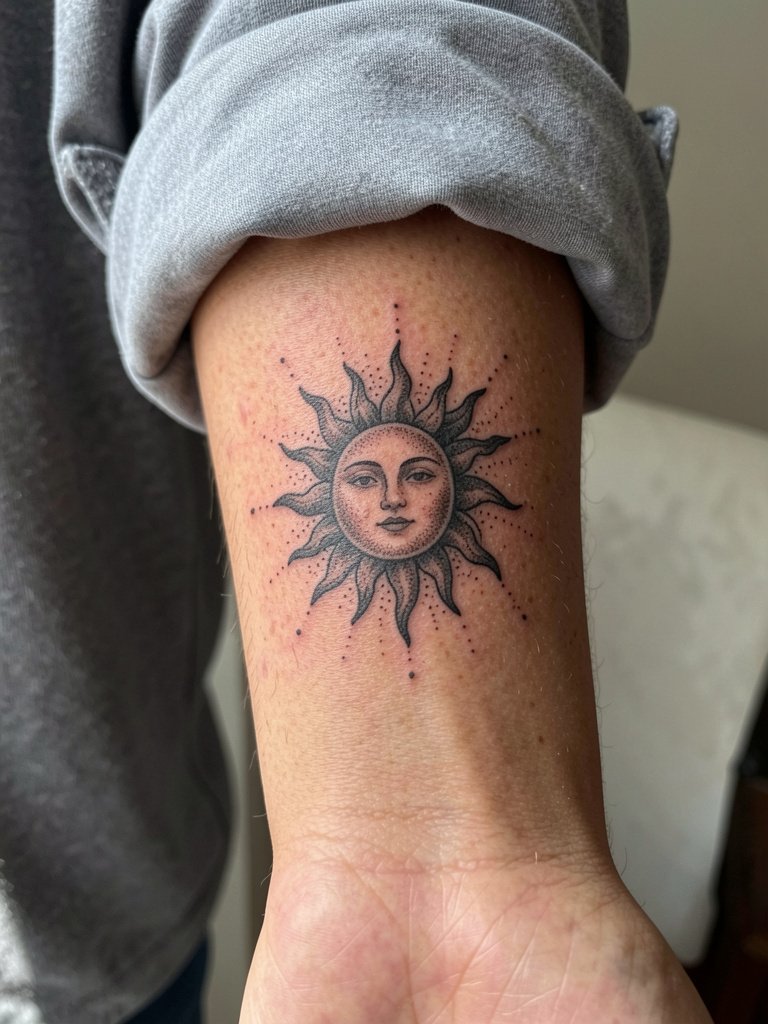
A sun mandala uses stipple shading and dot work that can age gracefully if dots are spaced correctly. For inner forearm placement, request a test mockup showing how negative space reads from three feet away. The common error is packing too many tiny dots into a compact disc, which can blur after two years. Sessions are longer, often two to four hours. Expect touch-ups on dense detail areas around year three. Styling pairing is natural with rolled-up sleeves or a linen button-up shirt worn with sleeves cuffed to show the piece.
8. Crescent Sun Behind the Knee Crease
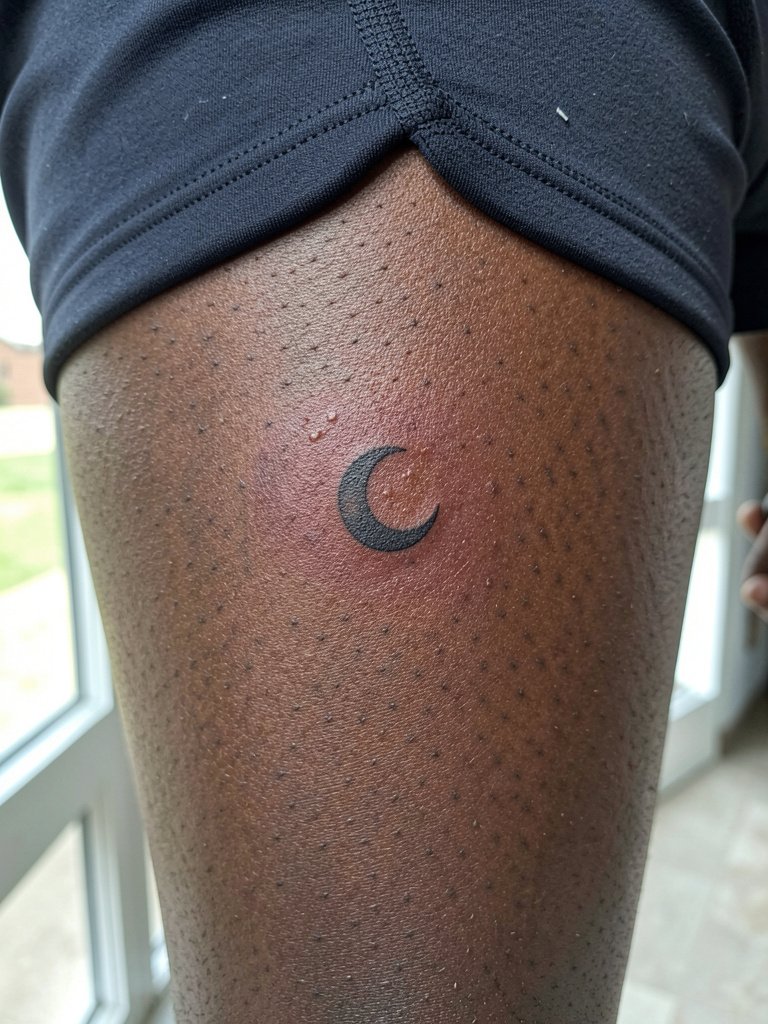
Placement behind the knee moves with walking and bending, so ask for clear spacing and medium lineweight to account for skin folding. That area can be tender due to thin skin over connective tissue. A mistake is asking for ultra-fine detail that will split across the crease. For sessions, wear shorts that let the artist access the back-knee without pressure on the area. Healing requires careful avoidance of tight bands and knee-high socks. For styling, midi skirts or cropped athletic wear show the piece, try athletic shorts with a mid-rise hem.
9. Small Sun and Waves on the Side Hip
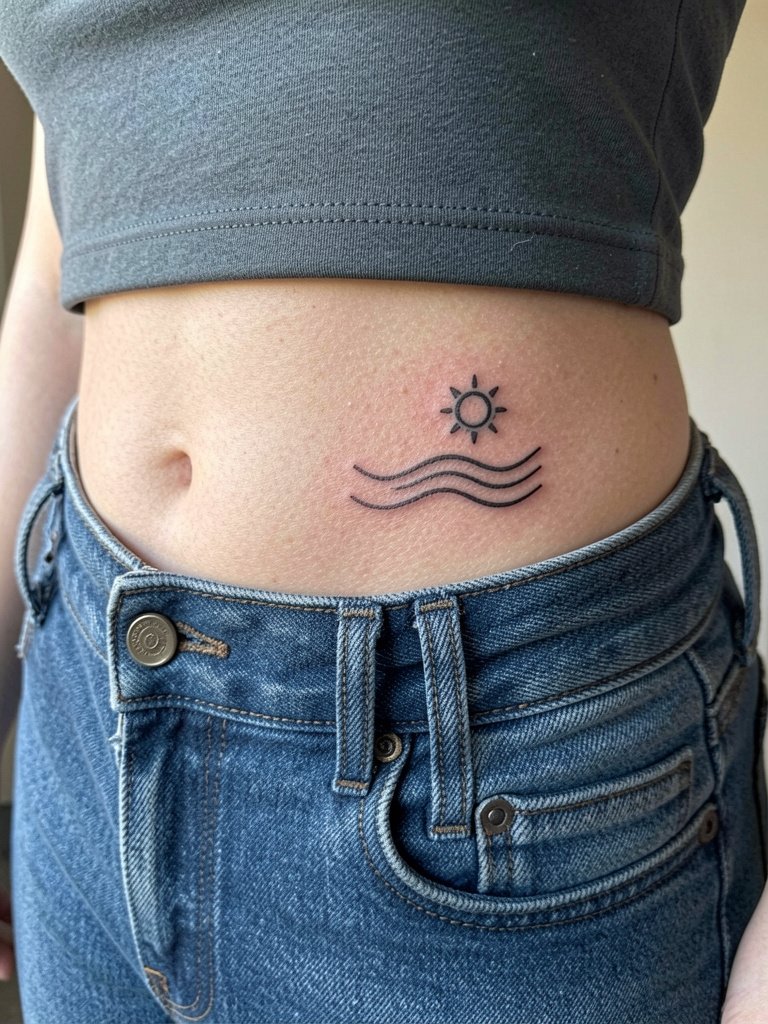
A sun with simple wave lines works well on the lateral hip because it moves with swimsuits and low-rise jeans. Ask the artist to map the design while standing so the sun sits naturally over the hip bone. The hip area tolerates a bit more saturation, so it often keeps contrast longer than fingers or hands. Misplacing the sun too close to the waistband risks distortion from clothing pressure. Session time is moderate and usually under two hours. For showing the piece, pair with low-rise denim or a cropped tee cut that sits above the ink.
10. Sternum Sunburst with Fine Dotwork
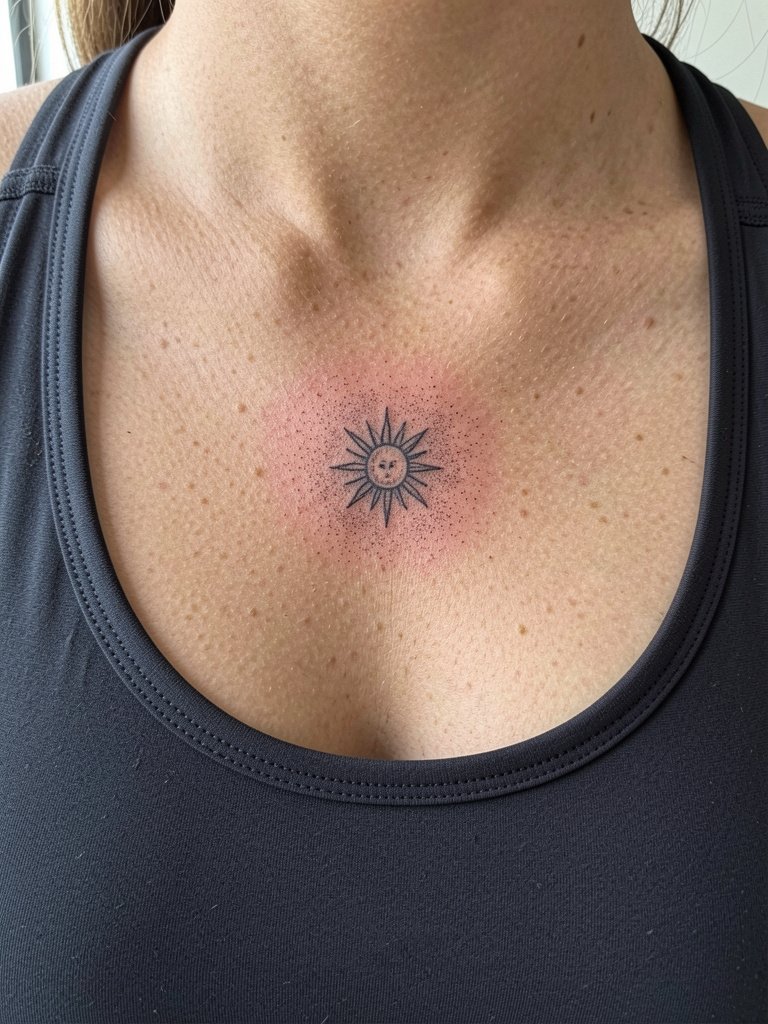
Sternum work requires careful mapping because the chest moves with breathing. One camp argues fine dotwork here blurs quickly because of skin stretch and sweat. The other camp says that with slightly wider dot spacing and deeper but controlled needle placement the detail holds. Decide which approach you prefer and ask for healed photos from the artist of the exact technique you want. Pain can be higher on the sternum and session times vary, often two to three hours. Choose a fitted sports bra for the session so the artist can access and you can move comfortably.
11. Sol Eye on the Upper Thigh
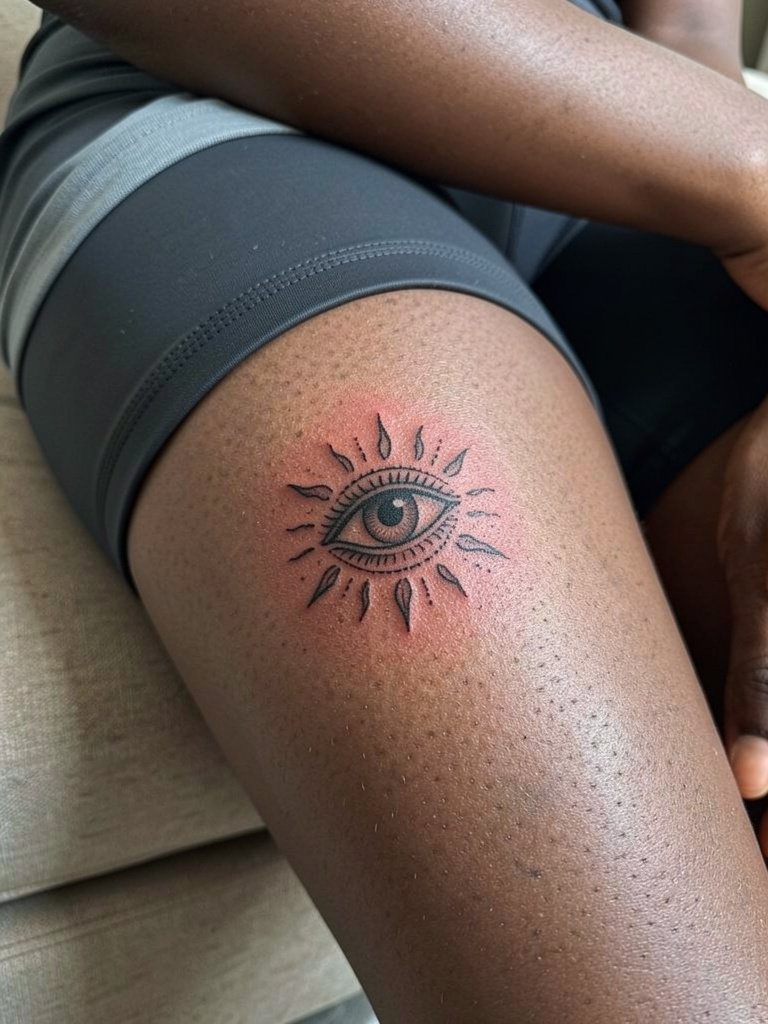
An upper-thigh sun-eye sits where you control visibility, making it ideal for those who want an intimate piece. Inner-thigh skin is delicate so request moderate spacing and avoid extreme tiny lashes around the eye that can blur into a shadow. The session may hurt more than expected because the area is sensitive, and healing requires avoiding tight pants for the first week. A common mistake is placing the piece too close to the groin line. For showing the tattoo select midi skirts or shorts; try modest athletic shorts for appointment comfort.
12. Sun Compass on the Upper Back
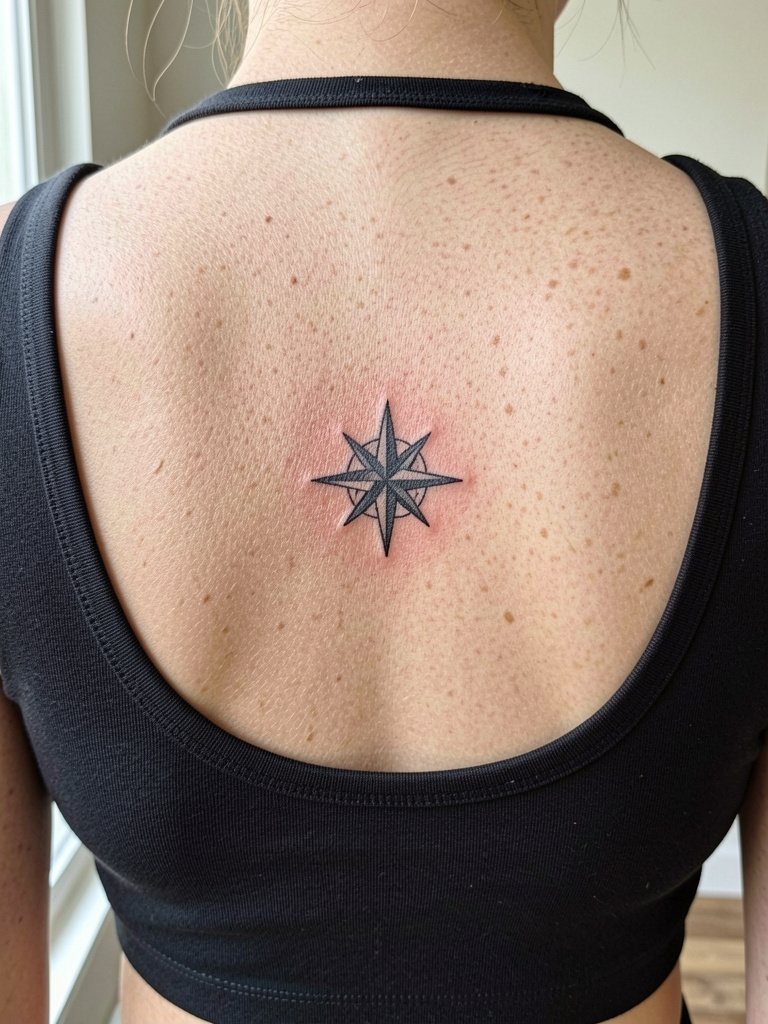
The upper back is forgiving for crisp geometry thanks to thicker skin and less daily abrasion. Some artists prefer bold lines here while others work single-needle; both camps have valid points. One camp says that single-needle compass lines offer delicate detail. The other camp argues that slightly heavier linework preserves cardinal points over time. If you want longevity, ask the artist to show healed photos of each lineweight on similar skin tones. Session time varies and is often completed in a single two-hour visit. Layered tank tops or open-back shirts display the piece well.
13. Watercolor Sun Over the Ribcage
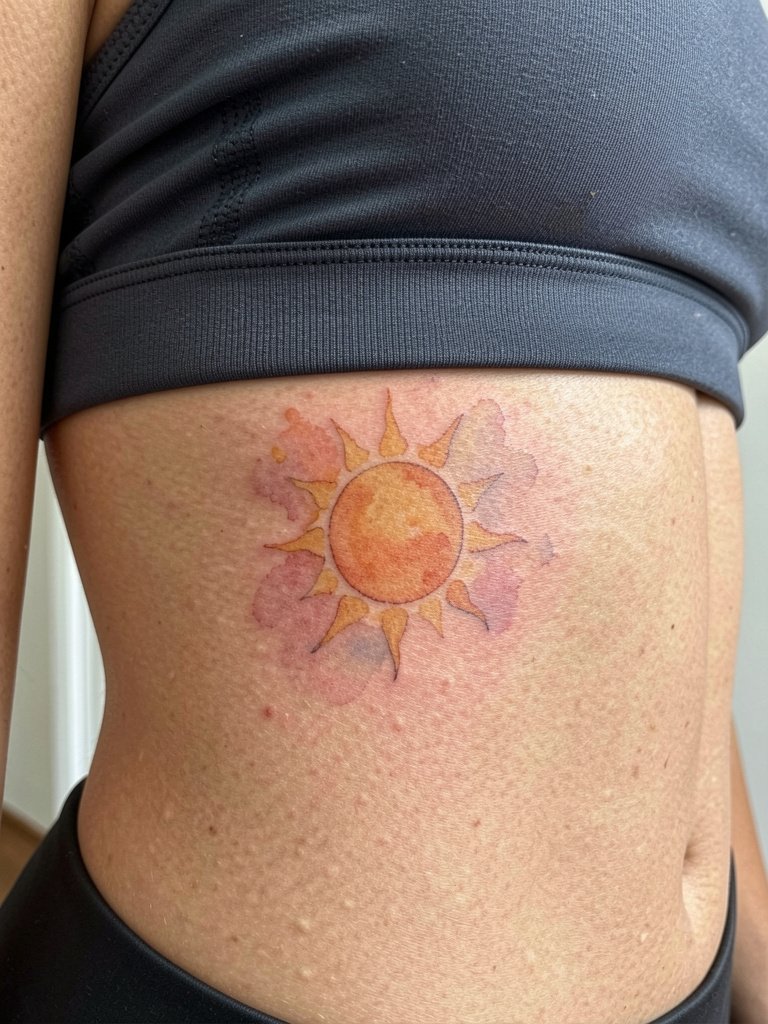
Watercolor techniques create a soft sun aesthetic but the ribcage is a high-movement area, so plan differently than for your Pinterest reference. One camp warns watercolor on ribs fades into a bruise-like wash. The other camp uses a hybrid approach with faint outlines to anchor pigment. If you favor the watercolor look, request anchored outlines and discuss touch-up frequency honestly. Rib sessions are high on the pain scale and may require breaks. Wear a fitted cropped top for the session so the artist can work without pressing fabric onto fresh ink.
14. Geometric Sun on the Forearm Outer Side
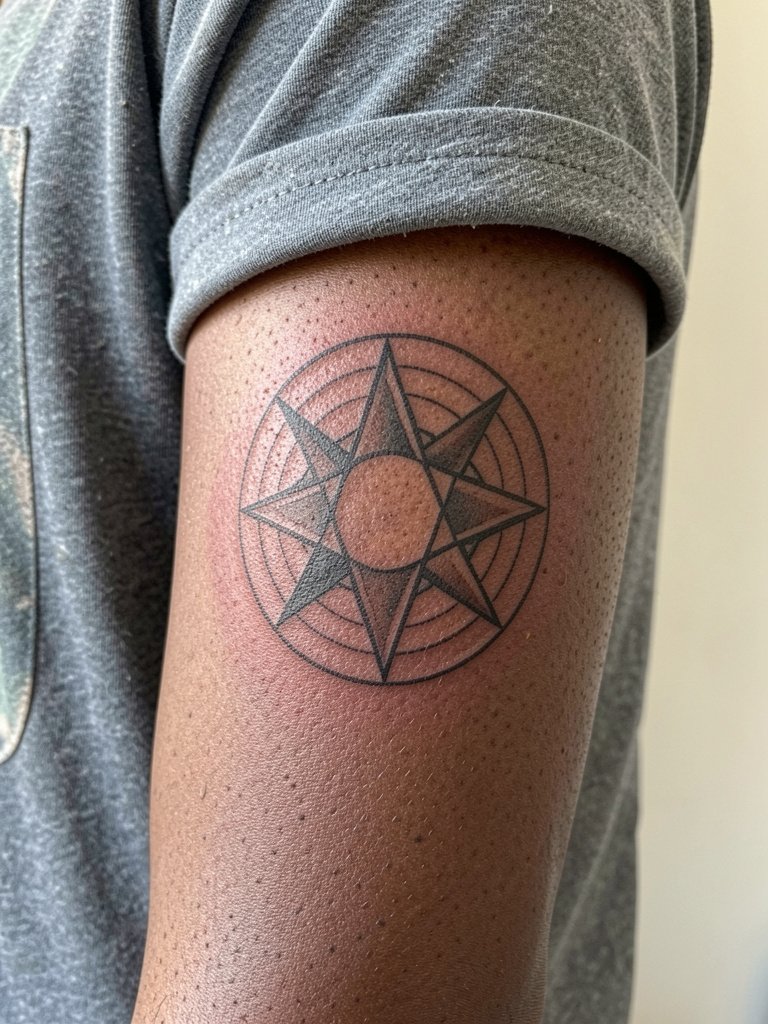
Geometric suns read architecturally and age well if lines are given breathing room. For outer forearm work, request a layout that shows how the shapes align with arm muscles so the design does not twist when you turn your wrist. The usual mistake is packing shapes too tightly, which leads to soft intersections after two years. Sessions are predictable and usually take one to two hours. To show the piece, roll sleeves to mid-forearm or wear a short-sleeve linen tee that complements clean lines.
15. Tiny Sun at the Base of the Thumb
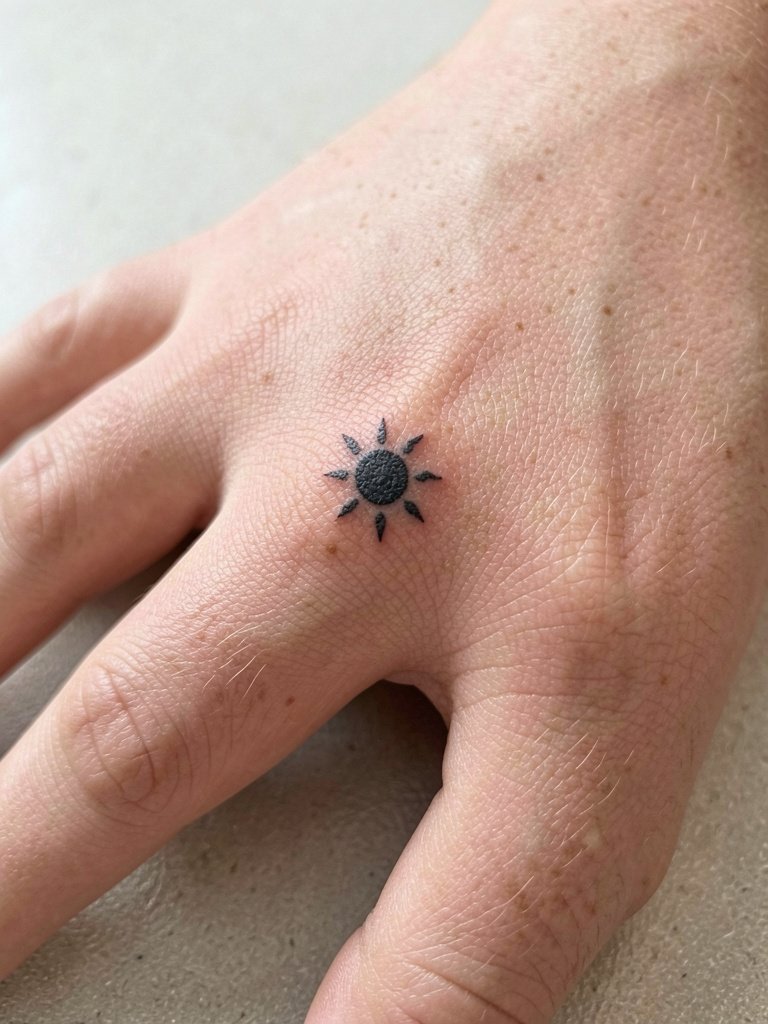
Thumb-base tattoos get a lot of wear from gripping and washing, so choose medium saturation and accept annual touch-ups. The area is sensitive and sessions are quick but intense. A usual error is selecting near-microscopic dots that vanish in months. Discuss needle depth so pigment settles into dermal tissue without overworking. For the session, remove rings and apply moisturizer beforehand so skin isn't dry and brittle. Styling is subtle here; try a wide band ring that sits above the base to avoid rubbing the ink.
16. Half-Sun on the Rib Edge
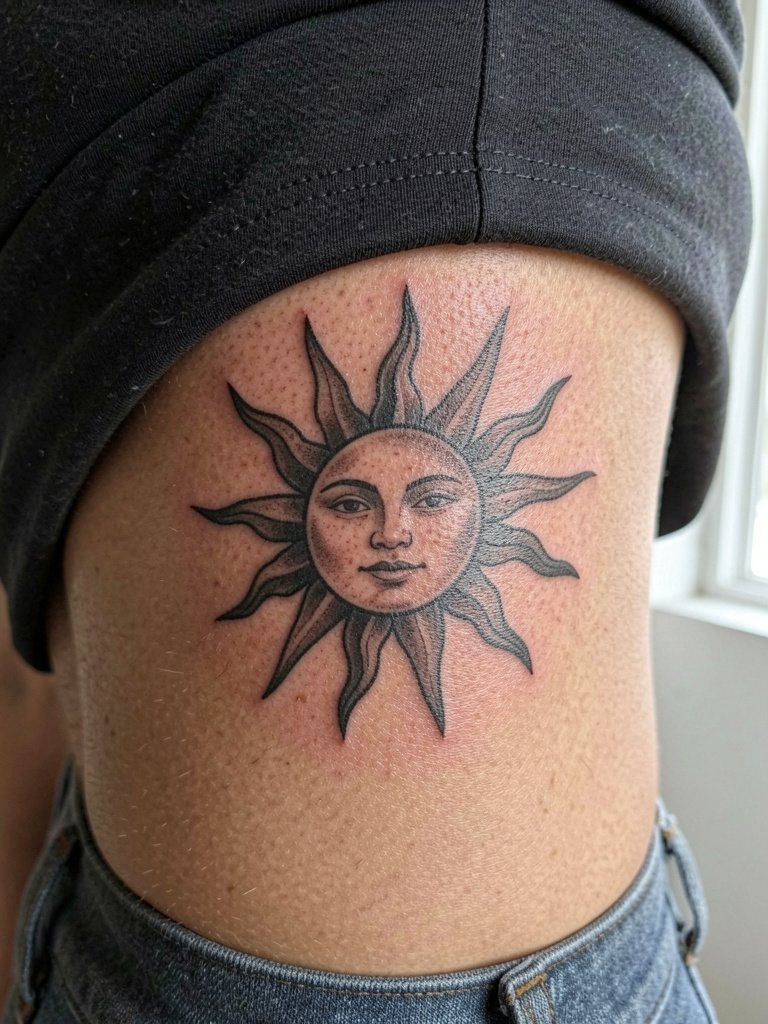
A half-sun along the rib edge is dramatic and private, showing only with swimwear or cropped tops. Skin stretch here is real, so ask for slightly wider spacing and stronger ray anchors. The primary mistake is choosing intricate filigree that disappears when the torso moves. Pain is high and sessions may be broken into shorter passes. Expect to keep an eye on touch-ups in years two to four. For appointment wear, select a fitted crop that exposes the area without shifting, like a fitted sports crop.
17. Linear Sun Chain Along the Spine
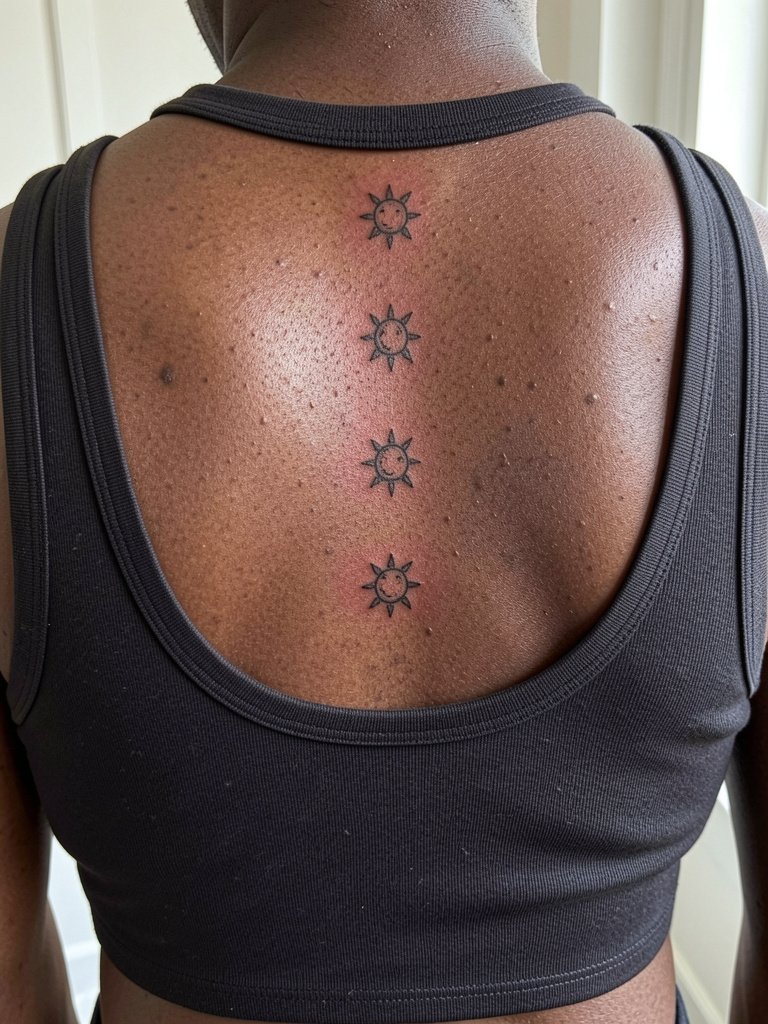
A vertical sun chain reads elegantly on the spine because gravity and posture keep it aligned. Ask the artist to place a centerline reference while standing upright so the row does not sit crooked when you relax. The spine is a higher pain area and sessions take time for careful spacing. A frequent mistake is inconsistent sizing between icons, which makes the chain look uneven from a distance. For showing the work, open-back tops and layered necklaces that rest on the shoulders frame the piece well.
18. Micro Realism Sunflower with Sun Halo
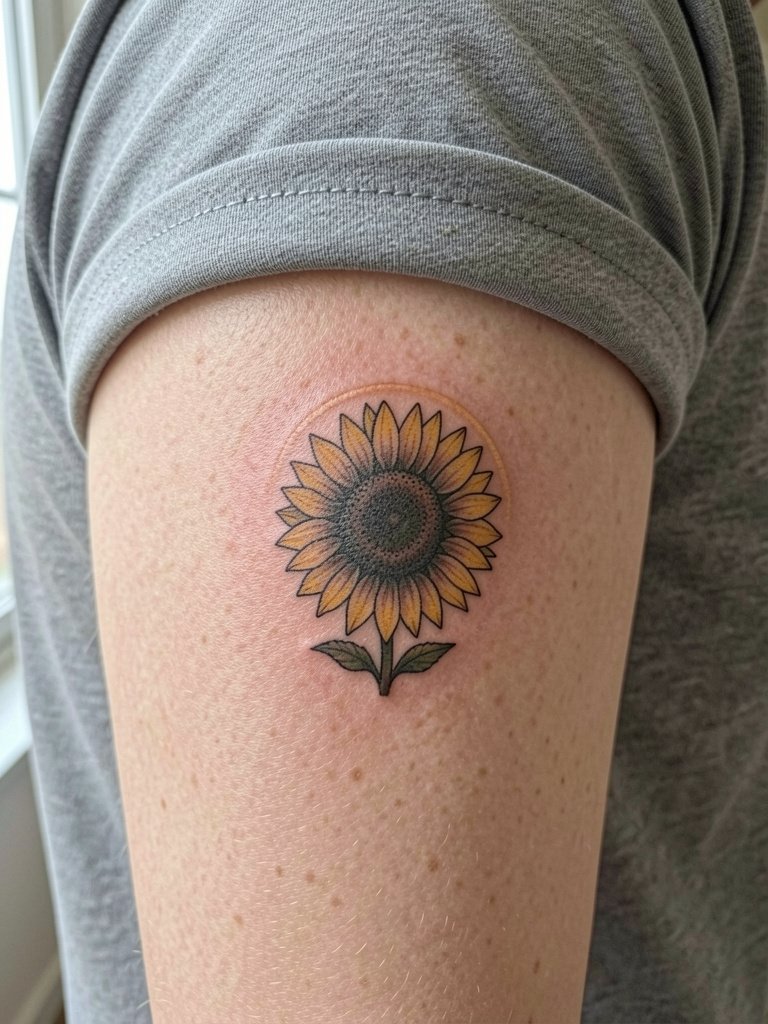
A tiny micro-realism sunflower with a sun halo mixes organic detail with celestial symbolism. Micro-realism needs slightly more saturation and clean contrast to preserve petal detail as skin ages. Ask the artist for healed close-ups of similar work on comparable skin tones. The outer bicep is a forgiving spot so fine shading lasts better than on the wrist. One mistake is asking for soft washes without anchor contrast which causes petals to blend. Sessions run one to three hours depending on shading. Pair with short-sleeve tees or a sleeve cuff bracelet that leaves the bicep visible.
19. Tiny Solar Symbol on the Calf
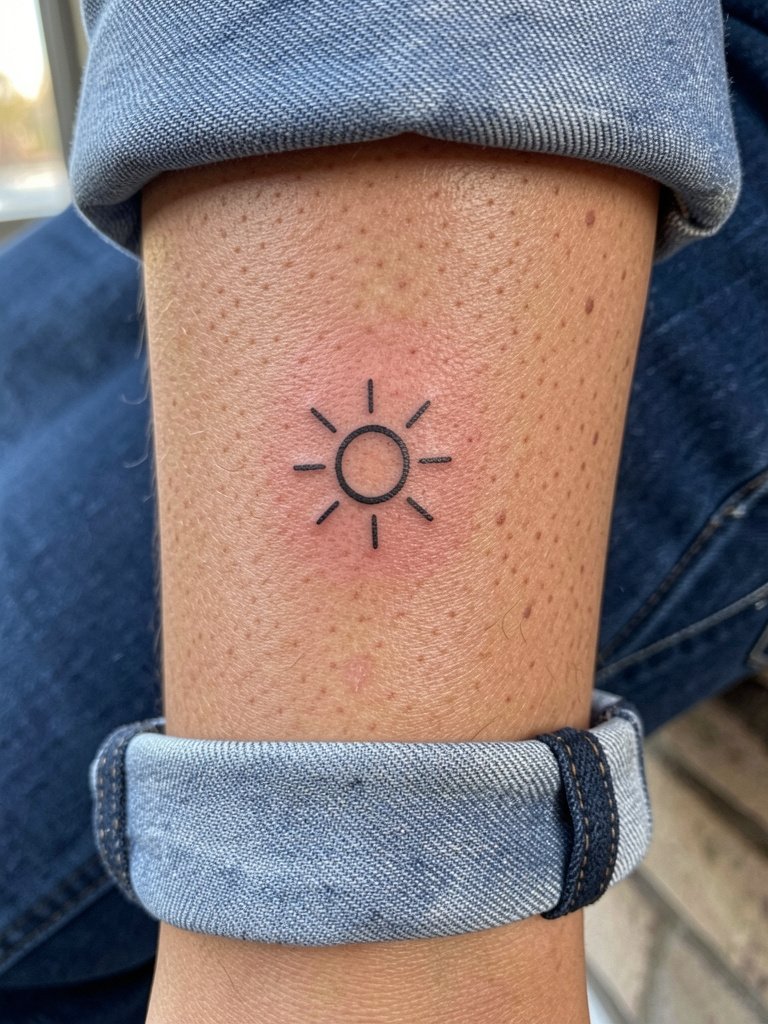
Calf placements are durable and show well with many shoe choices. For a solar symbol here, request slightly heavier rays to read through athletic wear and denim friction. The biggest mistake is underestimating the size needed for visibility across the leg. Sessions are low to moderate pain and often finish in one hour. Touch-ups are less frequent on the calf than on hands or feet. To highlight this spot, wear cropped pants or boots with the hem slightly raised, and consider ankle boots with a low shaft that frame the calf.
20. Tiny Sun on the Hipbone Curve
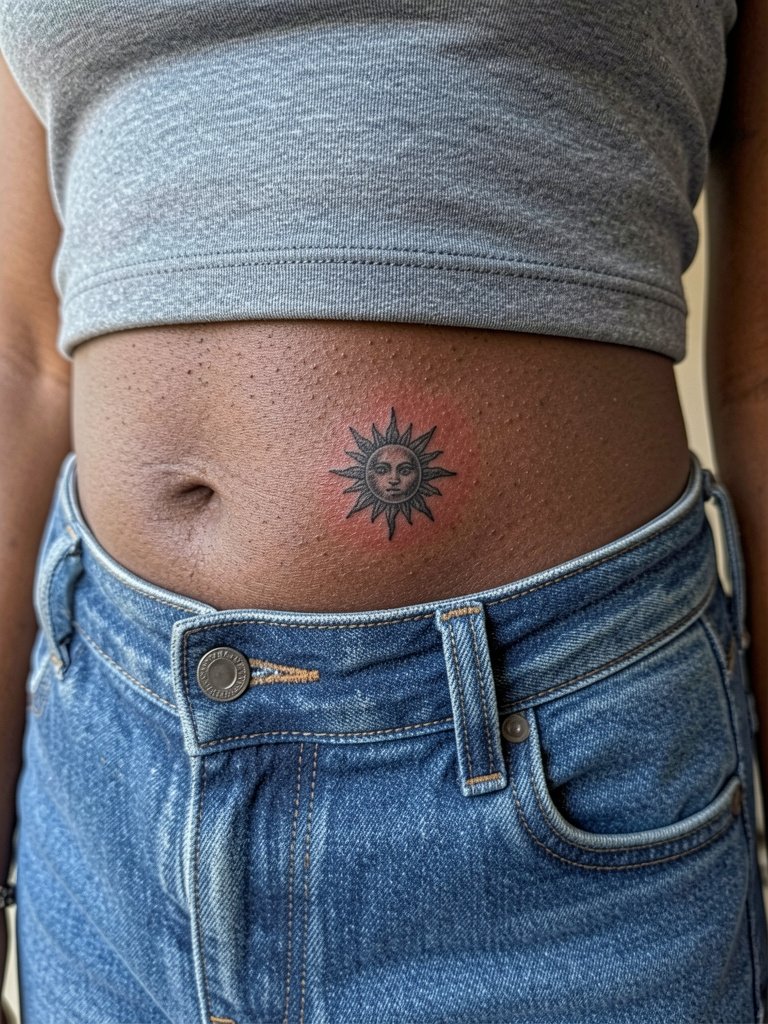
A placement on the hipbone curve is sensual and private, and it tolerates saturation well. Ask for a slightly higher pigment load so the crisp circle and rays remain visible after a year. A mistake is choosing tiny rays that sit too close to the waistband where fabric pressure distorts the edges. Sessions are usually quick with low to moderate pain. For the appointment wear low-rise denim that sits below the tattoo so the artist can place the stencil accurately. For showing the piece, a cropped top and low-rise jeans work together.
21. Tiny Sun Cluster Near the Nape
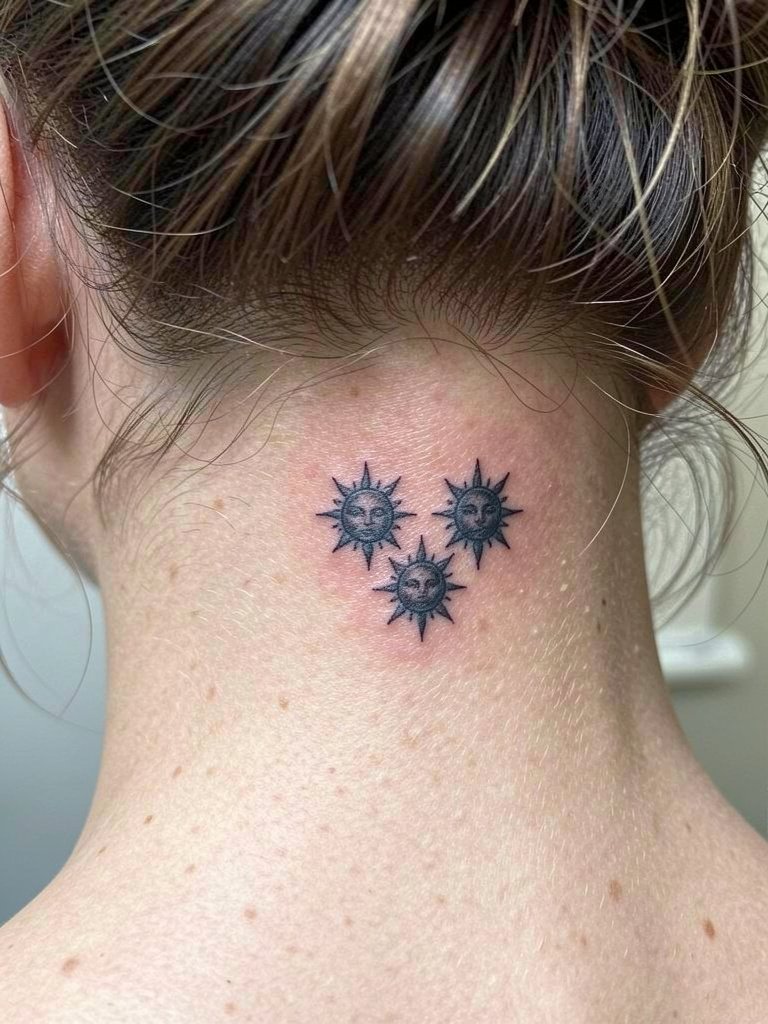
Nape clusters are discreet and reveal with hair up. Because hair rub can slightly abrade fresh ink, schedule touch-ups if you wear high buns frequently. Placement must be aligned with the hairline so the cluster does not sit awkwardly when you let hair down; have the artist mark positions while your head is relaxed. Pain is moderate and session time short. The most common mistake is uneven spacing between suns. For accessories, use hairpins and a simple hair stick to show the nape without friction.
22. Small Sun with Crescent on the Outer Rib
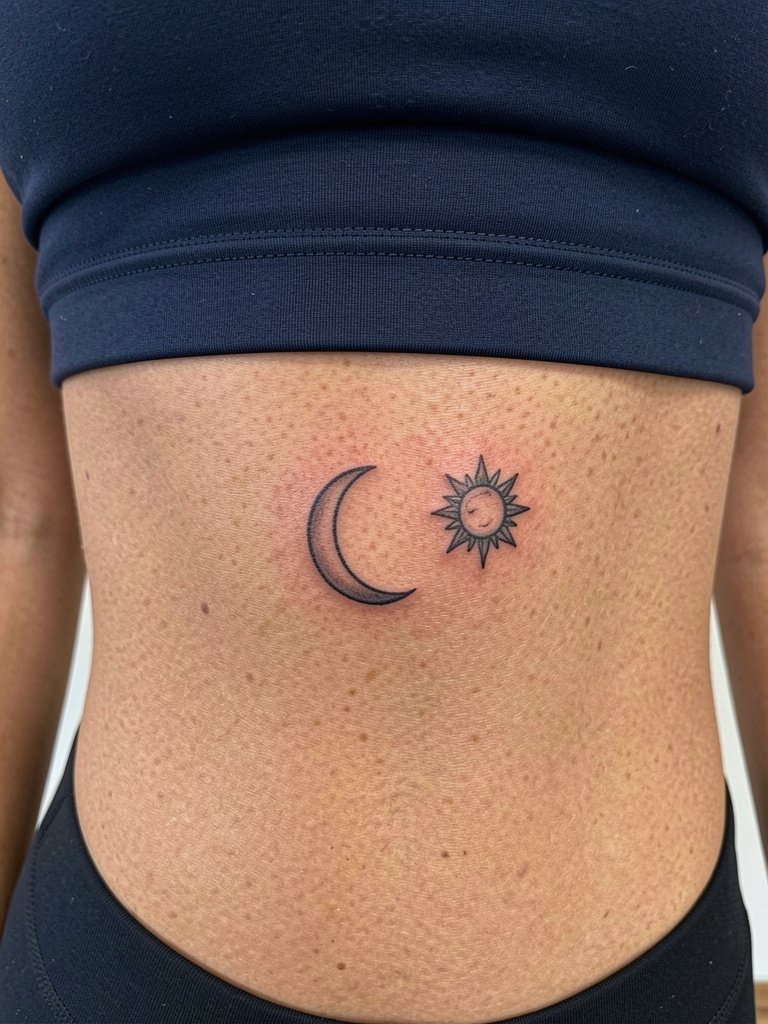
An outer rib sun and crescent pairing balances solid form with curve, but expect movement from breathing to alter how details meet. Ask the artist to position the design while you breathe normally so they can judge how rays sit during motion. A common mistake is forcing symmetry on a surface that is naturally asymmetrical. Sessions on the ribs can be intense and often require breaks. For the appointment pick clothing that provides access without pressure, like a fitted crop top.
23. Single-Line Sun on the Back of the Hand
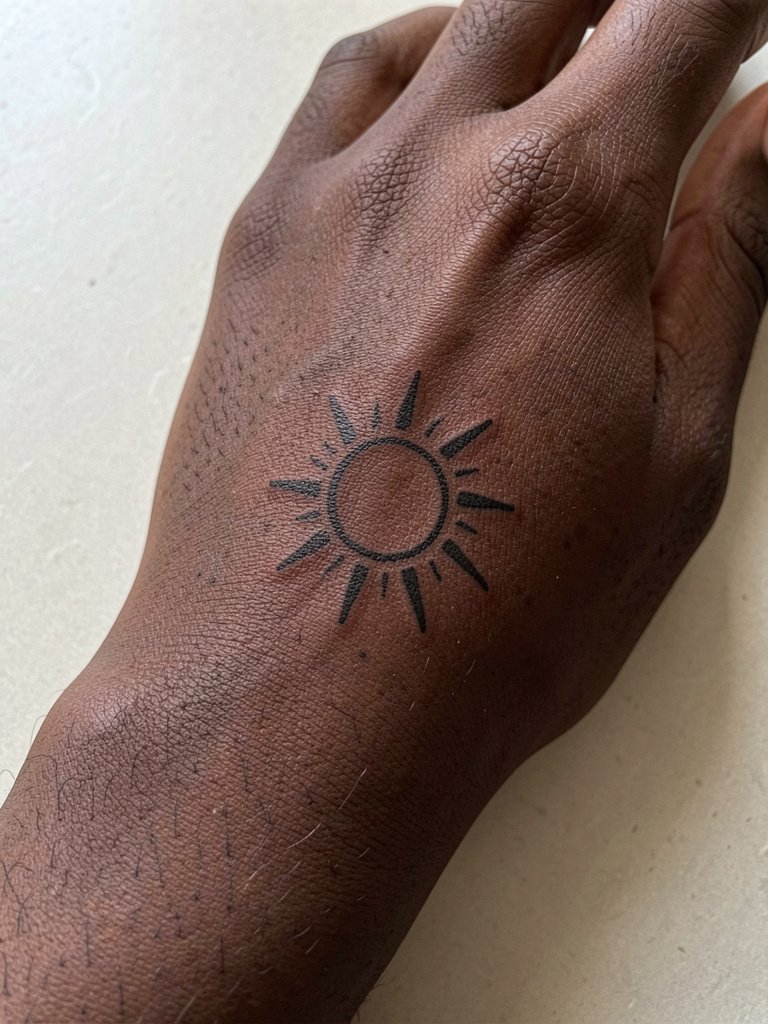
Hand pieces are high maintenance because of constant washing and sun exposure. For a single-line sun, request medium lineweight and plan for yearly touch-ups to maintain saturation. The back of the hand often shows early fading where knuckles or joints move repeatedly. A frequent mistake is choosing micro-detail that washes out within the first year. The session can be painful and brief. For styling, avoid heavy bracelets that sit over the design and try a delicate wrist cuff that sits above the ink.
Frequently Asked Questions
Q: How do tiny sun designs hold up on different skin tones?
A: In my experience tiny suns read differently across tones. Darker skin often benefits from slightly heavier lineweight and more contrast to keep the rays distinct. Lighter skin can support finer single-needle detail but still needs spacing to avoid merging over time.
Q: Where should I look for healed photos and portfolios without naming artists?
A: Search hashtags and keyword phrases on image-forward platforms with location filters to find healed examples in your area. Try searches like #HealedSunTattoo, #MinimalSunInk, and platform filters for “healed tattoos” plus your city to narrow portfolios. Reddit galleries and niche tattoo forums often have multi-year healed threads to review.
Q: Do sun tattoos on the ribs or sternum heal differently than forearm pieces?
A: Yes, ribs and sternum heal under more movement and sweat so they often need more touch-ups compared to forearms. Forearm skin is stable and usually takes ink in a predictable way. Plan for an extra session on high-movement areas within the first two to three years.
Q: What should I wear to the appointment for a collarbone or sternum design?
A: For collarbone pieces, wear a wide scoop-neck or fitted tank so the artist can place the stencil easily. For sternum work, a fitted sports bra works best because it exposes the area without shifting during the session. Both keep fabric from rubbing the fresh tattoo.
Q: Are there sun tattoo styles to avoid if I want low maintenance?
A: If you want low maintenance, pick placements with less daily abrasion like the outer forearm, shoulder blade, or calf and choose slightly bolder linework. Avoid most finger, hand, and very tiny wrist pieces unless you accept regular touch-ups.