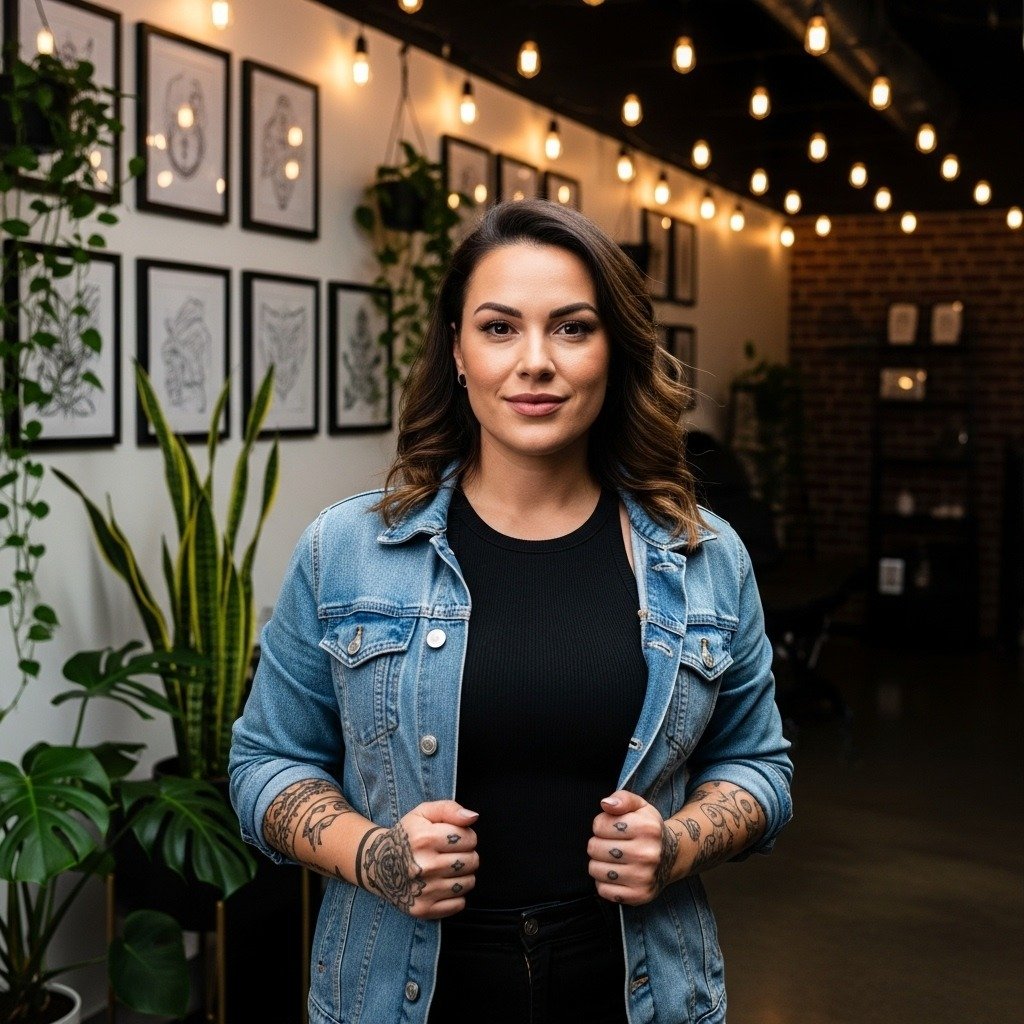
Someone I know spent months saving reference photos only to realize the real decision was which style would look good on their skin five years from now. I visited five shops across Brooklyn and talked with artists who specialize in fine line and blackwork. These sun and moon tattoo ideas run the style range, and I included notes on aging, pain, and what to ask at your consult so your first tattoo actually stays the way you want.
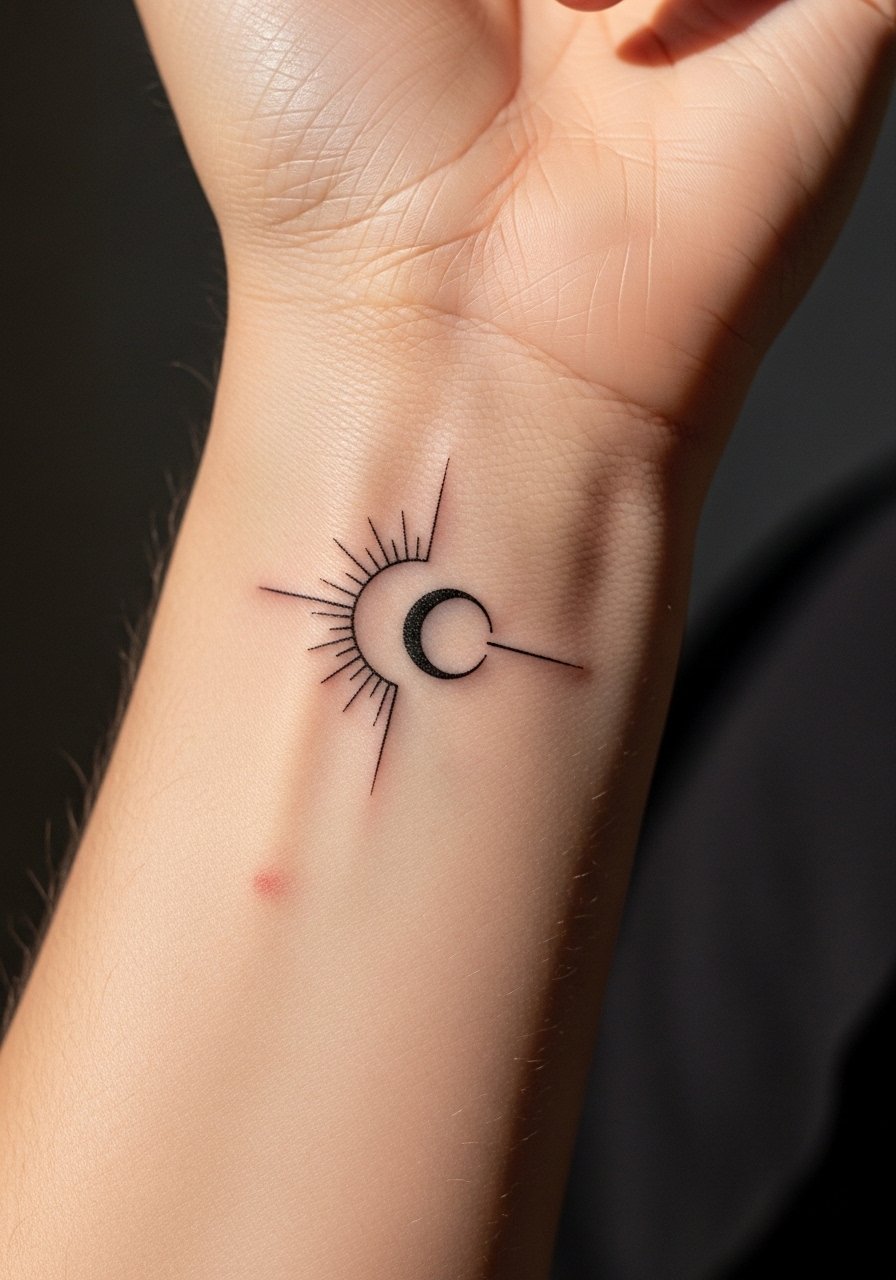
1. Minimalist Sun and Moon Wrist Pair
Someone I know first saw this on a friend and booked the same artist, but wrist tattoos are unforgiving if the line weight is too thin. Ask for slightly bolder single-needle strokes so the curves do not blur in a year. Expect a short session and sharp sting near the bone. Common mistake is requesting ultra-fine detail at one inch, which often needs a touch-up by year two. Best for first-timers who want something discreet and easy to add to later. If you work a lot with your hands plan placement carefully for career visibility.
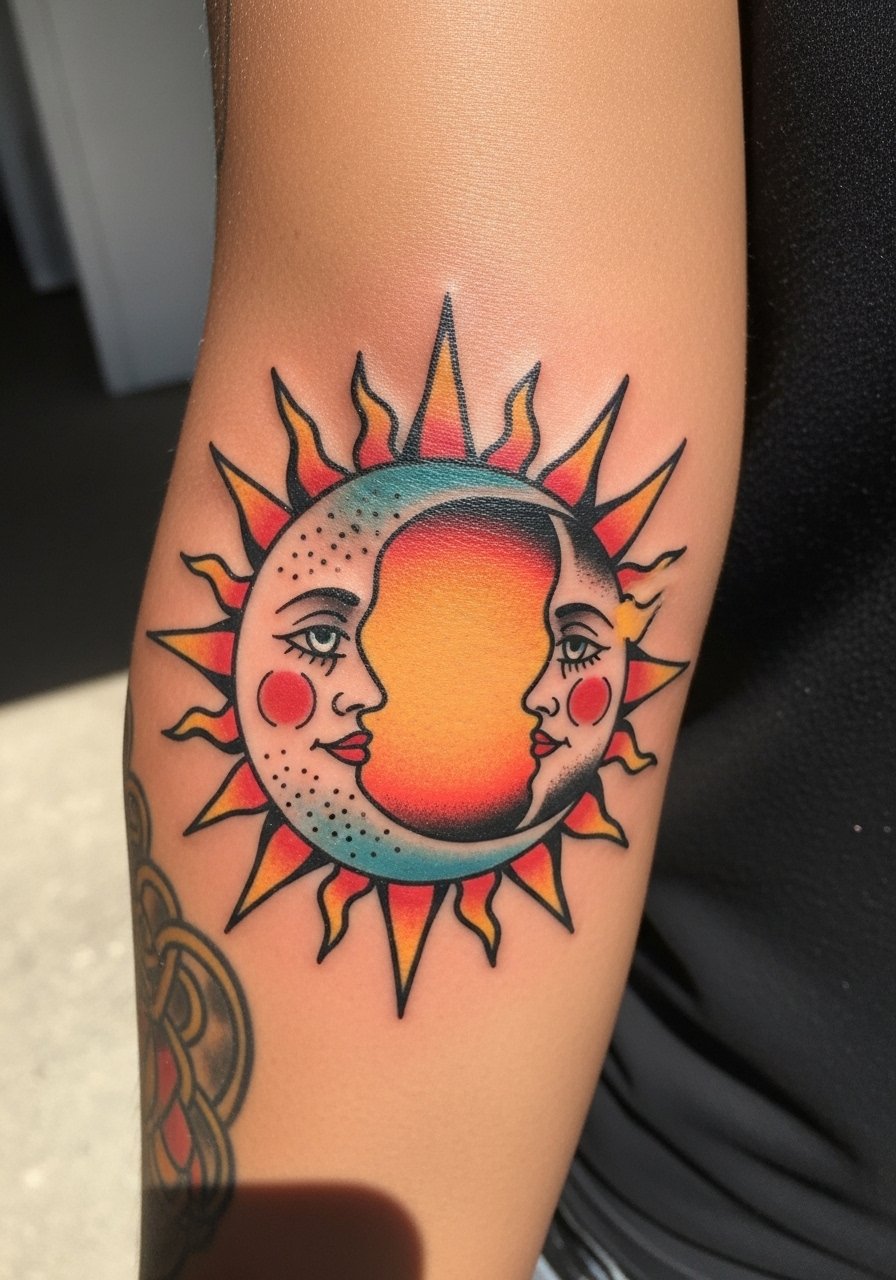
2. Traditional Sun with Crescent Moon Forearm
There is something about bold outlines that still read well on darker skin tones and from across the room. Forearm placement lets you pick a size that shows off strong linework without crowding. Tell your artist you want classic American-style outlines and solid saturation for long-term contrast. Sessions feel firm but steady because the forearm is relatively low pain. The usual error is shrinking a traditional design too small, which loses the character of the rays. Healed at two years the black holds much better than thin lines.
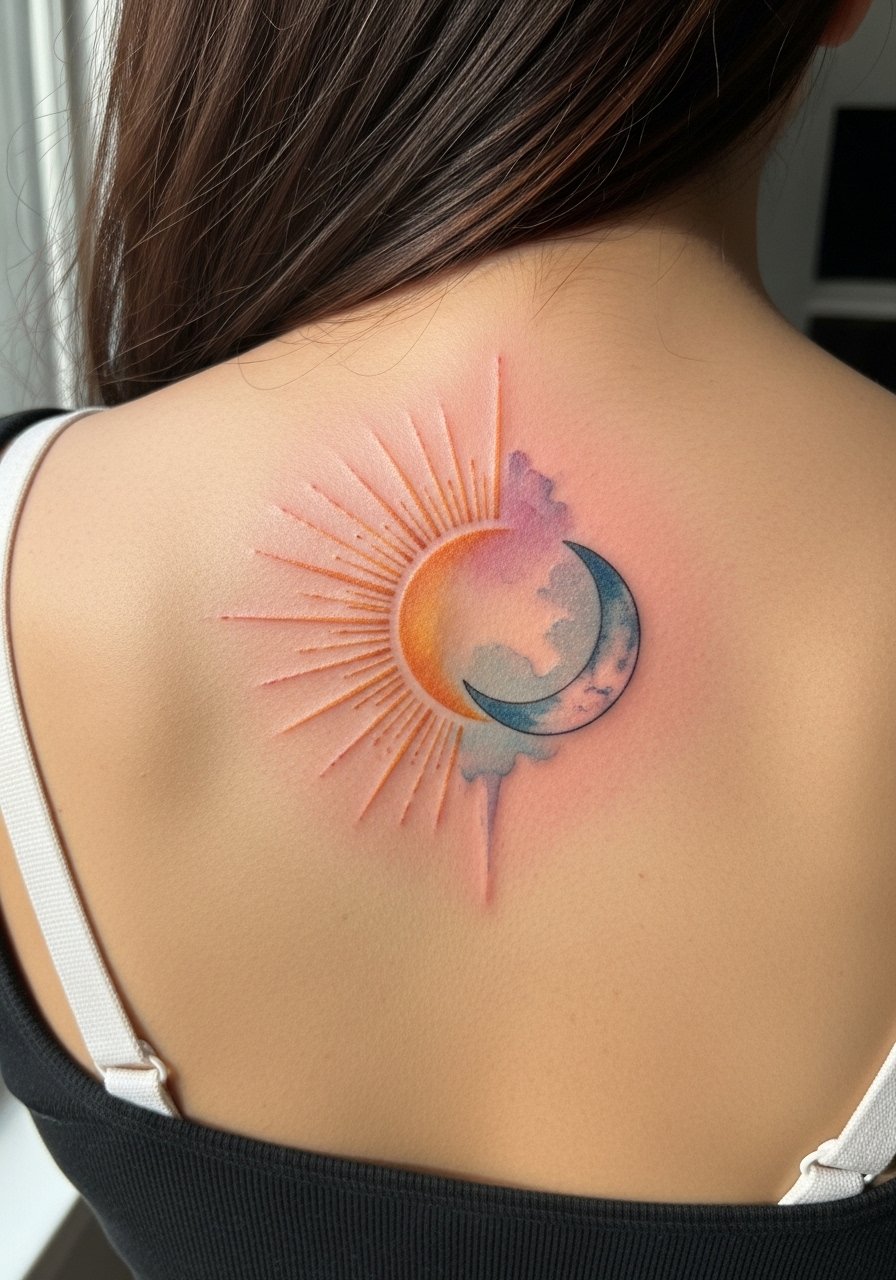
3. Watercolor Sun Burst and Moon Back Piece
Most watercolor pieces from a few years ago faded badly when people spent the healing period in the sun. One camp swears by occlusive bandages for color retention, another argues dry healing avoids trapped moisture. Name both approaches when you talk with your artist and ask which they use. This upper back piece usually takes multiple sessions and is best for someone who wants painterly color rather than tight linework. Expect more aftercare attention in the first two weeks and a higher chance of needing a color refresh at year three if you skip UV protection.
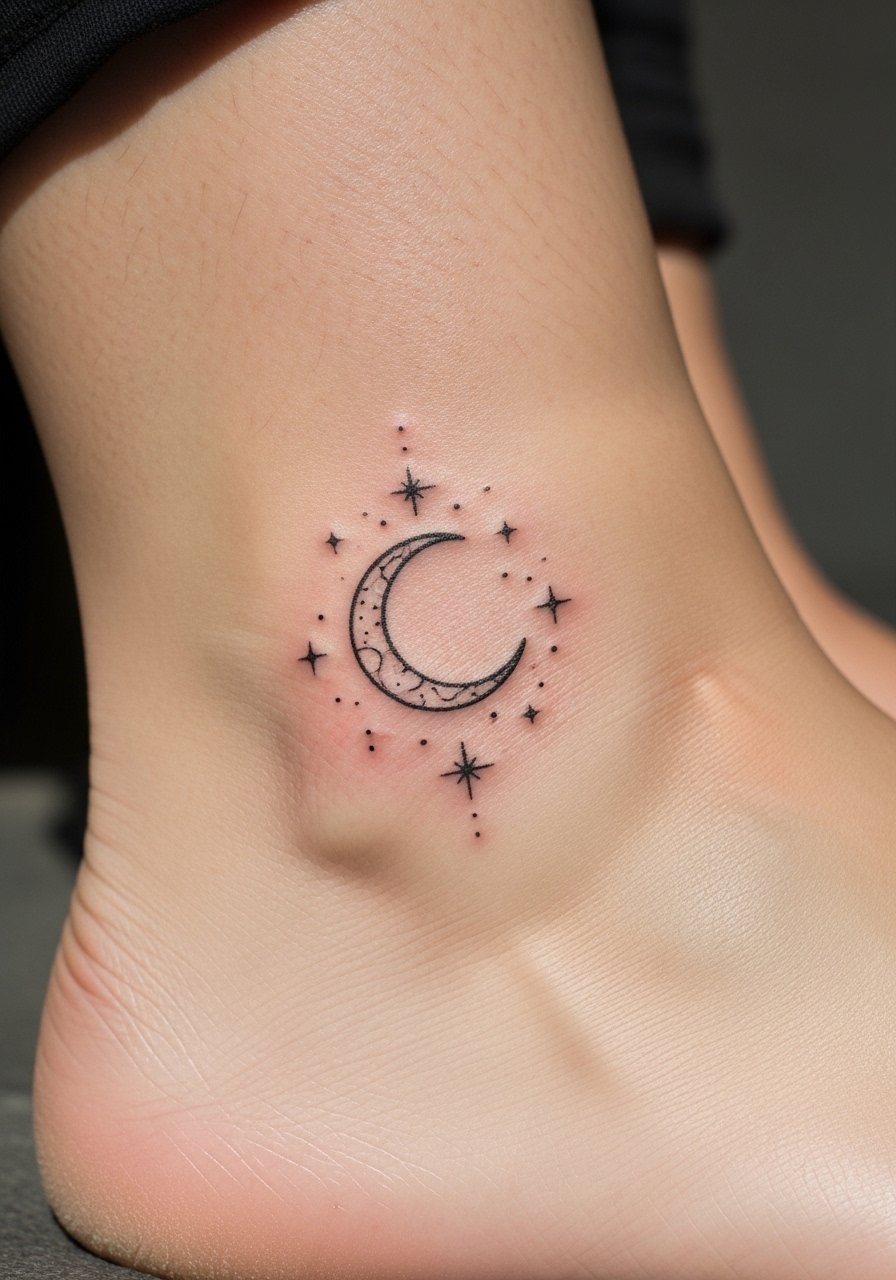
4. Fine Line Sun and Moon with Stars Ankle
Fair warning, the ankle is a higher pain spot for tiny detail. If you want delicate stars and a thin crescent ask for spacing between lines so stipple shading does not merge during healing. Session time is short but the area moves a lot while you walk, which can affect scab formation. A common mistake is placing too much micro detail in a 1.5-inch area. Expect a touch-up window around month six for crispness. This is great if you want something feminine and discreet that still photographs well.
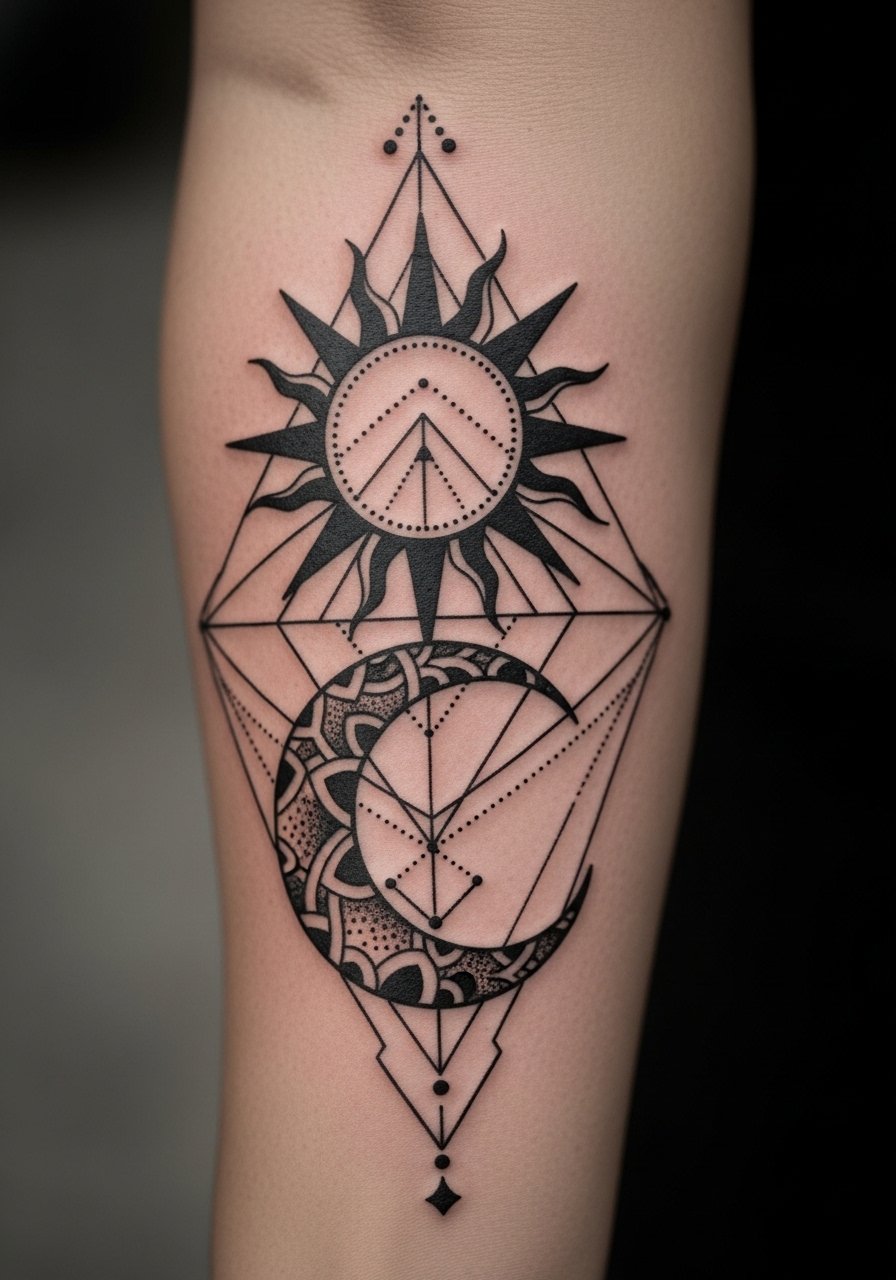
5. Blackwork Geometric Sun Moon Sleeve Start
The biggest mistake with geometric sleeves is starting too small. Give the shapes room to breathe so dot work and stipple shading do not compress over time. Blackwork reads well on a range of skin tones and tends to need fewer color touch-ups. Sessions are longer and can feel like steady vibration rather than sharp pins. Tell your artist you plan to build this into a sleeve so they map negative space for future pieces. Expect 3 to 4 sessions to lock down saturation and flow.
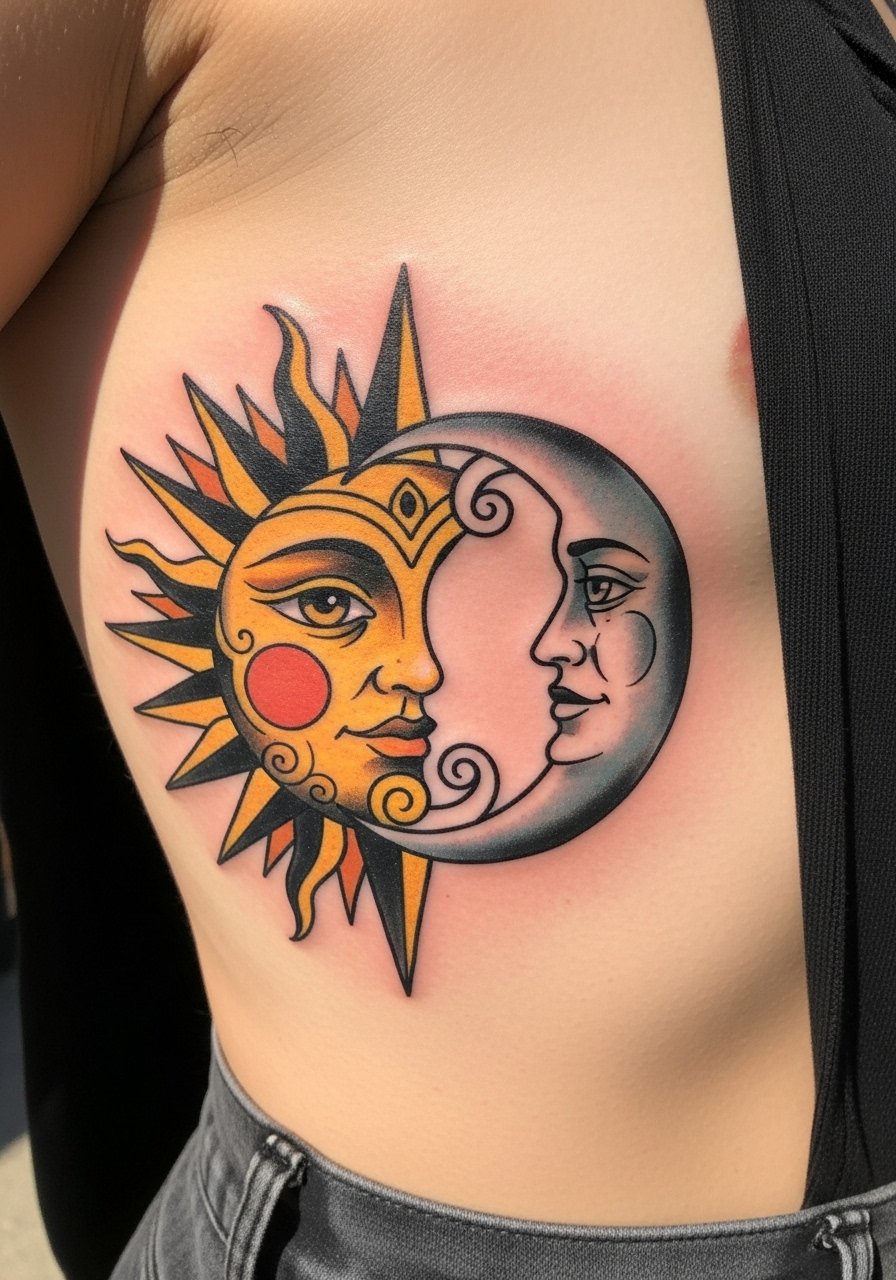
6. Neo-Traditional Sun Face and Moon Ribcage
Fine line on ribs splits artists into two camps. One group says the stretch and movement blur thin lines quickly. The other group argues that with proper needle depth and spacing it settles fine. Ask your artist where they stand and show them face reference so proportions are correct. Ribcage is a high-pain area and sessions can be interrupted for breath. Neo-traditional faces allow color accents that age better when paired with strong outlines. Plan for a touch-up at year two for facial linework if you notice softening.
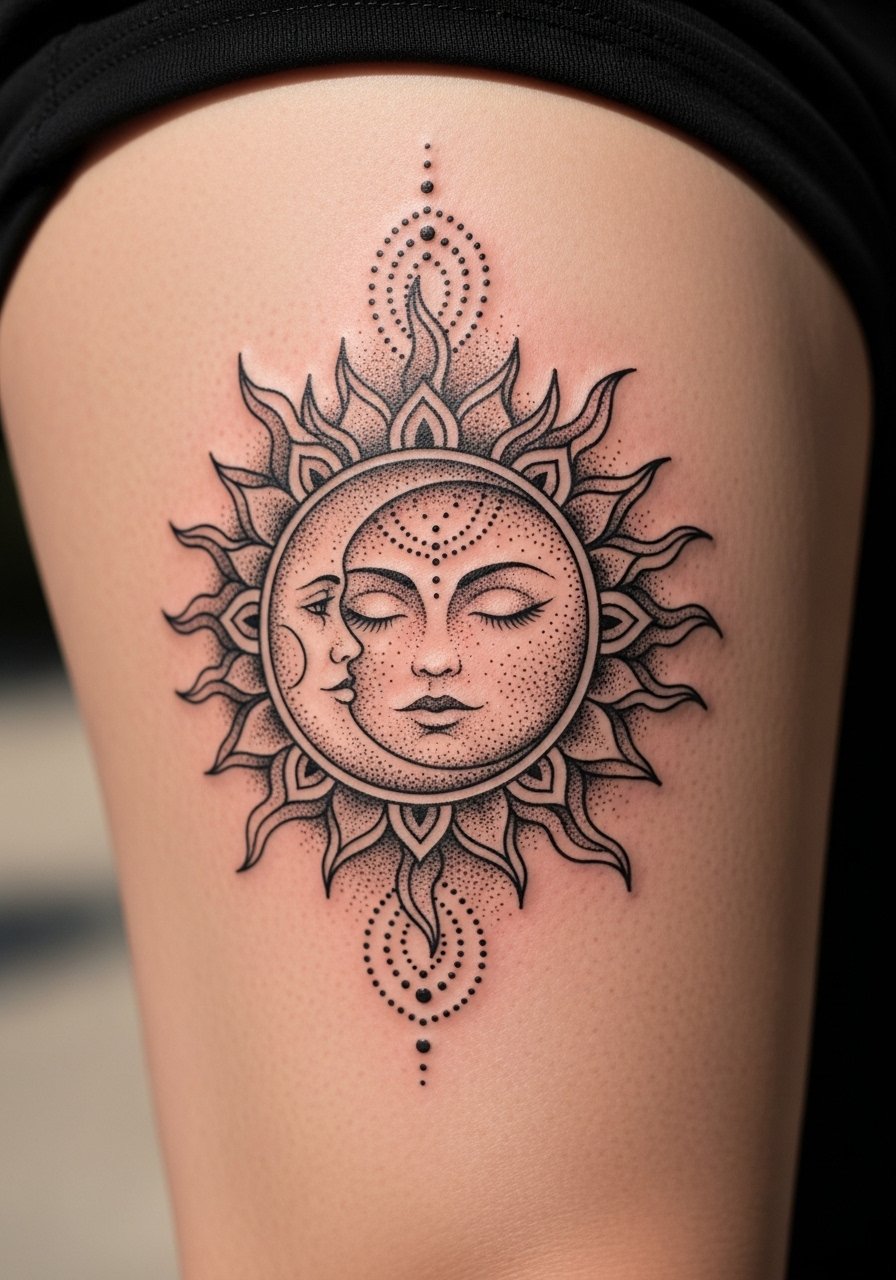
7. Ornamental Mandala Sun Moon Thigh
This pattern traces to mandala traditions, so many people choose slight variations rather than direct replicas out of respect. Thigh placement gives artists room to pack detail and the skin there is forgiving for stipple and whip shading. Sessions feel less painful and you can usually get a larger piece done in one or two sittings. A frequent error is asking for the same level of tiny micro detail as a finger tattoo, which gets lost on a curved thigh. Expect this style to hold well if the lines are given width and the shading is layered.
8. Micro-Realism Sun Ray and Moon Phase Finger
Hands and fingers age tattoos faster and can blur in months. If you are set on a ring finger micro-realism piece, accept touch-ups as part of the plan. Tell the artist you want heavier contrast in the rays and a clear negative space between phases to avoid merging. Sessions are quick but stinging near knuckles. The common mistake is expecting a finger piece to hold like a forearm piece. If you work with your hands consider placement on the side of the finger or choose an outer knuckle spot that gets less wear.
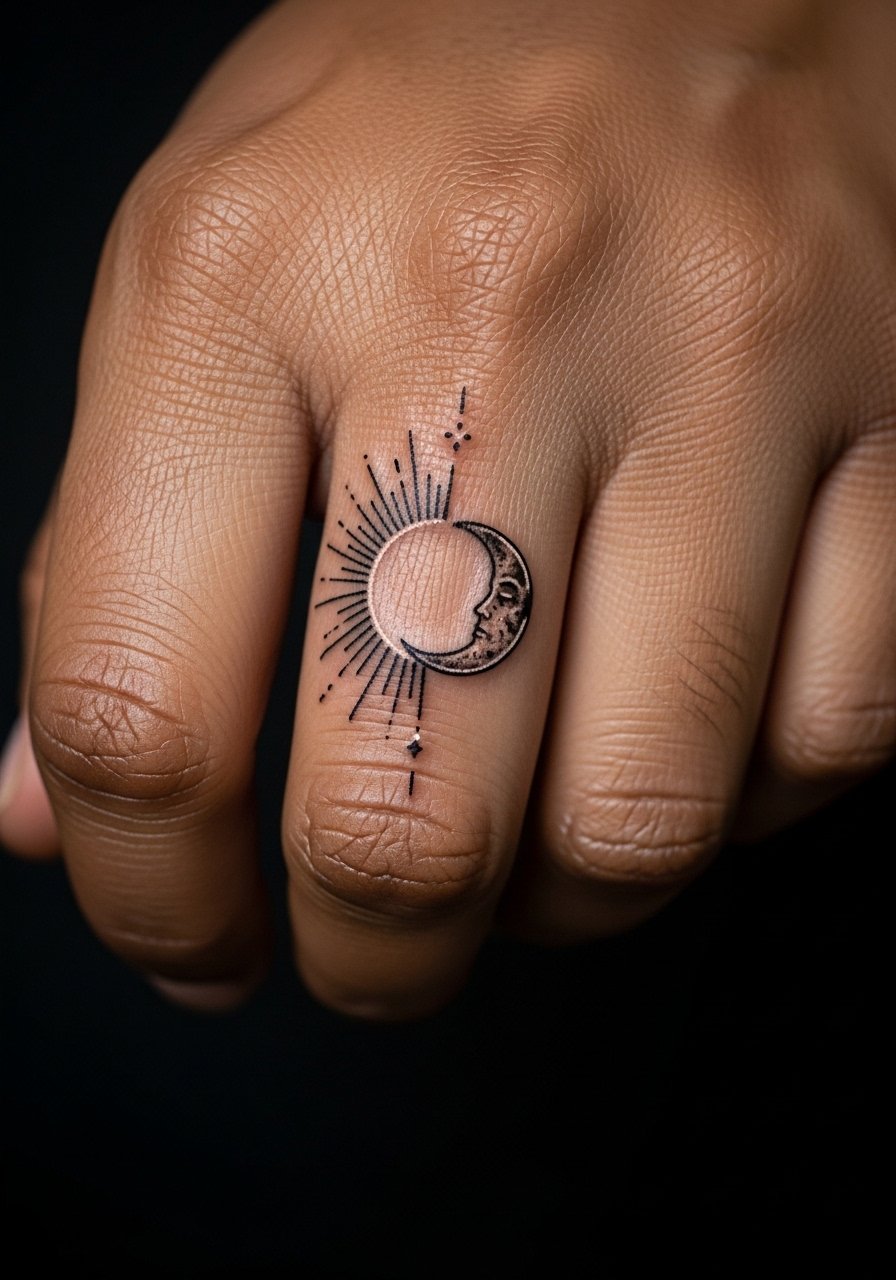
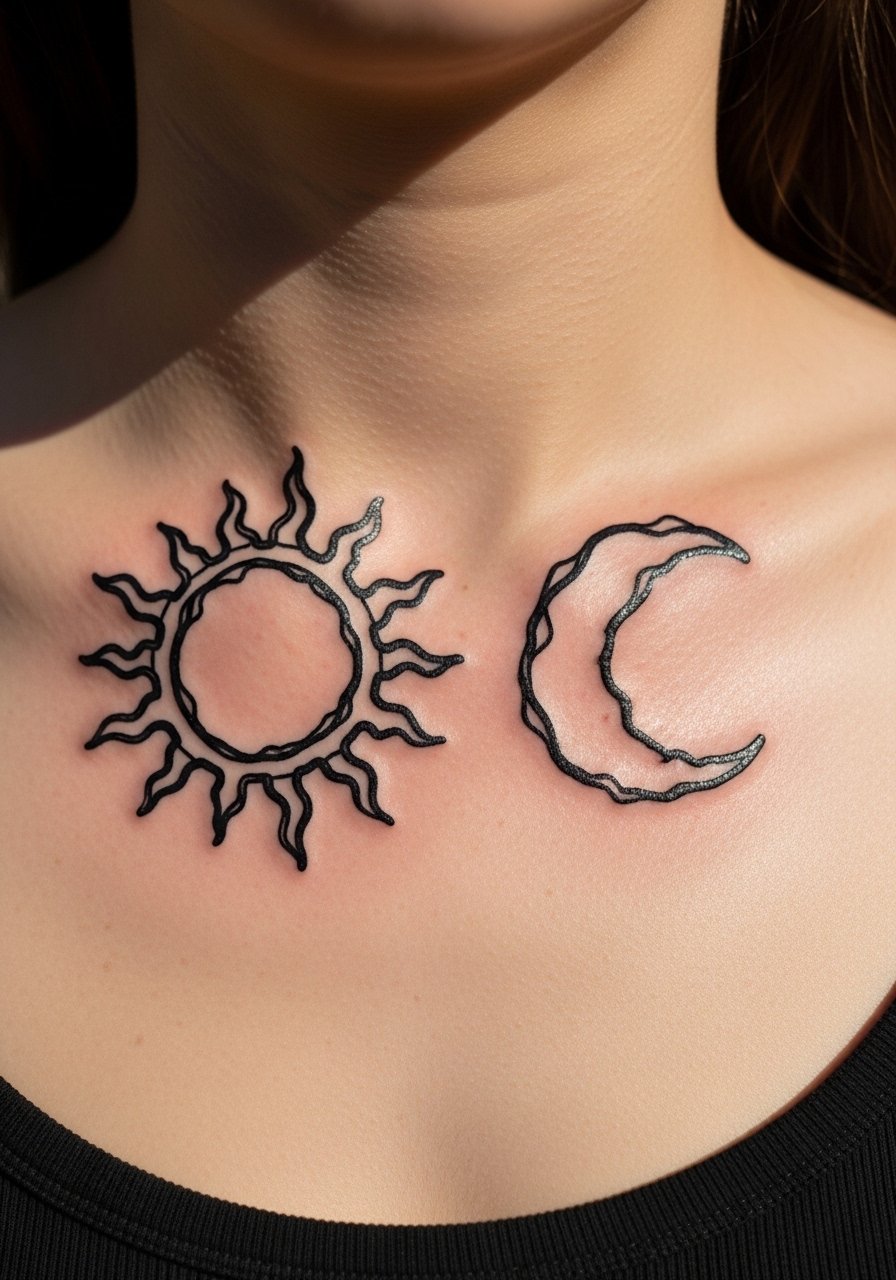
9. Ignorant Style Abstract Sun Moon Collarbone
When you sit down with an artist for this raw, hand-drawn look, bring reference that shows the sketchy energy you want rather than polished templates. Collarbone is a sensitive placement and sessions include sharp tugs with each pass. Note that some shops may require specialized portfolios for collarbone work. A common error is asking for too much precision in an ignorant piece, which defeats the style. Heals with character and slight texture differences near the bone. Think about clothing choices during healing to avoid friction.
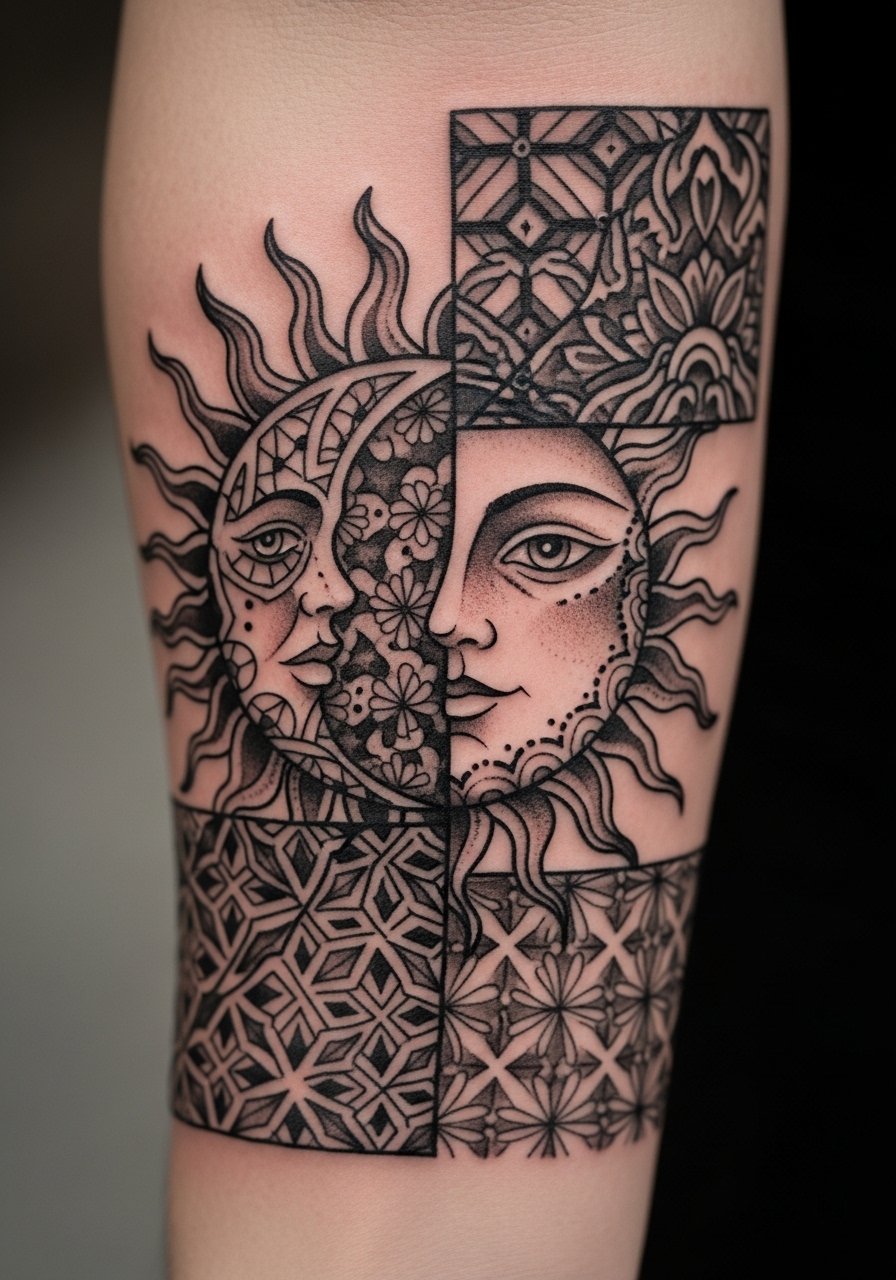
10. Celestial Patchwork Sun and Moon Forearm
When you plan a patchwork sleeve start you should map out anchor pieces so additions sit naturally. Tell your artist you want modular panels and show a mood board of spacing ideas from Instagram and Tattoodo directories. The inner forearm ages better for fine detail than the outer wrist, but still expect sun rays to soften over time. Sessions are split into anchor and fill sessions and may span a year for the whole arm. A frequent mistake is adding too many small elements without channels for negative space.
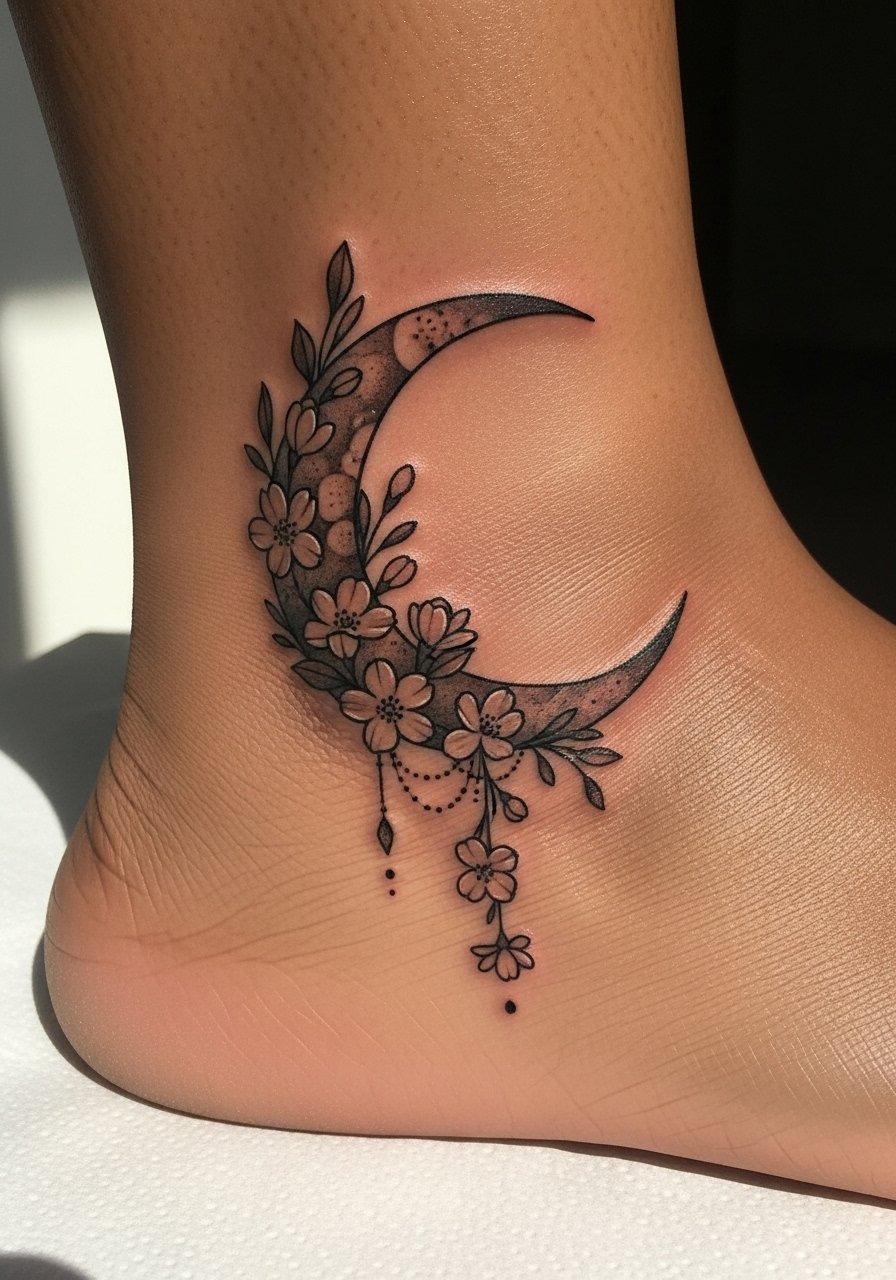
11. Sun and Moon with Floral Ankle Integration
I like this ankle idea because floral elements disguise slight spreading from tiny lines. When you ask your artist, specify where petals should overlap the moon so you retain contrast as the piece ages. Ankle movement can tug at scabs during walking so expect a slightly longer visible healing period. Common mistake is stacking petals too close to the central moon, which blurs detail by year two. This is a good pick if you want a nature-forward twist that still photographs delicately.
12. Birth-Phase Personalized Sun and Moon Upper Arm
When people add birth phases to a sun and moon they often forget to specify scale for small symbols. Bring exact birth dates or phase images to your consult and ask the artist to plot them into the composition. Upper arm placement hides well under sleeves and feels moderate for pain. The common mistake is cramming multiple tiny phases into a compact area, which leads to loss of clarity. This design works well for collaborative pieces where family members contribute phases later on.
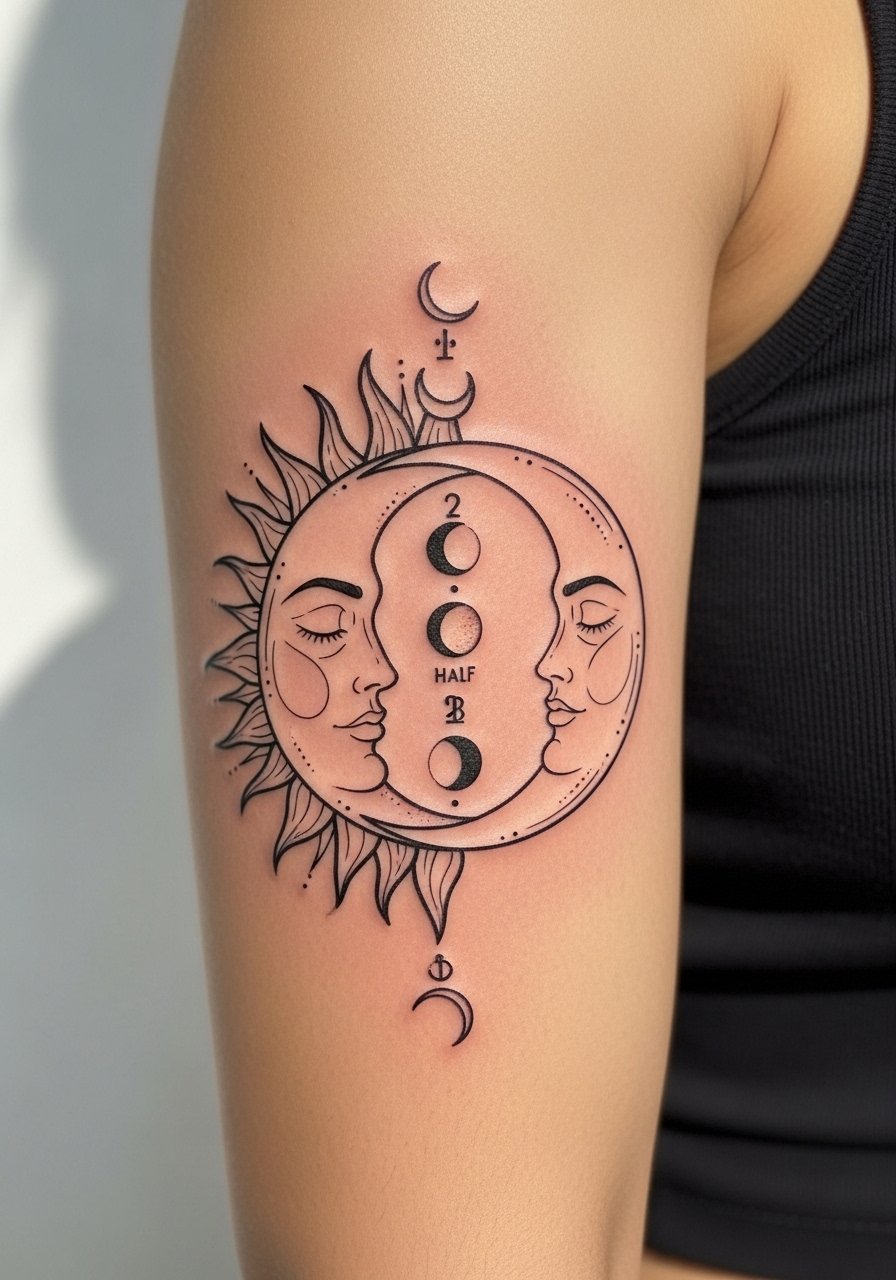
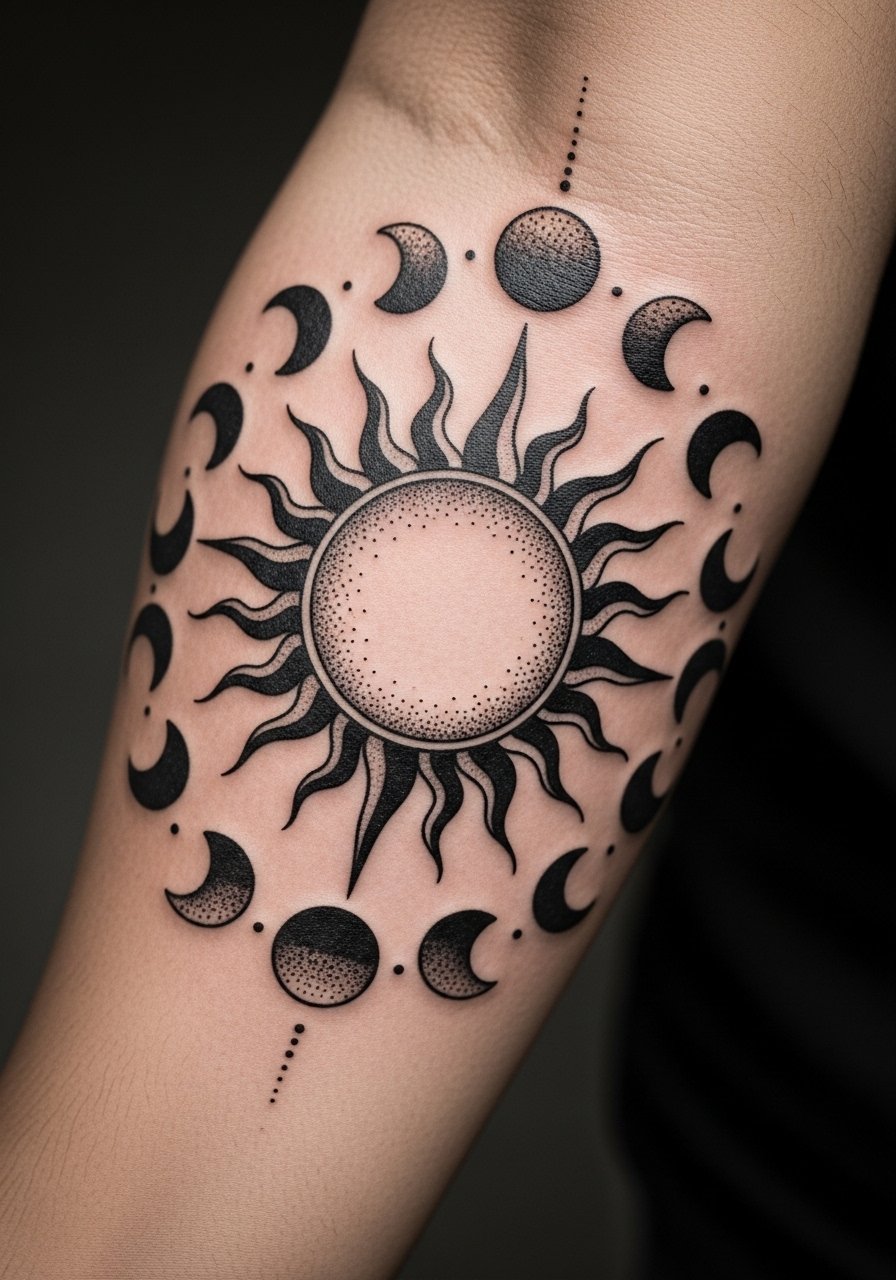
13. UV-Ready Blackwork Sun and Moon on Outer Forearm
Blackwork suns with moon phases are trending for visibility on darker skin because saturation reads better over time. If you spend a lot of time outdoors ask for solid fills and ask about UV sleeves for the first two weeks. Sessions are longer but the payoff is fewer color refreshes. A common mistake is choosing fine line here instead of solid black, which often vanishes in a year. Discuss long-term maintenance and plan a touch-up timeline at the consult.
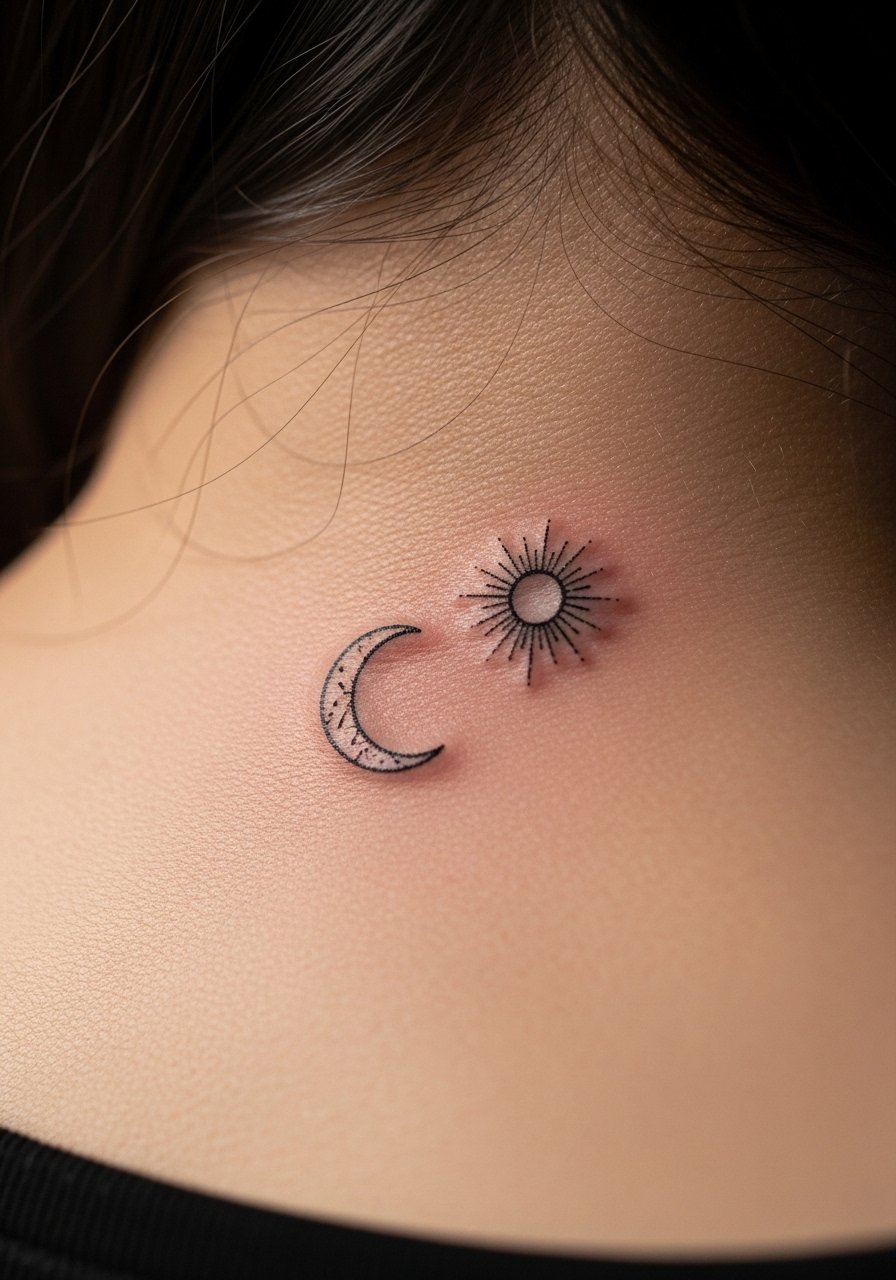
14. Micro Realism Back of Neck Mini Sun and Moon
The back of the neck is easy to hide with hair but it is delicate for small realism work. Expect a short but intense session and show the artist exact photos of the scale you want. Mistakes happen when clients ask for too much photorealism at sub-inch sizes. Healed at six months it may still need softening or a tiny touch-up at year one. Think about haircuts and collar choices during the two-week healing window to avoid friction.
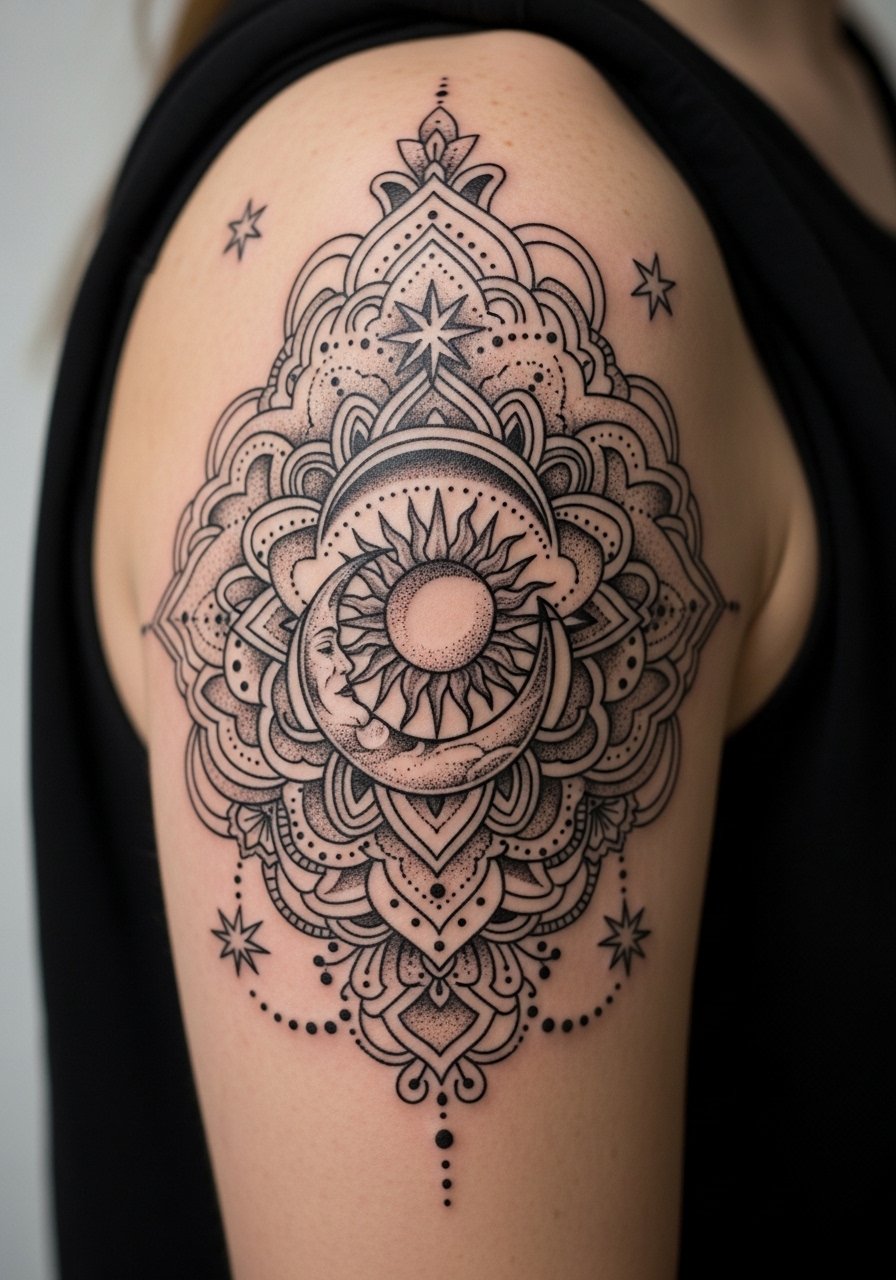
15. Ornamental Half-Sleeve Sun and Moon with Stars
There is a visual satisfaction in an ornamental half-sleeve that combines mandala elements with celestial bodies. Sessions are multiple and you will sit through longer blocks. Tell the artist you want layered dot work and stipple shading to maintain depth as it ages. A frequent error is underestimating session count which can rush linework. Expect a planned touch-up six to twelve months after completion to refine stippling and saturation.
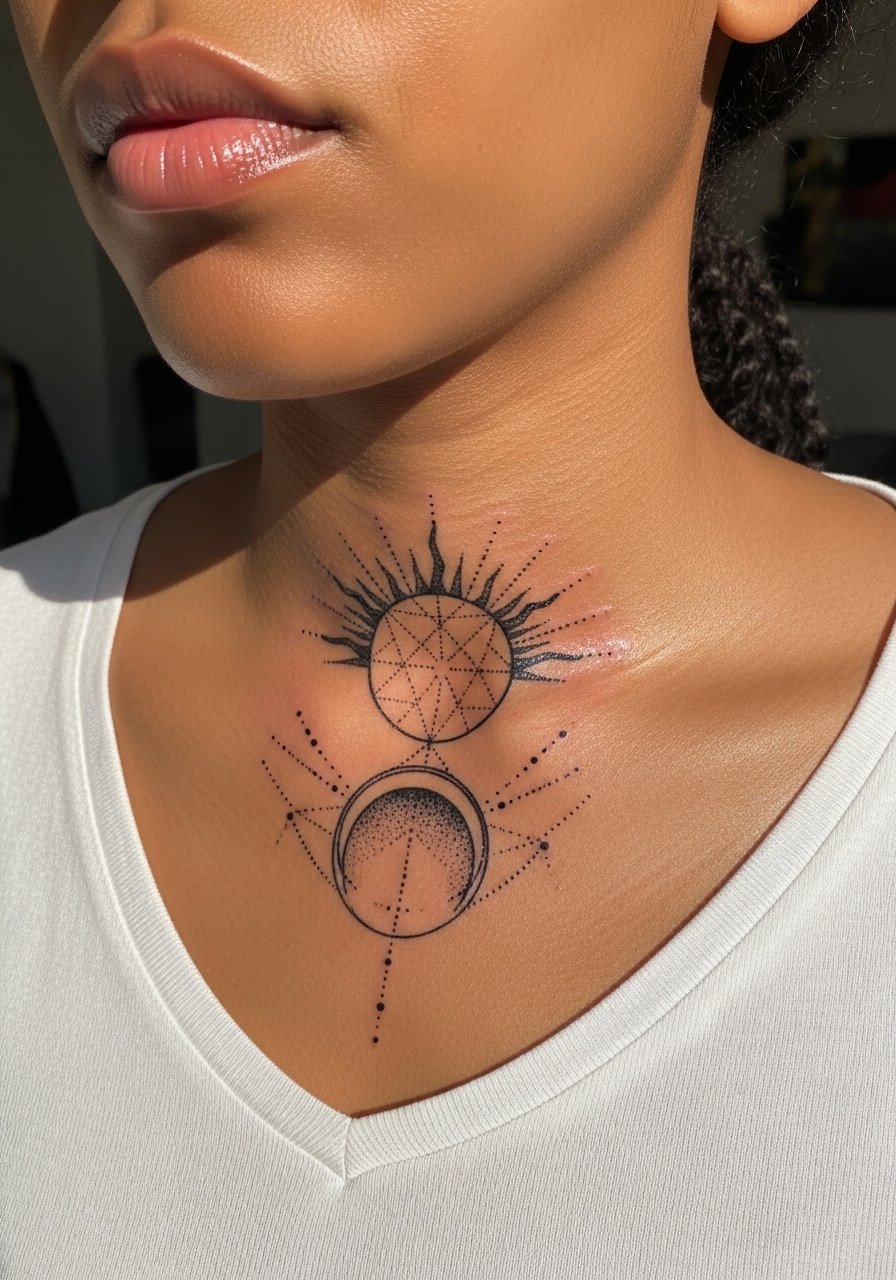
16. Geometric Sun and Moon Collar Dot Work
The mistake here is going too fine with geometry on curved collar areas. Ask for proportion adjustments so circles and lines stay true when your body moves. Sessions are moderate in time but require steady breathing control. Blowout risk exists if lines are cramped and the artist works too shallow, so confirm their dot work portfolio. This style holds well when negative space is respected and touch-ups are scheduled around year two.
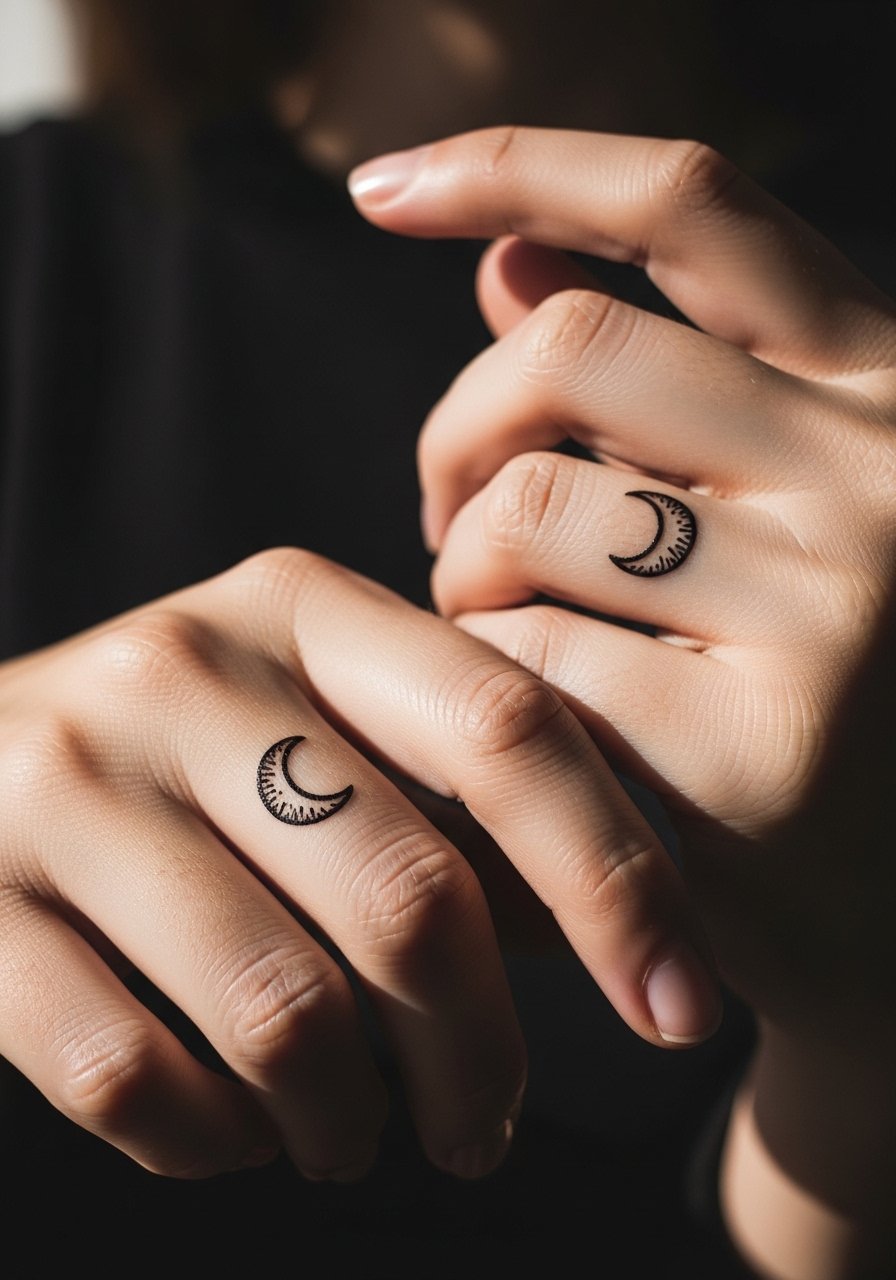
17. Crescent Moon Ring Finger Pair
Finger rings heal fast but fade fast too. When you book this, plan for a touch-up at six to twelve months. Tell your artist you prefer a slightly thicker contour so the moon shape remains crisp after natural wear. Sessions are quick and pain is sharp for small area work. Many people regret getting extremely thin lines on fingers because constant friction erases detail. If you want a low-commitment ring consider outer finger placement rather than the palm-side.
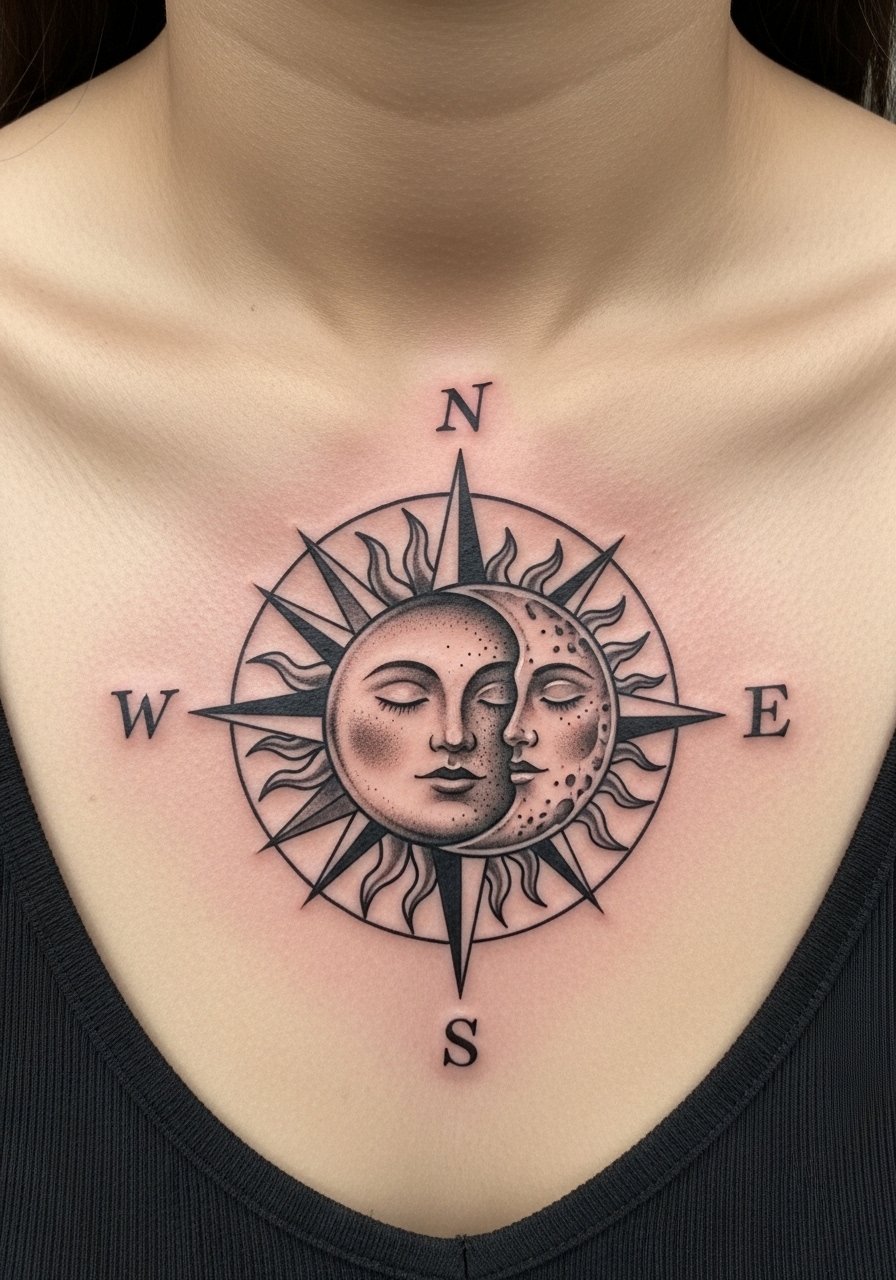
18. Celestial Compass Sun and Moon Sternum
Sternum work is intimate and some shops require specialty portfolios. This placement is sensitive and sessions often include breaks. Tell the artist if you want symmetry aligned with the rib curve so the compass reads centered when you stand. A common mistake is underestimating swelling which can affect initial symmetry. Plan clothing that does not rub during healing and expect a touch-up window if the central lines soften.
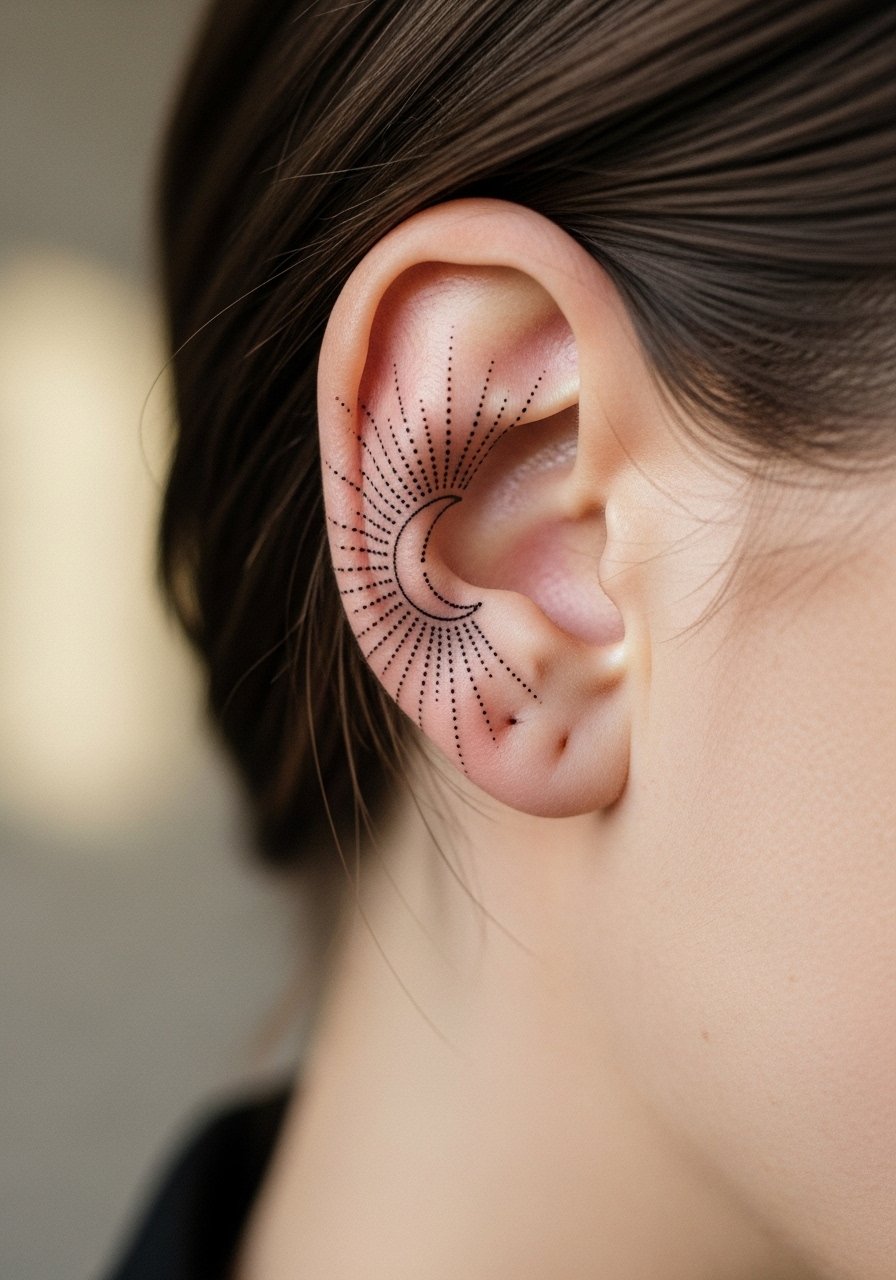
19. Sun Rays Burst behind Ear Minimal Dot Work
Behind-the-ear placements are tiny and discreet but they age differently because of hair oil and sweat. Session times are short but the area is sensitive. Ask for dot work and minimal rays rather than long thin lines which can blur. A frequent error is requesting heavy color there, which rarely retains saturation. This is a good test piece for someone trying out a new aesthetic without a major commitment.
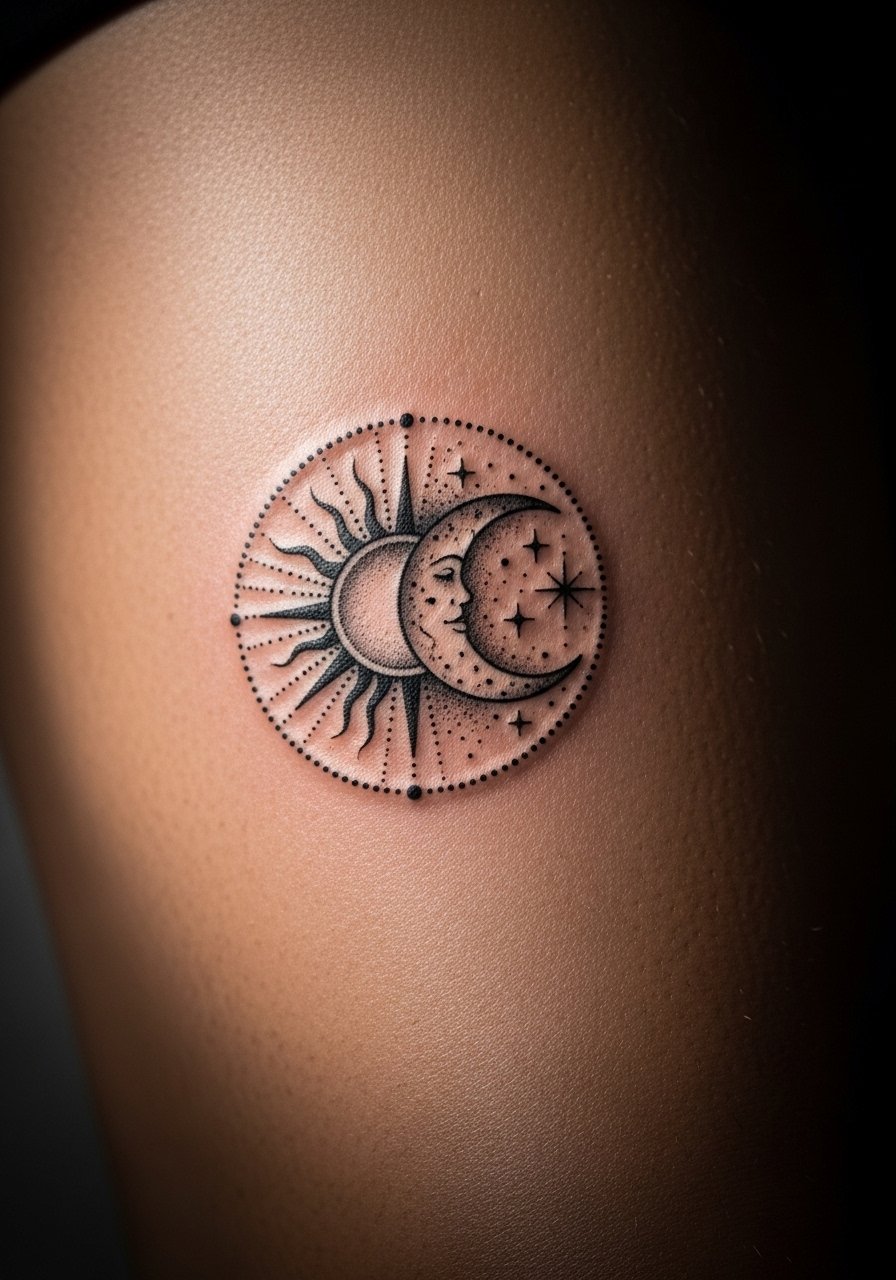
20. Small Solar-Moon Dot Mandala on Outer Thigh
Outer thigh placement is forgiving for size and detail, and it does not see the same friction as inner thighs. This makes it ideal for intricate dot mandalas combined with a small sun and moon. Sessions feel moderate and are comfortable for longer sittings. The usual mistake is shrinking the mandala too much, which loses the layered dot effect. Plan for one or two sessions and a touch-up after the initial healing to sharpen the outer dots.
Tattoo Prep and Aftercare Essentials
From what I've gathered, aftercare choices split communities. One camp trusts occlusive dressings to lock in moisture and ink. The other camp prefers dry healing to avoid trapped bacteria. I have spoken with artists who use both methods depending on skin type. For first-timers plan a two-week sun avoidance window and ask your artist about SPF after the initial healing. Trust your artist when they explain why they use a particular aftercare protocol, and bring a simple kit to your appointment so you leave prepared.
Shopping list
Fragrance-free gentle foaming cleanser. Use for cleaning the area lightly in the first week, especially if you sweat during summer.
Lightweight fragrance-free balm for tattoo healing. Applies thinly to keep scabs soft without suffocating the skin.
Medical-grade second skin bandage, small sheets. Useful if your artist prefers an occlusive first covering for the first 24 to 48 hours.
Mineral SPF 50+ sunscreen stick. After healed, use daily on exposed tattoos to prevent color loss.
Gentle microfiber travel towel. Soft and quick-dry for blotting the area after light cleansing.
Breathable cotton clothing set for healing. Choose loose pieces that will not rub new ink.
Lightweight occlusive gel patches, single-use pack. Handy for spot protection if you are active in the first week.
Antiseptic gentian violet alternative foam. Use when instructed by your artist for small weepy spots or extra cleaning needs.
Every tattoo is different. Always follow your artist's specific aftercare instructions. Consult a dermatologist if you have skin concerns or unusual healing issues.
Frequently Asked Questions
Q: Will fine line wrist tattoos blur faster than blackwork forearm pieces?
A: From what I've seen fine line wrists do soften sooner because of constant motion and friction. Blackwork forearms retain contrast longer. If you love fine line ask for slightly heavier linework and a touch-up plan at your consult.
Q: Do watercolor back pieces need different healing than traditional tattoos?
A: Yes. Watercolor pieces often use lighter saturation and more skin tone as negative space, so they need strict UV avoidance during the first month. Some artists also recommend occlusive covering initially while others prefer dry healing. Ask which approach your artist uses and why.
Q: How should someone with darker skin choose between fine line and blackwork for visibility?
A: Blackwork typically reads better on darker skin because saturation shows for longer. Fine line can work if the artist increases line weight and spacing. Bring clear portfolio examples and use the discovery pathways like Instagram hashtags and local directories to find artists experienced with darker tones.
Q: If I want a micro finger sun and moon, how often should I expect touch-ups?
A: Expect a touch-up at six to twelve months for fingers, and possibly another around year two. Fingers face constant wear, so plan touch-ups into your budget and timeline.
Q: What should I say at the consult to avoid a design that ages poorly?
A: Show clear photos of healed pieces you like and ask the artist to point out what they would change for longevity. Ask about line weight, spacing, and placement alternatives. Trust your artist when they explain technical choices, but also confirm you can see healed photos of similar work.
Q: Are silicone occlusive dressings safe for summer tattoos if I sweat a lot?
A: They can be, but sweat under an occlusive dressing can trap moisture. If you sweat heavily ask the artist about shorter occlusive windows and a switch to dry care earlier. Plan to use breathable clothing and avoid intense workouts in the first week.
Q: Where can I find artists who specialize in celestial pieces near me?
A: Use hashtag searches like #SunAndMoonTattoo and #CelestialTattoo on Instagram, browse Tattoodo directories by city, and check local tattoo convention listings. Book consultations and request healed photos of similar placements before you commit.