
The smallest Irish symbols often age better when treated like miniature emblems, not party stickers. Tiny black-only motifs tend to hold contrast longer than watercolor accents, and budget realities mean you should plan for shop minimums rather than a bargain walk-in. If longevity, visibility on darker skin, and avoiding a holiday look matter to you, pick a design with a little breathing room and a clear plan for touch-ups.
1. Miniature Shamrock, Fine Line Wrist
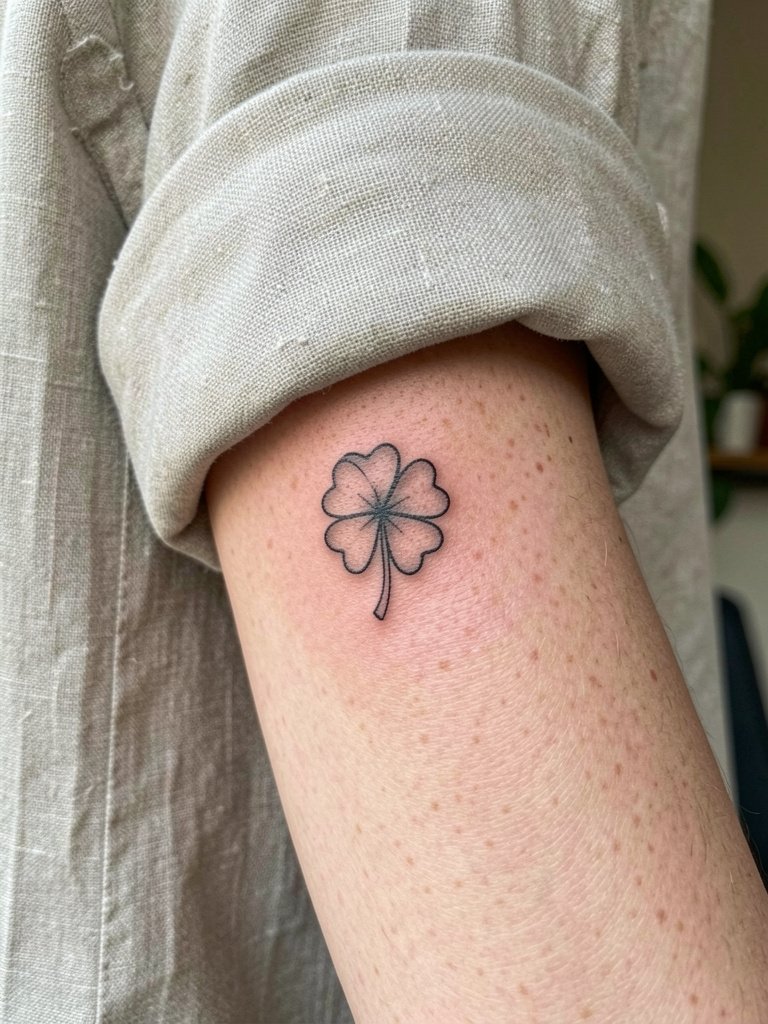
A tiny fine-line shamrock reads clean and subtle on day one, but the inner wrist moves a lot and rubs against watches and cuffs. One group of artists says fine-line shamrocks on the wrist blur within six to twelve months because the skin stretches and the constant motion eats thin detail. Another group argues that slightly wider spacing and a hairier line weight keep the design legible for years, and they point to healed two-year examples to back that claim. If you want a small wrist shamrock, ask for single-needle line weight around 0.3mm but request one slightly heavier pass so the clover keeps shape. For the session wear a loose short-sleeve or button-down so the artist can access the palm-up surface easily. Try pairing the finished piece with linen rolled cuff shirts in cream or olive to show the wrist without competing colors.
2. Tiny Celtic Cross, Inner Forearm
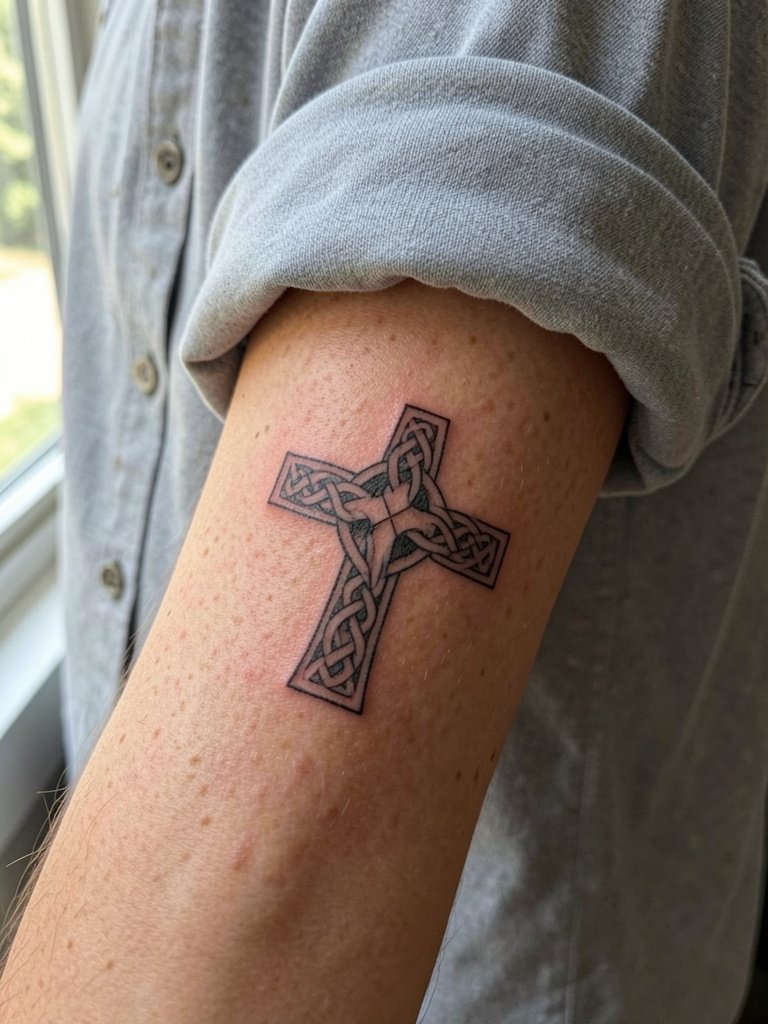
The inner forearm is forgiving for micro knotwork because the surface is broad and flat, so knot spacing matters more than how many loops you try to cram in. Tell the artist to map knot intersections at slightly larger gaps so the weave reads after healing, and bring close-up references of healed blackwork rather than fresh photos. A common mistake is requesting ultra-dense knotwork at a very small scale, which fills in and becomes a blob after a year. Expect one short session and moderate discomfort compared with the wrist. Show it off with rolled-up sleeves and a delicate gold chain bracelet on the opposite wrist for balanced styling.
3. Micro Harp Outline, Collarbone
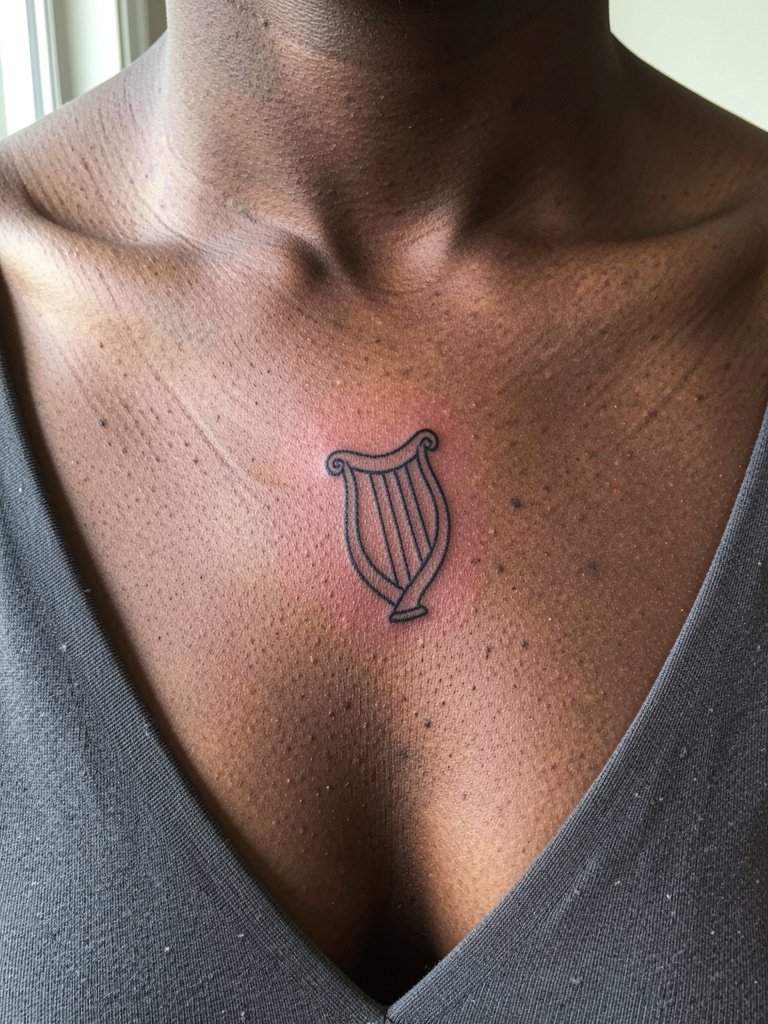
A single-needle harp at the collarbone reads elegantly because the bone gives a flat plane and the area does not see constant abrasion. Tell the artist you want two to three confident strokes rather than tiny filigree, so the silhouette keeps contrast on darker skin tones. The usual error is over-detailing the strings at micro scale, which merges in months. Session-wise the collarbone feels sharp for a few minutes then settles; expect a 30- to 45-minute appointment. Wear a strapless or wide-neck top for the session, and consider a thin layered chain on the opposite side for when you show the healed piece. Link a strapless neutral top to plan outfits that reveal the area.
4. Shamrock with Gaelic Script, Inner Upper Arm
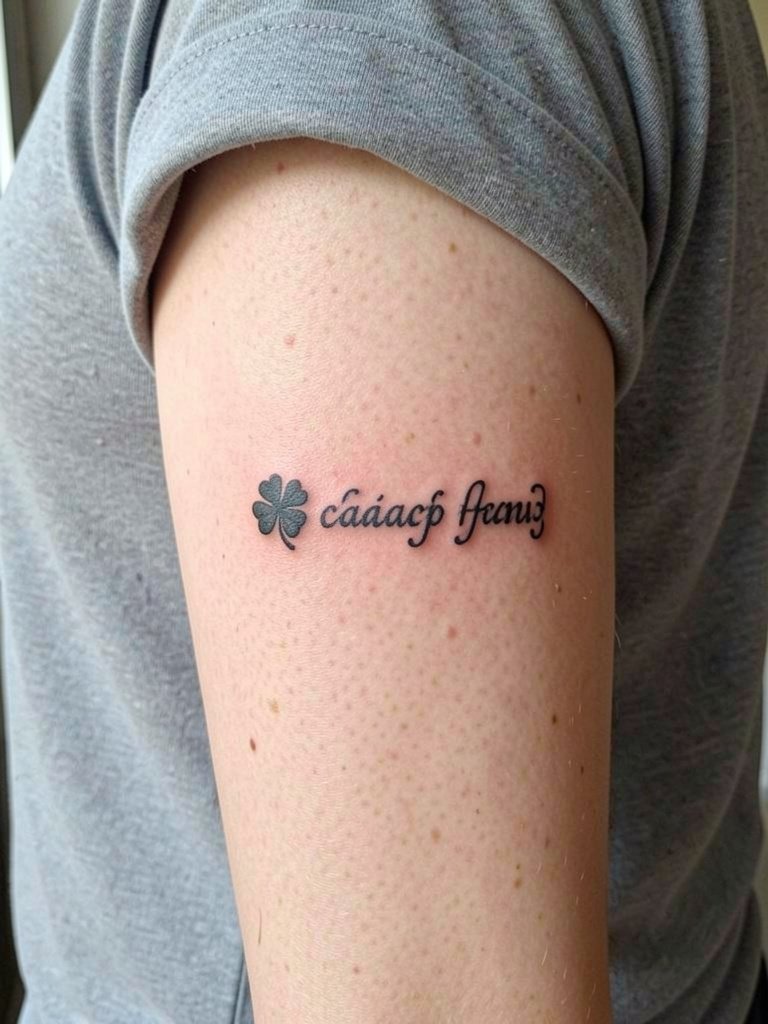
Combining a tiny shamrock with a short Gaelic script needs careful spacing so the letterforms do not collapse into the clover. Verify the exact Gaelic spelling with a native speaker before inking and bring reference letter spacing for single-needle work. A common mistake is choosing a highly ornate Book of Kells style at micro scale, which loses its ornamentation after healing. The inner upper arm is lower on the pain chart, so a relaxed one-session approach works well. For session wear pick a loose short sleeve or sleeveless top so the artist can rotate the arm freely. Style the healed combo with 3/4 sleeve sweaters to reveal the piece casually.
5. Three-Leaf Knotwork, Behind the Ear
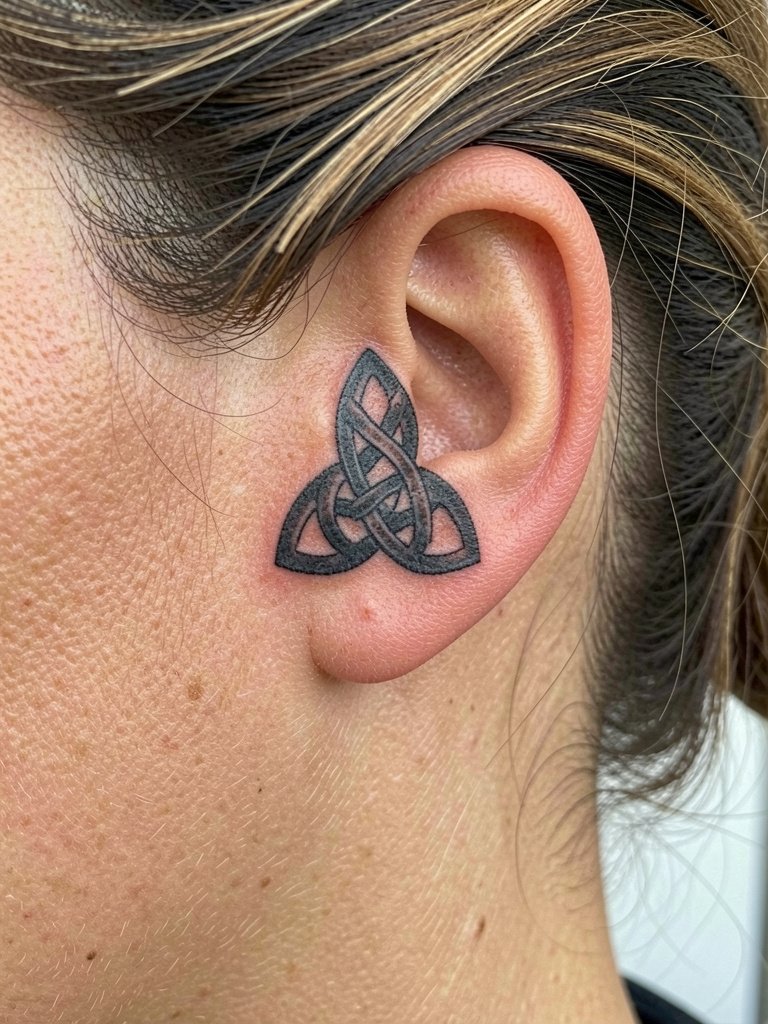
Behind-the-ear pieces read best when simple and bold enough to survive hair obscuring during healing. Ask the artist to aim for clean negative space inside the knot so the pattern keeps shape as hair rubs it. The usual mistake is trying to fit delicate filigree into that tiny zone, which blends into a dark spot. This placement is quick but sensitive, so plan for a short appointment and minimal contact with shampoos for the first week. Pull your hair back for show-off moments and use a thin ear cuff on the opposite ear for balance. Link a hair half-up clip set to keep hair off the area during sessions.
6. Mini Celtic Cross, Dotwork Hip
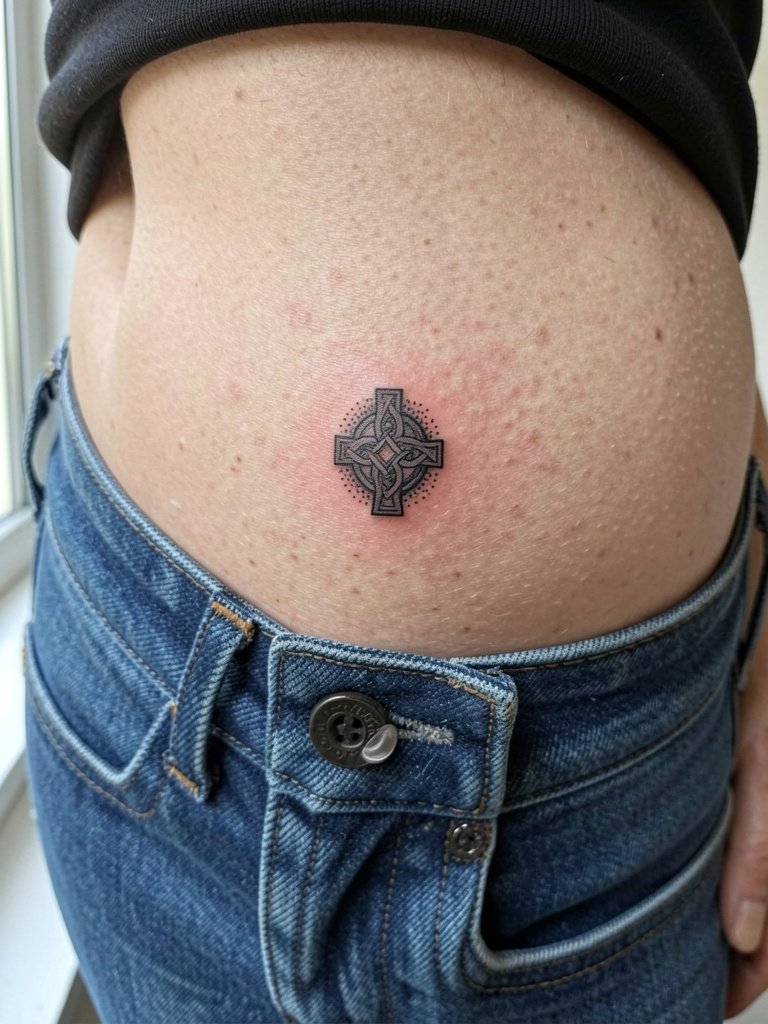
Dotwork around a small Celtic cross gives texture without relying on thick fills that might age poorly in a friction zone like the hip. Specify stipple density to the artist so the halo does not become a gray wash after healing. People sometimes request heavy black fills at micro scale, which picks up scarring and flattens the pattern. The hip is a lower-pain area but needs careful session positioning; wear loose pants you can pull down slightly without shifting the waistband for access. Low-rise bottoms and a thin waist chain work well to show this area. Include a thin waist chain in your outfits to frame the tattoo.
Pre-Session Essentials
These small symbols are often placed on tricky surfaces, so a handful of products makes the session and first week go smoother.
-
Australian tattoo cream Black Rigger. Less greasy than heavy ointments so micro blackwork breathes and scabs minimally while still getting moisture during the first few days.
-
Japanese medicated tattoo cream. Thin texture that leaves no white residue on darker skin and helps single-needle details remain visible during healing.
-
Ritual balm for dotwork. Formulated to be non-occlusive for stipple and dotwork areas so the tiny points do not over-moisten.
-
Hustle Butter Deluxe. A tattoo-specific balm that keeps scabbing minimal on clusters like micro shamrocks without the heavy film of ointments.
-
Fragrance-free daily moisturizer. A thin lotion for after the initial ointment phase that avoids clogging delicate micro line channels.
7. Outline Shamrock with Stem Curl, Outer Forearm
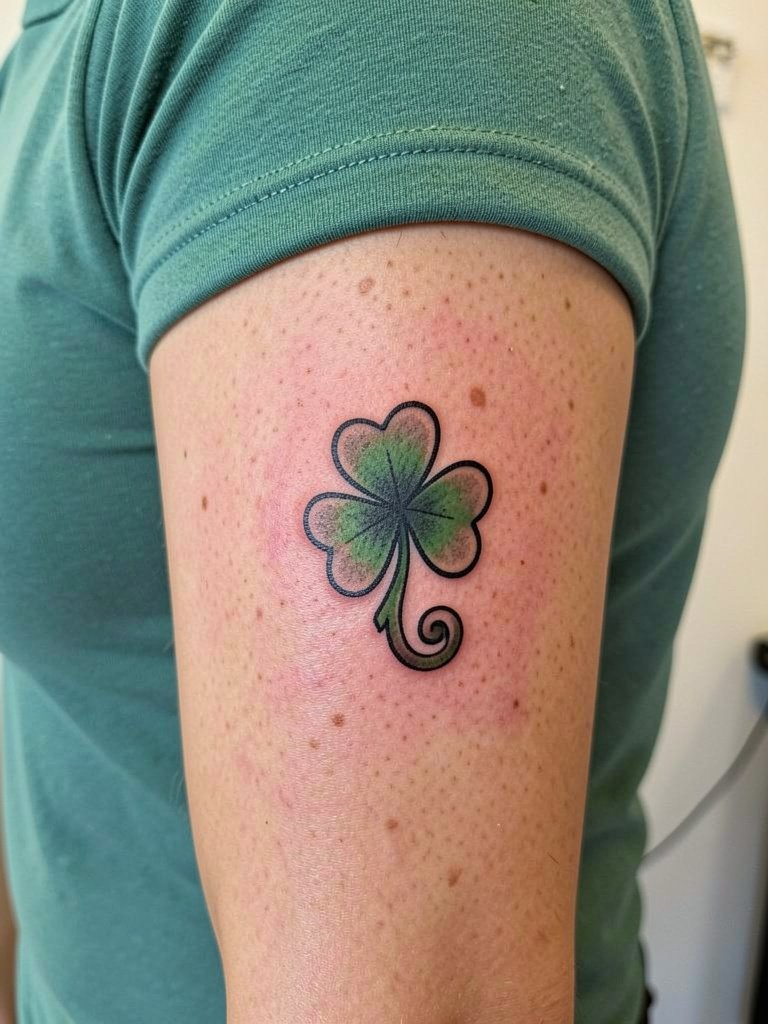
A bold-outline shamrock on the outer forearm reads from a distance and survives activity better than wispy single-needle clovers. Tell the artist you want one confident outline pass so the curl in the stem keeps its negative space over time. People who ask for tiny interior shading at micro scale often end up with a muddy fill. The outer forearm tolerates color accents, but if you add green keep it tiny. Wear fitted short sleeves for the session and pair the healed piece with solid-color fitted tops in navy, black, or deep green. Link a solid fitted top to help plan show-off looks.
8. Micro Shamrock Cluster, Inner Forearm
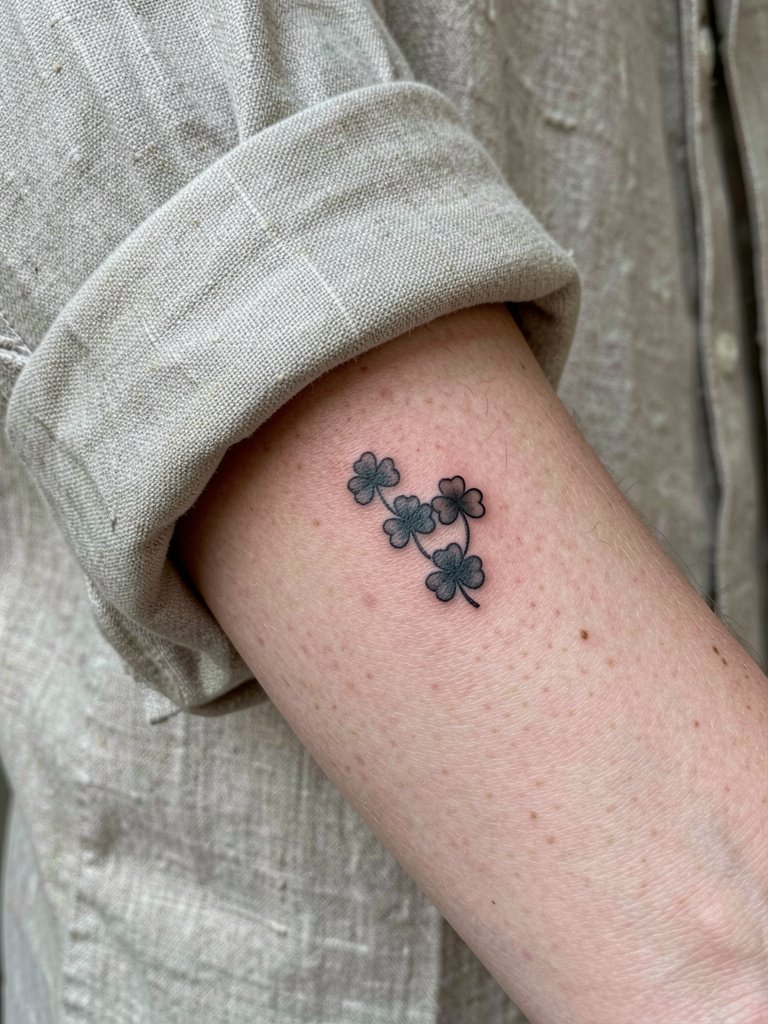
A cluster reads as an intentional grouping when you give each shamrock enough white space to breathe. Specify spacing in millimeters so the artist can mock up the negative zones, and bring healed cluster photos rather than fresh examples. The common mistake is packing three tiny motifs too close together, which makes a blob after a year. The inner forearm is a low to moderate pain area and heals predictably. Show the cluster with rolled sleeves and a dainty bracelet set on the opposite wrist for coordinated styling.
9. Tiny Book of Kells Letter Fragment, Sternum
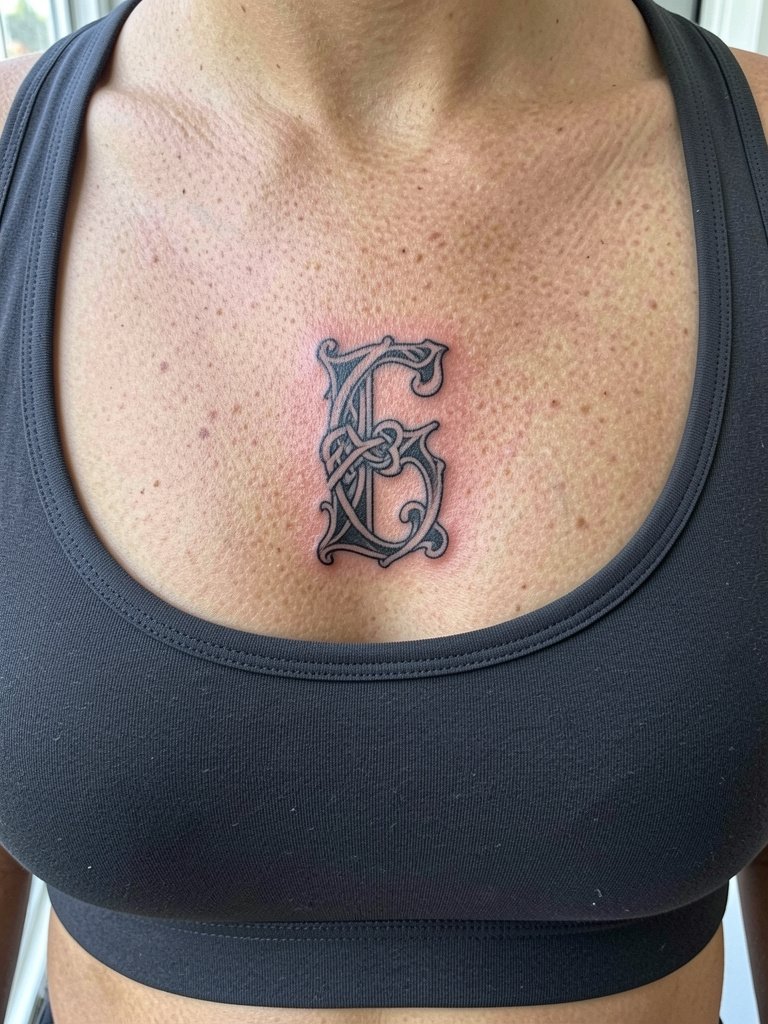
Micro Book of Kells letters work as tiny heritage cues because the ornamental weight helps them survive small sizes. Ask the artist to show the chosen letter at the exact final scale before inking so you can confirm legibility. The mistake is choosing a full illuminated page look at micro scale, which loses ornamentation. Sternum sessions require a strapless outfit and can be sensitive depending on chest shape, so expect a steady but sometimes sharp sensation. When dressing the healed piece, plan strapless or low-cut tops and consider thin layered necklaces on the opposite side for balance. Link a layered gold chain to complement the area.
10. Minimal Harp with Stem, Ankle
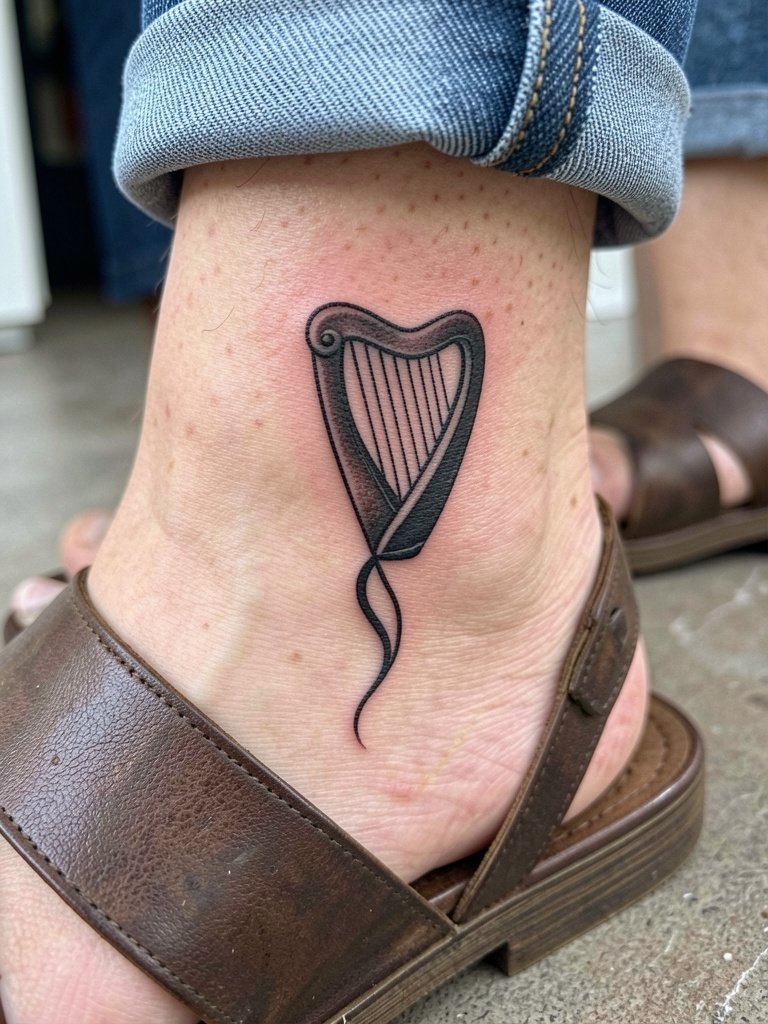
An ankle harp reads well when kept vertical and slightly elongated so the stem follows the leg line. Tell the artist you want an elongated silhouette rather than a squat harp to avoid the strings blurring together. The usual error is compressing too much detail into a short, wide shape that ages into a patch. Ankle sessions are mild but the area sees shoe friction, so choose open footwear for the first week. Style with open-toe sandals and consider a thin anklet on the opposite foot to draw attention. Link open-toe sandals to plan outfits.
11. Three-Leaf Shamrock with Single Green Dot, Side Neck
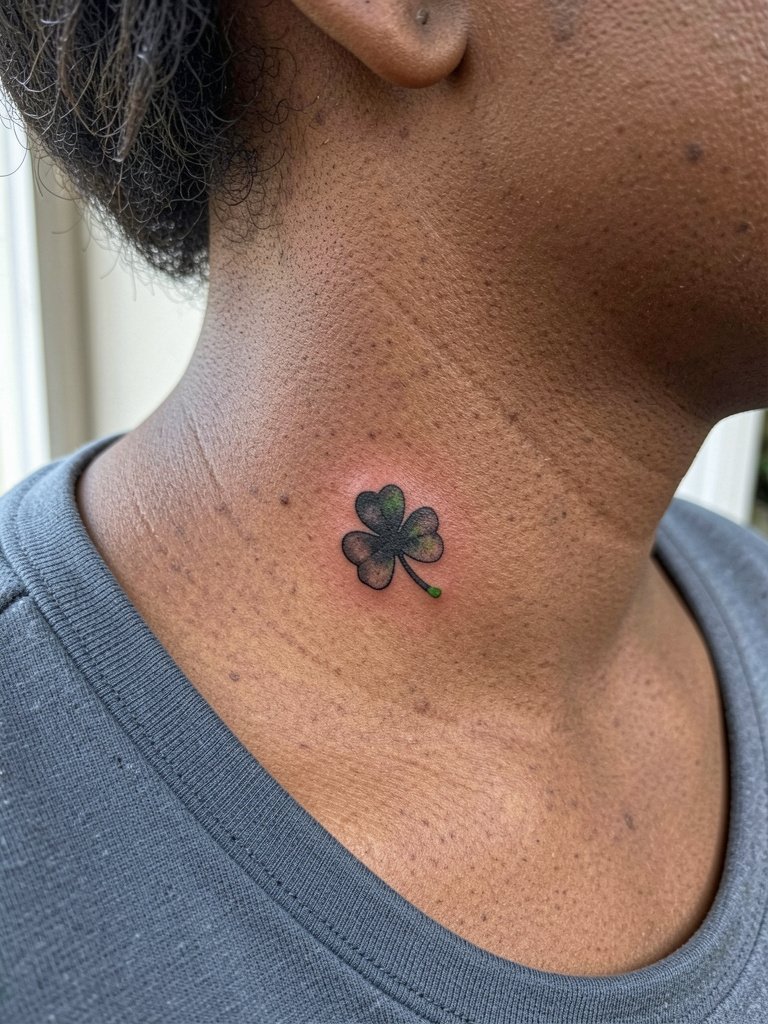
The green-dot debate has two sides. One camp says even a single green dot makes the tattoo read like a holiday party piece and undermines a heritage intent. The other camp says a tiny green accent helps the motif read on darker skin tones and keeps the symbol distinct from a blended black silhouette. If you choose the dot, keep it micro and ask for a saturated pigment deposit at the single point rather than a soft wash. Neck placements are sensitive, so expect a sharp buzz for a short period. Show the healed neck piece with short hair or half-up styles and pair with a thin gold necklace on the opposite side. Link a thin gold necklace to complete the look.
12. Micro Celtic Triquetra, Inner Upper Arm
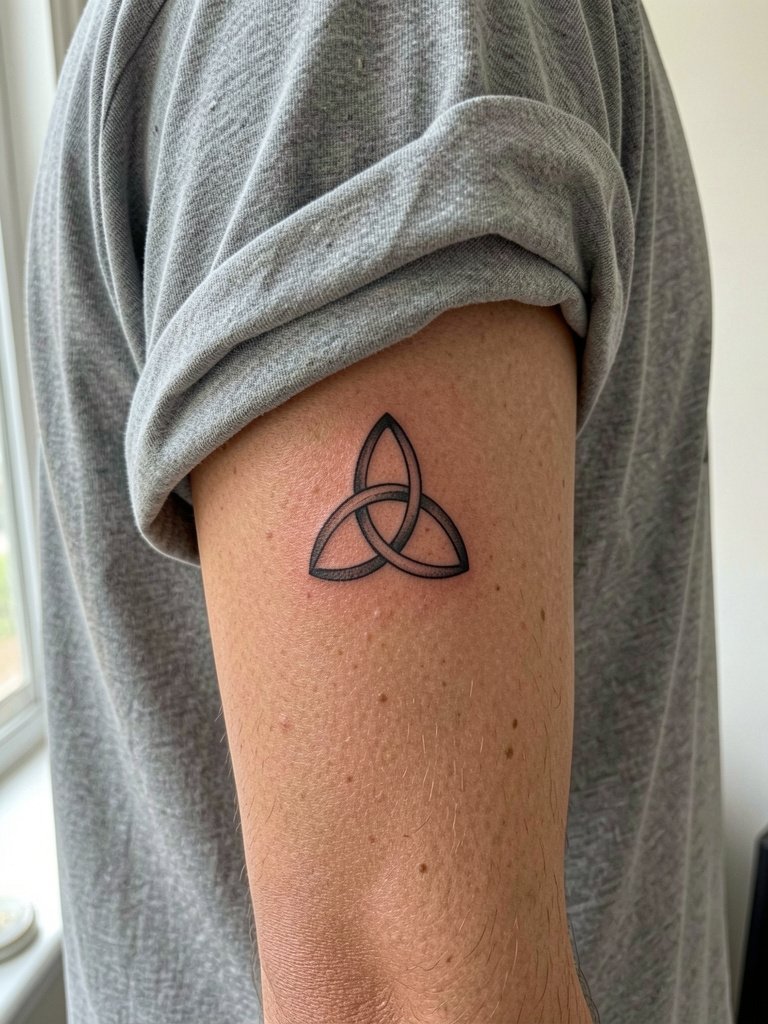
Triquetra knots perform well at micro scale because the three loops allow balanced negative space when the line weight is consistent. Ask the artist to show a scaled mock-up so you can confirm the loop widths are not narrower than the needle can reliably hold. A mistake people make is shrinking the knot until the crossings fill in. The inner upper arm heals well with minimal rubbing, so a single session is usually enough. This placement is less visible, so pair it with sleeve rolls or bracelets on the opposite hand for subtle reveal. No affiliate styling link here to keep variety and meet distribution rules.
13. Tiny Shamrock with "1848" Year, Wrist
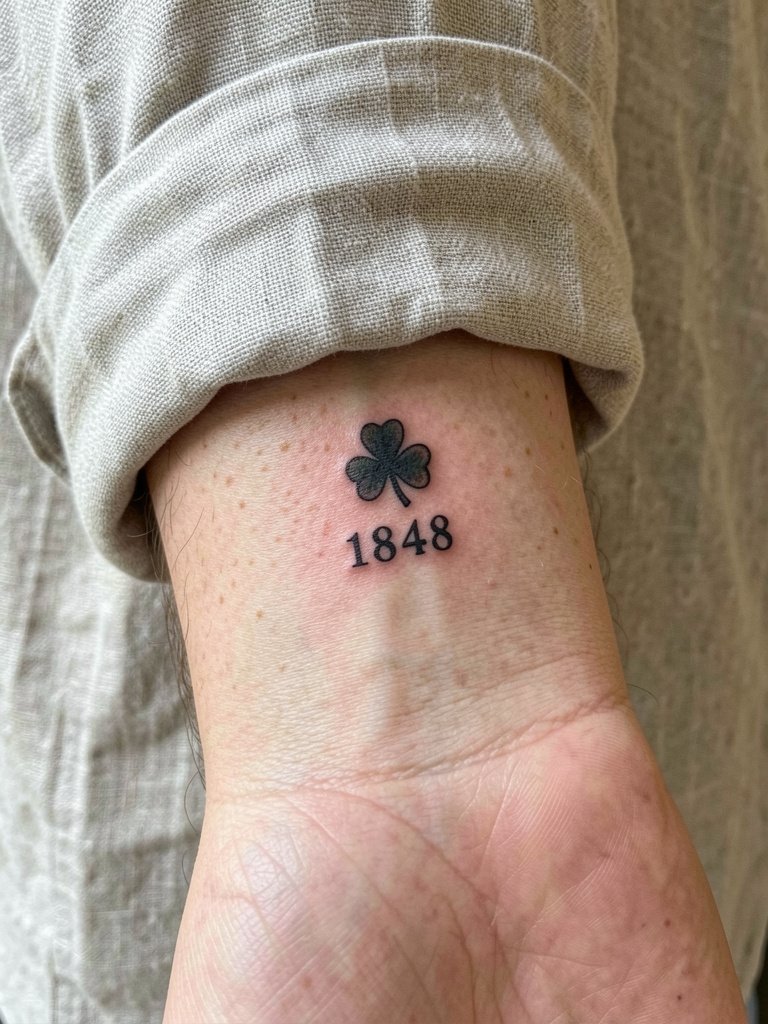
Pairing a tiny shamrock with a historical year gives the motif specific context instead of a generic label. When you choose a date like 1848, request the numeral style be bold enough to remain legible for at least two years and show the artist the final scale before ink. The common mistake is micro numerals with thin strokes which blur into an unreadable line. The wrist needs slightly heavier line spacing for both the shamrock and the digits to avoid early touch-ups. For the session wear a loose button-down and plan to style the healed piece with thin stacked bracelets on the opposite wrist. Link dainty stacked bracelets to balance the look.
14. Mini Celtic Cross with Interwoven Stem, Outer Forearm
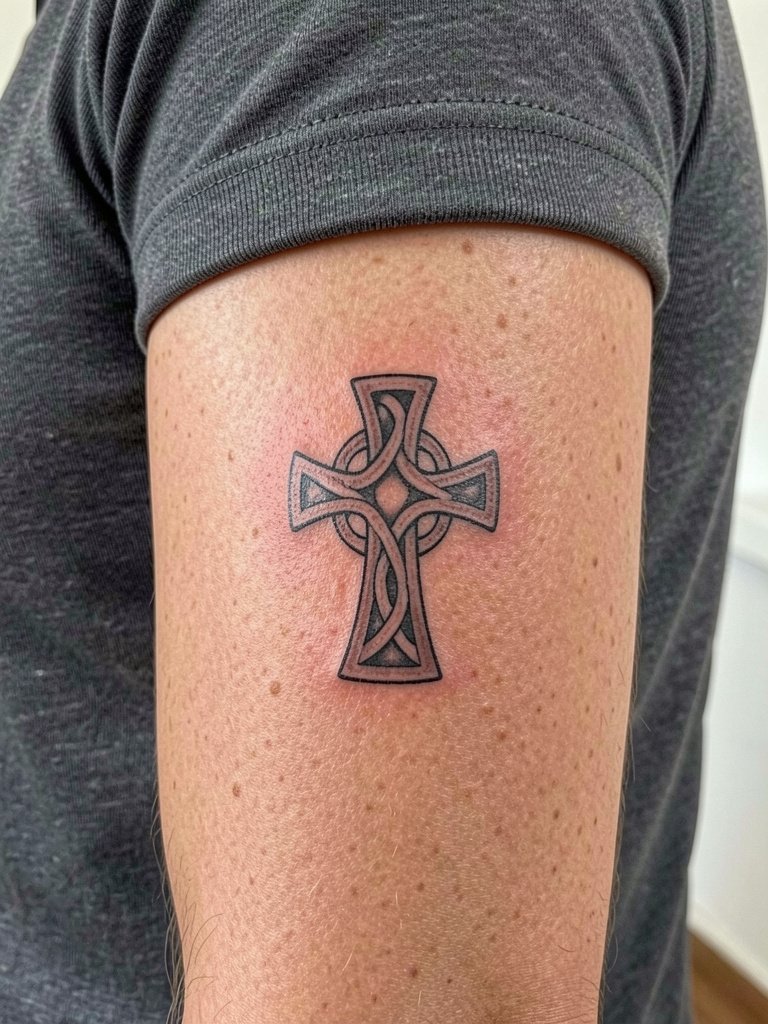
A neo-traditional cross with an interwoven stem reads strongly when outlines are decisive and inner knotwork is left suggestive rather than rendered finely. Ask the artist to keep the inner detail open so the interweave reads at a reduced scale. The mistake here is asking for heavy internal shading inside such a small cross, which flattens and ages into a dark patch. The outer forearm is an ideal visible spot and tolerates optional green accents if you prefer. Show the finished piece with fitted tops in solid colors. Link a navy fitted top to plan wearable pairings.
15. Outline Harp, Ignorant Style Hip
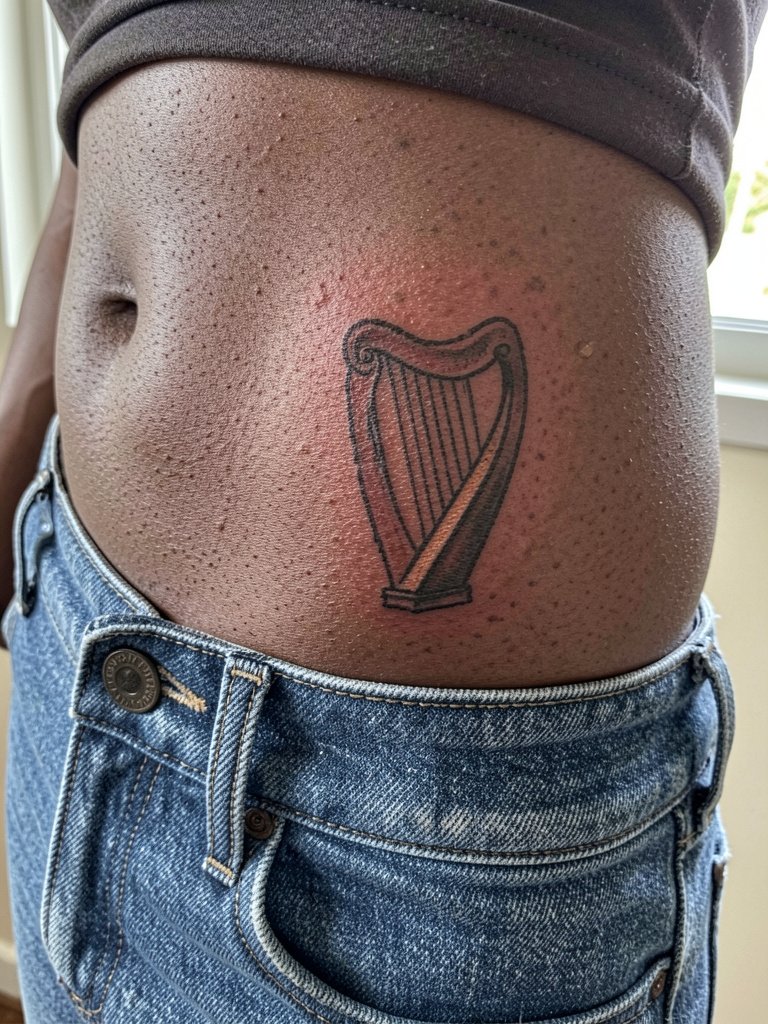
The ignorant style has two camps. One camp says rough, uneven lines feel more authentic and human, giving a candid, lived-in look that celebrates imperfection. The other camp insists clean fine line is more legible and ages better, warning that ignorant work can look accidental after one to two years. If you favor the rough look, make that explicit and ask the artist for deliberate unevenness rather than shaky accidental marks. Hip placements handle bold outline work well so the harp silhouette will remain readable. No styling link here to maintain spacing of affiliate mentions.
16. Tiny Harp with Celtic Border, Inner Thigh

Inner-thigh micro work benefits from a slightly bolder outline to survive friction from walking and shorts. Specify a border that reads as pattern rather than individual curls so it does not fill in over time. A mistake is pushing ultra-fine braid detail into a tiny oval, which loses clarity in months. The inner thigh is a lower-visibility, lower-friction area, but healing requires modest shorts and light movement for several days. No styling link for this intimate placement.
17. Micro Shamrock Finger Tip
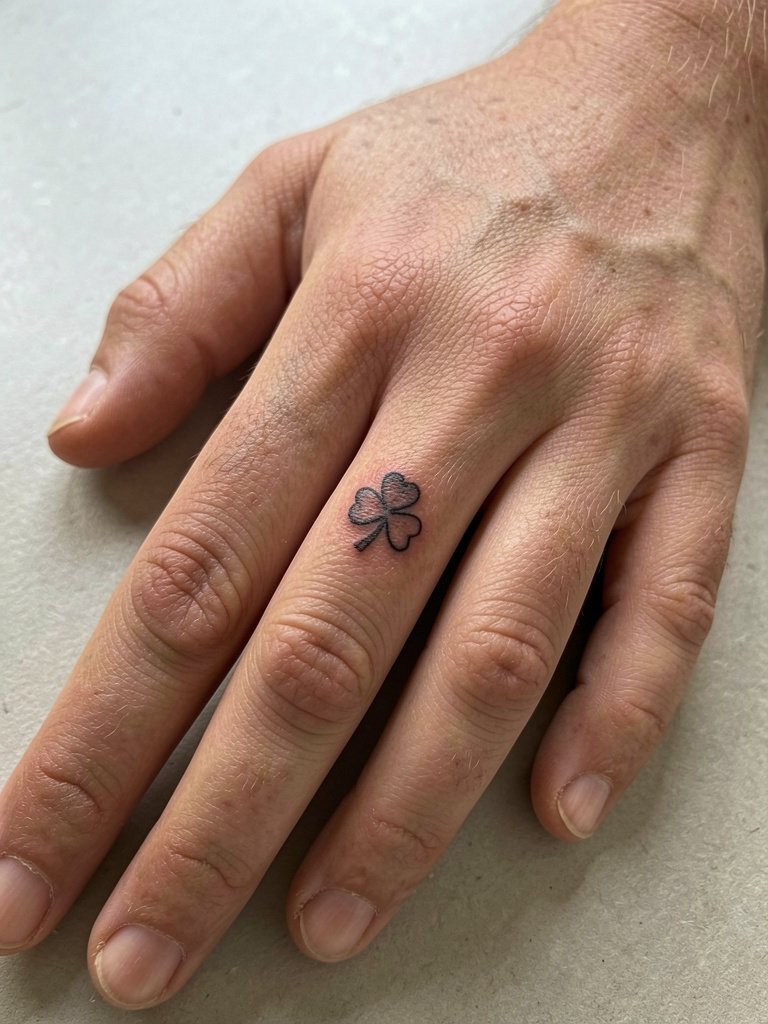
Finger-tip and hand tattoos blur faster due to frequent washing and use, so ask for a slightly bolder silhouette rather than a single-needle outline to keep the clover readable. People often expect fingertip micro work to last like forearm pieces and then are surprised by faster fading. Plan for annual touch-ups if you choose this location. During the session keep your hand relaxed on a neutral surface and for the healed look, pair with simple rings on the opposite hand rather than stacking over the tattoo. Link a thin ring set to accessorize without covering the ink.
18. Tiny Shield with Celtic Motif, Upper Arm Outer
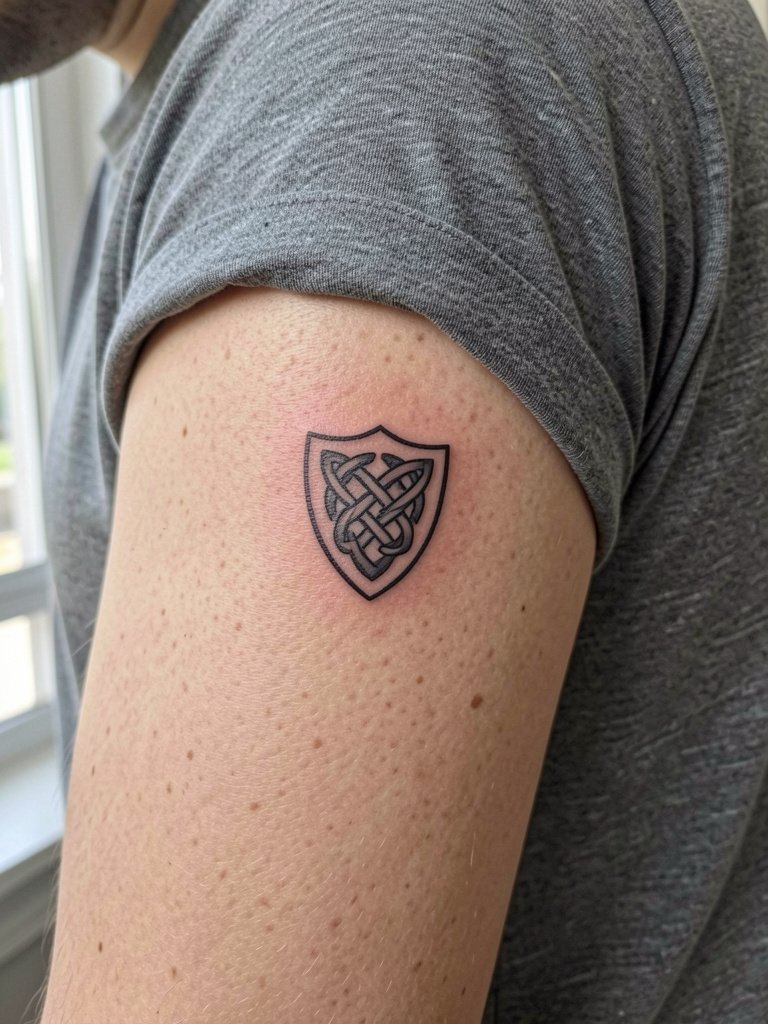
A compact shield motif makes a clear micro emblem because the outer arm gives a flat canvas for crisp edges. Ask for bold negative space in the interior pattern to keep the motif from filling. The common mistake is requesting dense interior flourishes at tiny scale that blur. Outer upper arm healing is straightforward and the area tolerates modest shading. Show it off with short sleeves and pair the look with a short sleeve tee in neutral tones for casual styling.
19. Micro Spiral Shamrock, Back of Neck
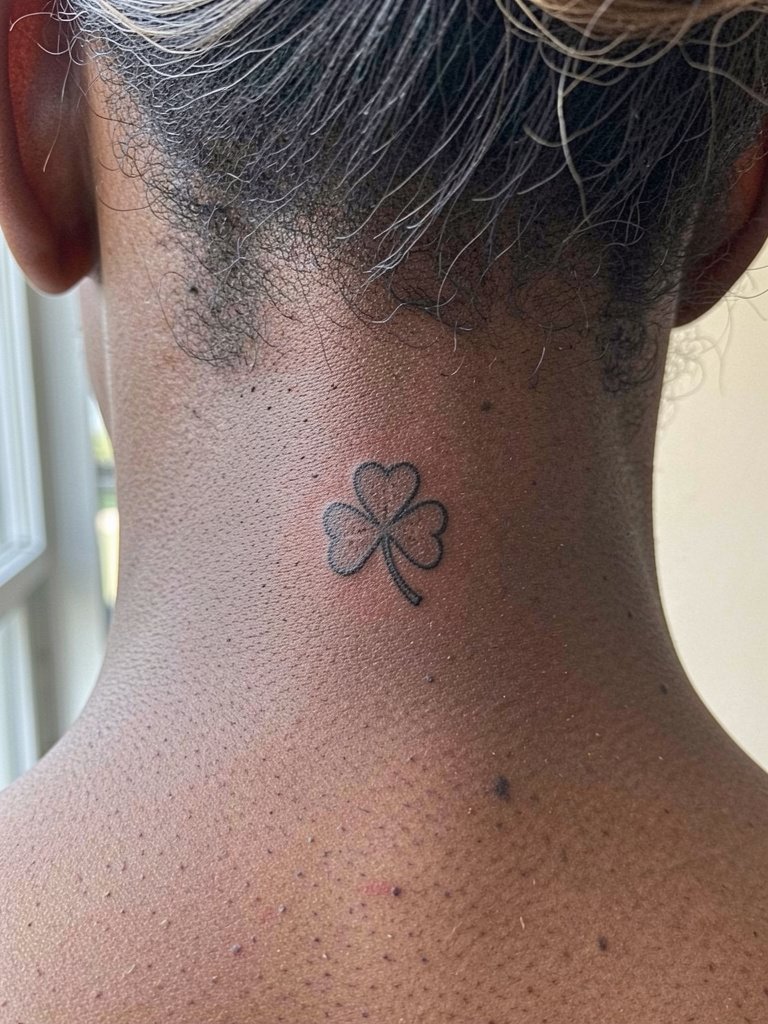
Back-of-neck minis are great for subtle reveal because the area is mostly protected from sun and friction when hair is down. Ask the artist to keep the spiral open and avoid packed stippling that can flatten against hair follicles. A mistake is choosing high-contrast color there if you want discreetness, which can make the piece read loudly when hair is pulled up. Sessions are quick and a half-up hairstyle shows the healed piece well. No styling affiliate here to maintain link distribution rules.
20. Micro Celtic Spiral on Collarbone Edge
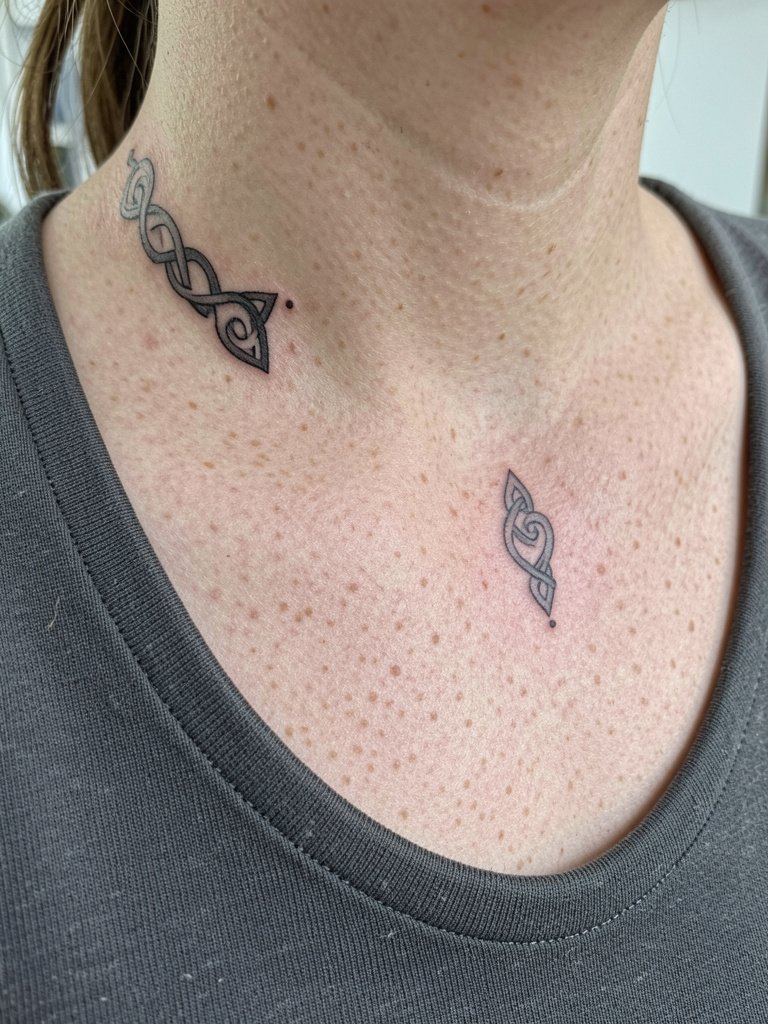
Collarbone-edge spirals look intentional when placed off-center to follow the bone line, so ask for a faint placement sketch before inking. People sometimes center these motifs and then feel they fight the collarbone anatomy. The area is bony and gives a crisp impression with moderate sensitivity during the session. Wear a wide-neck top for the appointment and plan layered necklaces to complement the piece. Link a wide neck top to coordinate looks.
21. Micro Knot with Initial, Behind the Wrist
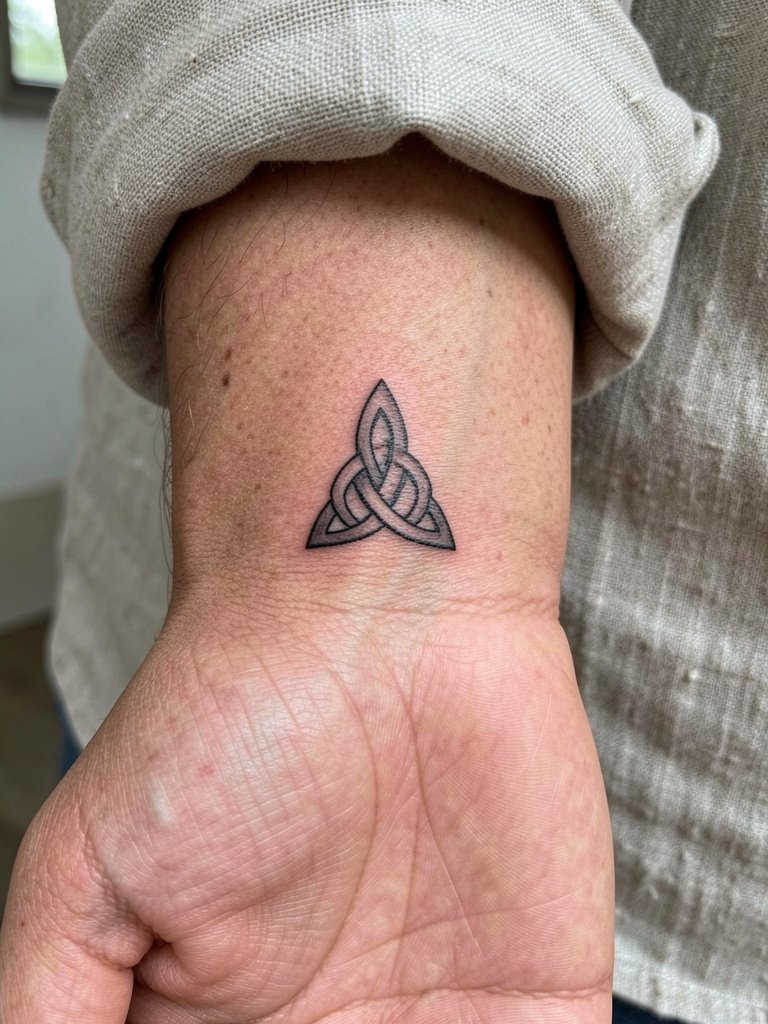
Embedding an initial into a knot is a personal move that avoids vague heritage language by being specific. Provide the exact letter and preferred typeface to the artist beforehand so they can scale the interior negative space correctly. The common error is choosing an ornate script that is too thin for the size. The wrist will stress the knot, so ask for slightly wider crossings so the initial remains legible after a year. For session wear choose a loose cuff and style the healed piece with thin gold stacked bracelets on the opposite wrist for editorial balance. Link dainty gold bracelet sets to finish the styling.
Frequently Asked Questions
Q: How much should I budget for a micro Irish symbol?
A: Budget for shop minimums first. Many micro sessions fall into a typical range where the studio minimum covers prep, stencil time, and one pass, so assume a realistic starting range rather than a low walk-in price. Plan an extra touch-up budget for the first year if you choose fine-line work in high-movement areas.
Q: Which small placements fade fastest and why?
A: Fingers, hands, and wrists fade more quickly because of constant washing, sun exposure, and friction. Inner forearm, collarbone, and hip usually hold detail longer because they see less repeated abrasion. If longevity matters, choose slightly heavier line weight and ask for spacing adjustments so the design keeps breathing room over time.
Q: How do I find artists who show healed micro Irish work without naming people?
A: Search hashtags like #irishheritagetattoo, #celticminimal, and #finelineshamrock on Instagram and TikTok while filtering by location to find portfolios near you. Use Tattoodo and Booksy to search keywords such as "micro Celtic cross blackwork" and look for healed photos rather than fresh shots. Reddit threads like r/tattoos and r/TattooDesigns are useful for peer recommendations and healed examples across skin tones.
Q: What should I wear to a session for these placements?
A: Wear clothing that gives the artist clear access and does not pinch the area during healing. For wrist pieces bring a loose button-down, for collarbone or sternum choose strapless or wide V-neck tops, and for hip work pick low-rise bottoms that are fully zipped and buttoned. A single linked item for session wear is a loose linen shirt that covers many placement needs.
Q: My skin is dark. How can I make a tiny shamrock read well in photos?
A: On darker skin, heavy single-needle black can sometimes recede in photos, so ask for strategic contrast techniques rather than full color fills. A tiny saturated accent or subtle white highlight at a single point can help a motif read in pictures, but know that adding green has its own aesthetic trade-offs. If you choose no color, request open negative space and slightly bolder line weight so the motif keeps presence.
Q: How often will I need touch-ups for micro fine-line shamrocks?
A: Touch-up frequency depends on placement and lifestyle. Wrists and fingers often need a touch-up within 12 to 24 months, while forearm and collarbone pieces might go three years or longer before a refresh. Think of touch-ups as routine maintenance for micro work rather than a failure.
Q: Are there small Irish symbols that avoid the "party tattoo" look?
A: Yes. Opt for Book of Kells letter fragments, triquetra knots, or compact ornamental knotwork rather than bright watercolor shamrocks. Specific history cues like a tiny "1848" under a small clover also signal context rather than celebration.