
A quick warning before you scan the pictures: St. Patrick’s Day motifs are easy to grab in the moment and hard to live with for a decade. Keep meaning at the design level, plan spacing for where the skin moves, and pick a color strategy that reads on your tone. Start with a tiny four-leaf option that proves how subtle symbolism can feel permanent without turning into one-season flair.
1. Fine Line Four-Leaf Clover on Inner Wrist
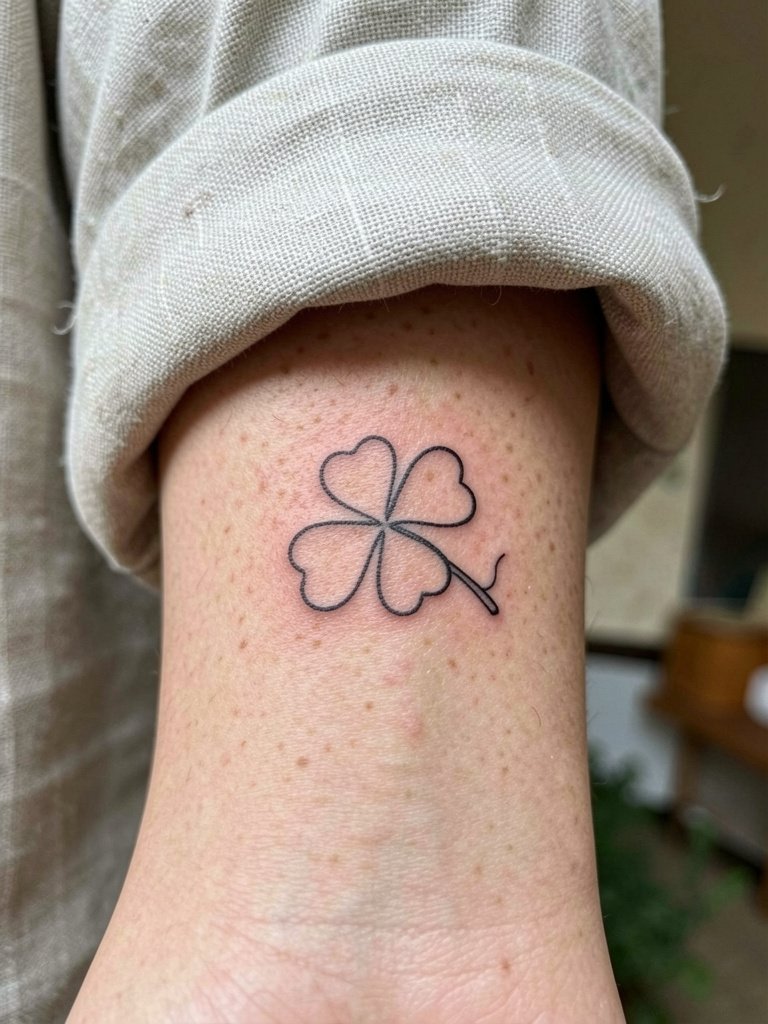
A tiny single-needle clover reads crisp at first and can look understated for years if planned right. One camp argues fine line on the wrist blurs into a smudge within two years because the wrist stretches and gets rubbed constantly. Another camp says fine line can hold if the artist uses a slightly heavier single-needle spacing and sets the lines shallower in the epidermis while allowing room between leaf veins. Practically, ask for a line weight that is a hair stronger than your favorite reference and for spacing between veins so the leaves do not merge with everyday wear. Expect a one-session piece and a likely touch-up at 12 to 18 months if you wear tight bracelets. For showing it off pair with rolled cuff linen shirts in cream or olive and a thin gold chain bracelet on the opposite wrist.
2. Neo-Traditional Shamrock with Harp on Lateral Hip
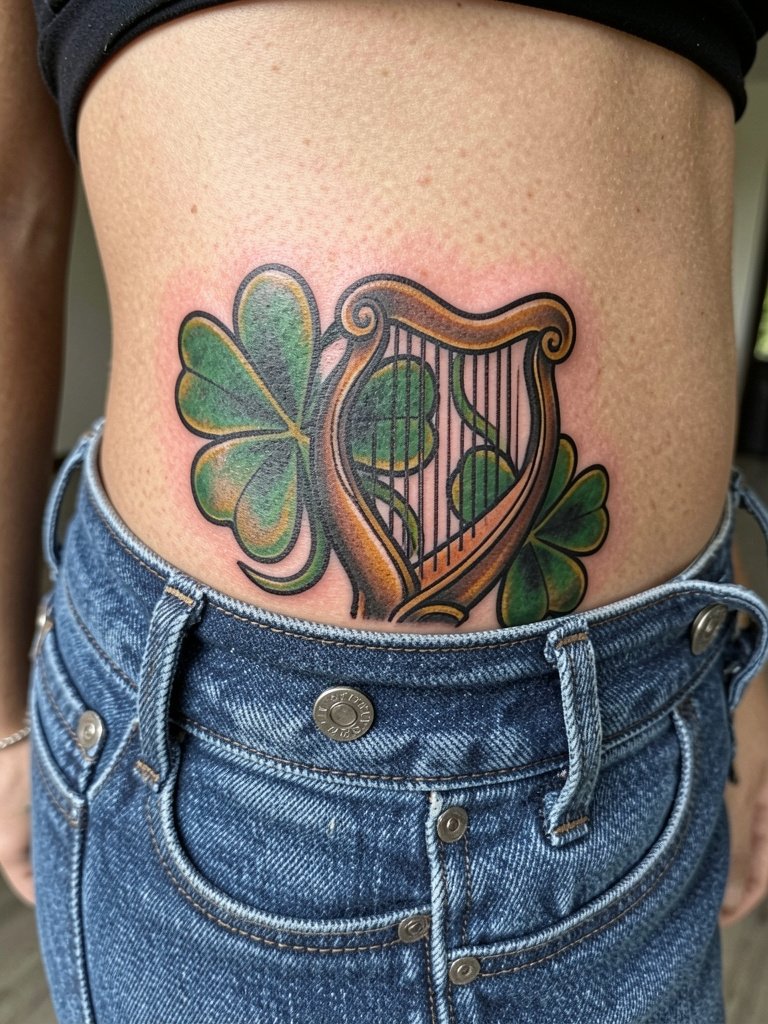
A neo-traditional harp and shamrock gives you color and presence without resorting to cartooning. For the hip the session feels relaxed because you can lie on your side, and the artist needs the waistband out of the way. The common mistake is asking for tiny instrument detail too close to the waistband, which leads to smudging when clothes rub. Specify that outlines remain bold enough to anchor the color fills so the green stays readable as the piece heals. If you want to show it off, pick high-waisted shorts or a flowy skirt that reveals the hip when you walk. Expect one session for a 3–5 cm piece and a touch-up window at 9–15 months if the gold needs re-saturation.
3. Minimalist Single-Stroke Shamrock on Inner Forearm
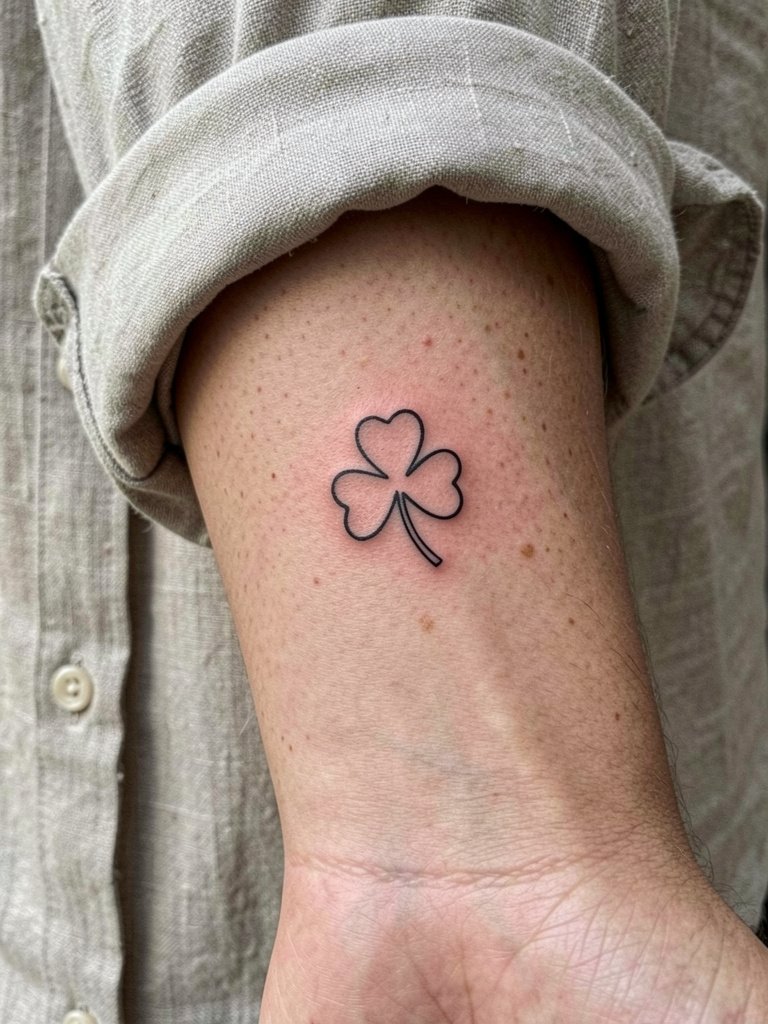
The single-stroke approach reads as modern and clean for people who want a minimal nod to Irish symbols without holiday flash. A typical problem is asking for the line so thin that the arm's texture makes it disappear by year two. Specify slightly increased line weight and request examples of healed single-stroke work at 12 months so you see how it softens. For placement the inner forearm is lower-friction than the wrist, so fine line holds better there. Session time is short and the pain is mild to moderate. For daytime wear, roll sleeves and use linen button down shirts in cream or sand to frame the piece.
4. Watercolor Clover Cluster on the Collarbone
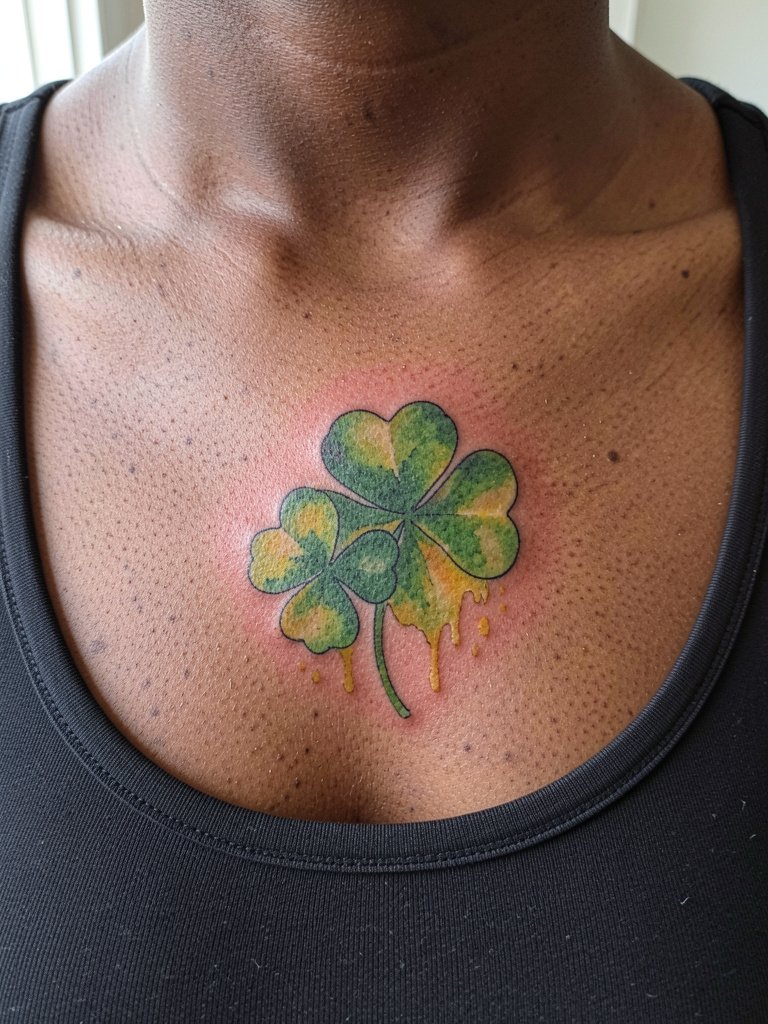
Watercolor looks painterly on light skin and can be a beautiful collarbone accent if executed with saturation in mind. One camp warns that watercolor greens turn ashy or disappear on darker skin because pale pigment lacks contrast. The other camp argues watercolor can work on darker skin when artists use high-saturation greens and anchor the wash with a subtle black edge or micro-outline. If you have medium or dark tone ask the artist how they will anchor the color for contrast, and bring healed examples on similar skin. The collarbone is visible and shows color well. Wear a sleeveless neutral top to display it, for example pair with a sleeveless top in neutral tones. Plan for one session and budget a possible color boost at 9–18 months.
5. Blackwork Celtic Knot Shamrock on Medial Inner Thigh
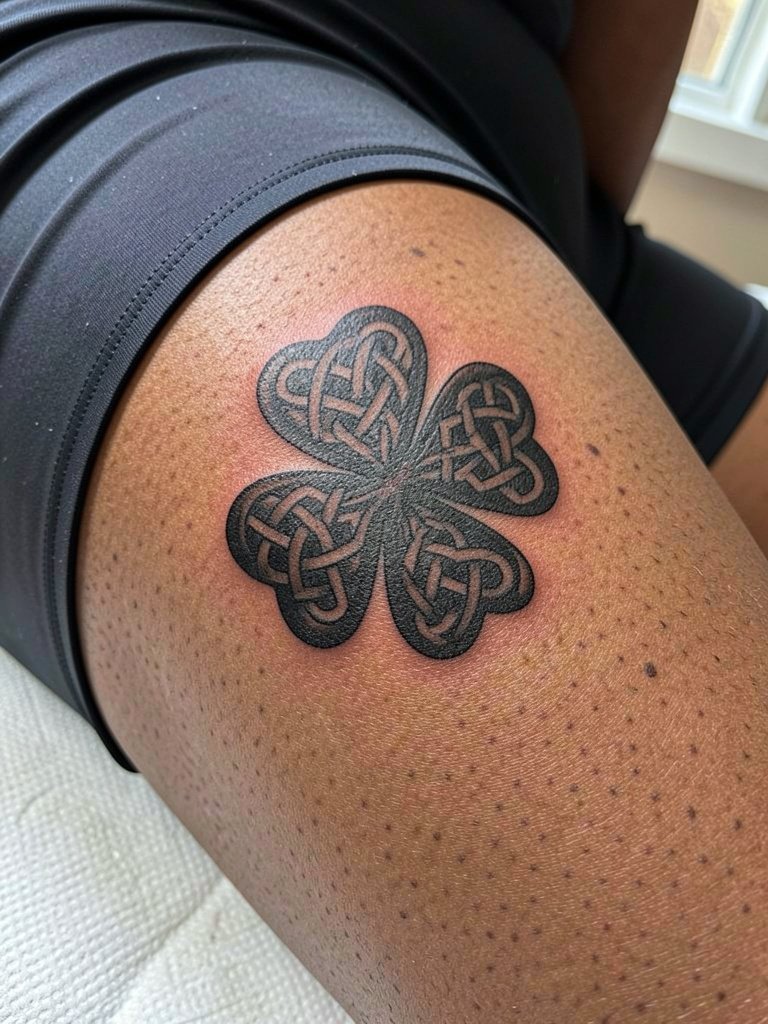
A blackwork knot shamrock gives you contrast that holds on darker tones and ages predictably. The inner thigh is intimate and the session requires modest coverage so wear loose drawstring pants or shorts for the appointment. The common mistake is over-detailing the knots at a small scale, which will soften into a blob after healing. Request simplified knot intersections and ask how the design will read at three and five centimeters. Pain varies with tenderness on the inner thigh and most people rate it moderate. To show it off choose high-waisted shorts or a flowy skirt and consider a layered chain belt for balance.
6. Fine Line Irish Script "Luck" on Upper Inner Arm
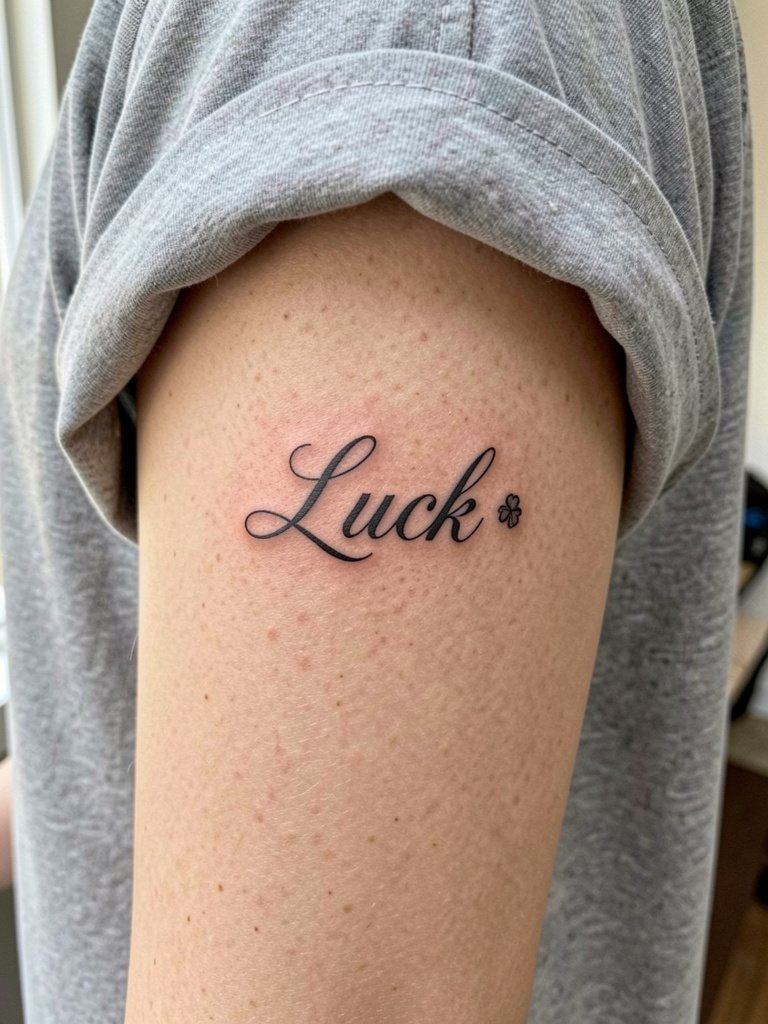
Script with a tiny clover is a subtle choice for someone who wants the four virtues spelled out without heavy ornament. The typical mistake is specifying a script that is too thin or a baseline that curves into the armpit, which increases blur risk. Ask for spacing between letters that preserves counters after two years and for letters to maintain a small x-height so the word reads at distance. The inner upper arm has lower friction than the wrist so fine line fares better here. Session time is short and discomfort is low. For showing the piece pair sleeveless tops or a layered chain necklace that sits above the inscription.
Session Day Picks
These items smooth out small-session logistics for the wrist, forearm, and hip pieces above.
- Japanese non-scented tattoo gel. Lighter in texture than thick ointments, people with oily skin report less clogged pores and it helps color sit evenly while the piece heals.
- Hush Balm-style aftercare salve. A drier balm many users prefer for the second week of healing when heavy ointments feel greasy.
- Australian Tattoo Post-Heal product. Formulated for color retention over the long term, it pairs well with blackwork or saturated green pieces that need extra longevity.
- Topical numbing cream. Useful for short rib or sternum sessions to reduce the initial sting, applied per product instructions before the appointment.
- Aquaphor Healing Ointment. Thin layer use for the first few days helps lock in moisture for fine line work without the greasiness some other balms cause.
7. Neo-Traditional Leprechaun Hat Micro Behind the Ear
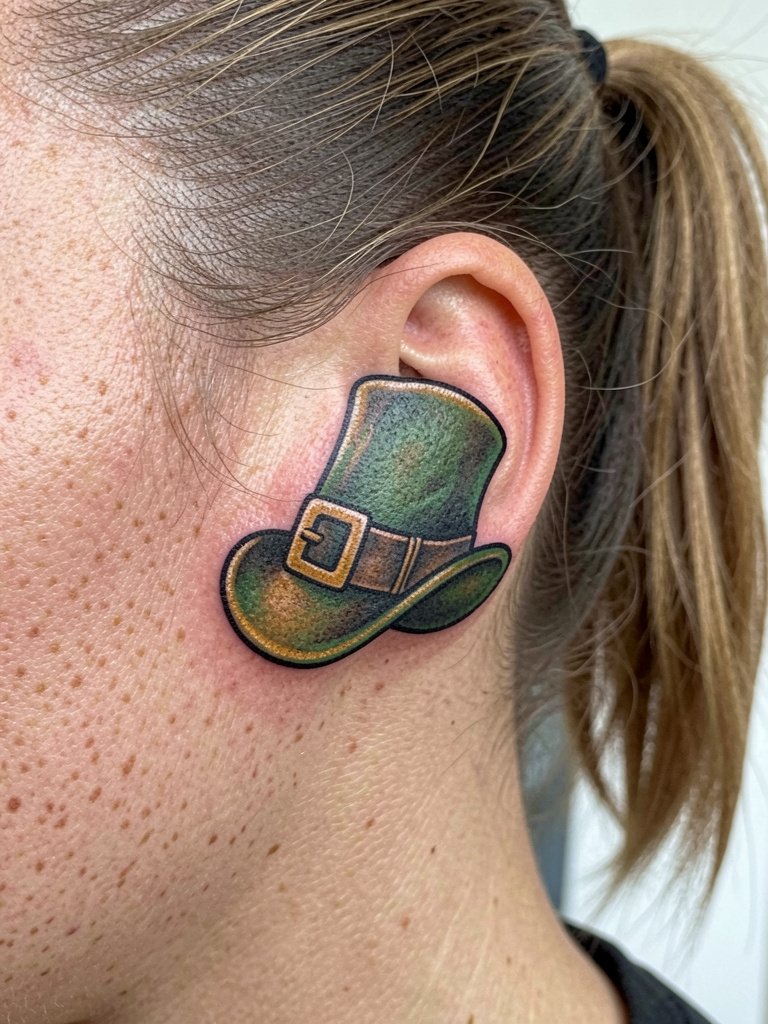
Micro neo-traditional pieces behind the ear make for discreet holiday nods that do not scream. The mastoid area is small and sensitive, so expect sharp short bursts of pain and a one-session visit. A common error is asking for too many color transitions at 1–2 cm. Ask the artist to simplify the buckle detail and to preserve a thin black anchor line so the green does not wash out. For the session wear hair up and consider a short pendant necklace that sits above the area when you show it off. Note that behind-the-ear pieces require someone experienced with micro color on that canvas.
8. Ornamental Shamrock Mandala on Lower Back
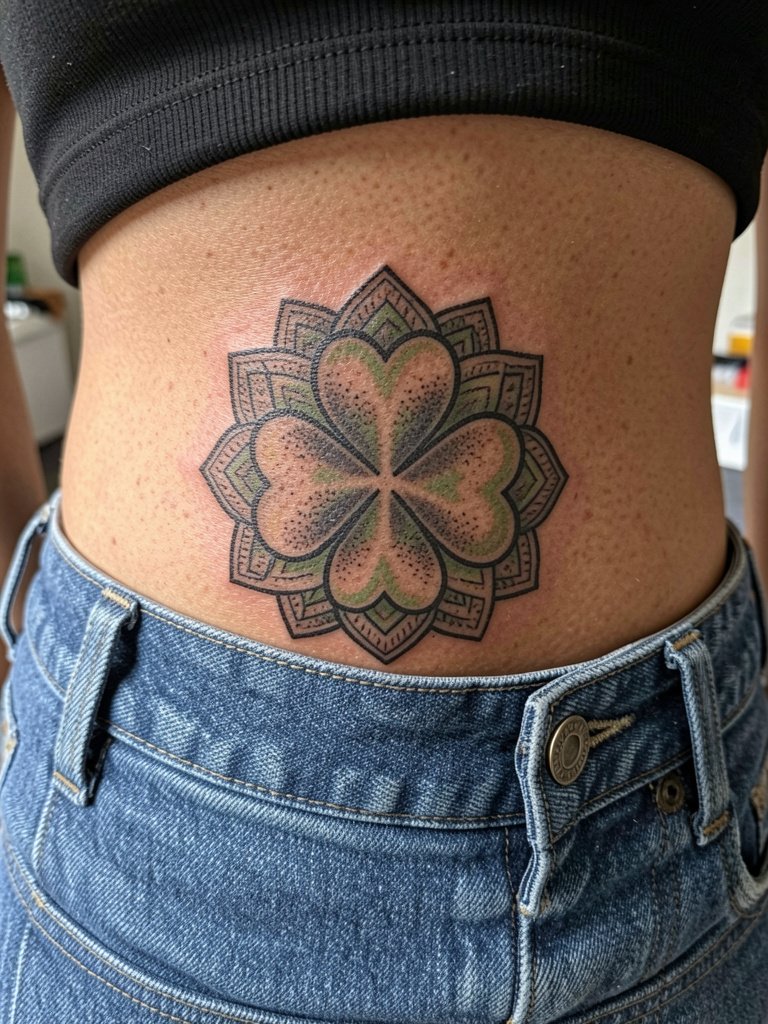
Mandala work reads like jewelry across the small of the back and can be scaled for privacy or show. The lumbar area is lower friction but you should avoid tight waistbands rubbing the margins during healing. Mistakes here are overfilling tiny dot work at a small scale which blurs into flat black. Request larger negative spaces between mandala rings so the pattern breathes after a year. The session might run longer for a 6–8 cm piece and you should plan for one to two sessions depending on density. Show it with low-rise tops or a layered chain belt for evening wear.
9. Black and Grey Harp Silhouette on Outer Thigh
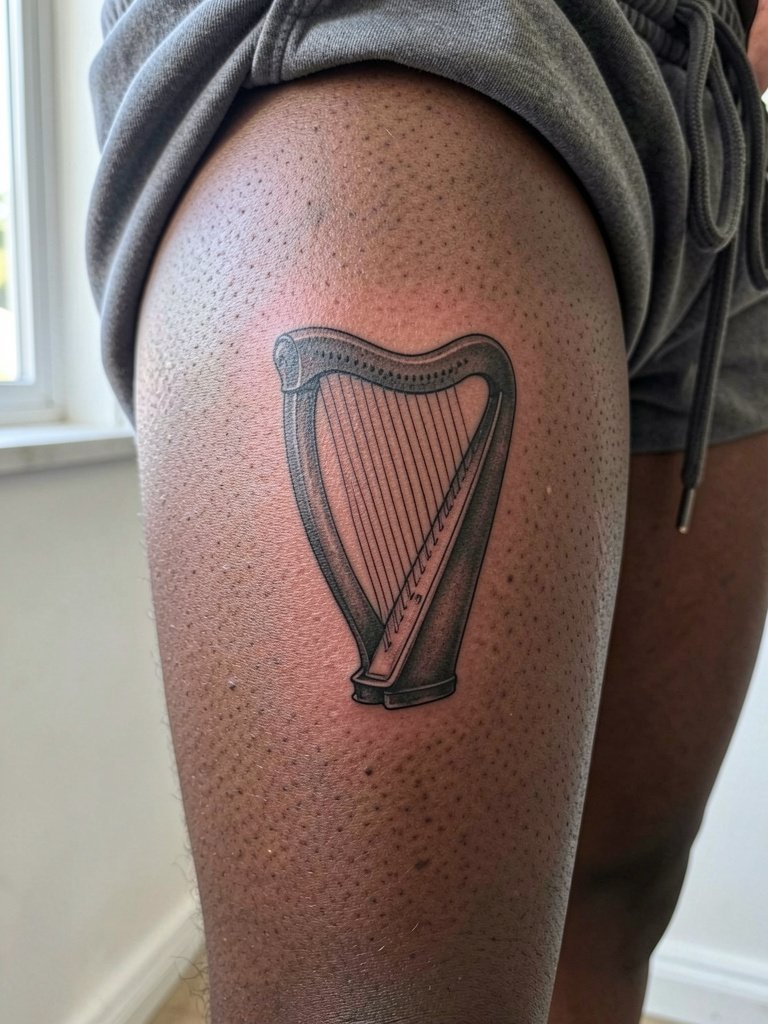
A monochrome harp gives a heritage feel and holds well because black and grey retains contrast across skin tones. The outer thigh allows for a relaxed session. A mistake is requesting hyper-detail in a 3 cm area which looks muddy after healing. Ask for a touch-up estimate at booking so you can plan if the wood grain needs re-defining after initial settling. This placement pairs nicely with high-waisted shorts or a flowy skirt when you want to reveal the thigh. Expect one session for a mid-sized silhouette and moderate discomfort during shading passes.
10. Fine Line "Hope, Faith, Love, Luck" Stack on Inner Forearm
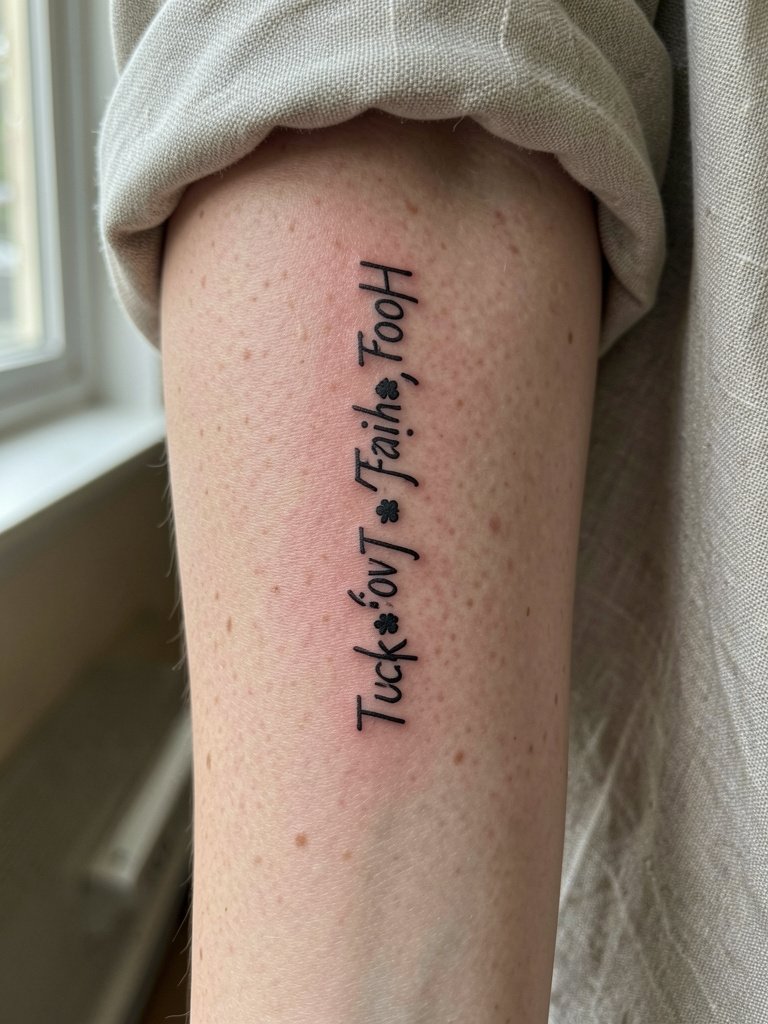
Stacked text breaks the symbolism into readable pieces and the micro-clover dots add visual rhythm. Common error is going so thin that counters fill in with time. Instead, request letters with a small but steady x-height and ask the artist to space words so each one still reads at six months. The inner forearm will show aging sooner than the upper arm but later than the wrist. Session discomfort is mild and the piece is quick to do. For an outfit pairing, rolled sleeves and dainty stacked bracelets keep the focus on the vertical text. Expect a touch-up window around a year for line sharpening.
11. Ignorant Style Clumsy Clover on Ankle
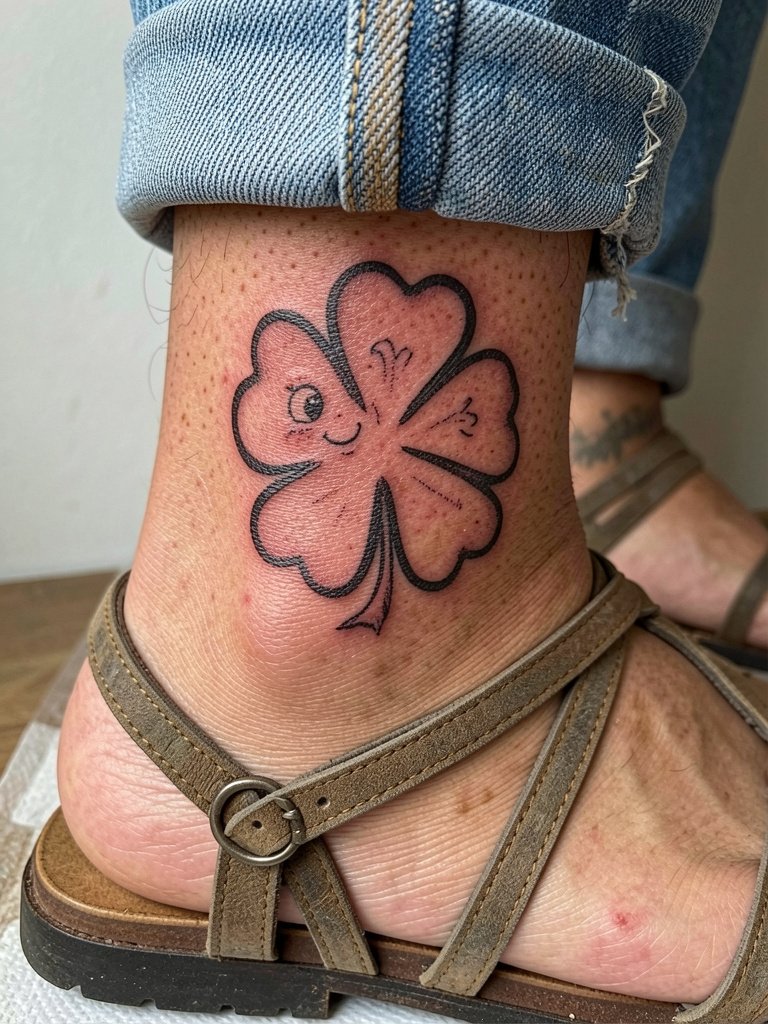
The ignorant style is deliberately playful which makes it a common first-timer choice. Ankles see a lot of friction from socks and shoes so avoid ultra-fine detail. A typical mistake is requesting tiny facial features that disappear after a year. Ask for bolder outlines and spacing from the ankle bone to prevent blowout into creases. During the session expect twinges around bone contact points but nothing long. To show it off, wear strappy sandals in neutral tones or a thin ankle bracelet on the opposite foot.
12. Micro-Realism Green Clover with Dew on Nape
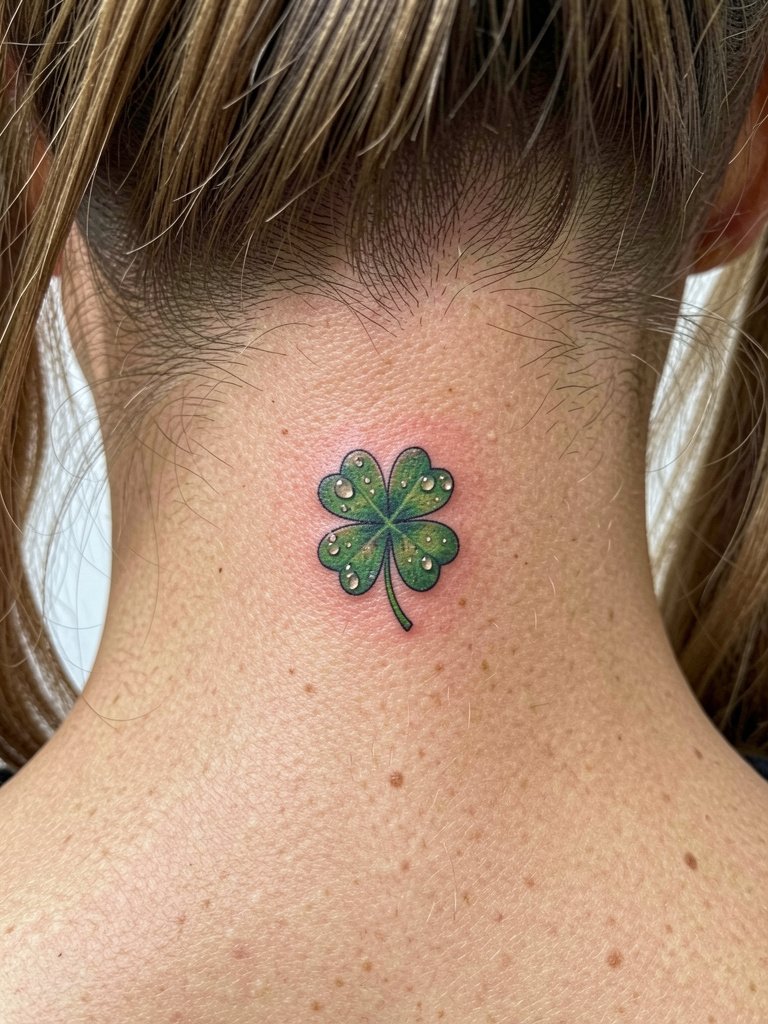
Micro-realism requires an artist who specializes in tiny photoreal work and charges accordingly. The nape is a delicate spot and can be itchy during healing because of hair contact. Common mistake is expecting macro realism at sub-2 cm scale without accounting for pigment spread. Request healed examples at the same size and ask how highlights translate onto your skin tone. Session time is short but requires high concentration from the artist. For showing off, pick high-neck tops that contrast the tiny green, such as high-neck tops in black or olive.
13. Traditional American Shamrock Banner on Lateral Neck
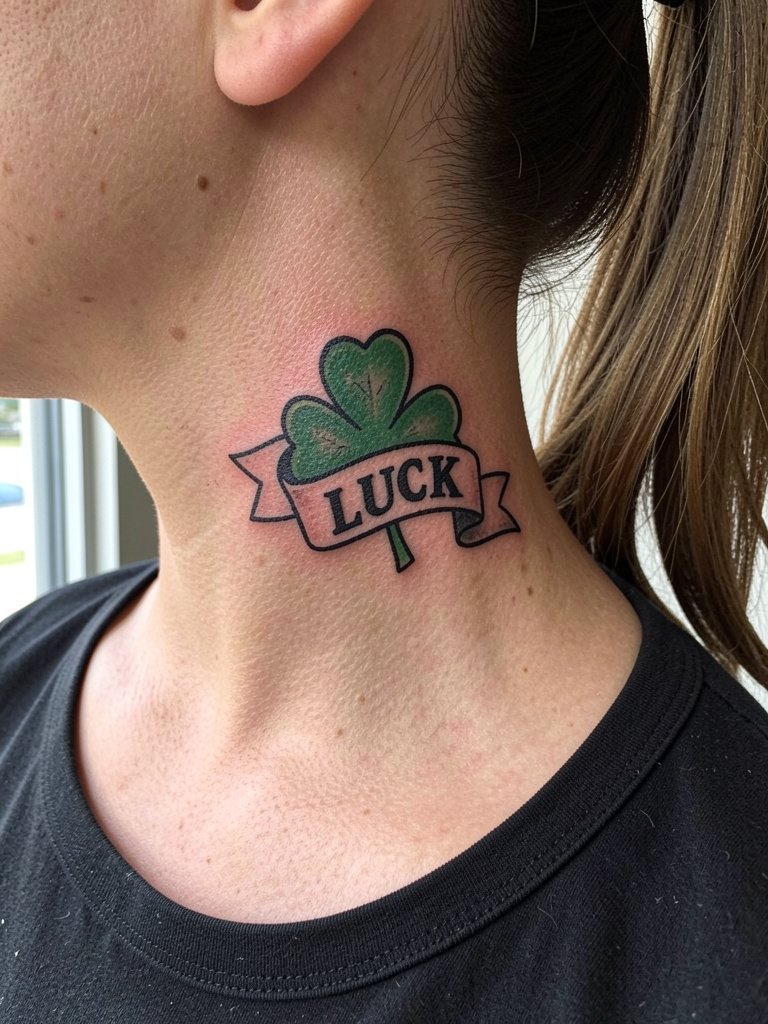
A lateral neck banner reads confidently and works if you want visible heritage imagery. Neck work divides opinions because of workplace visibility and aging. For the design, ask for bold outlines and flat fills so the green reads from a distance. Expect more touch-up needs than the forearm because of sun exposure. Session pain is moderate and bleeding is manageable. To style it, wear high-neck tops in dark or olive tones and short pendant necklaces above the piece. If you plan career-sensitive placements, plan conversation points with the shop about visibility expectations.
14. Fine Line Cross of St. Patrick Intersected with Shamrock on Sternum
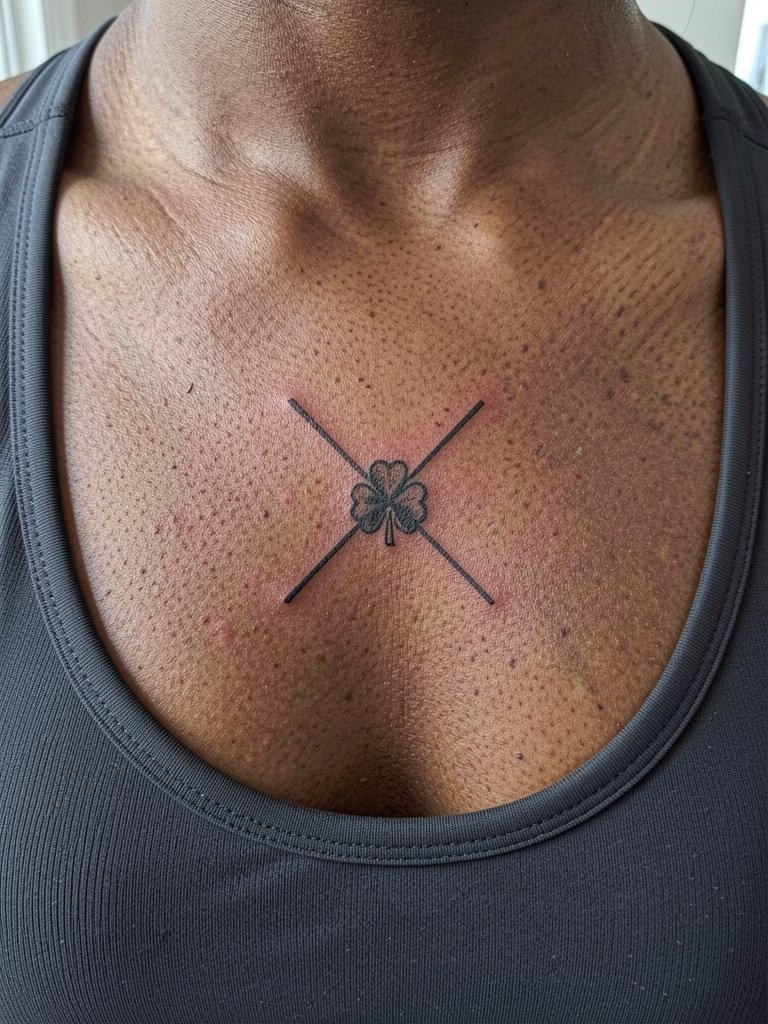
Sternum pieces combine religious and cultural symbolism and need careful stencil placement because the chest moves with breathing. Artists split on whether fine line holds as well on the sternum as on less-mobile areas. One camp says the chest stretches and fine lines blur faster due to frequent expansion and compression. The other camp maintains that with correct needle depth and slightly wider spacing the lines can settle well and they point to healed shots at three years to support this. For this placement bring a strapless or wide-neck top to the session so the artist can check placement against your collarbones. Expect moderate to high discomfort and plan a realistic touch-up at 12 months.
15. Watercolor Harp and Shamrock Blend on Side Torso
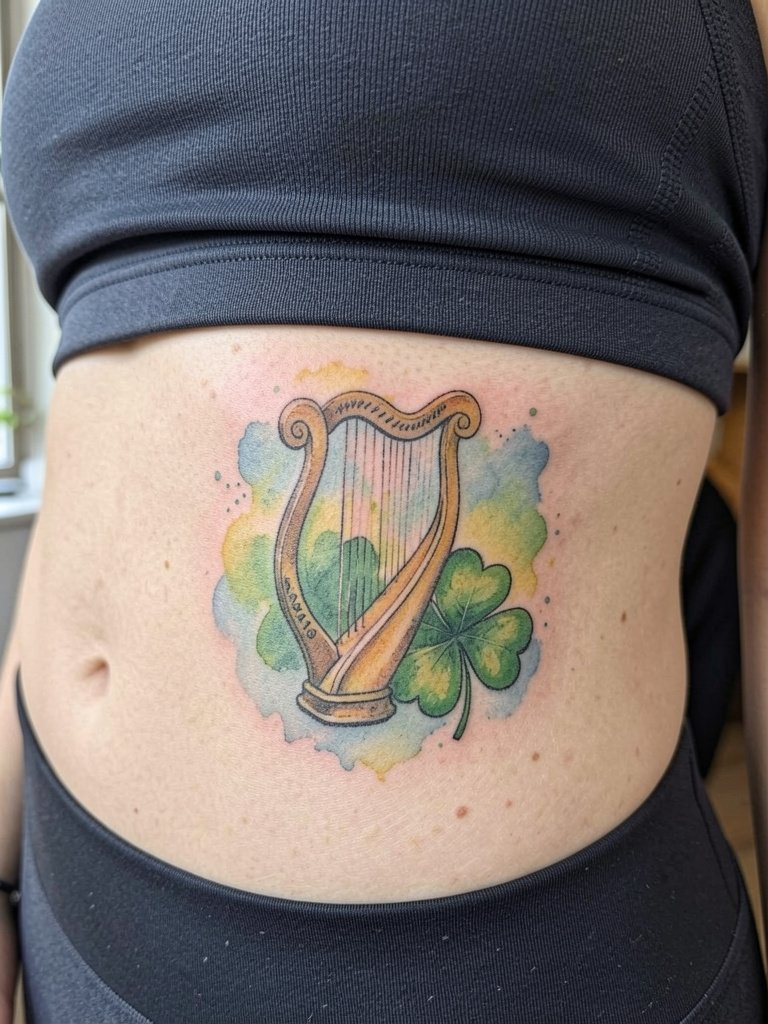
Ribcage watercolor blends look painterly but are among the most controversial choices for long-term legibility. One group of artists warns that watercolor on ribs fades into muddy patches because of high motion and thin pigment. Another group suggests that with concentrated pigment placement near anchors or with a thin black anchor line, watercolor can sit brighter for longer. If you want a watercolor rib piece, ask the artist how they will anchor color and whether they recommend a subtle outline to preserve contrast. Expect a tougher session with higher pain and the possibility of multiple sessions separated by healing time. For session wear, choose loose drawstring pants so the artist can access the side without tight waistbands.
Frequently Asked Questions
Q: How much should I expect to budget for a small shamrock piece?
A: Budgeting depends on your city and shop minimums, but a realistic range to plan for is the standard small session minimum most studios use. In many places that means setting aside funds equivalent to a modest one-hour booking and a separate tip of around 15 to 25 percent. If you are price-sensitive, look for studios that publish healed work and clear pricing to avoid surprises.
Q: Which placements are most likely to need touch-ups and when?
A: High-friction zones like the wrist, ankle, and ribs tend to need touch-ups sooner because the skin moves and is exposed. Expect potential touch-ups for fine line pieces at 9–18 months and for saturated color pieces at 12–24 months depending on your sun exposure and aftercare. Plan touch-ups into your budget rather than treating them as an emergency.
Q: I have darker skin. Which St. Patrick’s Day styles will show best?
A: Blackwork Celtic knots and bold neo-traditional pieces usually maintain the best contrast on darker tones. If you love color, ask how the artist will increase saturation or add a subtle anchor outline to prevent pale greens from appearing ashy. Look at healed examples from the artist on similar skin tones before booking.
Q: Where can I find healed portfolios and local artists without searching individual names?
A: Search style and topic hashtags like #shamrocktattoo, #finelinetattoo, and #irishink on Instagram and TikTok, then filter by your city. Use directories such as Tattoodo or the Inked App to search keywords like "blackwork Celtic knot" and view healed portfolio shots. Reddit threads on r/tattoos and r/tattooadvice also surface peer recommendations and real healed photos across skin tones.
Q: What should I wear to my appointment for the hip, sternum, and rib placements?
A: For hip or side torso work wear loose drawstring pants or shorts so the artist can roll the waistband down without pressure, for sternum wear a strapless or wide-neck top, and for rib sessions bring loose athletic wear with a cropped hem so the area is exposed naturally. Packing a spare button-down or a zip hoodie you can put on afterward helps protect the fresh piece.
Q: Will a holiday-style leprechaun or hat date faster than a heritage shamrock?
A: People divide on this. One view is that literal holiday motifs read as party ink and feel dated over a few cycles of the season. The other view is that holiday motifs can become permanent if redesigned as heritage pieces with considered linework and symbolism. If you worry about longevity, lean into stylistic edits that make the image feel like an element of your regular collection rather than seasonal flair.