Wispy snake wraps flood feeds, but a lot of them soften into an indistinct squiggle after a few summers of sun and sleeves. What separates a forearm snake that still reads crisp at year five from one that blurs is line weight, placement and contrast, not flashable detail. First up is the single-needle wrap most people pick for a first forearm piece, and why tiny changes keep it readable.
1. Fine Line Single-Needle Snake Wrap
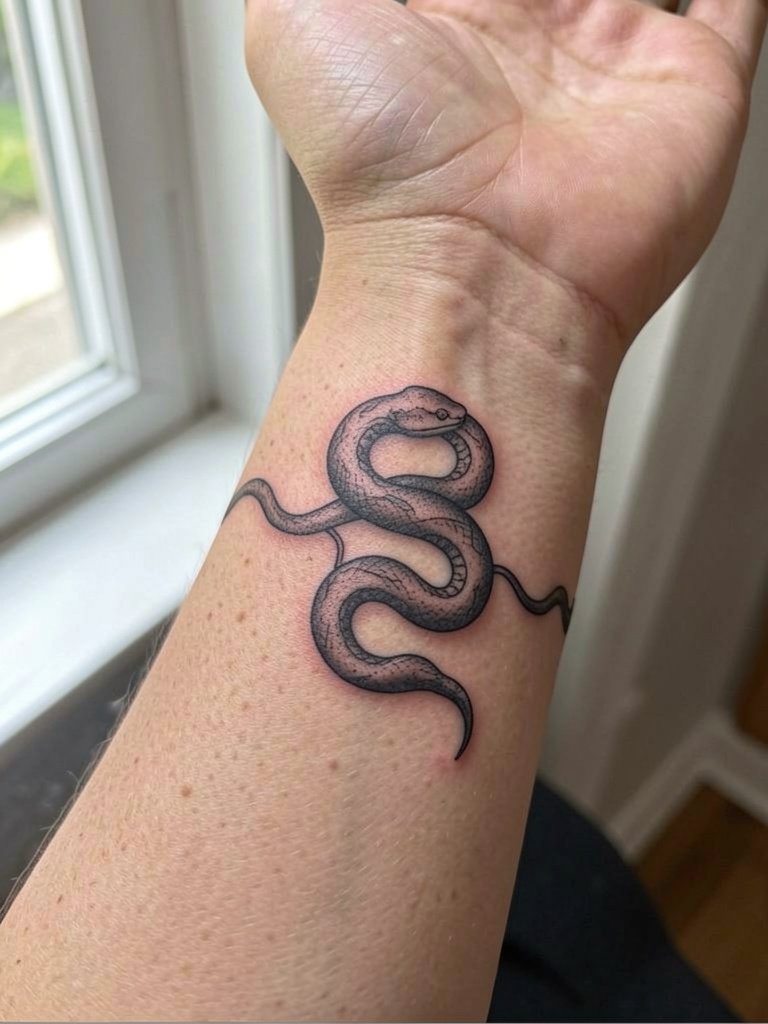
If you are new to forearm ink this is the go-to because it reads gentle and works well for small expansions. One camp says whisper-thin lines blur into a muddy strip within two to three years on active skin. The other camp says fine line holds if the line is confident and slightly heavier than the Pinterest examples, plus diligent sun protection. To get the durable version, request a single-needle line with a touch more deposit than a feather-light stroke and ask the artist to space coils slightly wider so scales have breathing room. Pain is low, about a three to four out of ten on the inner forearm, and most small wraps finish in a single short session. For showing it off, roll a button-down sleeve up and pair with rolled cuff linen shirts so the linework sits against a neutral background and doesn’t compete with patterns.
2. Black-and-Grey Realistic Snake with Scale Texture
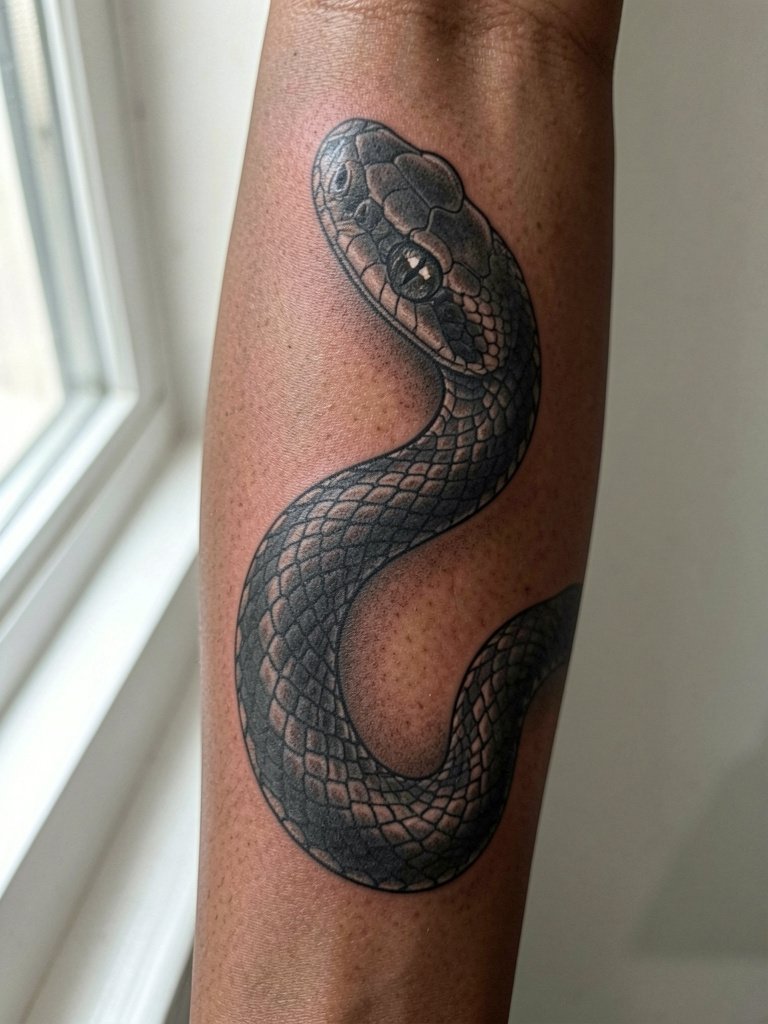
Collectors choose this when they want depth and presence rather than subtlety. Placement matters here because outer forearm muscles and sightlines enhance predator-like compositions. One group prefers the inner forearm for comfort and lower pain, while another prefers the outer forearm for visibility and dramatic muscle framing. If you want realism, bring scale-closeup references and ask the artist to emphasize contrast around the eye and head so the focal point does not wash out by year two. This style commonly takes two sessions for larger pieces and ages well when artists avoid over-blending the grays. Session wear should be a short-sleeve tee; the look pairs cleanly with a solid color short sleeve tshirt that gives the piece a bold backdrop.
3. American Traditional Bold Snake
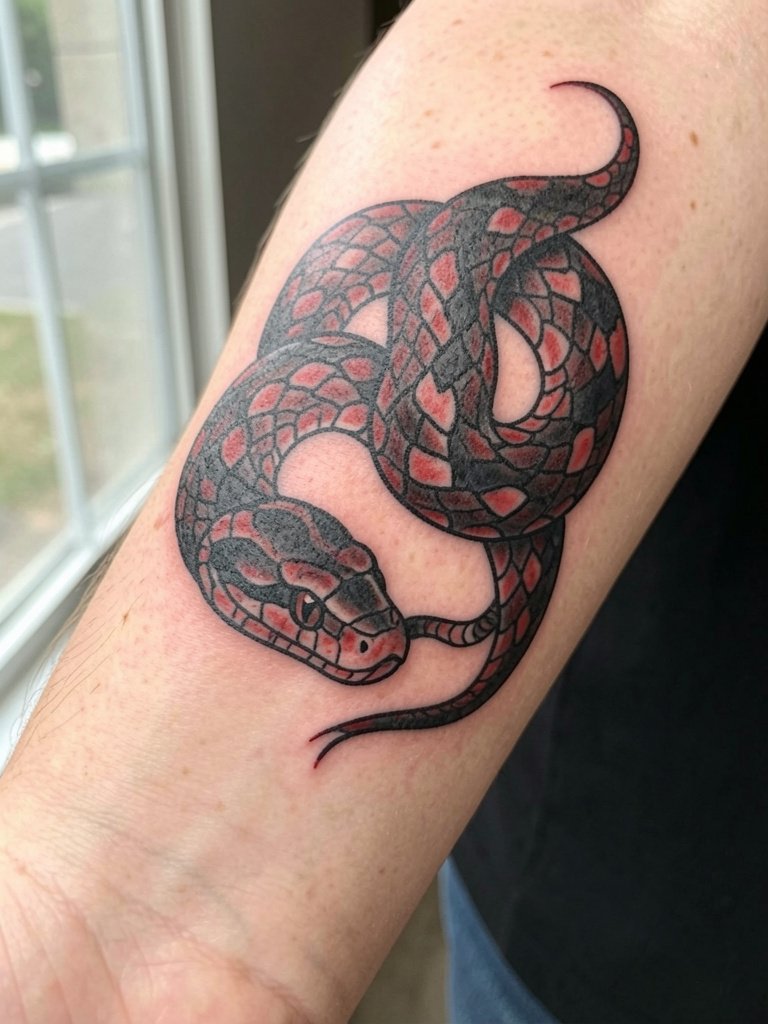
Classic bold lines age predictably because they rely on strong contours and saturation rather than micro detail. A common mistake is squeezing too much detail into a small area, which loses clarity as the skin ages. Opt for confident outlines and flat fills, and specify that reds be saturated in multiple passes rather than thin washes. This piece is forgiving about touch-ups; many people plan a small color refresh at year two to restore saturation. For daytime wear, pair with a vintage cut tshirt and statement cuff on the opposite wrist so the bold ink reads from a distance.
4. Snake and Rose Combo (Neo-Traditional)
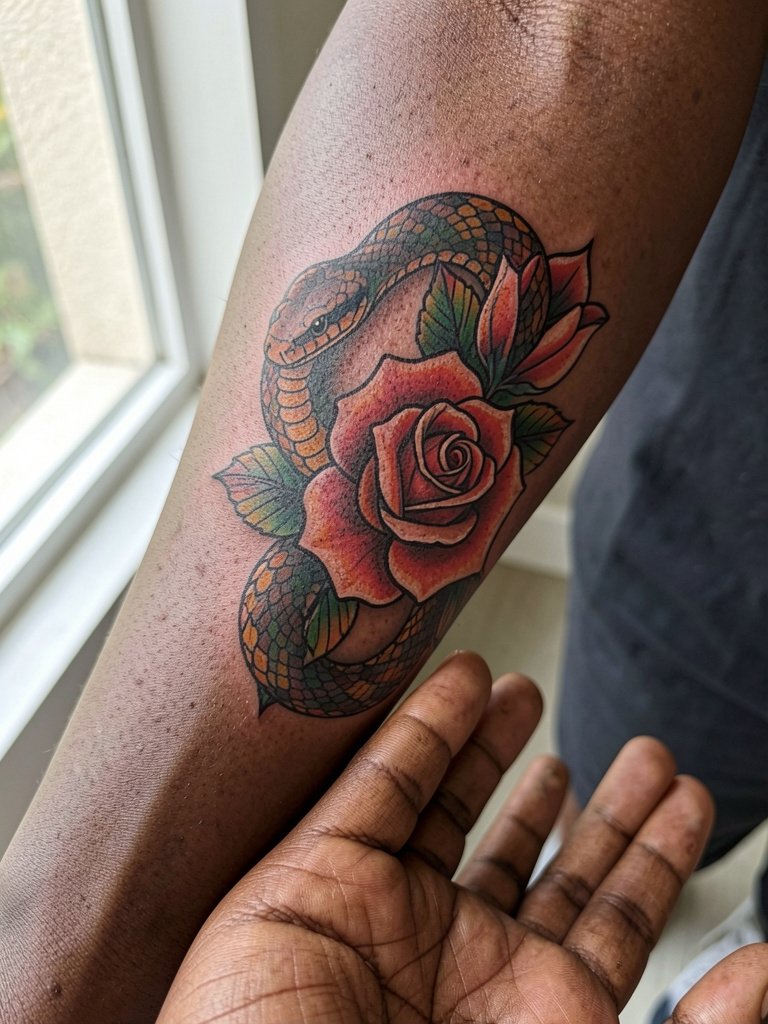
The snake-and-flower pairing is about contrast: saturated botanical color next to textured scales. A frequent error is asking for tiny, highly detailed petals at wrist scale; those blur. Instead, ask for slightly larger floral shapes and leave negative space between the petals and the snake so both elements remain legible over time. Neo-traditional shading and layered color help the rose keep its form at six months and still pop at five years. Session time is usually one to two sessions depending on color. For evenings, this composition pairs well with dark solids; try a black short sleeve tee that lets the colors stand out.
5. White Ink Snake Minimalist
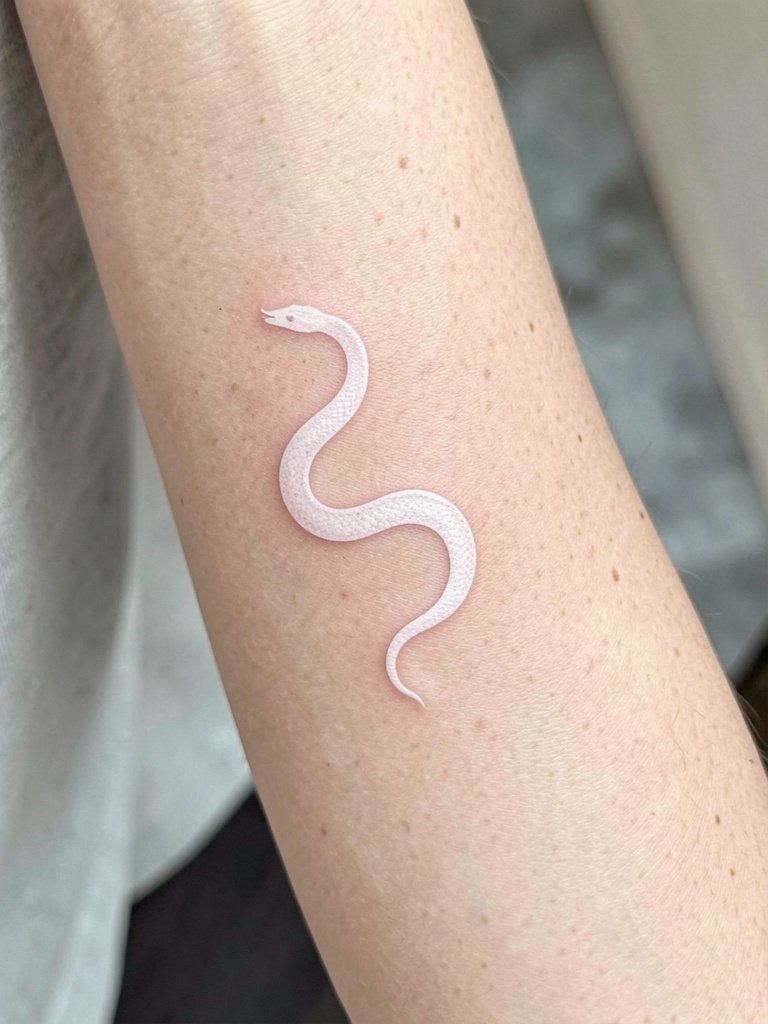
White ink is a niche choice for a subtle "ghost" effect but it splits opinion. One camp says white ink is stylish and discreet when fresh and fits people who want low-contrast work. The other camp warns white fades much faster on sun-exposed forearms and can yellow or vanish without consistent sunscreen. If you pick white, place it where you can commit to daily SPF and avoid high-friction zones, and plan on touch-ups sooner than with black ink. This design is low-pain and usually done in one short session. For a soft editorial look, wear a minimalist watch on the opposite wrist so the faint white line feels intentional rather than accidental.
6. Snake and Dagger
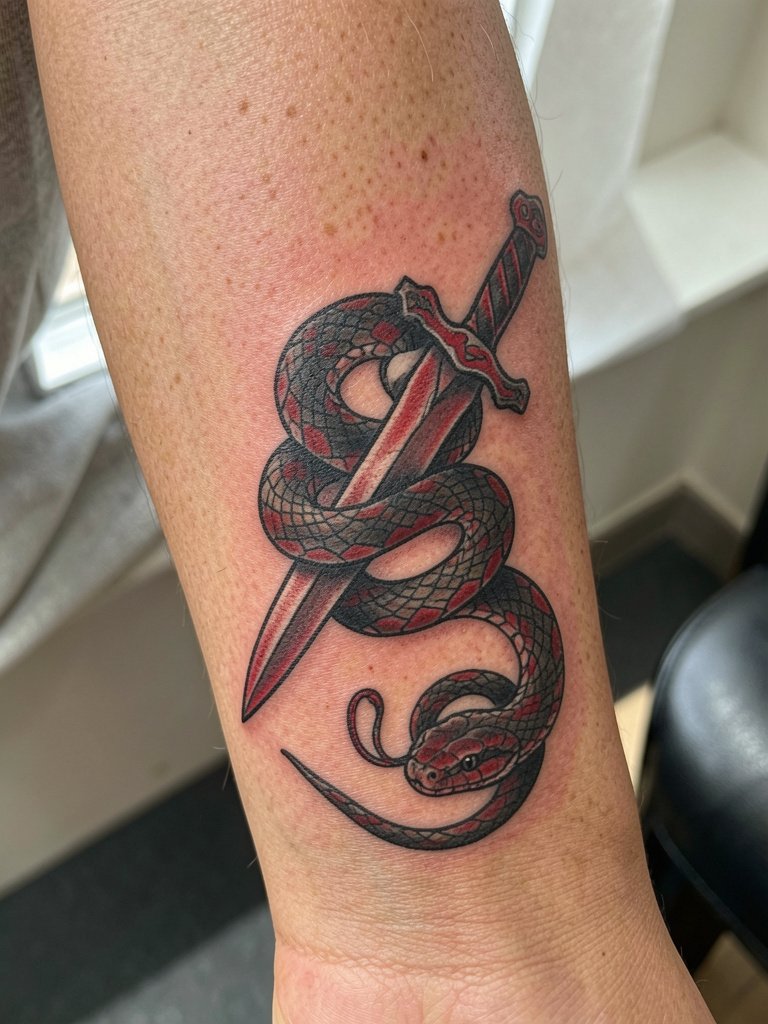
A dagger gives the snake a vertical axis and strong focal point. Mistakes include placing too many tiny decorative elements around the blade that compete with the main motif. Tell your artist to prioritize blade-edge contrast and keep secondary details slightly larger so they age cleanly. This composition commonly needs two sessions for color saturation. For the appointment wear, choose a short-sleeve top so the outer forearm is fully accessible.
Heal Smart
These forearm ideas share bandaging and sun-pressure concerns, so a few targeted items smooth the first week and protect fine detail from fading.
-
Hustle Butter Original Tattoo Balm. A popular plant-based balm for the second stage of healing, it keeps ink soft without the greasy film that can clog fragile fine-line channels.
-
Mad Rabbit Tattoo Aftercare Balm. Lightweight balm that many people prefer once the initial scab phase ends, useful for color pieces that need regular moisture.
-
Saniderm Transparent Healing Bandage. A breathable film that protects forearm pieces from friction and shower moisture in the first 24–48 hours while letting you see how the stencil sets.
-
Biotope Tattoo Aftercare Oil. A less-greasy oil option for ongoing hydration without heavy residue, handy for dotwork or stipple shading to keep texture visible.
-
Aquaphor Healing Ointment. Apply a thin layer in the first two to three days for the tiny wounds of single-needle work, then switch to a lighter balm as the skin peels.
7. Japanese Snake (Hebi) Coil
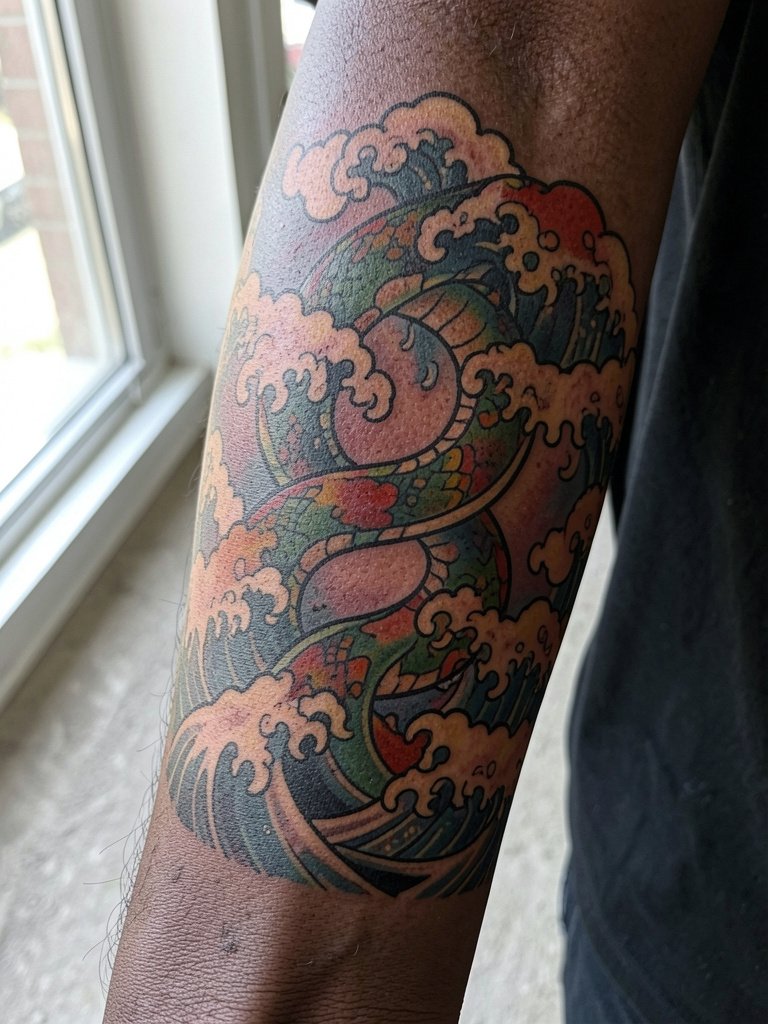
A Japanese coil gives you a long visual path ideal for future sleeve work. Respect the style’s cultural origins by using traditional motifs and asking how the artist plans to adapt them to your anatomy. This category often needs three or more sessions for full color saturation and layering. Because of the scale, pain varies across the forearm; expect longer sits and plan for a recovery window. For showing off the wider color field, solid short sleeves or a vintage cut tshirt keep attention on the full coil.
8. Dotwork Snake Silhouette
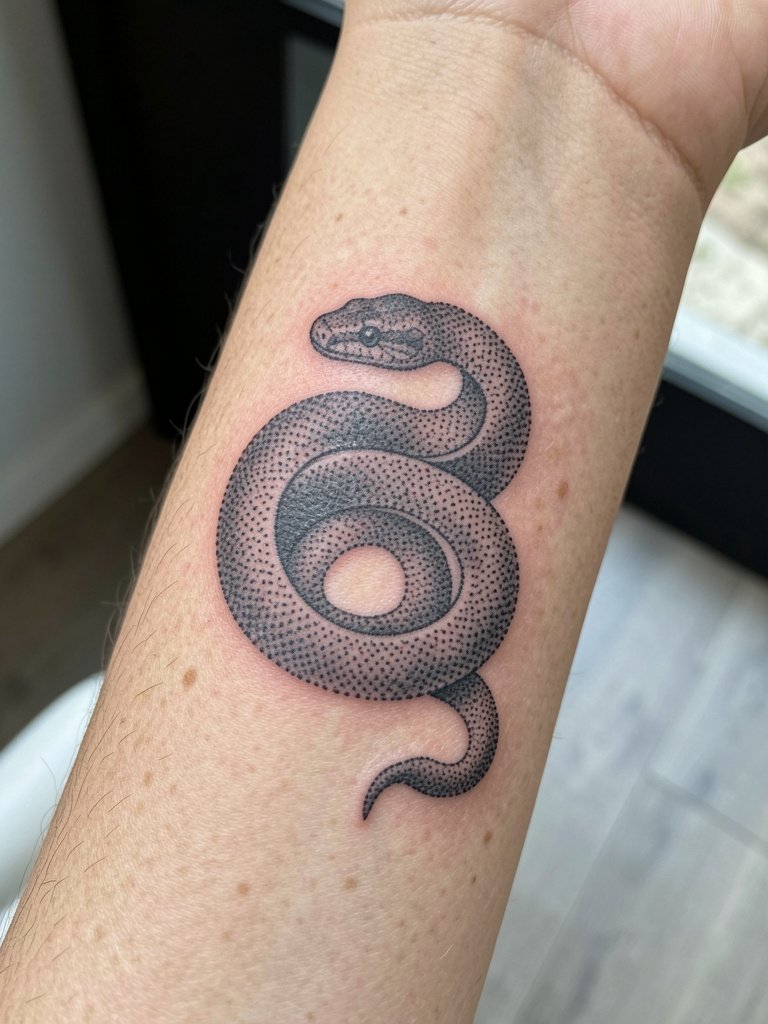
Dotwork creates a tactile surface that softens elegantly as it heals. A frequent error is requesting too tight a stipple at small scales, which blends into gray over time. Ask for slightly wider dot spacing in high-motion zones and expect a touch-up at year two to restore crisp edges. The session is gentler than heavy shading but takes patience because stipple is time-intensive. For a casual look, roll sleeves and pair with dainty gold bracelets on the opposite wrist. Include a dainty gold stacked bracelet set to complement the texture without stealing focus.
9. Snake Skull Fusion
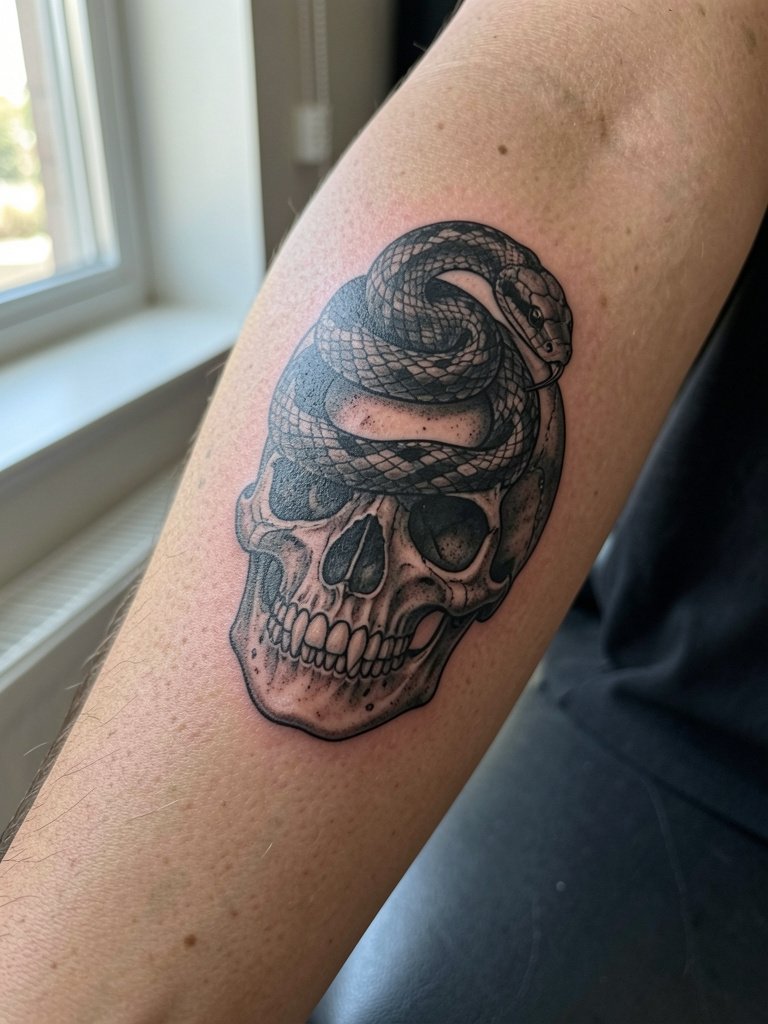
Combine anatomy and motion by letting the snake thread through negative space in the skull. A common mistake is over-detailing the skull at small sizes; scale up the skull’s planes so shadows keep separation. This composition usually reads best on the outer forearm, where the contrast between bone, shadow and scales translates into three-dimensional depth. Expect one to two sessions for a mid-sized piece and plan on a touch-up window at around the two-year mark for fine shadow refresh.
10. Geometric Snake Outline
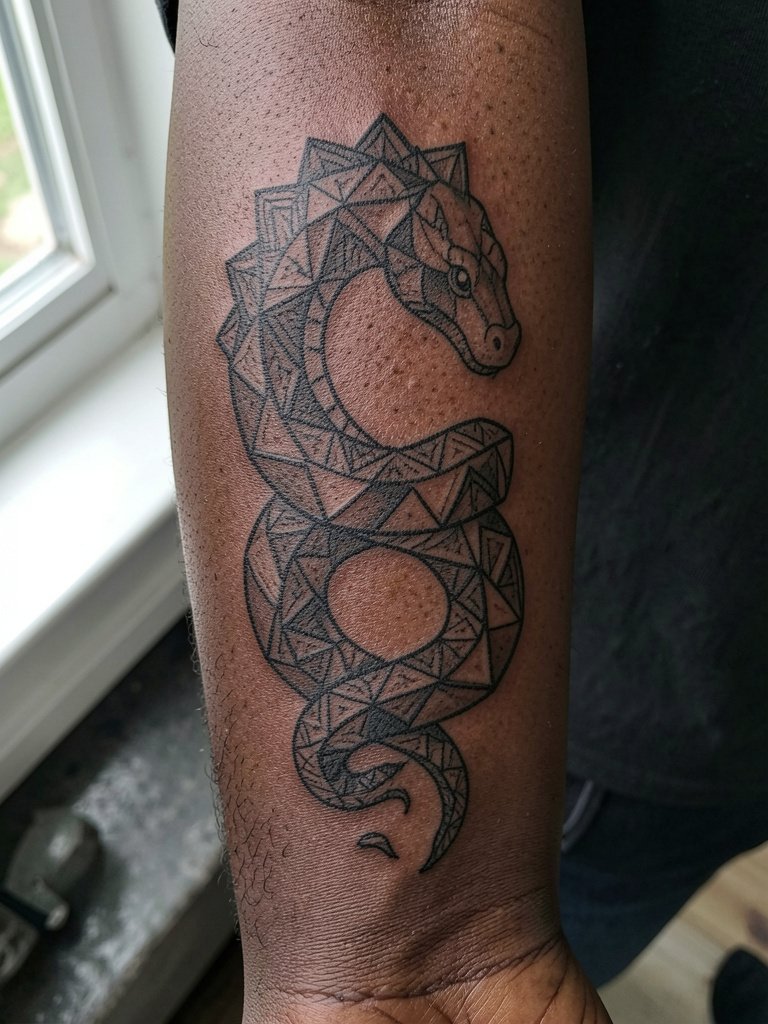
Geometry demands crisp, precise linework and spatial planning. The biggest mistake is shrinking mandala elements too small to resolve in skin. Ask for grid proofs or stencil mockups showing how the pattern reads at three inches versus five so you can compare scale. This is an ideal inner-forearm piece for people who prefer structured symmetry. For outfits, the design pops when paired with clean neutral sleeves; try a linen button down shirt rolled to mid-forearm to show the geometry.
11. Minimalist Line Art Snake
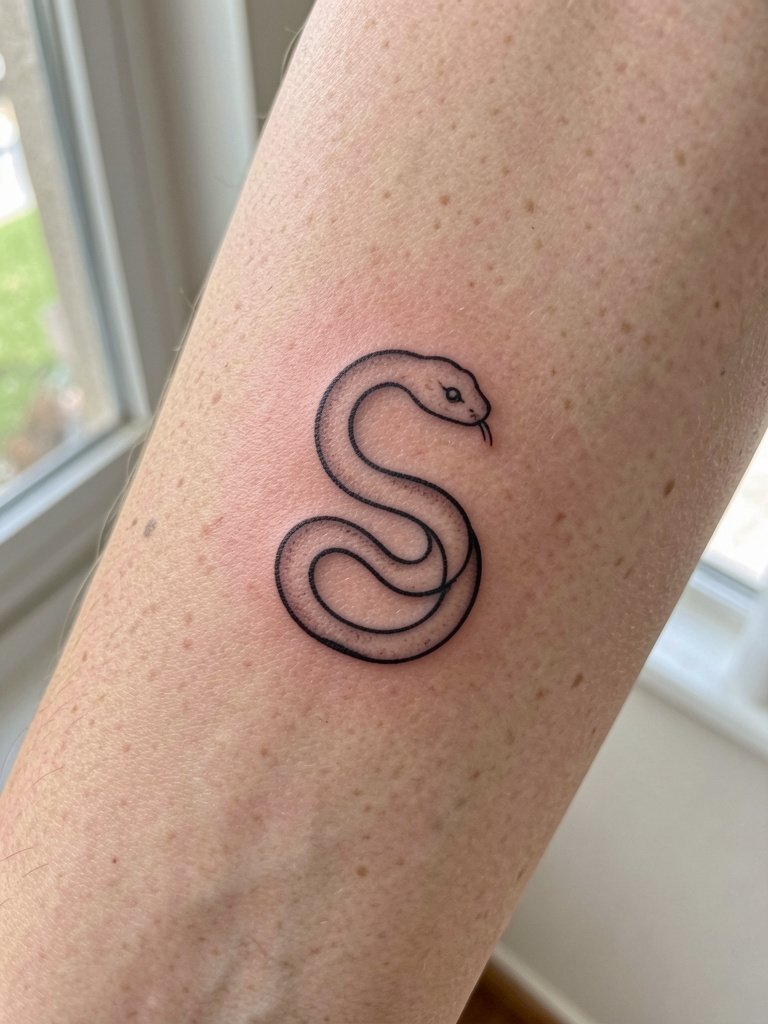
A continuous line can feel modern and quiet when scaled correctly. The usual error is making it too thin or too small; that invites early softening. Request a single unbroken line but with a slightly heavier weight than a micro-line script so the silhouette remains coherent at year three. Session time is short and pain low. For accessories, a thin chain bracelet set on the opposite wrist gives balanced wrist styling without covering the line.
12. Snake and Compass
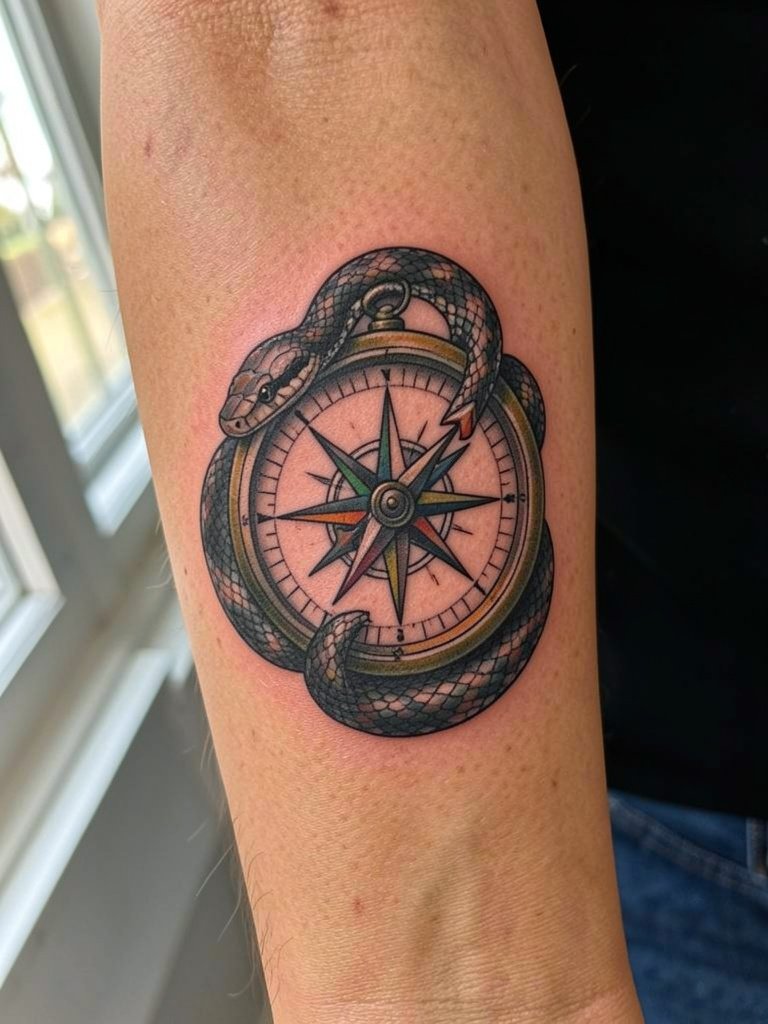
Pairing a compass gives the snake a narrative anchor and a clear focal point. A mistake is crowding directional markings; keep the compass face legible with clear negative space. This style suits explorers who want a compact emblem that can expand into a sleeve. Plan for one to two sessions depending on color. For an everyday look, this fits with solid casual tees and a leather cuff on the opposite wrist.
13. Snake Sun and Moon
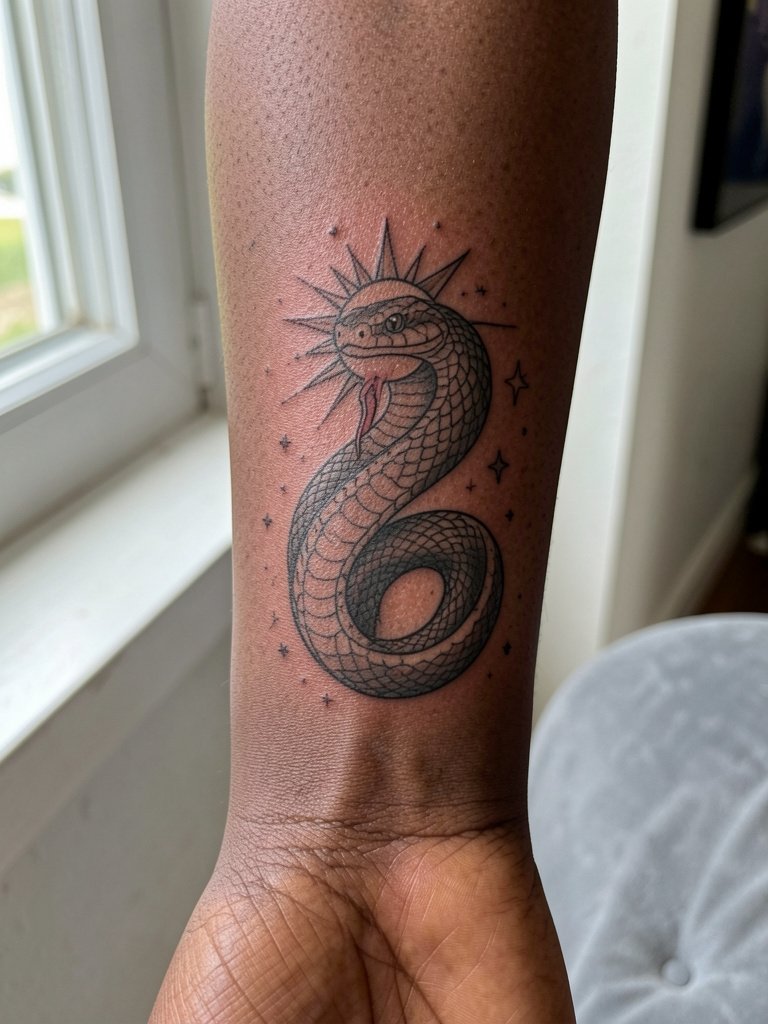
Celestial elements help a mid-sized snake read as a symbolic band that still flows with the forearm. Common errors are adding too many tiny stars or tiny lettering that wash out. Keep the sun and moon simple and ask for slightly bolder rays or crescent edges so the motifs remain clear at year five. This composition is comfortable for one to two sessions and suits both minimalist and color-forward wardrobes.
14. Aztec/Tribal Snake Pattern
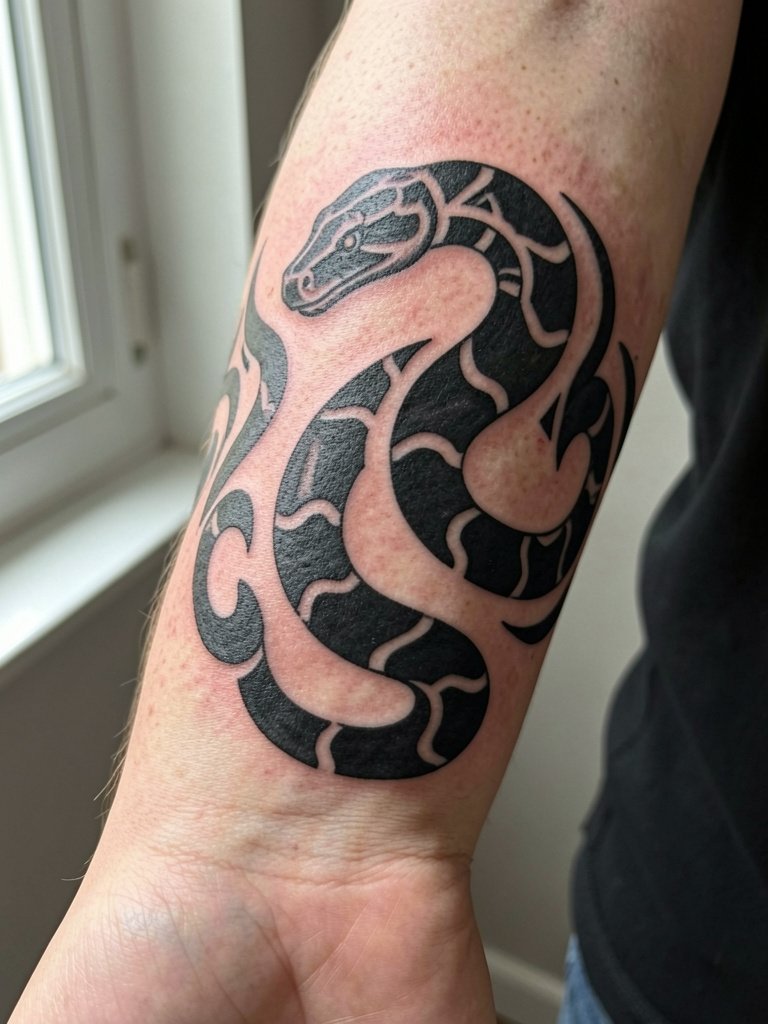
Bold tribal work relies on rhythm and negative space so the pattern breathes. Avoid appropriating sacred symbols without discussing cultural origin and intent. The common mistake is shrinking the motif into a wrist band; give the shapes room and plan the wrap carefully so the rhythm continues as the arm moves. Single-session designs are possible but plan for a touch-up if you want flat black saturation maintained. For a street-casual look, pair this with short sleeves and a leather cuff bracelet on the opposite side.
15. 3D Snake (Stereoscopic)
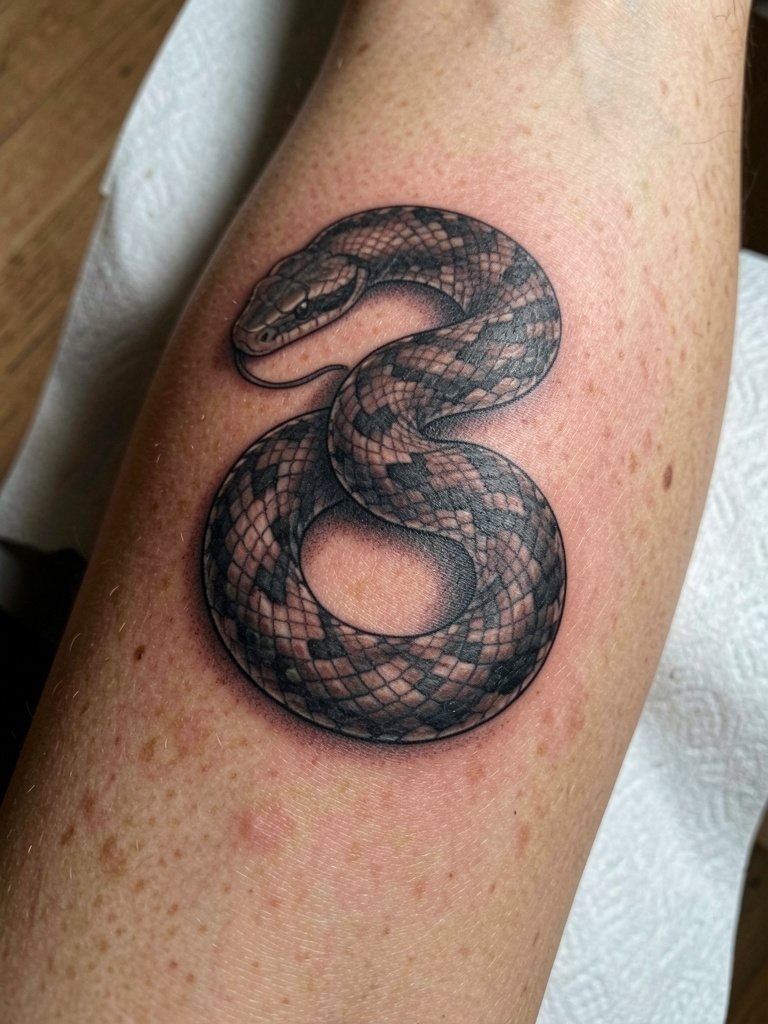
If you want a piece that surprises people at a glance, a well-executed 3D piece can sell that illusion. The pitfall is relying too much on small, high-contrast micro-shading at small scale; those tricks flatten as the skin ages. Ask the artist for test photos showing the illusion at different distances and in ambient light so the perspective holds. Expect multiple sessions and a greater chance of a follow-up for shadow refresh.
16. Geometric-Mandala Hybrid Snake
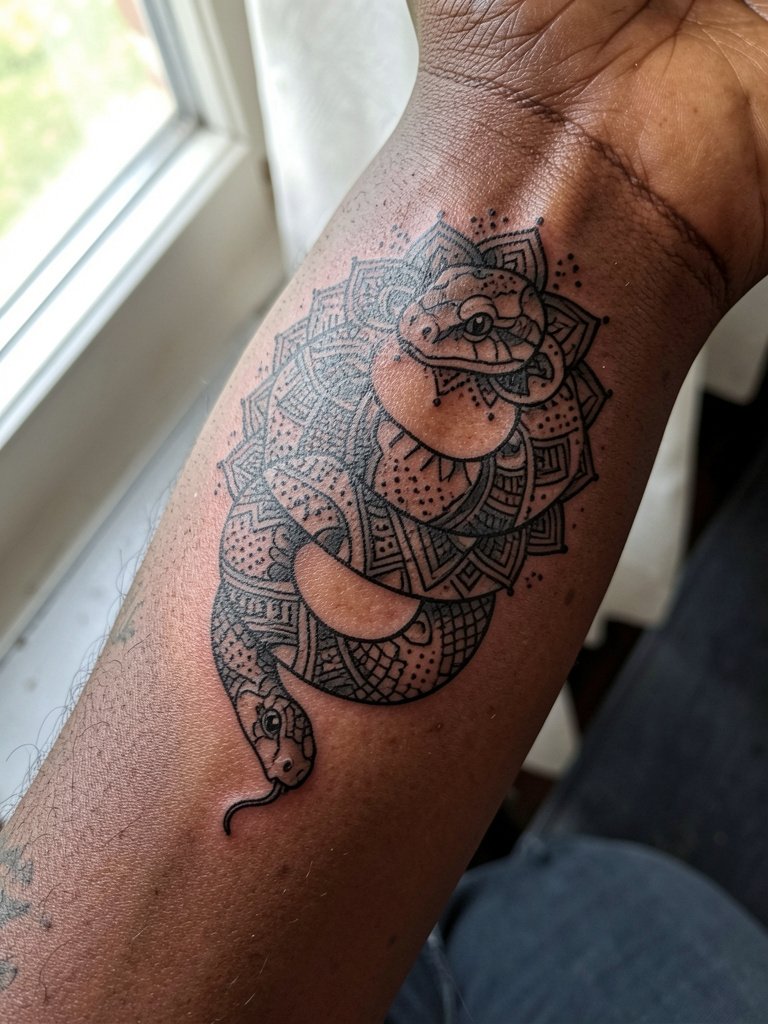
This hybrid gives organic motion plus structured repetition. The main mistake is compressing mandala detail too tightly near the wrist. Request the artist show scale mockups and map how the design will wrap so repeating elements land on flat skin areas, not creases. For a refined look, wear short sleeves and a minimalist watch on the opposite wrist to balance the ornamental surface.
17. Map-Ready Snake for Sleeve Expansion
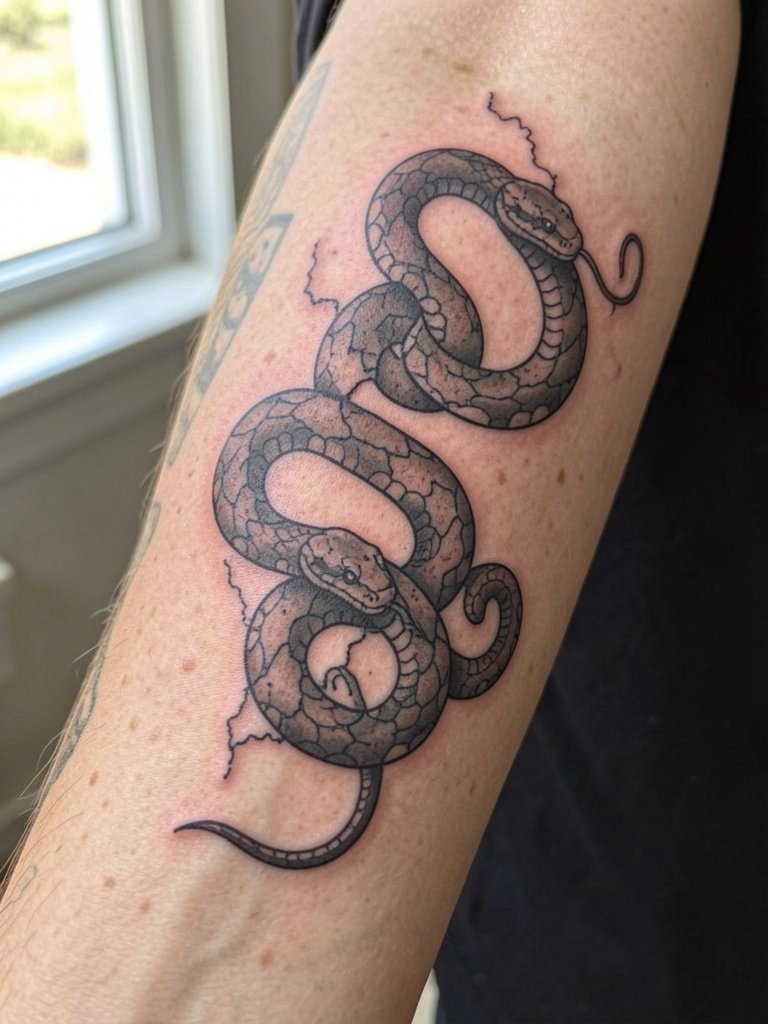
Think of the snake as a living map for future additions; anchor the head where you want attention and leave breathing room around the tail for complementary motifs. The frequent misstep is creating a finished-looking snake with no planning for color fields or background, which complicates sleeve work later. Discuss exact anchor points and negative space proportions with the artist beforehand. This design makes later sleeve building easier and keeps each new element coherent.
Frequently Asked Questions
Q: How much does a forearm snake usually cost and how should I budget for touch-ups?
A: Expect a wide range based on size and style. Micro single-needle wraps start at lower price tiers while multi-session color realism or Japanese coils sit toward the higher end. Budget for an initial session plus a likely touch-up within one to three years for fine-line or white-ink pieces, and consider separate color refresh sessions for saturated neo-traditional work.
Q: Which forearm placement hurts less, inner or outer?
A: The inner forearm generally rates lower on pain, around three to four out of ten, because the skin is softer. The outer forearm is slightly firmer and better for bold, visible work. Pick inner if you prefer a gentler session and outer if you want maximum visibility and muscle framing.
Q: How do I find artists who show healed portfolios and cater to specific styles without naming anyone?
A: Search targeted hashtags like #finelinetattoo, #snakeforearmtattoo and #blackandgreyrealism on Instagram and TikTok and filter by location to view healed photos. Use Tattoodo and Booksy to search by keywords, and scan Reddit threads in r/tattoos for peer-shared healed examples. Those platforms make it easier to see how a style settles across skin tones.
Q: Will white ink look the same on dark skin as on light skin?
A: No, white ink behaves differently across skin tones. On darker skin it is often less visible and can appear as a highlight rather than a line. Bold black or saturated color usually provides clearer contrast on darker skin. If you want subtle light-on-dark effects, ask the artist for contrast mockups on similar skin tones.
Q: What should I wear to my forearm tattoo session and how should I style it afterward?
A: For sessions, wear a short-sleeve or sleeveless top so the artist has full, unrestricted access. For inner forearm pieces try a loose button-down that rolls up easily. To show off healed forearm tattoos, rolled linen shirts or solid short-sleeve tees frame the work best. A simple accessory like a thin chain bracelet on the opposite wrist complements minimalist lines without covering the ink.