Someone I know spent months swiping through feeds only to realize the real problem was picking a style that would still read well after a year. Fine line pieces can look delicate at first and fade fast, dark skin sometimes needs bolder saturation to pop in photos, and placements like thighs can stretch with weight changes. Below are 15 dark snake tattoo ideas women are choosing right now, with exactly what to ask your artist and how each one ages.
1. Snake and Peony Forearm Piece
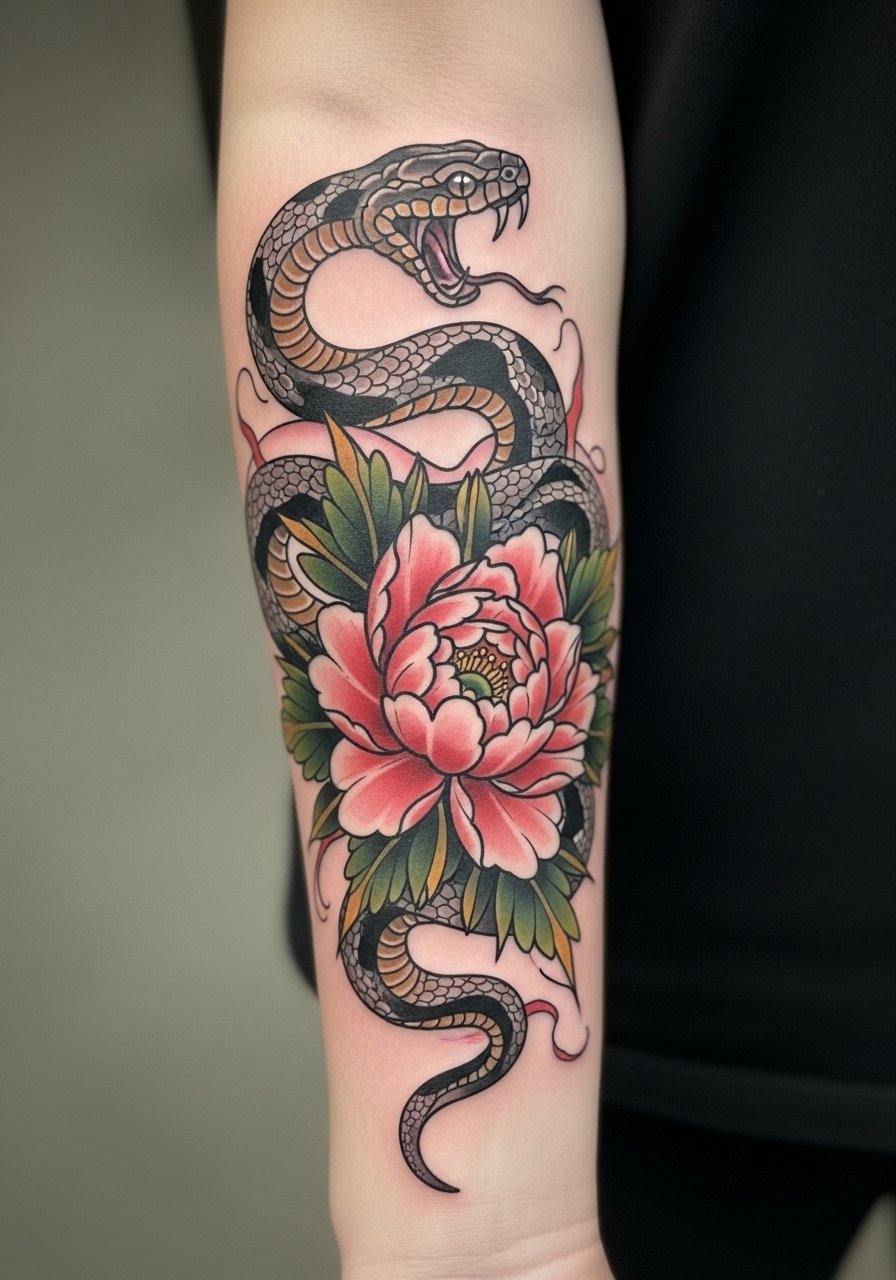
Someone I know first saw this on a friend and booked a consult the same week. Recommend this if you want floral softness with a bold central coil that reads at arm distance. Tell your artist to push the black outlines a touch thicker than a typical neo-trad so the petals do not swallow the snake after two years. A common mistake is asking for ultra-fine petal details that blur when the peony rubs against sleeves. Expect a two-hour session for a 4-6 inch piece, medium pain on the forearm, and a touch-up at 12 to 18 months for linework and saturation.
2. Coiled Snake Ankle Wrap
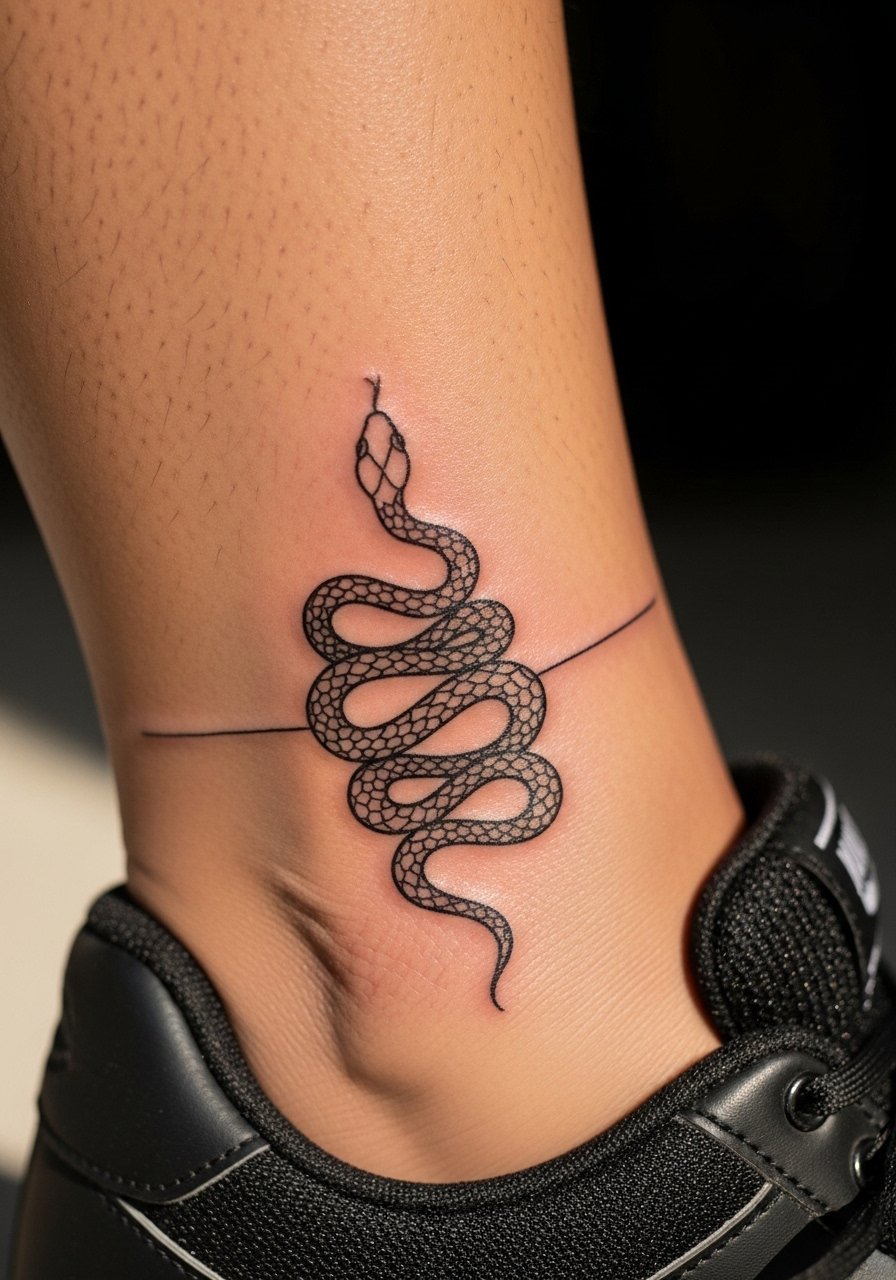
Fair warning, an ankle wrap is stealthy but fragile. I often suggest this to people who want something low-visibility yet meaningful. Ask for slightly heavier linework near the coil tails and for the artist to avoid ultra-thin single-needle outlines that can feather on thin ankle skin. Blowout risk is low if the artist spaces lines for the area, but touch-ups at year two are common with fine line versions. Single session, low pain, and ideal for first-timers who want something discreet.
3. Bracelet-Style Wrist Snake Loop

When you want a jewelry vibe without the metal, this wrist coil works. Bring photos of exactly how tight you want the loop to sit so the artist can map cuff lines to your wrist bone. Mistakes happen when people ask too small a circumference, which leads to cramped detail and faster fading. Expect a short session under an hour, low to medium pain, and plan a touch-up at about 12 months if lines soften from daily use and washing.
4. Snake Head Forearm Focus

There is something about a high-impact head that reads like intent from across a room. When you sit down with your artist for this one, bring macro references of snake eyes and fangs so they can nail the scale texture. The common low-quality version tries to cram photorealism into three inches and ends up muddy. Pain is medium on the inner forearm, single session for a small head, and expect clarity at six months with possible touch-up at year two for fine shadow areas.
5. Snake Encircling Arm Sleeve Starter

If you plan to build a sleeve over several years, start with a bold encircling snake that serves as a backbone for later pieces. Tell your artist you want strong linework and high saturation so future fills and color do not compete with the main coil. A mistake I see is starting with too many tiny filler elements that force rework later. Expect 2 to 3 sessions, medium pain on upper arm, and the bold approach generally holds clean for five-plus years with occasional touch-ups.
6. Minimalist Snake Neck Outline

Neck placements split opinions because they are visible and sensitive. Artists disagree about fine line there. One camp says the skin stretch and constant motion blur ultra-fine lines quickly. The other camp says with shallow needle depth and spaced strokes it can settle well. Ask your artist how they handle needle depth and line spacing for neck work before booking. Expect higher pain, a single session, and plan on a crispness check at 12 months with possible touch-up.
7. Colorful Snake Foot Duo

Most rainbow foot pieces are flashy at first and then the color softens from sun and shoe friction. I recommend richer dark tones rather than pastel watercolor if you want lasting vibrancy on the foot. Tell the artist you want color blocking with bold outer lines to protect saturation. Pain on the foot is higher than ankle, sessions vary but often finish in one. Expect colors to mellow at six months and need a color boost at one to two years if you want them vivid.
8. Rainbow Serpent Spine Design

Spine pieces are dramatic but healing requires care. I advise this for people comfortable with longer sessions and privacy during healing. Ask for clear gradation maps in your reference images so the artist knows where each color should start and stop. Common regrets come from overly thin transitions that separate into patchy bands as they heal. Expect two sessions, higher pain on the spine, and plan a color touch-up within 18 months for areas that settle lighter.
9. Irezumi Snake with Cherry Blossom Rib
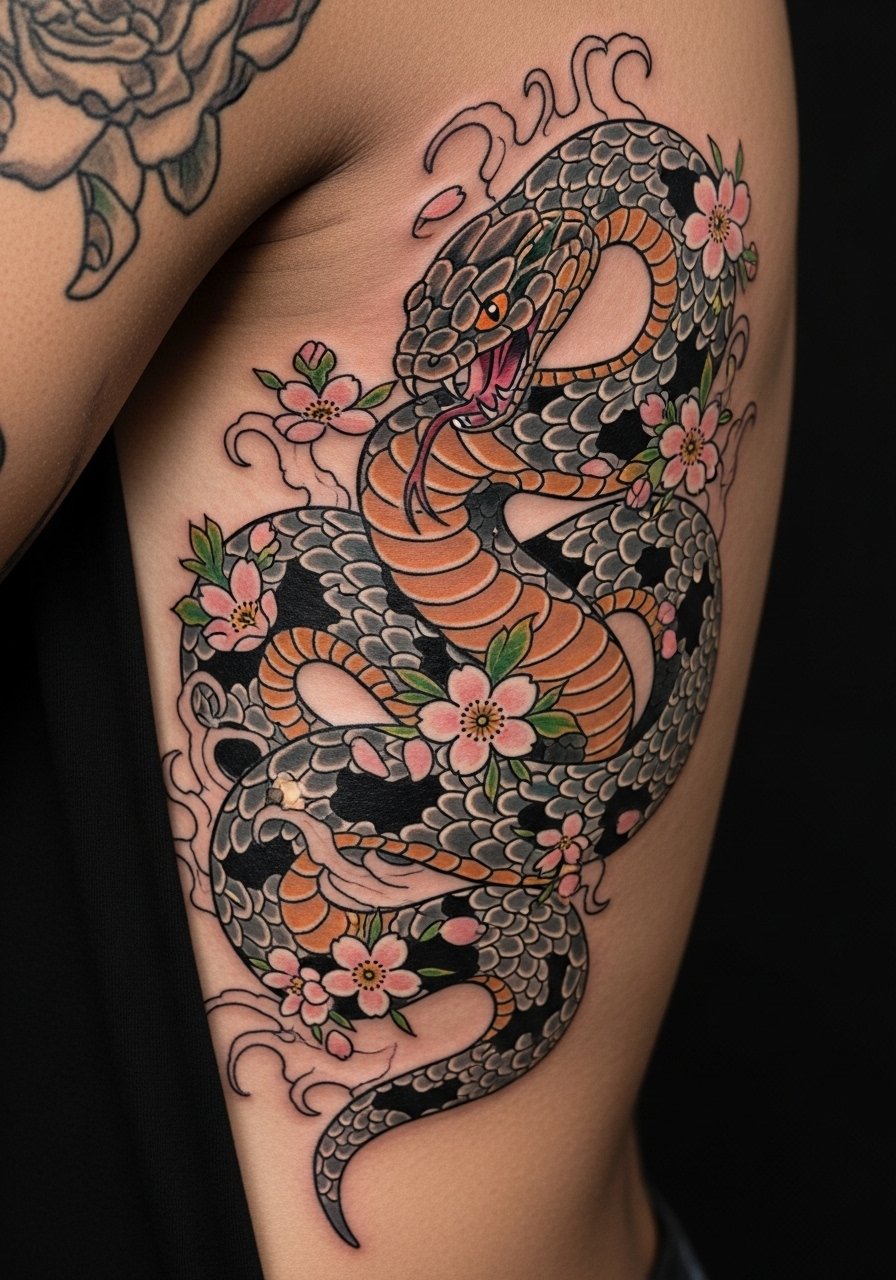
This design carries cultural origins and ornate composition. I suggest acknowledging the irezumi lineage in your consult and asking about respectful placement of traditional motifs rather than direct replicas. The rib is a notorious pain zone so break sessions into shorter blocks if you want to manage discomfort. Mistakes include asking for tiny blossom details that do not survive rib stretching. Expect 2 to 3 sessions and strong saturation will help the piece age more predictably.
10. Snake and Sword Thigh Wrap
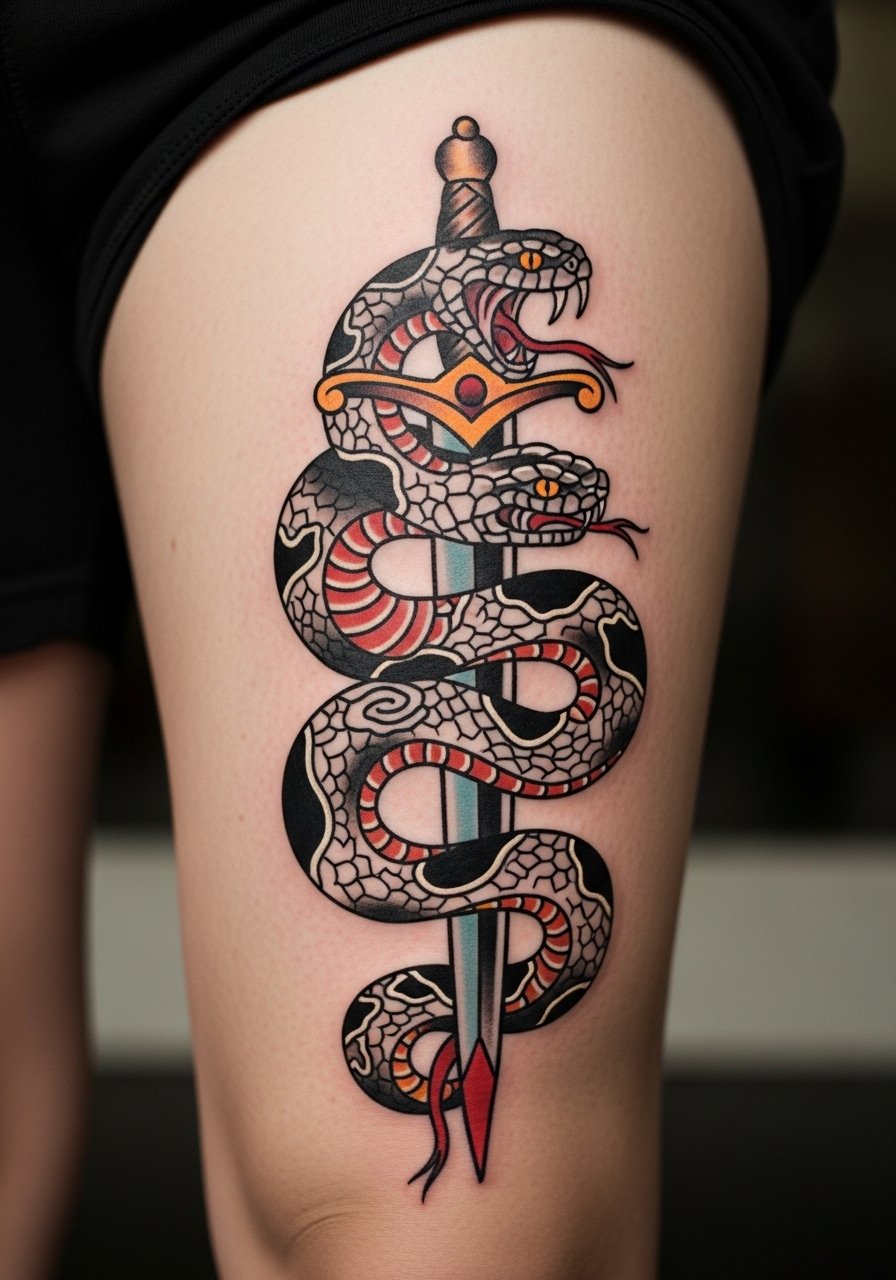
Thighs offer room to scale up and add detail, but weight fluctuation can change composition. I have seen thigh snakes stretch after muscle or fat gain, so discuss future body changes with your artist. A practical tip is to leave the coil slightly looser on the outermost edge so it maintains shape with minor size shifts. Sessions are usually two, pain is medium, and check the design after six months for any distortion needing a touch-up or rework.
11. Cobra Hood Upper Back Statement

There's strong visual impact from a hooded cobra across the shoulder blades. When you book, ask the artist to plan hood curvature that follows your shoulder blades rather than forcing symmetry. A common error is over-detailing the hood flares small, which flattens as skin moves. Expect three to four sessions for a large realistic piece, medium pain unless the spine is involved, and excellent black and gray saturation retains contrast for years with occasional touch-ups.
12. Tribal Geometric Snake Collarbone

Collarbones show quickly and age differently across skin types. This is a good pick if you want graphic texture that photographs well. Tell your artist you want solid black fills rather than shaded gradients for longer visual stability. The usual mistake is too-small geometric elements that merge as they settle. Expect a short session, moderate pain on the collarbone, and solid black holds better on darker skin when saturation is dense.
13. Minimal Feathered Serpent Quetzalcoatl Variant

This Mesoamerican fusion has a niche appeal and can be phrased respectfully during consultation. Mention to the artist that you want a contemporary nod rather than a direct cultural replica. The piece reads best with stipple shading and dot work that gives the feathers texture without heavy color. Expect medium pain on the lower arm, a single or two sessions, and touch-ups for dot work at about two years if dots lose contrast.
14. Color-Blocked Thigh Duo for Movement
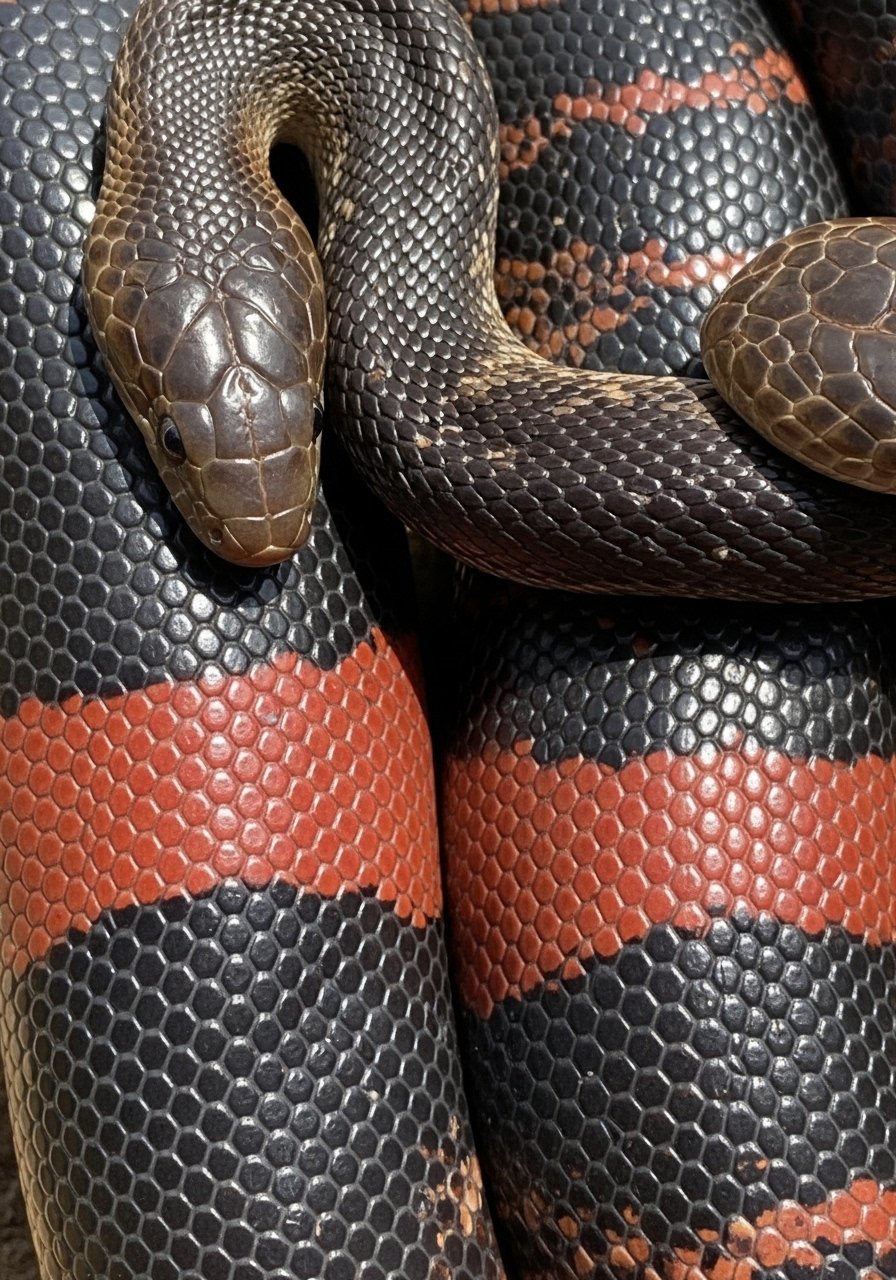
I've noticed paired thigh snakes move with clothes and look dynamic in motion. For active people who exercise, tell your artist you want color-block fills that withstand friction and stretching. Avoid tiny watercolor splashes at the edges that tend to wash out on the thighs. Sessions are usually two, pain is moderate, and expect a color top-up if you spend a lot of time in the sun or pool.
15. Fine Line Wrist Coil for First-Timers

For a first snake tattoo this is a common pick because it is quick and discreet. Artists are split about how fine line holds on wrists. One camp says wrists move too much and lines blur in months. The other camp says with proper spacing and slightly bolder start lines it can last well. Ask the artist what spacing they recommend and plan a touch-up at 12 months. Expect low pain and a session under an hour.
Tattoo Prep and Aftercare Essentials

From what I have gathered after talking to artists across five shops in Brooklyn and spending time in forums, aftercare matters more than the initial trend. Keep fresh ink out of direct sun, avoid soaking in pools for two weeks, and moisturize with a thin layer rather than smothering the area. On the Saniderm versus dry healing split, name both camps to your artist and ask which they prefer. Some swear by occlusive dressings for fast clean healing, while others recommend short open-air windows to avoid trapped moisture. If you have darker skin, consider blackwork or bolder outlines to keep contrast, and test a temporary transfer before committing to placement.
Shopping list with practical choices follows. All links go to Amazon search pages with the tag inkalerts-20 so you can check availability and read current reviews.
Snake Oil Balm, thin non-clogging aftercare balm. Lightweight balm favored in community threads for color tattoos that need breathable moisture. Use sparingly after initial peeling phase to avoid clogged pores.
HealFX Spray dry-healing topical spray. Spray option popular in forums for those who prefer less sticky occlusives. Good for humid climates where bandages trap sweat.
InkGuard Mist for humid climates. Mist that reviewers say helps prevent color migration in warm weather. Apply as directed after initial clean phase.
Yamada Balm lightweight aftercare oil. Japanese-style oil that absorbs quickly and reduces surface shine, useful for irezumi and florals.
Lightweight fragrance-free balm. Generic gentle option if specific indie products are out of stock. Use for daily moisturization after scabbing finishes.
Fragrance-free gentle foaming cleanser. For first week cleaning, choose a pH-friendly foam that rinses ink residue without rubbing.
Medical-grade occlusive bandage, 6-inch roll. For those who follow the occlusive approach, this type of second-skin helps protect from friction and bacteria during the first 24 to 72 hours.
Lightweight mineral sunscreen for healed tattoos. After healing, daily mineral SPF preserves saturation and prevents premature fading.
Silicone scar sheeting or thin silicone gel strips. Useful when a raised scar appears and you want to manage texture before a touch-up session.
Every tattoo is different. Always follow your artist's specific aftercare instructions. Consult a dermatologist if you have skin concerns or unusual healing issues.
Frequently Asked Questions
Q: Will fine line snake tattoos blur faster than bold ones on the forearm?
A: From what I have seen, fine line generally softens quicker on forearms, especially if you wear sleeves that rub the area. Bold outlines with spaced linework tend to hold crispness longer. If you love delicate work, plan for a touch-up around 12 to 18 months.
Q: How should I choose between Saniderm-style occlusives and dry healing for a rib or neck snake?
A: There are two camps. One camp uses occlusive dressings for a clean, sealed early phase. The other camp favors short open-air windows to avoid trapped moisture. Ask your artist which method they use and why, and follow their protocol for rib or neck placements since those areas can react differently.
Q: Do snake tattoos show well on darker skin tones and which styles work best?
A: In my experience bold blackwork and strong outlines photograph better on darker tones than very fine single-needle pieces. If you are worried about visibility, test a temporary transfer and browse hashtags geared to darker skin photos to find portfolios that match your look.
Q: If I get a thigh snake and later gain or lose weight, will the tattoo distort?
A: Thigh skin can change with weight and muscle shifts. A practical approach is to design with modular flow so the main coil has breathing room. If distortion happens, a touch-up or modest rework can restore the composition without a full cover-up.
Q: How often do watercolor-style snakes need color touch-ups compared with black and gray snakes?
A: Watercolor or soft gradients generally need color boosts sooner because they rely on lighter saturation. From discussions in artist forums, plan on refreshing color at one to two years for vivid palettes. Black and gray pieces with high saturation often need touch-ups less frequently.
Q: What should I bring to my consultation to get a bold snake head on the forearm right?
A: Bring clear close-up photos of snake head references, indicate exact size in inches, and discuss lineweight and contrast. Ask the artist how they handle fangs and eye highlights so you can expect the same approach during the session.
Q: Are there directories or hashtags you recommend for finding snake tattoo specialists near me?
A: Search hashtags like #SnakeTattoo, #FineLineSnake, and #NeoTradSnake on Instagram and TikTok and use tattoo directories such as Tattoodo or Booksy with location filters. Reddit r/tattoos is also a good place for peer recs and guest spot alerts.