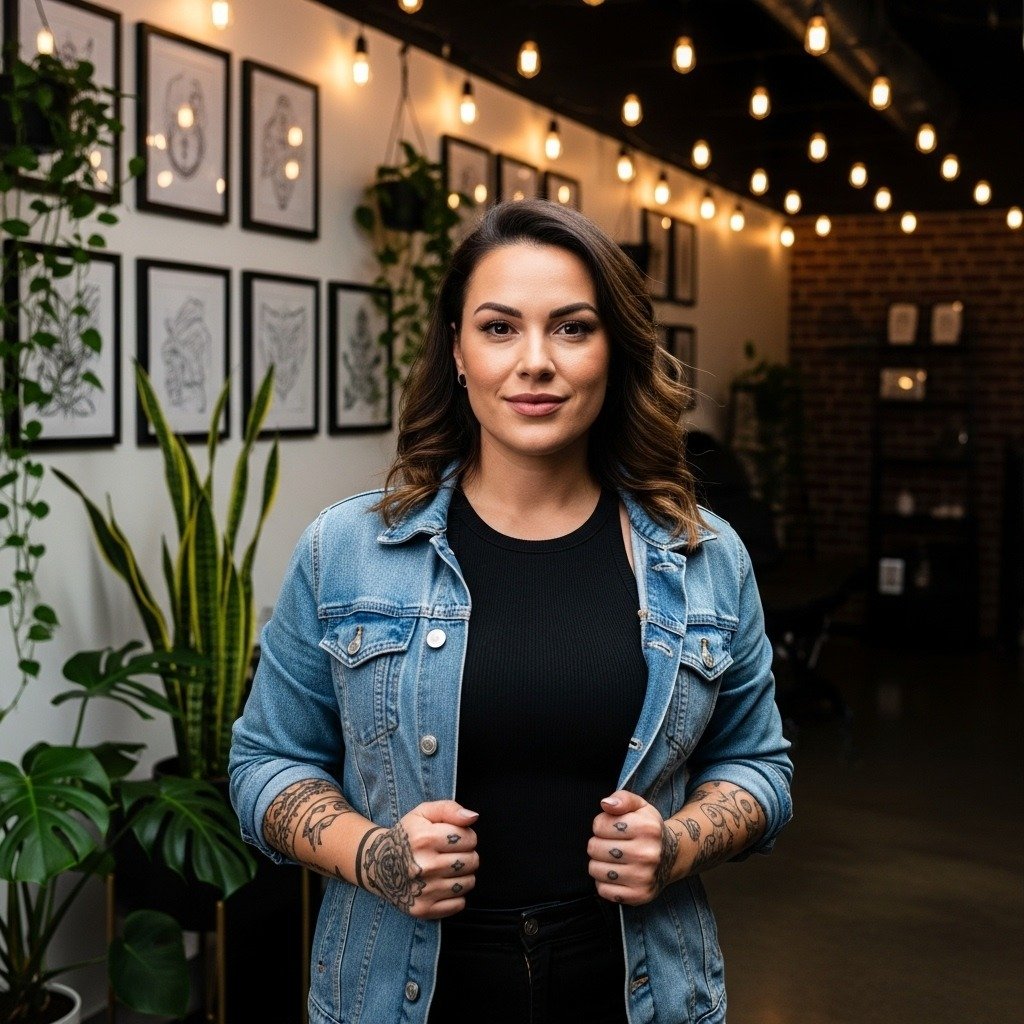
Someone I know spent six months pinning rib tattoos before booking. The real hold-up was not picking something that looked good on Instagram. It was picking a style that would sit well on the ribs, take the pain, and still read five years later. I’ve spent time in five shops across Brooklyn and chatted with artists who specialize in fine line and blackwork. Below are 25 rib tattoos for women that solve common problems and explain what to ask for at consultation.
1. Fine line floral stem along the ribs

Someone I know first copied this onto a phone note after seeing an elongated stem on a friend. Fine line follows the rib length and flatters a narrow canvas. Fair warning, ribs rank high on most pain scales, so expect a session of about 60 to 90 minutes for a medium-length stem. Tell your artist you want slightly thicker primary stems and airy secondary leaves so the work holds at year two and beyond. A common mistake is asking for hairline strokes that blur in a year. Ask about line spacing, touch-up timelines, and blowout risk near lower ribs.
2. Watercolor rose cluster wrapping the torso

Fair warning, watercolor reads softer and needs more saturation near the ribs to keep color over time. This wrap works if you want color that curves with movement. Sessions often span two sittings of 90 minutes each. During consultation say you want black outlines under the color to protect saturation. The aging pattern is clear. At six months colors deepen, at two years pale tones may need a touch-up. Avoid asking for barely-there washes unless you accept faster fading. Sun exposure accelerates loss, so plan for long-term UV protection.
3. Minimalist lotus mandala vertically on the central ribcage

Most mandalas are compact but the ribs give a narrow stretch to run vertical. Expect a single session around 60 minutes for a small mandala. Tell your artist you want stipple shading and clear spacing between petals. A common aging issue is over-detail in a tiny mandala. If the dots are too close they can merge as the skin settles. Who it suits best are people wanting a spiritual anchor under clothing. For cultural sensitivity, note mandala forms trace back to sacred patterns and many clients choose adapted motifs rather than direct replicas.
4. Script quote in cursive along the ribs
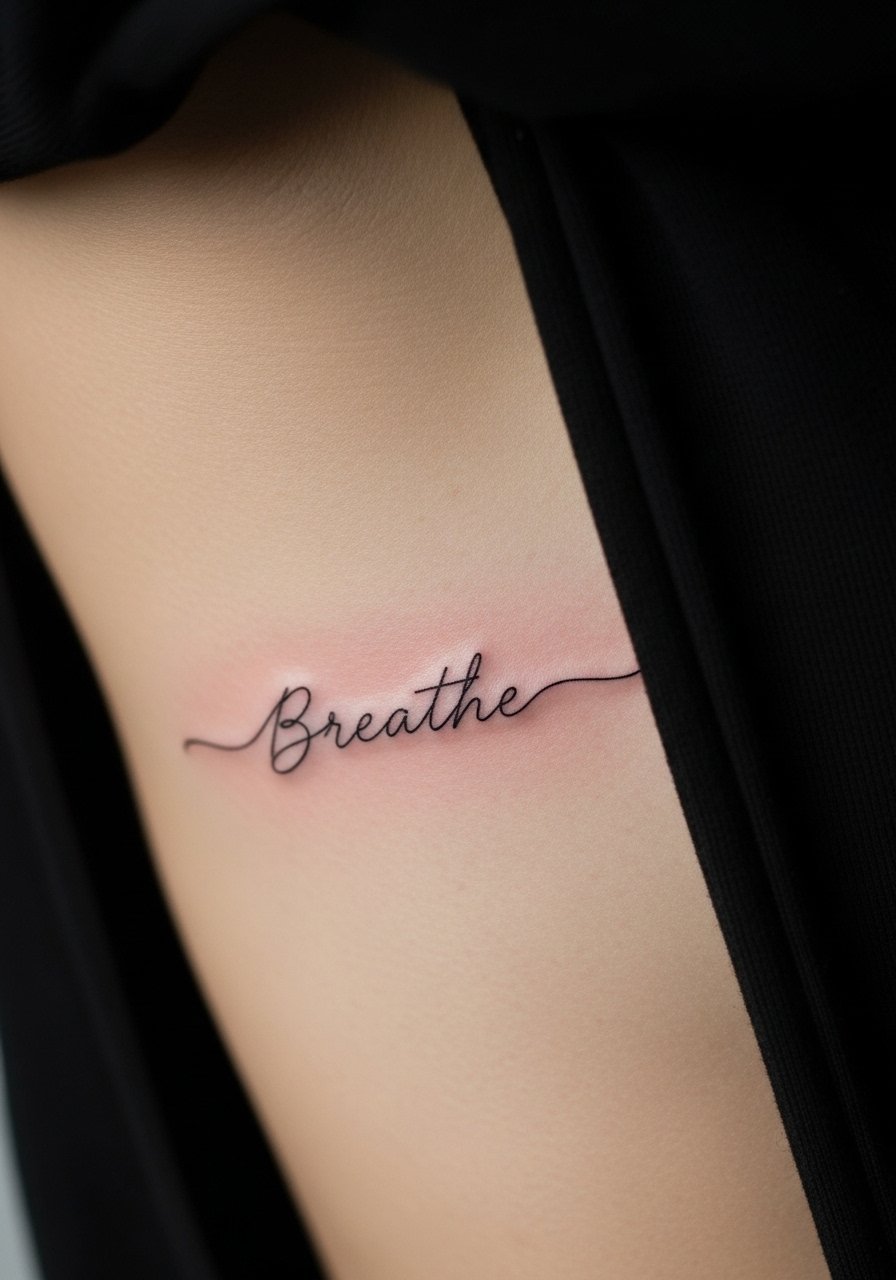
There is a reason vertical script is trending on TikTok. A single word or short phrase hides well under clothing and reads cleanly at swimwear. Pain varies across the rib span. Keep text size at least 0.5 millimeter line thickness to avoid early blurring. Tell the artist the exact font weight and show close-up photos of healed script you like. Small quotes commonly blur when letters sit too close. Expect a quick 30 to 45 minute session but plan a touch-up at six to twelve months if you want crisp lines long term.
5. Blackwork feather cascade under the bust
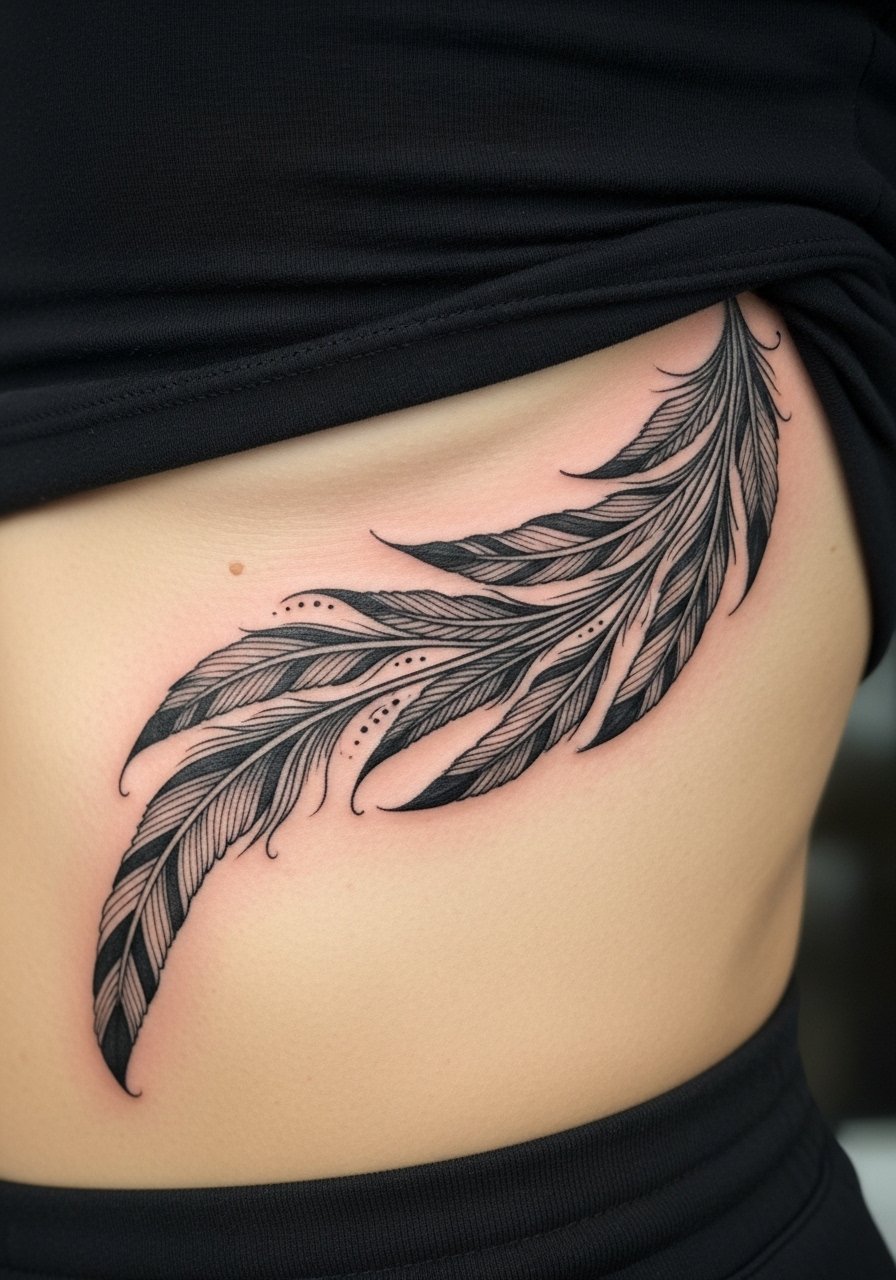
The visual impact comes from heavy saturation that still reads delicate because of feather tapering. Sessions can be two to three sittings if pieces are medium size. This placement has moderate pain but hides well under garments. A common error is faint filling that looks patchy later. Request solid blocks of saturation with clean edge linework and ask about touch-up timing for density. On darker skin tones blackwork can be the most reliable choice for longevity. Expect a build approach so saturation layers well without overworking the skin.
6. Realistic butterfly in flight wrapping the side rib

Realism on the ribs reads beautifully when placed to mimic motion. Plan for up to three sessions for a medium level of detail. During consultation bring profile photos so the artist understands the wing curve you want to follow the rib arch. The mistake I see is attempting hyper-detail at too-small a scale. Tiny antennae and micro veins merge over time. Blowout risk rises near thinner rib areas, so ask about needle grouping and session pace. Expect touch-ups at year two for shading refresh.
7. Ornamental vine with leaves along full rib length

When someone wants filler without a heavy centerpiece this design wins. It suits people who change their look often because it layers well with later tattoos. Expect two sessions for a full-length piece. Tell your artist to keep leaf clusters spaced and avoid tiny interior details that can blur with skin movement. The main mistake is packing too much shading into narrow leaves. If you want longevity, ask for clear negative space between motifs and reasonable lineweight. Blowout risk is higher where skin is thin near the lower ribs.
8. Neo-traditional bird silhouette on the upper ribs

I’ve seen neo-traditional pieces read like small paintings on ribs. This one suits anyone wanting bold outlines that age predictably. Expect two sessions for color work and saturation. At consult mention the color palette and ask for slightly thicker outlines so the shape remains readable at year five. A common misstep is tiny internal detail that disappears. For hideability upper ribs are convenient. If career considerations matter keep placement in mind because some outfits reveal the area more than expected.
9. Ignorant style heart with handwritten script on the lower ribs
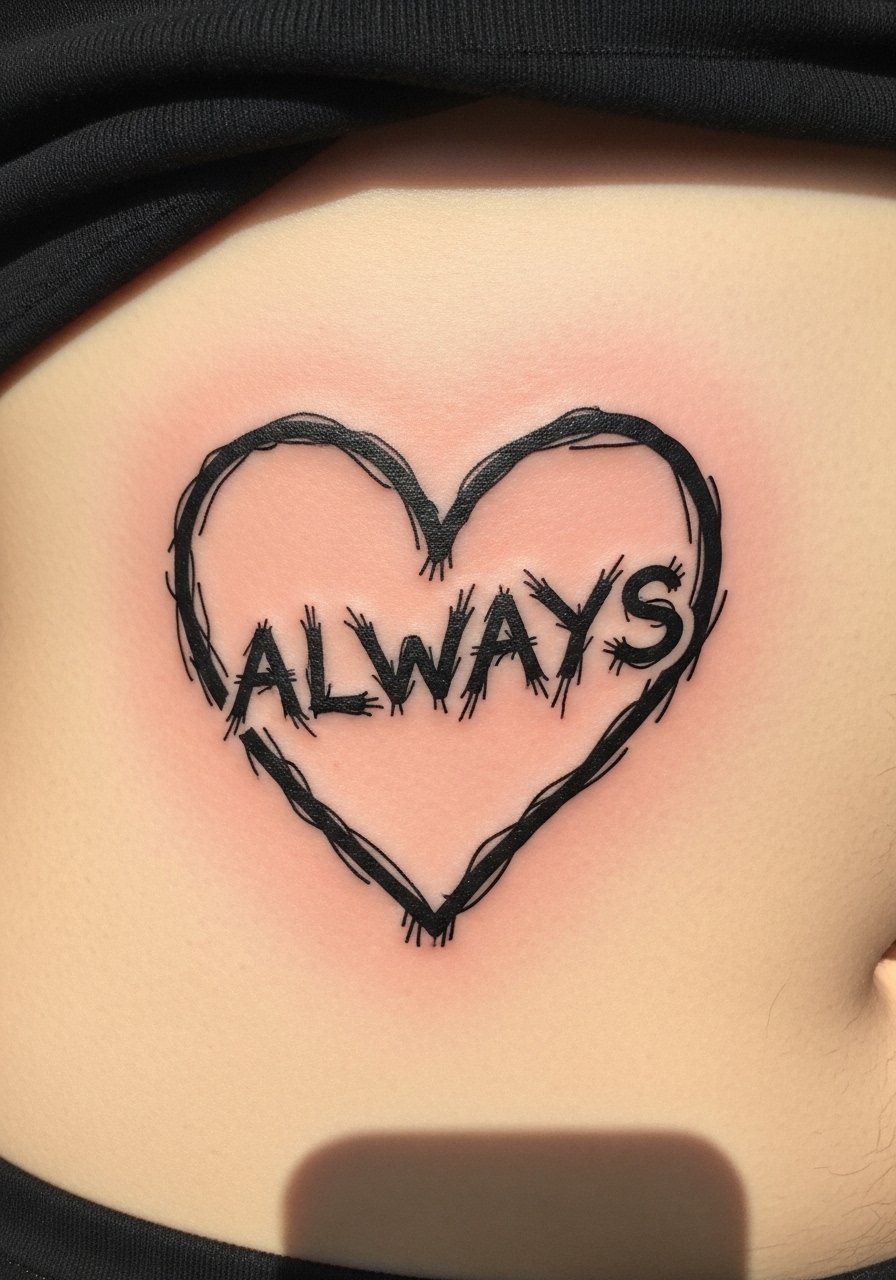
This raw hand-drawn look reads emotional and direct. Session time is short, often 30 to 60 minutes. Ask for deliberate uneven linework rather than accidental shakiness so the artist can control blowout risk. A mistake I see is requesting hairline scribbles that lose definition on the rib’s thin skin. If you want an emotional pulse in a small spot, specify lineweight and ask the artist to simulate the hand-drawn texture without tiny cross-hatching. Expect minimal touch-up if outlines are bold enough.
10. Floral peony bouquet side wrap
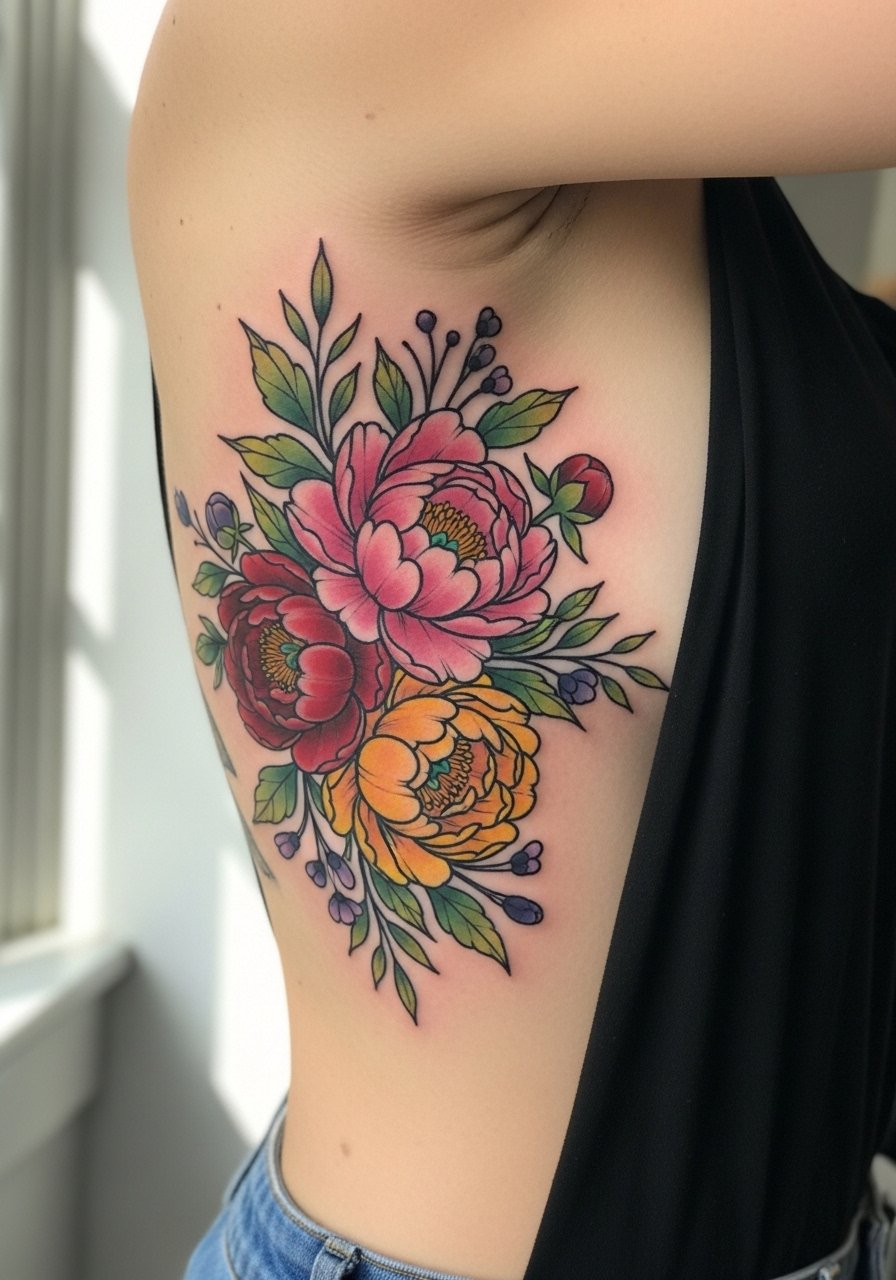
Peony bouquets look classic on the side wrap because they use large petals that keep shape over time. This design often takes three sessions for layering and color saturation. Tell your artist you want strong midtones and defined sepals so the petals do not wash out. A common aging issue is soft watercolor fills without borders. If you plan weight fluctuation, place larger blooms over more stable areas and keep tiny filler elements away from areas that change. Plan for UV protection to preserve color.
11. Micro mandalas as rib fillers between larger pieces
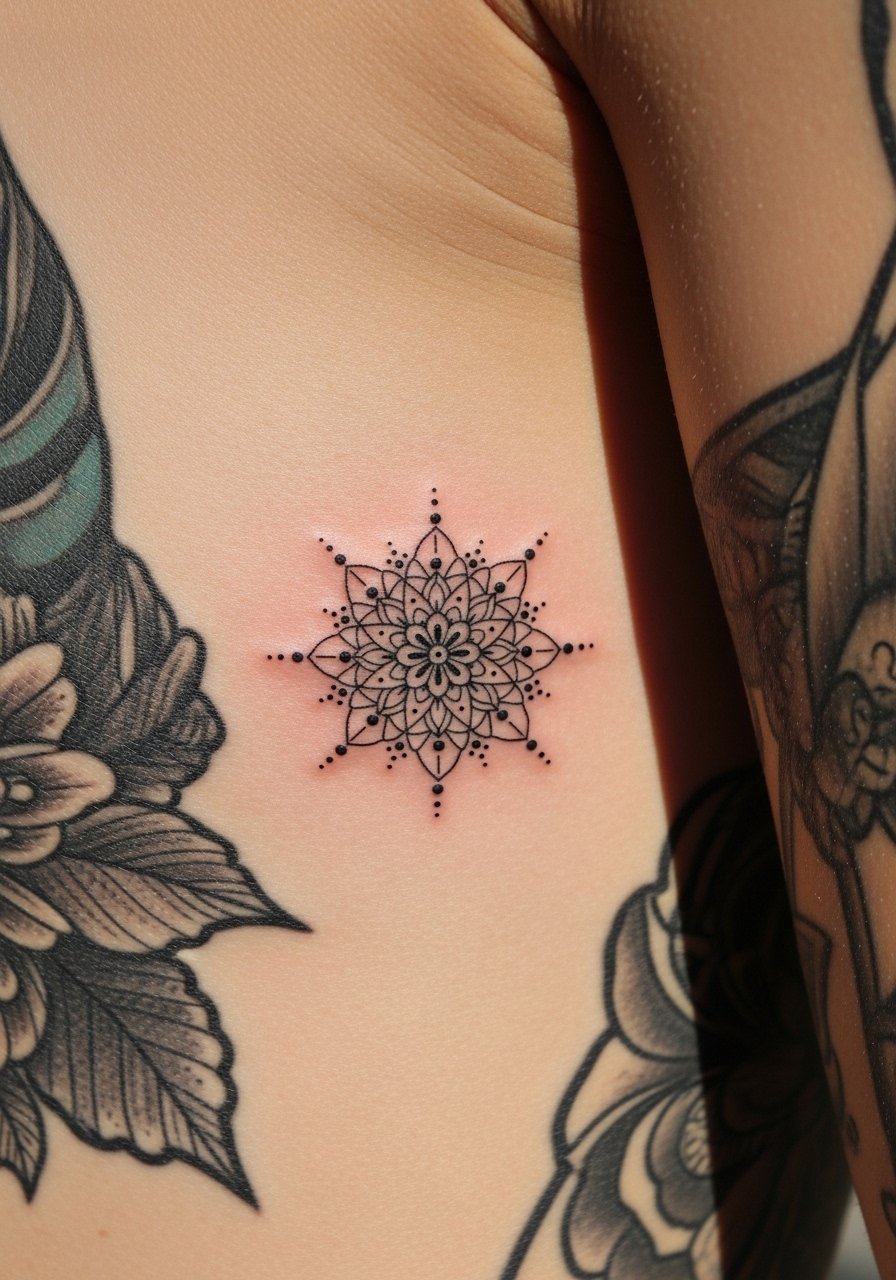
Micro mandalas are a smart patchwork strategy when you want future expansion. A short session of 45 minutes will handle a single micro mandala. In consultation say you want dot work with clear spacing to reduce merging. The mistake is cramming too many baroque details into a 2 to 3 centimeter circle. At six months dots mellow, at two years small dots can fill in if placed too tightly. Use stipple shading and leave hairline negative space to keep the piece readable as you add more work later.
12. Vertical mantra in fine line script that reads "I am enough"

Fine line on ribs splits artists into two camps. One group warns that fine strokes blur within a couple of years on that stretch of skin. The other group says that with proper needle depth and spacing fine line will hold nicely. When you book, ask where the artist stands and for photos of healed fine line ribs from their own portfolio. The common error is choosing hairline letters with no breathing room. Keep letter spacing larger and plan a touch-up around year two if you want the script to stay crisp.
13. Stipple-shaded crescent moon chain down the ribs

There is a quiet impact to a series of moons that trail along the rib. Stipple shading reads soft and adapts well to curvature. Sessions are moderate, often split into one long sitting of 60 to 90 minutes. Ask your artist for consistent dot density so the gradient ages evenly. A mistake is inconsistent dot size or spacing which creates patchy healing. Blowout risk is lower with dot work than with heavy whip shading, but it still matters near bony areas. Plan touch-ups at year three for density refresh.
14. Single-line continuous contour portrait on the ribs
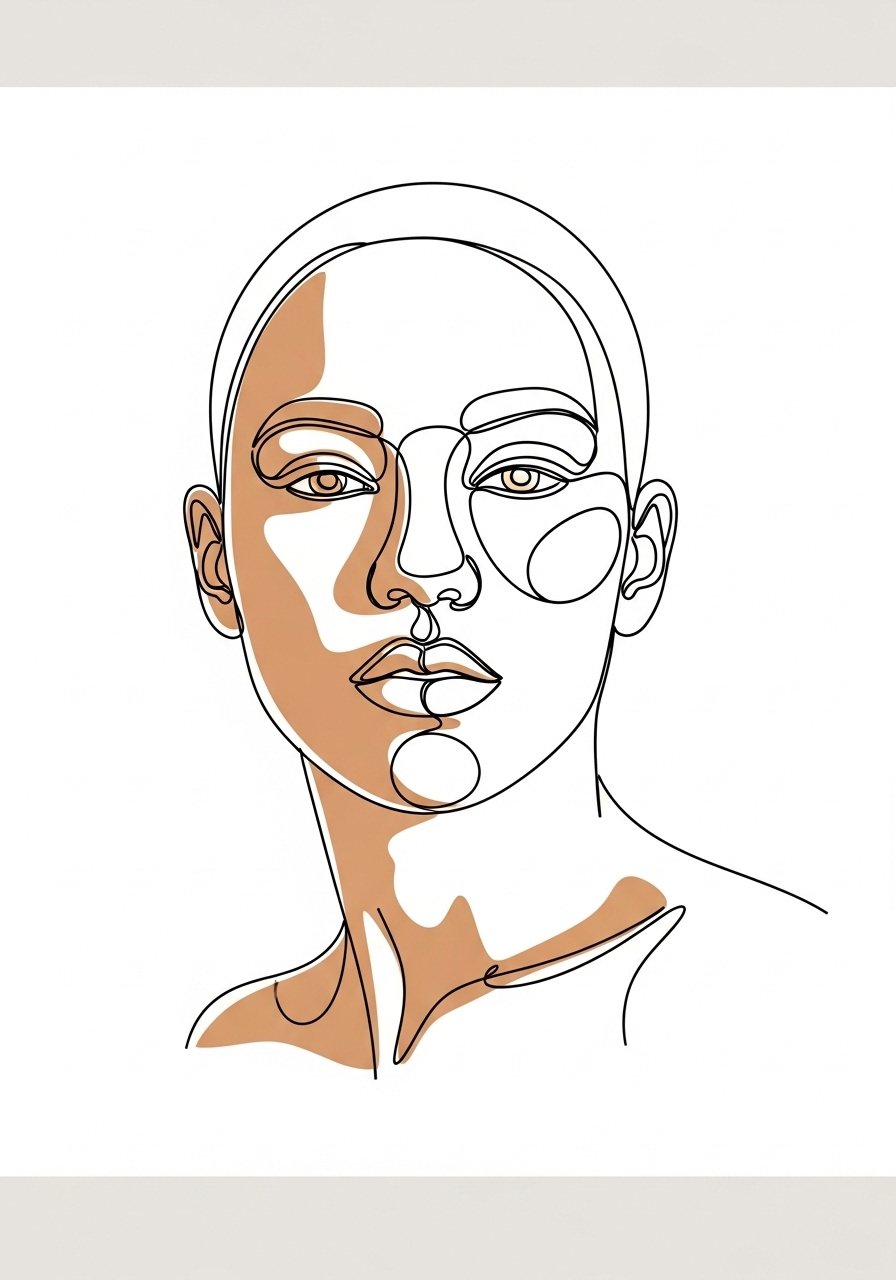
The aesthetic feels modern because of negative space and uninterrupted linework. Expect a session of about 60 minutes. Tell your artist you want deliberate breaks and thicker main strokes so the portrait keeps its silhouette over time. The error people make is shrinking the design too small which causes key facial gestures to merge. Discuss blowout risk near thinner ribs and opt for slightly bolder primary anchor lines. This style scales well into larger torso pieces if you ever want to expand.
15. Small vertical rib quote "Breathe deeper" in typewriter font

Typewriter-style text reads crisp when sized correctly. Plan for a 30 to 45 minute session. Ask your artist for letter spacing that accounts for future skin movement. A common mistake is choosing extremely narrow fonts that plug together as the skin settles. If you want a medical or recovery reminder, this placement is discreet. Expect to schedule a touch-up after initial healing if letters show any minor feathering, especially near the bottom rib where skin can be thinner.
16. Blackwork geometric rib band wrapping from front to back
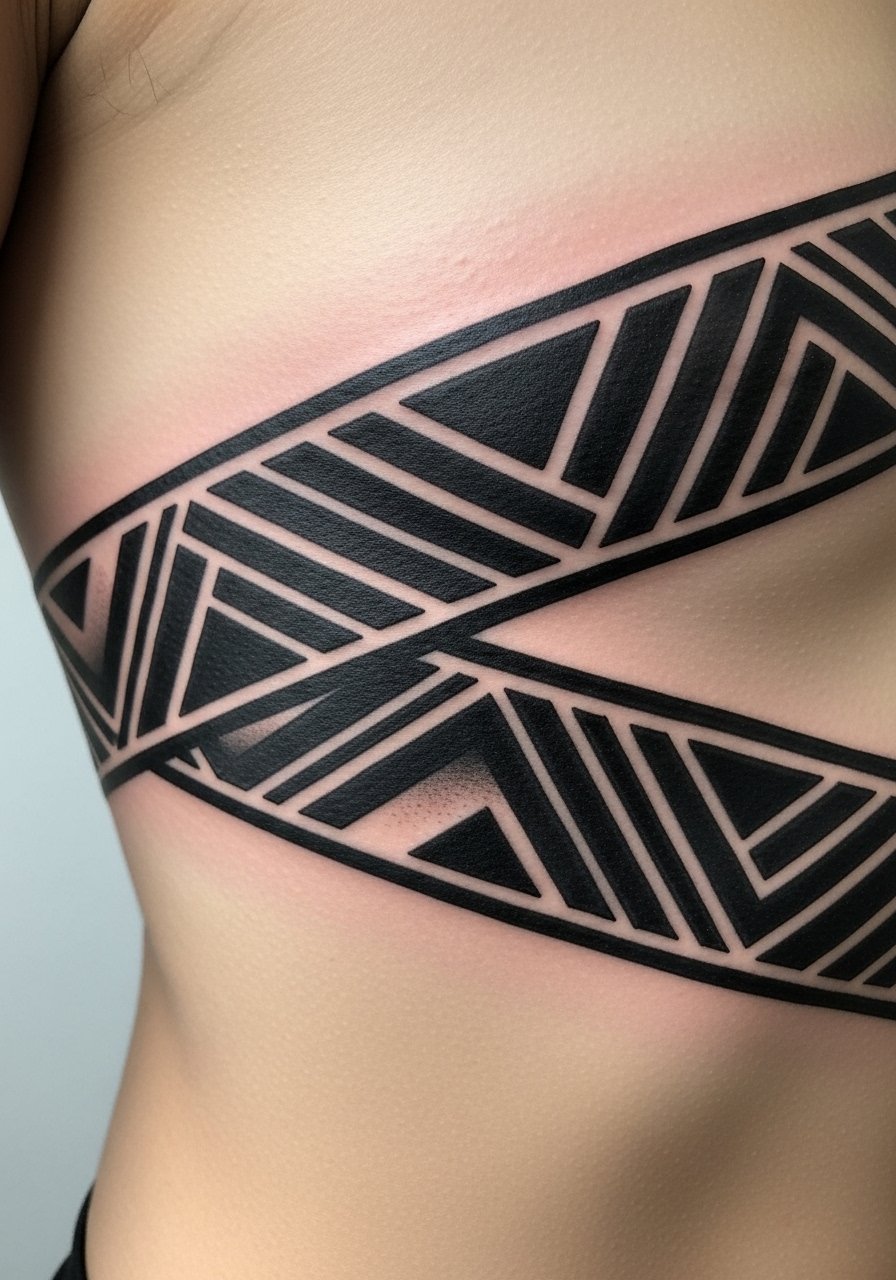
Geometric bands read bold and modern on ribs because they contrast with natural curves. Sessions can take two sittings if the band is wide. Request clean edge linework and consistent saturation to avoid patchiness. The mistake I see is uneven spacing across the wrap which becomes obvious as your body moves. Blowout risk rises where the design crosses bony ribs, so ask the artist how they plan to adjust needle angle. This piece holds up well long term with periodic touch-ups for saturation.
17. Lotus and mandala hybrid for minimalist spirituality
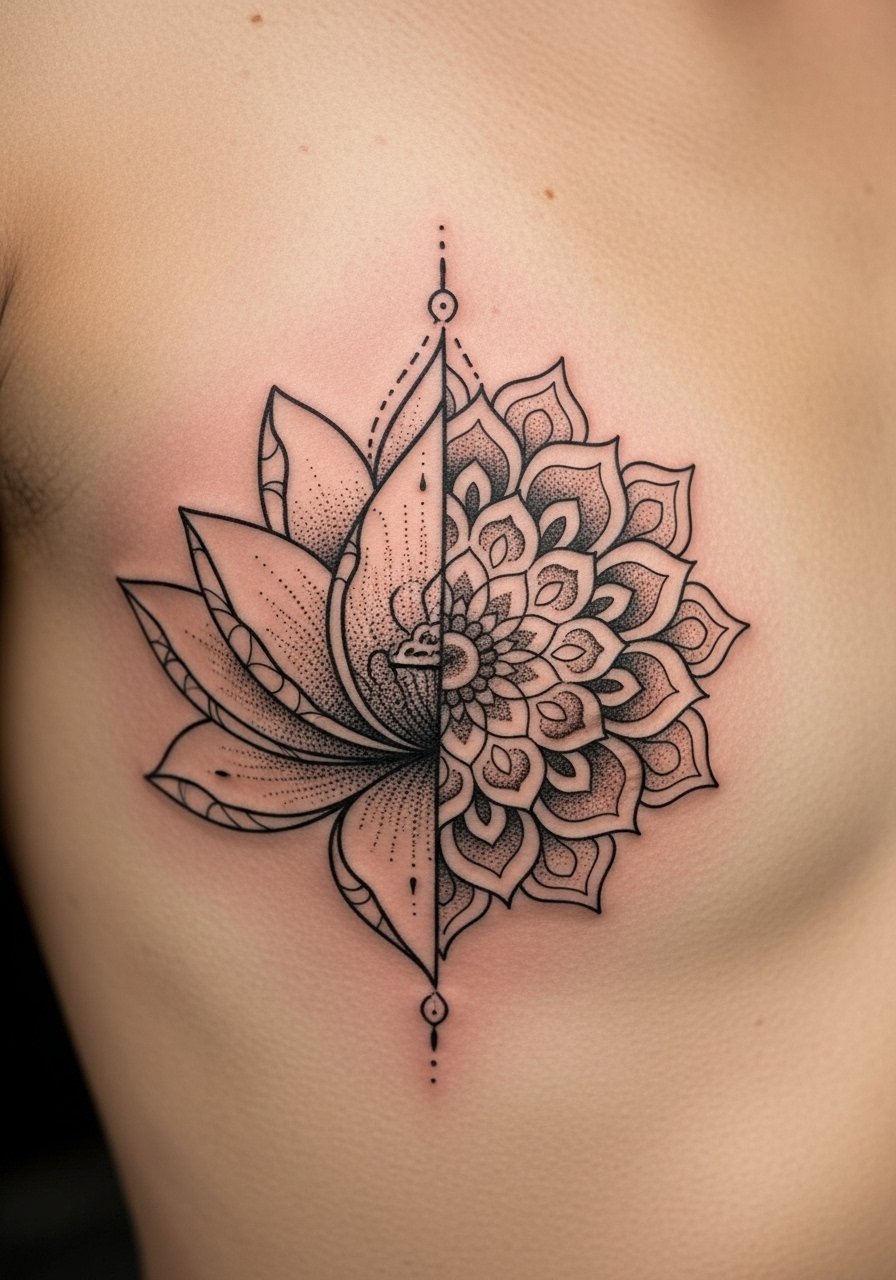
I’ve noticed lotus hybrids are popular because they mix symbolism with practical scale. One session usually covers a small hybrid. Tell your artist you want petal spacing and dot density that allow the form to breathe. The common mistake is over-detailing the mandala center. If you plan future expansion, keep the outer petals simple so additional elements can connect. For origin sensitivity the mandala tradition is spiritual for many people so some clients prefer stylized versions rather than literal sacred replicas.
18. Peony with dot work shading adapted for darker skin tones

Dark skin adaptations matter because saturation reads differently and subtle grays can wash out. For darker tones ask for heavier midtones and clear contrast in the petals. Sessions will often prioritize saturation layering in two sittings. A common mistake is using pale washes that disappear. Instead, request bold midtone anchors and stipple highlights that translate across pigment. Blowout risk is manageable if the artist spaces lines and avoids hairline details. This approach keeps the peony readable and resilient over time.
19. Feather turning into flying birds, motion piece across ribs
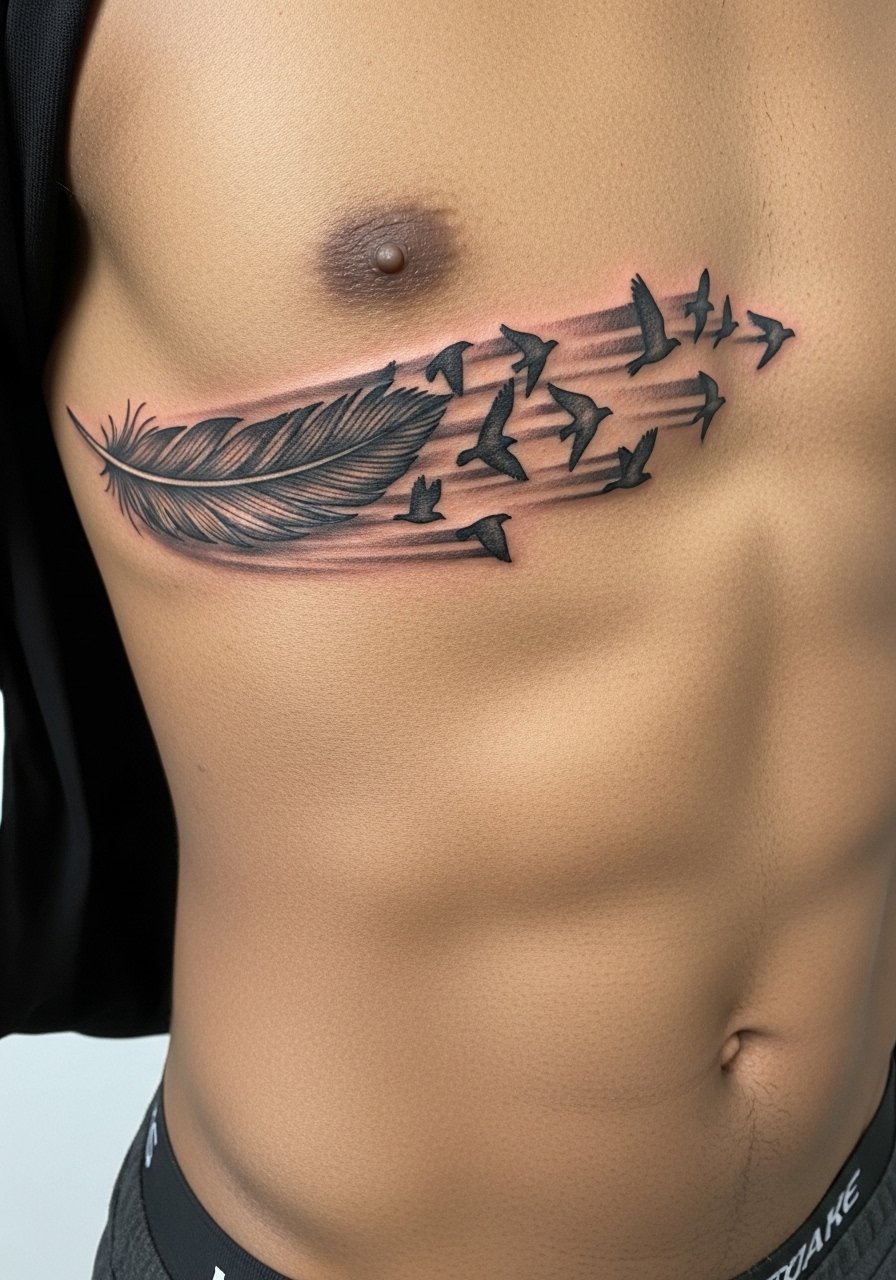
There is an emotional rhythm to a feather that becomes birds along the rib. Expect two sessions for a medium-length motion piece. At consultation show reference for bird size progression and ask the artist to plan negative space so the flight path remains clear as the skin shifts. A mistake is making the smallest birds too tiny because those details fill in. Blowout risk is higher near bony ribs so ask about needle speed and pressure. Touch-ups at two years will restore contrast if needed.
20. Watercolor koi wrapping the lower ribs with subtle outlines

Koi can wrap elegantly when the body’s curve accentuates the fish. Ask for slightly darker midtones and faint outlines so colors do not wash out. The piece usually takes two sessions to layer color. A common mistake is relying on pale washes alone. For darker skin consider stronger saturation and careful outline placement. This design ages by losing vibrancy first in the lightest washes. Daily SPF once healed will preserve color. Plan a refresh at year three if you want the watercolor to stay vivid.
21. Roman numerals memorial placed along the lower ribs

Small numerals make tidy memorials but they must be sized for longevity. Keep characters slightly larger than you think. The mistake is choosing tiny serifs that fill in as the skin relaxes. Session time is short, around 30 to 45 minutes. During consult provide the exact numerals and font sample because image generators and designs need precise text. Expect a touch-up at six to twelve months to sharpen any early feathering. For placement think about how clothing may cover or reveal the piece.
22. Constellation with coordinates "41.4025 N, 2.1743 W"
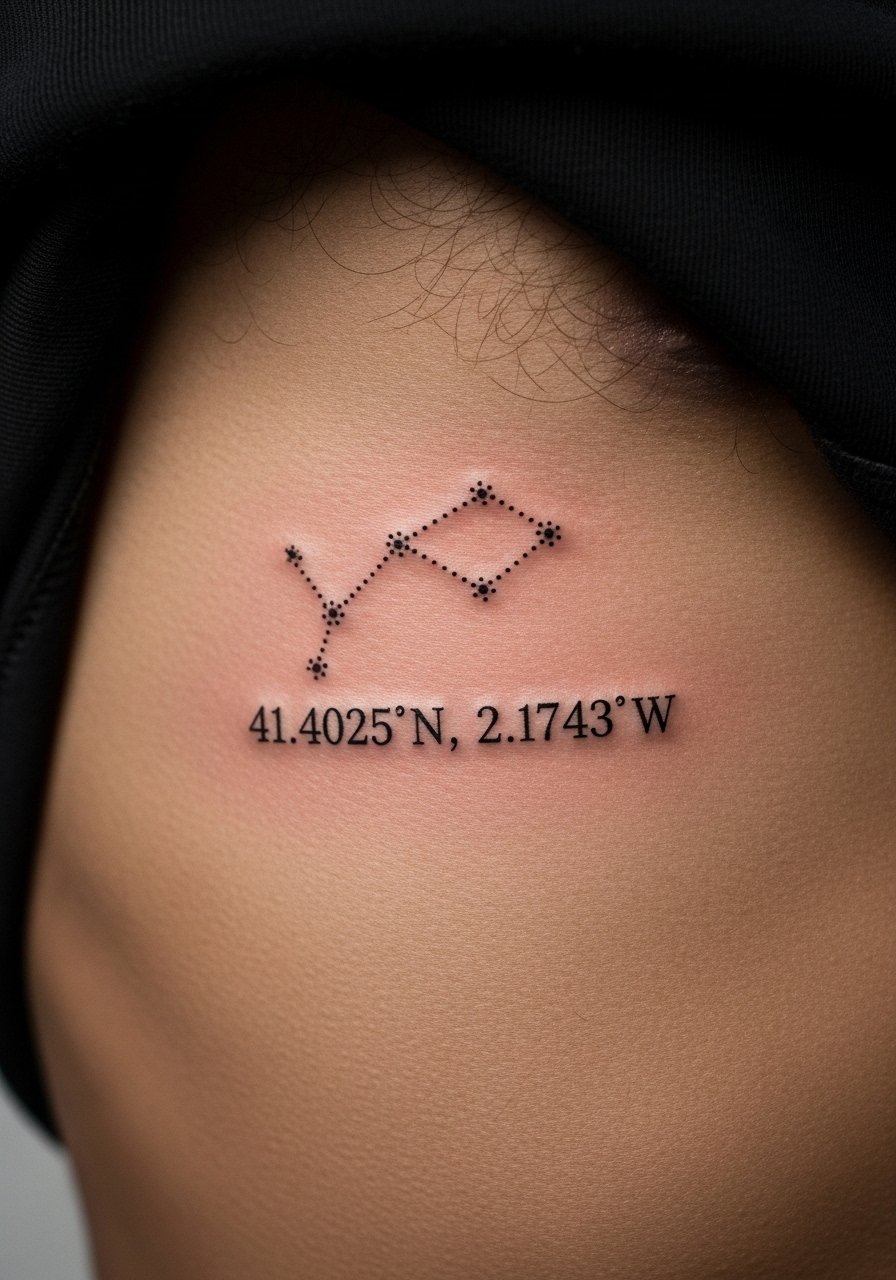
Coordinates are compact and deeply personal when tied to a city, birth, or memory. For readability pick a monospace or small serif and insist on letter spacing that accounts for skin movement. Sessions are short. A common error is using a tiny font that blurs into a smudge. Dot work for the stars should be spaced to avoid merging. If you want to preserve the numbers, plan a touch-up at one year. This is a design that hides easily and ages dependably if spaced correctly.
23. Mandala half-wrap under the ribs for a torso cuff
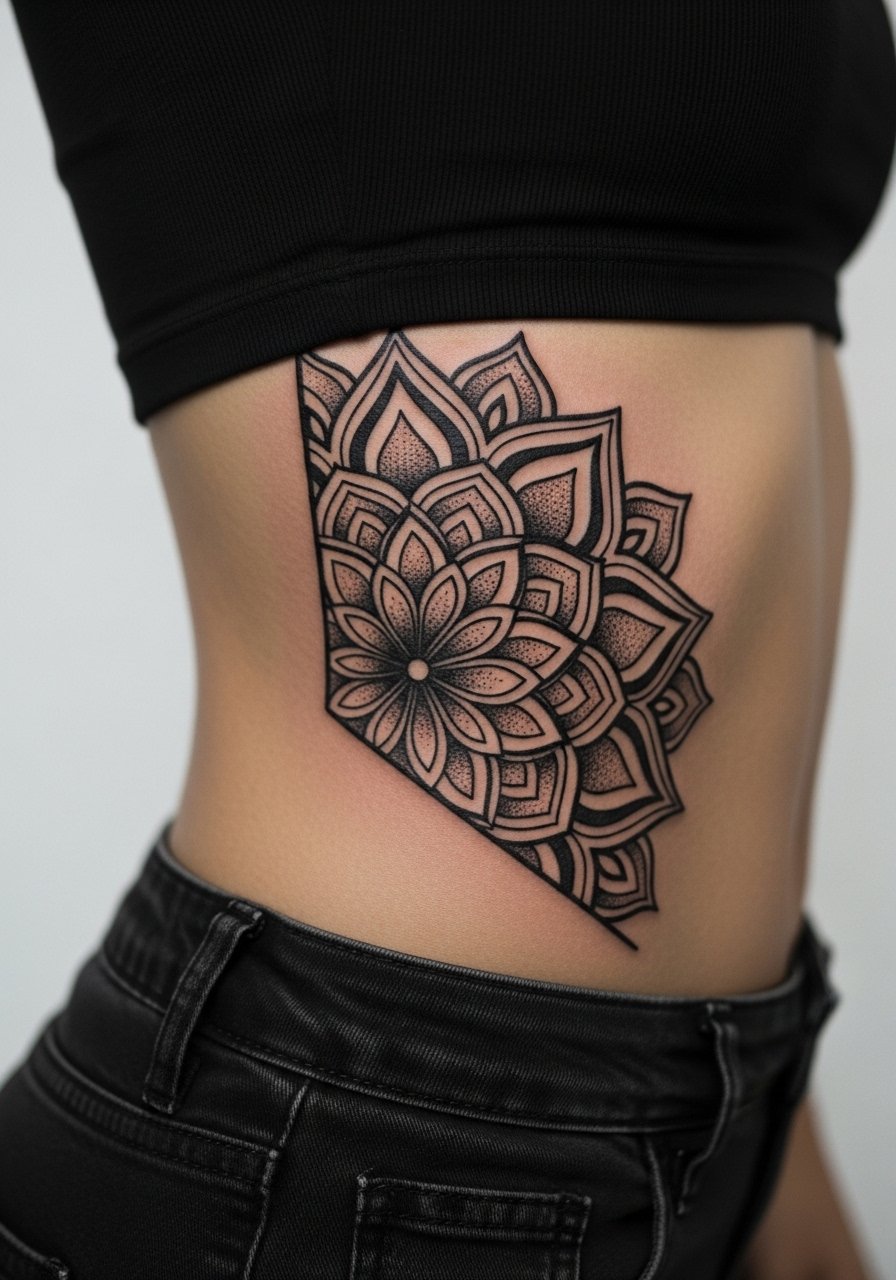
Half-wraps function like decorative cuffs that peek from swimwear. They take one to two sessions depending on scale. Tell the artist upfront that you want the mandala to read from a distance, so prioritize bold anchors and simplified inner detail. A common mistake is packing too much filigree into the band. For cultural respect consider stylized patterns rather than exact religious layouts. Touch-ups will keep the cuff crisp over time, especially where movement causes friction from clothing.
24. Abstract brushstroke blackwork that follows the rib curve
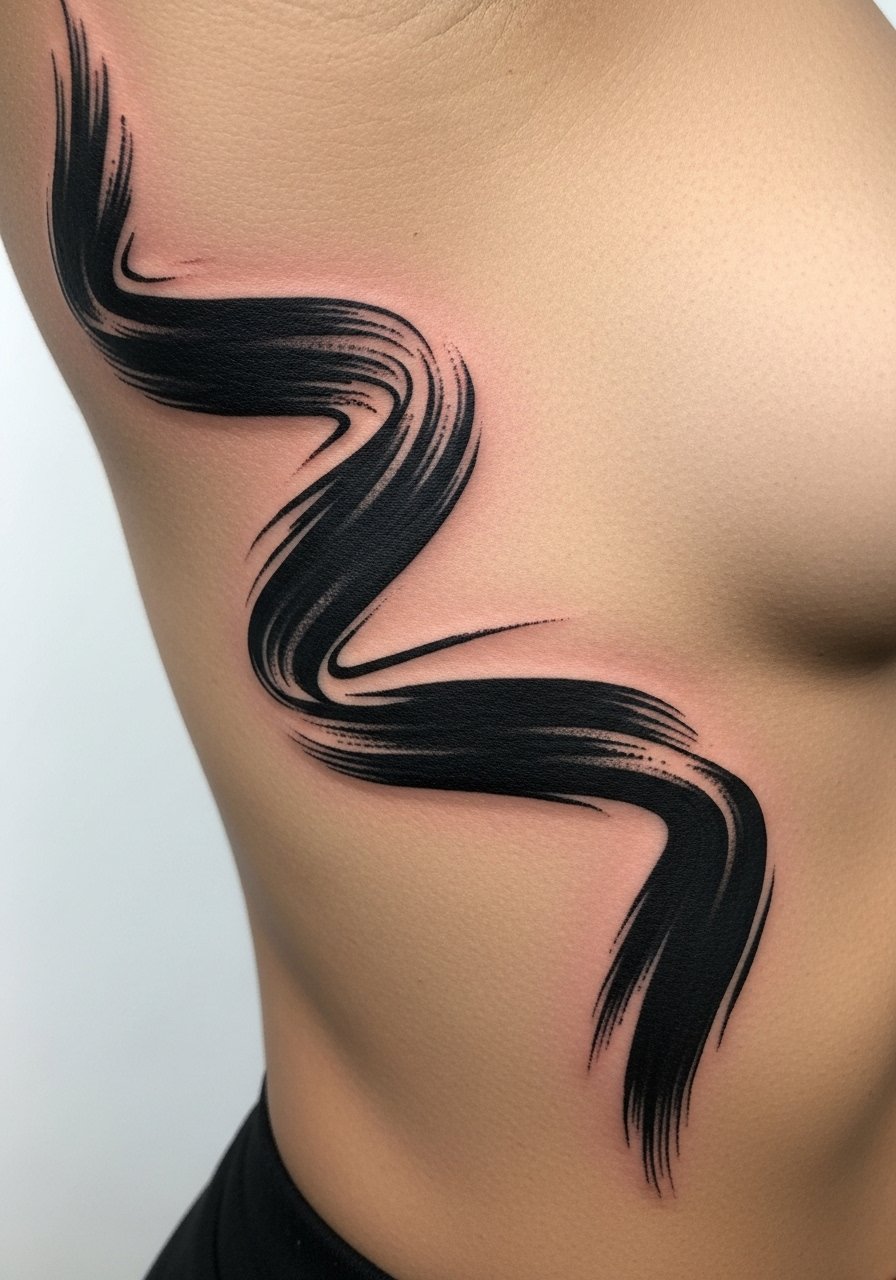
Abstract brushstrokes give a modern, sculptural look because they mimic movement across the ribs. Sessions can be split to build saturation and prevent overworking the area. During consult clarify whether you want solid black fills or textured strokes so the artist can match technique. A frequent error is asking for thin textured marks that lose texture as they settle. This style benefits from larger scale and clear negative space. Expect touch-ups for saturation maintenance depending on how bold you go.
25. Micro-realism single butterfly in black and gray on the rib
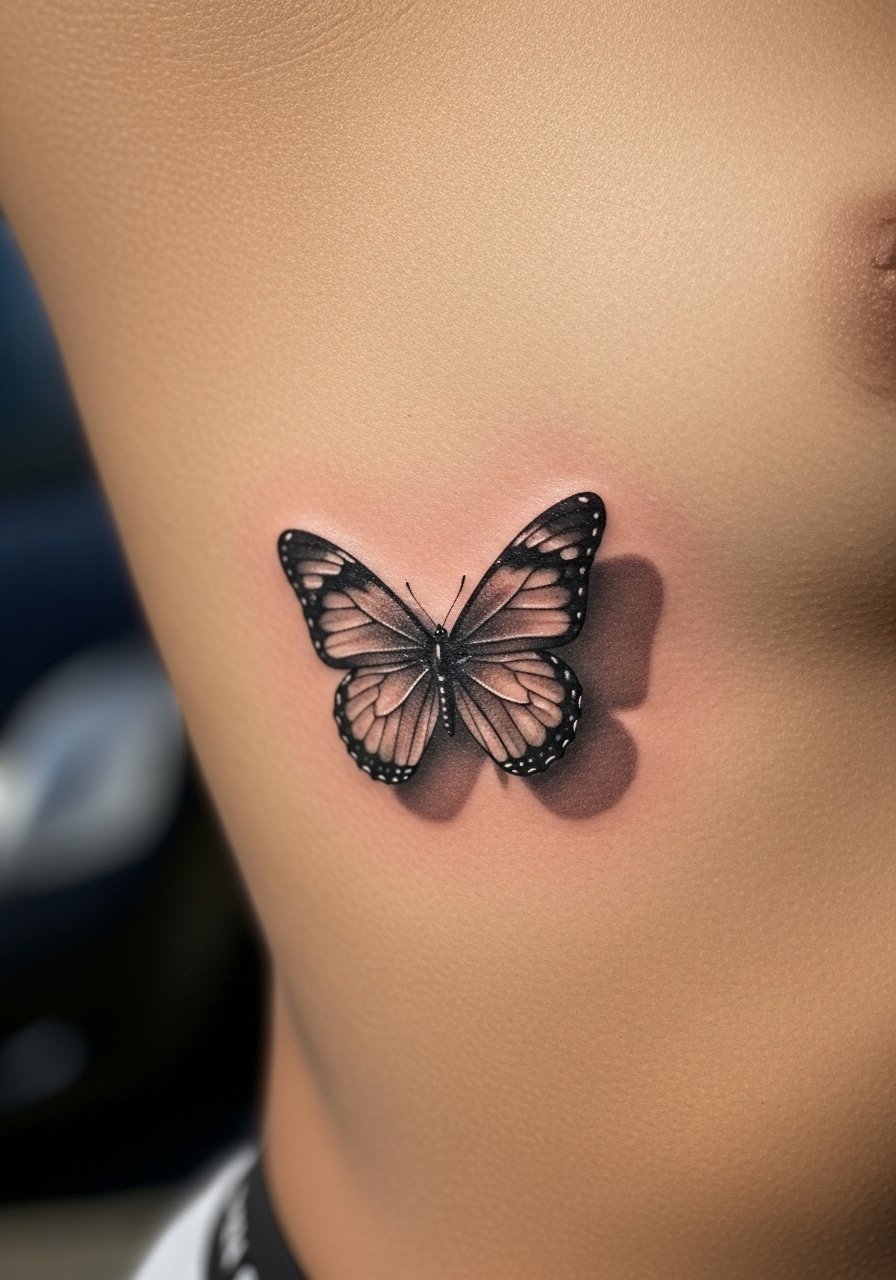
Micro-realism on ribs must balance scale and detail. A one-butterfly piece is often a two-hour session to get shading and a subtle cast shadow right. Tell the artist you want crisp contrast and controlled stipple to simulate texture. The mistake is packing hyper-real detail into a two-centimeter area. Blowout risk increases near bony ribs so plan for a slightly larger design if you want long-term clarity. Expect a touch-up at year two for any graywash softening.
Tattoo Prep and Aftercare Essentials
I've seen the same three aftercare questions at every consultation: what to use first 72 hours, how to manage itching, and when to worry. Below are practical items and when to use them. For finding an artist search hashtags like #RibTattooWomen or #FineLineRibs on Instagram, check local Tattoo directories, and read recent threads on r/tattoos for placement advice. If you need pain management ask whether your studio supports topical numbing and where they stand on that practice because artists are split on numbing use and how it affects feedback during the session.
Shopping list
Lightweight fragrance-free balm for initial moisturization. Use sparingly after the first 48 hours to prevent clogging pores and to soothe itching during the scab-free phase.
Medical-grade occlusive second skin bandage, small sheets. Ideal for the very first 24 to 72 hours to keep the area clean without friction.
Fragrance-free gentle foaming cleanser. Daily clean once scabs loosen helps prevent infection while staying mild on fresh ink.
Silicone scar-management sheets, cut-to-fit. Useful if raised scarring or hypertrophic tissue appears during healing.
Broad-spectrum sunscreen stick for healed tattoos SPF 50+. Apply after full healing to protect colored and blackwork pieces from UV fading.
Disposable breathable dressing rolls in case of friction-prone clothing. Wrap lightly under garments in the first week if needed.
Lightweight antiseptic spray with gentle ingredients. Use only if your artist recommends it for cleaning during the first 48 hours.
Saniderm wound-care adhesive bandages, single mainstream option. Some people swear by occlusive healing, others avoid it. Discuss with your artist before using.
Every tattoo is different. Always follow your artist's specific aftercare instructions. Consult a dermatologist if you have skin concerns or unusual healing issues.
Frequently Asked Questions
Q: Does fine line on the ribs always blur faster than bold linework?
A: It depends on lineweight, spacing, and the artist’s technique. I have seen fine line fade quicker in some portfolios, but I have also seen well-executed fine line last years when the artist left negative space and used slightly heavier primary strokes. Ask to see healed rib photos from your chosen artist before booking.
Q: For a watercolor rib piece, how different is aftercare from a blackwork rib tattoo?
A: The basics are the same. Keep it clean, avoid sun, and moisturize. Watercolor often needs more saturation work, so there may be an extra touch-up session for color vibrancy. Use a sunscreen stick like the one linked in the shopping list after full healing to guard against UV fade.
Q: If I plan weight fluctuation, which rib placements or styles should I avoid?
A: Avoid very tight, highly detailed motifs over areas prone to stretch. Long vertical stems and large petals with strong outlines tend to weather fluctuations better. Designs with lots of tiny filler elements are the ones I would avoid if weight changes are likely.
Q: Are there special considerations for blackwork on darker skin tones?
A: Yes. Darker skin often benefits from stronger midtones and clear contrast. Request bolder anchors and stipple highlights rather than pale gray washes. Artists with experience on diverse skin tones can adjust saturation and spacing to prevent washout.
Q: How soon should I schedule a touch-up for a rib tattoo that has lightened?
A: For most ribs, plan to review at six to twelve months. Many clients book a touch-up around year one to sharpen lines or boost saturation. If the area shows early fading at three to six months, check with the artist because that may indicate healing complications.