
Fine line planet tattoos look fragile on a mood board and fragile on the skin if you get the scale or spacing wrong. Small celestial pieces can read like tiny jewelry when planned for longevity, or they can blur into a smudge in a couple of years. Below you will find specific small planet concepts, what to ask for in the consult, and practical styling tips that help each one age with personality.
1. Fine Line Single-Needle Saturn on Inner Forearm
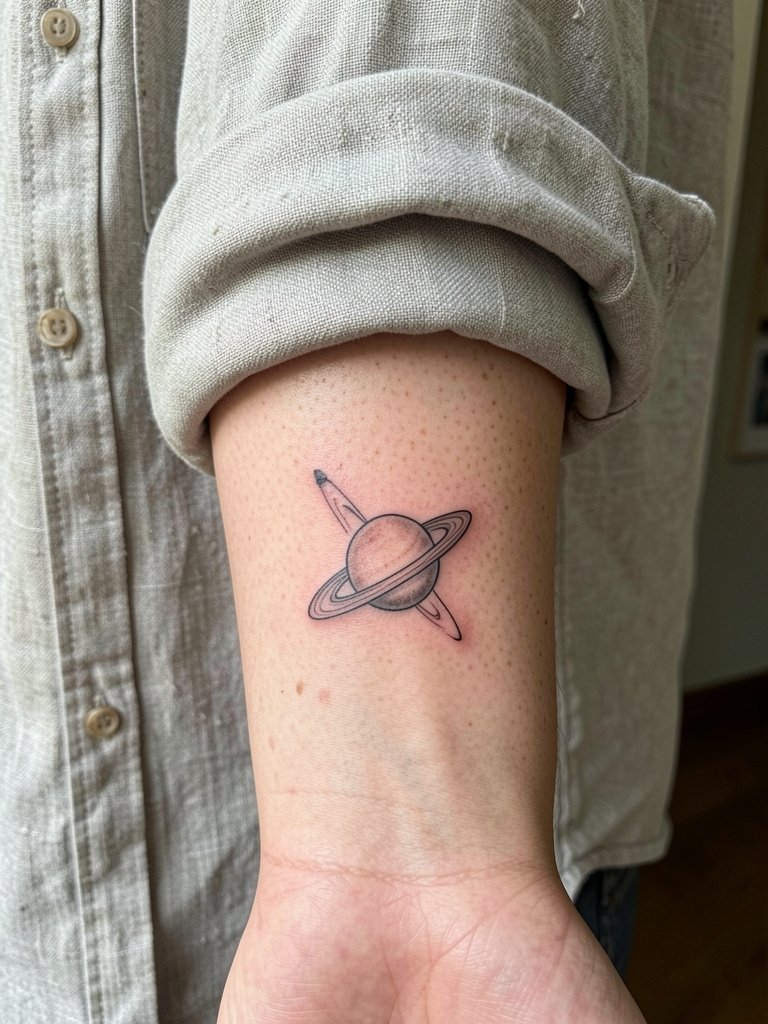
A single-needle Saturn reads as jewelry on the inner forearm when the ring spacing gives the design room. One camp argues fine line small tattoos blur within two to three years because the thin lines lose definition. The other camp says fine line holds up when the artist uses slightly wider spacing and the correct depth, and they point to healed examples that still read at year five. Ask for a minimum line weight and request the artist show how the rings scale at one inch and two inches so you see how the details breathe. Expect a short 20 to 40 minute session and moderate soreness while the artist works on the palm-up surface. For showing it off, pair with a linen button down shirt with the sleeves rolled up so the linework reads against neutral fabric.
2. Micro-Realism Swirling Jupiter on Inner Upper Arm
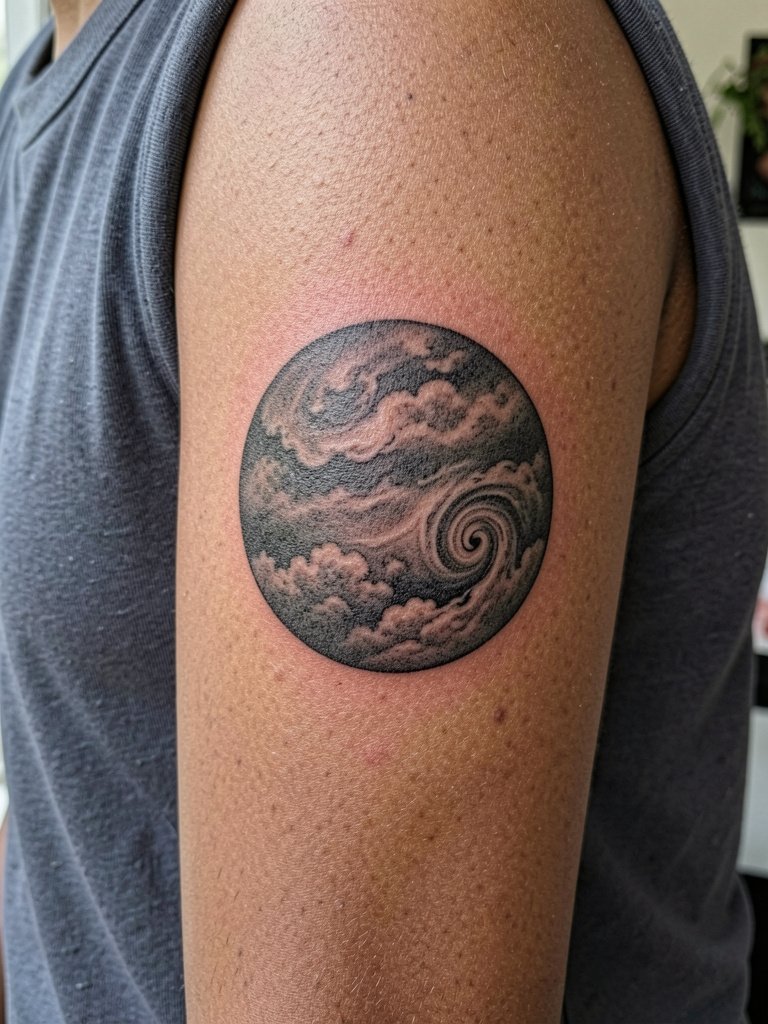
Micro-realism packs surprising texture into a small planet when the shading uses tiny stipple transitions rather than flat greys. Recommend this if you want tactile depth without a large piece. Tell the artist you want contrast in the storm band and ask them to show a healed progression at six months and two years so you can expect how the shading softens. The inner upper arm is a forgiving canvas with low blowout risk and a one-session time that often fits under an hour. For evenings out, pair the piece with a sleeveless solid top to frame the round shading visually.
3. Minimalist Dotted Moon and Planet Cluster on Lateral Hip
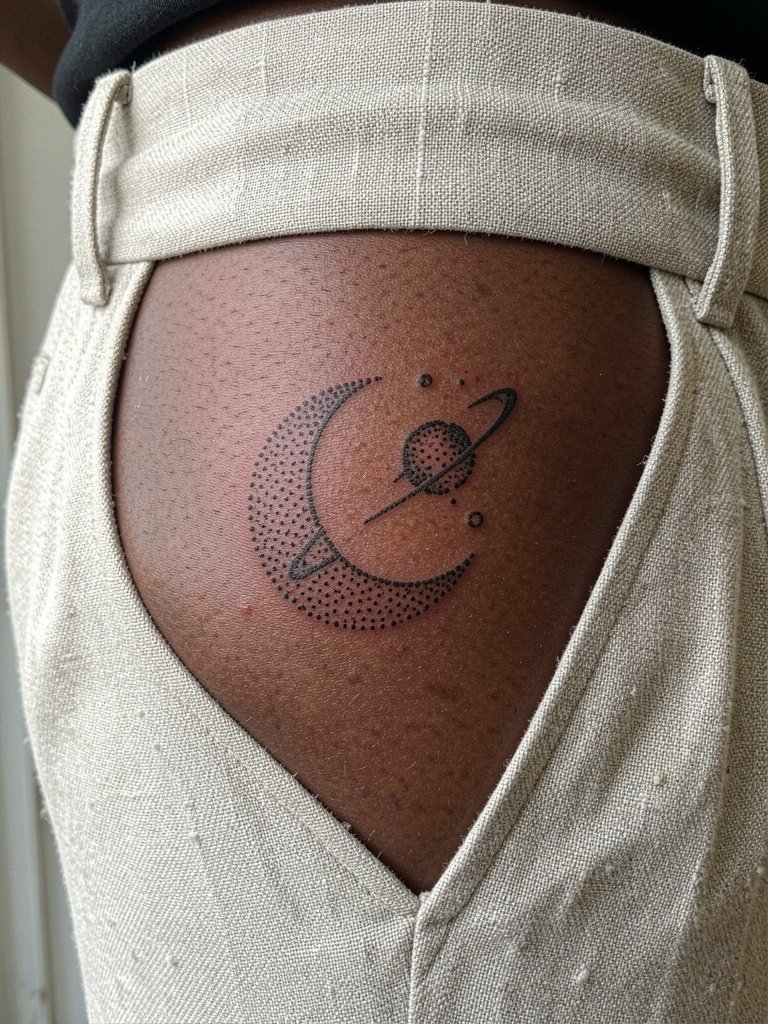
Dotwork clusters are forgiving on textured skin because the pattern relies on density rather than a single precise contour. A common mistake is packing too many tiny dots into a very small space, which merges over time. Ask the artist for a spacing test on a stencil so you can see how the dots look at a distance. The lateral hip sees occasional stretching with weight changes, so expect the pattern to soften over five years but stay readable when the dots are slightly larger. For showing the tattoo, high-waisted linen pants and a cropped top create movement that reveals the placement when you walk. Wear loose drawstring pants during the session so the waistband does not press on the fresh ink.
4. Neo-Traditional Colorful Planet with Bold Outline on Outer Wrist
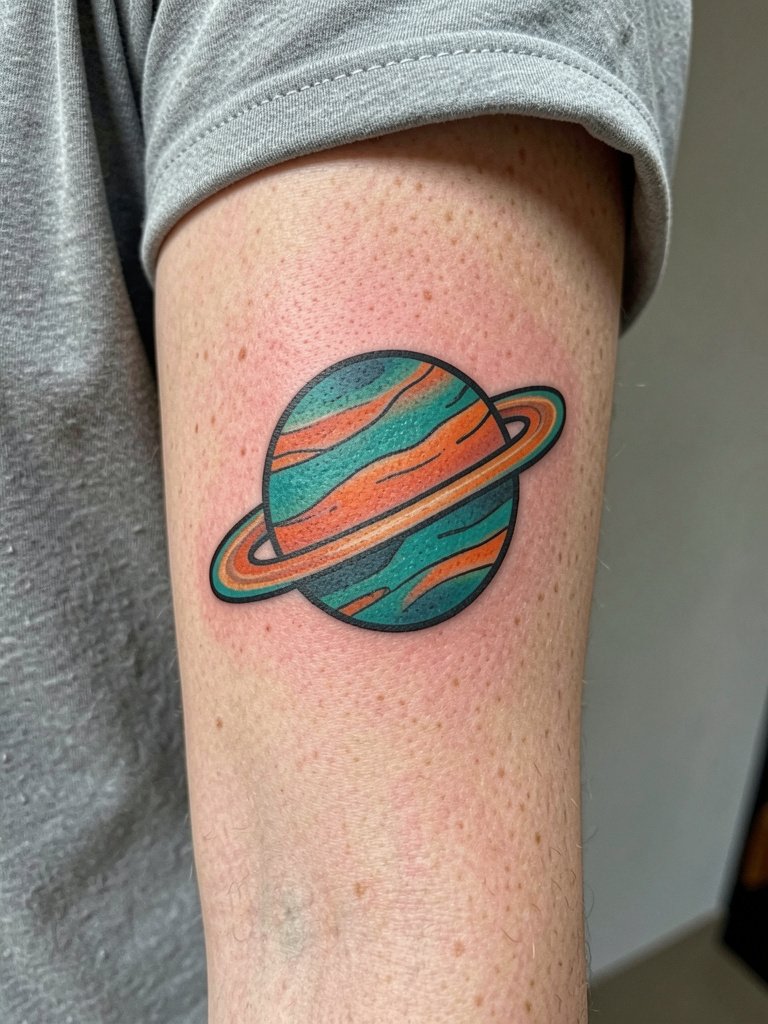
Neo-traditional color with a strong outline solves the longevity problem for wrist work by giving the color an anchor. A common debate is whether color on small tattoos fades faster than black and grey. One camp warns that tiny color fields can migrate and look muddy in a few years, especially without a strong outline. The other camp points to bold outlines with saturated fills and says that combination keeps color vivid for longer. For the outer wrist, insist on a thick outline and flat color patches so the design reads in photos. Session time is quick but the wrist can sting more than the forearm. Show it off with a minimalist watch on the opposite wrist or stacked thin chain bracelets on the other hand.
5. Blackwork Silhouette Planet with Star Field on Nape
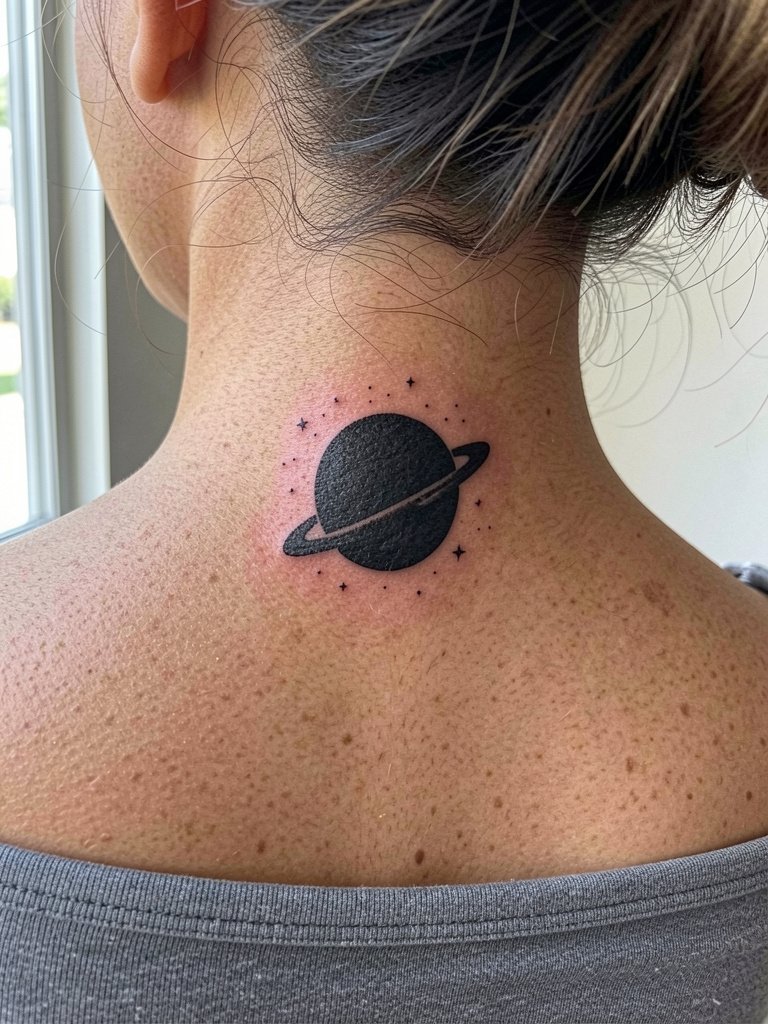
A blackwork silhouette resists blur because the design uses solid fill rather than thin linework. The nape sees friction from collars and hair, so a crisp silhouette outperforms filigree there. Mention to the artist that you want heavy saturation near the core and stippling for the stars to avoid patchy healing. Expect a short, moderately uncomfortable session if they splay your neck for access. For outfits, off-the-shoulder tops or high collars that expose the nape let the silhouette peek out without rubbing the area while it heals.
6. Watercolor Planet with No Outline on Inner Forearm
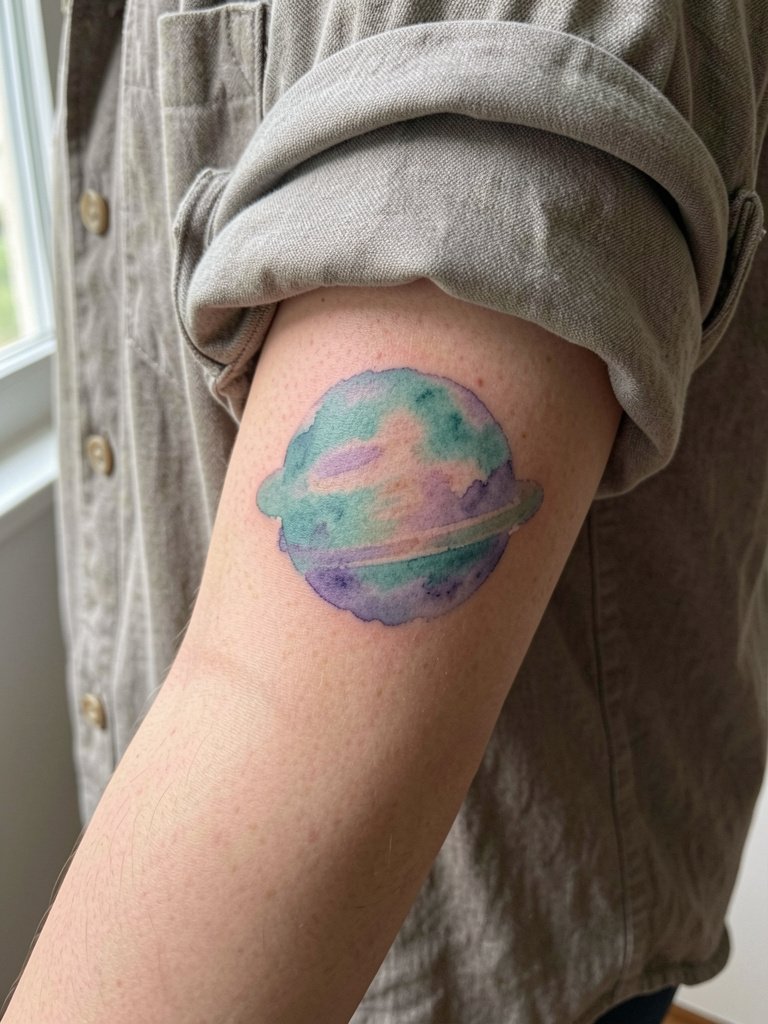
Watercolor planets look ethereal but need careful discussion about touch-ups because the soft washes fade faster. The main mistake is scaling washes too small, because blended color loses legibility below certain sizes. During the consult ask for a color-saturation map and a suggested touch-up window at one year so you set expectations. Inner forearm placement is easy to protect from sun while healing, but avoid single-needle stippling inside the wash if you want longevity. For the session wear a loose button-down that lets the artist reach the palm-up surface without tight cuffs. Note that watercolor ages differently on darker skin tones and may need bold accents to read in photos.
Session Day Picks
The first six ideas cover wrists, forearms, hips, and the nape, so these items help the session go smoother and protect delicate detail work through the first week.
- Tattoo Rescue balm. Thin texture works well on dotwork and stipple pieces without clogging the fine channels, so it is handy for small cluster styles above.
- Aveeno Anti-Itch Cream. Keeps ribcage and sternum itching manageable once the scabs start to form and it is gentle on sensitive skin.
- CeraVe Hydrating Cleanser. A mild wash that cleans without stripping ink, useful for gentle daily rinses on small pieces.
- Tattoo aftercare balm. An indie-style balm that reviewers say helps the "shiny" phase for blackwork without feeling heavy.
- Saniderm second skin. Breathable film is worth considering for single-needle or fresh blackwork to protect tiny lines during the first 48 hours.
7. Fine Line Crescent Moon Holding a Planet on Collarbone
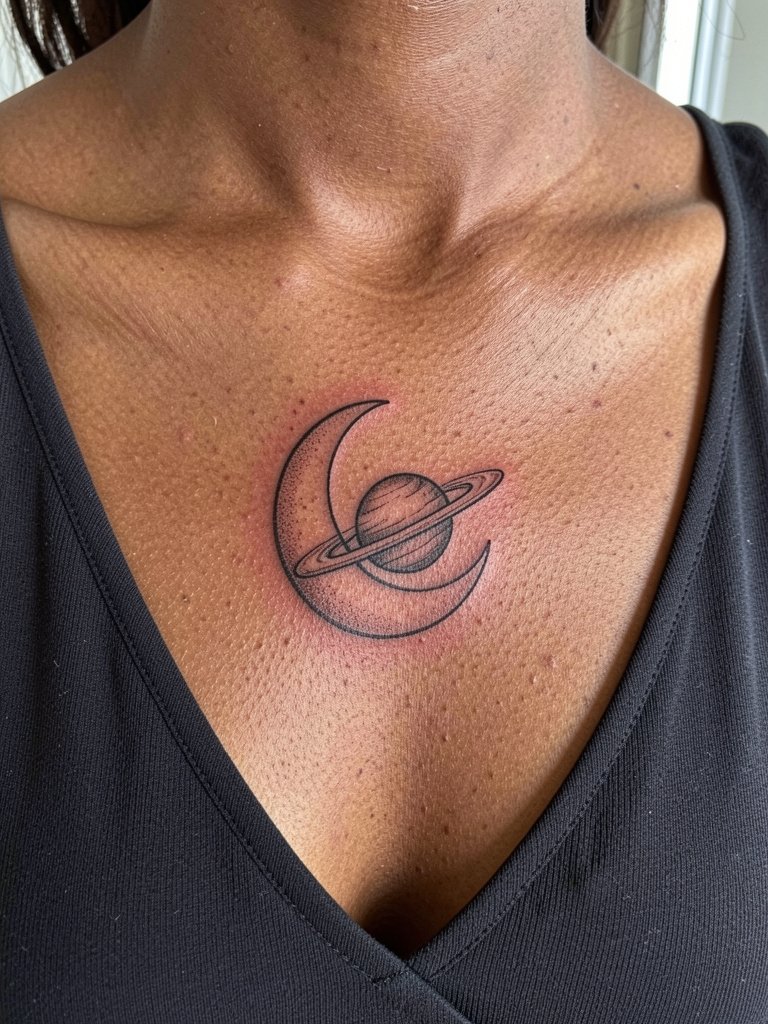
A crescent moon holding a tiny planet makes for a balanced collarbone piece that can be hidden or shown depending on outfit. The collarbone can be bony so expect sharper sensation during the session. A frequent error is asking for the same wrist-scale line weight on the collarbone, which disappears into the chest texture. Instead ask for a slightly heavier single-needle or thin two-point line so the curve keeps its form at year two. This placement looks great with layered chains that sit just above the design, and for the appointment wear a strapless or loose button-down so the artist can access the clavicle cleanly.
8. Ornamental Mandala Planet on Side of Finger
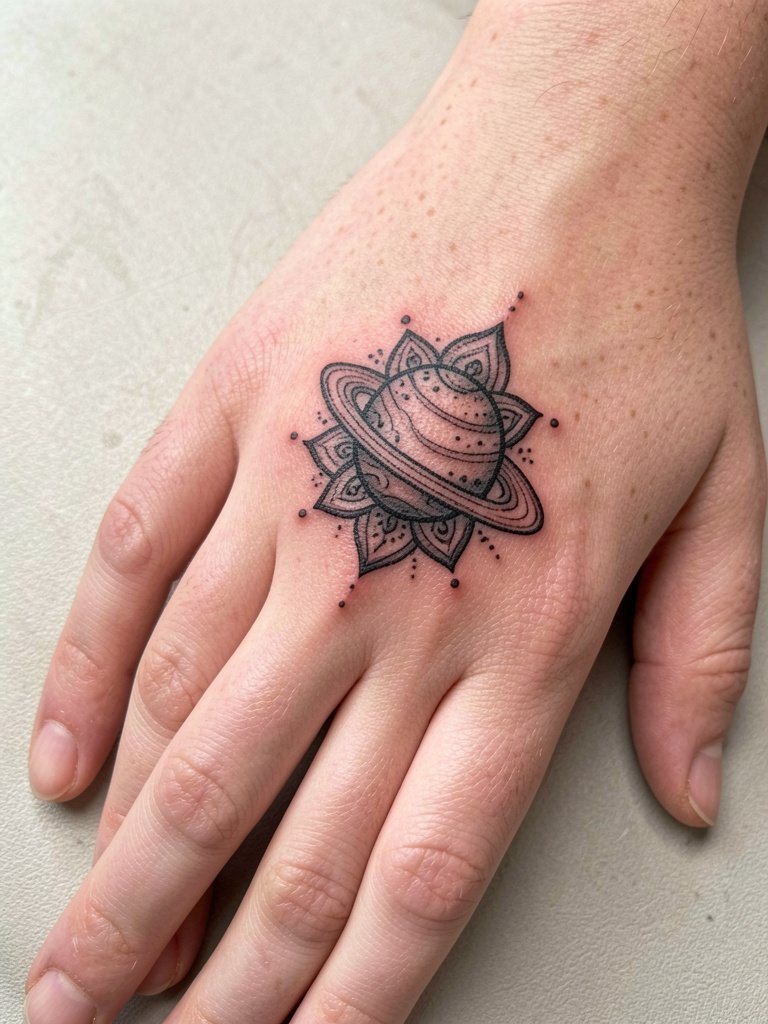
Finger placements demand bold decisions because skin and frequent washing accelerate fading. The common mistake is compressing too much ornament into a thimble-sized area. Ask the artist to redraw the mandala scaled to the bone and to show how the pattern reads after simulated smoothing on a photo mockup. Expect touch-ups within one to two years for most finger work. Pair the finished piece with minimalist rings on adjacent fingers and avoid wearing a ring on the tattoo finger during the session. For session wear keep the hand bare and the sleeve short.
9. Micro-Brand Style Planet with Year on Inner Wrist
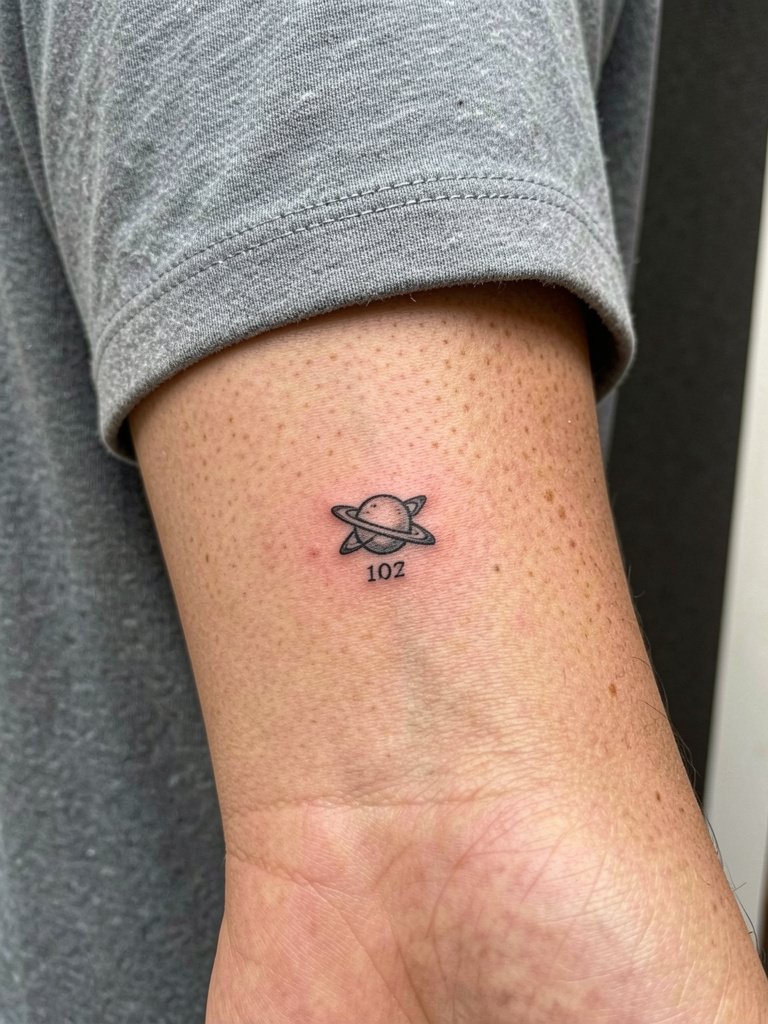
A micro-brand aesthetic is clean and polished if the type is set large enough to hold ink over time. A real mistake is using a tiny serif font that the wrist eats within months. Bring the exact year in the font you want and ask the artist to trace it at varying sizes so you see legibility at different scales. Keep in mind the inner wrist can be a high-exposure area, so plan for a possible touch-up at 12 to 24 months. For showing it off, a dainty watch on the opposite wrist or thin bracelets will balance the modern look.
10. Ignorant Style Messy Planet Doodle on Outer Ankle
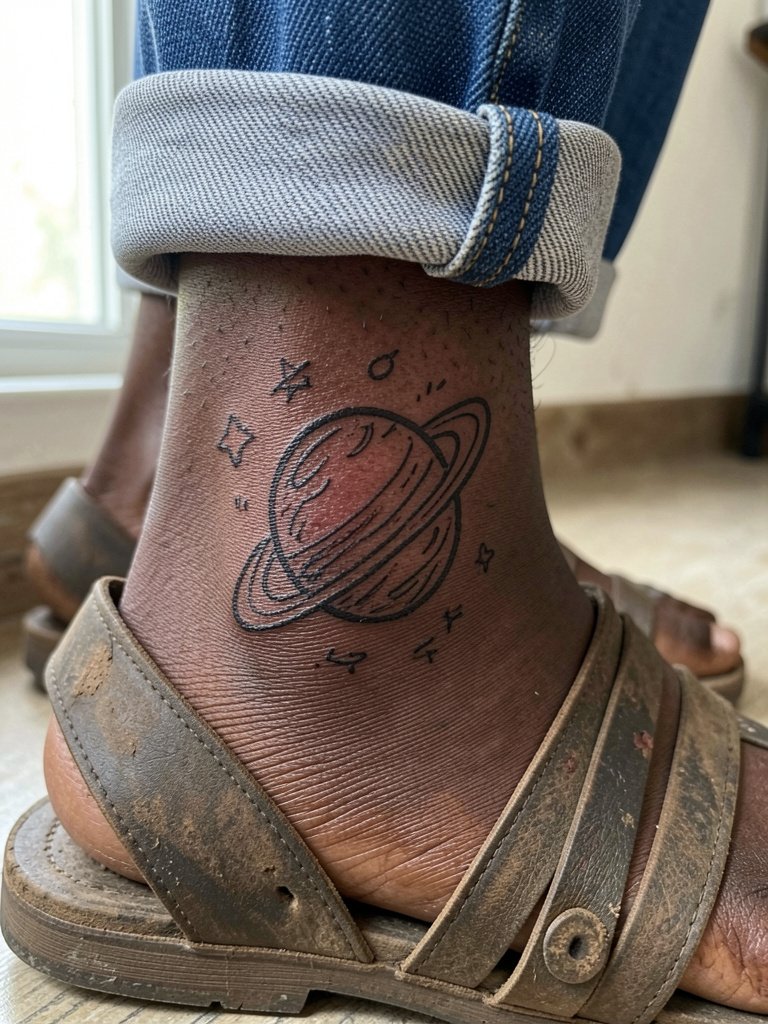
Ignorant style embraces charming imperfection but you still need scale and placement planning. A common user error is requesting the same haste-doodle at a micro scale that becomes indistinct under socks and shoe collars. Ask the artist to sketch a loose version at one inch and then again at two inches to see how much character survives. The outer ankle sees a lot of friction from footwear so expect extra fading if your shoes rub the area. For footwear, open ankle sandals or ankle boots with cutouts display this placement best and keep the tattoo visible once healed.
11. Single-Needle Solar System Line Art on Inner Upper Arm
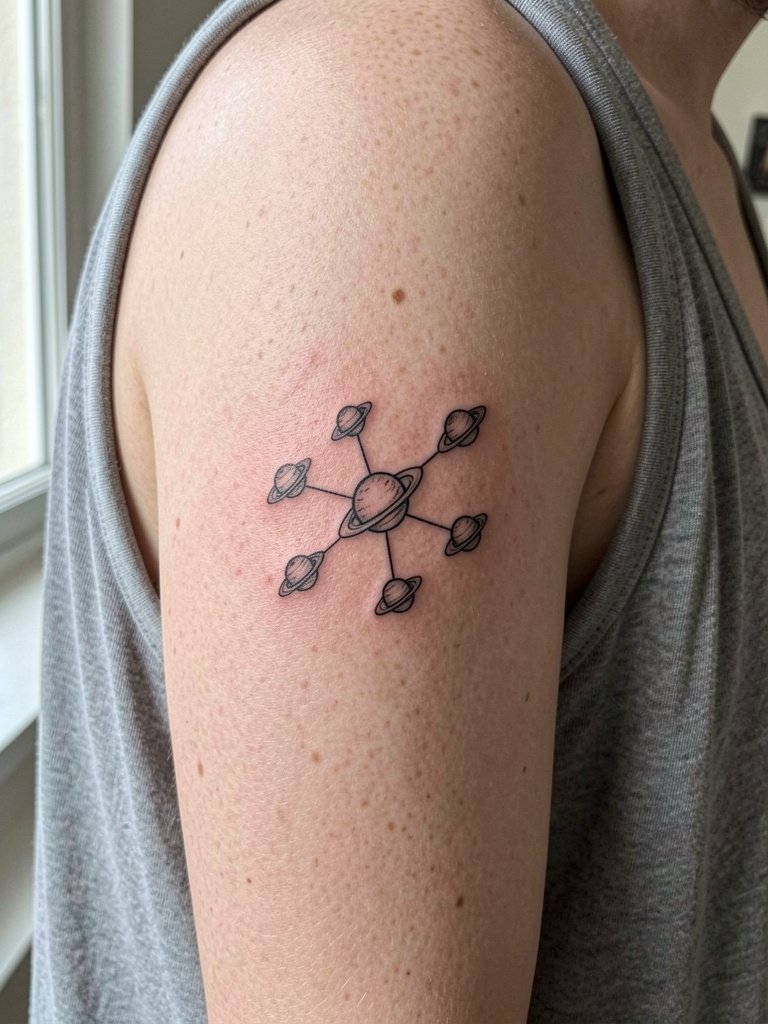
A continuous single-needle solar line reads as a single piece when the spacing between orbs is deliberate. The inner upper arm is forgiving and low-risk for blowout, but remember single-needle work on small dots can fade faster in high-movement areas. Ask the artist to slightly space the orbs and to mark a minimum dot diameter so the planets maintain presence at two years. Session time is brief and the feeling is mild. For session wear bring a loose tank so the artist can rotate the arm without fabric bunching.
12. Stippled Planet with Ring of Dust on Back of Neck
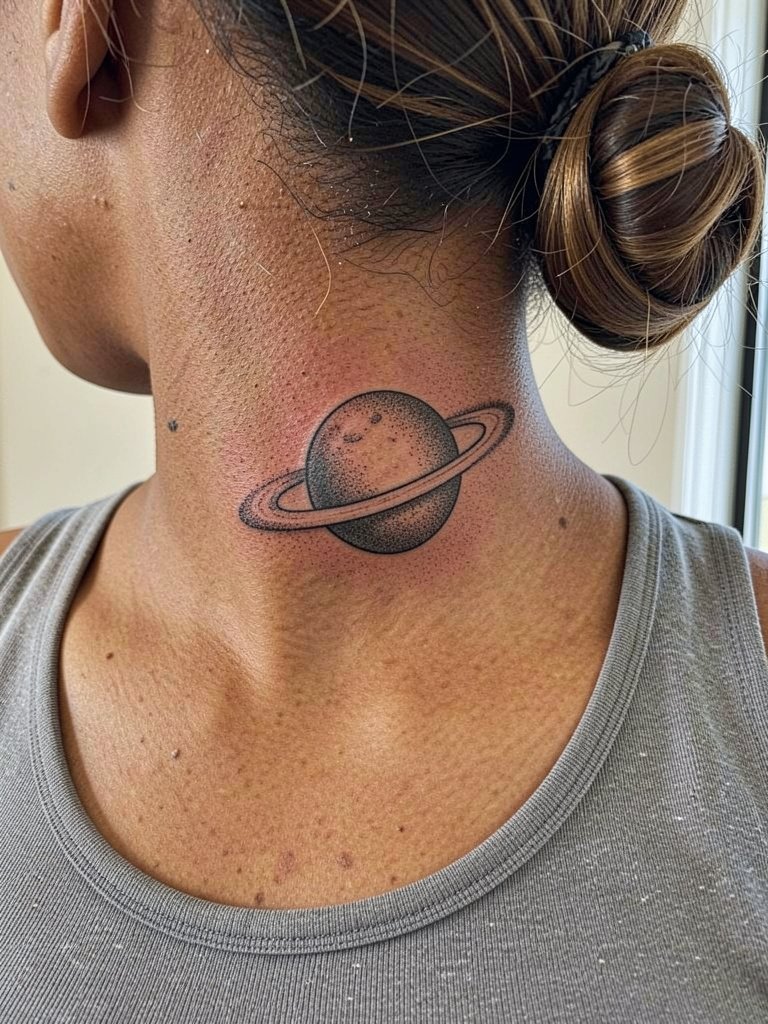
Stipple shading creates soft depth without heavy contrast, which is useful when you want a subtle nape piece. A frequent mistake is stippling too fine for a high-friction zone, which causes patchy healing. Ask for a stipple-density map and request the artist space the dots slightly wider than your reference. The nape heals well when you sleep on a silk pillowcase and avoid tight collars. For outfits, off-the-shoulder tops or high-collared sweaters that reveal the nape will frame the stippled ring beautifully.
13. Color Gradient Planet Teal to Purple on Outer Thigh
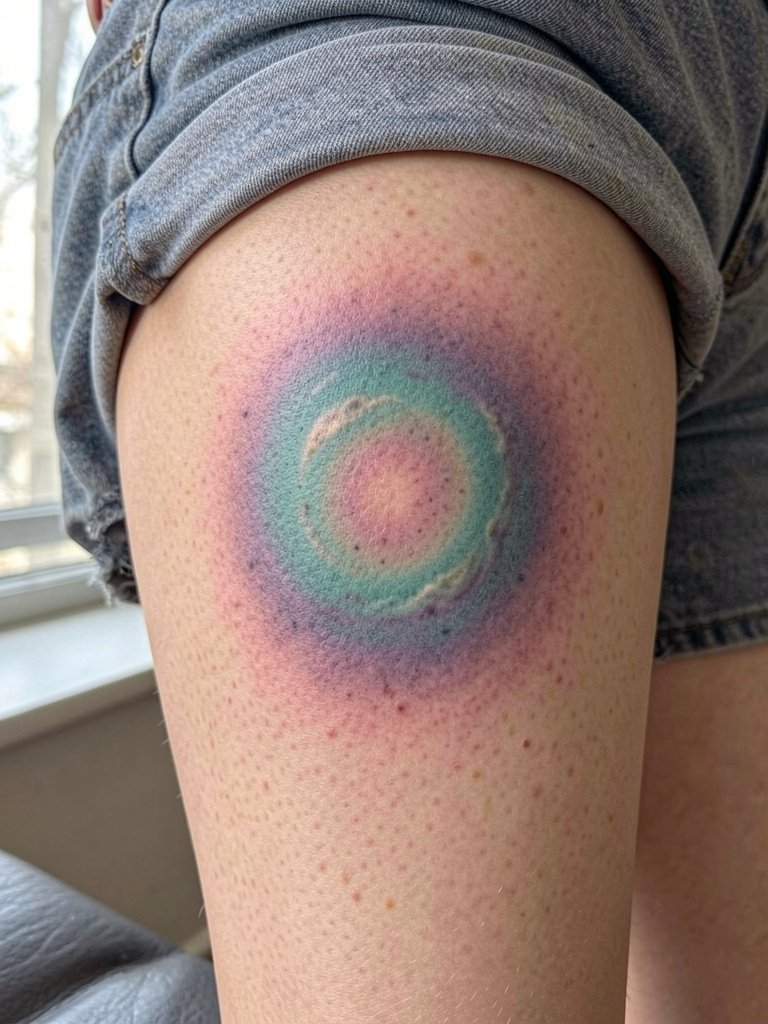
Color gradients look modern but they divide opinion on longevity. One camp warns that tiny color gradients can fade and muddle on small fills and look patchy within a few years. The other camp argues that saturated color with clear borders or larger fields holds up when the artist packs pigment densely and plans a touch-up window. Decide which side of that trade-off you prefer and ask the artist to show healed gradient examples on similar skin tone. The outer thigh is a forgiving place for color and tends to keep saturation longer than wrists or ankles. For showing the piece, high-waisted shorts or skirts that reveal the thigh create an editorial yet natural display.
Frequently Asked Questions
Q: What size should a small planet tattoo be so details do not blur?
A: For most styles aim for at least one inch across as a practical minimum. If you want fine line rings or micro-realism texture increase to one and a half inches so the linework has breathing room. Ask the artist to show a scaled stencil on your skin so you can judge legibility at real size.
Q: How often will I need a touch-up for tiny planet pieces?
A: Expect touch-ups in the one to three year range for wrists, fingers, and ankles. Inner arms and thighs often go longer before a touch-up is needed. Plan a realistic touch-up timeline with your artist during the booking so you know what to budget and when to schedule.
Q: What should I wear to the appointment for an inner forearm or upper arm tattoo?
A: Wear a loose button-down or a sleeveless top that gives the artist unobstructed access. A loose drawstring linen pant is a good session choice for hip and thigh placements so the waistband does not press on fresh ink.
Q: How do I find healed portfolio examples and artists near me without naming anyone?
A: Search hashtags like #planettattoo, #smallplanettattoo, and #finelinetattoo on Instagram and TikTok, then filter by location to find nearby artists. Use Tattoodo or Booksy and search keywords like "small Saturn fine line" to see healed portfolio shots. Reddit threads in r/tattoos and r/TattooDesigns are also useful for peer-reported healed images and local recommendations.
Q: Are there special considerations for getting a planet tattoo on dark skin?
A: Yes, prioritize high-contrast approaches such as bold blackwork or well-spaced dotwork rather than pale greys or thin watercolor washes. Request healed examples on similar skin tones and ask the artist to suggest adjustments in saturation and scale so the design reads clearly in photos and in person.