
A common surprise with forearm phoenix work is that the smallest, prettiest stencil is often the one that needs a touch-up first. Fine-line silhouettes can blur on the palm-up skin. Red and orange flames vanish faster on darker skin if saturation is low. Inner-forearm pieces can shift when body weight changes. Read on for designs that avoid those traps and the exact styling and session notes that help each option age better.
1. Bold Masculine Sketch Phoenix, Black and Gray
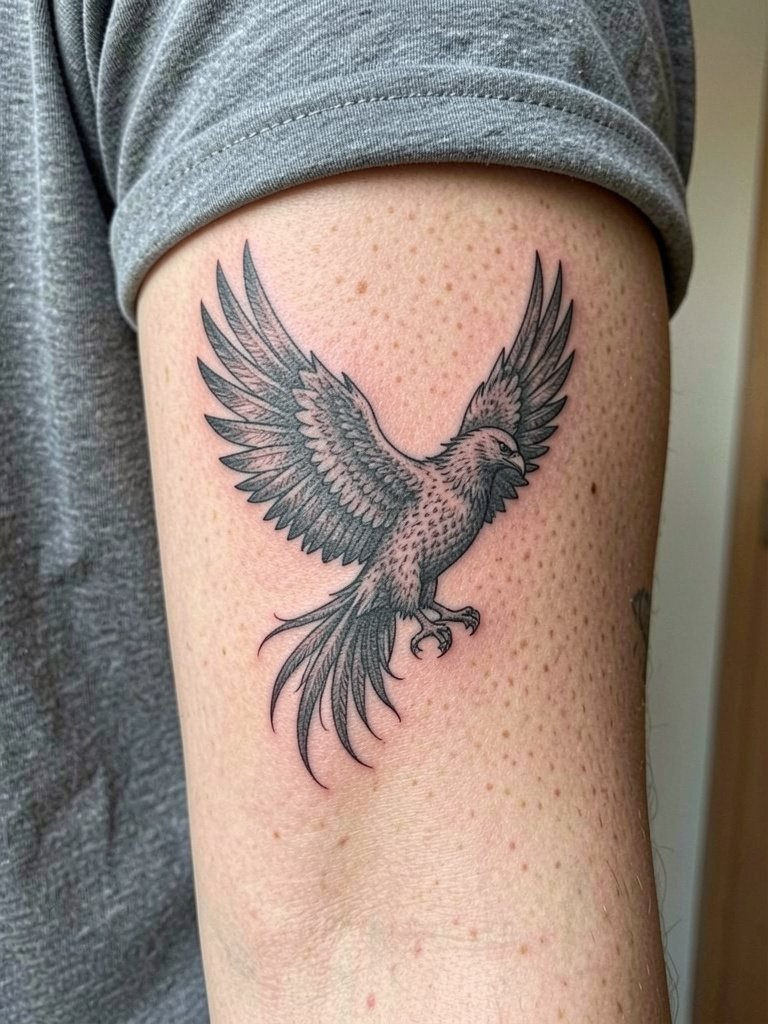
A sketch-style black-and-gray phoenix reads raw and graphic on an inner forearm. I recommend this when you want that rising-from-ashes vibe without relying on color. Ask the artist for hatch shading that follows muscle flow so the texture softens evenly as it heals. The common mistake is over-fine crosshatching that fills in by year two. Expect one solid session for a 5–8 inch piece and moderate pain on the palm-up skin. Touch-up is often needed at 12–24 months for restored contrast. For the appointment wear a loose short-sleeve tee so the artist can prep the palm-up surface easily.
2. Delicate Phoenix with Floral Flames, Fine Line + Soft Color
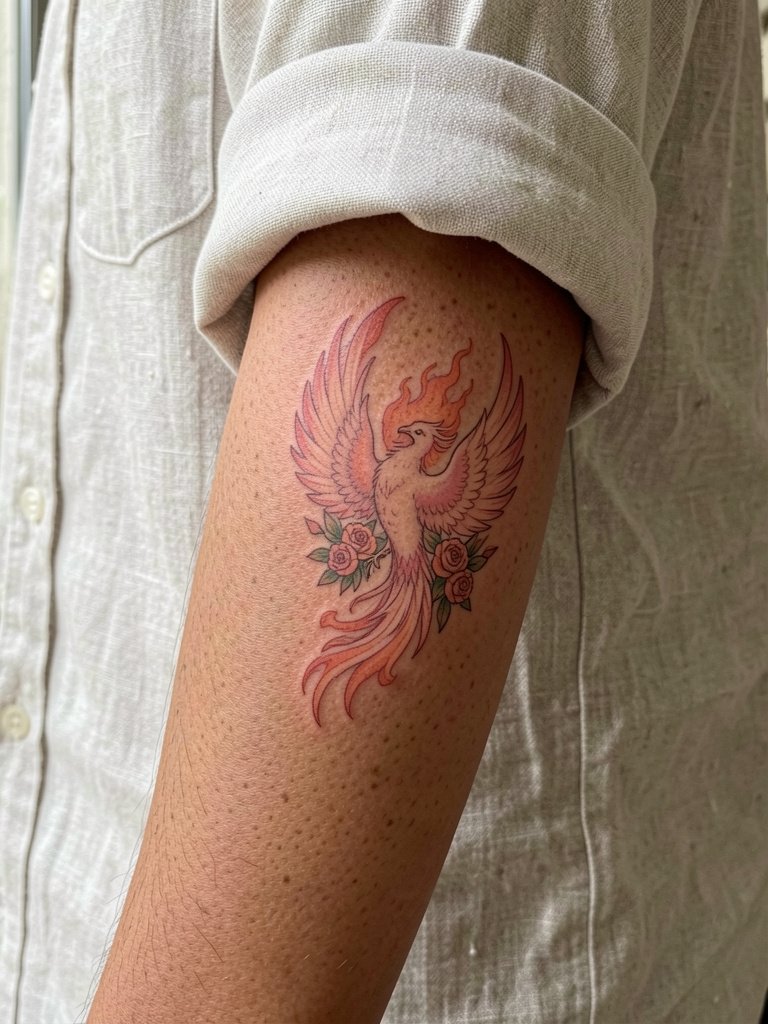
Choose this when you want softer color and floral accents without a heavy silhouette. Specify to the artist that petals should sit outside the main flame shapes so the bird's form does not read like generic bird wings. Fine line here looks elegant early on but can blur, especially on the inner forearm. One camp warns fine line blurs within two years because the palm-up skin moves and rubs. The other camp points to healed three-year examples and says proper needle spacing and slightly heavier line weight keep the work crisp. Plan for a single session and a touch-up around year two if you keep delicate linework.
3. Minimalist Phoenix Silhouette, Fine Line That Holds
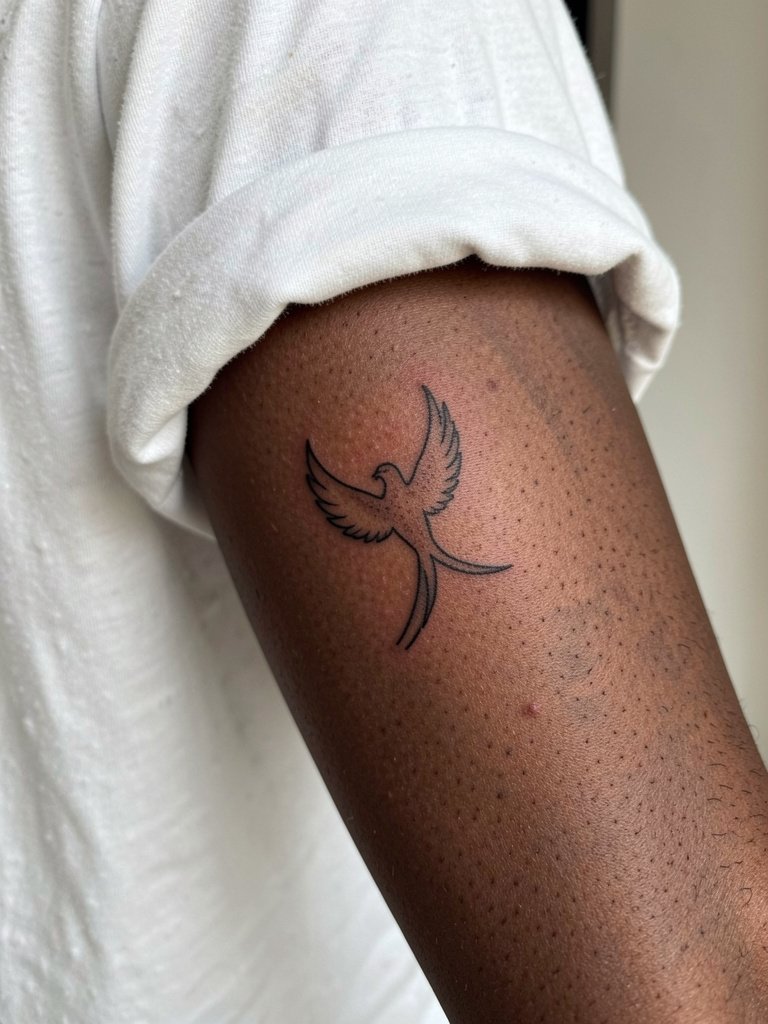
A tiny silhouette works when you need a low-profile reminder rather than a centerpiece. For first-timers this is smart at 3–4 inches. The typical problem is under-sizing; silhouettes under four inches tend to blur into a smudge. If you want minimalism that holds, ask for a single-needle outline but with a hair heavier contour than the example photo so the line has room to age. Expect low-to-moderate pain and a 45–90 minute session for a small silhouette. Pair this with a white rolled sleeve tee when you want it visible and low-key. white rolled sleeve tee
4. Full-Color Neo-Traditional Phoenix with Flames
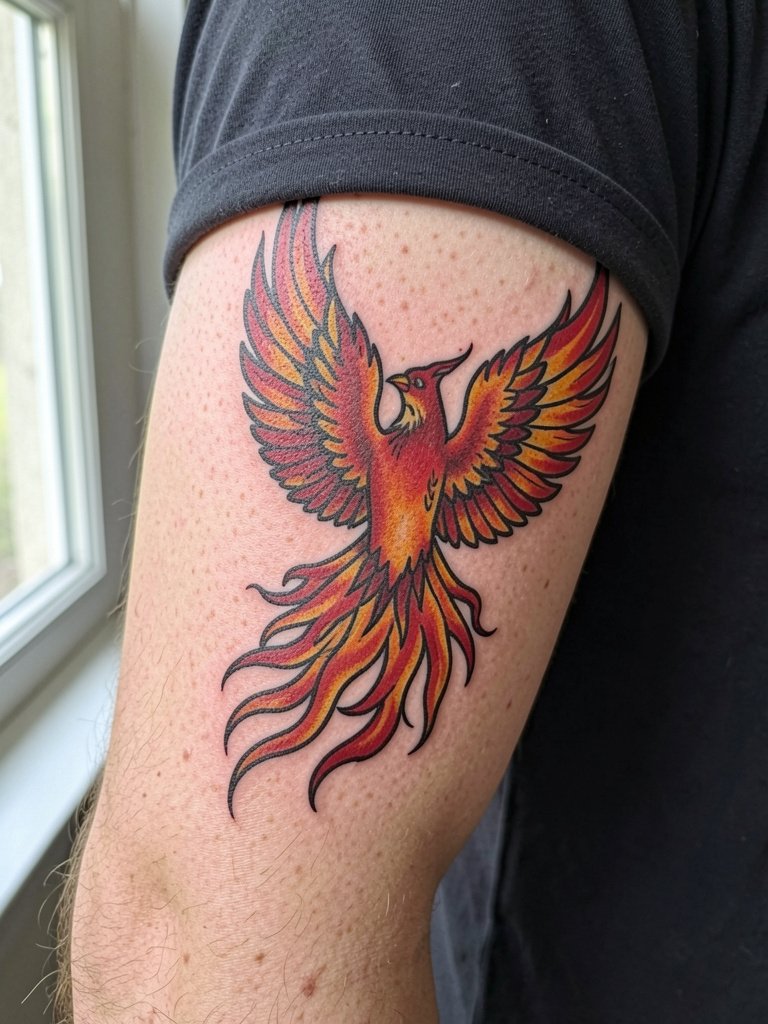
When you want maximum impact that still ages well, neo-traditional color with bold black contours is a go-to on the outer forearm. That palm-down surface is flatter and less prone to stretch, so saturated fills stay readable longer. A common misstep is soft pastels packed too lightly. If you plan color flames, specify deep crimson and orange and a strong black perimeter so fading happens evenly. Sessions run longer for saturation, usually one to two sessions. For showing it off, earth tones and rolled sleeves complement warm flames. olive rolled sleeve shirt
5. Blackwork Phoenix, High-Contrast Graphic
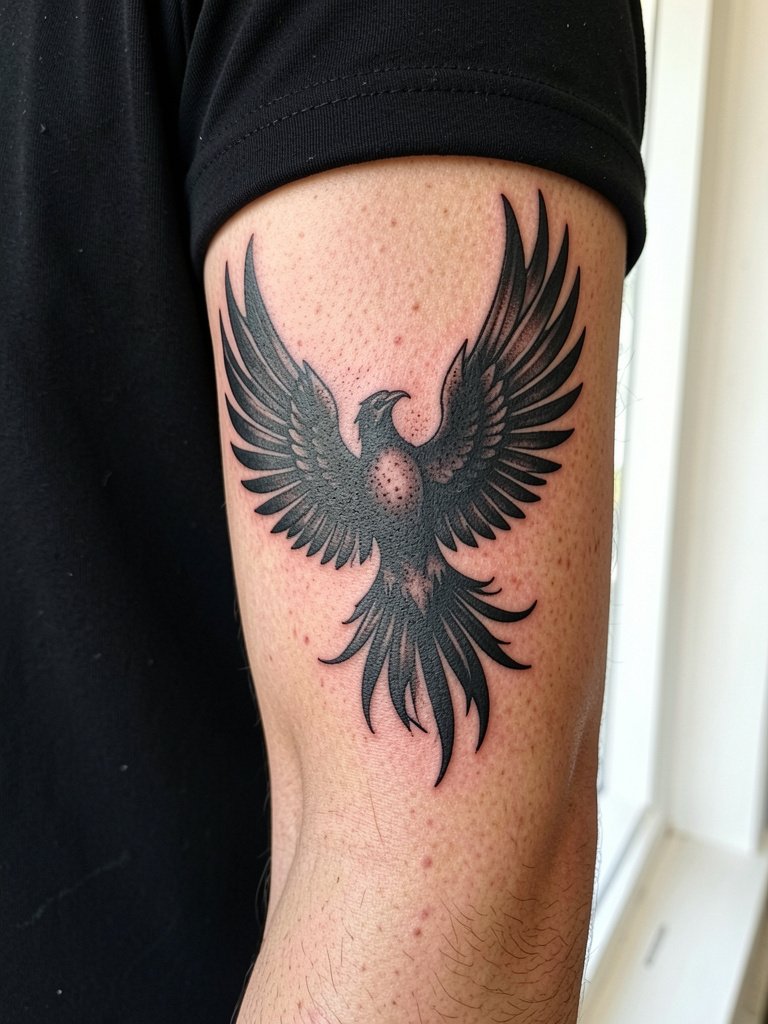
Blackwork is modern and reads clean from a distance. It is forgiving on darker skin tones and holds long because black pigment ages consistently. Recommend this for someone who wants graphic impact without frequent color touch-ups. The main mistake is trying to cram delicate dot work inside large solid areas. Tell the artist to keep negative shapes to preserve contrast. Sessions are usually one sitting for a 5–7 inch piece and the session can be physically demanding because solid fills need even passes. A matte black watch on the opposite wrist accents the look. black short sleeve tee
6. Phoenix Plus Quote, Sketch Script Combo
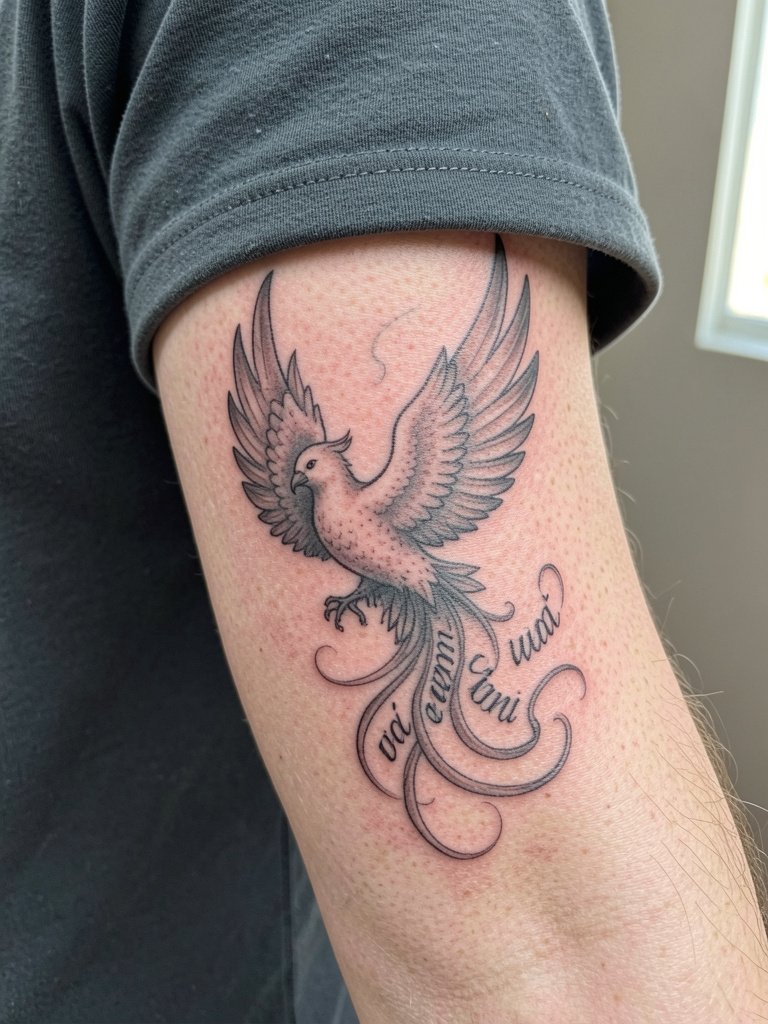
Combining a phoenix with a small script anchors the image to a personal milestone. Keep text short and place it so it follows the bird’s form rather than bisects it. A common error is intricate script with thin hairlines that blur on the inner forearm. If you want the script to last, request slightly larger letter spacing and bolded downstrokes. The session feels like two jobs in one. Expect the artist to pause and check legibility after the first pass. For session comfort wear a loose button-down so you can roll sleeves up without tugging at the area.
Before You Book
Those first six ideas cover inner and outer forearm approaches and several color strategies, so a few practical products can reduce early fade and soothe the first week.
-
Japanese Tattoo Rejuvenating Oil. Less occlusive than heavy ointments, it can help color retention for saturated flames on darker skin tones featured above.
-
Eucerin Daily Lotion. A budget-friendly option for the daily moisturize stage after protective film comes off, useful for fine-line phoenix work.
-
Ink Protector UV Spray. Spray-on UV protection helps slow red and orange fade on exposed forearm placements between sessions.
-
Indie Ash Texturizer Balm. For stippled ash bases, this thinner balm was mentioned by practitioners as preserving delicate texture during early healing.
-
Saniderm Tattoo Film. A single-use protective film that keeps fresh sketch and stipple textures intact in the first five days, which is key for ashes and sketch-style phoenixes above.
7. Watercolor Phoenix, Painterly Flames
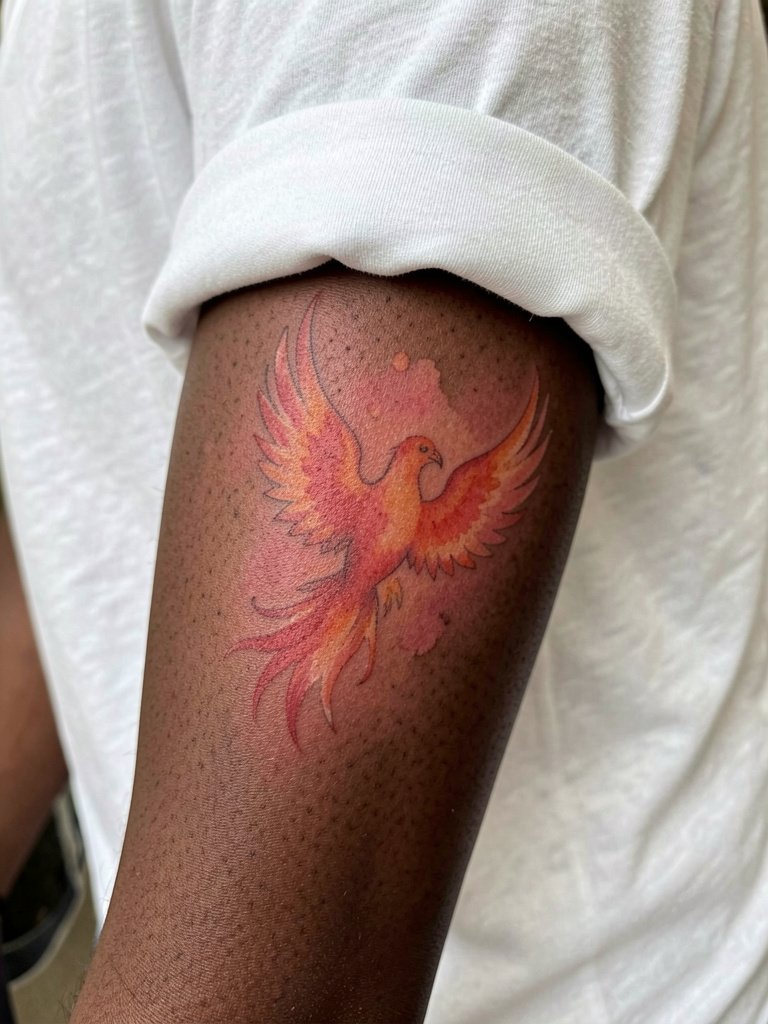
The watercolor option looks like a painting, but it ages differently than outlined work. One camp argues color flames fade faster on inner forearm skin and leave a gray ghost. The other camp insists saturated color with well-defined black anchors and strict sun avoidance preserves color for five years or longer. If you still want watercolor, add tiny anchor outlines or subtle black sparks so the composition has structure as washes fade. Expect higher fade risk and plan for color refreshes at two to three years. For the session wear a loose short-sleeve top and plan for a longer sitting or two.
8. Micro-Realism Phoenix, Small Detailed Bird
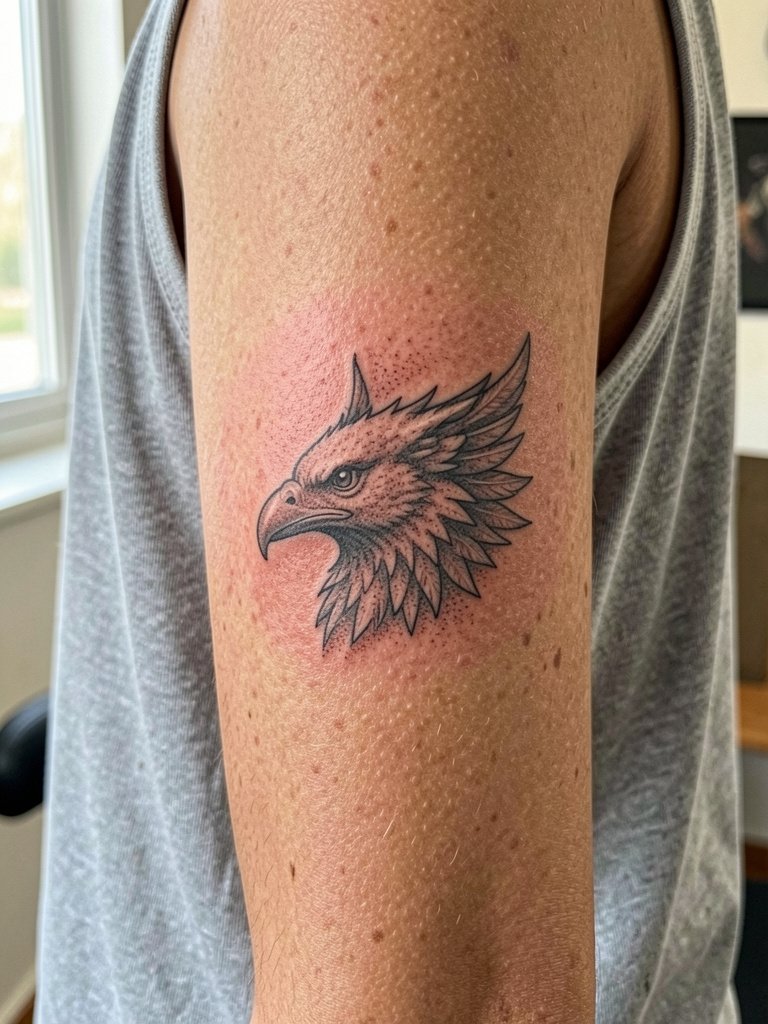
Micro-realism compresses lots of detail into a small footprint. Recommend this when you want photographic texture without a full sleeve. The biggest risk is the inner forearm’s motion and frequent rubbing making fine stipple blend. To mitigate, request slightly larger scale for critical facial details and expect a touch-up at 12 months. Sessions can be focused and intense because of the precision work. For showing it off choose a sleeveless or cropped top that keeps the forearm exposed. minimalist thin bracelet
9. Ornamental Phoenix with Mandala Wings
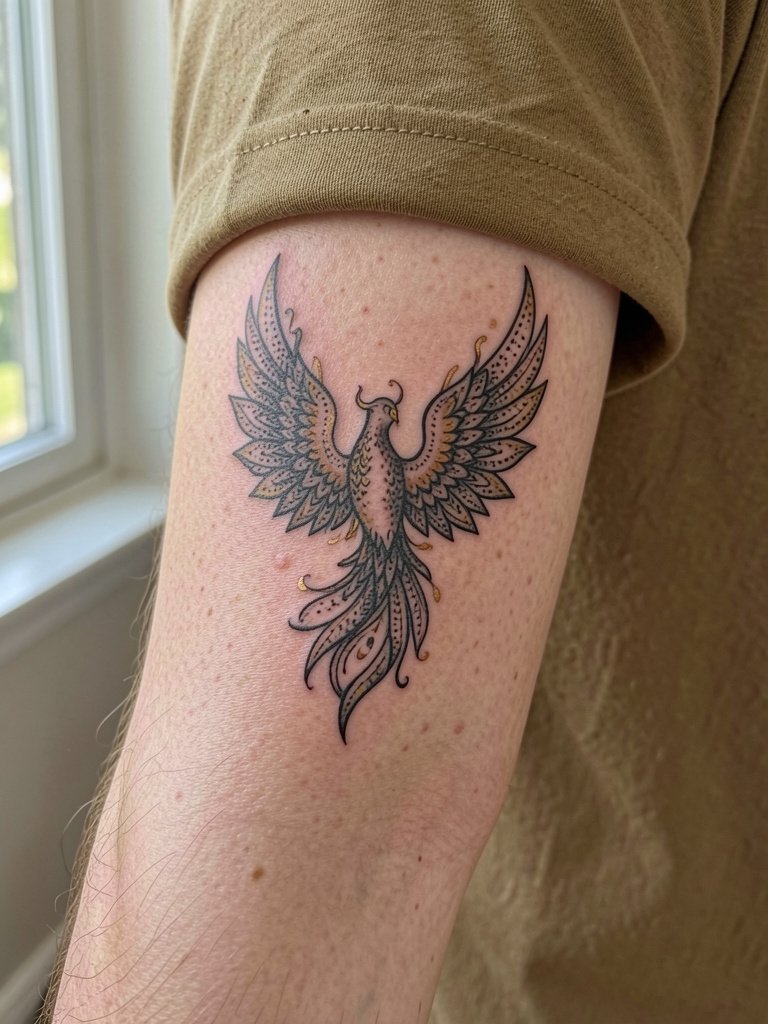
This hybrid blends spiritual geometry and phoenix imagery into a single composition. It works well on an outer forearm because the geometry needs flatness to read. A common mistake is packing too many tiny mandala rings; leave breathing room so dot work does not fill in. One session may not be enough for full ornamentation. If you prefer jewelry that complements the look, a thin gold stacked bracelet on the opposite wrist provides balance. dainty gold stacked bracelet set
10. Phoenix with Ashes Texture, Gritty Stipple Base
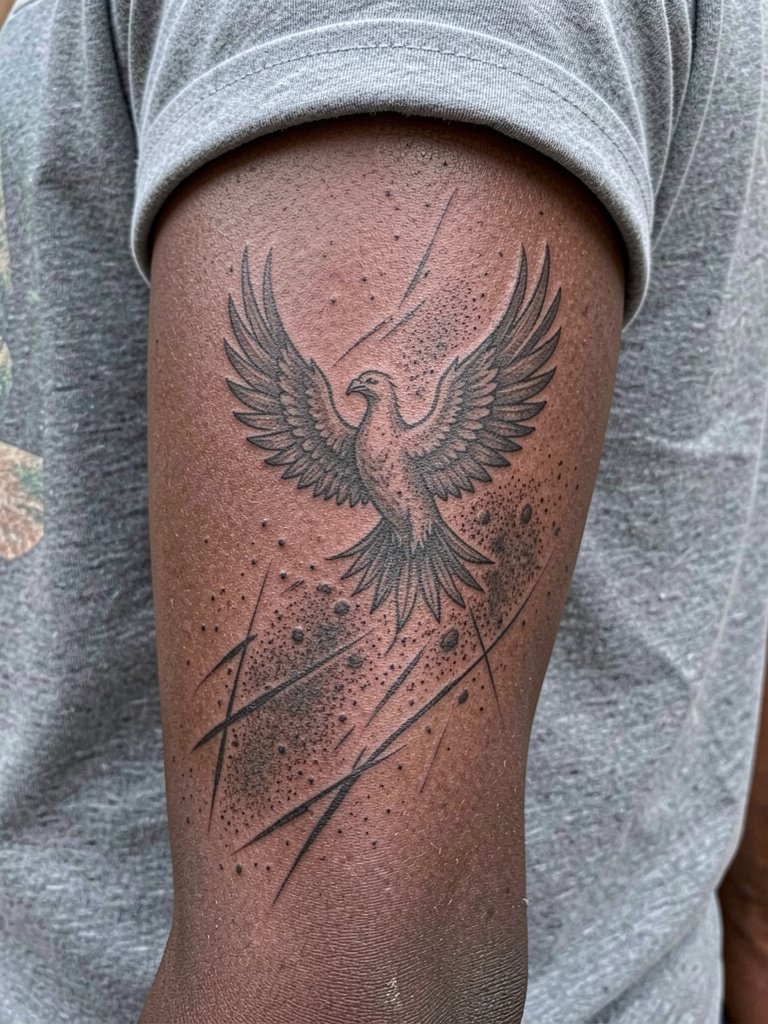
Stippled ash grounds a sketch phoenix and gives the composition grit. This technique is niche because stipple can blot if healed improperly. If you want crisp ash, ask that stippling be spaced intentionally and request early protective film to preserve tiny dots. The real mistake is choosing heavy ointments that smear dot work during the first week. Plan for a focused touch-up window at six to twelve months. Session pain is moderate and the inner forearm tolerates the dot work well if the artist paces the passes. For the session wear a loose short sleeve so the artist can tape the area without pressure.
11. Phoenix Wing Fragment, Partial Bird Accent
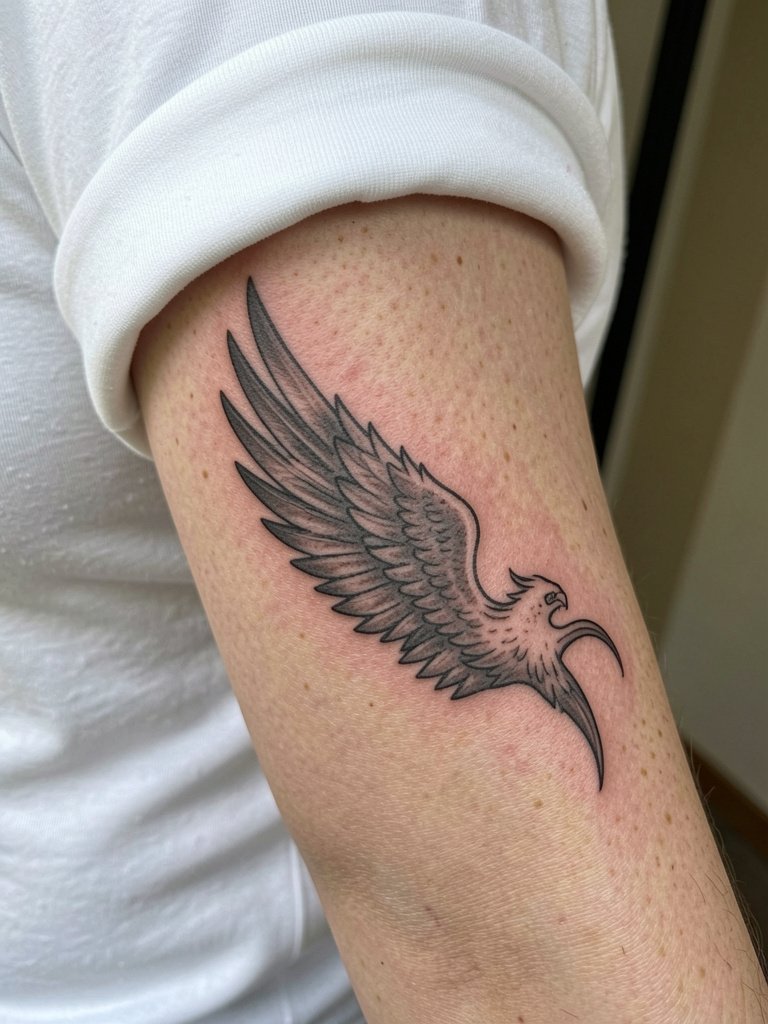
Fragments let you start small and build later. This is ideal when forearm space is tight or you want a subtle piece. The common aging problem is adding more ink later without accounting for original line weight, which can make the new work look disconnected. Bring scaled reference images and ask for a mock-up showing how a future full bird would attach. Sessions are brief and low to moderate pain. For showing off a wrist-area fragment, try a lightweight tee with rolled sleeves or a thin bracelet. rolled cuff linen shirt
12. Flame-Only Abstract Phoenix, No Body
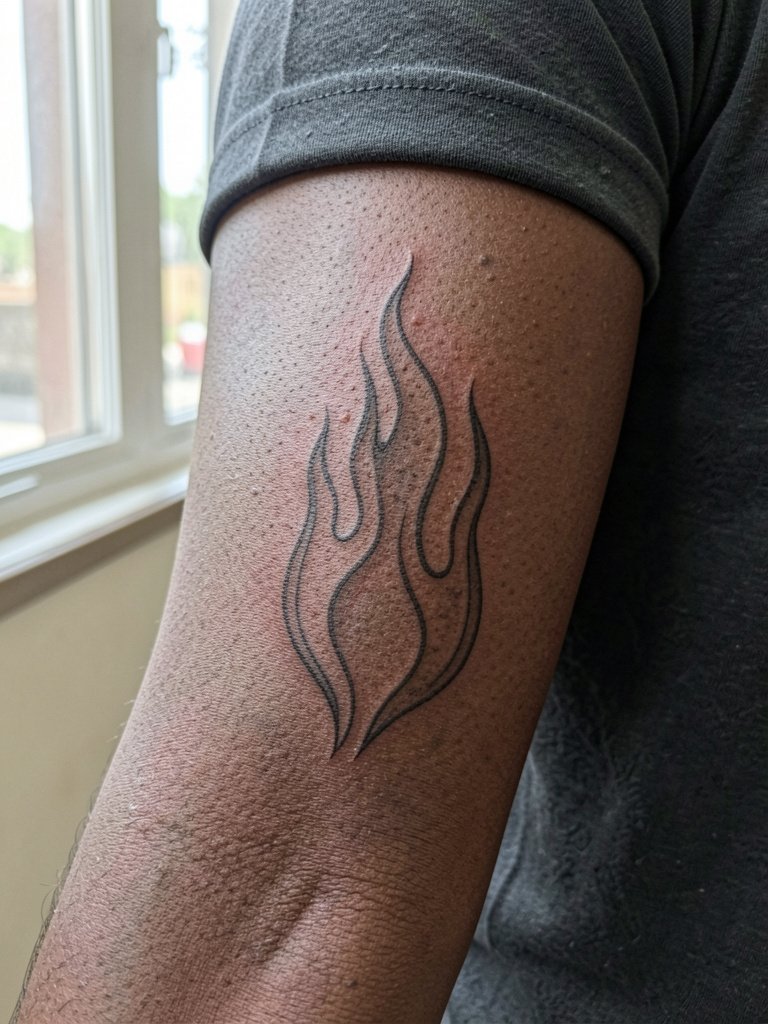
Going abstract with the flame element keeps the symbolism minimal and modern. It also reduces blowout risk because the design uses bold negative shapes rather than tiny feather details. The usual mistake is making the flame shapes too thin. Choose slightly broader strokes and expect a single-session piece. The look pairs with a dark tee for contrast. For the sitting, wear a loose top with easy sleeve roll so the inner forearm stays undisturbed during prep.
13. Phoenix with Clock or Hourglass, Time Motif
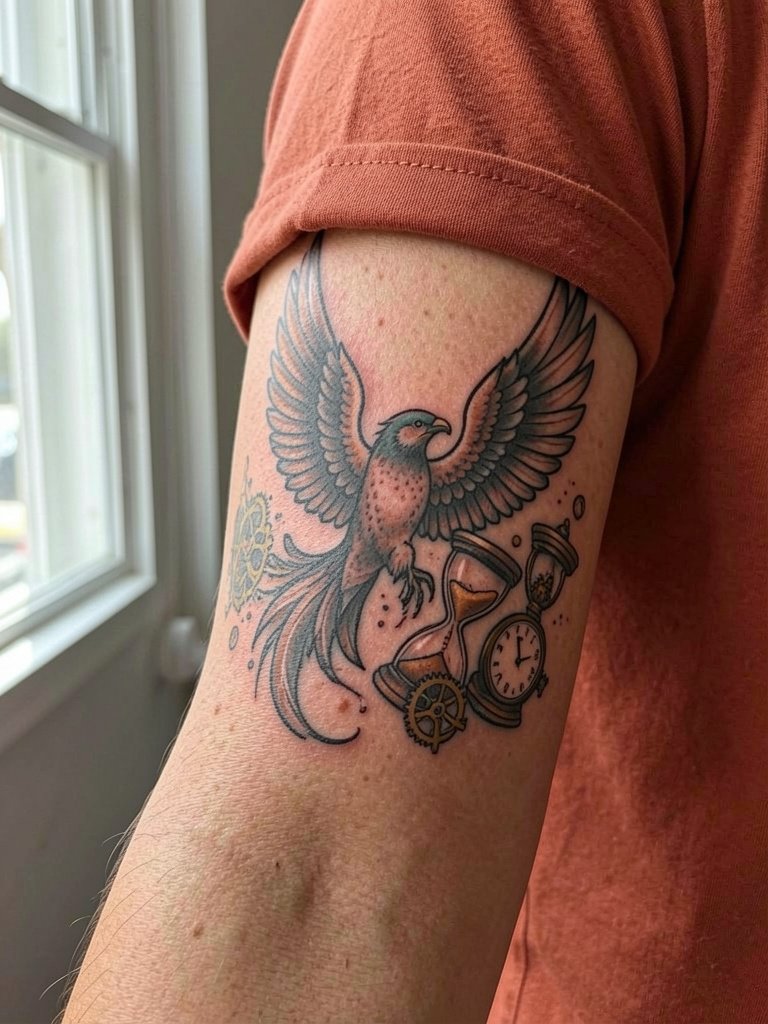
Adding timepieces gives the phoenix a narrative of reset and time regained. Lay out the clock or hourglass so it does not sit inside dense featherwork. A common error is overcrowding detail into a narrow forearm band. Request mockups at different scales so you can see how six to eight inches compares to a tighter seven-inch approach. Sessions often require two sittings for color and detail. This placement looks strong with warm earth-tone shirts and a bronze cuff. rust short sleeve tee
14. Phoenix with Broken Chain, Liberation Motif
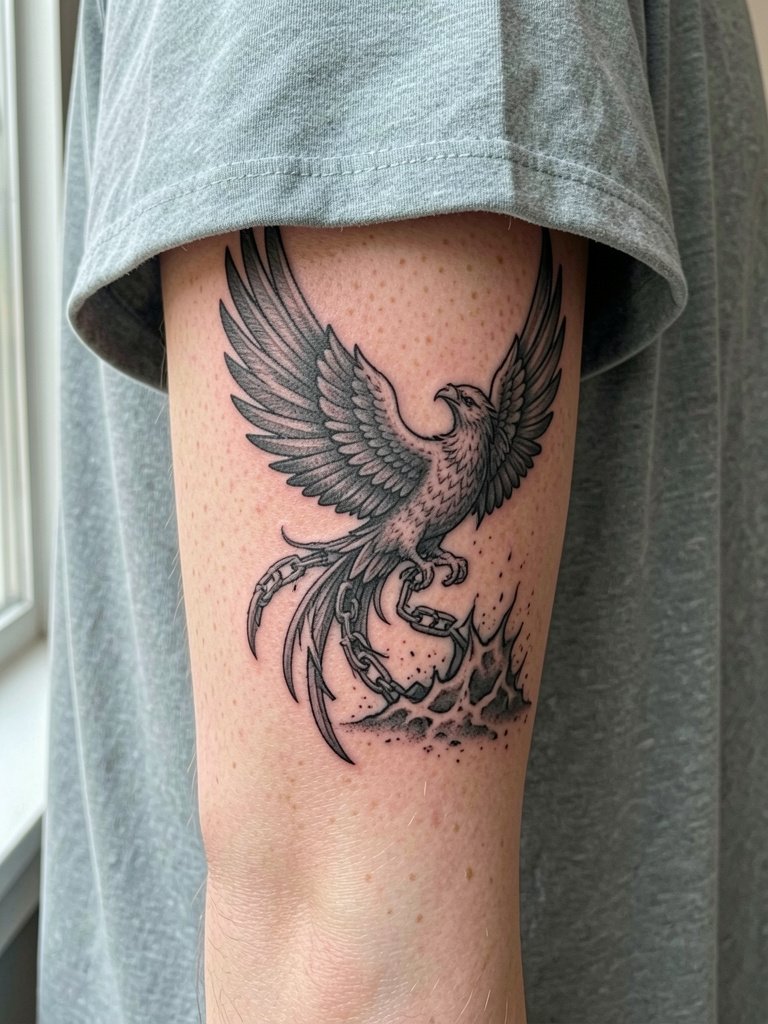
A broken chain integrates literal liberation into the phoenix composition and works well for recovery pieces. Keep chain links bold so they remain legible as the piece ages. One mistake is too-fine linkwork that becomes indistinct. If the chain will include a small date, specify exact numerals during consultation so the layout accounts for line weight. The session is moderate for the inner forearm and you may want a brief break during long shading passes. For an outfit, neutral linen shirts make the piece read vividly when sleeves are rolled up. linen button down shirt
15. Phoenix with Mountain Landscape Backdrop
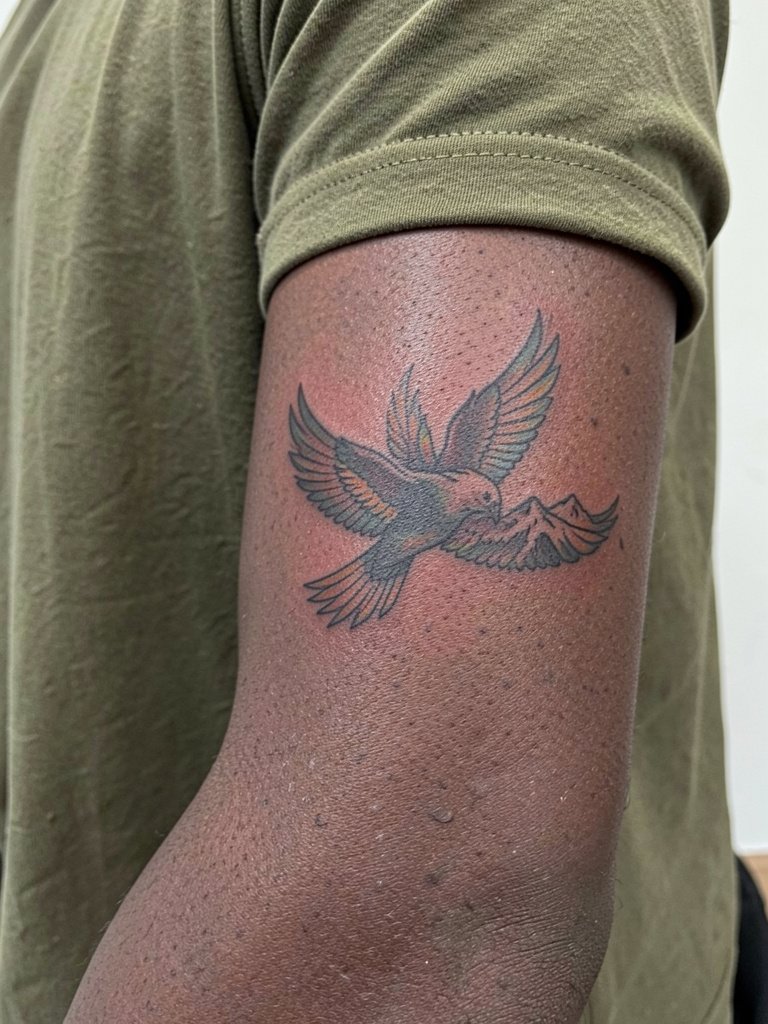
A nature backdrop ties the phoenix to a landscape of endurance. This is a good pick for outdoor enthusiasts who want a broader scene on the forearm. The outer forearm gives you the flat canvas needed for the horizon line. A frequent mistake is compressing the mountains into the wings and losing depth. Ask the artist for layered foreground and background contrast so the bird pops. Sessions for a full-color scene usually span two sittings. For regular wear choose earth tones that echo the palette. olive rolled sleeve shirt
Frequently Asked Questions
Q: Which forearm placement holds up better over five years, inner or outer?
A: Outer forearm is generally flatter and less prone to the repeated palm-up movement that can cause fine-line blur. One group of artists warns inner forearm lines blur within two years because of daily skin motion. The other group points to healed examples and says proper spacing and slightly heavier contours can keep inner work crisp. If you expect weight fluctuation or want maximum longevity, outer forearm is the safer pick.
Q: How do color flames fare on darker skin tones and what should I request?
A: On darker skin push for deep saturation and solid black anchors so red and orange remain visible in photos and natural light. Ask for rich crimson and saturated orange fills and request macro healed photos from the artist before booking. Also plan for a possible color refresh in two to four years if you want the brightest look long term.
Q: Can fine-line phoenix work last on the inner forearm?
A: It can, but results vary. Some artists say fine line blurs too quickly on the palm-up skin and recommend bolder contours. Others use slightly wider needle spacing and specific saturation to preserve fine-line work for multiple years. If you choose fine line, increase the scale slightly and plan a touch-up timeline at around 12–24 months.
Q: Where can I find healed phoenix portfolios and nearby artists without naming individuals?
A: Search hashtags like #phoenixtattoo, #phoenixforearm, and #sketchphoenix on Instagram and TikTok and then filter by location to find nearby portfolios. Use directories like Tattoodo and the Inked App to search by keywords such as "neo-traditional phoenix forearm" or "fine line phoenix black and gray." Reddit threads on r/tattoos and r/tattooadvice are useful for peer-shared healed shots across skin tones.
Q: What should I wear to the appointment for an inner-forearm phoenix session?
A: Wear a loose short-sleeve tee or sleeveless top so the artist can access the palm-up surface without tugging at fabric. Avoid tight cuffs or long sleeves that press against the area during wrap and dressing. A rolled-sleeve linen or cotton shirt works well for post-session comfort.
Q: How long before a stippled ash texture needs a touch-up?
A: Stippled ash textures often need close inspection at six months because tiny dots can soften during healing. If spacing was tight in the original piece, expect touch-up at six to twelve months to restore crisp stippling. Protective film and careful early balm choices reduce the risk of dot loss.
Q: Are there aftercare products I should avoid for stipple and fine-line phoenixes?
A: Thicker occlusive ointments can smudge delicate dot work during the first week. Lighter balms and a short Saniderm window help protect stipple. If you use any off-brand heavy petroleum products, check with the studio about pill risk. Saniderm or thin, non-clogging oils are commonly used to preserve fine textures.