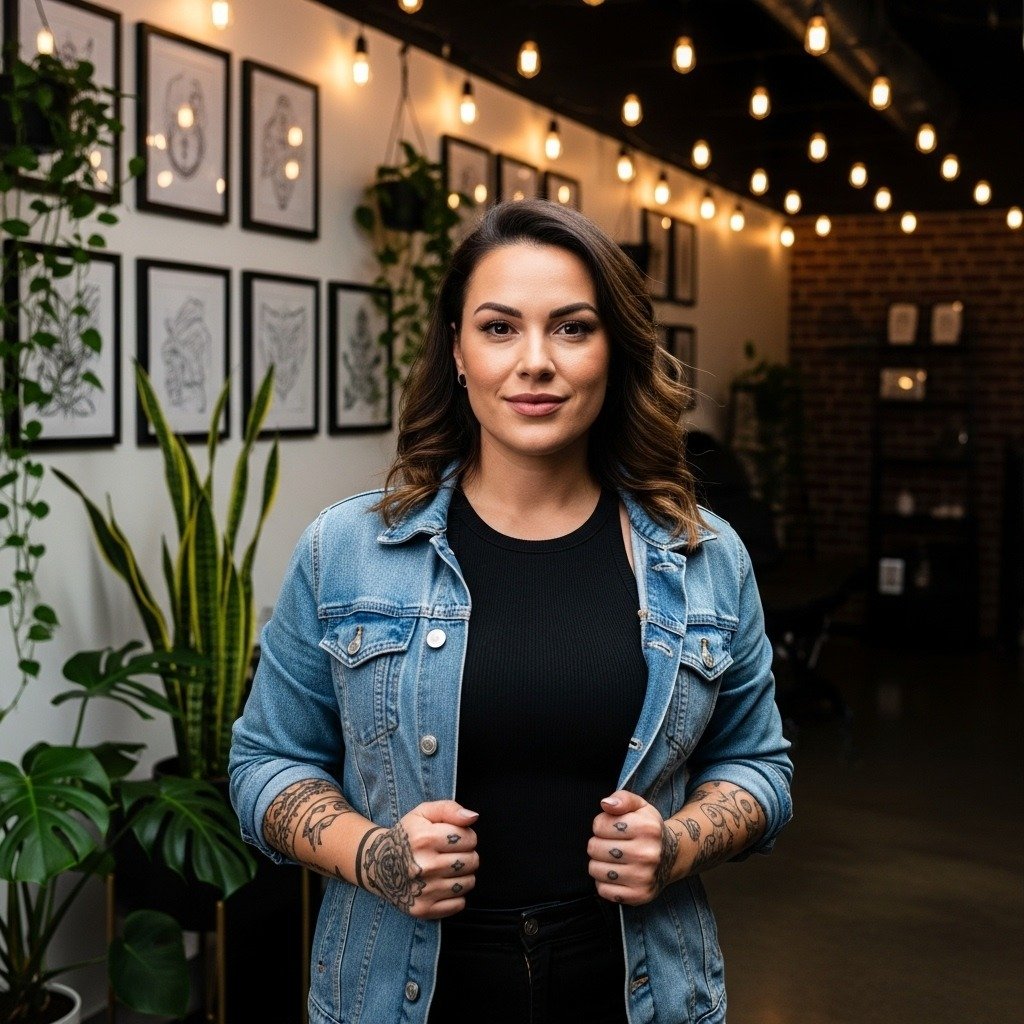
A new phoenix tattoo usually starts with one small decision that changes everything. Pick the wrong placement or go too fine with linework and the feathers merge in a few years. Pick the right scale, line weight, and placement and the image keeps its motion as your body moves. Below you will find focused phoenix directions you can show your artist so the finished piece looks like the intent you brought into the chair.
1. Graceful Ascension Fine Line Thigh Phoenix
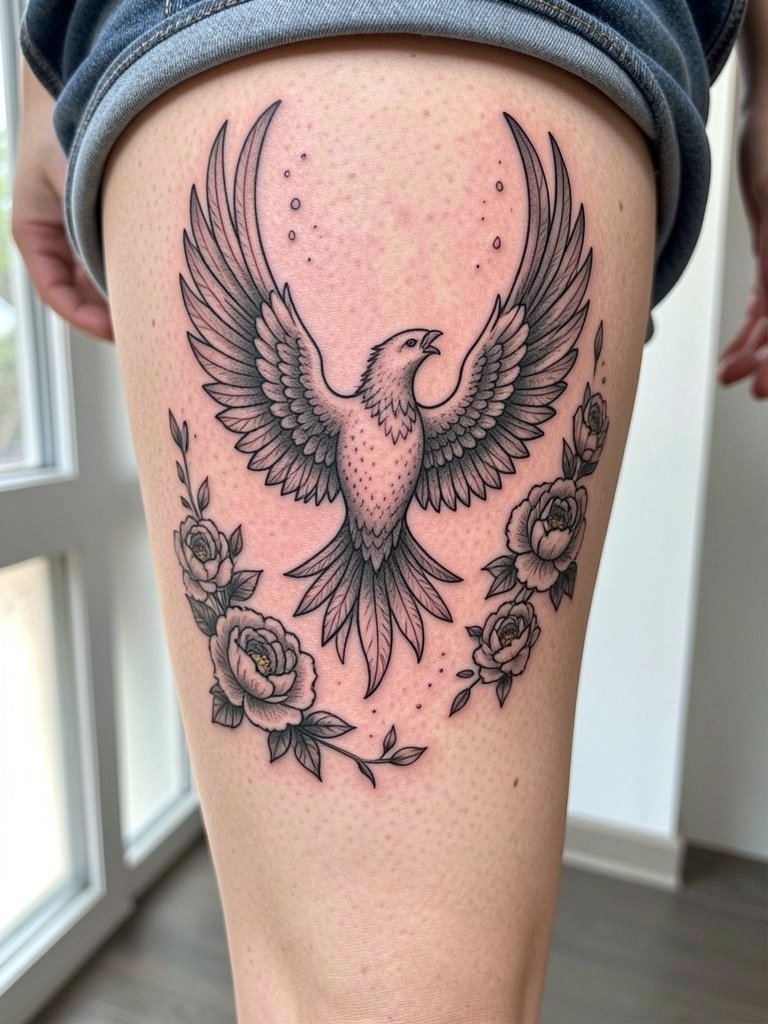
A Graceful Ascension phoenix uses negative space and floral elements rather than full-on flames. I recommend this when you want motion without heavy saturation. Discuss lineweight specifically with your artist. Ask for slightly heavier linework through the primary feather quills so the piece keeps shape at year two and year five. The thigh is low on the pain chart, usually a three out of ten for most people. The biggest mistake is asking for ultra-fine single-needle filigree and placing it on textured skin. For sessions, wear loose drawstring linen shorts so the artist can roll the leg up without compressing the area.
2. Watercolor Back Phoenix with Soft Boundaries
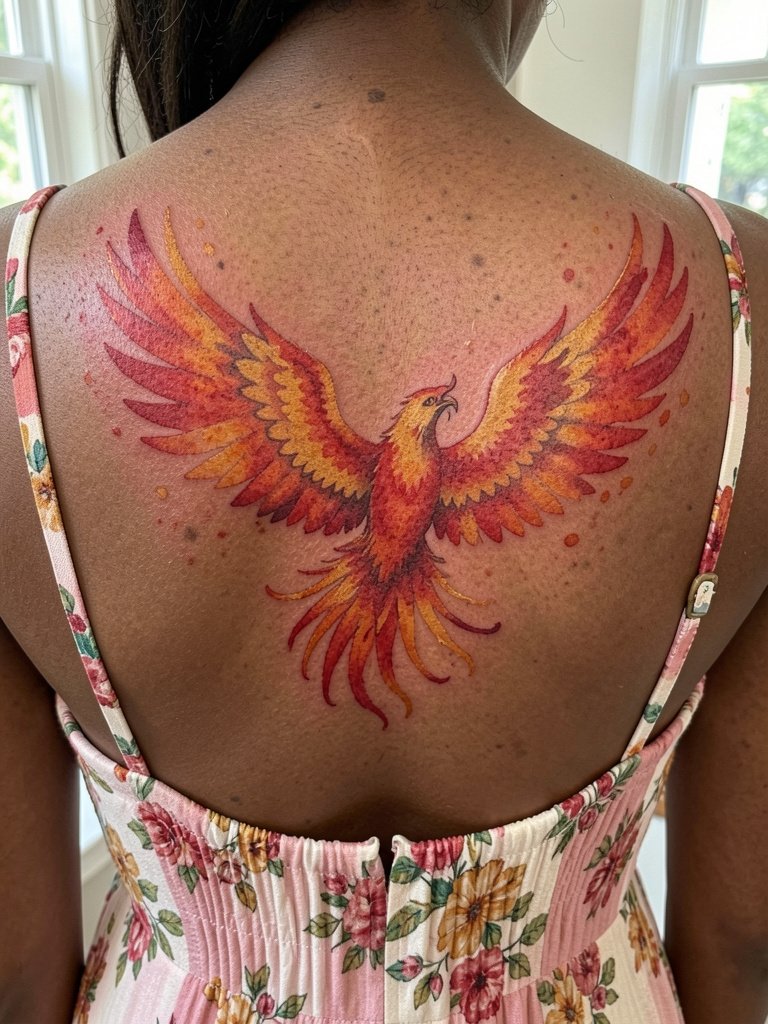
Watercolor phoenixes look like a painting at first, but they need maintenance. One camp warns that soft boundaries blur within a few years. Another camp accepts touch-ups because the look cannot be replicated by bold outlines. Name both views to your artist and say which you want preserved. For a back piece, ask the artist where they would add saturated anchor tones so the composition reads on darker skin tones. Plan for two sessions and expect touch-ups around year three to five for color refresh. When you want to show the finished work, reach for backless sundresses so the watercolor flow reads without distraction.
3. Maori/Polynesian Geometric Shoulder Phoenix
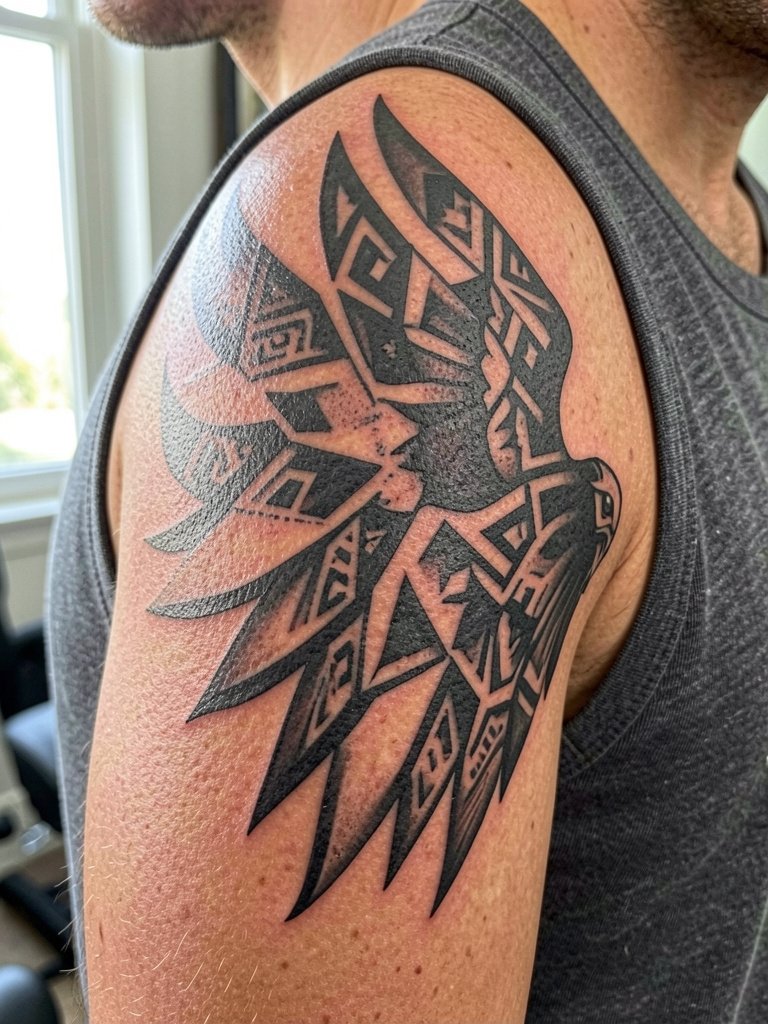
Neo-tribal phoenix work relies on crisp black saturation and contrast. This style is a solid choice when longevity matters because black holds up well. During consultation, bring multiple close-up photos of geometric line weight you admire so the spacing is consistent. Common error is shrinking complex motifs down too small, which causes blowout and muddied patterns. Session time is usually one to two hours for a medium shoulder piece. For outfits that frame bold blackwork, try a tank top solid black so the contrast reads in daylight.
4. Celtic Knot Phoenix on the Inner Forearm
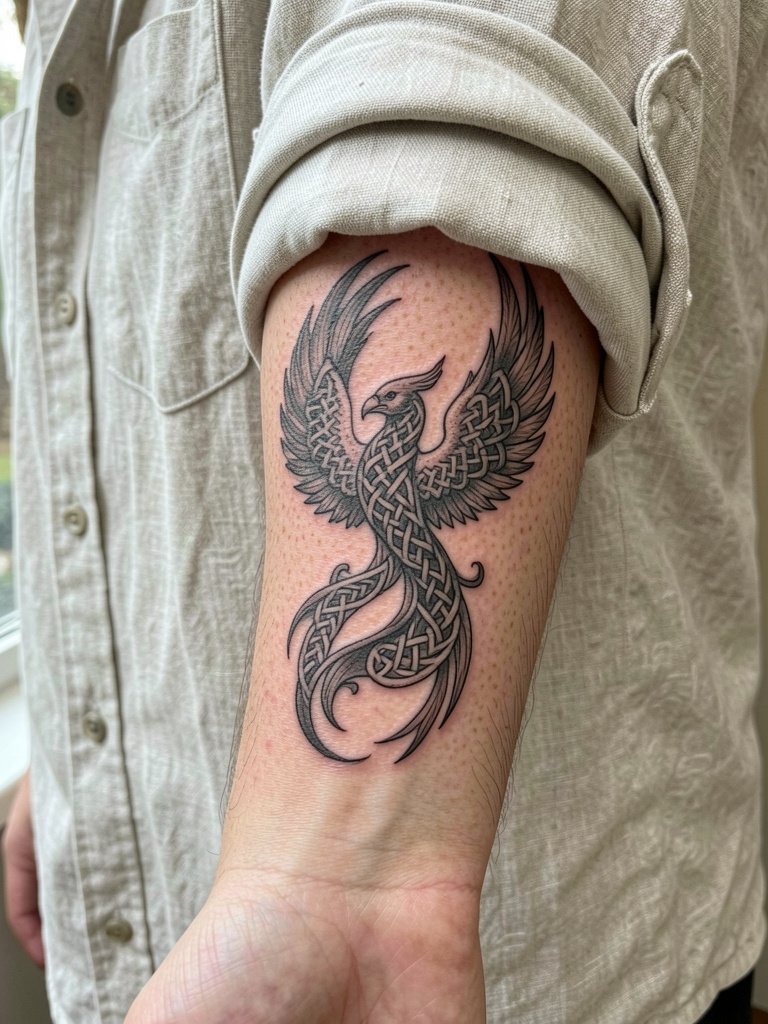
Interlocking knots work well on the inner forearm because the surface is relatively flat. Be specific with the artist about knot minimum spacing so the loops do not merge as the tattoo heals. A common mistake is asking for knot detail that is too fine for the forearm width. Expect a medium pain level and one to two hours of chair time for a detailed forearm piece. If you want the design to read in photos on darker skin, request deeper black saturation and selective shaded anchors. For session day, a linen button down shirt with sleeves you can roll keeps the area accessible while staying comfortable.
5. Micro-Realism Ash Phoenix Wrist Wrap
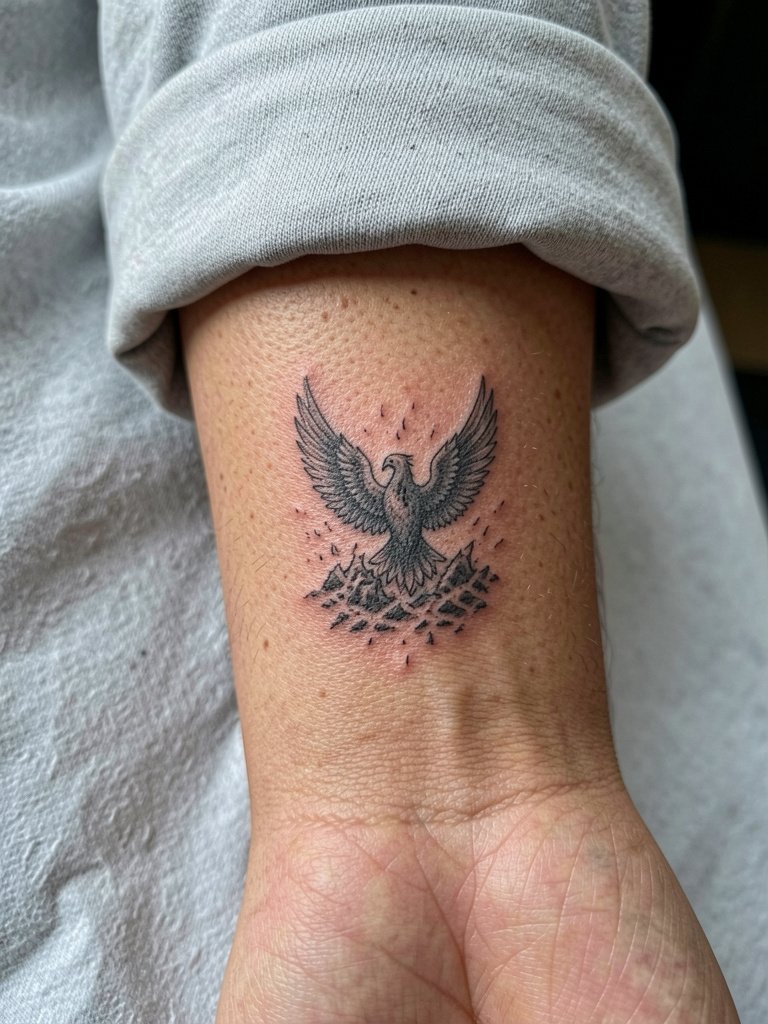
Micro-realism behind single-needle technique gives a discreet symbol that reads close up. Specify the exact wrist wrap width so the artist knows how tight the contour should be. Mistakes include overcrowding the wrist with detail, which the skin will blur by year two. The wrist sees daily friction, so expect the first healed photo at six months to look sharper than year three. For a neat, minimalist finish, pair the wrist with a minimalist watch women on the opposite hand rather than chunky cuffs that rub the fresh ink.
6. Floral Integration Neo-Traditional Ribcage Phoenix
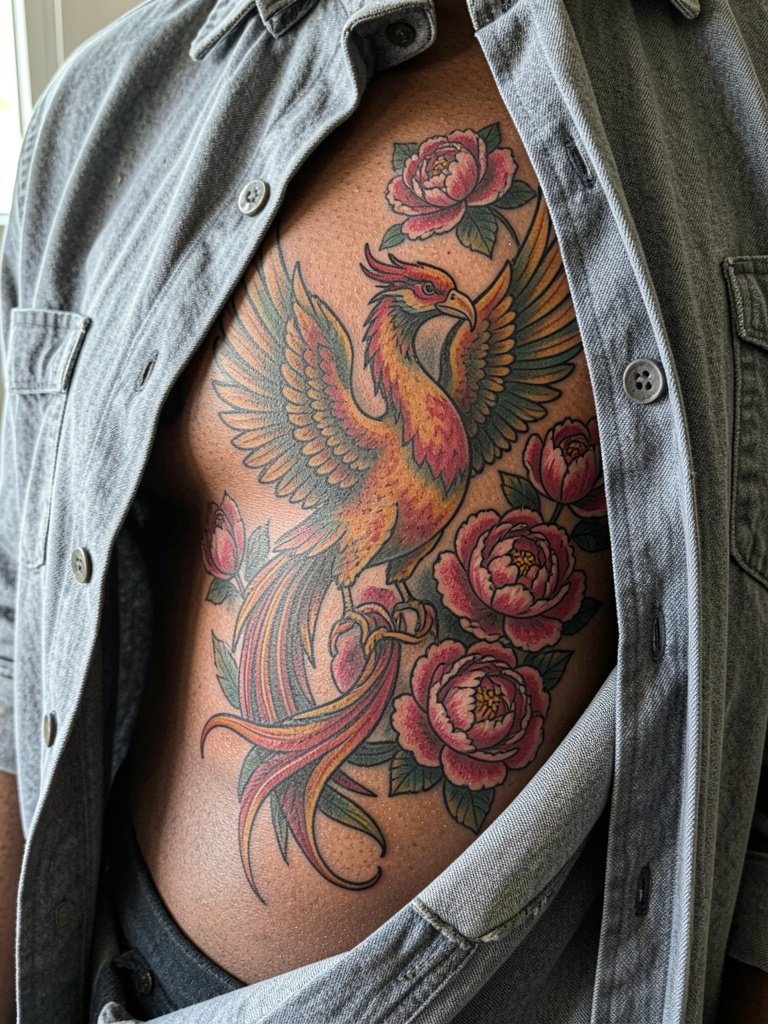
Ribcage phoenix pieces look dramatic but are high on the pain chart. Be honest about session breaks and numbing strategy. If you choose floral integration for a softer story, say so explicitly and show reference images of the petal placement. One artist camp argues ribs blur fine-line detail because of skin stretch. Another camp says slightly wider spacing and deeper needle depth prevent early blurring. State which side you prefer and ask for visible healed examples on the artist's portfolio. For the session wear, bring a button-down shirt women that the artist can roll or unbutton for access without fabric rubbing post-session.
Studio Day Prep
The rib and side-torso pieces above need careful session planning, so a few small things smooth out the appointment and first week.
- Specialty tattoo balm, thin consistency. Lighter balms avoid pore-clogging on color-heavy work and help for people who find ointments too greasy.
- Linen button-down shirt women. Easy to put on and take off without rubbing fresh ink on the ribs or shoulder.
- Gold accent ink set. Small touches of metallic tones can give contrast on darker skin without relying on pale washes.
- Loose linen or cotton shorts. Comfortable for thigh and hip appointments and prevents tight waistbands from chafing the healing skin.
- Fragrance-free lotion. Gentle daily moisture after the initial ointment phase keeps skin supple while color settles.
7. Black Ink Minimalist Collarbone Phoenix
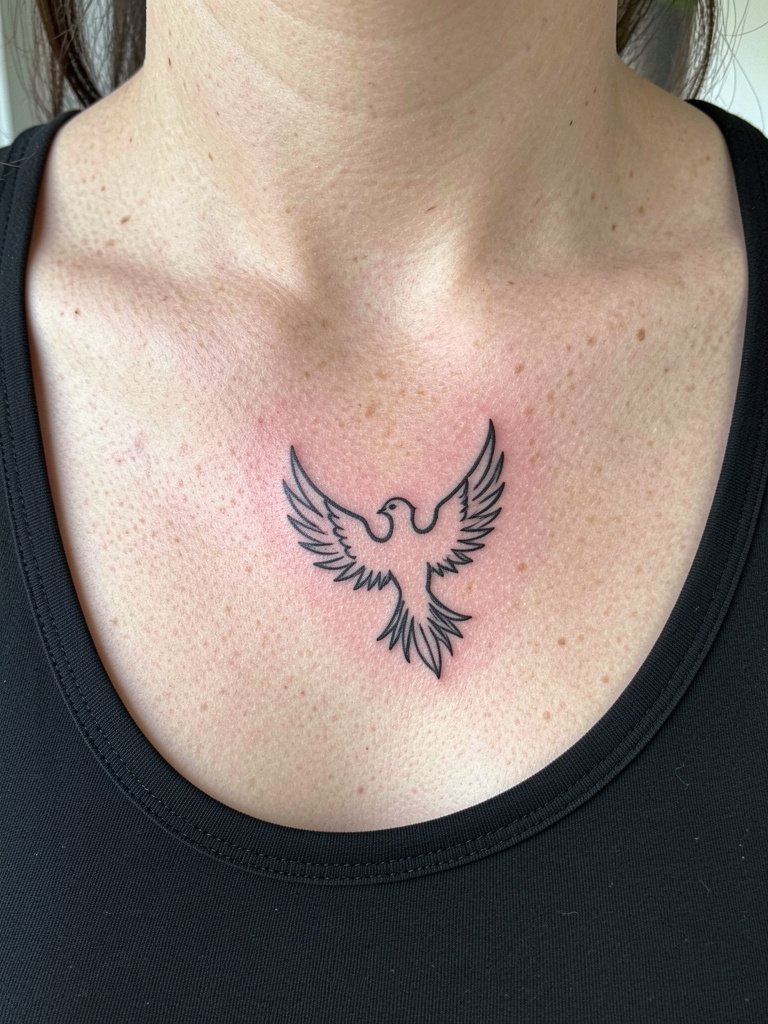
Collarbone placements demand clarity because the area is thin-skinned and prone to slight blowout. Request a modest increase in lineweight compared with your reference so the feather tips do not soften by year three. The most common error is making the piece too tiny for the collarbone curve. Session time for a small collarbone phoenix is short but expect tenderness during healing. For outfits, a scoop neck top women frames the area and keeps the necklace line clear.
8. Crimson and Gold Spine Phoenix
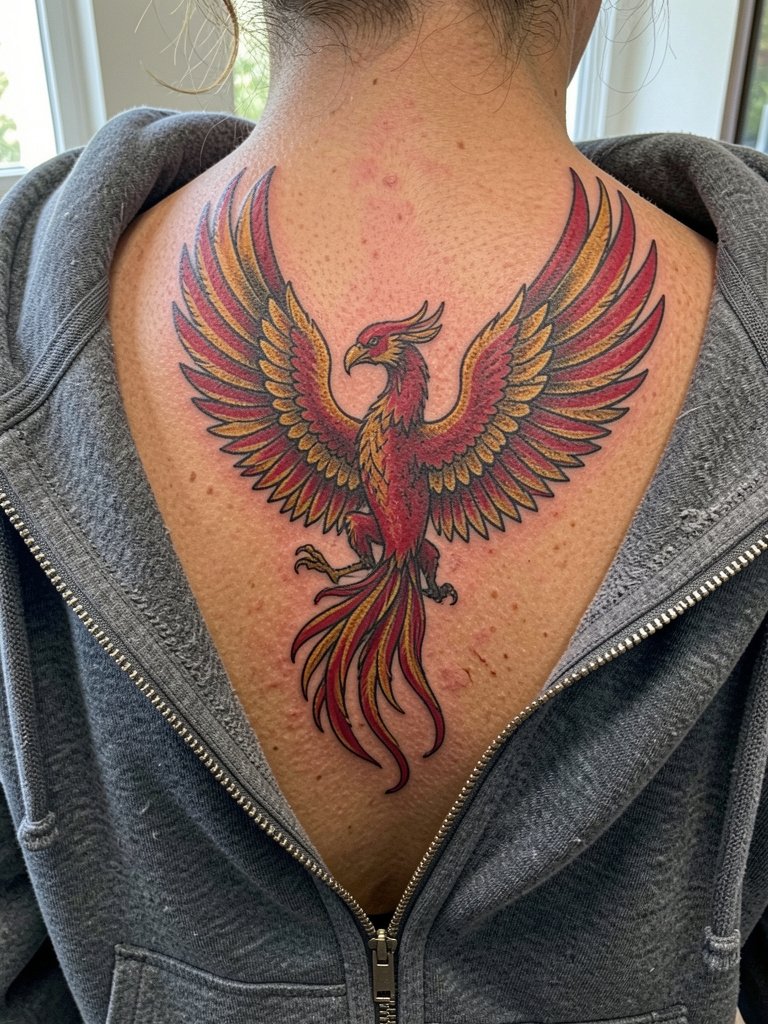
A spine phoenix benefits from symmetry and clear negative space so the wings read across the shoulder blades. Ask the artist to map how the wings will sit when you stand and when you round your shoulders. The spine is high on the pain scale and usually done across multiple sessions for large color pieces. If you want the gold accents to pop on deeper skin tones, request them as concentrated highlights rather than washed-out gradients. For session wear, use a zip up hoodie women or buttoned shirt to allow the artist quick access without tugging at fabric.
9. Silhouette Phoenix with Ash Trail on Upper Thigh
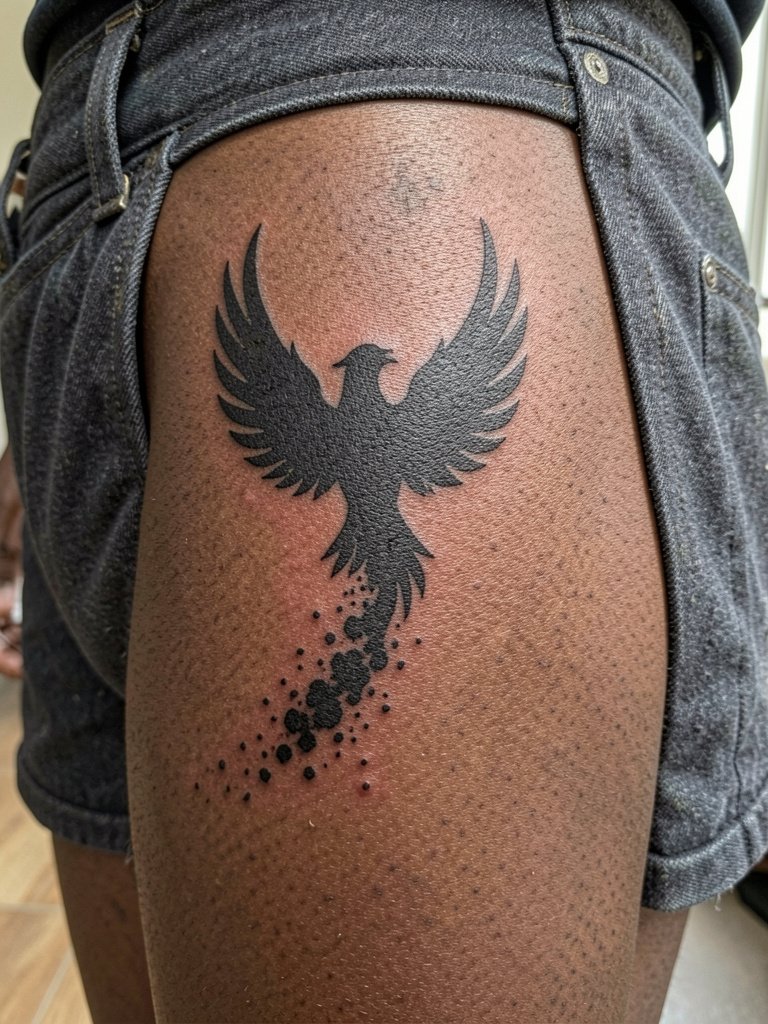
Silhouettes age predictably because they rely on solid black fill. Ask the artist to leave crisp negative-space gaps between the ash trail particles so the silhouette keeps separation over time. The thigh is forgiving on pain and creates a kinetic appearance as muscle moves. The biggest mistake is using thin fills that patch out unevenly across years. For showing off vertical compositions, high-waisted cuts work well. Try high waist denim shorts women when you want the piece visible without full exposure.
10. Ornamental Wing on the Lateral Hip Bone
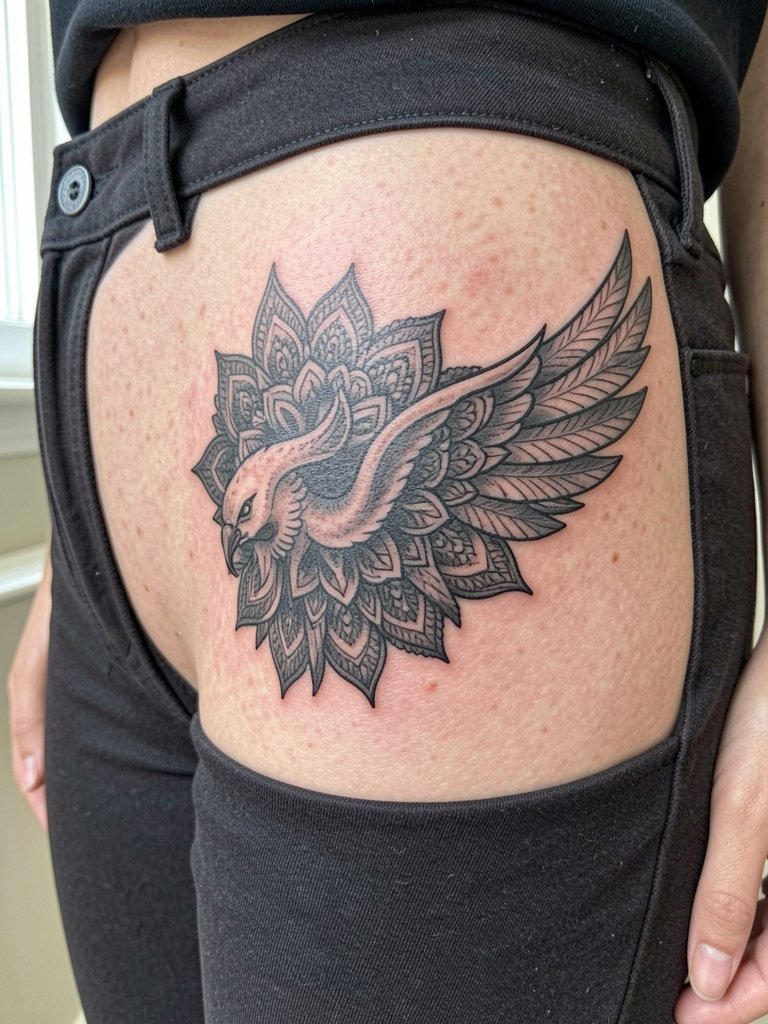
Lateral hip mandala wings look refined when the lines are given breathing room. The hip sees a lot of friction from waistbands, so avoid ultra-fine filigree that sits directly under a tight waistband. Ask for a protective buffer of skin around the densest linework so touch-ups are less frequent. For show-off occasions the design pairs with high-waisted silhouettes, so a high waist pants women or skirt is a natural match. Session wear should be loose at the waist to prevent rubbing during the first week.
11. Vibrant Watercolor Flame Lower Back
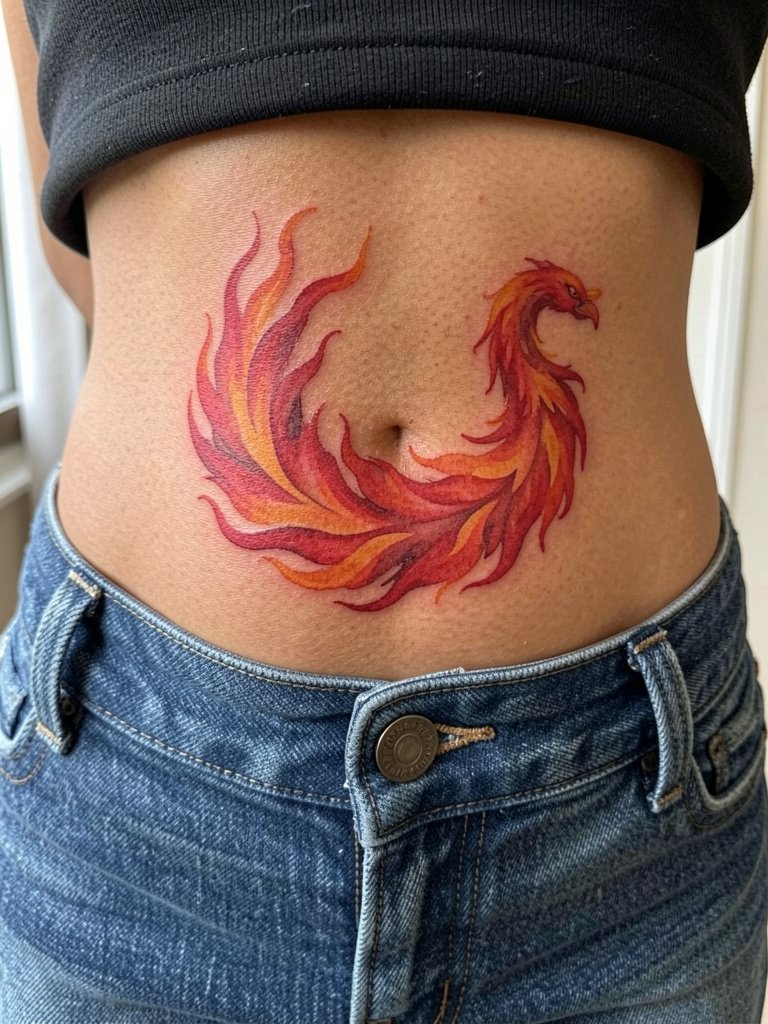
Lower back watercolor can create an expansive vertical flow, but it is one of the styles most likely to require touch-ups. One camp prefers traditional saturated fills for longevity. The other camp accepts color maintenance for the watercolor look. When you book, tell the artist if you prefer concentrated saturated anchors at select feathers. The lower back tolerates larger compositions and usually heals at two to three weeks for surface recovery. For nights out, backless or low-rise combinations let the colors read naturally. Consider a low back cardigan women for coverage that still reveals the central motif.
12. Single-Needle Ash Detail Behind the Ear
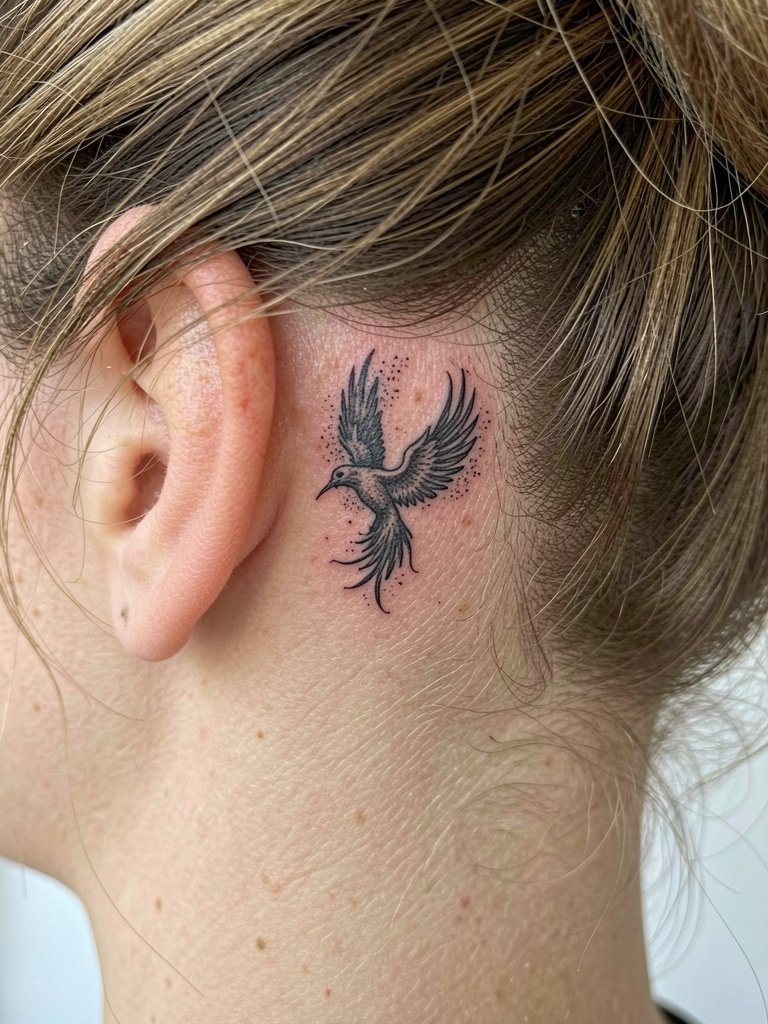
Behind-the-ear micro pieces are intimate and subtle by design. Tell the artist the exact texturing you want in the ash area because single-needle stipple versus continuous line reads very differently at a one-inch scale. The area is low on pain but tricky to photograph, so ask for healed shots from the artist. A frequent mistake is over-detailing a tiny zone, which collapses into blot in two years. Keep hair styles in mind; pull your hair into a sleek bun if you want the piece visible for special occasions.
13. Mythical Elemental Inner Thigh Phoenix
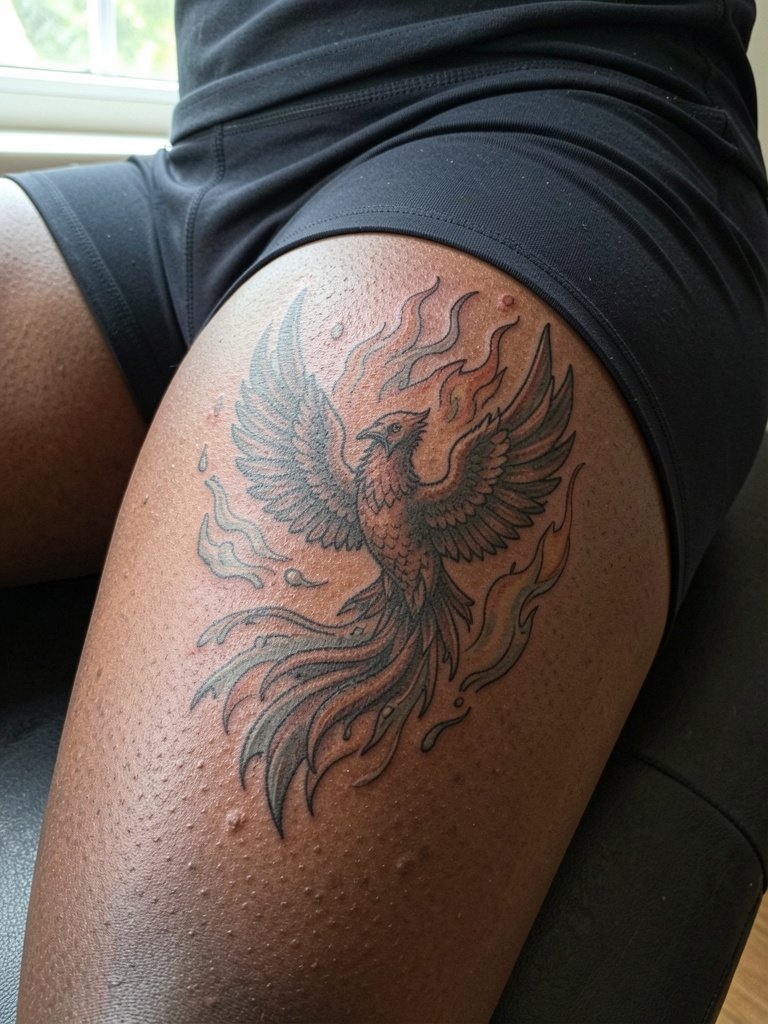
Inner thigh phoenixes are private pieces that work well for mixed-element compositions. Because the skin is softer there, discuss needle depth and spacing with your artist so stipple shading does not blur into blocky patches. Common errors are underestimating sensitivity and wearing tight clothing too soon after the session. This placement benefits from slower sessions and extra moisturizing during winter months. For session wear bring loose shorts or a skirt so the artist can expose the area without fabric rubbing.
14. Bold Outline Tribal Shoulder Phoenix
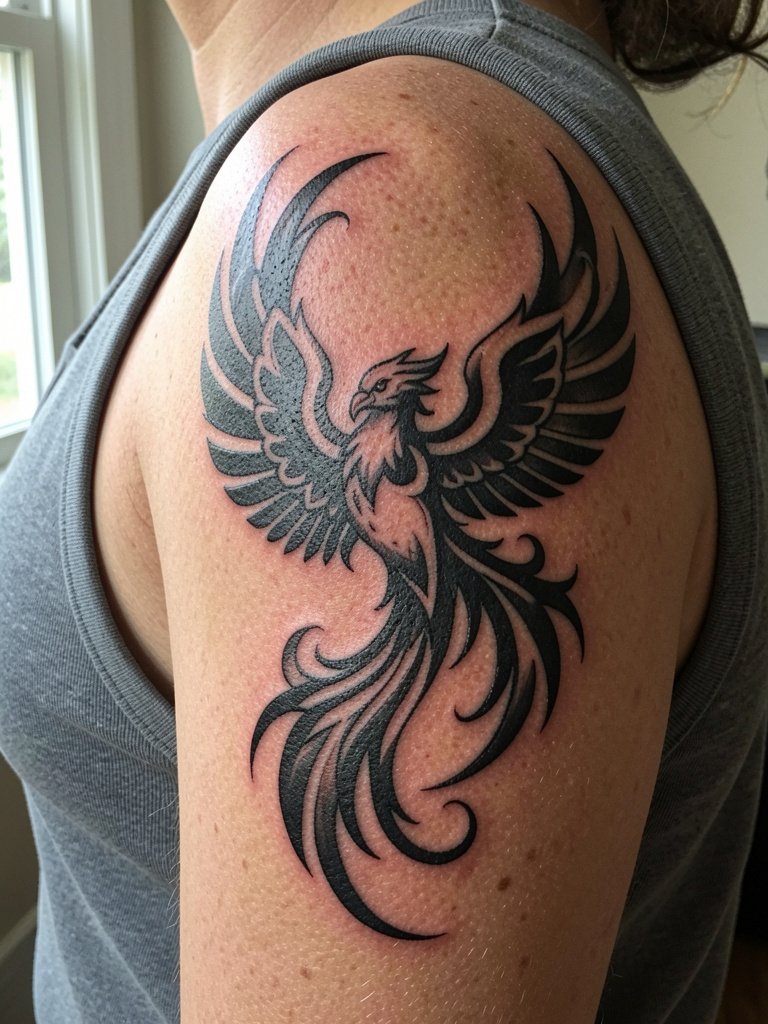
Thicker tribal outlines hold up well because the shapes age into their intended silhouette. Tell the artist how much negative space you want between filled elements so the shoulder keeps structure when muscles flex. The shoulder is forgiving and usually one to two sessions for a medium build. Avoid asking for razor-thin negative lines inside solid black fields; they can disappear as the ink settles. For daily wear, sleeveless tops showcase bold blackwork, so try a sleeveless top women when you want the piece visible.
15. Gothic Black and Gray Sternum Phoenix
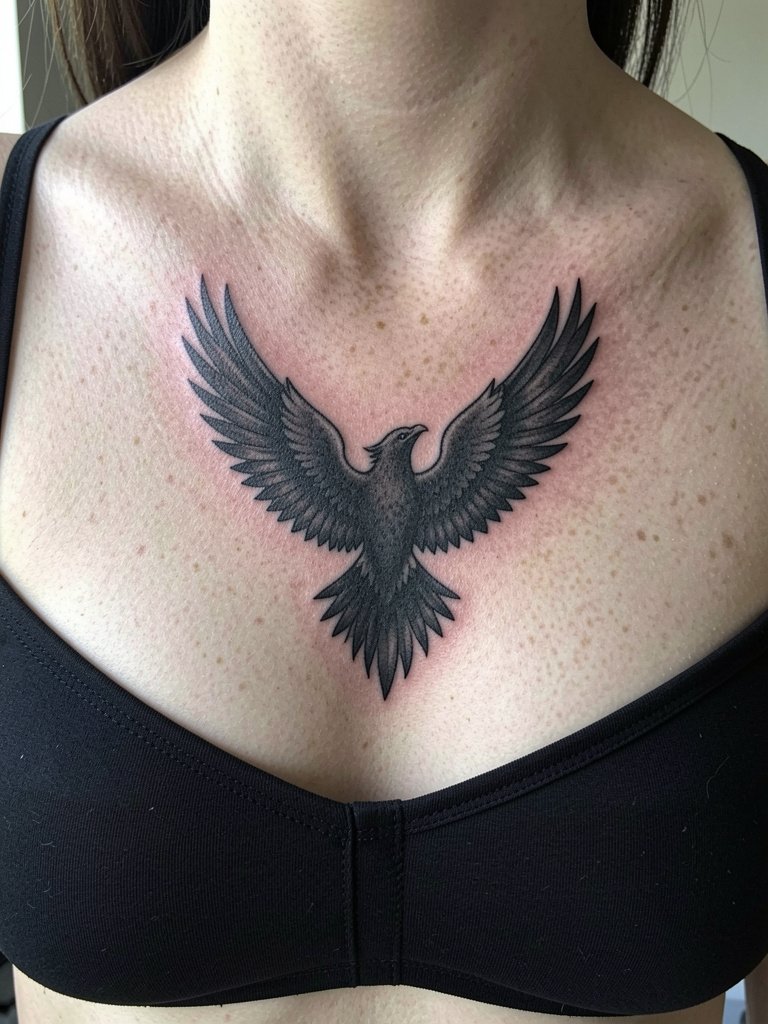
Sternum placements require careful mapping because the skin stretches with breathing and movement. One camp will caution that heavy shading near underbust creases shortens longevity for fine details. The other camp recommends denser gradients and deeper saturation to counter that. Ask which approach the artist uses and request healed examples. Sternum sessions can be intense but often finish in one to two sessions. For outfits that frame sternum work, off-the-shoulder and bandeau styles provide tasteful exposure without constant rubbing, so consider an off the shoulder top women for reveal moments.
16. Mythic Crest Chest Phoenix (Heraldic Influence)
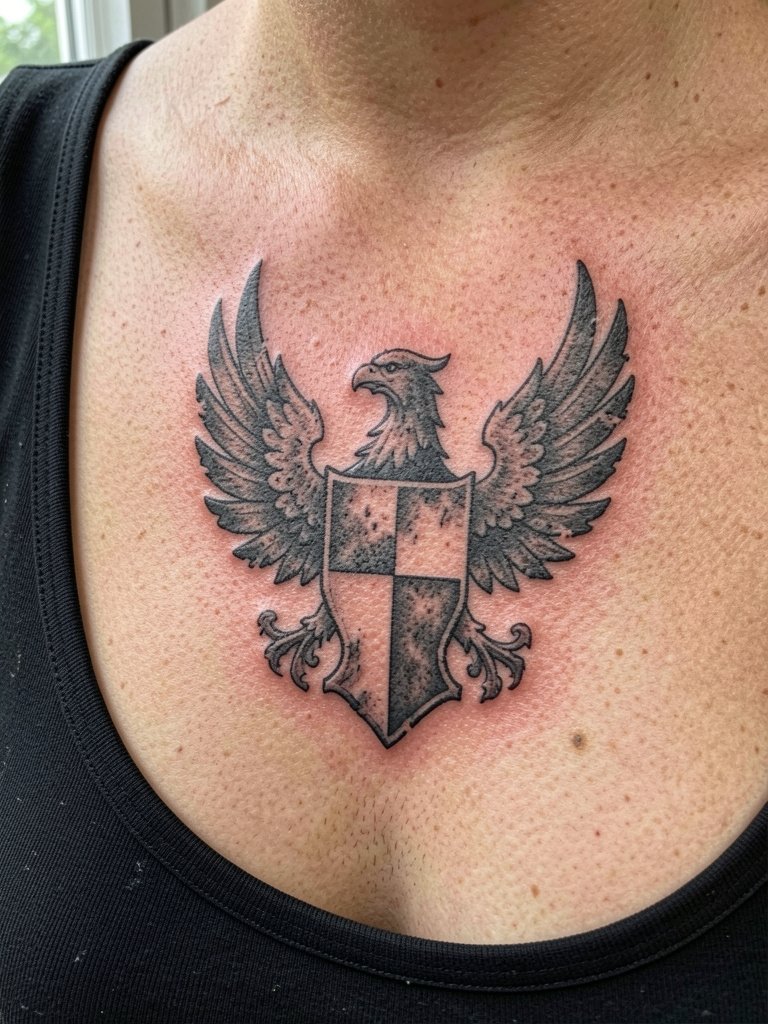
Heraldic phoenix crests need extra spacing inside each panel so the knotwork and animal detail do not merge over time. A common mistake is compressing four complex panels into a small chest piece. For chest placements, mention how the imagery will sit relative to natural curves, especially breathing motion. This work often ages into a textured emblem if saturated properly. Keep necklaces minimal or off when photographing healed results so the crest reads fully.
17. Feathered Mandala Upper Arm Sleeve Accent
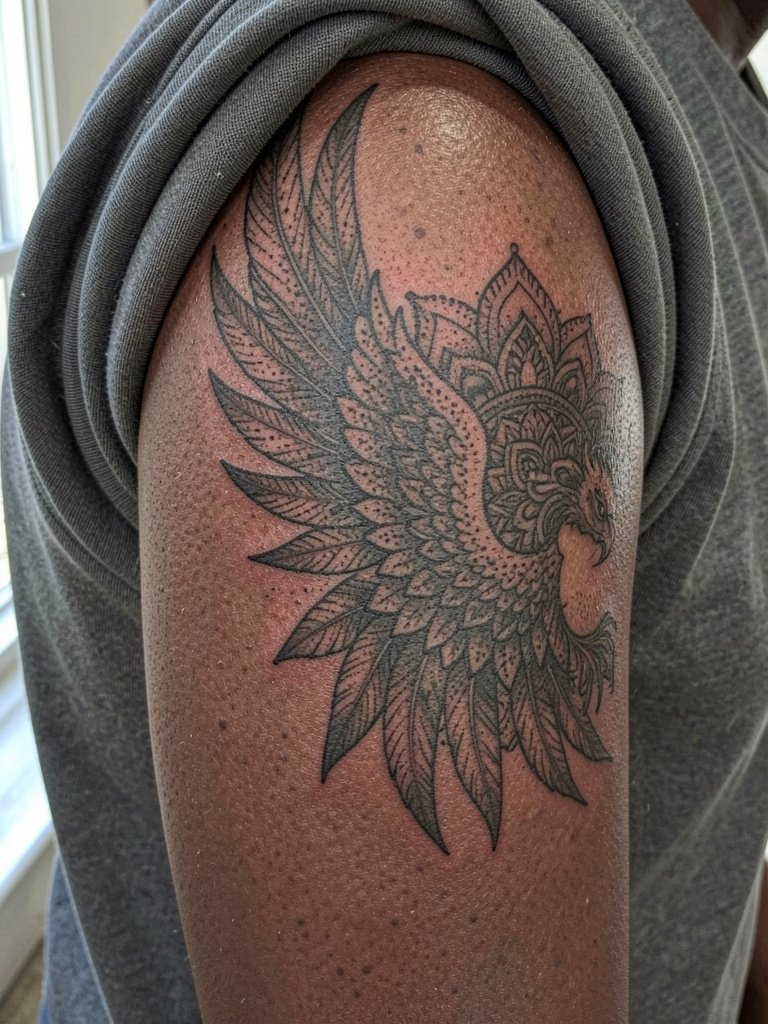
Upper-arm mandala feathers need room to breathe. Tell the artist you want the mandala centers no smaller than X inches so dot work and stipple shading keep definition. Mistakes include cramming too many tiny petals into narrow bands, which age into indistinct texture. The upper arm handles saturation well and usually ages evenly if shading gradients are balanced. For outfits that show off shoulder work, sleeveless dresses and tank tops read best.
18. Minimalist Geometric Arc Phoenix at the Wrist Crease
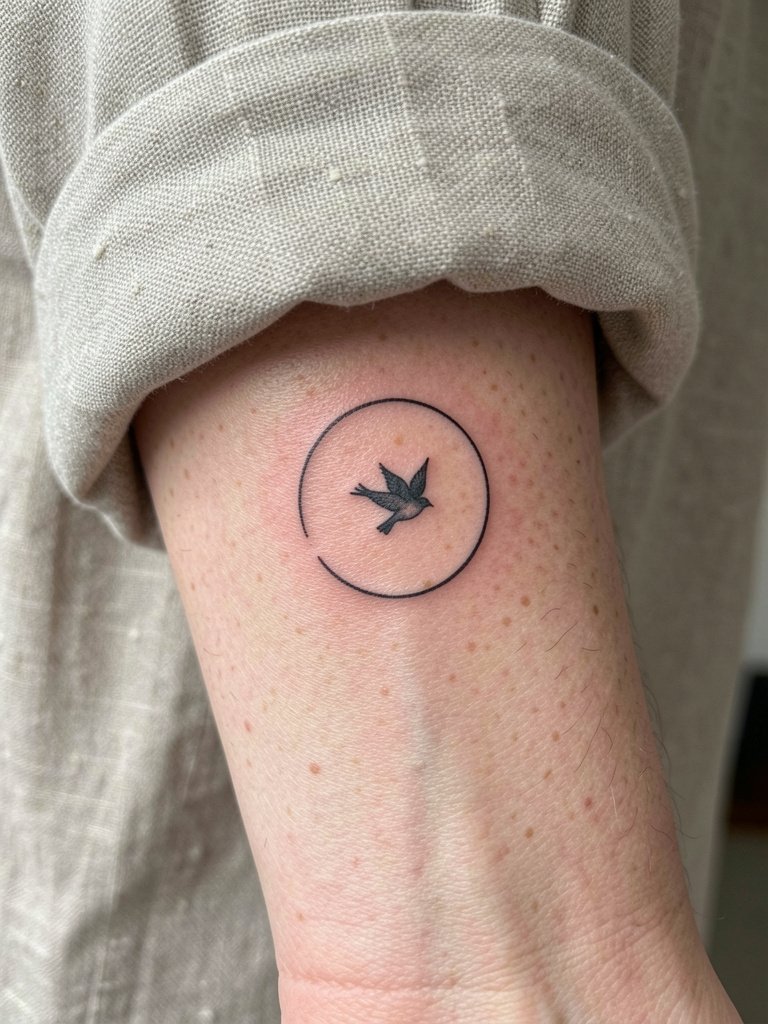
Wrist creases are unforgiving for overly fine geometry. Ask for a hairier line weight than your reference because the inner wrist tends to spread detail slightly. A common misstep is adding text or tiny numbers inside the arc that blur in two years. For daytime styling, pair the piece with thin chain bracelets on the opposite wrist rather than chunky cuffs that will rub fresh ink. Session time is short but be careful with aftercare and frequent hand washing the first two weeks.
19. Kinetic Thigh Wrap Phoenix for Motion
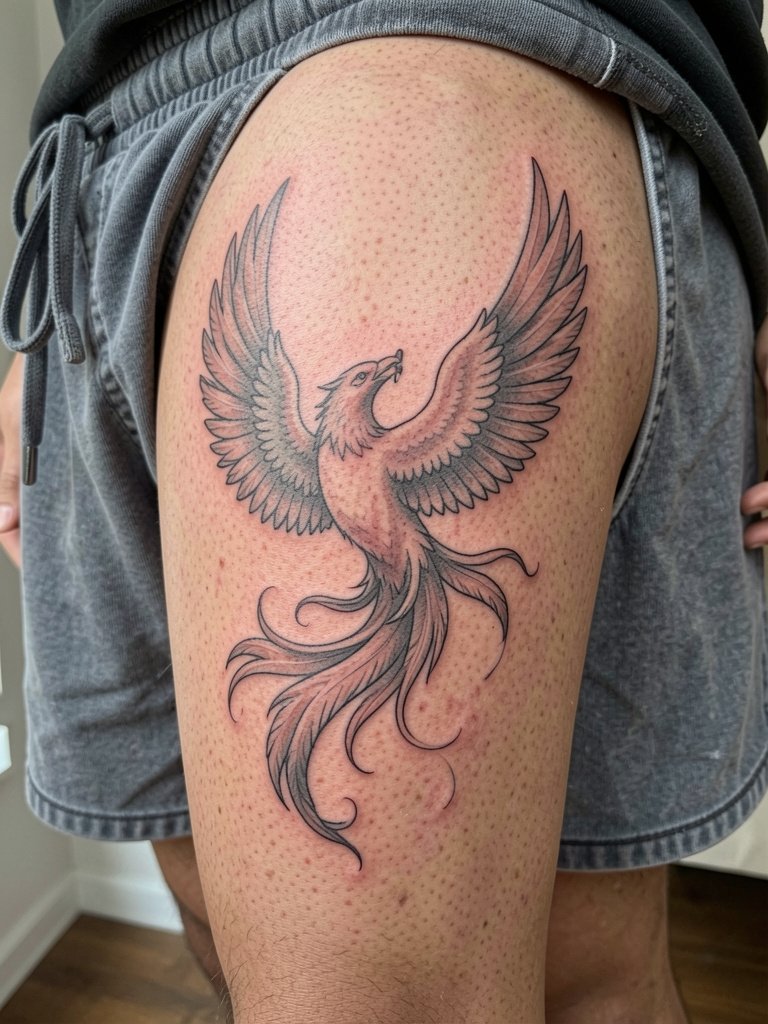
Designs that use muscle interaction can look three dimensional when you walk, but they must follow anatomical flow. Tell the artist you want feathers to follow the quadriceps direction so the movement reads as lift rather than distortion. The thigh is one of the least painful large canvases and a great choice for collectors who want scale without rib-level pain. For the session, wear loose drawstring linen pants so the artist can roll the leg up and you avoid tight seams over fresh ink.
20. Ornamental Neck Nape Phoenix Accent
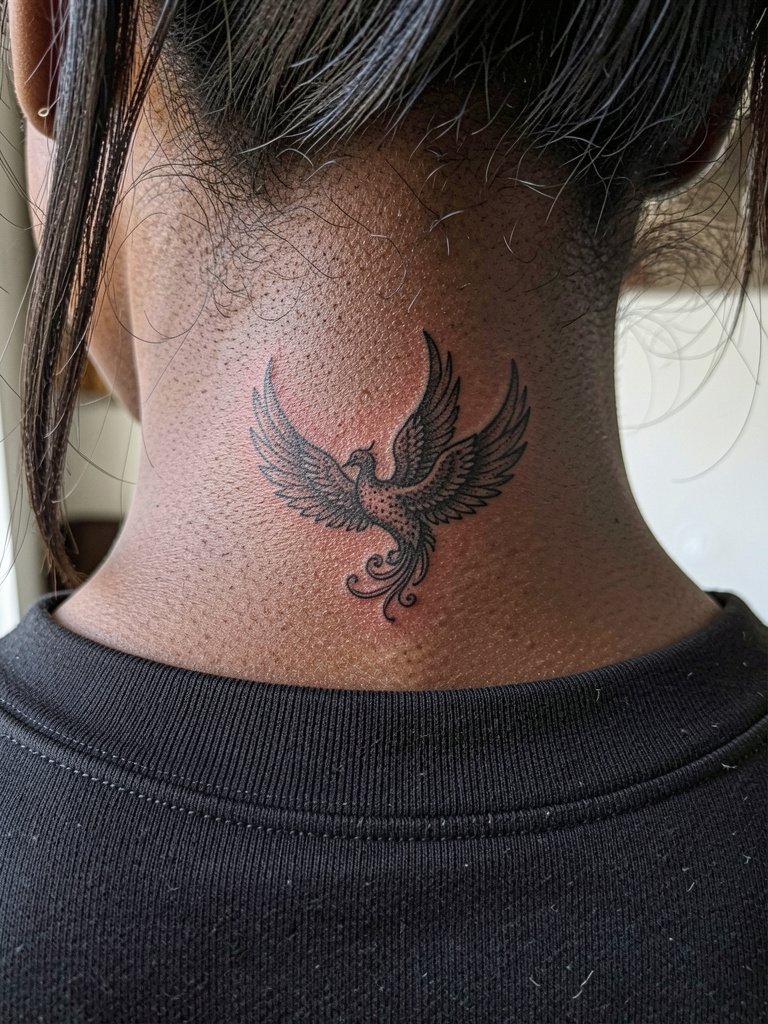
Nape placements are discreet and age well if the linework is not too fine. Before booking, show the artist how often you want the piece visible so they can size accordingly. A common mistake is placing tiny details right on the hairline, where hair growth and seasonal scalp dryness can complicate healing. For daily looks, a wide-neck top keeps the area visible without tugging at the fabric.
21. Ornamental Chest Band Phoenix
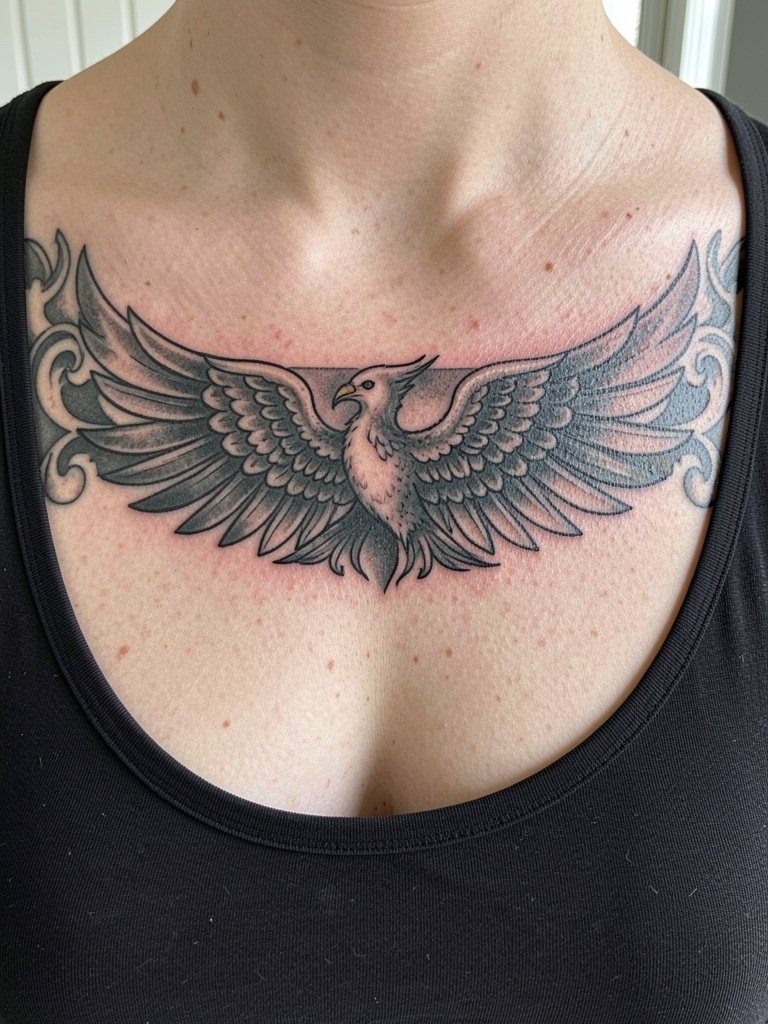
A chest band must respect the chest curve so the composition sits level when you stand. Ask the artist to mock up the band in different widths so you can see how spacing affects the motifs at a one-to-two-inch scale. Typical mistakes include making the band too narrow, which causes the ornamentation to compress and blur. For session comfort, bring tops that can be pulled down or buttoned to allow access without rubbing the area after the session.
Frequently Asked Questions
Q: How long will a watercolor phoenix keep its color before needing a touch-up?
A: In practical terms, watercolor-style colors tend to soften faster than saturated black. Expect visible softening by year two or three and plan for a touch-up in the three to five year window. If you prefer fewer touch-ups, request deeper saturation points or small anchor patches of color in the first session.
Q: Which placement hurts least for a medium-sized phoenix, ribs or thigh?
A: The thigh is generally much less painful, often rated around a three out of ten. Ribs and spine are commonly reported around an eight out of ten and can require breaks or numbing options. If low pain tolerance matters, choose thigh or outer arm placements and tell the artist you want session pacing for comfort.
Q: How should I search for artists who do phoenix work without naming specific people?
A: Search hashtags like #phoenixtattoo, #finelinetattoo, and #birdtattoo on Instagram and TikTok and filter by location. Tattoodo and Inked App let you keyword-search portfolios for healed examples. Reddit threads in r/tattoos and r/tattooadvice often surface peer recommendations and healed pictures across skin tones.
Q: What should I wear the day of a rib or hip appointment?
A: Wear loose, breathable clothing that the artist can move without tugging. A loose drawstring linen pant or a button-down you can unbutton from the bottom keeps the area free of pressure during the first 48 hours.
Q: How do phoenix designs read on darker skin tones, especially watercolors?
A: Pale watercolor washes can fade into low-contrast tones on darker skin. One practical option is to ask for stronger contrast with black outlines or small gold accent tones to create definition. Artists can adapt palettes so the composition keeps presence without relying on washes that need frequent refresh.
Q: Will a fine-line phoenix on the ribs blur quickly?
A: Artists split into two camps on this. One group says ribs stretch and thin skin causes fine lines to lose crispness within a couple of years. The other group believes slightly wider spacing and precise needle depth prevent early blurring, and they will show healed portfolio images to back that claim. Look at healed work from the artist on ribs and choose the approach you prefer.
Q: Can I keep my phoenix visible seasonally without harming the healing process?
A: Yes, but be careful with sun exposure. Avoid direct sun during the first two to three weeks and use physical coverage once healed. Lightweight long sleeves or a loose cardigan work well for protecting color while still letting you show the piece occasionally.