Ocean wave tattoos can read as restful or chaotic based on tiny choices made before the needle hits skin. A narrow ribbon of motion near the wrist behaves very differently over five years than a shoulder piece with saturated black outlines. Pick a concept that matches how you want the design to age and how much time you want in the chair, and the list below will point you to calmer, longer-lasting options.
1. Minimal Single-Line Wrist Wave
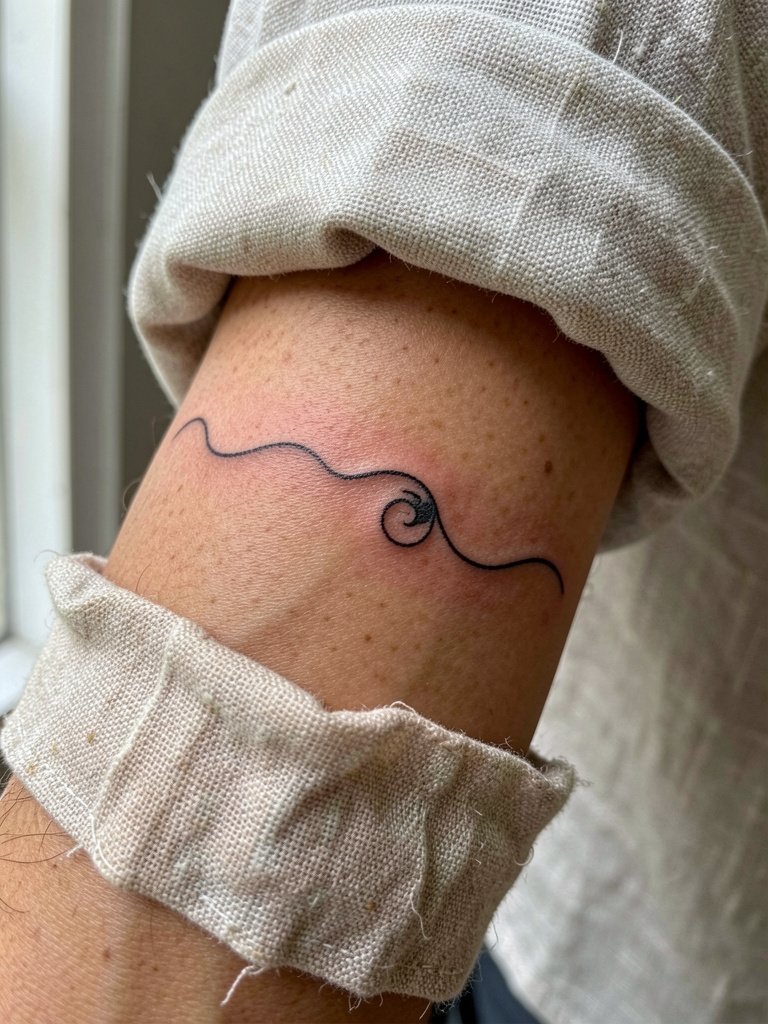
A delicate single-line wave reads calm on the inner wrist and takes less time in the chair. This placement is vulnerable to blowout if the linework is ultra-thin, so request slightly heavier single-needle weight than your reference image so the line keeps its curve at year two. Expect low pain and a 20 to 40 minute session for the basic outline. The common mistake is asking for hairline single-needle without compensating for wrist movement and thin skin, which causes blurring. For showing it off, a rolled cuff and a slim metal bangle frame the curve nicely, try slim hammered bangles that sit above the wrist.
2. Curve-and-Dot Inner Forearm Wave
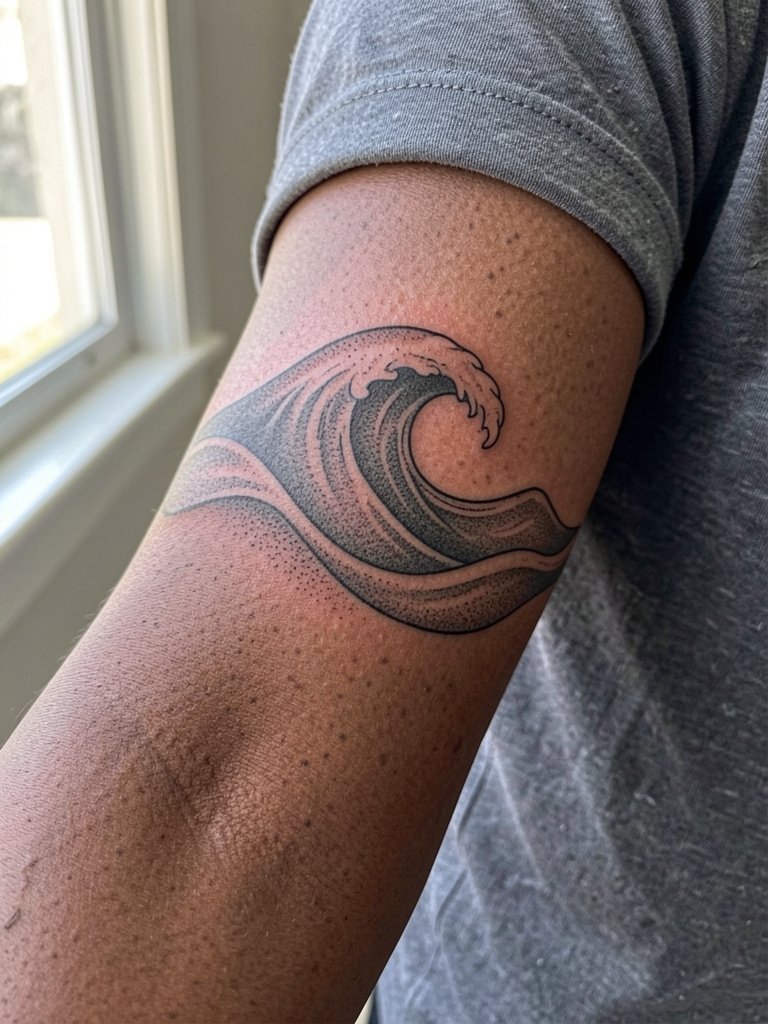
Stipple shading and dot work let a wave feel airy while keeping the linework resilient. Recommend a two-photo reference showing how the stipple density should fade into negative space and ask for slightly wider spacing between dots so the texture does not merge after a year. Inner forearm sessions feel like low to moderate pressure and usually take 45 minutes to an hour with brief breaks. The aging sequence shows crisp dots at six months, some softening at two years, and a need for light touch-up by year five if you want matched density. Style it with rolled linen sleeves to keep the area visible without rubbing.
3. Small Ankle Wave with Negative Space
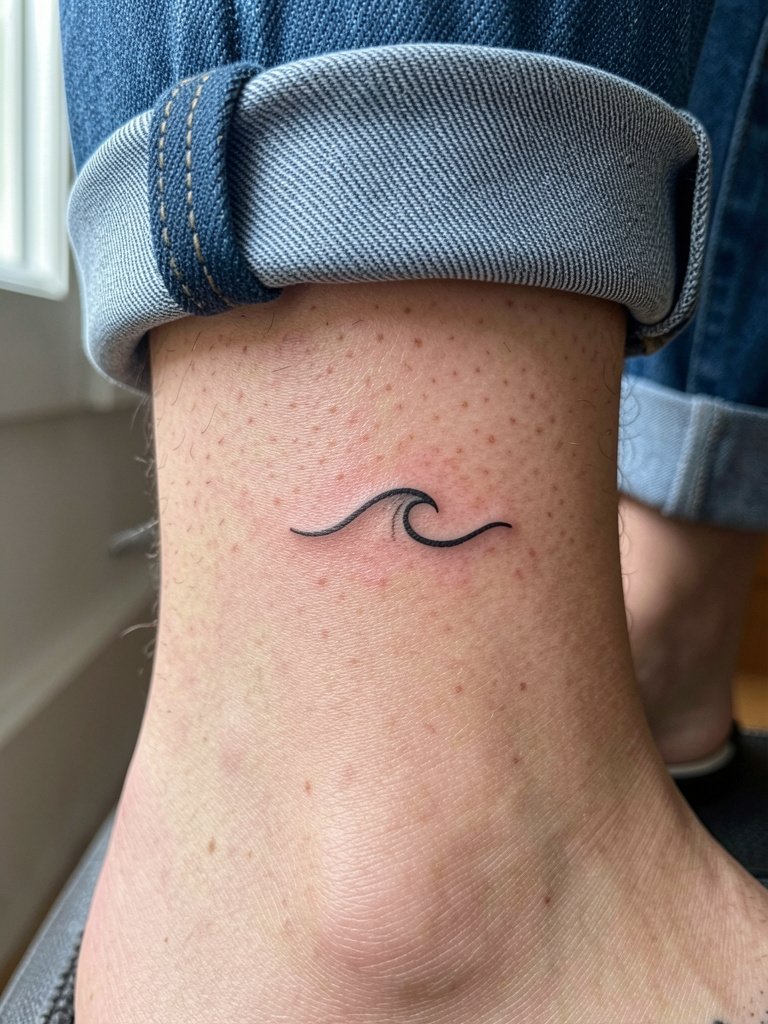
An ankle wave reads intimate and calm when the silhouette is bold enough to resist friction from shoes. The area is prone to abrasion from socks and ankle straps, so request a compact silhouette rather than tiny filigree. Sessions are short but can sting from thin skin over bone. Expect a 30 to 45 minute appointment and plan for a touch-up within two to three years if you frequently wear ankle jewelry that rubs. For evenings out, pair it with low-cut ankle boots or cuffed jeans so the wave sits in the small window of visible skin.
4. Flowing Ribcage Wave Band
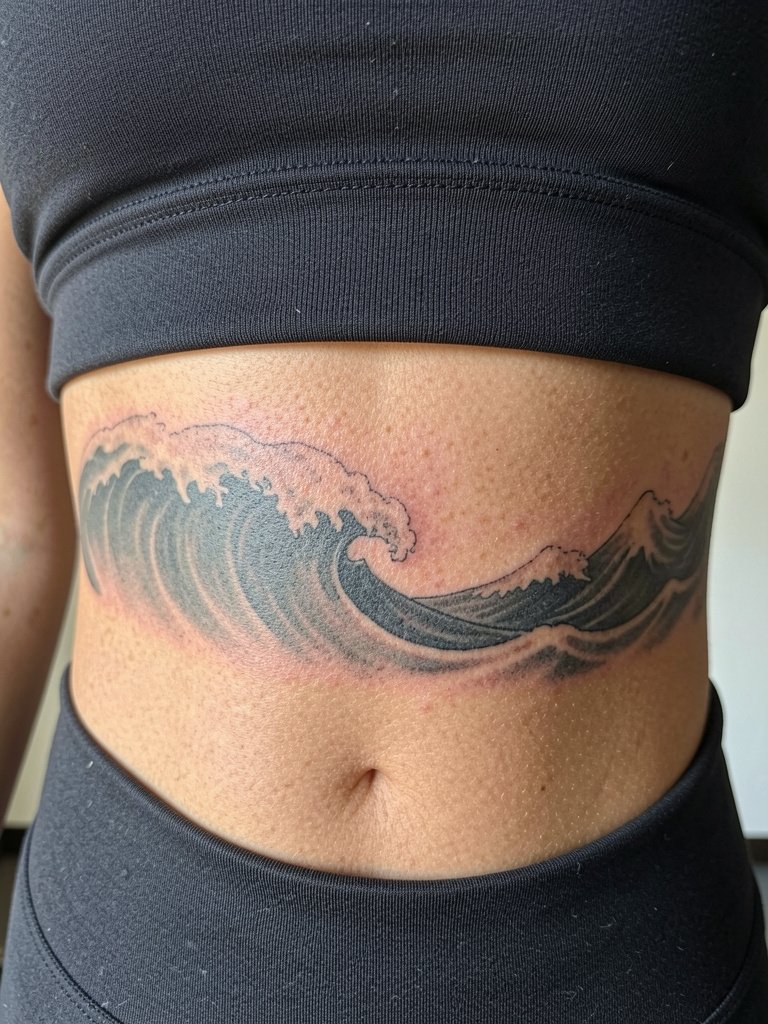
Ribcage waves read cinematic and move with breath, but there is active debate in the community about line choices here. One camp argues fine-line detail on the ribs blurs quickly because the skin stretches and the area sees a lot of motion. The other camp says that slightly bolder line weight and controlled needle depth let fine detail settle well on the ribcage. If you prefer calmer aging, request a medium line weight and layered grey wash rather than single ultrafine outlines. Expect higher pain and a multi-pass session that lasts one to two hours. For the appointment, wear a comfortably fitted sports bra so the artist has clear access.
5. Low-Saturation Watercolor Wave
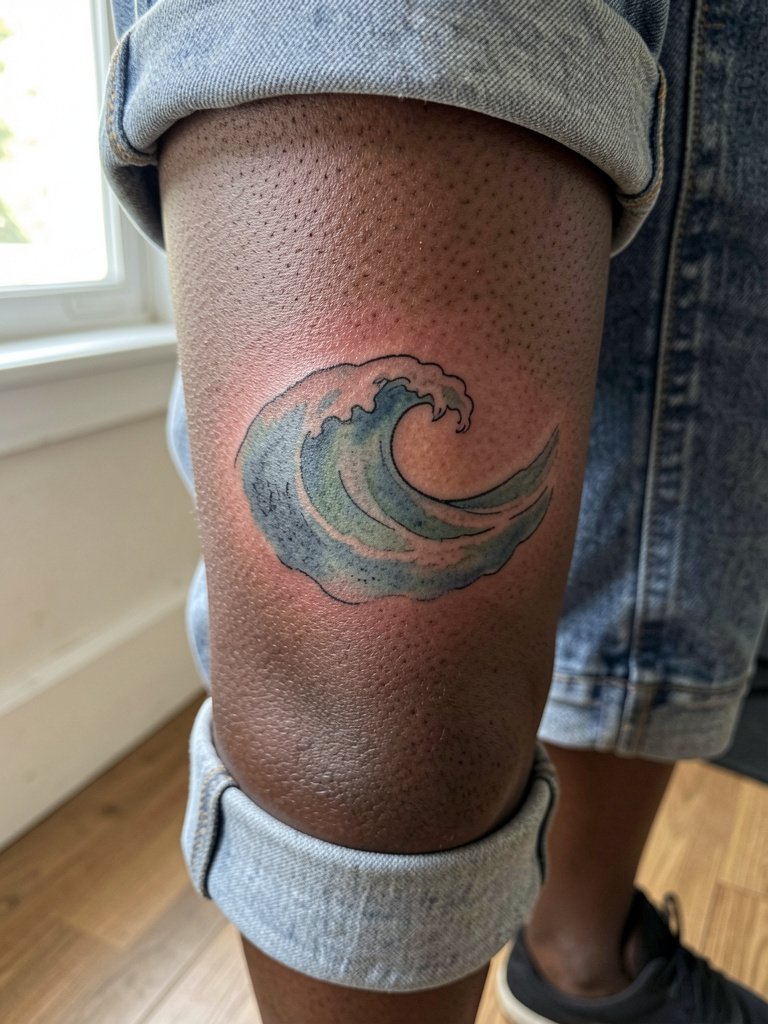
Watercolor waves feel calm because they blur edges by design, but that quality makes touch-up planning essential. Choose muted saturation and ask the artist how they handle pigment saturation for your skin tone so the washes keep soft patches of color rather than vanish. Calf sessions are moderate pain and often take 60 to 90 minutes for layered washes. A common mistake is requesting vibrant washes without accounting for how pigments fade on darker skin tones. Pair the calf piece with cropped wide-leg pants that let the color show without constant abrasion.
6. Bold Line Hawaiian-Style Crest
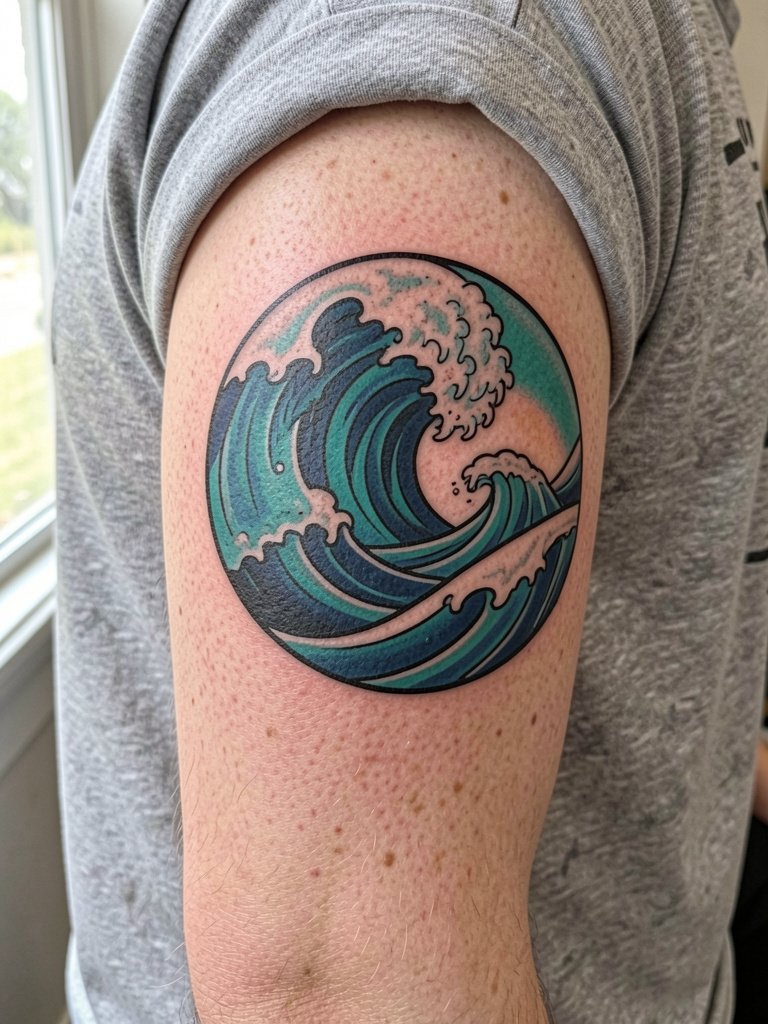
Bold blackwork waves age predictably and are a good option if you want clarity at a distance. For an outer bicep crest, request saturated fills and thick outlines so the design does not soften into indistinct shapes by year five. Expect low to moderate pain and a one to two hour session depending on color blocking. The usual mistake is shrinking a traditional crest too small. If you prefer to show it off, wear sleeve-rolled button-ups that reveal the outer arm while protecting the area daily.
Pre-Session Essentials
The wrist, ribcage, and calf pieces above each have different session needs, so a small kit smooths the chair time and the first few days.
-
Disposable stencil transfer kit. Lets you preview composition and lineweight placement on skin before committing, which is helpful for thin-wave concepts above.
-
Long-lasting topical numbing gel. Applied before the session it reduces discomfort on sensitive placements like ribs and inner bicep without affecting linework.
-
Breathable protective film roll. Useful for ankle and wrist areas that see friction in the first week.
-
Fragrance-free gentle body wash. Cleans the healing area without stripping pigment or irritating delicate linework.
-
Aquaphor healing ointment. A thin layer during the first couple of days helps prevent excessive scabbing on delicate single-needle work.
7. Crescent Collarbone Wave
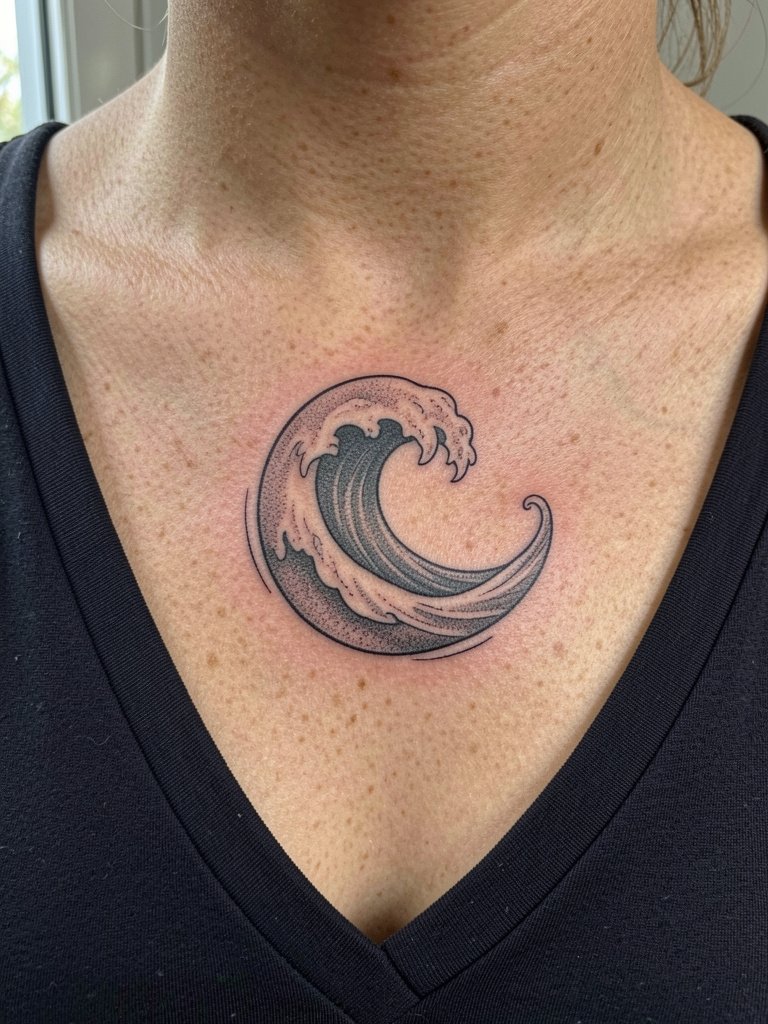
Collarbone placement shows movement with posture and layers elegantly under open necklines. This spot can be slightly painful because of thin skin. Ask your artist for slightly wider spacing in the fine-line details near the bone to avoid early softening. The piece usually takes 45 to 75 minutes and looks great at six months with crisp linework. A common oversight is forgetting how necklaces sit against the area. For outfits, try pairing with wide V-neck tops so the wave sits in the neckline window.
8. Micro-Realism Wave with Pebbles on the Ankle
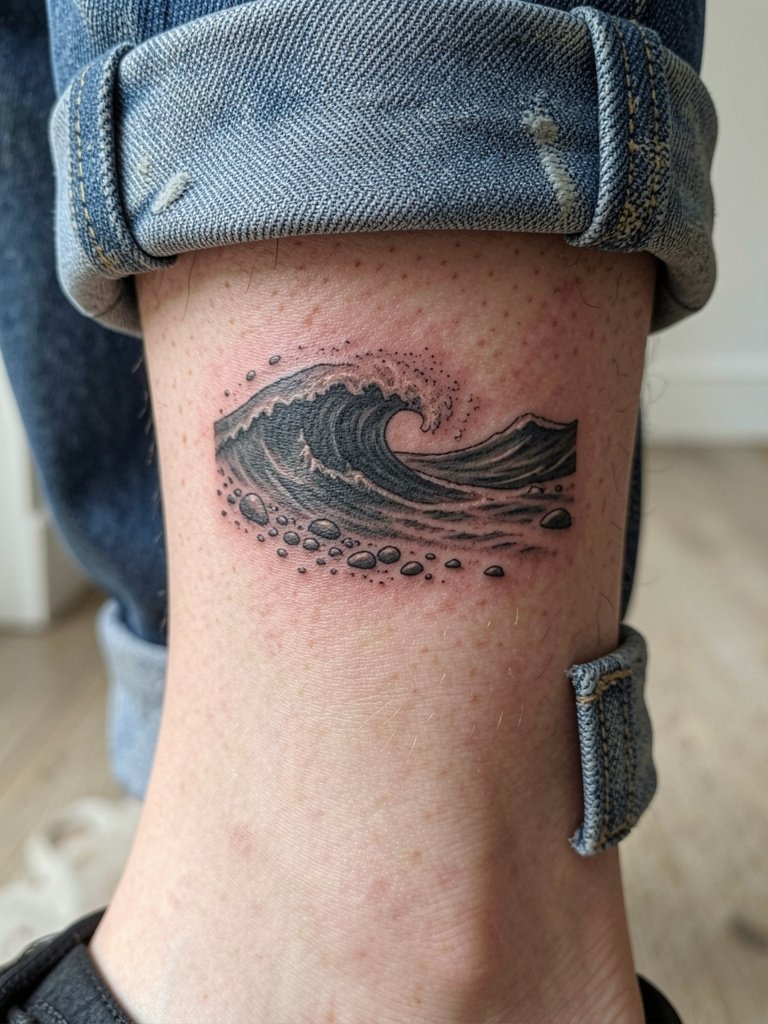
Micro-realism needs clear reference and more needle time for tiny shading. On the ankle, discuss how the artist will separate pebble dots from the water texture so the small details do not merge into a blur after movement and shoe friction. Expect moderate pain and a session of 60 to 90 minutes. The main mistake is crowding too many tiny elements into a palm-sized space. For footwear that complements the piece, use open-sided sandals that show the ankle without rubbing the design.
9. Geometric Wave Band Around Forearm
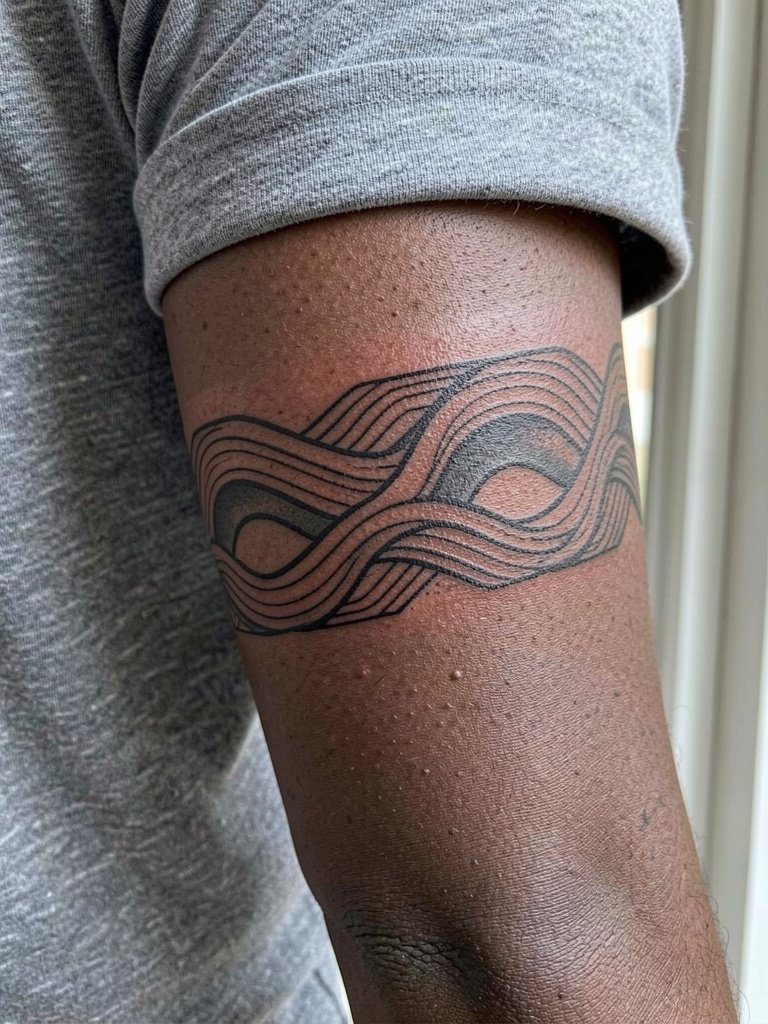
A geometric band reads calm because of repeated rhythm. Ask the artist for stenciled mockups showing how the band lines wrap around your arm at both relaxed and flexed positions so the negative space remains balanced when you move. Outer forearm sessions feel low to moderate in pain and usually last one to one and a half hours. Overly tight line spacing is a common error that invites blowout between parallel lines. Pair it with short-sleeve linen shirts to keep the band visible.
10. Subtle Blackwork Back-of-Neck Wave
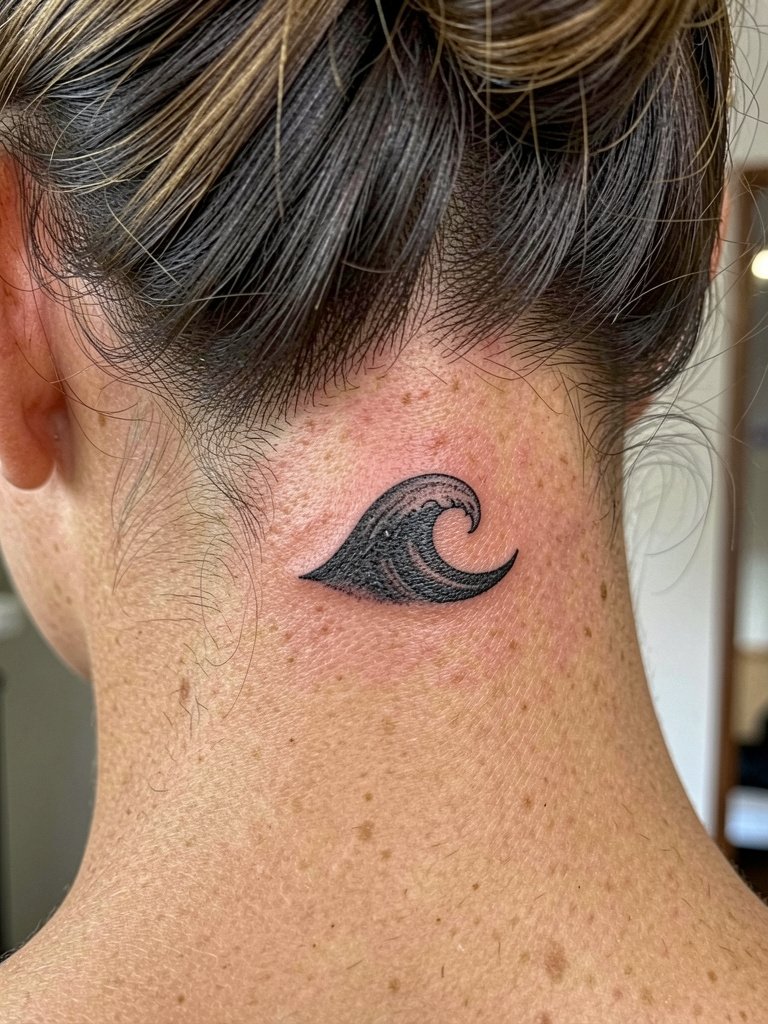
Neck placement provokes a longevity debate in the community about how aggressive to be with line density. One camp says denser, bolder blackwork is best because the neck endures movement that would blur finer work. The other camp argues that careful fine-line with wider spacing, combined with expert needle depth, can keep detail readable. If you want calm aging here, choose a compact bold silhouette rather than lace-like detail. Sessions are short but can feel sharp. For appointments wear hair up and a wide-neck top so the artist has unobstructed access.
11. Japanese-Inspired Wave Panel on the Shoulder Blade
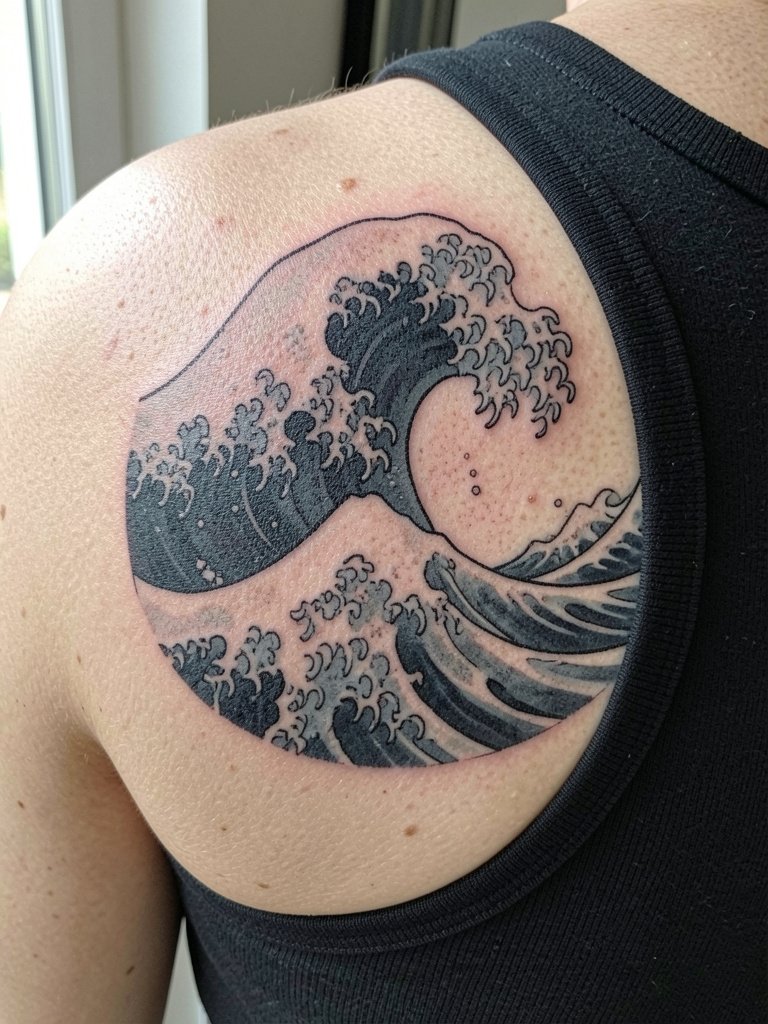
A Japanese-inspired wave panel uses bold linework and negative space to stay legible for years. If cultural origin matters to you, state that openly and ask for visual references that respect traditional composition. Shoulder blade placements are moderate pain and often take one to two sessions for panels of this size. The common misstep is shrinking traditional motifs too small. For show-off outfits, a strappy tank top balances coverage and visibility.
12. Tiny Finger Curl Wave
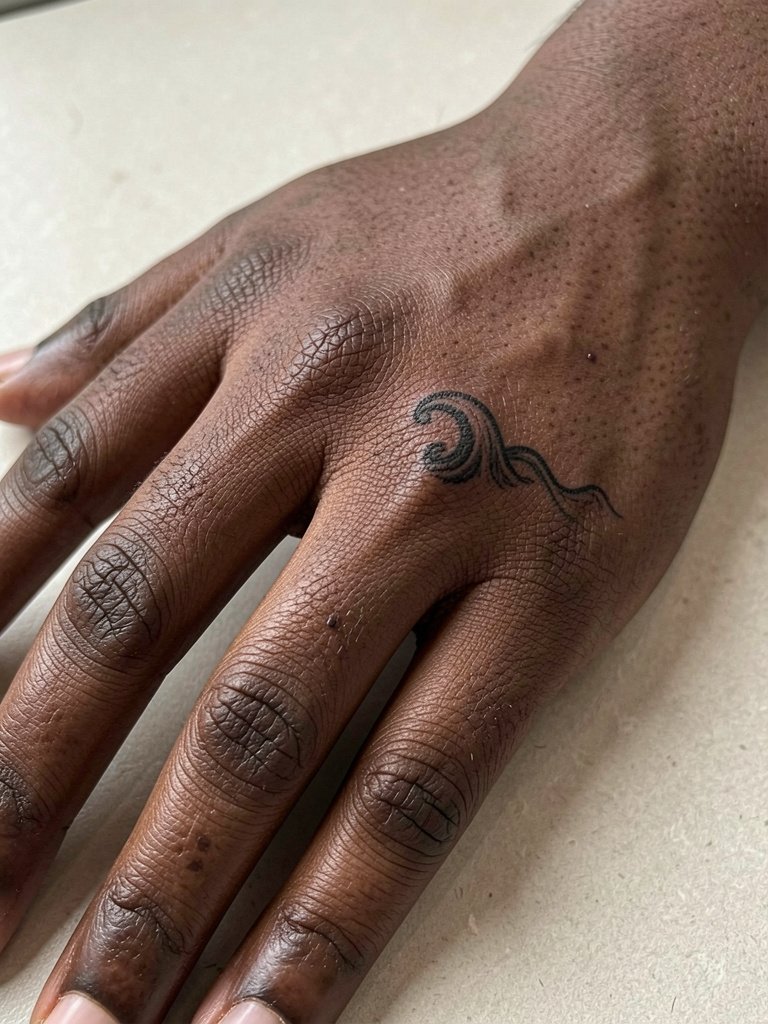
Finger tattoos age fast because of constant washing and abrasion. For a finger curl, request compact, bold blackwork and plan for touch-ups within a year. The session is brief but can sting. The frequent mistake is asking for too fine a curl that disappears under regular hand use. Keep expectations realistic and avoid intricate dot work on the finger. No styling link for this intimate micro placement.
13. Hip Wave with Soft Color Accents
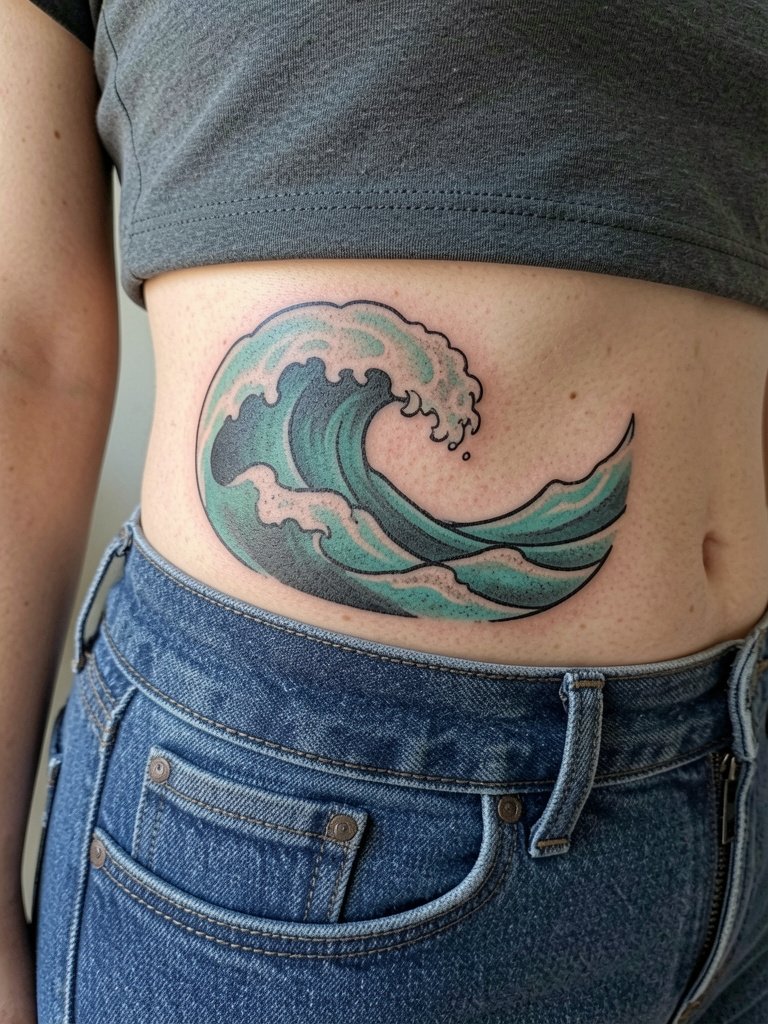
Hip pieces let the wave become part of your natural silhouette. Because the area can rub against low-rise waistbands, request the artist keep saturated pigment slightly denser at the edges to resist early fade. Sessions can be moderate and last 60 to 120 minutes for color layering. A common error is placing too close to tight waist seams. For nights out wear low-rise jeans with a cropped tee that reveal the arc without constant friction.
14. Thigh-Length Flowing Wave Sleeve
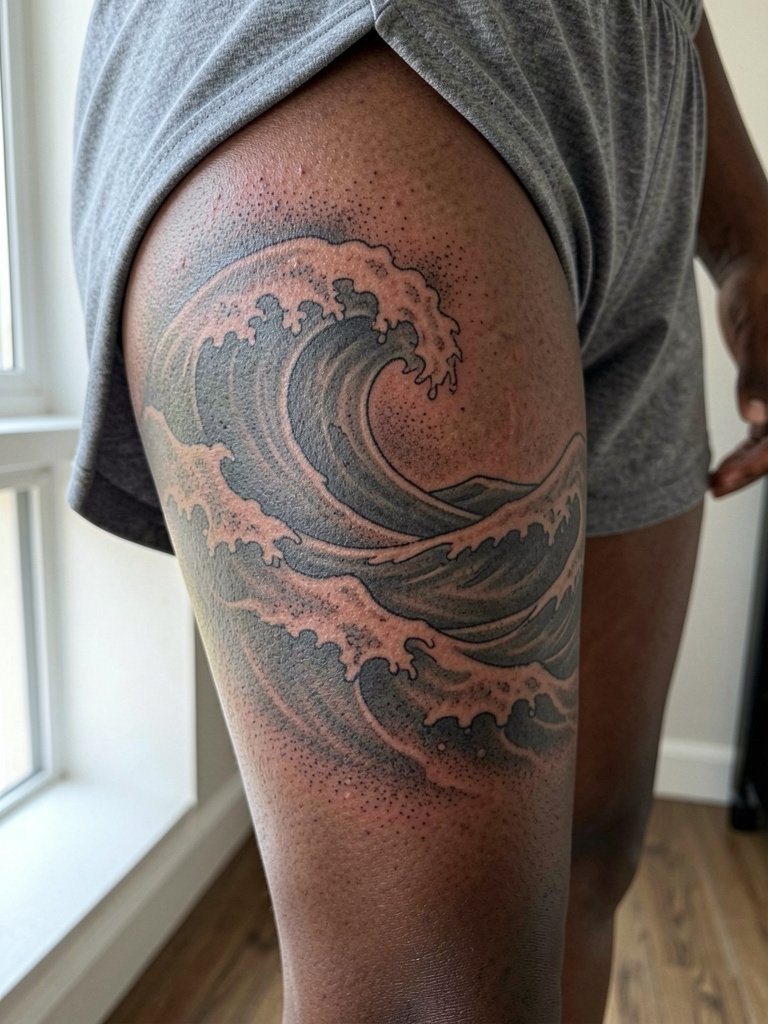
Thigh sleeves offer a larger canvas to show motion while staying private. Ask the artist to map how the wave will look when seated and standing so the flow does not collapse in either pose. Sessions are longer and may be split into two to three appointments. The main mistake is overloading small details that blur across a curved surface. For daytime wear, try pairing with mid-thigh shorts to let the sleeve peek out while avoiding constant abrasion.
15. Submerged Crest Behind the Ear
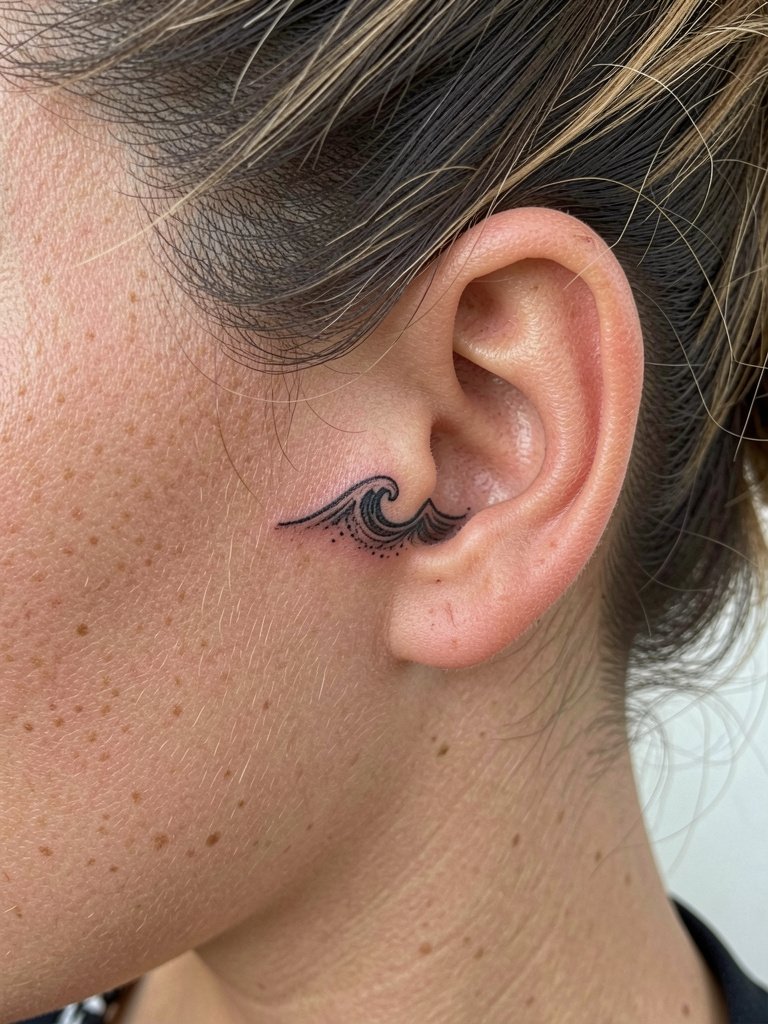
Behind-the-ear placements require precision and a light touch because the area is small and close to hairlines. Request exact placement marks during the stencil stage so the crest sits where your hairline frames it. Sessions are quick but can be uncomfortable. Overworking the area increases the chance of scab and pigment loss. For visibility, wear hair up or choose short styles, and consider styling with small hoop earrings that do not rub the tattoo.
Frequently Asked Questions
Q: How do ocean wave tattoos hold up on different skin tones?
A: Pigment behaves differently across skin tones, so talk about saturation and contrast in specific terms. For darker tones, slightly denser black outlines and careful color choice keep shapes readable. For lighter tones, softer grey washes are easier to maintain without looking heavy.
Q: Where can I find healed examples and discovery pathways without naming individual artists?
A: Search tags and keyword phrases on social platforms like Instagram and TikTok using focused terms such as #oceanwaveink, #wavehealedshot, and #minimalwave, and use location filters to find portfolios near you. Reddit threads and portfolio aggregators also surface healed images in varied skin tones.
Q: Is fine-line wave work a bad idea for high-motion areas like ribs and wrists?
A: There is a clear split in opinion. One group says fine-line details on high-motion skin blur within a couple of years, especially on ribs and wrists. The other group argues that controlled needle depth and slightly wider spacing let fine-line pieces settle well even in those spots. My recommendation is to err toward slightly bolder line weight and plan a realistic touch-up timeline.
Q: What should I wear to a session for placements like ribs, thigh, and shoulder blade?
A: For ribs wear a fitted sports bra that gives the artist access without shifting. For thigh sessions choose modest athletic shorts so the area is exposed but covered when you travel home. For shoulder blade wear a tank top with a normal fit. A useful item is a fitted sports bra that stays in place during longer sessions.
Q: How often will I need touch-ups for small wave tattoos like fingers and ankles?
A: Expect finger tattoos to need refreshes within a year or so depending on lifestyle. Ankle pieces usually need a touch-up by year two to three if they see a lot of abrasion. Plan touch-ups as part of the long-term care rather than a failure.
Q: Are there special professional considerations for chest and sternum wave tattoos?
A: Sternum and underbust skin needs careful planning because the area moves with breathing and pressure from clothing. Seek an artist experienced in torso pieces and request mockups at different body positions. If the design references cultural art, ask for a respectful design brief that honors origin.
Q: Can I get a fast session and make the wave look crisp without breaking the bank?
A: Speed is possible for small silhouettes but not without trade-offs. Fast sessions on small areas can be crisp when the design is bold and simple. If you want detailed shading or multiple colors, budget time for a longer appointment so the artist can layer saturation properly without compressing the linework.