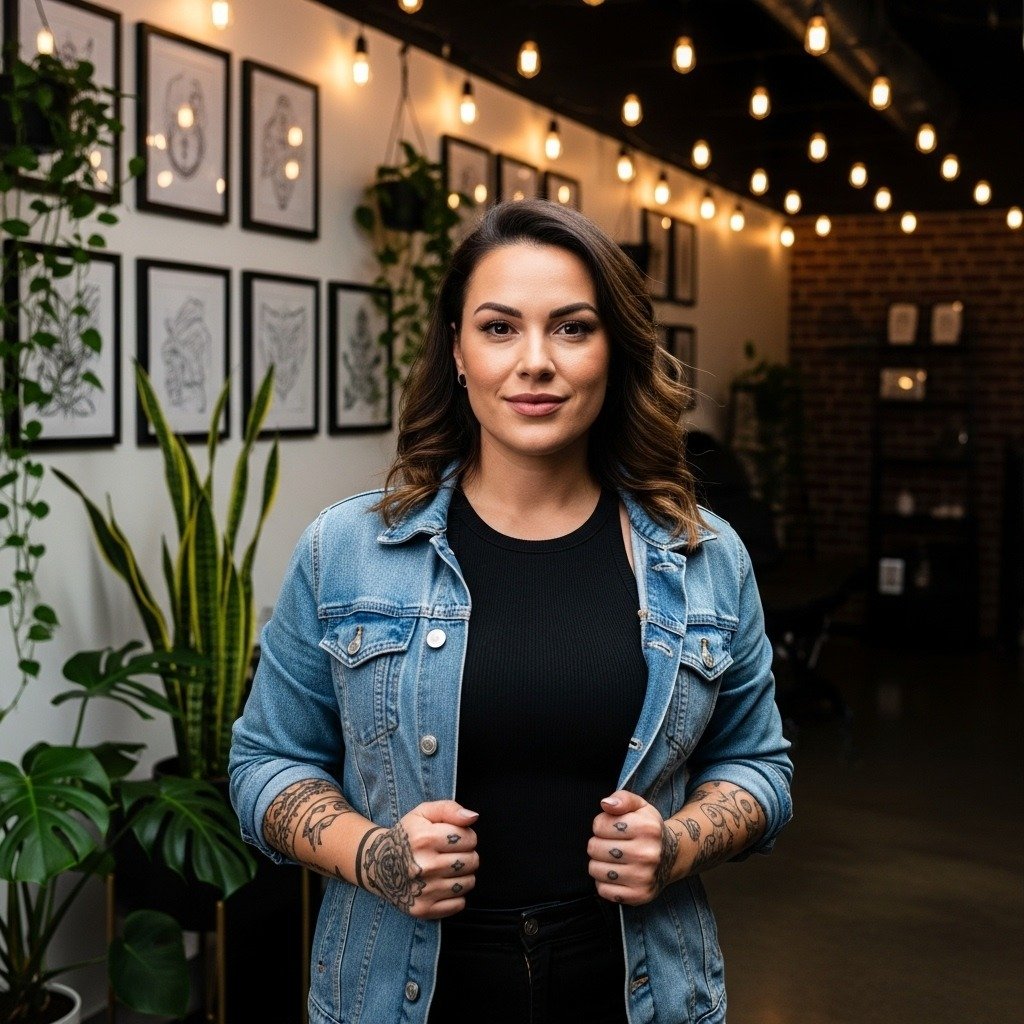
Ocean wave tattoos often read calmer when the artist favors shape and spacing over fussy detail. Small, bold crests will still read clearly after years of sun and movement, while ultra-thin watercolor washes tend to blur into a soft gray patch. If you want a peaceful, long-lasting ocean vibe, prioritize clear silhouettes, intentional negative space, and placement that avoids constant friction.
1. Fine-Line Single Wave on the Inner Forearm
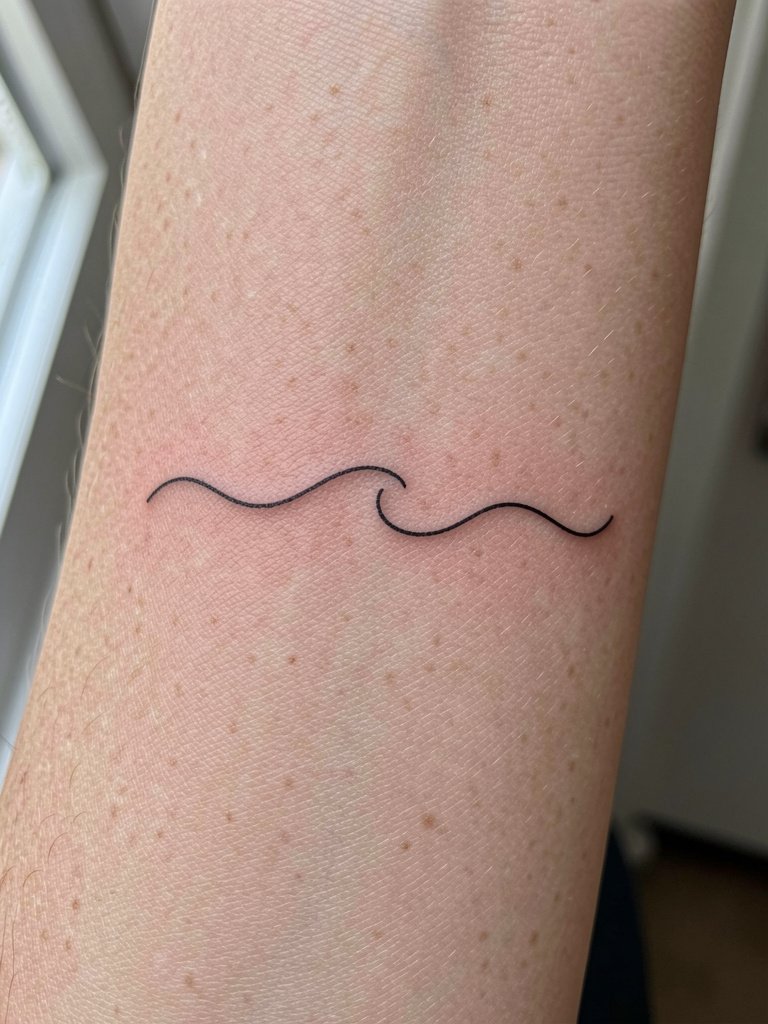
This tiny inner-forearm wave is for people who want a subtle ocean nod that still reads when raised. I recommend a slightly heavier line weight than the Pinterest single-needle reference so the crest does not blur into a gray smear by year three. Expect light soreness during the session and about forty-five to sixty minutes of work. Common mistakes include asking for a three-point line curve that is too thin for forearm texture, which causes early loss of definition. For showing it off, roll the sleeve of a lightweight linen shirt and wear a slim tank top so the wrist and inner forearm sit visible without tugging at fabric.
2. Small Crest Behind the Ear, Minimal Ink
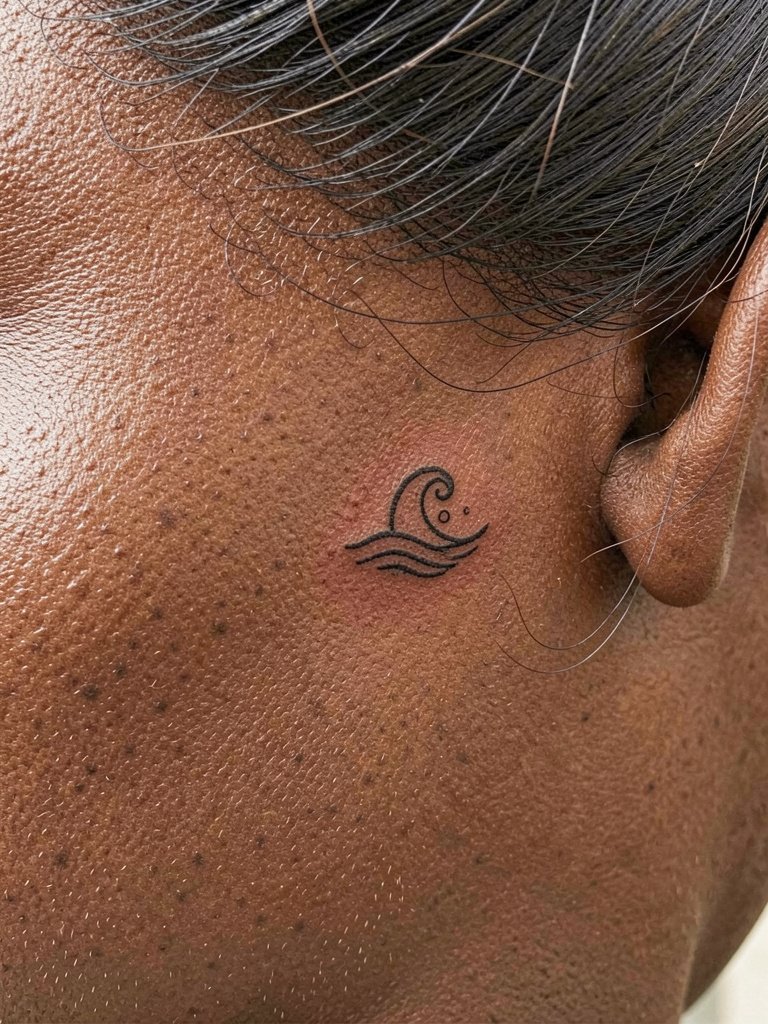
Tiny behind-the-ear waves are discreet and age well if you keep them simple. The mastoid skin can be finicky, so the session is short but requires a steady hand to avoid uneven linework. People often request overly ornate detail here and then find the area loses crispness after healing. Plan for a ten to twenty-minute session plus touch-up at eight to twelve months for perfect edge restoration. Because the spot is small and behind hair, pick hairstyles that reveal the area for moments you want the tattoo visible. For appointments, wear a jumper or button-back top so you can avoid pulling garments over your head.
3. Japanese Wave Panel on the Upper Back
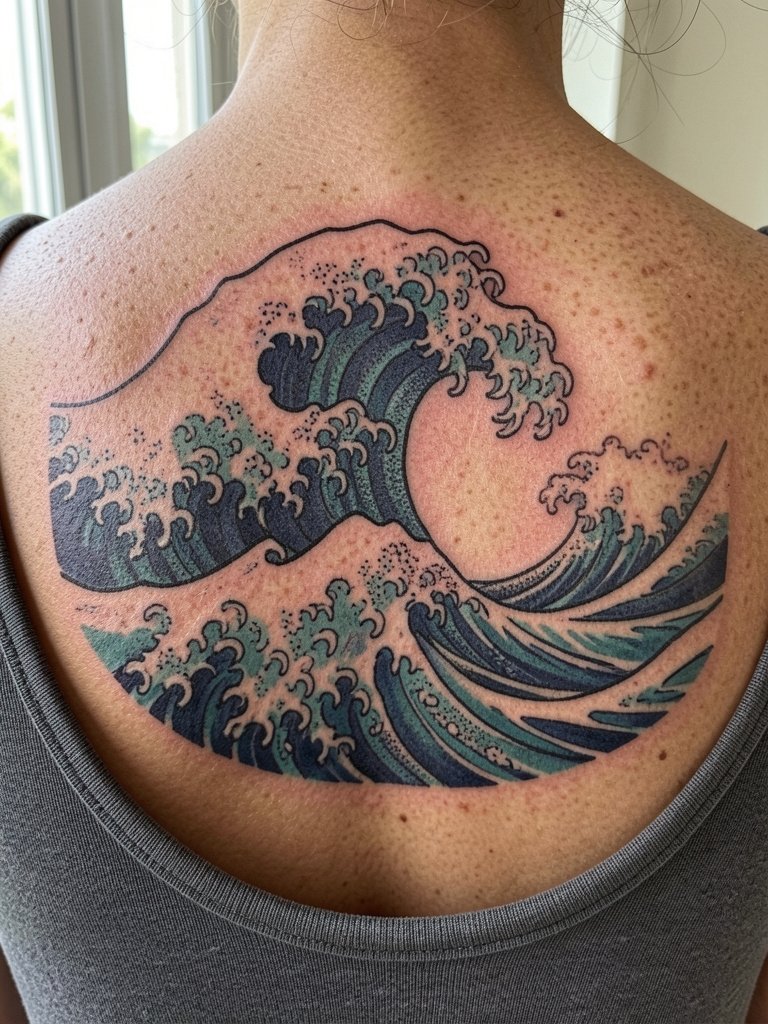
A Japanese-style wave panel gives a calm, graphic motion that holds up because of bold linework and saturated fills. This placement tolerates heavier saturation, so the piece keeps contrast after years of sun. Expect two to four hours depending on size, and plan for a touch-up at one year if you sit in strong sun often. A frequent error is requesting delicate stippling in areas that move a lot, which creates blurred texture later. If you want to show this off in summer, a wide-neck top or boat-neck dress frames the upper back well. Try pairing it with an open-back midi dress for evenings out.
4. Watercolor Wave Wrist Band
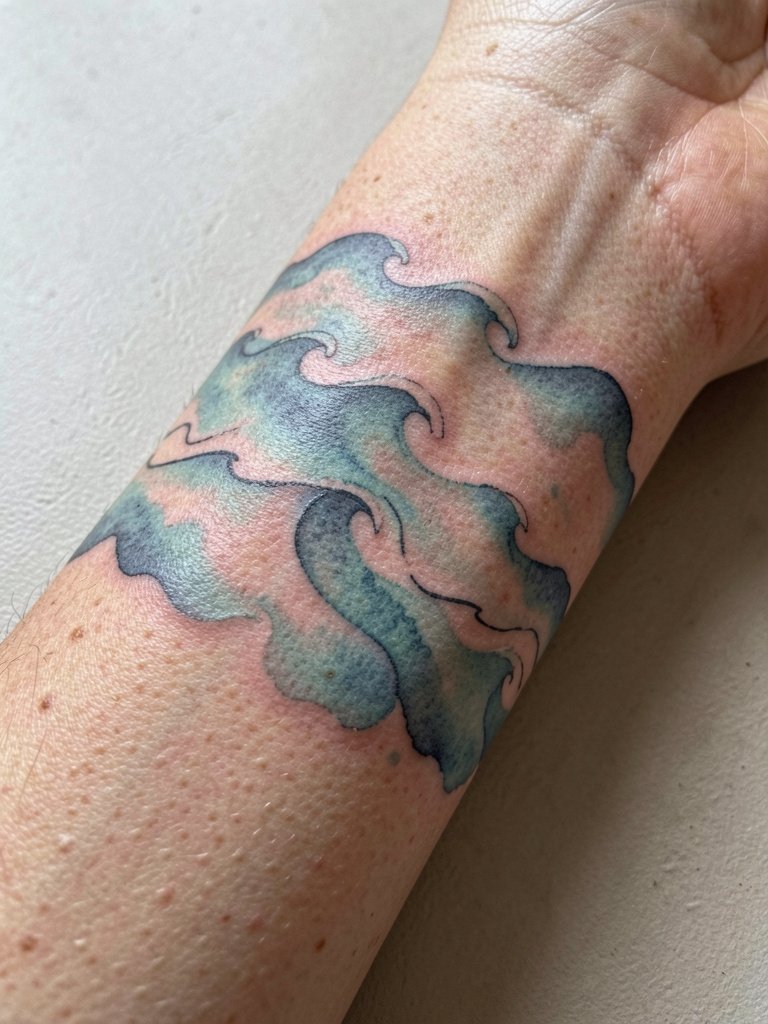
Watercolor bands read dreamy at first but require careful expectation setting. The outer wrist gets the most sun exposure and friction, so pigments will soften faster than in shaded areas. If you want the watercolor look to last, ask for a subtle black outline to anchor key shapes and slightly denser color where the wave tips are. Sessions are usually one to two hours. A common mistake is asking for saturated watercolor with single-needle outlines, which washes out unevenly. For showing and safeguarding the wrist, simple accessories like a slim rope bracelet let the tattoo breathe while framing the band.
5. Circular Wave Mandala on the Sternum
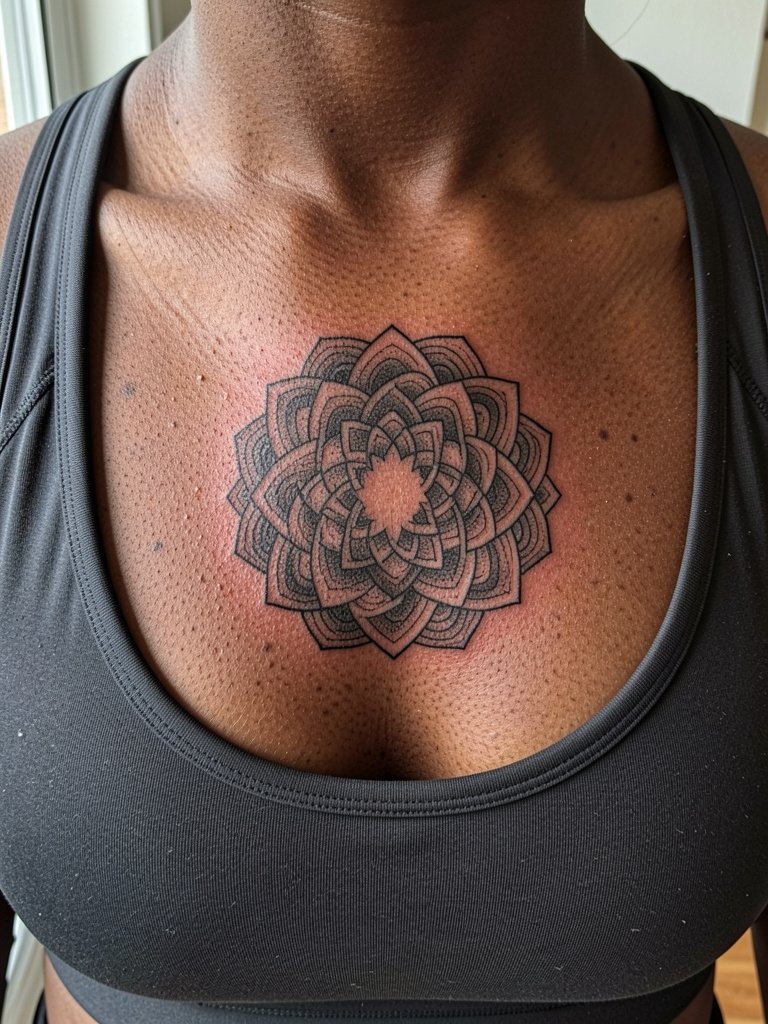
Sternum pieces need careful spacing because the skin there moves with breathing. The mandala style benefits from slightly wider negative space between wave arcs so the pattern stays readable as the area settles. Sessions often run two to three hours and can feel intense for some people. A mistake I see is compressing a complex mandala into too small a footprint. For the appointment, wear a fitted sports bra or bandeau that the artist can easily lift without shifting. Note that sternum work is a specialized area, so expect an artist experienced with chest pieces.
6. Tiny Ankle Crest with Negative Space
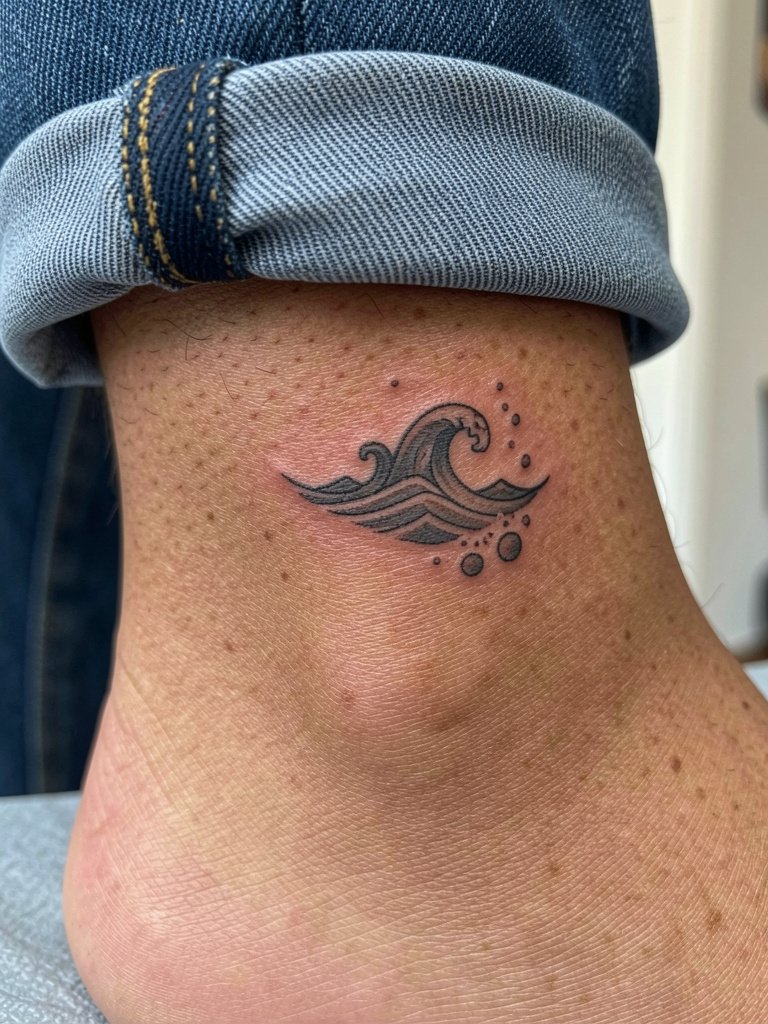
Ankle crests are low-commitment and show off well when paired with cropped pants or sandals. Expect the site to experience friction from socks and shoes, so plan slightly bolder contours than you think you need. Sessions are usually 20 to 40 minutes. A common pitfall is choosing ultra-fine detail that becomes indistinct after a few months. For footwear pairings, try low-top sneakers or ankle-strapped sandals that keep the ankle visible without rubbing the fresh tattoo. Wear shoes that are easy to take on and off for the first 48 hours.
Pre-Session Essentials
The inner forearm and ankle pieces above heal differently from larger panels, so a few small things smooth the session and the first week.
-
Low-lint stencil transfer paper kit. Lets you preview crisp line placement on skin before committing, especially useful for the fine-line inner-forearm and behind-the-ear ideas above.
-
Topical numbing cream 5% lidocaine. Applied per instructions ahead of the appointment can ease tense shoulders during upper-back or sternum sessions without affecting the artist's ability to see lines.
-
Thin breathable protective film roll. Keeps small areas like ankle and wrist clean through the first day of friction from socks and bracelets.
-
Fragrance-free gentle body wash. A mild cleanser that rinses ink residue without irritating delicate new linework.
-
Aquaphor healing ointment. A well-known option for the first 48 hours to lock moisture into fine-line work during the initial healing window.
7. Crescent Wave on the Outer Thigh
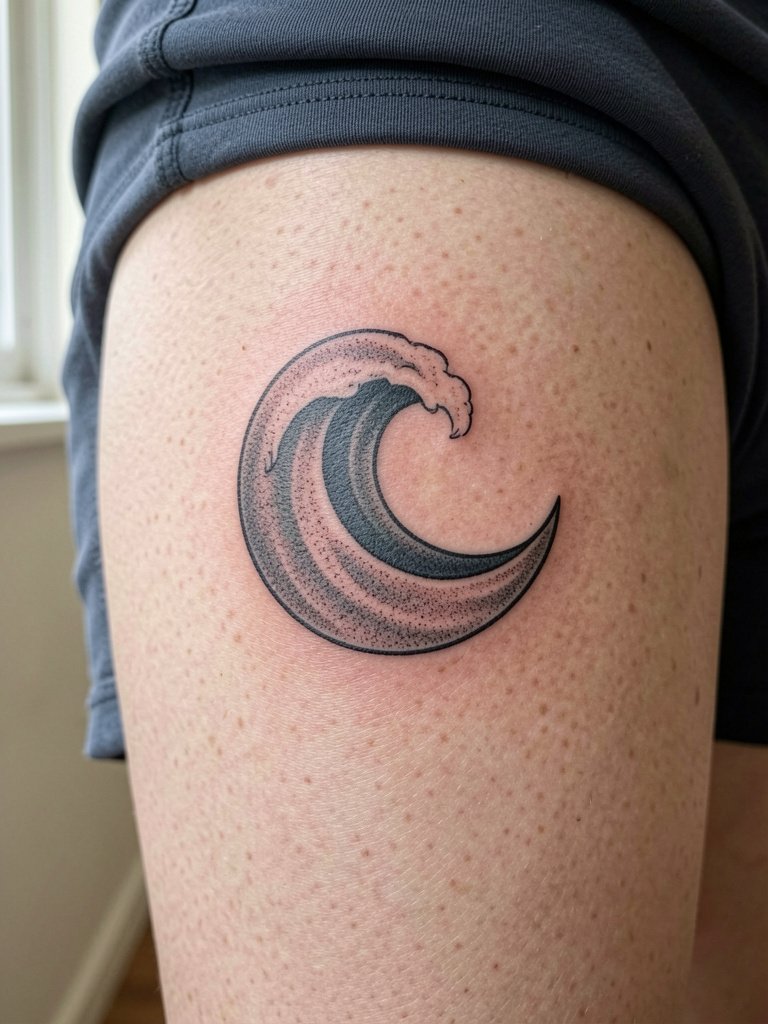
Outer-thigh waves have room to breathe, so you can choose more elaborate stipple shading while keeping crisp edges. The session length often falls between one and two hours depending on detail. I advise requesting slightly heavier dot work in shadow areas so the texture survives friction from jeans. A mistake is compressing a larger wave into a tiny footprint on the thigh, which wastes the placement advantage. For daytime wear, paired skirts or high-cut shorts make this look deliberate. Try a lightweight drawstring linen pant for travel days when you want access without pulling at seams.
8. Geometric Wave Band Around the Calf
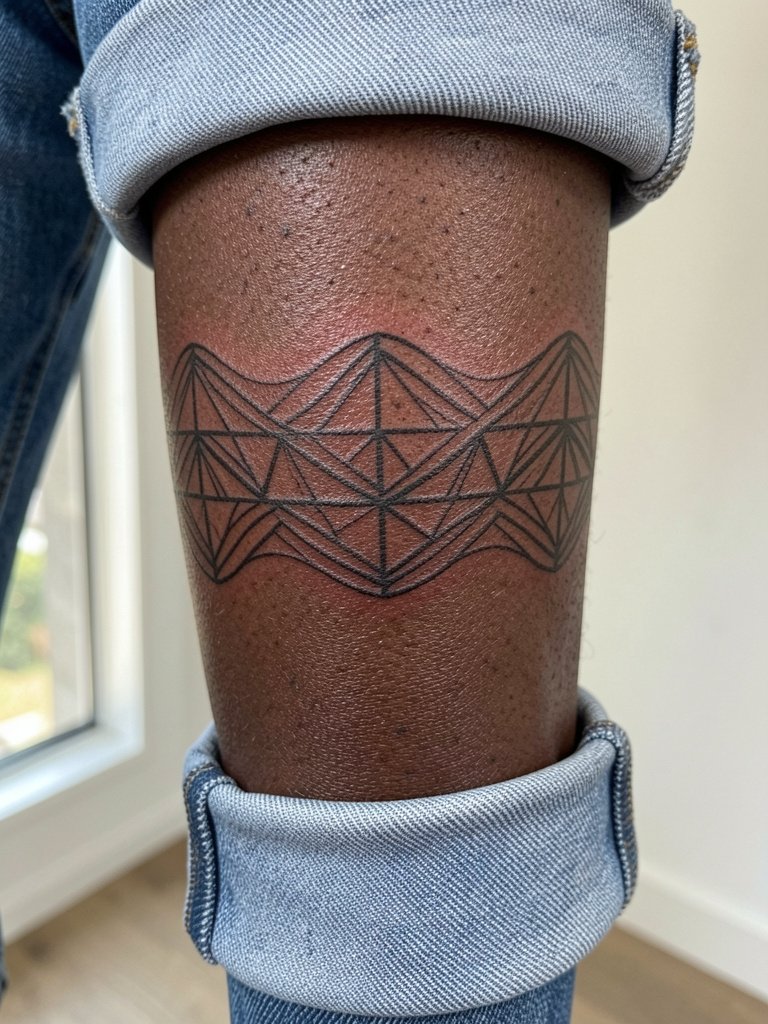
A calf band reads sculptural because the muscle gives the waves a subtle curve. The site tolerates denser black work and resolves blowout risk better than thin-dermis areas. Sessions vary by circumference but often run one to two hours. A common error is picking thin parallel lines too close together, which can bleed into each other later. For active people, expect slightly longer healing from friction in sports clothing. Showing this off with cropped trousers or mid-calf boots keeps it visible while giving you options for coverage when needed.
9. Minimal Dotwork Wave on the Collarbone
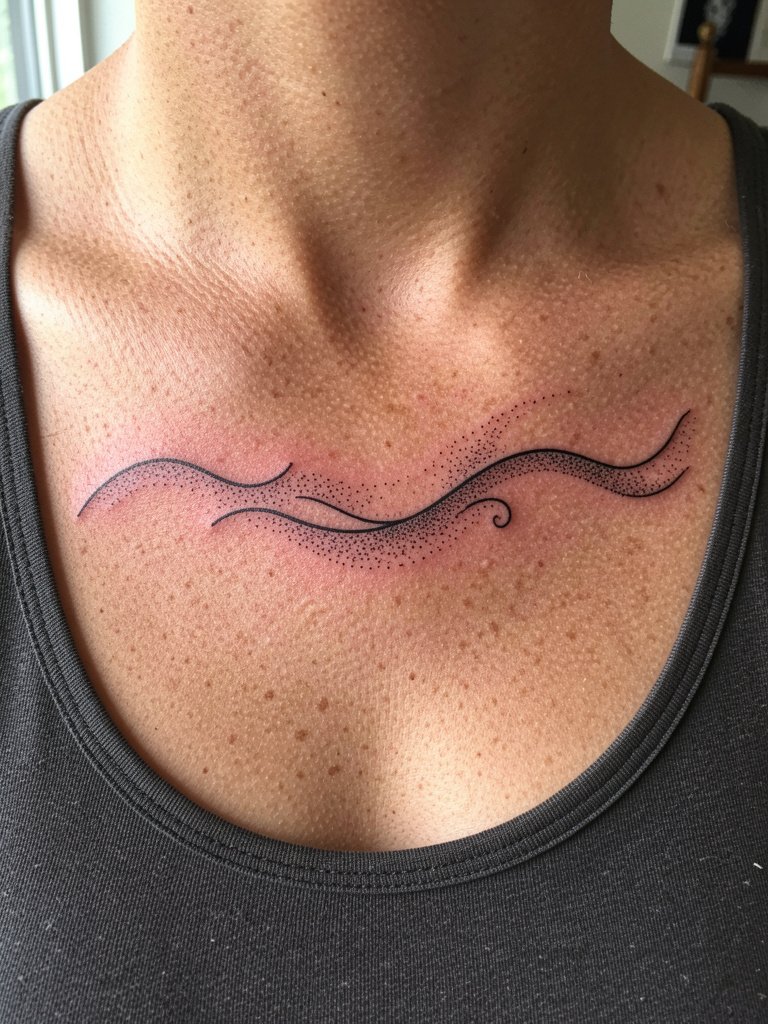
Collarbone placements show cleanly but are sensitive during the session. Dotwork placed just below the bone looks delicate while keeping contrast. Expect a one-hour session and localized soreness during and after. Artists are split on whether ultra-fine dotwork on collarbone keeps clarity long term. One group says the thin skin and bone contours cause rapid softening and recommend bolder dots to maintain shape. The other group argues that meticulous depth and spacing preserve the stipple for years and will point to healed portfolios that back up the approach. For outfits, open-neck tops or slim chain necklaces highlight the curve. Try a delicate chain necklace that sits above the tattoo.
10. Wave and Moon Micro-Realism on the Wrist
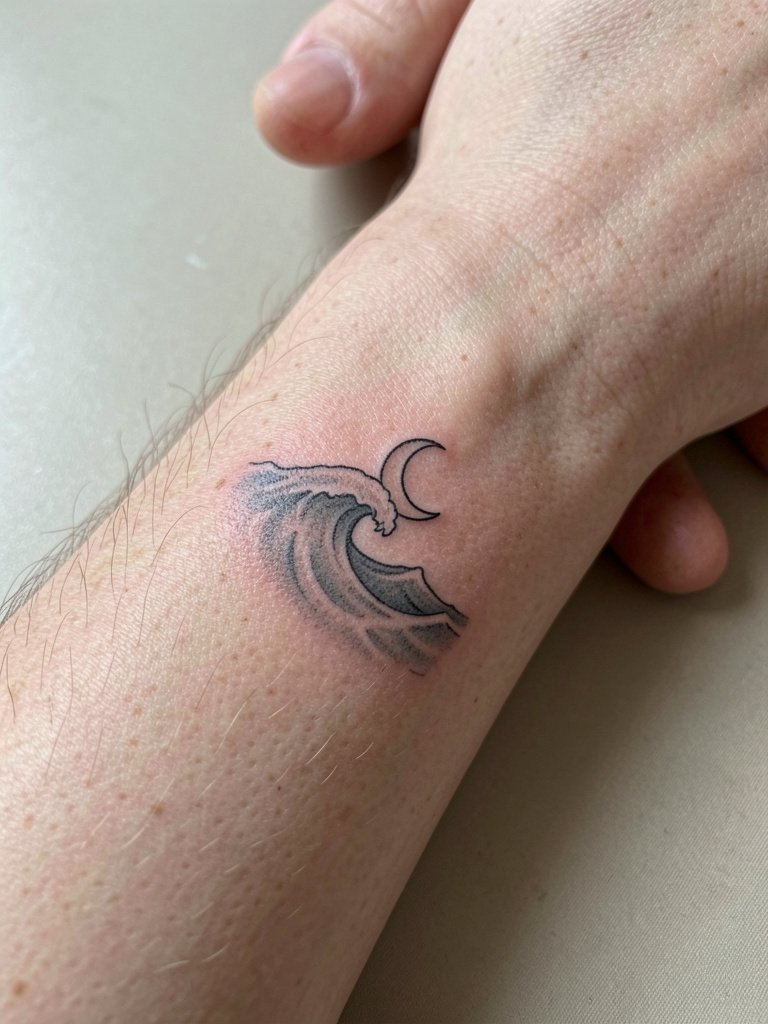
Wrist micro-realism reads intimate and symbolic but needs contrast. The wrist oscillates between sun and shade, so denser shadowing under key shapes keeps the composition legible after a year. Session time is typically thirty to sixty minutes. A frequent mistake is packing too many tiny elements into a two-inch area, which confuses the eye as the skin moves. For easy reveal, wear a cuffed short-sleeve or a slim leather wrap bracelet that complements the moon while leaving the tattoo visible.
11. Blackwork Crest Sleeve Accent
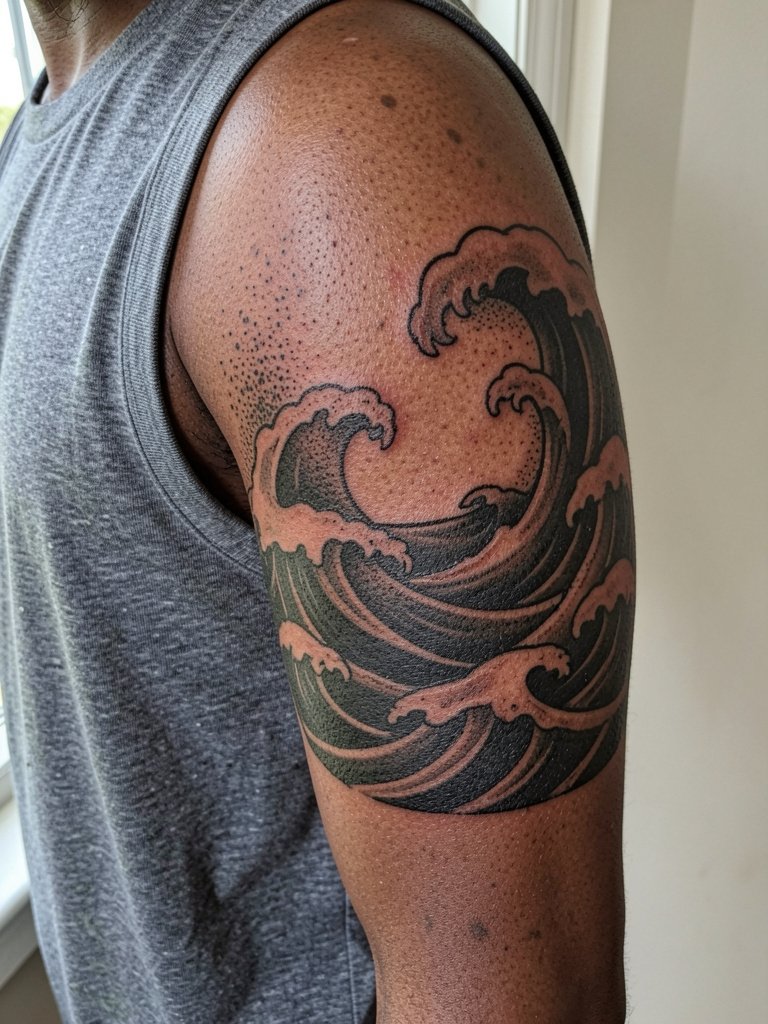
Blackwork gives a peaceful, graphic rhythm that reads from a distance and settles cleanly over years because of high saturation. This is a heavier session, expect two to four hours for a substantial accent and longer if it ties into a full sleeve. A typical mistake is mixing extreme micro-detail with large black fields, which can create uneven visual weight. For wardrobe, sleeveless tees and button shirts left open show the arm without constraining movement. Try a breathable sleeveless tee for summer.
12. Finger Wave Ring, Single-Line Accent
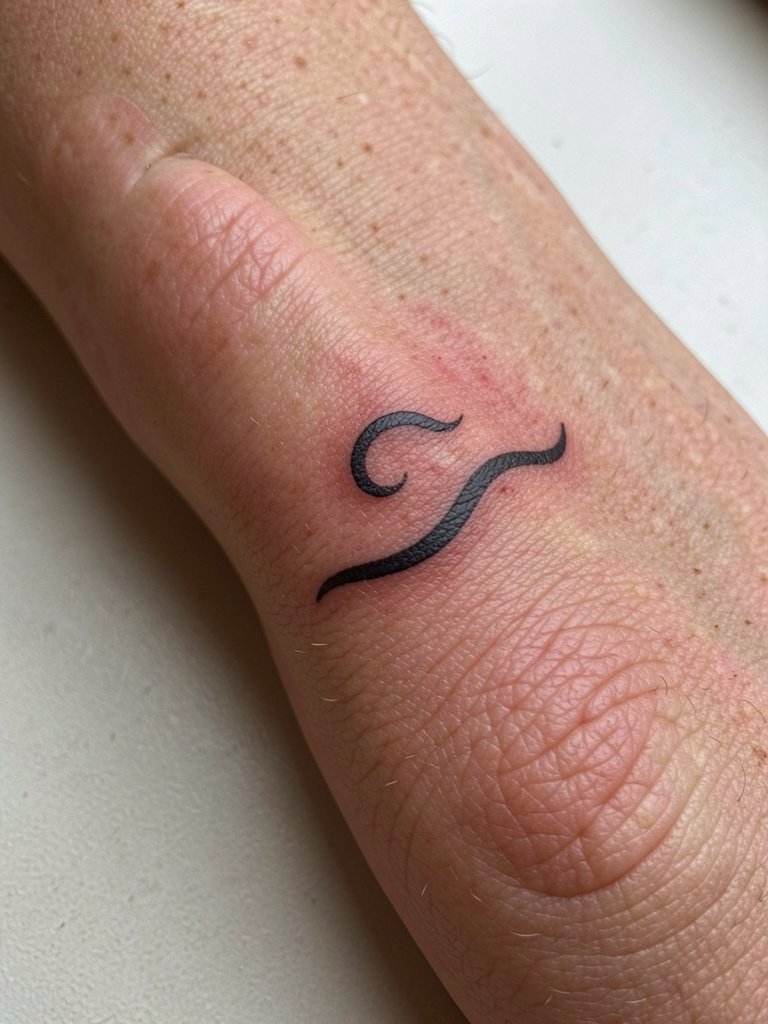
Finger tattoos are high-maintenance because hands are exposed to constant washing and rubbing. This ring-style wave looks delicate early on but often needs touch-ups around the one-year mark. The session is short but can be uncomfortable on the bone. A common misstep is selecting hairline detail that cannot survive frequent friction. For styling, thin stackable rings can complement the piece while giving you options to cover or accent it. Try a set of thin stacking rings that sit above the tattoo without rubbing the skin too much.
13. Bold Crest on the Shoulder Cap
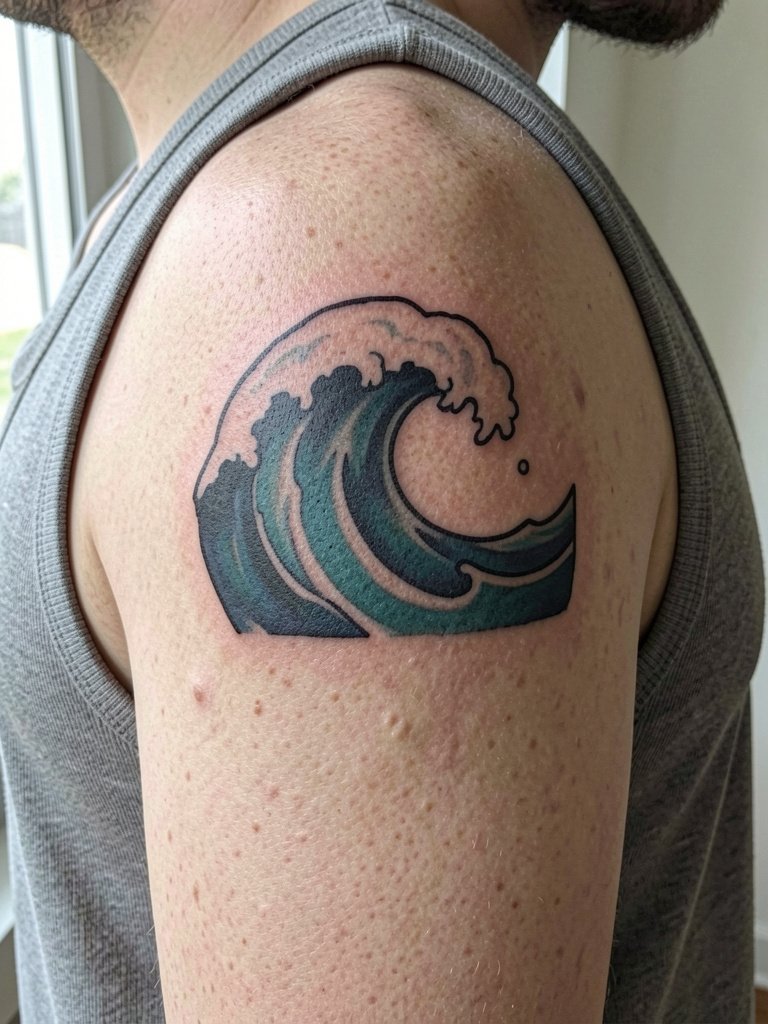
The shoulder cap handles saturated shapes well so bold crests keep their silhouette over time. Sessions are comfortable for most people and run one to two hours for a medium piece. The main mistake is shrinking the design too much so shoulder curvature collapses the composition. For summer weekends, sleeveless linen shirts show the shoulder while keeping the look casual. A lightweight linen tank works well to display the crest without trapping heat.
14. Ribcage Wave Panel, Statement Piece
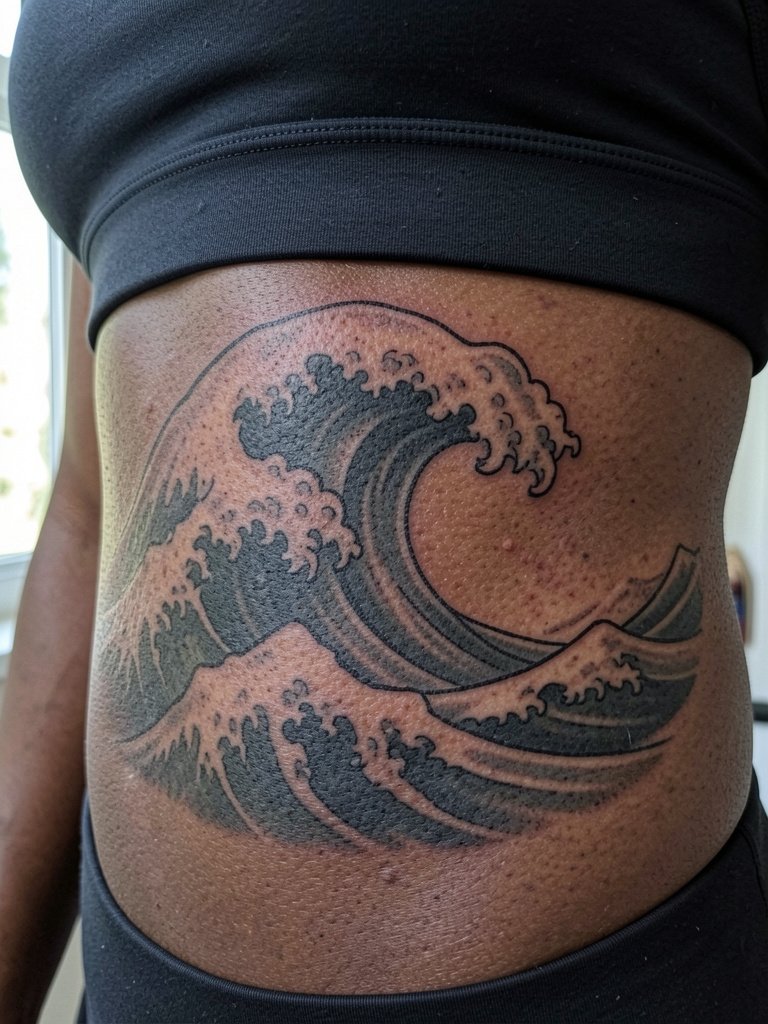
Ribcage pieces are dramatic but can be controversial for fine-line durability. Artists split into two camps about fine-line ribs. One camp says the stretch and constant motion of the torso blur thin lines within two years, especially under the breast crease. The other camp argues that with slightly wider spacing and careful needle depth the lines settle cleanly and will point to three-year healed images as evidence. This design needs a solid session plan and likely multiple hours in the chair. For the appointment, choose loose-fitting clothing that gives easy access without pulling on the area.
15. Ocean Horizon Mini on the Lower Back
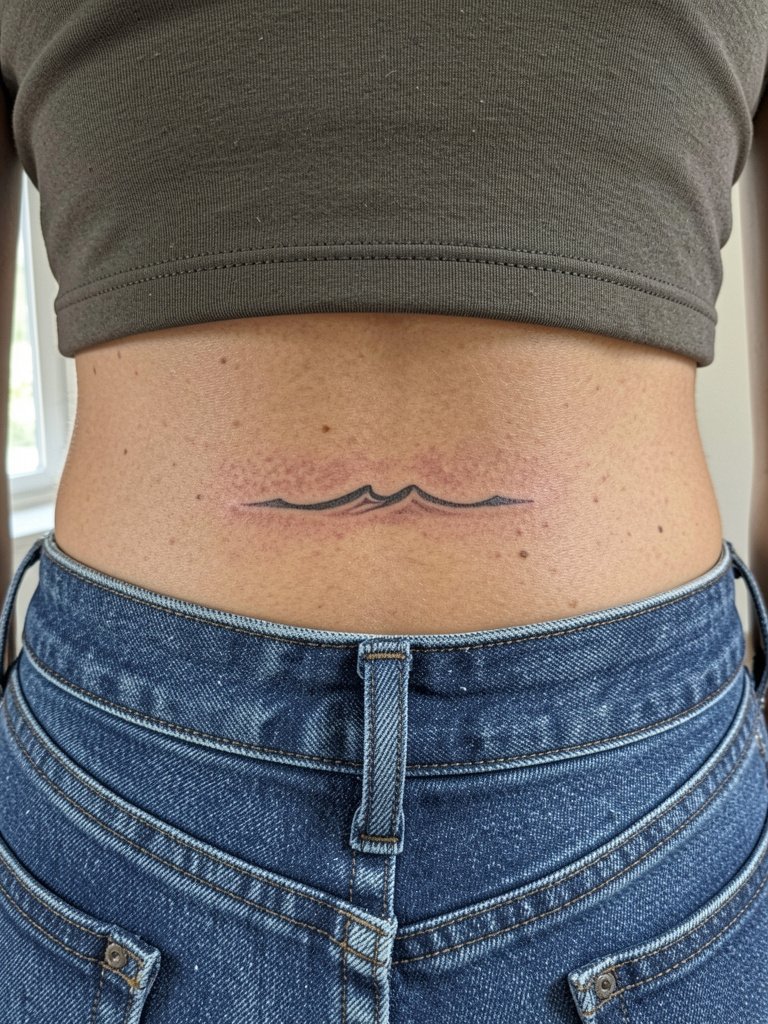
Lower-back mini horizons read balanced and quiet because the skin there is relatively stable. Expect modest soreness when bending forward for a few days. The common error is placing the line too high under tight waistbands which causes irritation; place the design at least an inch above where the waistband normally sits. Sessions are quick, often under an hour. For showing this area off when you want to, low-rise jeans and cropped tops work together without tugging at the tattoo during healing. Choose clothing with a smooth seam that sits below the piece.
Frequently Asked Questions
Q: How do ocean wave tattoos hold up on different skin tones?
A: The same design will read differently depending on contrast and saturation. On darker skin tones, bolder silhouettes and denser black anchors keep the motif readable. On lighter skin tones, finer stipple and subtle washes can show up clearly. Ask for healed photos on a range of tones when assessing how the artist translates value into your skin.
Q: What should I wear to my ribcage or sternum session for comfort and access?
A: Wear a fitted sports bra or a fitted cropped top that the artist can lift without you pulling garments overhead. Loose pants with a low-rise waistband make rib and lower-back access easy. Choose clothing that zips or buttons rather than having to be pulled off to avoid rubbing the fresh area.
Q: Where can I find healed examples and discovery pathways without naming specific artists?
A: Search platform tags like #OceanWaveTattoo, #WaveTattooHealed, and #MinimalWaveInk on Instagram and TikTok. Use location filters to find nearby portfolios and browse subreddit threads and tattoo portfolio sites for framed healed shots in different skin tones. That combination helps you compare placement and aging across real examples.
Q: How soon might I need a touch-up for a fine-line wrist or finger wave?
A: Expect a touch-up window around eight to eighteen months for high-wear sites like fingers and wrists. The precise timing depends on sun exposure, daily friction, and how your skin healed. Many people plan one touch-up within the first year to refresh edges.
Q: Are there design choices that reduce blowout risk for small wave tattoos?
A: Yes. Ask for slightly heavier line weight and spacing between parallel lines in small pieces. Negative space helps define shapes so you do not rely on ultra-fine detail. For placements over thin skin, anchoring areas with small solid fills prevents early softening.