The tiny fine-line wave everyone saves on Pinterest is often the first thing that softens and blurs. For forearm ocean tattoos, the difference between a crisp piece at year three and a washed-out smudge is usually line weight and placement more than style. Read on for 21 forearm ocean ideas that plan for how the skin moves, how outfits show the ink, and what to bring to the chair so the design actually lives the way you expect.
1. Minimalist Single-Line Wave on Inner Forearm
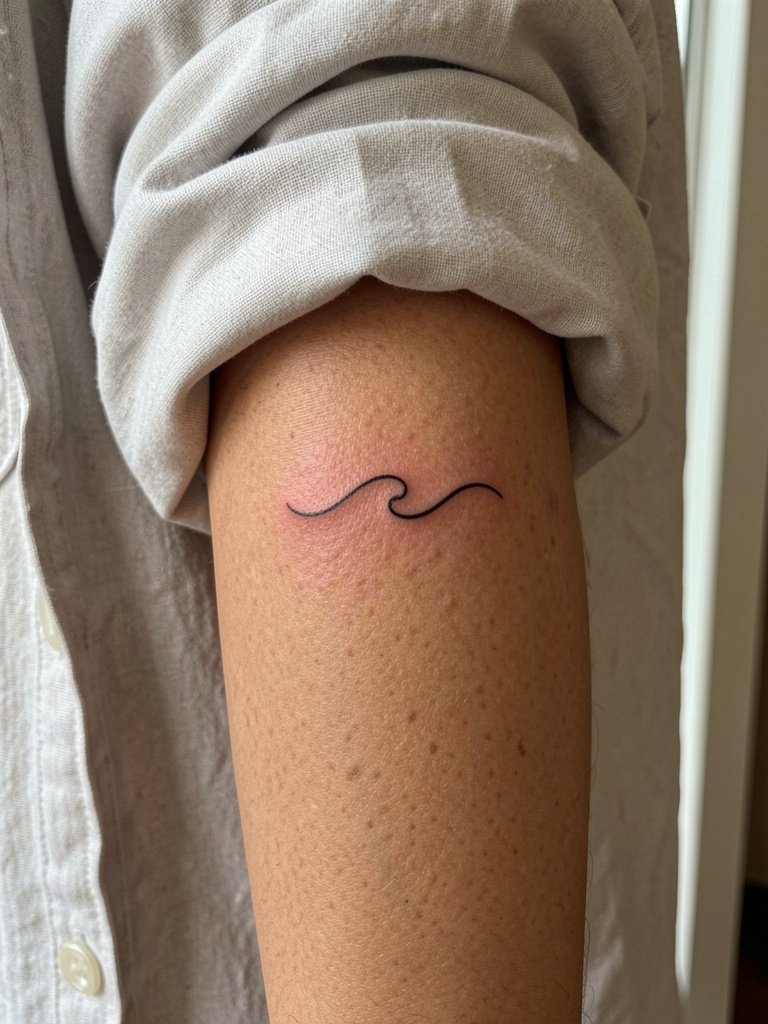
A single-line wave reads elegant in small sizes and is ideal if you want a low-pain, low-commitment forearm mark. People who choose ultra-thin single-needle work on inner forearms sometimes see the line soften significantly within a year. Artists are split on this: one camp says fine-line waves blur quickly on inner forearm because constant palm-up friction and skin micro-movement thin the stroke. The other camp says fine-line can last if the needle depth and a slightly wider line weight are used, and they point to healed three-year examples. During your consult, bring two scale references so the artist can show how a 2.5-inch version will read versus a 4-inch version. For the session wear a loose button-down linen shirt so the artist can roll the sleeve without tight cuffs.
2. Geometric Wave Panel on Outer Forearm
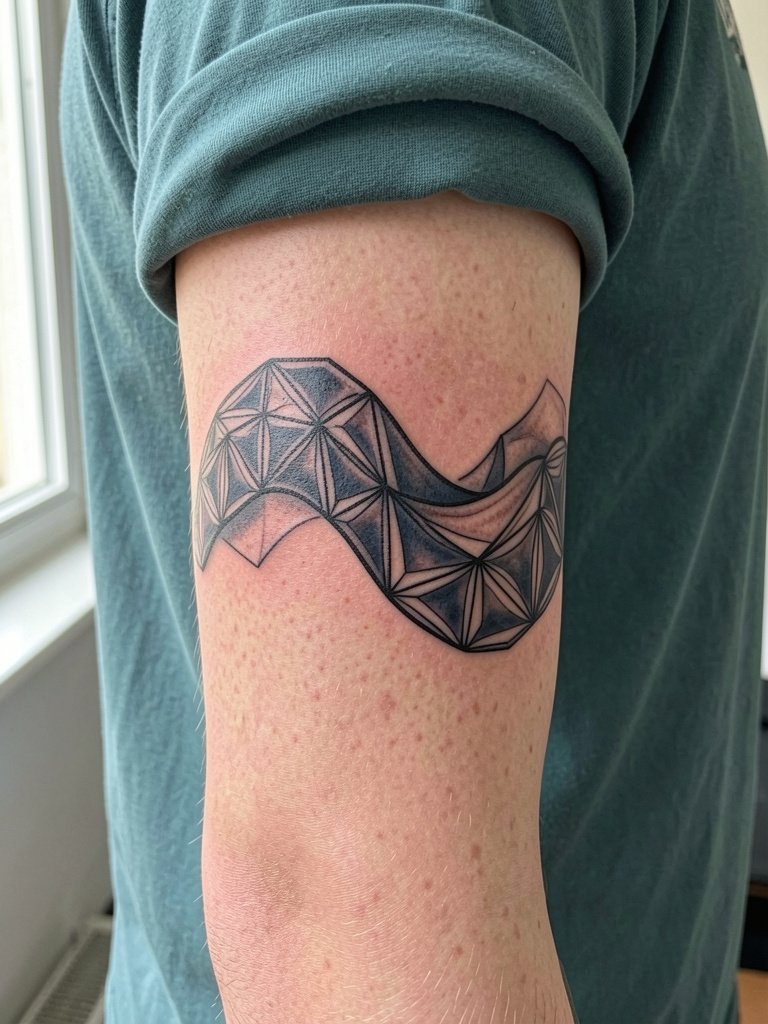
This math-meets-water design works best on the outer forearm where the surface is flatter and the artist can keep geometric edges true. The most common error is shrinking the panel too small so the angles merge as the piece ages. Ask the artist to map out a 1:1 stencil at the exact size and to show the negative space margins. Expect a one to two hour session for a mid-sized panel, and anticipate a touch-up at 12 to 18 months if you go with color fills. Showing it off pairs well with a solid-color short sleeve tee and rolled sleeves, which keep the pattern visible without competing prints.
3. Traditional Anchor and Ship Wheel, Vertical Inner Forearm
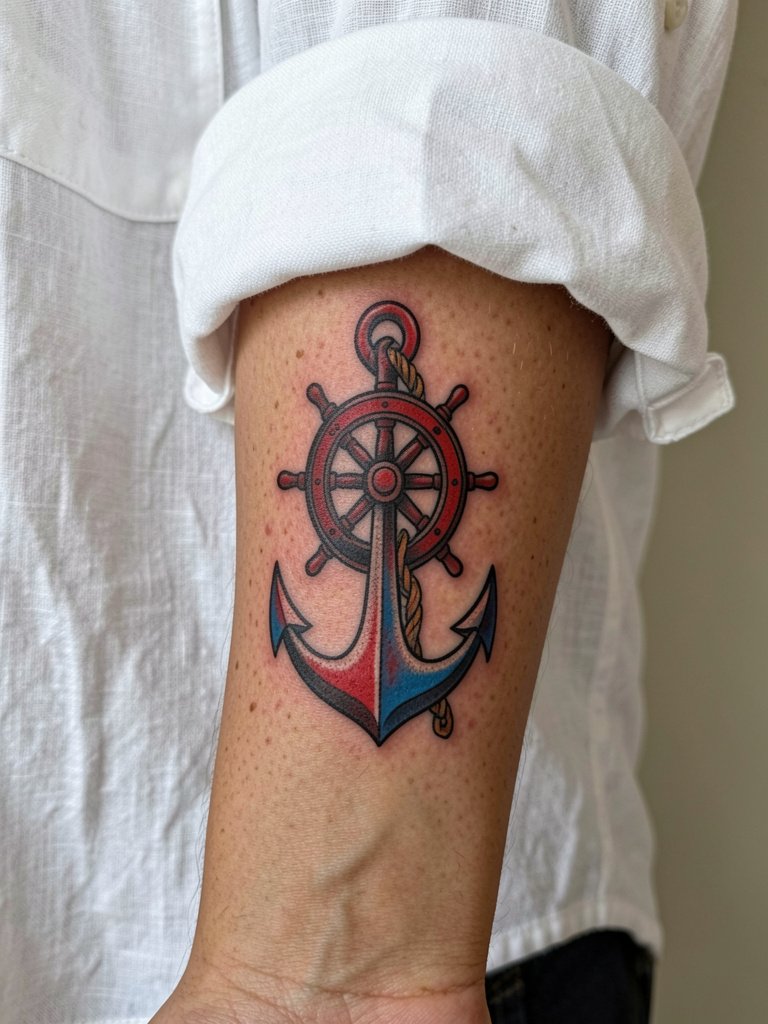
Bold traditional pieces age into clarity because the heavy outlines keep the shapes readable as pigment spreads slightly. Common mistakes include asking for tiny traditional details that blur; insist on keeping elements at least an inch across. During consult, confirm the exact color palette on a healed-photo reference and request sample saturation on similar skin tone so you know how red or green will photograph. Session feeling is moderate, about one to two hours with the inner forearm tending toward low-to-medium discomfort. For show-off looks wear a white linen blouse with the cuff open so the vertical composition reads when your arm rests.
4. Photorealistic Ocean Splash with Watercolor Effect on Outer Forearm
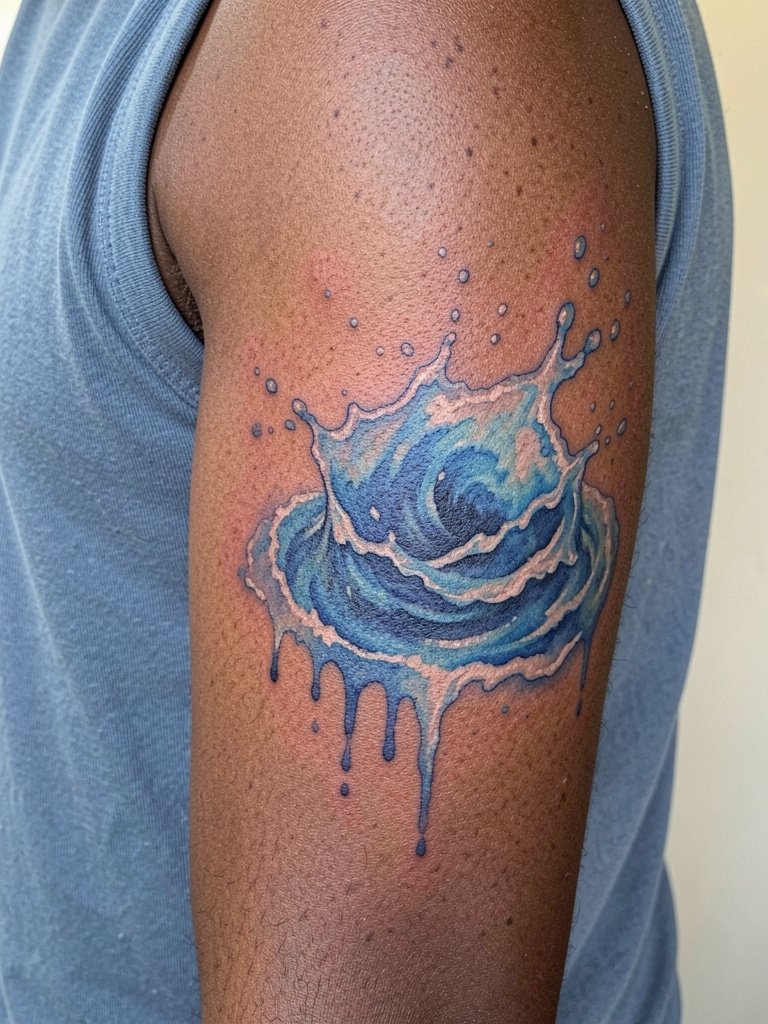
Watercolor ocean splashes look dramatic fresh but spark debate on longevity. One camp argues watercolor blues fade and gray out on forearms within a couple of years because sun exposure and daily abrasion reduce saturation. The other camp points to high-quality pigments and careful placement, saying watercolor can hold four years or more if you avoid sunlight and follow strict aftercare. If you want this effect, specify pigment brands or ask for denser layering near contrast points and small areas of black or deep navy for anchor points. Expect two to three sessions for a larger splash. For session day wear an easy-access top and bring a sample of a garment you plan to wear so the artist can show how the colors will read against it.
5. Polynesian Geometric Ocean Wrap, Full Forearm
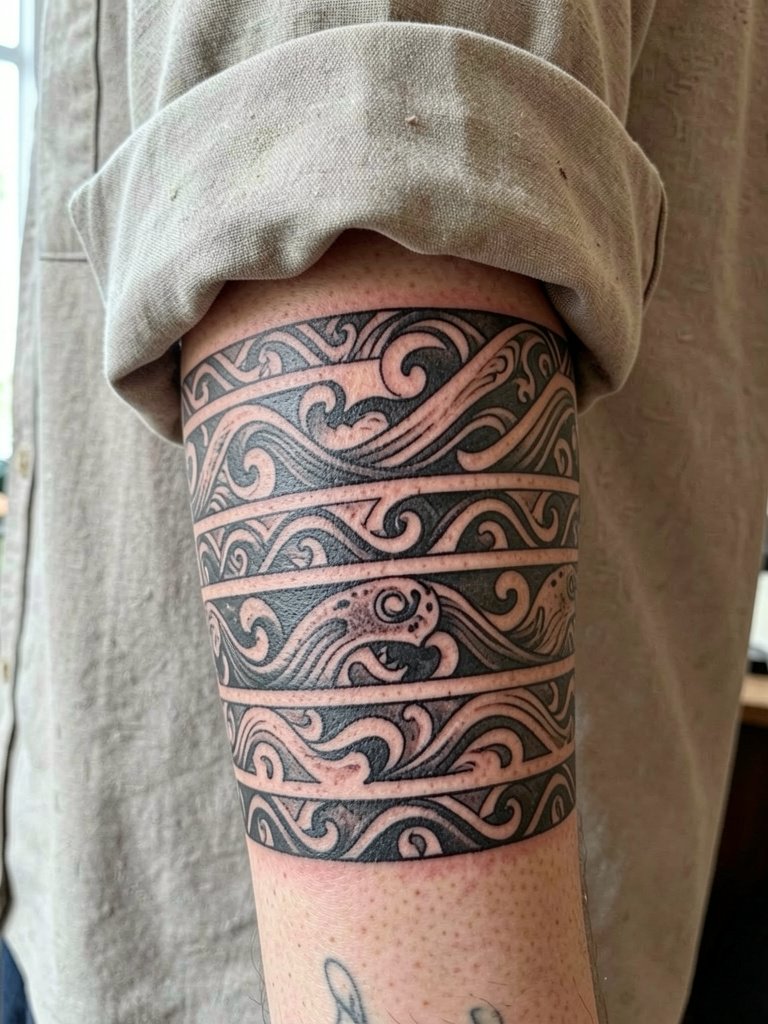
Polynesian work benefits from large scale and thoughtful cultural context. The most frequent misstep is copying symbols without understanding placement or meaning. Request a design brief from the artist that explains each motif and how it connects to your own background or intent. These sessions run long and often break into three or more sittings. Expect muscle memory from sitting to matter: wear a button-down with easy sleeve access so the artist can rewrap the arm between passes. For evenings out neutrals like cream or olive with a wide-cuff linen shirt keep the pattern visible and balanced.
6. Monochromatic Blue Depth Wave, Inner Forearm
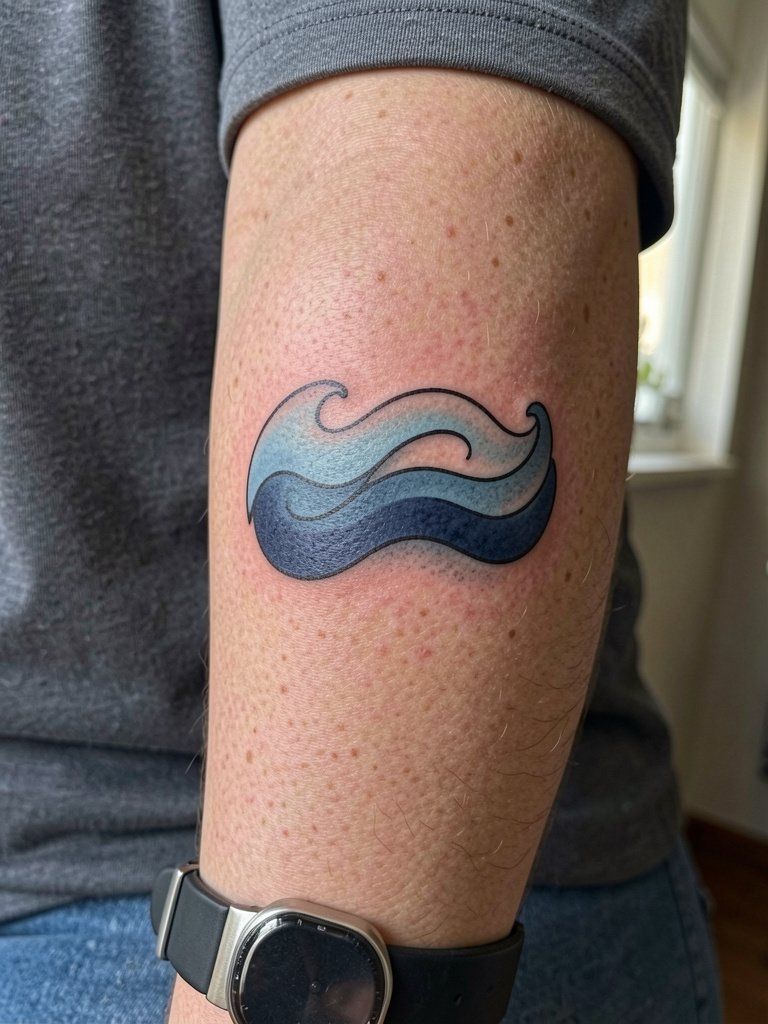
Monochromatic blue depth waves offer the visual richness of color while limiting long-term fade compared with full watercolor palettes. A typical mistake is asking for bright cyan on darker skin tones where it can look muddy in photos. Instead, request deeper navy shades and ask the artist to test a small pigment swatch on skin to preview contrast. This style generally needs one to two sessions, and you should plan a touch-up by year two for shallow gradients. For a refined reveal, wear a minimalist watch on the opposite wrist so the inner forearm composition stays the visual focus.
Heal Smart
The first six forearm ideas cover both small starters and pieces that need long sessions, so pack for comfort and protection from day one.
- Tattoo Dove Gentle Cleanser. Gentle, non-alcohol cleanser recommended for sensitive skin types and early healing on forearm ink, especially when linework is fine and needs careful rinsing.
- Japanese Band-Tape (non-stick). Thin non-stick tape used under protective film to reduce edge lift if you plan to use a second-skin option in warm weather.
- OceanBalm non-petroleum balm. Lightweight moisturizer with algae extract that keeps long gradient pieces supple without heavy residue.
- SealGuard antiseptic spray. Low-residue antiseptic mist handy for summer sessions to avoid creams that trap sweat.
- Aquaphor Healing Ointment. A mainstream option for initial thin layers during the first few days for small forearm work; it locks moisture without clogging when used sparingly.
7. Minimalist Sailboat, Inner Forearm Near Wrist
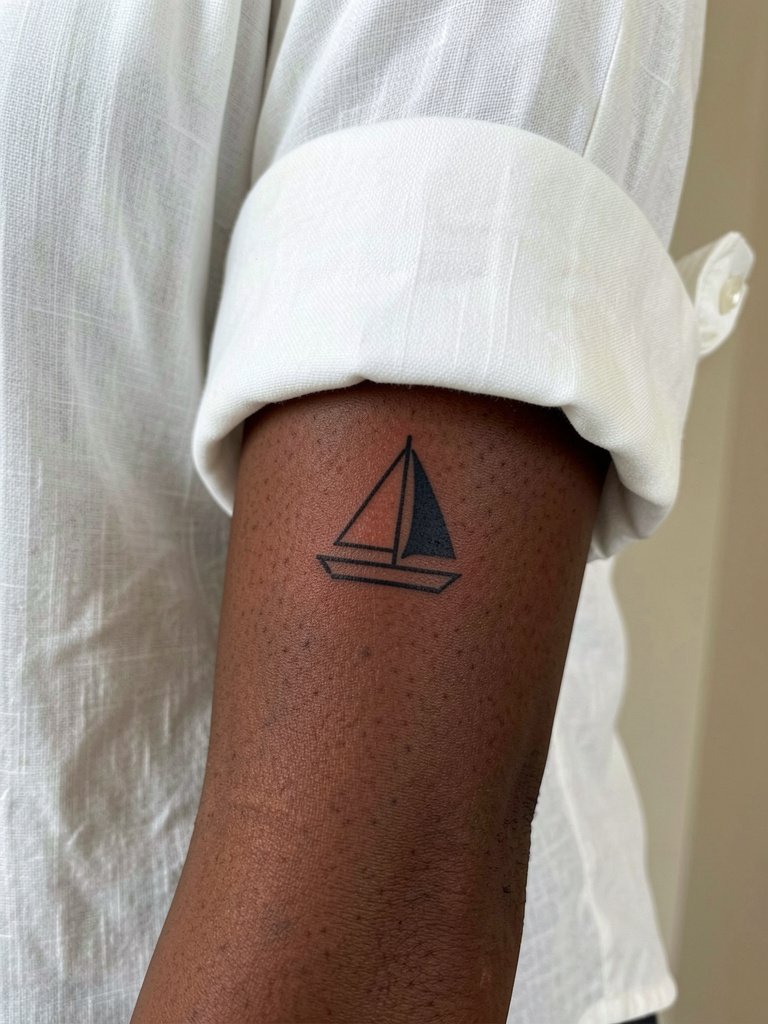
The tiny geometric sailboat is a low-commitment forearm marker that photographs well on the wrist area. The biggest mistake is asking for single-needle detail smaller than a quarter inch; the wrist and near-wrist area see a lot of friction from watches and cuffs, so a slightly bolder stroke is safer. For the session wear a short-sleeve top for easy access and bring a thin bracelet set to wear on the opposite wrist for balance. A tidy, compact piece like this is usually a single short session, and a light touch-up at the one-year mark is common for very small accents.
8. Spiral Wave Wrap on Outer Forearm
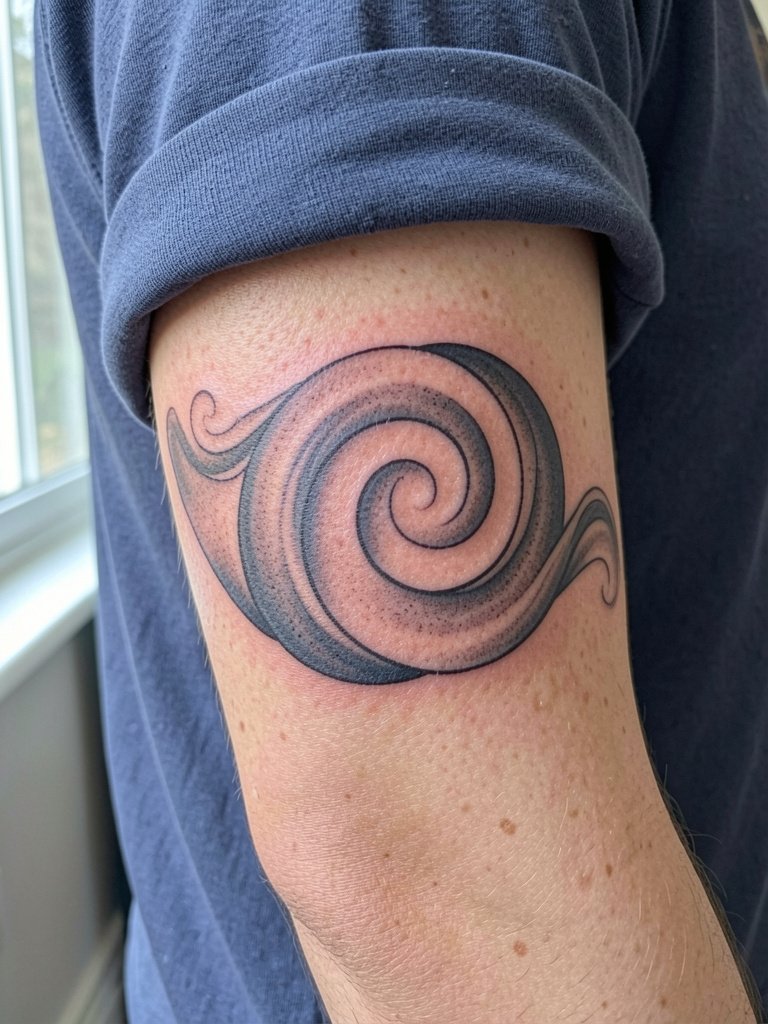
Spiral waves look dynamic when the forearm flexes, but flexion can change the composition in motion. The common oversight is not testing flexion during the stencil stage. Ask the artist to put the stencil on and have you make a fist, straighten the arm, and rotate; you will see how the spiral behaves. Expect one to two sessions depending on wrap extent. For outfit pairing a simple thin silver chain necklace balances angular and curved elements if you want subtle contrast in jewelry.
9. Horizon Line Minimalist Near Wrist
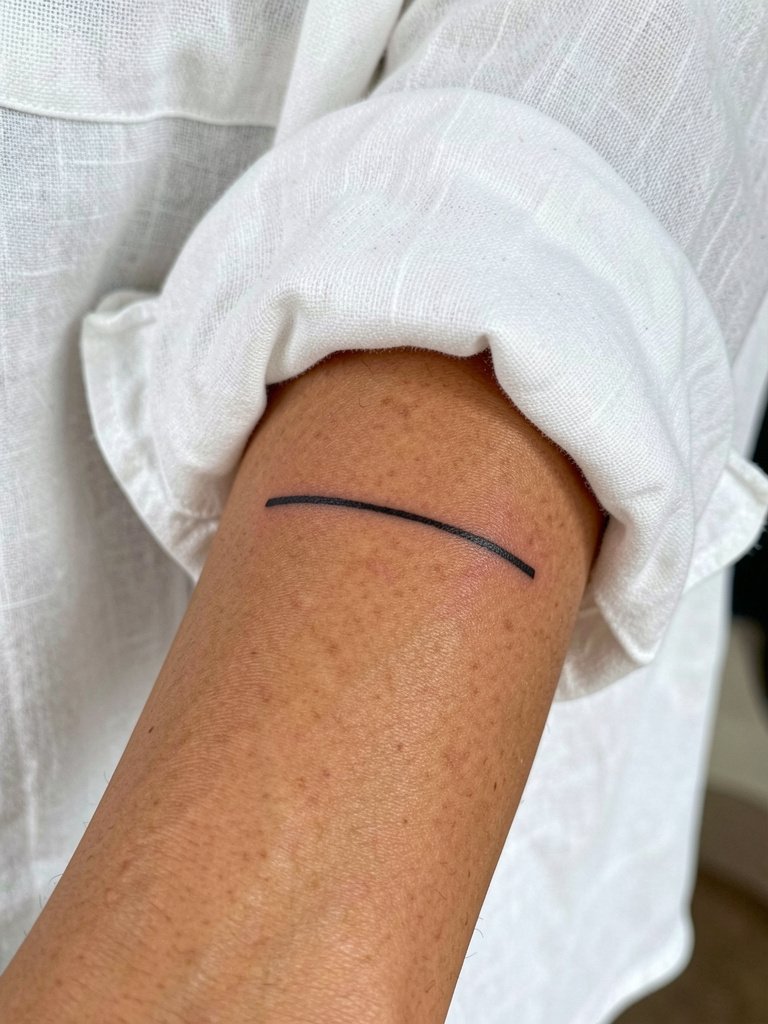
The horizon line is the quiet option for people who want visible but understated forearm work. Tiny thin strokes can fade into blur if placed too close to high-friction zones. A practical adjustment is making the line a hair heavier than the saved reference so it still reads at six months. Session time is short and pain is low. For a polished reveal, wear a white linen blouse with the cuff open and minimal wrist jewelry on the tattooed arm.
10. Seashell Silhouette Low on Inner Forearm
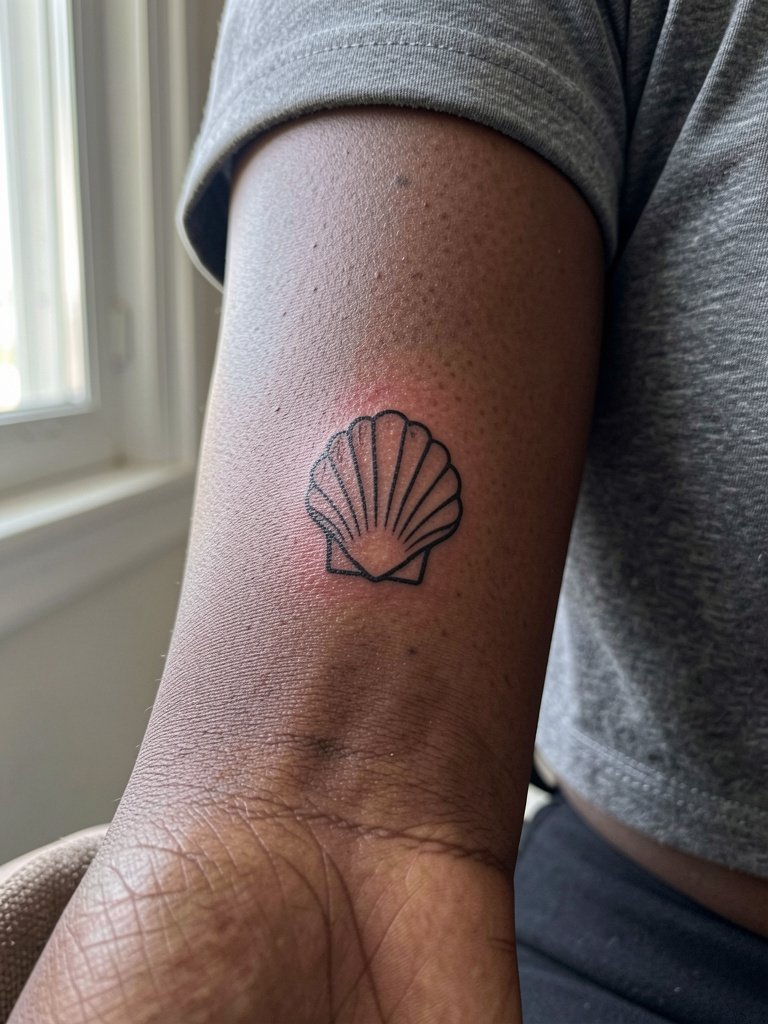
Seashell silhouettes are forgiving because the curves read even with mild pigment spread. The mistake is detailing tiny ridges that vanish over time. Ask for a clear silhouette first and plan any internal detail as a later touch-up piece. Because it sits low on the forearm near frequent bending, expect a small touch-up at 12–18 months for crisp edges. Session wear is a short-sleeve top, and the piece pairs nicely with dainty bracelets on the opposite wrist rather than stacking on the tattooed side.
11. Realistic Whale or Shark, Outer Forearm Portrait
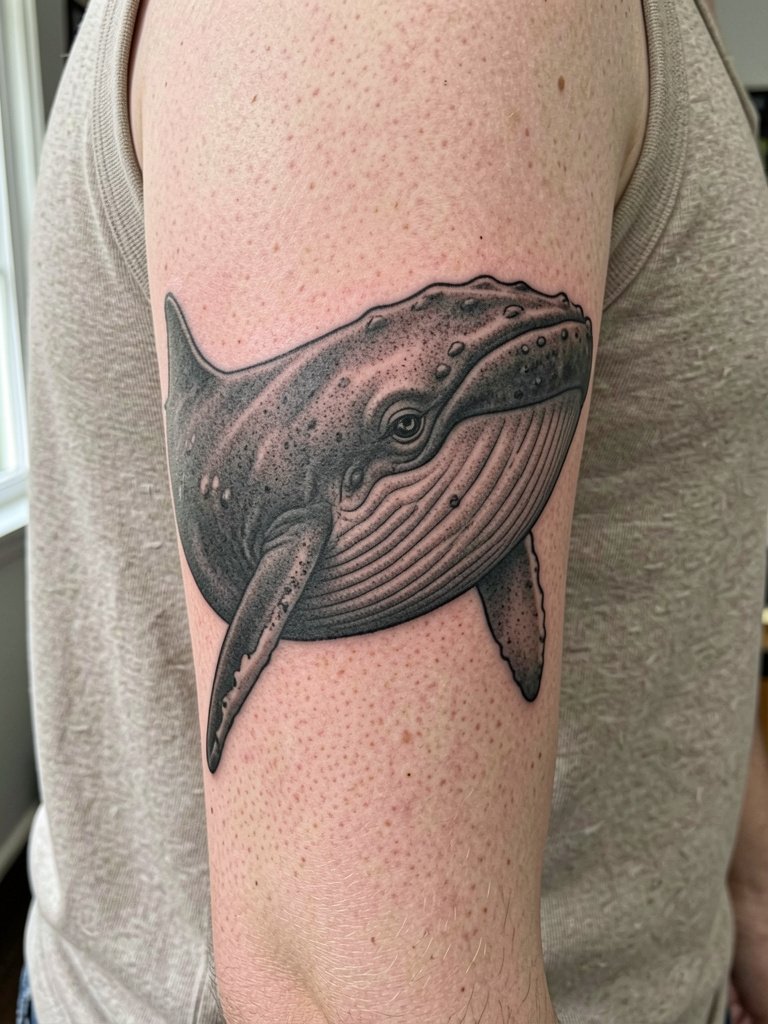
Large realistic creatures need space to breathe on the forearm and show best on the outer surface. A common error is cramming portrait detail into a size that flattens the subject. Request a projected stencil photo on the forearm at full size so you can judge scale. Expect multiple sessions for shading and subtle stipple work, and plan to protect the area from sun to keep subtle gray gradients. For revealing the piece, a solid-color short sleeve tee keeps attention on the portrait without pattern competition.
12. Abstract Ocean Form, Inner Forearm Flow
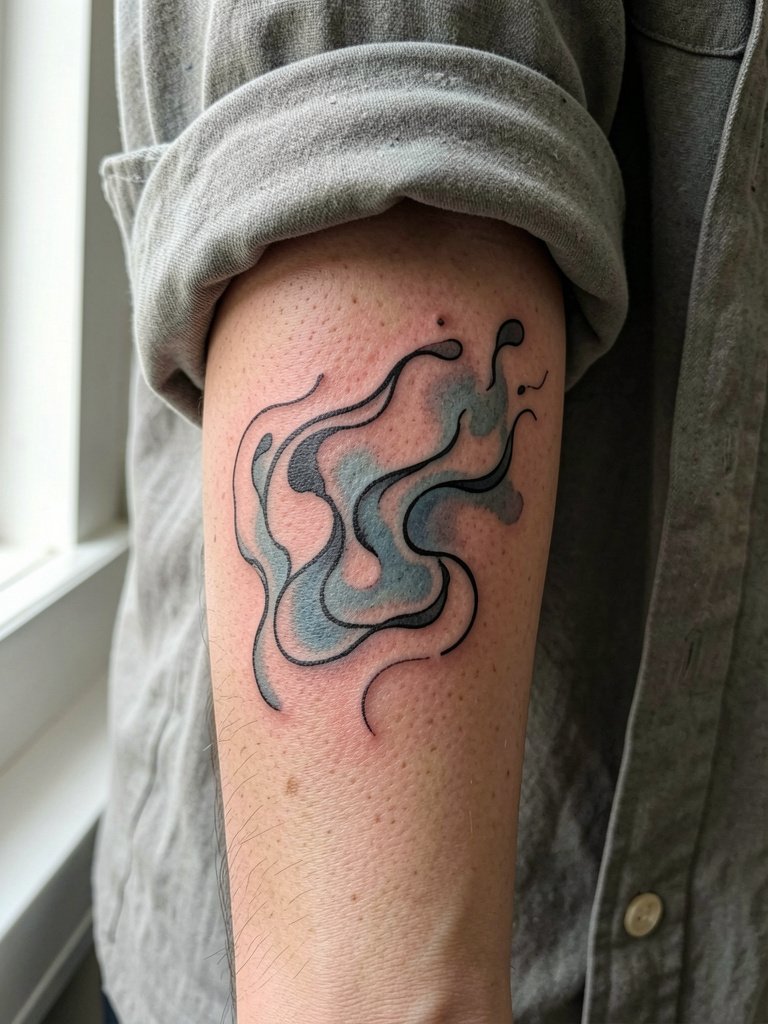
Abstract ocean pieces let you avoid literal imagery and emphasize emotion or motion. Because the shapes are non-literal, the main risk is losing flow when the design is scaled poorly. Have the artist draw two versions at different sizes and compare how the negative space survives. These pieces often heal looking slightly softer at six months, and many owners report wanting a small contrast touch-up at year two. For the session wear a loose button-down and bring a lightweight long-sleeve to protect the area afterward if you are outdoors.
13. Starfish Minimalist Near Wrist
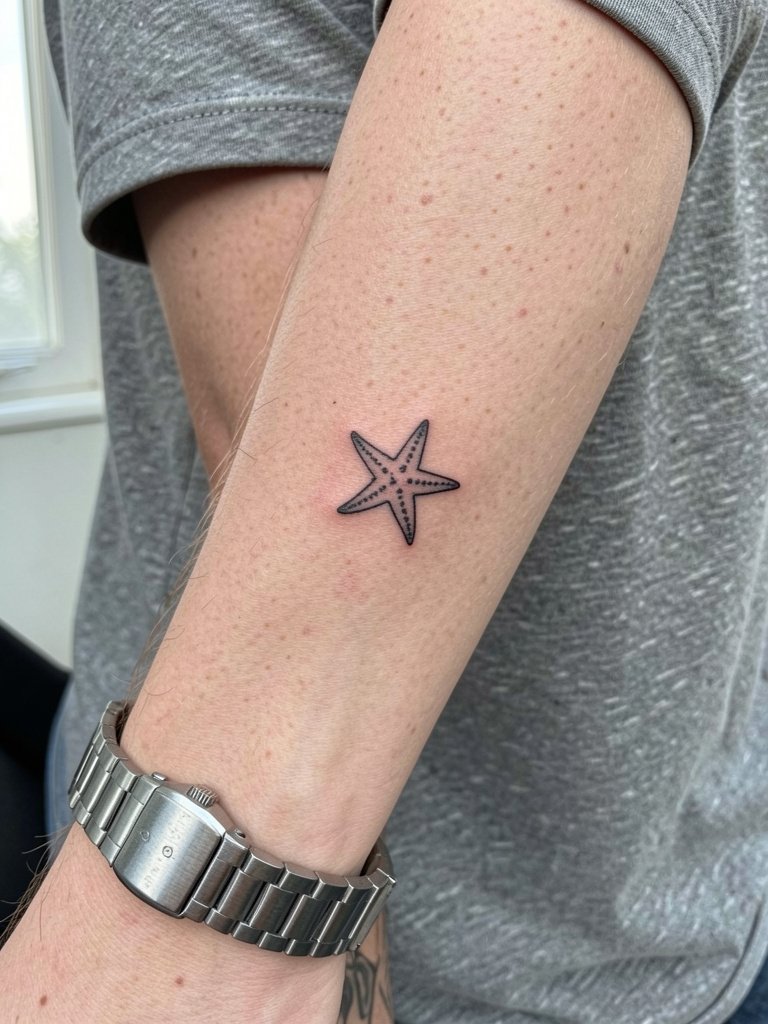
Tiny starfish are great starter pieces but the wrist zone is high motion, so detail will soften faster than on the outer forearm. A frequent mistake is requesting ultra-thin dot work inside a two-centimeter silhouette. Instead, ask for a slightly thicker outline and minimal internal texture so it retains form. Sessions are very short. Show it off with a minimalist watch on the opposite wrist for visual balance.
14. Compass Rose With Ocean Motifs, Inner Forearm
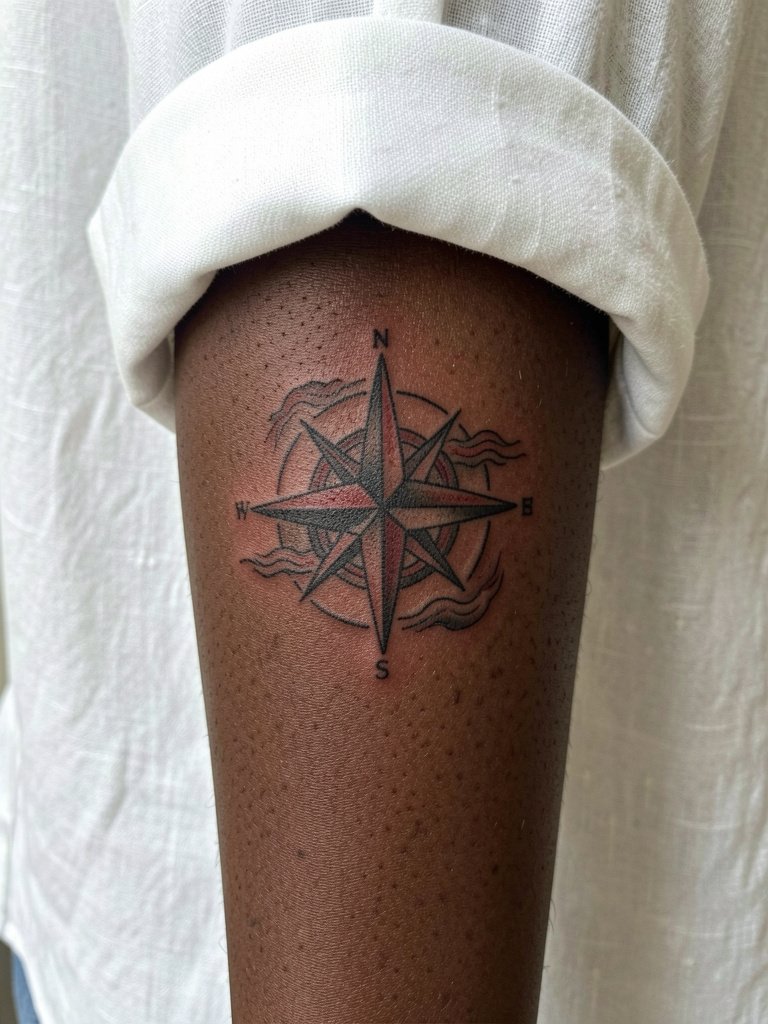
Compass roses read well on the inner forearm when sized to avoid congesting the center. People often try to cram tiny lettering around the compass that blurs; specify the font size for any numerals or letters. For longevity ask for slightly bolder radial lines and a clear area between directional marks. This usually fits a single session but may need shading later. Wear a crisp open-cuff top at reveal time to let the round composition show naturally.
15. Kelp Forest Black-and-Grey, Full Forearm Scene
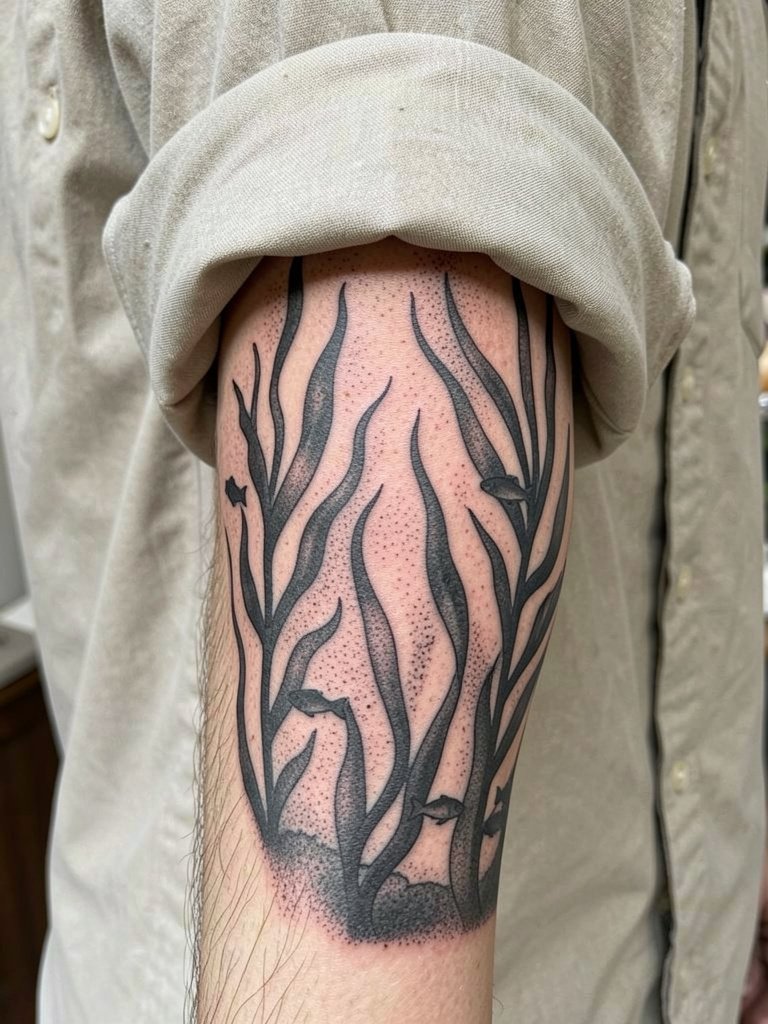
A kelp forest benefits from scale and flow around the arm so fronds can move with muscle flexion. The common mistake is compressing too much detail into a single sitting; plan staged sessions. Because of the dense stipple shading, these pieces can look softer at six months, so schedule a touch-up after full healing. For session comfort bring layers as multiple sittings can last several hours. For outfits neutral tones and layered bracelets on the opposite wrist keep the textured black-and-grey work as the main visual.
16. Dotwork Wave Mandala Section, Outer Forearm
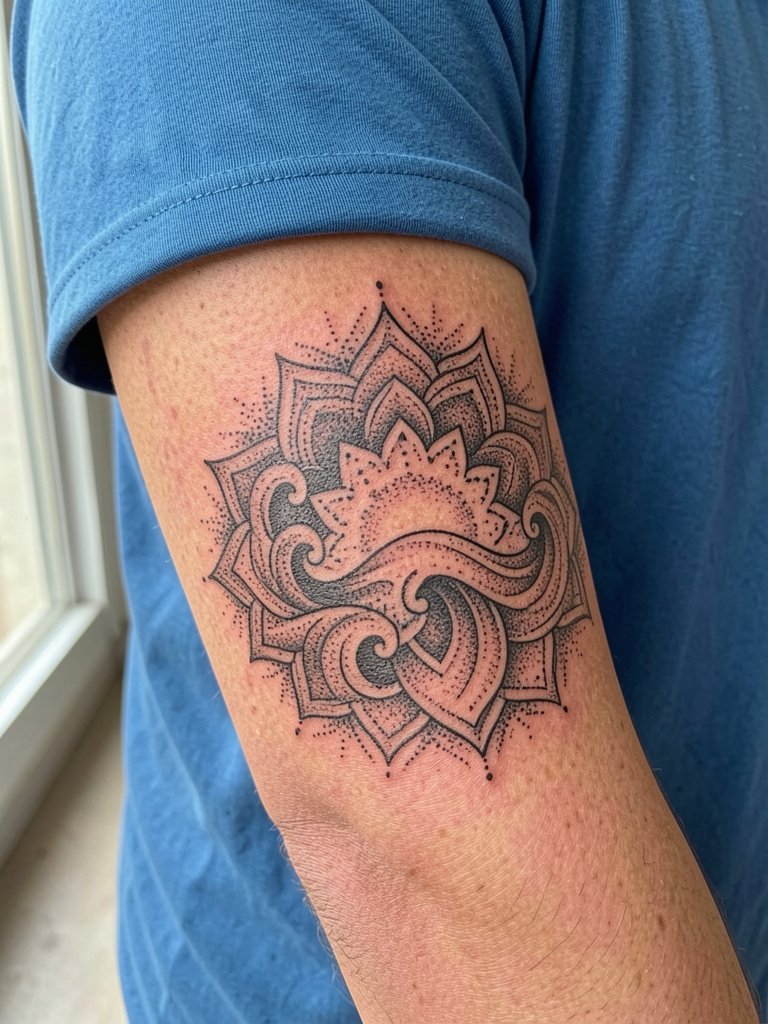
Dotwork mandala waves need breathing room to avoid the stipple merging into a gray mass. The usual error is scaling the mandala too small relative to the dot size. Ask for a mockup that shows dot spacing at the intended size. Dotwork sessions are slower because the technique is meticulous. When you wear the piece, a simple solid tee with rolled sleeves keeps the geometric rhythm visible without distraction.
17. Small Coral Cluster in Black-and-Grey, Inner Forearm
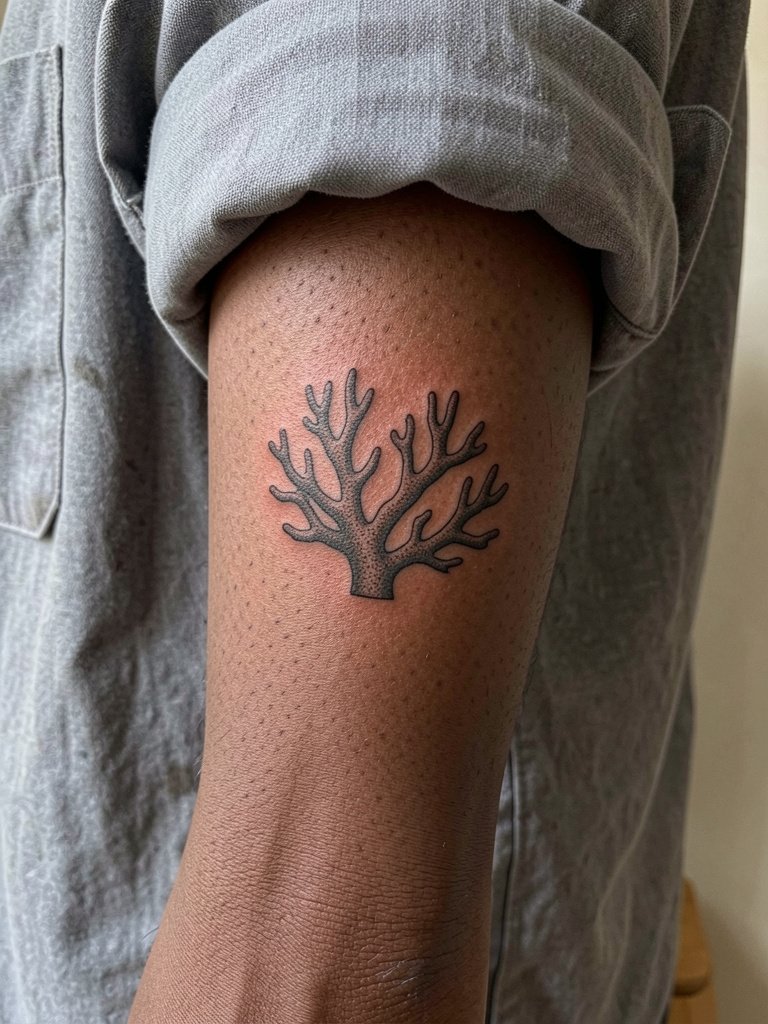
Coral clusters allow for organic composition and look good when spaced with breathing room. Mistakes include tiny texturing that fades; ask for slightly bolder contrast points and for the artist to show how the coral looks at six months in other portfolios. This scale often fits one session and suits people who want reef imagery without a full sleeve. For the appointment wear a loose button-down for easy access and minimal cuff pressure.
18. Nautical Rope Band Accent, Outer Forearm Wrap
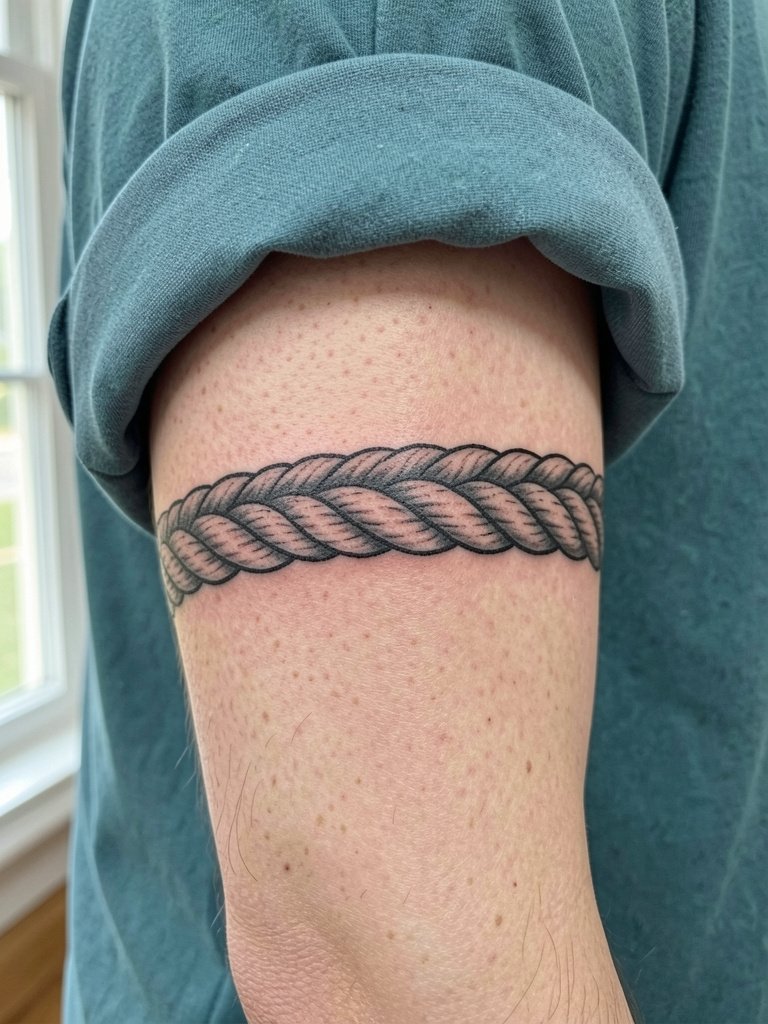
Rope bands are simple but need consistent line thickness around the arm to avoid looking crooked when healed. A typical problem is uneven spacing where the artist did not map the wrap on a relaxed arm. Ask for the stencil to be applied, then flex and relax so the artist can adjust the braid rhythm. This is a short session and tends to age well due to the heavier outline. It pairs cleanly with casual tees and minimal wrist accessories.
19. Tiny Coordinates Wave, Inner Forearm Near Elbow
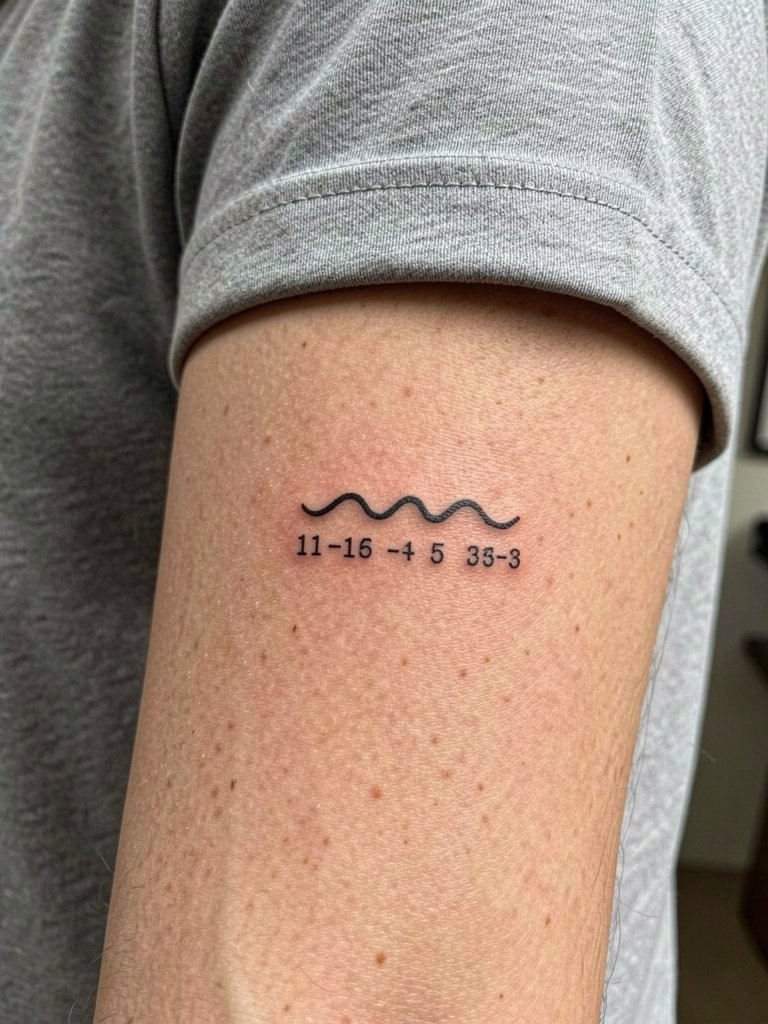
A coordinates wave blends symbol and specific text. Because typography can blur, specify a slightly heavier font weight for small characters and ask the artist to stencil full-size so you can read it at arm's length. Placement near the elbow sees more stretching; if you want crisp digits, move slightly away from the crease or scale up the characters. Session time is short, but typography often benefits from a touch-up at one year.
20. Minimal Horizon With Tiny Sail Accent, Inner Forearm
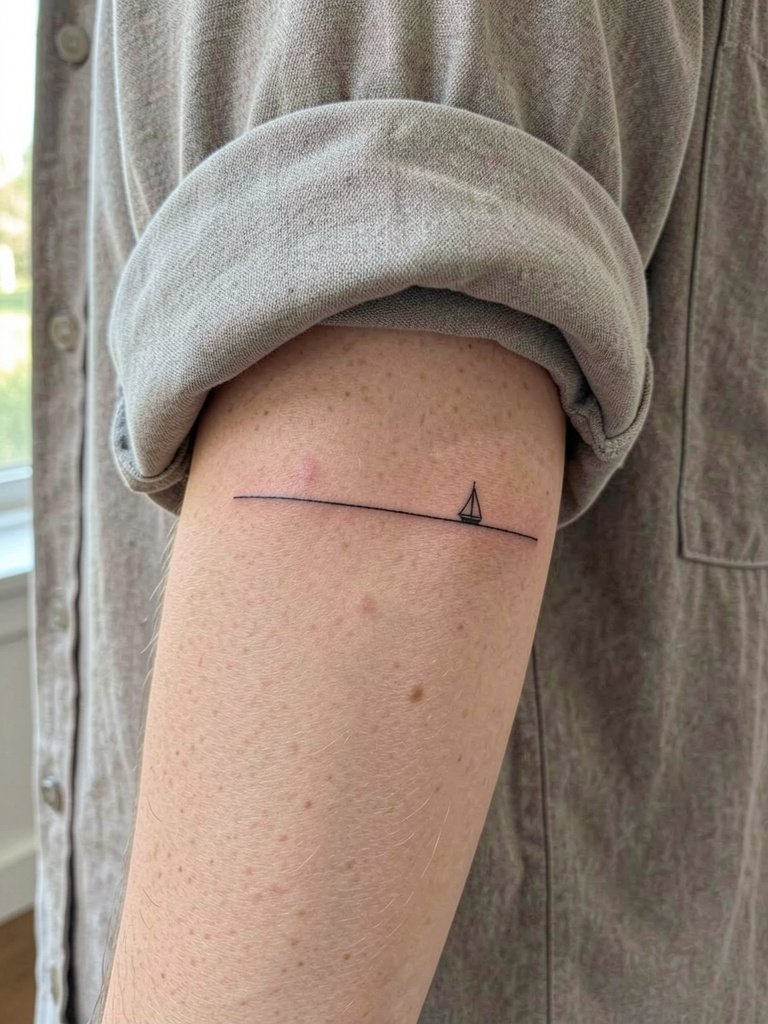
This hybrid keeps the calm of a horizon line with a tiny focal point that gives the eye something to settle on. The common mistake is making the sail so small it disappears; ask for the sail to be sized to at least one-third of an inch. The piece is low pain and quick, and it pairs well with rolled-up linen shirts in neutral tones. For session wear bring a top with easy sleeve rolling so the artist can work without cuff pressure.
21. Sleeve-Ready Ocean Panel Idea, Transition Piece
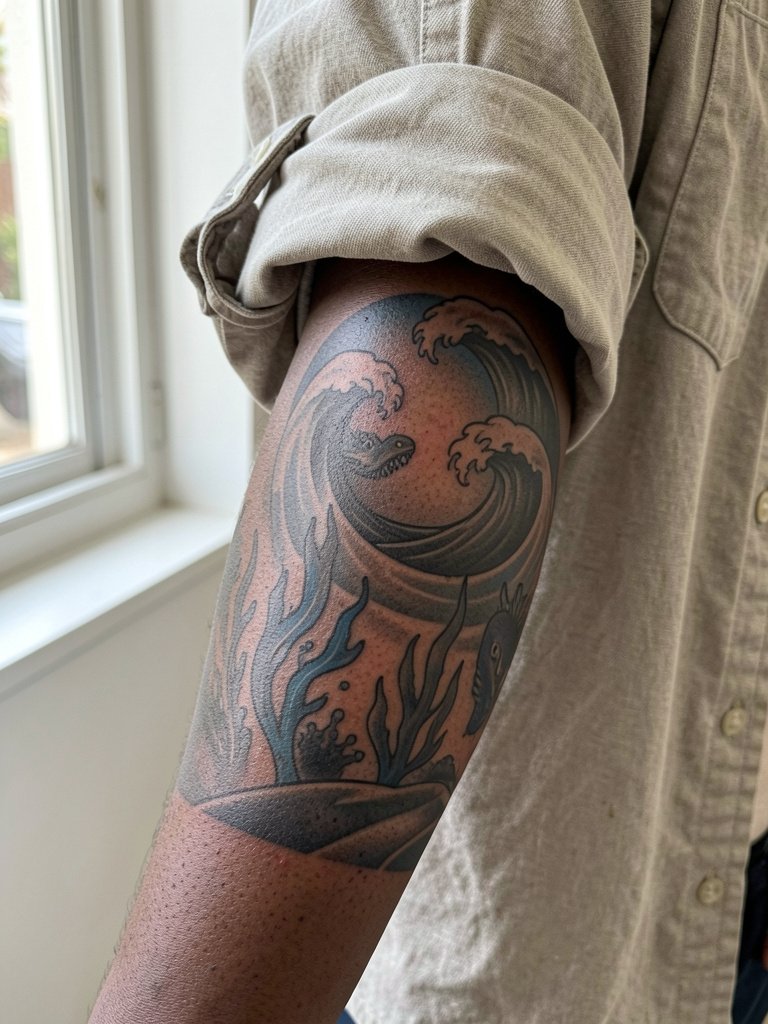
If you plan to expand into a sleeve later, start with clear panel edges and a palette that will carry across future pieces. The usual oversight is picking a style now that clashes with the sleeve plan later. Bring a rough sleeve map or a few reference images and request a modular layout with clear negative space for future connections. Sessions for a panel are medium to long, and you should plan a staged timeline. Neutral tones and wide-cuff shirts help preview what the sleeve will look like as it grows.
Frequently Asked Questions
Q: Will a fine-line wave on my inner forearm blur faster than a bold one?
A: Fine-line pieces are more vulnerable on high-motion, palm-up areas because constant friction and skin micro-movement tend to soften single-needle strokes. Some artists use slightly heavier line weight and spacing to make a fine-line idea last longer, so request a 1.5–2mm equivalent line weight in your consult and look at healed examples in that exact size.
Q: Is watercolor ocean work a bad call for forearm pieces in summer months?
A: Watercolor palettes can fade faster with sun exposure and sweat, especially bright cyan tones on forearms. If you love painterly color, consider monochromatic deep blues or ask the artist for anchor points in dark ink to preserve contrast, and plan for careful sun protection during the first two years.
Q: How should I find an artist who shows healed forearm ocean work without naming or following individual accounts?
A: Search hashtags like #oceanforearmtattoo and #geometricwave on Instagram and TikTok, then use location filters to find nearby portfolios with healed shots. Tattoodo and the Inked App let you search by keywords like "fine line ocean wave" and show studio galleries. Reddit threads in r/tattoos and r/oceantattoos also surface peer recommendations and healed photos across skin tones.
Q: Does Saniderm make sense for a forearm tattoo in hot weather?
A: The community splits on this. One group warns that second-skin can trap sweat and increase the risk of irritation in high-heat conditions, especially if worn too long without checking. The other group says short, five-day applications of protective film prevent friction and sun exposure and report many healed cases without issues. If you plan to use a film, monitor the area and be ready to remove it early if you develop excessive sweat or discomfort.
Q: What should I wear to a forearm tattoo session to stay comfortable and give the artist good access?
A: For inner forearm work wear short sleeves or a loose button-down you can roll comfortably so the cuff does not press on fresh ink. For full forearm or wrap sessions a sleeveless top or tank helps the artist move around the arm. Bring a lightweight long-sleeve to protect the piece from sun after the session and a loose top for the trip home.
Q: How often will I need touch-ups for ocean tattoos on the forearm?
A: Touch-up timing depends on style and scale. Small minimalist pieces often see a light touch-up within one to two years, mid-sized color or gradient work usually benefits from a top-up around year two, and dense blackwork may go longer before needing refresh. Be realistic: forearms get sun and friction, so plan for at least one touch-up in the first three years.
Q: Any tips for ocean ink on darker skin tones so blues read well in photos?
A: Bright cyan can photograph muddy on deeper skin, so request deeper navy or black-and-grey variants and ask the artist for a small pigment swatch or healed photo samples on similar skin tones. Slightly higher contrast and bolder linework often produce better long-term photo results.