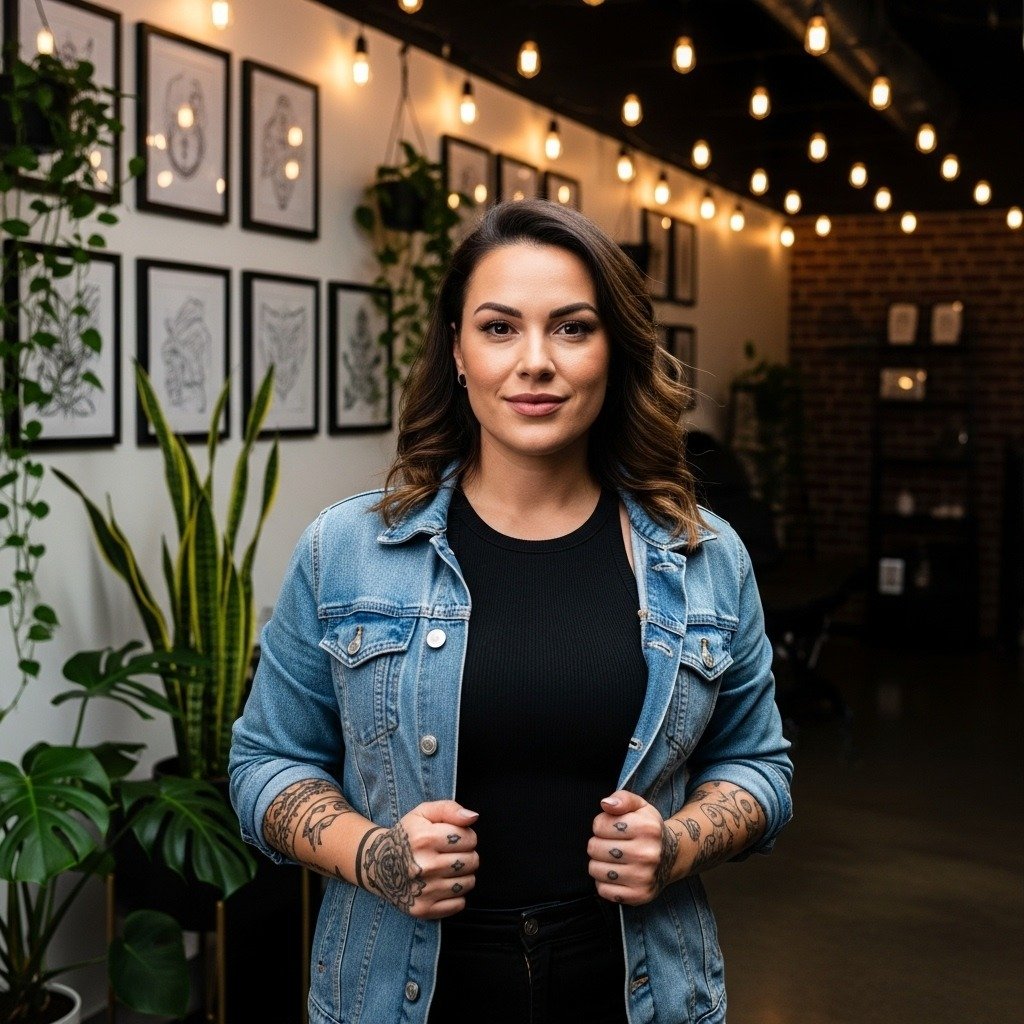
A crisp inner-forearm floral can read delicate in photos and then fuzz out faster than expected. I say that because I have seen dozens of healed pieces and the ones that still read well were drawn with slightly bolder spacing and a tiny bit more breathing room between petals. Pick a scale that gives linework room to age, and plan for a touch-up around year two instead of assuming single-session perfection.
1. Fine Line Botanical Sprig, Inner Forearm
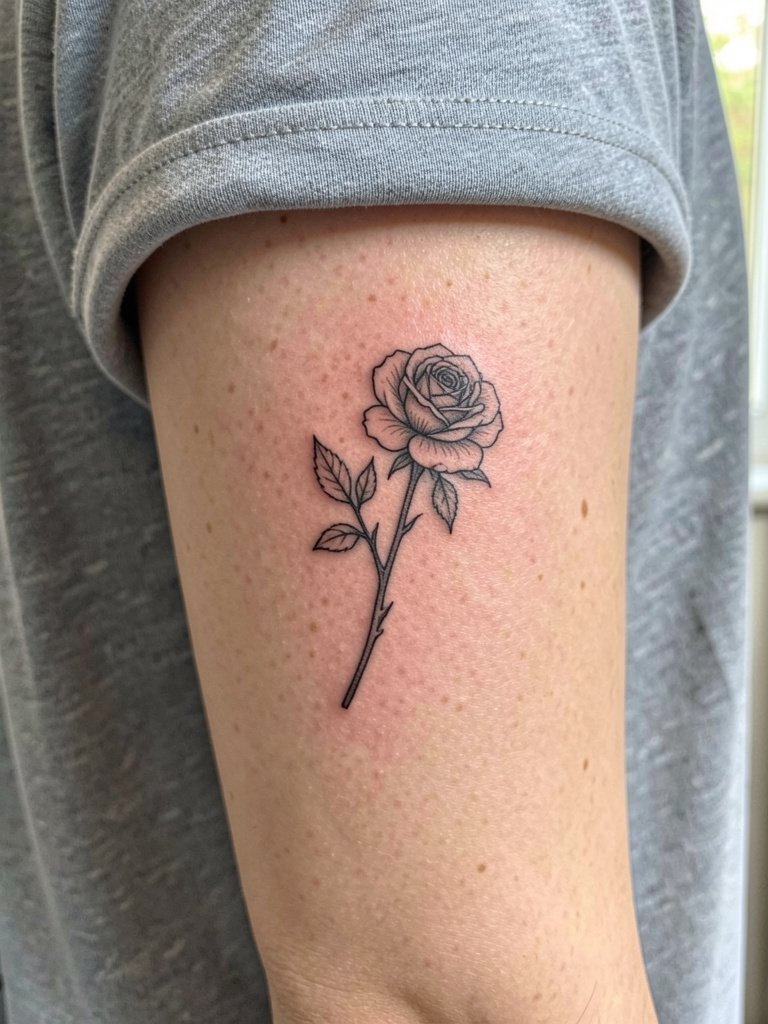
A classic single-rose sprig works when you want subtlety that still reads at arm's length. I recommend this over ultra-fine single-needle scripts when you plan to wear sleeves and roll them often. During the consult, ask the artist to increase petal spacing slightly and show a scaled stencil at two sizes so you see how the piece breathes on the forearm. The common mistake is requesting hairline stems and expecting them to keep crisp edges beyond a year. Expect a medium pain level on the inner forearm and a short session under 45 minutes. If you like showing it off, pair with a rolled cuff linen shirt in cream or olive to keep focus on the linework.
2. Minimalist Pine Tree Silhouette, Inner Forearm
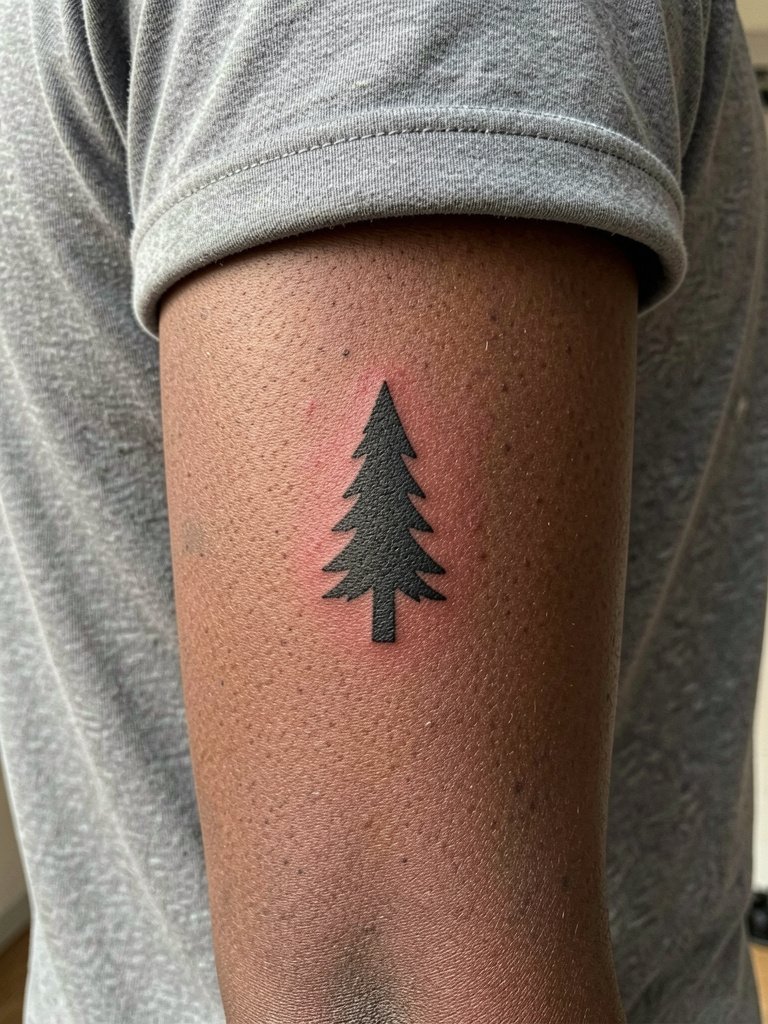
A vertical pine silhouette reads clean on the inner forearm because the tall composition follows the limb's natural lines. Choose this when you want a graphic emblem rather than a shaded scene. Tell the artist you want confident black fills and confirm the height at stencil stage so the trunk avoids wrist creases. The aging improvement is simple. Vertical designs tend to suffer less stretch distortion than horizontal bands. Session time is short and the pain is moderate. For an everyday outfit, wear a solid black short-sleeve tee to contrast the silhouette and keep it visible.
3. Fine Line Moon and Sun Contrast, Inner Forearm
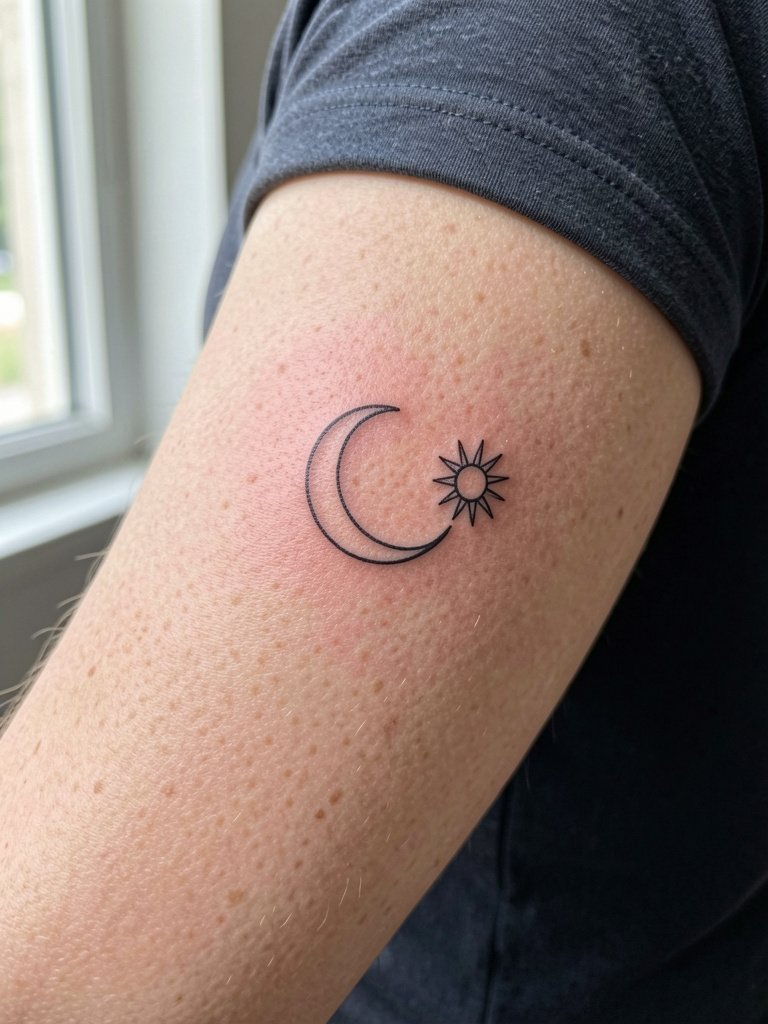
This sun-and-moon pair fits narrow forearm strips and balances ornament with subtlety. I suggest asking the artist to thicken the connecting arc slightly from your initial reference and to show the piece at actual size on tracing paper so you can check spacing. The version that looks fragile is often plotted too small with tiny rays that blur into a gray patch by year two. Expect a single session near 30 to 45 minutes and a pain level that is moderate. For evenings out, a clean ivory blouse keeps the celestial contrast crisp.
4. Realistic Lotus with Water Ripples, Inner Forearm
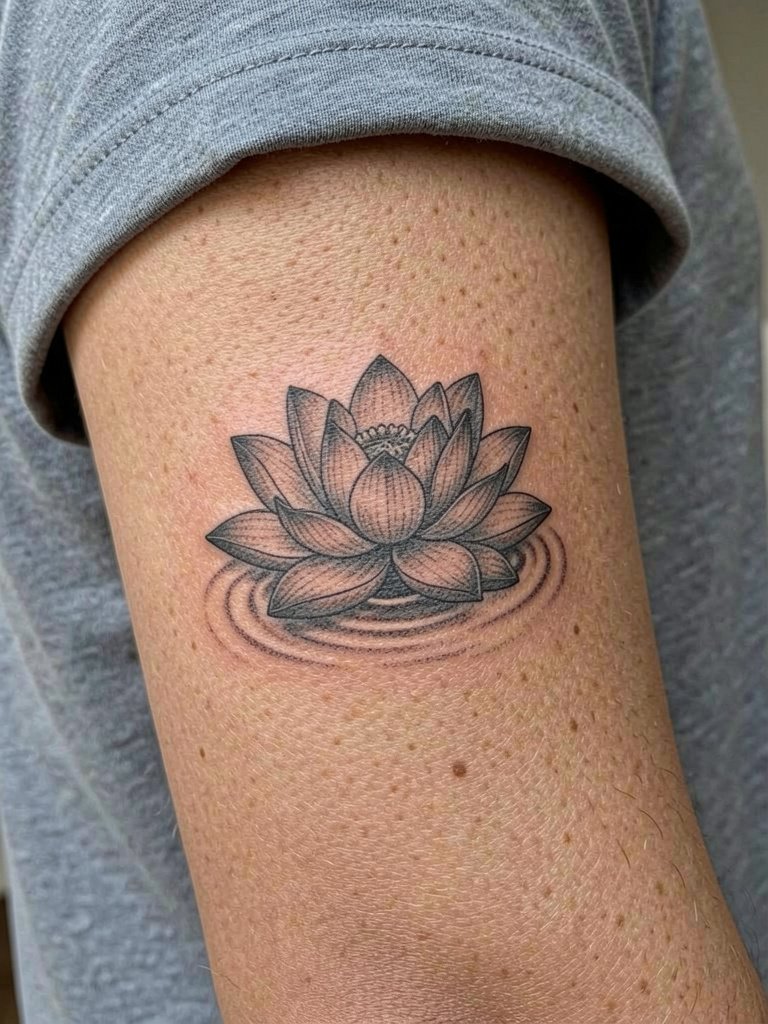
A micro-realism lotus gives depth and still holds detail if scaled to four inches rather than tiny. Recommend this if you want shading that reads over time instead of hairline detail. During the consult, have the artist demonstrate healed tonal range on darker skin so you understand contrast needs. The typical mistake is shrinking the shading into a postage-stamp size. At six months the ripples look soft, at two years the contrast is where it matters, and at five years you will likely want a touch-up to restore subtle highlights. Session time is longer, plan 60 to 90 minutes. Wear a loose short-sleeve shirt for the session so the artist has full forearm access.
5. Dotwork Mini Forest, Inner Forearm
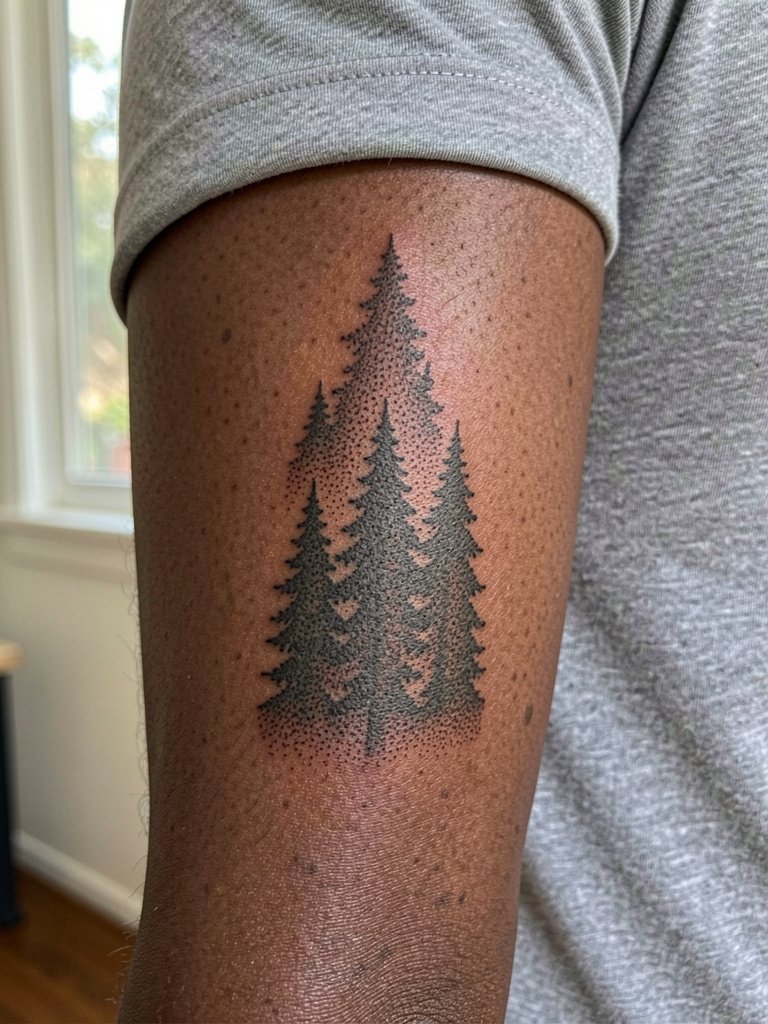
Dotwork creates organic texture that ages into a soft, natural look. I usually recommend two passes for dense dotwork on the inner forearm so the texture does not flatten out over time. Tell your artist you prefer a slightly wider spacing between dot layers to reduce early migration and to plan a second short session if needed. Many dotwork pieces are done in one go and lose depth, so plan ahead. Expect moderate pain and a session around 60 minutes. For a weekend outfit, pair it with an olive linen shirt with rolled cuffs to echo the organic tones.
6. Botanical Herb Bundle, Inner Forearm
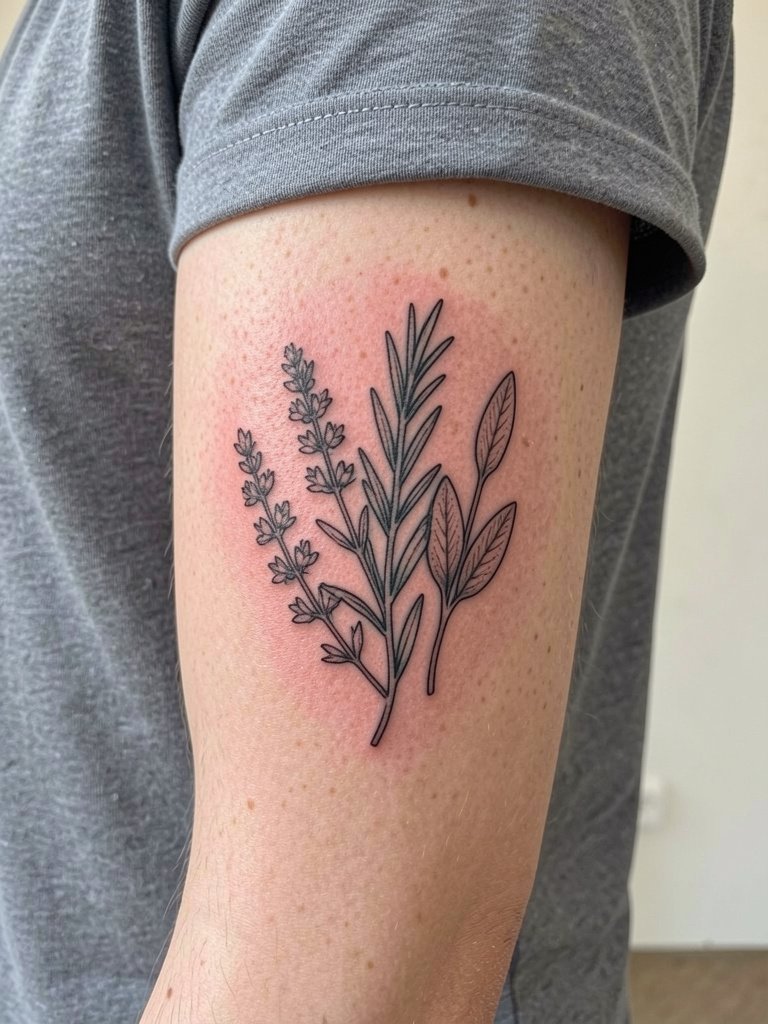
A trio of herbs reads clean and personal without heavy shading. Recommend this to first-tattoo seekers who want short sessions and easy aftercare. During booking, bring three crisp herb images and ask the artist to space stems so leaves will not merge after a year. A common error is requesting continuous single-needle lines with no breathing room. Pain level is low to moderate and the session is under 30 minutes. For showing it off, try a linen button down with sleeves rolled to mid-forearm.
Pre-Session Essentials
The first six designs above include fine-line and dotwork pieces that benefit from gentle, breathable skin products and thinner balms during the first week.
-
Tattoo Revival Balm. A thinner Japanese balm that users report avoids ashy healing on darker skin tones and helps fine shading keep contrast during the first week after dotwork and micro-realism pieces.
-
Dr. Bronner's Hemp Salve. An affordable, less greasy option for people prone to clogged pores, useful in the first days after small blackwork linework.
-
Tattoo Safe Gel. Water-based and non-greasy, good for those who have sensitive skin and need a light moisture layer without heavy occlusion.
-
Golden Rose Tattoo Balm. Lighter than heavy ointments and handy for hot climates where thick products feel too occlusive, especially after longer sessions.
-
Hustle Butter. A mainstream, plant-based option many switch to after initial film removal, helpful for keeping micro-realism and fine-line pieces supple while they settle.
7. Abstract Watercolor Stream with Rocks, Inner Forearm
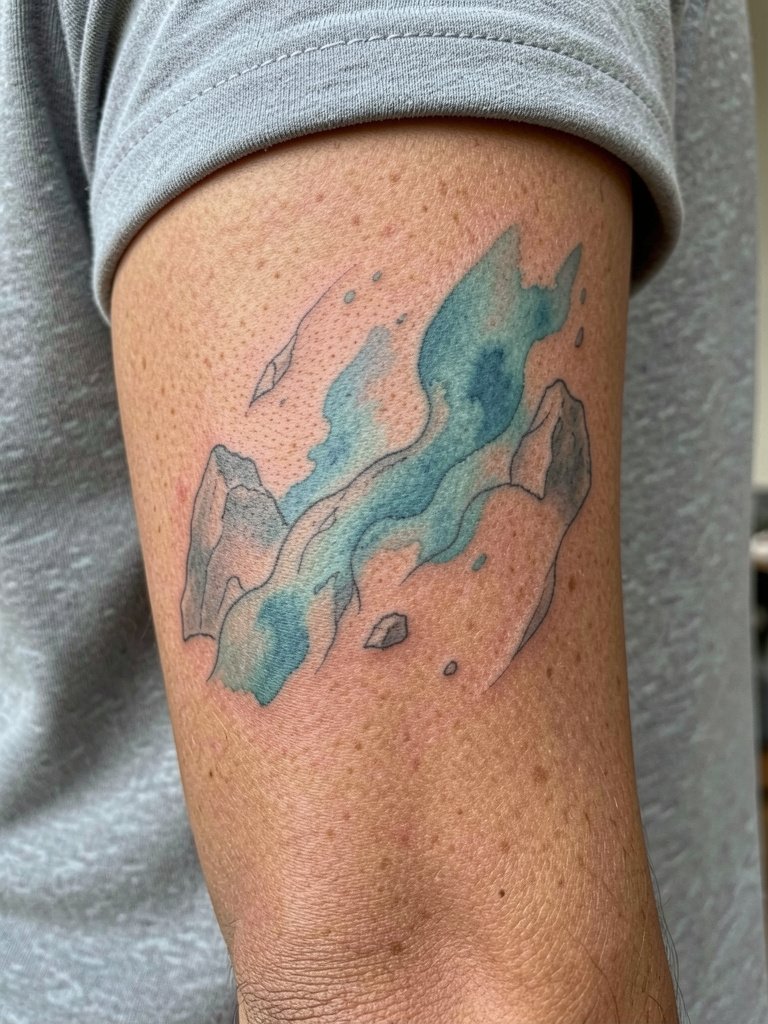
Watercolor washes can be gorgeous but they tend to soften faster on forearms. I recommend this design only if you accept reduced contrast over the years or plan for periodic color refresh. Specify to your artist that the color fields should have some darker anchor points so the composition keeps shape as pigments fade. The usual mistake is using pastels without any deeper base, which can disappear on medium and dark skin. Pain and session length vary with color layering, expect a 60-minute minimum. For an outfit that complements the wash, choose a teal flowy blouse.
8. Neo-Traditional Mountain Range with Sun Burst, Inner Forearm
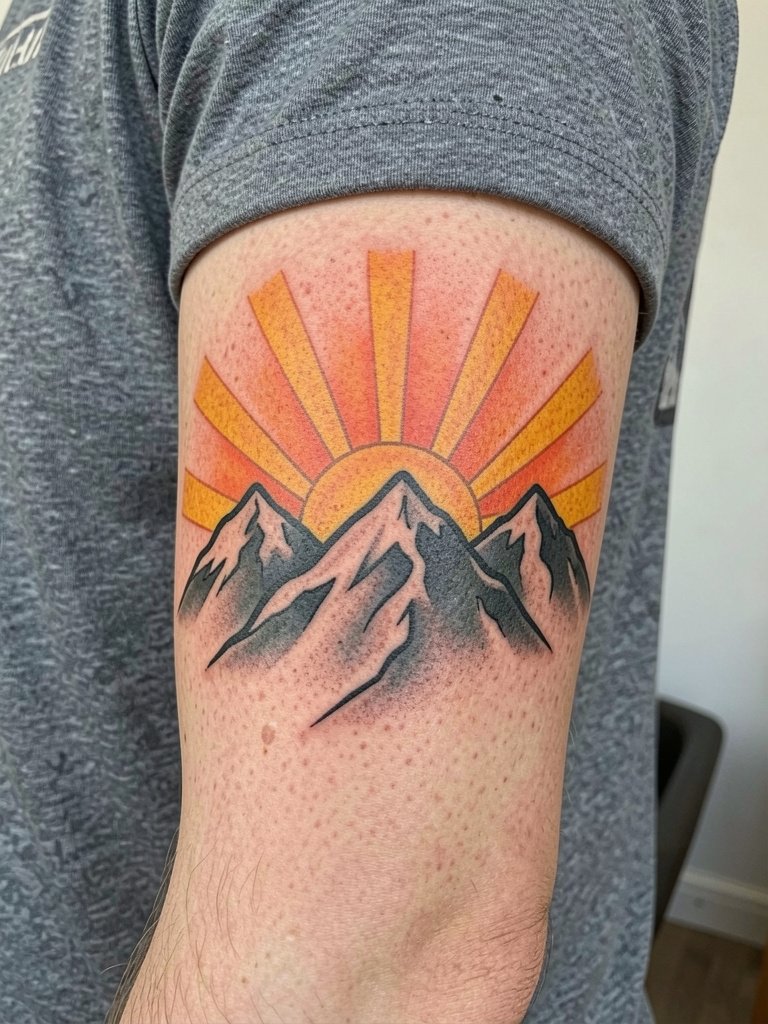
Bold neo-traditional color reads well and ages predictably because of strong outlines and solid saturation. Choose this if you want longevity with color and clear contrast. When you consult, ask the artist to mark ray spacing and confirm the edge crispness so sun rays do not blur into background shading. The mistake is asking for watercolor-style softness inside a neo-traditional outline. Session time is longer and may take two sittings for solid color packing. For a cohesive look, try a vintage graphic tee in red that echoes the sun burst tones.
9. Ignorant-Style Wildflower Patch, Inner Forearm
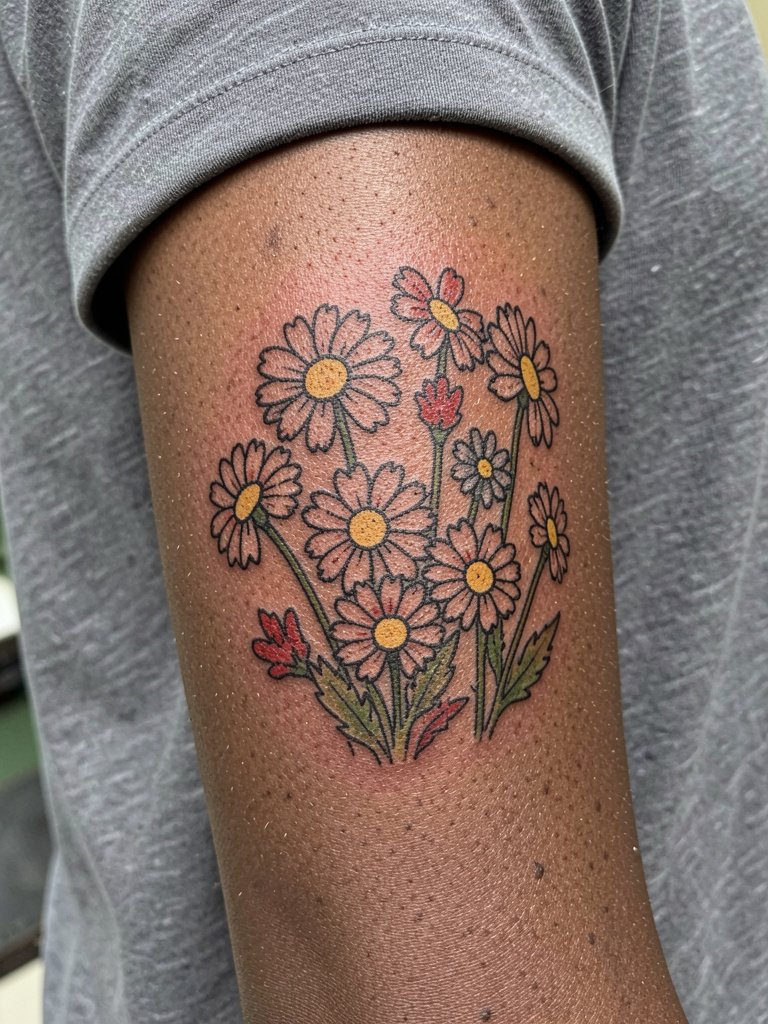
The ignorant style intentionally looks imperfect, which makes it a great choice if you want humor and personality in a small patch. Ask the artist to keep uneven petal count and asymmetric stems so the "off" vibe is deliberate rather than sloppy. A common mistake is requesting a sketchy look but then expecting perfectly even spacing, which defeats the aesthetic. Pain is moderate and the session is short. Pair with a retro denim jacket and pastel tee to match the playful energy.
10. Ornamental Mandala Leaf, Inner Forearm
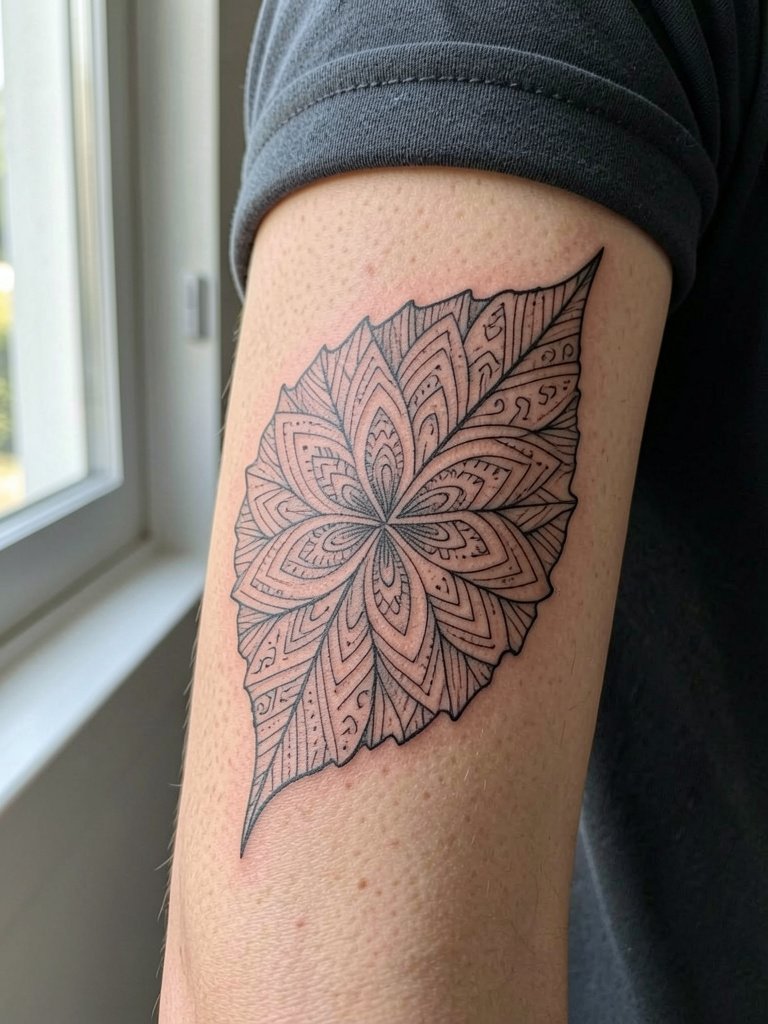
Mandala-filled leaves look intricate and spiritual but need scale to keep symmetry readable. Request a printed stencil and a mock-up on tracing paper to check how tiny interior geometry will hold on moving skin. The mistake is cramming too many mandala rings into a small leaf, which blurs into a single gray tone over time. Expect a moderate pain level and a session of about an hour. For a refined reveal, a dainty gold stacked bracelet set on the opposite wrist frames the leaf without competing.
11. Micro-Realism Bird in Flight, Near Wrist
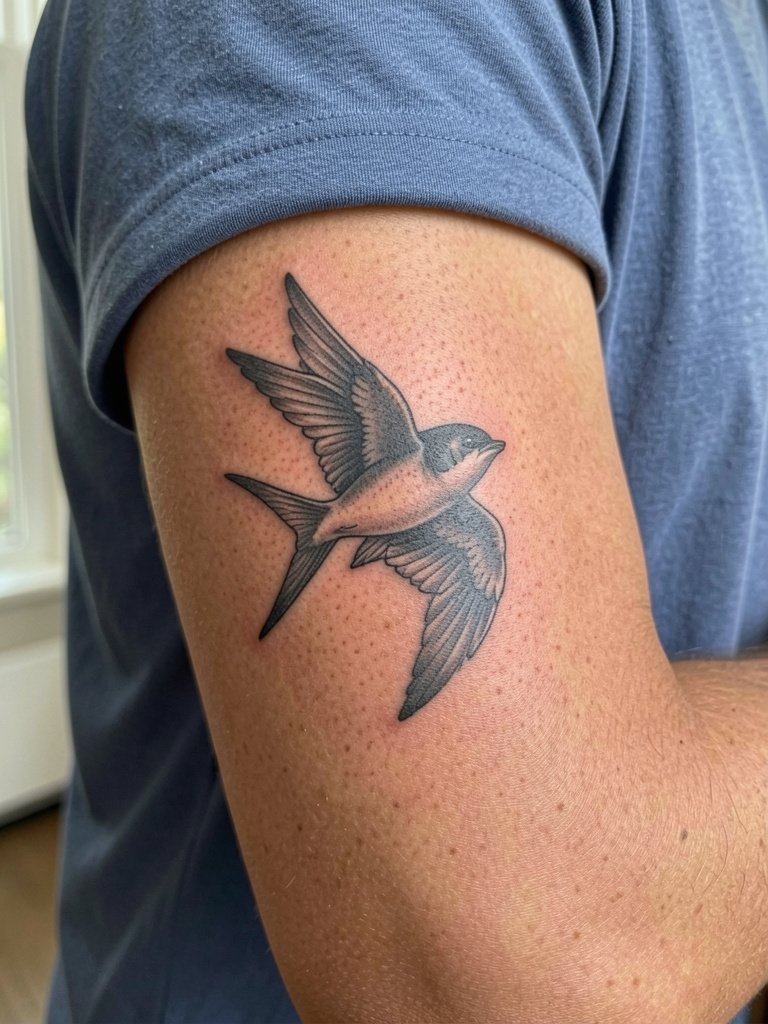
Micro-realism birds deliver lifelike detail in a compact size but they need a minimum scale to keep feather texture. I recommend 1.5 to 2.5 inches for wrist placements and ask the artist to show a magnified healed example so you know expected contrast. Small, over-fine feathers are the common error. Watch for blowout risk if the bird sits too close to the wrist crease. Sessions are single and focused, about 45 to 60 minutes. Style with a thin gold pendant and simple sleeve to draw attention to the small details.
12. Fine Line Compass with Leaf Motif, Inner Forearm
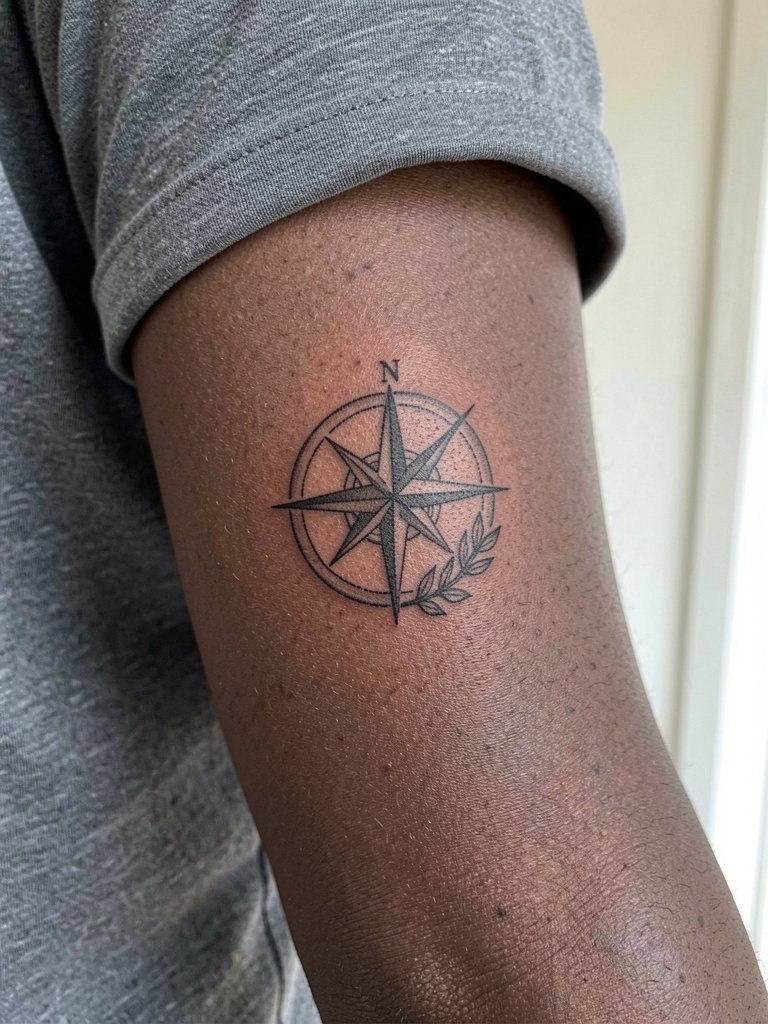
A compact compass with botanical detail pairs symbolism and nature without heavy shading. For travelers, this design reads well when the artist spaces cardinal points slightly wider than in standard compasses. Ask for a drawing that emphasizes the leaf contrast and request a healed photo example from the artist's portfolio. The usual pitfall is making the compass too small so the needle blurs into surrounding shading. Session time is short and pain is moderate. Wear a crew neck tee for a clean, minimalist presentation.
13. Geometric Earth and Tree, Inner Forearm
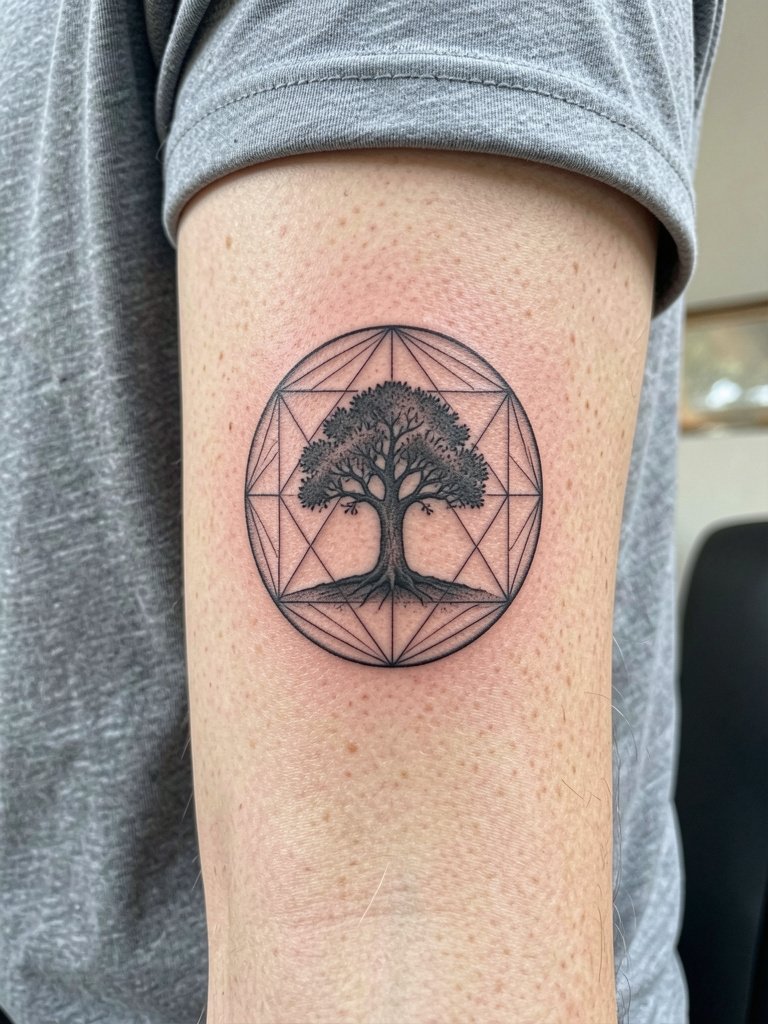
Combining a tree with geometry makes a modern statement that relies on crisp linework. I favor slightly thicker geometry outlines so the shapes stay legible as the skin moves. Ask the artist to test the circle on your forearm with a sticker stencil and to adjust diameter until the circle sits flat with no distortion near tendons. Tiny intersecting lines are a frequent mistake because they can fill in. Plan one session for fine line work. For evenings, a thin silver chain bracelet complements the understated geometry.
14. Blackwork Vines with Hidden Wildlife, Inner Forearm
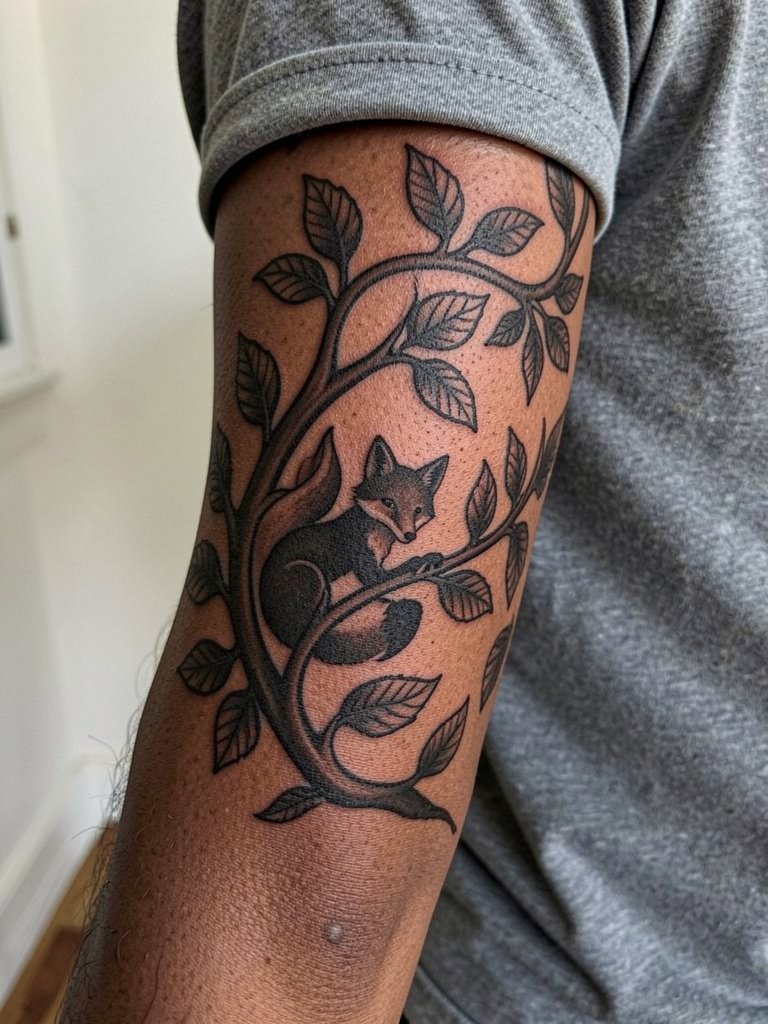
Blackwork vines offer strong contrast and room for hidden details, making them a storyteller piece that ages into a graphic wrap. Ask the artist to mark animal placement on the stencil so each silhouette sits in a leaf shadow and avoids high-friction spots near the wrist. A common error is making animals too small, which loses definition as the vine settles. Expect two sessions if you want deep fill and crisp negative space. For a rugged complement, layered leather bracelets on the opposite arm match the high-contrast look.
15. Watercolor Mountain Lake Reflection, Inner Forearm
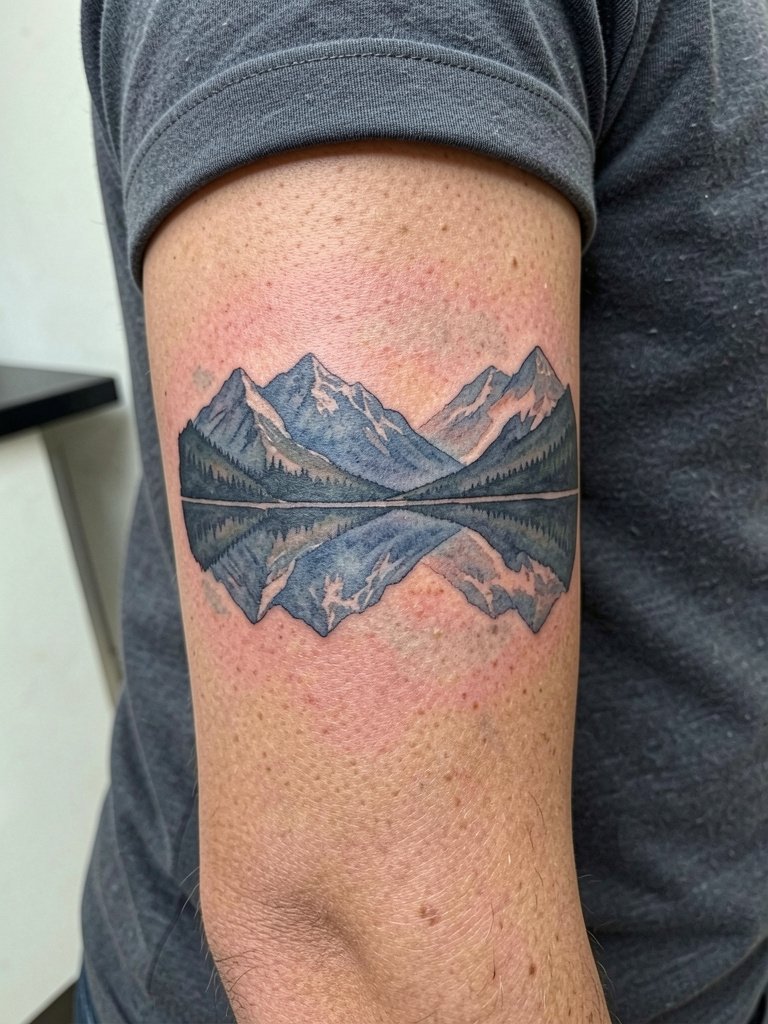
A lake reflection is atmospheric and best executed with intentional darker edges to anchor the wash. If you love the soft look, insist on deeper baselines and ask the artist which pigments they prefer for long-term stability. The wrong approach is trusting only pastel washes with no anchor points. Expect 60 to 90 minutes and a moderate pain level. Pair the piece with a soft blue blouse that echoes the watercolor palette.
16. Single Needle Fern Frond, Inner Forearm
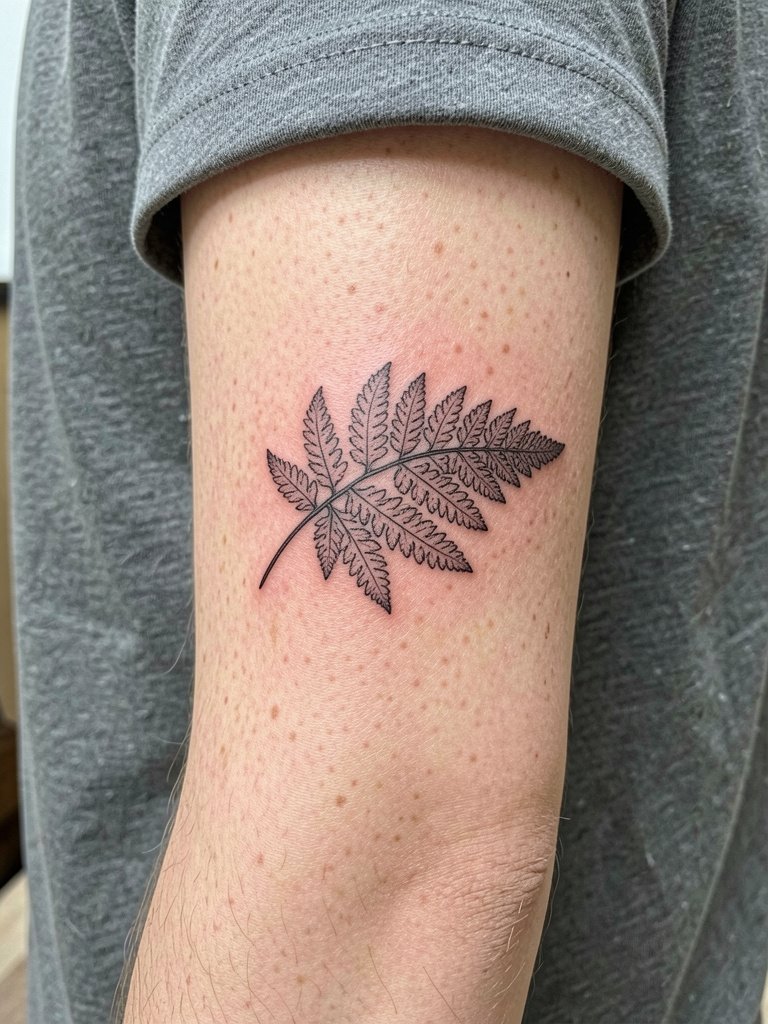
A single-needle fern is elegant but vulnerable to blur on the inner forearm. I advise requesting slightly stronger spine linework and open spacing between pinnae to maintain silhouette. Ask the artist to show a healed sample of single-needle foliage on similar skin tones so expectations are realistic. The mistake is insisting on hairline stems that vanish into softness. Pain is moderate and the session is under an hour. For a natural edit, wear a wooden ring for an earthy accessory match.
17. Tiny Topographic Lines, Inner Forearm
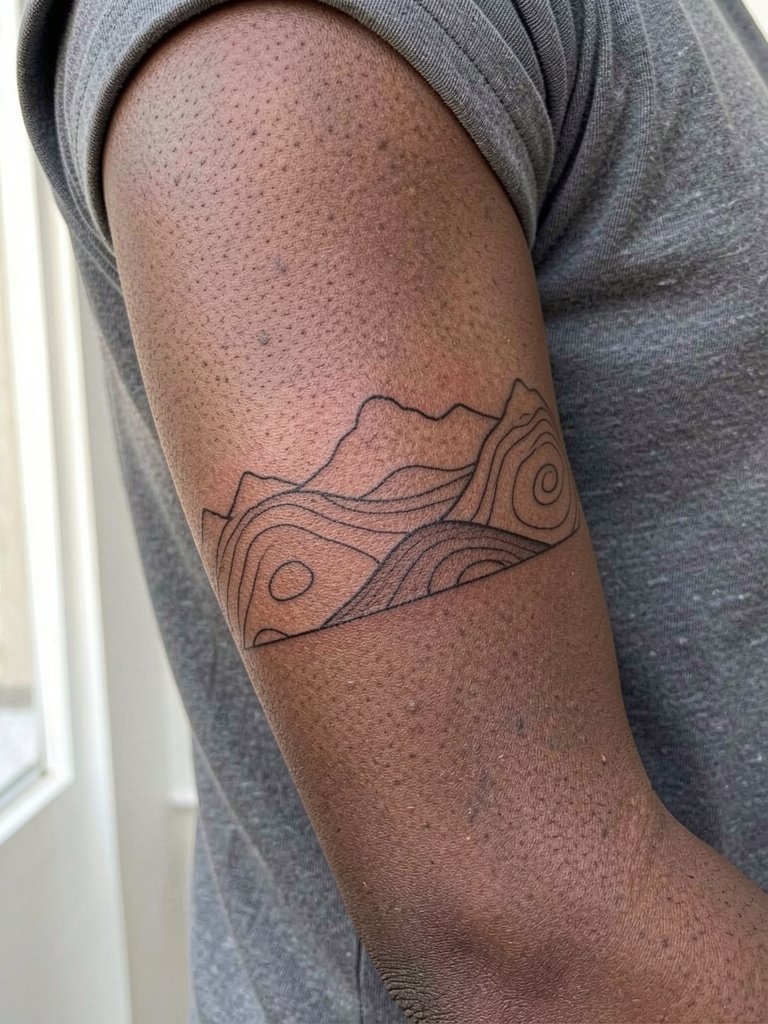
Topographic tattoos read as abstract maps and are great when you want geometric flow without heavy detail. Tell the artist to increase line spacing slightly and to avoid clustering many concentric rings inside a one-inch area. Dense rings are the main aging problem because they can soft-focus together. Sessions are quick and pain is moderate. A neutral base outfit keeps the lines visible, so try a sand or cream linen shirt for contrast.
18. Small Fox Silhouette with Wildflowers, Inner Forearm
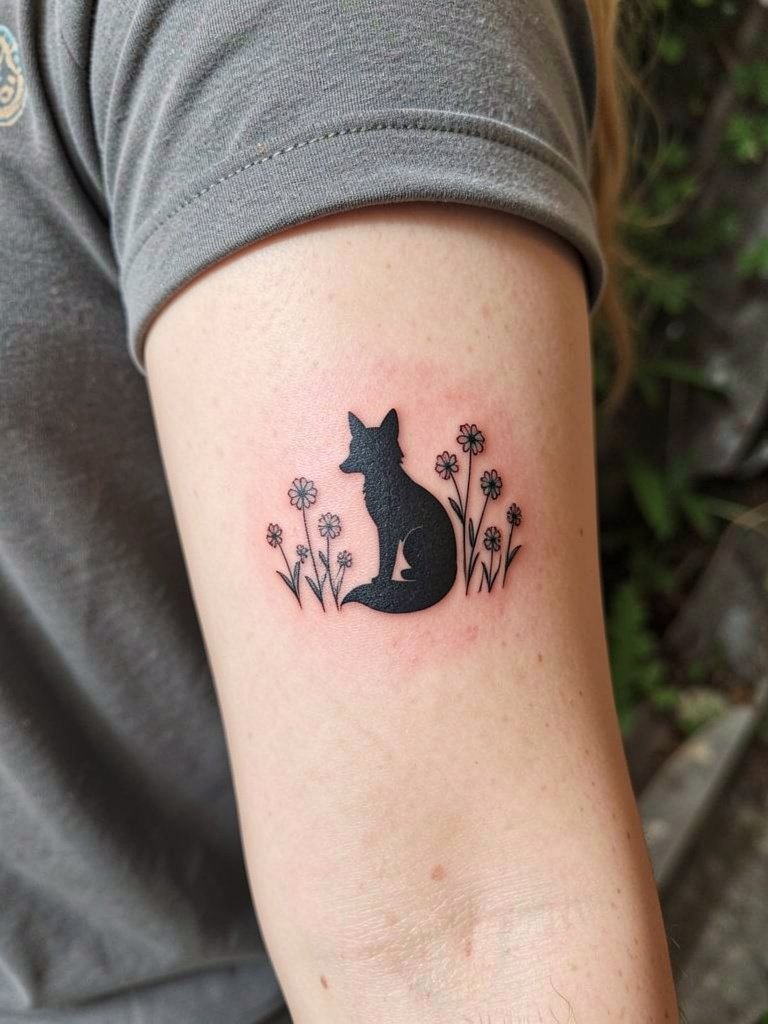
A small animal silhouette paired with florals lets you keep storytelling while staying readable. I recommend specifying silhouette size and flower spacing so the animal does not become a blob as the work settles. Artists often place the fox too close to the wrist crease and lose tail details. Expect about 45 minutes of session time with moderate pain. Style this with a clean white blouse to keep the detail visible in photos.
19. Crescent Moon with Stippled Stars, Inner Forearm
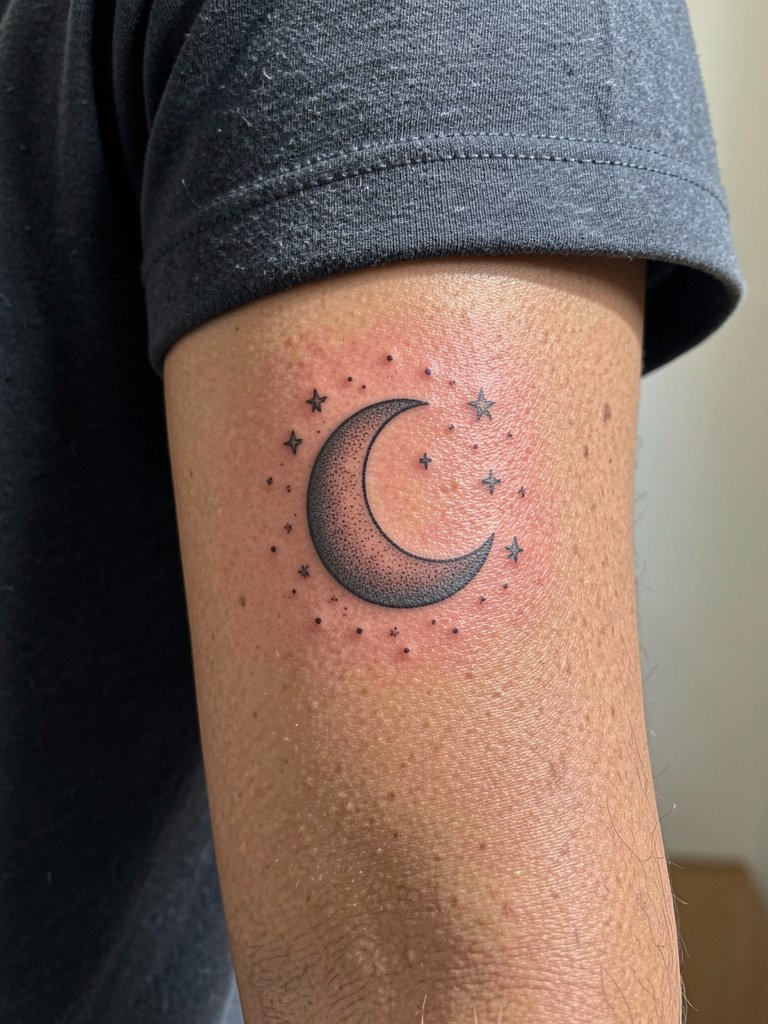
Stippled moons offer depth without heavy shading, but dot spacing must be planned to avoid early fill-in. Ask the artist to demonstrate the darkest and lightest stipple densities they plan to use, and to show a stencil on your arm so you see distribution. The mistake is crowdsourcing too many tiny dots in a small area. Expect a 45-minute session and a pain level that is moderate. A minimal outfit keeps attention on the stars, so go with a thin silver chain bracelet as an accessory.
20. Tiny Fern Wreath, Inner Forearm
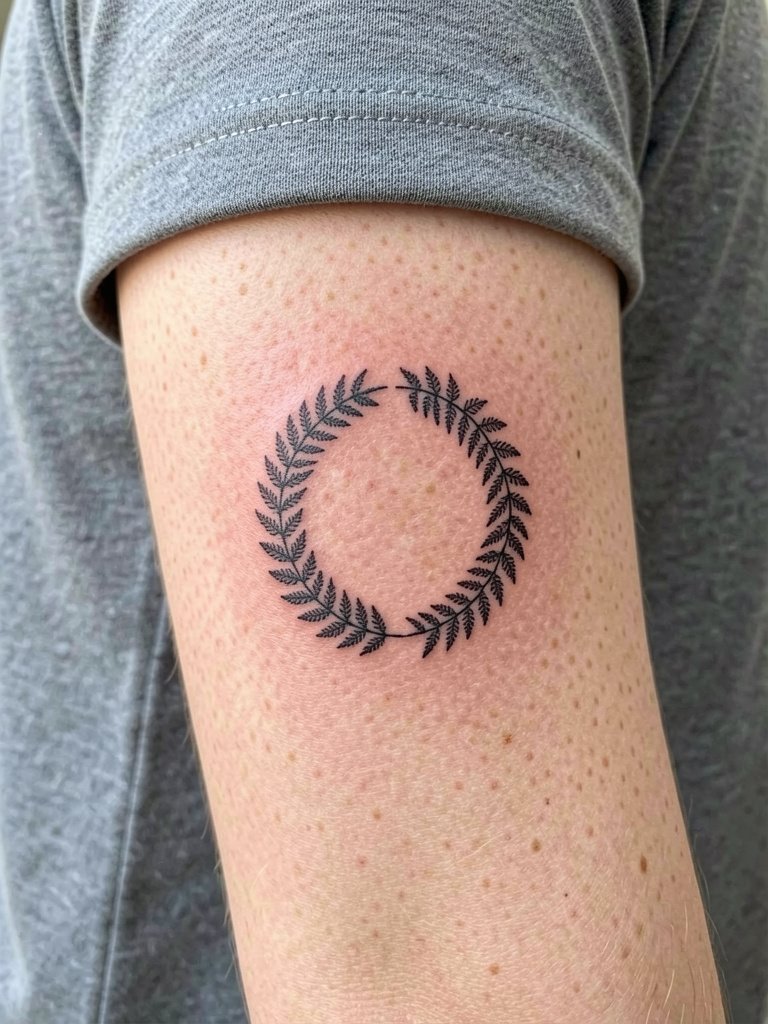
A wreath composition can act like a ringed emblem and sits well near the wrist or mid-forearm. Recommend setting the internal diameter to at least one inch so leaflets do not merge. Ask the artist to show how negative space will look after one year. People sometimes ask for micro wreaths smaller than one inch and later regret lost detail. Session is brief and pain is moderate. A dainty bracelet set on the opposite arm balances the look.
21. Dotwork Vertical Landscape Strip, Inner Forearm
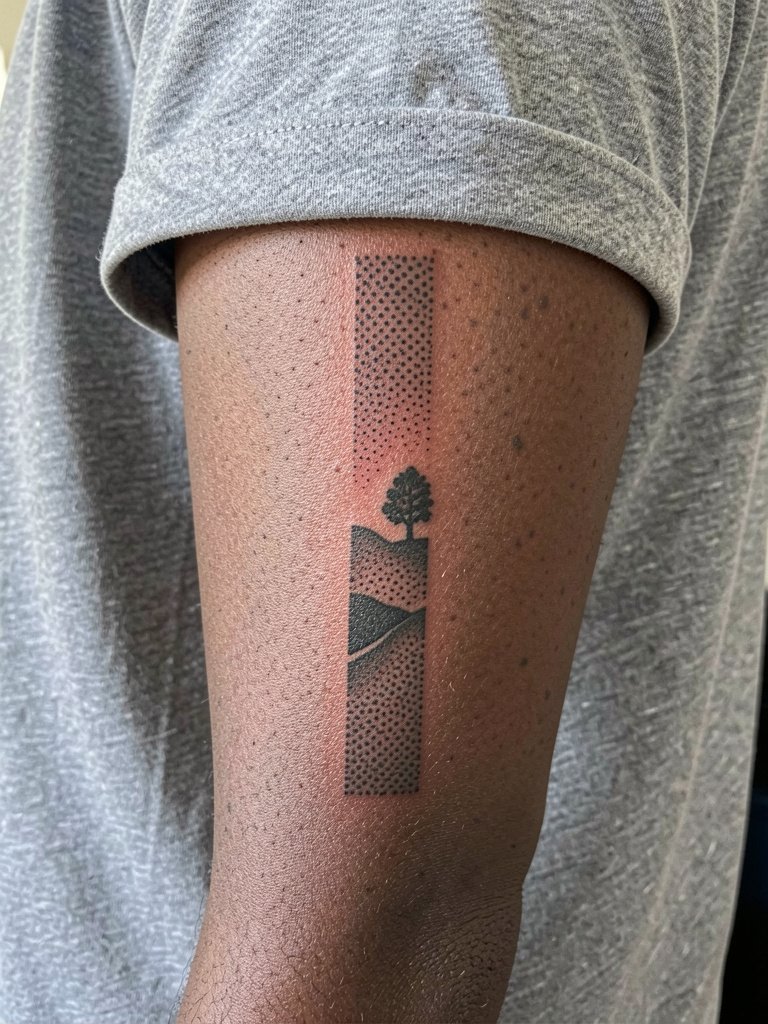
A vertical dotwork strip plays to the forearm's natural length and keeps the scene compact. I advise booking time for two passes when you want deep texture, because a single pass can look flat after healing. Ask the artist if they plan a touch-up session scheduled at the two-month mark to deepen contrast. The mistake is assuming all dotwork is single-session. Session length varies depending on density and may run longer than expected. For an earthy outfit, try a sand or brown linen shirt with rolled cuffs.
Frequently Asked Questions
Q: Will fine line botanicals on the inner forearm blur quickly?
A: Artists are split into two camps on this. One camp says fine line on the inner forearm tends to blur within one to two years because the underside of the arm stretches and sees frequent friction. The other camp argues fine-line work can hold up when the artist uses slightly wider spacing and controlled needle depth, and they point to multi-year healed examples to support that view.
Q: Should I use numbing cream for an inner forearm session?
A: Views divide here as well. Some people say numbing cream helps get through a session without stopping and does not harm ink quality when applied properly. Others feel it masks feedback that keeps the client still and report cases where cream altered how ink sat, so ask about their personal experience and what timing they recommend.
Q: How do I find artists who specialize in nature forearm designs?
A: Search hashtags like #naturetattoo, #forearmtattoo, #finelinenature, and #botanicaltattoo on Instagram and TikTok, then filter by location to surface local portfolios. Use Tattoodo or the Inked App with keywords such as "fine line botanical forearm" and look specifically for healed shots so you see long-term results across skin tones.
Q: What should I wear to my appointment for an inner forearm piece?
A: Pick something with short sleeves or loose sleeves that you can roll without pressure on fresh ink. For example, a loose button-down linen shirt or a short-sleeve tee works well. Avoid tight cuffs and long sleeves that might rub the site after the session.
Q: How often do fine-line or dotwork forearm tattoos need touch-ups?
A: Fine-line pieces often need a touch-up around year two on high-movement areas like the inner forearm, while denser dotwork and bold blackwork usually hold longer and may only need refreshes every three to five years. Skin type, sun exposure, and daily friction make a big difference.
Q: Will my tattoo photograph differently on dark skin tones?
A: Yes, medium and dark skin may show subtler shading as less contrast in photos, so ask the artist about slightly stronger outlines or deeper saturation for color work. Bringing healed examples on similar skin tones helps set realistic expectations.
Q: Are there aftercare products that consistently perform best for forearm work?
A: Different people prefer different balms. Some favor thinner plant-based balms that avoid clogged pores, while others stick with occlusive ointments for the first 48 hours. If you are prone to bumps, mention that in the booking so the artist can suggest a product that matches your skin type.