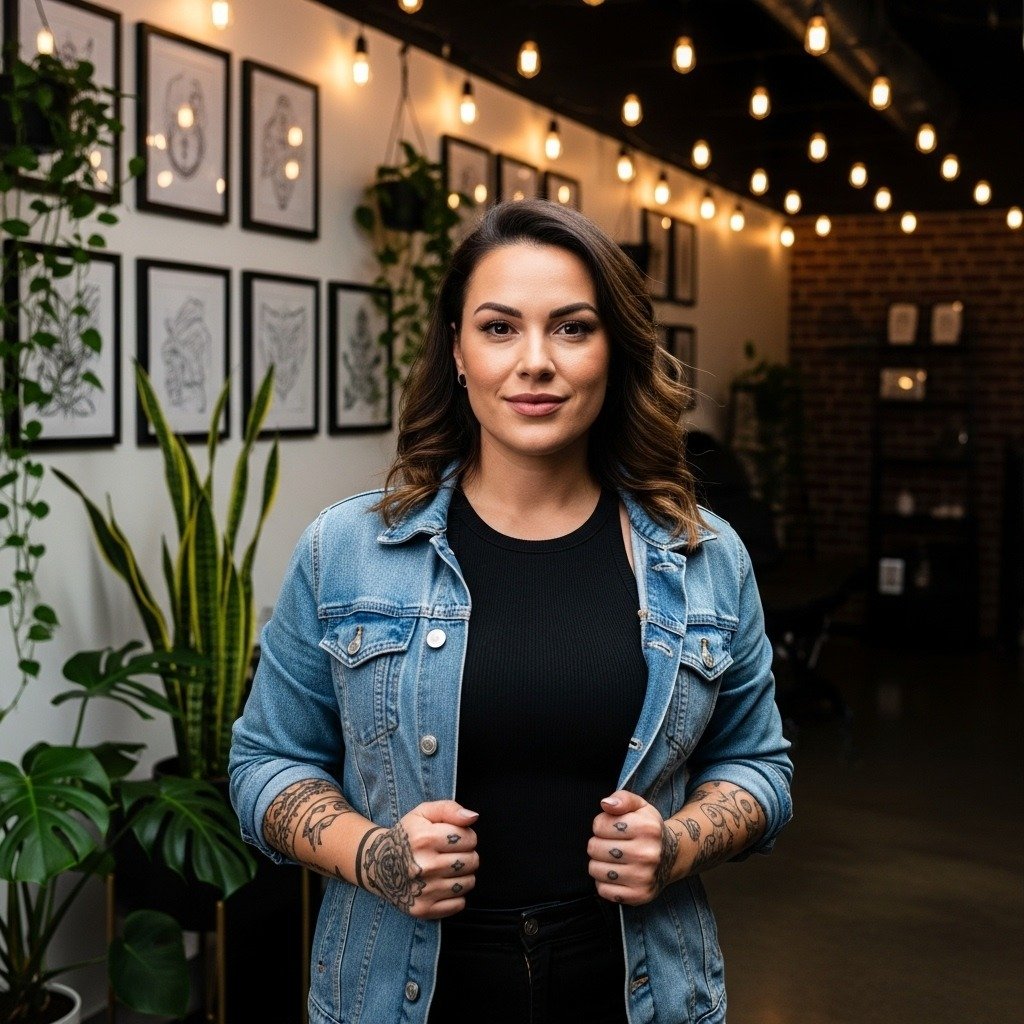
Music tattoos that stick with you are less about copying a viral stencil and more about picking a gesture that will still read on skin years from now. Small soundwaves and hidden lyric bands can feel private and steady, but they require different placement and line weight than a bold neo-traditional guitar. Below you will find ideas that balance symbolism, longevity, and how the design pairs with everyday style so you can save the ones that actually work.
1. Fine Line Soundwave of a Favorite Song
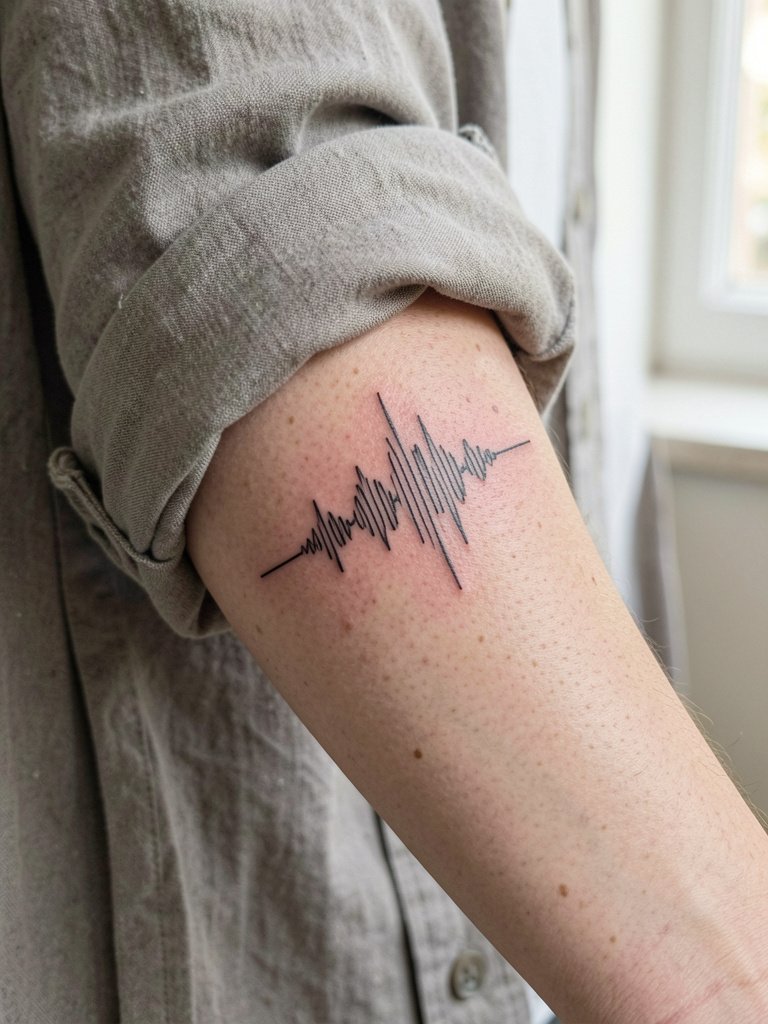
A fine line soundwave makes a private clip visible and tactile, and it reads clean when it's sized with breathing room. One camp argues soundwaves are deeply meaningful because they are a unique visual fingerprint of a specific song or voice. The opposing camp calls them a gimmick that reads like a generic squiggle to most viewers. If you pick this route, use a slightly wider single-needle line weight and plan for a one-year touch-up for wrist placements where motion and friction bite into the detail. For the session wear, roll up a linen button down shirt so the artist has full forearm access.
2. Minimalist Treble Clef with Hidden Lyric
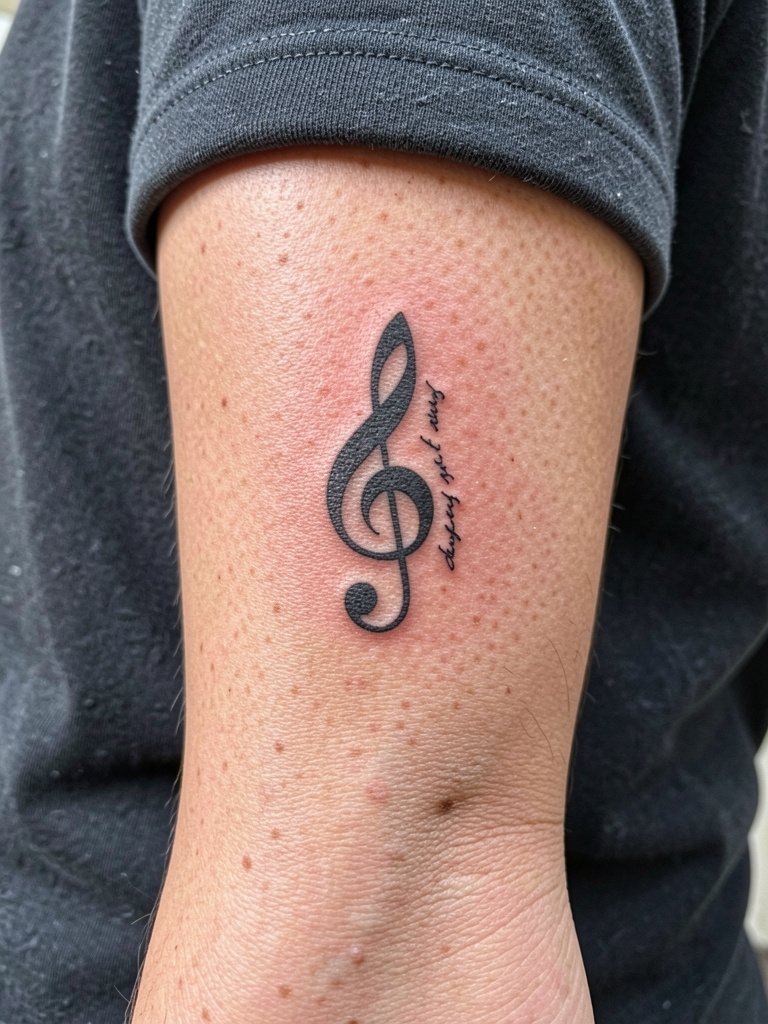
Tiny treble clefs are excellent when you want a secret element that only you or close friends notice. The usual mistake is going ultra-tiny for both symbol and lyric, which blurs into a smudge on the inner wrist. Instead keep the clef readable at one inch and tuck a 2-3 word lyric in a slightly bolder script. During consultation show your artist the exact lyric in the handwriting or font you want, and ask them to mock up how the two will read at 1 inch and at 1.5 inches. For showing it off, pair with a thin chain bracelet set on the opposite wrist.
3. Neo-Traditional Guitar Wrapped in Roses
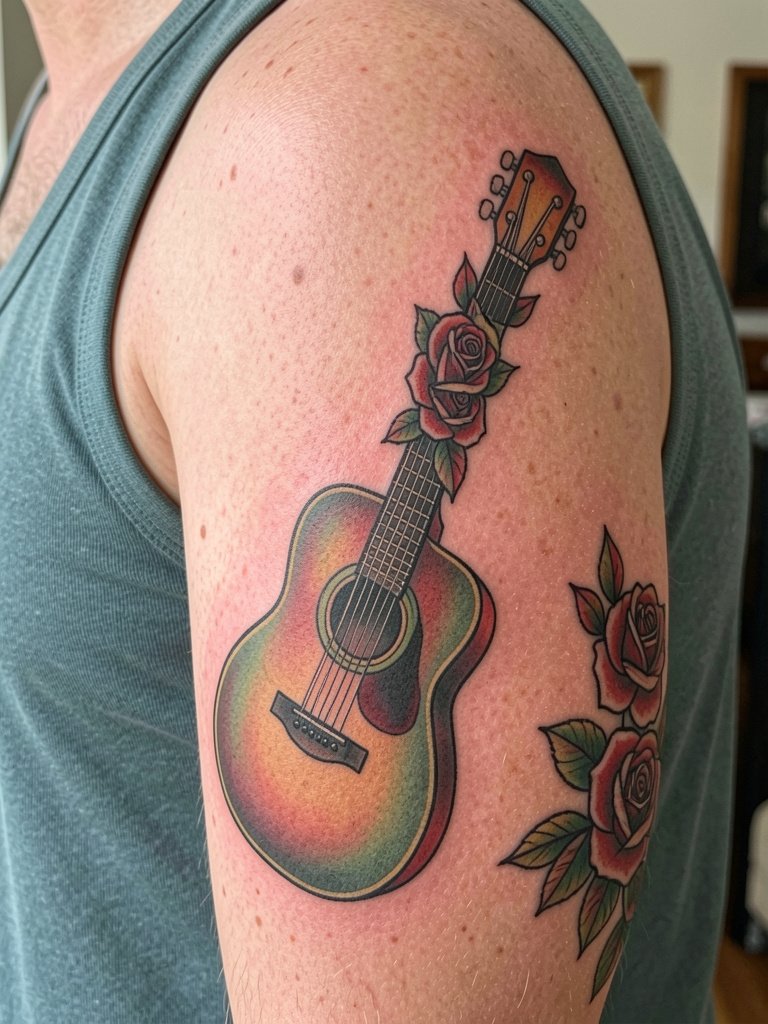
This is the design to pick when you want color that reads at a distance. Neo-traditional saturation and bold outlines age into a visible piece instead of softening into indecipherable patches. Expect the session to be two to four sittings for a full upper-arm wrap. A common mistake is asking for tiny petals inside a guitar body that get lost as the piece settles. Bring reference photos that show the exact color palette and line weight, and plan outfit-wise for vintage cut denim shorts or a solid tank top to frame the finished work.
4. Blackwork Abstract Waveform Pattern
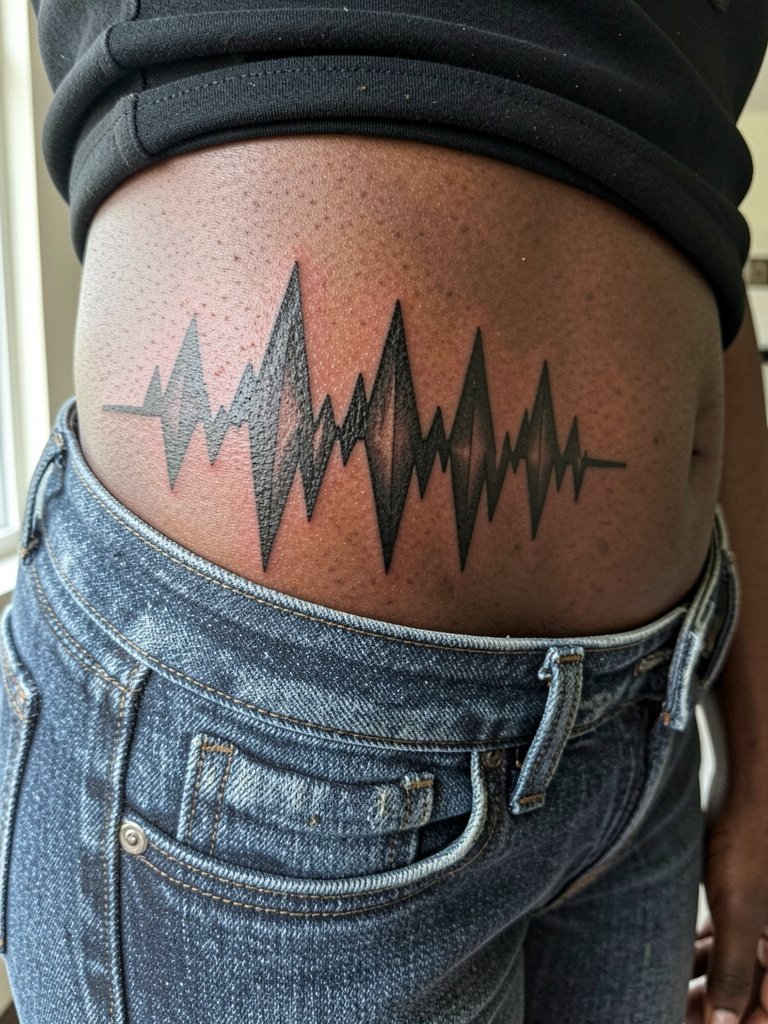
Abstract blackwork uses negative space to read like fabric texture from a distance and like rhythm close up. This placement faces friction from waistbands so the design should avoid micro-detail and stick to bold blocks. A typical client error is asking for too many thin stripes in the waveform, which the hip skin will blur over time. For sessions wear loose drawstring pants so the artist can work without tight waist pressure. To show it off, high-waisted linen pants that can be rolled slightly work well and pair naturally with a high waist linen pants search link.
5. Micro-Realism Vinyl Record Portrait
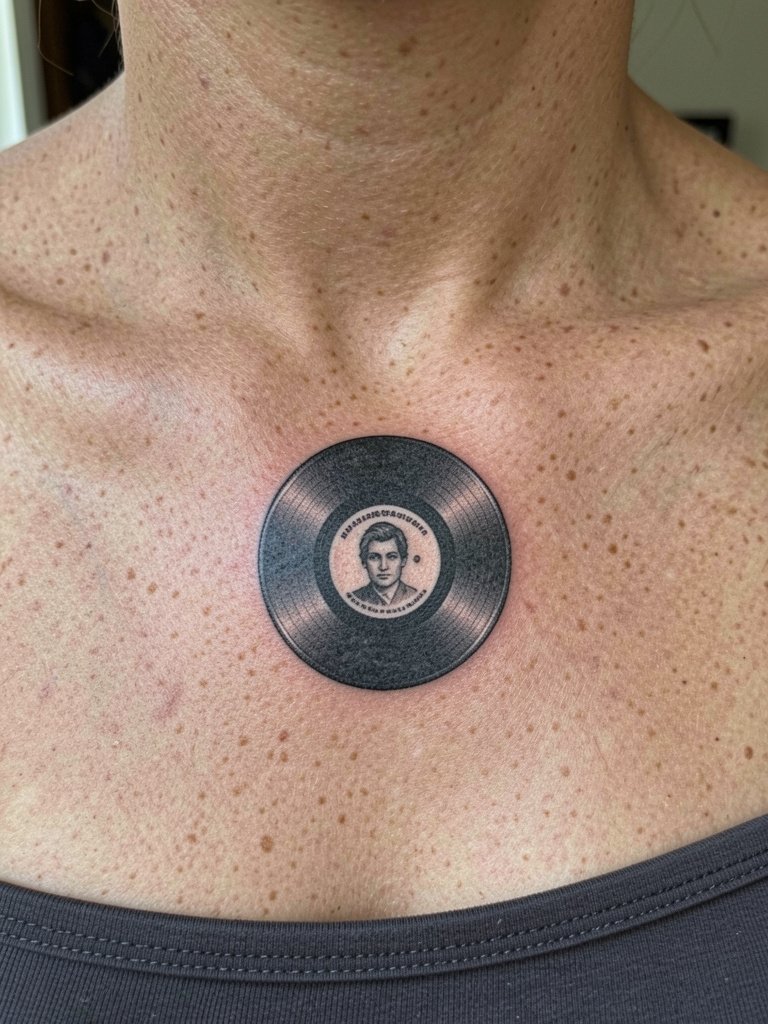
Micro-realism needs solid contrast to remain legible on the collarbone. The common failure is tiny portraits with low contrast that photograph as a grey smudge on darker tones. Ask for dense black center grooves and crisp edge highlights when you preview the stencil. At the session wear a strapless top so the artist can access the full collarbone. Plan for a possible touch-up at the one-year mark to keep the portrait crisp.
6. Ornamental Mandolin with Geometric Fill
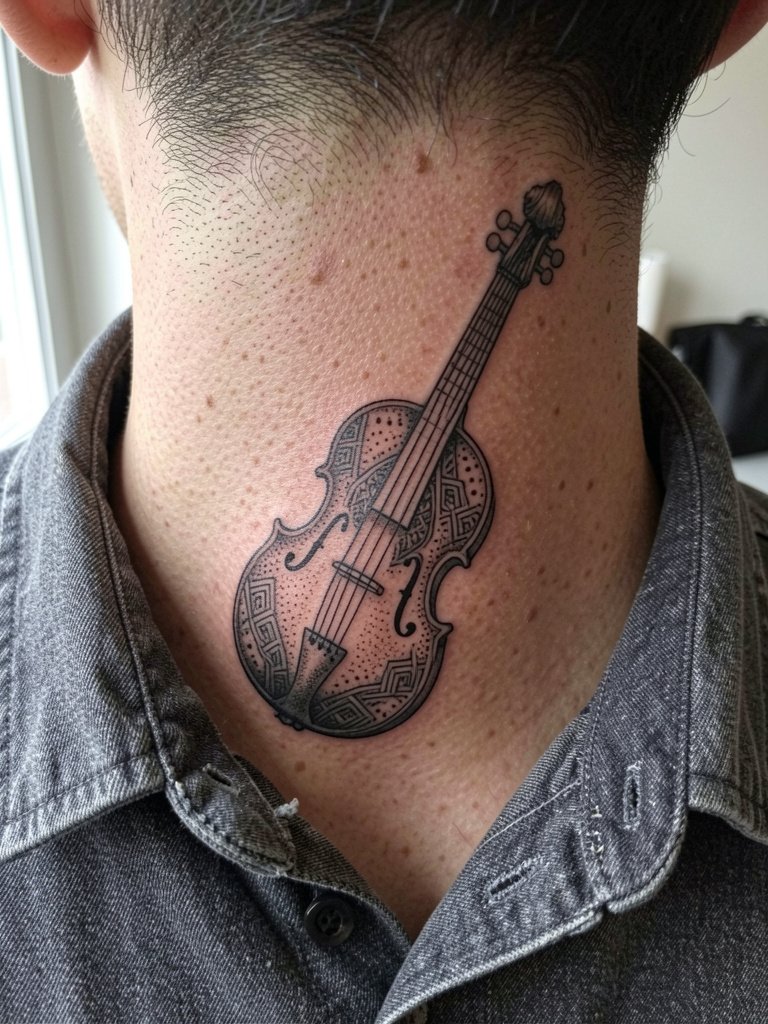
An ornamental mandolin works when you want musical geometry rather than literal instrument portraiture. For nape placement be prepared that the hairline and collars will partly hide it in everyday wear. The common mistake is using too much micro-dot shading close to the hairline where touch-ups are trickier. When you sit for this piece, bring reference photos showing the exact geometric fills you want so the artist can scale the pattern for the narrow nape. Note on cultural origin, ornamental motifs that draw on historical patterns deserve attribution and respectful use.
Session Day Picks
The first six designs above range from exposed forearms to the nape, and a few need specific session-day choices to keep linework crisp and healing smooth.
-
Tattoo Grime initial healing balm. A thicker, non-greasy balm many people use during the first few days to keep fine line work from smudging while still letting the skin breathe.
-
The Healing Co. plant-based balm. Good for sensitive sternum and chest skin where petroleum-based products can feel heavy.
-
Johnson & Johnson gentle body wash. A non-foaming mild wash preferred by some for daily cleaning of lyric and micro-ink placements.
-
Hustle Butter Deluxe. Lighter than petroleum ointments so it does not leave a heavy film on detailed single-needle work.
-
Saniderm protective film. Handy for ribcage and sternum pieces to guard against bra friction during the first three days.
7. Watercolor Piano Keys with Splashes
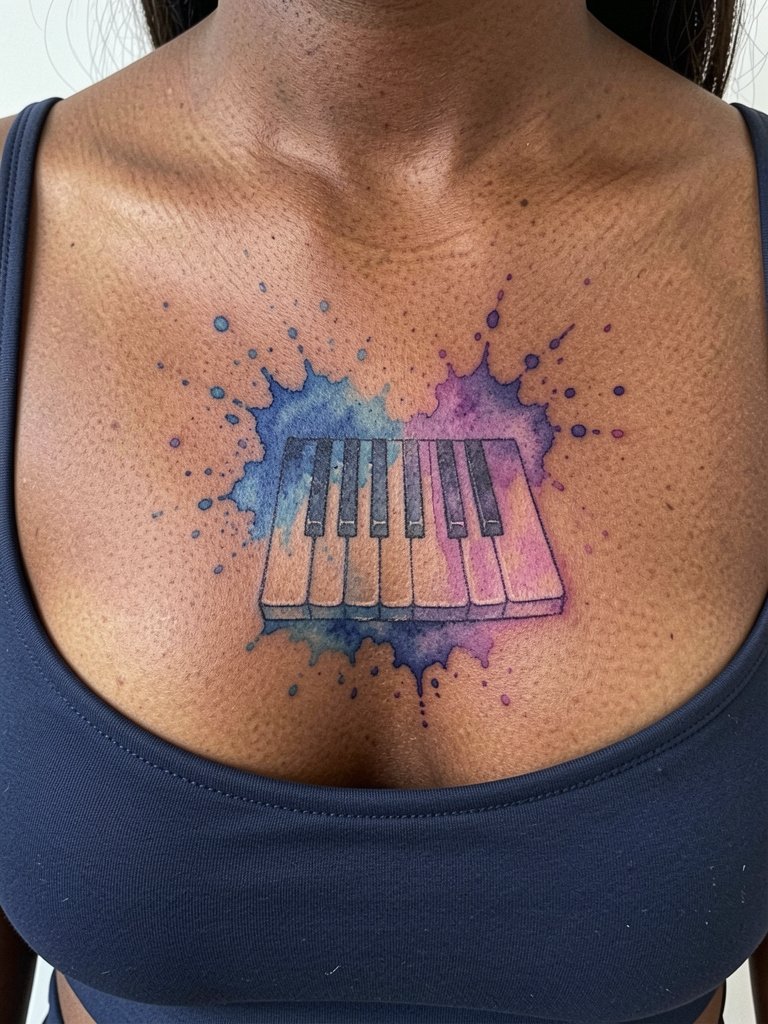
Watercolor looks beautiful initially but tends to fade more on sternum and chest skin due to friction and sun exposure. If you still want this style, ask for slightly higher saturation and a plan for periodic color refreshes. The session will be slower where the ribs and sternum curve, so bring a strapless top for access. For evenings out, low-cut tops or dresses frame the sternum nicely and you can pair with a low cut top search link to show off the palette.
8. Ignorant Style "Broken" Musical Note on Side Neck
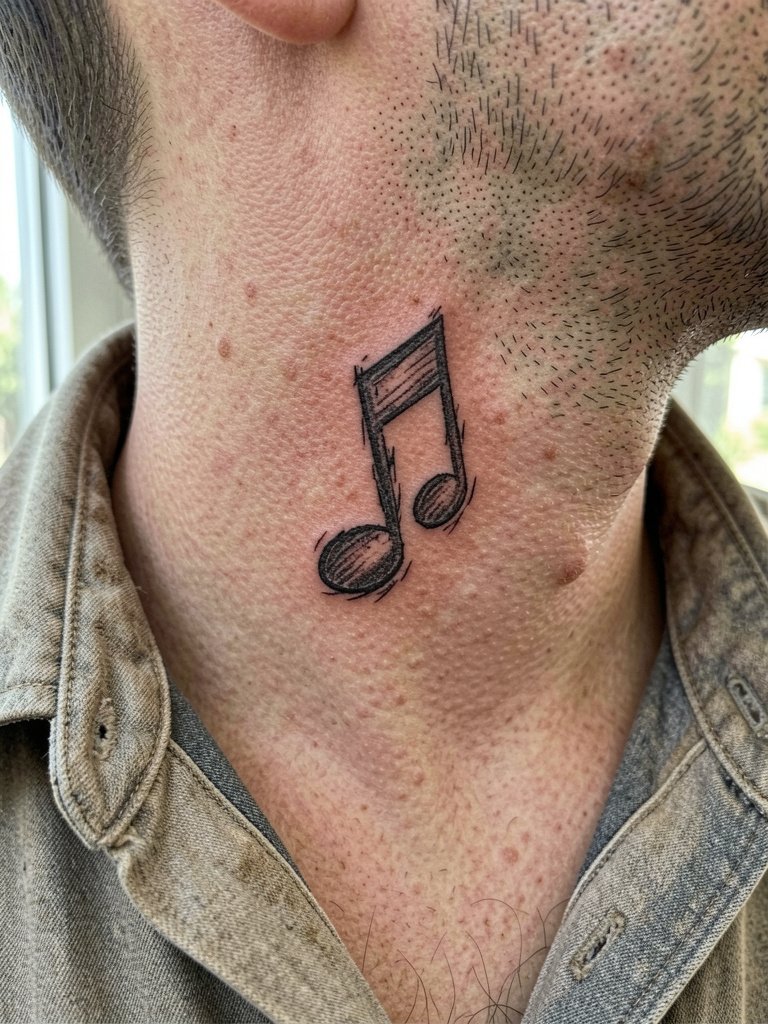
The ignorant style thrives on rough edges and visible hand-made charm. Side of neck skin is unforgiving for thin stray strokes, so pick bold uneven lines rather than ultra-thin sketch lines. Expect a short session but a sensitive one, because the lateral neck is prone to more movement and twinges. During the appointment wear a shirt with an open collar so the artist has unobstructed access. Bold colors or strong black will hold better than pale fills on this placement.
9. Fine Line Script Lyric Band on Inner Thigh
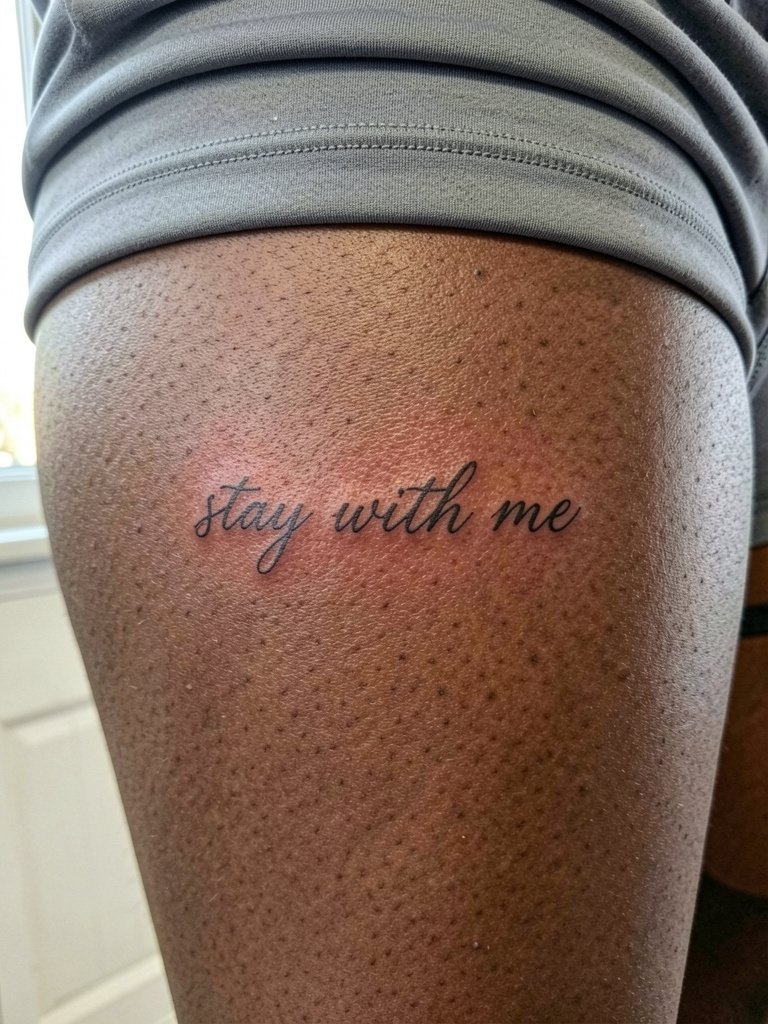
Inner thigh lyric bands are intimate and private, which is why many choose them. The main mistake is using ultra-thin handwriting that disappears when the skin shifts. Instead use a slightly heavier single-needle stroke and plan for a touch-up if you sit on textured surfaces a lot. For the session wear loose shorts that the artist can roll up without pressure on the area. High-waisted shorts or a high waist shorts search link make it easy to reveal the area after healing.
10. Neo-Traditional Band Logo with Skulls on Inner Upper Arm
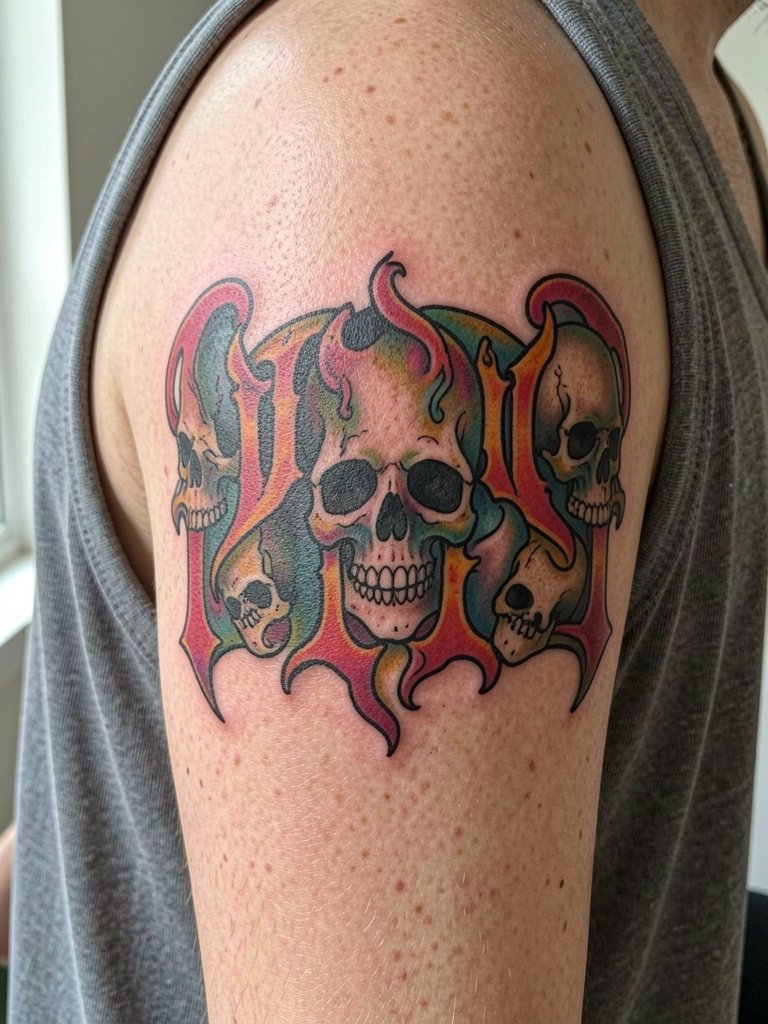
Logos with neo-traditional elements look lively when sized to read at arm distance. Avoid asking for the logo at finger-size if there is lettering, because inner-arm skin compresses and makes letters lose definition. Request a custom sketch that balances logo fidelity with readable lettering, and bring multiple reference shots so the artist can adapt. For showing it off, wear vintage cut denim shorts and a vintage denim search link for the rock-and-roll vibe.
11. Minimalist Piano Key Finger Tattoo
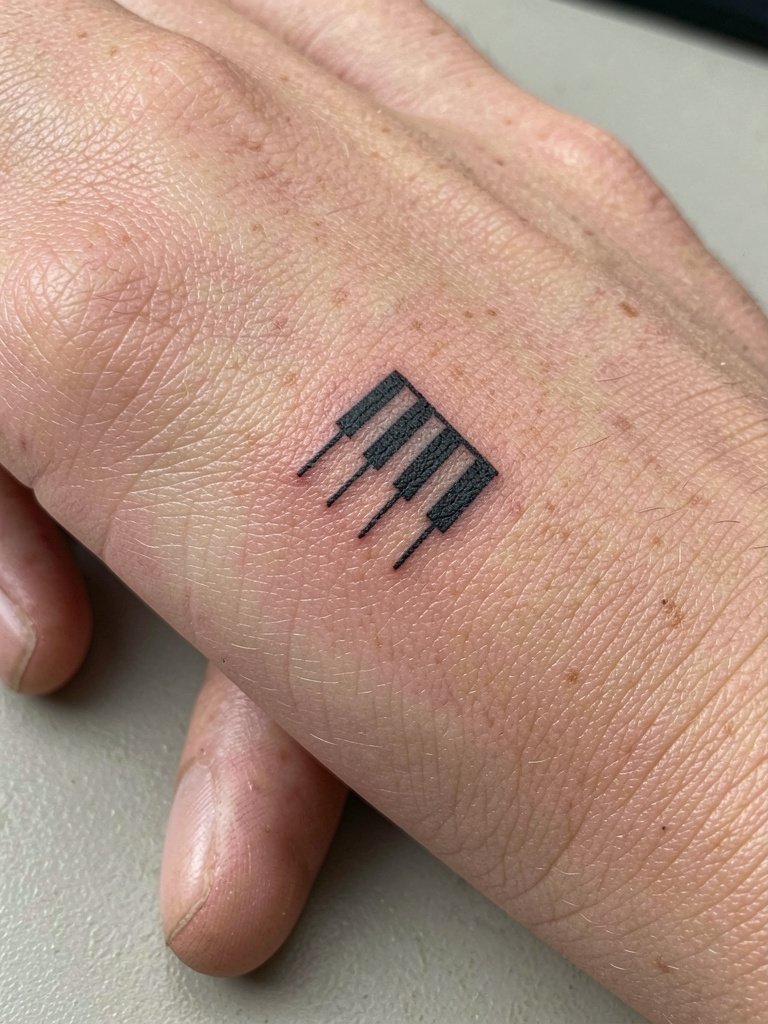
Finger tattoos live a rough life because of washing and contact. The usual mistake is asking for super-thin keys that disappear; instead use thicker black blocks and accept touch-ups will be needed sooner. Session time is short but healing requires more attention and possible annual refresh. Wear no rings on the hand during the appointment and avoid heavy creams for the first two weeks. Minimalist rings on the opposite hand complement the design and a minimalist ring set works well when you want jewelry that does not compete with the tattoo.
12. Blackwork Broken String Guitar on Lower Back
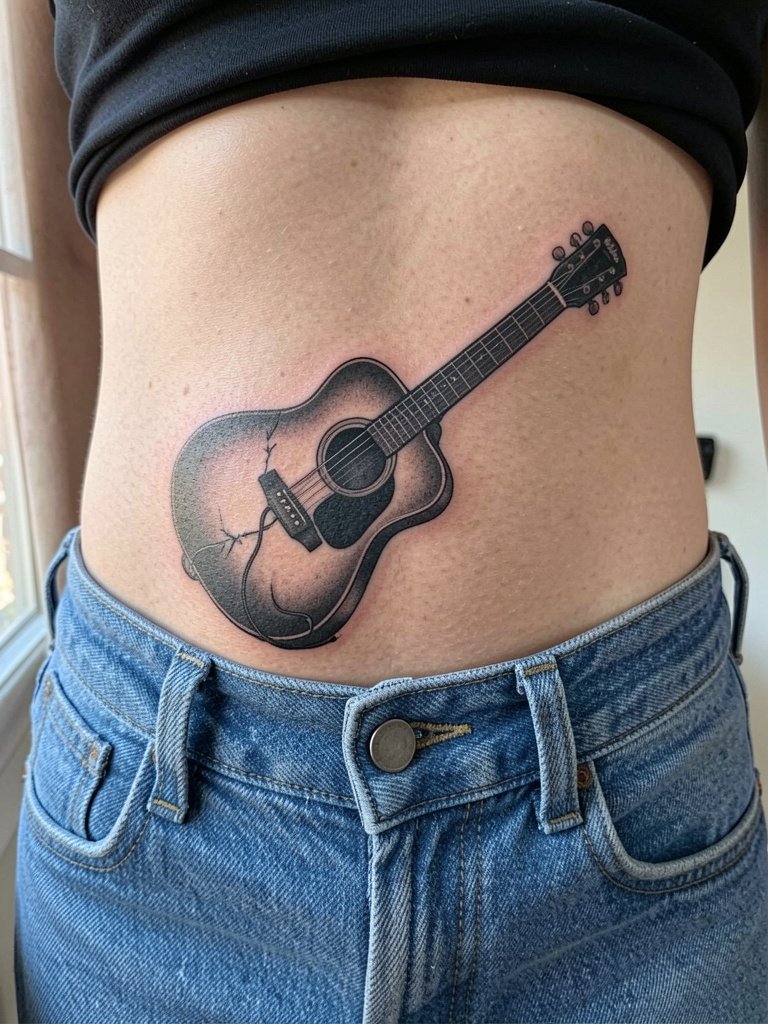
Lower back blackwork reads clearly because of the flat plane and allows for high-contrast motifs like a broken string. Be mindful of waistband friction during healing and avoid tight waistbands the week after a session. Low-rise pants worn normally are the best session choice so the artist can work without adjusting clothing. For nights out, low-rise cuts show the piece and pair naturally with dark jeans and a low rise pants search link.
13. Abstract Geometric Sound Frequency on Outer Forearm
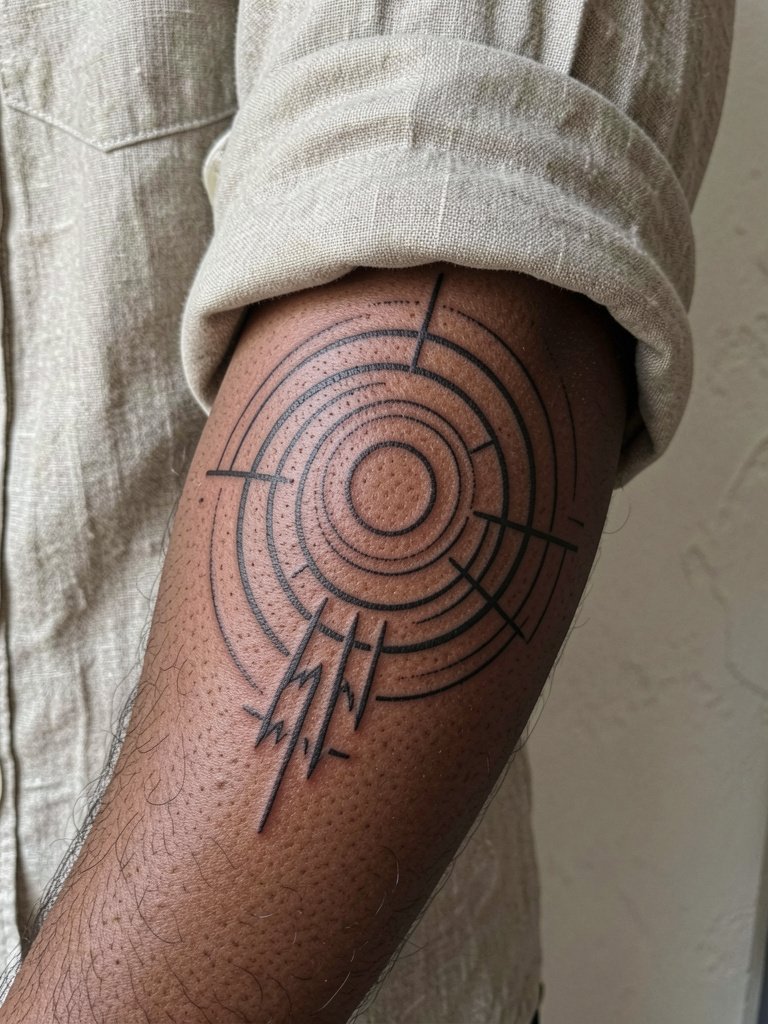
This geometric take on frequency art reads like modern jewelry and avoids the literal waveform debate. The visual mistake is crowding too many concentric rings into a narrow band. Ask the artist to print the design at the intended width so you can see the spacing before the needle hits skin. Dress for the session in rolled-up sleeves and a linen button down shirt link so the artist can pivot around the arm easily.
14. Fine Line Micro-Ink "Album Year" Behind the Ear
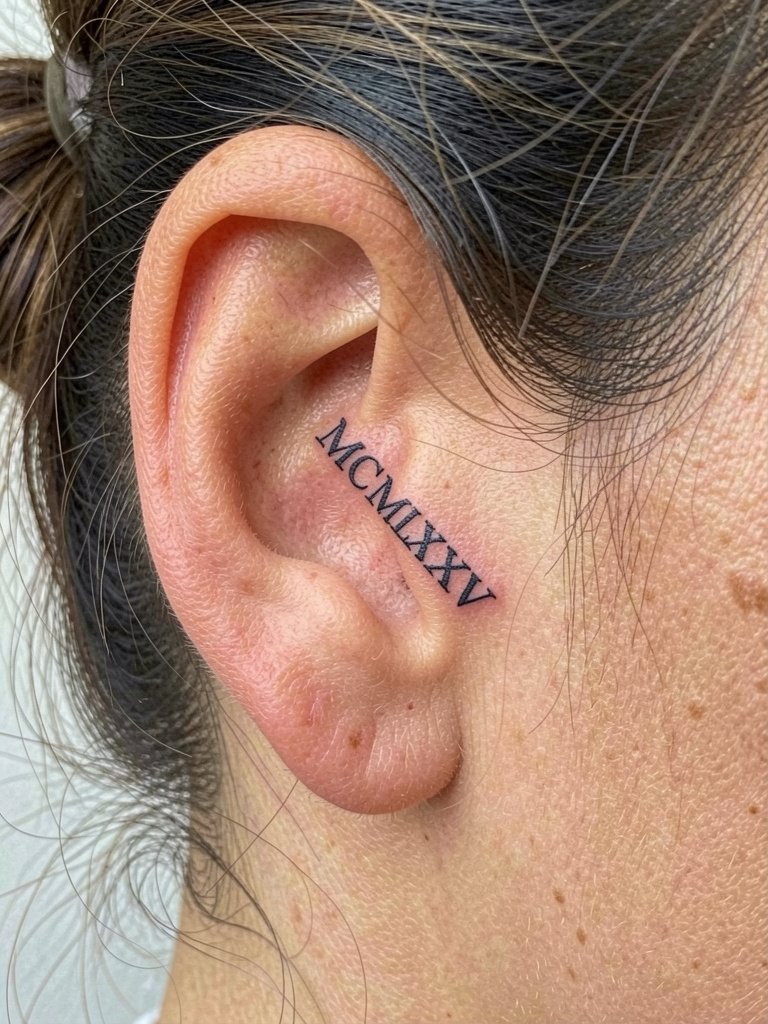
Behind-the-ear micro-ink is discreet but prone to fading because the area is shaded and touched by hair. The usual error is expecting micro text to last untouched. If you want a date, choose bolder numerals or accept a touch-up at 12 months. For the appointment, pull hair up into a natural style so the artist can access the mastoid area without tension. High-collared shirts are handy for covering the area while it heals.
15. Ornamental Drum Set with Floral Accents on Chest
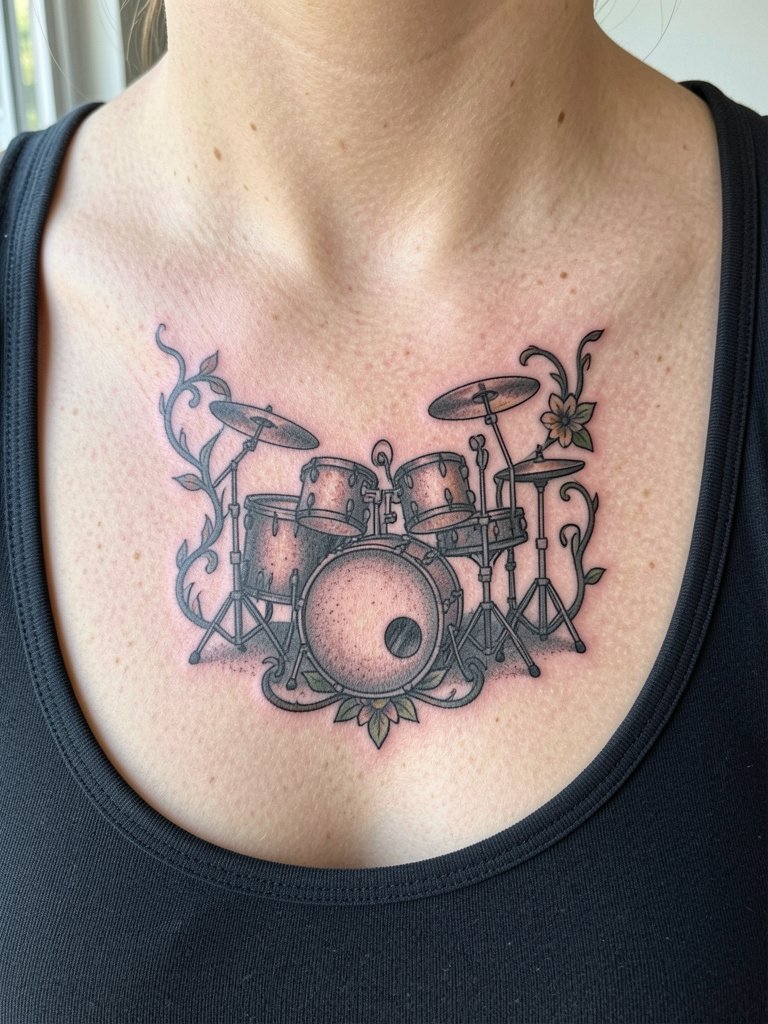
Chest pieces balance visibility and privacy depending on clothing. The common mistake is trying to cram too many drum components into a small chest area which flattens detail. Ask the artist to show you how the drums read when viewed from standing distance versus close up. For sessions wear a scoop-neck so the artist has full access and plan to layer delicate necklaces, like a layered thin chain necklace link, after healing to frame the piece.
16. Album Cover Texture Tattoo
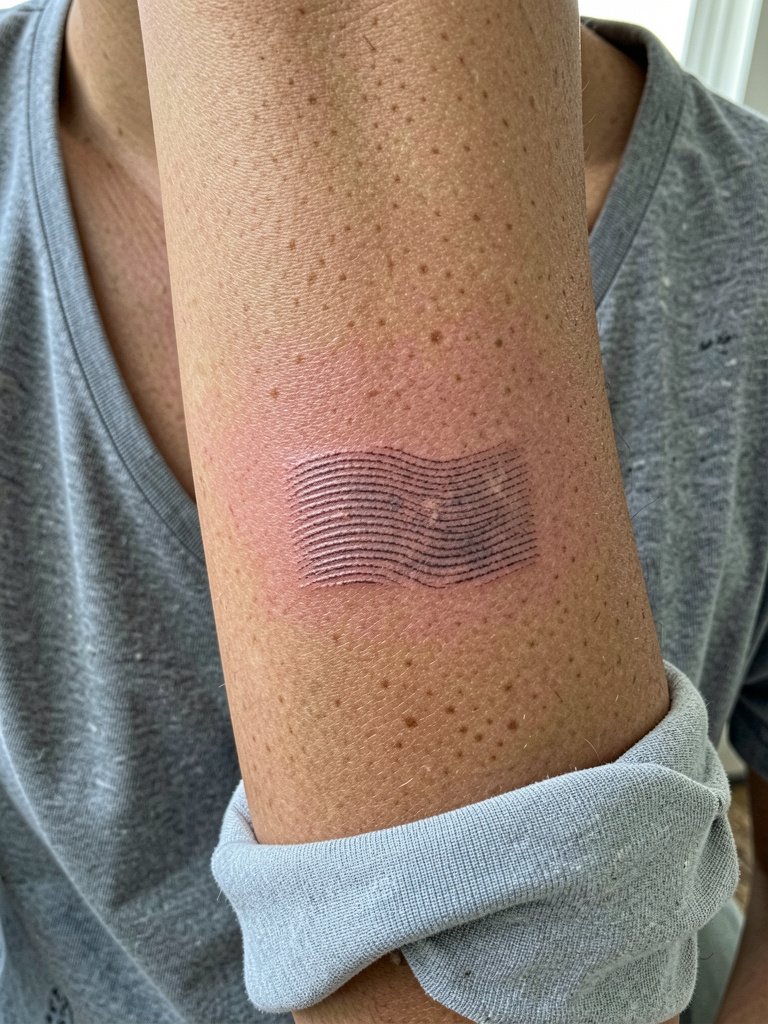
Tattoos of texture instead of full artwork are subtle and photograph well. The idea is to capture physical elements like vinyl grooves or paper grain, so pick a scale where the texture still reads after healing. A common mistake is making the pattern so tiny that it vanishes into the skin's natural grain. Ask the artist to mock the texture as a stencil on your skin first so you can evaluate scale.
17. Negative Space Instrument Silhouette on Upper Thigh
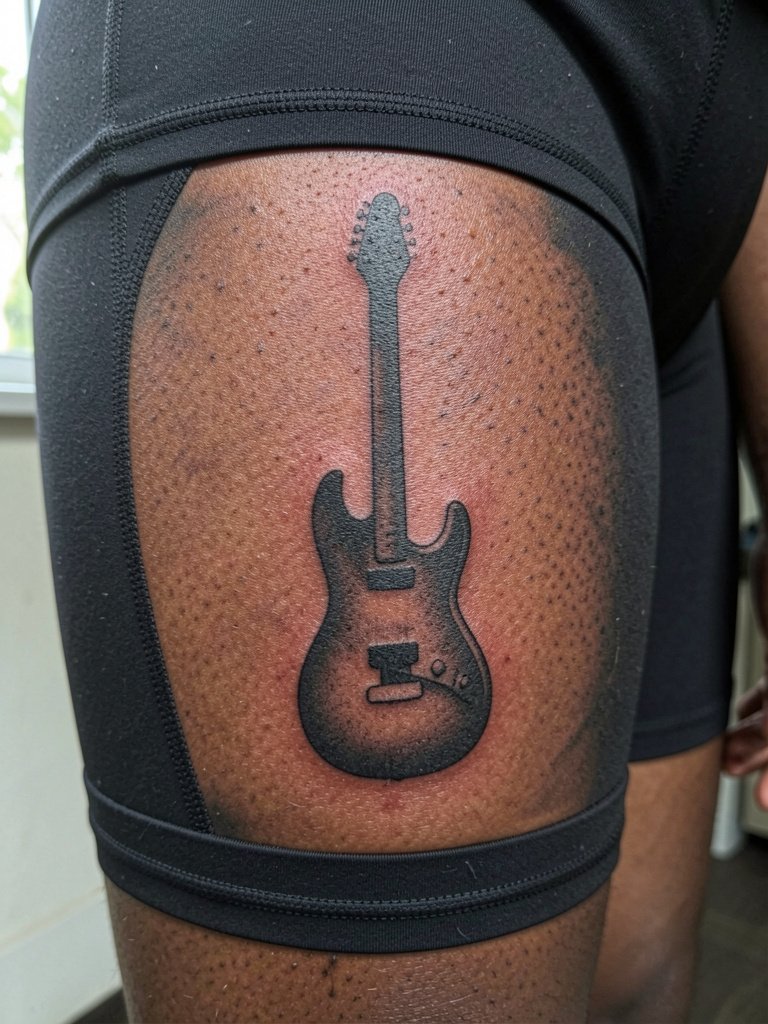
Negative space designs hinge on clean edges. The biggest mistake is blending too many background textures that erode the silhouette. For thigh placement plan the background fill as large, even shapes so the instrument silhouette stays crisp as the skin settles. Wear shorts that allow the artist to roll fabric up without pressure. For showing off, a loose skirt search link that reveals the thigh works well.
18. Lyric Tattoo in the Songwriter's Handwriting
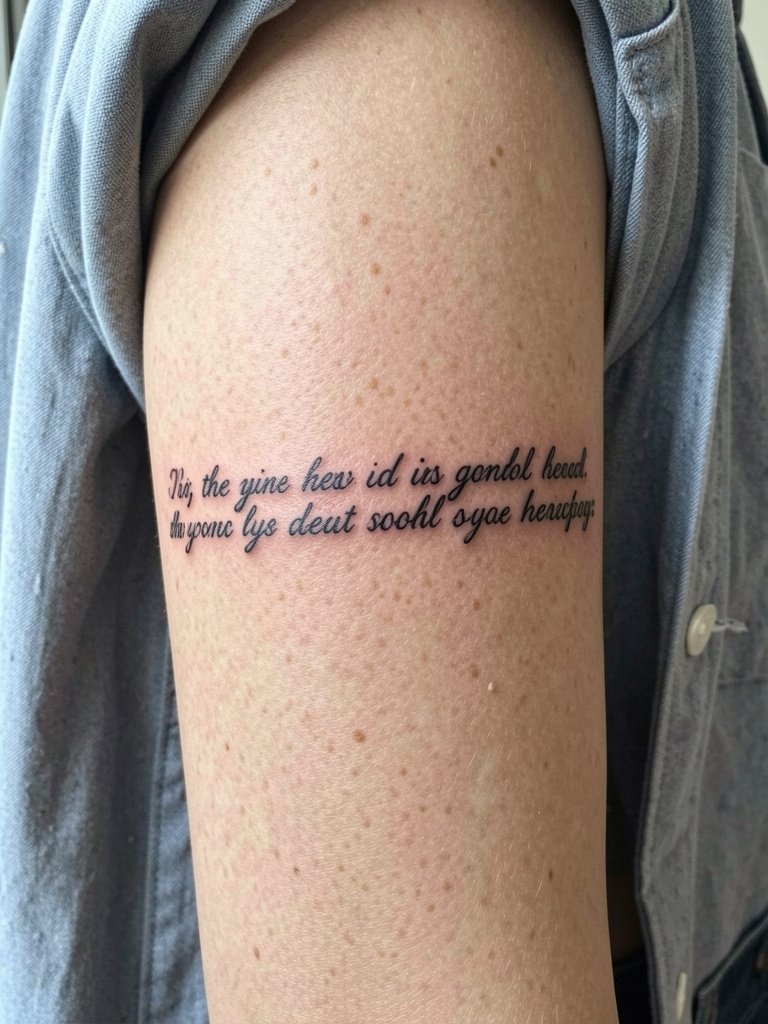
Using a songwriter's handwriting is intimate and unique, but legibility can vary with original pen pressure. A practical tip is to request the same handwriting scanned and cleaned, then ask the artist to thicken the lightest strokes slightly so the letters survive two to five years. If you want the line on ribs for privacy, see the next section about rib controversies and numbing options.
19. Soundwave Plus Portrait Hybrid on Chest
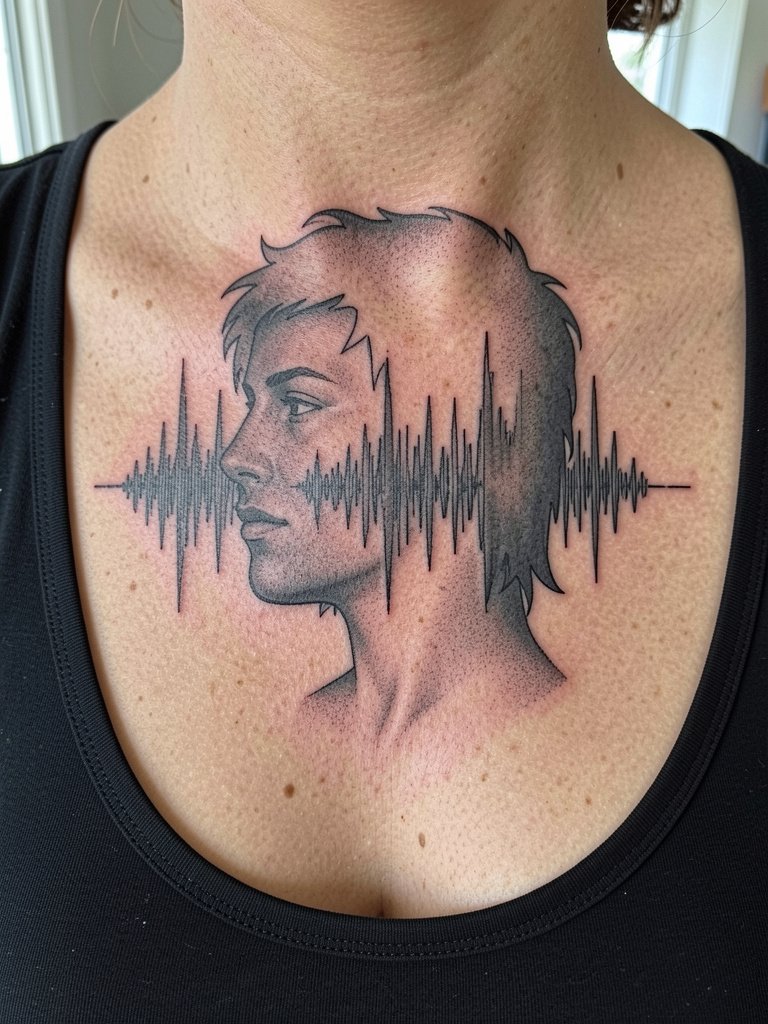
This hybrid anchors waveform imagery with a readable portrait so the visual looks like a person, not just squiggles. If you love soundwave symbolism but worry it reads generic, pairing it with portraiture solves that by giving context. Ask for a healed mockup to ensure the waveform hairline does not break the portrait contrast. For sessions wear a scoop-neck top and plan color vs black-and-grey expectations up front.
20. Music Tattoos on Scarred Skin
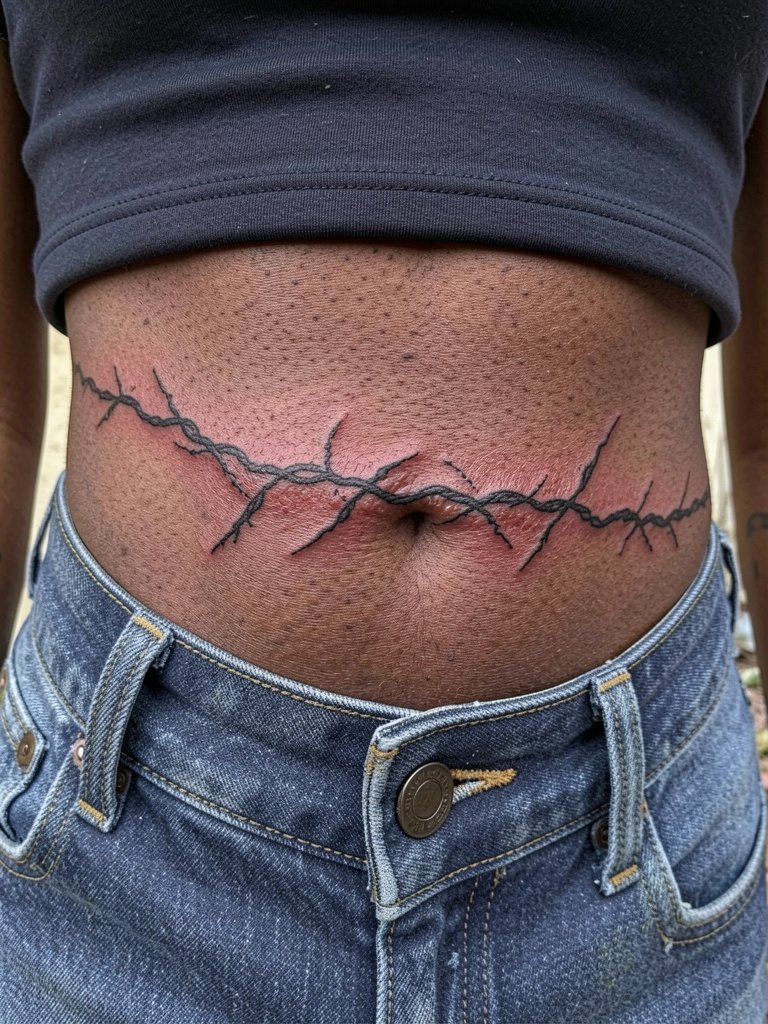
Using a scar as part of the design can be a powerful visual choice, but scars heal differently so the artist needs to see the scar in person before committing. Some scars take ink unevenly and may require a touch-up or slightly bolder strokes to read uniformly. During consultation show healed photos of your scar and ask the artist whether they recommend working over the scar tissue or framing it with nearby elements.
21. Tiny Hidden Soundwave on Sternum
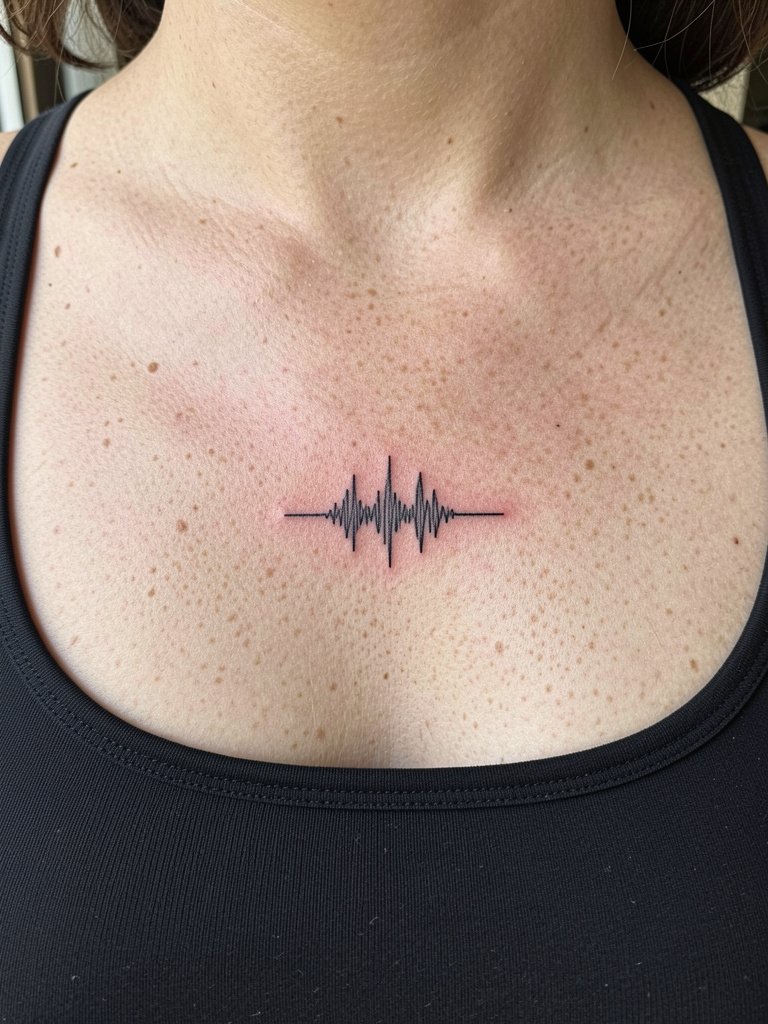
A sternum-hidden soundwave is intimate and great for a memorial that you only reveal in certain situations. The sternum sees a lot of movement and pressure, so plan for slightly heavier line weight than a wrist soundwave and discuss a touch-up timeline with your artist. For the session wear a bandeau or strapless top and expect the healing period to be a bit longer because of chest motion.
22. Micro-Realism Album Label on Ankle
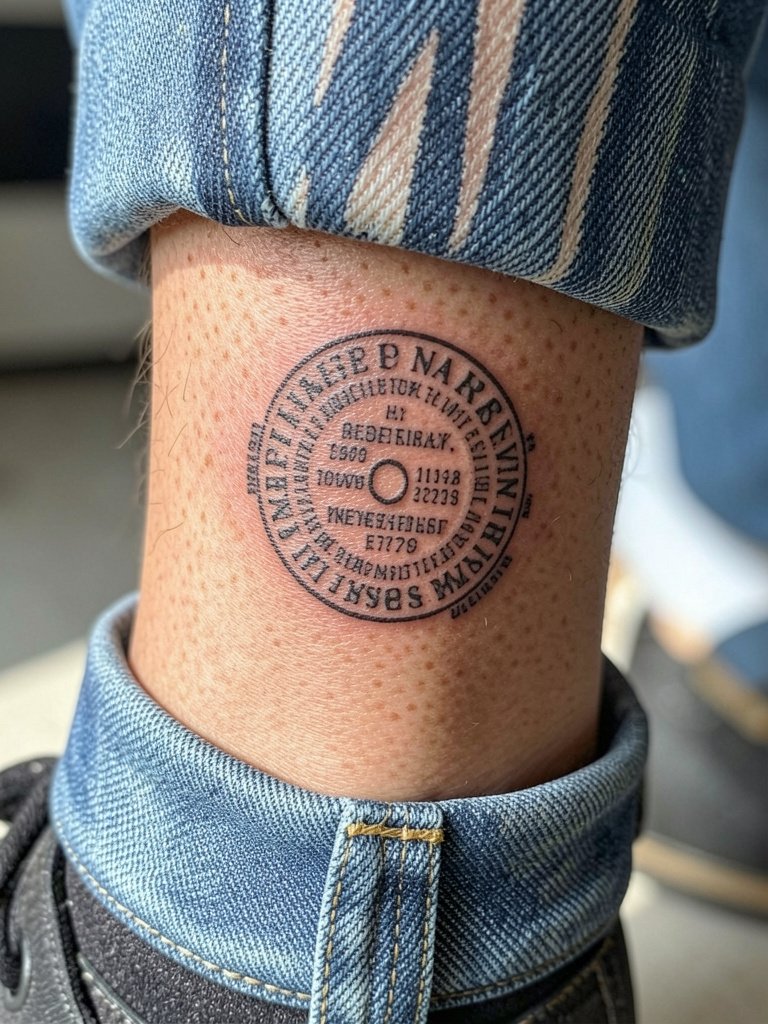
Ankle micro-inks are discreet and photograph well until socks and shoes push on them. Pick bold contrast for tiny album labels and avoid tiny script that will soften with footwear friction. During the appointment roll jeans up and wear shoes that do not rub the area for two weeks after the session. Simple anklet-style accessories on the opposite foot help balance the visual field without crowding the tattoo.
23. Stippled Geometric Frequency on Upper Arm
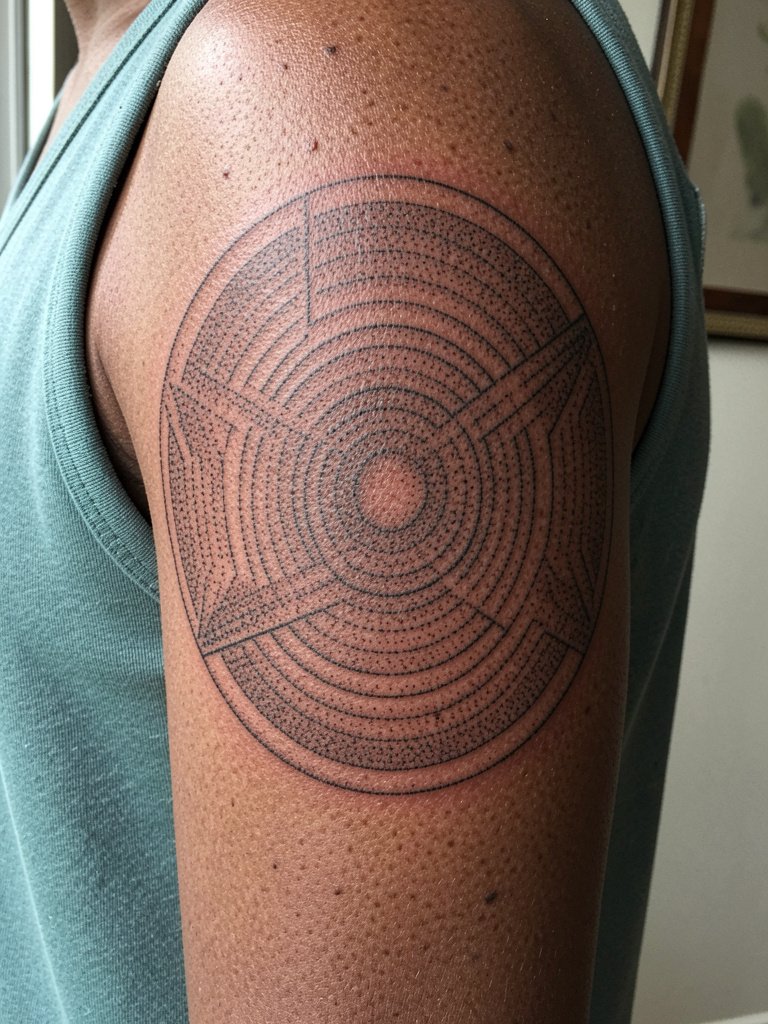
Stipple shading reads beautifully on the upper arm and holds up because the area gets less abrasion than hands or ribs. The mistake is overpacking dots into a tiny area; stipple needs space. Ask the artist to show a scaled stencil so you can see the dot density at real size. For display, pair with a solid tank top to let the stipple speak.
24. Lyric Band in Original Handwriting on Sternum or Ribcage
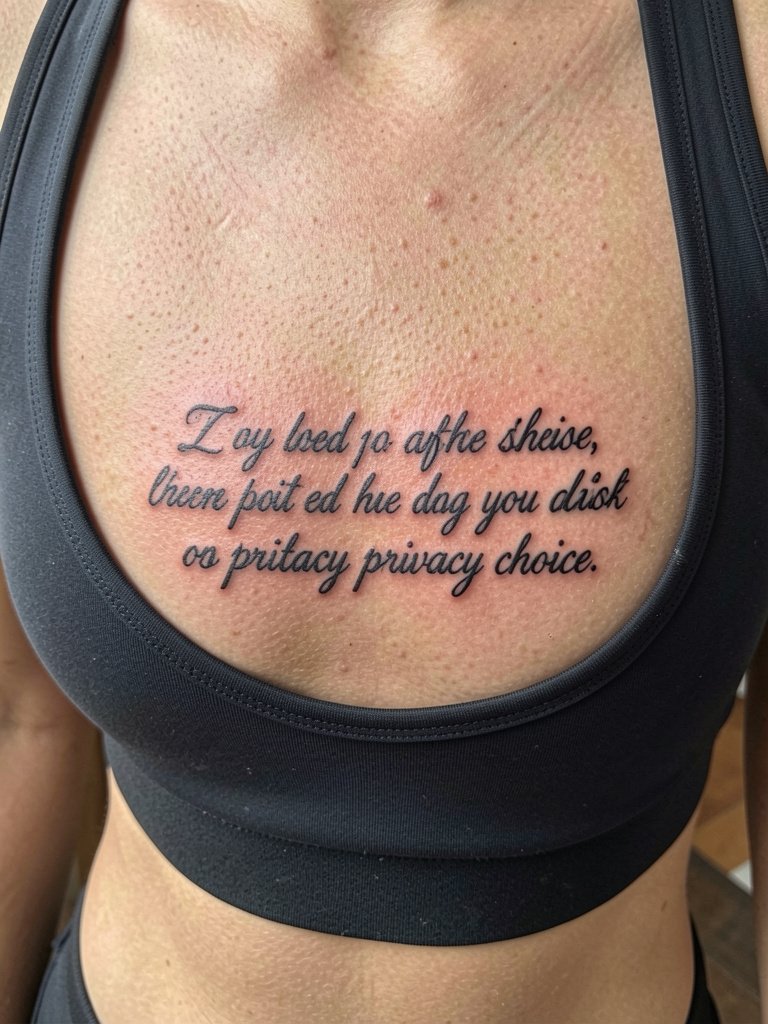
Ribcage lyric tattoos are private but also hot and curved, so plan line weight with that in mind. Artists split on fine-line longevity on ribs. One camp says fine line blurs within two years because the skin stretches and shifts constantly and compression from bras accelerates softening. The other camp argues fine line settles fine when the artist uses correct needle depth and slightly wider spacing and will point to multi-year healed photos as proof. If you choose ribs, consider numbing strategies and discuss application timing with your artist in detail so the skin does not swell before the first pass.
25. Micro-Realism Portrait on Collarbone with Waveform Halo
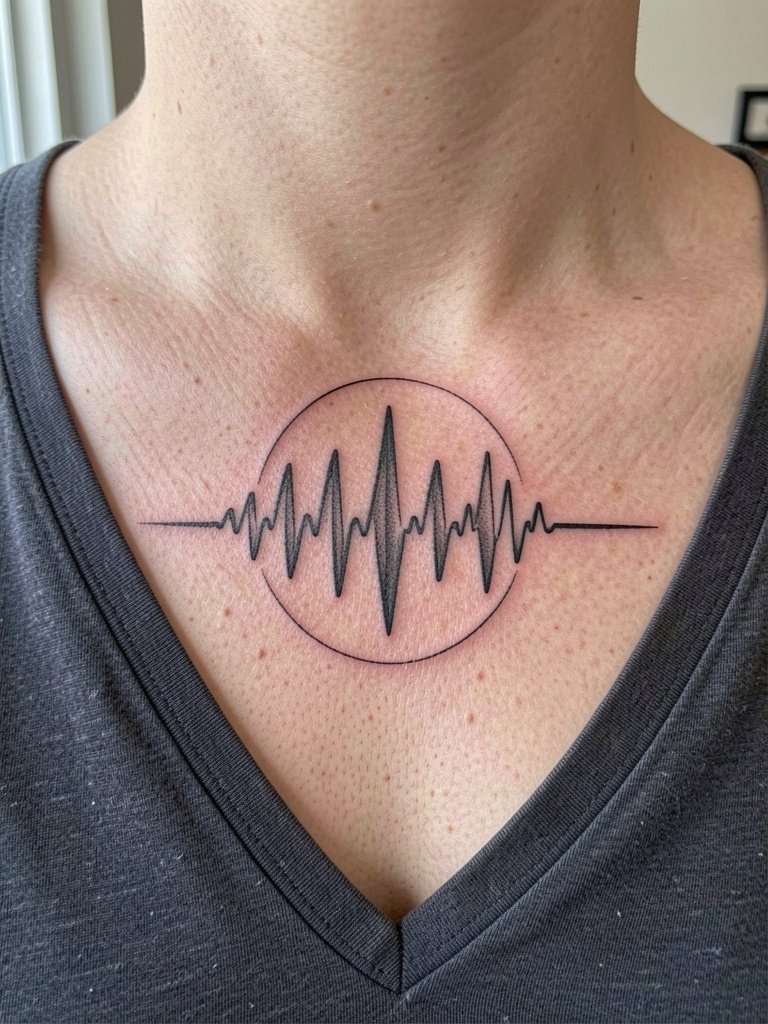
Combining a portrait with a waveform halo gives you both the person and the audio fingerprint that matters. Keep the portrait slightly larger than you think is necessary so the facial features stay readable as the skin ages. When previewing the stencil, ask the artist to show the halo scale against the portrait to ensure the two elements balance. For showing it off, delicate layered necklaces frame the composition and a layered thin chain necklace link complements the collarbone.
Frequently Asked Questions
Q: How much should I expect to budget for small music tattoo ideas like soundwaves or micro-ink dates?
A: Small pieces vary by shop and region but plan for a one-hour micro session range when you book. Budgeting in broader bands helps, for example a short single-needle piece often fits into the local small-tattoo price tier, while custom hybrids or color pieces usually move into longer session rates.
Q: Where can I find artists who show healed examples across skin tones without naming specific artists?
A: Search hashtags like #musictattoo, #soundwavetattoo, and #lyrictattoo on Instagram and TikTok and filter by location. Tattoodo and Booksy let you search portfolios by keywords like "fine line soundwave" and show healed photos. Reddit threads on r/tattoos and r/tattooadvice are useful for peer recommendations and healed examples in varied skin tones.
Q: Will a fine-line lyric on ribs hold up long term, and should I consider numbing cream?
A: Artists are split on both points. One group says ribs soften fine line within two years because the skin stretches and daily compression from clothing causes lines to merge. The other group says with proper depth and slightly wider spacing fine line can settle and show multi-year healed examples. Numbing cream also divides opinion. Some users find it makes painful placements approachable and accessible. Other artists warn that topical numbing can make the skin swell and feel rubbery which may affect line placement and healing. If you consider numbing, find out how long before the session to apply it and ask the artist about their preferred protocol.
Q: What are realistic touch-up timelines for different music tattoo styles?
A: Expect micro-ink and fine-line script to need touch-ups sooner, often within 12 to 18 months depending on placement and sun exposure. Bold neo-traditional and solid blackwork typically keep their presence longer and may only need refreshes at two to five years. Fingers and ribs are areas where touch-ups are more common.
Q: How should I dress for the tattoo session for visible placements like forearm, collarbone, or sternum?
A: Wear clothing that gives the artist clear access without you having to hold fabric in place. For forearms roll up a sleeve like a linen button down. For collarbone and sternum choose strapless or wide V-neck tops so the artist can work without tugging. For hip and waist areas select low-rise bottoms that are fully zipped and buttoned in a normal worn state.
Q: Are there design types to avoid for darker skin tones when choosing music tattoos?
A: Subtle fine gradients and faint watercolor washes can flatten on darker skin tones. For clearer longevity pick high-contrast black-and-grey, saturated color with white highlights, or bold blackwork elements. If you want delicate script, plan for slightly heavier line weight and ask to see healed examples on similar skin tones.
Q: What are the top mistakes to avoid when requesting a music-related tattoo?
A: Common errors include asking for overly tiny script in high-friction zones, expecting a literal waveform to read as a portrait, and picking an artist who shows general "music tattoos" but lacks specific style experience. Bring multiple scale references and request a size mockup so you can see how the piece will read at the intended dimensions.