The sharp crescent on your saved board might look perfect in a flat photo. In real skin the tiniest single-needle moons often soften within two years on wrists and ribs. These 21 ideas focus on simple moon motifs with placement choices, realistic aging notes, and clothing tips that make a micro-moon read like jewelry the day of the session and as it heals.
1. Single-stroke Crescent Behind the Ear
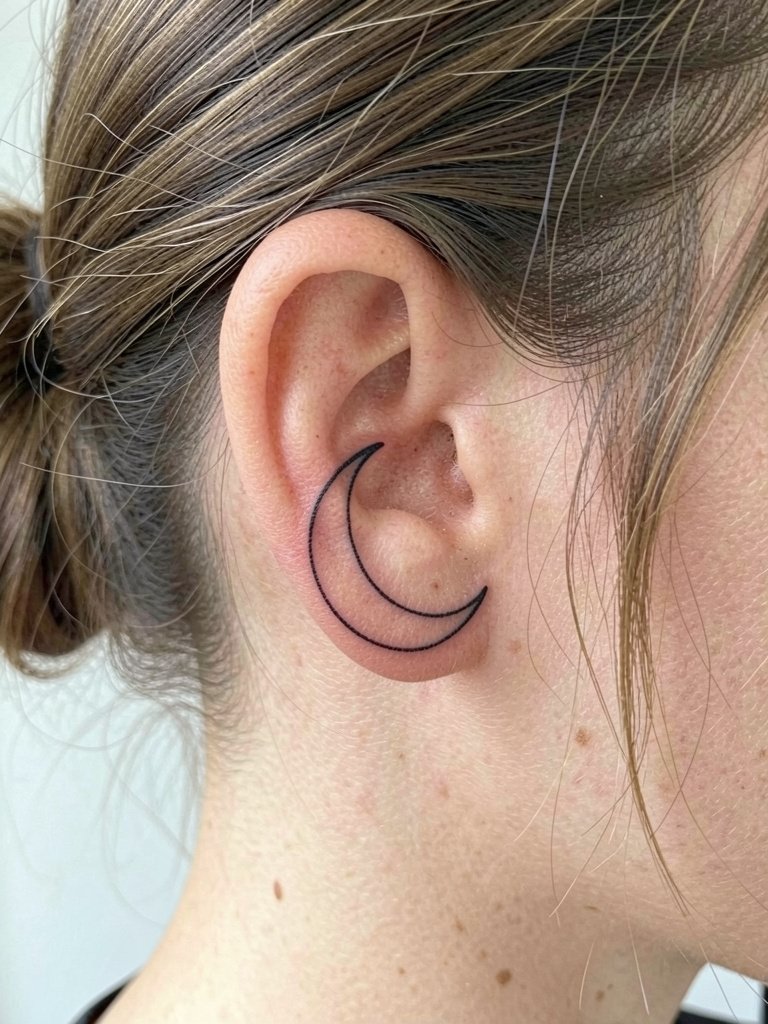
A single-stroke crescent suits anyone who wants tiny, fast work and minimal session time. Behind the ear the skin is thin and the session feels like brief pin pricks with low overall pain. The common mistake is asking for a single-needle hairline that is too fine for this area. On thin-neck skin a hairline can blur into a gray smudge by year two. Ask for a single continuous line but request a short hairline thickness around 0.30mm so the shape keeps crisp edges longer. For the appointment wear a high-neck silk camisole that frames the nape. Try silk high neck camisole cream so the artist can access the area while your outfit still looks polished.
2. Wire-frame Geometric Crescent on the Inner Wrist
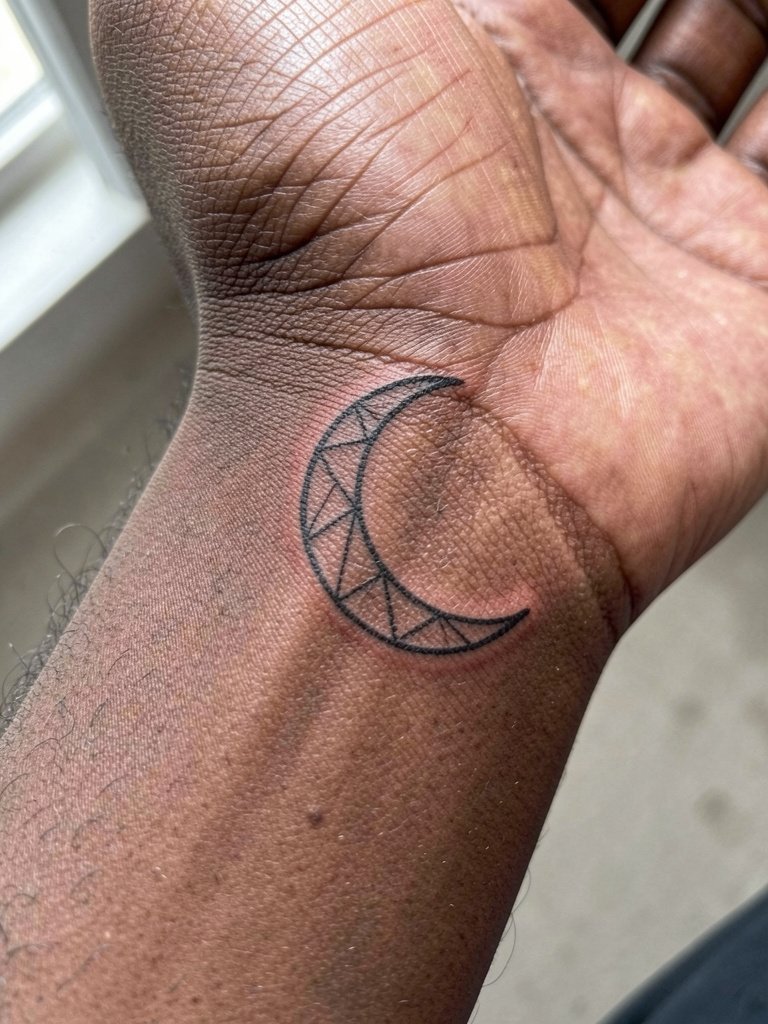
A wire-frame crescent reads crisp on the inner wrist when given room to breathe. The inner wrist eats ultra-fine detail, so ask for slightly bolder linework than the flash image. If you pick single-needle weight the lines will likely soften within two years because of constant motion and washing. Expect the session to be quick, about 15 to 30 minutes, with sharp linework that takes a touch-up within 12 to 18 months for many people. For showing it off, pair the wrist with a thin stacked bracelet and a minimal watch on the opposite wrist. I like thin gold stacked bracelet set since it keeps attention on the crescent without crowding the design.
3. Dotwork Crescent on the Inner Forearm
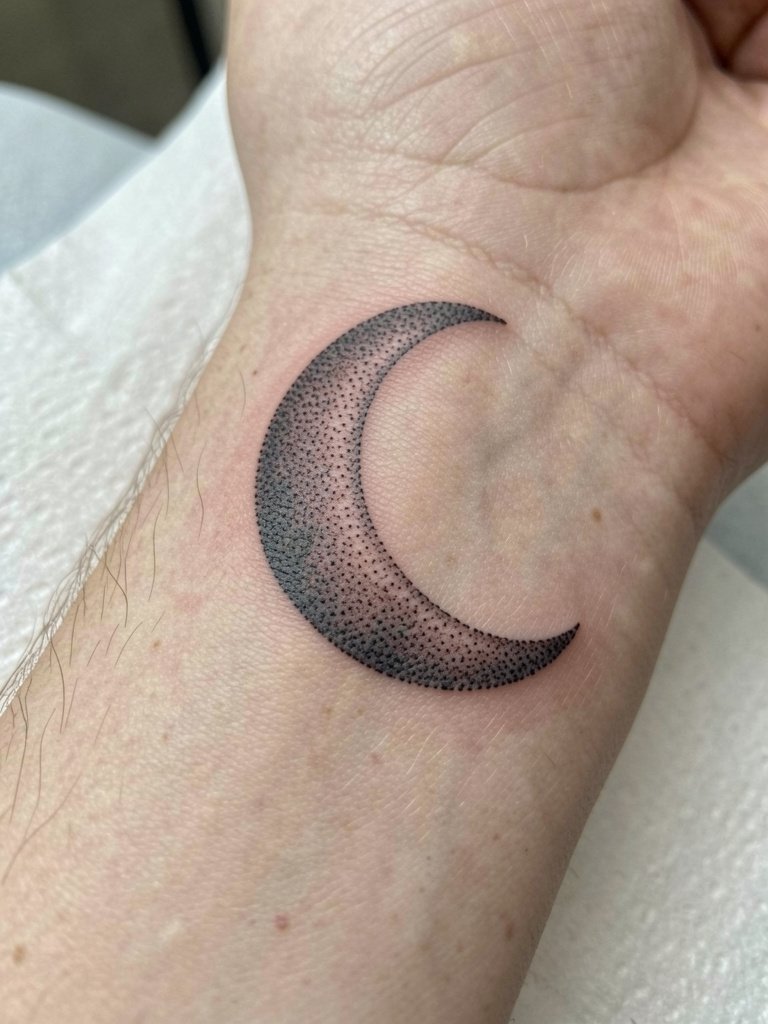
Dotwork brings texture without solid fills, so it reads like a soft shadow rather than a solid patch. I recommend this for forearm placements because the larger canvas lets the stipple breathe and avoids early muddiness. A realistic aging note: stipple shading at six months looks crisp, at two years it softens but keeps the silhouette if the dots were placed with spacing in mind. One mistake is compressing stipple into too small an area. In the consultation bring a healed reference and ask the artist to show the dot density scaled to 1.5 inches. For styling, roll up a linen button-down in cream and add a dainty stacked bracelet on the opposite wrist. Try linen button down shirt women for that effortless sleeve roll.
4. Fine Line Crescent with Single Star on the Collarbone
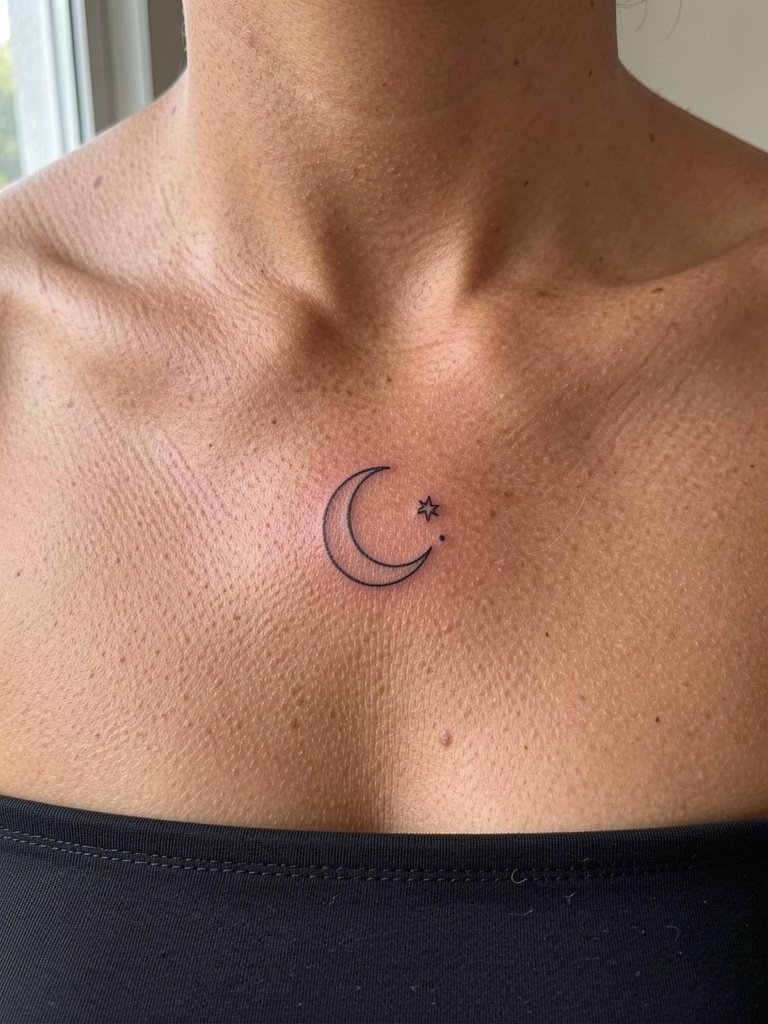
The collarbone is a visible spot that flatters a fine crescent plus a tiny star. Artists split on line weight for this placement. One camp says ultra-fine single-needle work is the pure minimal look and will age well if the needle depth is precise and you moisturize properly. Another camp argues that single-needle lines on exposed chest skin soften within two years and recommends a short hairline around 0.30mm to preserve the star and crescent shape. For the consult bring two reference photos at different scales so the artist can show how the design reads at one inch versus two. When you sit in the chair wear a strapless top or tank to give the artist full collarbone access. For an evening reveal try layered thin chain necklace to frame the piece.
5. Minimalist Rose Moon Silhouette on the Ribcage
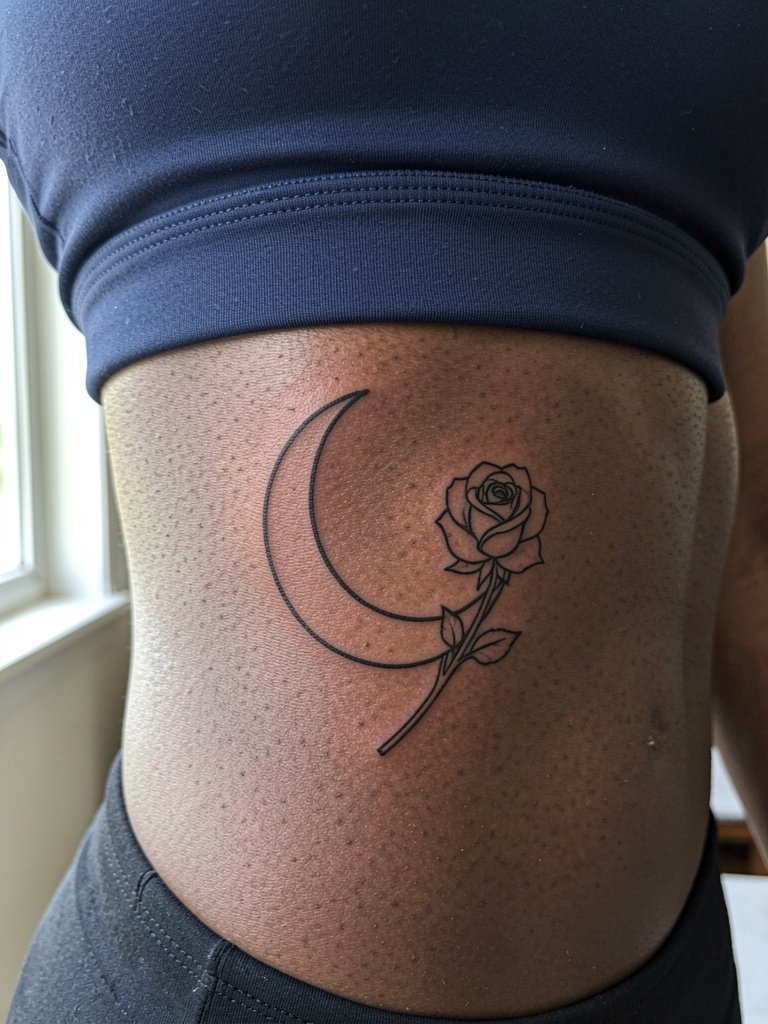
Ribcage pieces look elegant but come with a decision about numbing. One camp argues that topical numbing cream helps first-timers get through long rib sessions and yields steadier results. Another camp warns that numbing creams can swell the skin and cause ink to spread, which softens fine linework on ribs. If you consider numbing, specify exactly how long before the session it will be applied and whether the artist wants you to skip it. The rib area is a higher pain zone, so plan for a shorter session or breaks. For clothing, pick a two-piece or a loose dress so the artist can access the side torso comfortably during the appointment. An open-back dress or low-waist set helps keep the area reachable without fabric tugging.
6. Triangulated Geometric Crescent on the Hip
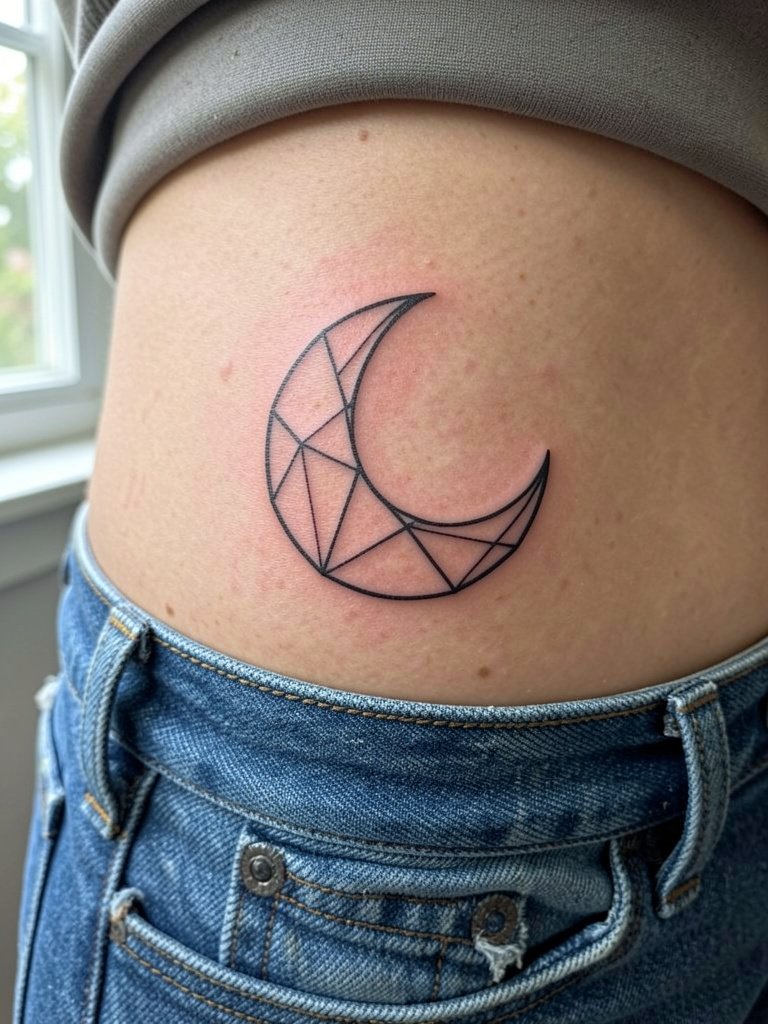
The hip gives modern crescent geometry room to breathe. Avoid compressing a lot of tiny triangles into a one-inch space. That is the mistake that leads to early merging of angular lines. On the lateral hip the session is comfortable because the area can be rolled or relaxed, and blowout risk is moderate if the artist keeps consistent depth. For showing off, high-cut swimwear or side-tie pants expose this placement well. Pack a pair of high cut bikini women if you plan photos after healing.
Pre-Session Essentials
A few products smooth the first week after small moons on wrists, neck, and ribs. These choices reflect things people have mentioned liking for the placements above.
- Tattoo Tea Balm. A thinner balm recommended by some for sensitive skin that avoids the clogging feel people report with heavier ointments, helpful for the fine-line collarbone work above.
- Kirei Healing Gel. A thin, non-greasy gel that many fine-line fans use to speed healing without excessive shine, useful for inner-wrist and forearm pieces.
- Ink Guard Spray. Light spray to protect micro work from scabbing disturbance during the first day, handy for behind-the-ear placements that can rub against hair.
- Tattoo Healing Balm. An indie balm option for people who prefer a specialized formula over mainstream ointments for small blackwork moons.
- Saniderm. The protective film many people use for days 1 to 3 to lock in moisture and cut down on external friction, especially helpful on wrists and fingers.
7. Gradient Watercolor Crescent on the Outer Shoulder
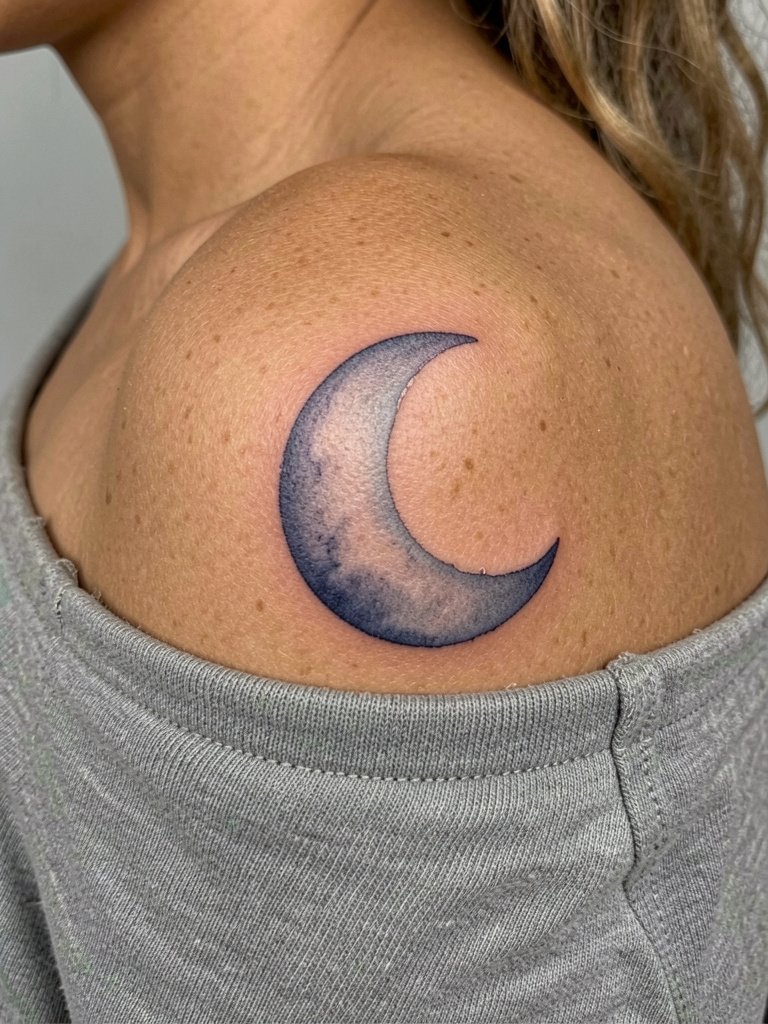
A watercolor gradient looks painterly on the rounded shoulder when executed with controlled saturation. Watercolor can look subtle at six months and fainter by year two if exposure to sun is frequent, so factor UV protection into aftercare. On the shoulder the session feels like steady passes with moderate discomfort near the deltoid. For the session wear an off-shoulder top or tank so the artist has clear access. To frame the piece for warm-weather photos try an off shoulder top cream women. Expect a touch-up in the first year if you want the gradient edges to stay crisp.
8. Minimalist Color-blocked Crescent on the Upper Chest
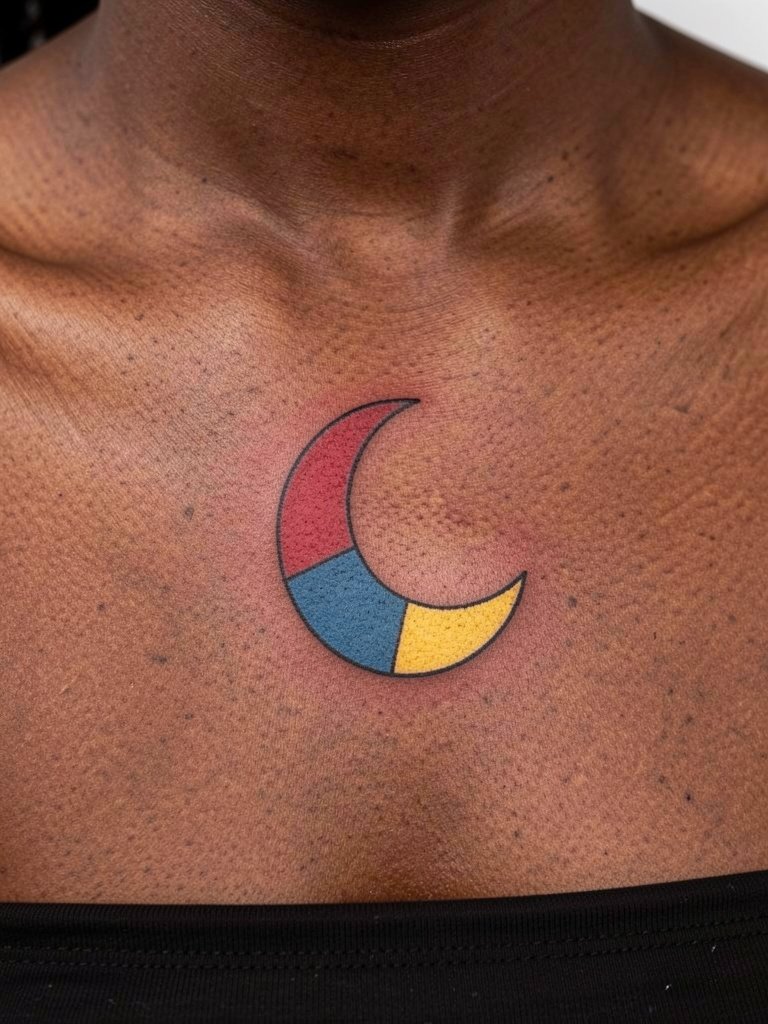
Color blocks give a clean, modern look just under the collarbone. On pigmented skin choose saturated black outlines and bold color for contrast over soft gray washes that can vanish. For session wear a strapless or off-shoulder top so the artist can work unhindered. For evenings pair the area with layered thin chains that sit above the crescent. A good pick is strapless top cream women that lets you show the upper chest without tugging at the fabric.
9. Full Moon Rose Mandala on the Shoulder Blade
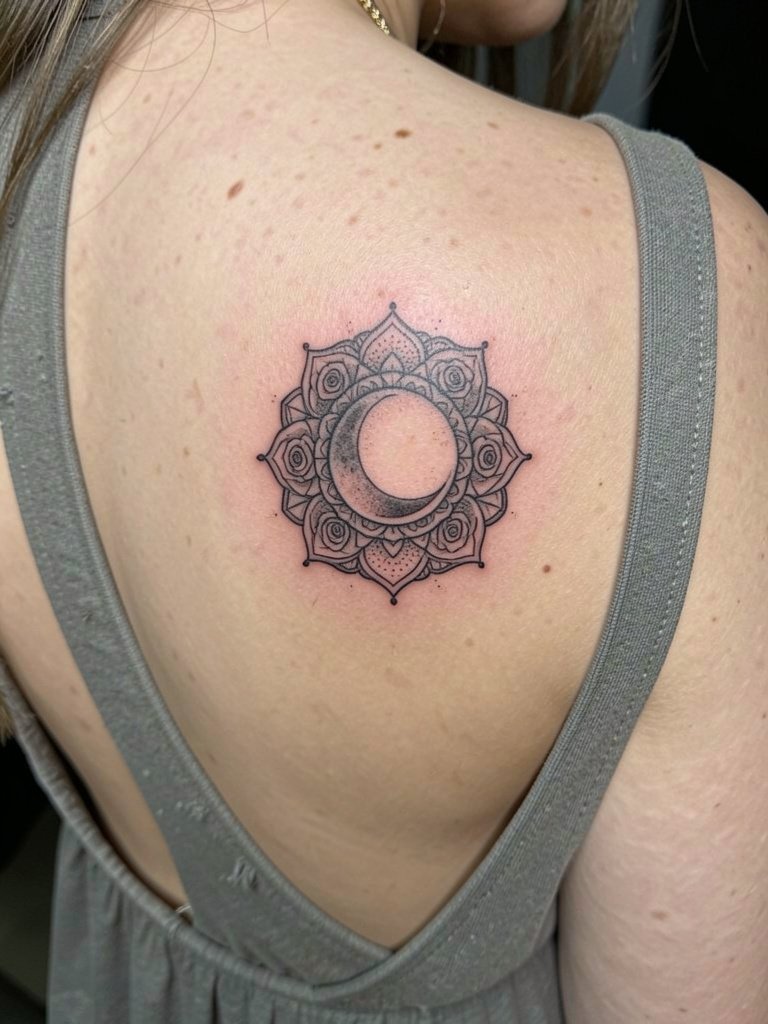
The flat plane of the shoulder blade is ideal for a small mandala that keeps its geometry over time. The common mistake is compressing tiny petals into a half-inch circle. At six months clean geometry reads well. At three to five years the petals keep their shape if spacing was generous. For showing the piece wear an open-back dress or a low-back top that exposes the blade. A good option is open back dress women for photos after healing. Note that sessions on the upper back are often relaxed, and many artists offer a single-session touch-up window if tiny dots fade.
10. Lunar Phase Array on the Inner Forearm
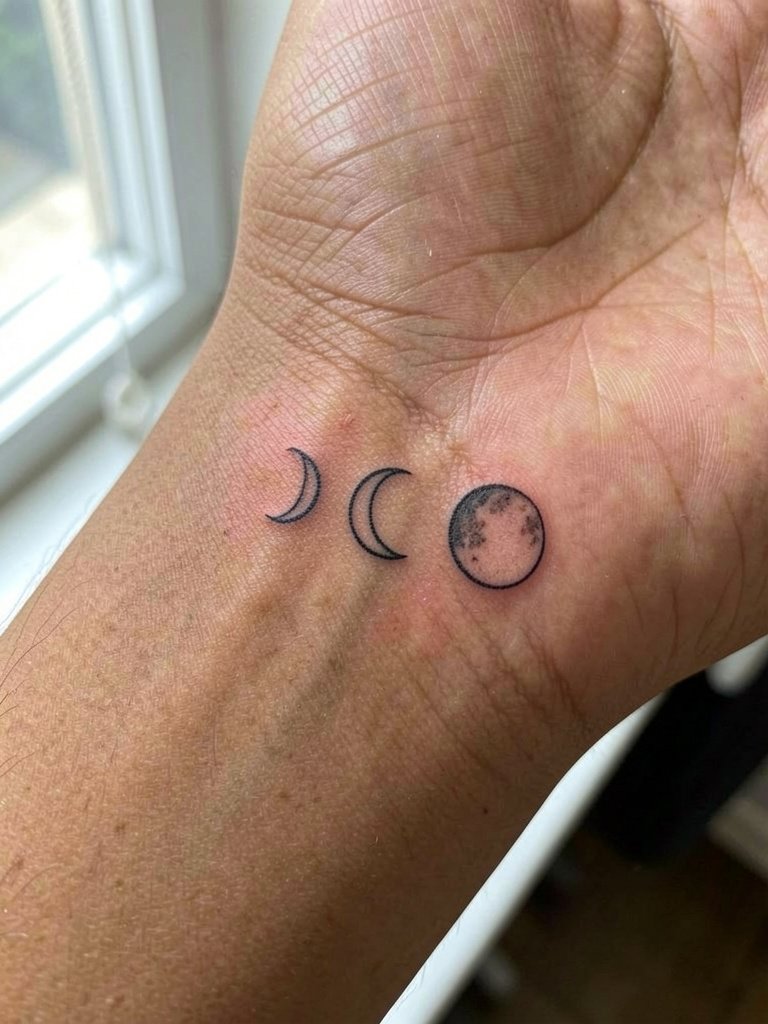
A phase array is a smart filler for sleeves or a discrete standalone piece. On the forearm keep spacing so each phase holds its shape over time. The fine line versus short hairline debate applies here. One camp insists on ultra-thin single-needle phases for true minimalism. Another camp recommends a short hairline around 0.30mm to avoid blurring on the wrist and inner forearm over a two-year span. For a sleeve filler ask the artist to scale the phases so they look consistent when the arm bends. The session is short and usually heals with minor scabbing if you avoid abrasion from sleeves. Expect a touch-up window at 6 to 12 months for most people.
11. Crescent with Crystals and Runes on the Inner Upper Arm
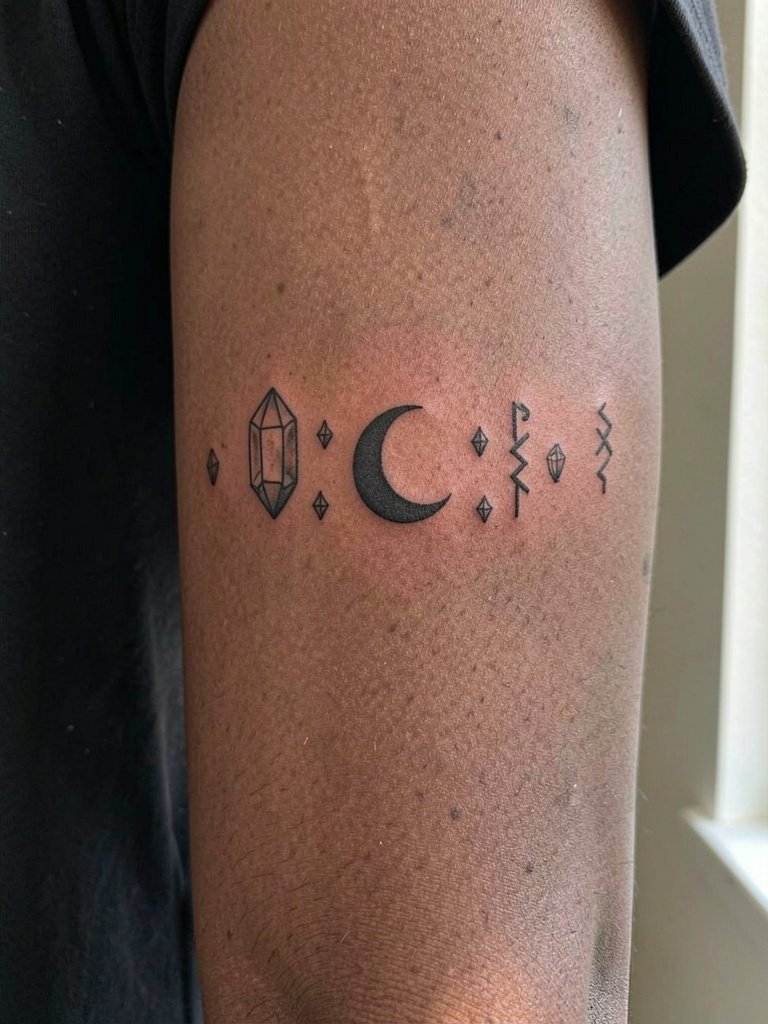
This quiet placement keeps personal symbols tucked away yet easy to show. The inner upper arm handles small geometry well, but avoid packing crystals into a space smaller than 1.25 inches. The common mistake is tiny runes that lose definition after healing. In the consult bring clear single-line drawings of each rune so the artist can scale them to the arm. The session feels low to moderate on pain because the area is fleshier than the wrist. Expect a touch-up at one year to tidy any dot work that softened.
12. "Trust Your Tides" Script Moon Behind the Ear
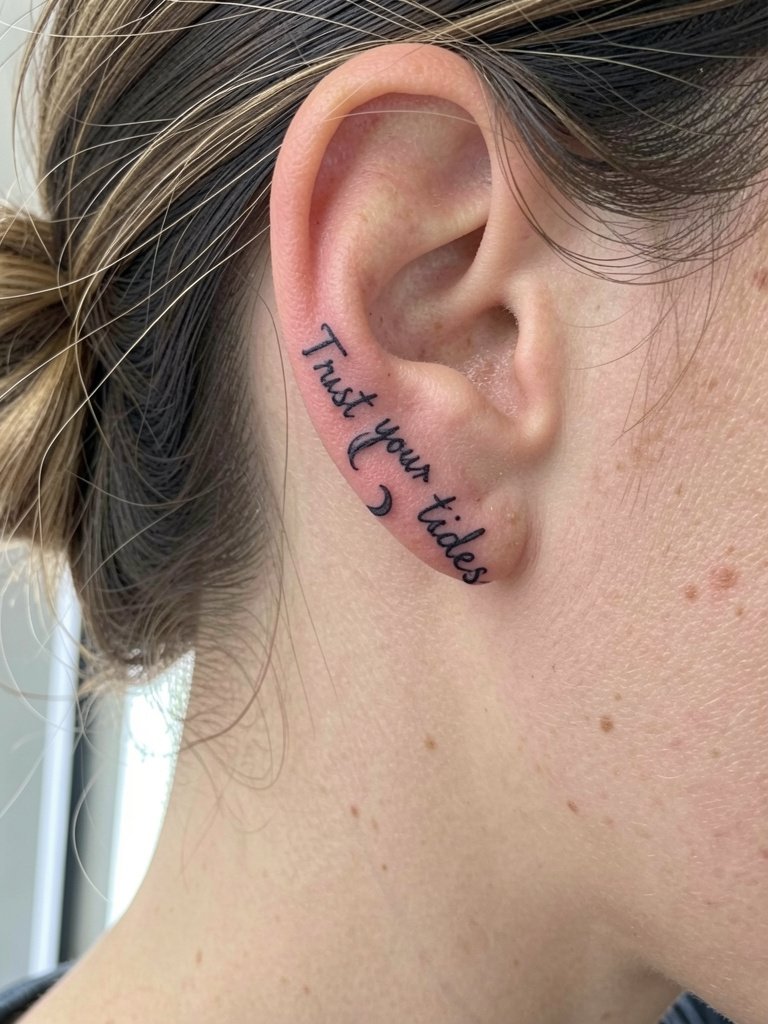
Micro-script plus a moon is a compact way to add a mantra without taking up space. The mastoid area tolerates small text if the letterforms have spacing that allows ink to settle. A frequent error is choosing a script with hairline loops that fill in. Bring the exact font and ask the artist to space the letters slightly wider than the flash. Wear hair up in a clip for the session so the artist can place the stencil exactly. The finish looks subtle in photos if you keep the letters at or above two millimeters tall.
13. Eclipse with Soft Clouds on the Inner Thigh
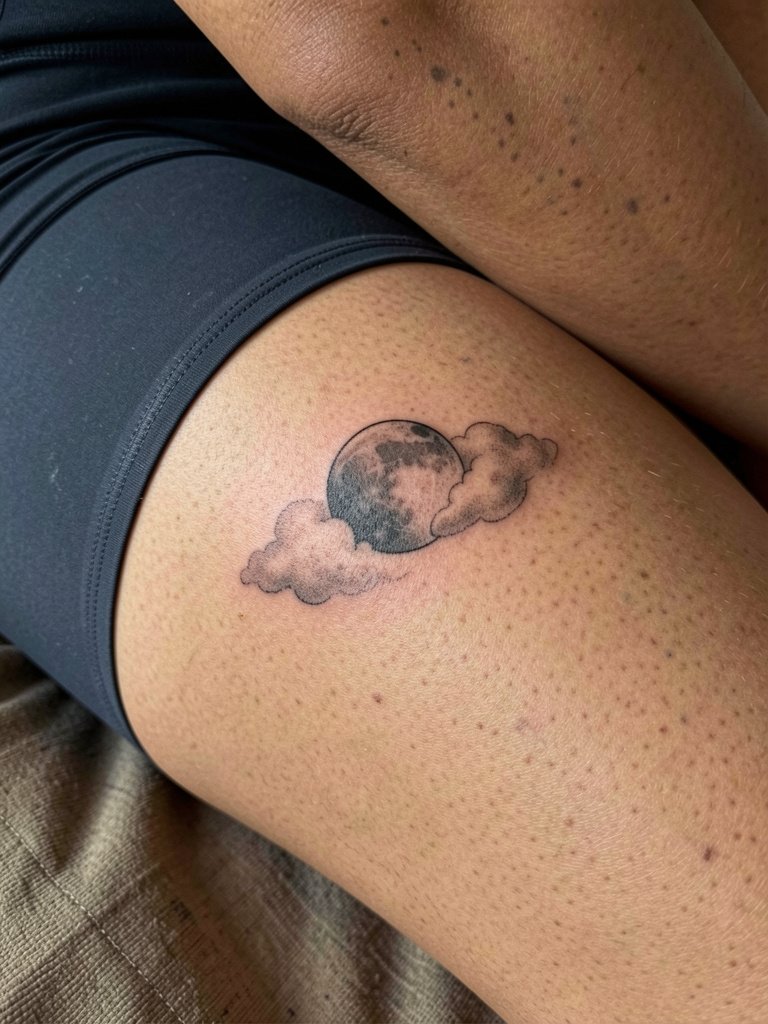
Inner thigh designs need careful size planning because motion and clothing can affect healing. The inner thigh is sheltered from sun but can rub under clothing and take longer to scab. The session feels like soft shading passes with intermittent discomfort. For the session wear fitted bike shorts or modest athletic shorts so the artist can access the area without fabric tugging. Avoid tight jeans for the first two weeks while the tattoo seals. If you want privacy during healing choose dark workout shorts and avoid long pants that compress the area.
14. Negative Space Full Moon on the Sternum
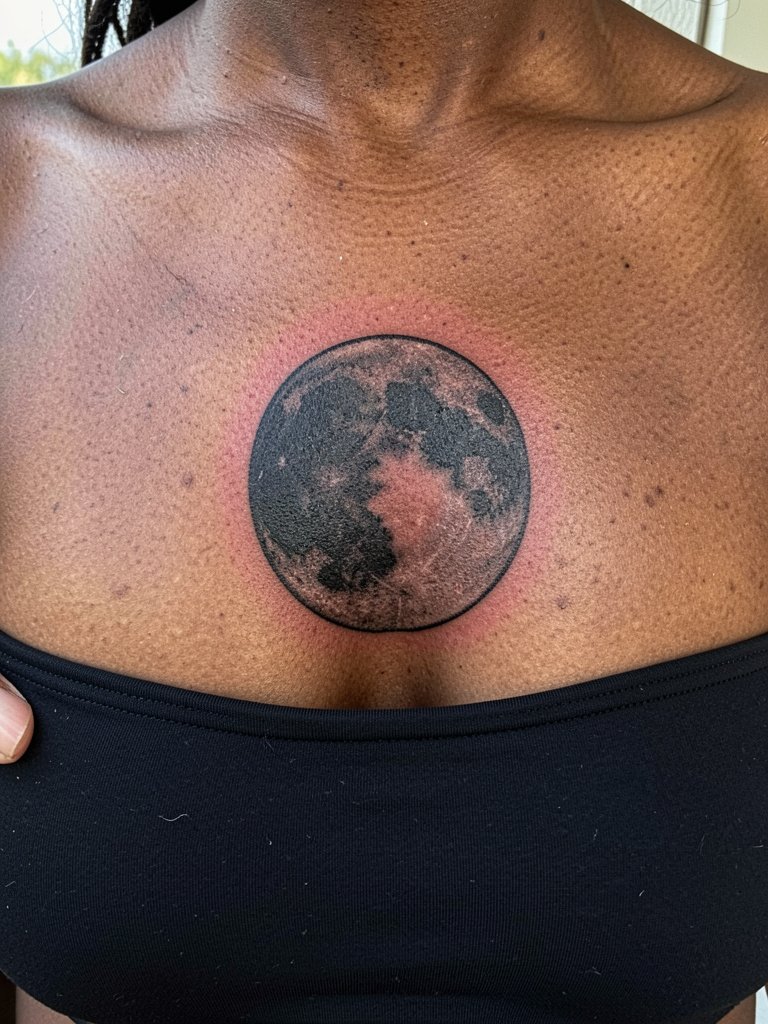
Designers disagree about white ink highlights versus negative space for a glow effect. One camp says adding white ink highlights creates an obvious glow that shows up well in photos and on darker skin tones. The other camp argues white ink fades and can yellow over time, and that negative space cutouts are the most reliable long-term method to achieve glow. Sternum work needs a specialist who understands chest anatomy and stretch. Sessions here are more painful for many people, so plan for breaks and a clear touch-up window.
15. Micro-Star Constellation Crescent on the Inner Wrist
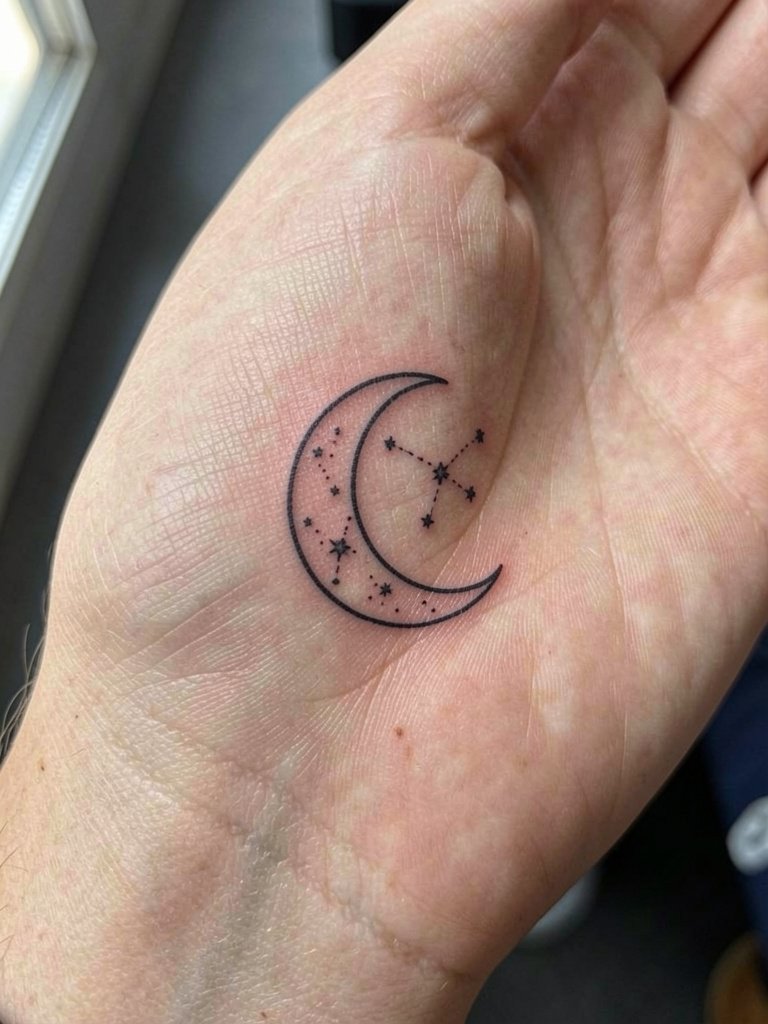
Pairing a crescent with a tiny constellation gives a personal twist without adding bulk. The inner wrist is friction-heavy, so pick dots that are slightly larger than the flash and avoid micro-dot clusters smaller than two millimeters across. For the consult bring a constellation map and have the artist show the exact dot placement on your wrist before the needle touches skin. For showing it off choose a minimalist watch on the opposite wrist and remove rings on the tattoo day. A subtle pick is minimalist watch women for balanced wrist styling.
16. Orbiting Tiny Moon on the Ankle
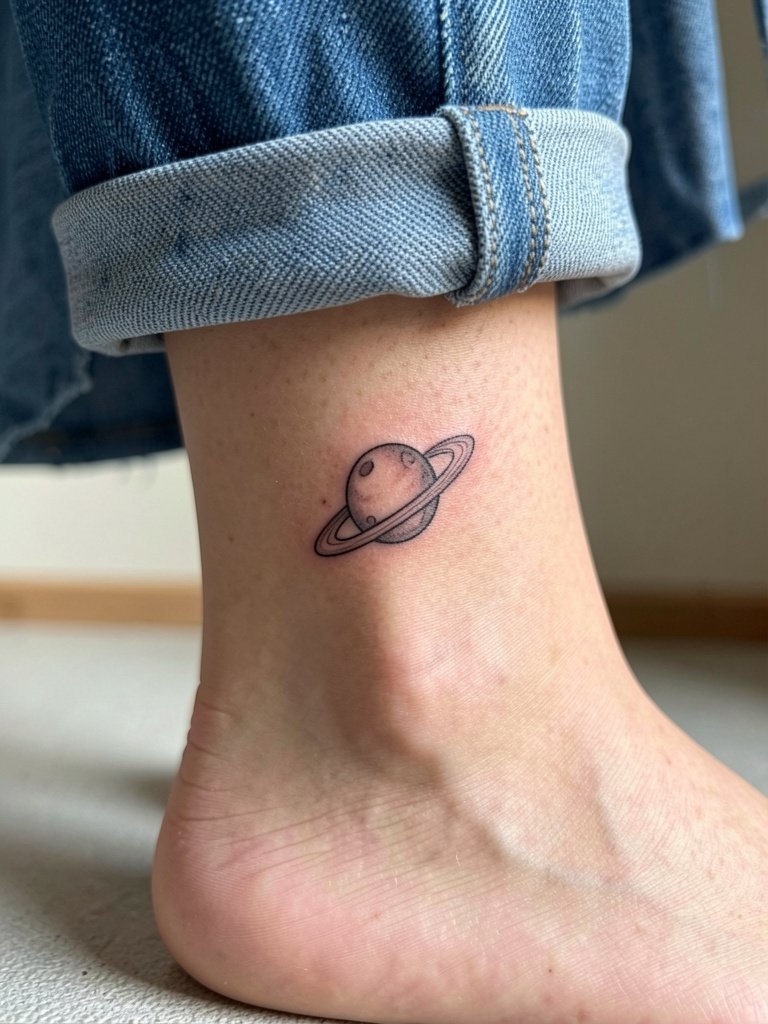
Ankle moons are charming but endure friction from socks and shoes, especially in winter. The session is short and often stings more than forearm work. A common mistake is placing a hairline orbit that fades under repeated rubbing. If you want longevity, widen the orbit line slightly and schedule a touch-up after the first healing cycle. For after-session comfort wear low socks and loose shoes to reduce irritation while the scab settles. Plan photos when the area is clean and dry to show the tiny orbit clearly.
17. Micro Crescent Along the Thumb Joint
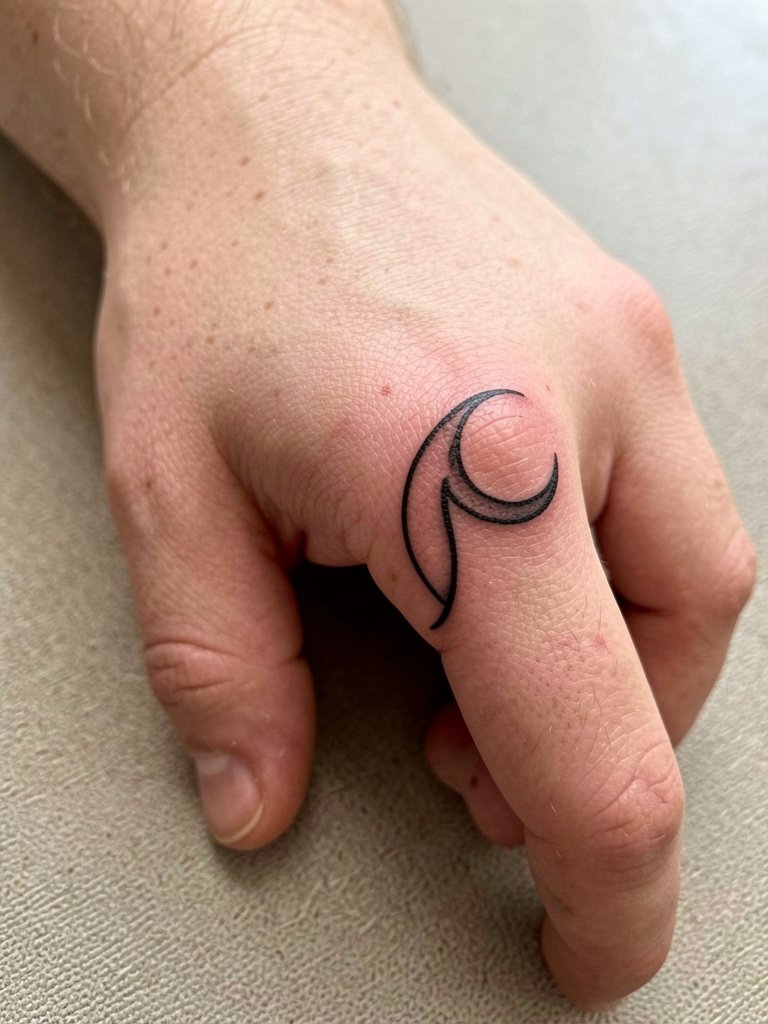
Finger and thumb tattoos face constant washing and friction so expect faster fading. The common error is using single-needle hairline fills in an area that needs slightly bolder linework to survive daily wear. The session is brief but stings and may need multiple touch-ups. If you want this location, accept that touch-ups are likely within a year. Keep expectations realistic and plan for maintenance rather than a one-time permanent look.
18. Wave-edged Crescent on the Outer Shoulder
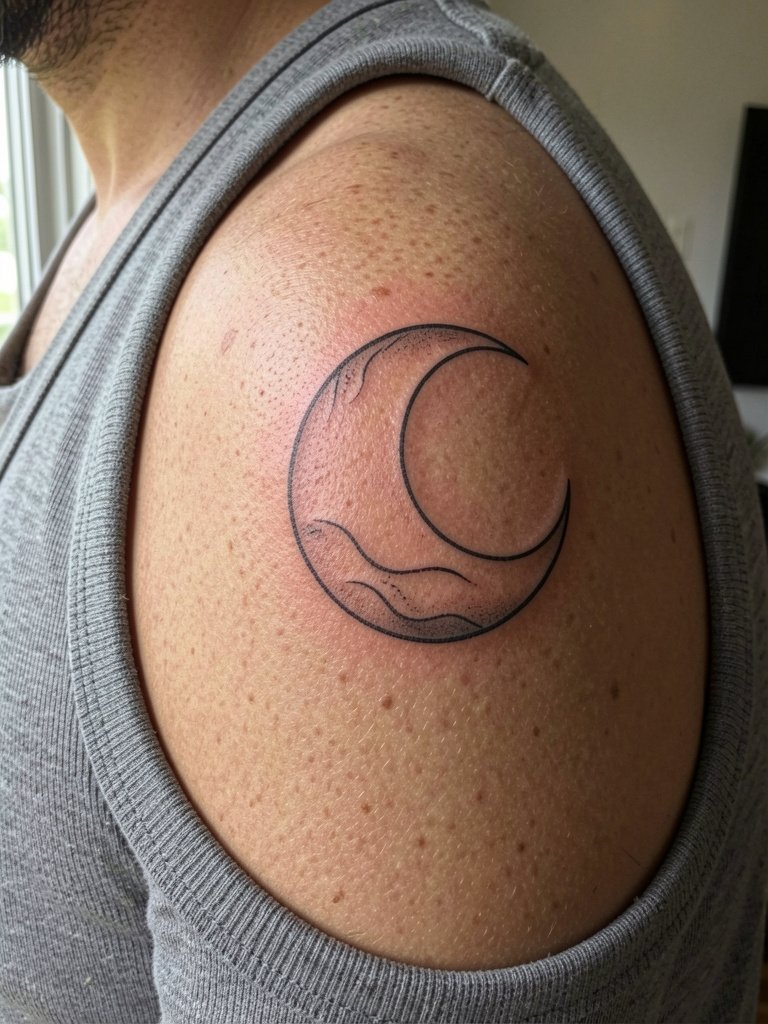
A wave-edged crescent plays with curvature and sits well on the outer shoulder. The shoulder tolerates slightly looser spacing so the wave detail keeps identity as the piece ages. For the session wear a loose tank top so the artist can roll the strap and access the deltoid. For dressing up pair the area with an off-shoulder top or layered gold chains that sit above the tattoo line. Try pastel off shoulder top to show the crescent without covering it. Expect minimal touch-up needs if the line spacing was generous.
19. Small Phase Cluster Behind the Knee
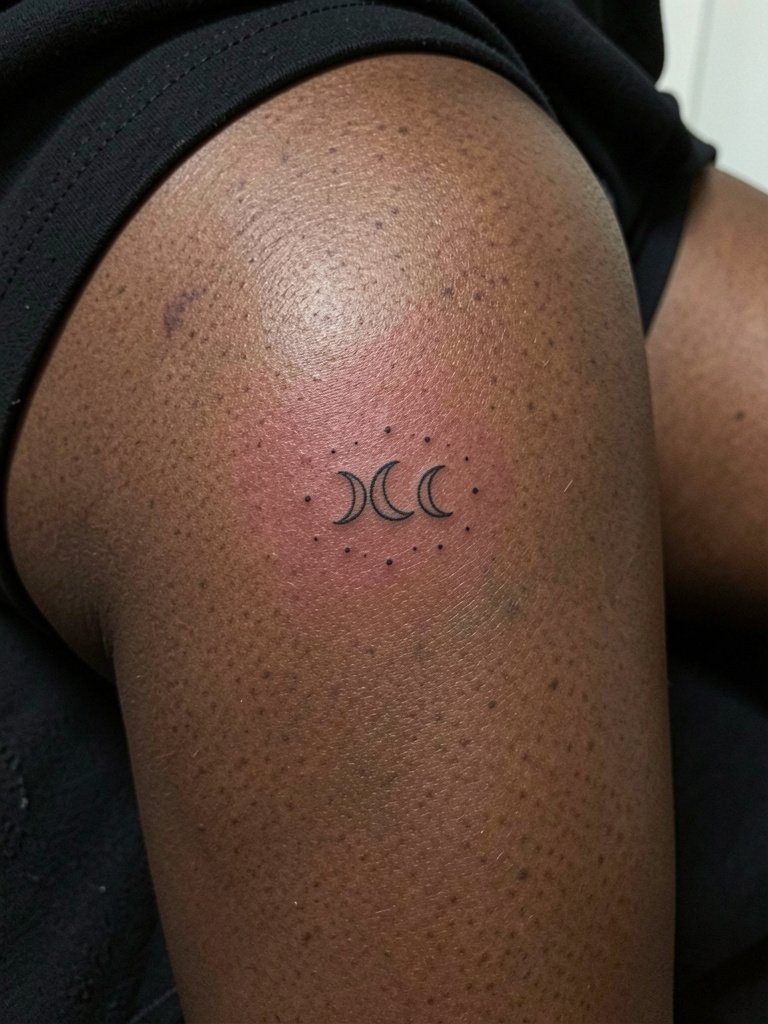
Behind-knee work moves with bending and can blur if the design is too detailed. The key is to use slightly bolder contour lines for such a mobile zone. Sessions here feel twingy because the skin flexes. Avoid multi-line micro detail and choose simple phase shapes that read when the leg is straight and when it bends. Expect a longer initial healing window due to motion and avoid tight fabrics for two weeks.
20. Tiny Negative-space Crescent on the Collarbone Edge
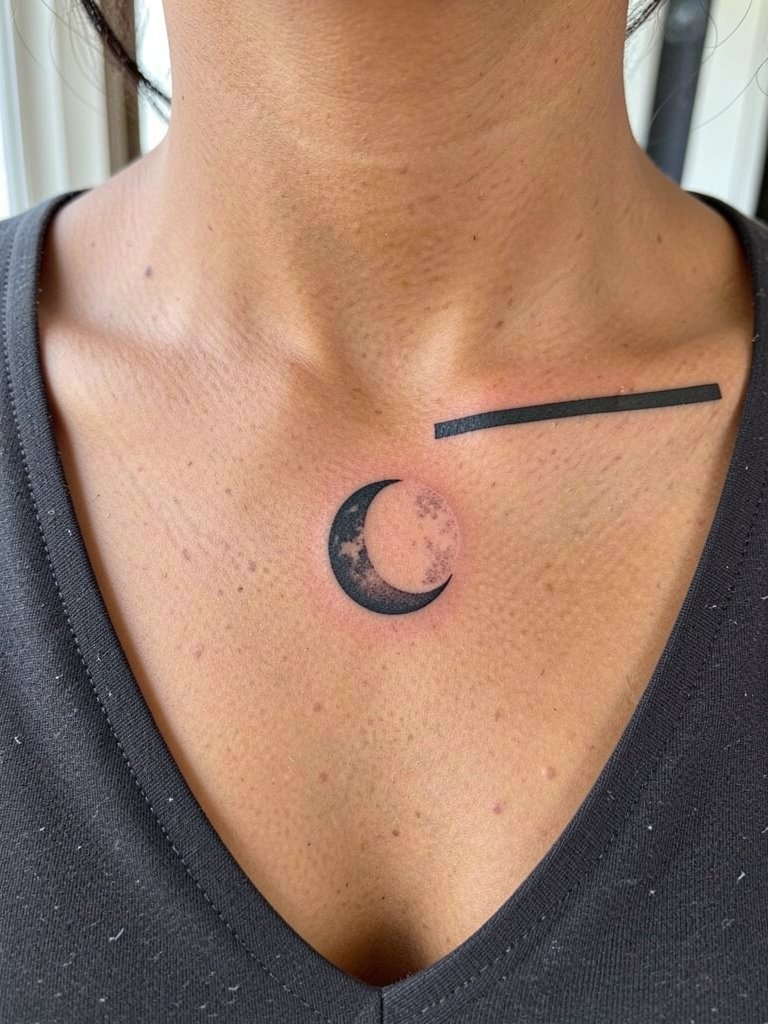
Negative-space crescents can give a sculpted look when balanced against a black bar or band. This method avoids white ink reliance for the glow effect while still giving contrast that reads on medium skin tones. For the session wear a wide V-neck or scoop-neck so the artist can place the stencil and check symmetry. For styling, thin layered necklaces that sit above the crescent keep focus on the negative space. Try layered thin chain necklace to complement the area.
21. Geometric Micro Moon on the Top of the Foot
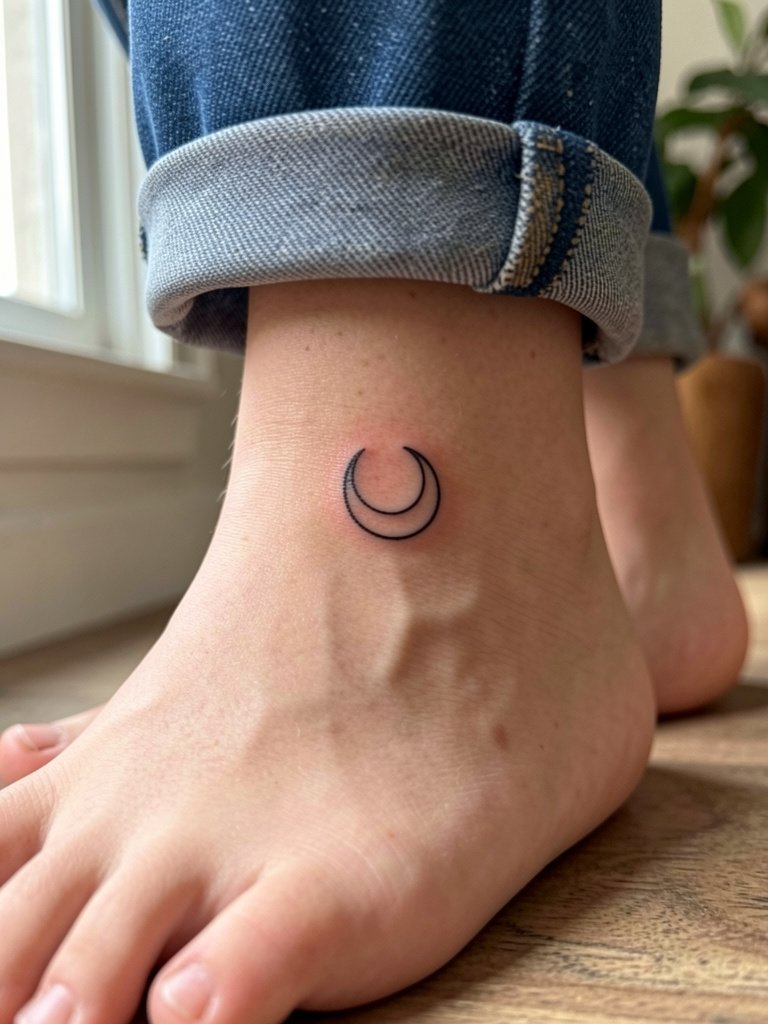
Top-of-foot tattoos look delicate but face regular abrasion from shoes. The common mistake is choosing ultra-thin arcs that fade quickly with footwear. If you want this location, accept a slightly bolder outline and plan for a touch-up within a year. For the session choose open-toe footwear and loose socks for the first few days of healing to reduce rubbing. Photos of foot tattoos read best against neutral footwear and bare skin.
Frequently Asked Questions
Q: How do I pick line weight so a tiny moon stays crisp beyond year two?
A: For most small moons on wrists and ribs choose a short hairline around 0.30mm to 0.35mm rather than a single-needle 0.25mm. Thicker hairlines keep the silhouette clear as the skin stretches and the ink settles. Bring a scaled reference to your consult so the artist can show exactly how much thicker the lines will be at the finished size.
Q: Which method makes a moon "glow" on darker skin tones, white ink or negative space?
A: One approach adds white ink highlights to the blackwork to create a glow. Another approach uses cut-out negative space where the bare skin forms the moon core. Both have trade-offs. White ink can show up immediately but it can fade or yellow over years. Negative space avoids white ink fade and is often more reliable long term because it relies on contrast between black saturation and untouched skin.
Q: Where can I find artists and healed examples without naming specific people?
A: Search hashtags like #minimalistmoon, #finelinemoon, and #singlestroketattoo on Instagram and TikTok while using location filters to find nearby artists. Tattoodo and the Inked App let you search by keyword such as "dotwork moon" and show portfolio and healed photos. Reddit communities like r/tattoos and r/finelinetattoos also surface peer recommendations and real healed shots across skin tones.
Q: What should I wear to my session for a collarbone, hip, or ribcage moon?
A: For collarbone work wear a strapless top or tank so the artist has full access. For lateral hip designs bring a two-piece set so the artist can roll the waistband down without exposing underwear. For side torso and ribs a loose dress or two-piece is ideal. Choose clothing that will not press on the fresh tattoo during travel home.
Q: How often will small moon tattoos need touch-ups?
A: Small moons often need at least one touch-up within 6 to 18 months depending on placement and lifestyle. High-friction zones like the wrist, fingers, and top of foot typically need touch-ups sooner than forearm or shoulder blade work. Keep realistic expectations and budget for a single touch-up in the first year for most micro pieces.
Q: Do any of the placements require a specialized artist or extra caution?
A: Yes. Sternum, face, hands, and intimate areas need artists experienced with those zones because the skin behaves differently and healing expectations vary. When booking for sternum or ribs ask the studio about healed portfolios in that exact placement and confirm the artist regularly handles that anatomy.
Q: Can I use numbing cream for a ribcage moon or should I skip it?
A: Some people use topical numbing as a tool to get through rib sessions and stay still. Other people report swelling from numbing that can distort ultra-fine linework. If you consider numbing, tell the studio beforehand and follow the artist's preferred protocol for timing and application so neither swelling nor pigment migration becomes an issue.