Lion tattoos keep showing up in portfolio slideshows and saved boards, but the versions that actually age well are not always the ones getting the most double taps. Trends push tiny single-needle faces and bright neo-traditional crowns, while the pieces that still read clean at year three usually balance linework, scale, and placement. Read these lion tattoo ideas for men with practical notes on sizing, longevity, and wardrobe so you get a design that looks deliberate now and better later.
1. Realistic Lion Head Portrait on Shoulder
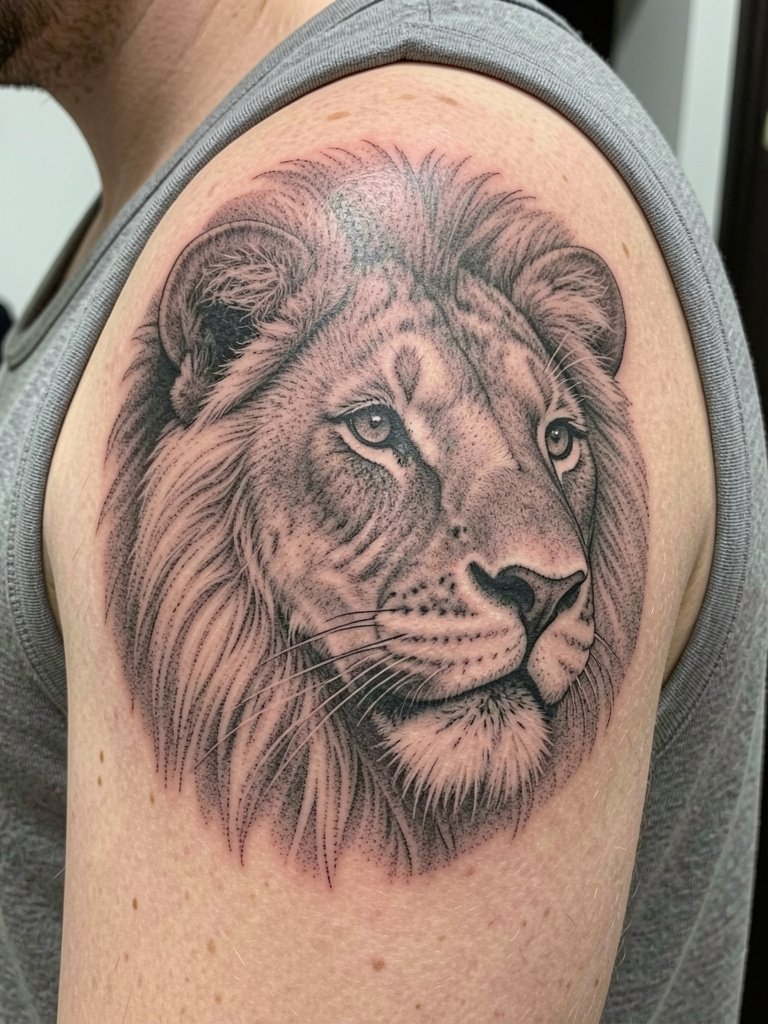
A shoulder-located realistic head reads well from a few feet away and fits medium to large face detail without crowding. Pick a stencil scale that keeps the eyes and nostrils at least three inches across so the fine shading does not blur into a blotch after a couple of years. For the consultation bring two reference photos at different sizes so the artist can show how eye placement shifts between a three-inch and a five-inch face. Pain is moderate on the shoulder and sessions usually run two hours for a medium portrait. Common mistake is shrinking the face to fit a sleeve plan, which loses mane texture and invites blowout along thin whiskers. For showing it off, sleeveless muscle tees and open camp-collar shirts expose the shoulder naturally, try men tank top for session wear.
2. Geometric Lion Head on Inner Forearm
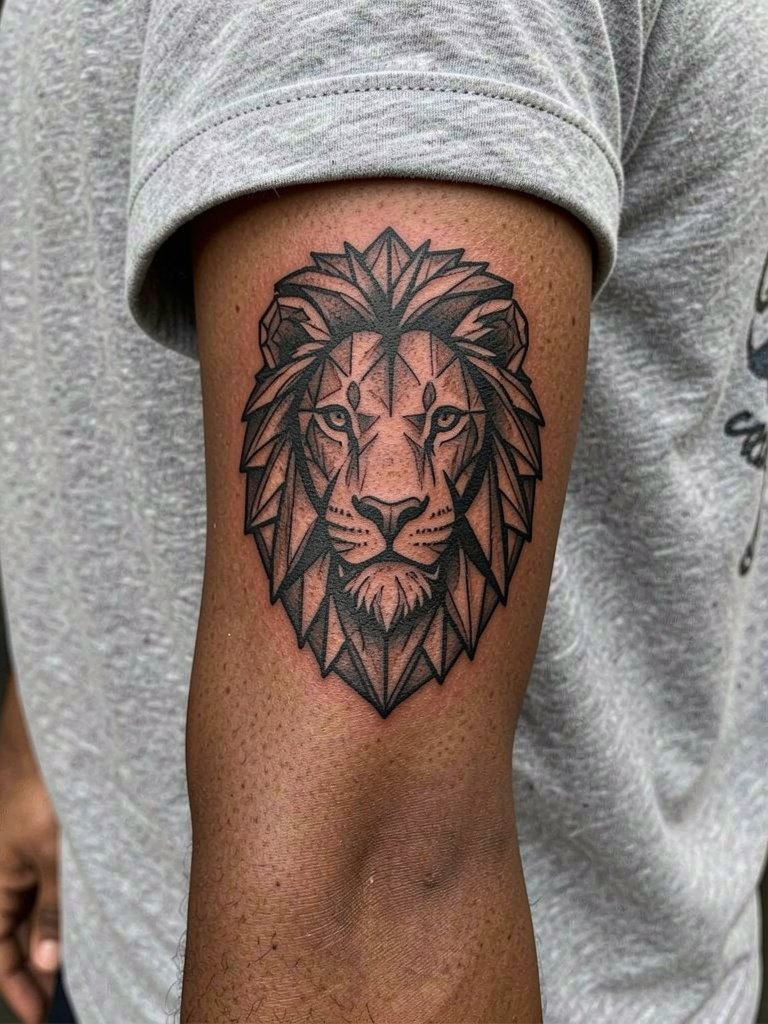
Geometric lions simplify the anatomy into shapes that hold up even when lines soften. For inner-forearm placement keep primary planes at least 2.5 to 3 millimeters wide so stipple shading and negative space remain legible over time. In a consult show the artist where the clasp of your watch sits so the design avoids constant friction. Expect a one- to two-hour session for a medium forearm piece and low to moderate pain. The usual error is squeezing too many tiny facets into a small area. This design pairs well with rolled-cuff oxford shirts and a minimalist watch. Grab a plain crew neck tee to roll the sleeve up cleanly on session day.
3. Crowned Lion Upper Arm Neo-Traditional
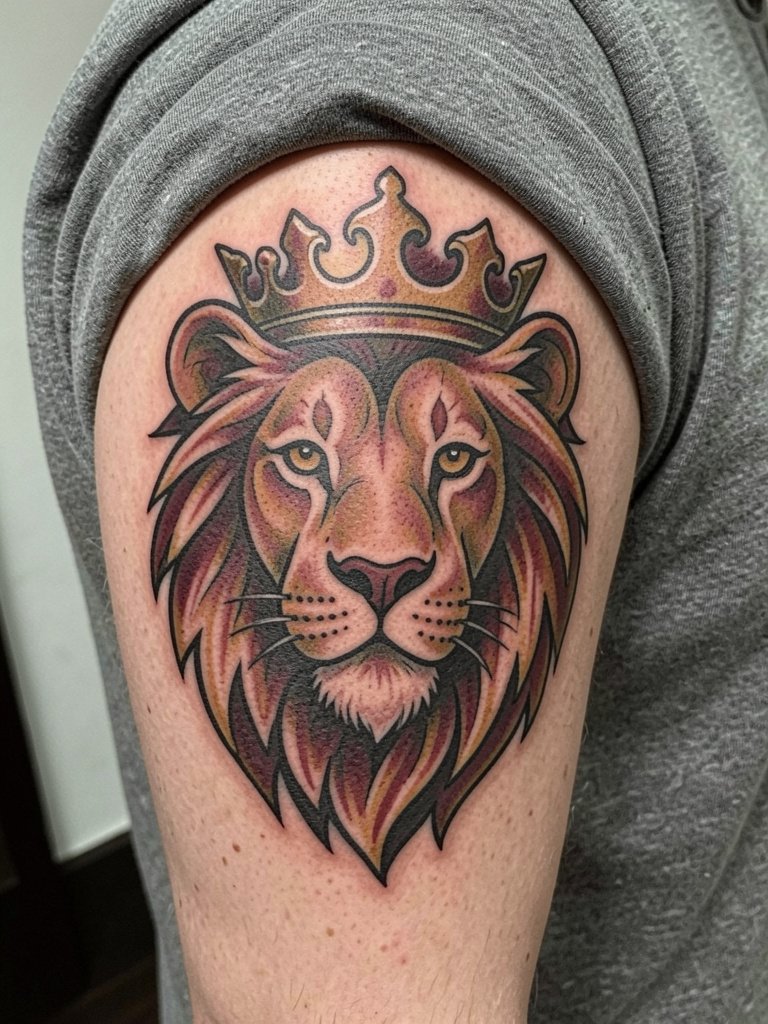
Neo-traditional crowned lions rely on heavier linework and selective color to stay readable. One camp prefers realism for facial nuance and argues it looks more dramatic in photos. The other camp favors bold outlines and flat fills for longevity because thick contours resist blur as the skin ages. Name both perspectives in your planning. For this upper-arm piece go for a crown element that sits on the shoulder curve rather than across the bicep fold to avoid early distortion. Session time is typically one to two hours with low to moderate pain. If you want to frame it, open button shirts or fitted henleys sit well under the sleeve line. Try open button shirt for easy access.
4. Roaring Chest Piece Centered Below Clavicle
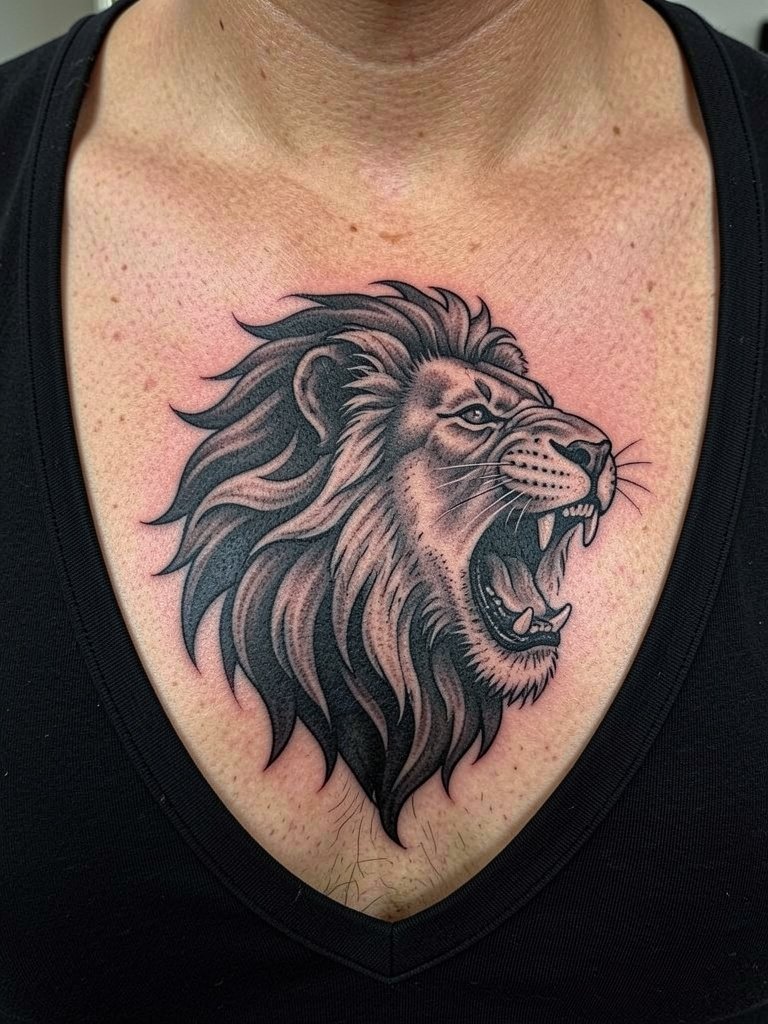
A chest roar uses the broad canvas to create motion and depth that shoulders cannot. Chest placement splits opinions over visibility versus scale. One group says forearms are better for everyday viewing and lower pain. The opposing group argues the chest is ideal because symmetry and mane flow look more dramatic on a wide canvas. Both positions matter when you pick a piece. For a roaring composition keep the mouth area at least four inches across to preserve teeth detail and avoid patchy shadowing in two years. Expect multiple sessions and higher pain near the sternum. For session wear bring a button-down or zip-front layer to remove and replace without tugging the fresh ink.
5. Lion and Cub Forearm Portrait
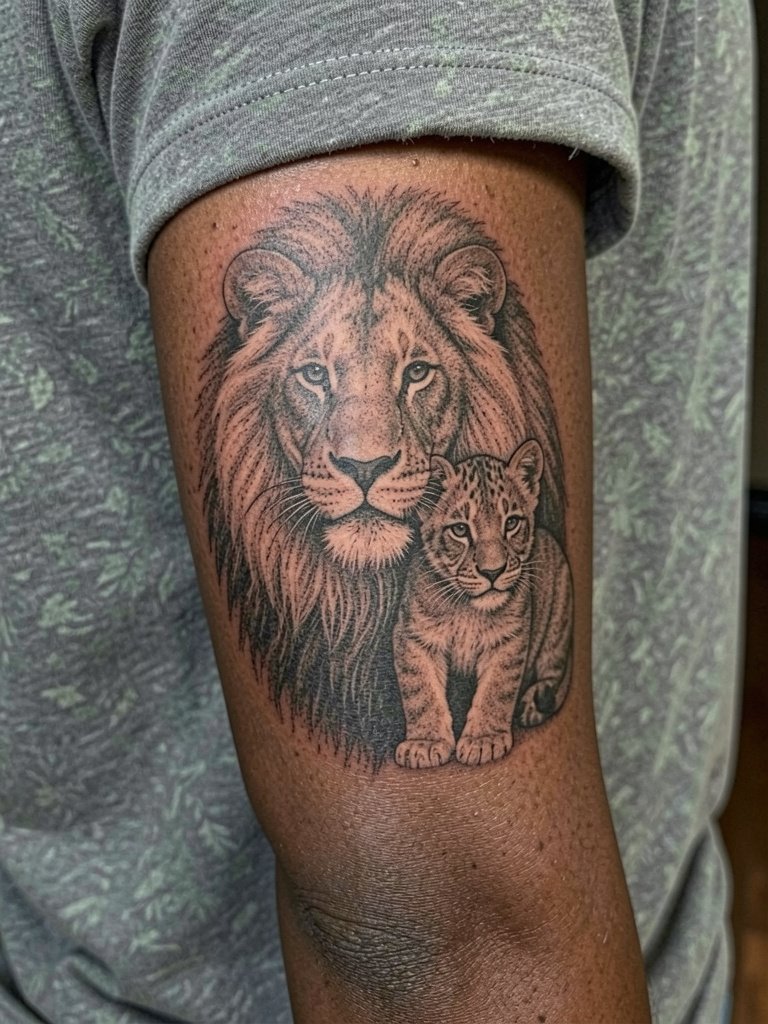
Lion-and-cub compositions add family and protection themes without leaning on aggressive imagery. For forearm placement balance the adult's mane against the cub's small head so neither feels cramped. A common mistake is matching the scale of both heads too closely, which ruins the intended parent-child contrast as the piece heals. For texture ask the artist to use a mix of stipple shading and light whip shading so the cub reads soft even at 12 months. Session time is usually one to two hours and touch-ups may be helpful around high-motion areas like the wrist. Rollable shirts and a neutral fitted tee help show the piece off; wear a fitted tee men on session day.
6. Tribal Blackwork Shoulder Panel
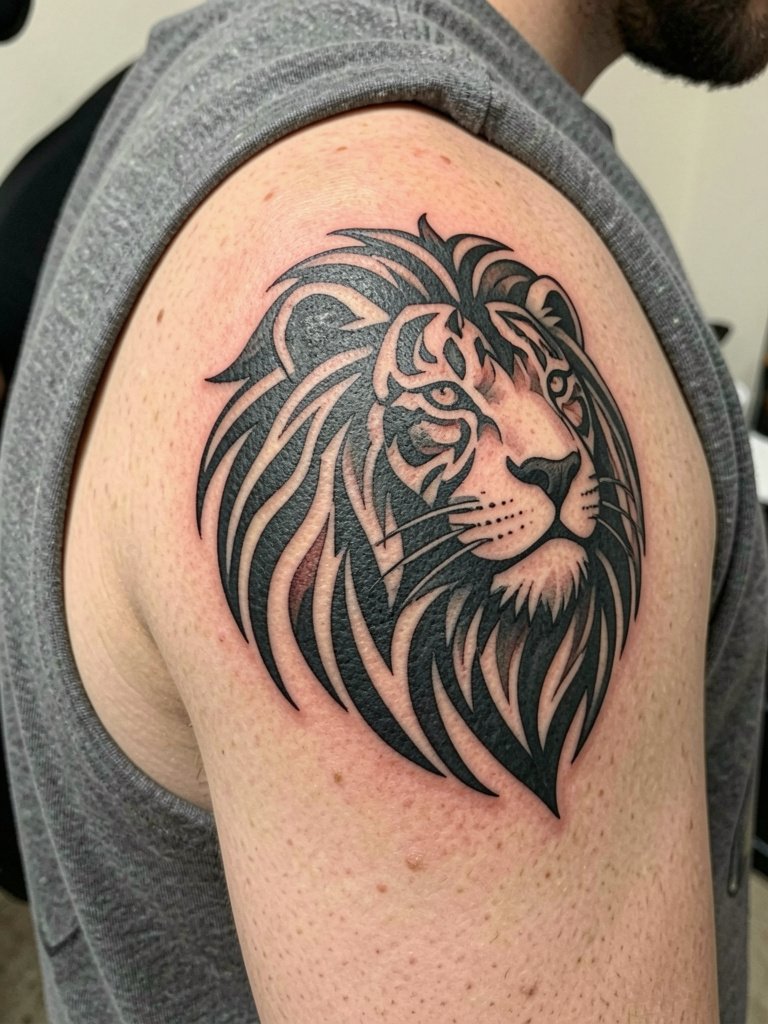
Tribal blackwork gives instant graphic strength and ages predictably because heavy fills blur less than ultra-fine detail. Some argue tribal stays classic and bold forever. Others say these patterns can feel dated unless reworked into a contemporary layout with cleaner negative space. Name both views when choosing a motif. For shoulder panels keep the largest black shapes at least half an inch across so edges remain crisp. One mistake is trying to miniaturize a bold tribal design for a small area like the wrist. Pain is low on the deltoid and a one-session block usually handles this scale. For showing it off pair with tank tops or open camp-collar shirts, try men tank top.
Pre-Session Picks
Those first six ideas range from heavy black fills to delicate stipple work, so a few practical items make the session and first week smoother.
-
Stencil transfer paper kit. Lets you preview placement and scale on skin before the needle hits, which matters for portraits and geometric grids.
-
Topical numbing cream. Useful for long chest or rib sessions where discomfort can add movement and affect linework.
-
Thin protective film roll. Keeps forearm and hand pieces clean during the busiest week of washing and activity.
-
Fragrance free body wash. Gentle cleansing helps prevent irritation around dense blackwork and shaded portraits.
-
Healing balm search. A thin, breathable balm for the initial days reduces crusting risk without blocking needle channels.
7. Minimalist Lion Outline on Wrist
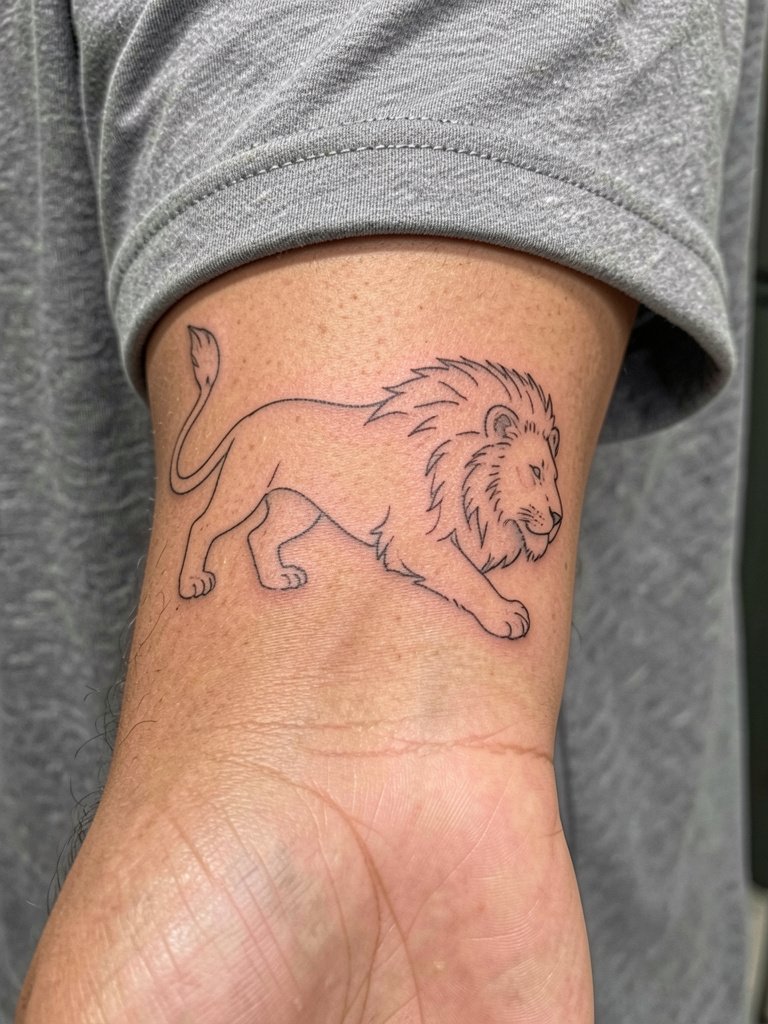
Small wrist outlines are entry-level friendly but need careful sizing. Single-needle lines on the wrist can blur into a softer shape by year two because the skin there moves and endures frequent washing. Instead of asking for hair-thin lines, request a slightly heavier single-needle stack or a two-needle lineweight so the silhouette holds. Pain is low to moderate and sessions are under an hour. Expect touch-ups sooner than for larger pieces. For session clothing wear a short sleeve and remove watches. To show it off, low-profile sneakers and cropped pants reveal the ankle counterpart if you plan matching pieces.
8. Lion of Judah Forearm Emblem
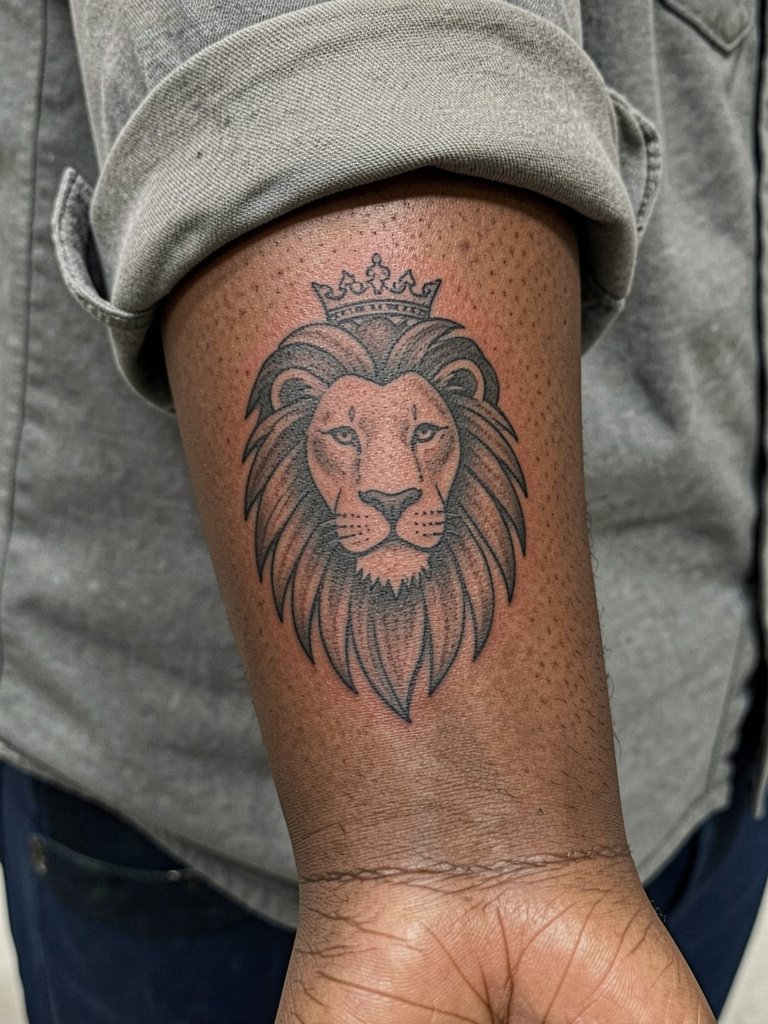
Religious and cultural icons require sensitivity in composition. For a Lion of Judah motif keep the symbol clear and avoid merging other cultural marks into the field. The emblem works best medium sized on the forearm where the vertical layout can be shown off daily. A mistake is crowding the emblem with tiny text or symbols that age into illegibility. Discuss exact crown scale and mane texture so the artist knows how much negative space to preserve. Session wear: short sleeves or a button-up with easy roll-up cuffs. For display pair with straight-leg denim and neutral tees, try straight leg jeans.
9. Calm Portrait Lion on Upper Back
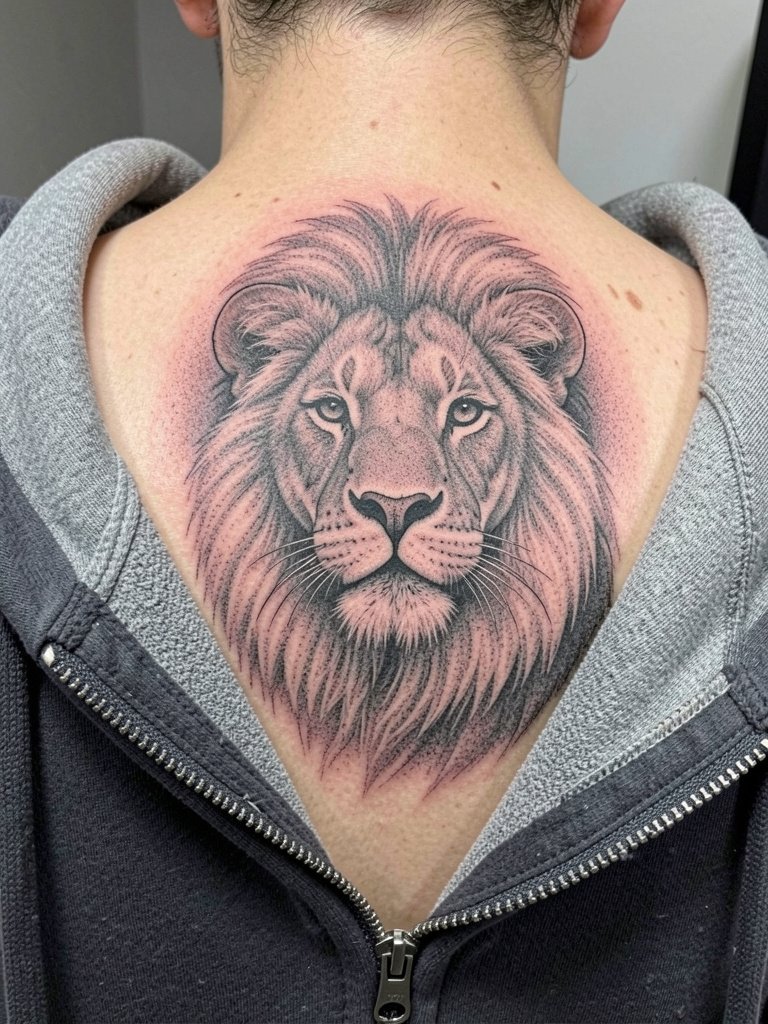
A calm, regal face can convey leadership and resilience without aggressive expression. Upper-back composition allows full mane flow and background shading that reads well at distance. For sessions plan multiple passes and ask the artist to show healed photos of similar back pieces so you judge saturation and contrast. The back tolerates longer sessions and touch-ups are straightforward because the area is relatively stable. One common error is introducing too many small contrasting elements in the mane which get lost as the skin stretches with time. For casual reveals draped tank tops or open-backed gym wear show the piece selectively.
10. Lion with Armor on Upper Arm
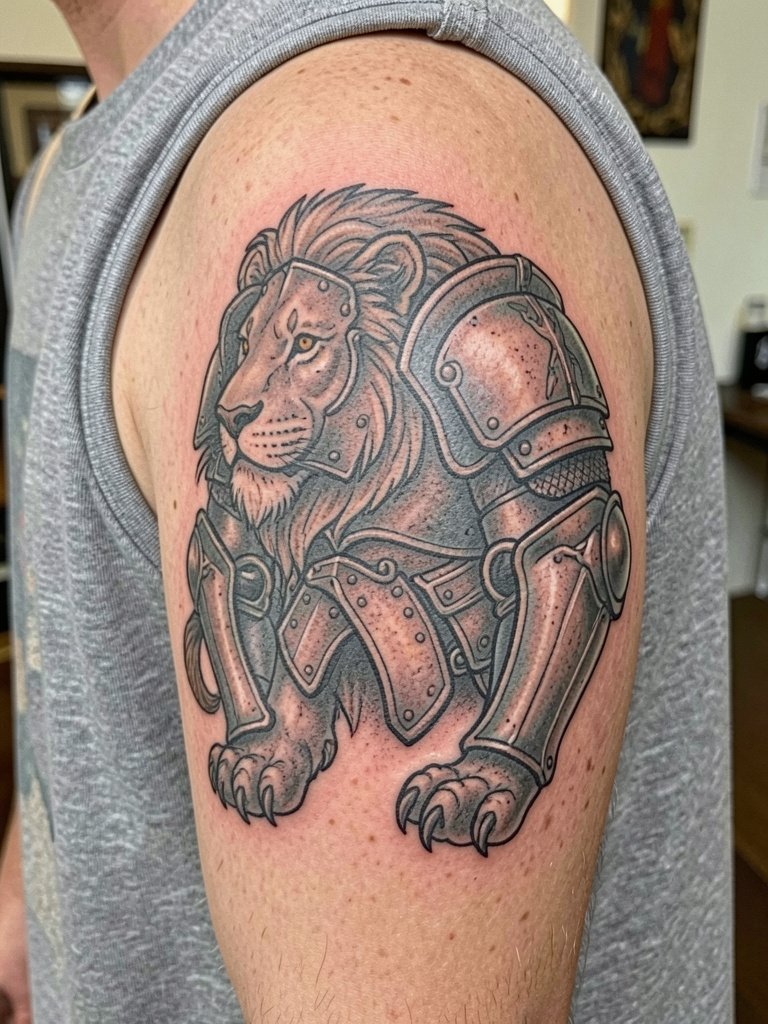
Armor elements turn a lion into a warrior motif and let you layer geometric plates or heraldic flourishes. For upper-arm placement keep metallic highlights sparse to avoid color saturation fading into muddiness. A frequent mistake is asking for fully saturated metallic color across the whole piece; instead pick two accent areas for gold or bronze to keep saturation readable. Sessions run medium length and pain is low. For session wear use a loose tank so the artist can access the upper arm easily. Pair the finished piece with an open camp-collar shirt for evenings out; try open button shirt.
11. Hand Lion Face Bold Realism
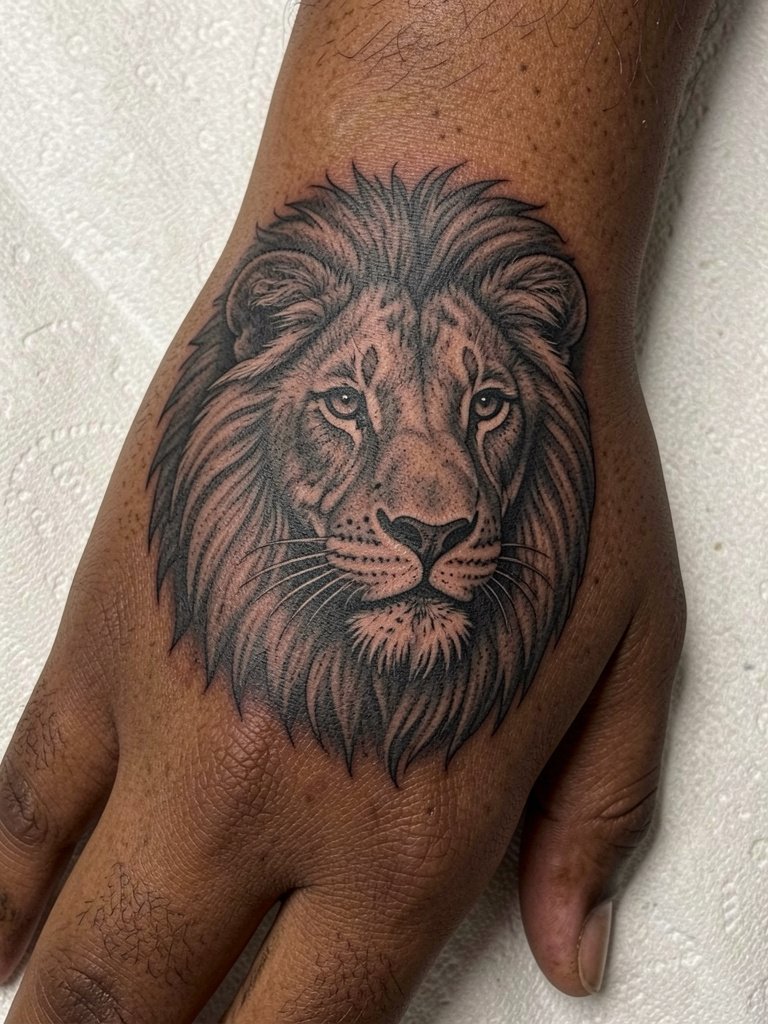
Hand tattoos are high-visibility and demand upkeep because wash frequency and friction speed fading and blur. Expect touch-ups more often than for forearm or chest work. If you want bold realism here choose heavier linework and avoid ultra-fine whiskers that disappear. The notable mistake is treating the hand like a low-maintenance placement. Plan for touch-ups at the one-year mark. Pain is moderate and sessions are short. For session wear remove rings and bracelets. Consider clean minimal rings and solid-color sleeves to frame the hand when showing off the piece.
12. Full Sleeve Lion Story with Motion and Flames
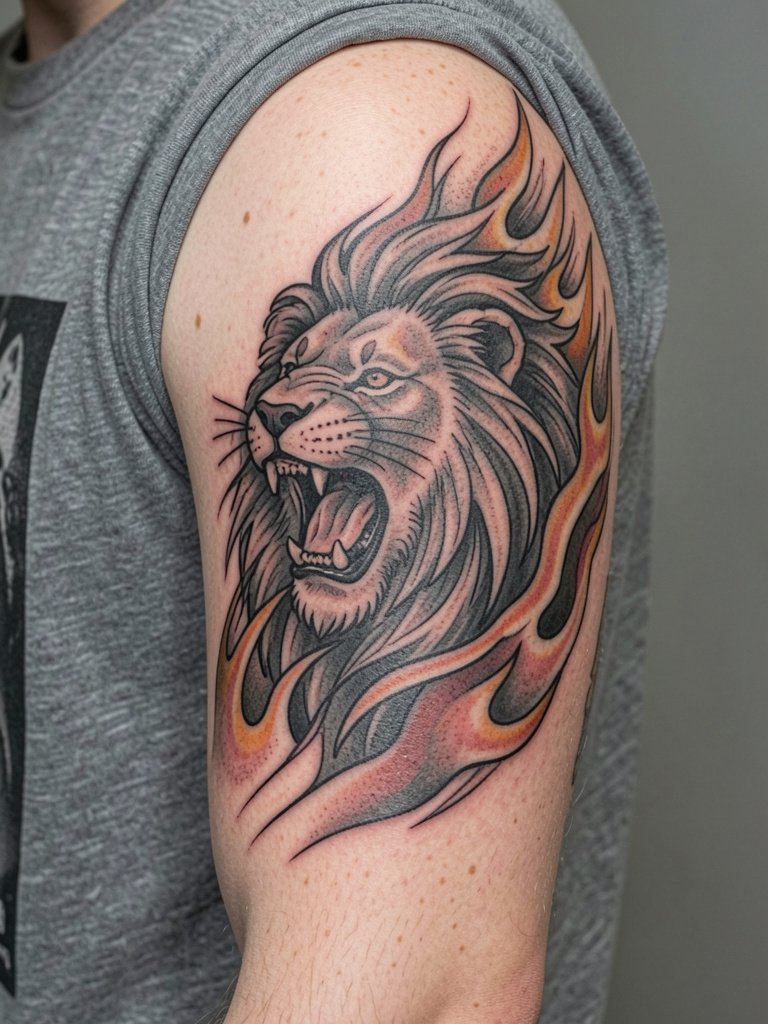
Sleeves let the lion motif evolve along the arm and tell a visual narrative. Plan the arc so focal points avoid the elbow crease and the inner elbow where blowout and distortion are common. One common error is crowding small filler elements between bolder sections which can create noise after healing. Expect multiple long sessions and higher cost and plan touch-ups for saturation loss in the first two years. Style your sleeve with plain solid tees and cuffed denim jackets to let the arm dominate. For session wear choose a zip-up outer layer that can come off and on without smudging fresh ink.
13. Simple Lion Head Silhouette on Ankle
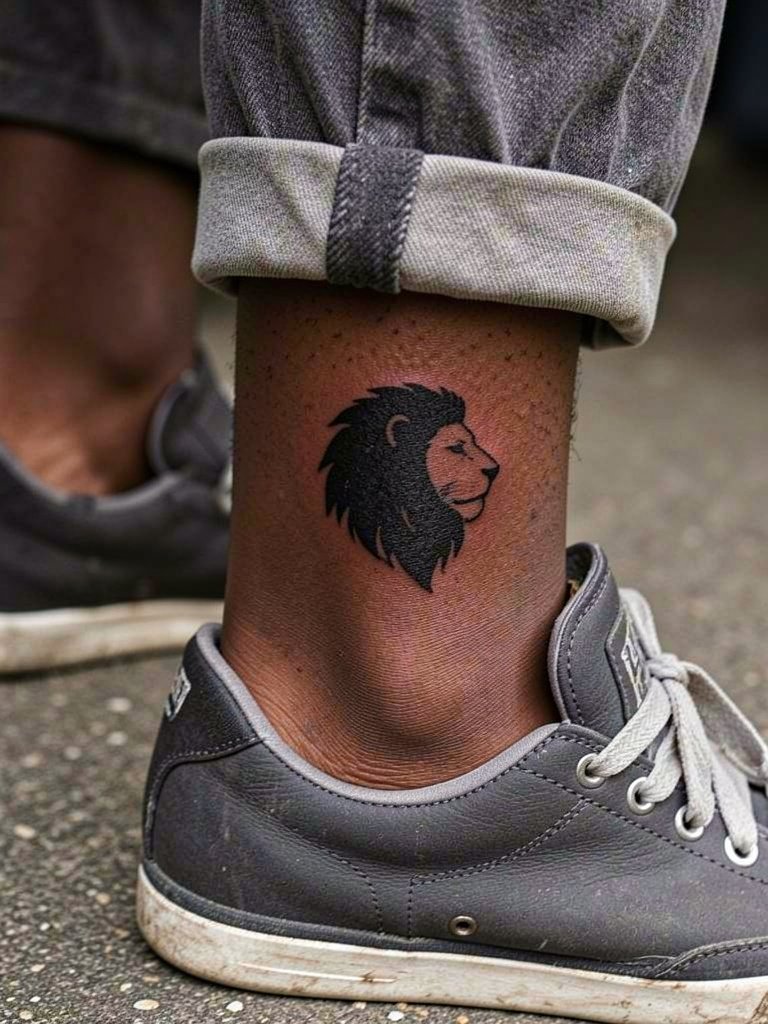
Ankle silhouettes are compact and readable when executed as solid black fills rather than detail-driven portraits. The skin around the ankle moves a lot, so avoid tiny internal contours that will blur. Session time is short and pain is low to moderate. The typical mistake is trying to cram eyes and whiskers into an area better suited to silhouette. For showing the piece wear cropped pants and low-profile sneakers to keep the tattoo visible. For session day, wear joggers or shorts so artists can access the ankle without fabric tugging.
14. Aslan-Inspired Illustrative Shoulder Piece
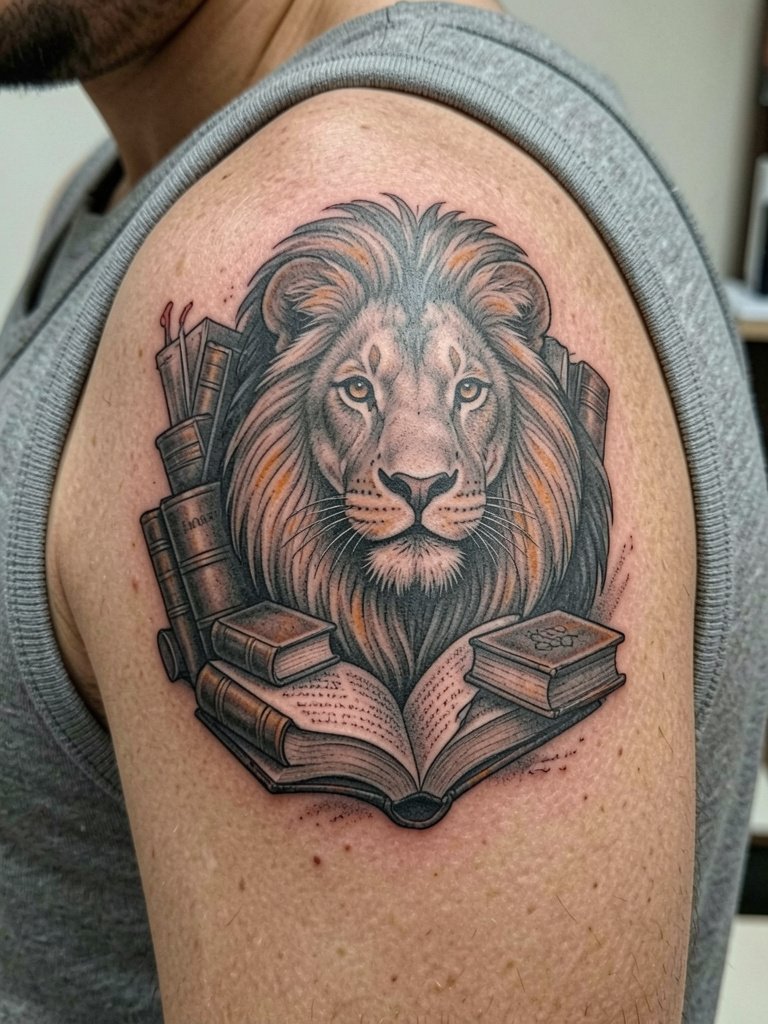
Literary-inspired lions add a narrative layer without copying any copyrighted character. Describe the symbolic notes you want: wisdom cues, gentle gaze, or sacrificial posture. A frequent mistake is requesting a direct character likeness which can create a cartoon result. Ask the artist to sketch the mood you want rather than a photo copy. Shoulder placement gives room for subtle background elements and minimizes distortion. Session time is moderate and pain is low. Pair this with sleeveless layers or open overshirts for casual reveals.
15. Miniature Paw Print Memorial on Wrist
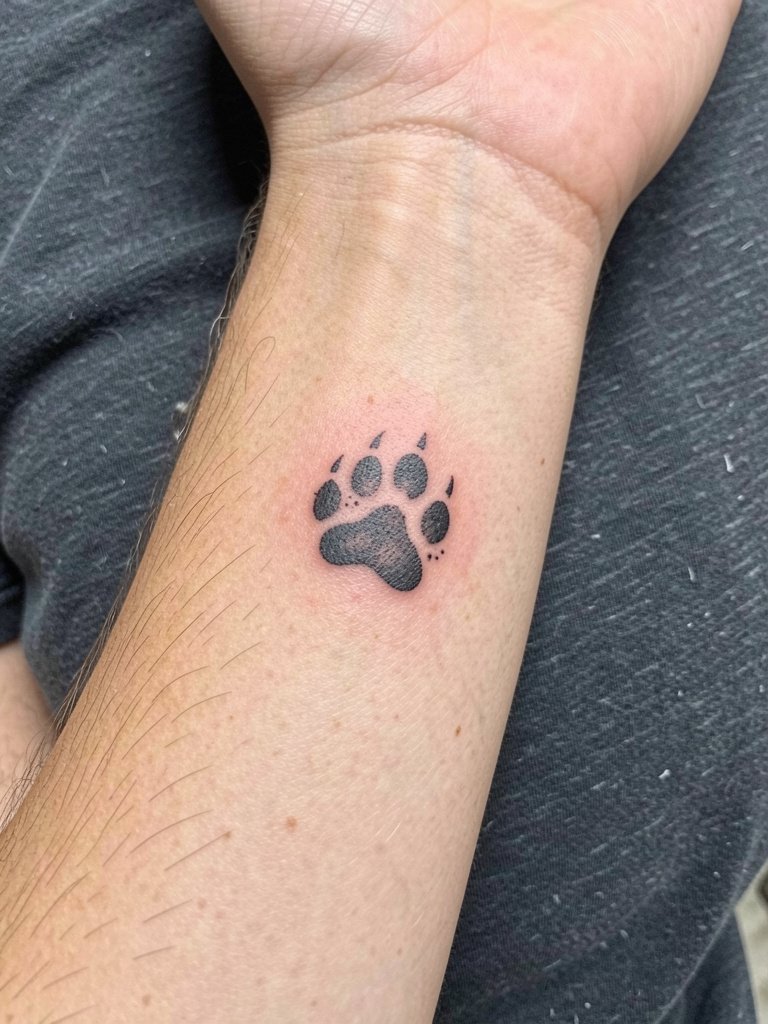
Paw prints make quiet memorial markers that still read masculine without large scale. Keep the print simple and avoid tiny internal shading that will close up. A common error is adding a date in tiny numerals inside the pad; those digits often blur. Sessions are short and pain is low. For session wear remove watches and bracelets. This placement pairs with rolled sleeves and minimalist rings when you want to show it subtly.
16. Neo-Traditional Lion Bust on Chest Side
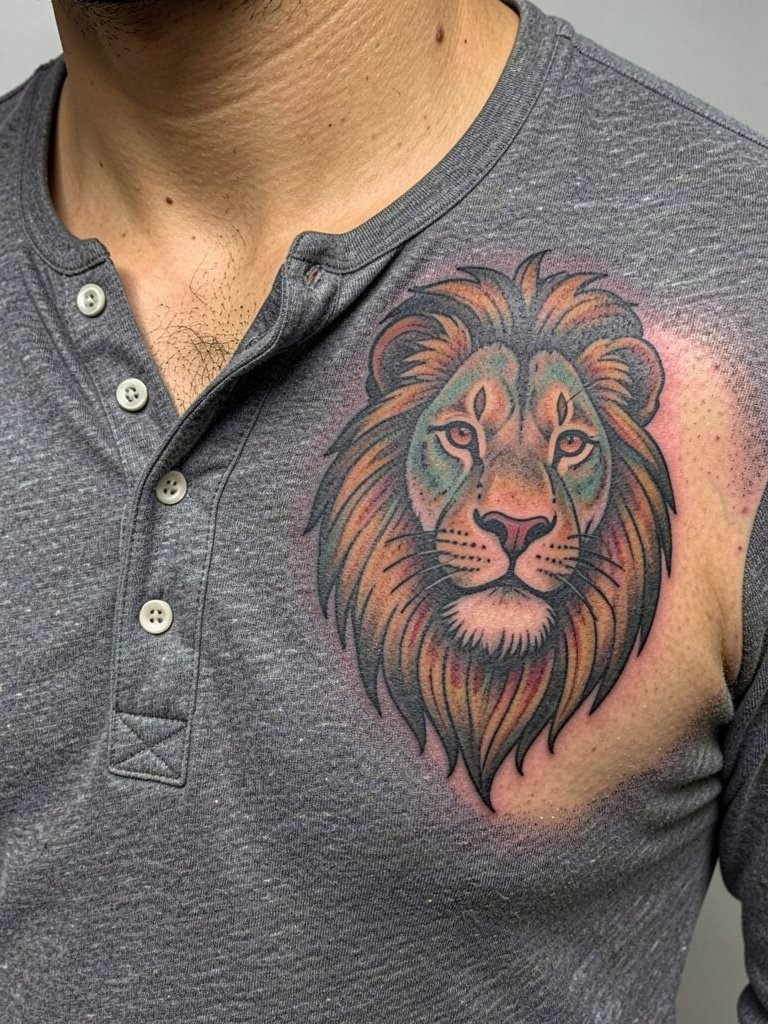
Side-chest neo-traditional pieces let you play with pattern and saturated accents without overcomplicating the portrait. Keep the color accents limited so saturation holds; heavy full-color gradients can shift into muddiness on the chest. Plan for slightly heavier outlines than a pure realism piece to prevent softening with time. Pain near the sternum can be higher so break the session into manageable chunks. For showing it off pick low-cut crew necks or fitted henleys that frame the collarbone.
17. Geometric Mandala Mane on Forearm
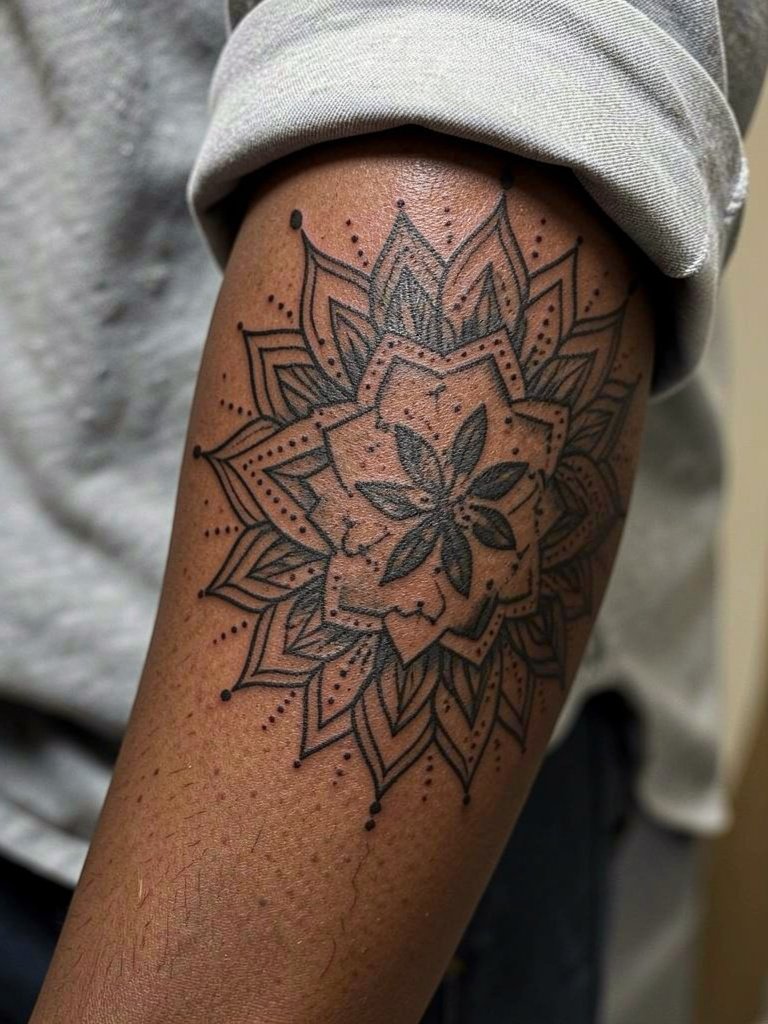
Mandala mane treatments turn the mane into a decorative structural element that reads well on the forearm. For dot work and stippling, insist on consistent dot density and ask for healed photos of similar skin tones because stipple can seem patchy on darker skin if spacing is too light. A common mistake is asking for ultra-fine dots at small scale. Sessions will be medium length and may require touch-ups to maintain midtone consistency. Pair with rolled cuff shirts to show the radial pattern; use rolled sleeve shirt on session day.
18. Stylized Linework Lion on Ribcage
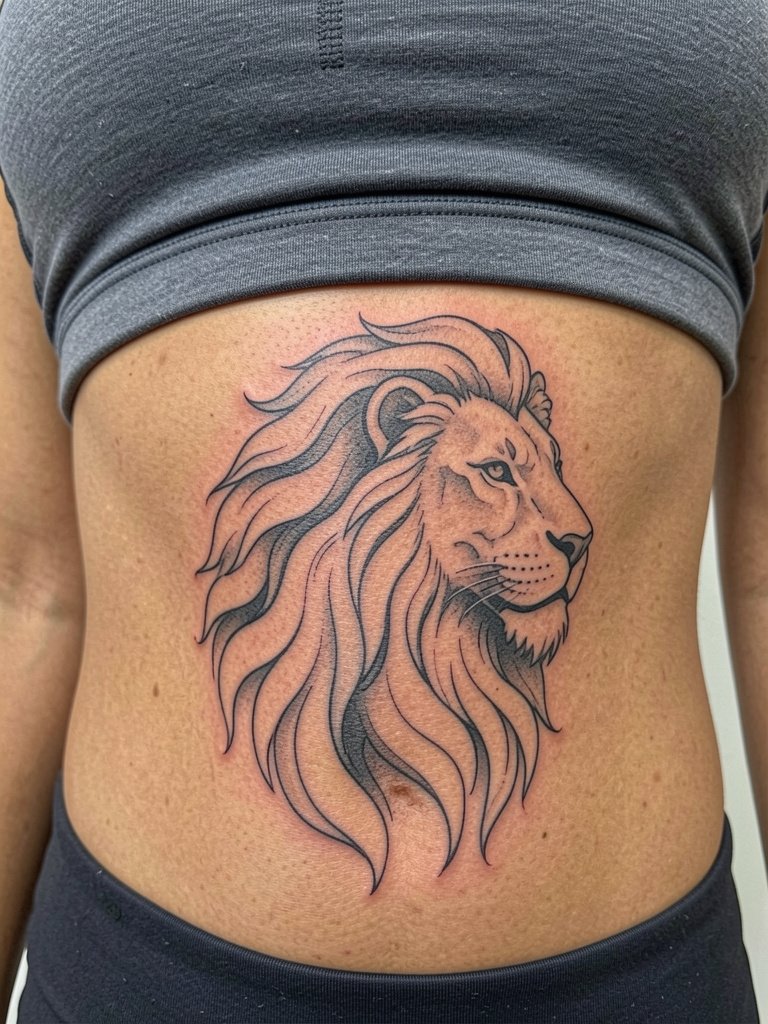
Ribcage placements are painful and demand planning for spacing because skin stretch and movement affect line retention. Artists are split on fine-line ribs. One side says lines blur fast as the skin flexes under breathing. The other side says with slightly wider spacing and careful needle depth fine lines can settle well. Both positions are important to weigh before you book. If you prefer delicate lines, accept a slightly larger scale than you first imagined. Bring snacks and plan for breaks.
19. Half-Sleeve Lion with Florals
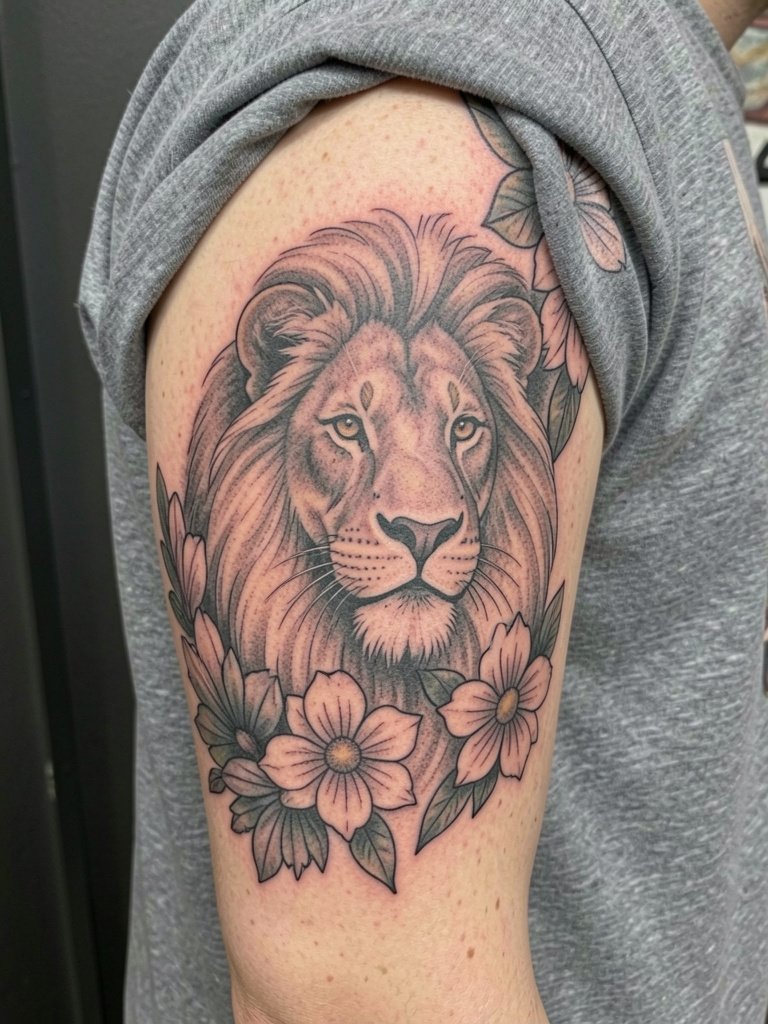
Pairing flora with a lion softens the composition while keeping visual weight. For half-sleeves keep floral elements larger and with bold outlines so they do not disappear among mane texture. A common mistake is filling negative space with tiny leaves that knit into a visual muddle over time. Sessions are multiple and touch-ups may be needed along the inner arm. For showing it off plain solid tees and cuffed denim jackets create a clean backdrop.
20. Abstract Line Lion Across Collarbone
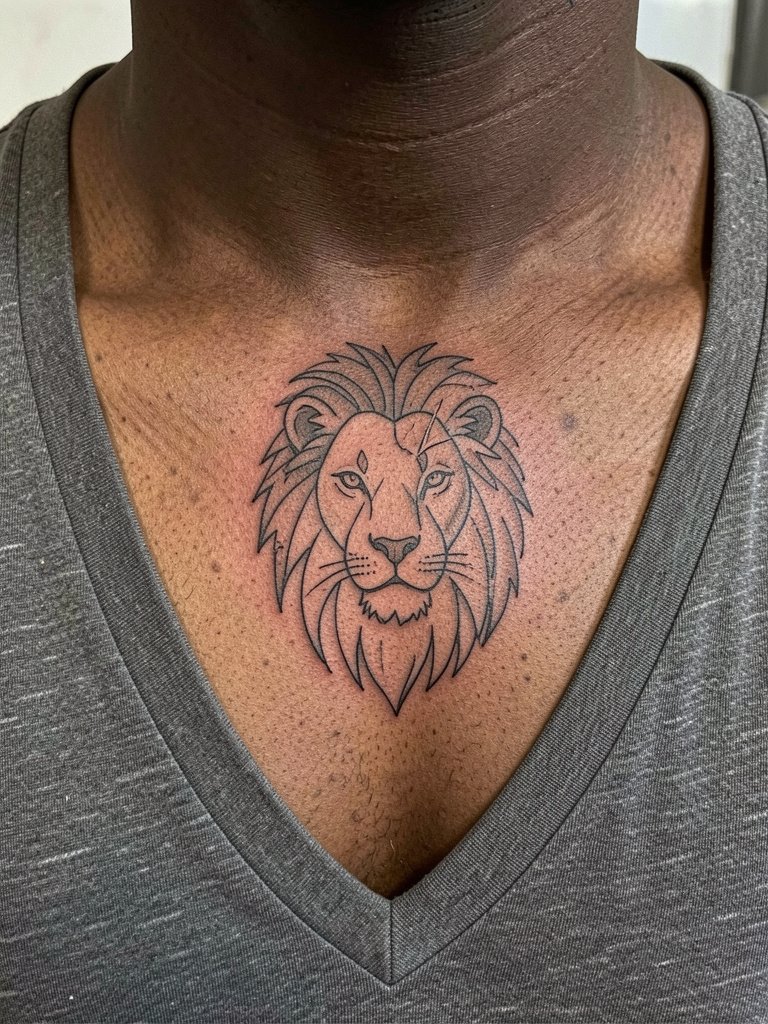
Collarbone placements show off architectural linework but require scale adjustments because movement and bone prominence can warp thin lines. Keep the continuous line slightly heavier than your favorite reference and ask to see healed collarbone examples. The frequent error is insisting on ultra-thin single lines across bone edges. Session time is short and pain ranges moderate. Low-cut crew necks and open overshirts reveal the piece beautifully.
21. Lion Paw Memorial on Chest Side
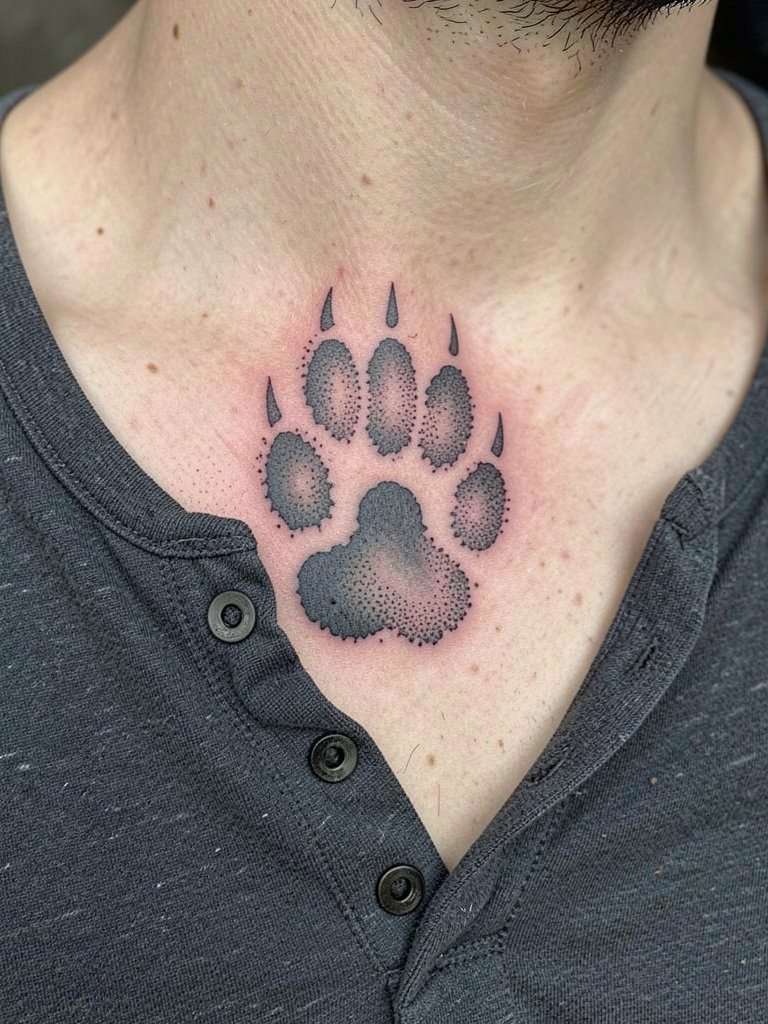
Chest-side paw marks make personal markers that remain masculine without large portrait demands. Place the print high enough to avoid pressure from backpack straps and low enough to stay visible under casual layers. Avoid tiny date numerals within the print. Session time is short and pain is moderate near the chest wall. For reveal choose fitted henleys that frame the upper chest area. For session wear bring a front-opening shirt for easy changing.
22. Half-Back Mane with Negative Space
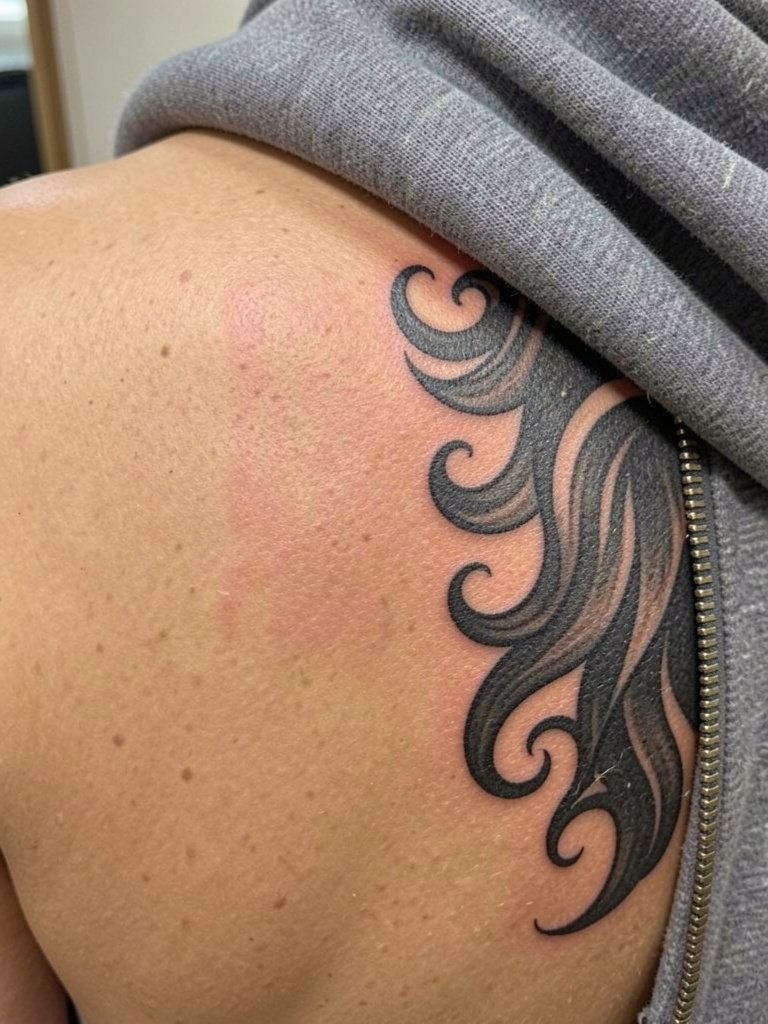
Negative space manes are a smart longevity play because they emphasize silhouette over micro-detail. When you want drama without intense session counts opt for bold fills and selective negative shapes that read from a distance. A mistake is overfilling the mane with tiny curls that lose contrast over time. Expect multiple sessions with moderate pain if you expand across the back. Open-back gym wear and draped tanks look right when you want to reveal the piece.
23. Stylized Side-Profile on Calf
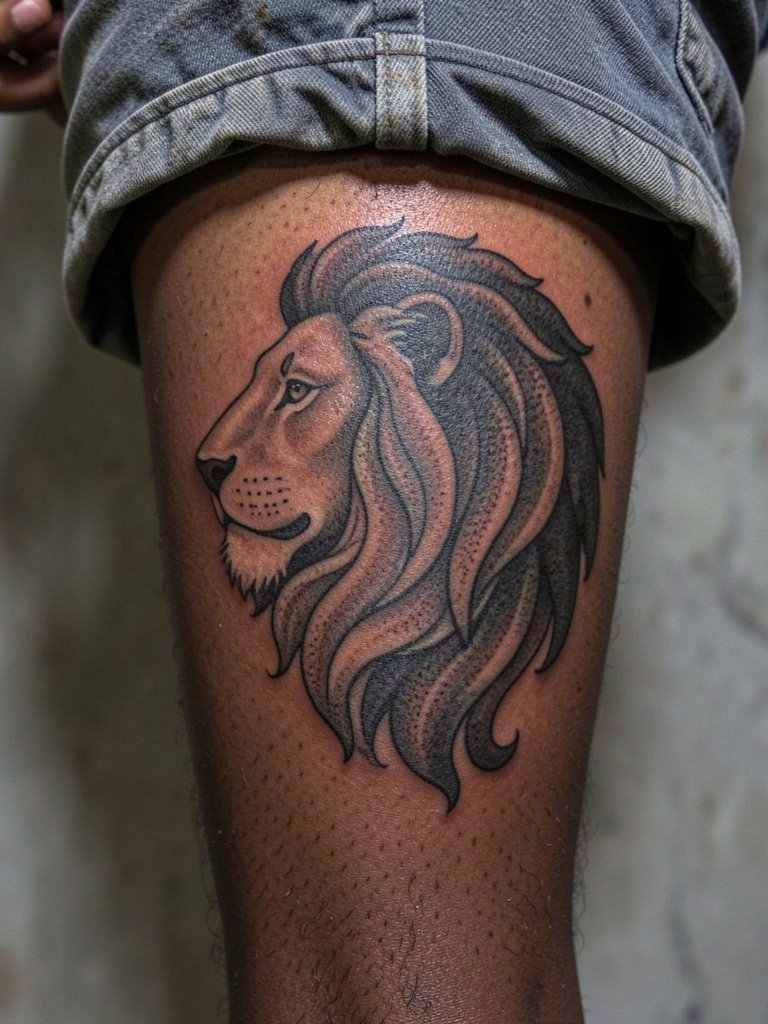
Calf placements display well and avoid the sun exposure problems of hands. For side-profile pieces keep the main silhouette clear and avoid tiny internal details that time will flatten. Common mistake is wrapping too much around the calf which causes the silhouette to lose impact. Session times are moderate, pain is lower than ribs or chest, and touch-ups are occasional. Pair with cropped pants or low-top sneakers to show the calf.
24. Watercolor Accent Lion on Thigh
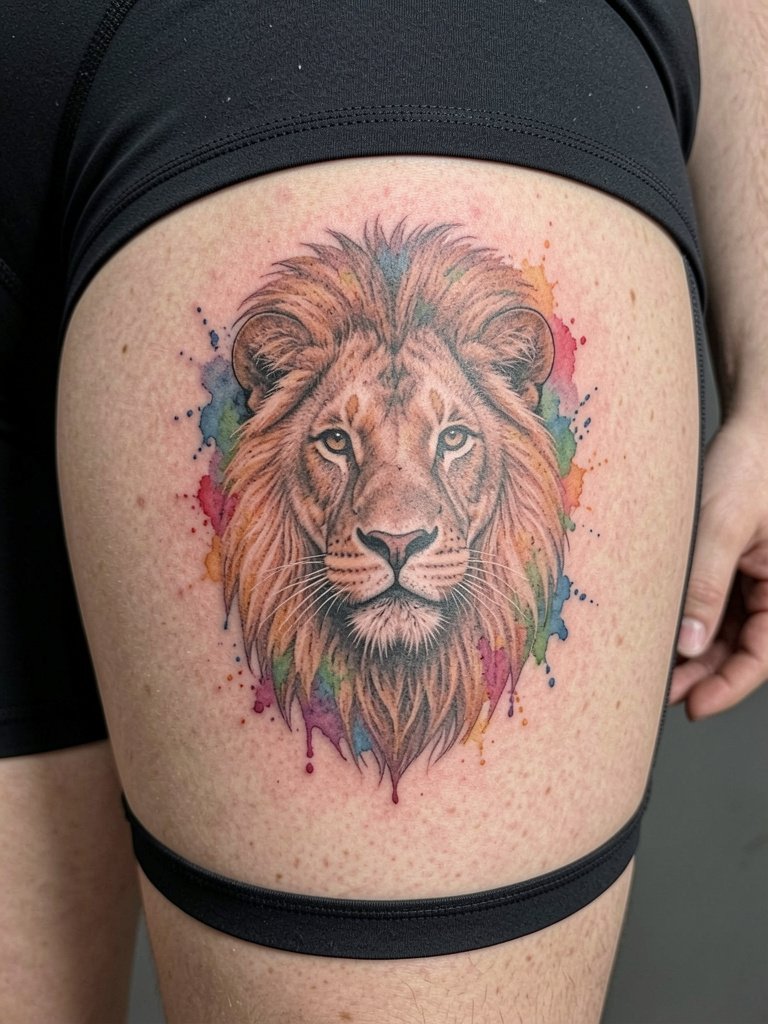
Watercolor accents add a modern touch but can be less predictable on darker skin or high-friction areas. If you choose color limit it to splash accents and keep the portrait in black and grey so the face retains contrast. A mistake is full-color saturation across the face which risks muddiness as color fades. Thighs heal well and are lower friction if you wear loose bottoms during the first week. For session wear loose drawstring pants to roll up without pressure.
25. Geometric Lion Silhouette on Upper Thigh
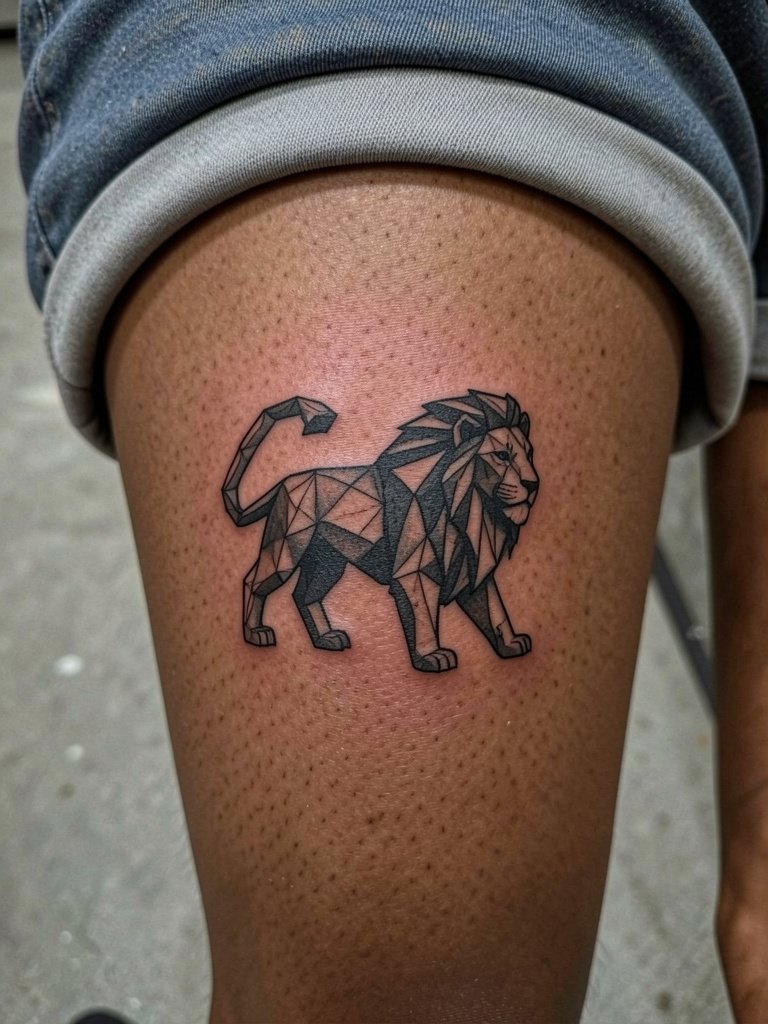
Upper-thigh placements allow larger geometric shapes that stay bold and readable. Keep facet edges at least a few millimeters wide and avoid intricate inner tessellations. A frequent mistake is requesting too many tiny facets which collapse into density on wider skin. Sessions are comfortable and healing is aided by loose clothing. For session wear drawstring linen pants that roll easily without compressing the area.
26. Crowned Lion Inner Forearm Portrait
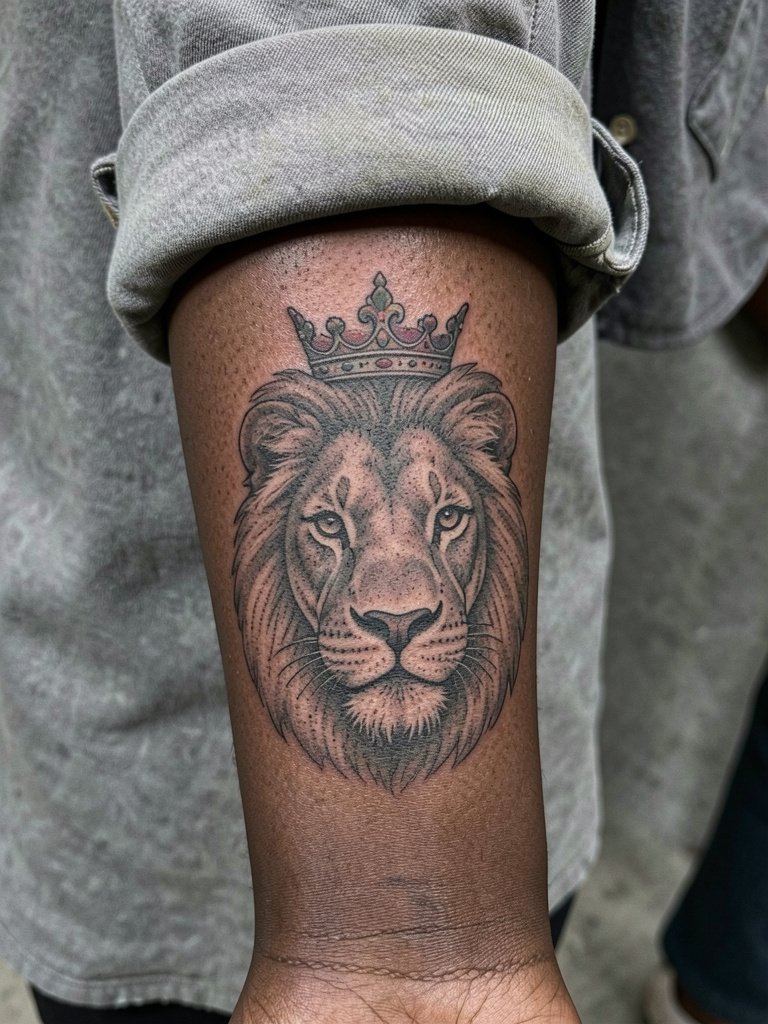
The inner forearm is one of the best balances of visibility and space for medium portraits with crowns. Keep facial details large enough to avoid the common mistake of tiny crown jewels that vanish as saturation fades. Ask the artist to demonstrate how crown line weight changes if moved three quarters of an inch. Sessions are moderate length and pain is low. For showing off pair with fitted tees and neutral layers. Use fitted tee men on session day for clean access.
27. Minimalist Lion Silhouette Behind Ear
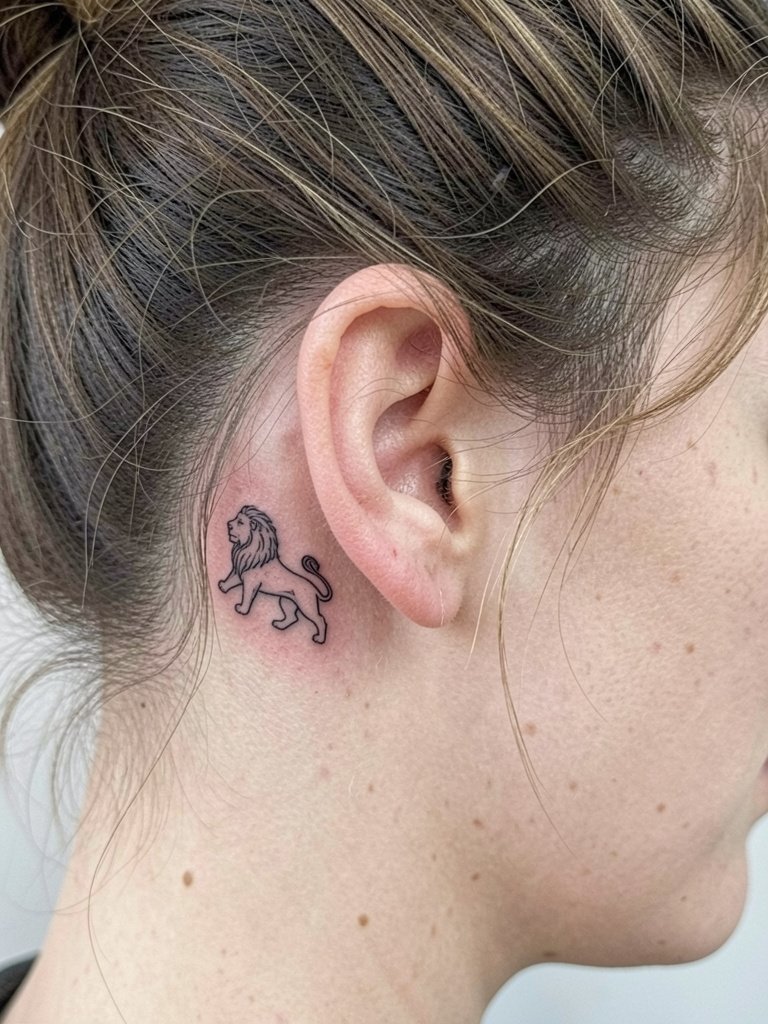
Behind-the-ear pieces are discreet and suitable for tiny motifs, but the area is small and heals with more scabbing in some people. Choose a strong silhouette rather than micro-detail and expect occasional fade from hair oil and friction. Pain is brief and localized. For session wear pull hair into a natural updo and avoid hair products for the first week. Consider how visibility changes with short hair or when wearing hats.
Frequently Asked Questions
Q: What size does a realistic lion portrait need to keep facial detail readable over time?
A: For realistic faces aim for a minimum face width of three to five inches depending on how much eye and nostril detail you want preserved. Smaller faces tend to lose whisker and mane texture as the skin settles, so increasing scale by an inch often saves you a touch-up later.
Q: Should I pick black and grey or color for my lion tattoo?
A: Black and grey usually preserves facial modeling and contrast better over time while selective color accents can add visual punch. One camp favors full black and grey for longevity. The other camp uses restrained color to highlight crowns or background elements. Both approaches work if you plan scale, contrast, and touch-ups realistically.
Q: Where can I find artists who specialize in crown or geometric lion work without naming specific accounts?
A: Search hashtags like #liontattoo, #liontattooideas, #blackandgreytattoo, #geometrictattoo, and #neotraditionaltattoo on Instagram and TikTok, then filter by your city. Use portfolio sites like Tattoodo or booking platforms to compare healed photos. Reddit tattoo threads are useful for seeing long-term healed examples and learning about session experiences.
Q: How does placement affect pain and aftercare for these lion designs?
A: Expect higher pain on ribs and sternum, moderate pain on chest and calf, and lower pain on shoulder and thigh. Hand and ankle pieces require more maintenance because of friction and washing. Wear loose or front-opening clothing on session day to avoid rubbing fresh ink while you heal.
Q: How often will I need a touch-up for fine-line or hand tattoos?
A: Fine-line pieces and hand tattoos often need a touch-up within one to two years depending on lifestyle and sun exposure. Portraits and dense blackwork usually hold longer but sometimes need saturation refreshes at the two- to three-year mark. Keep realistic expectations about touch-up frequency when you choose scale and lineweight.