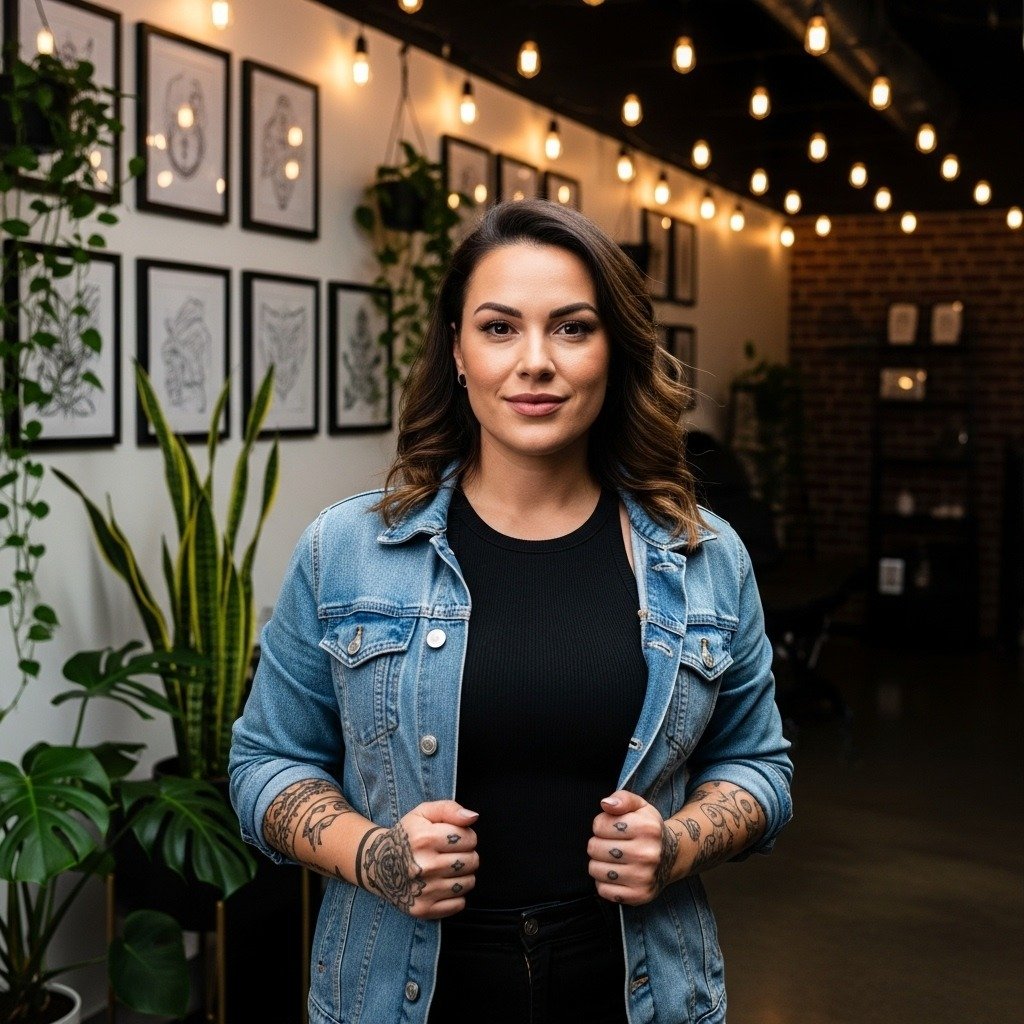
Names have a way of traveling from birth certificate to body art with a surprising logic. Simple scripts that read well in a photo often soften into a blur, while a compact monogram with solid linework can keep its personality for years. Choosing a name tattoo is as much about future readability as it is about sentiment, and the right combination of scale, placement, and font makes a big difference the day you book and five years after.
1. Fine-Line Script on the Inner Forearm
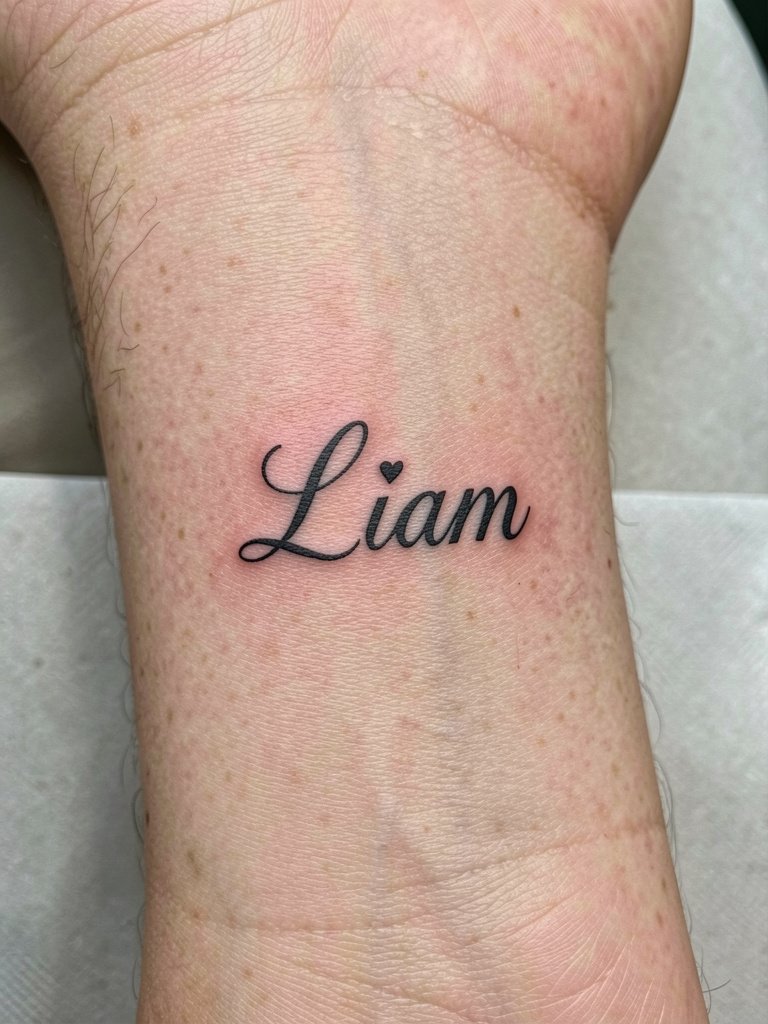
A slim, single-needle name on the inner forearm reads intimate and effortless for the first year, but tiny script can soften as the skin moves. I recommend sizing the letters so they sit at least three millimeters apart to reduce line merging as the arm shifts. During the consult bring two reference photos at different scales so the artist can show how the script reads at three inches versus five. Session feel is mild to moderate with short breaks, and a single session will usually finish in under an hour. For outfits that showcase this placement, wear rolled linen shirts with sleeves you can cuff to frame the piece while keeping it visible.
2. Minimal Vertical Name on the Side of the Ribcage
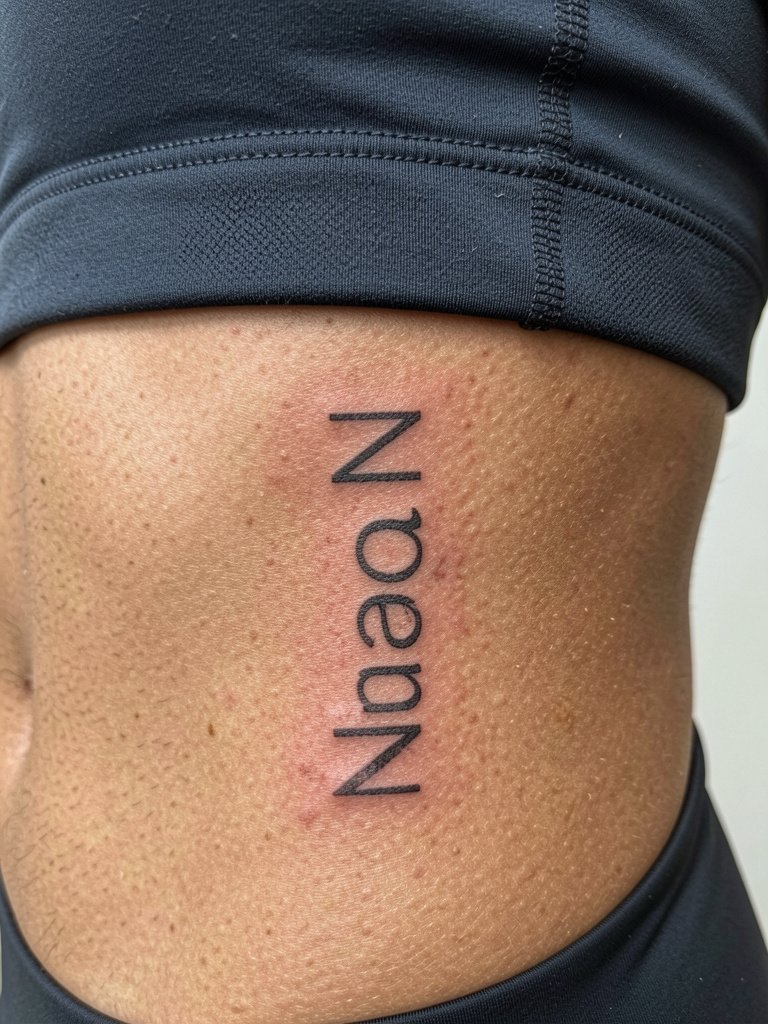
Vertical name pieces here can look elegant under a swimsuit or cropped top, but ribs are higher on the pain scale. Expect a 2 to 3 hour session for a crisp vertical name, depending on length. A common mistake is choosing extremely thin script that vanishes into stretch lines as the body moves. For longevity pick a slightly heavier lineweight and ask the artist to leave breathing room between letters so the name stays legible as the skin stretches. For session comfort wear a fitted cropped athletic top so the artist has clean access without you fumbling with layers.
3. Block Monogram Over the Heart
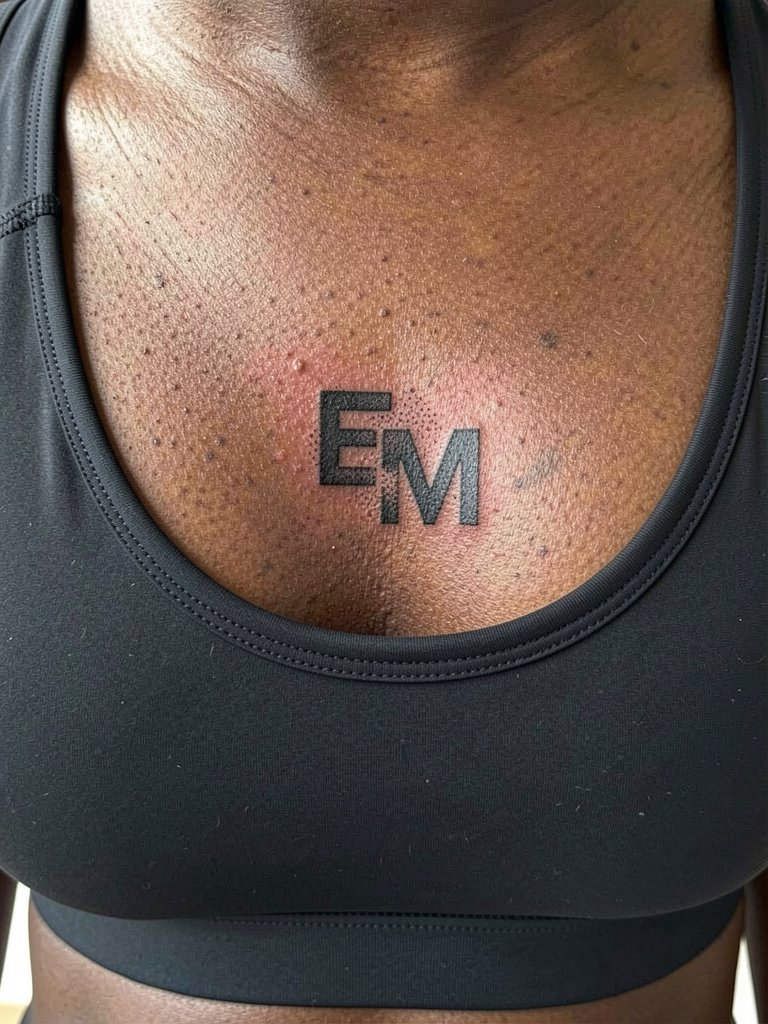
Monograms keep names visually compact and age well because solid shapes maintain contrast as ink settles. If you want a piece near the heart, insist on bold outlines and modest negative space inside the letters so the monogram reads after a few years. Session time is short for small monograms and pain is moderate on the sternum. A typical mistake is over-detailing inside the initials. Skip micro ornamentation and favor a simple silhouette for long-term legibility. If you plan to show the piece, pair it with open-neck tops like a wide V-neck tank that frames the sternum without competing with the design.
4. Tiny Name on the Side of a Finger
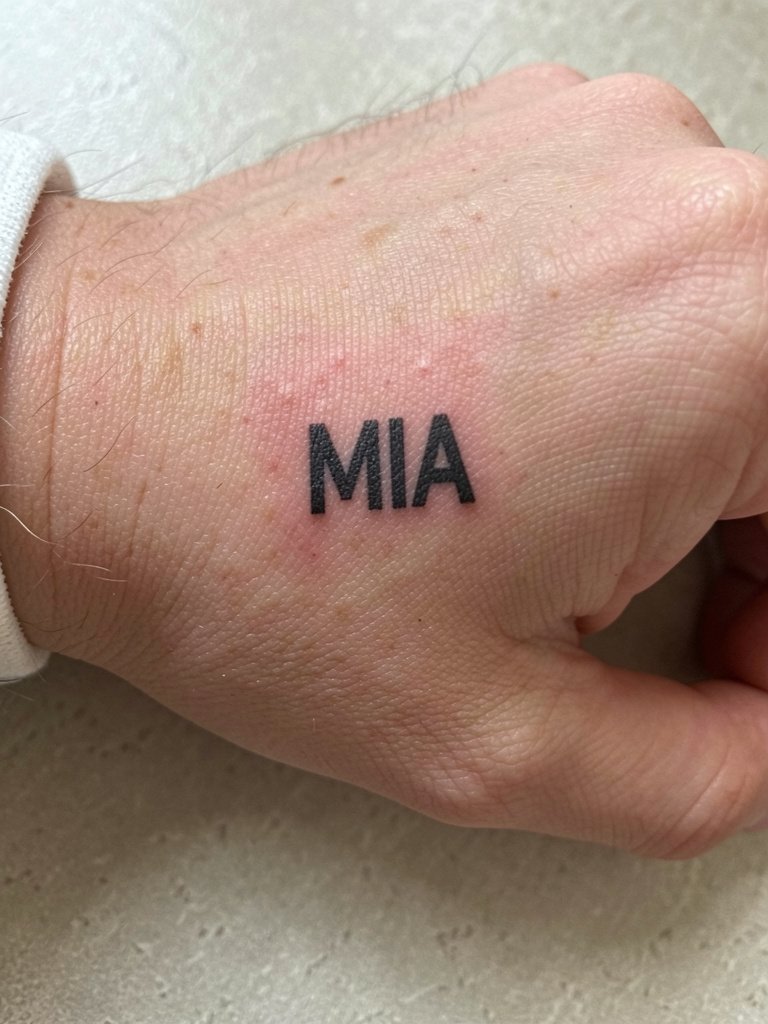
Finger name tattoos are highly visible but they face constant friction and washing so they can fade quicker than other placements. For a name on the finger go with thicker, blocky letters so they remain readable after daily use. Expect touch-ups sooner, often within 9 to 18 months, though a good shop will include that in the plan. A common mistake is using delicate cursive on fingers, which blurs into an unreadable smudge. For styling, slim stacking rings help frame the name and keep attention on the finger. Consider bringing ring size and photos so the artist can scale the lettering to the knuckle spacing.
5. Watercolor Script Wrapped Around the Wrist
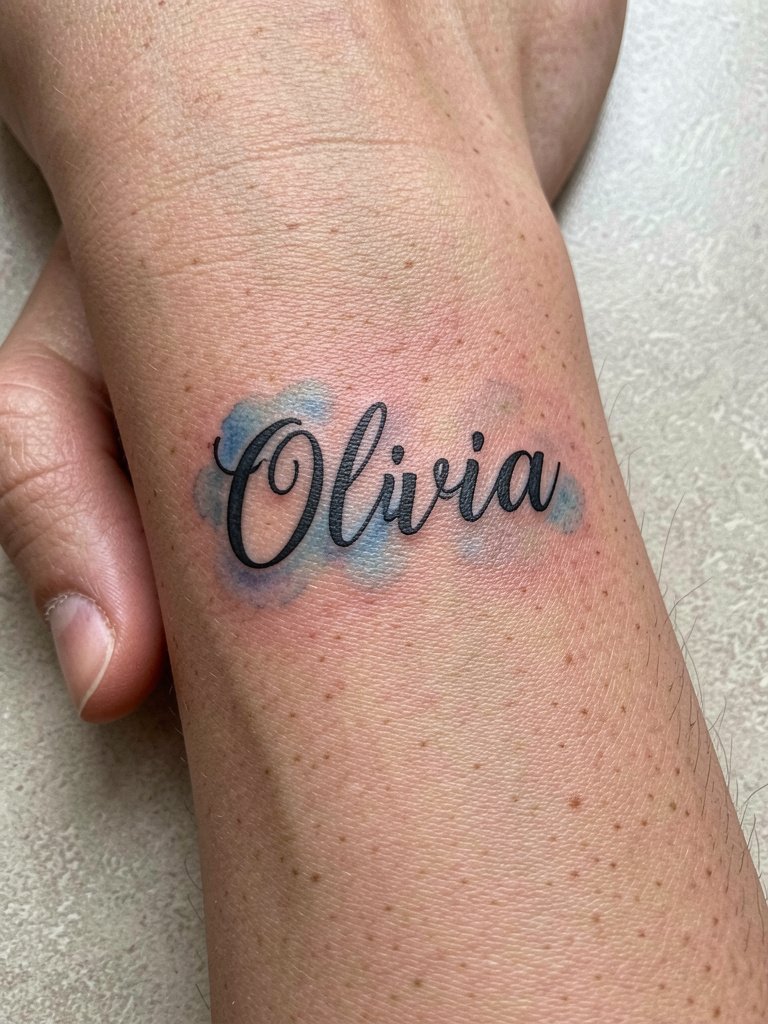
Watercolor accents make a name feel less literal, but the soft color washes are prone to fading faster than saturated black. If you want color, pick a compact script and request denser color saturation near the letters to hold pigments longer. Wrapping the name once avoids the wrist crease which causes accelerated wear. Session time is short, but plan for a touch-up once color begins to mellow. For showing the piece, cuffed sleeves or short-sleeved linen tops keep the wrist visible. Try pairing with a thin chain bracelet that sits above the tattoo rather than over it.
6. Tiny Heart with Name on the Ankle
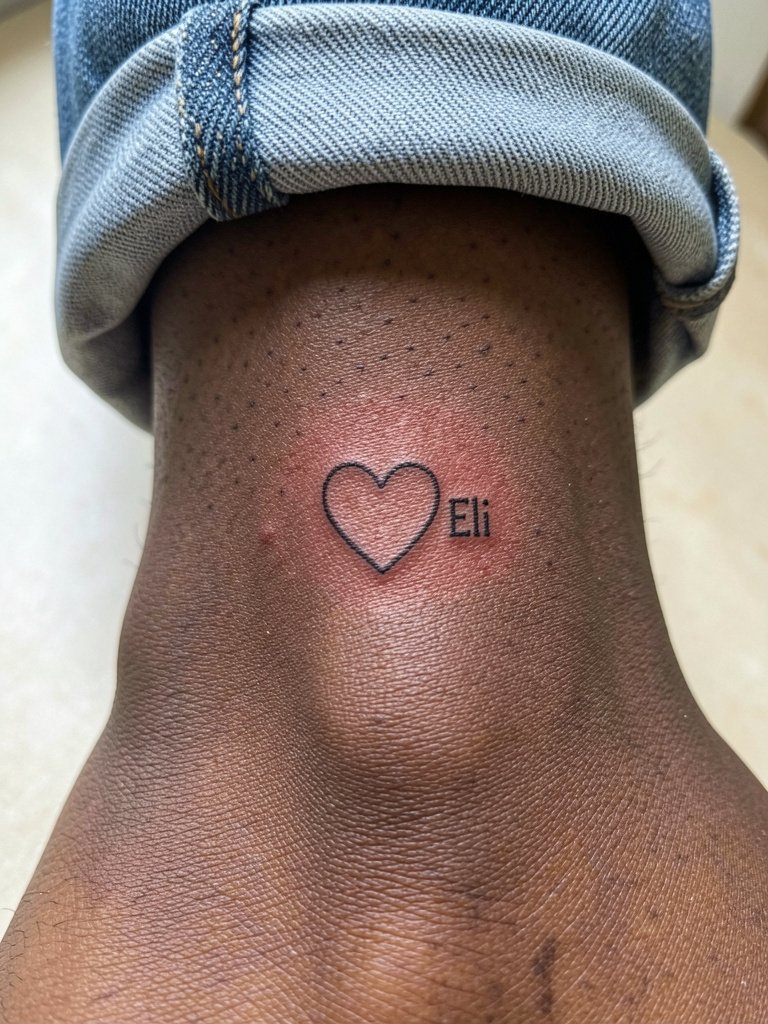
Ankle name placements are discreet and photograph well with sandals, but the area gets rubbed by socks and shoe edges during the first weeks of healing. Place the name a touch higher than you think to avoid the waistband of ankle socks. The session is low to moderate pain and usually completes in under an hour. A frequent mistake is placing the design too close to the seam of shoes which causes premature fading. For footwear that shows the piece, choose low-cut sandals or cuffed jeans like rolled denim cuffs that reveal the tattoo without rubbing it.
Session Day Picks
These first six placements range from wrists to ribs and each benefits from small practical items for the appointment and the first week.
- Stencil transfer paper kit. Lets you preview line weight and placement on the skin before committing, which matters for inner forearm and ribcage scripts above.
- NumbEase topical numbing cream. Apply as recommended to take the edge off sensitive spots like ribs and ankles without masking fine line feedback.
- Thin protective film roll. Keeps small wrist and finger tattoos clean during the first days of heavy handwashing and friction.
- PureSkin fragrance-free body wash. Gentle cleansing that does not strip fresh ink and pairs with delicate scripts and color washes.
- Aquaphor healing ointment. Thin layers during the initial healing window lock in moisture without suffocating fine line channels.
7. Script Name Along the Collarbone
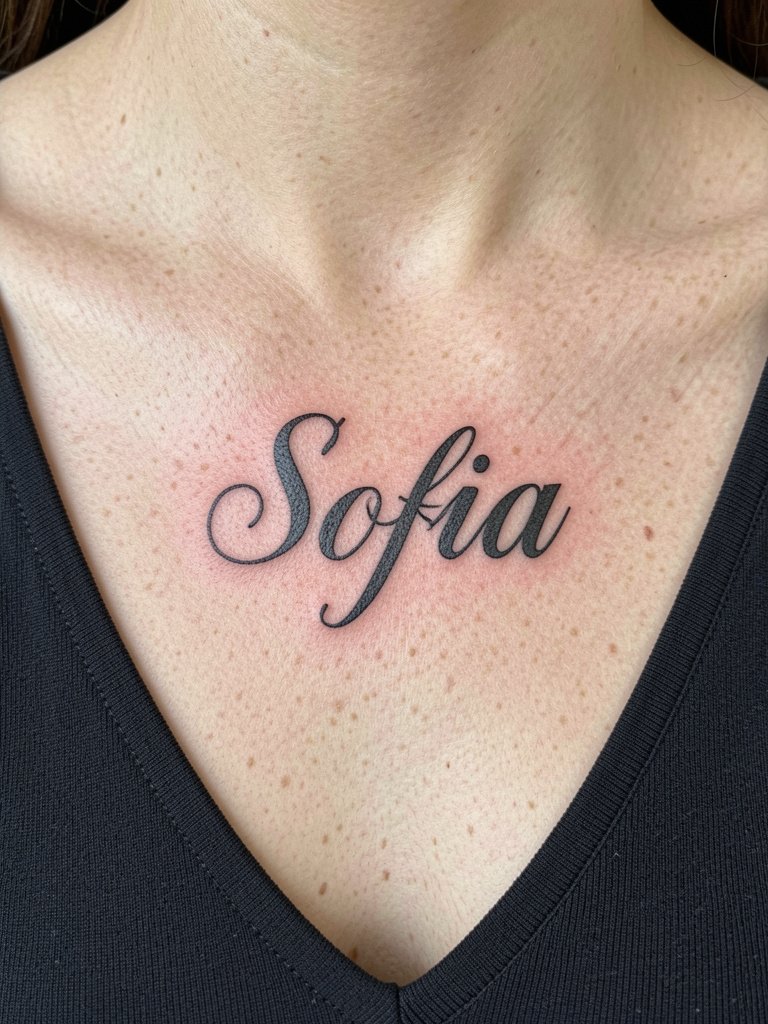
Collarbone name pieces photograph beautifully but the skin there sees sun and jewelry contact so UV protection matters. I advise slightly heavier script than what looks good on a screen so it keeps its shape under necklaces. The session is low to moderate pain and usually takes under an hour. A visual mistake is placing the letters too close to the clavicle ridge, where movement can distort the flow. For outfits that show the name, pair with open-neck blouses or a delicate pendant necklace that sits just above the script for a curated look.
8. Name with Tiny Star Constellation on the Upper Arm
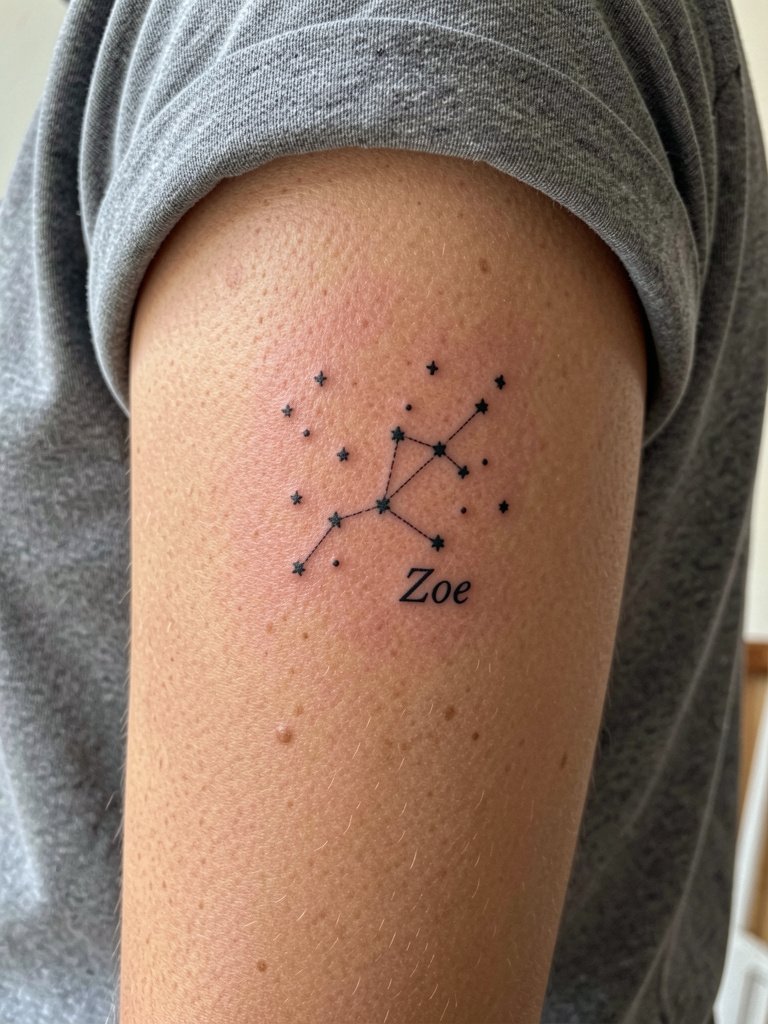
Outer upper arm pieces are forgiving and ideal when you want an easy-to-hide name that still reads clearly. Dot work constellations paired with a name age well because the dots retain contrast against the skin. Discuss spacing with the artist so the dots do not crowd the letters as the arm moves. Session time is brief and pain is typically mild. A common error is making the star cluster too dense, which turns into a blurred patch after a few years. For display, short-sleeve tees or a rolled-sleeve linen shirt show the design without heavy layering.
9. Bold Black Name Across the Outer Hand
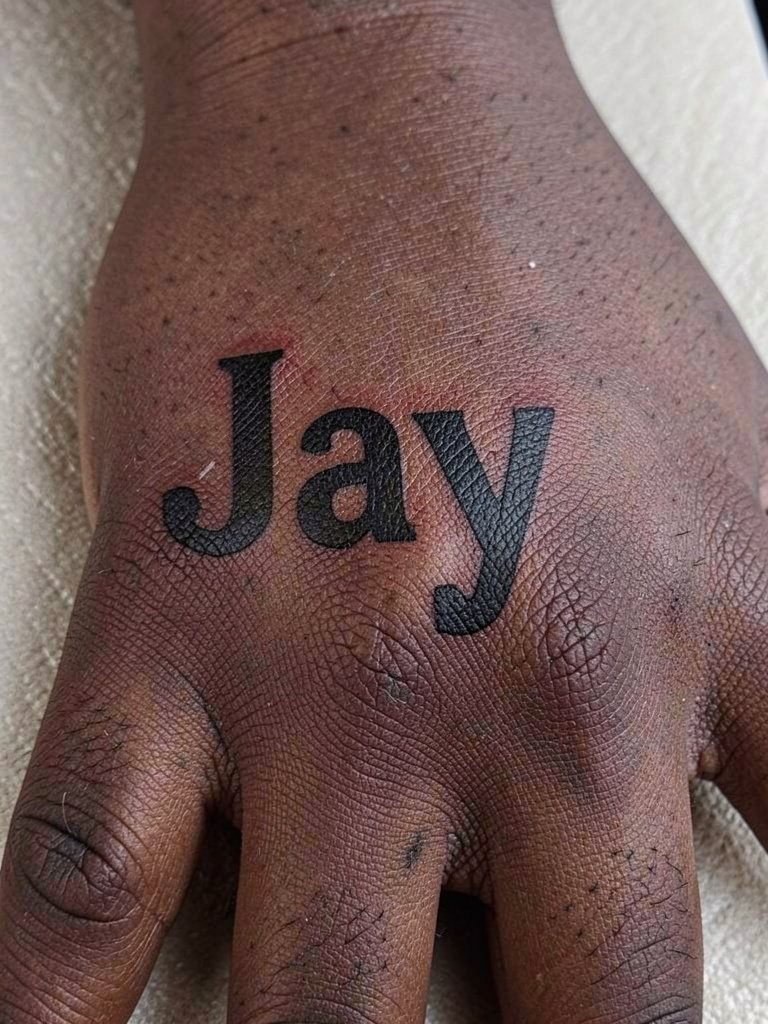
Hand name tattoos are polarizing in the community. One camp argues hands fade quickly and can complicate jobs and social impressions, urging caution and minimal visibility. The other camp points out that with proper saturation and bold letter spacing hands can hold up and become signature pieces. If you go this route opt for bolder letters and expect more frequent touch-ups because the skin on the hands is exposed to sun and abrasion. The session feels sharp and may require breaks. For wearable styling try a slim leather cuff or minimal woven bracelets that complement the lettering without covering it.
10. Name Beneath a Small Portrait Silhouette on the Upper Thigh
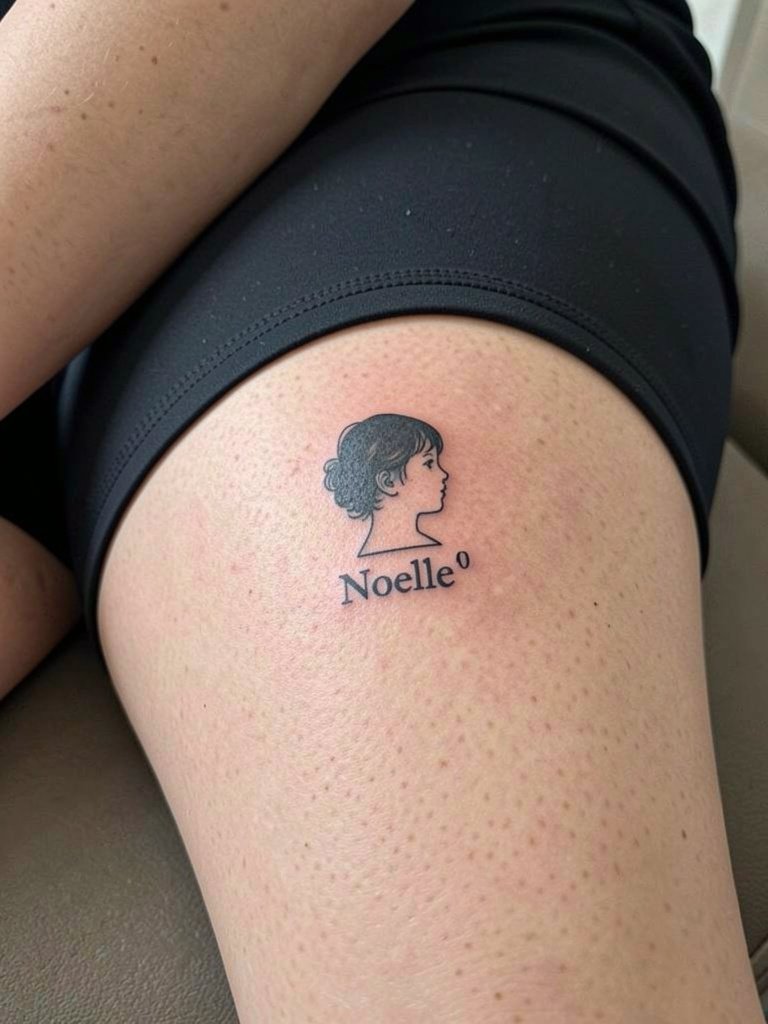
Upper thigh name-and-portrait combos are private and hold up well because they avoid constant sun and friction. Choose a simplified silhouette rather than a detailed face to avoid loss of features as the piece heals. A mistake is asking for fine facial detail at a very small scale, which will blur over time. The session is moderate and can be uncomfortable as the artist works, so schedule a longer block and plan breaks. For session wear, choose fitted bike shorts that allow the artist access while keeping you comfortable.
11. Cursive Name Following a Shoulder Blade Curve
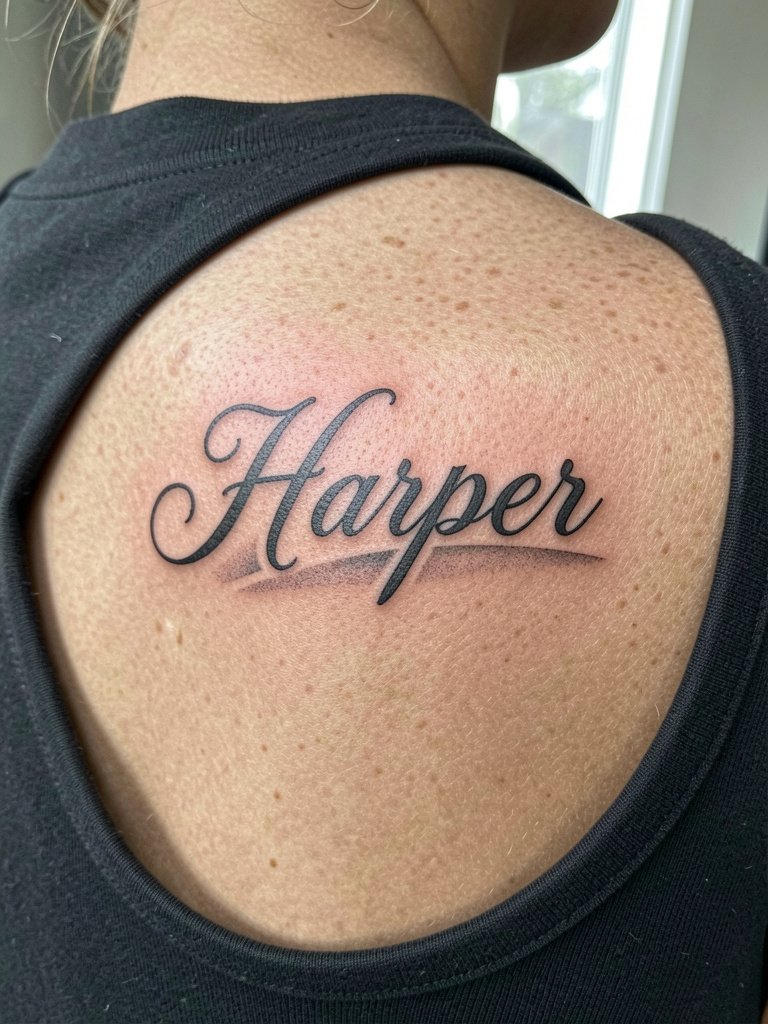
Shoulder blade placements let a script breathe and move with the body, which helps longevity if the letters are spaced to account for shoulder motion. A session here is moderate and can be longer depending on length of name. Artists often debate exact lineweight for this area. To avoid distortion, have the artist map the curve while you move your arm so the letters keep their shape when you reach. For outfits that highlight the spine and shoulder, try an open-back sundress that reveals the arc without rubbing.
12. Matching Name Bracelet Tattoo Above the Wrist
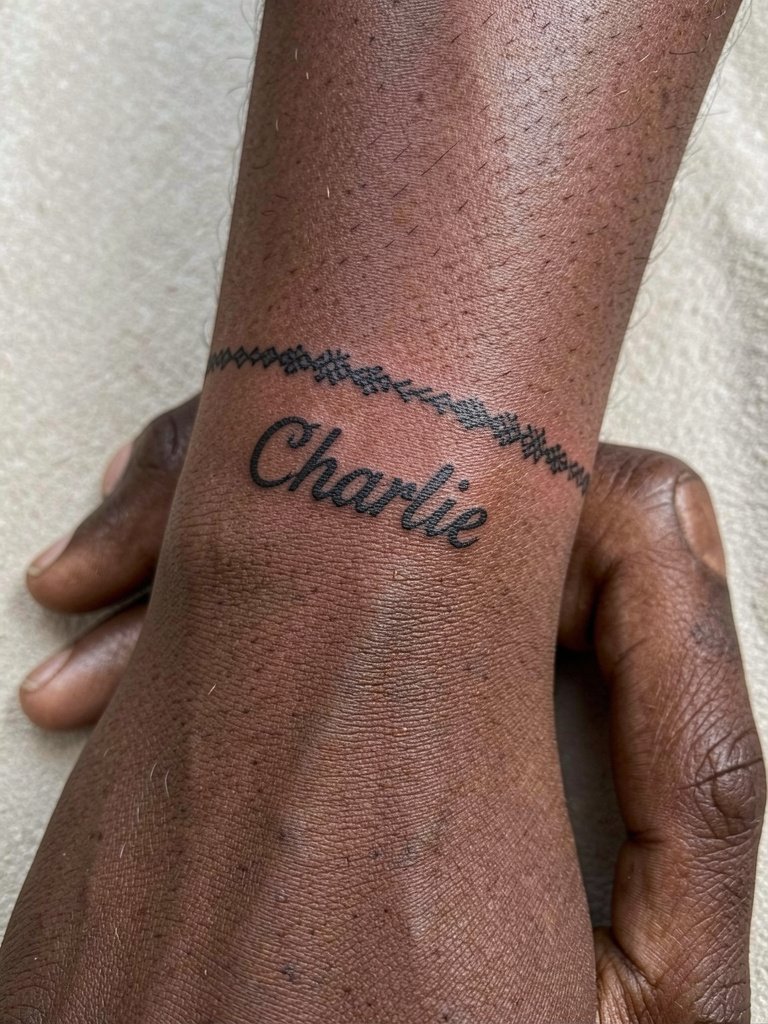
Band-style name tattoos mimic jewelry and are easy to coordinate with real bracelets. Make sure any repeating motifs have a bit of breathing room so they do not blur into a solid line. The wrist sees lots of motion, so thicker lineweight and a single session touch-up scheduled at six to twelve months is realistic. If you want to keep the look subtle, match ink tone to your other jewelry by pairing the tattoo with a thin gold-toned bracelet that sits below the ink line.
13. Name in a Small Banner with Date on the Calf
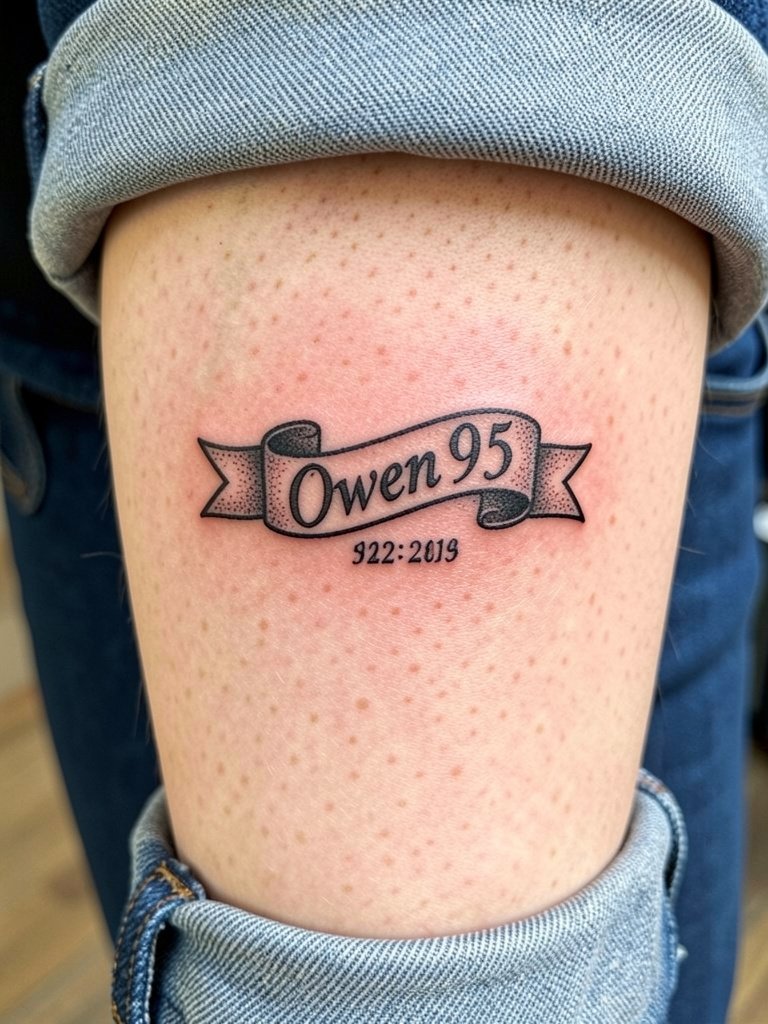
Calf placements are a good middle ground for names you want visible at summer events while still being easy to cover. Banners give a strong silhouette that resists early blurring. Plan for a one to two hour session for a clear banner and date. Common mistakes include tiny dates that become illegible; pick a slightly larger numeral size for readability. For warm-weather showing try pairing with low-cut sneakers or simple slide sandals that keep attention on the calf artwork.
14. Thin Script Along the Side of the Neck
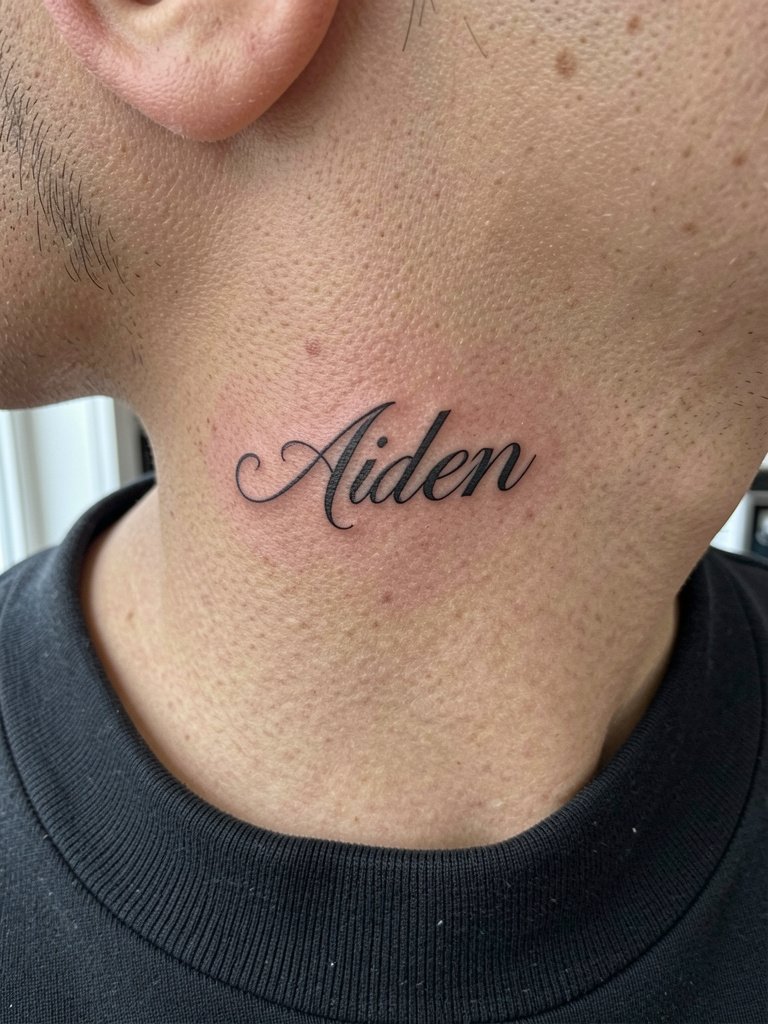
Neck name tattoos are a high-visibility statement and they spark debate. One camp says the neck is prone to stretching and sun exposure which can break down fine scripts quickly, making bolder lettering the safer choice. The other camp believes skilled depth and spacing yield a lasting thin script if you commit to strict sun protection. If you choose the neck, plan for a heavier lineweight than the lightest script and set realistic touch-up expectations. For styling that highlights the area try a wide-neck top that frames the name without covering it.
15. Small Name Hidden Behind the Ear
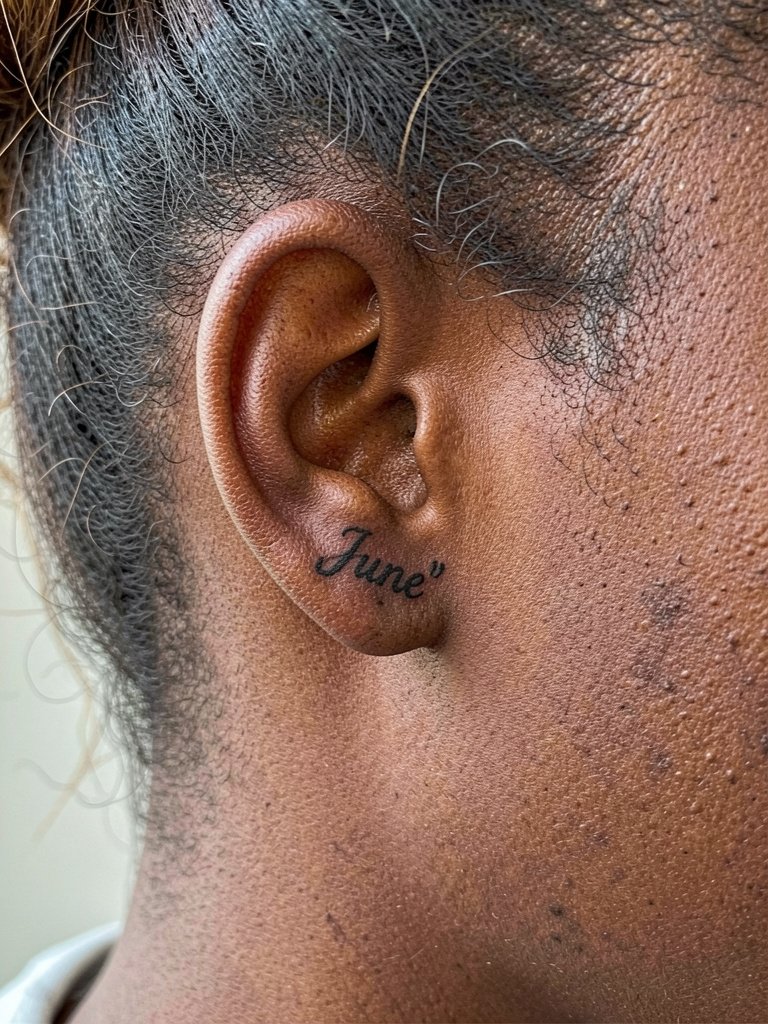
Behind-ear name tattoos are tiny and personal. They work best as initials or very short names because the skin there is delicate and the canvas is small. Expect a quick session and moderate sensitivity. A common mistake is trying to cram a full name into that space which leads to illegibility. If you want the piece to peek out when you pull your hair up, practice the planned hairstyle for the consult so the artist can check visibility. For hair-up days, a simple hair claw clip keeps the area exposed without tugging at fresh ink.
Frequently Asked Questions
Q: How do I choose the best font for a child's name so it stays legible over time?
A: Pick a font with clear letterforms and avoid ultra-thin single-needle scripts for areas that flex or rub. I suggest comparing the design at three sizes in the consultation, and choose a slightly heavier lineweight for ribs, fingers, and neck. Ask for crisp negative space between letters to reduce merging as the ink settles.
Q: Will a name tattoo affect job prospects or social impressions?
A: It depends on placement and industry. Discrete spots like the upper thigh, inner forearm, or behind the ear are easier to conceal for interviews. Hands and neck are more visible and may be noticed in conservative workplaces. If this is a concern, plan placement and clothing options with that outcome in mind.
Q: Where can I find healed examples and portfolios without naming specific artists?
A: Search platform tags like #KidsNameTattoo, #NameTattooHealed, and #FineLineName on social platforms and filter by location to see local portfolios. Tattoo forums and subreddit threads for healed shots can show a range of skin tones and aging. Use keyword filters like "healed name wrist" or "healed script rib" when browsing portfolios.
Q: How often should I expect touch-ups for different placements in this article?
A: Expect touch-ups sooner for high-friction spots like fingers and ankles, often within 9 to 18 months. Wrists, hands, and neck typically need a review at 12 months. Less exposed areas such as the thigh, calf, and shoulder blade may go several years before touching up. Plan touch-ups into the timeline when booking a piece.
Q: What should I wear to the session for placements like ribs, sternum, or inner thigh?
A: For rib and sternum work wear a fitted sports bra or a crop top that stays put in normal position to give the artist access while keeping you covered. For inner thigh sessions choose fitted bike shorts or modest athletic shorts that expose just the area needed without shifting. Comfortable shoes and easy layers help for longer sessions.