Bold black outlines keep a koi readable longer than the thin script everyone shares on socials. For forearm work in the Irezumi vein, the choice you make about spacing, contrast, and background bars determines whether the piece looks crisp at year five or mushy at year two. Read these ideas with an eye for scale, session pacing, and the wardrobe moves that make a forearm tattoo look intentional.
1. Traditional Irezumi Dragon on Inner Forearm
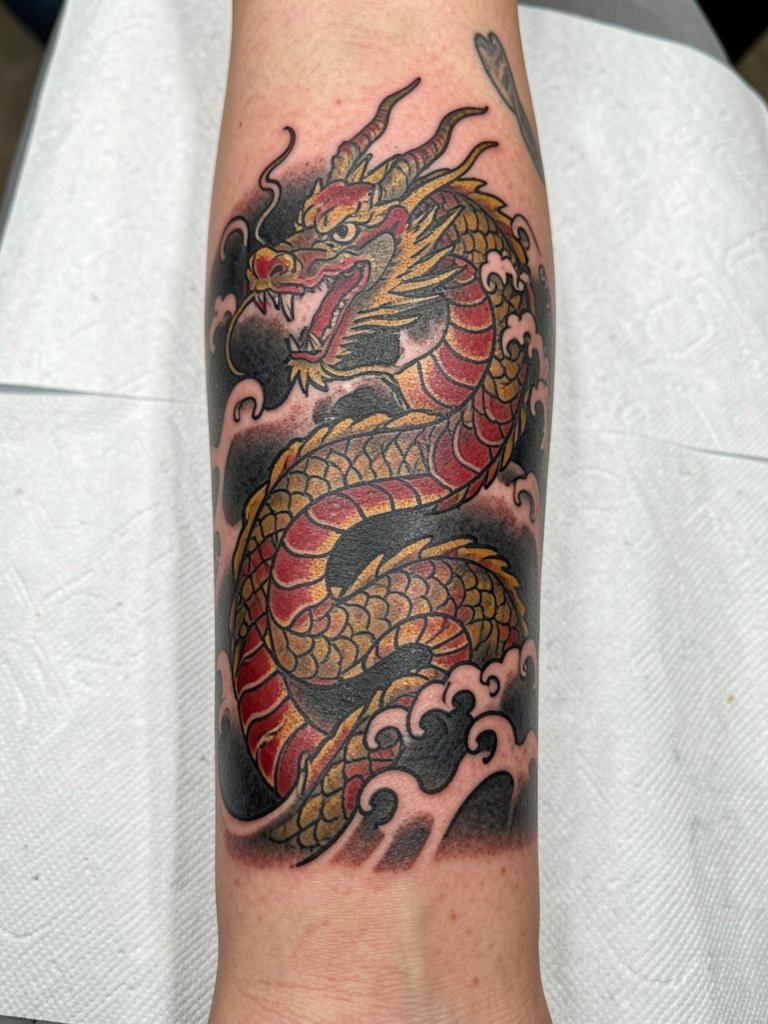
A coiling dragon on the inner forearm reads like armor when done with clear spacing and saturated fills. Recommend a two to four session plan so the artist can lock in strong outlines first and layer color afterward. Common mistakes include cramming too many tiny scales into a narrow band, which blurs by year two. Line weight here should be bold enough to survive wrist motion. For the session wear, bring a loose short-sleeve shirt that rolls easily to the elbow. Expect medium pain where the forearm crosses the wrist, and plan a touch-up at three to five years for saturation refresh.
2. Koi Swimming Upward on Outer Forearm
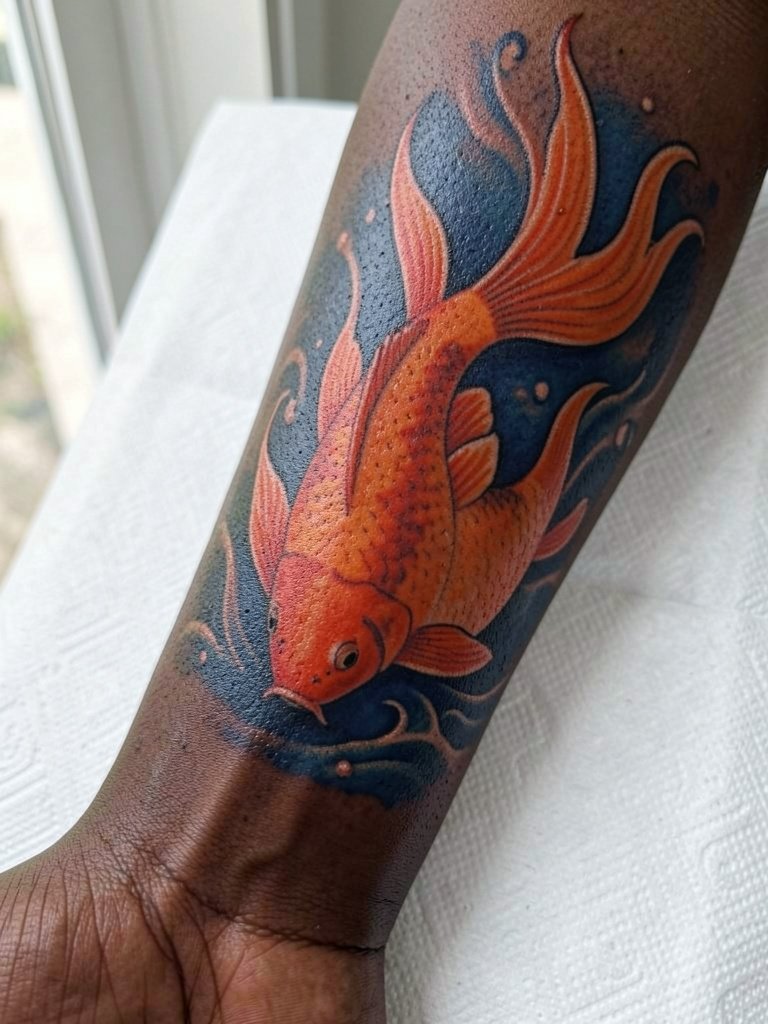
An upward koi is the classic forearm pick for a perseverance motif while keeping readable motion. Ask for broad scale shapes and high contrast between the fish and water so the form holds over time. Tiny scale detail is the version that softens fastest. For showing it off, solid-color tees with sleeves rolled to the elbow complement the saturated orange. Session time commonly runs one to three hours depending on size and background work. Expect the outer forearm to feel brisk but not intense, and budget for a single touch-up if the background mottles after the first year.
3. Neo-Japanese Dragon with Abstract Background on Inner Forearm
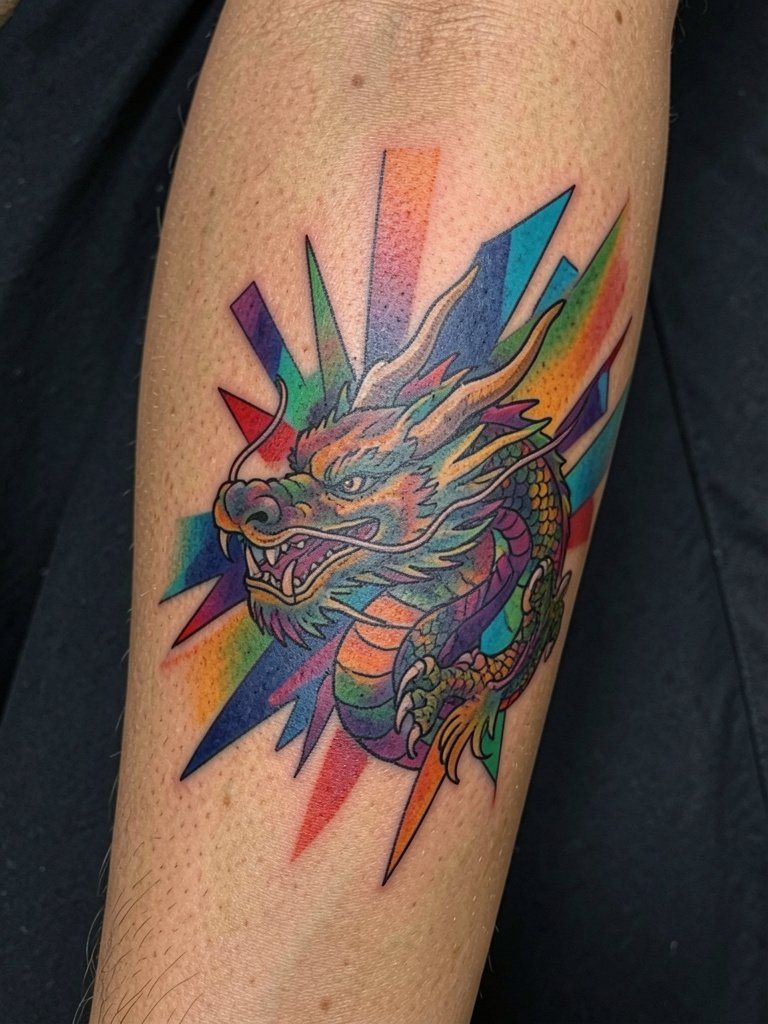
Neo-Japanese merges traditional motifs with gradients and geometric backing to modernize a dragon. If you want this look, insist on strong black anchors around the shapes so the gradients do not merge into a blurred patch later. One camp argues fine-line neo elements blur fast on forearms. The other camp says thoughtful spacing and deeper needle passes let them last. Be specific about contrast in the consult. For session wear, a loose button-down that rolls to expose the inner forearm works well for long sittings. Expect two shorter sessions rather than one marathon.
4. Chrysanthemum Cluster on Inner Forearm
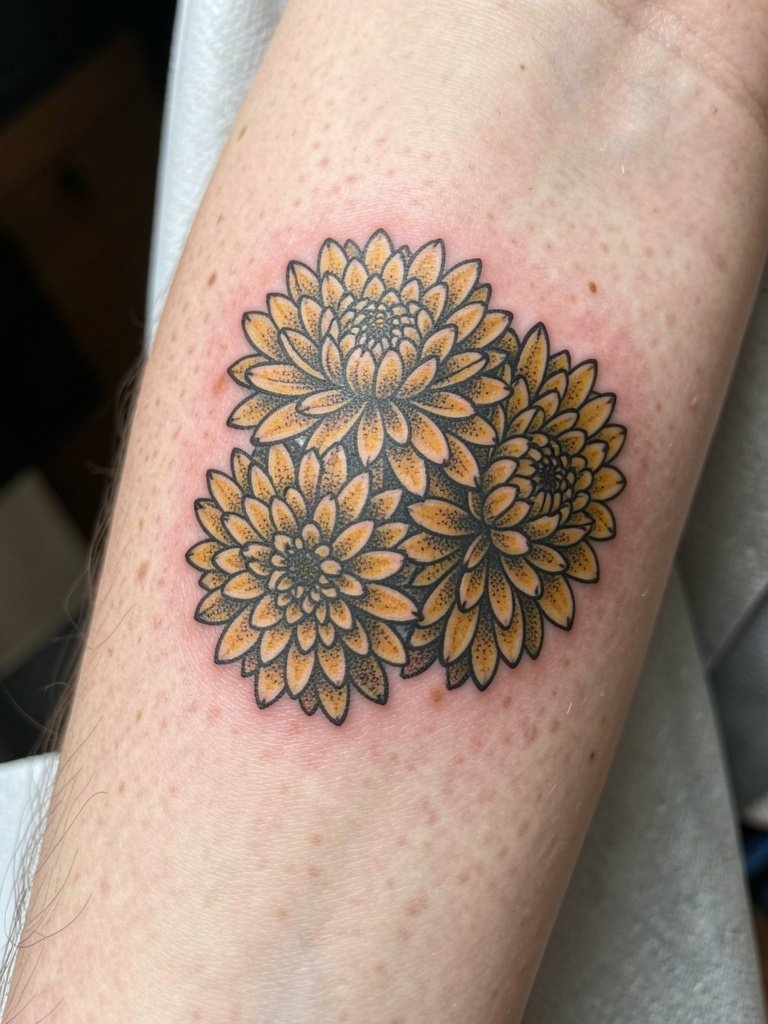
Dense chrysanthemum clusters look great wrapped around the inner forearm when the petals are given breathing room. Tell the artist you want petals separated by negative space, that prevents petal edges from merging after a few years. The most common aging problem is overworked layering that heals into a muddy texture. This placement pairs well with dainty stacked bracelets on the opposite wrist to balance the floral density. Sessions usually fit into one long appointment for a medium cluster and touch-up work at the one-year mark often clears any healed inconsistencies.
5. Bamboo Stalks Running Vertical on Outer Forearm
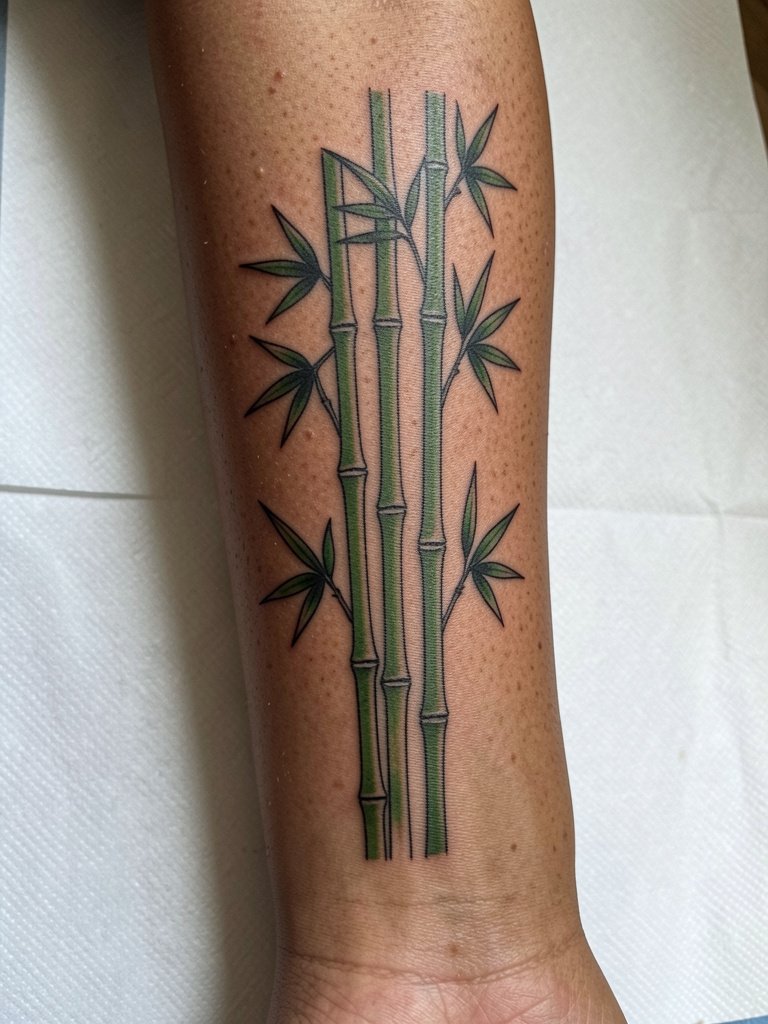
Vertical bamboo reads clean on the outer forearm because the linear composition works with the arm's natural lines. Ask for slightly thicker internodes and leaf spacing so each stalk remains distinct as it ages. A frequent mistake is making the stalks too thin, which causes early loss of definition. For the session wear, a solid-color crew neck T-shirt with sleeves rolled to the elbow keeps focus on the bamboo. One session usually suffices for a simple vertical run, with touch-ups only if lines soften.
6. Wind Bars as a Standalone Vertical Accent on Inner Forearm
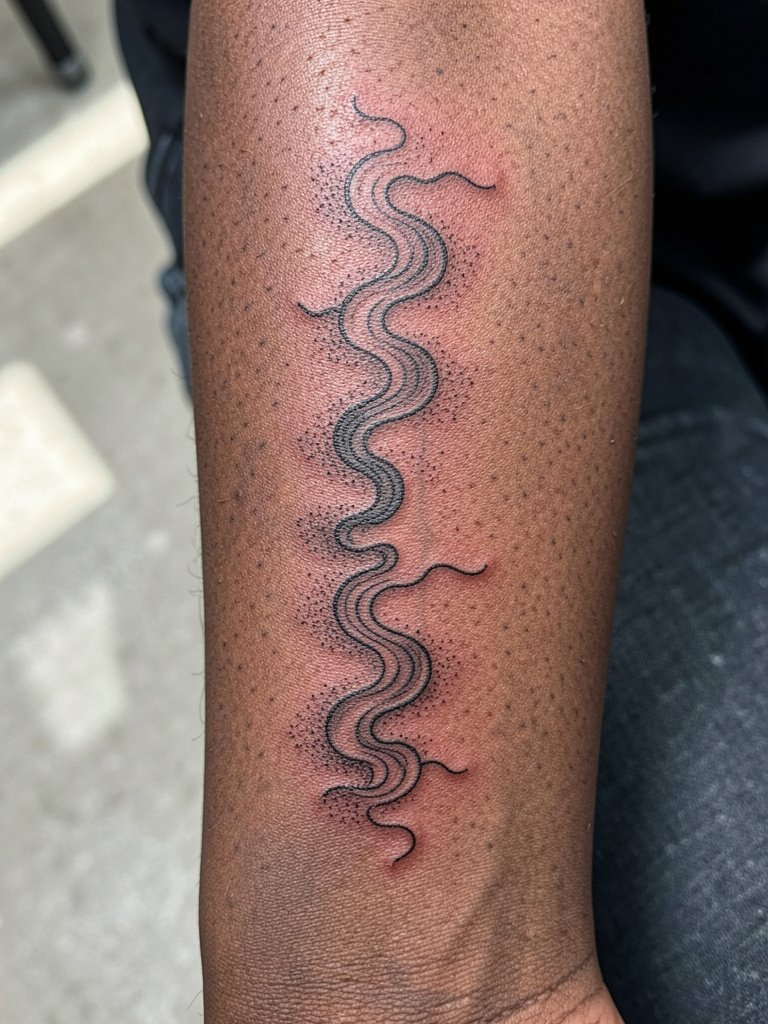
Wind bars were traditionally background elements, but as a standalone they create graceful flow on the inner forearm. Specify line spacing and bar thickness in the consult so the bars do not bleed together with arm movement. The mistake is going too close together, which turns bars into a shaded block on older forearms. This piece costs less session time and heals quickly. For showing it off, rolled-up linen shirts in neutral tones draw eyes to the vertical flow and keep the arm looking editorial. Expect one short session and minimal touch-up needs.
Before You Book
These first six forearm ideas explore scale, background, and spacing. A few practical items smooth the session day and the first week of healing.
-
Japanese Sakura Balm. Lighter petroleum alternatives reduce thick scabbing on forearm linework while still keeping the area moisturized in the first week.
-
UPF 50+ Forearm Sleeve. Use sun protection for three months post-session to prevent early fading from summer sun exposure.
-
Gold accent tattoo ink set. High-contrast gold pigments help warm tones pop on deeper skin tones without relying on low-saturation pastels.
-
Hustle Butter Original thin version. Thin balms are a common swap from heavier ointments to prevent clogged pores on fresh forearm work.
-
Saniderm tattoo bandage. A breathable second-skin dressing for the first two to three days can lock moisture without over-occluding the area, then switch to a thin balm.
7. Full Forearm Sleeve Irezumi with Dragon, Koi, and Waves
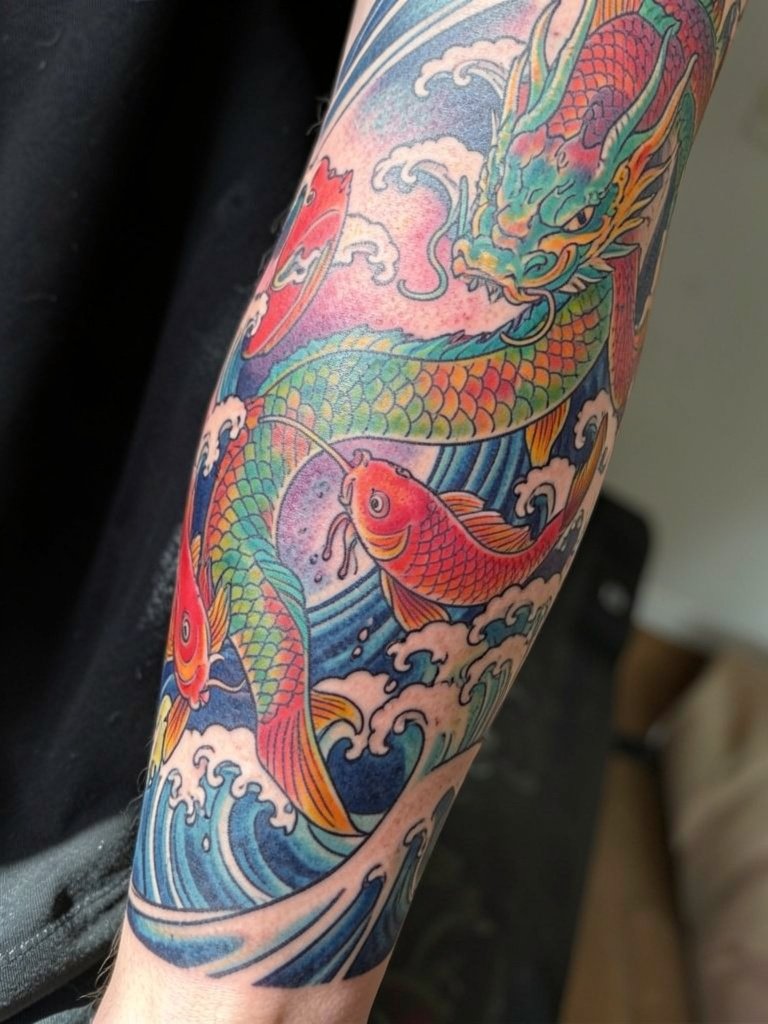
A cohesive sleeve requires session pacing so the eye reads across bends in the arm. Bring reference photos that show how each element should interact and ask the artist to map negative-space wind bars for flow. The usual mistake is treating each element as a standalone flash that clashes when viewed as a sleeve. Wear short sleeves with rolled cuffs to reveal the whole sleeve for show-offs. Expect four to eight sessions and plan touch-ups every three to five years to maintain saturation and line crispness.
8. Minimalist Single-Line Koi on Inner Forearm
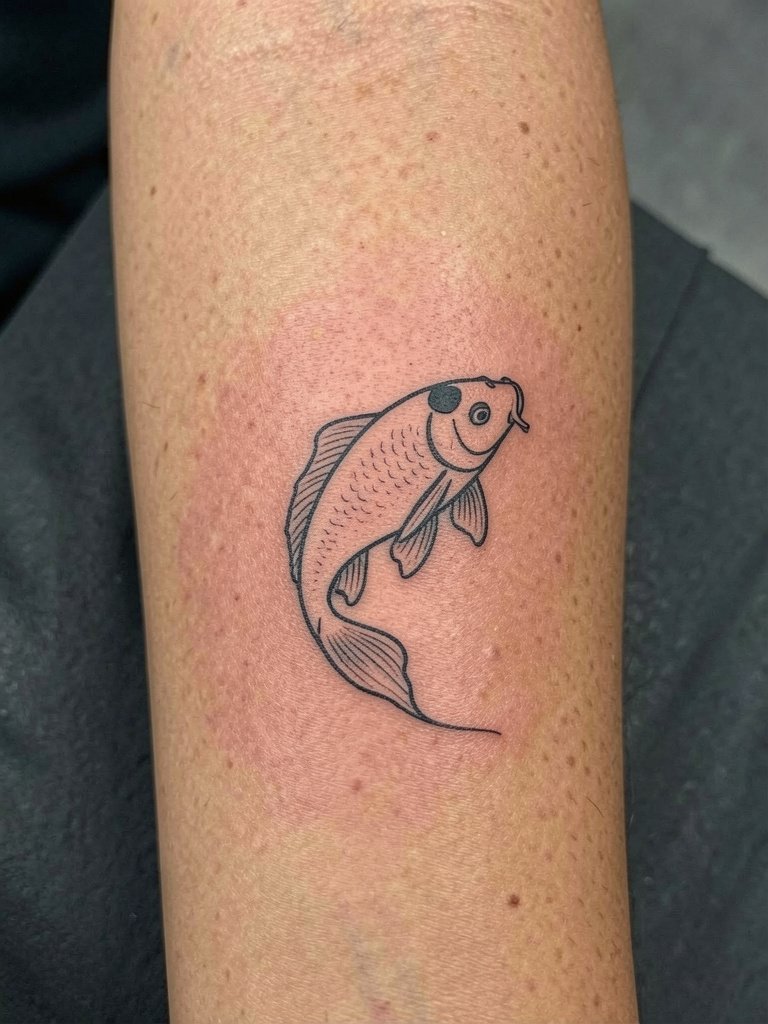
Single-line koi reads clean at first but often blurs faster on thin forearm skin. One camp insists single-needle details lose clarity within two years on this placement. The other camp points out that slightly increased spacing and careful depth can preserve thin lines much longer. If you still want the minimal route, increase the design scale slightly and accept a likely touch-up at year two. Session pain is low to moderate and healing is usually quick. For appointment wear, a loose button-down or short-sleeve shirt keeps the area accessible.
9. Tiger with Waves on Outer Forearm
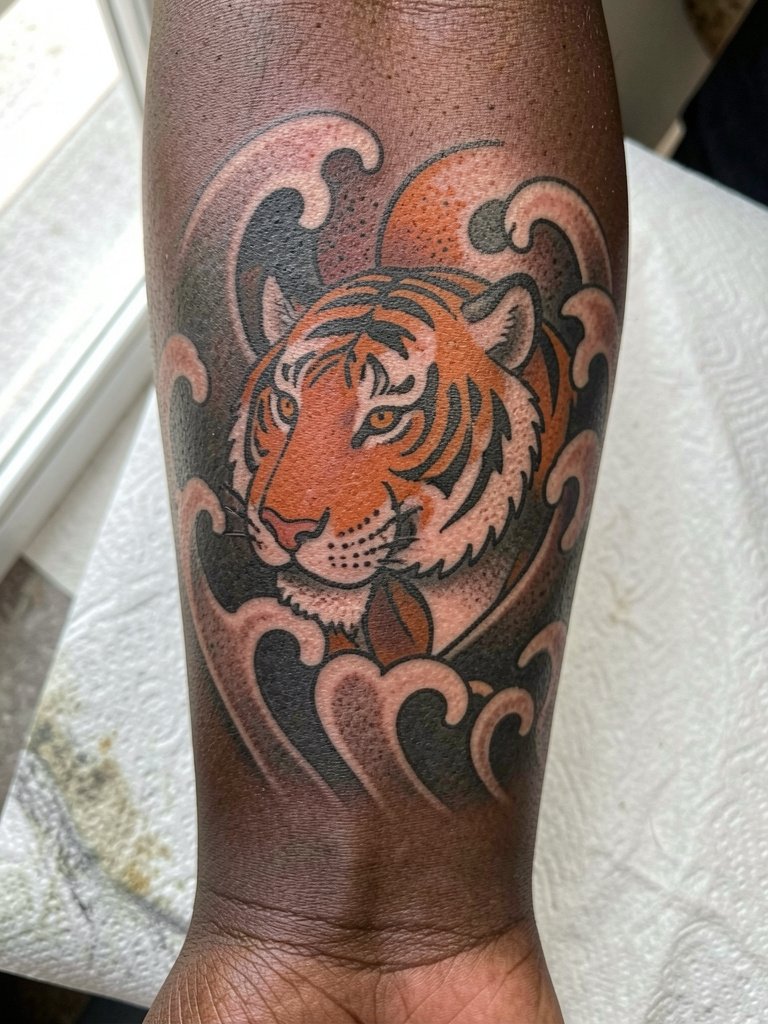
A tiger against waves is a high-contrast composition that reads well on the outer forearm. Ask for strong contrast between the tiger's stripe negative space and the wave shapes so both elements hold when the arm moves. Avoid overly thin hair details inside stripes, since that is the first area to soften. For showing off, pair with solid-color crew neck shirts in black or navy so the orange pops. Sessions typically take two to three hours for a bold portrait and might need a one-year touch-up for saturation.
10. Phoenix Tail Flowing Down the Inner Forearm
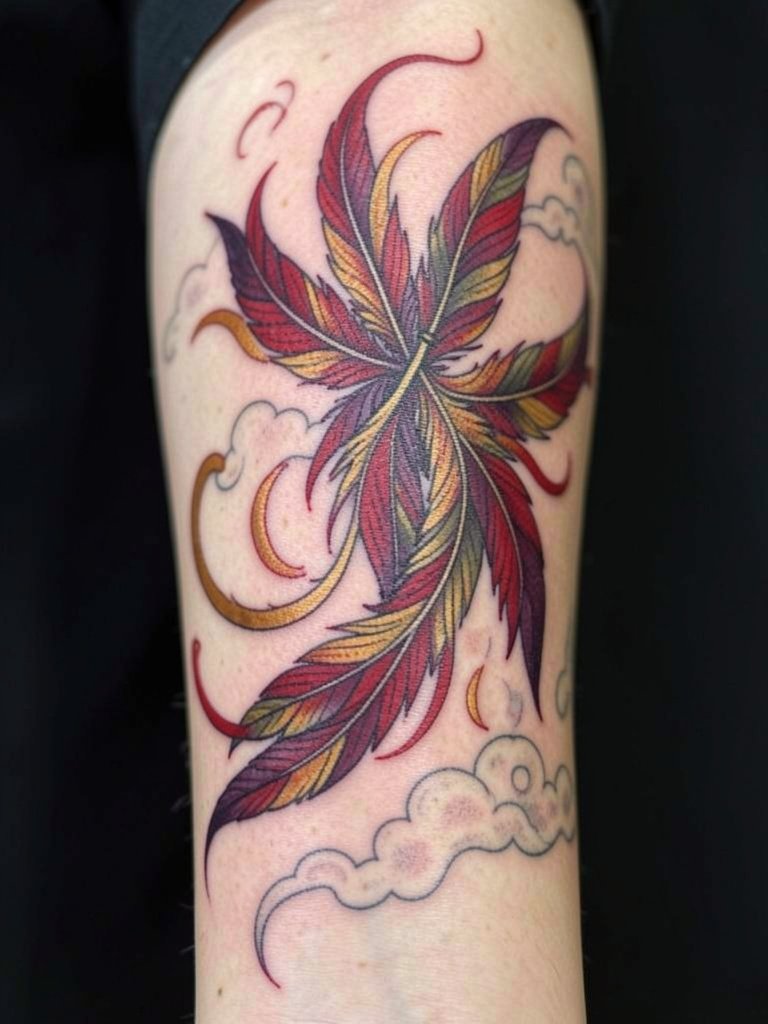
A phoenix tail uses long flowing feathers to emphasize forearm length. Tell the artist you want elongated feather shafts and clear separation so motion remains legible at distance. A common mistake is overloading feathers with fine internal shading that blends into the background over time. This design pairs well with short-sleeve shirts and thin chain necklaces to keep the neckline simple and focus on the arm. Sessions usually break into two to three appointments for color layering and final highlights.
11. Oni Mask Portrait on Outer Forearm
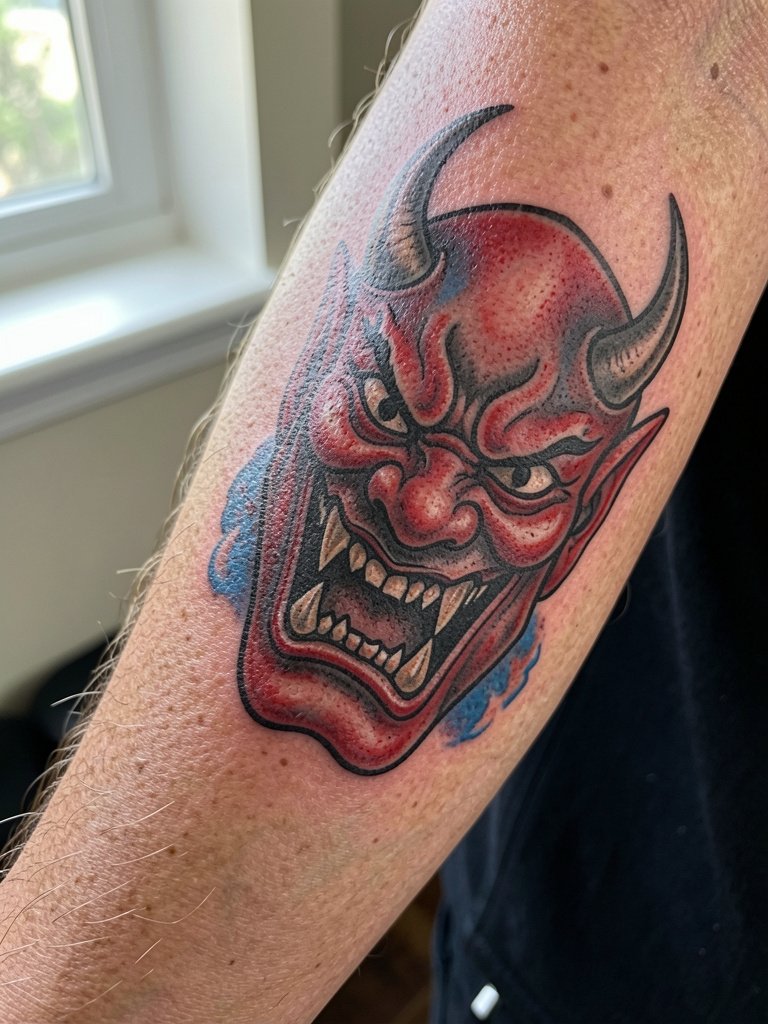
Oni masks demand high contrast and careful negative space so facial features do not collapse into a blob. Ask specifically for how much black will be used in the cheeks and forehead, because over-saturation there reduces facial definition later. For visual respect, acknowledge the cultural origin and avoid combining sacred iconography without context. This placement is best shown off with solid short sleeves, and session time is often one to two sittings depending on detail. Expect to schedule a touch-up if heavy black areas compact.
12. Neo-Japanese Koi with Neon Palette on Inner Forearm
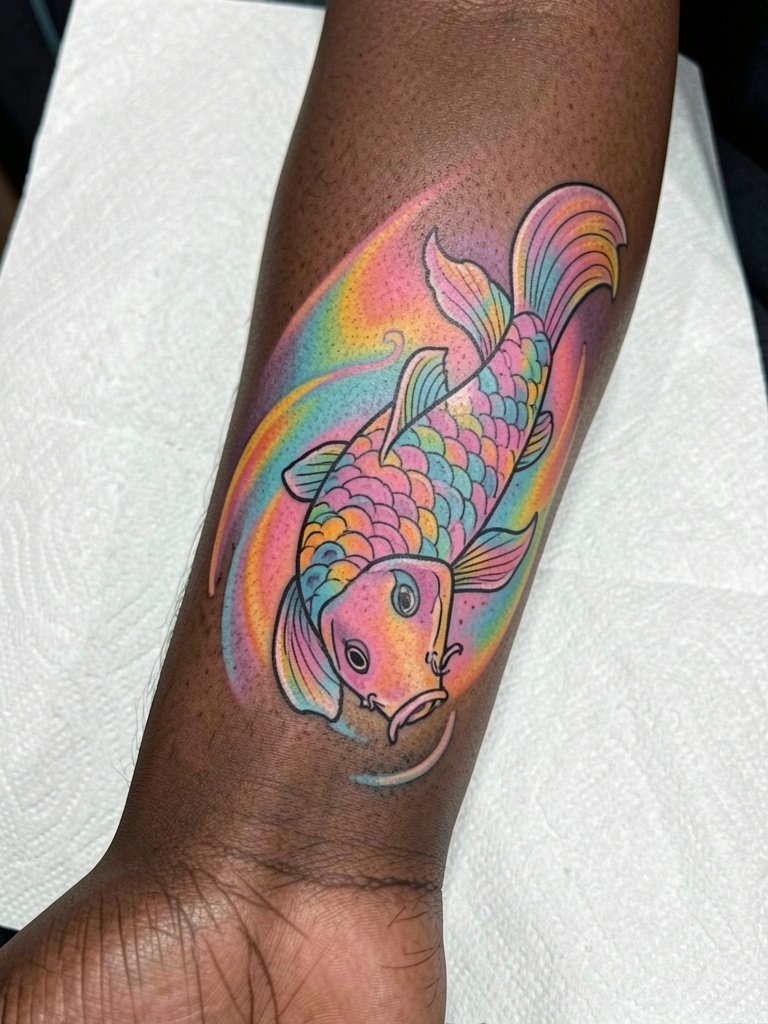
Neon and pastel colorways trend for an editorial, streetwear vibe, but low-saturation inks can lose presence on darker skin tones or high-friction areas. Opt for bold black outlines with neon fills instead of tiny neon shading only. The artistic debate is real. Some artists say neon fades to a patchy blur within a year. Others say modern pigments and layering can extend longevity. If you choose neon, plan for annual color boosts and protect the arm from sun. For the session, wear a loose button-down so the artist can roll the sleeve without pressure.
13. Small Samurai Crest on the Forearm Band
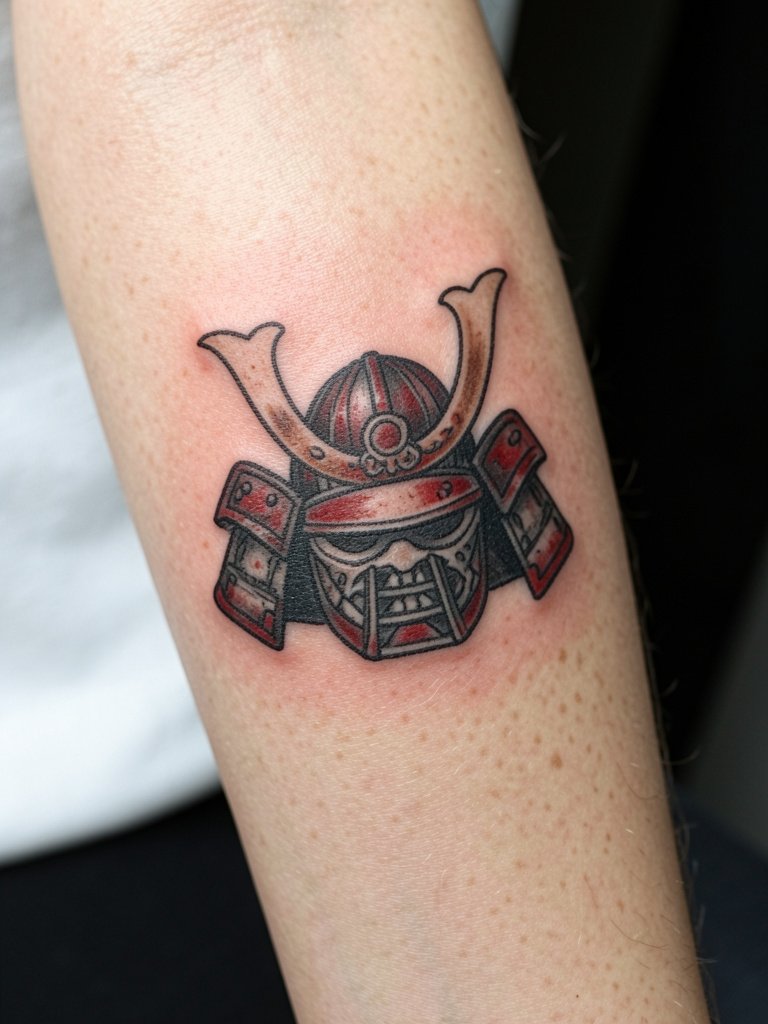
A compact samurai crest placed as a forearm band reads well as a focal piece without turning into a busy sleeve. Request a clear circular or banded negative space so the crest does not merge with surrounding elements in future sleeve plans. A common mistake is crowding the crest too close to the bands, which causes readability loss. Session time is typically a single focused appointment. For showing it off, rolled sleeve shirts in neutral tones keep the band visible and deliberate.
14. Wave Pattern (Nami) as a Primary Design Element
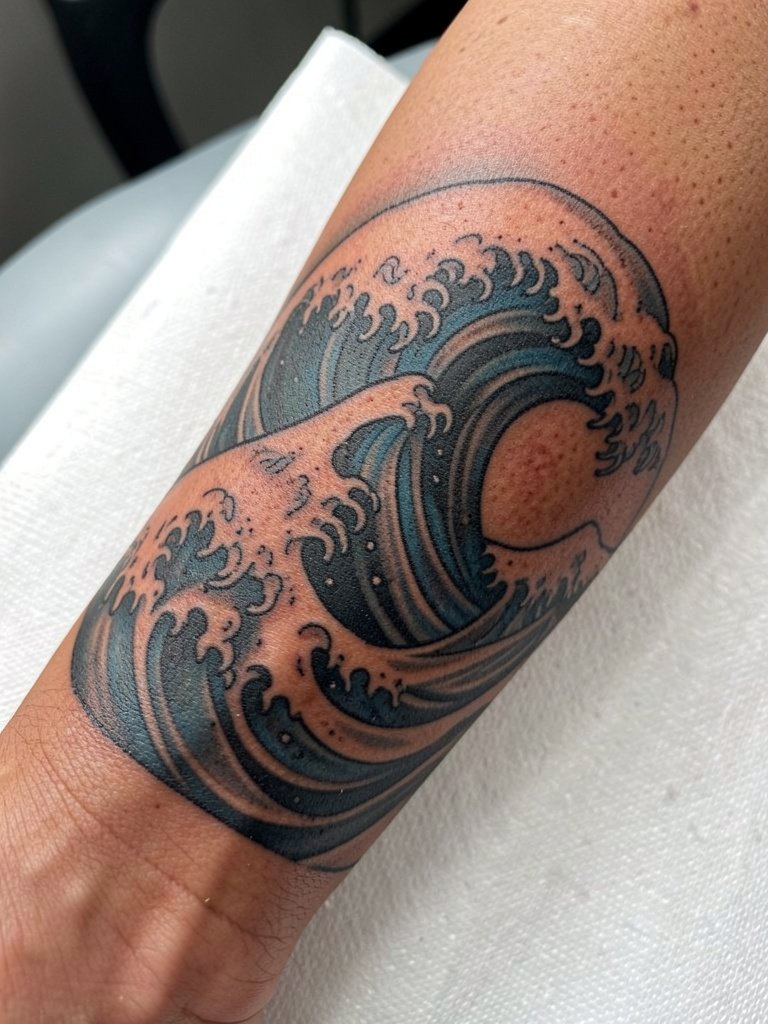
Using waves as a primary design creates natural flow across forearm contours and makes it easier to add fish or dragons later. Specify contrast between crest highlights and deep wave troughs so the pattern keeps depth after healing. The mistake is flattening waves with too much uniform shading, which loses dimension after a year. Pair the finished piece with nautical-themed accessories or a simple leather wristband opposite the tattoo for balance. Sessions are fast for pattern work and touch-ups are minor.
15. Wind Bars Framed with Dot Work on Inner Forearm
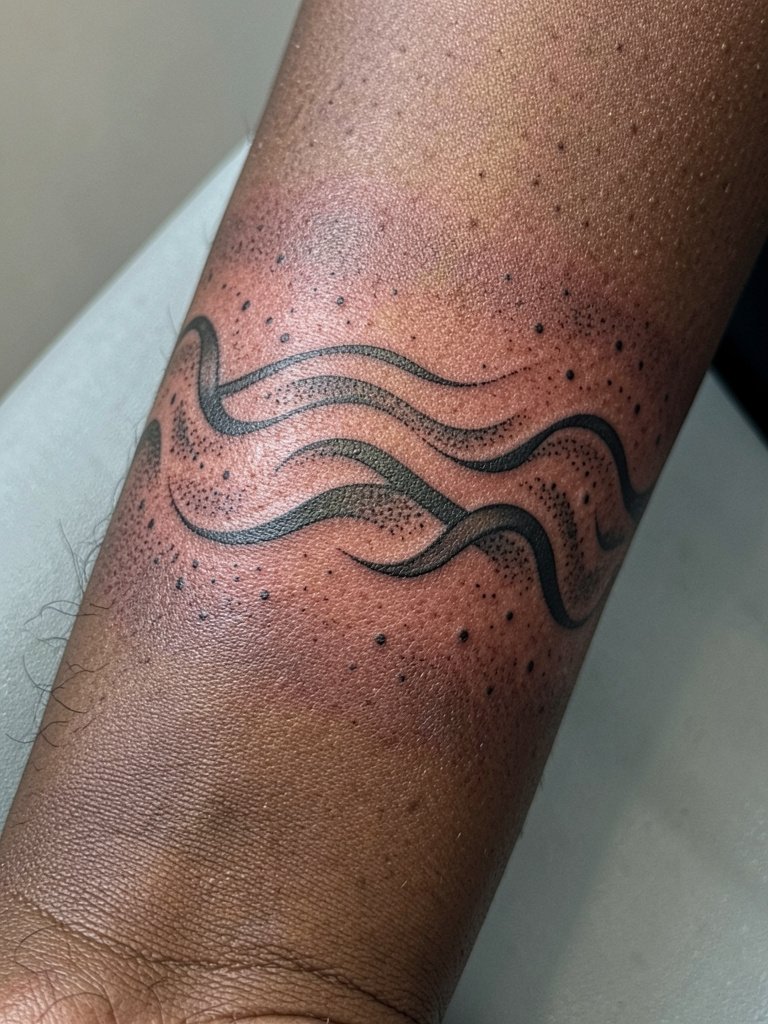
Combining kaze bars with delicate dot work creates texture while keeping the piece high contrast. When asking for stipple shading, specify dot density so the artist stays within a readable range for the forearm. Overly dense stippling can read as gray blurring at two years. This is a low-pain, low-session option that works as a filler between larger pieces on patchwork sleeves. For display, linen button-downs in earth tones let the fine textures show without competing patterns.
16. Patchwork Sleeve Starter: Bamboo, Small Koi, and Wind Bars
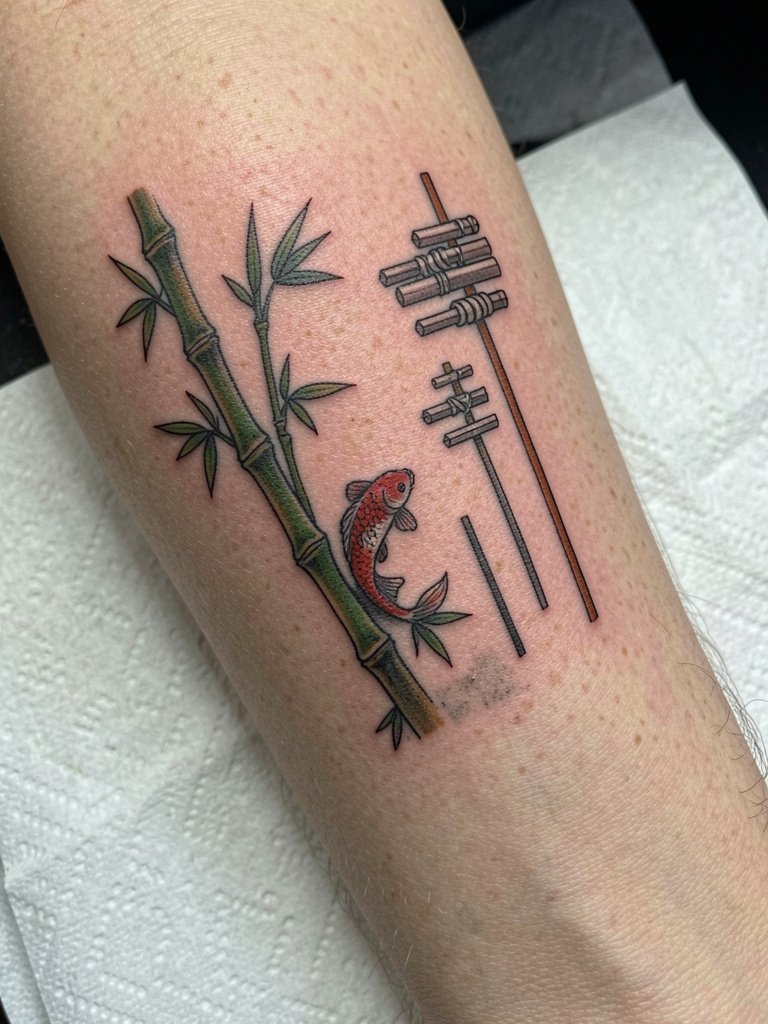
Patchwork builds a sleeve over years by choosing elements that will read together. Map the negative space upfront so each piece sits where future fills will live and bring two scaled references to the consult so the artist can show how the pieces read at three inches and five inches. A mistake is treating each element as isolated flash, which creates awkward overlaps later. For session wear, a loose short-sleeve tee makes rolling easy for multiple appointments. Expect three to five sessions over two years to reach a cohesive sleeve.
17. Fine-Line Botanical with Small Cherry Blossoms
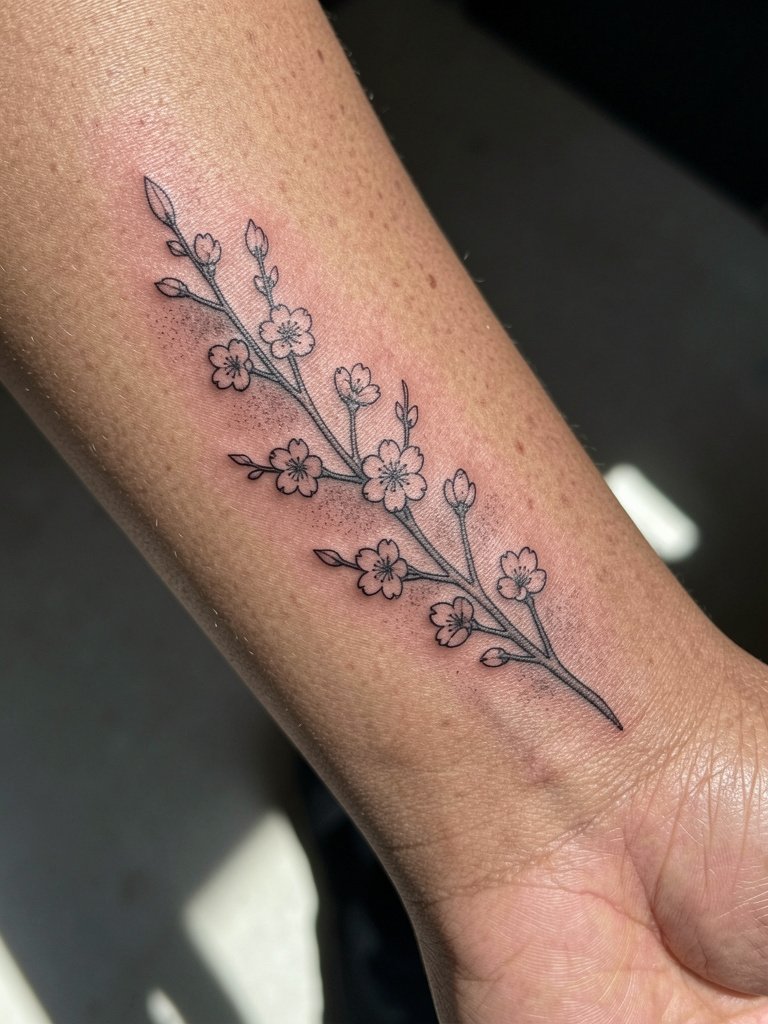
Fine-line cherry blossoms are delicate and editorial, but they need scale to survive forearm movement. Go slightly larger than you think and request bolder anchor lines for the branch so the composition does not dissolve. The frequent error is single-needle petals that flatten into indistinct spots after a year. This design is popular with rolled-cuff linen shirts for an elevated look. Healing is usually straightforward yet expect a touch-up if tiny petals lose crispness.
18. Bold Black-and-Grey Irezumi for Darker Skin Tones
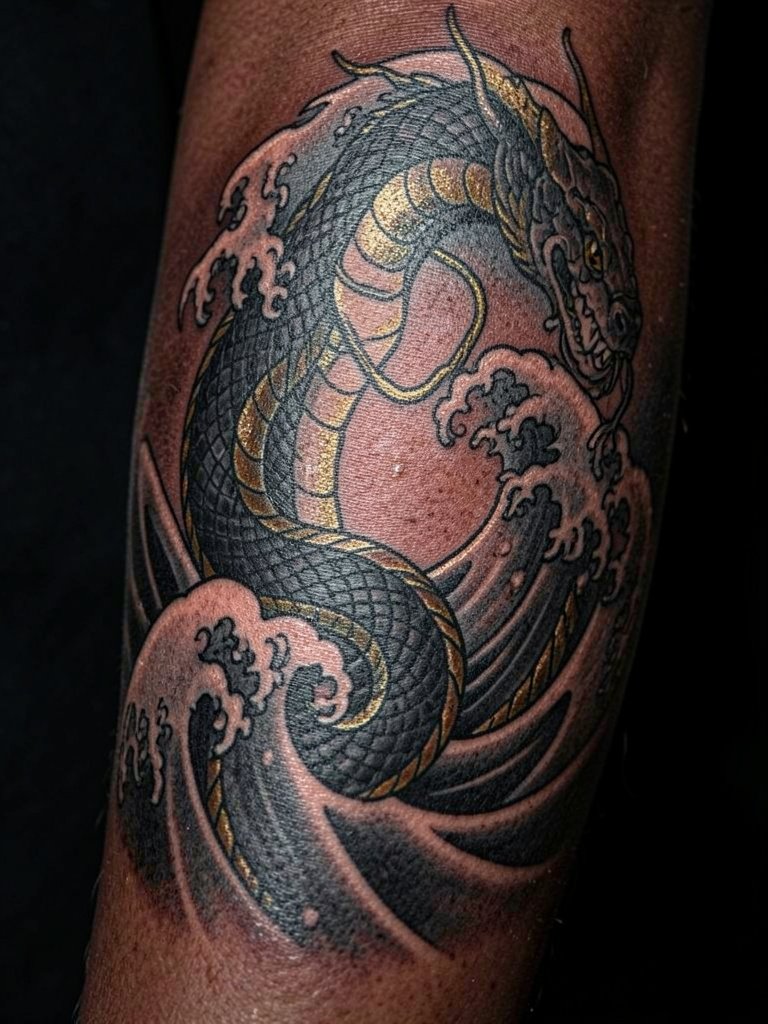
High-contrast black-and-grey compositions with strategic gold accents perform well on melanin-rich skin. Suggest the artist use solid black anchors and warm metallic touches rather than low-saturation pastels that disappear. Many people who tried reds and pastels found them muddy, so this route is a reliable visual choice. For session wear, keep neutral tones that let the forearm read clearly in photos. Plan for stronger initial saturation and a touch-up at one to three years to maintain pop.
19. Small Geisha Figure in Vertical Composition
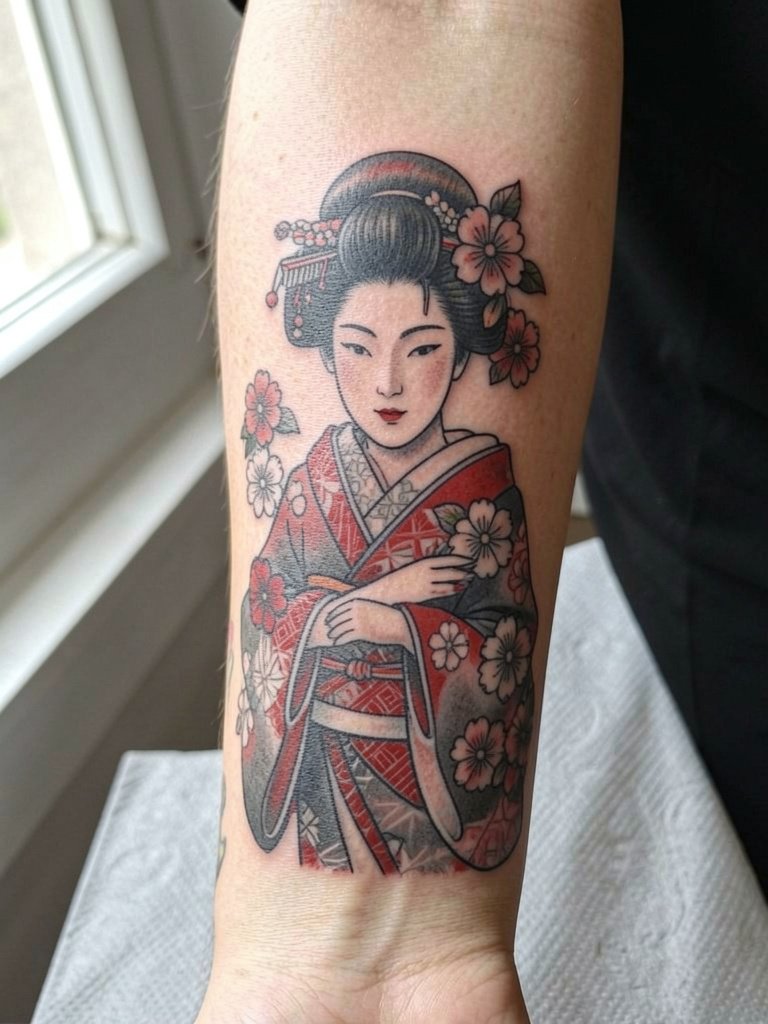
A geisha can be adapted to the forearm as a vertical portrait if the face gets clear, open features and the kimono folds are not overworked. Discuss facial scale and eye detail in the consultation so the face remains legible over time. This subject carries cultural weight, so avoid combining sacred motifs in a decorative way without context. For showing it off, a rolled-sleeve button-down frames the vertical composition and keeps attention on the portrait. Sessions often split into multiple visits for linework and color layering.
20. Minimalist Wave Band Around the Wrist Area

A slim wave band near the wrist is subtle and modern, but the wrist eats fine detail. Increase the band thickness a hair and avoid tiny interior waves. The common mistake is choosing single-needle bands at the wrist that blur into an undefined grey. Session pain is higher near the wrist bones, so prepare with a short appointment and expect touch-up earlier than for mid-forearm work. For session wear, choose a loose cuff or short-sleeve so the artist has full unhindered access.
21. Tiger Eye Koi Hybrid on Outer Forearm
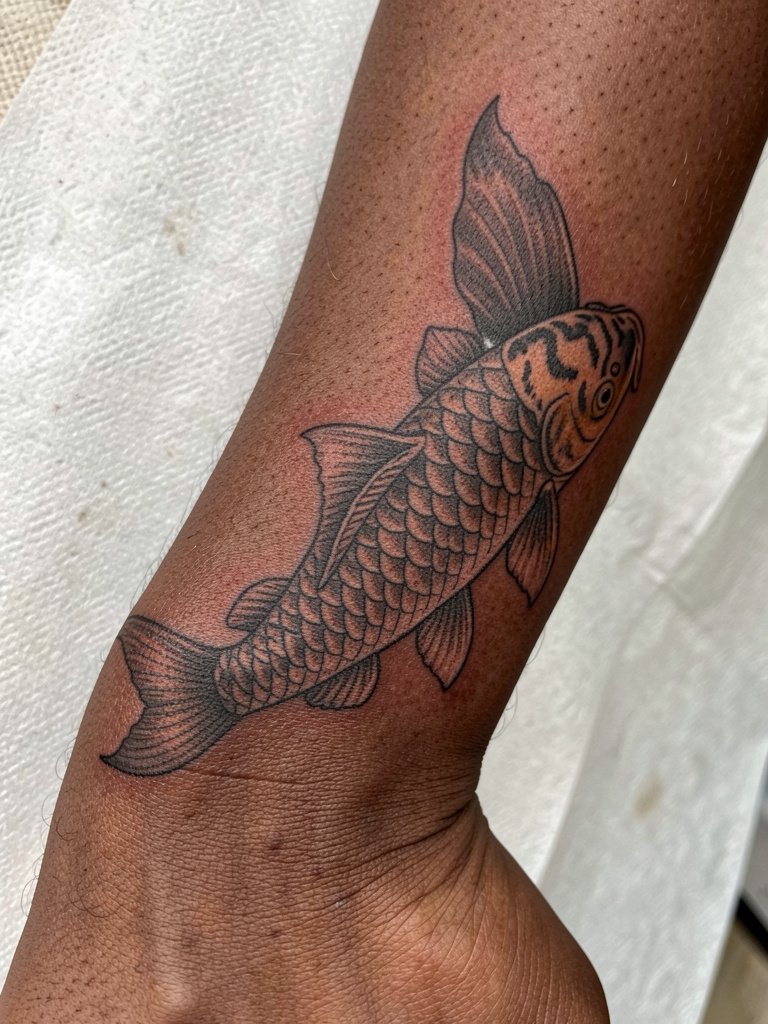
This hybrid pairs the koi silhouette with heavier texture to create a unique focal on the outer forearm. Ask for test patches of scale contrast to see how textures read at arm scale. Without early contrast planning, the textures can flatten in the first two years. For show-offs, a simple leather wristband on the opposite wrist keeps the aesthetic balanced. Sessions are medium length and the piece may need a focused color refresh if the textured areas dull.
22. Stacked Floral Band with Negative Space
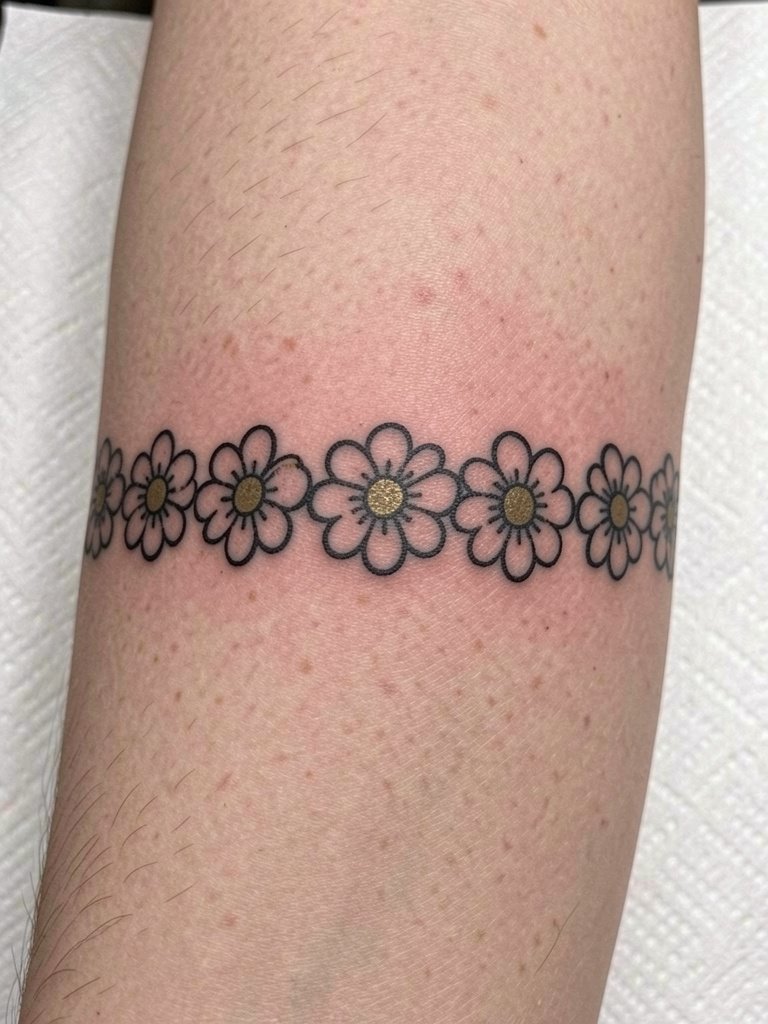
A stacked floral band uses negative space to keep the band legible. Specify the minimum negative gap you want between blooms so the artist designs for longevity. The error is compressing motifs for a dense look that ages into a grey strip. Session time is short and healing is straightforward. For showing off, dainty gold stacked bracelets on the opposite wrist add editorial weight and do not compete with the band.
23. Single-Needle Script with Kanji Accent
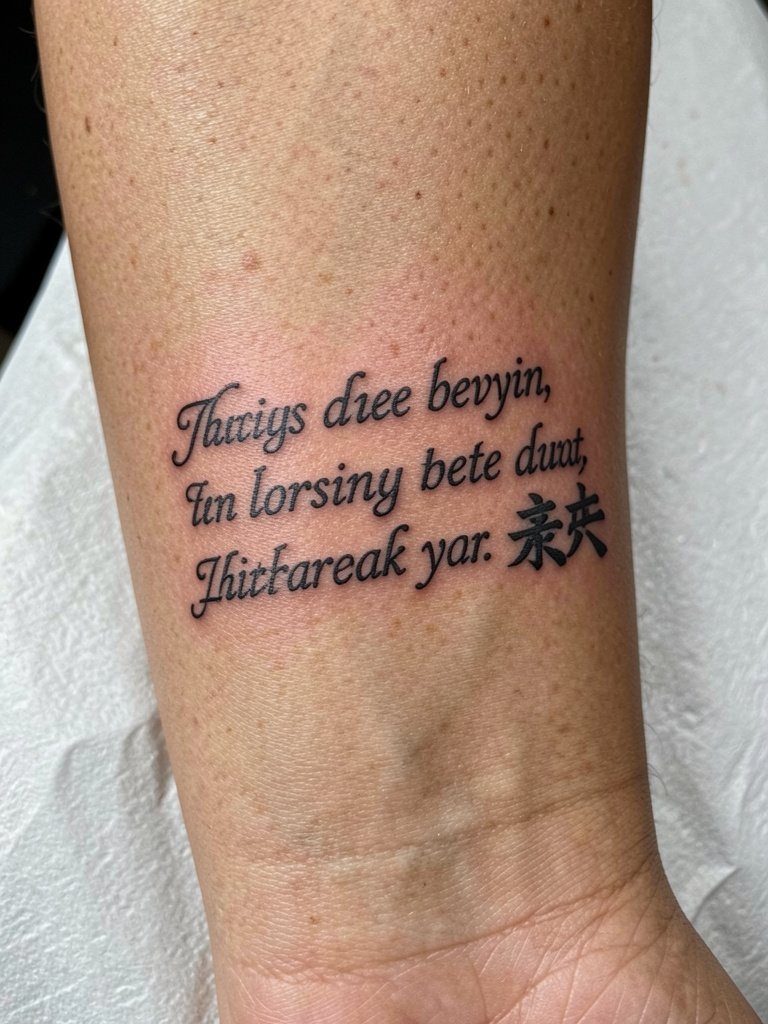
Combining single-needle script with a bold Kanji anchor can give clarity and longevity. Make the script scale slightly larger than you think and insist the Kanji is thicker so it remains a readable anchor point. The common regret is tiny script that softens into an unreadable line. For session wear, a loose button-down with sleeves that roll is practical. If the Kanji carries cultural meaning, verify the character and its usage before committing.
24. Blackwork Sun and Clouds Forearm Panel
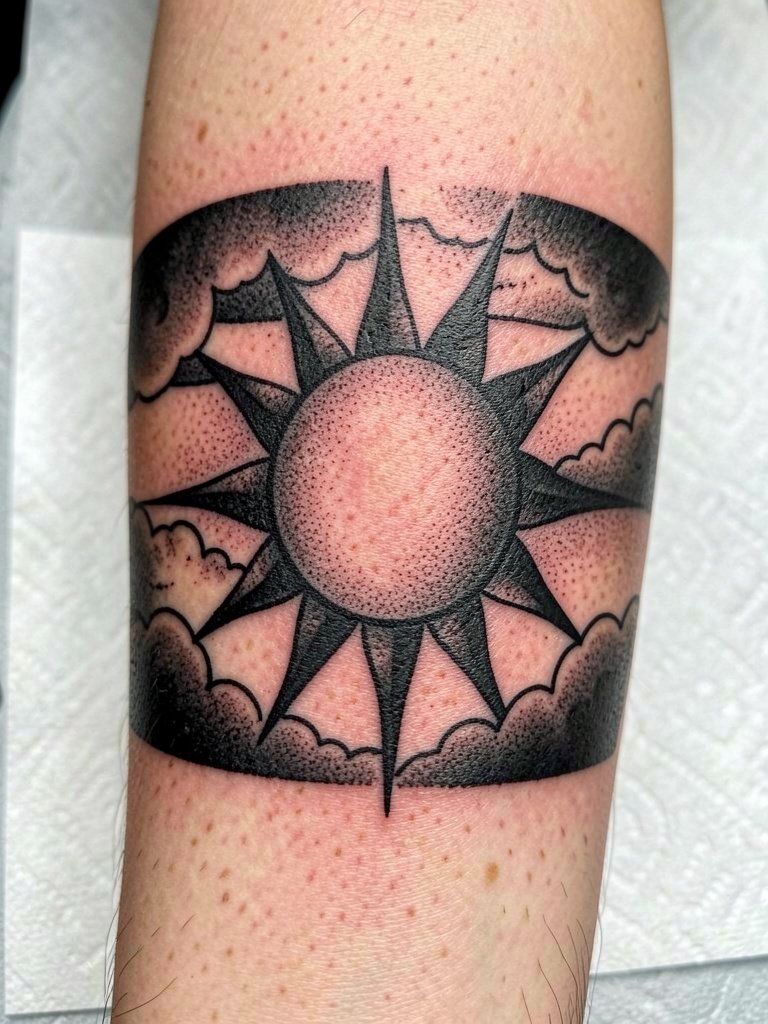
Blackwork panels age predictably if the artist spaces dense black and stipple transitions well. Ask to see healed blackwork examples of similar scale so you know how solid blocks settle. Dense black can compact, which is normal, but well-planned composition prevents indistinct shapes. This piece photographs well with short sleeves and layered bracelets. Expect relatively low maintenance beyond occasional touch-ups to keep crisp edges.
25. Neo-Traditional Fan with Floral Backdrop
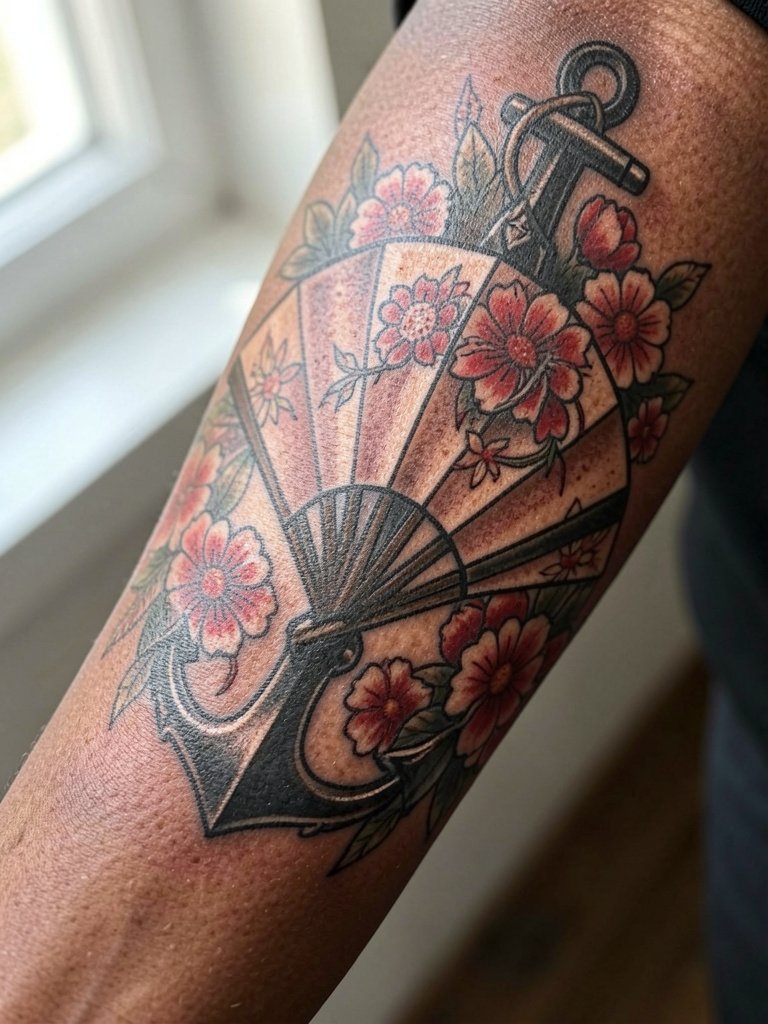
A fan motif gives a horizontal reading across the forearm and pairs well with floral fills for balance. Discuss how the fan ribs will be inked, because overly tight rib detail tends to muddle. If you want it to last, keep the fan ribs bold and let the floral shading be softer. For evening looks, consider a thin silver chain or a neutral rolled sleeve shirt. Sessions are moderate and a color refresh at two to three years keeps the highlights bright.
26. Hannya Mask Accent Peeking from a Sleeve Edge
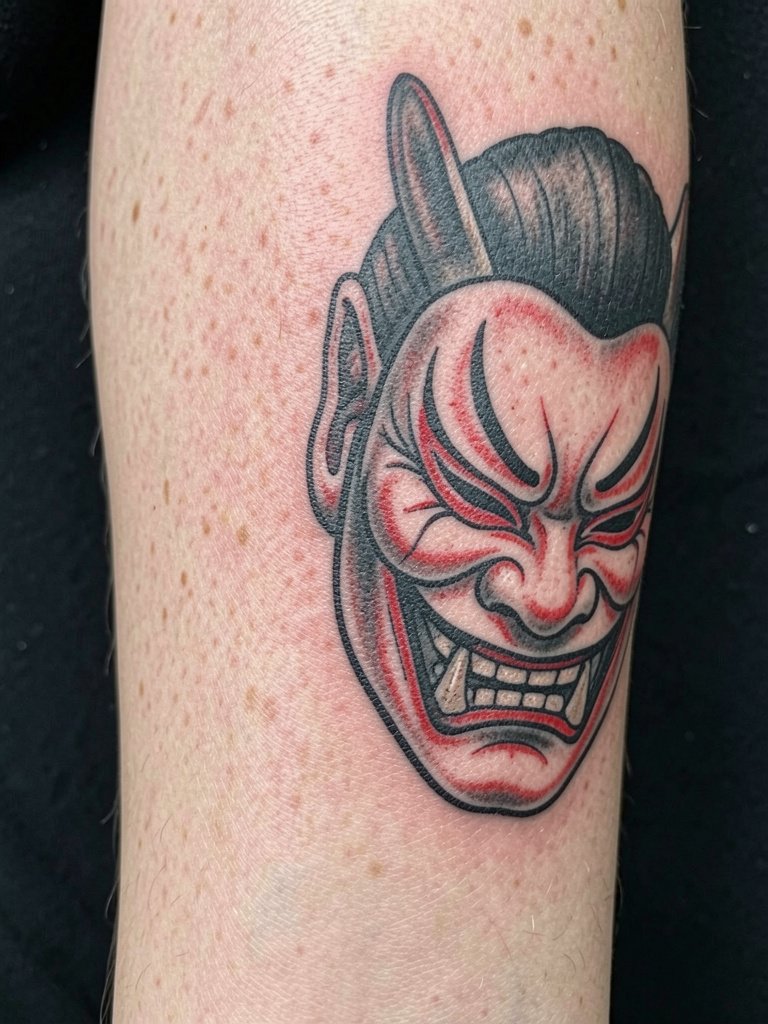
A Hannya accent tucked near the wrist is a striking little anchor for a larger sleeve or a standalone statement. Clarify scale so the mask keeps facial definition, because small facial motifs blur first. Also be mindful of cultural significance and avoid combining it with unrelated religious symbols. This placement has higher friction and may need a follow-up touch-up at one to three years. Session time is short and display works with short sleeves and a neutral cuff.
27. Abstract Geometric Backing for a Forearm Creature
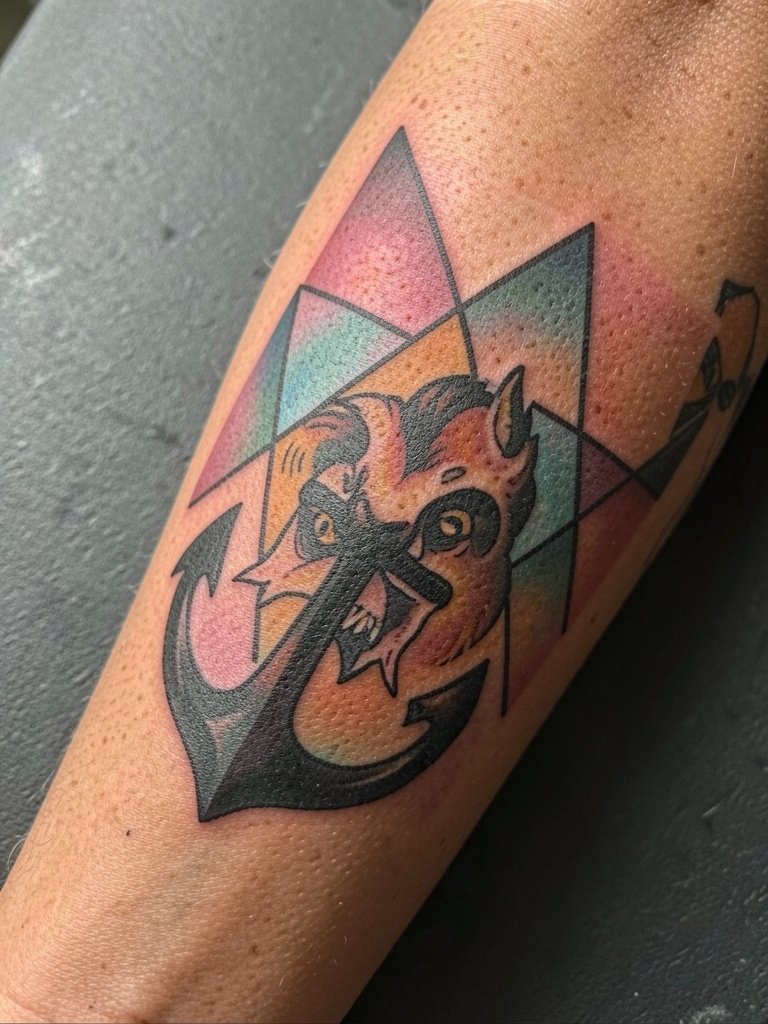
Geometric backdrops modernize a creature piece while helping with legibility. Ask the artist to map which shapes will be negative space and which will get ink, because misplaced geometry can swallow the main motif. The error is crowding geometry too close to the creature outline, which makes the whole design muddle. For session wear, a short-sleeve rolled cuff shirt gives a clean presentation. Expect two sessions when the geometric layering includes gradients.
28. Wind Bars as a Minimal Sleeve Connector

Using wind bars as connectors is a smart patchwork strategy that gives cohesion without filling everything in. Tell the artist how much wrap you expect around the arm so the bars do not create an obvious seam. The common mistake is making them too faint to serve as connectors, which leaves elements visually disjointed. This is a straightforward set of short sessions and it pairs nicely with short-sleeve shirts that show where the bars link the designs.
29. The Patchwork Plan: How Three Koi, Two Bamboo, and Waves Become a Sleeve
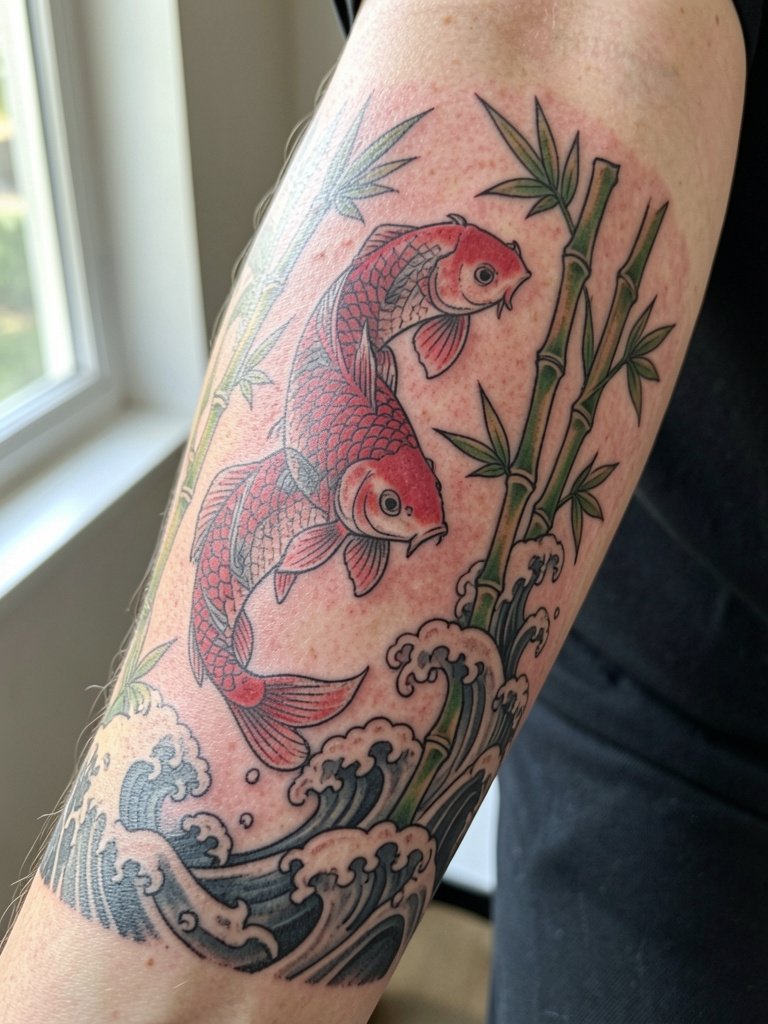
Plan the sleeve timeline before the first session. A realistic build is three principal elements spaced over two to three years with filler waves and wind bars added between visits. Break the budget into session chunks so you can commit to consistent work without forcing rushed fills. Many people start with a bamboo or koi and later wish they had left room for a dragon. For consultations bring a mock layout and reference photos at multiple scales so the artist can advise spacing and flow. This approach reduces clash and creates a cohesive finish.
Frequently Asked Questions
Q: Will a fine-line koi on the forearm blur quickly?
A: Fine-line on the forearm is a contested topic. One group of artists says single-needle koi on high-movement skin will blur within two years because the thin lines migrate and fill in. Another group argues that with slightly increased spacing and careful depth the lines can settle for three years or more and point to their healed portfolios. If you want fine-line, increase scale slightly and budget for a touch-up at year two.
Q: How do I make a Japanese forearm tattoo work on darker skin tones?
A: High-contrast black-and-grey pieces with selective gold or warm highlights photograph and read better on melanin-rich skin than low-saturation pastels. Ask the artist to prioritize solid black anchors and warm accent pigments. For showing off healed work, simple rolled-sleeve shirts in solid colors keep focus on saturation and shape.
Q: Are Aquaphor and thick ointments safe for fresh forearm tattoos?
A: Opinions split on ointment choice. Some people report that heavy occlusives like Aquaphor clog pores and promote thick scabbing during early healing. Others still use thin layers of traditional ointment for the first two to three days and have good results. Many now favor thin, breathable balms after an initial protective dressing. If you have sensitive skin, test a small patch of product on undamaged skin before regular use.
Q: Where can I find healed Irezumi and forearm portfolios without naming artists directly?
A: Search hashtags like #irezumi, #neojapanesetattoo, and #japaneseforearm on Instagram and TikTok then filter by location to surface local studios. Tattoodo and portfolio directories let you search keywords such as "forearm dragon bold lines" for healed examples. Reddit communities like r/tattoos and r/japanesetattoo are useful for peer-shared healed shots and practical feedback.
Q: How much should I expect to tip and how to pace payments for a sleeve?
A: In the United States tipping commonly falls between 15 and 25 percent for tattoo work. For a sleeve, break payments into session deposits and per-session payments so the artist can plan the multi-visit project. Scheduling consistent sessions over a year helps maintain color continuity and reduces the need for large late-stage touch-ups.