
Someone I know spent months saving reference photos, then realized the real problem was figuring out where a dragon would read best on their body and how it would age. I visited five shops across Brooklyn and chatted with artists who specialize in Irezumi, and the styles below kept coming up as practical, wearable choices this year. Each pick includes what to ask your artist, how it heals over time, and the common mistakes to avoid.
1. Dragon Emerging from Waves on Outer Thigh

Someone I know first saw this as a back piece, then moved it to the outer thigh for better flow with clothing. Recommend this when you want dramatic movement without committing to a full back. Tell your artist you want clear linework on the dragon and layered wave shading that gives depth without over-saturating the scales. The common mistake is cramming too many small details into the thigh curve, which blurs over time. Expect two to four sessions depending on scale, and plan a touch-up around year two if you live in strong sun. Thigh skin tends to hold saturation well, but avoid tiny script inside scales because ink can spread.
2. Coiled Irezumi Sleeve That Reads Around the Arm

Fair warning, a full arm sleeve takes commitment, and sessions add up. This coiled design wraps to tell a story of protection, so ask your artist to map negative space early so the dragon reads from any angle. A frequent mistake is making the coils too tight, which creates blowout risk where the ink sits under thinner skin by the elbow. Expect four to six sessions and discuss stipple shading for smoother transitions. At six months colors will sit bright, and after two to five years expect softer edges that benefit from a targeted touch-up. If you want narrative panels, pin down the sequence in the consultation.
3. Dragon and Koi Transformation Scene on Calf or Forearm

When perseverance or a personal growth story matters, this pairing works well. For a forearm version, ask for elongated composition so the koi's curve becomes the dragon's tail when viewed from the wrist. A common aging issue is too-small scales on the koi, which clump and lose definition. Plan three sessions and specify that the artist space color patches for future touch-ups. At two years expect color mellowing, and a touch-up at year three keeps saturation lively. This setup adapts well to calf placement if you want a larger canvas and less daily visibility.
4. Dragon with Cherry Blossoms on Shoulder or Rib

Fine line blossom details against heavy dragon linework create a contrast some people love. When booking, show photos that demonstrate the exact blossom scale you want because tiny petals on ribs can wash out. Some artists split on whether to place the blossoms densely or let them breathe. One camp says packed petals build depth, the other camp warns dense petals blur on thinner skin. If you choose ribs, expect higher pain and a likely touch-up at year two for petal clarity. Shoulder placement winds down pain and often holds color better over time.
5. Red Dragon Full Back Piece with Gold Highlights

There is something about saturated red scales against black outlines that reads from across a room. For a full back commitment, tell your artist you want scale saturation prioritized over ultra-fine detail so the piece ages without muddying. The biggest mistake is insisting on tiny decorative flourishes across the spine, where touch-ups are harder. Expect five or more sessions and plan the final session for highlight work and any symmetry fixes. After three to five years, red may shift and might need a color refresh, especially if you spend a lot of time outdoors.
6. Blue Dragon Neck Piece, Fine Line Adaptation
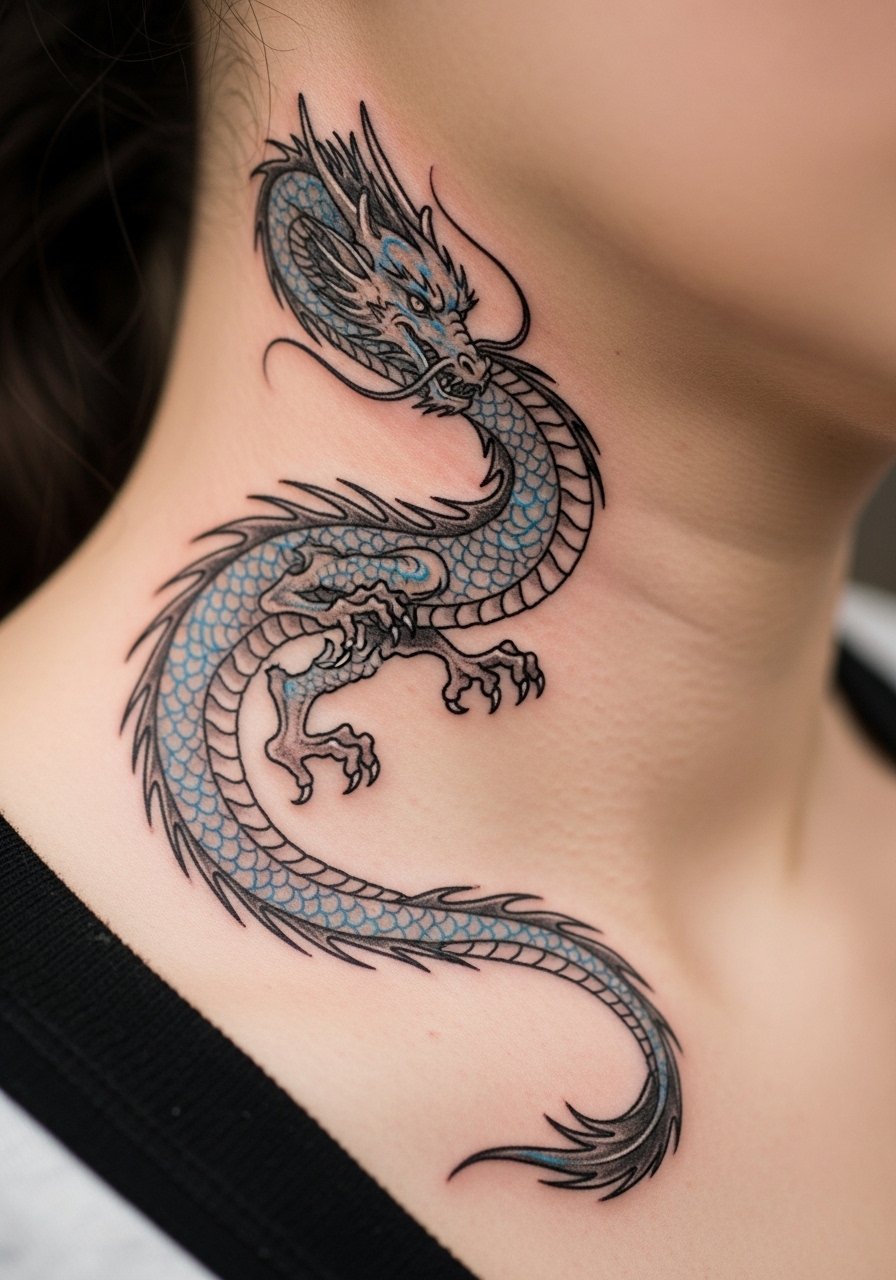
Artists split on fine line for the neck. One group says the thin skin and movement blur lines within two years. The other group argues that with correct needle depth and spacing, fine line settles fine on neck tissue. Ask your artist which camp they fall into and request a small test flash if you can. Neck pieces are visible and may affect professional settings, so consider placement carefully. Expect one to two sessions and plan for a touch-up in year two. Fine line reads delicate at first, and it may lose crispness sooner than thicker Irezumi work.
7. Green Dragon Thigh Panel for Leg Coverage

I've seen people pick green when they want a nature-connected palette that still reads bold. Thigh panels allow for larger scales and layered shading, which helps saturation last. Tell your artist you want broad scale blocks and whip shading for gradual transitions. A mistake is overloading the design with small dots and micro-shading in the first session, which can blend into a dull patch. Expect about three sessions and schedule a touch-up at year two if sun exposure is frequent. Thigh placements generally resist blowout better than inner-arm zones.
8. Dragon Claw on Inner Forearm, Minimalist Power Move

When you want a compact statement that still feels like commitment, the inner forearm shows off clean linework. During the consultation, describe the exact claw angle and ask for slightly thicker linework than you think you need, because micro black work can soften. The common mistake is requesting ultra-fine lines expecting them to look identical in five years. This placement is low pain but visible, and a single session is common. Touch-ups may be needed at year three to sharpen edges. Inner forearm skin can handle linework better than wrist or fingers.
9. Wave-Surrounded Dragon Across Upper Chest
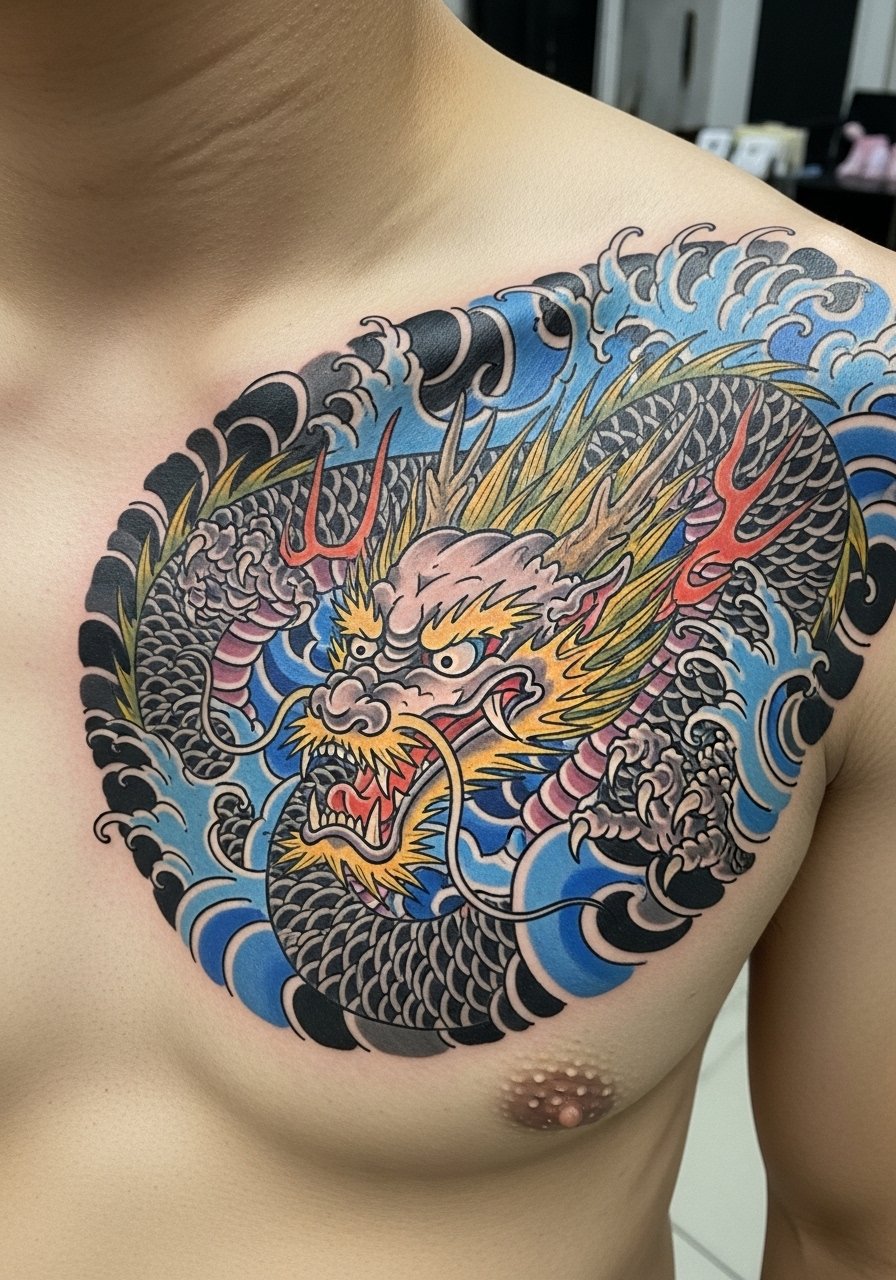
There is a different energy when a dragon sits over the chest and meets the sternum, it anchors a piece. If you want the waves to frame rather than overwhelm, ask your artist to draft the negative space and test it against a T-shirt. Sternum and upper chest sessions can be painful and require shorter sittings. The mistake people make is requesting overly dense cloud and wave patterns that hide the dragon's silhouette once healed. Expect two sessions and plan a touch-up after seasonal fading. Chest placements can be adjusted later into a full upper-body composition.
10. Phoenix and Dragon Paired Sleeve, Yin-Yang Balance

Pairing a dragon with a phoenix reads like a narrated sleeve and works if you want color contrast. During consultation, clarify which limb hosts which element so the color story rolls with muscle movement. A common mistake is mismatched scale size between the two creatures, which makes one dominate and the balance collapses. Expect four to five sessions with finish work to coordinate highlights. Over time the phoenix's reds may need more frequent touch-ups than the dragon's darker tones. This approach suits people who want symbolic duality across an arm.
11. Minimalist Dragon Tail Wrist Micro Tattoo

If you are a first-timer hoping to test a motif, a wrist micro tail is subtle and fast. When you consult, request slightly heavier linework than a pure single hairline because wrist skin moves and tiny lines often blur. The most common mistake is asking for an ultra-micro script near the tail, which becomes illegible as the wrist flexes. Expect a single short session and plan for a touch-up at year two if the line softens. Wrist pieces show wear quickly because of washing and friction, so long-term maintenance is realistic.
12. Ornate Dragon with Clouds on Upper Back
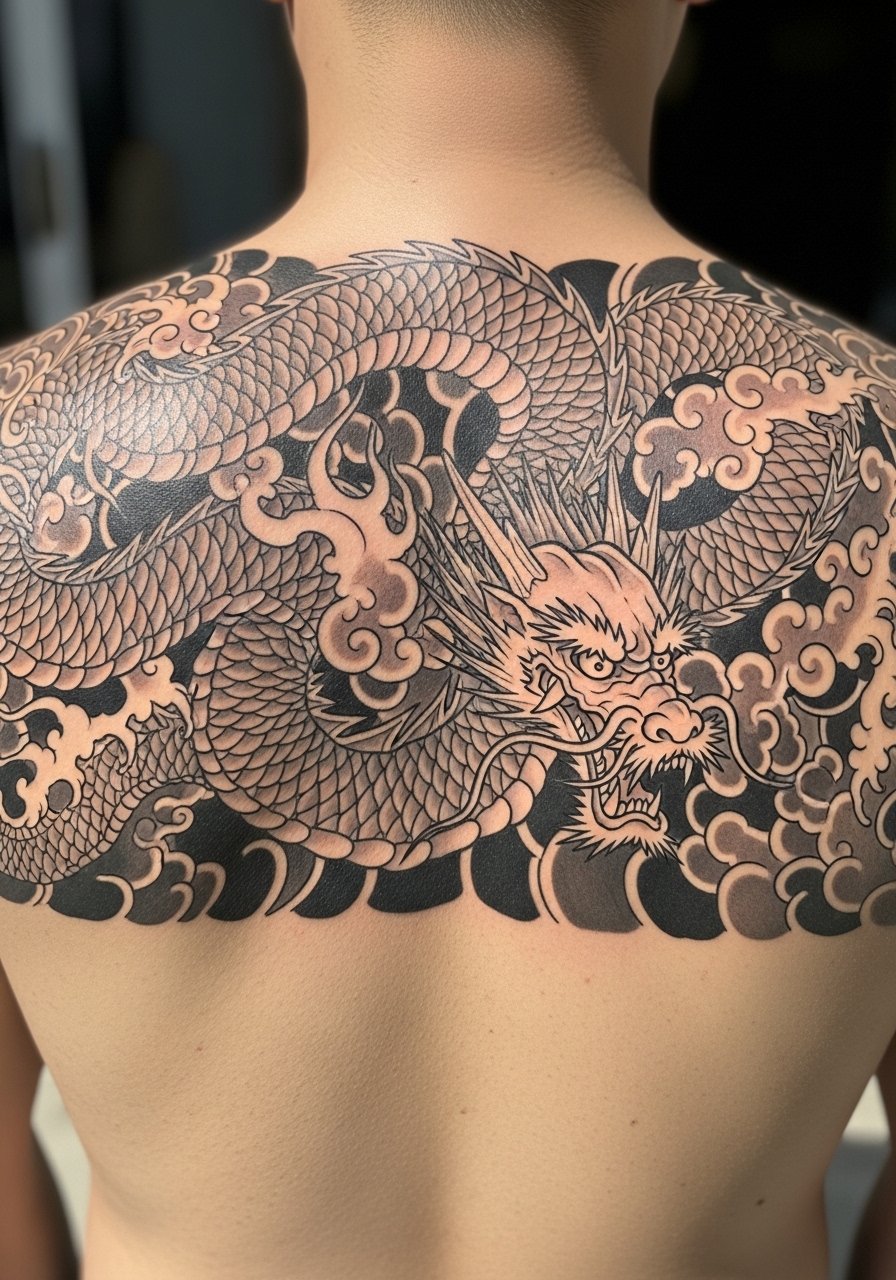
Visual impact rules on the upper back because you get a broad canvas. Ask for cloud layers that break up negative space and keep the dragon elevated rather than lost. A typical mistake is adding too many tiny background motifs that read as noise after healing. Expect about four sessions and leave the final session for contrast work and any symmetry fixes. Over the first six months the piece will tighten, and after two years a touch-up will preserve depth. If you later decide on a full back piece, this composition scales neatly.
Tattoo Prep and Aftercare Essentials
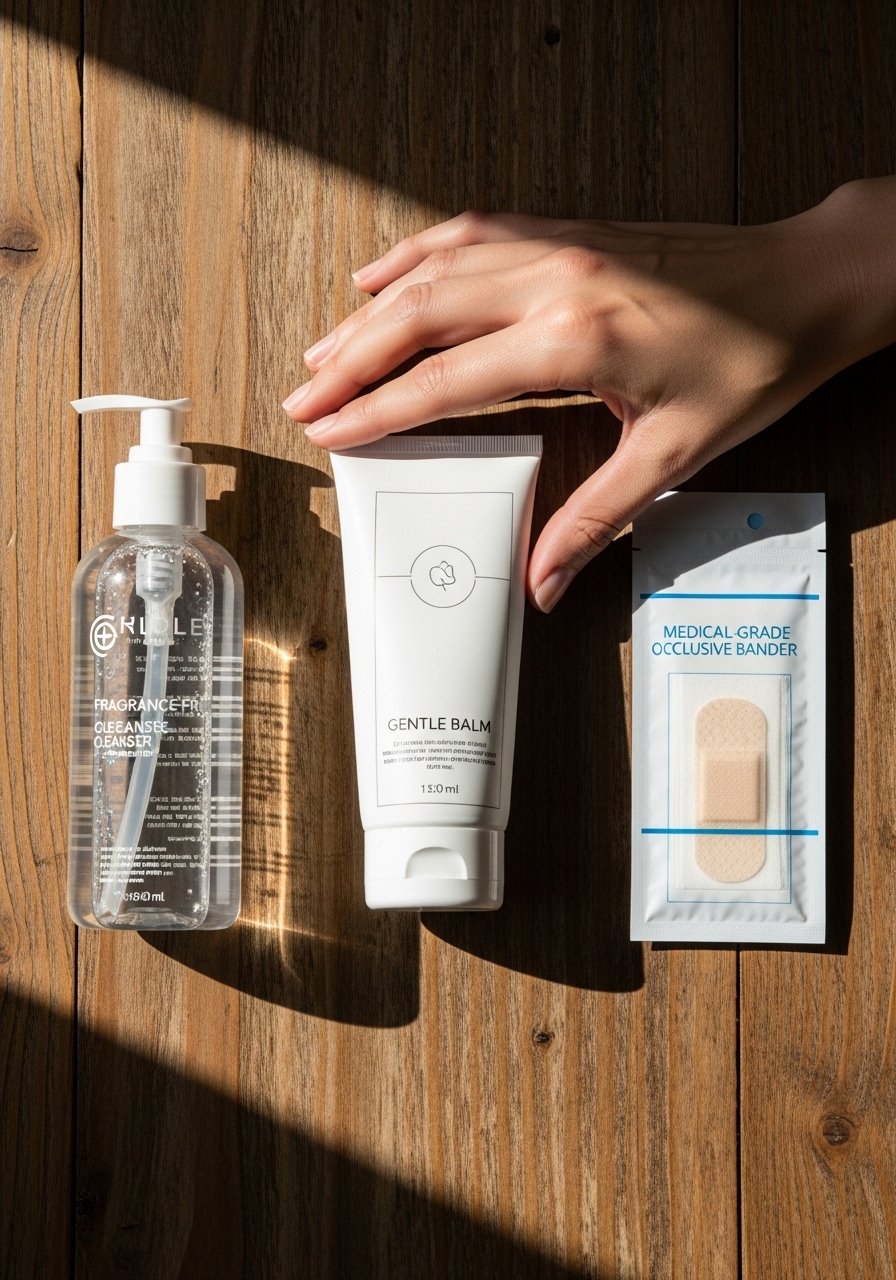
Shopping list, grouped by need. All links go to Amazon searches with my tag.
Healing and moisturizing essentials
Fragrance-free healing balm for tattoos, travel tube. Use sparingly after initial scab drop to keep the skin supple, and rub gently to avoid disturbing scabs.
Lightweight fragrance-free moisturizer for daily upkeep. Keeps saturation up long term and reduces flaking during dry months.
Medical-grade second skin bandage, 6-inch roll. Good for covering large areas after a session and protects against friction.
Pre-appointment prep
Gentle foaming cleanser for pre-tattoo skin prep. Use a few days before the appointment to strip lotions that interfere with stencil adhesion.
Disposable razor and antiseptic wipes. If you shave at home, do it the night before and clean the area to reduce irritation.
Long-term maintenance
SPF 50 broad-spectrum mineral sunscreen. UV exposure fades saturation fastest, so protect healed tattoos when exposed.
Fragrance-free body oil for occasional deep hydration. Apply sparingly to avoid pore-clogging but to keep large pieces supple.
Saniderm original adhesive bandage, single pack. Use per the product instructions for the first 24 to 72 hours if your artist recommends occlusive coverage.
Every tattoo is different. Always follow your artist's specific aftercare instructions. Consult a dermatologist if you have skin concerns or unusual healing issues.
Frequently Asked Questions
Q: Will a fine line neck dragon blur faster than a thicker traditional neck piece?
A: It depends on needle depth, spacing, and how much movement the skin sees. In my experience thin lines on the neck risk softening sooner. Ask to see healed neck photos from the artist, and consider slightly bolder linework if you want longer-lasting crispness.
Q: How often do full back red dragons need touch-ups compared to blackwork dragons?
A: From what I have seen, red pigments can fade quicker in high-sun lifestyles. Blackwork usually needs fewer color touch-ups, while red may benefit from a refresh every three to five years depending on exposure and skin type.
Q: Are thigh dragon panels less likely to experience blowout than inner-arm sleeves?
A: Yes, thigh skin is thicker and typically handles saturation well, which lowers blowout risk. Inner-arm and elbow-adjacent skin are thinner and more prone to ink migration, so ask your artist about spacing for those zones.
Q: Do koi-to-dragon transformation scenes require different aftercare than other color pieces?
A: The aftercare is similar but give extra attention to any large color-saturated areas. Keep the piece protected from sun and friction while it heals, and follow your artist's timing for moisturizer application to keep saturation even.
Q: If I want a phoenix and dragon sleeve, what should I ask during the consultation?
A: Ask your artist to map which limb hosts which creature, to show scale comparisons, and to demonstrate how negative space will separate the two so neither overwhelms the other after healing. Also discuss the realistic session count so you can plan coverage.
Q: Is a minimalist wrist tail a good first tattoo for people worried about careers or visibility?
A: A wrist micro tattoo is discreet when covered with long sleeves and subtle when visible, but it is still seen in many workplaces. Consider placement and your daily wardrobe, and ask for slightly bolder linework so the design ages legibly.