
Hours pass faster than they look when the stencil sits on skin. Fine-line hourglasses on the forearm can stay crisp for years if the artist leaves room, inks slightly bolder than Instagram shows, and you plan for one touch-up down the road. Below I start with the minimalist inner-forearm option that most first-timers pick and then move through 20 more forearm takes that balance readability and symbolism.
1. Minimalist Fine Line Hourglass, Inner Forearm
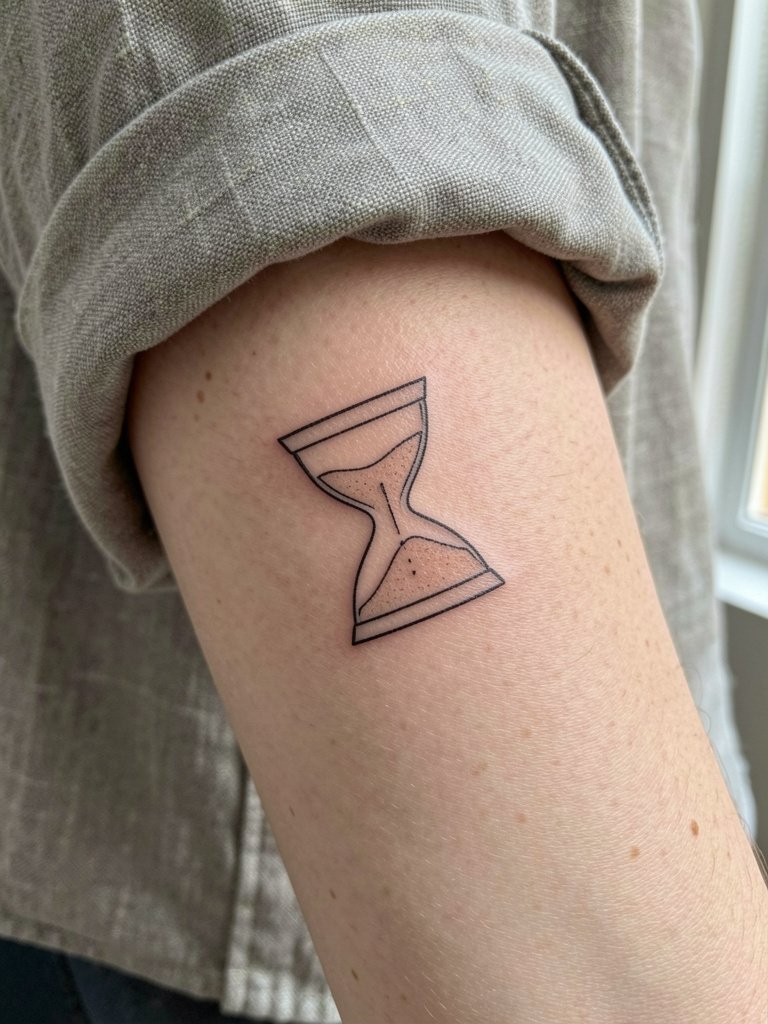
This is the classic starter hourglass for a reason. It works for people who want a slim vertical piece that reads at arm length, and it ages better on the inner forearm because the skin there is stable and not rubbed by clothing. A common mistake is requesting hairline single-needle work at one inch. Ask for slightly heavier single-needle linework so the silhouette still reads at year five. Plan for a touch-up around seven to ten years if you want crisp contours. For the session wear a linen button-down shirt you can roll to the elbow so the artist has full access.
2. Traditional Color Hourglass with Skull, Outer Forearm
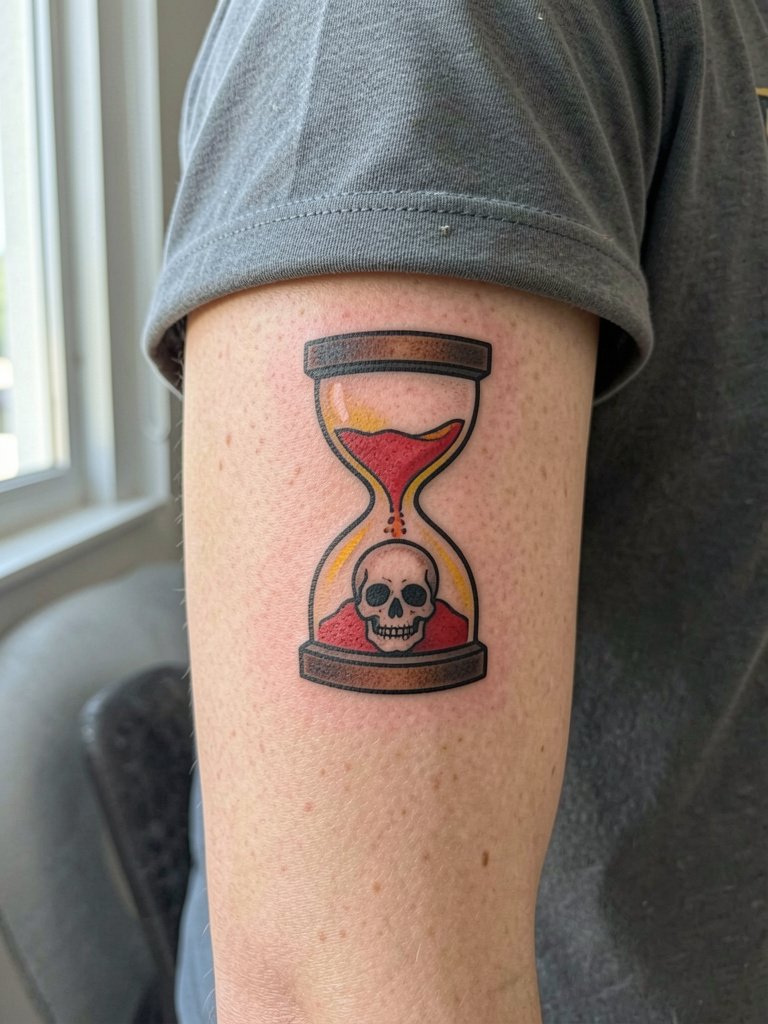
Go bold here if you want a vintage flash energy that reads from across a room. The outer forearm tolerates saturated color and heavy outlines, so this design suits someone who prefers strong contrast over whisper-thin linework. A common pitfall is asking for tiny color fills inside a narrow hourglass; the red sand will muddy sooner. During consultation bring photos that show how saturated fills age at three and five years so the artist can size the bulbs appropriately. For showing the design off, pair it with a solid black tee to make the color pop.
3. Winged Hourglass, Outer Forearm Edition
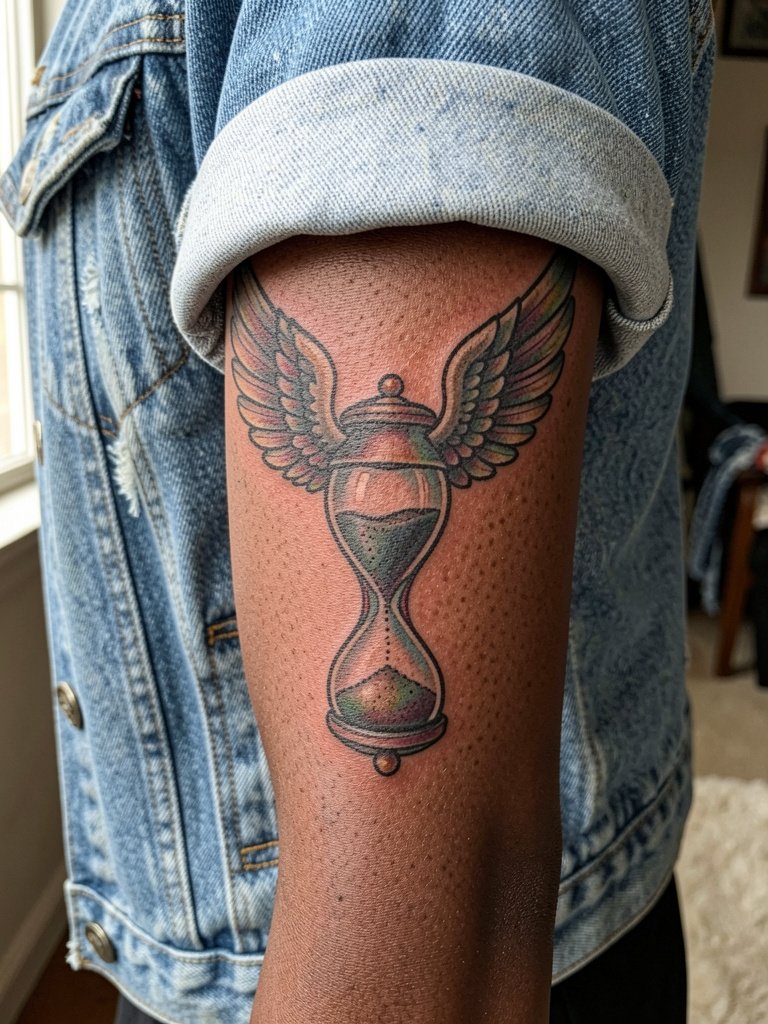
Wings add motion and help the hourglass read as a larger composition, which means you can go medium-large without sacrificing clarity. Tell the artist you want defined feather edges and slightly heavier wing linework so the feather detail stays legible over time. One mistake is cramming tiny feather veins into a narrow wing. Session time is usually an hour to two depending on shading. For wardrobe, vintage denim layers frame the piece well so try a vintage denim jacket when you want it seen.
4. Hourglass with Rose, Vertical Forearm Panel
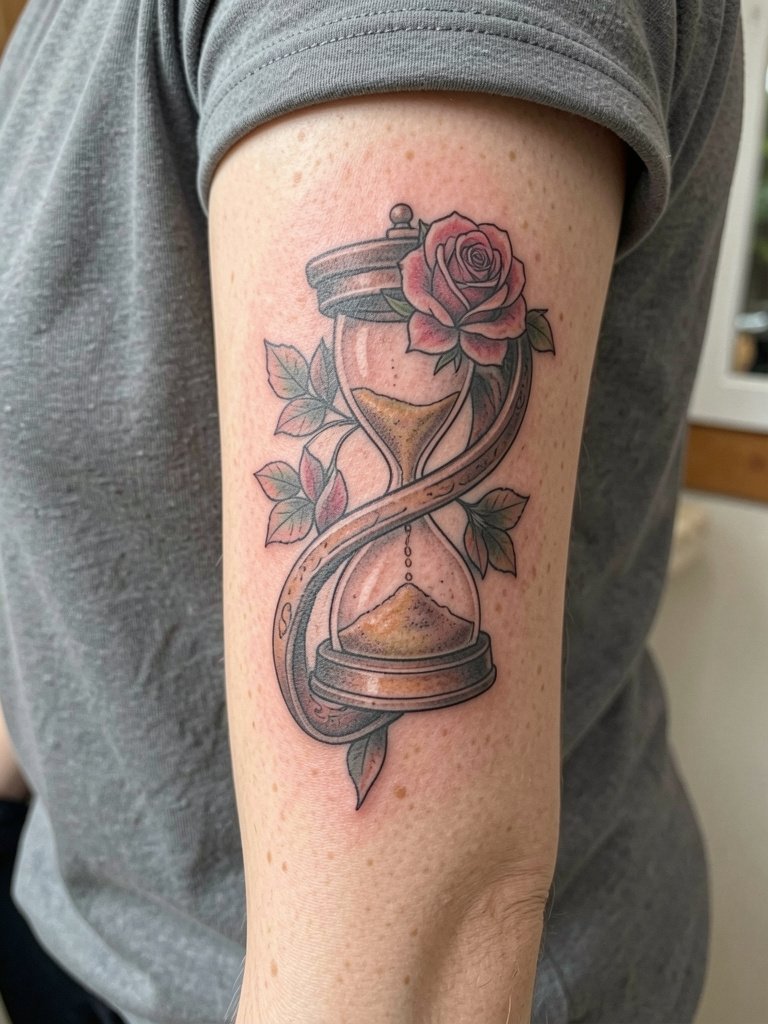
Pairing the hourglass with a rose softens the Memento Mori theme while keeping vertical readability. If you want longevity, ask for clear petal separation and slightly bolder outer contouring around the rose petals so color bleeding doesn't collapse the floral detail. A common aging story is petals blending with tiny sand grains when everything is drawn too fine. Sessions usually run one to two hours. For outfits that highlight the composition, try a dainty gold stacked bracelet set on the opposite wrist to balance the vertical flow.
5. Single-Line Continuous Hourglass, Inner Forearm
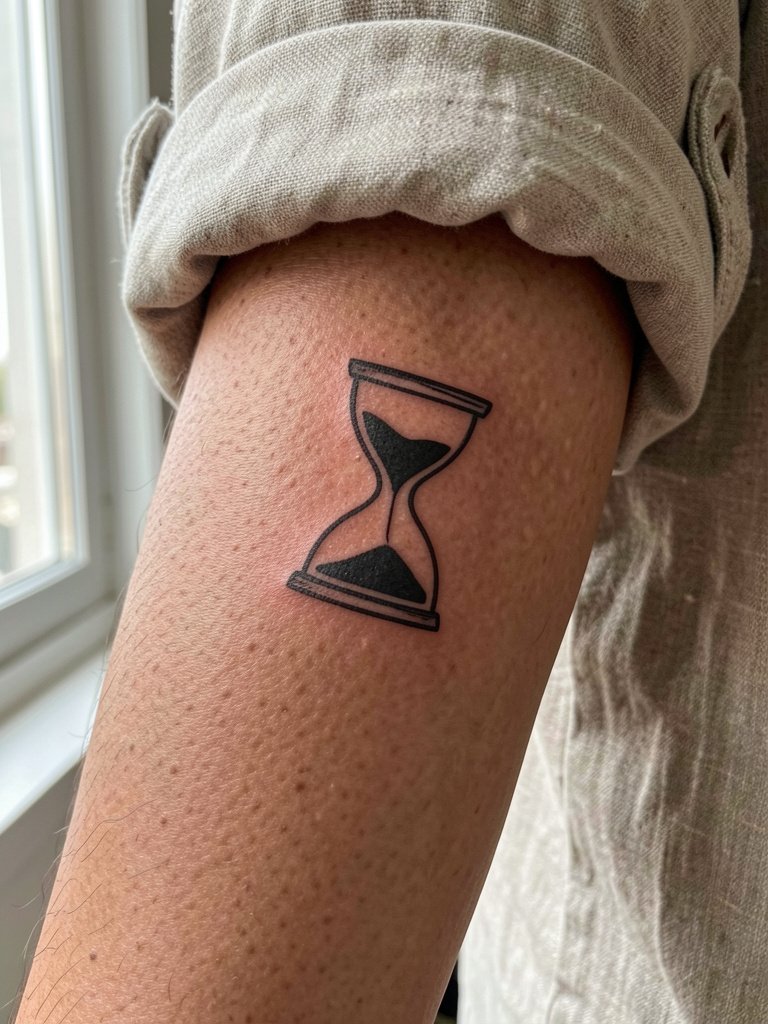
The continuous one-stroke motif reads modern and clean. It is best for people who value negative space and bold silhouette over interior detail. The mistake here is asking for a hairline one-stroke at very small scale. The single-line needs minimal width to avoid softening into a smudge. Discuss exact line thickness and scale with the artist, showing a ruler or mock-up on your forearm so everyone agrees on the size. For the session wear, bring a rolled cuff linen shirt so the inner forearm is accessible and comfortable.
6. Hourglass with Clock Face Top, Outer Forearm
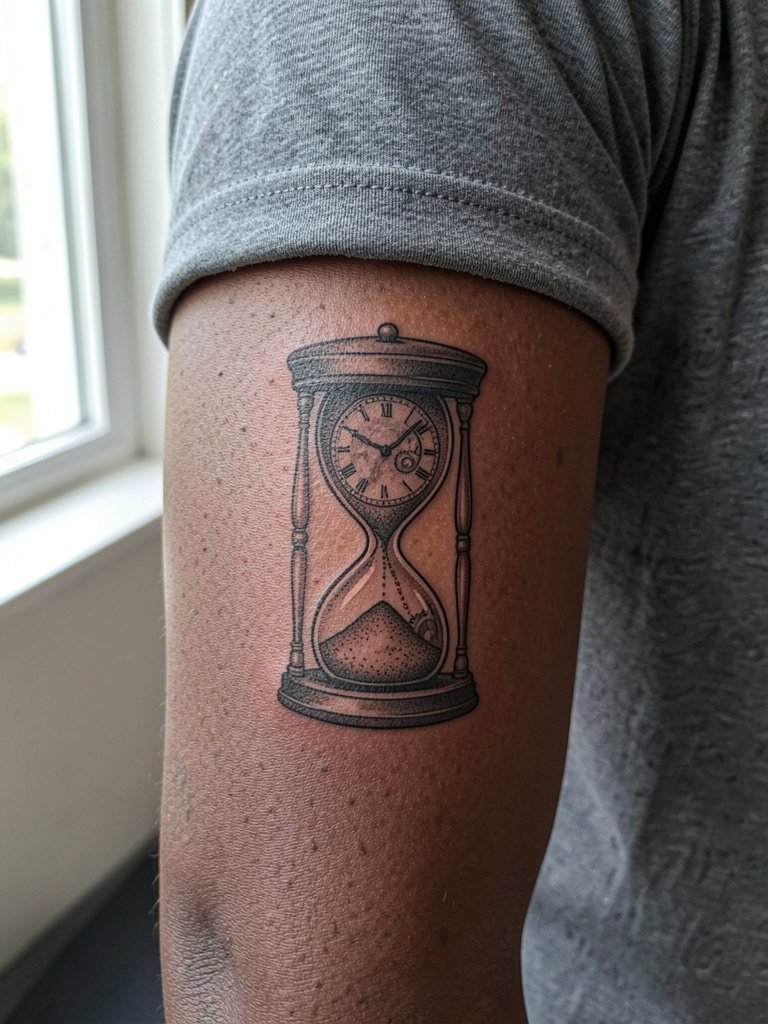
Merging clockwork with the hourglass doubles the time metaphor while allowing for stronger midline detail. Because clock faces can become muddled, ask your artist to enlarge numerals and to limit tiny gear teeth. One common mistake is packing too many cogs into a small top bulb. Expect a one to two hour session for the linework and basic shading. Style it with a simple silver watch on the opposite wrist to echo the clock motif.
Before You Book
The forearm pieces above range from tiny single-needle marks to saturated traditional work, so a compact kit for session day and the first week helps protect linework and color.
- Mad Rabbit Tattoo Balm (small size). A thinner balm some people prefer for fine line pieces because it does not sit heavy on delicate ink channels during early healing.
- Japanese Aftercare Lotion. Lightweight lotion option noted for non-greasy texture that suits stable-skin forearm pieces during the peeling phase.
- Ink Organic Balm. Natural ingredient balm mentioned for its gentler feel on darker skin tones and minimal clogging.
- Tattoo Rescue Cream. A lighter cream some people use to avoid blurring fine lines while still providing moisture.
- Aquaphor Healing Ointment. A widely available option for the first couple of days that many people reach for when protecting small forearm work.
7. Micro Hourglass Near Wrist, Palm-Up
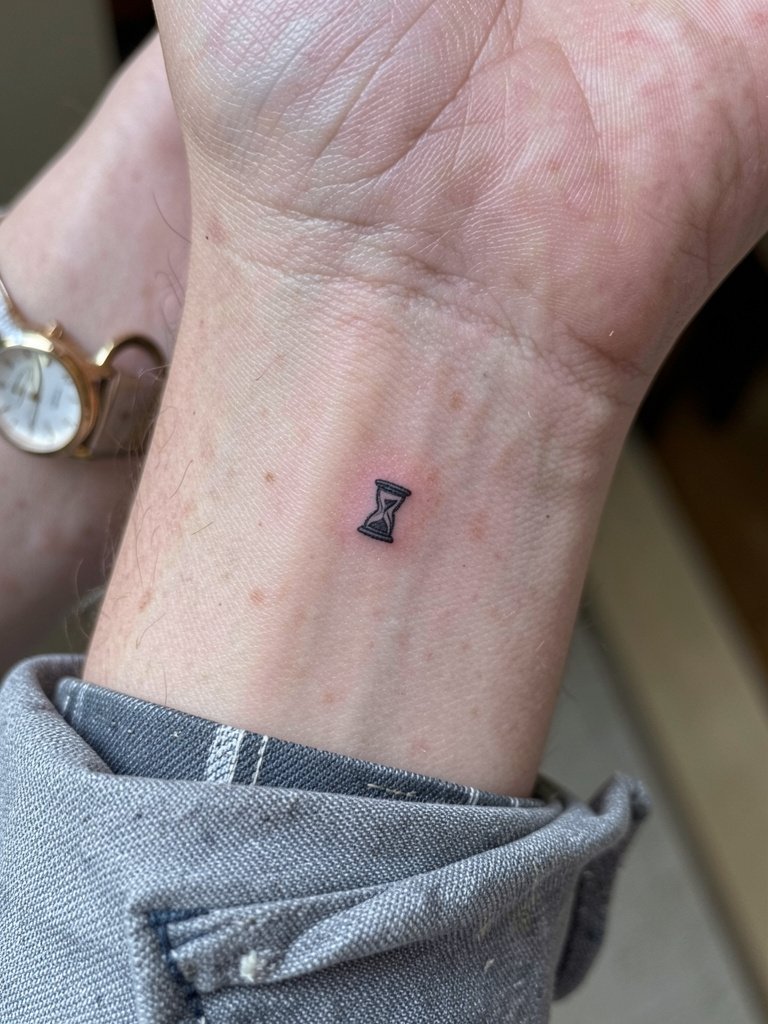
Micro wrist hourglasses look graceful when sized correctly but suffer friction from washing and bracelets. The usual error is squeezing interior detail into a 1.5 inch piece. If you are set on a micro, ask for a slightly bolder outline and very minimal interior detail so it still reads at six months. Expect lower pain than a ribcage but higher than outer forearm. For showing it off, a thin watch or stacking bracelets on the opposite wrist provides contrast, try dainty gold stacked bracelets.
8. Negative-Space Sand Hourglass, Inner Forearm
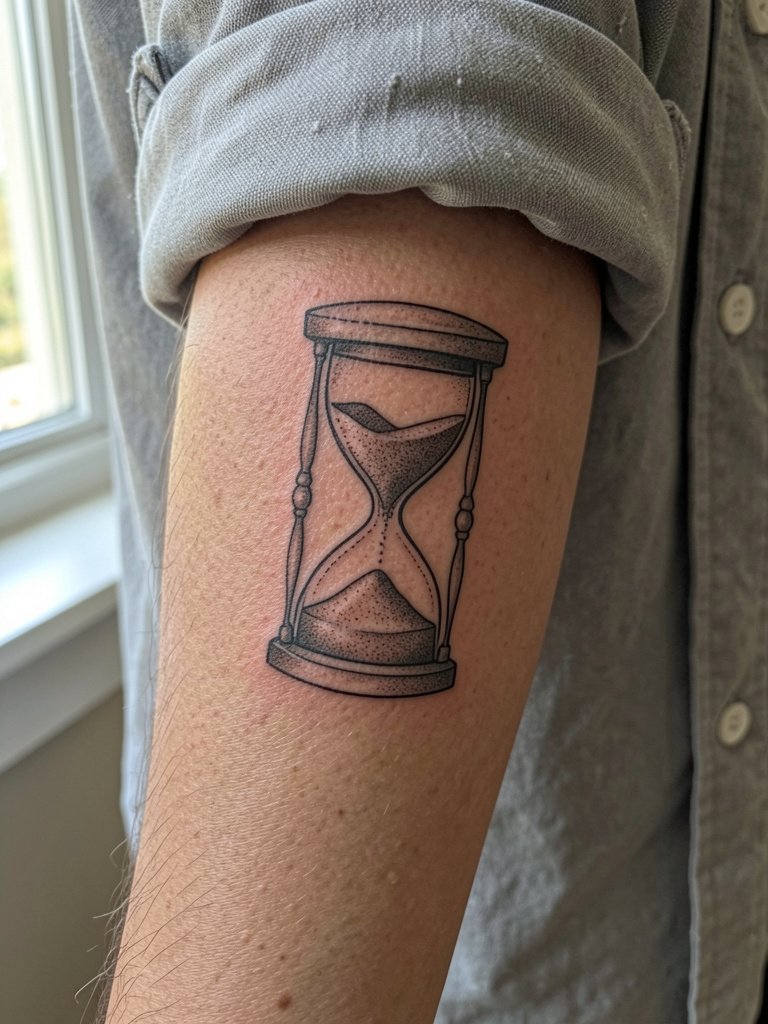
Negative space can create an elegant sand read without tiny interior fills. The key is leaving more white skin between linework and negative sand cutouts than you think you need. A common aging problem is too-close lines that merge into the cutout. When you meet the artist, specify the exact gap you want between sand shape and glass outline so the piece remains distinct. For session comfort, wear a button-down top that can be opened or rolled to reach the forearm easily.
9. Time-Drip Detail, Outer Forearm Accent
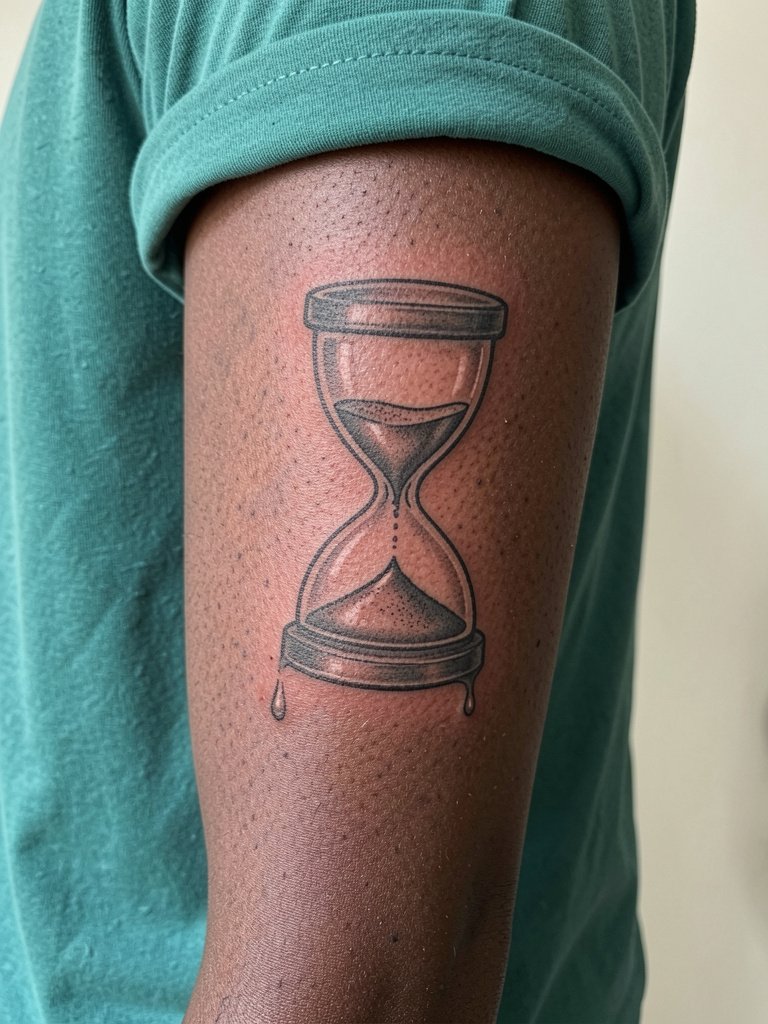
The time-drip gives a small narrative twist without changing overall scale. The typical mistake is drawing the drip so fine it looks like a freckle after healing. Ask for a slightly larger drip and a short tail of stipple shading so the effect survives a few years. This look pairs with casual tees and denim, so a solid black t-shirt is an easy staging piece for photos.
10. Geometric Hourglass, Linework Focus
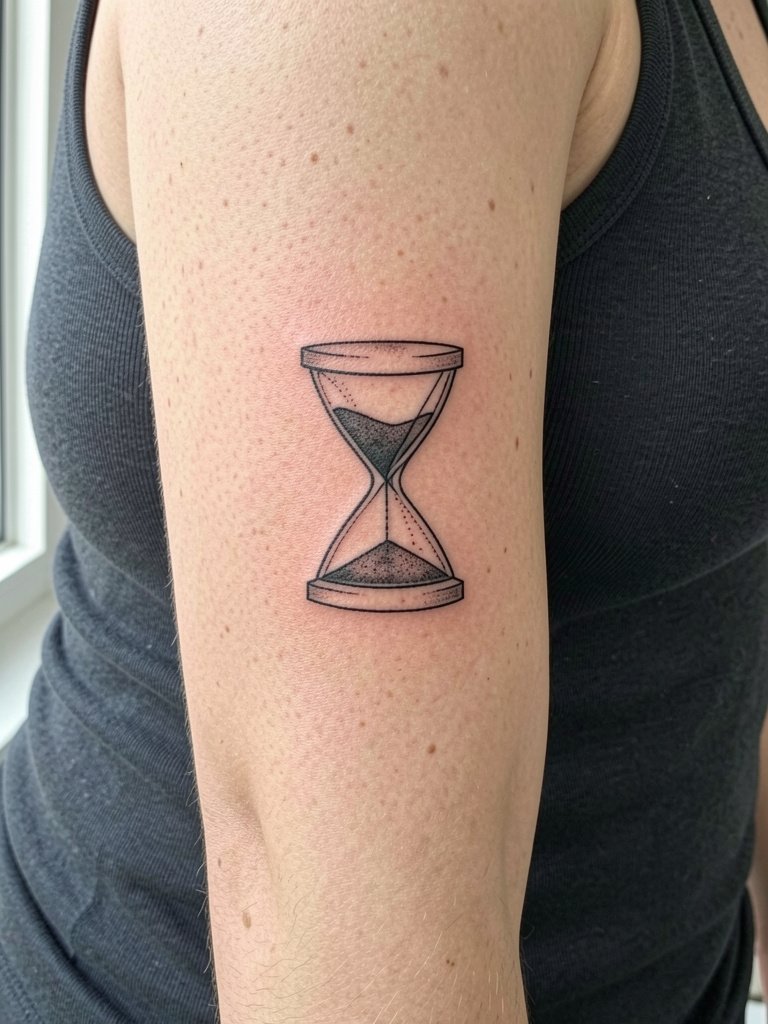
Geometric compositions rely on spacing so each facet stays crisp. The usual error is scaling the shapes too small for the forearm band. Tell the artist you want clear negative space between intersecting triangles, not hairline convergence. The blowout risk on the forearm is lower than on extremities, but still aim for slightly bolder linework. This design reads well with sleeveless tops and a sleeveless tank if you want to highlight the angular layout.
11. Half-Hourglass at the Elbow Fold, Outer-Inner Transition
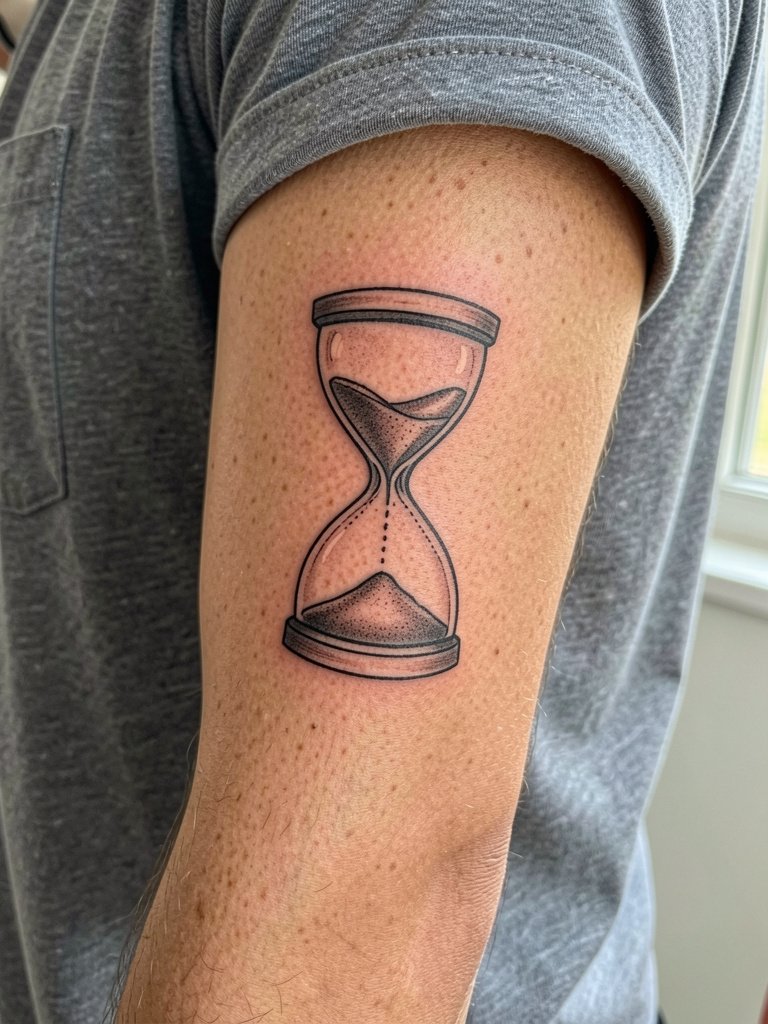
Using the elbow fold as composition can make the piece feel integrated with your natural movement. The practical mistake is crossing too far into the joint; the skin there stretches and can blur fine interiors. Request the linework stop clear of the crease and that shading be shallow. This placement feels slightly more painful than a straight forearm piece because of movement. For the appointment wear a short sleeve tee so the artist can move your arm naturally.
12. Dot-Work Stipple Hourglass, Inner Forearm Band
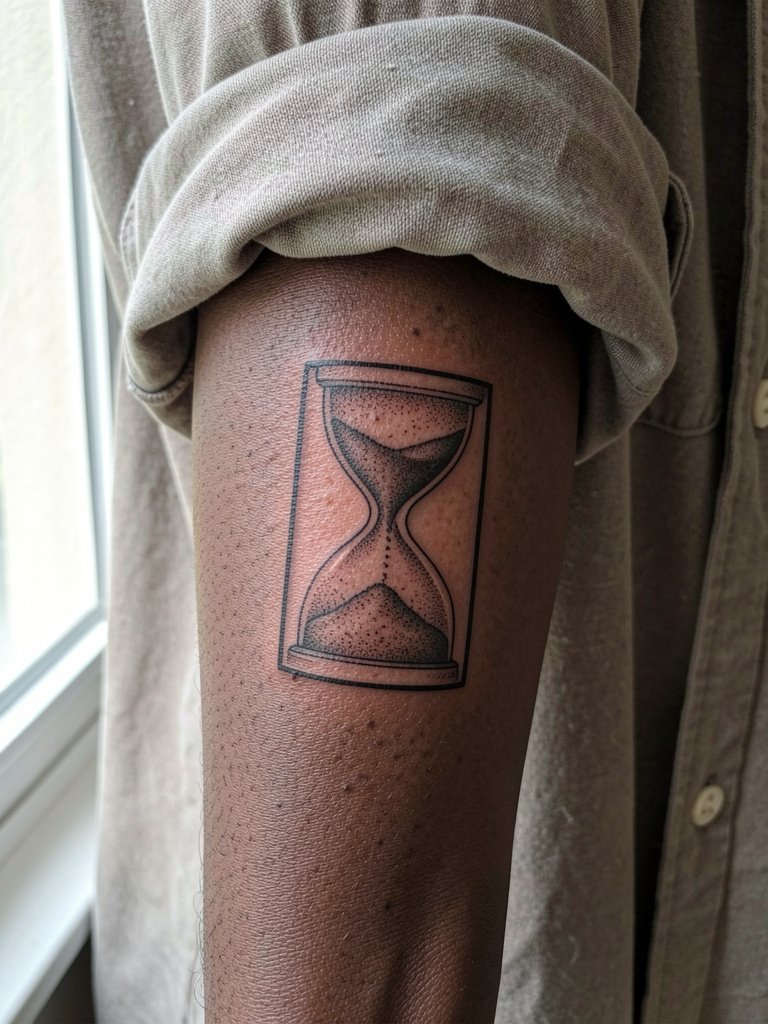
Stipple achieves soft shading without heavy saturation, but it relies on consistent dot density. A common mistake is asking for micro stippling too small for the forearm, which can look patchy as it heals. Ask for mid-scale stipple so the gradient holds at one and two years. Sessions can be longer because stipple is slow work. This pairs with simple neutral shirts, and a button-down top lets you roll the sleeve up cleanly.
13. Mirrored Hourglasses, Both Forearms
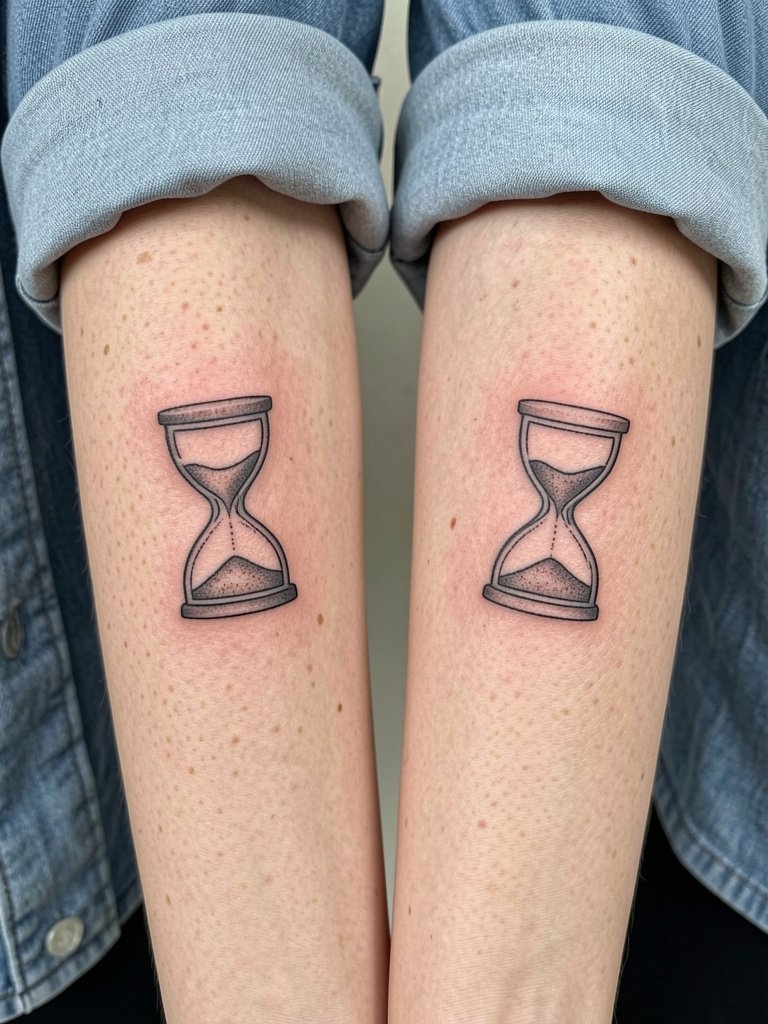
Mirrored pairs let collectors play with small narrative differences, like sand drained on one arm and full on the other. The decision point is whether you want identical thickness or slight asymmetry. A frequent mistake is mismatched scale between arms because some artists freehand without measurement. Bring a stencil or digital mock-up that spans both forearms so the artist can match proportion. For a coordinated outfit try swapping sleeves and wear a rolled cuff shirt to show both at once.
14. Hourglass with Compass, Nautical Forearm
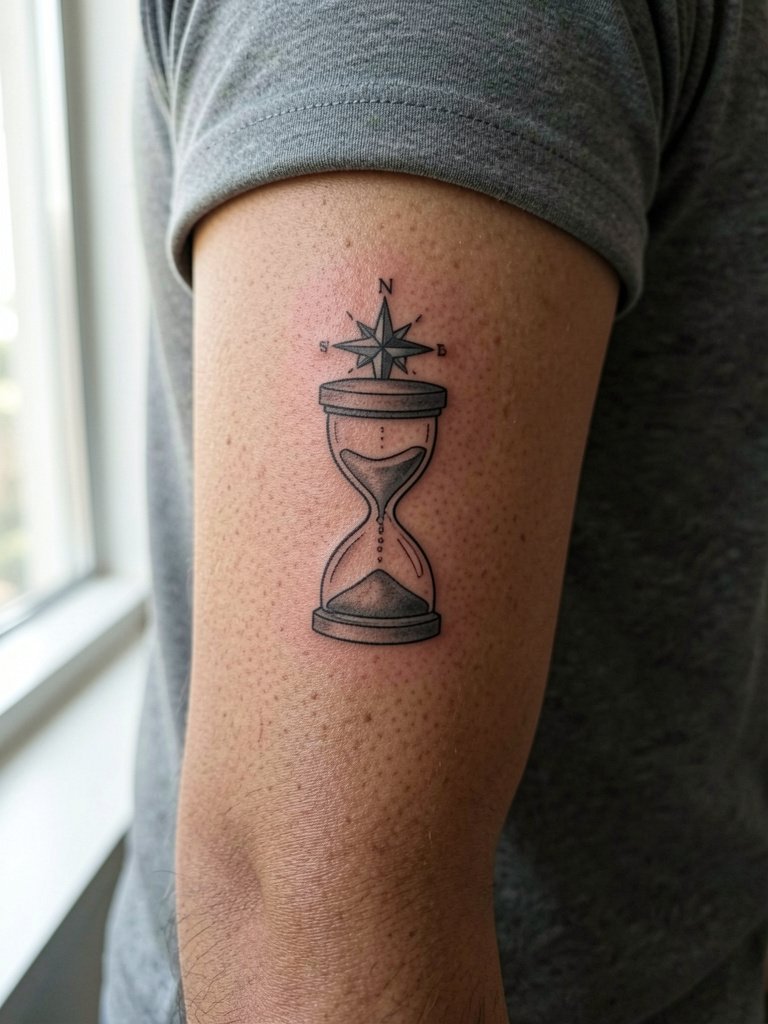
Adding a compass gives directional meaning without overwhelming the hourglass. The common mistake is shrinking compass points so small they blur together, which defeats the balance. Ask for enlarged cardinal markers and crisp north indicator so the motif stays legible after a few years. This piece works well with casual sleeves rolled up and a solid black t-shirt or layered denim.
15. Sand-Spill Band, Wraparound Forearm
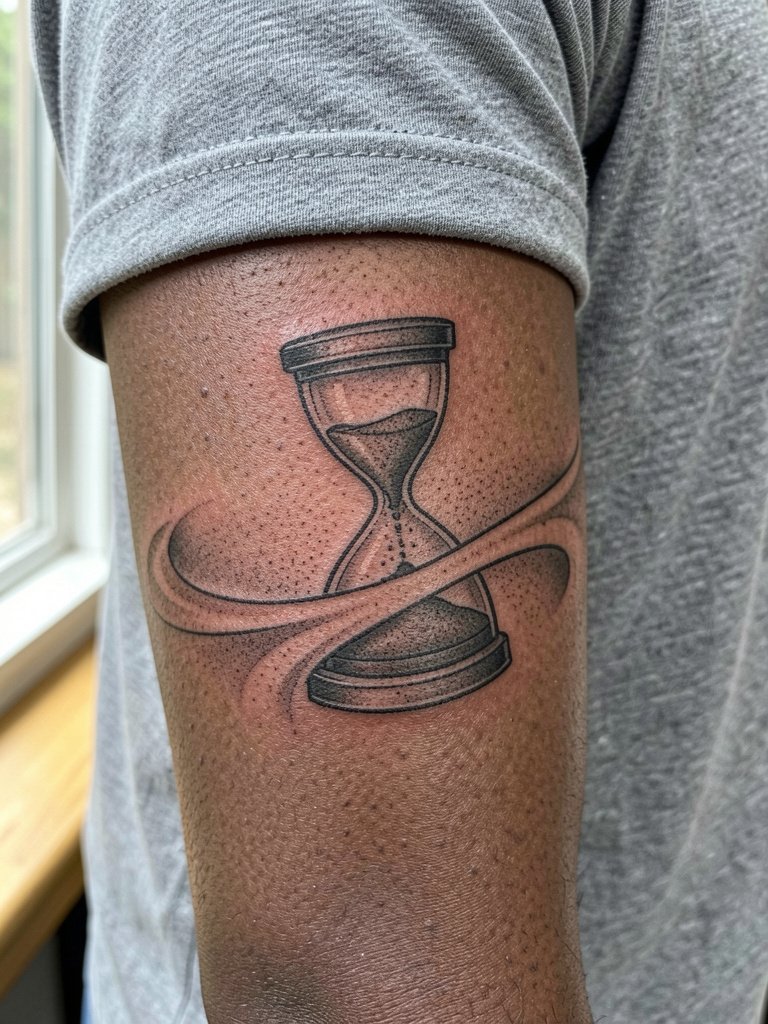
A wraparound sand band creates movement and lets the hourglass interact with the arm's circumference. You must discuss exactly where the band meets on the underside because seams can distort as the arm rotates. A common error is leaving the joining point too close to the wrist where movement blurs lines. For session comfort wear a short sleeve tee that allows the artist to rotate your arm easily.
16. Crystal-Framed Hourglass, Subtle Gem Accents
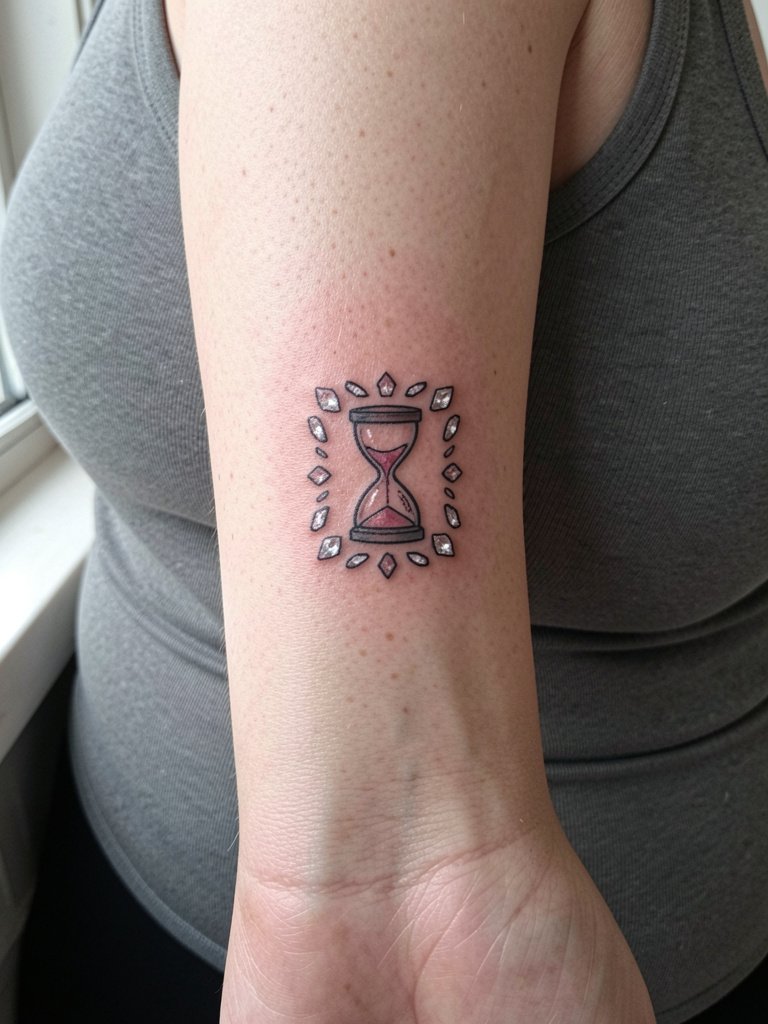
Gem accents give a refined edge without heavy color. The usual mistake is tiny white highlights that vanish when photographed. Ask the artist to show healed examples of white highlights on similar skin tone so you know the result. Session length is moderate because of small detail work. Pair with a dainty chain necklace if the piece is higher on the forearm.
17. Bold Blackwork Hourglass, Outer Forearm Statement
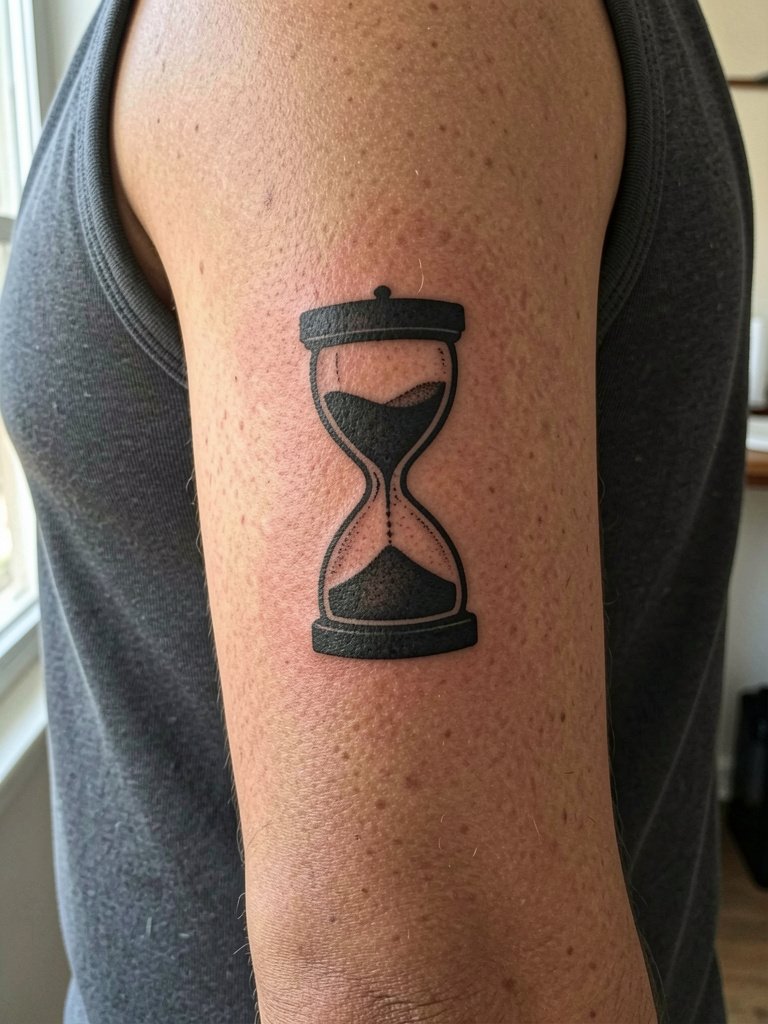
If you want something that ages with less maintenance, bold blackwork is a strong choice because saturation resists softening. The debate about color versus black-only matters here. One camp favors full color saturation for the classic flash look and visual impact. Another camp prefers black-only first tattoos to lower aging stakes so touch-ups are less frequent. State your priorities clearly in consultation so the artist sizes and saturates accordingly. For a night out, sleeveless tanks like a sleeveless tank show off the saturated silhouette.
18. Hourglass with Skeletal Hands, Dramatic Forearm Panel
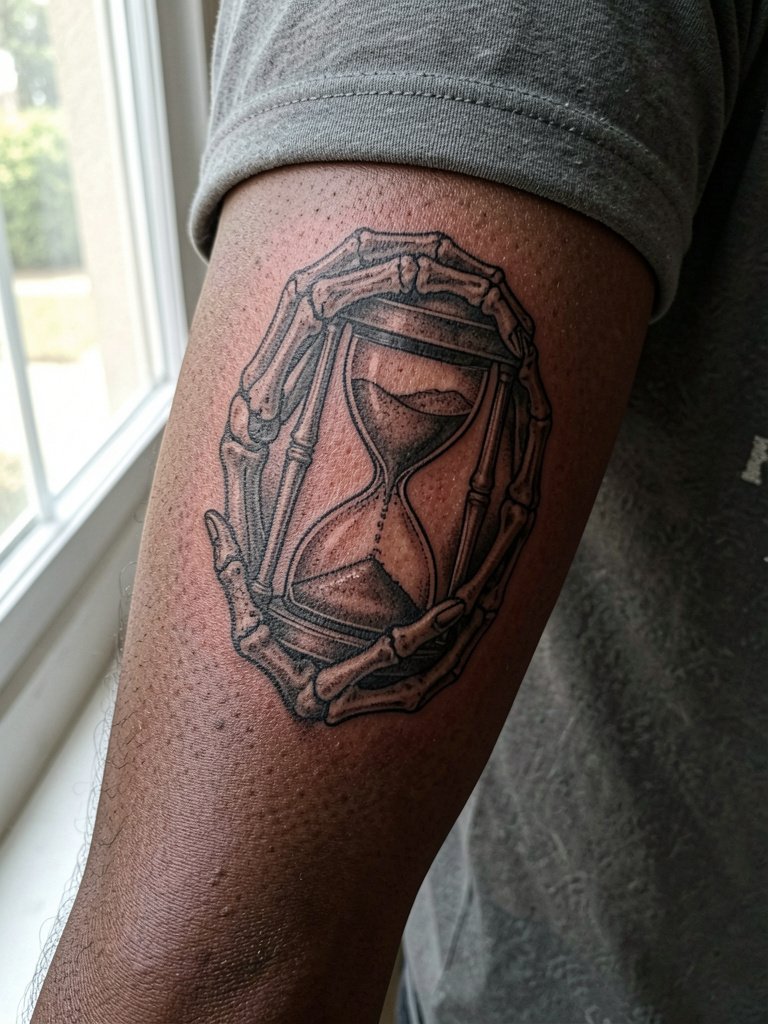
Skeletal hands amplify the Memento Mori aspect and give the hourglass a supporting frame. Avoid tiny finger bones and instead ask for a simplified hand silhouette so lines do not merge with the hourglass edges. The session can feel longer because of fine shading. This piece pairs with layered silver rings or a chunky accessory on the opposite hand, so consider chunky silver rings to complete the mood.
19. Roman Numeral Timepiece, Inner Forearm Detail
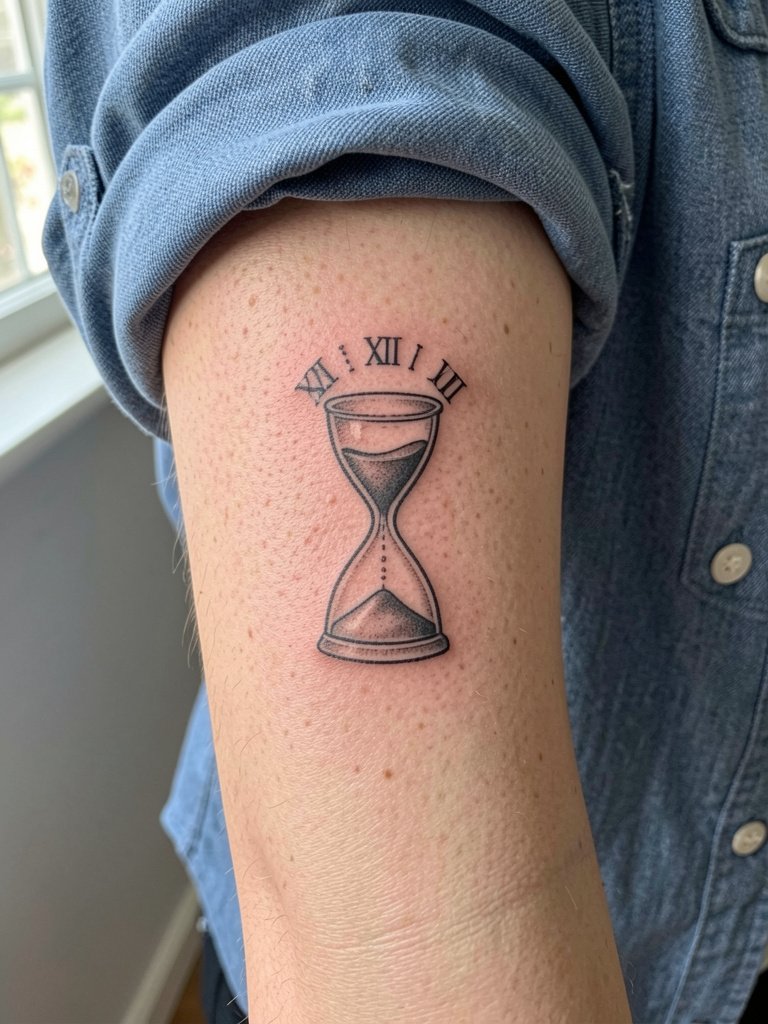
Adding Roman numerals lets you anchor the piece to a specific date or hour without heavy imagery. The common error is choosing tiny numerals that blur. Specify numeral size and font so the artist can adapt the hourglass scale. This reads well with cuffed sleeves and a button-down shirt that reveals the inner forearm.
20. Fragmented Glass Hourglass, Shattered Composition
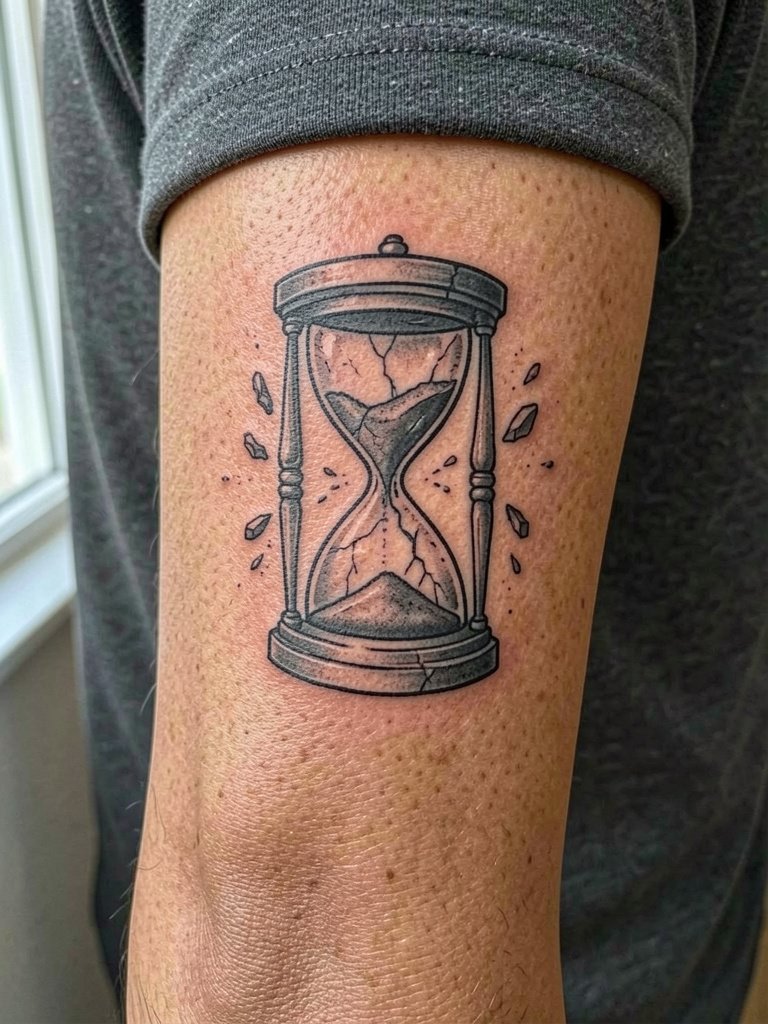
Shattered glass gives an edge, but tiny crack lines can soften into a blur. Ask for a controlled number of larger fractures and a few bold shards to preserve the effect. If you are prone to weight fluctuation, note that changes in forearm volume can alter perceived spacing. For styling, a vintage denim jacket or short sleeve will frame the shards cleanly.
21. Thick-Line Hourglass for Darker Skin Tones, Inner Forearm
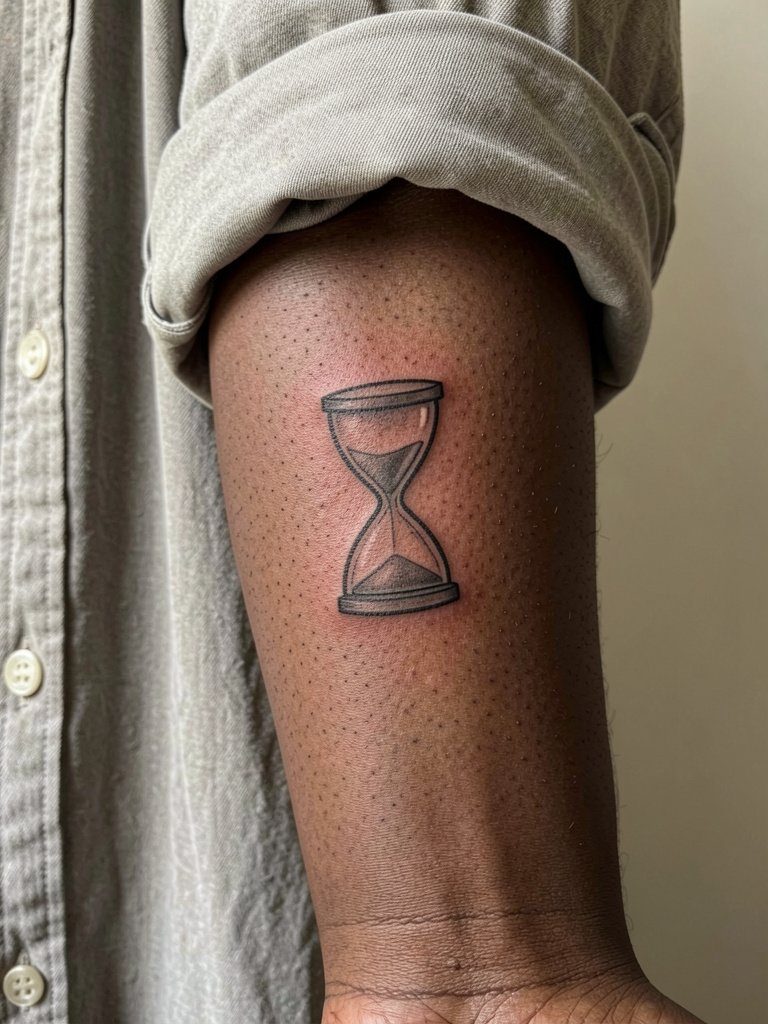
On darker skin, ultra-fine single-needle lines sometimes disappear in photographs. One camp of artists pushes fine line for its aesthetic and reports good long-term results on stable skin. Another camp recommends slightly thicker lines or subtle grey fills to boost contrast so the piece reads clearly in photos and at arm's length. If you have darker skin, ask the artist for a tested thickness and for healed examples on similar tones. For the session wear a loose button-down shirt so your inner forearm is easy to reach and the artist can photograph stencils for reference.
Frequently Asked Questions
Q: How much does a small forearm hourglass usually cost?
A: Expect a range depending on studio minimums and style complexity. Very small fine-line pieces can fall near lower-price tiers at some shops while fully saturated or larger neo-traditional pieces cost more. Think in ranges rather than exact numbers when budgeting and plan for a possible touch-up in seven to ten years for fine-line work.
Q: Which forearm side holds fine line better, inner or outer?
A: Inner forearm is generally more stable because it sees less abrasion from clothing. The outer forearm handles color and bold outlines better. If longevity is your top concern, the inner forearm with slightly bolder single-needle linework often gives the best trade-off between subtlety and staying power.
Q: Where can I find healed examples and local artists without naming anyone?
A: Search platform hashtags like #hourglassītattoo and #finelinetattoo and filter by your city on Instagram and TikTok. Use directories that let you search by keyword, and check Reddit threads for peer-shared healed photos from different skin tones. Tattoodo and local app directories also let you narrow by specialty and view portfolios.
Q: I want a colorful hourglass but worry about fading. What actually happens?
A: Color adds visual impact but raises the chance of earlier fading in sunny, exposed areas. One group favors saturated traditional palettes for their flash energy and argues the look is worth periodic refreshes. Another group recommends black-only for first tattoos to minimize touch-ups. If you pick color, ask the artist about pigment density and placement to reduce early color migration.
Q: How painful is a forearm hourglass compared with ribs or the hand?
A: Most people find forearm sessions moderate and tolerable. Ribs and sternum rank higher on pain charts while fingers and hands can be sharp and sensitive. If pain is a concern, start with an inner forearm piece to build tolerance and discuss short breaks during the session.
Q: Any special prep for appointment day?
A: Wear clothing that gives clean access to the chosen forearm side, like a short sleeve tee or a button-down you can roll. Avoid tight cuffs that press on the area. Bring a light snack and hydration for sessions over an hour. A visible outfit choice for after the session is a small practical detail, not a requirement.
Q: Do forearm hourglasses work if I gain or lose weight?
A: Forearms are relatively stable compared with the torso and thighs. Small to moderate weight changes have minimal effect on vertical forearm compositions. If you expect large body changes, discuss placement higher on the arm where skin stretches less.
