
The hourglass looks simple at first glance, but the way it is inked and where it sits decides if that tiny pile of sand reads as detail or as a smeared blob two years from now. Men who keep hourglasses that age well usually lean on heavier linework, higher-contrast shading, and placement that avoids stretchy creases. Below you will find 15 hourglass takes that balance symbolism with real-world aging, placement trade-offs, and wardrobe tips that actually help the design read long term.
1. Bold Black Skull & Hourglass, Inner Upper Arm
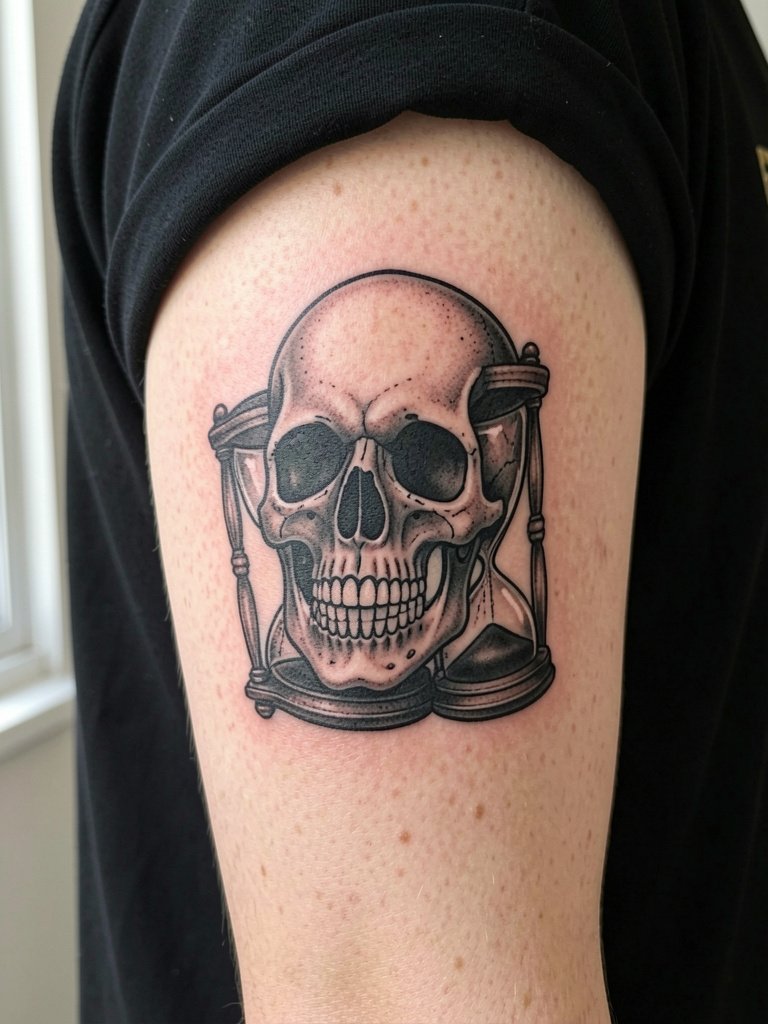
If you want a dark, masculine read, this is the version to choose. The heavy blackwork preserves contrast on medium to darker skin tones and helps skull details stay legible as the piece heals and settles. Plan for a single to two session build depending on size. During your consultation bring a reference that shows the exact highlight placement on the glass so the artist can map negative space rather than rely on fine white lines that ghost. Common mistake is asking for tiny eye socket detail and expecting it to hold up on inner-arm texture. For showing this off, wear a black short sleeve tee so the dark palette frames the piece and keeps focus on the silhouette.
2. Hourglass with Flowing Roses, Lateral Hip
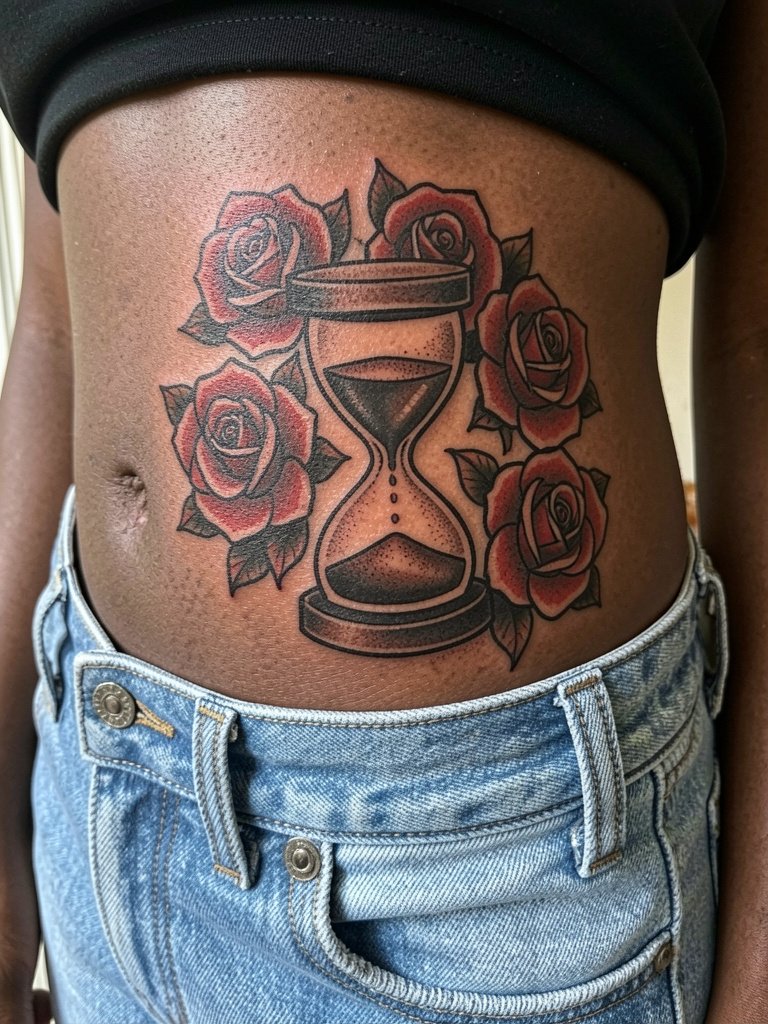
Roses soften the hourglass motif while the neo-traditional outlines keep it masculine. On the hip you get a canvas that does not stretch as aggressively as the ribs, so bold petals and saturated reds photograph well. Tell the artist you want the sand flow to read as shadowed negative space rather than tiny stipple grains, especially on darker skin. Wear low-rise linen or fitted low-waist trousers for sessions so the artist can access the lateral hip without a tight waistband. To frame it in real life try low-rise linen pants in sand tones, or layer a thin gold belt chain for editorial evenings.
3. Hourglass with Wings, Inner Forearm
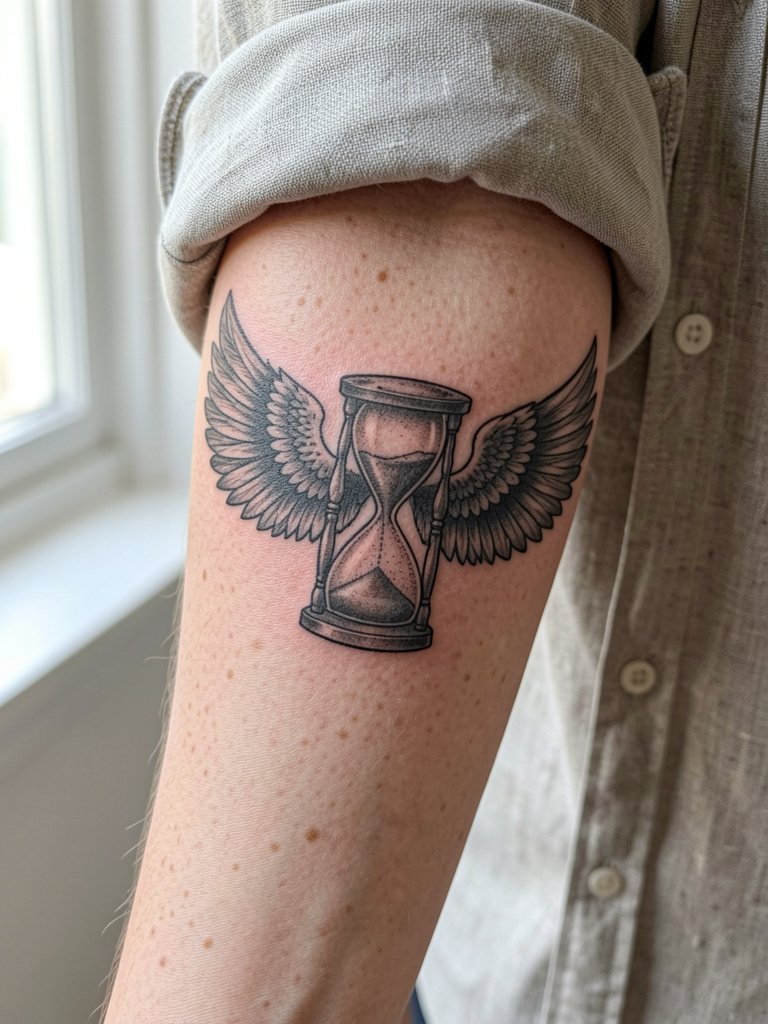
Wings turn the hourglass into a symbol of escape and motion. Inner forearm tissue is moderate in stretch and photographs well, so feather detail and mid-tone shading age better here than on ribs. Specify how far the wing tips should extend so the artist balances visual weight with vascular contours. A common mistake is packing too many tiny feather lines; ask for feather groupings with slightly wider spacing to avoid early blurring. For session wear roll up a linen button-down shirt so the artist has clear access and so the finished piece shows off with a casual rolled sleeve.
4. Minimalist Fine Line Hourglass, Inner Forearm
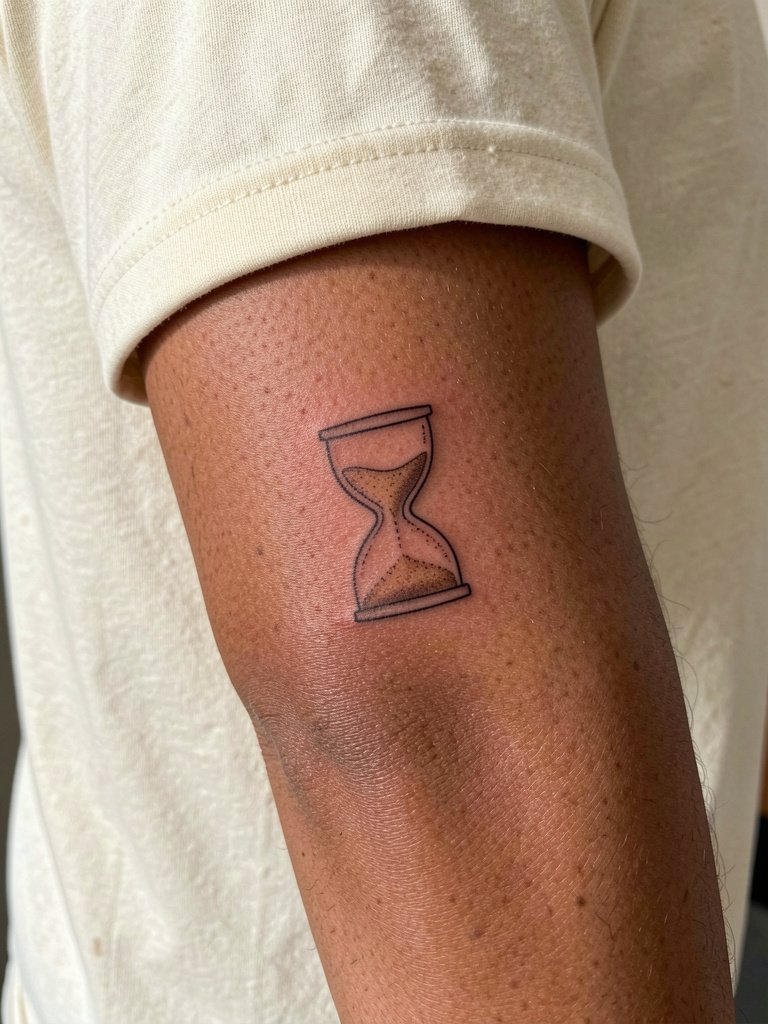
Fine line is tempting for a subtle hourglass but the community is split and you should know why. One camp says fine-line hourglasses on the forearm and ribs blur and fade within two years because the skin stretches and thin lines are eaten away. The other camp argues that with correct needle depth, slightly wider line spacing, and a responsible touch-up plan, single-needle pieces can hold for years and they point to healed examples. If you want minimalist work on the inner forearm, request the artist show healed photos of single-needle pieces that are at least three years old. A frequent mistake is insisting on one-millimeter line weights for all placements. Consider a hair thicker line weight and expect a touch-up at around the two-year mark to keep the sand crisp. For a low-profile look wear neutral rolled cuffs to reveal the piece without drawing attention.
5. Hourglass with Transforming Sand, Inner Thigh
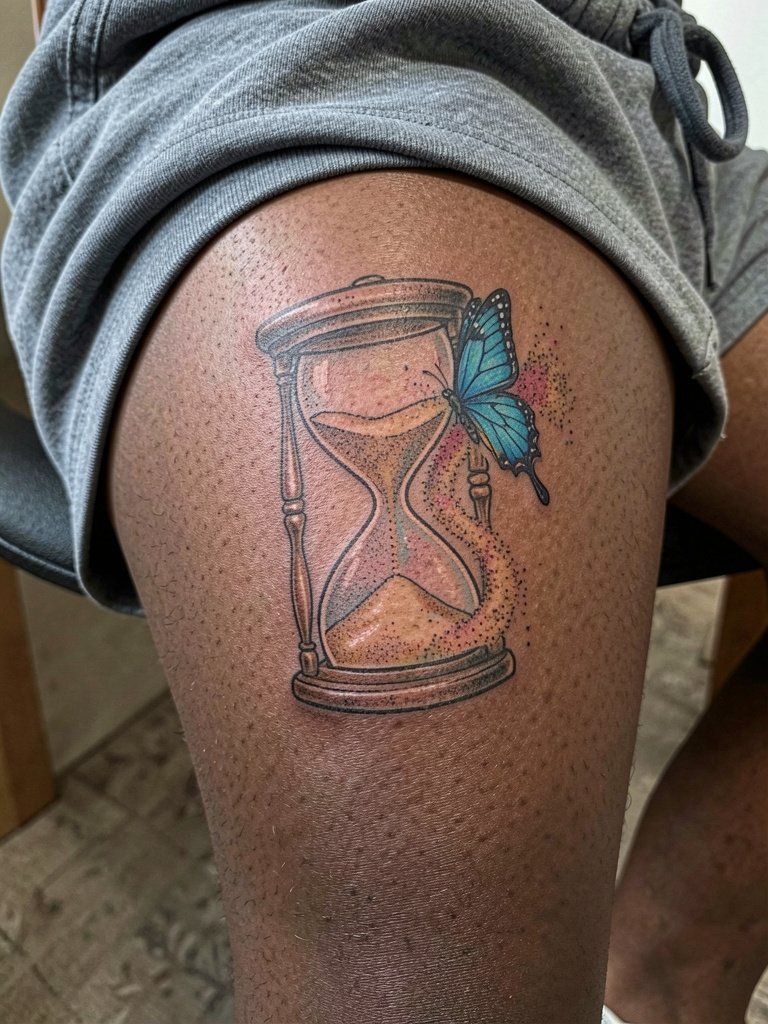
The inner thigh gives you a private canvas for narrative pieces that mix color and micro-detail. Because thigh skin is less prone to blowout than the ribs, you can include small color accents like a blue butterfly. Discuss color placement and saturation specifically, and ask the artist to map how the color will sit against your skin tone so the butterfly reads as color rather than a muted patch. Sessions here feel low on sharp pain but can be long, so plan for one to two sessions with breaks for circulation. For the appointment wear mid-thigh drawstring shorts so the artist can roll the hem up without tight pressure. To show the piece off later, mid-thigh shorts in neutral tones let the color pop.
6. Vintage Clock & Hourglass Combo, Upper Chest
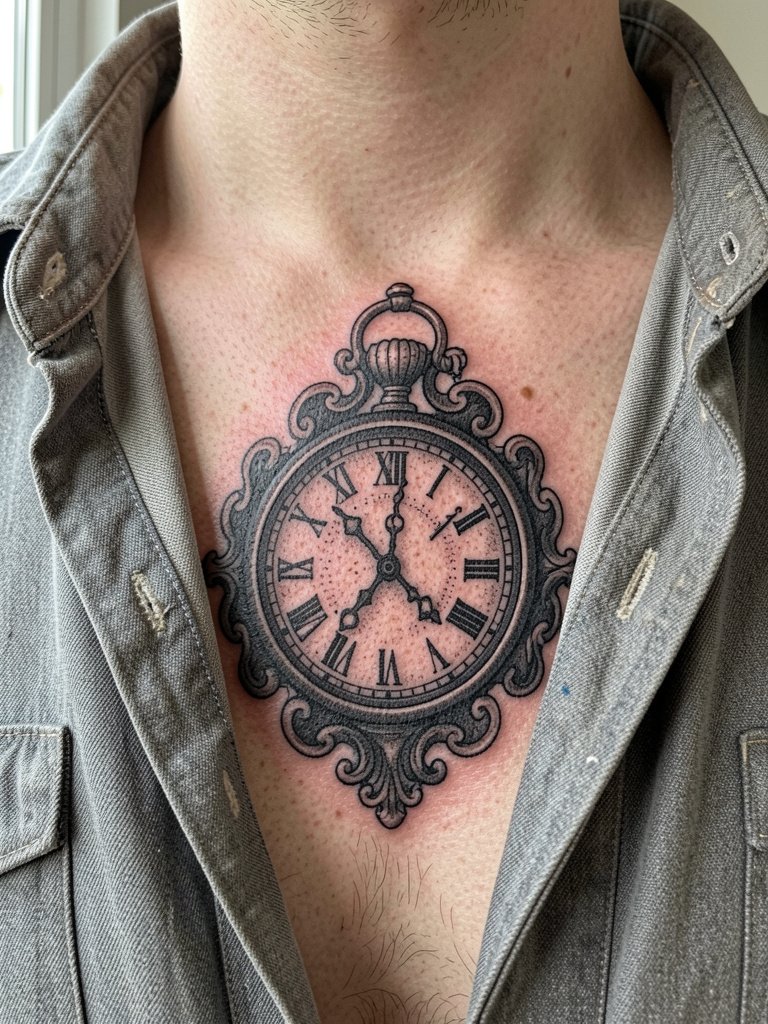
Combining clockwork with an hourglass doubles down on time imagery while giving the design an antique feel that reads sharply with bold linework. The upper chest handles heavier shading well, but the collarbone line demands careful composition so the piece does not distort when you move. Tell the artist the exact spacing you want between the clock face and the clavicle so they can test stencils in a shirt. Expect a one to two hour session for medium sizes and plan for a modest touch-up window at six to twelve months for saturation. For showing the chest piece, an open-collar button-down in cream or white reveals the work cleanly, and a silver pendant necklace can add subtle framing without competing.
Session Day Picks
The pieces above include wrist, hip, forearm, and chest placements that heal differently. A few targeted items make the chair day and first week easier for both you and the artist.
- Japanese Aftercare Oil Tattoo Tea. A light, non-greasy oil that works well on fine-line accents and avoids the heavy residue that can mute thin detail during healing.
- Australian Tattoo Ink Balm Tea Tree Formula. Mentioned by collectors for itch relief without clogging tiny needle channels, which helps preserve stipple shading.
- Heal Mate Spray. A water-based mist useful in the first three days for pieces in friction zones like the hip or inner thigh.
- Saniderm Second Skin. A mainstream thin film that reduces scabbing and protects fresh linework, handy for fine detail on forearms.
- UK 'Tattoo Ink' Balm, Indie Formula. A wax-based finish some people prefer during the final two weeks of healing to control itch without oversaturating.
7. Hourglass with a Dripping Candle, Ribcage
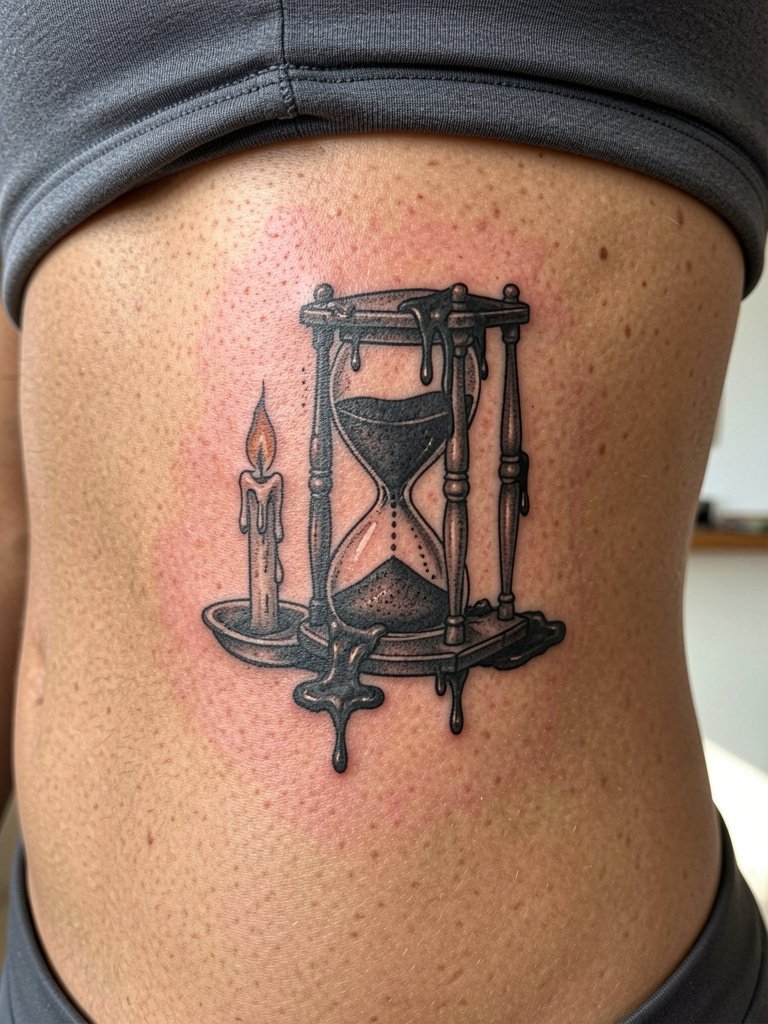
Ribcage work sells drama but pain and skin movement are real factors. The ribs stretch during breathing which makes ultra-thin sand texture risky. If you want candles and heavy black, ask the artist for slightly heavier linework and layered black saturation to prevent early fading. Artists are divided on numbing cream; some say it masks skin reaction and risks poor saturation while others use it for client comfort on long rib sessions. If you plan to use numbing, specify timing and product so the artist can adapt technique. Expect this session to feel sharp at first and settle into an ache with each break. For showing the piece off, low-rise black tanks draw the eye to the side torso and keep the aesthetic dark and minimal. Consider a thin silver chain for contrast.
8. Geometric Ornamental Hourglass, Inner Upper Arm
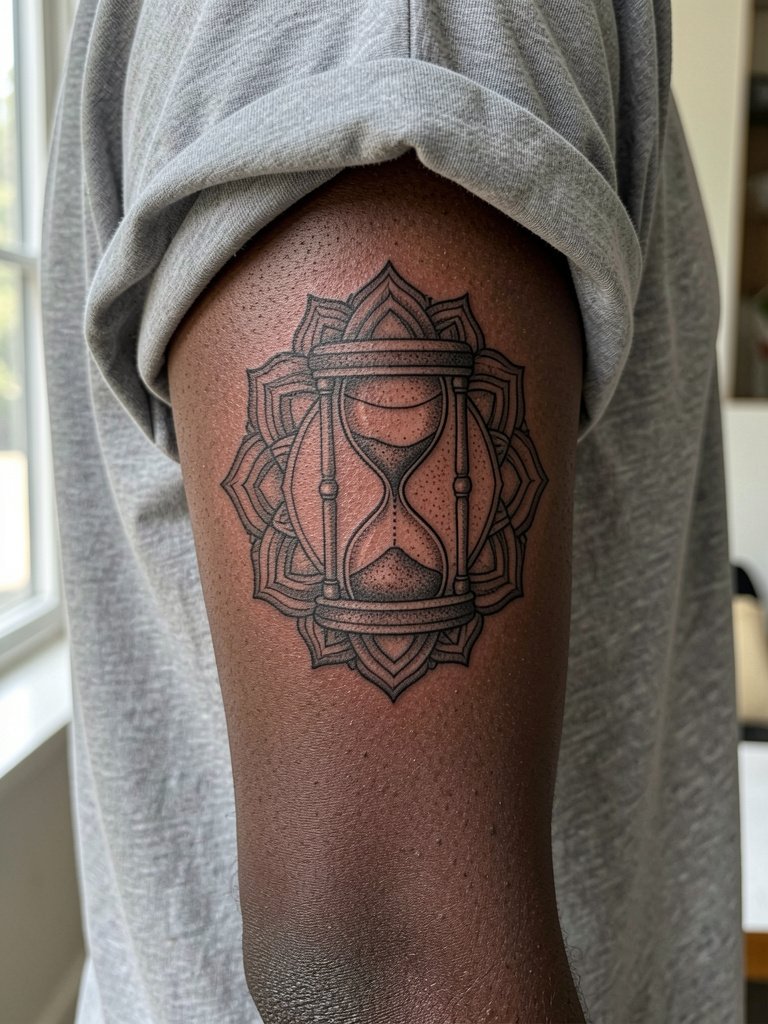
Sacred geometry frames the hourglass and gives it spiritual structure while keeping the tone less morbid. The symmetry requires room to breathe so avoid tiny scale. A common mistake is compressing mandala petals to fit a small space which leads to line merging after healing. Ask to see a stencil applied at the full size so you can evaluate spacing. Inner upper arm is less stretchy than the inner forearm which helps concentric patterns remain crisp. For session comfort wear a loose short-sleeve or button-down so the artist can roll the sleeve and have unobstructed access.
9. Hourglass with "Time Flies" Script, Inner Forearm
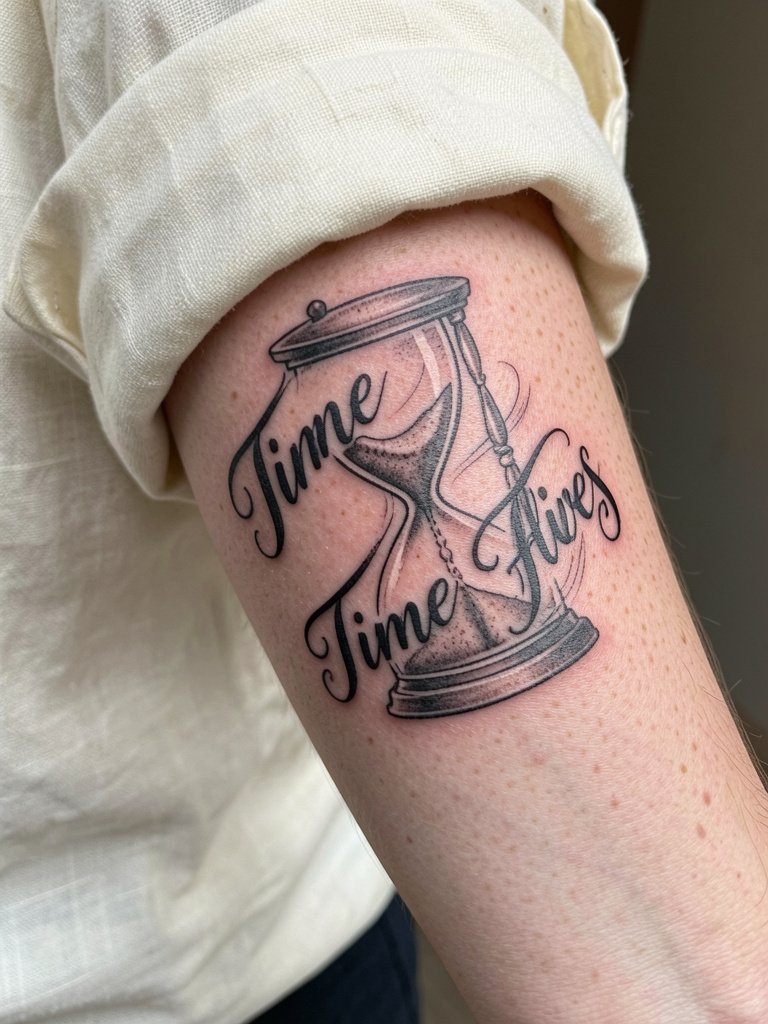
Text plus symbol works when the lettering and image scale correctly. For forearm script ask the artist to stencil the phrase in two sizes so you can pick how bold the brush strokes should be. The mistake I see most often is choosing an intricate script that looks gorgeous fresh but blurs into a dark curve after a year. For longer life pick a slightly thicker brush stroke and plan a touch-up window around 18 to 24 months. For show-off outfits try rolled-up linen shirts in cream or olive which keep the arm visible without overpowering the ink. Consider a dainty stacked bracelet on the opposite wrist to balance the visual weight.
10. Realistic Sand Texture Hourglass, Sternum
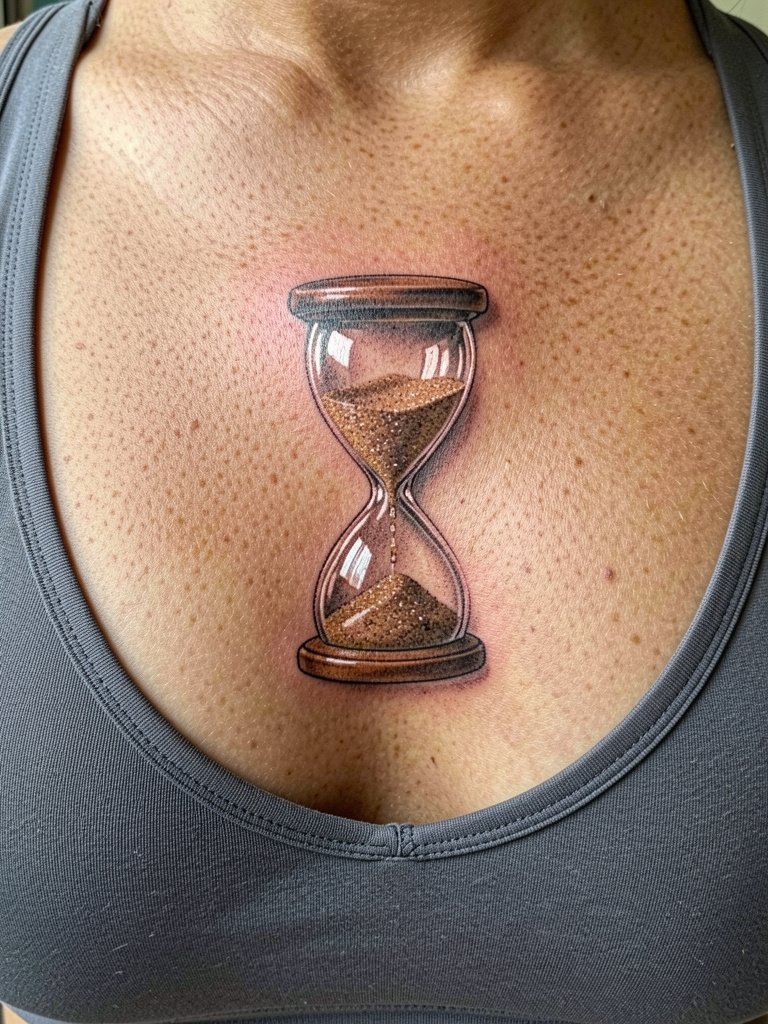
Micro-realism on the sternum can be stunning if done at a larger scale. The area tolerates high contrast and the flat plane accentuates the 3D glass look. Discuss exact highlight placement for glass reflection so the artist can plan negative space and white ink sparingly. Expect this to be a longer session with careful breaks due to central chest sensitivity. A professional sternum specialist who shows healed photos of multi-year work is the right route. For dressing, open-collar shirts reveal sternum pieces without pressure; try an open-collar button-down in cream or white and layer a layered silver chain for evenings.
11. Hourglass with a Broken Base, Lower Back
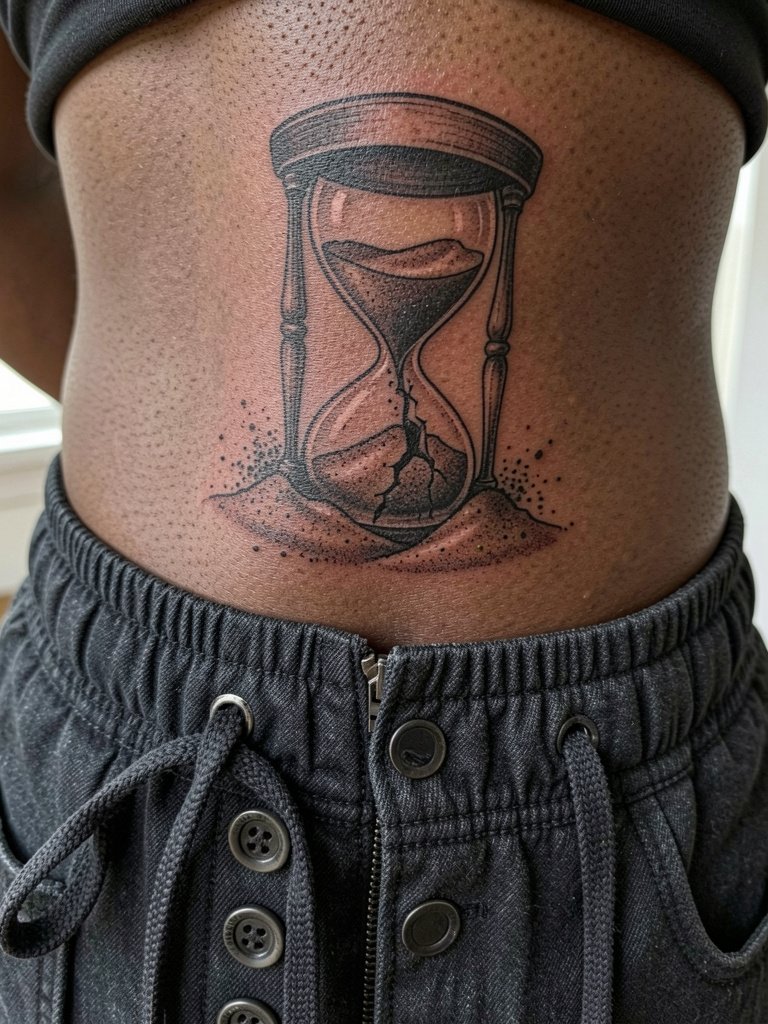
The lower back gives a horizontal canvas that suits spilled-sand drama. Because this area can be subject to waistband friction, plan placement slightly above the waistband and tell the artist to avoid micro-detail right at the hip crease. Sessions are moderate pain but watch for rubbing during healing. A common mistake is placing the crack too low so daily waistlines abrade fresh ink. Wear loose drawstring pants for the appointment and choose low-rise styles for displaying the tattoo later so the lower back remains unobstructed.
12. Hourglass with a Phoenix, Outer Upper Thigh
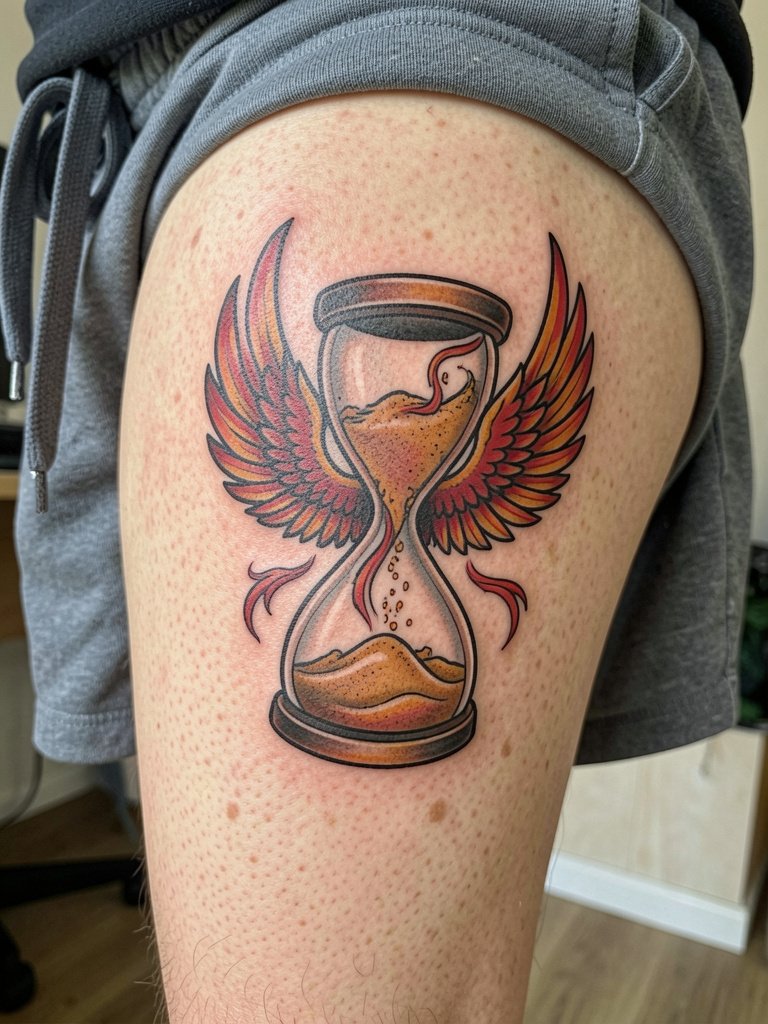
Rebirth themes pair naturally with thigh canvases. The outer thigh allows larger color fields that age slower than thin watercolor splashes in high-friction areas. If you want vivid phoenix hues, ask the artist for saturation tests on similar skin tones and for a staged color pass rather than a single rapid fill. The session can be long but manageable with breaks. Show this off with mid-thigh drawstring shorts or tailored swim trunks in neutral tones so the red and orange pop against a muted background.
13. Watercolor Hourglass Accent, Inner Forearm
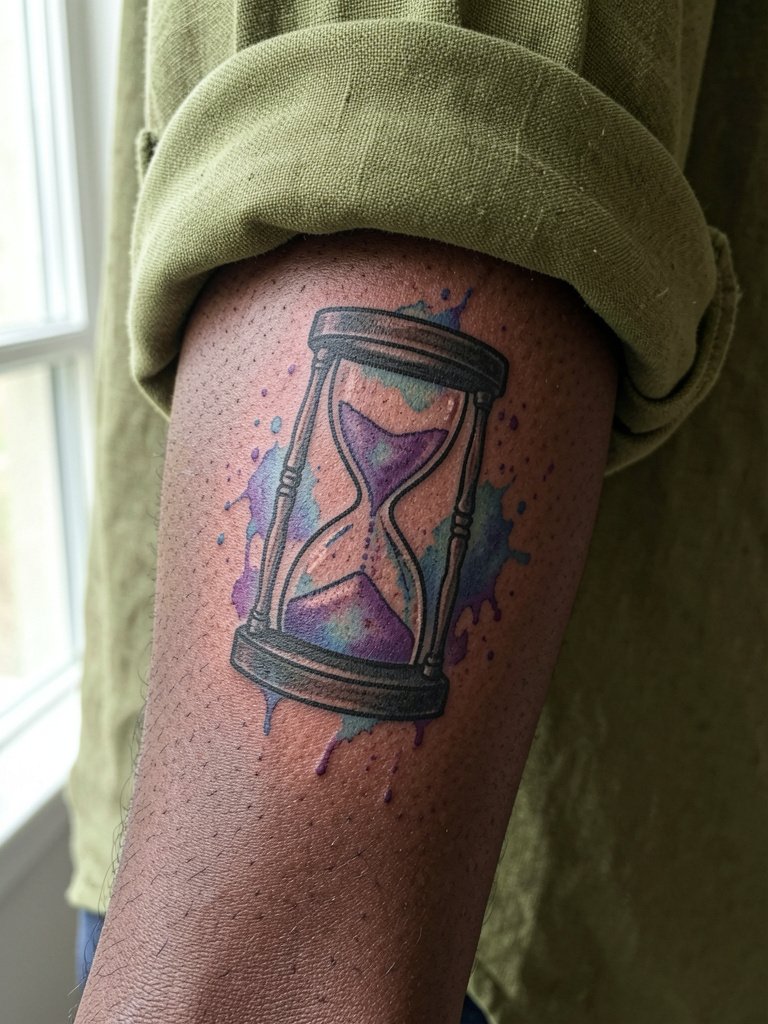
Watercolor accents look fresh but there is a real longevity argument to weigh. One camp says watercolor fades and ghosts within a year because pigments disperse and do not saturate as densely as black and grey. The other camp says careful layering and stronger black outlines preserve the shape while the color softens into a desirable wash. If you want color, request a photographic portfolio from the artist that includes healed color at least two years old on a range of skin tones. For darker skin, favor high-contrast black outlines and richer pigments rather than thin washes. For session wear roll a linen shirt so the arm is exposed without tight cuffs.
14. Hourglass with an '&' Symbol, Mastoid Area
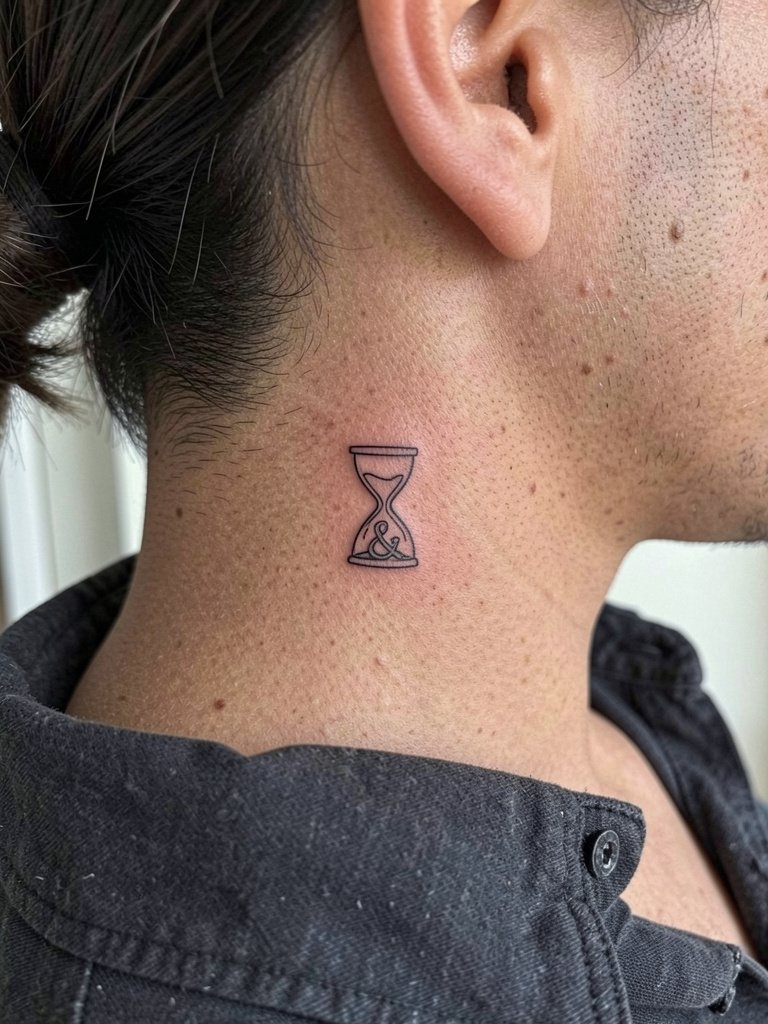
Tiny neck pieces are discreet and symbolic, but the mastoid skin moves with neck rotation so line clarity is essential. The usual mistake is requesting under-one-inch complexity that the skin cannot hold. Ask for a slightly bolder single-needle contour and expect a touch-up around the one to two year mark. Because this spot sits near hair, plan aftercare that keeps the area free from hair product during healing. An open-collar shirt reveals the nape without pressure and makes sessions easy for the artist.
15. Hourglass with a Skeleton Hand, Side Torso Ribcage
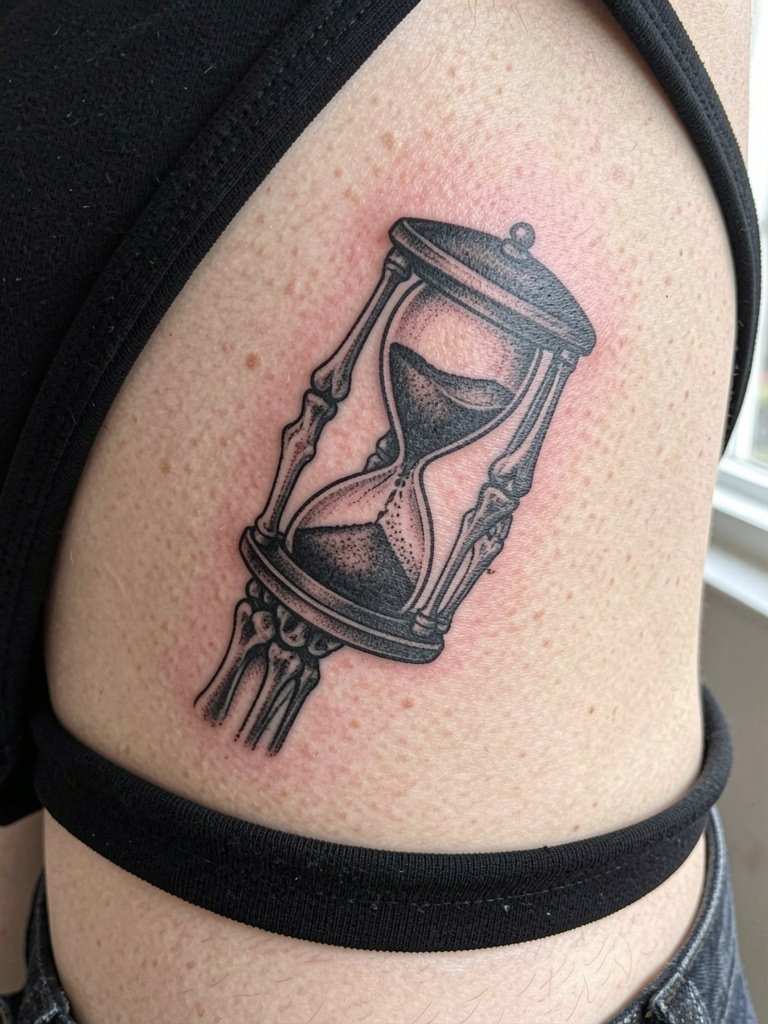
This design reads cinematic and gothic when done with confident blackwork. Rib placements here magnify the drama but also the pain. Plan your breaks and hydration for what can be a two to three hour sitting depending on size. A typical error is asking for ultra-fine bone texture on the ribs; larger bone planes with clear negative space maintain detail better. For the session wear a loose tank so the artist can access the side torso without tugging at fabric. For off-duty looks a low-rise black tank keeps attention on the blackwork while the silhouette remains minimal.
Frequently Asked Questions
Q: How much should I budget for a medium hourglass piece?
A: Expect shop minimums to push small symbols north of three hundred; medium neo-traditional or blackwork hourglasses often fall into a mid-range rate. Think in price bands and account for a possible touch-up session in the first one to two years rather than a single flat fee.
Q: Do fine-line hourglasses last on the ribcage or inner forearm?
A: Artists split into two camps. One camp says thin single-needle lines blur on stretchy zones within two years because of skin movement. The other camp says with slightly wider spacing, exact depth control, and a planned touch-up, fine-line can hold and look clean at three years. Practical route is to request healed three-year examples from your artist for the exact placement and similar skin tone.
Q: Where can I find portfolios and healed examples without naming artists directly?
A: Search hashtags like #hourglass tattoo, #menhourglass tattoo, and #darkhourglass on Instagram and TikTok while using location filters to find nearby shops. Tattoodo and the Inked App let you search by keywords such as "hourglass neo-traditional" and show portfolios. Reddit threads on r/tattoos and r/tattooadvice are useful for peer-shared healed photos across skin tones.
Q: How long before a color hourglass needs a touch-up compared with black and grey?
A: Color usually needs attention sooner, especially watercolor-style washes which can soften after a year. Rich saturated color in larger fills can last longer, so expect a possible touch-up between twelve and twenty-four months depending on sun exposure and care.
Q: What should I wear to my session for different placements?
A: Match clothing to the placement so the artist has clear access. Examples include a loose short-sleeve or button-down for upper arm work, low-rise drawstring shorts for thigh pieces, and an open-collar shirt for chest or sternum tattoos. For the hip and lower back wear pants fully zipped and buttoned in normal position so the artist can move fabric without creating pressure on fresh ink.
