
Fine-line guitar tattoos look gorgeous online but the trend-versus-reality split is real. Small single-needle pieces photograph crisp on day one and sometimes blur into a soft shadow by year two if the placement gets constant abrasion. If you want a tiny guitar that still reads after a few years, the trick is spacing, targeted line weight, and placement that avoids constant rubbing. Below are 15 small guitar ideas that balance style, healing, and how to show them off.
1. Single-Continuous Line Guitar
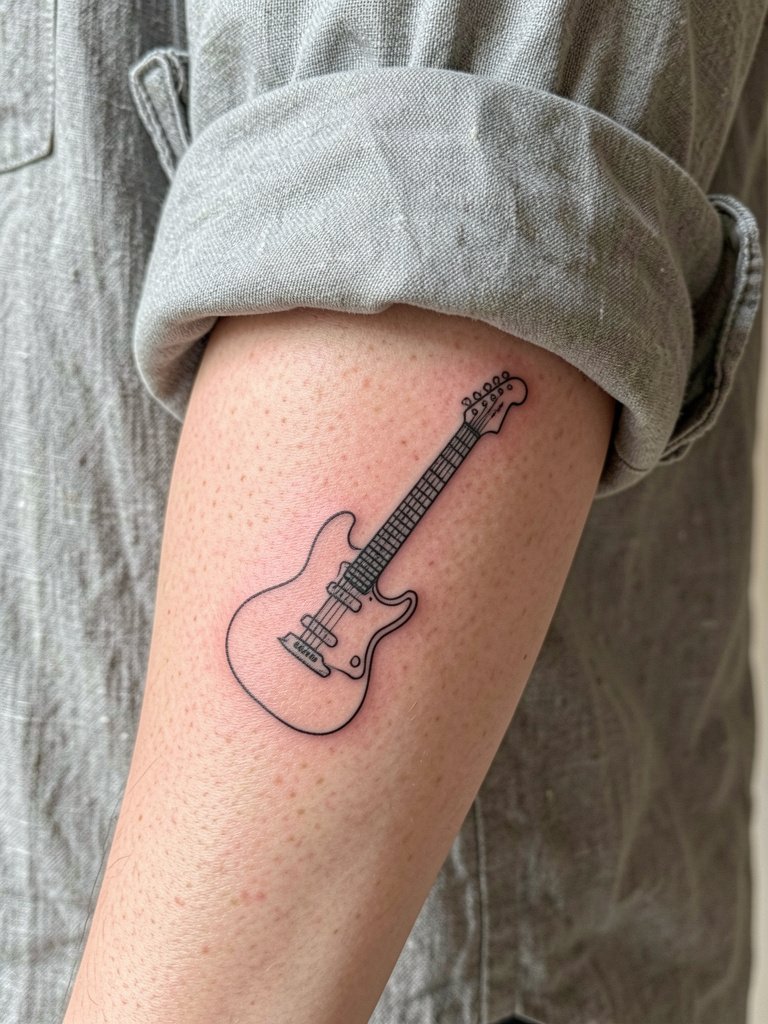
A continuous-line guitar reads as an elegant nod without shouting. I recommend this when you want a sleek forearm piece that reads well at under an inch, because the single path gives rhythm without clutter. For the consultation bring a scaled reference that shows exact line weight and ask the artist to increase the needle spacing slightly compared with ultra-fine needlework so the shape holds at year two. The inner forearm is a low-pain spot and most sessions take 15 to 30 minutes. For showing it off, roll a linen shirt cuff and pair with a linen button-down that sits above the tattoo.
2. Tiny Silhouette Guitar
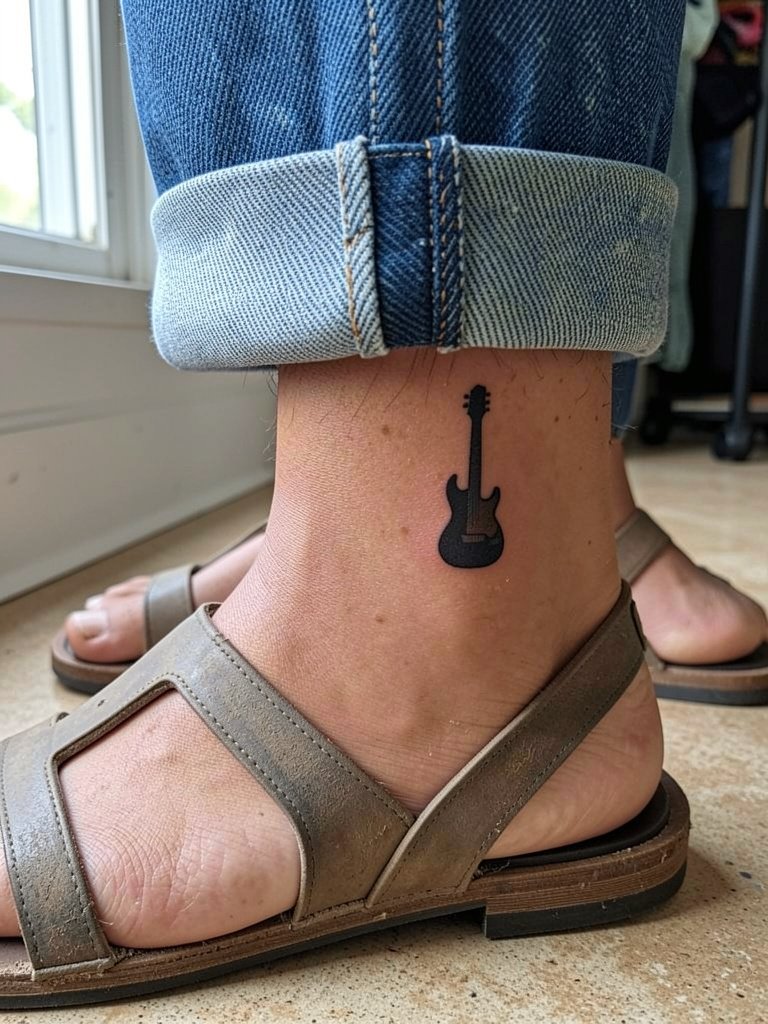
A filled-silhouette works when you want maximum contrast in a tiny footprint, especially on areas that rub. Because ankles see sock and shoe friction, a solid black mass holds up better than tiny filigree. Tell the artist you want the fill slightly denser than a hairline outline so that the shape ages as a readable block. Expect moderate pain at the ankle and a 20 to 30 minute session. Style it in summer with open-toe sandals so the tattoo is visible and not constantly covered by tight socks.
3. Guitar Headstock Minimal
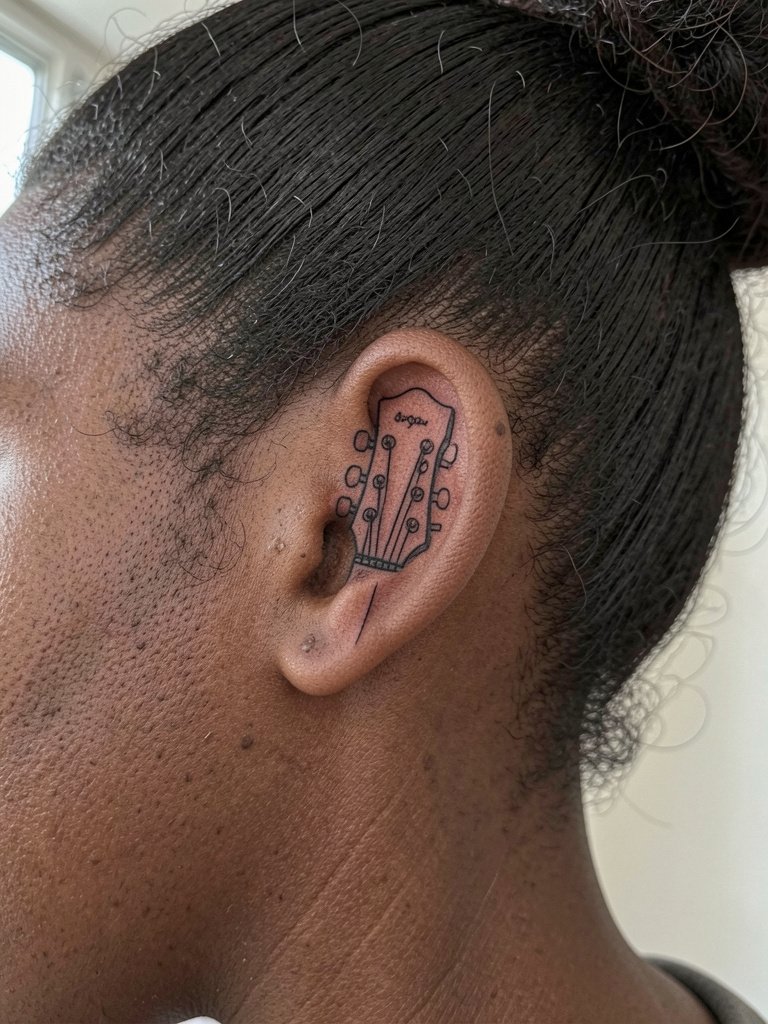
A headstock fragment behind the ear reads like a secret tag. This placement needs a precise line weight to survive small-scale work and subtle shading will turn into blur if the lines are too close. Bring a magnified reference and ask for slightly heavier contour lines rather than single-needle hairlines. Session time is short, under 20 minutes, but the mastoid skin is thin so the sensation is sharp. Wear hair up to reveal the area during the session and consider delicate gold hair pins as styling that does not hide the piece, like this delicate gold hair pin set. Note that behind-ear work benefits from an artist who shows healed photos of that exact placement.
4. Guitar Sound Hole Detail
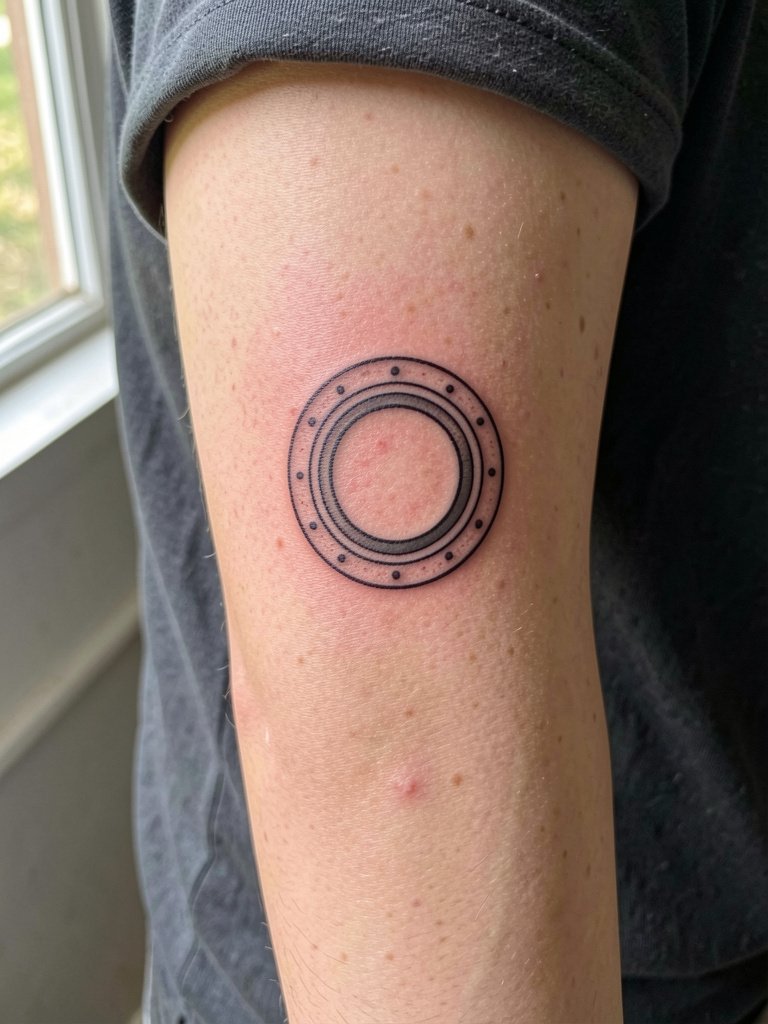
Focusing on the sound hole gives a compact visual that still reads as guitar-related without the full instrument. This placement is visible and perfect for a tiny circle, but the inner wrist does see movement so ask the artist to leave a bit more gap between the inner ring and any micro-dot rosette. Expect a tingly sensation during the 15-minute session and plan to skip watches for the first week. For styling, the inner wrist pairs well with a thin-chain bracelet on the opposite wrist rather than crowding the tattoo, try a thin chain bracelet set.
5. Guitar + Nature, Tree-Trunk Neck
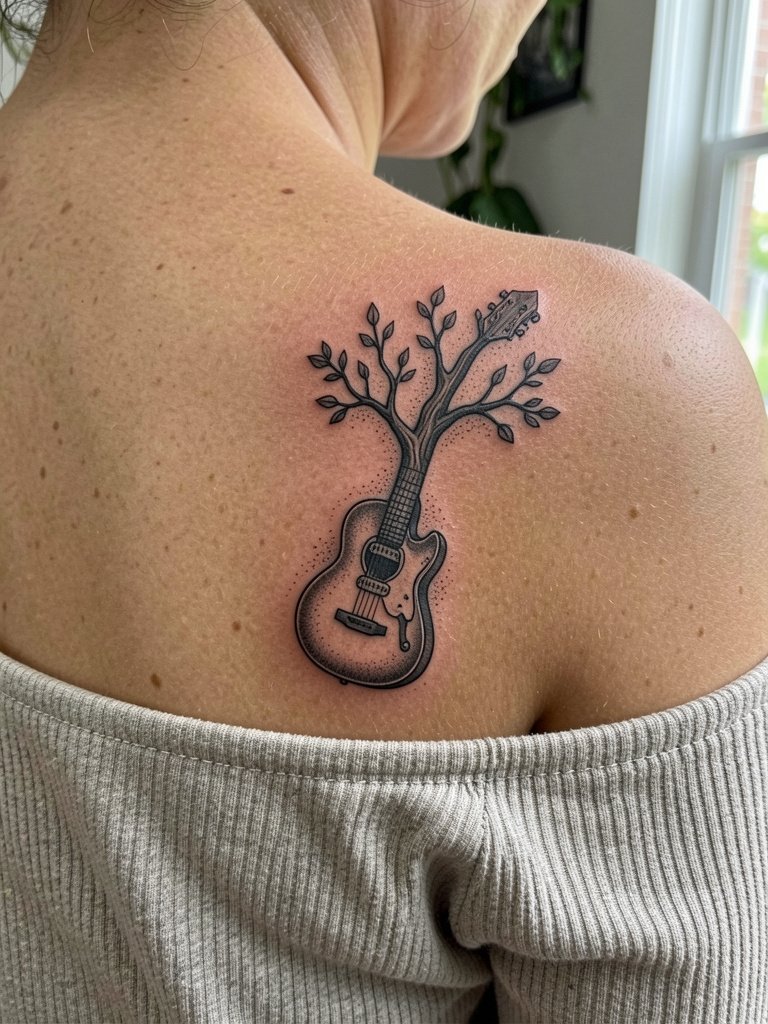
Blending a guitar neck into a tree gives an organic flow that suits upper-back canvas. This design holds better when scaled to two to three inches so the branch details have space. During the consult show a photo of the exact shoulder curve so the artist can plan how branches follow muscle movement. Upper-back sessions are low to moderate on pain and sometimes need two short passes for dot shading. Pair with an off-shoulder top to reveal the piece without straps rubbing it the first two weeks.
6. Watercolor Burst Guitar
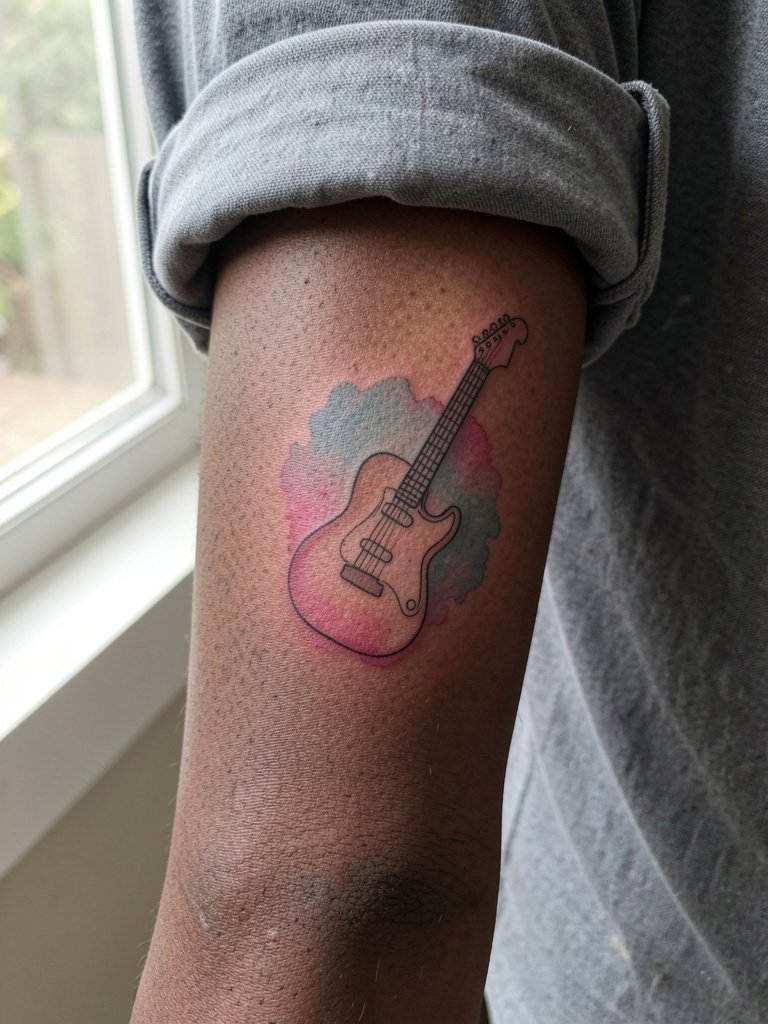
Watercolor small pieces split opinion. One camp warns that watercolor pigments in tiny tattoos fade unevenly and can look patchy within two years. The other camp argues that skilled watercolor artists using concentrated layering can keep small color bursts vibrant for years. If you want color, request a color retention plan from the artist, ask which pigments they use and how they layer at small scale, and plan for a touch-up timeline. Color adds session time and sensitivity, and summer bookings increase risk of sweat-related fading. For a daytime look, consider a neutral rolled-sleeve linen shirt to keep the color visible without rubbing.
Pre-Session Essentials
The tiny placements above mean you will care more about healing friction and thin ointments than a bulky kit. These picks smooth the session and the first week for wrists, fingers, and ankles.
-
B&B Tattoo Balm. A thinner balm many use for fine-line work because it layers without clogging tiny channels, useful for the inner-wrist sound hole design above.
-
Tattoo Goo. Recommended by micro-specialists for finger tattoos, it helps keep small work sealed without heavy residue when you need to avoid smothering the needle channels.
-
Curex Tattoo Balm. Quick-drying and thin, which helps watercolor bursts retain soft edges instead of turning blotchy from thick ointment.
-
Dr. Bronner's Pure-Castile Liquid Soap. Gentle cleanser many artists prefer for cleaning small tattoos during the first few showers without stripping pigment.
-
Saniderm Adhesive Bandage. Helpful for friction-heavy areas like fingers and ankles because it protects while you sleep and prevents repeated reapplication of balm that can smear tiny lines.
7. Upside-Down Guitar
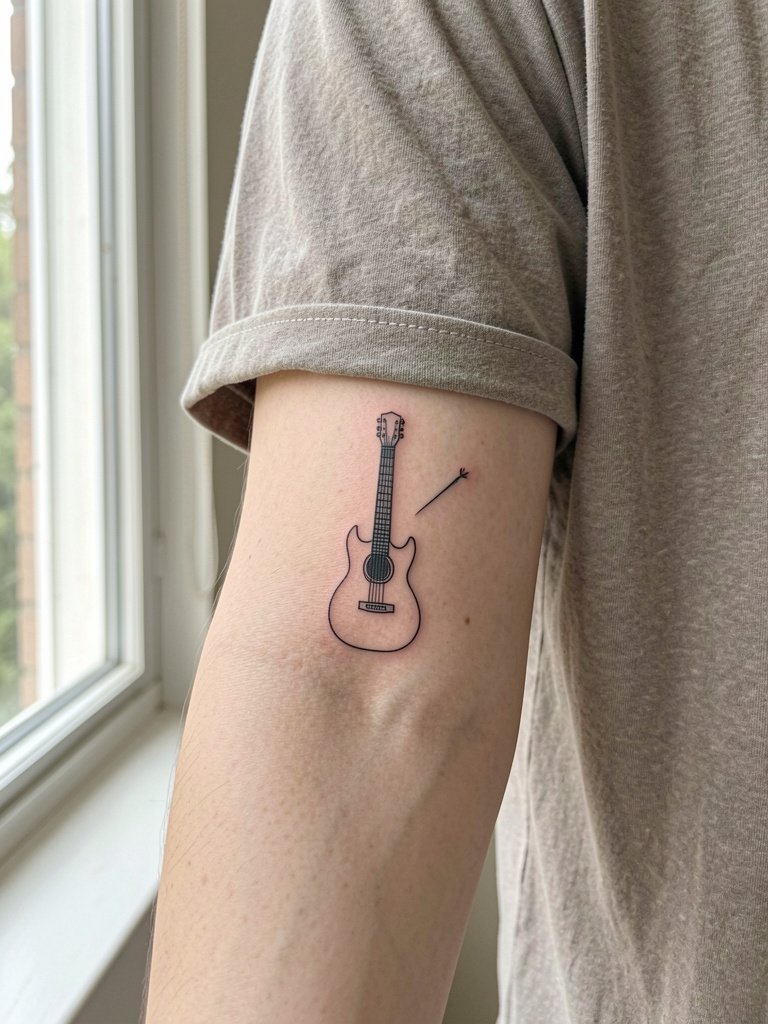
Upside-down placement is a wearable trick if you want the tattoo to read for you rather than passersby. Some viewers call it gimmicky. Others say it makes the tattoo more personal because you are the primary audience. Tell the artist you want the orientation tested with a stencil while seated so you can see how it reads during normal arm positions. Inner-forearm pain is low and the session is quick. For an everyday look, roll sleeves or wear short sleeves so you can see it when you lift your arm.
8. Geometric Guitar Blend
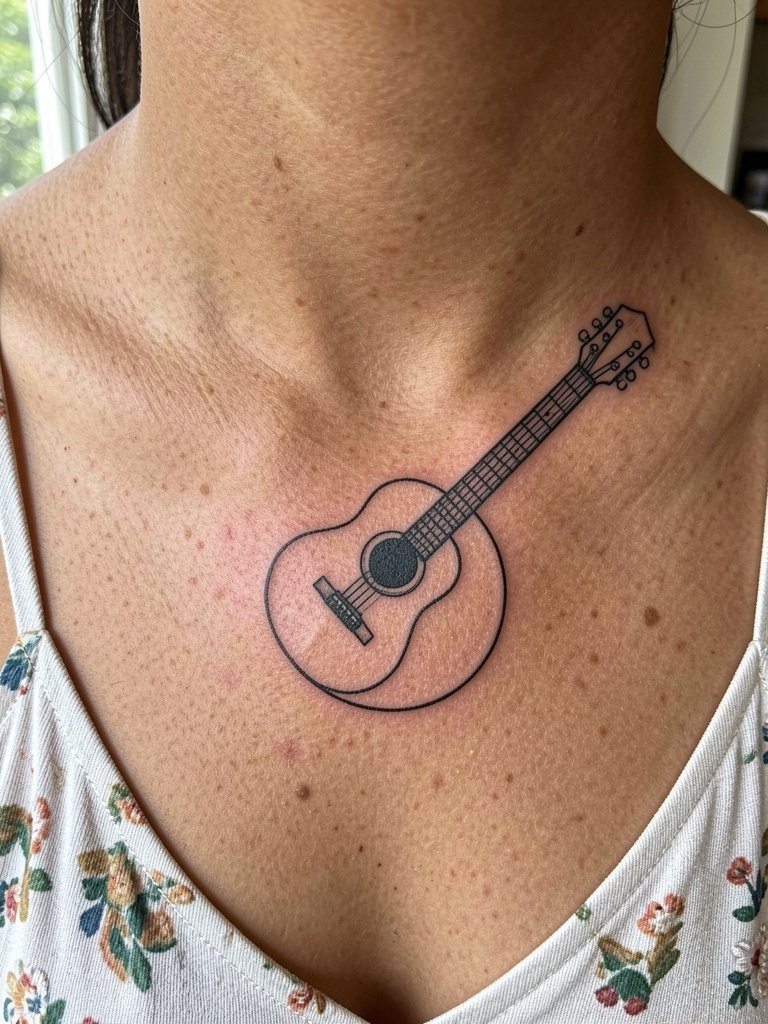
Geometry gives a modern silhouette that reads well on collarbone skin. The key here is spacing between the guitar outline and the circle so lines do not crowd each other as the skin moves. Ask to see a mockup positioned over your clavicle so the artist can judge scale against your collarbone. Expect moderate tenderness and a 20 to 40 minute session. A strappy top frames the area and a delicate chain worn above the tattoo will keep attention on the geometry without competing.
9. Retro Electric Guitar, 80s Style
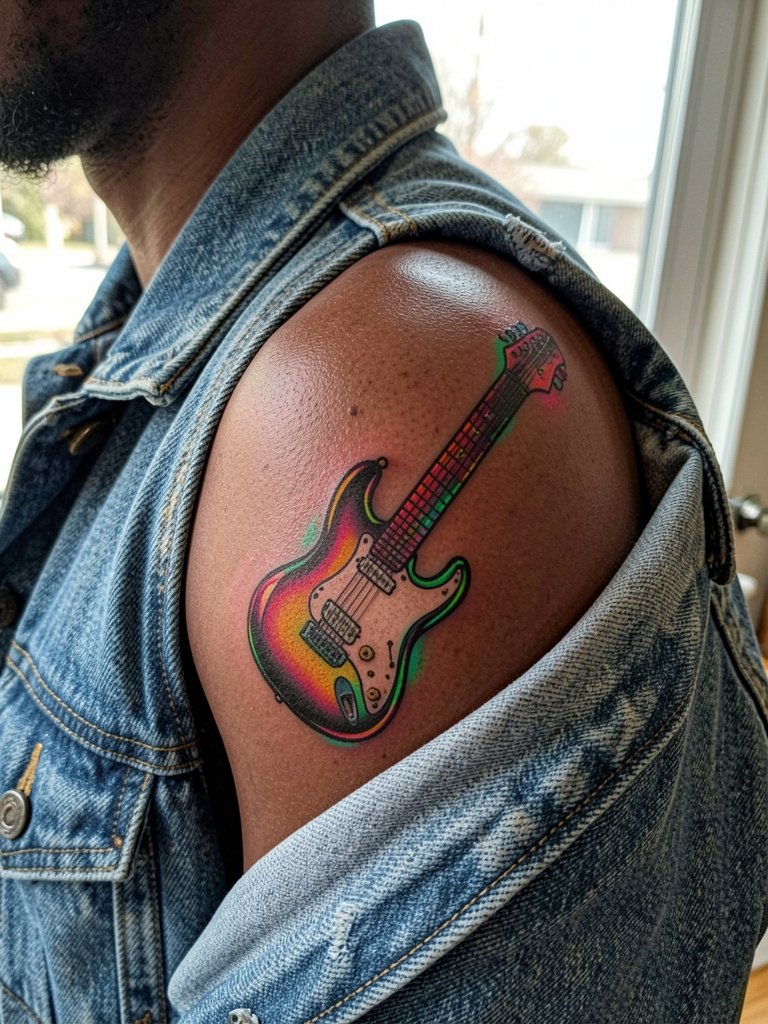
A small retro electric shape with neon pops suits the outer shoulder because the space gives the tattoo room to breathe. For neon, ask the artist which pigments retain saturation at small scale and whether they recommend a slightly larger body to prevent early patchiness. Shoulder sessions are low to moderate pain and easy to dress for. Pair the look with a vintage denim jacket when you want an 80s nod without revealing too much, and wear a loose tank for the session so the artist has full shoulder access.
10. Abstract Guitar Fragment
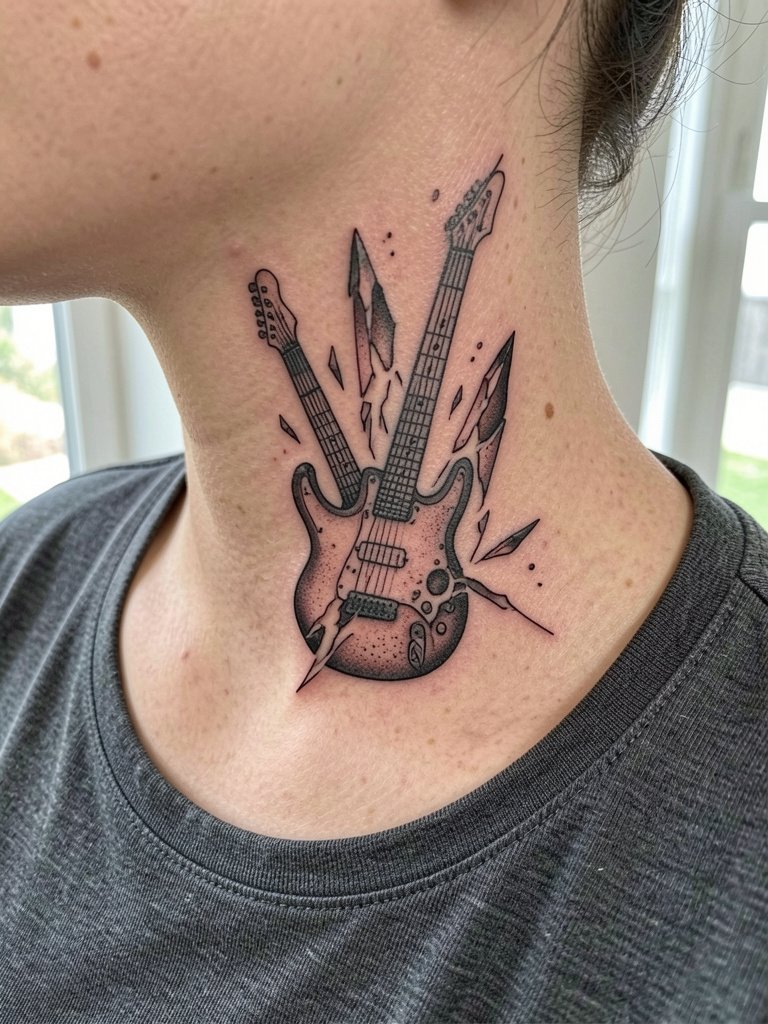
Abstract fragments read as art rather than literal instrument. Side-neck skin moves a lot, so ask for slightly bolder linework to prevent early softening. This placement can feel sharp, closer to a 6 out of 10 on most pain scales, and sessions are short. Wear a top with an open neck to give the artist access and plan to keep hair up if it covers the spot. Statement earrings that do not touch the tattoo will complement the composition and keep the focus on the fragment.
11. Micro-Realistic Guitar
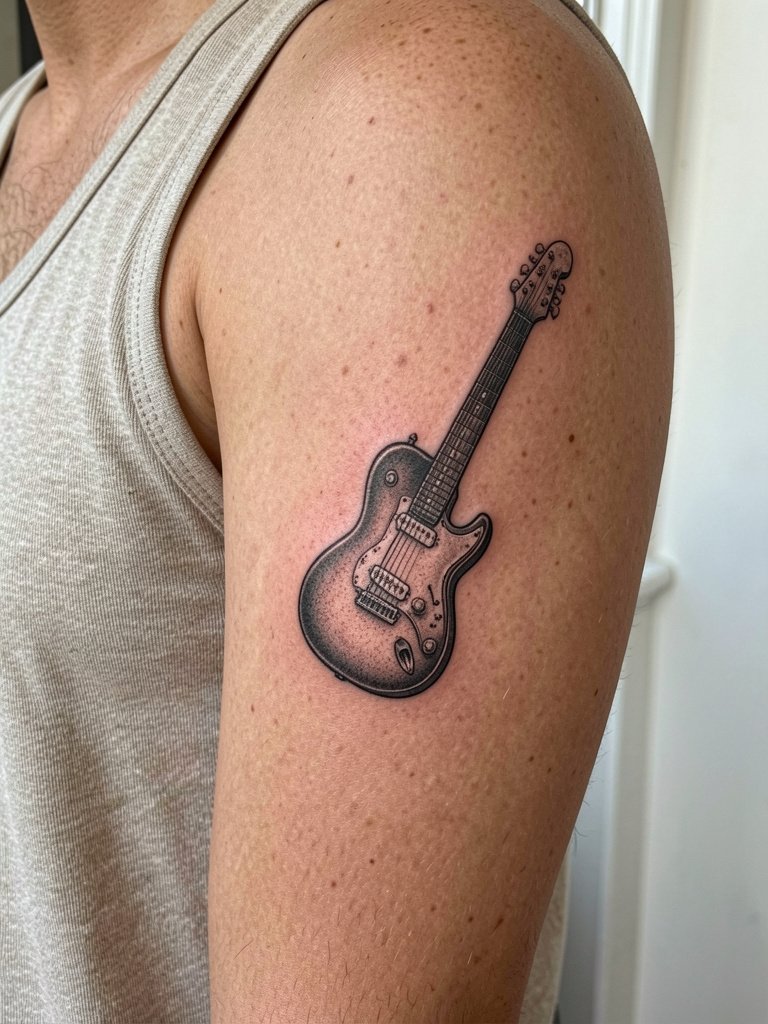
Micro-realism is for collectors who insist on tiny detail. I suggest this for inner-arm placements where skin is smoother and the detail can be preserved. During consultation bring high-resolution photos of textures you want reproduced and ask the artist to map how shading will read at one inch. These sessions require steady hand time and often longer single sittings, and touch-ups are common after the first year. Roll sleeves or wear a tank top for the appointment and keep the area out of tight clothing during healing.
12. Guitar + Treble Clef Minimal
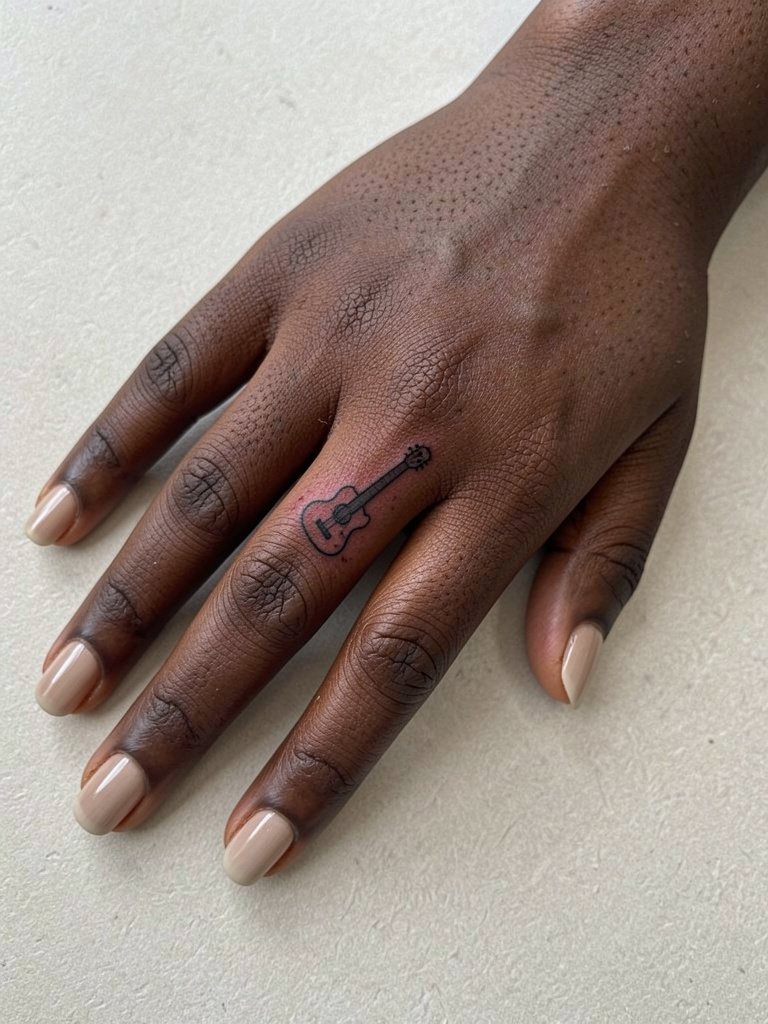
Finger tattoos are a known trade-off. They are highly visible but the skin on fingers constantly sheds and rubs. One camp argues fine line on fingers blurs within one to two years because abrasion and skin renewal make tiny lines impossible to hold. The other camp says fine line can last if the artist uses slightly wider spacing and careful depth and will point to healed three-year examples. If you choose a finger guitar, request a slightly heavier contour than the reference and plan mentally for a touch-up schedule. Avoid tight rings during the first week and keep the area dry.
13. Lyric Quote + Tiny Guitar
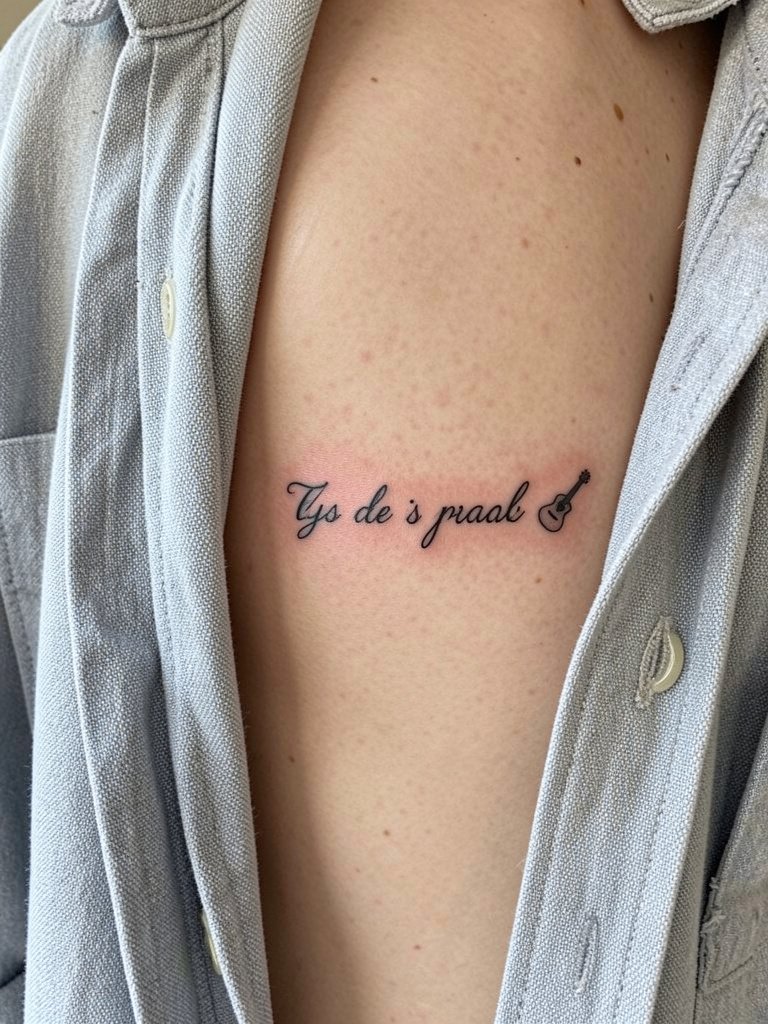
Pairing a tiny guitar with a short lyric lets you personalize within a compact layout. Ribcage work is painful, often an 8 on common pain scales, so plan for breathing and a short break option. Bring the exact lyric in printed form and request a mock stencil to check spacing relative to ribs. A common mistake is cramming too many words into two inches, which makes the script illegible after healing. For beach season, a side tie crop top reveals the side piece without strap rubbing.
14. Guitar Outline with Negative Space
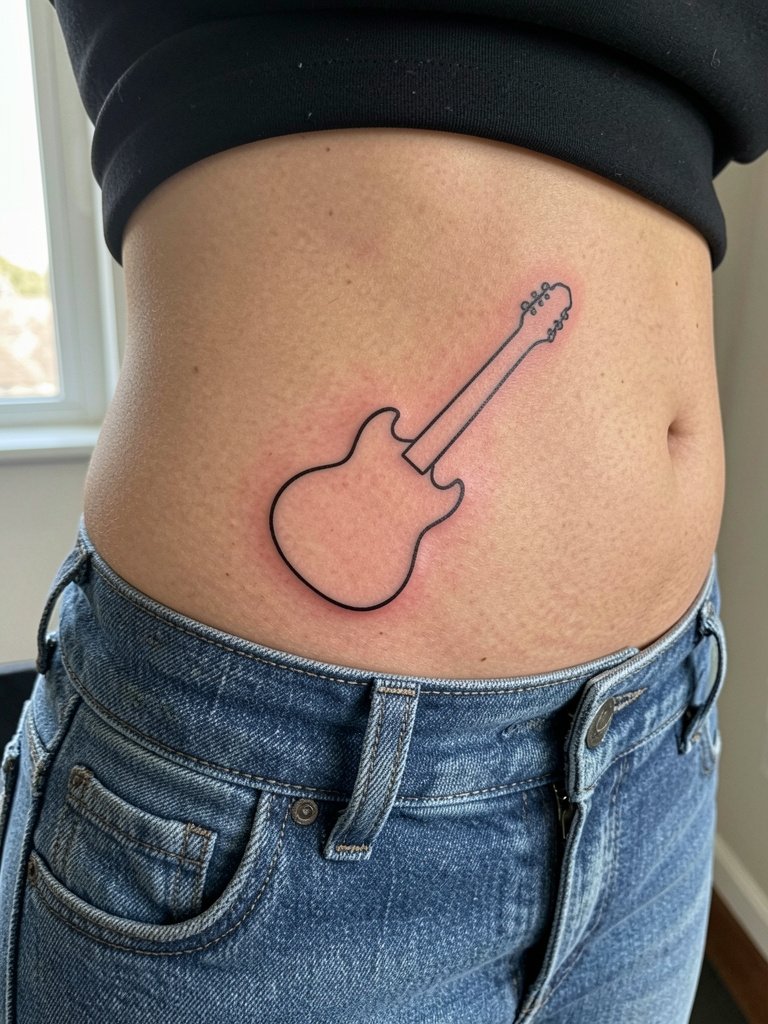
Negative-space outlines can feel modern and understated, and the lateral hip is a great private-to-visible toggle. Because the hip sees movement from waistbands, avoid tiny internal line details; the blank interior and a clear outer contour age better. For the appointment wear low-rise pants so the artist can access the area without pulling fabric. In summer pair with low-rise shorts to show the piece and consider a minimalist belt chain that does not sit over the tattoo.
15. Finger Guitar Tattoo
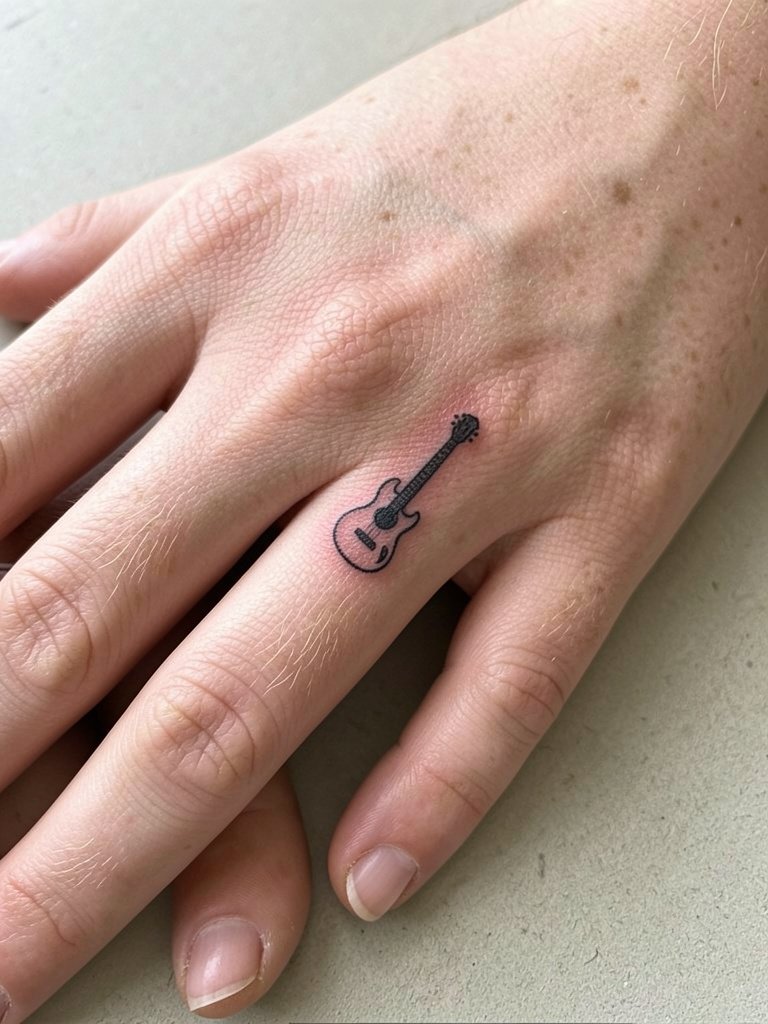
A top-of-finger guitar is the most discreet daily reminder, but finger work is fickle. One camp says fine-line on fingers blurs within 1–2 years because that skin stretches and rubs constantly. Another camp maintains that with correct depth and slightly heavier spacing fine-line pieces can show clean at three years. If you pick this spot, ask the artist for proof of healed finger work and accept that touch-ups will likely be part of ownership. Sessions are quick but the pain is sharp. Keep this finger free of rings during healing and avoid heavy handwork for the first two weeks.
Frequently Asked Questions
Q: How much does a small guitar tattoo cost?
A: Small tattoos usually fall into a shop minimum range rather than strictly by square inch. Expect typical studio minimums around $80 to $150 in many US cities. If you have a true micro piece and a studio offers a lower no-minimum rate, confirm how many touch-up visits are included.
Q: Which placements hold fine-line guitar ink best over three years?
A: Inner forearm and inner upper arm tend to keep fine line crisp longer because the skin is smooth and not subject to constant abrasion. Fingers, ankles, and the top of the foot are high-friction spots that commonly need touch-ups every two to three years. Ask for slightly heavier contour lines on any high-friction placement so the shape endures.
Q: How do I find artists who show healed micro-work without naming them directly?
A: Search hashtags like #guitartattoo, #finelinetattoo, and #microtattoo on Instagram and TikTok and filter by location. Tattoodo and local directory apps let you search keywords such as "micro guitar" or "small guitar fine line" and often display healed portfolios. Reddit communities like r/tattoos and r/tattooadvice surface peer recommendations and show healed shots across skin tones.
Q: Will watercolor small guitar tattoos fade faster than black-and-gray?
A: Color pigments can fade unevenly in small tattoos, particularly if exposed to sunlight or sweat during healing. Many artists recommend black-and-gray for tiny pieces if you want longevity without frequent color touch-ups. If you prefer watercolor, ask the artist which pigments they use and plan a realistic touch-up schedule.
Q: What should I wear to my tattoo session for each placement?
A: For inner forearm pieces, wear a rolled-sleeve linen shirt so the artist has clear access. For shoulder and back work, choose loose or off-shoulder tops that expose the area without needing fabric movement. For hip and rib placements, pick low-rise jeans or button-down shirts that can be adjusted without pulling on fresh skin.