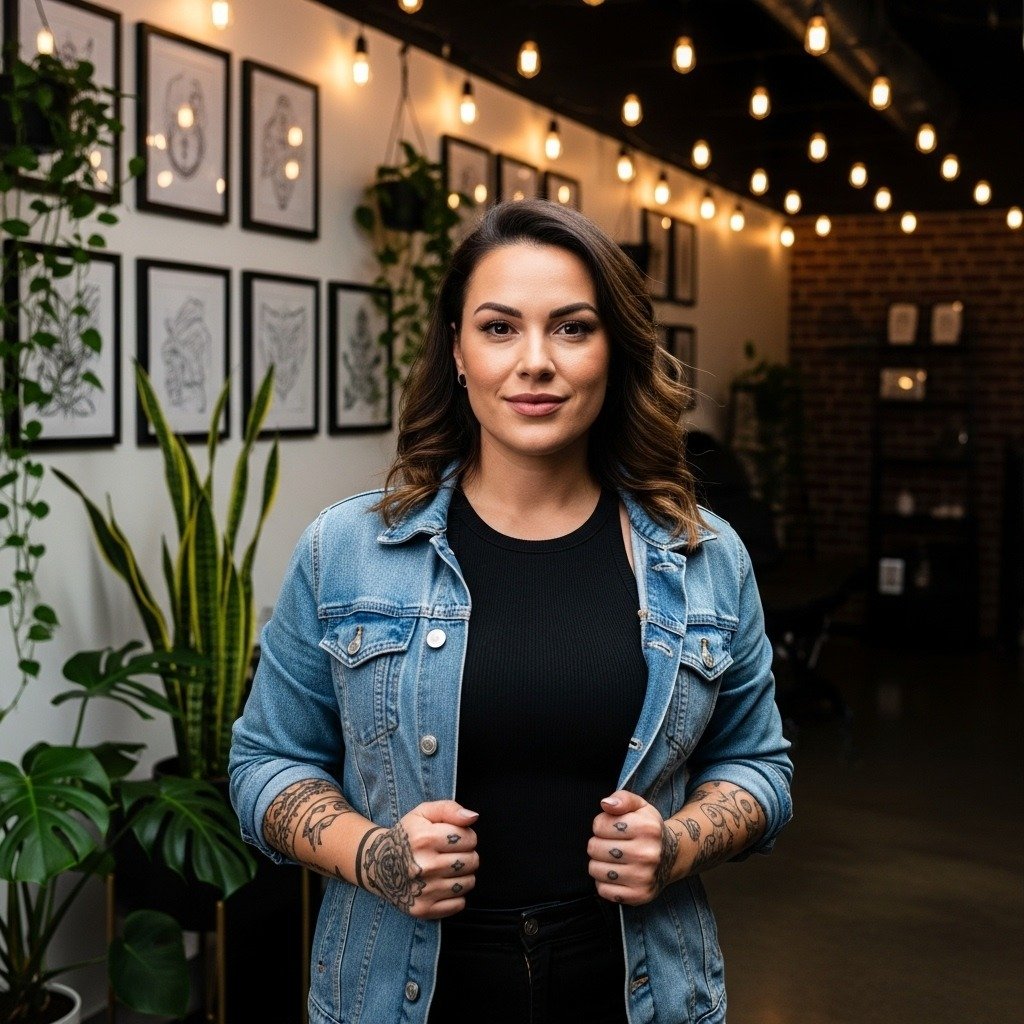
Someone I know spent months bookmarking UV tattoo photos and still felt stuck. The real problem was not picking a pretty picture. It was knowing which blacklight-friendly options hold up, where to place them so friends actually see the glow, and what to ask an artist who has worked with UV inks. Below are ten easy, women-focused blacklight tattoo ideas with placement notes, aging tips, consultation cues, and practical pitfalls to avoid.
1. UV-Reactive Moon and Stars Cluster on Collarbone
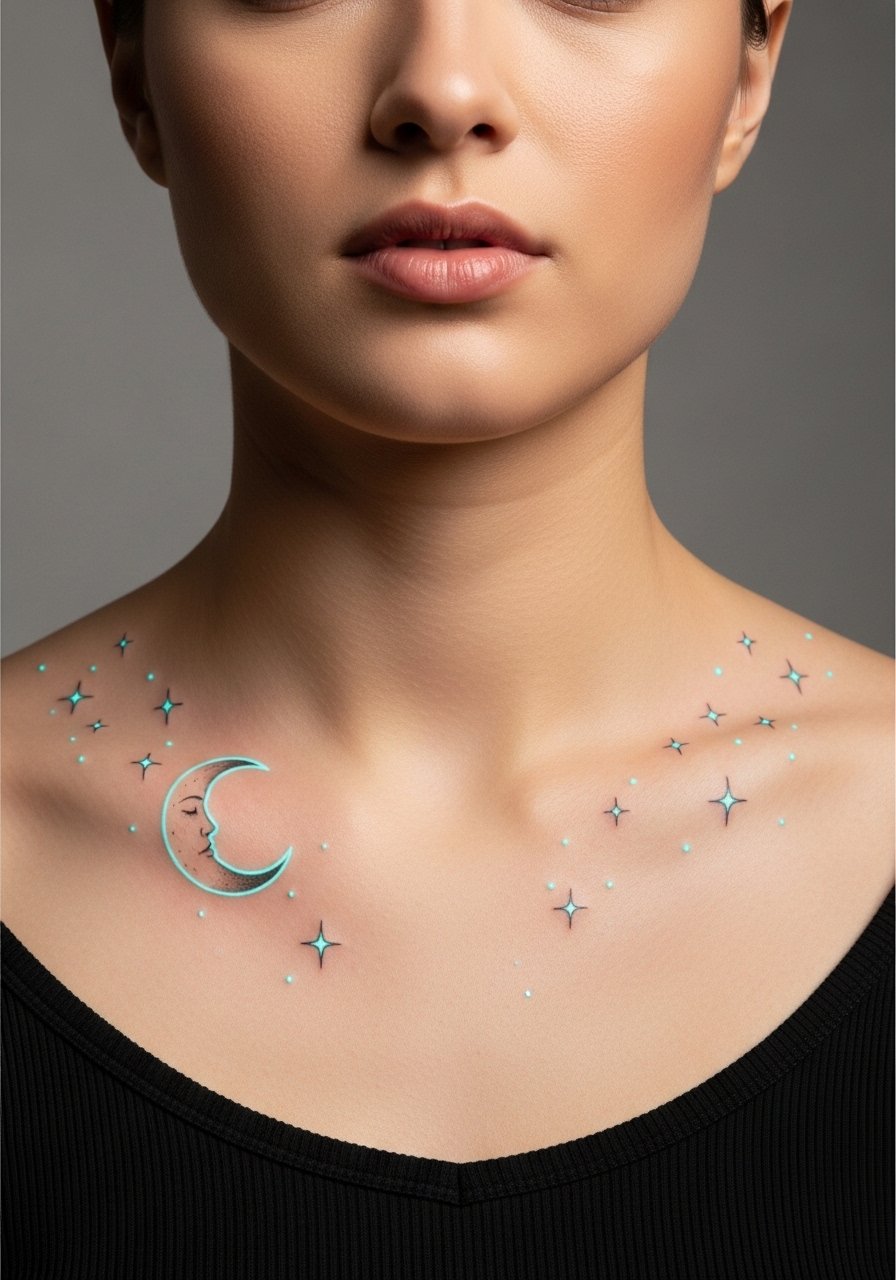
Someone I know first saw this on a friend and loved how it worked like a rave necklace when a blacklight hit it. Ask for a neon base layer under the UV pigment so the design reads in daylight as soft color, not invisible ink. Collarbone placement is a 3 to 5 on most pain charts depending on your build, and sessions are usually short. Watch out for overworking the area with too many passes because the thin skin there can make fine line spread. Expect a subtle fade at year two on sun-exposed collars, and plan a touch-up at year three if you want the same nighttime punch.
2. Neon Psychedelic Mandala on Upper Arm
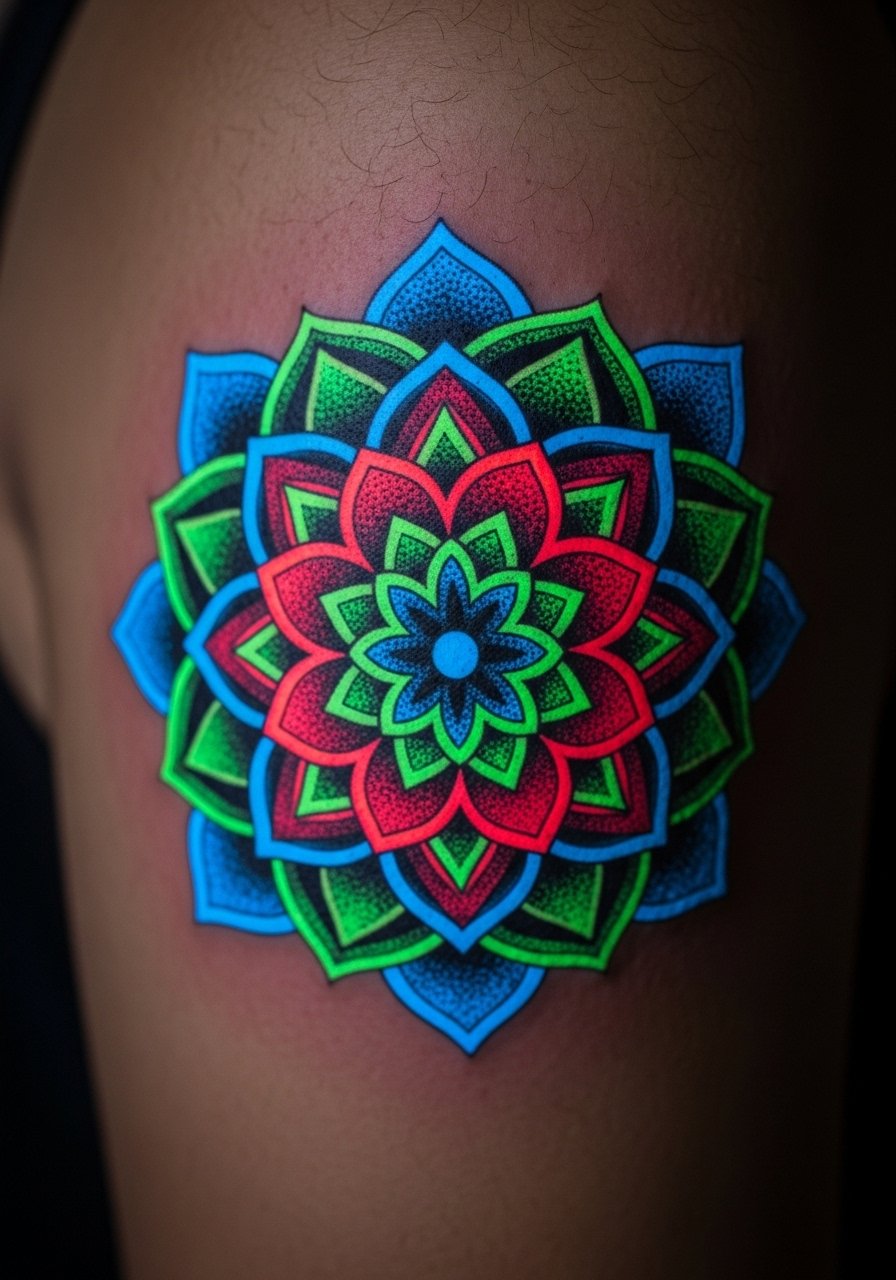
When you sit down with your artist for this one, bring full-frame references that show the exact layering and color balance you want. Festival-goers lean toward this design because it reads in motion and under blacklight. Upper arm sessions are medium in length and tolerable for most people. One common mistake is asking for a mandala too small; the linework needs room to avoid blurring. Artists split on how dense the stipple shading should be. One side says heavy saturation keeps the glow intense. The other side warns dense packing can cause migration with UV pigments. Ask where your artist lands and request sample healed photos.
3. Blacklight Dandelion with Scattering Seeds on Wrist
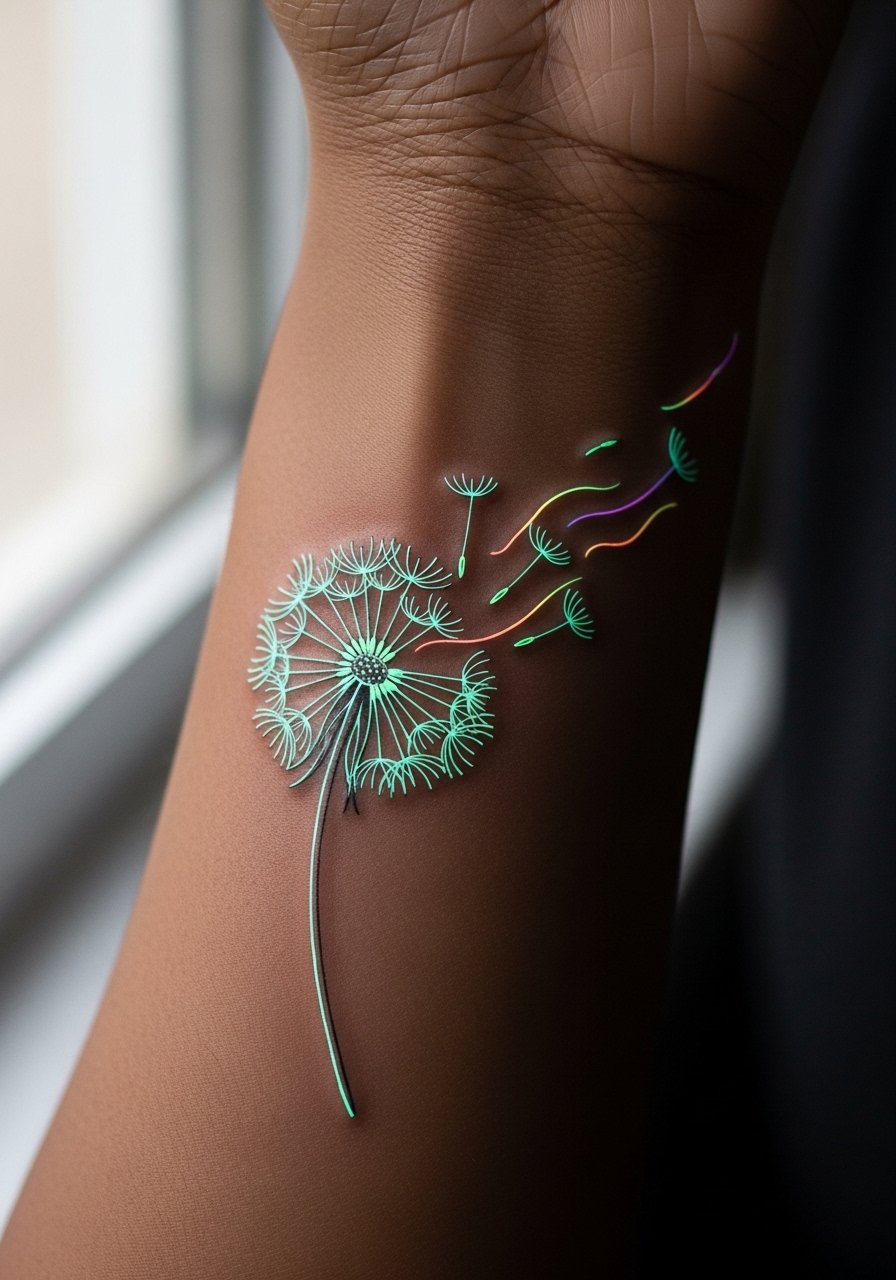
Fair warning, the wrist is a high-visibility spot but it sees a lot of wear and sun. Fine line here looks ethereal under blacklight, and a single session usually does it. A real mistake is going too faint with linework to make it "delicate." UV inks sometimes sit thinner than regular ink, so lines that start too light can blur within a year. Artists are split on whether wrists should get heavier black outlines under the UV, with one camp saying outline helps longevity and the other saying it defeats the invisible look. If you want the seeds to still read in daylight, ask for a neon outline paired with the UV fill.
4. Glowing Witch Silhouette on Thigh
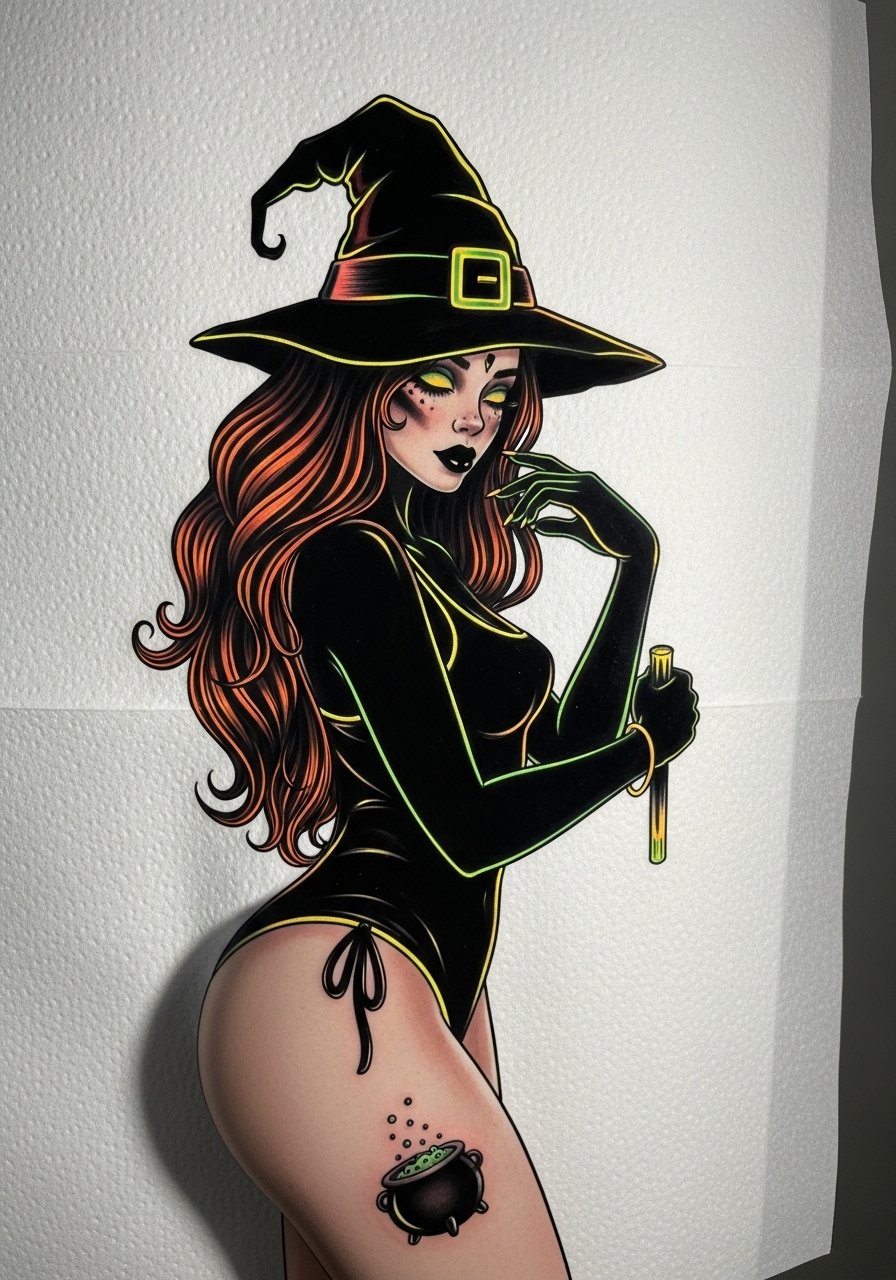
The thigh handles saturation well and heals with minimal blowout risk compared to thinner skin sites. This design is a playful seasonal pick for people who like Halloween motifs and want a private surprise for low light. Sessions can be one to two sittings depending on size. One common issue is requesting extremely fine interior details that vanish once healed. Tell your artist you prefer bold silhouette work with neon accents so the witch keeps her shape both day and night. Thigh placement keeps fading slower since it avoids constant sun exposure.
5. Lightning Bolt Script Quote on Ribcage
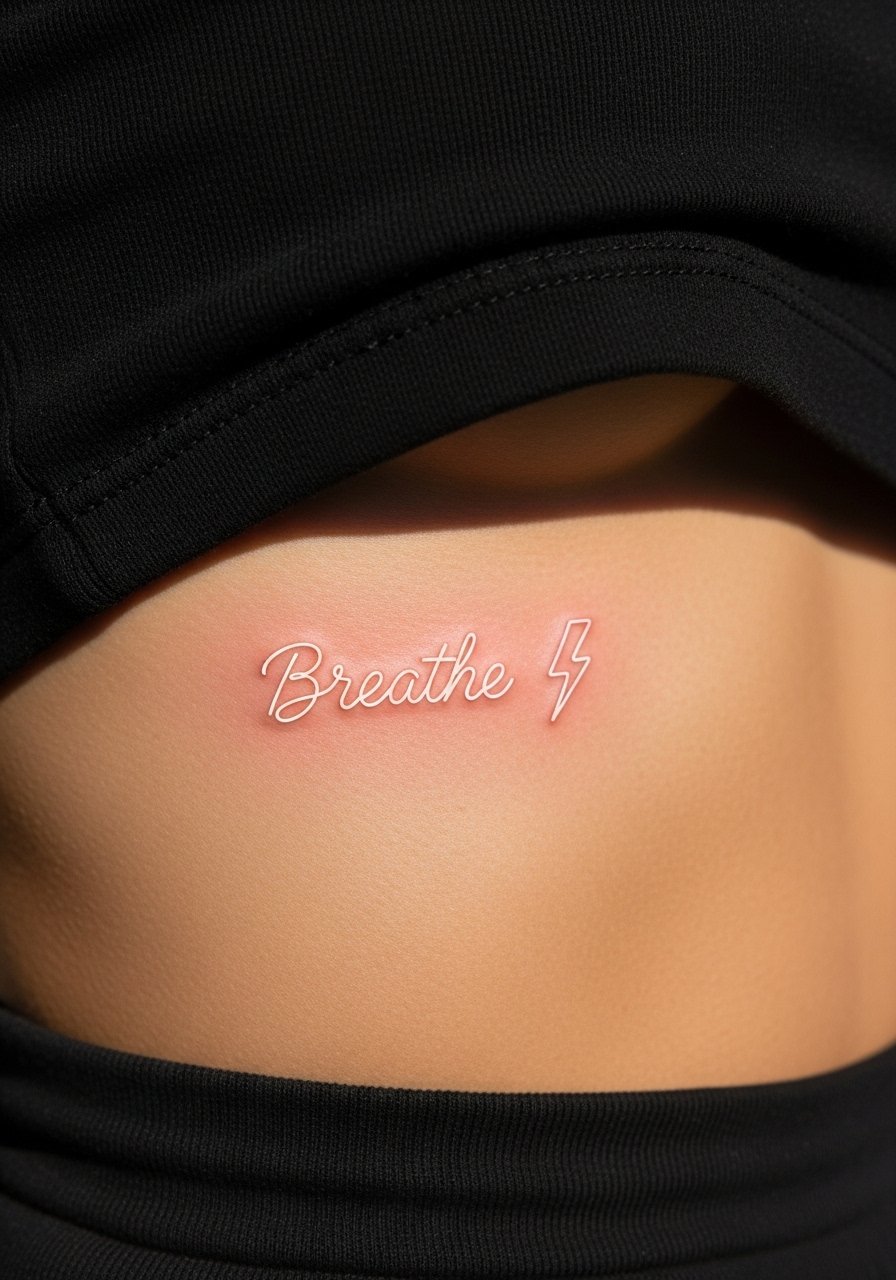
Fair warning, the ribcage is a 7 out of 10 on pain assessments but the canvas is worth it for intimate script. If you want the phrase to pop outside blacklight, pair the UV strokes with a visible neon base line. Artists disagree about fine script on ribs. One camp says the skin stretch and motion make thin scripts blur quickly. The other camp says proper depth and spacing prevents that. Bring multiple script examples and ask to see healed ribcage photos from the artist before booking. Expect one short session for a small quote and a realistic touch-up at year two.
6. UV Fish Swimming in Neon Waves on Calf
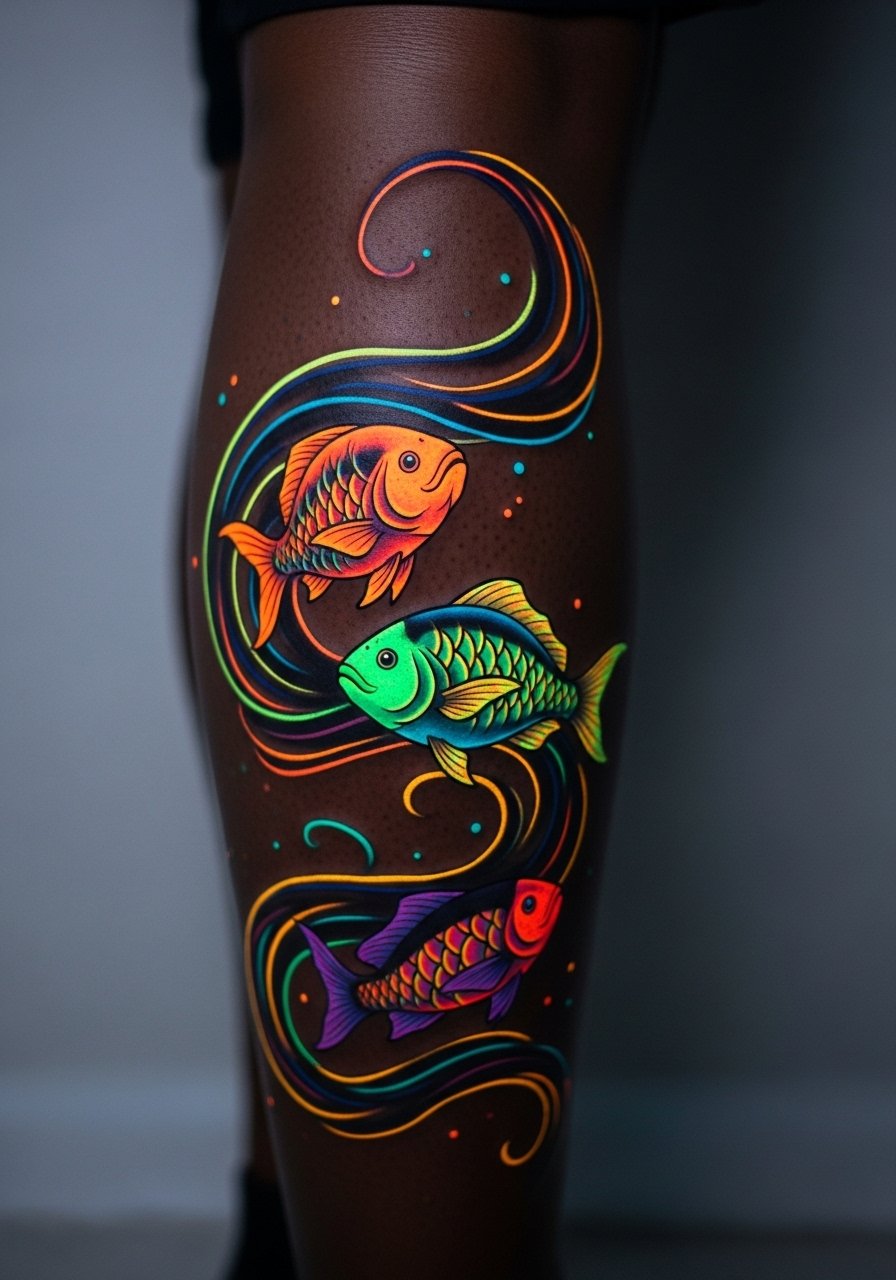
There is something about motion in a tattoo that plays well under blacklight, and calf placement gives that movement room. Calves tolerate saturation and multicolor work, but keep the scale large enough for the neon gradients to read. A frequent mistake is packing too many tiny color transitions into a small area, which can look muddy when healed. Tell the artist where you picture the wave flow so they position the fish to complement muscle lines. Calf pieces usually need two sessions if you want layered neon depth.
7. Constellation Outline with Connecting Dots on Shoulder Blade
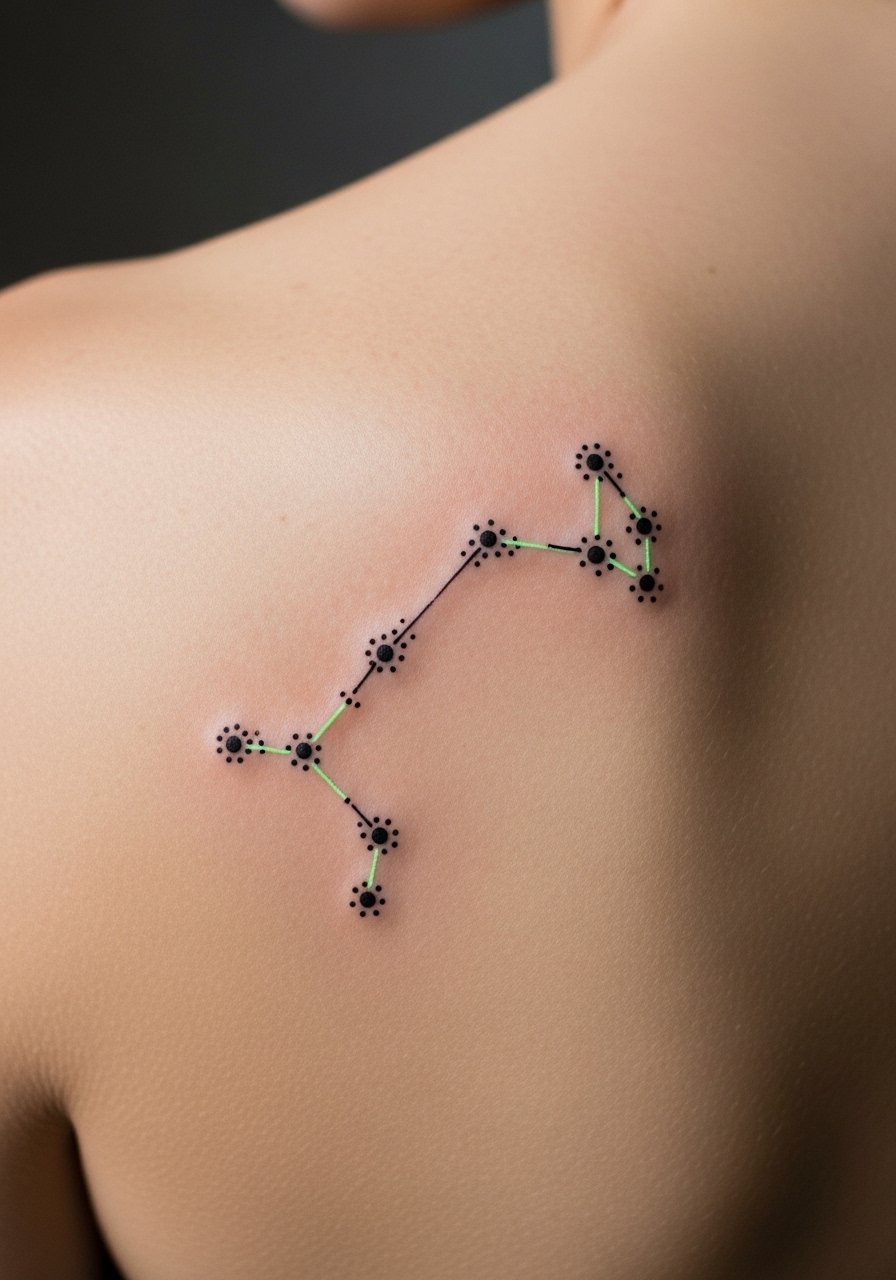
Most people choose this for symbolic reasons, and shoulder blades make a great low-sun canvas. Fine dot work holds up better here than on the wrist because the skin is thicker. There is debate about minimalist UV lines. One group argues UV-only lines look fantastic but remain invisible by day. The other group prefers adding a faint neon outline so the constellation reads without a blacklight. If you want daytime visibility, ask for a thin neon anchor line under the UV. Touch-ups at year three are common for maintaining sharp dots.
8. Tiny Script Coordinates on Inner Wrist
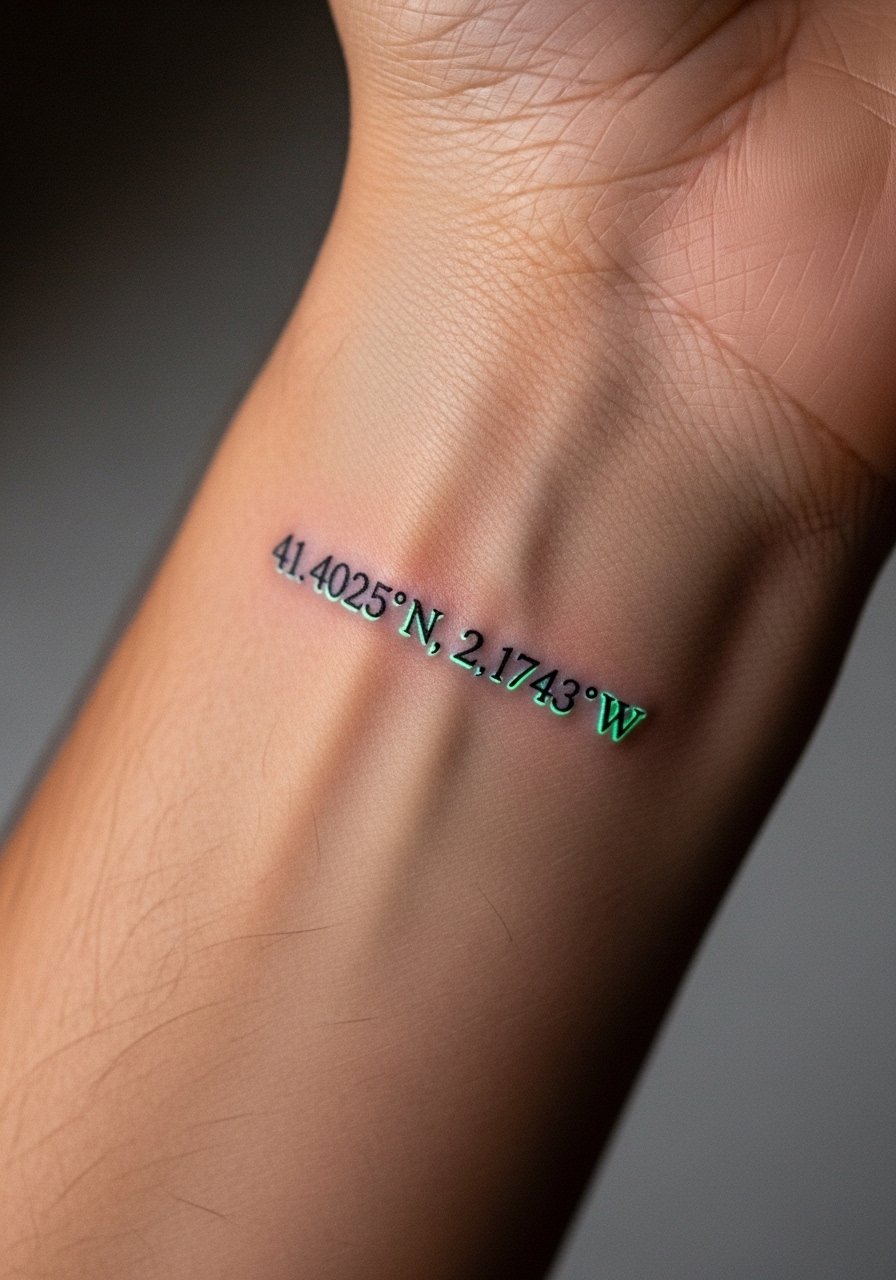
The inner wrist is an emotional placement for micro text because it is easily shown and tucked away. For any tiny lettering, insist on a slightly bolder line weight than the reference so it keeps definition as the skin settles. A real mistake is requesting extreme micro script then wondering why it blurs. This area heals fast but sees friction from clothing and watches, so gentle aftercare is critical. Bring the exact text you want to the consult so the artist can size it properly and show you a stencil before starting.
9. Jack-o-Lantern with Glowing Eyes on Inner Bicep
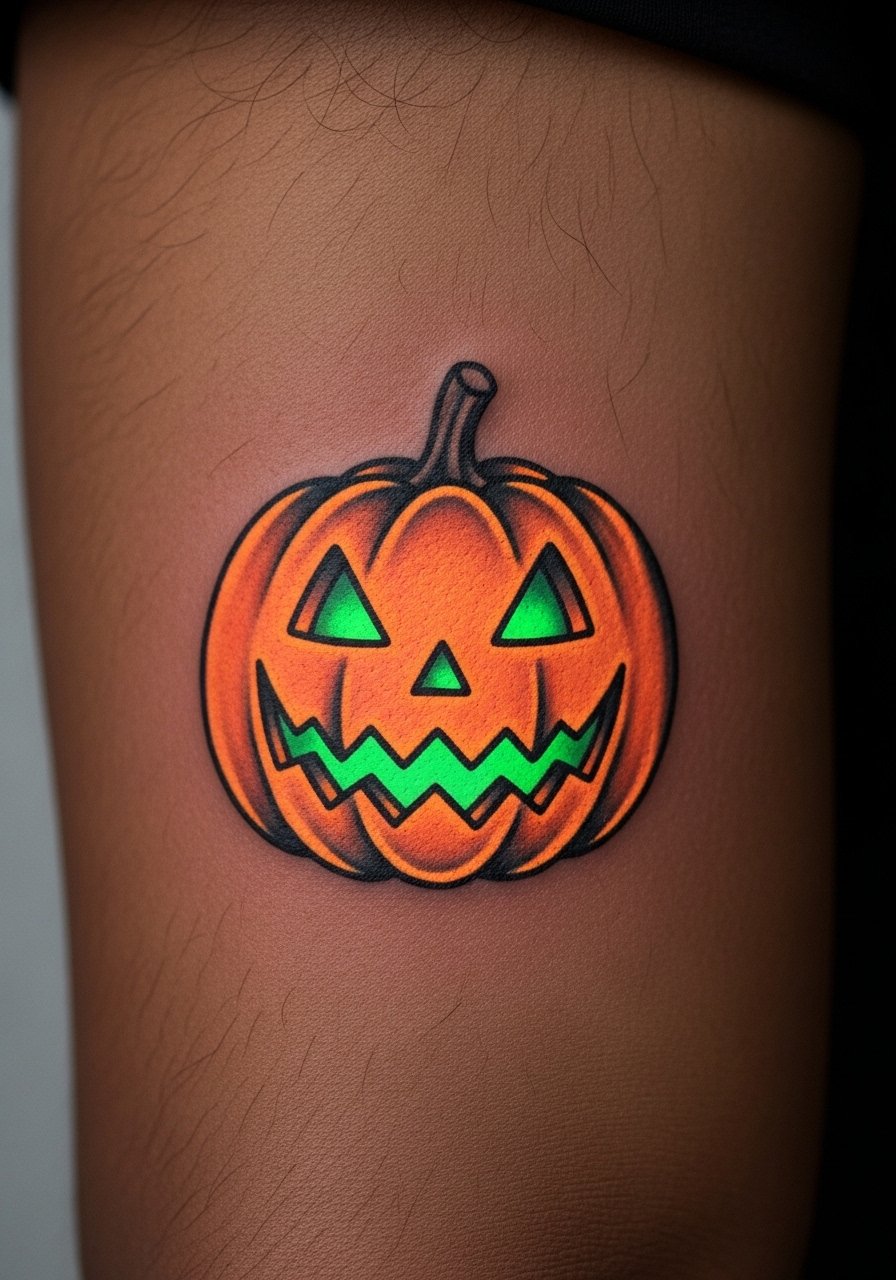
Inner bicep work is discreet and shows in hugs or sleeveless tops. The skin there takes color nicely and blowout risk is moderate. If you want a vintage Halloween vibe, ask for slightly thicker black outlines around the neon fills so the face reads by day and the eyes pop under a blacklight. A common mistake is requesting tiny facial features that lose character once healed. Plan for one to two sessions and expect a touch-up window if the neon orange loses brightness after heavy sun exposure.
10. Minimalist Geometric Starburst Behind Ear
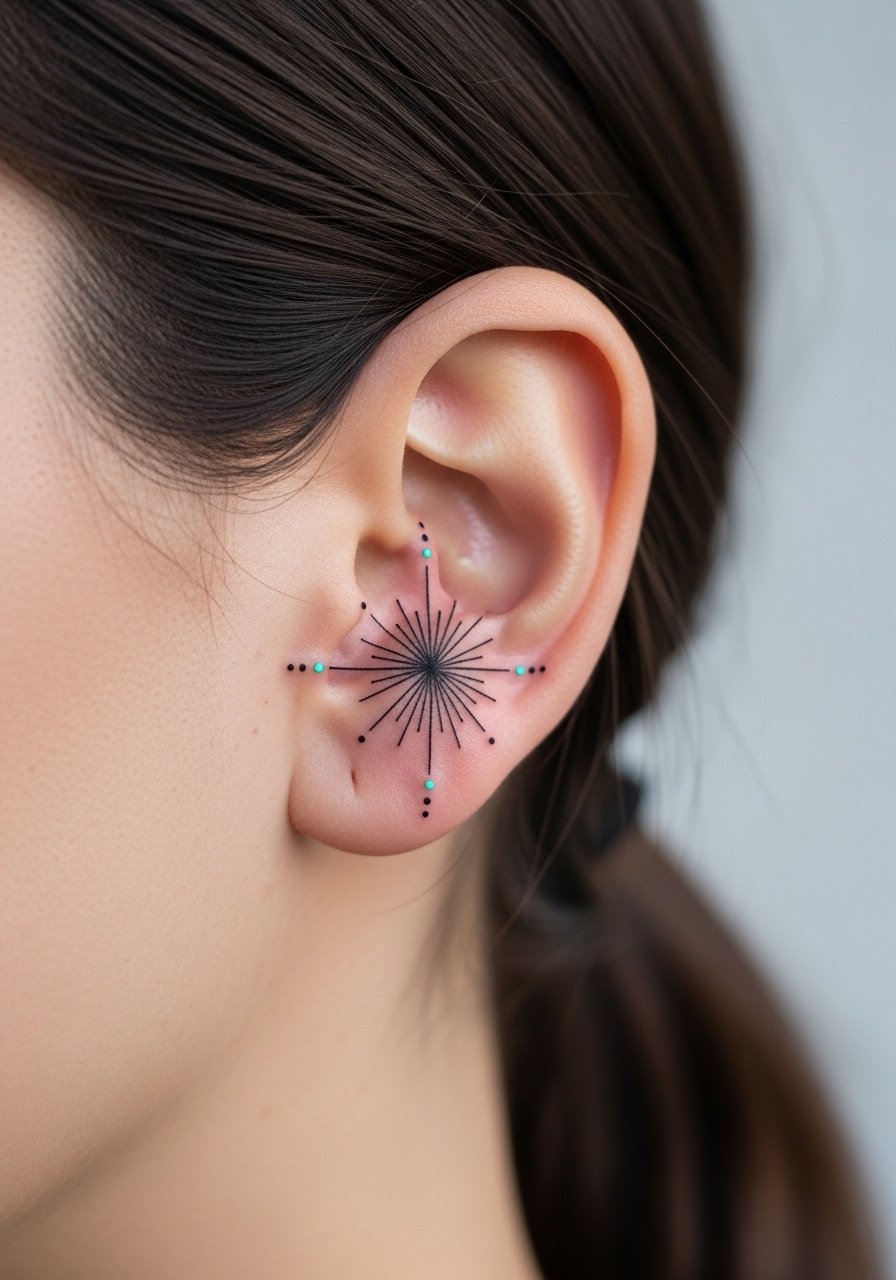
Sensitive placement note: behind-ear tattoos are highly visible in certain workplaces and require an artist comfortable with delicate spots. This micro piece is fast, usually one short session, and it is a smart pick if you want a hint of blacklight flair without a large commitment. People often ask for too many lines in such a small area. The safest route is a simplified starburst with a neon center and sparse rays so it keeps clarity over time. Expect mild tenderness during the session and minimal downtime.
Tattoo Prep and Aftercare Essentials
When you get UV or neon work, the aftercare conversation matters more than for a standard piece. UV pigments can sit thinner in the skin so avoid heavy occlusives that trap moisture and cause migration. From what I have gathered, artist-specific aftercare beats one-size-fits-all routines. Test how the design looks under a personal blacklight keychain before committing to a full piece so you know the nighttime effect you are buying into.
Shopping list
UV tattoo pigment sampler set. Good for testing which neon hues show best on your skin tone. Use it when discussing color layering with artists who work with fluorescent inks.
Portable blacklight keychain, 2-pack. Handy for pre-tattoo tests and for checking healed results in club lighting. I carry one to check references and healed photos.
Medical-grade second skin bandage, 6-inch roll. Useful for the first 48 hours if your artist recommends an occlusive dressing. It helps protect against friction without soaking the wound.
Lightweight fragrance-free balm. Choose a non-comedogenic formula for the first two weeks of healing to avoid pore clogging and to keep the thin UV inks from migrating.
Ultraviolet ink-safe touch-up kit. For artists who offer small annual refreshes, this kit helps maintain nighttime brightness between professional touch-ups.
Soft cotton sleeve protectors. Use during initial healing if your tattoo sits where clothing rubs frequently. They reduce friction without trapping sweat.
Fragrance-free gentle foaming cleanser. Use twice daily in the first week to keep the area clean without stripping the ink. Gentle cleansing prevents scab hardening that can trap pigment.
Aquaphor Healing Ointment. This is the one mainstream item in the list. Use sparingly and only if your artist endorses it, because some UV pigments respond better to lighter balms.
Every tattoo is different. Always follow your artist's specific aftercare instructions. Consult a dermatologist if you have skin concerns or unusual healing issues.
Frequently Asked Questions
Q: Will a wrist blacklight dandelion show up in daylight if I add neon underlayer?
A: Yes, pairing a neon underlayer with UV pigment usually makes the piece visible by day as a soft color wash. It depends on your skin tone and how saturated the pigment is. Ask your artist to preview a healed neon example on similar skin so you get realistic expectations.
Q: How often should I expect to touch up a neon mandala on the upper arm?
A: From what artists tell me and from healed photos I have seen, expect a touch-up every two to four years for heavy UV saturation. Placement away from constant sun helps. If you work outdoors, plan for more frequent maintenance.
Q: Are there special risks for fine script on the ribcage with UV inks?
A: There are trade-offs. One camp says thin ribcage script blurs faster due to stretching. The opposing camp says with correct depth and spacing it can hold. It depends on the artist's experience with UV inks. Request healed ribcage samples and be prepared for a possible touch-up at year two.
Q: Can I test a design at home before committing to a full tattoo?
A: Yes. Use a portable blacklight keychain to check temporary stickers or ink pens as a rough preview. That helps you see how the color reacts in low light. Remember that skin chemistry and professional pigment concentration will differ from DIY tests.
Q: Will neon or UV pigments fade faster on darker skin tones?
A: In my observation, contrast is the main factor. Some neon hues read differently across tones. Ask to see healed photos on people with a similar complexion. Artists who specialize in UV frequently adjust saturation and layering for better visibility on darker skin.
Q: Where do I find artists who actually work with UV inks?
A: Search tags like #UVtattoo and #blacklighttattoo on Instagram and TikTok. Look for studio directory filters that list UV or fluorescent ink. Guest spots at shops and convention listings also reveal artists who do this work professionally. Trust your consultation more than a single photo when deciding.