Fine line forearm geometrics look fragile in photos but they do not all fade the same way. Bold black fills often read cleaner after three years, while single-needle triangles can soften sooner on the palm-up skin. If longevity matters, consider how the design, line weight, and placement work together before the stencil goes on. The next sections start with designs that suit different forearm zones and explain what to request at your consultation for better healed results.
1. Fine Line Sacred Geometry Triangle Stack
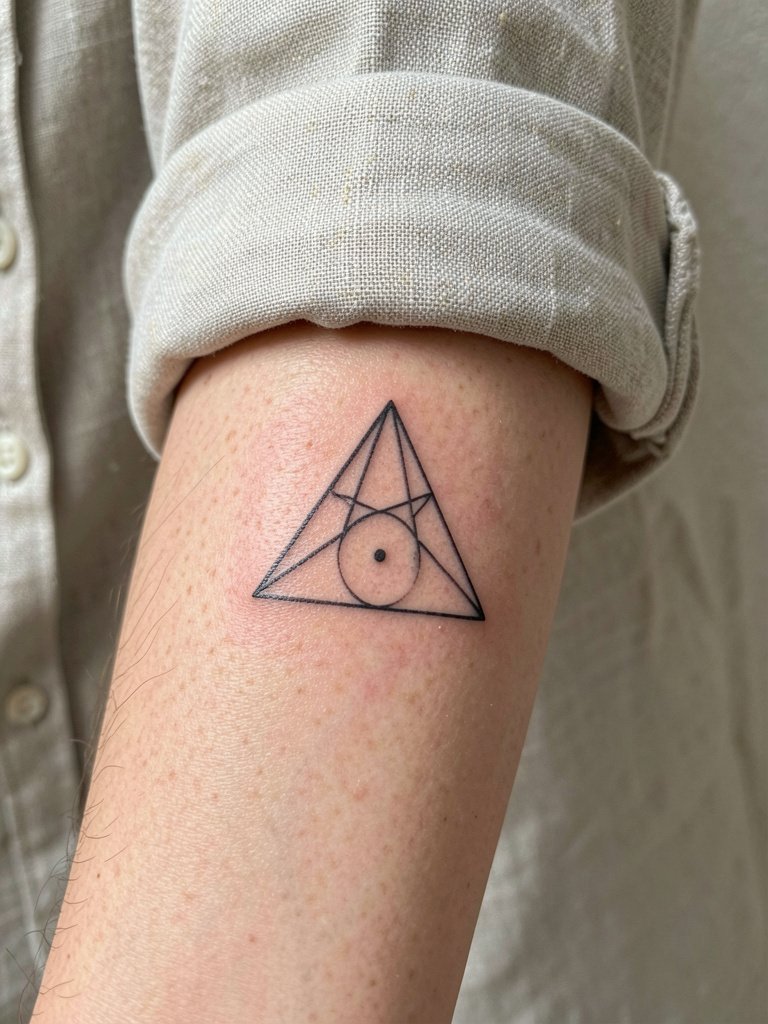
This classic small stack favors the inner forearm because the palm-up surface frames the vertical layout. Request slightly heavier line weight than your reference image so the single-needle work does not eat into the line by year two. A common mistake is going ultra-tiny and expecting crisp geometry after heavy everyday motion. Expect a one-session appointment around an hour and plan a touch-up at 12 to 18 months. For showing off, roll a linen button-down sleeve to mid-forearm so the triangle stack sits against neutral fabric and the linework reads clean.
2. Bold Blackwork Hexagon Mandala
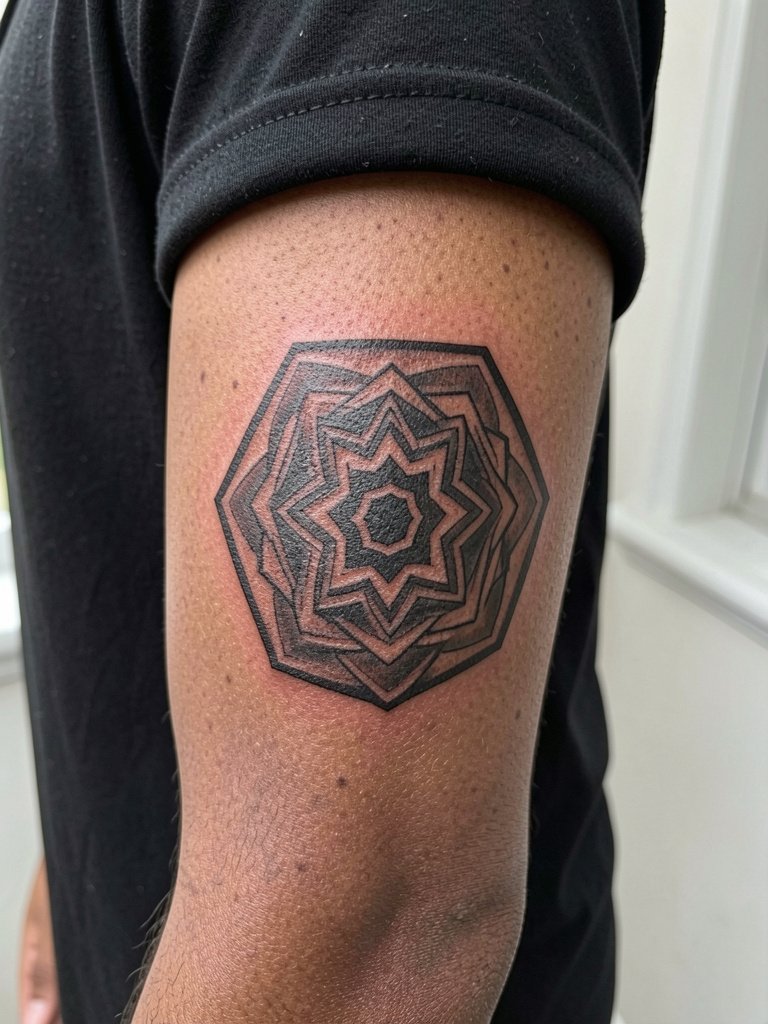
This strong hexagon mandala reads well from a distance because of high saturation and bold outlines. Tell the artist you want maximal contrast with solid fills and crisp negative-space rings, not thin filigree that will blur. The outer forearm holds saturation better than inner forearm, so this placement reduces blowout risk. Sessions often split into two blocks for larger pieces and total three to four hours. Pair the healed look with a plain dark tee and a leather cuff on the opposite wrist so the mandala stays the focal point when you are showing your arm.
3. Abstract Fractal Line Art Band
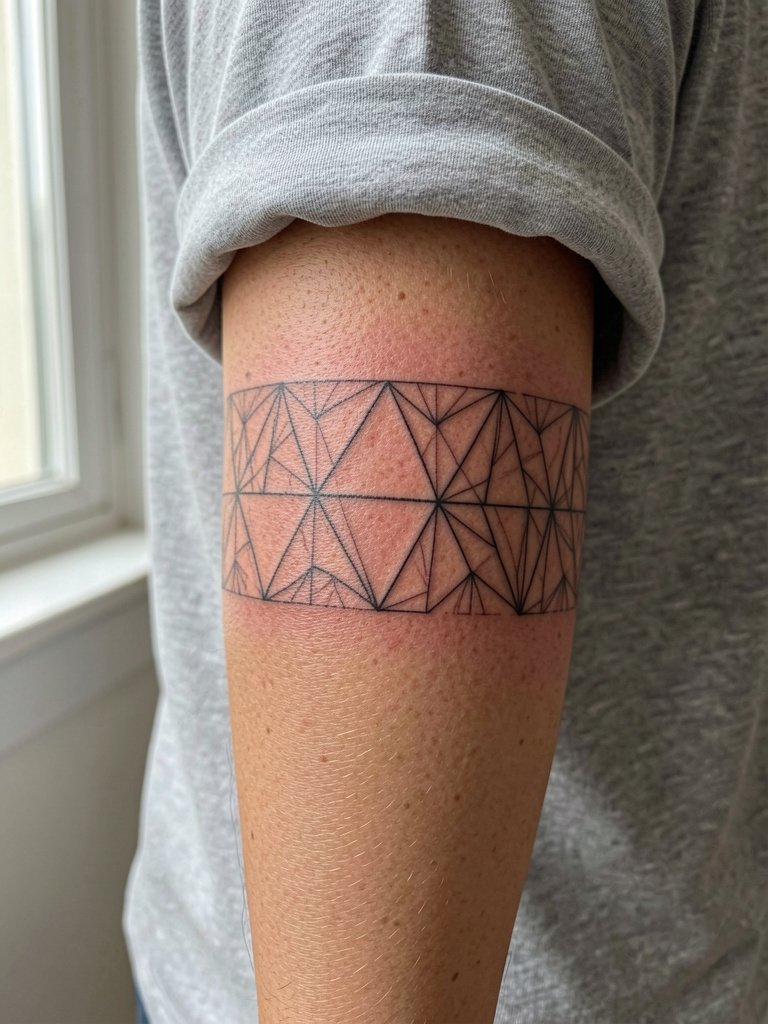
A full band of repeating fractal triangles makes a modern cuff that reads like jewelry. Ask for negative-space planning so each repeat has breathing room and the pattern will not "close up" as it settles. The inner forearm band is visible often, so design placement must account for wrist flex and daily motion. Plan a two-hour session and expect touch-up at about a year if you want the crisp edges to persist. For outfits, rolled sleeves or a linen shirt with the cuff folded give the band the clean frame it needs to read like a continuous piece.
4. Geometric Animal Hybrid: Wolf Skull with Polygon Eyes
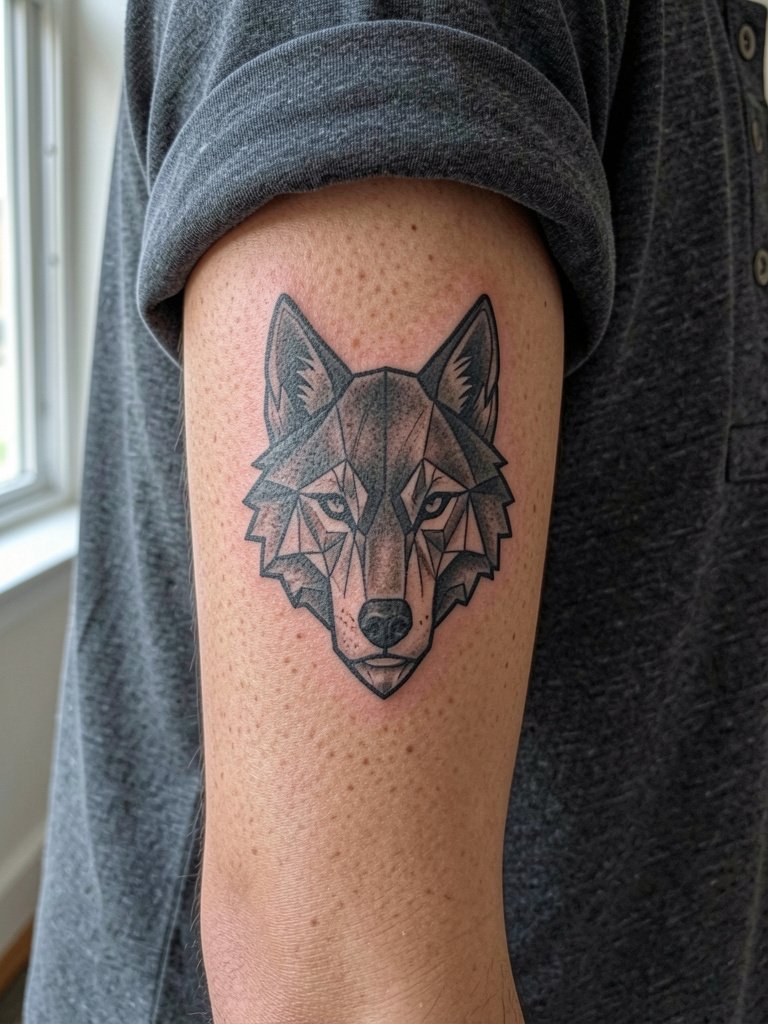
This hybrid blends animal imagery with sharp geometry so the composition needs room to breathe on the outer forearm. Discuss how much realistic skull shading you want versus clean polygons so the piece does not look muddled after healing. A common mistake is over-detailing the eye facets at small scale, which fills in over time. Expect two sessions totaling multiple hours for shading and facet work. When wearing a henley with sleeves rolled, the centered placement reads like a single bold panel, especially if paired with a minimalist metal watch on the opposite wrist.
5. Minimalist Dotwork Circle Grid
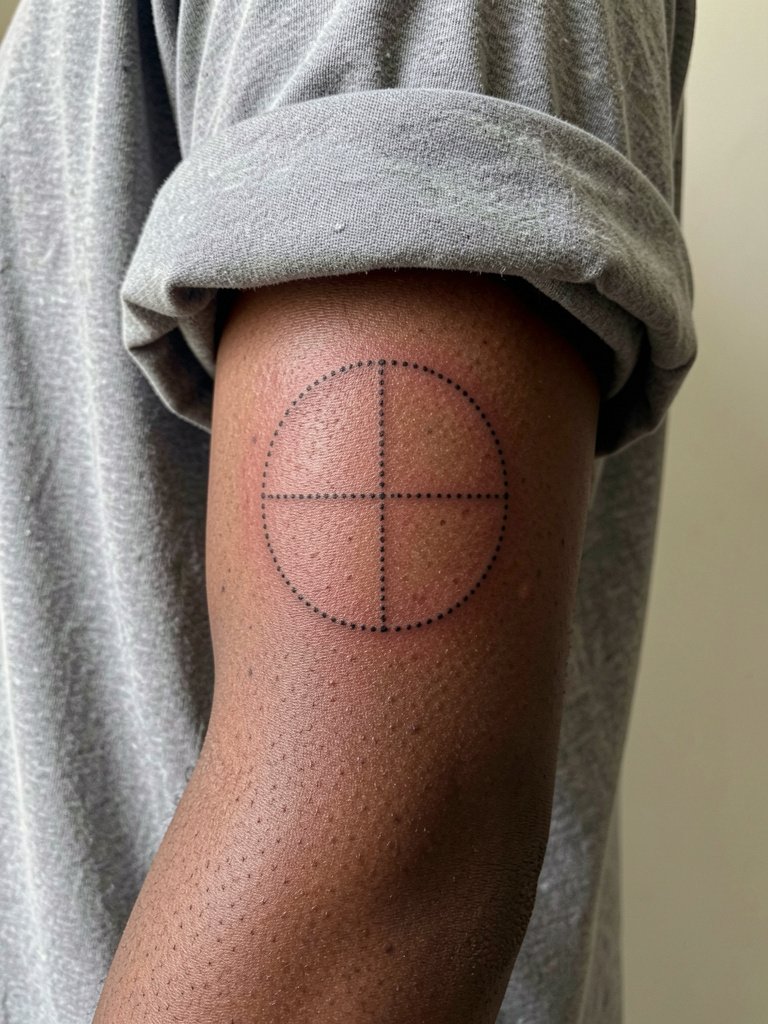
Dotwork grids give texture without heavy linework, but density matters for longevity. Ask for high-density stippling in key areas so the gaps do not open into a spotty look after two to three years. Inner forearm placement reduces friction but can still show softening on ultra-fine dots. This one usually fits into a single-hour session, and a touch-up at 12 to 18 months is common. To show it off, wear a rolled-cuff linen shirt in neutral tones so the dotted texture contrasts with soft fabric without competing patterns.
6. Optical Illusion Cube Stack
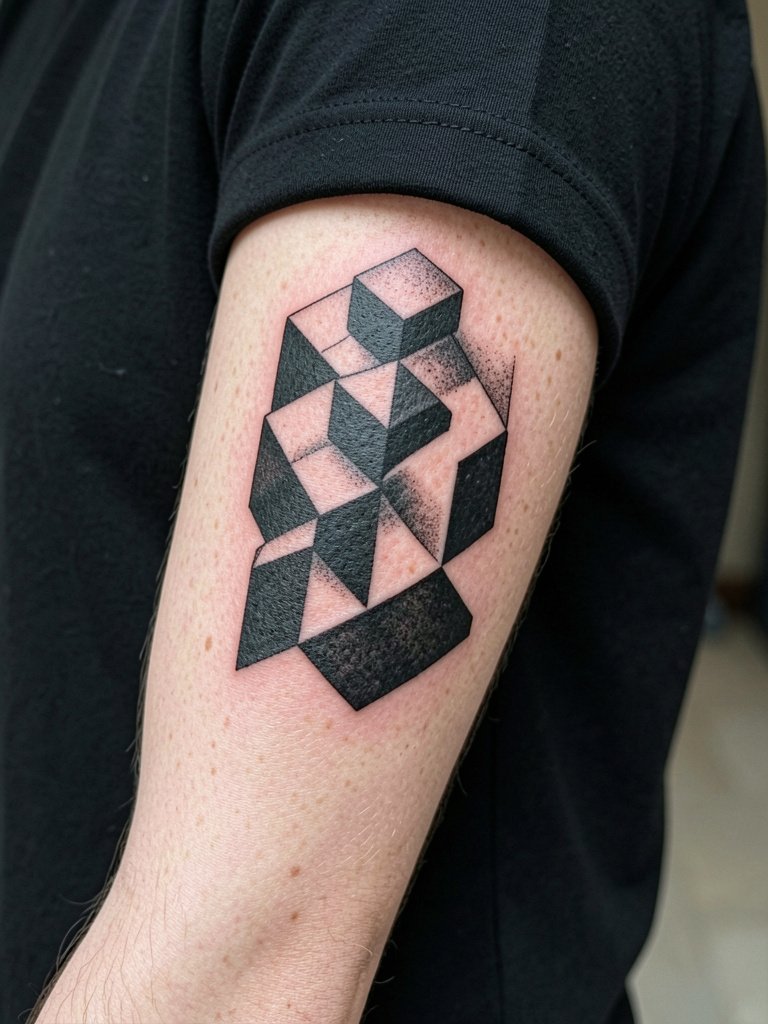
This optical stack is all about strong contrast and sharp edges. For the depth effect to hold, the artist must commit to saturated fills rather than soft gradients that blur. Note the difference in aging here: solid black keeps the illusion intact longer than stippling would. One session of two to three hours typically finishes a mid-sized stack. Pair with a plain dark tee and minimal accessories so the cubes remain the visual anchor when you are showing off the forearm.
Pack Smart
The products below help with session comfort and first-week healing for the small-to-mid forearm pieces above.
-
TattooGlow balm. Lightweight healing balm that some people prefer over thicker ointments for dotwork areas because it does not trap heat and helps dots settle cleanly.
-
Dr. Jart's calendula balm. Used by a few clients to reduce swelling after dense shading sessions on the forearm without heavy greasiness.
-
Zenah Healing Oil. A thinner oil option that works well for fine-line forearms where a heavy ointment can saturate the area.
-
Sudocrem healing cream. A gentle over-the-counter option some artists recommend for light scabbing control after day three when dotwork needs careful handling.
-
Hustle Butter Deluxe. A mainstream, well-known alternative to heavier ointments that many people find less occlusive for forearm pieces and comfortable during the first week.
7. Sacred Geometry Flower of Life
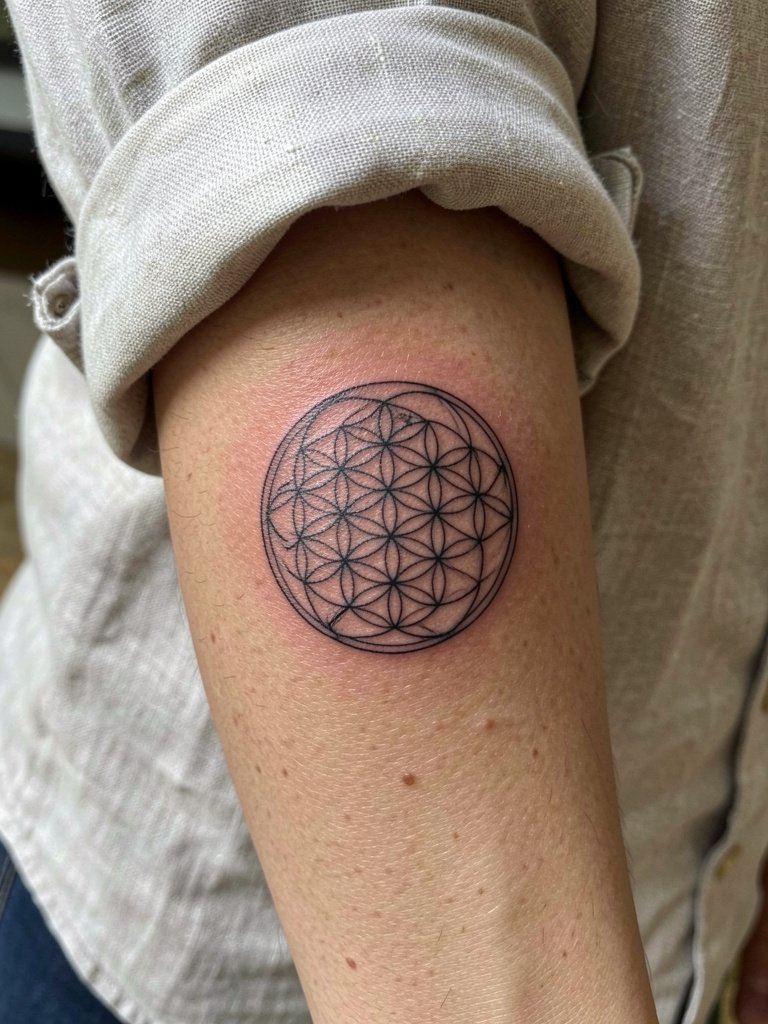
The Flower of Life requires exact spacing so circles do not merge as the skin moves. Artists split on this: one camp says inner forearm stretch causes fine-circle work to blur in one to two years. The other camp argues that slightly thicker lines and careful spacing let sacred geometry remain crisp, and they point to healed examples beyond two years. If you want a scaled mandala, plan two sessions and expect a touch-up window at about a year. For outfits, a rolled linen sleeve frames the piece without visual clutter.
8. Thin-Line Hexagon Wrap
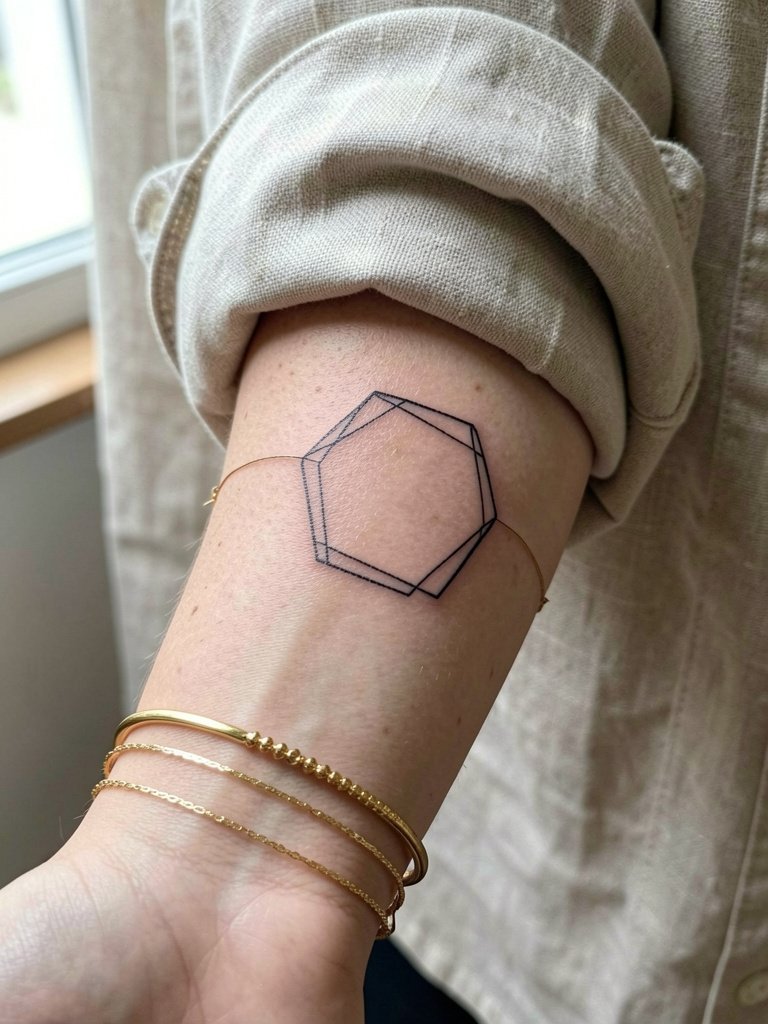
Delicate hexagon wraps read as jewelry when the spacing is right. Avoid going so thin that the facets vanish after healing. Ask for slightly heavier single-needle weight and a healed-example portfolio from the artist on similar skin tones. This design usually fits into a 90-minute session. Style it with a dainty gold stacked bracelet on the opposite wrist and a linen button-down rolled to mid-forearm so the wrap reads like an accessory.
9. Geometric Mountain Silhouette
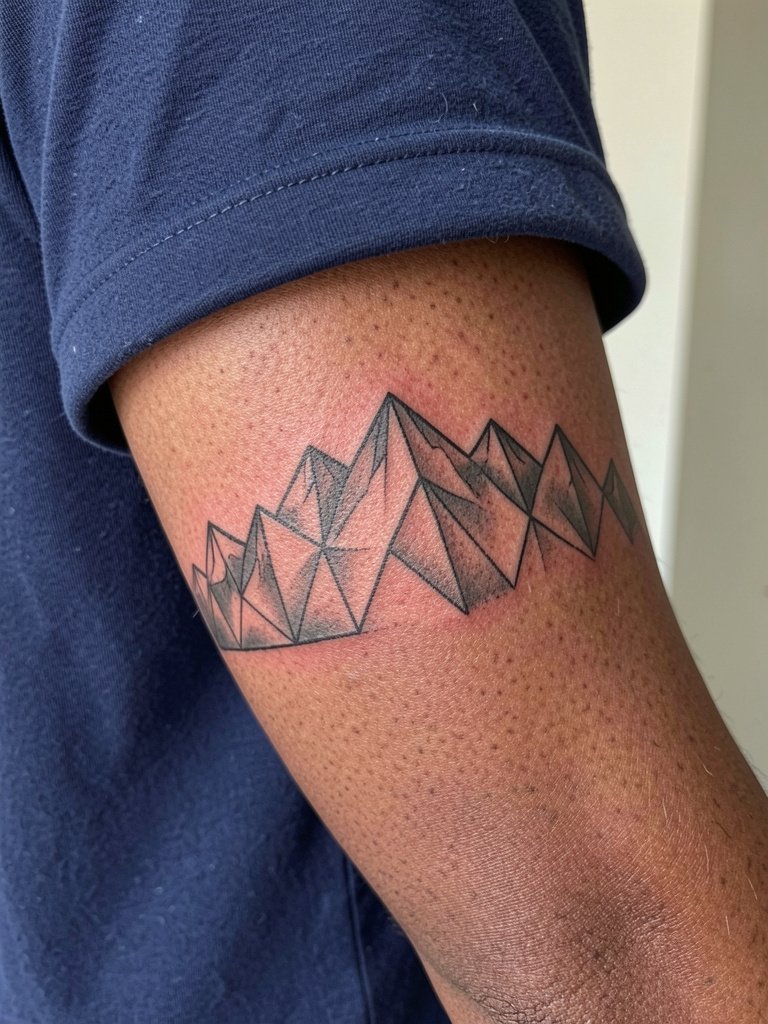
Facet-style mountain silhouettes combine outdoorsy imagery with geometric crispness that holds well on the outer forearm. Tell the artist you want bold contours for the triangular facets and subtle grey gradients only in recessed areas to avoid muddying. Two sessions are common for larger 4–5 inch pieces. This design pairs well with a plain short-sleeve tee so the angular peaks remain the focal point when your arm is relaxed at your side.
10. Minimalist Line Triangle Trio
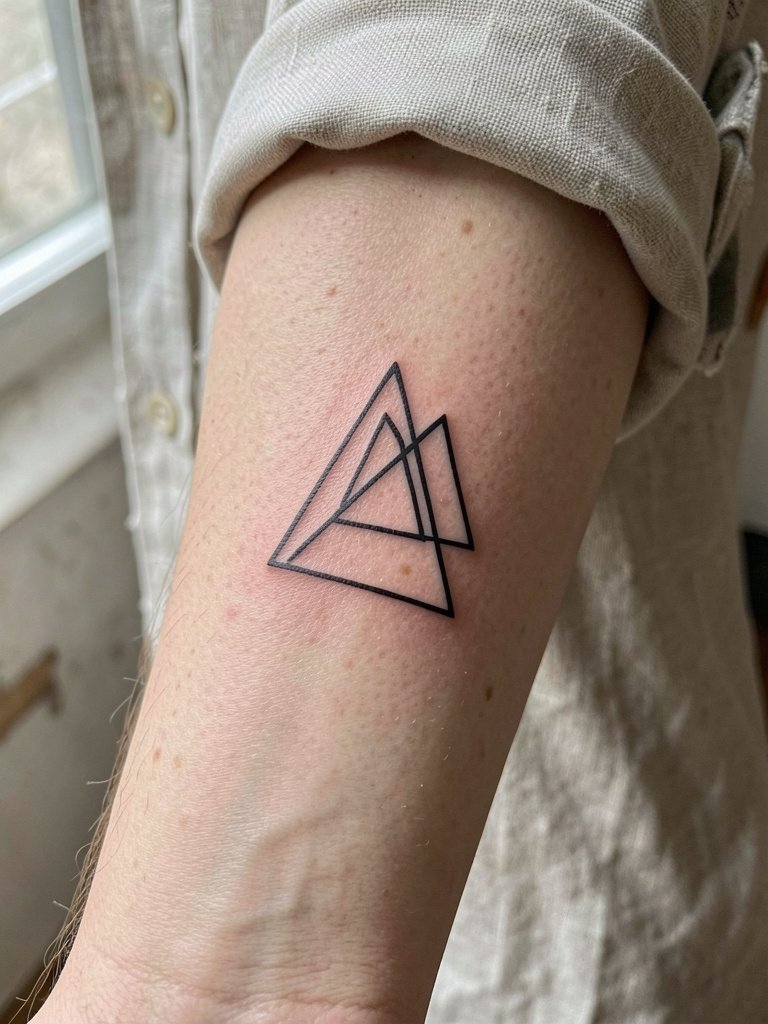
Simplicity can be the trickiest to keep. The biggest mistake is sizing these triangles too small. Ask for scale mockups at three and five inches so you can see how overlaps read on your actual arm. Single-needle detail will require precision and a one-hour session. A rolled linen sleeve in neutral tones makes the thin triangles pop without visual noise, and dainty stacked jewelry on the opposite wrist balances the look.
11. Bold Geometric Sunburst
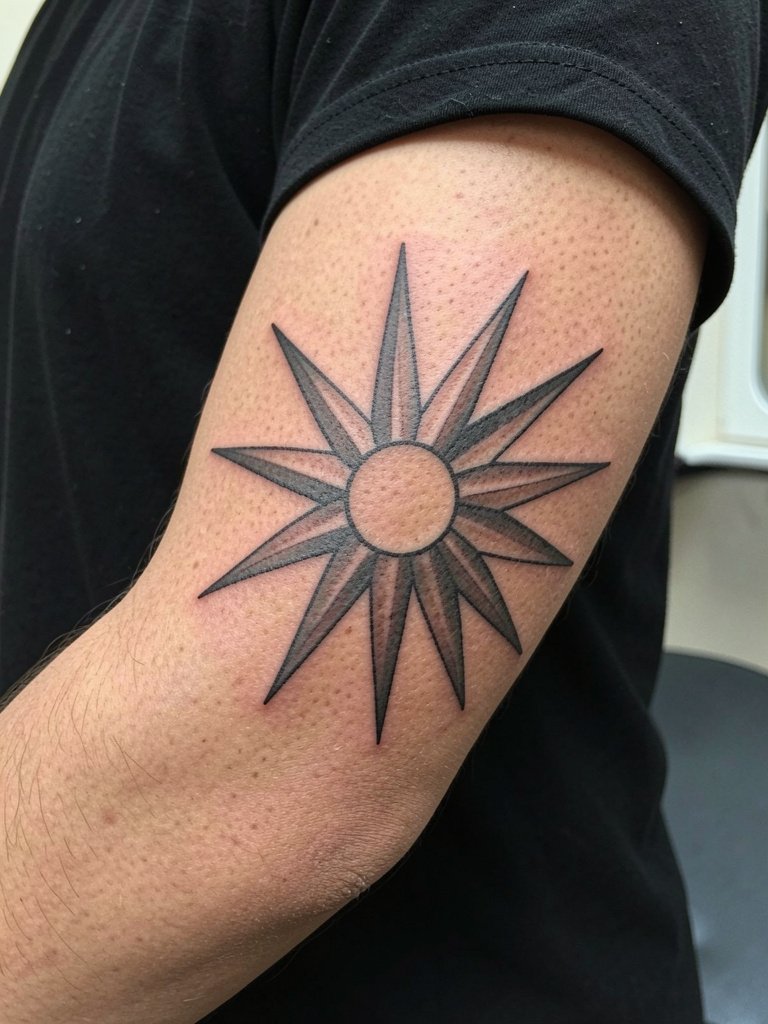
Sunbursts benefit from simple, bold structure. Request thick outlines and solid ray fills rather than thin decorative rays that can blur. A single-session mid-sized sunburst often takes two to three hours depending on saturation needs. This style ages predictably on the outer forearm because the skin is more stable. Pair it with a solid tee and a leather cuff on the opposite wrist to keep the sunburst as the visual focal point.
12. Dotwork Star Cluster
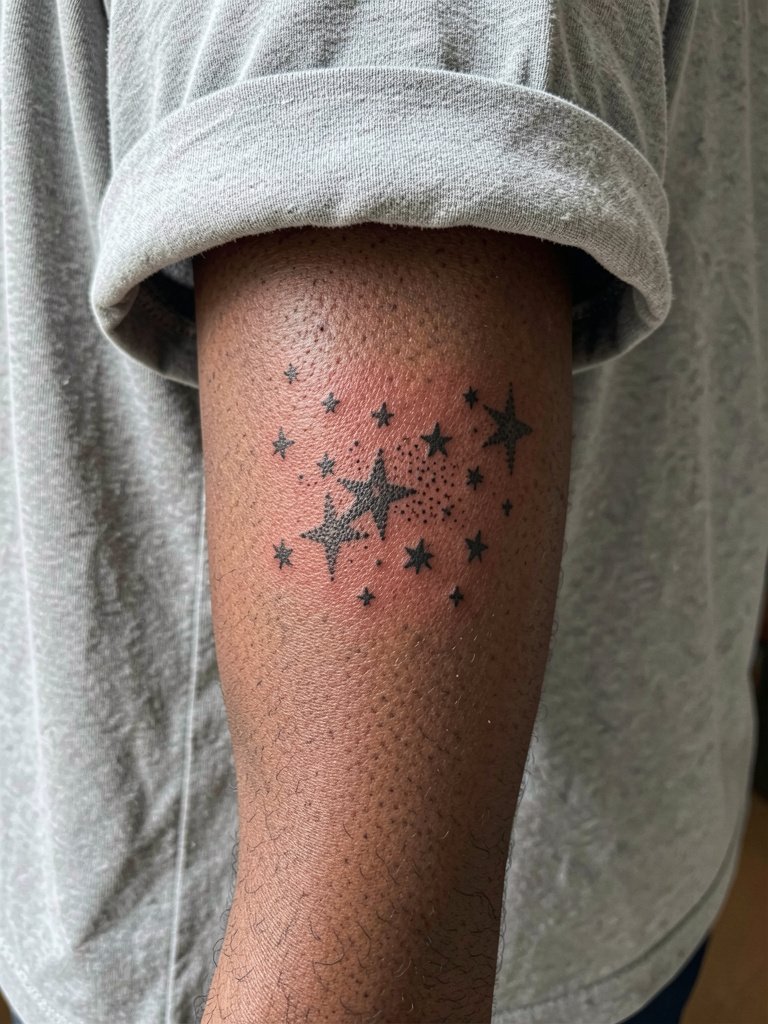
Star clusters read like texture and can be scaled to sit under other pieces later. Dot density is the key decision, because too-sparse stippling opens into spotty gaps after a few years. Specify high-density dots in focal stars and softer dots in the background to maintain depth. Sessions are usually an hour or slightly longer for clusters. For photos and everyday wear, neutral rolled sleeves help stars pop while avoiding busy patterns that compete with the stippling.
13. Abstract Polygon Mask
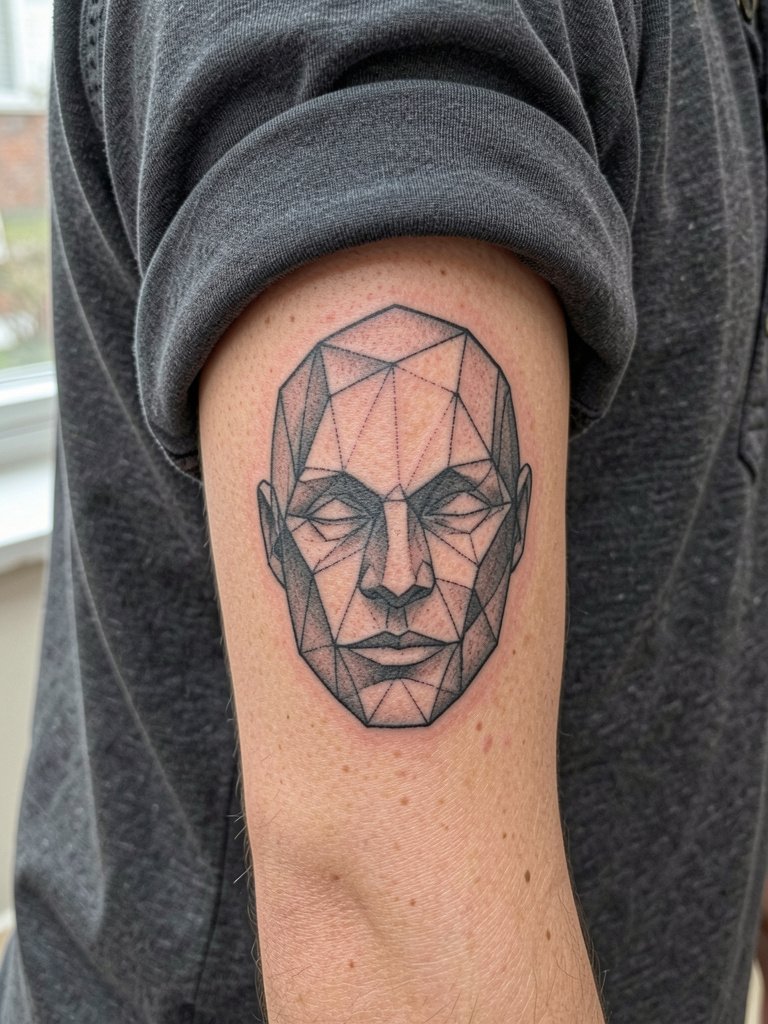
This portrait-like geometric mask needs contrast planning so facial planes remain legible as the piece heals. Ask the artist how they will adapt line weight across polygons so the face does not flatten over time. Two sessions may be necessary for varied line work and shading. Centered on the outer forearm, this design looks best with a rolled sleeve henley and a minimalist silver watch on the opposite wrist to balance the visual weight.
14. Thin-Line Circle and Line Intersection
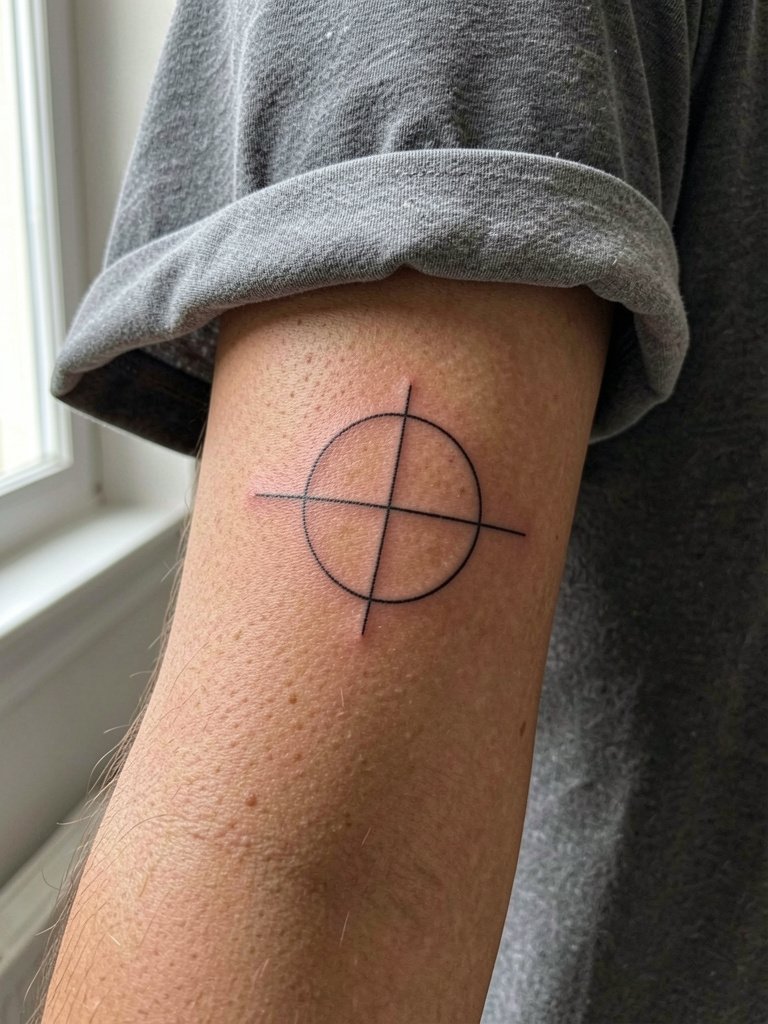
Clean geometry like a circle intersected by a line feels minimal, but the inner forearm will test ultra-thin work. The common error is insisting on 0.2mm weight for long-term permanence. Request a hair-thicker line and a healed example of similar pieces on inner forearms. A quick 45-minute session will lay it down, and a 12- to 18-month touch-up is common. This piece looks sharp with a rolled linen cuff and a simple bracelet to keep attention on the negative space.
15. Geometric Elephant with Polygon Body
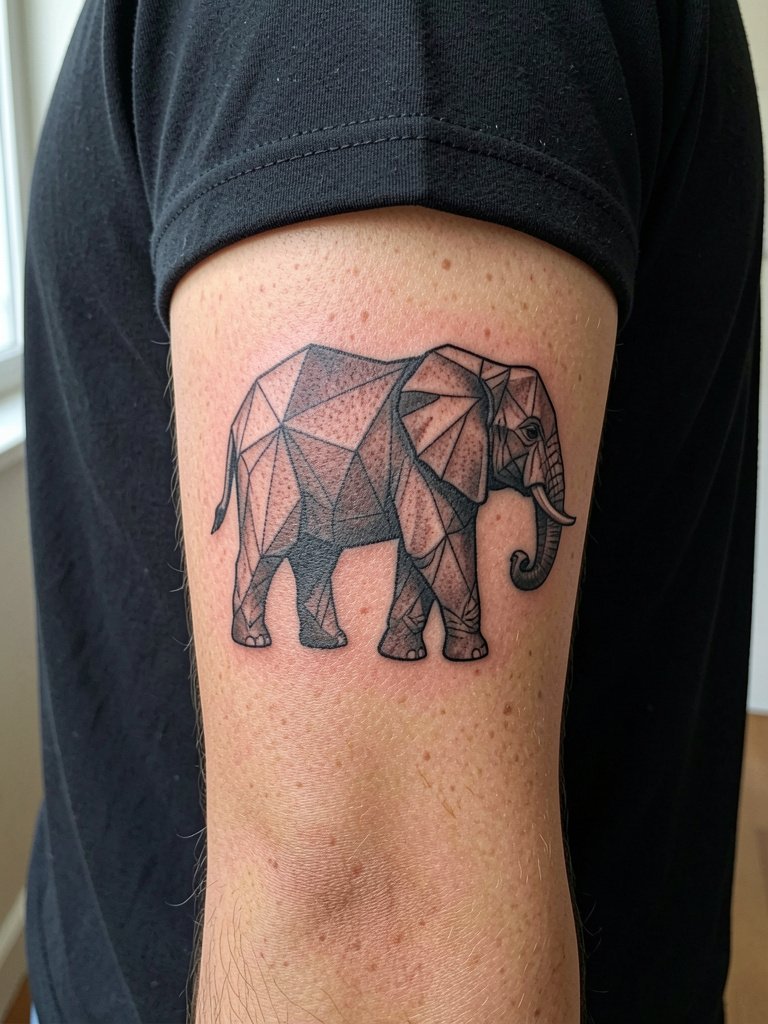
Animals translated into polygons need balanced silhouette and negative space so the recognition stays clear at distance. Discuss scale with the artist so the elephant's trunk and ears do not compress into indistinct shapes after healing. Expect two sessions for facet shading and border definition. A plain short-sleeve tee keeps the elephant readable in everyday wear, and a minimalist bracelet can frame it when your arm is relaxed.
16. Linear Constellation Band
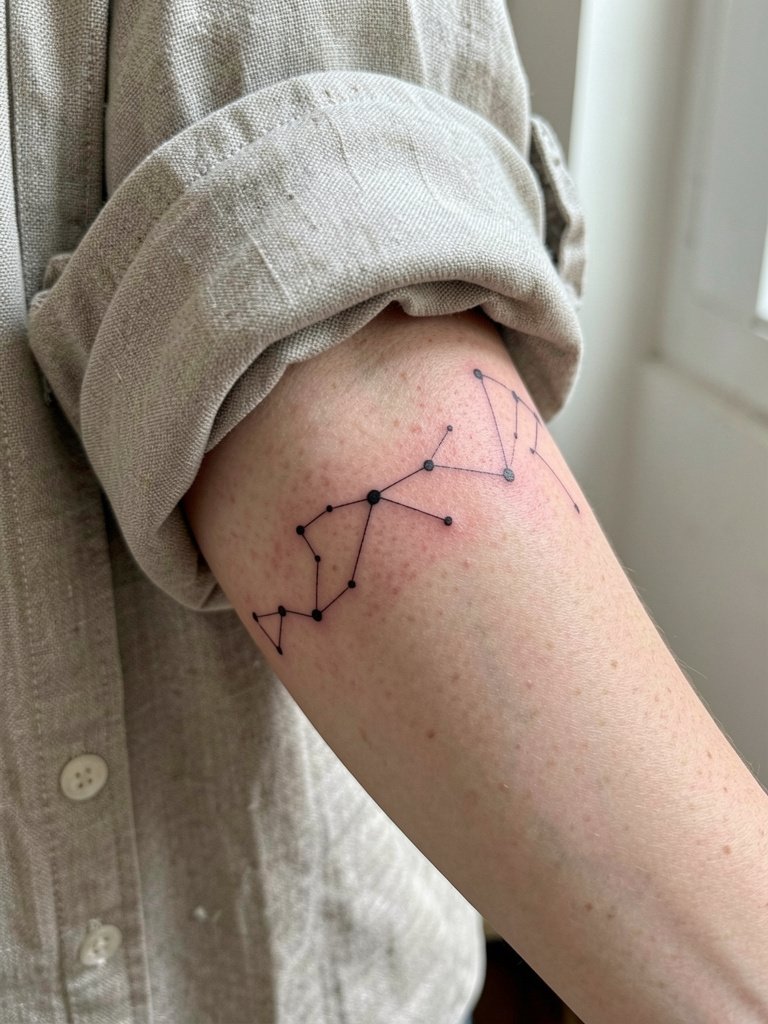
Constellation bands look delicate but need dot spacing that holds. Specify denser dot anchors and slightly heavier connector lines so the network does not blur. A single two-hour session often suffices. For styling, roll a linen sleeve and wear a slim midi bracelet on the opposite wrist to suggest a celestial cuff effect. This placement is ideal for stacking with future small pieces.
17. Stippled Geometric Leaf Panel
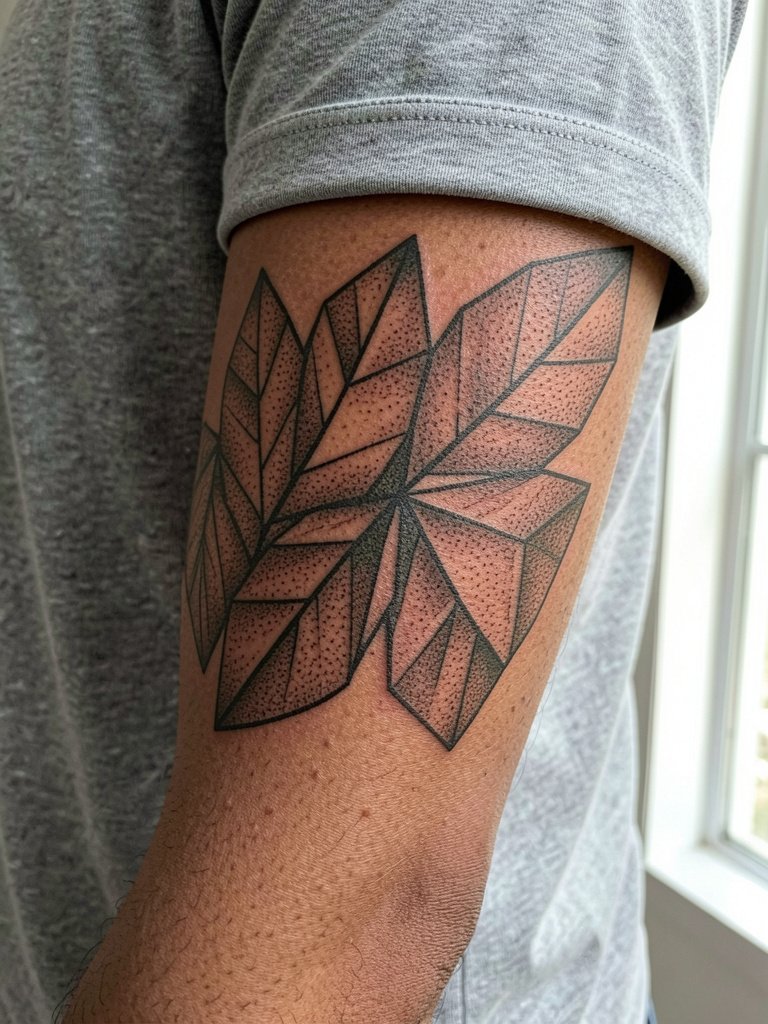
Nature motifs built from geometry rely on controlled stippling for texture. Discuss the stipple density for focal areas so the leaf veins remain readable at two and five years. Sessions vary by panel size but expect two hours for mid-sized work. This piece pairs well with a solid tee and a minimal watch on the opposite wrist to let the leaf panel be the visual anchor.
18. Interlocking Triangle Sleeve Starter
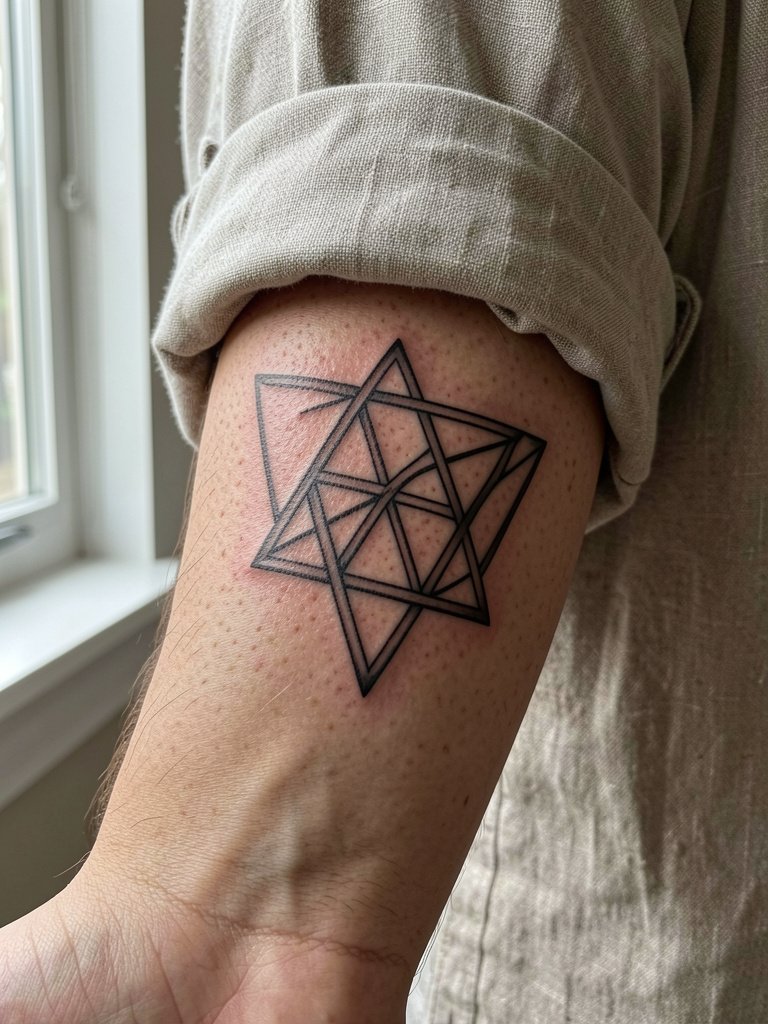
If you plan to patchwork into a sleeve later, start with scalable repeats and leave intentional gaps for future connectors. Tell the artist you want the flow to the elbow and wrist mapped now so later pieces align. That consultation detail prevents mismatch when new segments arrive. A starter band can be done in one two-hour session. For showing during the build, rolled sleeves and a slim bracelet keep the starter readable without overwhelming the rest of your wardrobe.
19. Negative Space Arrow Panel
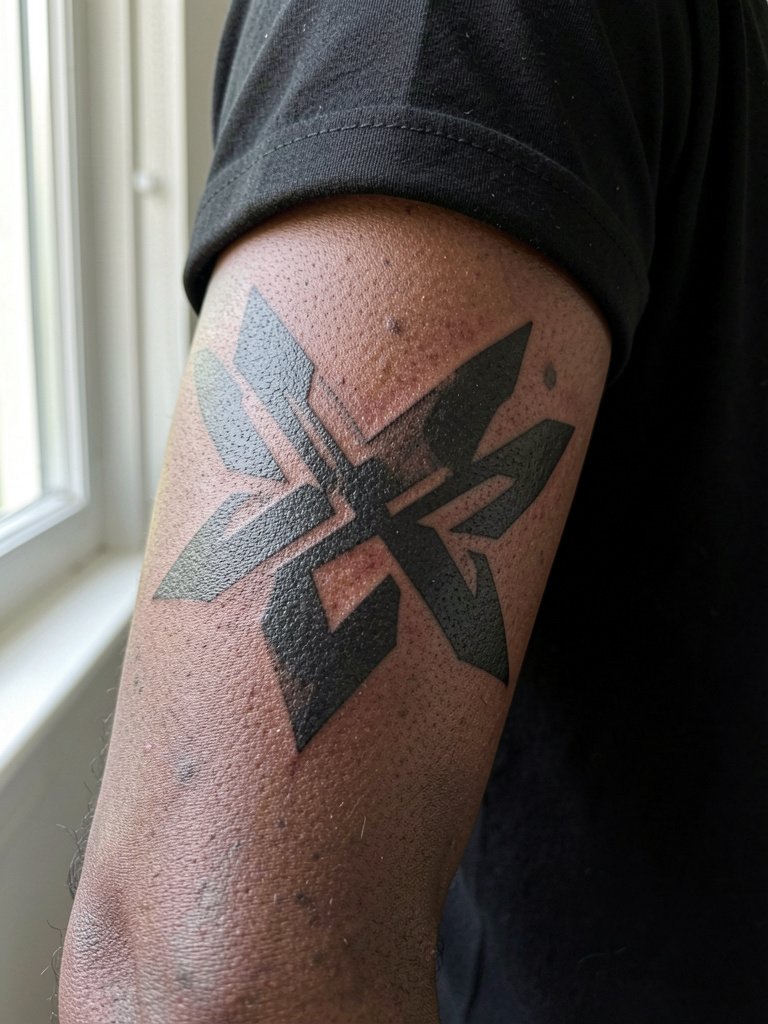
Negative-space techniques rely on heavy saturation around the spared areas, so this is a blackwork-forward approach that ages predictably. Ask for dense black fills and clear skin islands rather than thin outlines that may soften. A single longer session usually handles this work. For wardrobe, a plain tee or a rolled sleeve henley keeps the arrow graphic crisp in photos and in person.
20. Geometric Compass with Coordinates
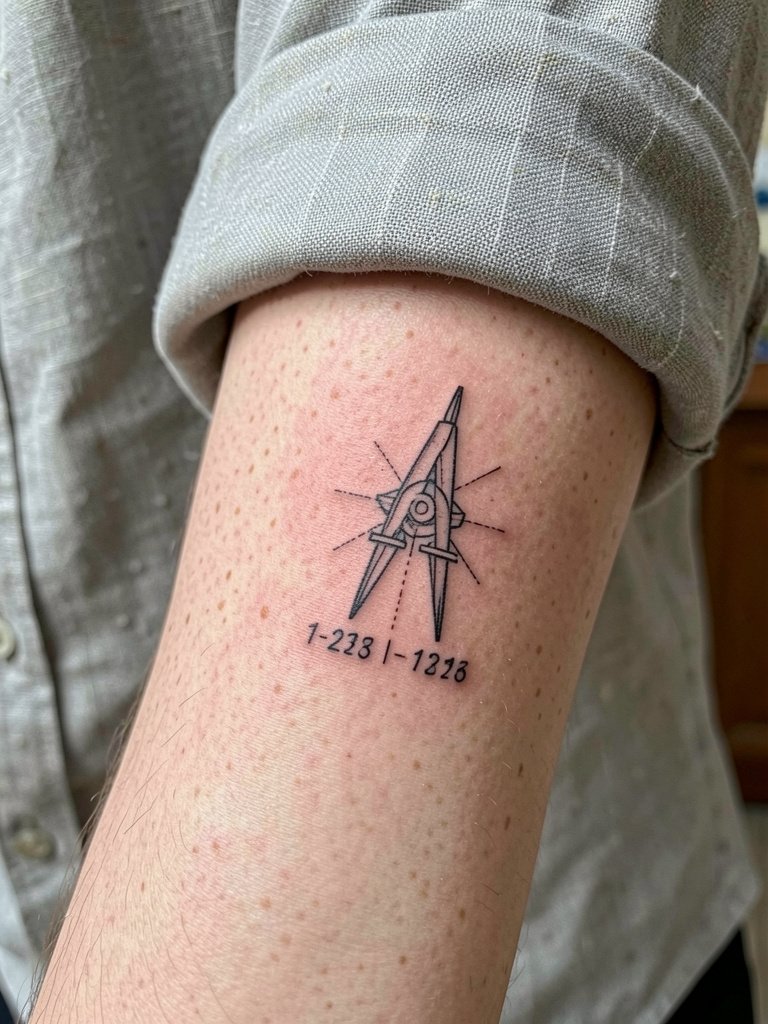
When lettering or numbers appear in geometric work, specify exact text and font size so the artist can mock up legibility. Small coordinates need a slightly bolder type than you might think to remain crisp. This piece fits a one- to two-hour slot. For display, wear rolled cuffs or short sleeves so the compass aligns visually with a rugged watch on the opposite wrist.
21. Tessellated Triangle Sleeve Panel
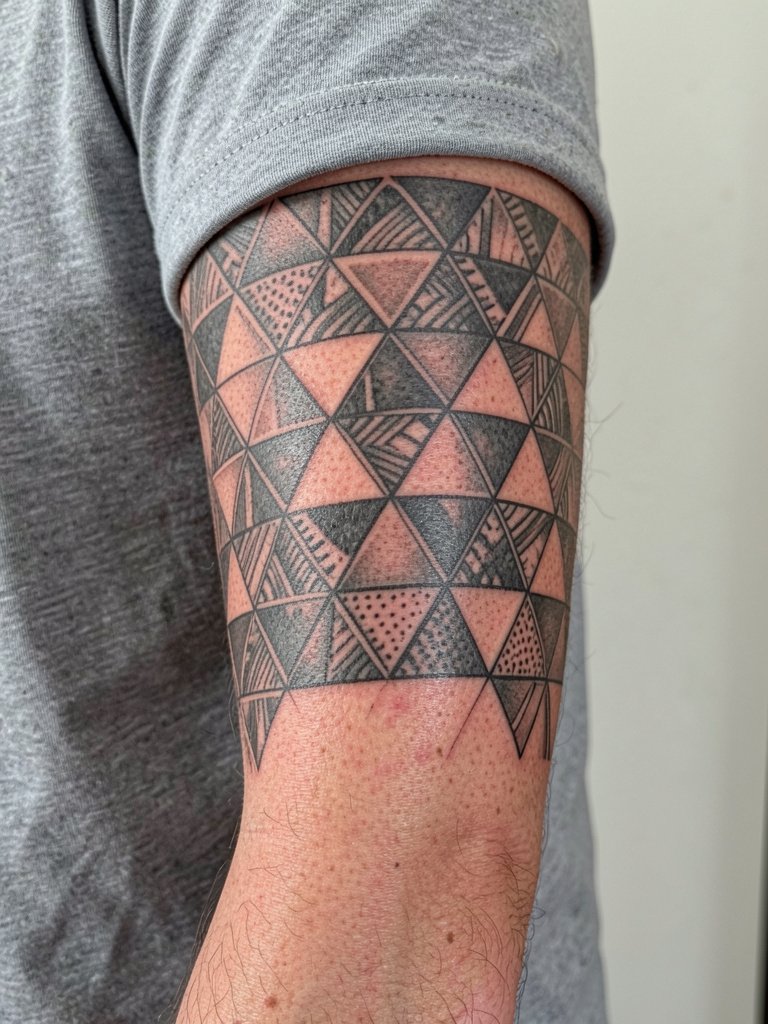
Large tessellated panels need planning for how they follow the arm's taper. Ask how the design will respond to the forearm's changing width so patterns do not distort near the wrist. Multiple sessions may be required for shading and alternating fills. The finished panel looks intentional with a plain tee and either a leather cuff or a metal bracelet on the opposite wrist.
22. Micro-Realism Geometric Eye
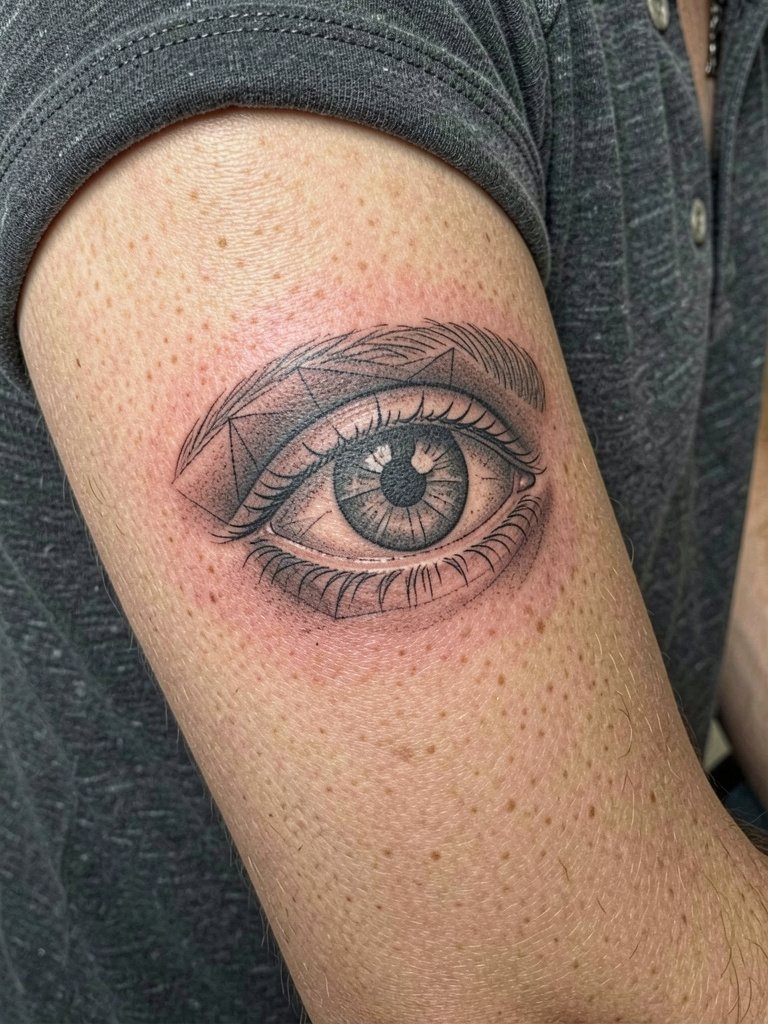
A small eye blends realism and geometry so confirm exact scale and contrast with the artist. Micro shading requires precision and may soften if placed too small on forearm movement zones. Expect a session around two hours for careful shading. Pair with a rolled sleeve henley to let the pictorial detail sit as the focal point when you are standing with your arm relaxed.
23. Spiral Mandala Band
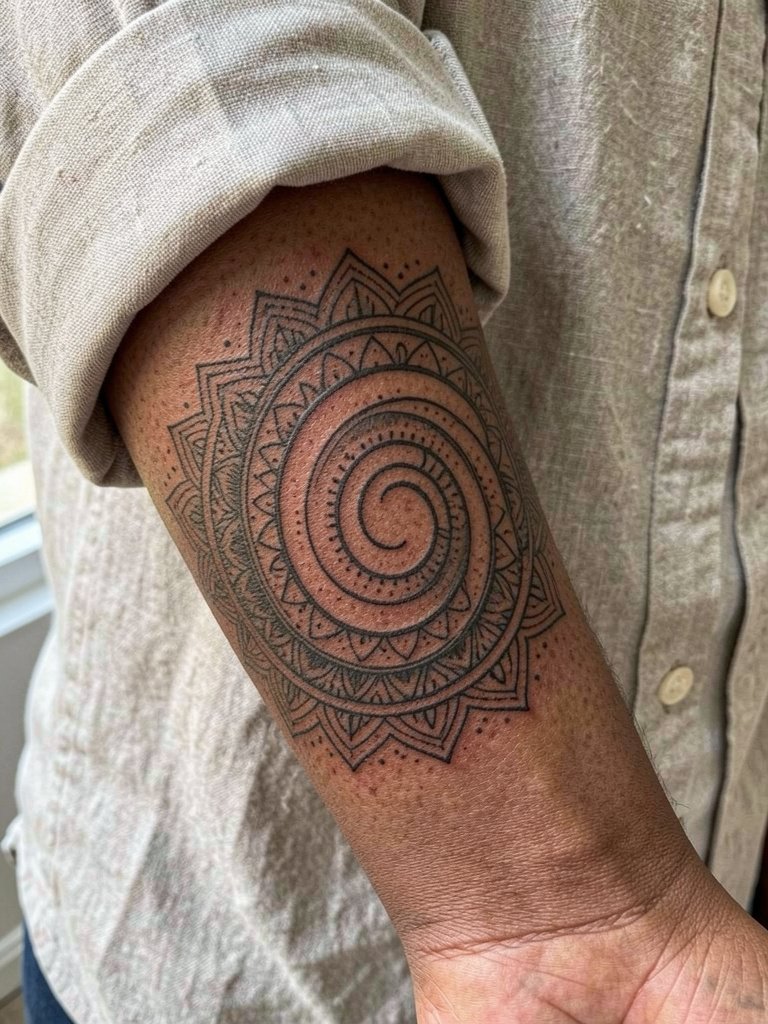
Mandala bands are tempting to scale large on inner forearm, but weight changes and daily stretch can affect symmetry. If you expect body changes, consider moving the layout to the outer forearm or break it into smaller bands. This design typically requires two sessions for consistent line rhythm and stippling. For outfits, rolled linen sleeves in neutral colors help the spiral read as a contained graphic when you are showing the arm.
24. Geometric Waveform Panel
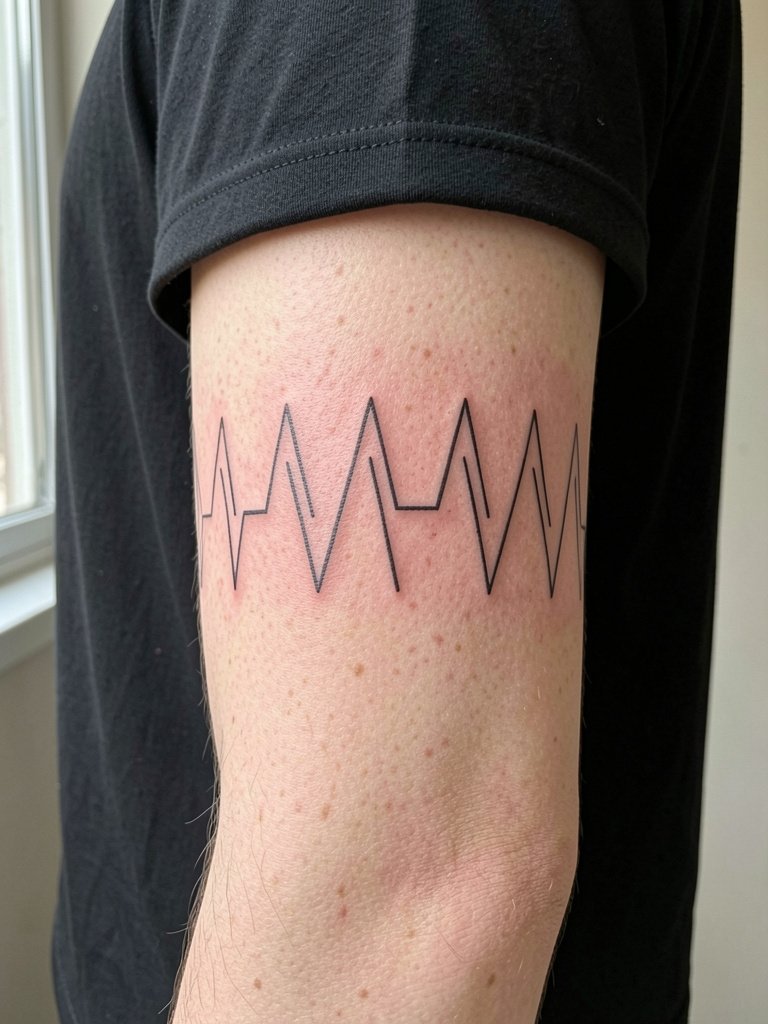
Waveform panels rely on consistent spacing for the ripple to read fluidly. A common misstep is letting curves tighten near the wrist; ask for a mockup that maps the waveform along your arm’s natural line. One to two sessions will set the rhythm and allow for smoothing. Wear a simple tee to keep the waveform visible without competing patterns.
25. Concentric Polygon Sun
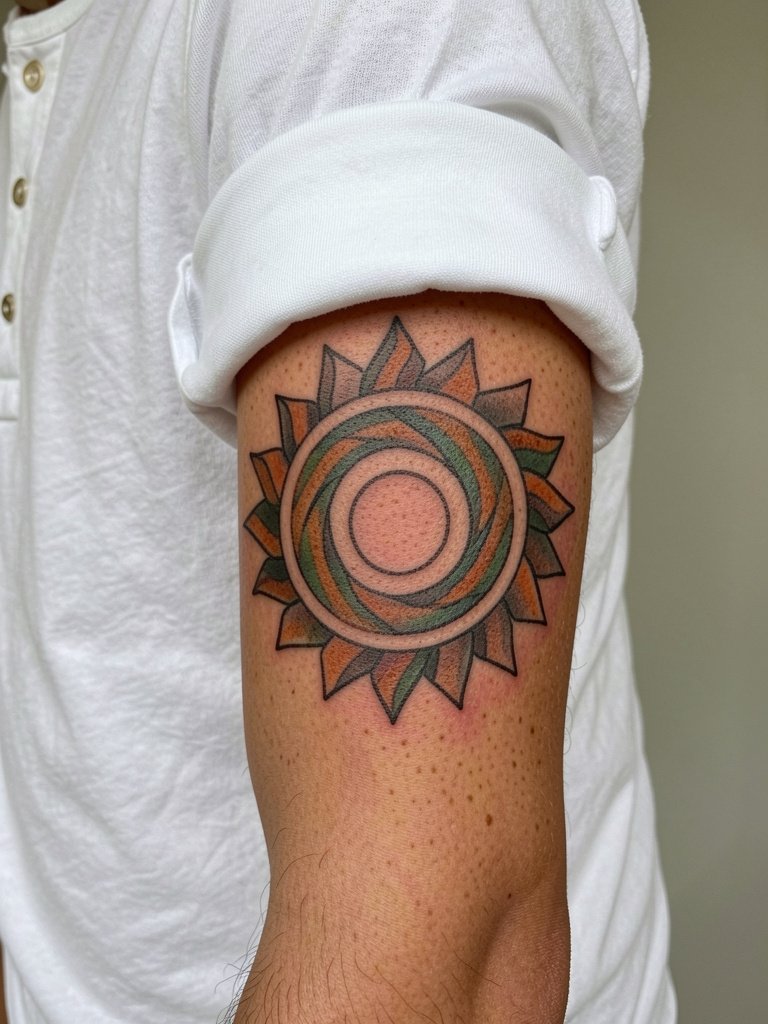
Alternating filled rings create a strong focal medallion. Ask the artist to map negative space so each ring holds and the center does not compress visually. Two sessions are common for a larger medallion. A rolled-sleeve henley and a minimalist watch keep the medallion in balance with your overall look when you show the arm.
26. Geometric Arrow and Floral Fusion
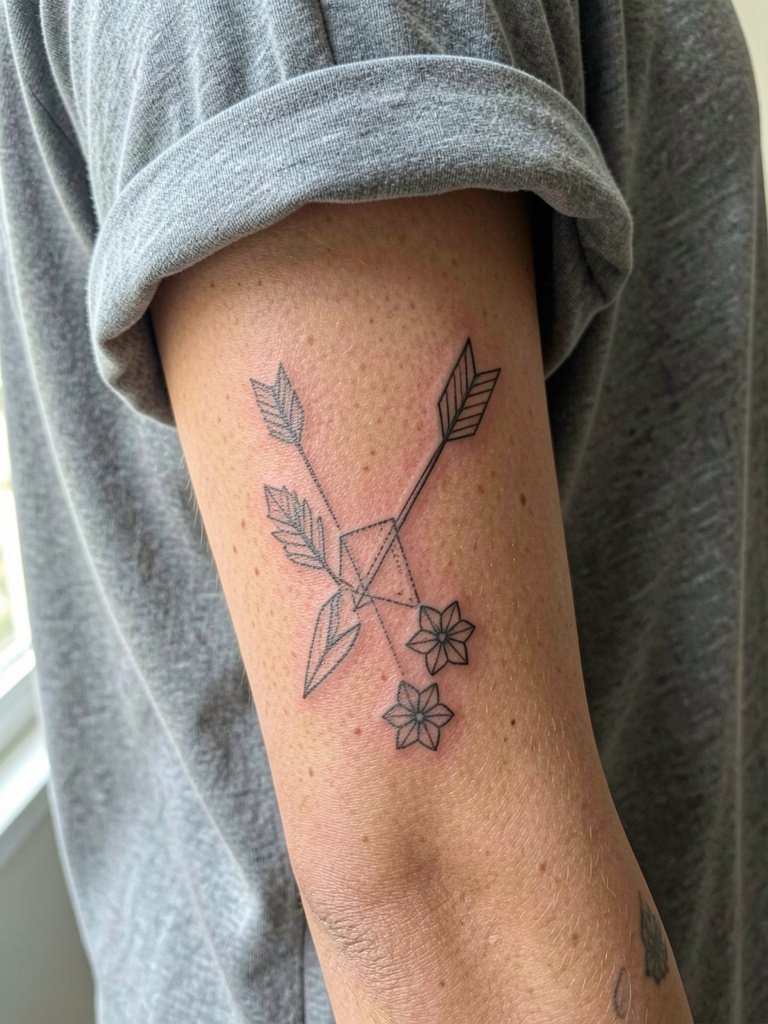
Combining botanical hints with geometry softens the silhouette but keeps structure. Discuss which elements you want solid and which should be airy so the floral polygons do not collapse into a blown-out mass. Typically one to two hours depending on detail. Pair with a rolled linen sleeve to show both the arrow direction and the floral nodes without crowding the eye.
27. Optical Ring of Cubes
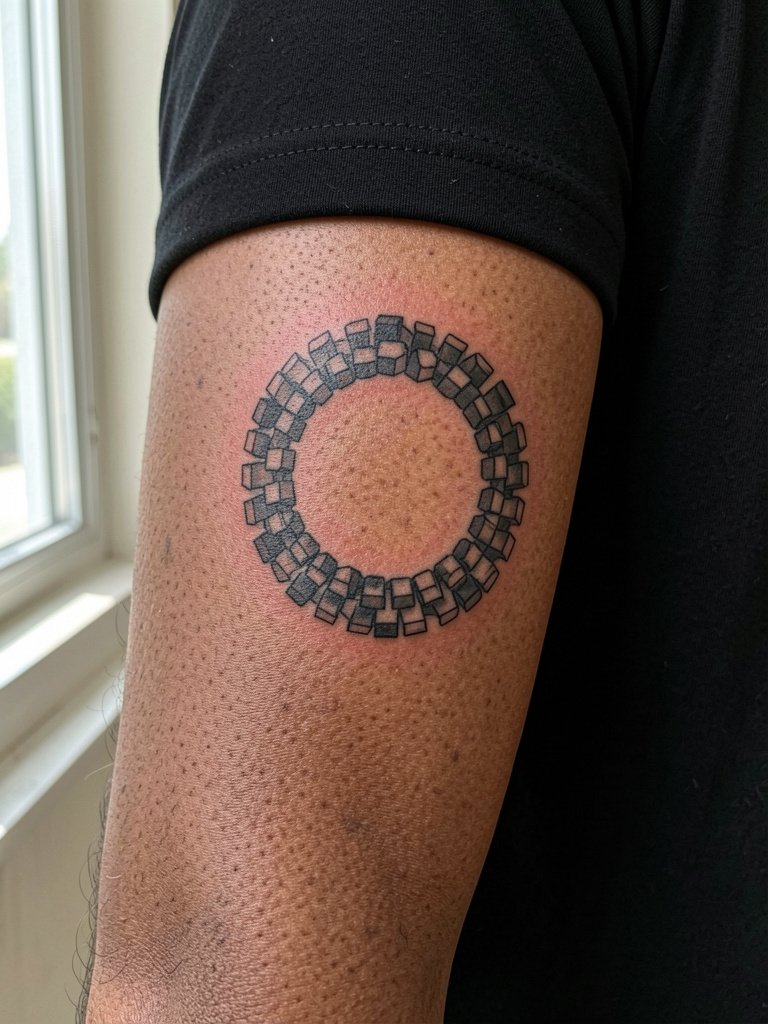
Small repeating cubes in a ring create a hypnotic effect but require dense fills to maintain clarity. Ask for solid blacks and clear negative edges so the illusion reads at arm’s length. Expect one two-hour session for a mid-sized ring. Keep the rest of your outfit simple so the optical ring remains the attention point.
28. Patchwork Geometric Trio
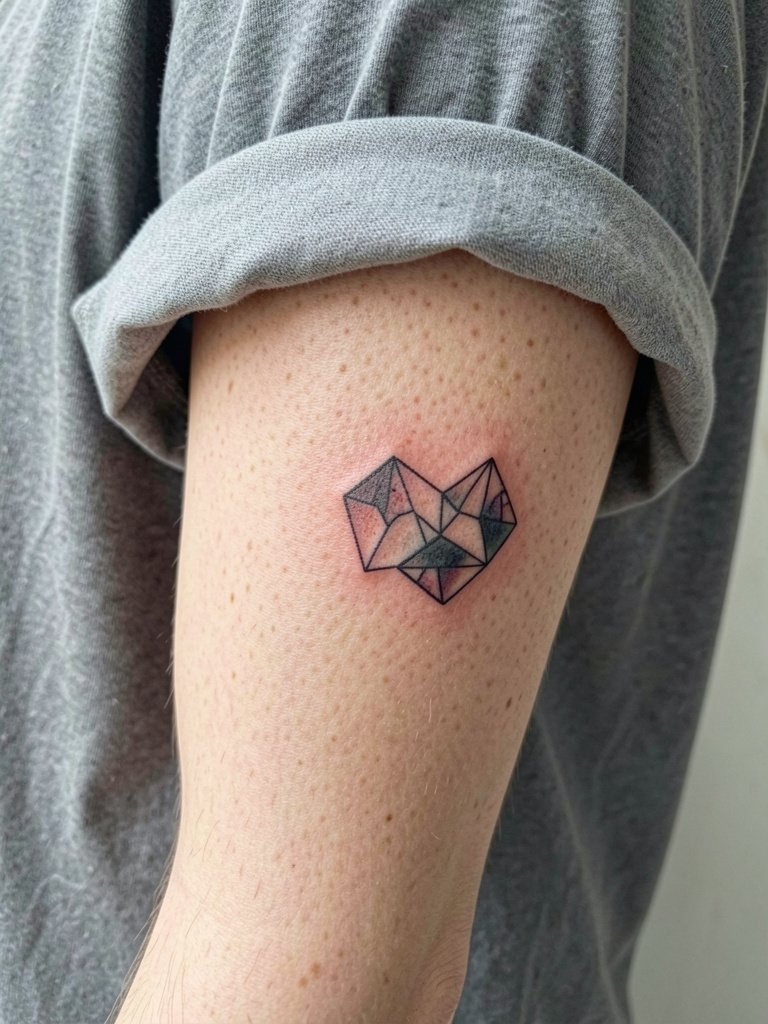
If you plan a gradual sleeve, start with distinct modules sized for later connectors. Tell the artist the long-term plan and have them leave anchor points for future pieces. This conversation avoids mismatched scale and orientation down the road. Each module is usually a short appointment. For early stages, rolled cuffs and simple bracelets present the pieces like curated jewelry until the sleeve is complete.
29. Imperfect Line Minimalism
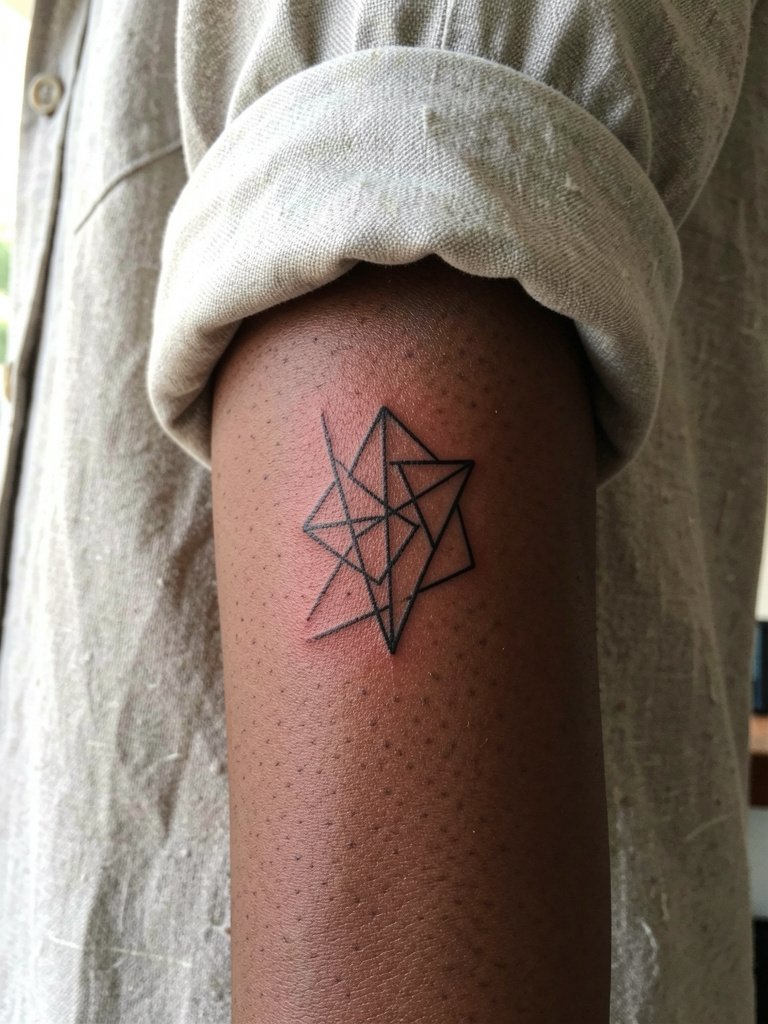
Intentional imperfection is a fresh angle that keeps geometric work human. If you prefer that aesthetic, bring references showing the exact amount of wobble you want so the artist can scale it appropriately. One session of an hour typically suffices. A rolled linen cuff or olive button-down keeps the imperfect minimalism visually intentional when you show the forearm.
Frequently Asked Questions
Q: Which forearm side holds fine line geometry best, inner or outer?
A: The outer forearm generally holds fine line better because the palm-down skin stretches less. Some artists insist inner forearm fine line blurs within two years, while others say slightly heavier line weight and wider spacing keep it stable. If you want inner forearm placement, request healed photos of similar work and plan for a touch-up at 12 to 18 months.
Q: Should I pick dotwork or solid black for longevity on my forearm piece?
A: Solid black fills usually age more predictably on forearms because dots can open up and look spotty after three years if spacing is too sparse. Other artists show dense dotwork that has stayed intact past five years when they used intentional high-density stippling. Decide which trade-off you accept and ask for density samples from the artist before booking.
Q: Where can I find healed examples and local artists without naming anyone directly?
A: Search hashtags like #geometricforearm, #finelinesacredgeometry, and #blackworkmandala on Instagram and TikTok and filter results by location. Use Tattoodo to search keyword combos such as "fine line geometric forearm" and look for portfolios that show healed shots. Reddit communities like r/tattoos and r/finelinetattoos often share peer recommendations and healed examples across skin tones.
Q: Do numbing creams help for long forearm sessions and are they safe to use?
A: Some people use numbing cream for sessions longer than three hours to reduce shaking and stay comfortable, and clinics report it can be effective when applied properly. Others caution that numbing can mask pain feedback and lead to over-penetration and extra trauma. If you opt for numbing, discuss timing and expected effects specifically so the artist can work with controlled depth.
Q: What should I wear to the appointment for a forearm tattoo?
A: For inner forearm work, wear a loose short sleeve or a button-down you can roll without tight cuffs. For outer forearm pieces, a plain short-sleeve tee in black or navy works well so the artist has clear access and your clothing does not compress fresh ink. A linen button-down or henley is a good show-off option after healing and can be found via searches like linen button down shirt women.