
Bold geometric lion work looks everywhere on feeds right now, and the gap between what photographs great and what actually lasts is wider than most people expect. Thin single-needle geometry photographs crisp on day one, but spacing and line weight decide whether the mane reads clearly at year three. Read through these variations to pick designs that hold texture, read at a distance, and fit the clothing you want to wear while showing them off.
1. Inner Forearm Geometric Lion Linework Study
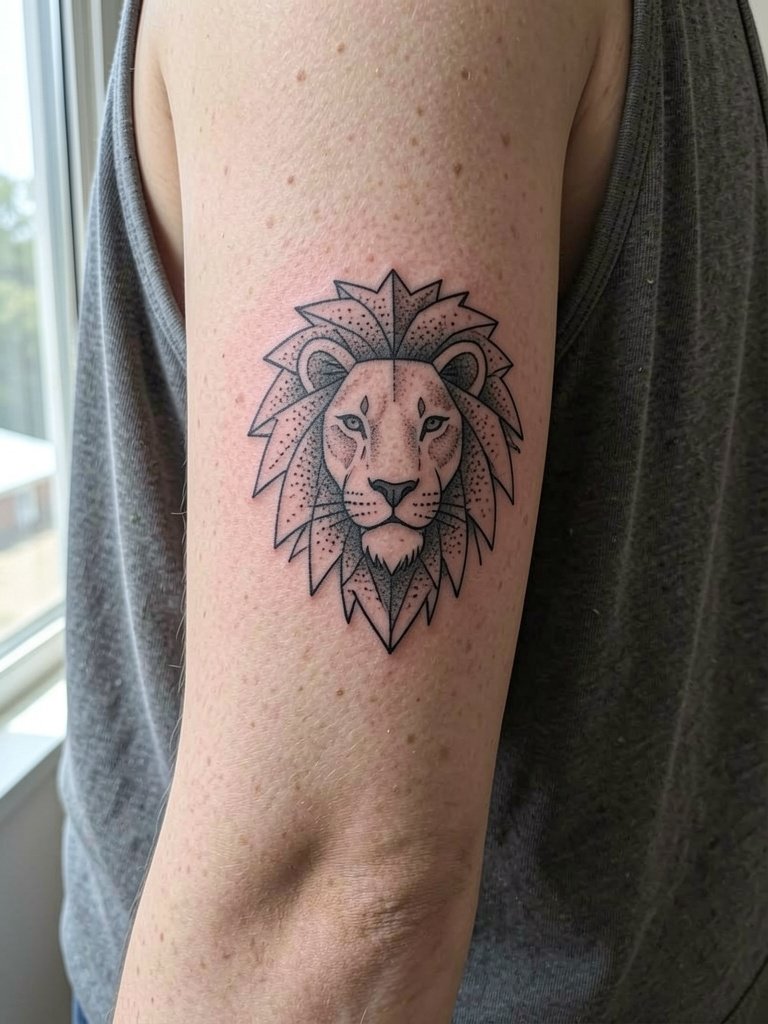
Pick this when you want readable geometry that moves with your arm. I recommend a hair heavier line weight than a single-needle reference so the triangles stay distinct after two years. Bring two scaled references to the consultation so the artist can mock the piece at three inches and five inches on your forearm. Expect a one to two hour session for a mid-sized piece and light sting from the underside of the forearm. Common mistake is asking for ultra-fine filigree without room for spacing, which leads to merging lines and a blurred mane. For showing it off, roll up sleeves and pair with loose linen shirts that keep the forearm visible.
2. Geometric Full Mane on the Outer Bicep
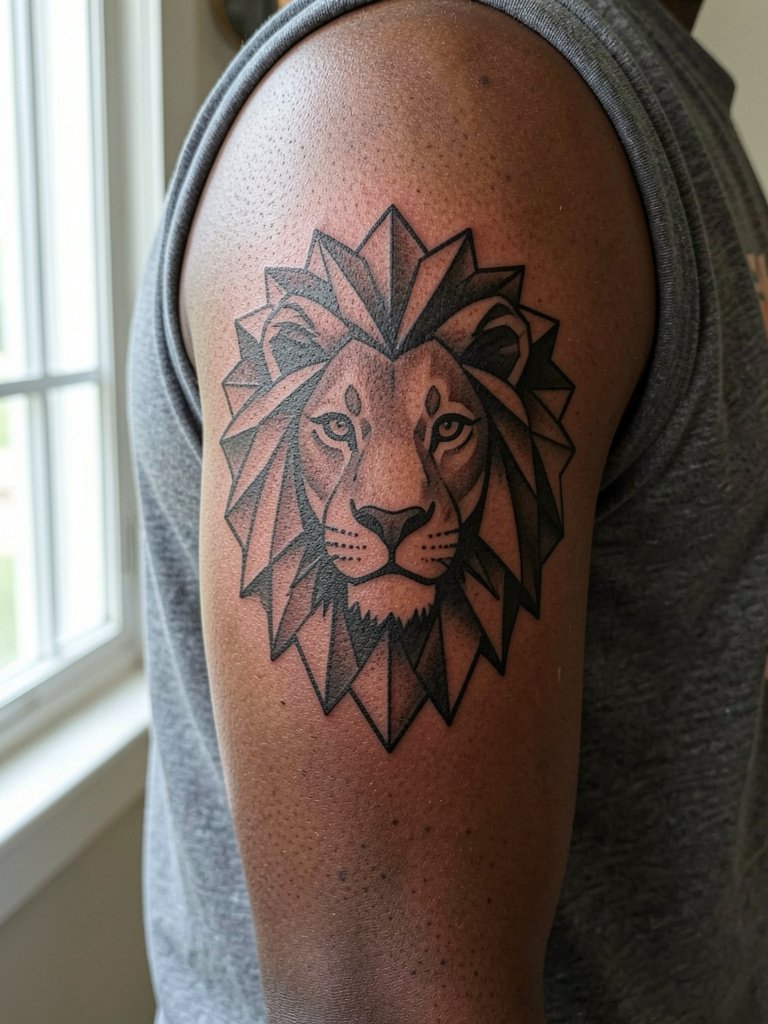
This composition uses heavier outlines and flat fills so the silhouette reads from a distance. Demand balanced saturation on the fills during the session so the black blocks stay bold rather than patchy. Expect two hours of work with intermittent breaks for shading. This placement tolerates more saturation than inner forearm work, so touch-up needs are less frequent. A frequent error is cramming too many tiny facets into the mane, which makes the piece look noisy as it ages. Pair with sleeveless muscle tees to showcase the composition, especially during summer.
3. Minimalist Geometric Lion on the Wrist
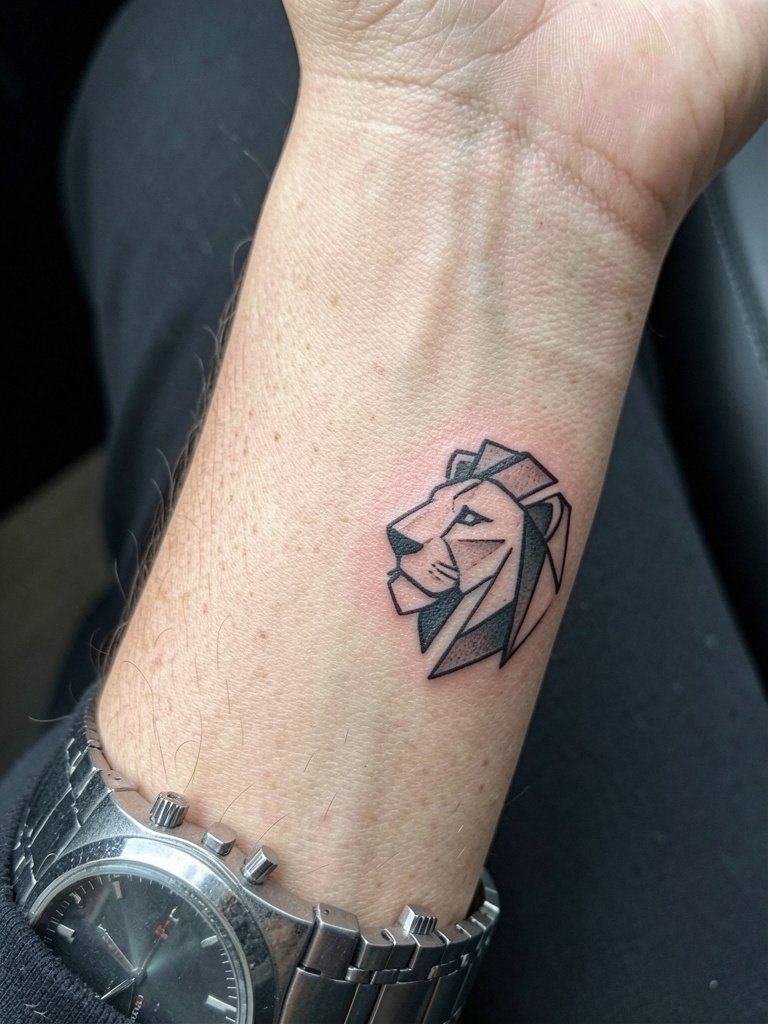
For a subtle statement, keep the motif large enough to avoid the wrist's tendency to blur fine detail. I suggest a slightly heavier outer contour and simplified internal geometry to protect against blowout from constant washing and movement. Sessions are short but the wrist is sensitive, so expect a sharp sting. People often ask for tiny filigree here and then need a touch-up when lines soften. Wear delicate bracelets that frame, not cover, the mark when you want it visible.
4. Ribcage Geometric Lion Crest
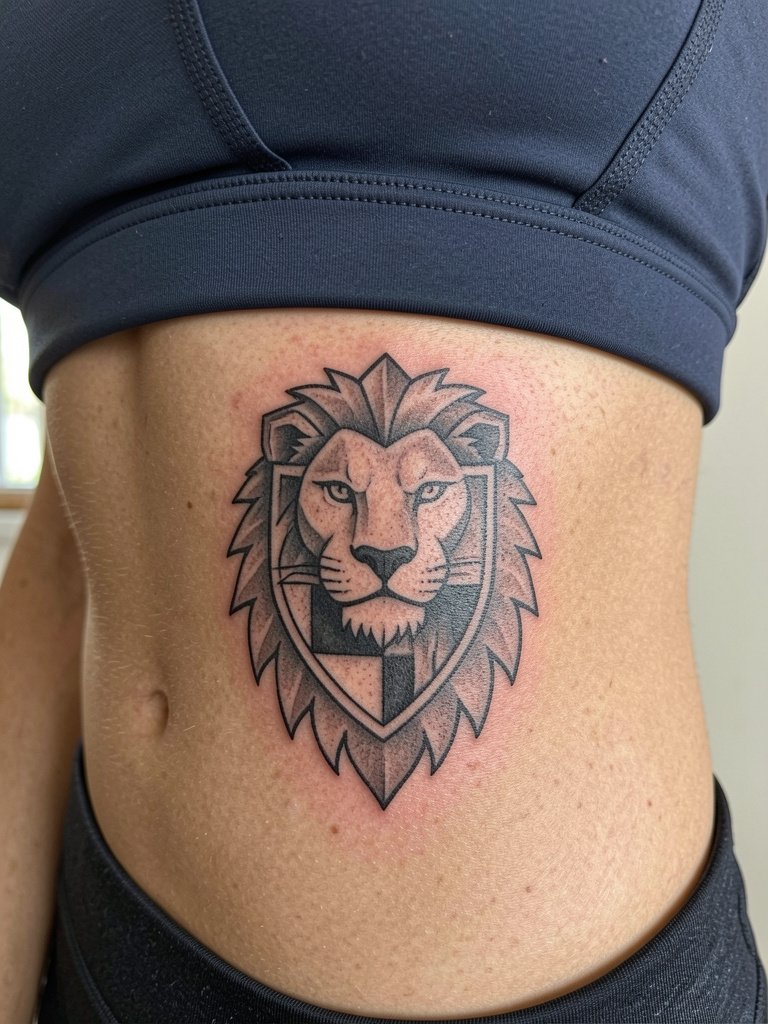
Fine line geometry on ribs splits artists into two camps. One camp warns that the skin there stretches and moves so thin lines blur within a few years. The other camp argues that if you use slightly heavier line weight and give more spacing, the design settles clean and shows healed detail. If you choose ribs, plan for a longer session and bring breaking snacks because this placement is high on the pain scale. A common mistake is insisting on single-needle detail at a small scale. For session wear, a fitted sports bra or bandeau in its normal position gives access without exposing more than necessary.
5. Sternum Symmetric Geometric Lion
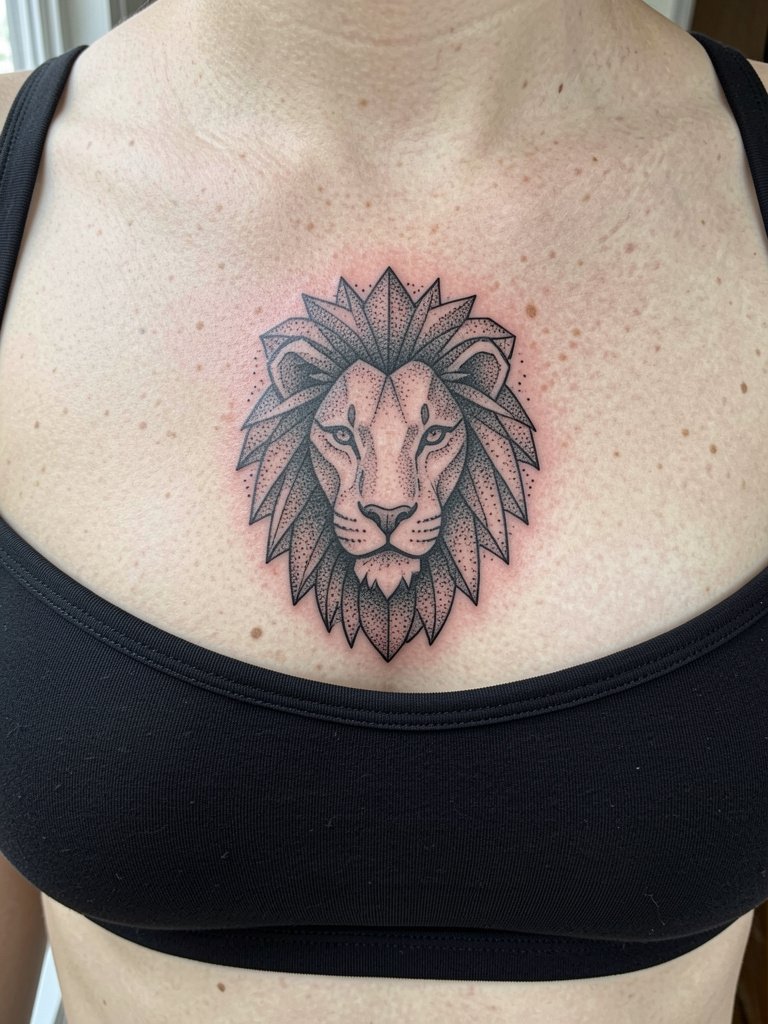
Sternum geometry needs careful symmetry checks in the stencil phase so the central axis stays true. Expect a more painful session than forearm work and plan for two or three hours depending on size. Many clients forget that chest skin moves with breathing, so request a test stencil and small adjustments before linework. For professional sternum pieces, seek artists who specialize in chest symmetry and heavy-line stability. This placement is intimate, so specialized experience matters.
6. Upper Back Portrait-Style Geometric Lion
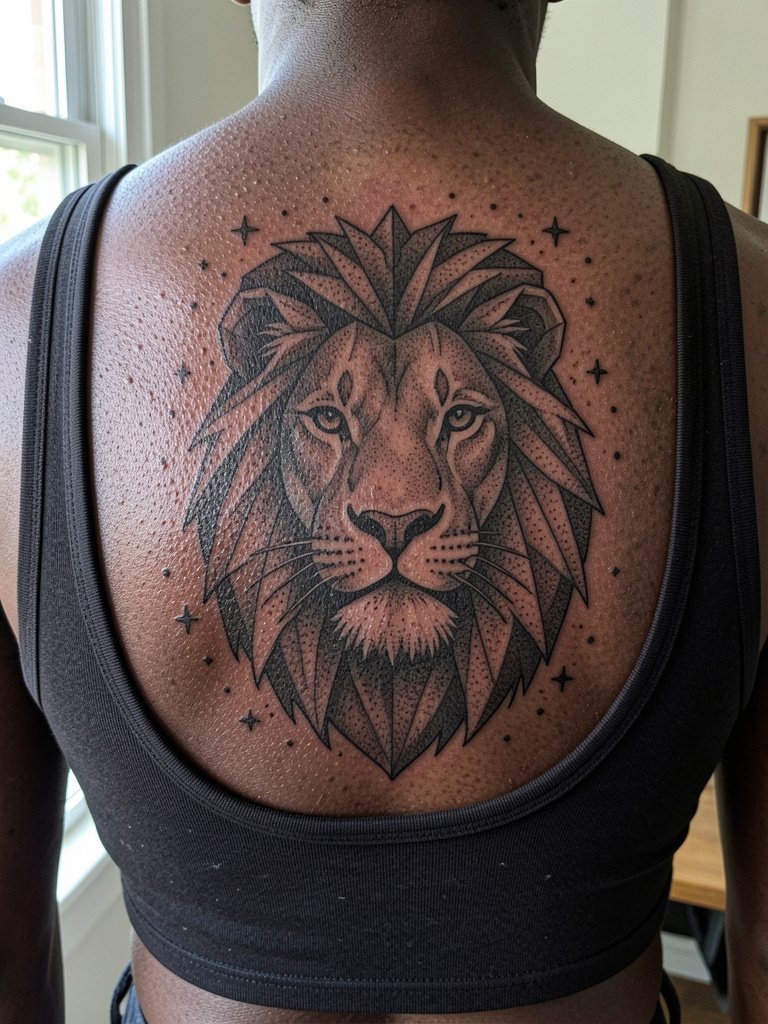
Upper back allows expansive geometry and layered facets that age well because the area gets less friction. Sessions for this scale usually run multiple hours and are more comfortable than ribs. A frequent oversight is starting with too much micro detail that becomes noise when the back settles. During consultation, insist on stage mockups to check how the mane interacts with shoulder blades and clothing lines. For styling, the piece pairs well with open-back midi dresses that reveal the top of the design.
Before You Book
The inner forearm, wrist, and sternum ideas above show different risks for blowout and fading, so a few session day items smooth the experience.
-
Stencil transfer paper kit. Lets you preview line placement on skin before the first pass, which is crucial for symmetry on the sternum and ribs.
-
Topical numbing cream. Applied forty to fifty minutes before can make rib and sternum sessions more tolerable without affecting line saturation.
-
Thin protective film roll. Keeps wrist and finger work clean during the first week of frequent hand washing and friction.
-
Fragrance-free body wash. Gentle cleansing during showers prevents irritation around fresh linework while avoiding added fragrance.
-
Aquaphor healing ointment. A mainstream balm that many artists recommend for initial barrier control in thin-line areas.
7. Geometric Lion Sleeve Accent
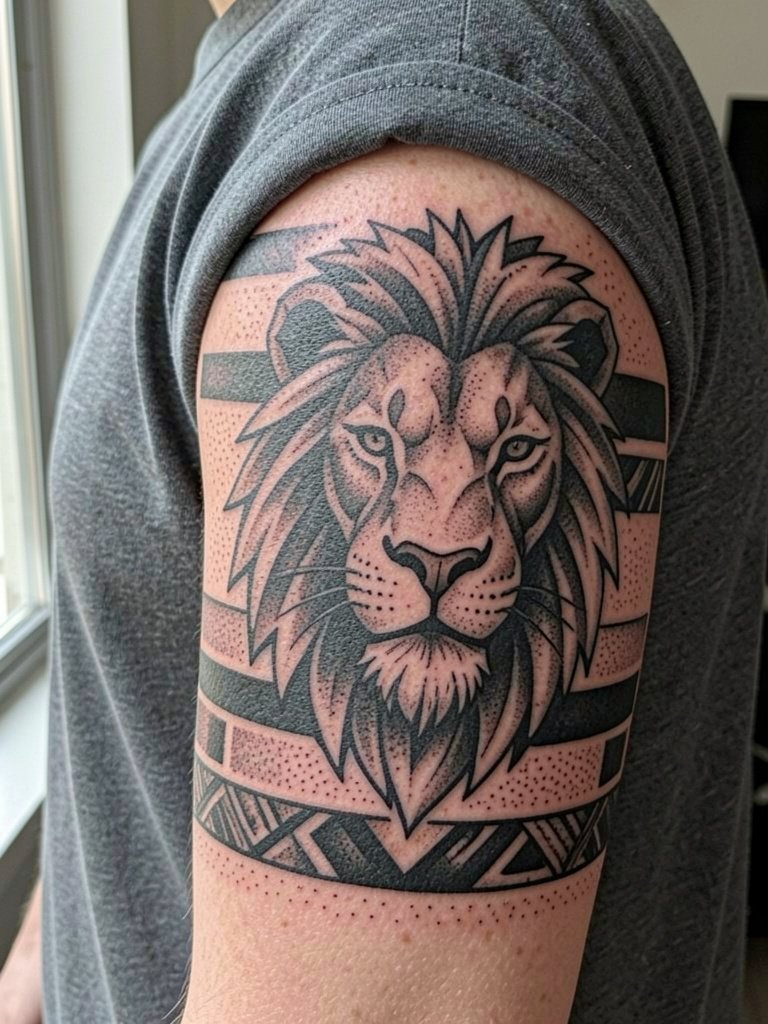
Use the sleeve to mix solid geometry with stipple fields so areas read both close up and from a distance. Tell the artist which parts you want bold and which parts you want airy so line weight is distributed for longevity. Sleeves can be done over several short sessions and feel tiring but manageable. Avoid cramming micro facets next to heavy blocks, which creates contrast problems over time. Show it with rolled-up sleeves, and consider short-sleeve linen shirts that let the sleeve work breathe.
8. Geometric Lion Collarbone Accent
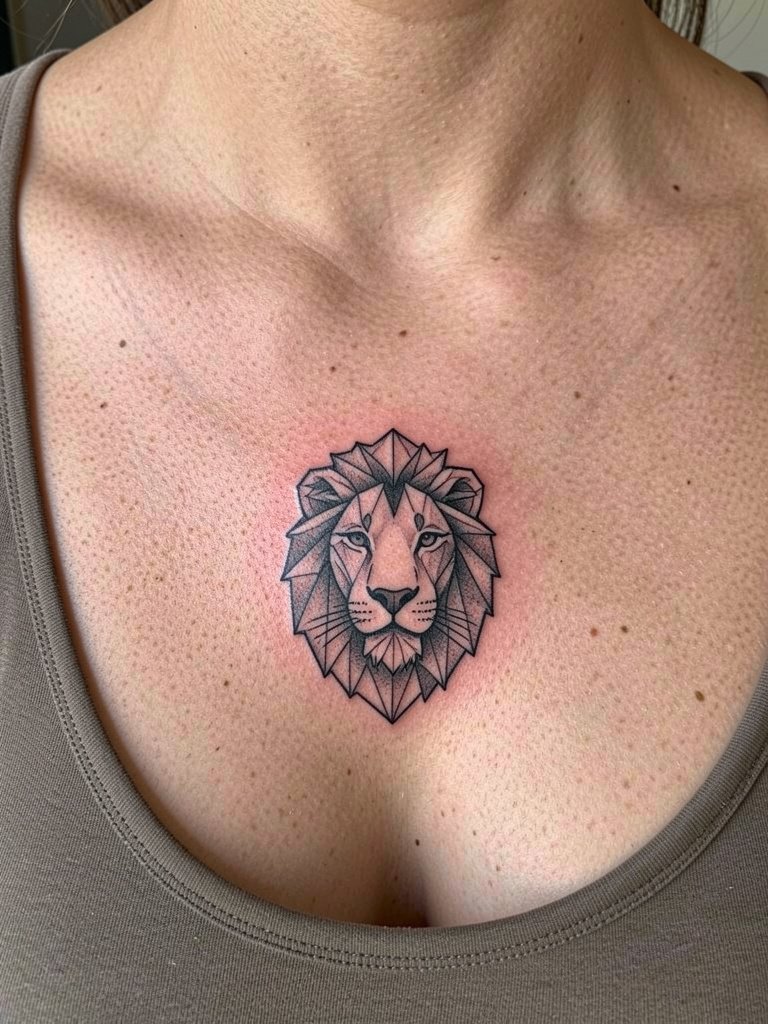
Collarbones are high-visibility and sensitive. If you want fine geometry here, request a slightly stronger outer line so the design reads when clothing moves. Sessions are short but sharp in pain. The most common mistake is placing the piece too low under the collarbone where movement blurs intricate internal detail. For show-off outfits pick tops with wide necklines, and try an open-collar blouse that frames the design without tugging at the skin.
9. Finger-Edge Mini Geometric Lion Mark
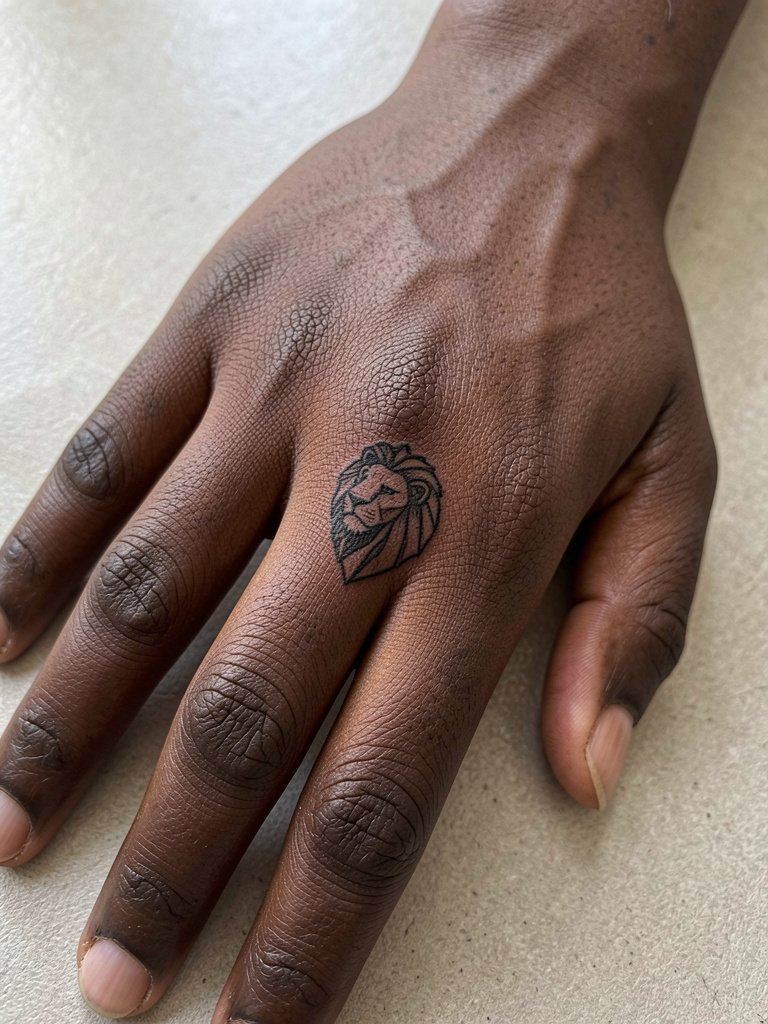
Finger edge work is compact but the skin there endures constant washing and contact, so expect more frequent touch-ups. Use bold minimal silhouettes rather than micro detail to reduce blowout. Sessions are quick but feel sharp and sometimes tingly. A common oversight is choosing complex internal geometry that simply will not hold on the lateral finger surface. Keep expectations realistic and consider accenting with a slim ring instead of covering the finger. For styling, thin stackable rings pair well with tiny side marks, and a slim stacking ring set keeps attention on the geometry.
10. Thigh Geometric Lion Panel
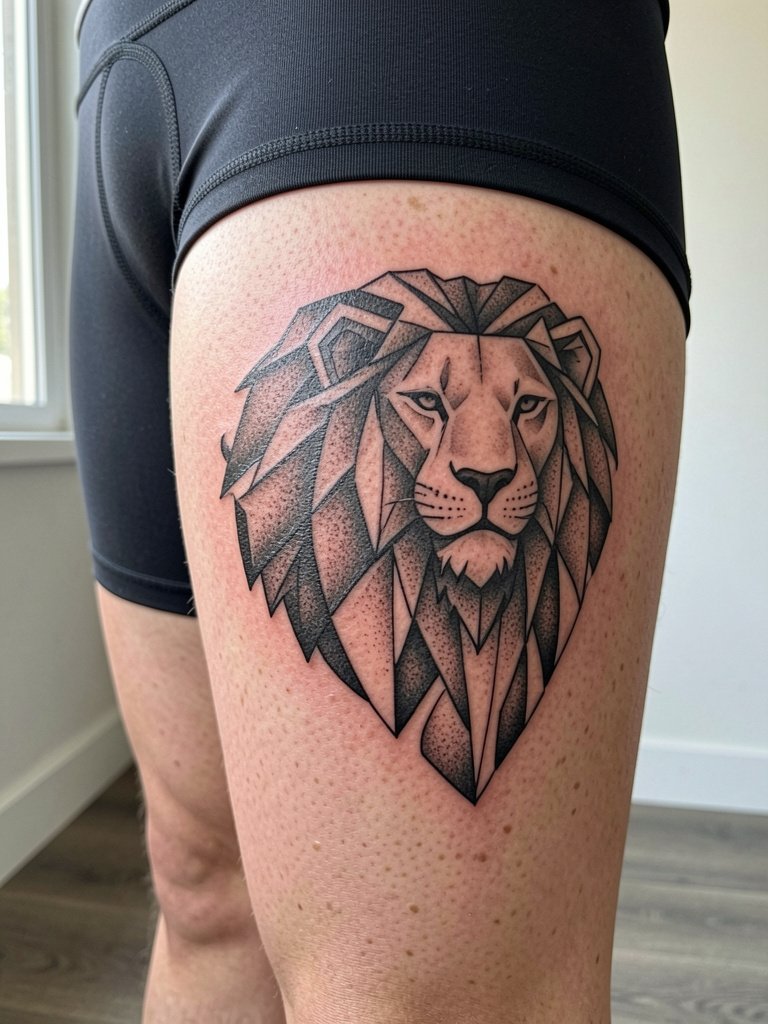
The thigh gives breathing room for complex geometry and larger negative spaces that resist blurring. Pain is moderate and sessions can be longer without excessive discomfort. A common mistake is cramming the panel too close to the underwear line where friction increases during daily wear. For sessions wear loose drawstring linen pants so the leg can be exposed without tight fabric pressing on the fresh ink. Larger thigh panels tend to require touch-up only after several years.
11. Geometric Lion Mandala Hybrid
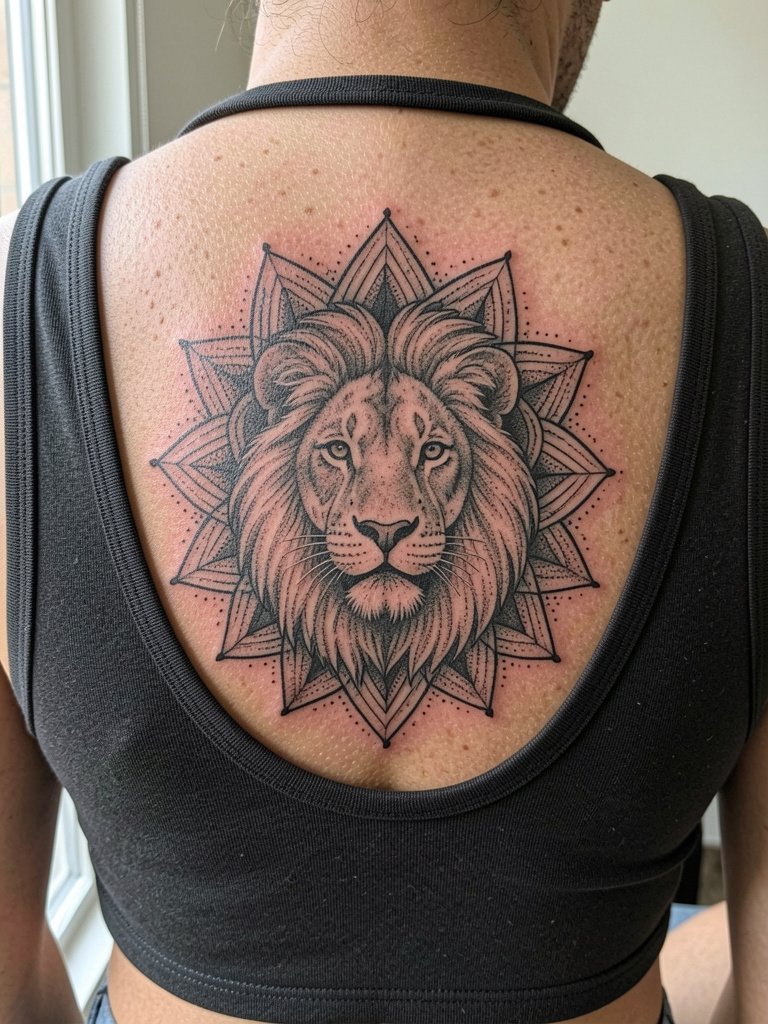
When borrowing mandala elements, be mindful of cultural origins and use the motifs respectfully. I advise discussing symbolic intent during consultation so the pattern is appropriate. This hybrid benefits from radial symmetry and even spacing, which reduces the risk of central detail collapsing. Sessions may run long and require precise mapping. If you want an ornate look that still reads after years, ask for slightly thicker primary rays and finer secondary lines. For evening wear the piece looks great with open-back tops that reveal the mandala center.
12. Geometric Lion on the Side Neck
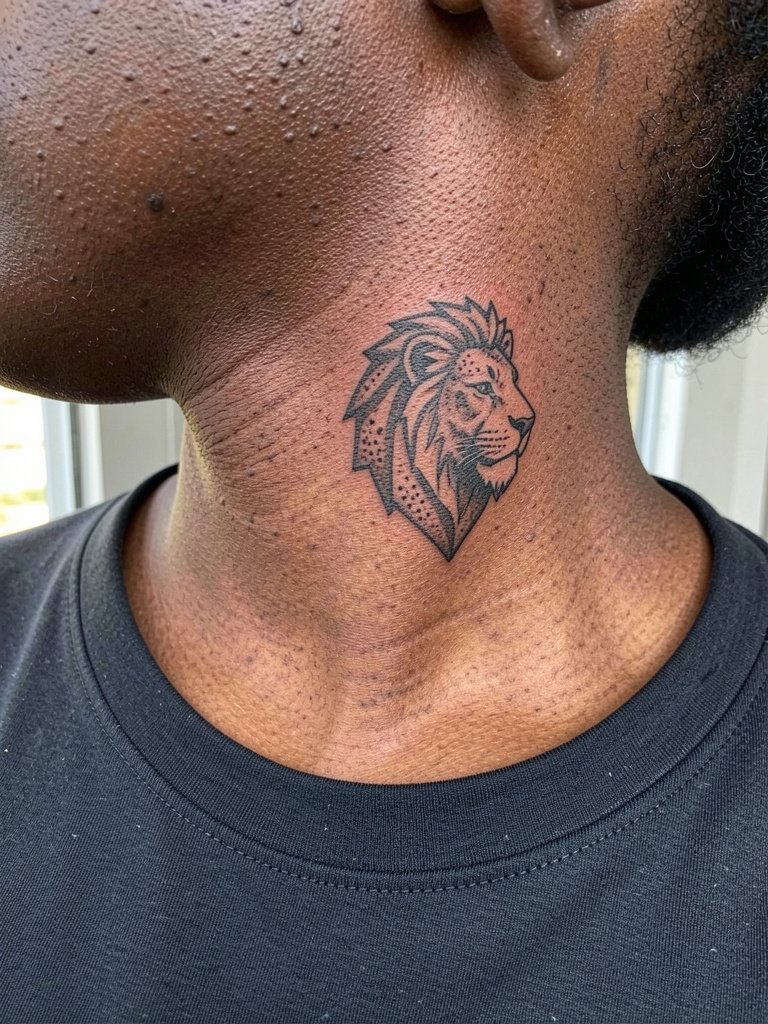
Fine geometry on the neck divides opinion in the community. One group warns that the thin skin and regular movement lead to softening and loss of crisp edges sooner than with other placements. Another group points out that with calculated spacing and slightly heavier primary lines, a neck geometry piece can remain crisp for years, especially if sun exposure is controlled. Neck skin is thin and sessions feel intense, so plan short sittings and strong aftercare. For show-off aesthetics, pair with wide-neck tops that let the design sit in plain sight.
13. Calf Geometric Lion Shield
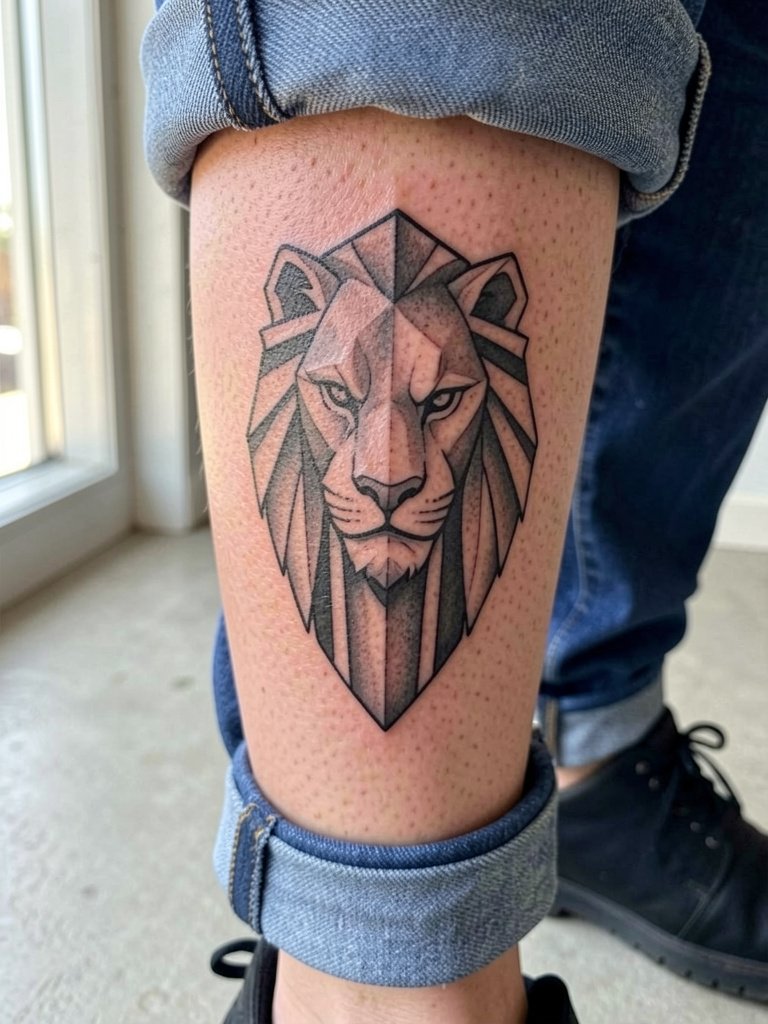
Calf placements tolerate bold geometry and are easy to conceal for work. The muscle offers a flat canvas that keeps facets legible. Sessions are comfortable and you can do larger runs in one go. Mistakes include overcomplicating the shield with thin internal filigree that gets lost when the skin sits. A good touch-up schedule is after one year to refresh saturation on heavy fills. For daytime wear choose casual rolled jeans so the calf artwork can peek from beneath the cuff.
14. Geometric Lion on the Chest Plate
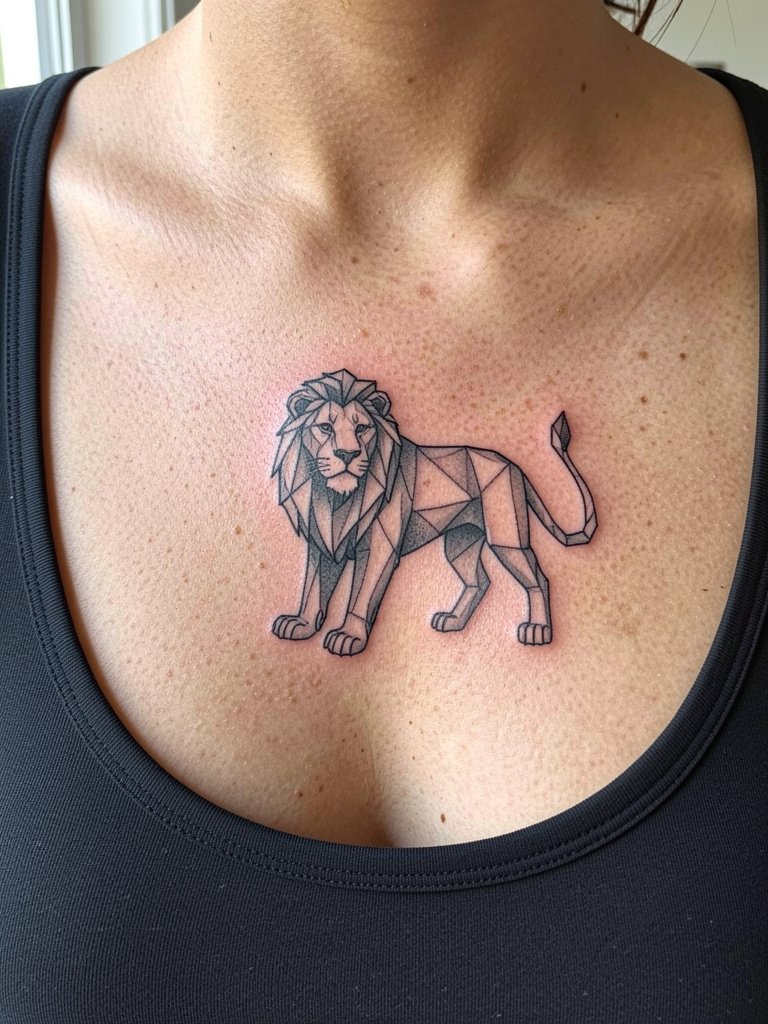
Chest plate geometry is highly visible and ages depending on sun exposure and chest movement. If you want crisp internal facets, ask for slightly larger negative spaces and guarded saturation on small areas to avoid patchy fill. Sessions can be uncomfortable near the sternum, so plan breaks. Many people mistake too fine internal detail for long-term clarity. For outfits, open-neck shirts and button-down blouses show the upper chest art without constricting the skin.
15. Low-Contrast Geometric Lion with Soft Shading
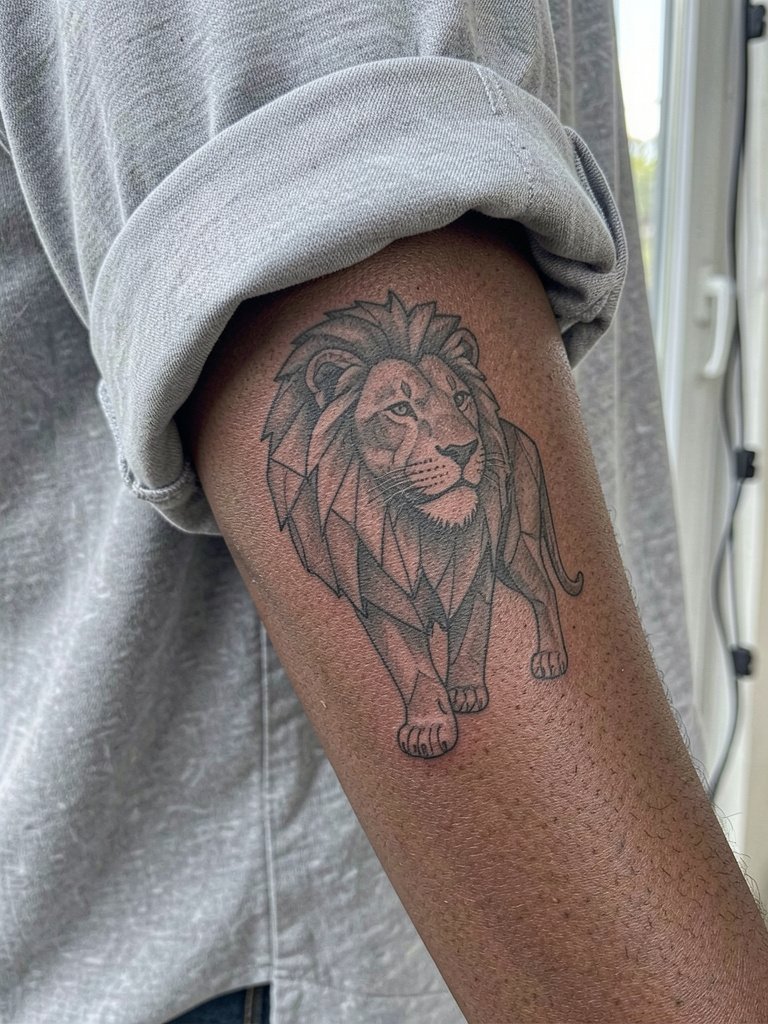
Soft-shaded geometry reads well for people who want detail without very bold black blocks. Ask for gradual stipple shading and slightly heavier outline to keep edges defined over time. The risk is that low-contrast fills can age into a muddy wash, so plan for a touch-up at one to two years. Sessions feel moderate in pain and are suited to multi-pass approaches where shading is layered gradually. For casual looks try neutral-toned long sleeves rolled to show the piece.
16. Negative-Space Geometric Lion on the Hip
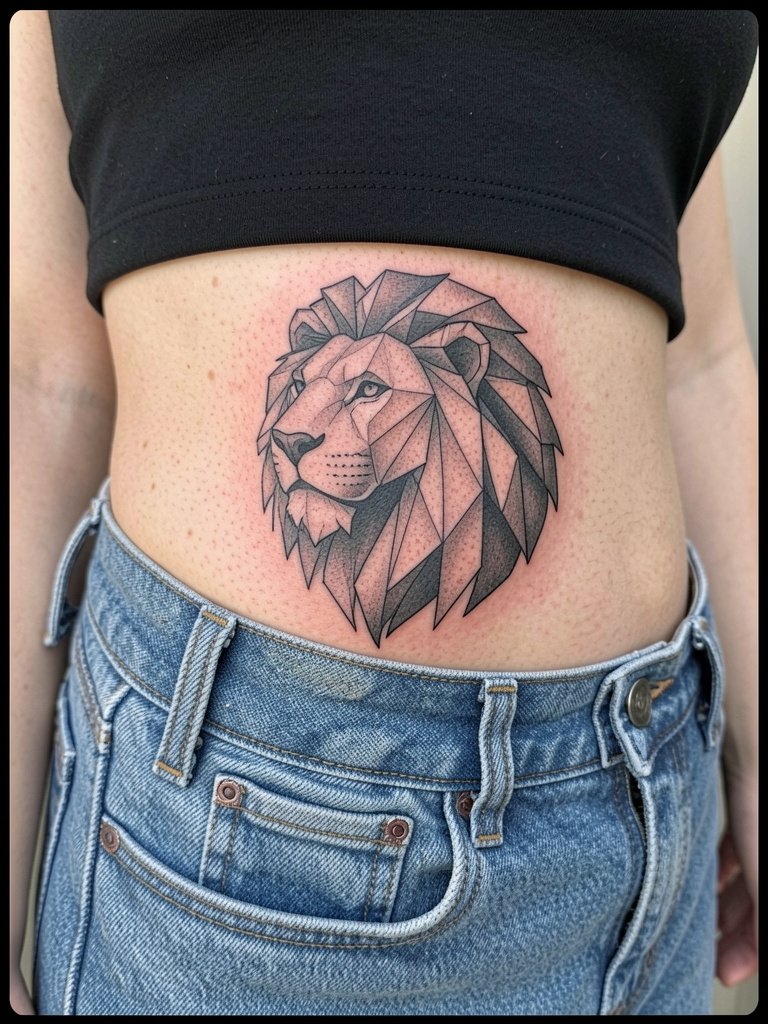
The hip handles bold negative-space geometry well, but watch friction from waistbands. The most common error is placing the design where the jeans rub and cause premature fading. During the consultation, mark waistband lines and adjust placement slightly away from constant contact. Sessions are comfortable and healing is straightforward if clothing fits loosely for the first week. For nights out, pair the hip piece with low-rise skirts that reveal the top of the geometry.
17. Small Geometric Lion Behind the Ear
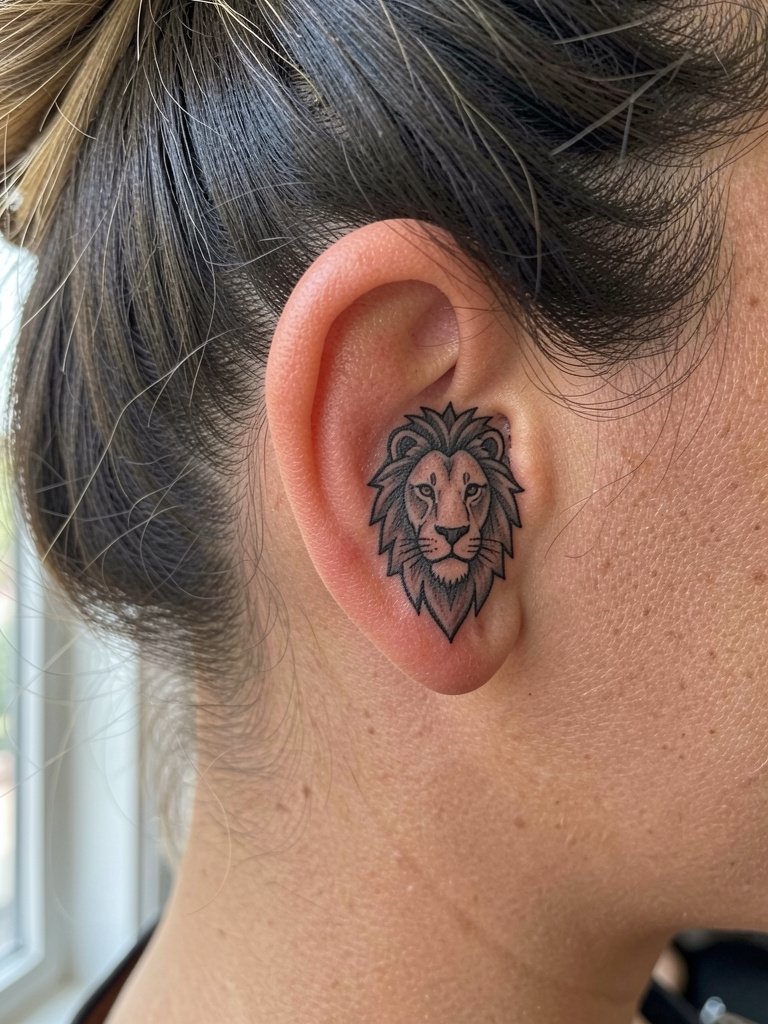
Behind-the-ear geometry is a small statement and needs very clean stencil placement. Pain is minor, but the area is delicate so expect the artist to use small needles and steady hands. The common mistake is over-detailing such a tiny zone. This placement benefits from minimal geometry and a single, bold contour. Hair pulled up shows it off, and a simple stud earring can frame the space elegantly.
18. Geometric Lion Throat Medallion
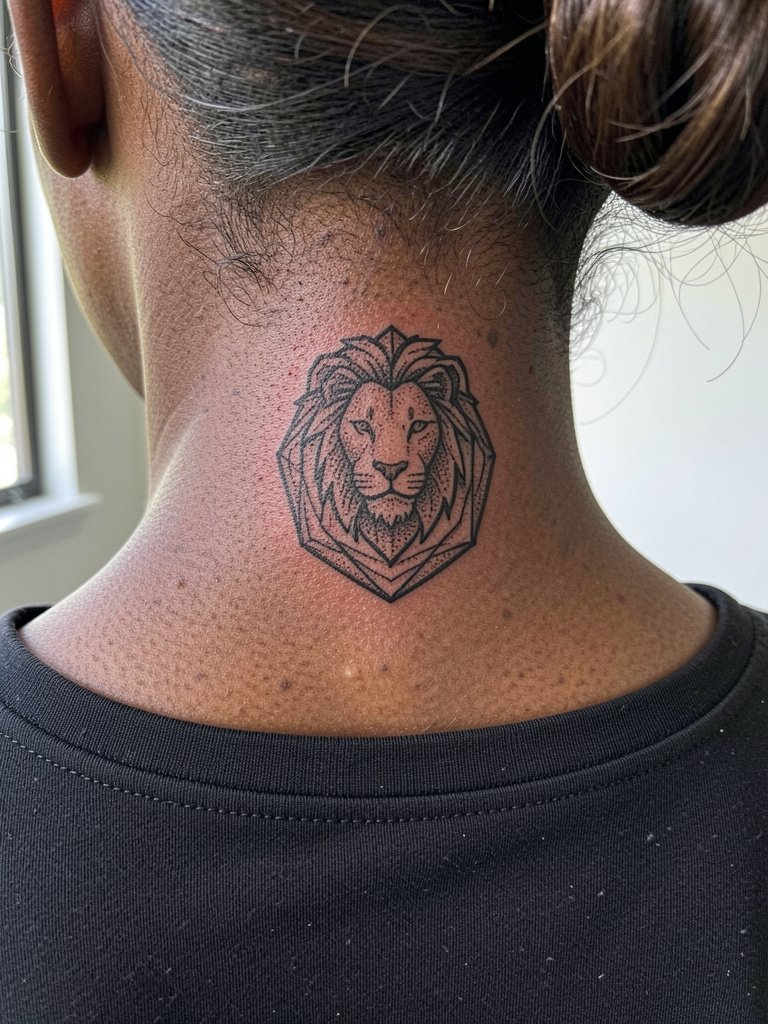
Nape medallions are visible with hair up and private when hair is down. Plan for precise centering below the hairline and ask the artist to mark placement while you mimic your usual hair part. Sessions are short and feel like light scratching. A common oversight is choosing a busy inner pattern that loses clarity under short hair or with close collars. For outfits pick crew-neck sweaters that either hide or reveal the medallion depending on the look.
19. Geometric Lion Over the Knee Cap
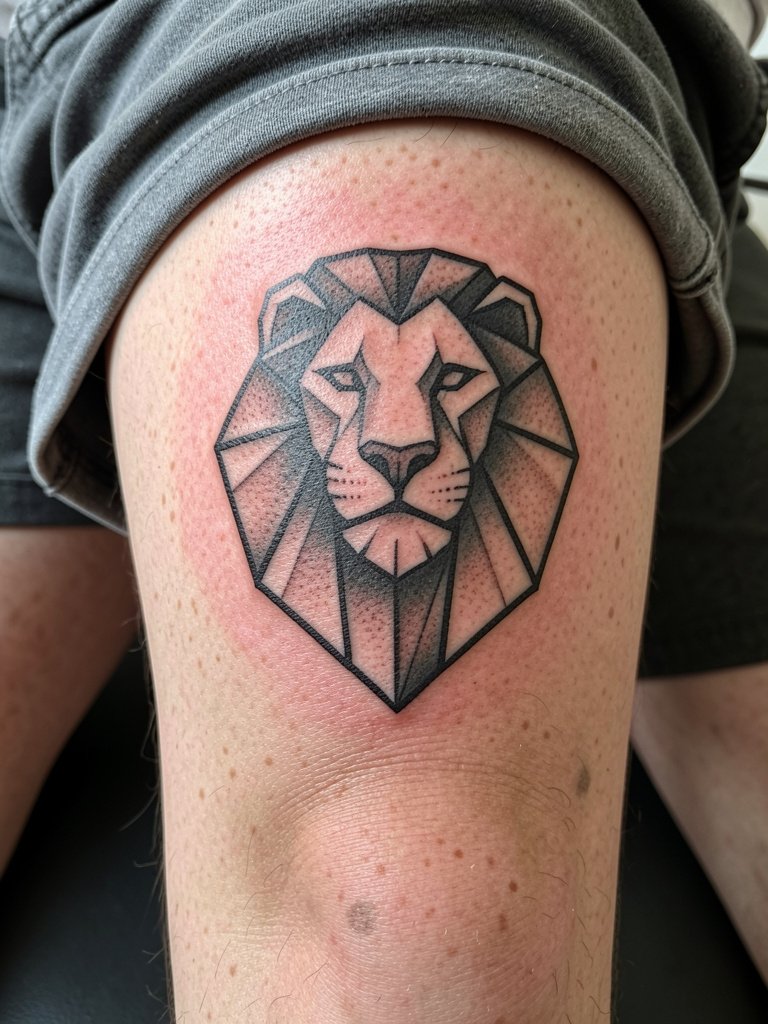
Knee tattoos are high-motion and require thicker primary contours since the skin folds and stretches. Pain is high and sessions can be more intense, so plan in short passes. Many clients underestimate the need for bold outlines here, which leads to early blurring. Expect a touch-up within a year for high-contrast pieces. For casual wear choose athletic shorts that keep the area unobstructed during healing.
20. Geometry-Text Hybrid Lion on the Rib Arch
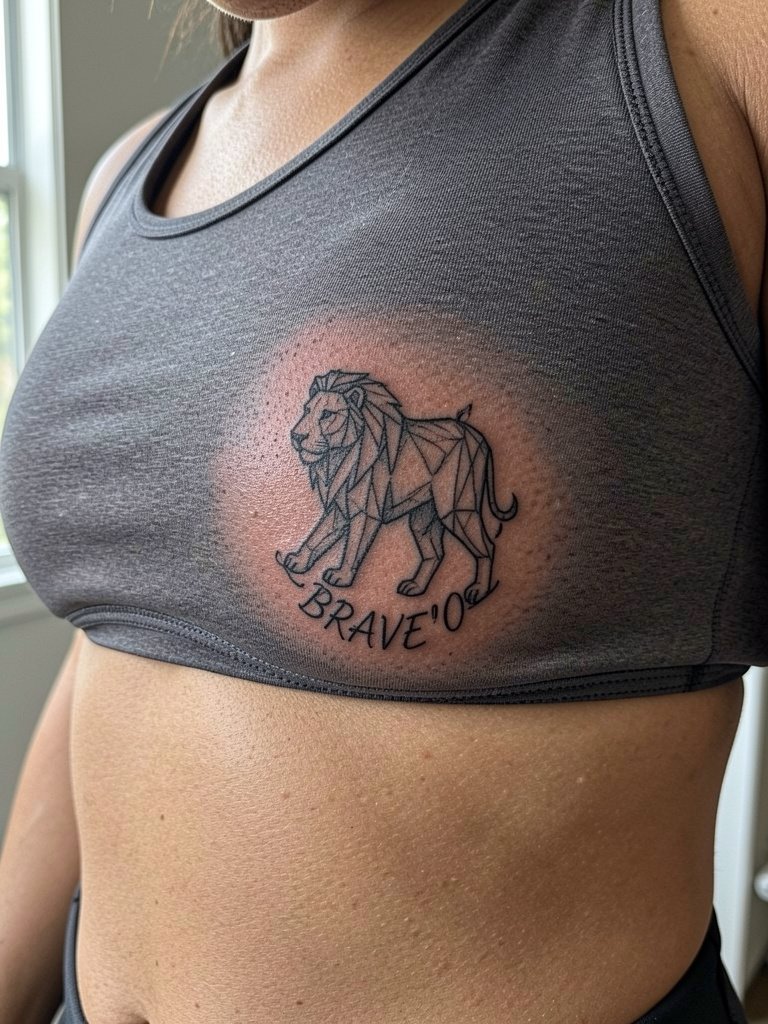
Combining text and geometry on ribs requires scaled spacing so the word remains legible after healing. Use a slightly bolder script and larger letter spacing than your Instagram image suggests. The ribs are painful, so plan breaks and numbing strategies if needed. A mistake is tight script placed too close to detailed facets that makes both elements compete. For session wear a fitted sports bra that stays in place, and arrange a snack and water for longer sessions.
21. Geometric Lion Half-Sleeve Wrap
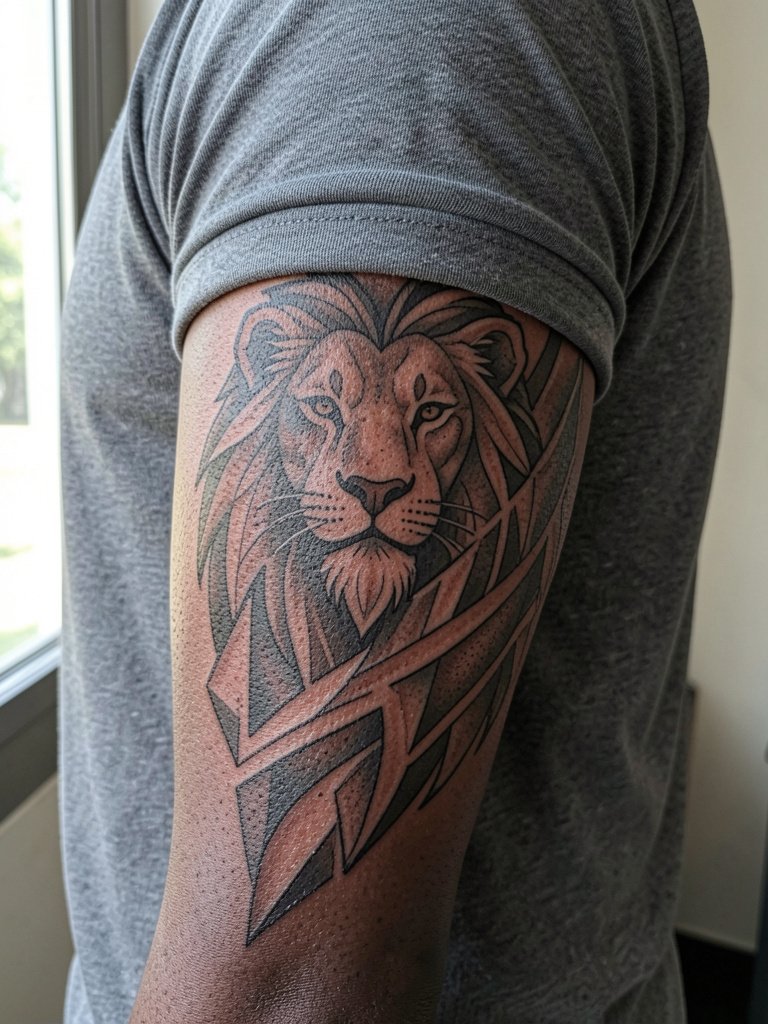
Half-sleeves give rhythm and movement so the mane can flow with the arm. Plan sessions across multiple appointments and request mapping so the wrap reads when your arm is relaxed. A frequent error is mismatched line weights across connected panels, which makes the wrap feel disjointed. For smart-casual looks pair with rolled-sleeve button-downs that reveal the fore and bicep transitions.
22. Geometric Lion Finger Tip Accent
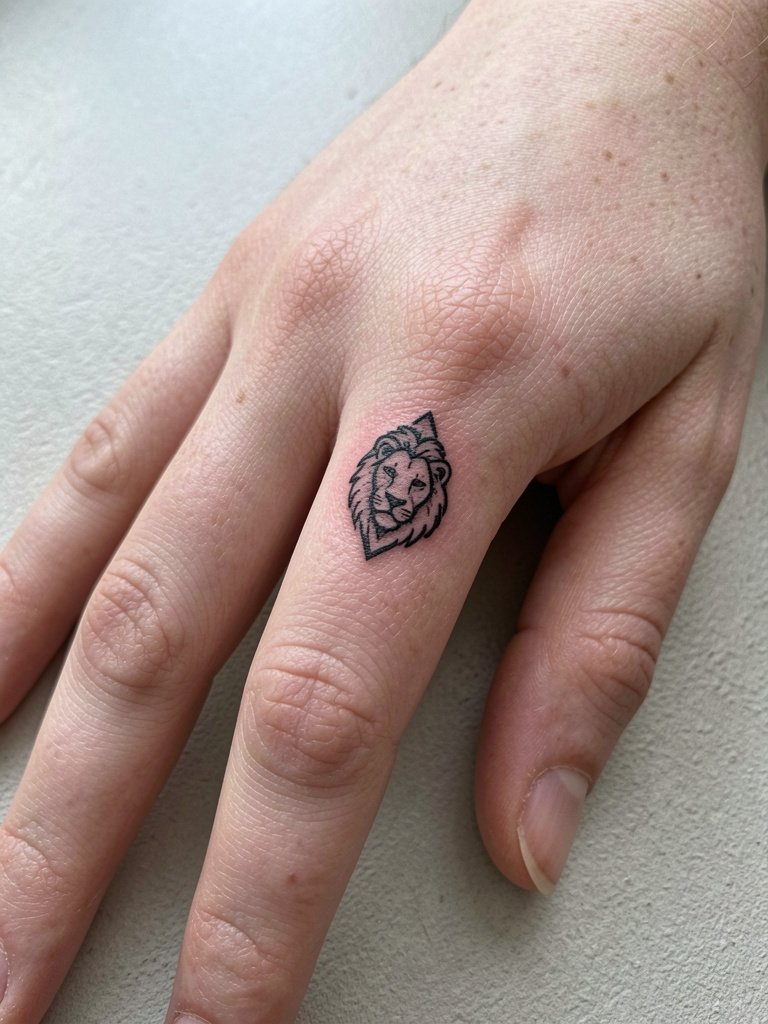
fingertip tattoos face heavy wear from daily tasks and frequent washing, so choose strong, simple contours rather than detail. Expect faster fading and a likely touch-up within a year. Sessions are quick but painful on the bone. Many people plan fingertip micro detail and then need maintenance soon after. If you want longevity, pick bold shapes that accept gradual softening, and show the accent with short-sleeve shirts and styleable rings on adjacent fingers.
23. Geometric Leo Constellation Chest Band
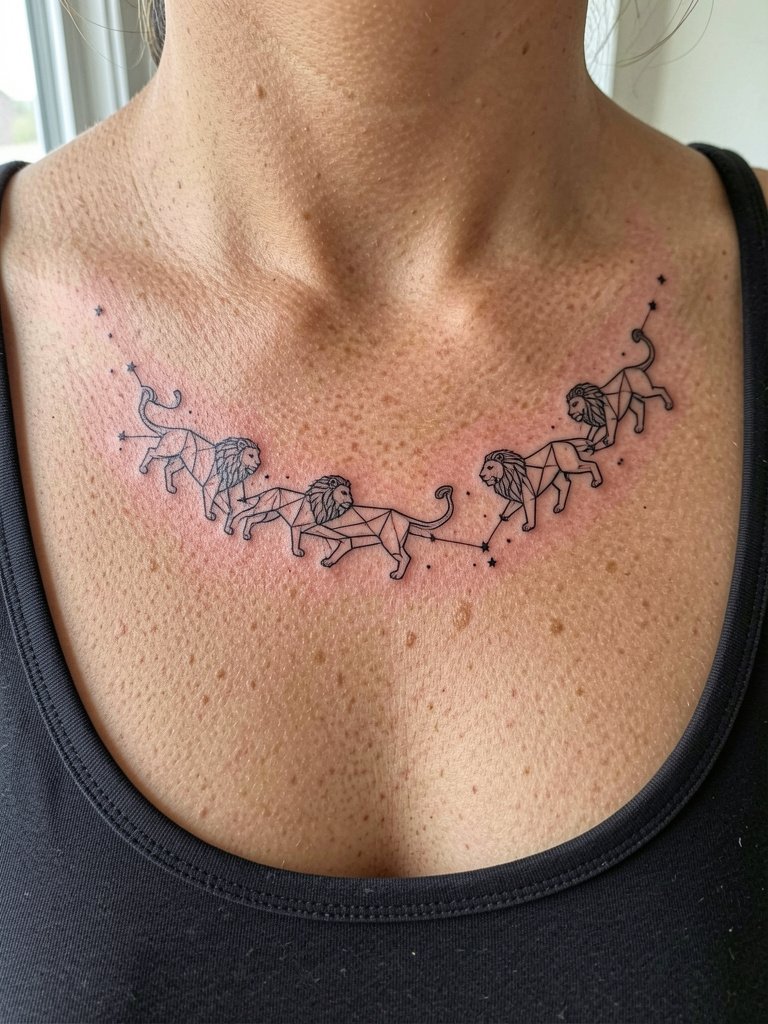
A chest band with point-to-point geometry reads elegantly if the spacing between star points is generous. Small dots can diffuse into a blur if placed too tightly, so ask for wider interval spacing in the stencil phase. Pain is moderate and breathing affects the stencil, so verify placement while standing and while lying down. Mistakes include tightly clustered dot work that becomes a patchy wash. For wardrobe, open-neck tops and delicate pendant necklaces complement the linear composition.
Frequently Asked Questions
Q: How do I find healed examples of geometric lion tattoos without naming artists?
A: Search social platforms for healed posts using tags like #GeometricLionTattoo and #GeoLionHealed, filter by location to see local portfolios, and browse portfolio sites that let you search by keywords such as "geometric lion healed photo." Reddit tattoo threads also surface real healed pictures in different skin tones.
Q: Which placements need the most realistic expectations for longevity?
A: Fingers, wrists, and ribcage demand the most realistic expectations because washing, friction, and skin movement speed fading and blur. Outer bicep, calf, and upper back are more forgiving and typically need fewer touch-ups. Plan for at least one touch-up in high-motion spots within the first two years.
Q: Should I pick single-needle detail or bolder geometry for a chest or rib piece?
A: For ribs and the sternum I recommend slightly bolder primary lines and more spacing between facets. Single-needle detail can look exquisite at first and then soften quickly on thin, moving skin. Ask for a staged mockup in the stencil phase that shows how an added millimeter of spacing changes readability.
Q: How long does a geometric lion session usually take and how much will it hurt?
A: Small wrist or finger marks can be thirty to sixty minutes. Mid-sized forearm or collarbone pieces range from one to three hours. Large back or half-sleeves take multiple sessions. Pain varies by placement, with ribs and knees at the high end and calves and outer biceps toward the low end. Bring snacks and plan short breaks for long sessions.
Q: What should I wear to my appointment for different placements?
A: Wear clothing that gives the artist clear access without you needing to adjust fabric. For shoulder and back work try an open-back tank, for hips wear low-rise jeans fully zipped and buttoned, and for inner thigh choose modest bike shorts with the hem above mid-thigh. Comfortable, layered clothing helps during healing appointments.
Q: How do I avoid cultural insensitivity when using mandala or pattern elements?
A: Learn the motif origins and state your intent during the consultation. Ask the artist to describe the symbolism they are referencing and consider choosing abstracted geometric elements rather than exact sacred symbols when you are uncertain. Respectful use means informed choice and clear communication.