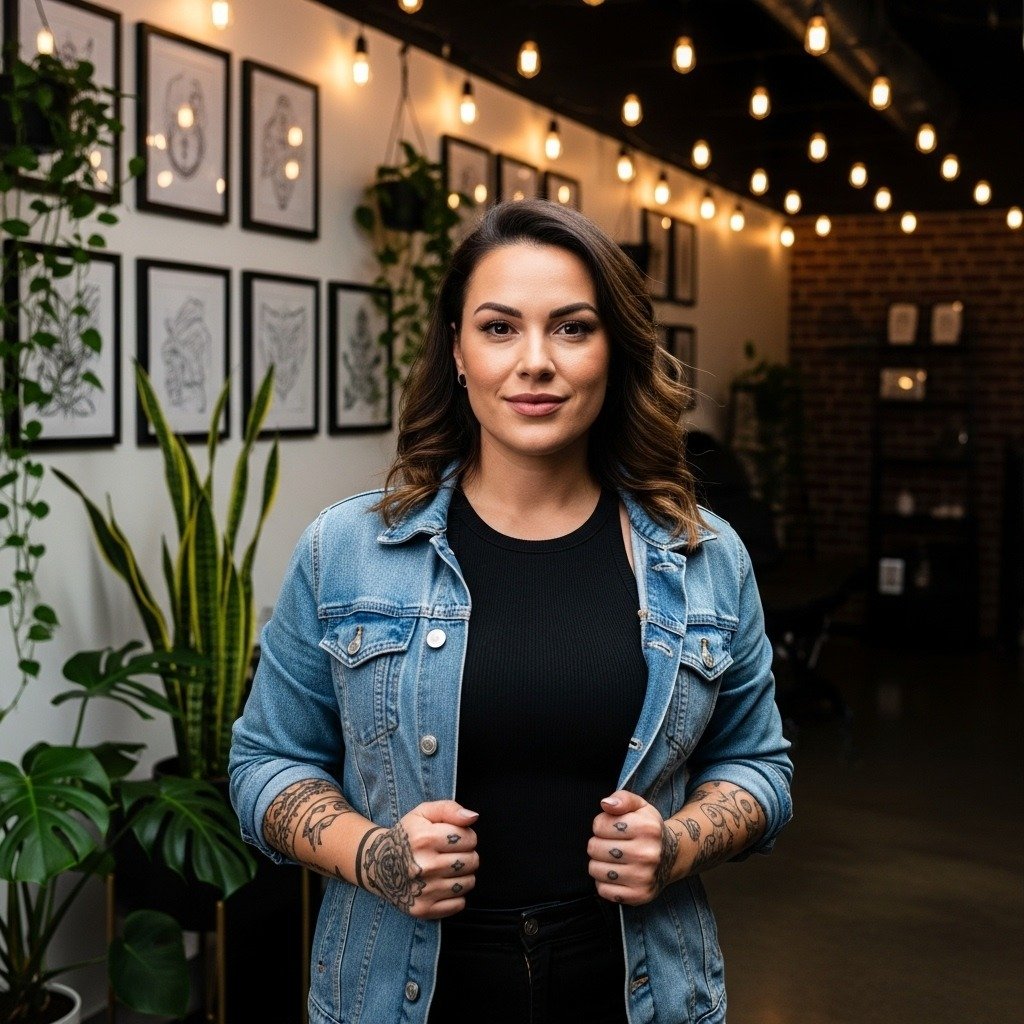
Geometric elephant tattoos can look crisp or fuzzy over time depending on one choice you make before the needle hits skin. Smaller polygonal elephants with single-needle details often blur on moving surfaces, while slightly bolder line weights and deliberate negative space keep geometry readable for years. Think about how you want the shapes to read when healed, not how they look on the stencil in the chair.
1. Minimalist Polygon Elephant on Inner Forearm
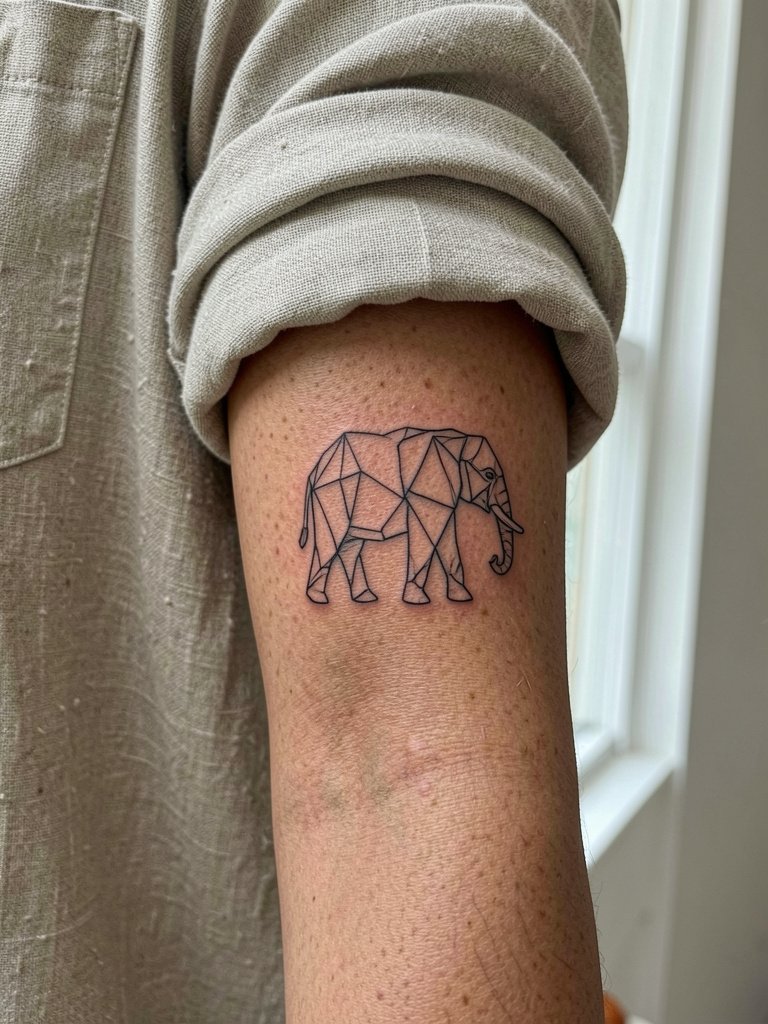
This small inner-forearm geometric elephant is for people who want a readable shape without a long session. I recommend sizing it at least three inches tall so the negative-space triangles have room. On the checklist for the consultation, specify line weight slightly heavier than your Pinterest reference and ask for a test transfer at both three and four inches. The inner forearm ages well because it sees less stretch than the wrist. Expect six-month settling, then subtle softening at year two, and a possible touch-up around year three if you want crisp polygon edges. For showing it off, roll a sleeve and pair with a loose linen shirt that keeps the forearm visible during warm months.
2. Collarbone Mandala Elephant Accent
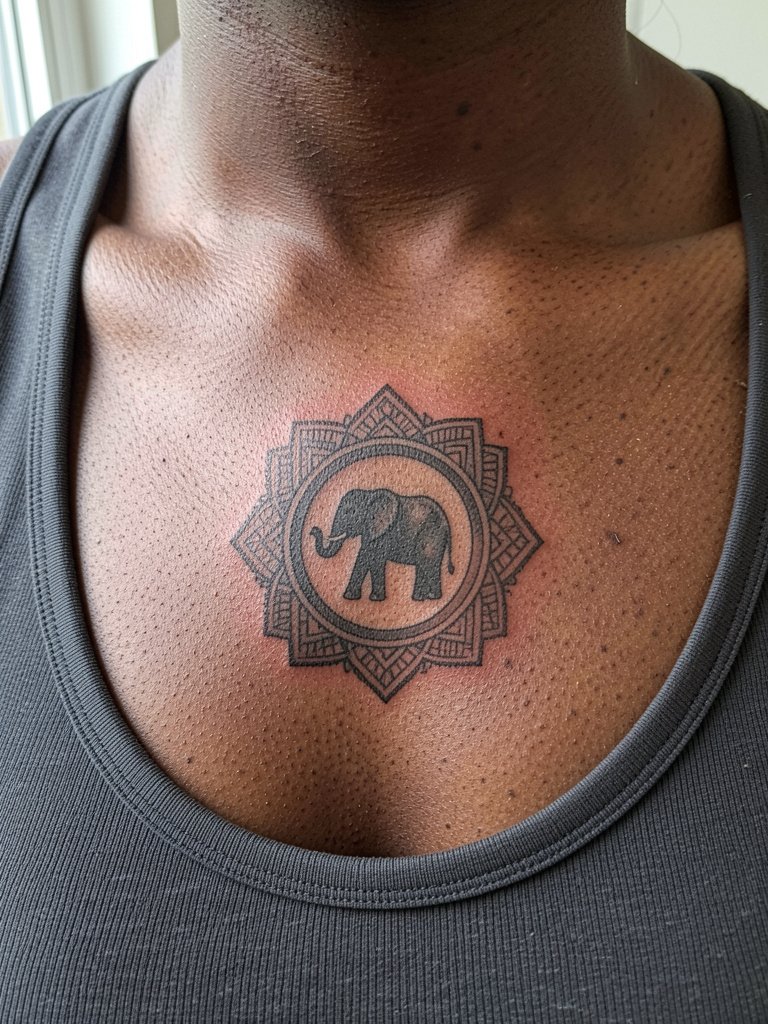
A mandala halo softens polygon edges and gives the elephant a centered anchor on the collarbone. One camp says using mandala patterns can be respectful if you credit the cultural origin and avoid sacred symbols. The other camp argues that mandala motifs become appropriation when removed from their spiritual context and used purely as decoration. In practice, request that the artist explain pattern sources and slightly alter motifs so they read as personal geometry rather than a direct cultural replica. Pain at the collarbone is moderate. Plan for a single session under two hours and expect the fine inner filigree to need a touch-up in two to three years if you keep the sizing small. For evening looks, this area pairs well with a wide V-neck blouse that frames the top.
3. Stippled Polygon Elephant on Calf
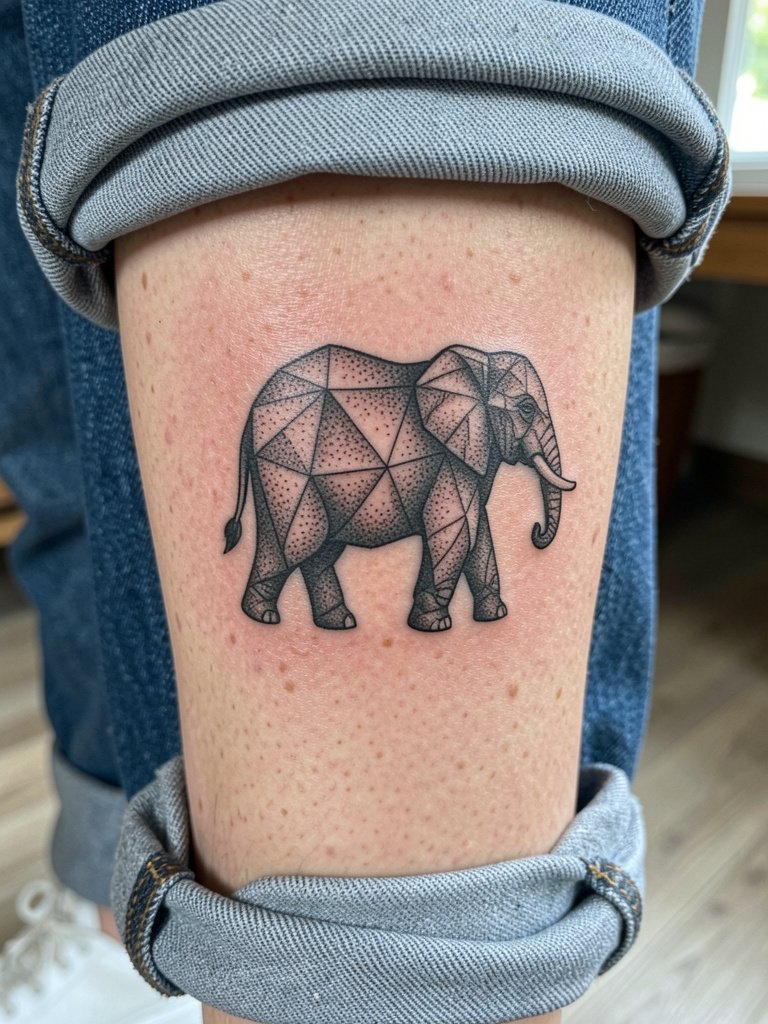
The calf accepts stipple work because the skin there holds dots well and the area moves less than the forearm. I recommend stipple shading inside polygon panels rather than full greywash to keep texture over time. Discuss stipple density with the artist and request a healed reference photo that matches your skin tone. Calf sessions are comfortable compared with ribs or sternum and often finish in a single two-hour block. Blowout risk is low if the lines are not cramped. Wear boots or sandals to show the piece, and consider pairing it with rolled denim shorts for warm-weather styling.
4. Low-Contrast Greywash Elephant on Ribcage
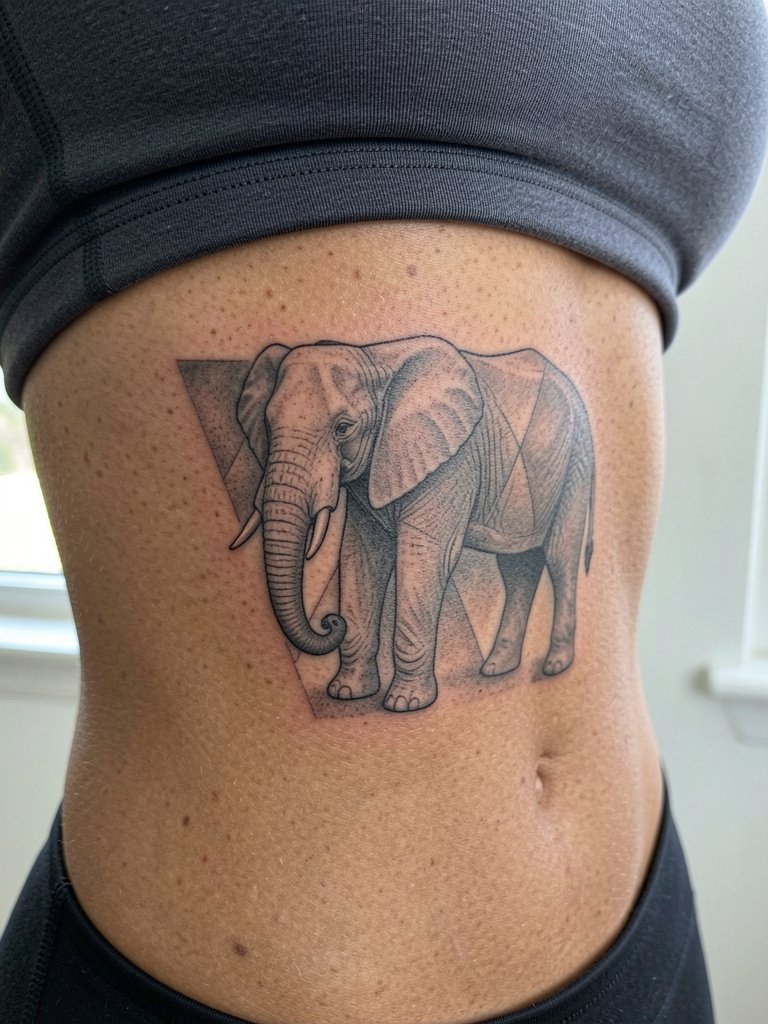
Fine-line geometry on the ribs splits artists into two camps. One group argues that the skin stretch and frequent movement blur delicate lines within two years, making low-contrast greywash lose its polygon definition. The other group says that with slightly wider spacing and deliberate needle depth, geometric ribs can settle clean and hold their shapes. If you prefer low-contrast work, specify wider spacing and a slightly stronger outline so the grey washes sit like tone rather than the only defining element. Pain on the ribs is higher and sessions can run longer. Expect visible settling at six months and plan a touch-up at year two if you want the planes to stay crisp.
5. Outer Bicep Geometric Elephant Accent for Sleeves
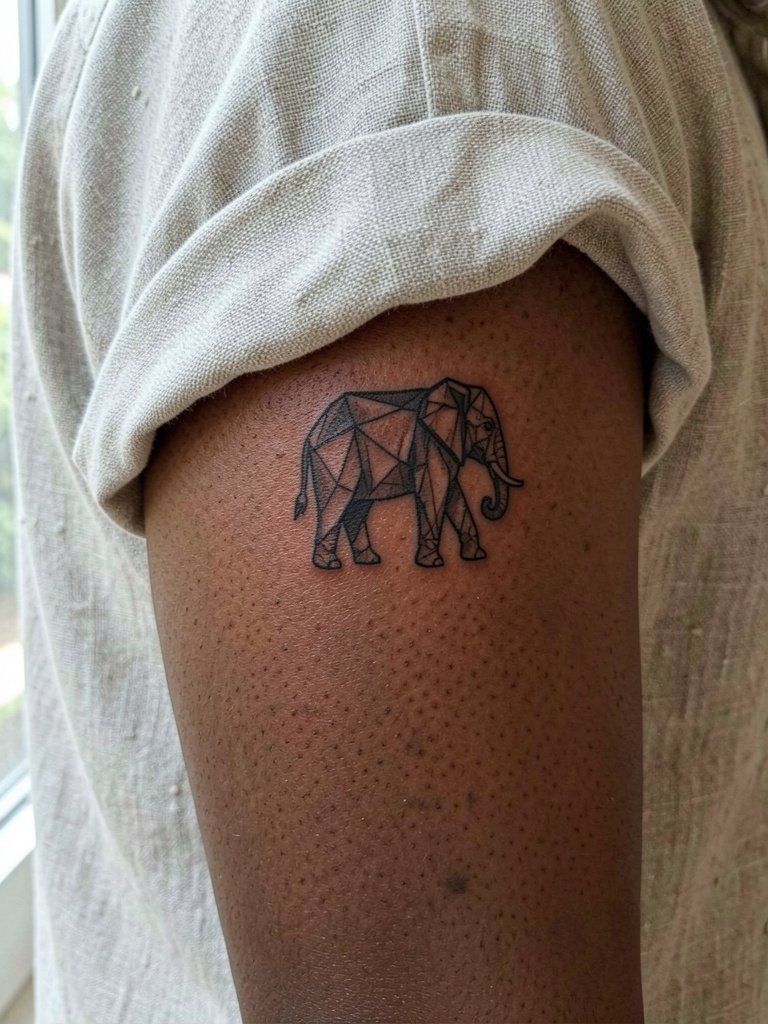
The outer bicep is ideal when you want an elephant that reads in motion and plays into a larger sleeve later. I recommend asking the artist for curvature that follows the muscle so facets do not warp when the arm flexes. This placement tolerates slightly denser saturation, which helps polygon edges last longer. Session time is usually one to two hours and pain is low to moderate. Common mistakes include tapering triangles too small near the edge of the bicep where the skin thins. For off-duty show-off looks, pair with a rolled-sleeve shirt so the piece sits in view without being exposed constantly.
6. Tiny Triangle Elephant Behind the Ear
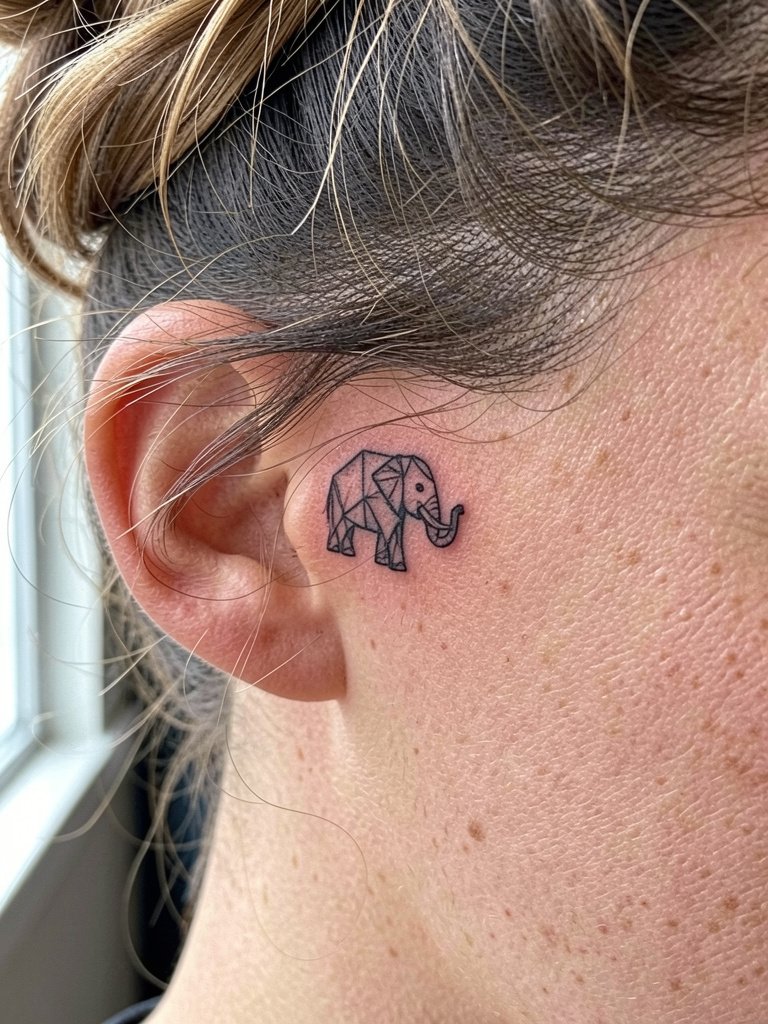
Behind-the-ear placements are subtle and require an artist used to tiny geometry. Fair warning, the area is thin skinned and can sting during the session, but it settles quickly. Specify exact triangle thickness and request a tiny transfer patch to confirm scale near the hairline. Expect a quick 20 to 40 minute session, then check at six months for any softening since touch-ups are common on micro work in this spot. Professional considerations apply; seek an artist who has healed close-up photos for that placement. For keeping hair out during the appointment, bring a silk scrunchie so the artist has unobstructed access.
Pre-Session Picks
The small-line and finger pieces above demand careful session prep. These items smooth the appointment and protect delicate geometry while the first week heals.
-
Stencil transfer paper kit. A reliable transfer helps the artist preview exact line weight on skin before committing, which matters for micro polygons and collarbone filigree.
-
Topical numbing cream. Applied 30 to 45 minutes before can reduce rib and sternum discomfort so you sit through longer geometric panels without tensing up.
-
Clear protective film roll. Useful for ankle and finger placements that face constant friction from socks and typing during the first week.
-
Fragrance-free gentle body wash. Keeps the healing skin clean without stripping ink on shallow single-needle work, especially for collarbone and forearm areas.
-
Aquaphor healing ointment. Thin layers during the first 48 hours help retain moisture for fine geometric dots while avoiding clogged channels that can affect stipple texture.
7. Sternum Center Geometric Elephant Emblem
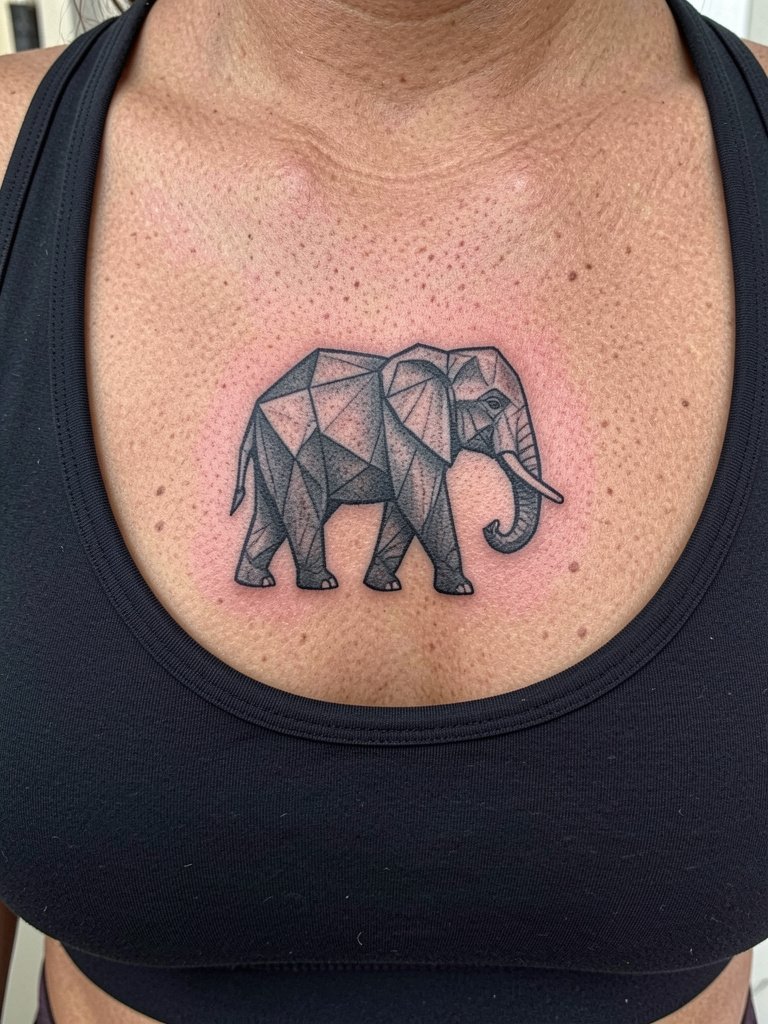
Sternum geometry benefits from bold outlines around negative-space facets so shapes remain distinct under light movement. The sternum is a sensitive area and requires an artist experienced with chest anatomy. Tell the artist to keep the central lines slightly bolder and to position negative space away from breast creases. Sessions can be intense and usually need breaks; plan for a two to three hour slot. Because the area sees friction from clothing, expect a touch-up at one to two years for small redefinition. For the session, a fitted sports bra that can be lowered slightly without full disrobing helps the artist access the sternum while keeping you comfortable, try a fitted sports bra.
8. Ankle Band Elephant Silhouette
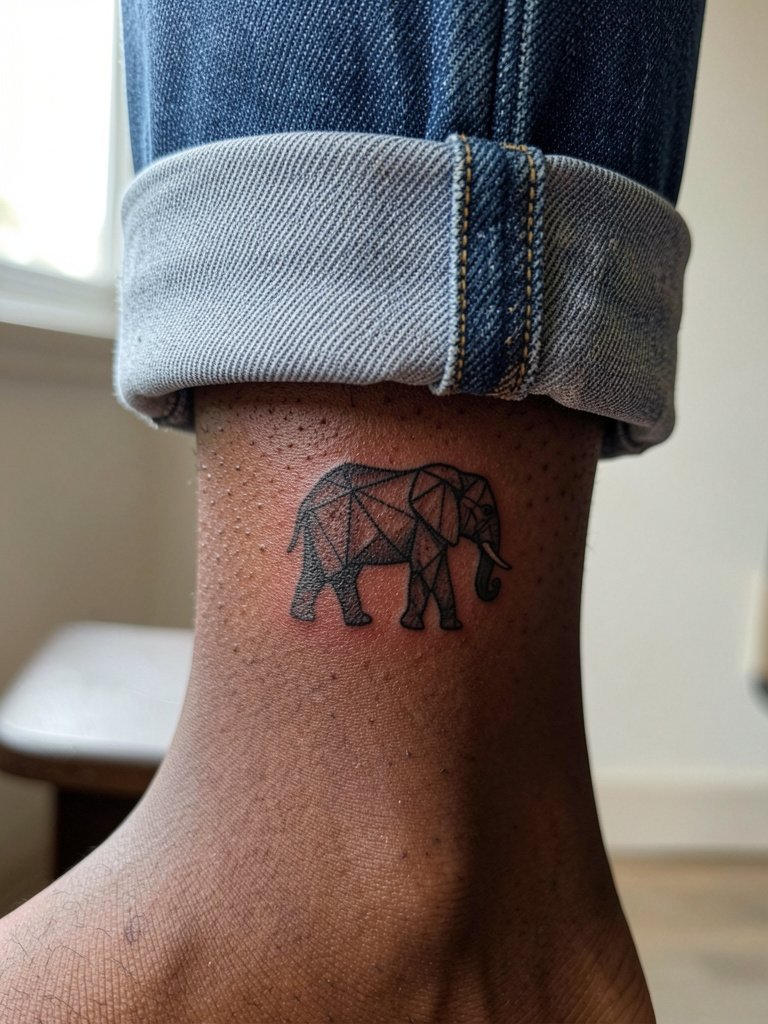
Ankle band geometry must account for constant friction from shoes and socks. I advise a slightly thicker outline than a minimalist finger tattoo so the band reads after walking season. Specify edge spacing with the artist and request a transfer with your shoe on to check how the band sits near the bone. Expect a short, moderately painful session and plan for protective film during the first week. For styling, ankle bands look intentional with sandals or low-cut sneakers. Consider pairing the piece with minimal leather sandals to keep the silhouette visible.
9. Abstract Polygon Elephant on Inner Thigh
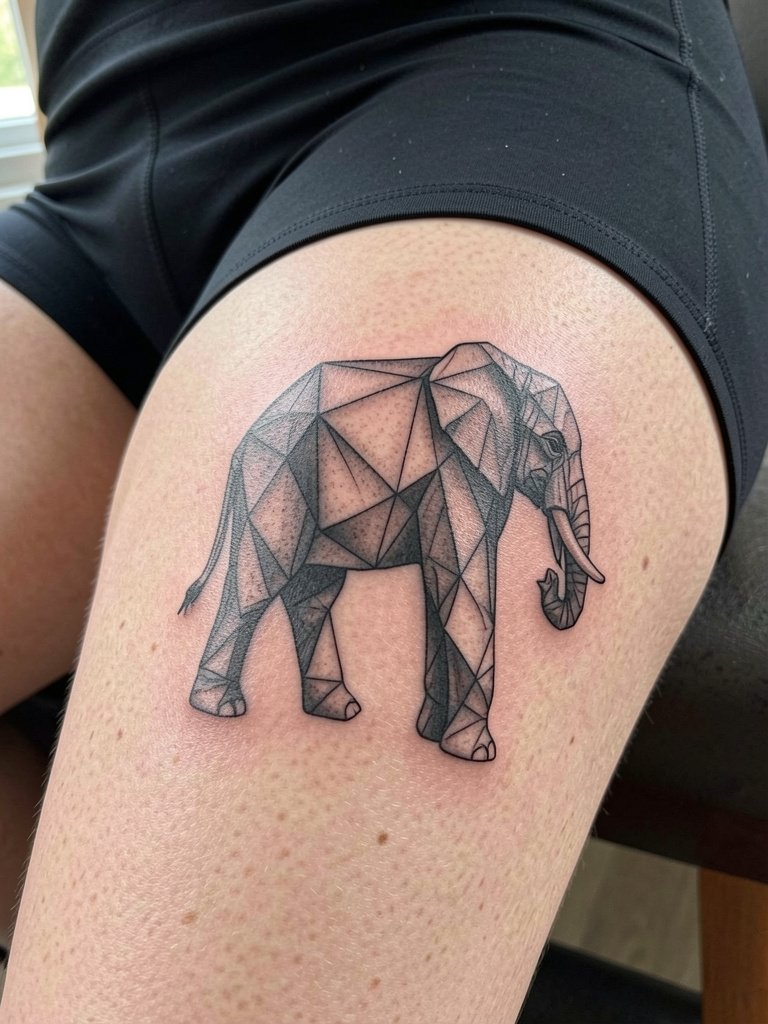
Inner-thigh geometry needs room to breathe so the planes do not collide as the skin compresses. Recommend larger polygons and avoid micro detail near the groin edge. The area is intimate and heals differently, so mention session wear to the artist: tight bike shorts that can be shifted slightly without exposing underwear. Pain varies, often moderate to high near the adductor line. Touch-ups are common at the one-year mark because friction from movement can soften tiny triangles. For the appointment bring a pair of fitted bike shorts you are comfortable sitting in so the artist can access the inner thigh without unnecessary fabric movement.
10. Shoulder Blade Geometric Back Accent
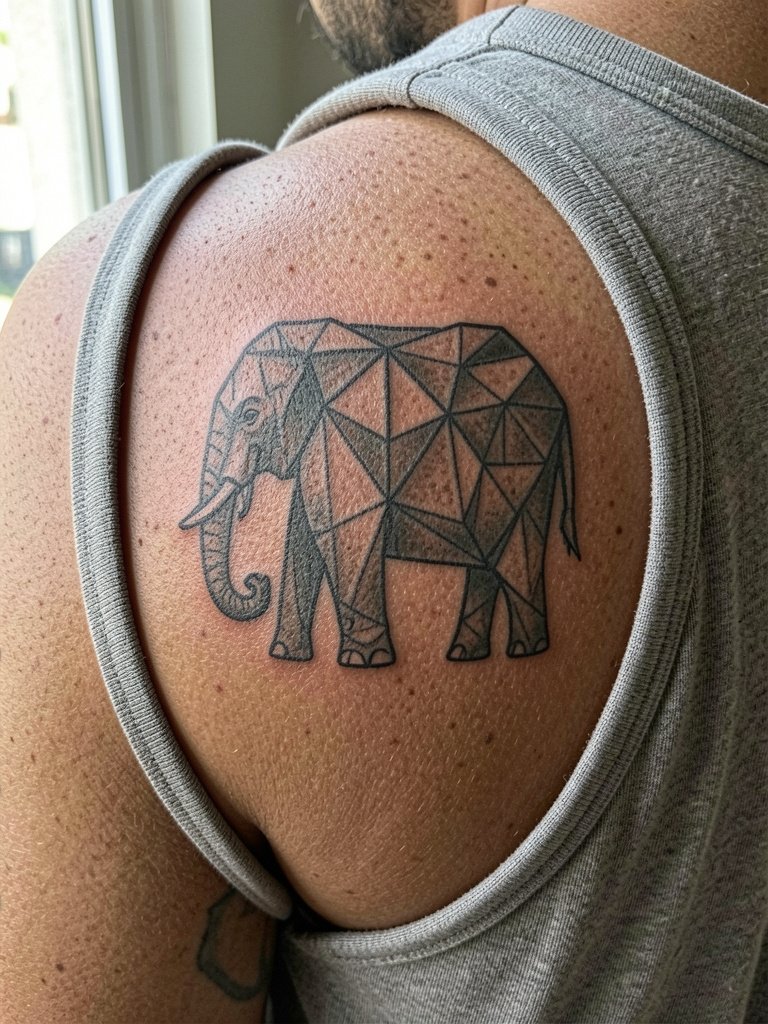
The shoulder blade is forgiving for geometric symmetry because the flat surface lets polygons sit without much distortion. Ask the artist to map a center line along the spine and to show the stencil both relaxed and with shoulder movement so you can see how symmetry holds when you raise an arm. Sessions range from one to three hours depending on size. This placement ages well because it receives less sun and friction, but large pieces still benefit from a two-year check-in touch-up. For warm-weather outfits, the shoulder blade shows off with open-back dresses that reveal the geometry without competing patterns.
11. Micro Geometric Elephant on Finger
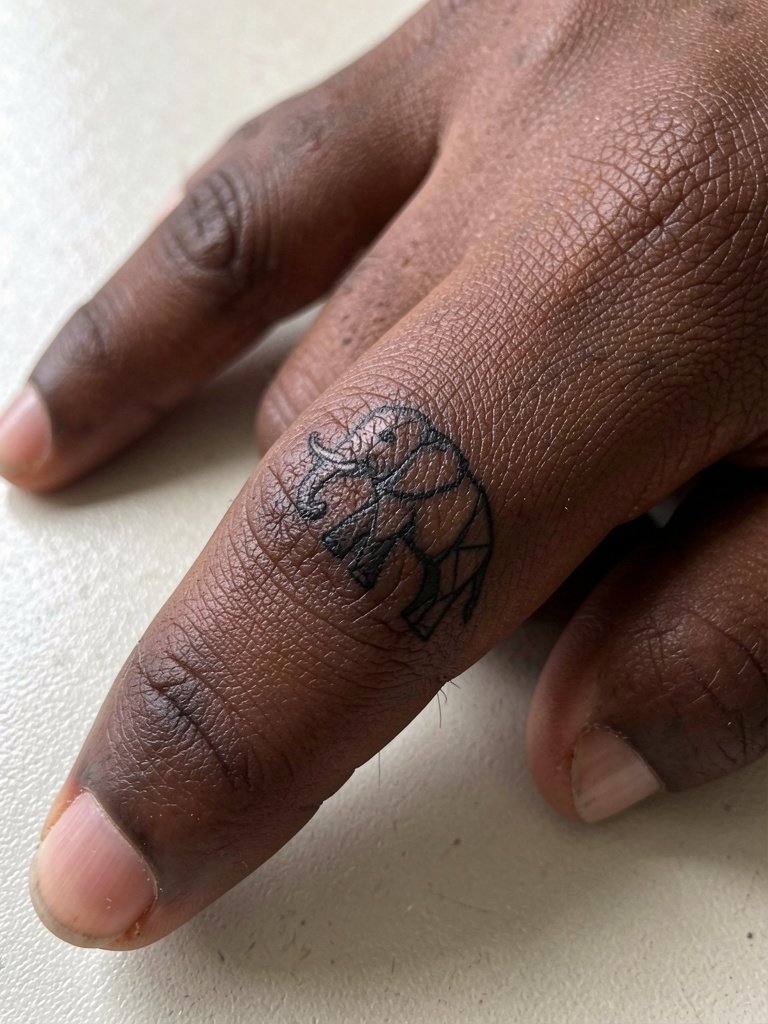
Finger geometry carries a high risk of early fading and blowout because the skin regenerates quickly and the area sees constant washing. If you want a finger elephant, request slightly bolder edges and simplified polygons rather than micro detail. Sessions are short but expect frequent touch-ups, sometimes annually, to keep facets defined. A common mistake is shrinking the design to match jewelry scale, which leaves no breathing room. For accessorizing, match the micro tattoo to slim stackable rings that draw the eye without covering the ink.
12. Origami-Style Elephant on Outer Upper Arm
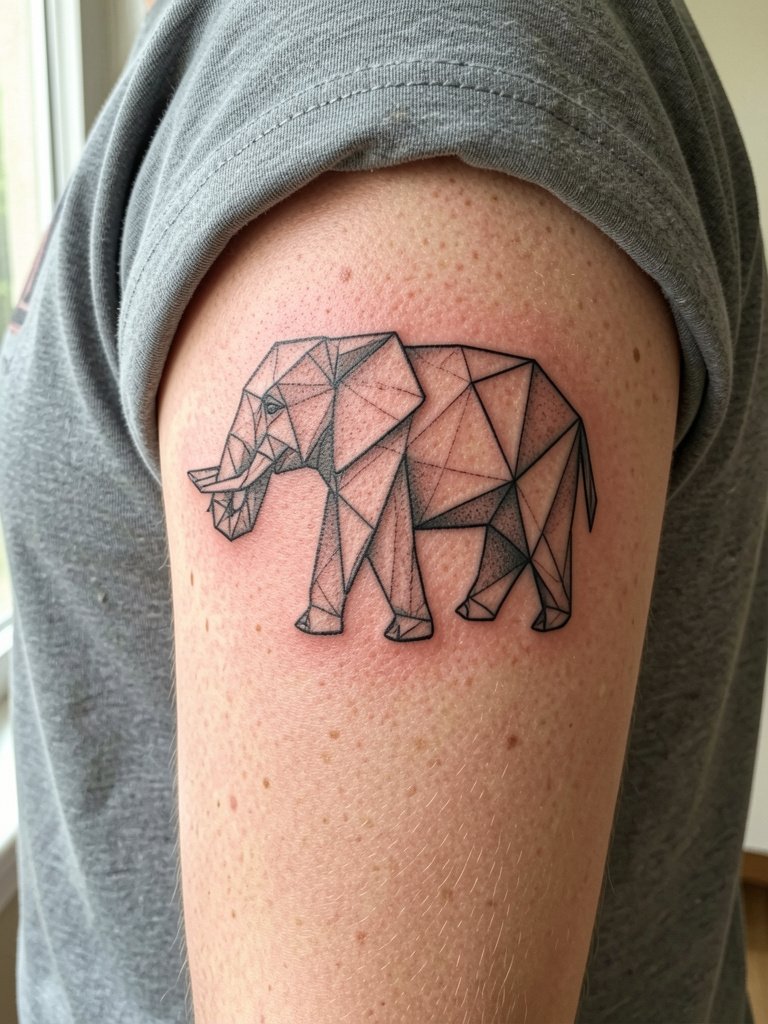
Origami geometry reads as crisp facets when the artist uses deliberate negative space along fold lines. Recommend asking for a stencil that shows the folds at both relaxed and flexed arm positions so you can confirm shape retention. Outer upper arm sessions are comfortable and usually finish in one sitting. Over time, the fold lines may soften slightly; a single touch-up at year two preserves the crisp origami creases. For casual looks roll a sleeve or wear a short-sleeve button shirt to let the piece peek through without constantly exposing the arm.
13. Large Dot-Grid Elephant Thigh Panel
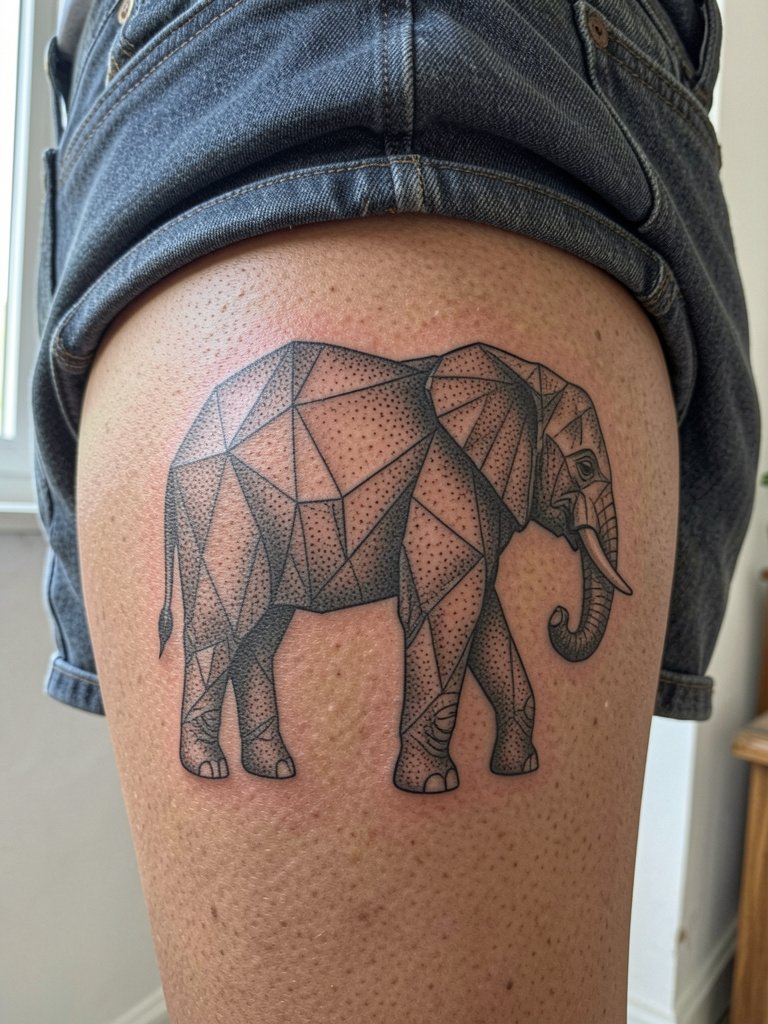
A large thigh panel gives room for complex polygonal layout and dot-grid texture that reads at a distance. Specify grid density and negative-space breathing room so staples like the hip curve do not compress patterns. Thigh sessions can be long but are usually tolerable; plan for one or two three-hour blocks. Expect great longevity because the front thigh sees relatively little sun and friction. For festival or summer styling, high-waisted shorts or midi skirts highlight the panel. Try pairing it with high-waisted denim shorts that hit just above the design.
14. Lower Back Symmetric Elephant Crest
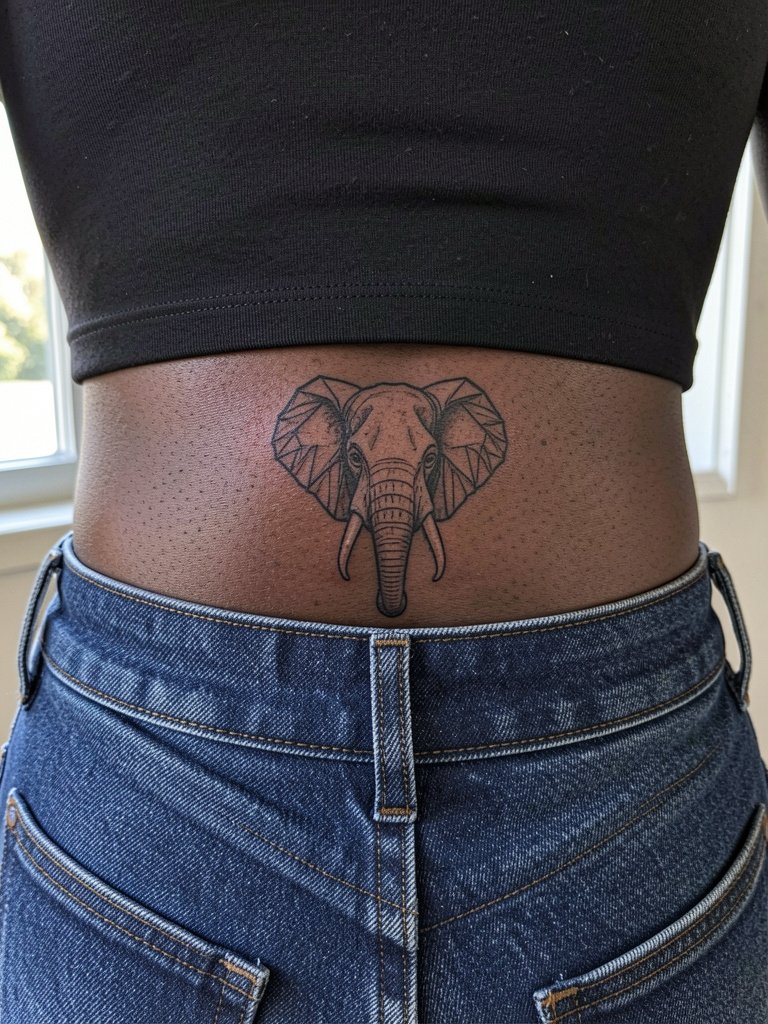
Lower-back geometry benefits from mirror symmetry so the crest appears balanced whether you wear a crop top or low jeans. One mistake is placing too many tiny facets near the waistband where rubbing can soften edges. For longevity, place larger polygons adjacent to the waistband and finer detail toward the mid-lumbar area. Sessions are moderate in pain and usually one to two hours. Sun exposure during summer can fade low-back work, so plan for a check-in touch-up at year two. Styling pairs well with low-rise jeans and fitted crop tops, try a low-rise jean cut that sits below the crest for easy display.
15. Full-Back Neo-Geometric Elephant Mural
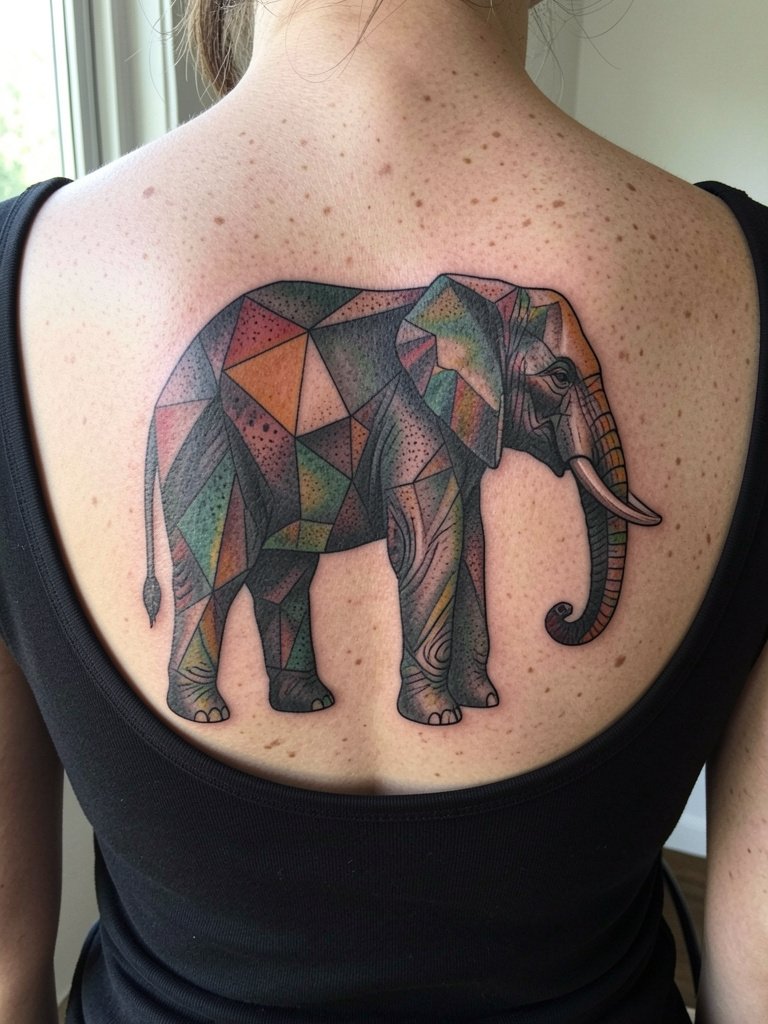
Full-back geometry is a commitment but allows the artist to stage polygon transitions and color saturation for maximum long-term readability. Talk specifics about how the planes will sit over the shoulder blades and spine and request a multi-stage plan that spaces sessions for saturation. Large pieces mature differently; expect the first session to be a laying-in phase, then color or dot-work in follow-ups. Pain fluctuates across the back; the spine and lower lumbar can be more intense. For showing the mural, back-exposing evening wear like a wide-neck dress frames the geometry well. Consider a backless evening top for formal reveals without adjusting clothing.
Frequently Asked Questions
Q: Will geometric elephant tattoos look the same on darker skin tones?
A: Geometric work reads differently across skin tones because contrast and negative space behave differently. I have seen heavy black outlines and bolder polygons keep crisp definition on darker skin, while very thin single-needle work can disappear faster. Request healed photos from the artist on skin tones similar to yours and ask for slightly increased line weight if you want the geometry to remain graphic.
Q: How do I find healed portfolios and artists without naming people directly?
A: Search platform filters and targeted hashtags to find healed examples. Try location filters on TikTok and Instagram plus tags like #GeometricElephantTattoo, #HealedTattooShots, and #GeometricInk to surface portfolios. Reddit threads and tattoo subcommunities also collect healed photos in different skin tones, which helps when you want to compare how stipple or greywash holds up.
Q: How long should I expect touch-ups for geometric elephants, depending on placement?
A: Touch-up frequency depends on placement. Fingers and ankles often need yearly touch-ups. Inner forearm, calf, and shoulder blade usually show subtle softening at two to three years. Large back and thigh panels often hold longer, with a common refresh at three to five years. Plan touch-ups accordingly so the polygon edges stay readable.
Q: Are there special considerations for session clothing for different placements?
A: Yes. Wear items that give the artist straightforward access without disrobing. For sternum and chest pieces a fitted sports bra works well. For inner thigh bring fitted bike shorts. For shoulder blade and upper-back work wear a loose tank or open-back dress you can easily lower or shift without full removal. These choices speed the session and reduce fabric movement.
Q: Is it cultural appropriation to use elephant motifs or mandalas in geometric tattoos?
A: People are divided on this. One view holds that respectful adaptation with clear acknowledgment and thoughtful alteration can be a positive tribute. The opposing view contends that sacred motifs and culturally specific animal symbolism should not be used as decoration without permission or understanding. If you are unsure, request that the artist explain motif origins and offer personalized designs that avoid direct replication of sacred elements.