A lot of elephant tattoo trends look amazing on-screen and then soften into a gray blur in real life. Watercolor splashes and ultra-thin single-needle trunks get the most saves, but bold silhouettes and slightly heavier linework often keep clearer shapes after two to five years. Read these 19 design takes with placement and upkeep in mind so you can pick a version that still reads clean on photos and in person.
1. Minimalist Single-Nose Elephant Profile
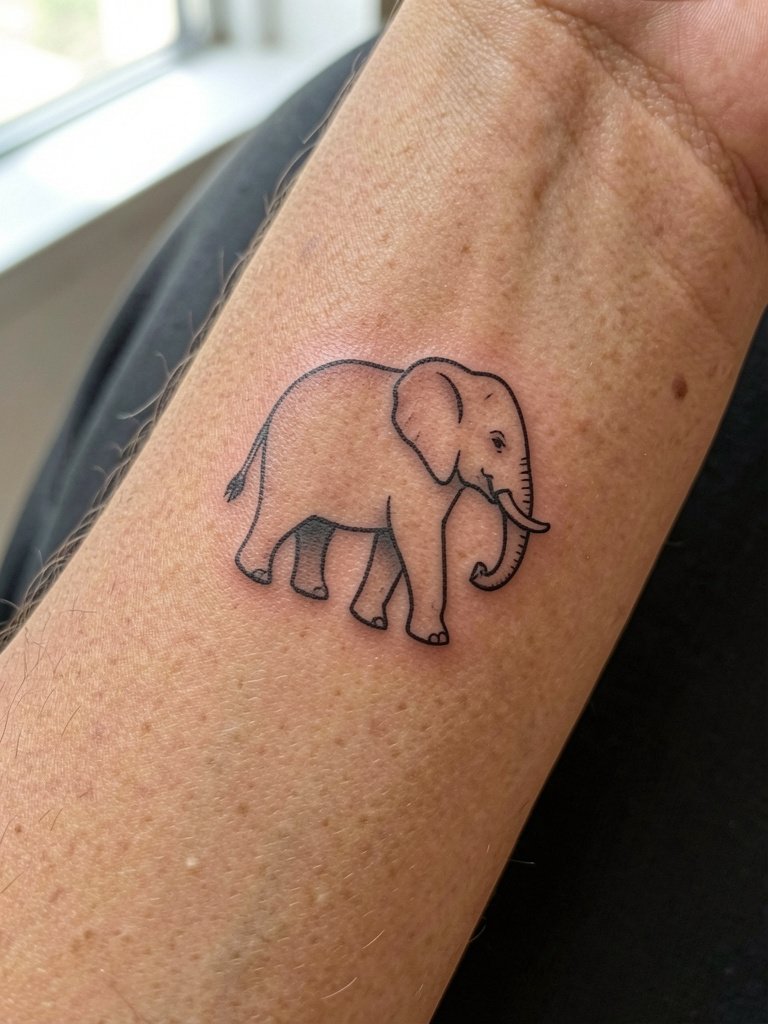
A thin single-stroke trunk and head read like a quiet emblem on the inner forearm. I recommend this if you want a fast session and a low-visibility piece that still photographs well. Common mistake is asking for a single-needle width that is too fine for daily abrasion. One camp argues fine line holds for years with correct depth and spacing. Another camp argues the forearm is exposed enough that slightly heavier linework preserves the silhouette better, and they will ask for 0.3mm to 0.5mm as a minimum. For session day wear, roll up a linen button down shirt so the artist can work without a tight cuff.
2. Realistic Black-and-Grey Elephant Portrait
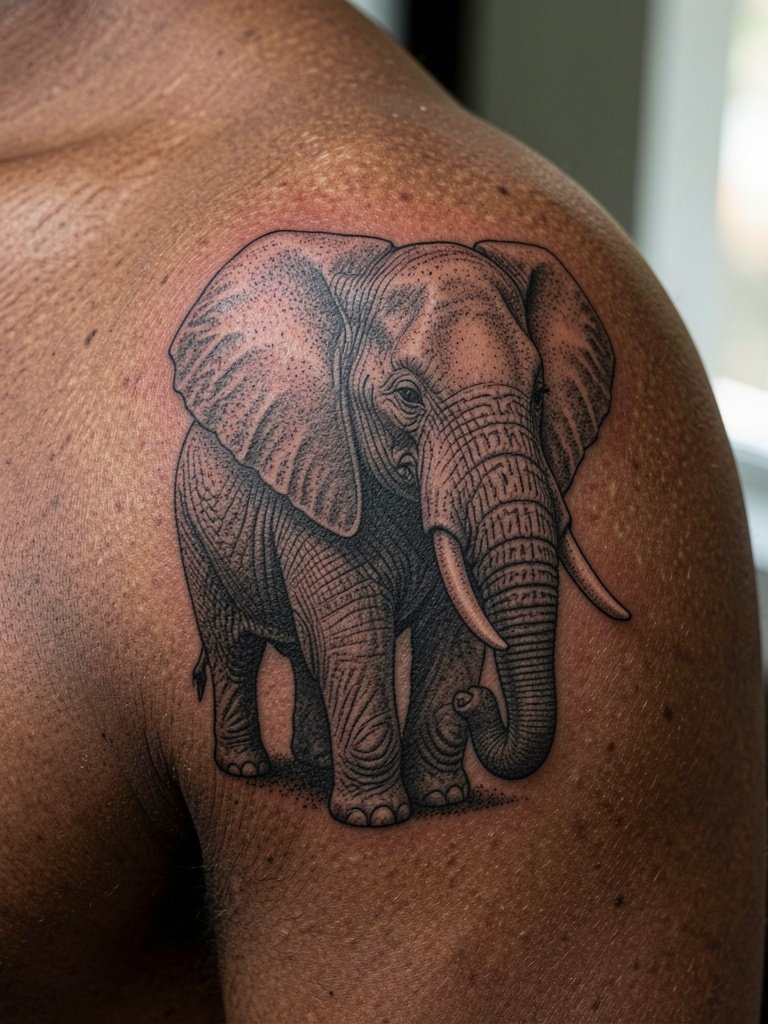
A shoulder portrait is where saturation, texture, and contrast matter more than size. Expect multiple sessions and a tattoo that your collector friends will appreciate for the fur detail and expressive eye. Bring high-resolution reference photos so the artist can map the highlights and darks. Blowout risk is low on the lateral deltoid but you should plan for two to four sessions across separate days. For showing the piece, try an off-shoulder top black to let the gray wash sit against dark fabric.
3. Mandala-Ornamented Elephant Head
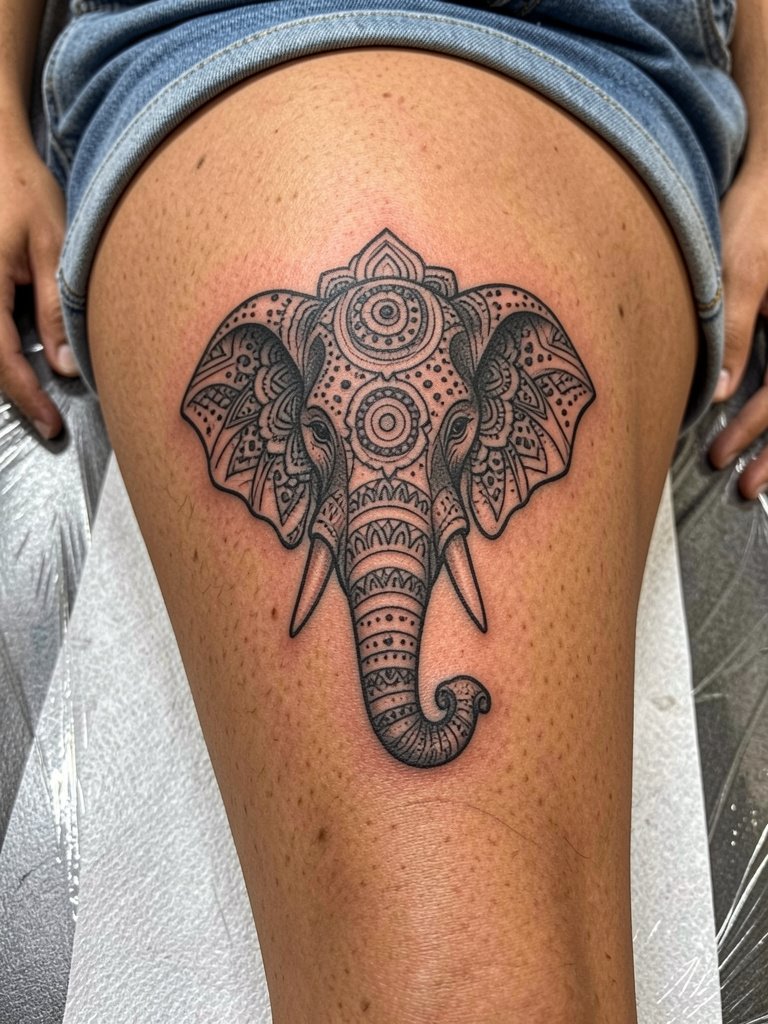
This ornamental version puts decorative geometry inside the silhouette so the motif reads both as an elephant and as a mandala. Inner thigh gives enough real estate for dense work, but it is sensitive to friction from clothing during healing. A common aging problem is overfilling tiny mandala gaps which merge into a gray mass, so leave negative breathing room between elements. For the appointment wear a loose drawstring linen pant so you can slide the leg up without pressure on fresh ink.
4. Watercolor Elephant with Floral Accents
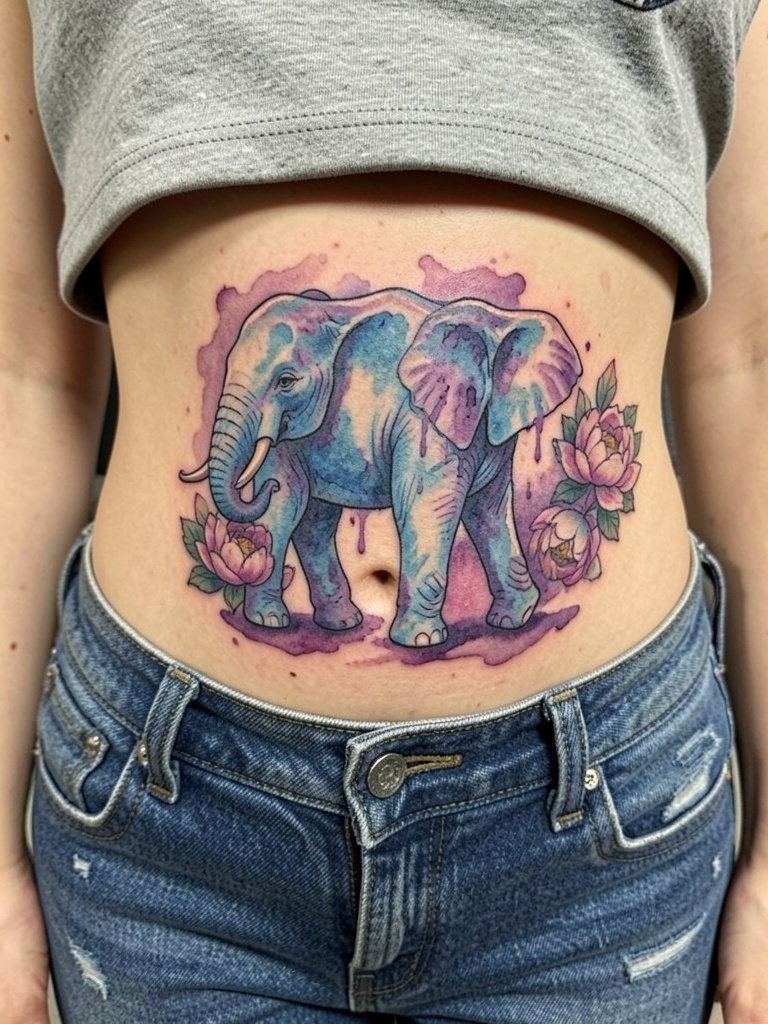
Watercolor brings a soft palette to an elephant outline on the hip, and the look photographs like a painting. Color stability is the controversy here. One camp says watercolor and bright pigments fade significantly within three to five years without heavy touch-ups. The other camp says modern pigments and diligent sunscreen use can preserve color for much longer, and they will plan for annual top-ups. For session comfort, wear flowy crop top pastel so the artist has full access.
5. Ganesha Illustrative Piece
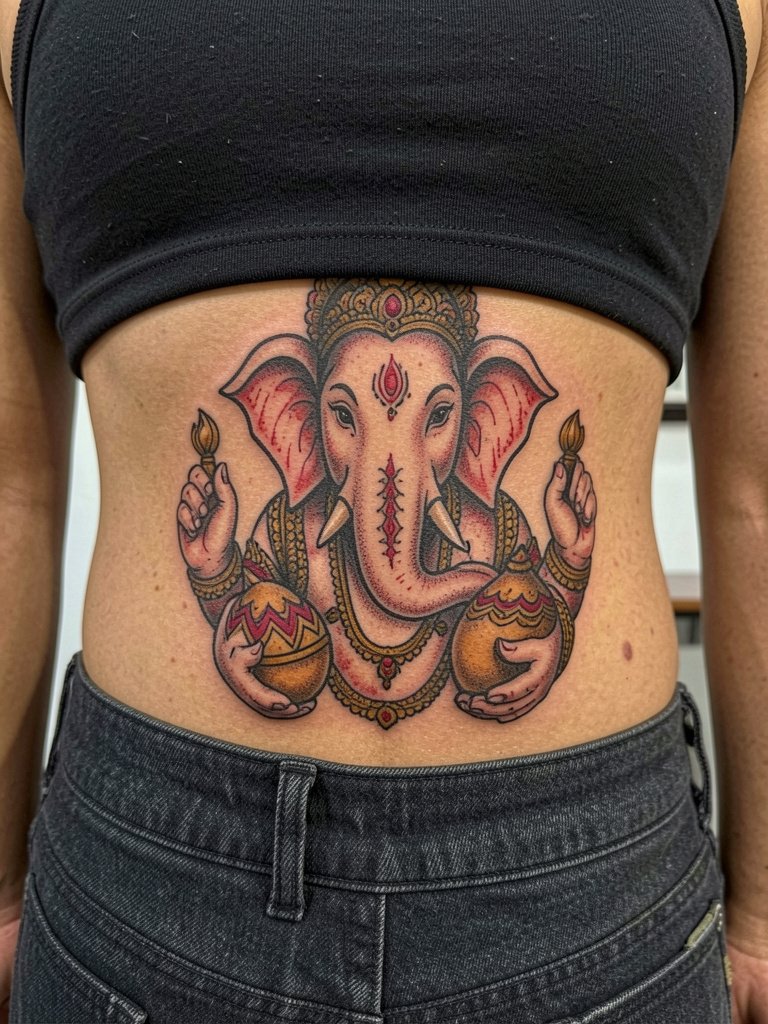
A Ganesha-style motif carries layered cultural symbolism, so plan the iconography respectfully and with context. For lower-back placements the patient will need to prepare clothing that provides full access while still respecting modesty. Common mistakes include mixing sacred iconography with trendy motifs that dilute meaning. Discuss exact attribute placement and color accents so the final piece aligns with your intent. For nights out a low back top black pairs well with the lumbar placement.
6. 3D Elephant Emerging from Rock
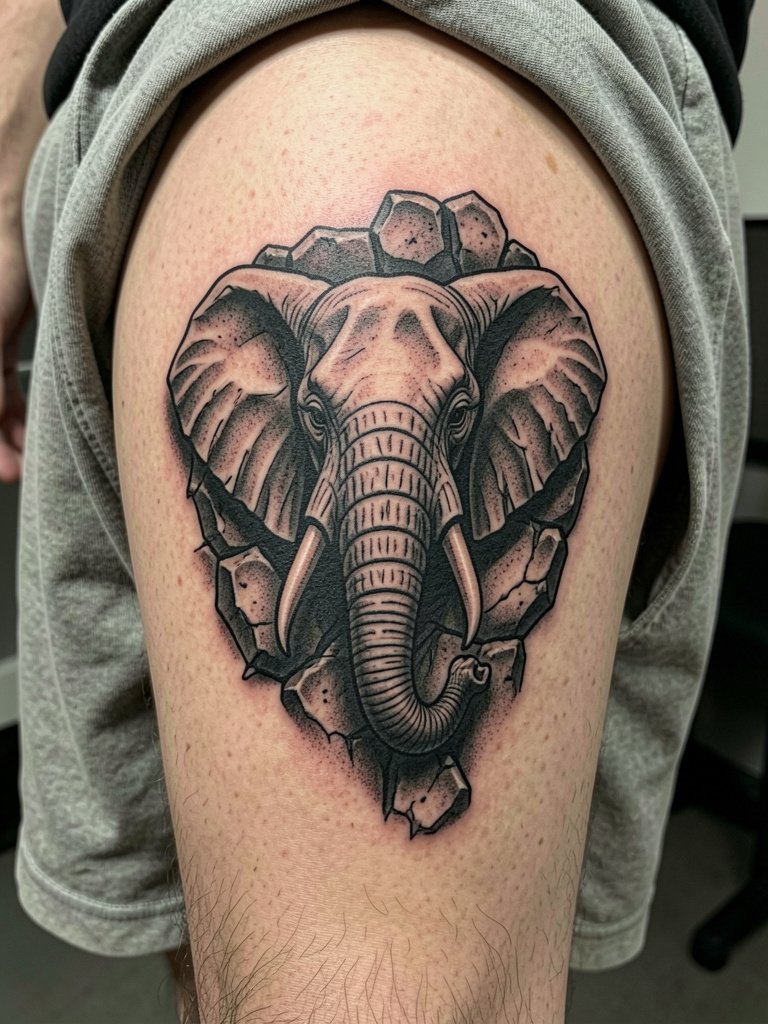
A 3D break-through effect is dramatic on the upper thigh because the curved plane gives the illusion real volume. Expect deeper shading and longer sessions to build contrast that reads from a distance. A mistake is relying on mid-tone gray only. The piece needs crisp black anchors and bright healed highlights to retain depth over time. For session wear, bring loose shorts women to let the artist access the thigh without tight seams pressing on fresh ink.
7. Tribal Bold-Line Elephant
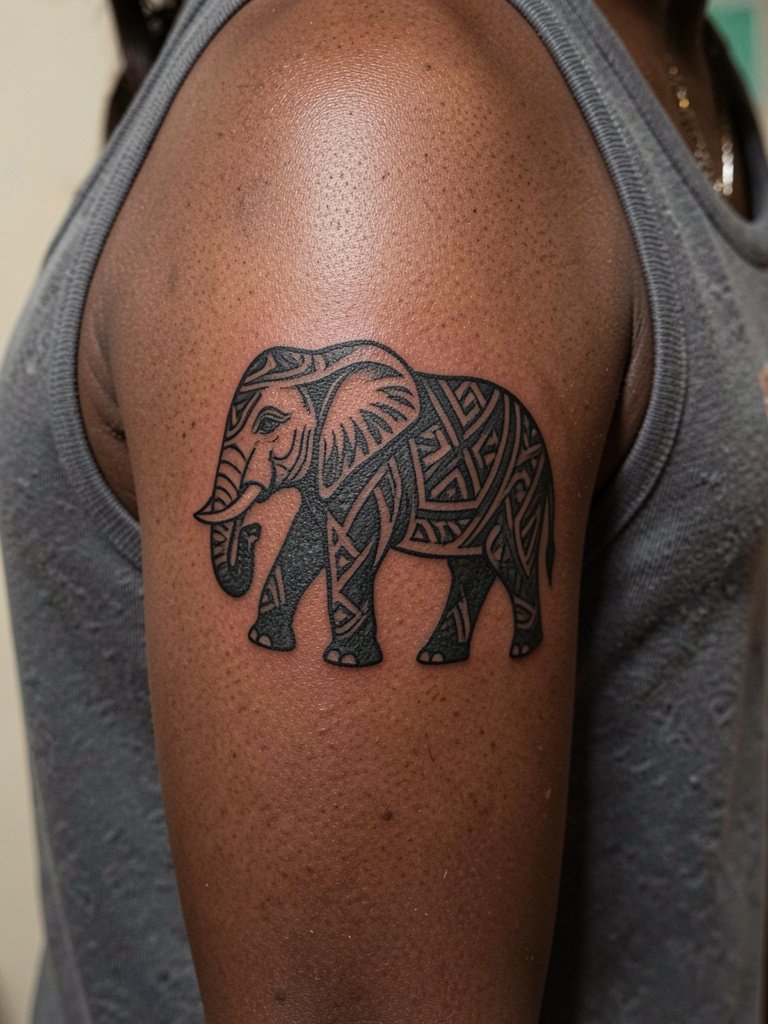
Thick blackwork with repeat motifs reads strongly on the inner upper arm. This style ages well because saturated black holds up longer on moving skin. A common error is making the motifs too small for the area which loses crispness. For showing the work, pair it with a sleeveless top solid color so the bold linework remains the focal point.
8. Dainty Elephant with Baby Elephant
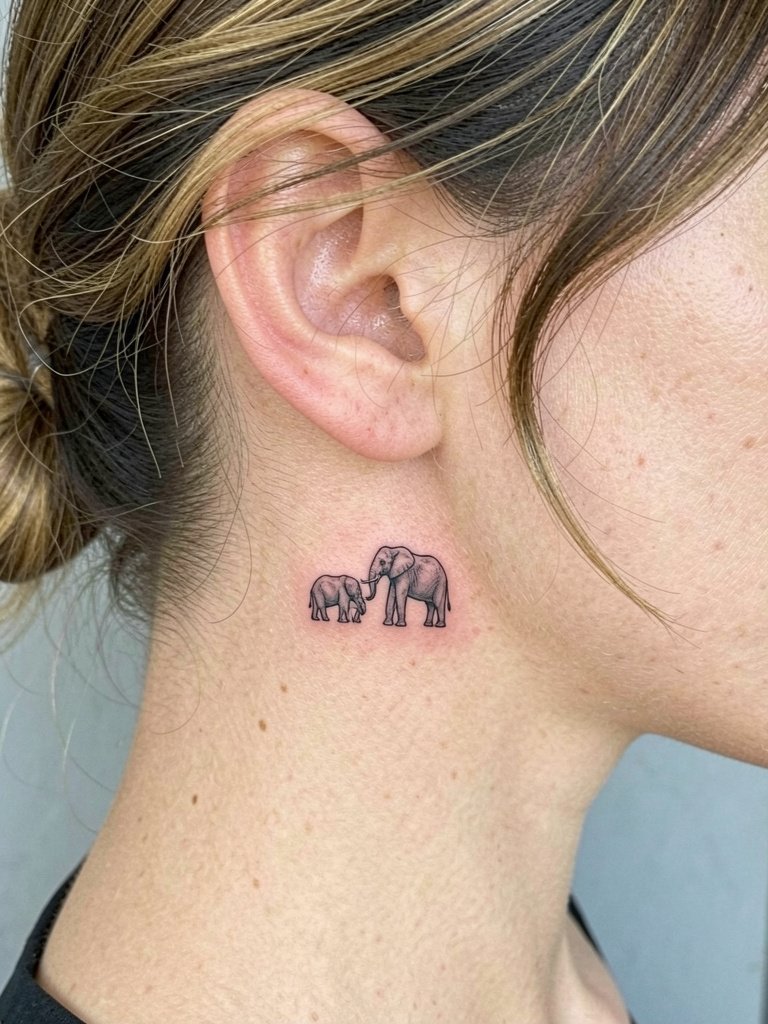
A small parent-and-calf composition behind the ear is intimate and symbolically specific to family bonds. Pain is generally low at the mastoid but the area needs precise linework. Photo fade and smudging happen if lines are too thin for constant hair contact. A real mistake is shrinking the reference until the details vanish. For session day, wear a loose top low back so the artist can access the nape without tugging.
9. Geometric Elephant Silhouette
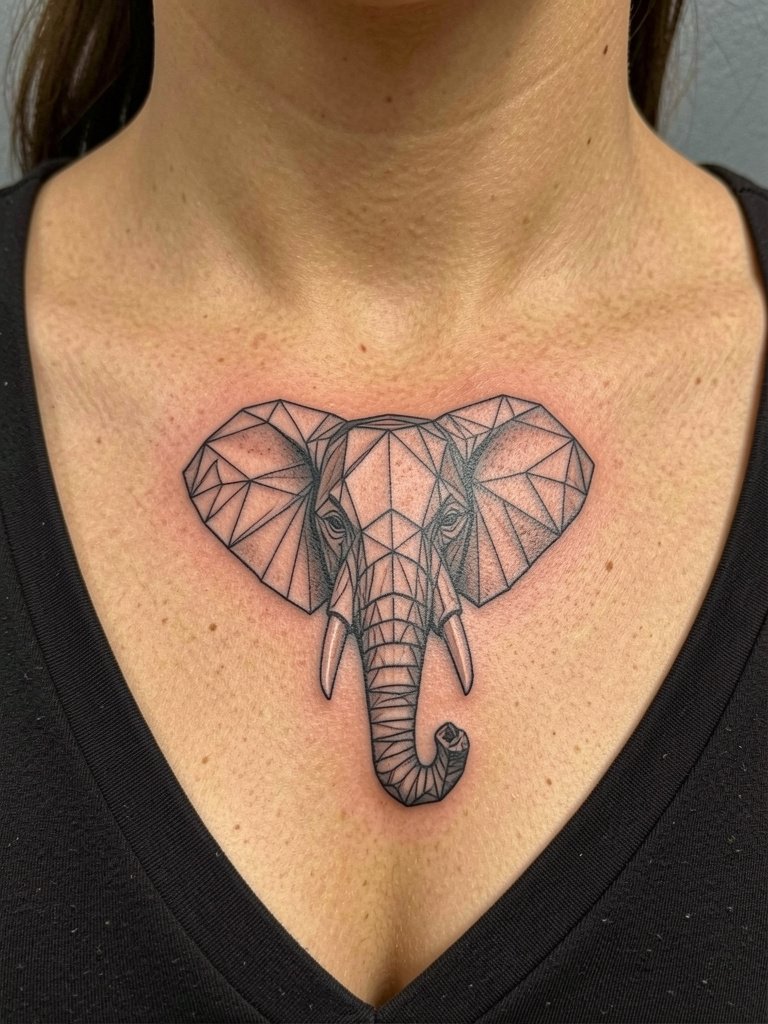
Geometric low-poly gives a modern intellectual edge to a collarbone piece. The collarbone sees a lot of motion so leave breathing space between polygons. A common mistake is compressing triangles so the form looks muddy after healing. For styling, choose a v neck top neutral that frames the angles. During consult bring scaled references so the artist can show how the geometry reads at two versus three inches.
10. Elephant Foot/Mandala Stamp
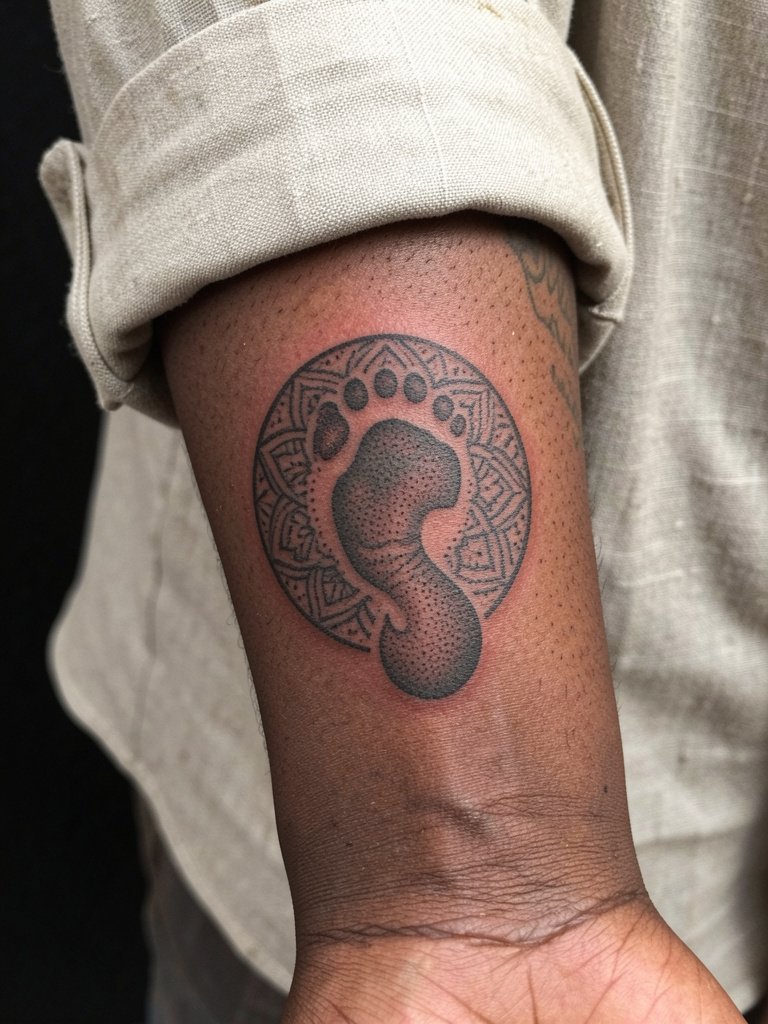
An elephant foot stamp reads as a grounding emblem on the forearm. Dot work requires consistent saturation and a slightly larger scale than many clients expect. A frequent mistake is shrinking the mandala too small which leads to dot merging. For showing the piece, roll up a rolled cuff linen shirt and add dainty bracelets on the opposite wrist so the stamp keeps center stage.
11. Line-Art Elephant with Lotus
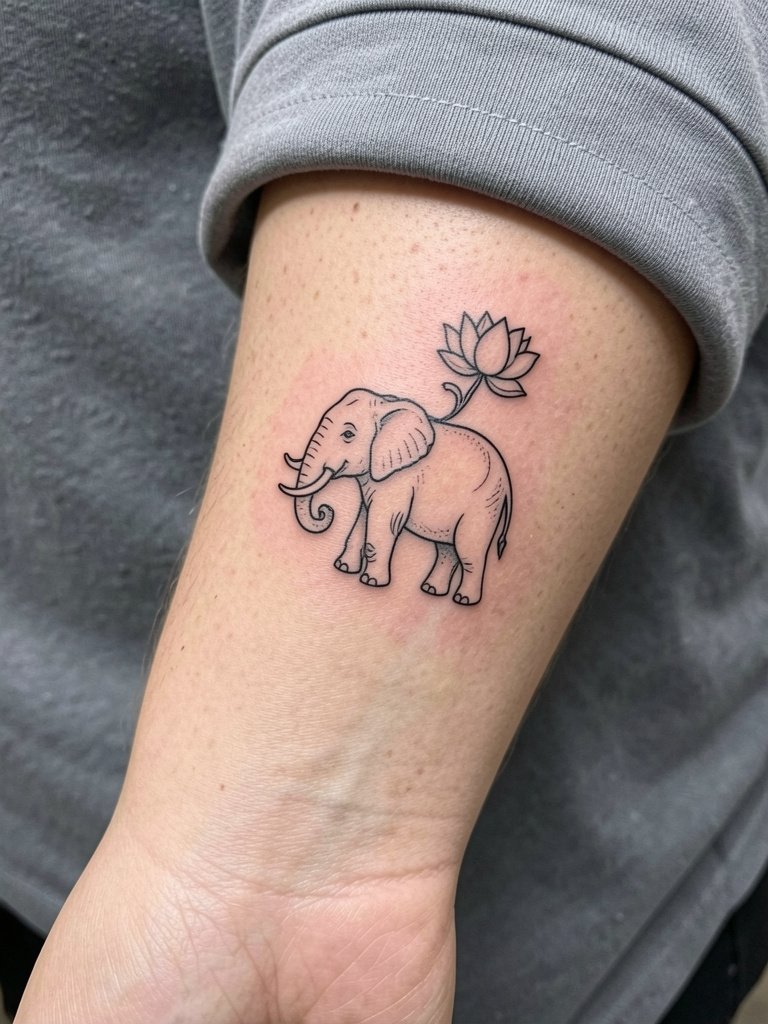
A wrist lotus-and-trunk composition is compact and elegant. The wrist is an abrasive spot so the line weight should be slightly heavier than a single-needle reference. A common aging issue is the thin outline softening into a fuzzy band by year two. To avoid that, plan line weight and ask for a design that allows for a touch-up window at year two if needed. For session clothing try a short sleeve or sleeveless top so the artist has clear wrist access.
12. Elephant in a Circle with Moon Phases
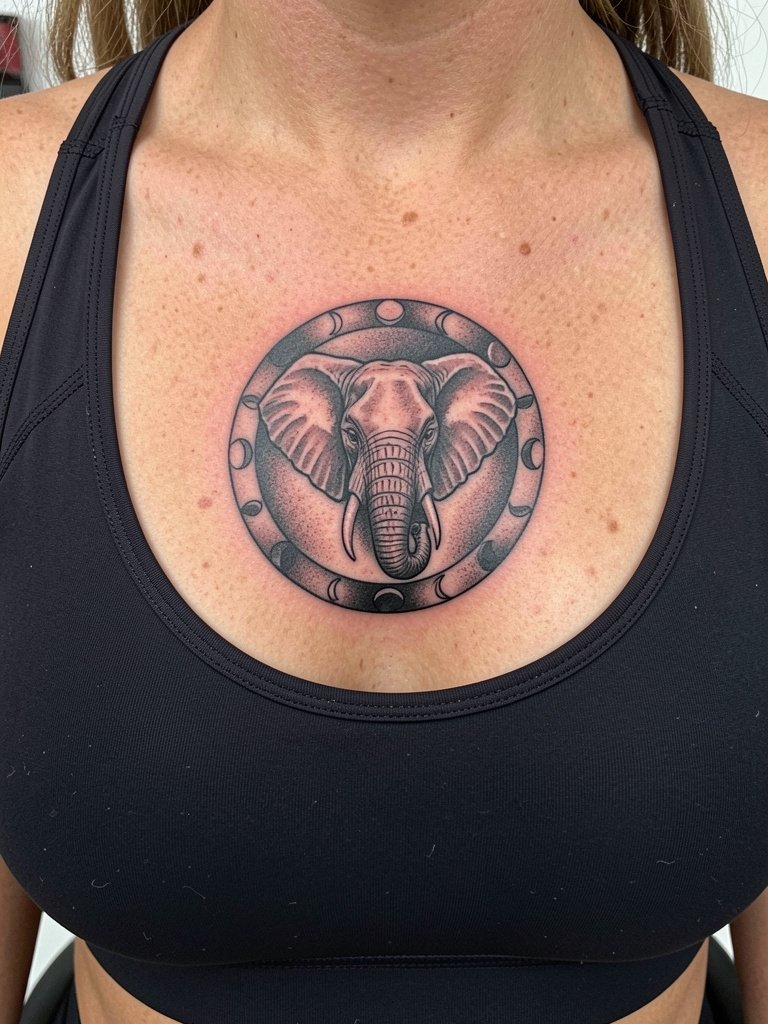
A sternum piece with moon phases merges animal iconography and celestial rhythm. Sternum skin can scar differently so plan shading density with the artist. Common mistake is compacting the moons too closely which leads to merging after healing. For sitting in the chair, a strapless or wide-neck top works best. For nights out, layered chains help frame the tattoo.
13. Cartoon / Whimsical Elephant
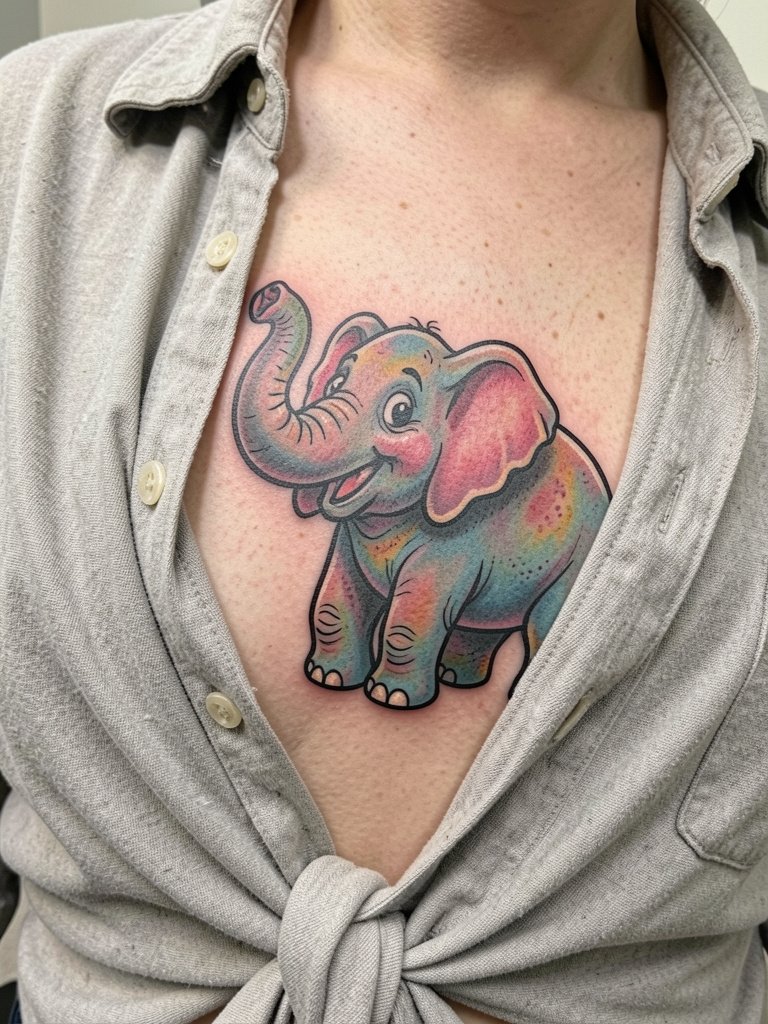
A ribcage cartoon brings personality and lightness to a typically high-motion area. Pain on the ribs can be significant for first-timers. The common aging problem here is fine detail and watercolor blending that softens under constant expansion and compression. For session comfort, bring snacks and a loose button-down shirt to tie up as needed. If you want the color to hold, expect to plan a touch-up after one to three years.
14. Elephant Head with Chains
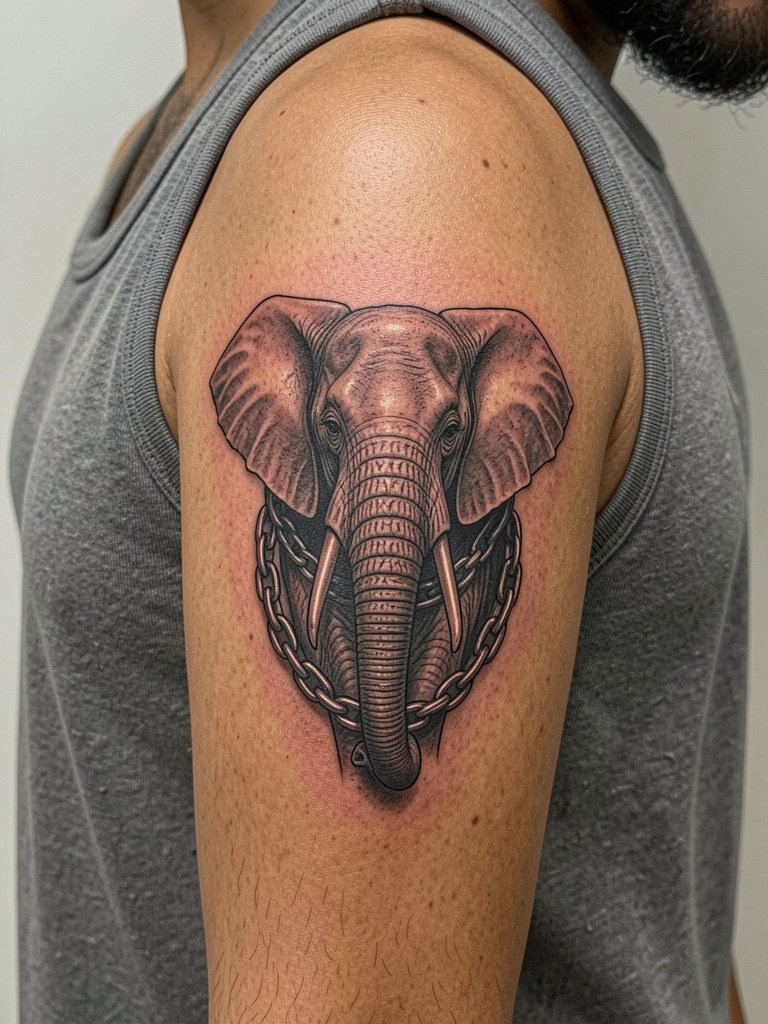
Chains wrapped around an elephant suggest resilience and breaking free. Inner upper arm skin handles solid black well, but metallic shading needs crisp white highlights to read as metal after healing. A mistake is relying on thin gray lines for chain links which will blur. During consult specify how much metal reflectivity you want and where white highlights should sit. For showing the tattoo, pair it with a tank top so the chains remain visible.
15. Negative Space Elephant
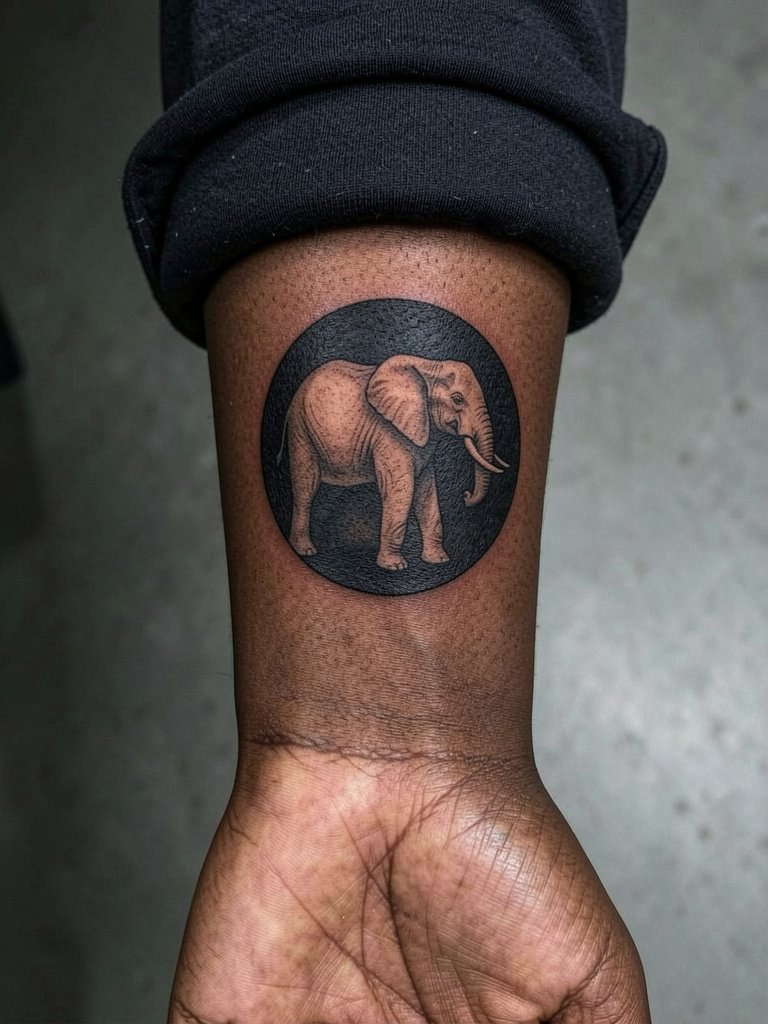
Negative space designs rely on strong background saturation and sharp edges. The key is a solid, even black fill with a small buffer between the elephant silhouette and the circle rim. A common mistake is under-saturating the black which reveals patchy texture later. If you work at scale, expect a single session but plan for a short touch-up if any patchiness appears. For show-off styling, rolled cuffs and dainty bracelets work well.
16. Low-Poly Collarbone Elephant Accent
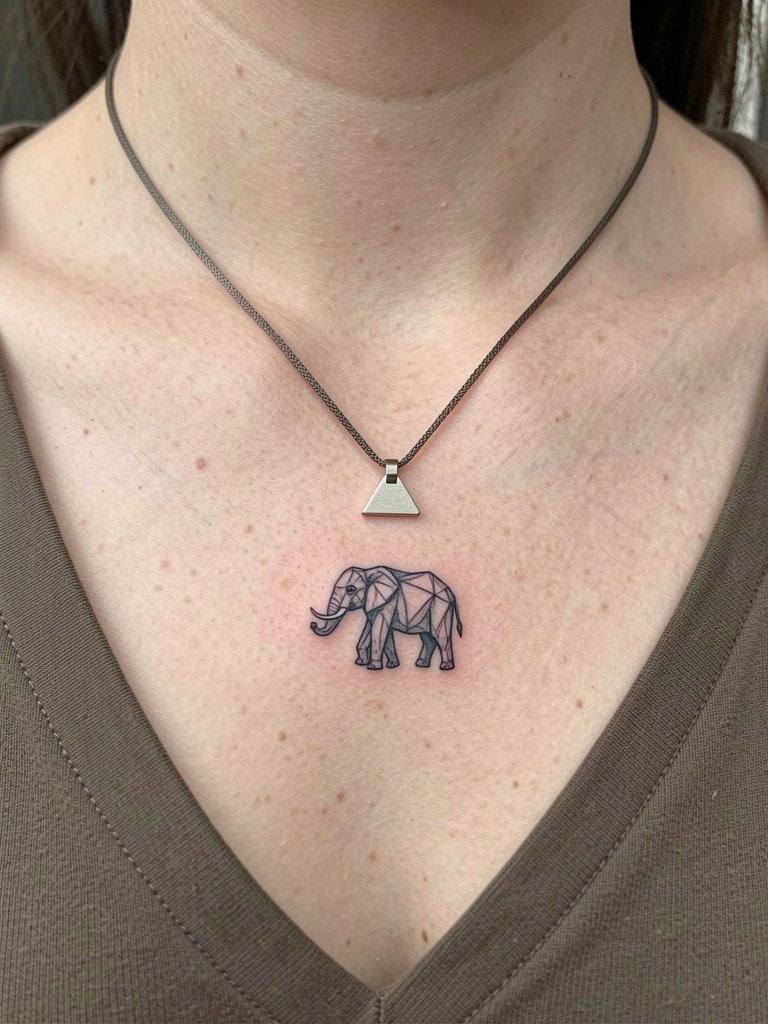
A collarbone low-poly piece functions as subtle jewelry on the chest. The area moves a lot so facets need enough spacing to avoid merging. A common mistake is making the design too small to carry detail. For display, a minimalist pendant necklace complements the geometry without crowding.
17. Elephant with Birth Date Script
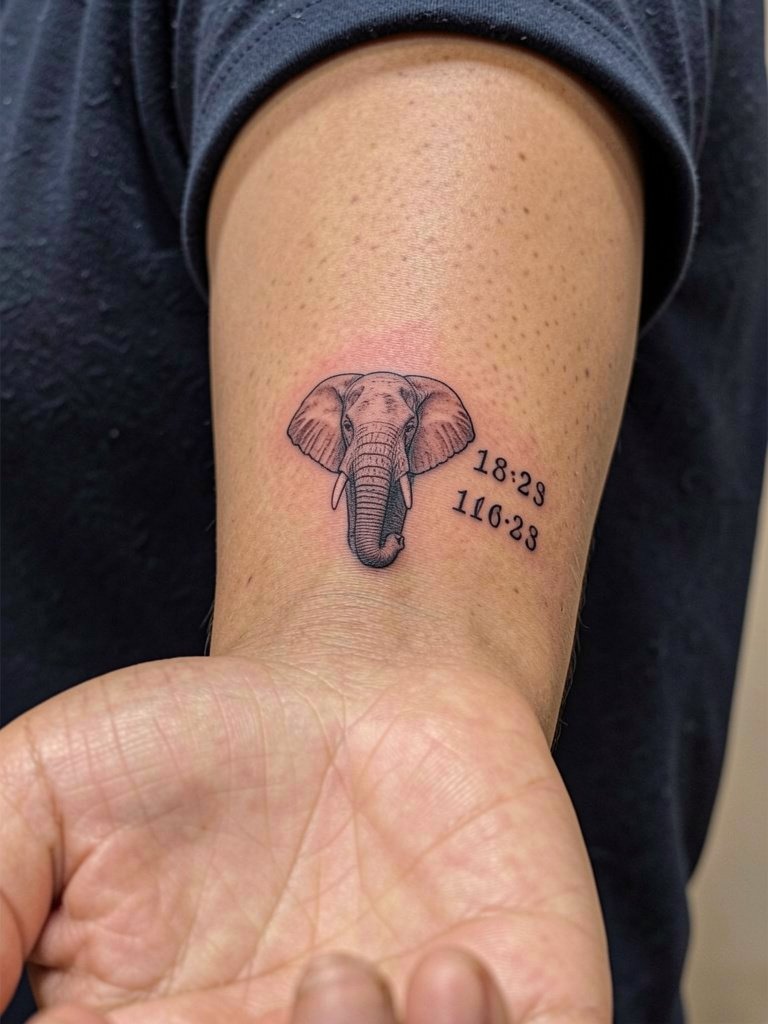
Pairing a small elephant with a birth date gives a concrete memory anchor. Text in small sizes can blur if letterforms are too thin. Bring the exact numerals formatted as you want them so the artist can size the glyphs for longevity. For the session, avoid wrist jewelry and wear a short sleeve top to let the artist work unobstructed.
18. Elephant Footprint as Grounding Symbol
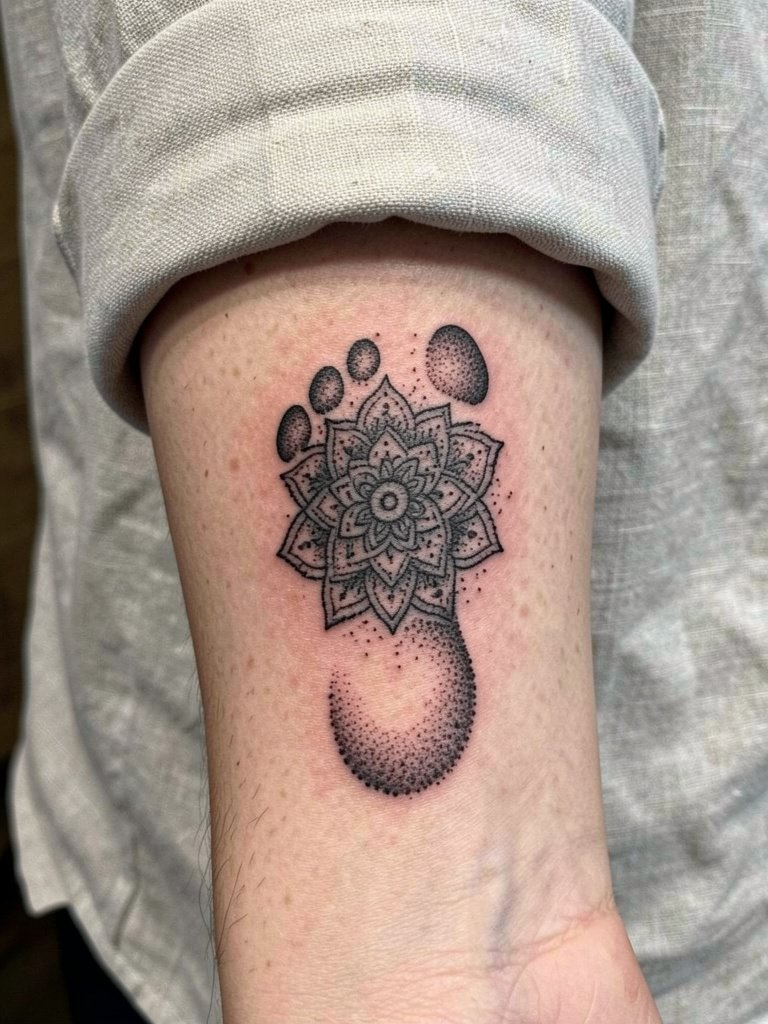
A footprint motif reads as a tactile grounding emblem for anxiety coping strategies. Dotwork and thin lines demand scale so the design remains legible. A common mistake is compressing the mandala inside the pad too small. For daily wear, a dainty gold stacked bracelet set on the opposite wrist draws attention without crowding the footprint.
19. Elephant with Chain Break Imagery
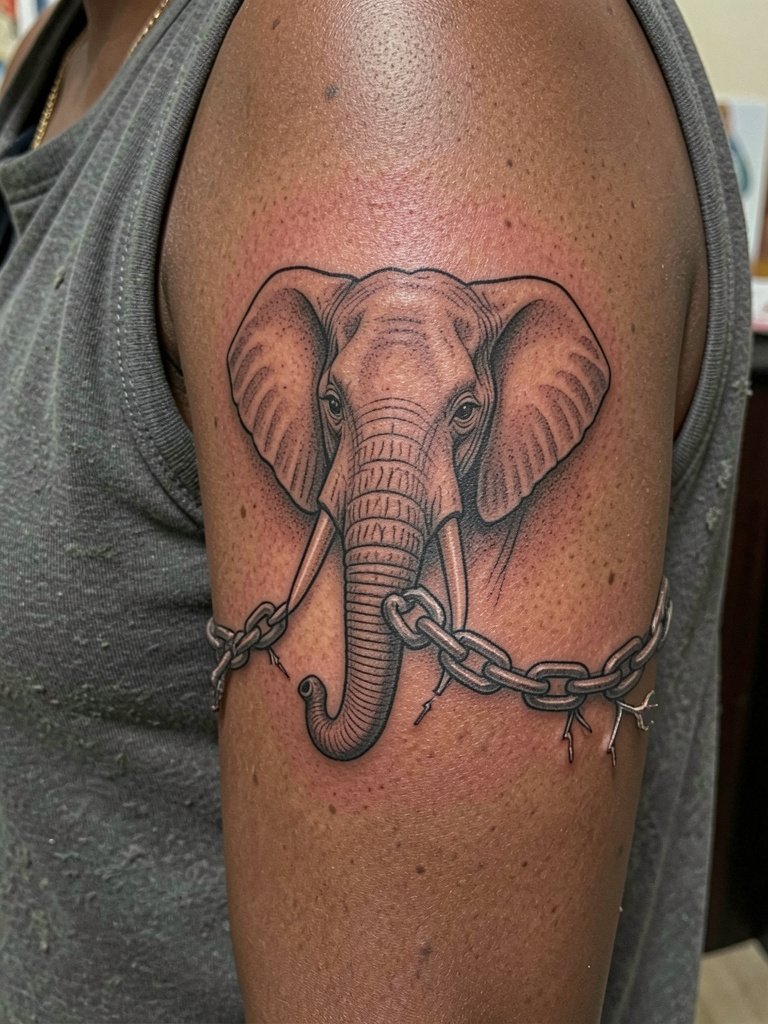
This version uses chain-break symbolism to represent overcoming trauma or addiction. Realistic metallic textures and a convincing break point need crisp contrast and small white highlights. The inner arm handles this well but avoid tiny link detail that will blur. Ask for where the chain should break so the narrative reads clearly at a glance. For showing the piece, stacked leather bracelets on the opposite wrist balance the composition.
Before You Book
These first six designs vary from fine line forearms to dense inner-thigh ornamentation, so a few items smooth the session and early healing.
- Haku Japanese aftercare balm. A thinner, less occlusive balm helps dry-prone skin finish healing without the pore-clogging feel some people report with heavy petroleum products.
- Ink Sobres tattoo lotion. Fast-absorbing lotion for the weeks after the initial film phase keeps dot work and fine-line edges from crusting.
- UV protective arm sleeves. Great for forearm and wrist pieces during summer when reapplying sunscreen is inconvenient.
- Silicone healing patches. Useful for flat chest or sternum areas to reduce scab height and preserve crisp edges during healing.
- Saniderm second skin. Protects fresh lines and color from bacteria and friction in the first 48 to 72 hours, which helps preserve tiny dot work and watercolor boundaries.
Frequently Asked Questions
Q: How much should I budget for an elephant tattoo across styles?
A: Expect a wide range. Small fine-line forearm pieces commonly start around one hundred fifty to four hundred dollars. Detailed black-and-grey portraits or large neo-traditional backs can range from eight hundred to two thousand five hundred or more. Plan for artist minimums and tipping in the fifteen to twenty five percent range if the result meets your expectations.
Q: Which placements age best for fine-line elephant work?
A: Inner forearm and upper shoulder tend to hold line clarity better because they see less constant stretch than the ribcage and inner thigh. Artists split on the ribcage issue. One camp says ribs and inner thighs stretch and shift enough that ultra-thin single-needle work blurs within one to two years. The other camp says careful depth and slightly wider spacing let fine line settle fine, and they will show healed examples to support that view.
Q: I have darker skin. How do I keep an elephant portrait from looking muddy?
A: Favor high-contrast black-and-grey with bolder outlines rather than pale watercolor washes. Ask for strategic white highlights in small areas if the artist uses them sparingly. Bring healed photos of similar skin tones so you and the artist can agree on saturation and edge weight that photograph well.
Q: Where can I find healed portfolios and artists near me without naming specific shops?
A: Search hashtags like #elephanttattoo and #finelinetattoo on Instagram and TikTok then filter results by location. Use Tattoodo or Inked App to search keywords like "black and grey elephant" or "minimalist elephant outline" and review healed shots. Reddit communities such as r/tattoos and r/tattooadvice often surface peer recommendations and before/after healed pictures.
Q: Should I use Aquaphor or a specialty balm on day one?
A: The community is split. Some people find that thick petroleum-based ointments can feel occlusive and lead to clogged pores for their skin. Others prefer a thin layer of a trusted ointment for the first two to three days to protect new ink. Follow the shop protocol but monitor your skin. If the area becomes too hot, sweaty, or shows signs of clogged pores, switch to a lighter, fragrance-free lotion.
Q: How often will color or watercolor elephant tattoos need touch-ups?
A: Watercolor and bright color pieces typically need touch-ups sooner than black-and-grey work. Expect to budget for a color refresh every two to four years depending on sun exposure and daily abrasion. Black-and-grey realism is more predictable, but fine details like whiskers or dot work still sometimes require a one-time touch-up after a year or two.