Fine-line elephant outlines look whisper-light on camera, but here is the counterintuitive truth, the ones that stay readable for years are often the pieces with slightly heavier linework or small areas of fill. Finger tattoos and some rib placements fade fast, and darker skin tones sometimes need contrast tweaks to read well in photos. I’ll point out the design swaps, placement moves, and wardrobe tips that keep an elephant looking crisp beyond year two.
1. Fine Line Minimalist Elephant Profile
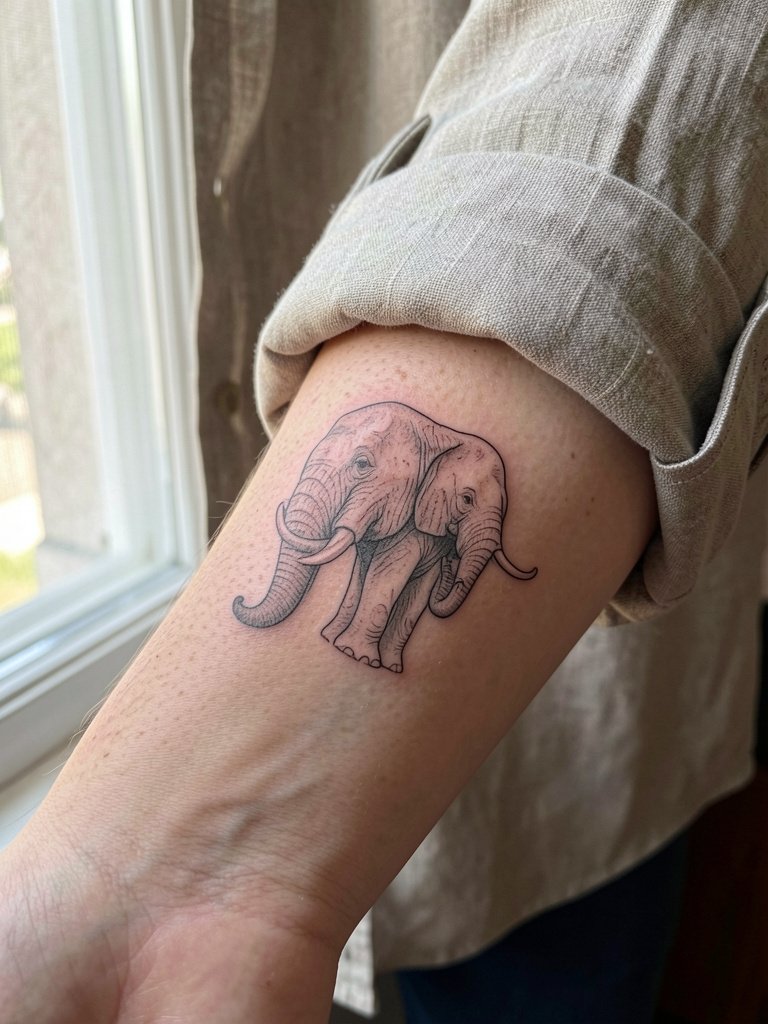
This is the go-to for a subtle forearm piece. I recommend adding a hair heavier line for the trunk and a tiny filled eye so the shape reads after a year of daily wear. A common mistake is copying a Pinterest single-needle reference exactly and scaling it too small. On the inner forearm, this design usually needs only one session and heals with crisp linework at six months. By year two the tiniest single-needle lines can soften, and a small touch-up at year two keeps the profile sharp. For your appointment, wear a linen button down shirt so the artist can roll the sleeve without compressing fresh ink.
One camp argues fine line tattoos blur quickly on most skin types. The other camp says correct needle depth and slightly wider spacing make fine line last, and they point to healed three-year examples to back that up.
2. Realistic Black-and-Gray Elephant Head
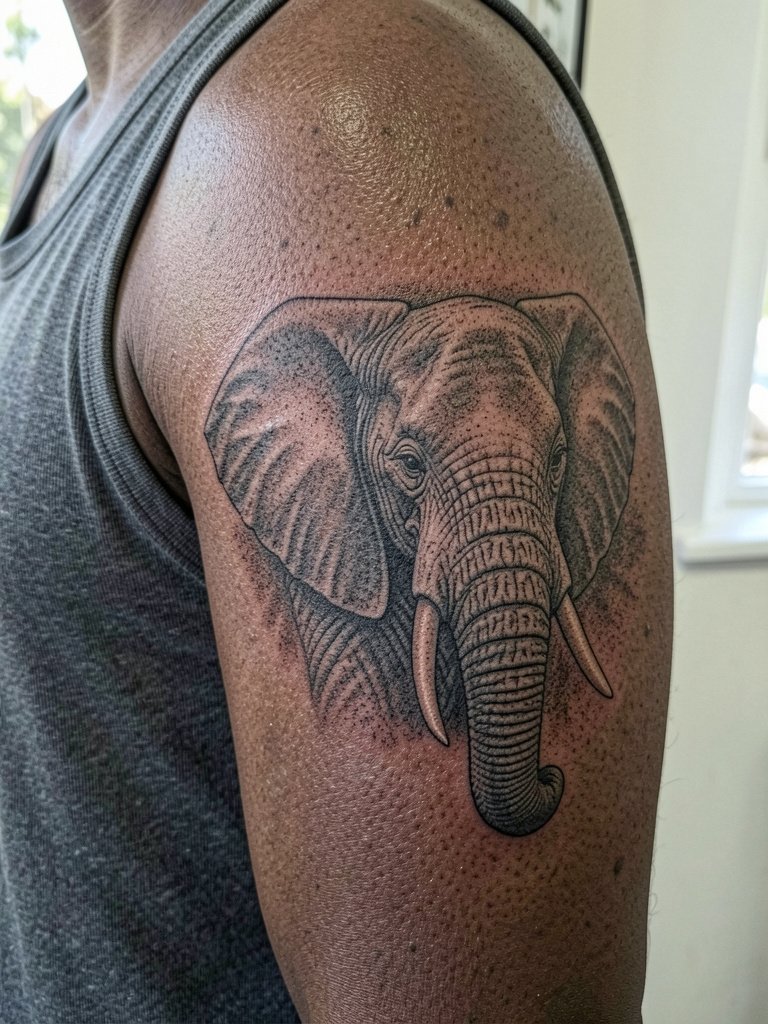
Choose this when you want jaw-dropping texture and a portrait feel. Expect multiple sessions and longer healing windows because high saturation areas settle slowly. If you want the skin folds to keep contrast on darker tones, discuss adding subtle white highlights or small gold accents so the features photograph. A frequent mistake is compressing a realistic piece into too-small a footprint, which loses the detail in six months. For showing it off, a sleeveless tank in solid black frames the shading and keeps attention on the portrait.
3. Mandala Elephant with Geometric Halo
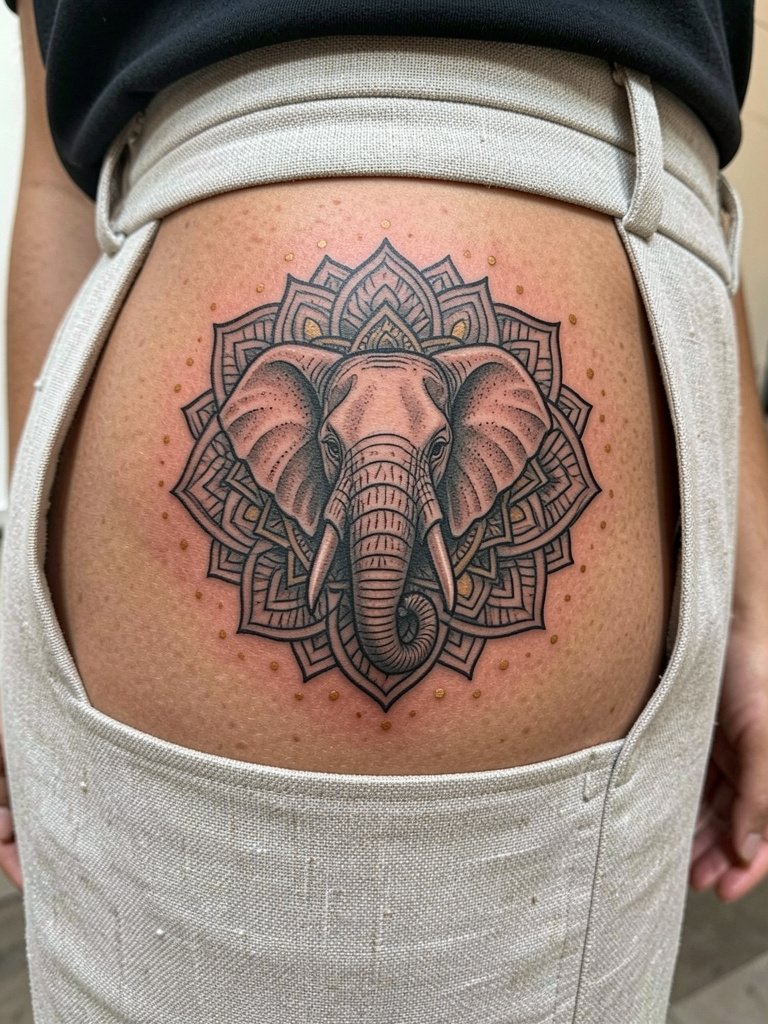
This ornamental combo works well at a mid-size scale so the geometry has room to breathe. The hip is a spot that sees some friction from waistbands, so ask for slightly thicker outer lines and fewer micro details near the edge. A common aging failure is an over-dense dot pattern that turns into a grey blur over time. On the hip a two-session approach lets the artist lock in symmetry without overworking the tissue. For outfits that let the halo read, try high-waisted linen pants which sit below the tattoo and keep fabric from compressing the area.
4. Watercolor Elephant with Splashed Hues
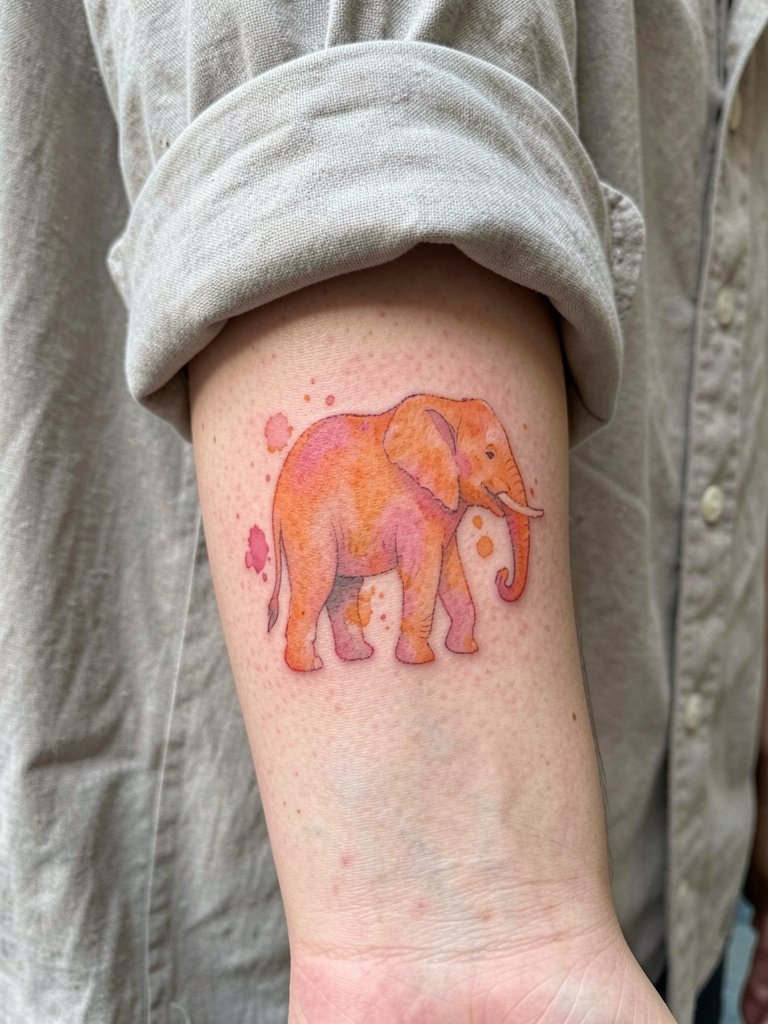
Watercolor gives an artistic, dreamy look but it needs extra planning. One camp argues color fades faster than black-and-gray, especially reds and oranges. The other camp says modern color inks and correct saturation mean accent hues last if placed and layered correctly. A practical swap is to keep the elephant silhouette in strong black and use watercolor washes outside the silhouette instead of inside it. That helps the main shape read in photos at year two. For session wear, bring a loose button-down so the artist can expose the inner forearm without squeezing fresh ink.
5. Tribal Sacred Elephant (Thai/Lakshmi Style)
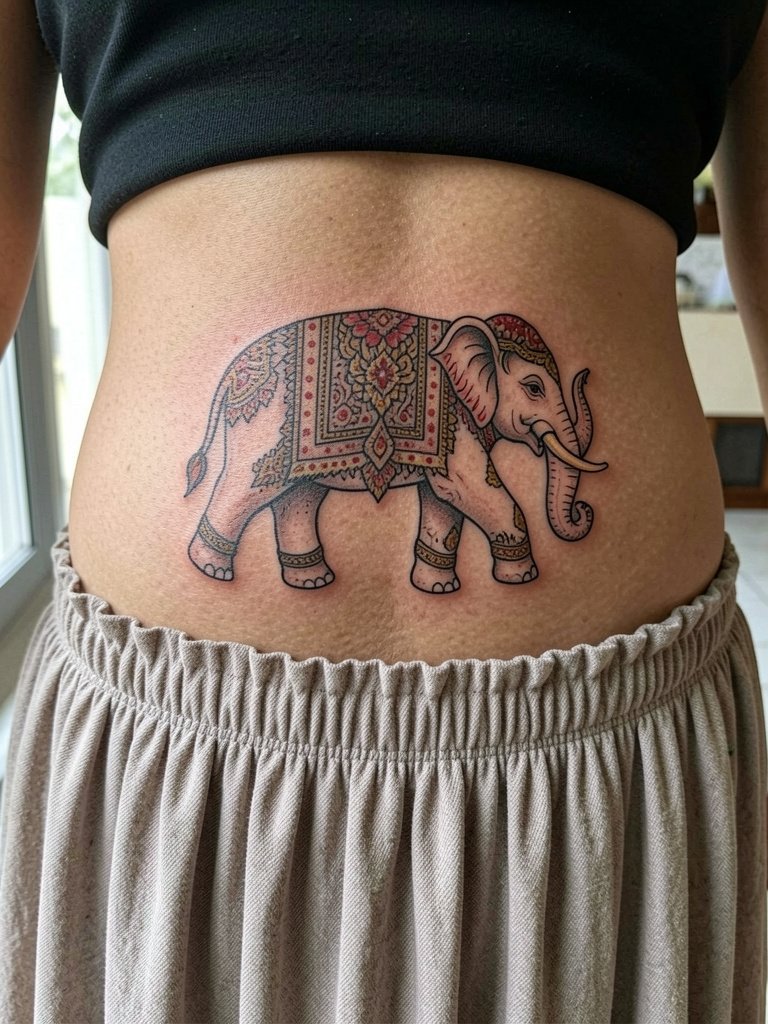
This spiritual style needs cultural respect. Note the origin and ask for motifs that honor the tradition rather than copy sacred symbols directly. Lower back pieces can be comfortable session-wise, but they sit under waistbands. A mistake is placing ultra-fine filigree right at the waistband edge where compression and movement blur detail. Ask for bolder outer lines and plan the design to sit above where clothing compresses. For outfits, a flowy maxi skirt displays the placement without pulling fabric across the tattoo.
6. Dainty Elephant with Floral Accent
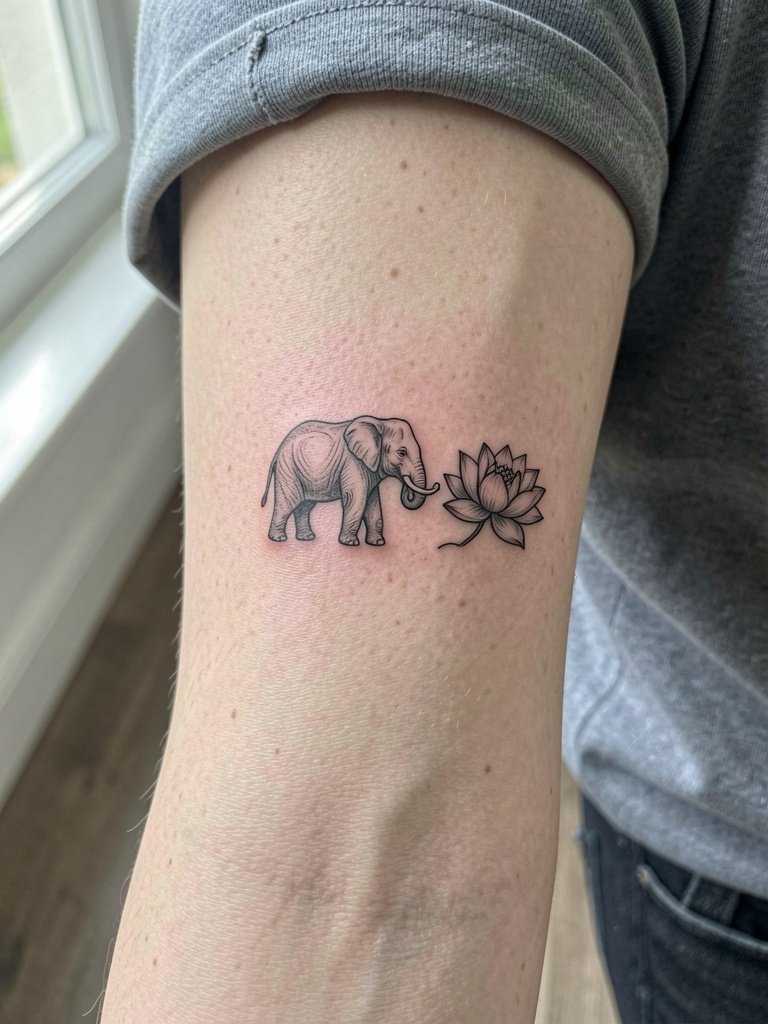
This tiny wrist piece reads like jewelry when it heals. Expect a one-session appointment and a touch-up window around year one to keep the single-needle petals crisp. The common error is over-detailing the flower at too-small a scale, which becomes a smudge later. For showing it off, pair with a minimalist watch on the opposite wrist and avoid heavy bracelets on the tattoo wrist for the first month. Pack a minimalist watch in your session bag so you can style around the fresh ink after the initial healing day.
Session Day Picks
The inner forearm, wrist, and finger pieces above heal differently from larger work, so a few small items smooth the session and the first week.
-
Pure cacao butter, fragrance-free. A lighter, fragrance-free balm favored for darker skin tones helps keep pigment vibrant without added irritants during the cool-down week.
-
Japanese Hikari tattoo balm. Thinner than many US balms, it is useful for single-needle pieces that need light hydration without clogging pores.
-
White ink highlight kit. Handy when subtle white highlights are planned for contrast on deeper skin tones in ornamental or realistic work.
-
Gold accent ink set. Small dots of metallic color can lift detail on dark skin and make mandala halos pop without overwhelming the blackwork.
-
Hustle Butter Lite. A lightweight post-session balm that many fine-line clients prefer over thicker ointments for the first few days.
7. Ornamental Elephant with Line Mandala
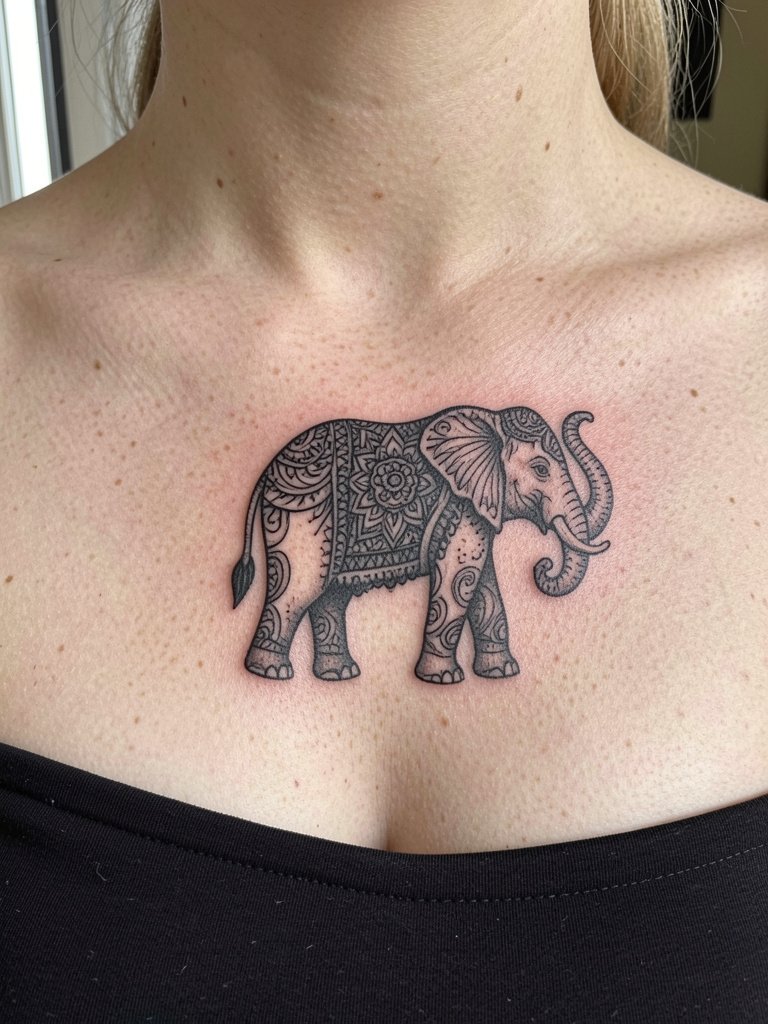
Collarbones give ornamental work a runway frame but they catch sun. Plan for slightly thicker inner lines so the mandala spaces keep separation as the skin moves. A styling trick is to wear strapless or open-neck silhouettes that let the geometry breathe. Avoid tiny filigree right at the clavicle edge because repeated necklace friction damages detail. For nights out, a strapless top in cream or black complements the mandala and keeps the piece visible without fabric rubbing.
8. Micro Elephant on Finger (Side)
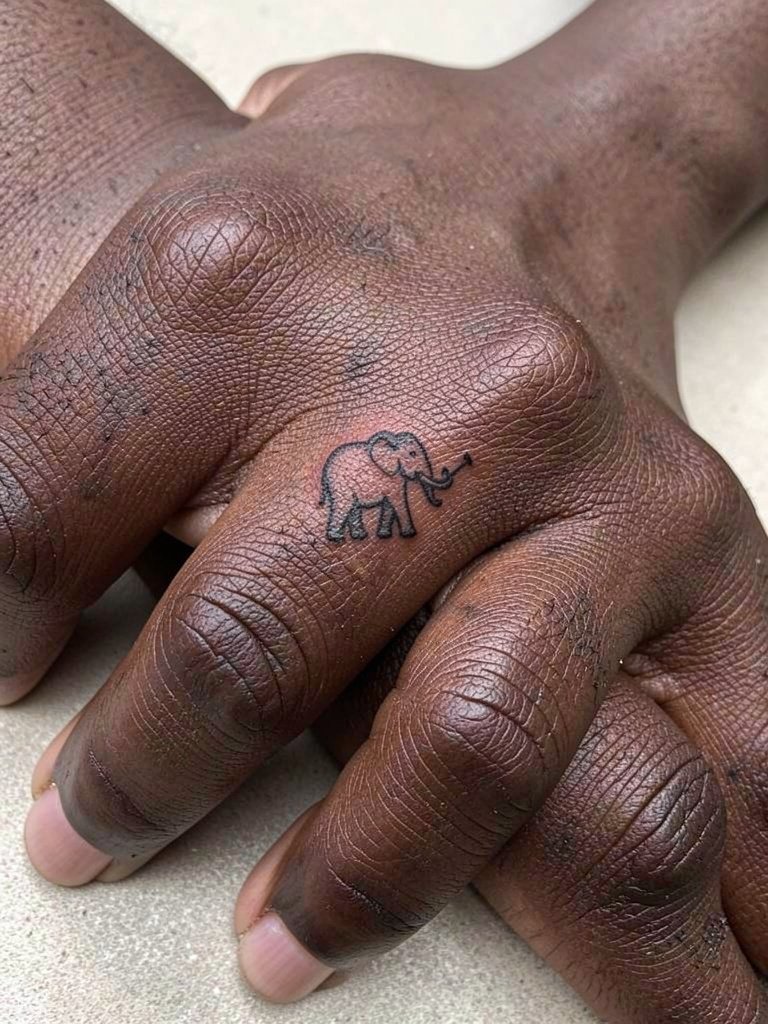
Finger skin is a high-friction zone and tiny tattoos need realistic expectations. Expect faster fading and plan for touch-ups every 1–2 years. A frequent mistake is leaving the design under 0.5 inch with super-thin lines. If you want longevity, scale up slightly and ask for bolder contour strokes. For styling that complements a micro finger piece, choose thin stackable rings on adjacent fingers and avoid chunky rings on the tattooed finger for the first month. A simple thin gold ring set lets the micro design remain visible and elegant.
9. Elephant with “Strength” Script
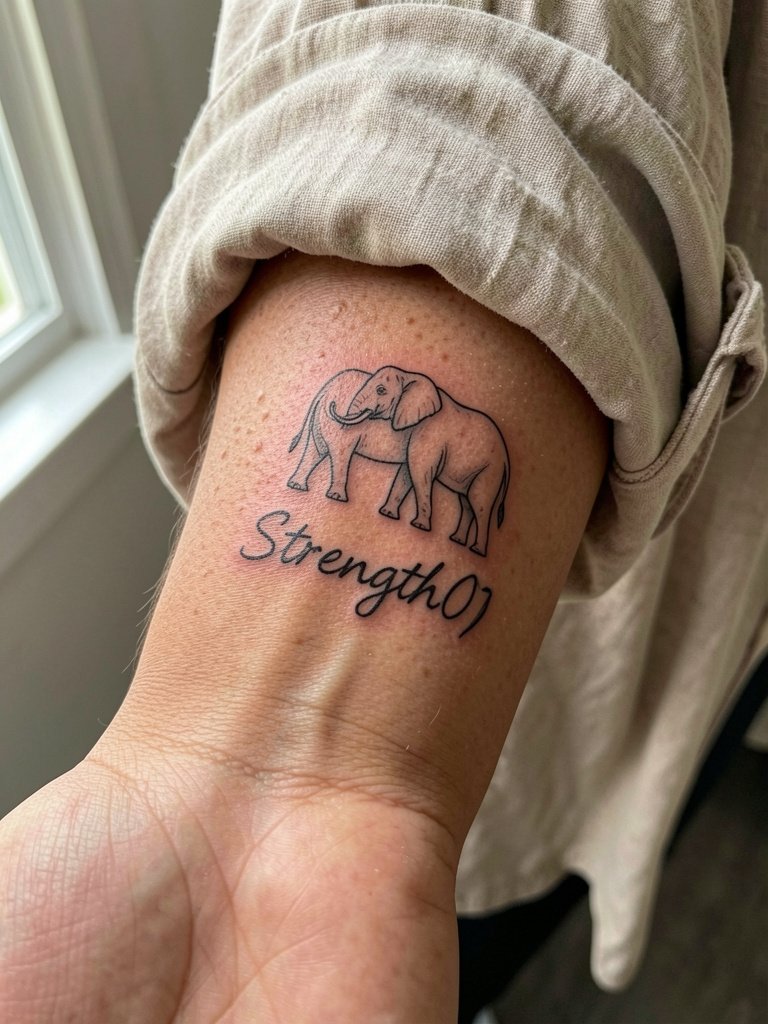
Text plus image reads best when the lettering is scaled to match the artwork. If the script is too fine, it can blur into the silhouette. Bring two reference photos at different scales so the artist can show how the word reads at three inches versus five. A common session mistake is asking for cursive that looks great on paper but loses legibility when inked small. Inner forearm is forgiving for this combo because you get visual distance when needed and touch-ups are straightforward.
10. Elephant in Sunset Landscape
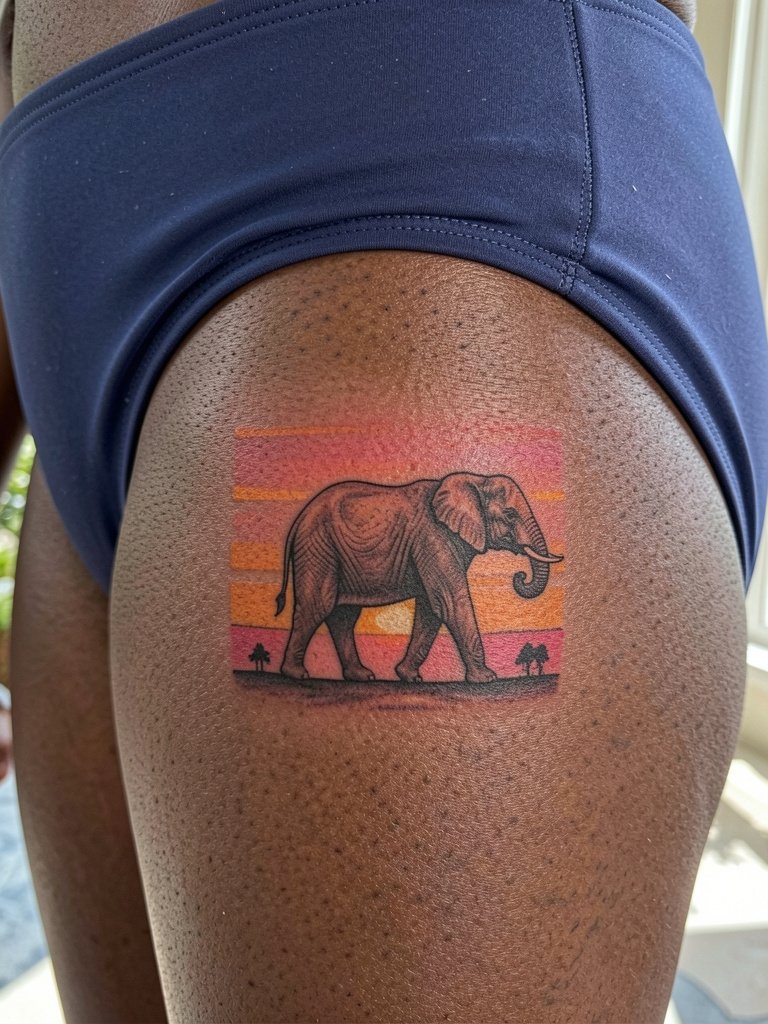
Large thigh canvases are perfect for scenic pieces that need negative space to read. Plan the sunset bands with broader washes rather than tiny lines. One mistake is compressing scenery into a narrow strip that loses its story when the leg moves. For swim season, a high-cut swimsuit in coral or sand shows the placement without compressing the tattoo. Thigh tattoos tolerate weight fluctuation differently, so consider location relative to expected body changes.
11. Minimalist Elephant Ear Outline (Behind the Ear)
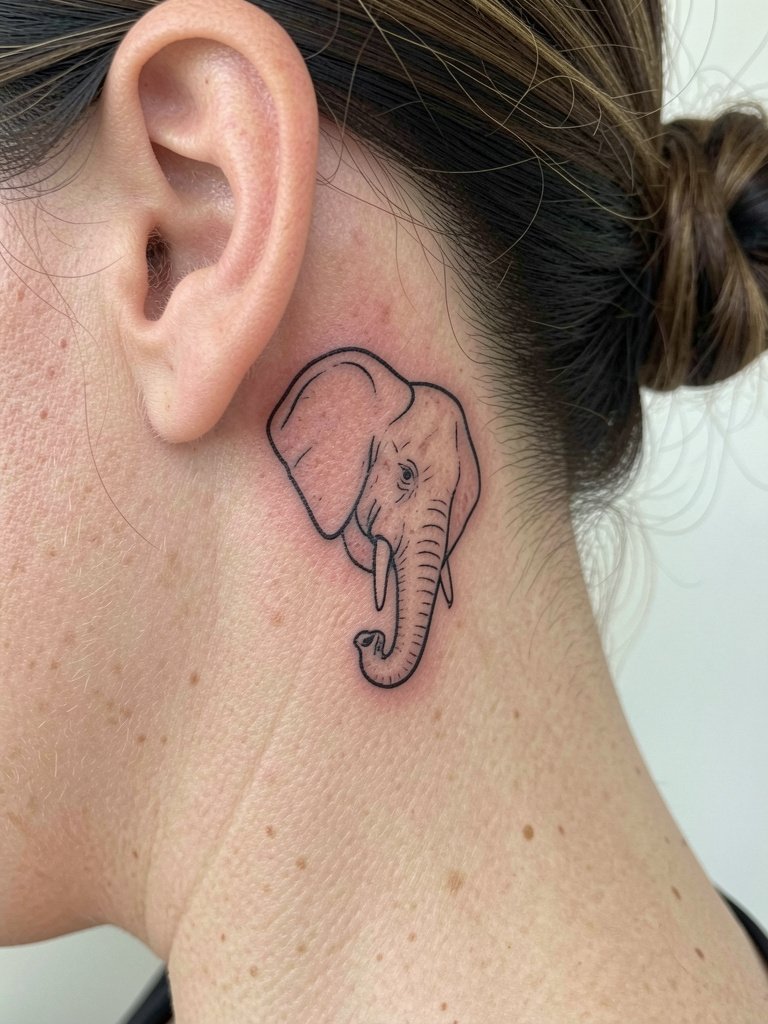
Behind-the-ear work is ultra-subtle and ideal if you want a hidden motif. Expect some fade from hair oil and shampoos. A common error is asking for the thinnest single-needle loop; a slightly bolder contour holds better in that mastoid skin. Session comfort is high and appointments are short, but pick an artist used to small-area work. For showing it off, wear your hair up in a low bun and consider a simple gold ear cuff on the opposite ear to balance the look.
12. Elephant with Lotus Flower (Sternum Pair)
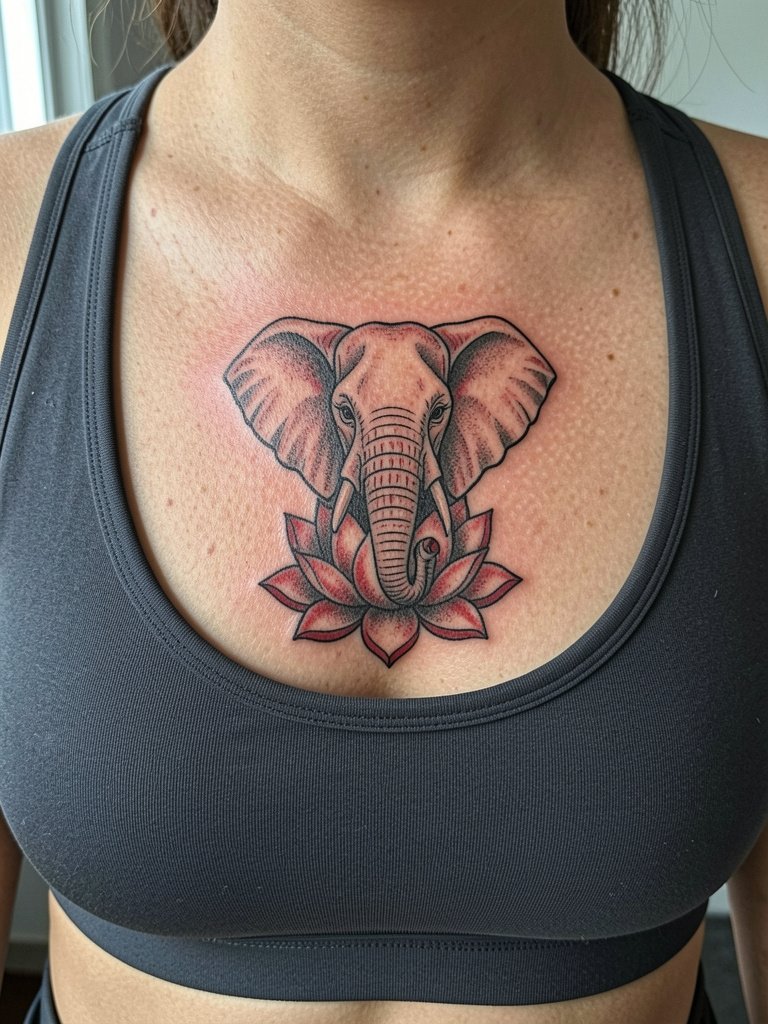
Sternum pieces can be intimate and need careful planning for symmetry and breathing room. The biggest mistake is crowding the breastline with tiny detail that a bra will compress. Ask for clear negative space around the lotus so the composition stays readable as the body moves. Expect two sessions if you want color accents. For wardrobe around healing, use a strapless or sports bra that does not compress the area in the first two weeks.
13. Blackwork Bold Elephant Silhouette
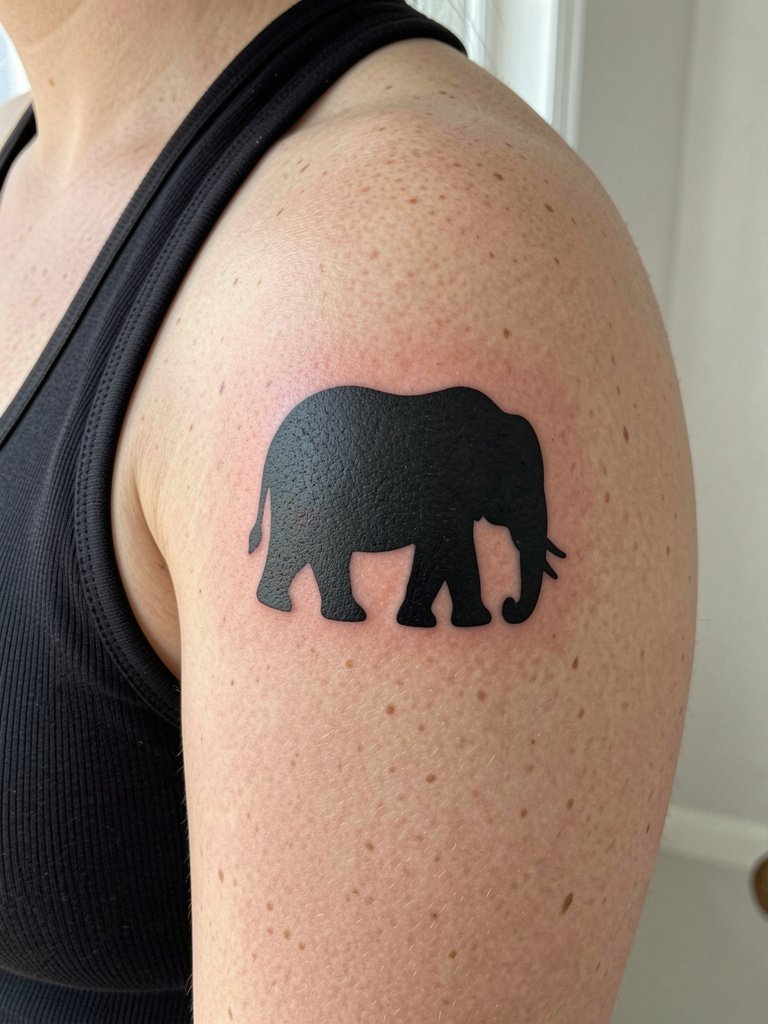
Blackwork silhouettes age well because they rely on shape rather than thin detail. The main consideration is saturation and crisp edges at the first session. People sometimes opt for a silhouette too small, which loses presence from a distance. Shoulder placements are low-pain and easy to show off in sleeveless tops. For session day, a sleeveless racerback top gives access while keeping the area relaxed.
Frequently Asked Questions
Q: How long will a fine-line elephant on my forearm stay crisp?
A: In my experience, single-needle forearm pieces read well at six months and often need a touch-up around year two. If you want less risk of softening, ask for slightly heavier contour lines around the main shapes. Touch-ups are common and realistic for fine-line work.
Q: My finger tattoos faded quickly. Is it worth getting a tiny elephant there?
A: Fingers are a high-wear zone and tiny tattoos usually need touch-ups every one to two years. If you want lower maintenance, scale the design up slightly and request bolder outlines. Also avoid rings rubbing the new ink for the first month.
Q: Color or black-and-gray for an elephant on darker skin tones?
A: Color can look beautiful but some pigments fade faster on deeper skin tones, especially warm reds and oranges. One practical route is black-and-gray mainforms with selective accent dots in gold or white for contrast. If you plan accents, discuss contrast placement and healed examples with the artist.
Q: Where can I find healed portfolio examples and local artists without following specific accounts?
A: Search hashtags like #elephanttattoo, #finelinetattoo, and #mandalaelephant on Instagram and TikTok, then filter by your city. Tattoodo and book-by-location apps let you search keyword combinations and see portfolios. Reddit threads in r/tattoos often surface healed shots across skin tones and give peer recommendations.
Q: What should I wear to my session for hip, sternum, or upper-thigh placements?
A: Wear clothing that gives the artist easy access without fabric rubbing the fresh ink. For hip pieces pick low-rise shorts or high-waisted linen pants that sit below the tattoo. For sternum use a strapless or sports bra, and for upper-thigh bring swim bottoms or shorts you can roll without pressure. A simple loose drawstring linen pant is handy for thigh appointments.