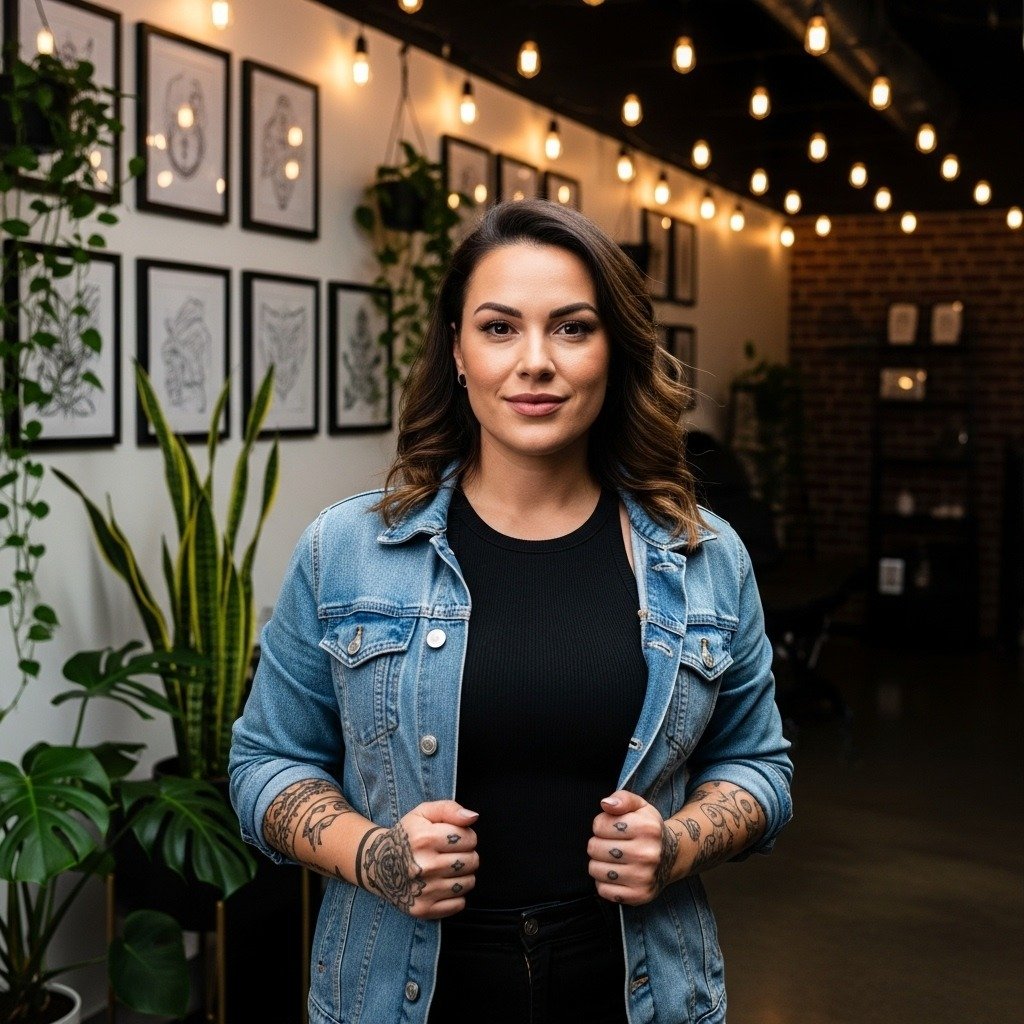
Bold trend posts love tiny wrist eagles and watercolor splashes. The reality I see in healed photos is different. Ultra-fine wrist eagles often lose definition after two years, watercolor fades faster without careful sun care, and chest pieces test a first-timer's pain tolerance. Read on for 15 eagle directions that look fierce, how each ages, what to ask for in measurement and spacing, and which wardrobe pieces actually frame the work.
1. American Traditional Bald Eagle with Banner
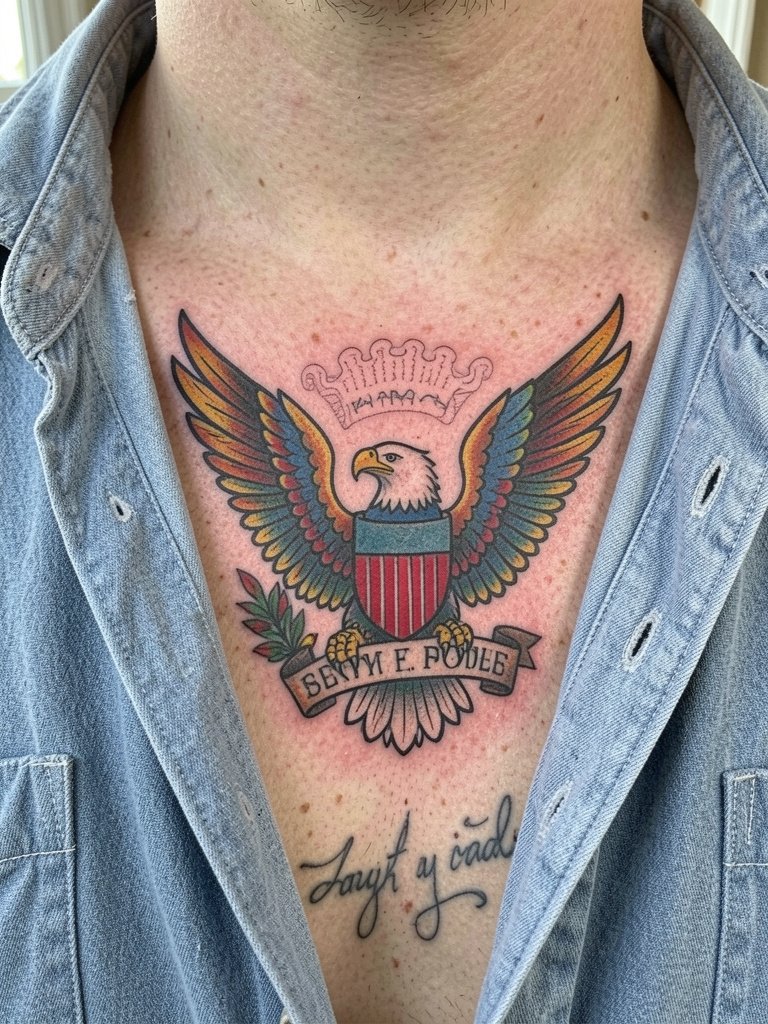
This classic reads best bold and large enough to let the banner breathe. I tell clients to plan for a 2–4 inch layout across the upper chest so the lettering in the banner stays legible at year two. The session feels moderate in pain if placed laterally on the shoulder, but the center of the chest is a tougher sit. For the appointment wear an open button down shirt so the artist can access the area without fabric rubbing on fresh ink. A common mistake is asking for tiny letters in the banner. Those letters swell and blur, so ask for slightly heavier script and flat saturated fills instead.
2. Hyper-Realistic Black-and-Gray Eagle

This is the design to pick when you want feather detail that still pops from a few feet away. Expect a long session spread over two to three sittings for a 10+ inch composition. Healed at six months the contrast is softer than fresh ink. At two years the depth depends on initial saturation and sun protection. If you plan to show it off, try an open-back shirt for evenings. A common error is making the piece too small. Realism needs room or the feather details end up looking muddy in photos.
3. Minimalist Micro-Realistic Eagle
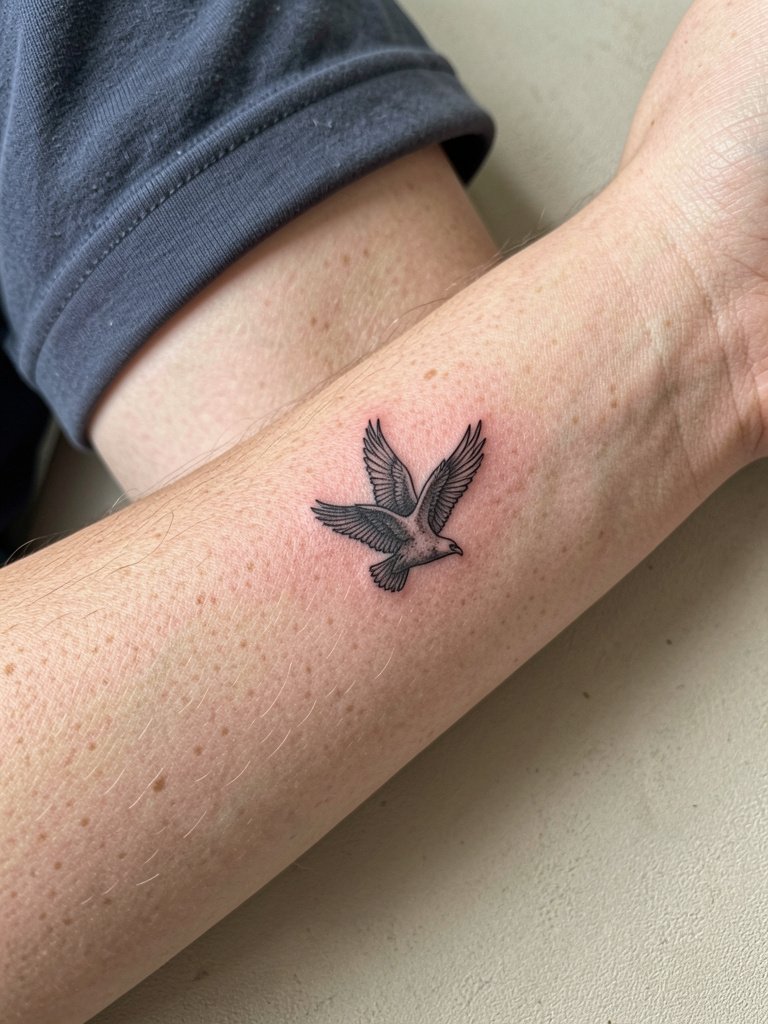
Tiny single-needle eagles read elegant initially but face a high-friction environment on the wrist. One camp warns that micro-realism on the wrist blurs into a dark smudge within two years because the palm-up skin stretches and rubs. The other camp points to three-year healed examples and says proper needle depth and slightly wider spacing keep the detail readable. If you still want a micro eagle, increase the line weight just a hair and plan a two-year touch-up. For session day wear a minimalist watch or opposite-wrist bracelet on the other wrist and leave the tattoo wrist bare.
4. Tribal Eagle with Geometric Patterns

Blackwork thrives on high contrast and bold composition. I suggest designs that wrap slightly around the arm so the geometric rhythm reads whether you are standing or flexing. Sessions are usually one to two sittings for a medium piece. A mistake is packing too many thin lines into the pattern. Leave enough negative space for the pattern to remain crisp as it ages. For session wear bring a sleeveless athletic top so the artist can work the shoulder without tight cuffs pressing on fresh ink. This placement has low blowout risk when lines are kept bold.
5. Japanese Irezumi Eagle (Washi)

Irezumi eagles are about scale and flow across anatomy. Expect three to five sessions for a full back or sleeve project. The visual trick is integrating wind bars and florals so the eagle reads as part of a scene rather than an isolated bird. If you want color saturation that lasts on darker skin, ask for richer reds and deeper saturation rather than trying to push pale flesh tones. For outings, a sleeveless athletic top shows off the shoulder flow. Respect the cultural origin by discussing reference motifs and placement choices so imagery is used with awareness.
6. Eagle Fighting Snake (Good vs. Evil)
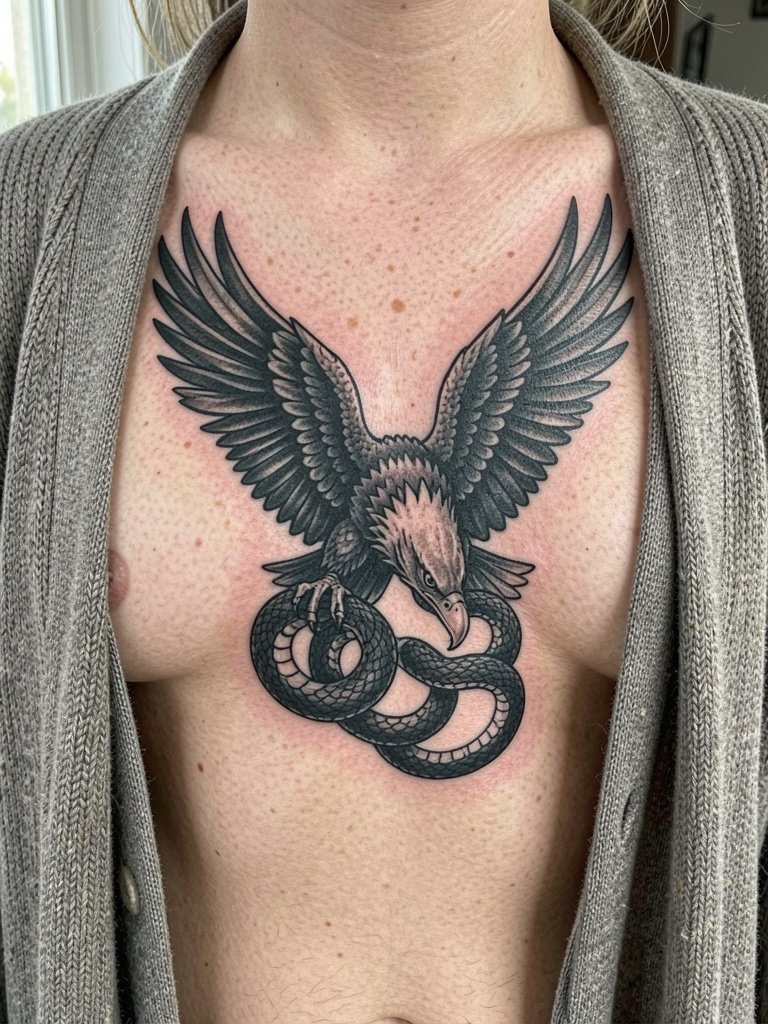
This motif packs narrative punch and demands clear spacing between the eagle and snake. For chest placement the pain is higher centrally and gentler near the lateral ribs. Plan on at least two sessions for a mid-to-large composition. A common error is crowding tiny details into the sternum area which then lose clarity as swelling resolves. For sessions wear an open-front cardigan or loose tank to avoid fabric pressure on fresh ink. If you anticipate body changes, place the main action toward the lateral chest to reduce stretch risk.
Session Day Picks
These items smooth the first day and early healing for the chest, wrist, shoulder, and back pieces above.
- Mandom Japanese aftercare balm. A thinner texture that some people prefer over heavy ointments when pores clog easily, useful after small wrist work.
- Tattoo Legit Australian balm. Reported in healed photos to reduce color loss on darker skin tones for medium pieces.
- Tattoo Cream UK healing balm. Mentioned by clients who need a non-swelling option after numbed sessions.
- Stippling sponge for watercolor gradients. Helps artists create soft gradients without heavy ink piles, which can reduce early fading in watercolor-style pieces.
- Hustle Butter Deluxe balm. A mainstream aftercare balm many shops recommend for initial moisturizing without the pore-clogging weight of petroleum.
7. Geometric Abstract Eagle
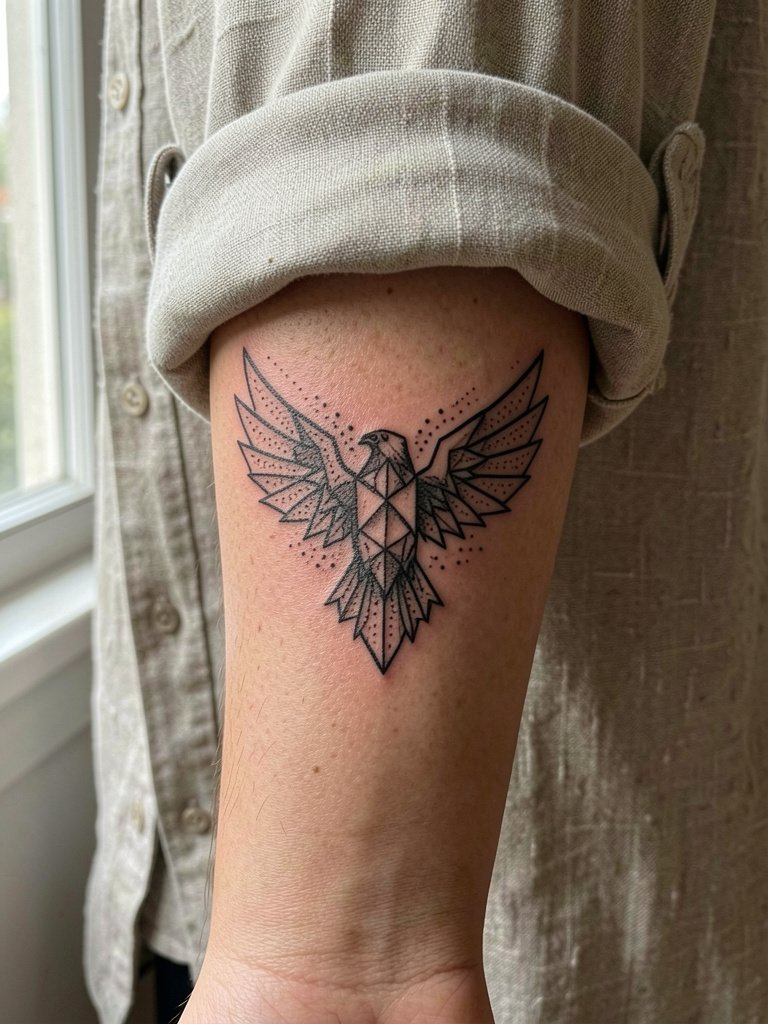
Sharp geometry needs negative space to stay readable as the skin ages. For inner forearm placement the session is low pain and one sitting usually suffices for a mid-sized piece. A common mistake is overcomplicating small areas. If you plan a sleeve later, leave edge room for future connecting elements. This placement pairs well with rolled sleeves, so try a linen button down to let the linework show. Expect a touch-up at two years if the dots contract.
8. Eagle Claw Gripping Prey

This aggressive visual reads well on forearms where the shape follows the limb. Detail in the claw benefits from heavier contrast so the talon separation stays clear after healing. The session is typically one to two hours for a medium piece. A mistake is over-embellishing the prey so it competes with the claw. For session comfort wear a short-sleeve tee you can roll if needed. Expect a small touch-up at 12 to 24 months where the darkest blacks lose depth.
9. Watercolor Eagle with Color Splashes
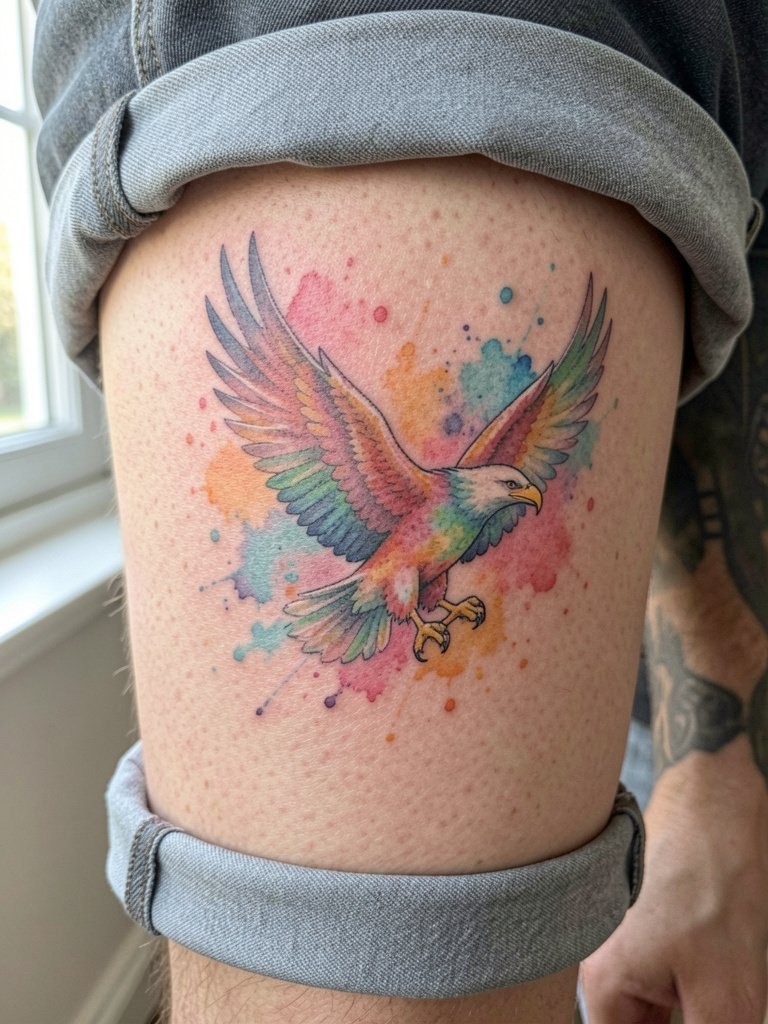
Watercolor pieces look painterly but they age under sun exposure. One camp argues watercolor fades within three to five years because soft gradients sink into skin without bold outlines. The other camp says careful pigment selection and strict sun avoidance can keep watercolor readable past five years and even to seven in some healed portfolios. If you choose watercolor on the thigh, plan for touch-ups and use a gradual palette with isolated saturated spots to keep reading from a distance. For showing it off pick rolled up shorts. The thigh is forgiving for touch-ups and expansion.
10. Sketch Style Eagle
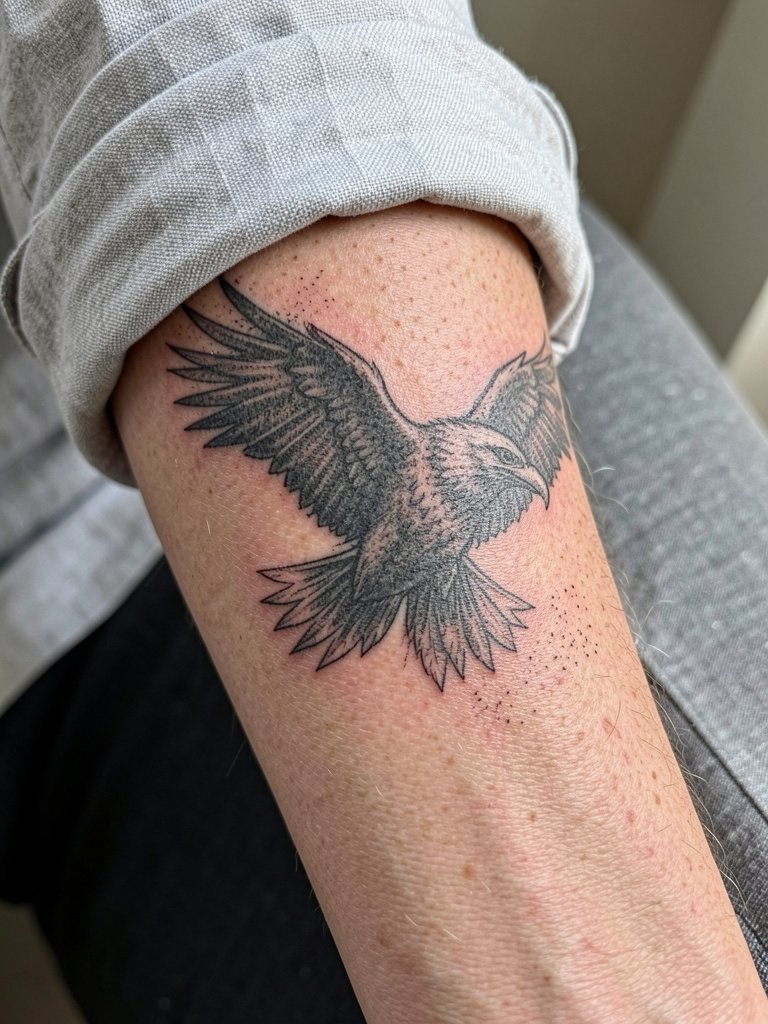
Sketch tattoos depend on intentional roughness, not accidental shakiness. Ask for reference photos that show the desired stroke weight so the artist knows where to push contrast. These read well on the inner forearm and are usually a one-session job. A common error is asking for ultra-thin sketch lines in a high-friction area. Keep the stroke thickness intentional and expect a minor touch-up at two years. Pair the piece with a rolled cuff linen shirt to highlight the dynamic strokes without overwhelming them.
11. Thrash Polka Eagle with Bloody Claws

Thrash Polka is intentionally confrontational and reads best large enough to let the red spatters register. Ribcage placement is painful for many. Expect short breaks and a strict sitter plan to get through a session. A common mistake is requesting dense detailing close to the sternum where movement distorts lines. For the session pick an open-front cardigan or loose tank to keep fabric from pressing the new work. This style ages with drama, and the red accents may need refreshing faster than black areas.
12. Graphic Eagle with Engraving Lines
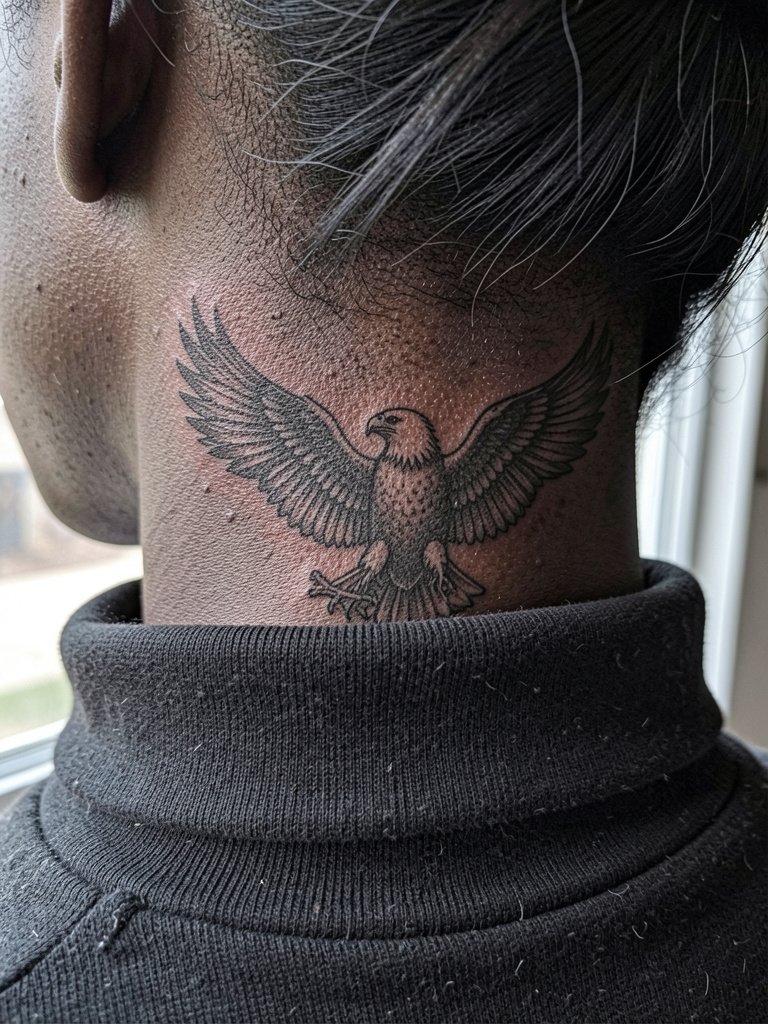
Engraving-style lines need precise spacing to avoid merge over time. The nape heals clean when covered during sleep and when clothing is loose. This placement can be visible with certain collars, and a high collar shirt frames it well. Note that neck skin is thin and some artists will require extra experience for this area. Expect a single session for small graphic pieces and a touch-up window around two years if lines soften.
13. Perched Eagle on Branch with Rose

A resting eagle with a rose balances aggression with calm. Shoulder placement keeps the piece stable through body changes and is a great position for a single-session mid-sized design. Avoid asking for thin filigree close to the joint. The piece pairs naturally with low-sleeve looks, try a low-rise or sleeveless top or a sleeveless top to showcase the shoulder curve. Plan a standard one to two year check to see if color needs refreshing.
14. Soaring Eagle Over River and Mountains
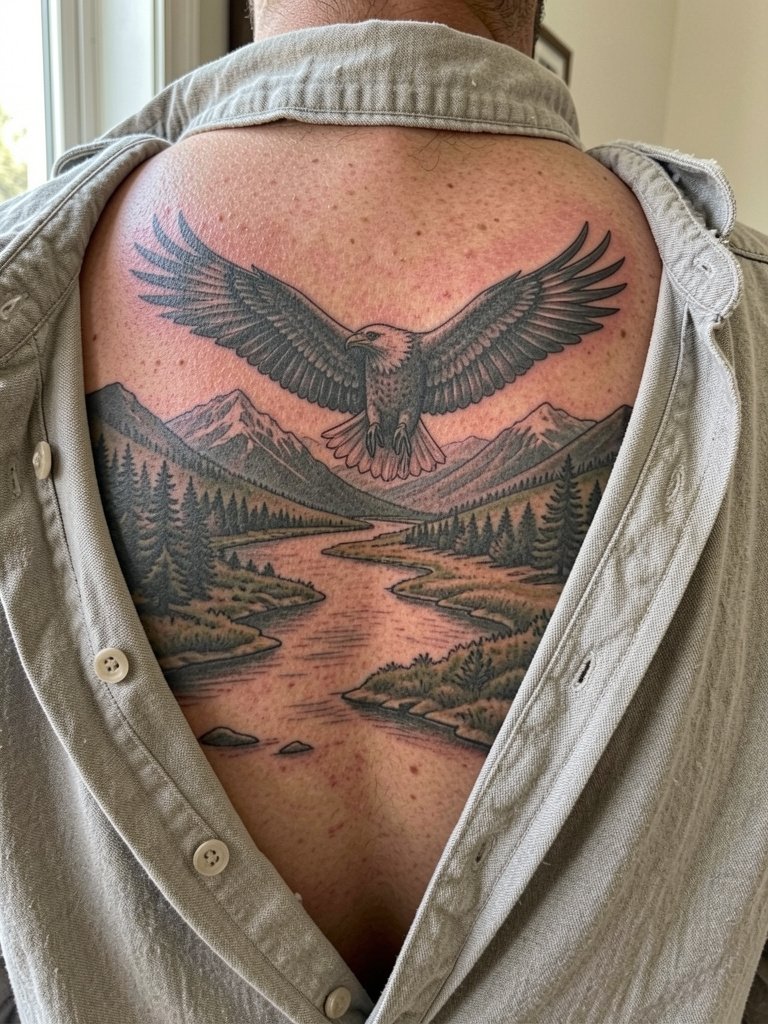
Large landscapes are marathon sessions. Count on three or more sittings for a full back or chest landscape with an eagle in flight. One common misstep is compressing the scene into one session when shading needs rest. If you plan to wear open collars or low-back tops, pick fabrics that let the full scene show, such as an open-back shirt. Healed contrast depends on initial saturation and sun habits. Full scenes age gracefully with regular sun protection and a five-year refresh plan is realistic.
15. White Eagle for Peace and Wisdom
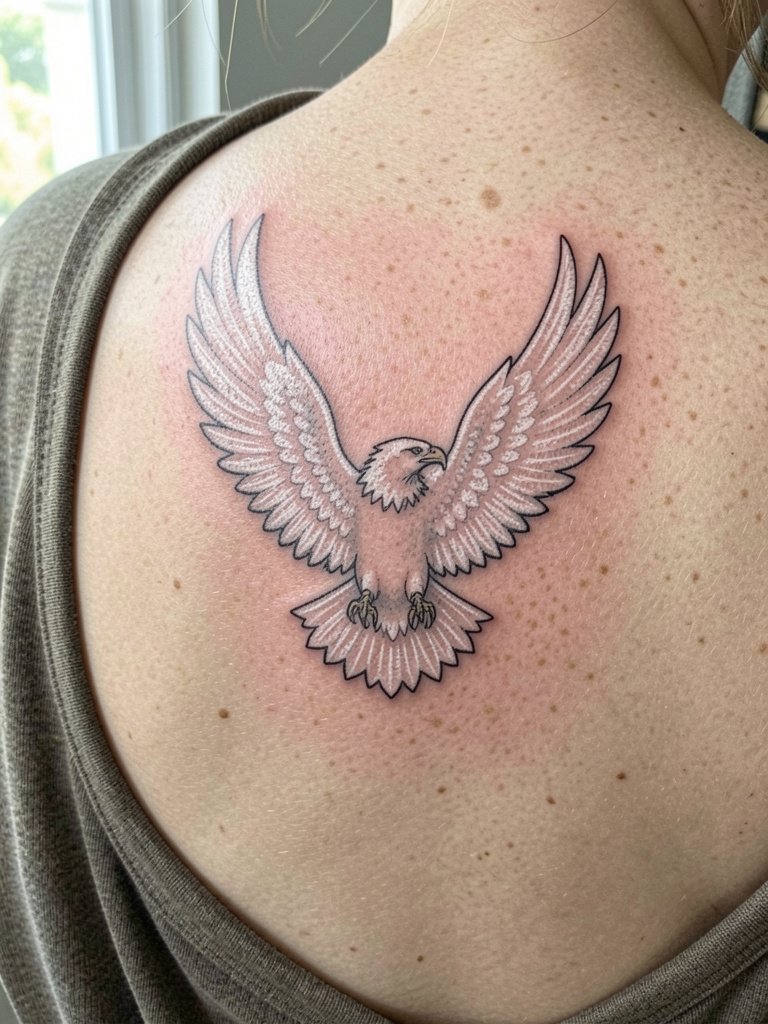
White pigment can create a noble, pale effect when used sparingly. It works best layered over solid black outlines rather than as a base color. Upper back placement gives space and reduces friction, which helps keep the white accents visible. Ask the artist to test white highlights on a healed patch to evaluate contrast on your skin tone. For evenings out try an open-back shirt in cream or white to set off the pale highlights. Expect touch-ups of white areas earlier than black if you spend time in the sun.
Frequently Asked Questions
Q: Will a small eagle on my wrist blur into a black blob?
A: Wrist skin is high friction and fine lines are at risk. If you want detail pick slightly heavier linework rather than single-needle filigree and budget for a two-year touch-up. For session day avoid watches on the tattoo wrist and wear short sleeves so the artist can work cleanly.
Q: Should I choose watercolor or black-and-gray for longevity?
A: Artists split into two camps here. One camp argues watercolor fades within three to five years because soft gradients and lack of strong outlines dissolve into the skin under sun exposure. The other camp says watercolor lasts five plus years when the artist uses dense pigment placement and the client practices strict sun avoidance. If you want long-term retention pick black-and-gray or ask the artist to add subtle outlines to watercolor fields.
Q: How painful is a chest eagle and can numbing cream help?
A: The center of the chest around the sternum is among the more painful zones. Numbing cream can reduce discomfort but some artists worry it causes skin swelling that affects line precision. If you consider numbing, follow a plan: apply only the recommended product for the instructed time, and tell the artist how your skin reacts so they can adjust pressure and session pacing.
Q: Where can I find healed eagle portfolios and local specialists without naming artists?
A: Search hashtags like #eagletattoo and #blackandgrayeagle on Instagram and TikTok and filter by your city. Use Tattoodo or the Inked App to keyword-filter for healed work such as "micro-realism eagle wrist" and check tag descriptions for the word "healed." Reddit communities such as r/tattoos and r/tattoofinished also surface peer recommendations and real healed photos across skin tones.
Q: What should I wear to a ribcage or shoulder session?
A: For ribcage sessions wear an open-front cardigan or loose tank so the artist has clear access and nothing presses on fresh ink. For shoulder work a sleeveless athletic top in its normal fit keeps the area exposed without tight cuffs. Bring a loose layer for the trip home to avoid fabric rubbing.
Q: How much should I expect to budget for different eagle styles?
A: Prices vary by complexity. Micro-realism and small fine-line pieces typically sit in the lower tier while hyper-realism, large landscapes, and Irezumi-scale work require multiple sessions and higher rates. Consider hourly shop rates and plan for two to three sessions for most mid-to-large realism pieces.
Q: Any tips for eagle tattoos on darker skin tones?
A: High-contrast black-and-gray work with bold outlines or saturated strong colors like deep reds and yellows read better in photos. White highlights should be used sparingly and tested on healed patches. If photos are a priority, ask the artist for healed shots on similar skin tones during consultation.