Someone I know scrolled for months before booking a pet portrait and realized the real problem was picking a style that would still read in photos and hold up on skin. I spent time in five shops across Brooklyn and on forum threads to see which dark dog memorials keep their shape. Below are twelve trending designs, the placements that work best, what to tell your artist, and how each choice ages so you can pick one that feels right long term.
1. Micro-realism dog portrait with a tiny paw print on the forearm
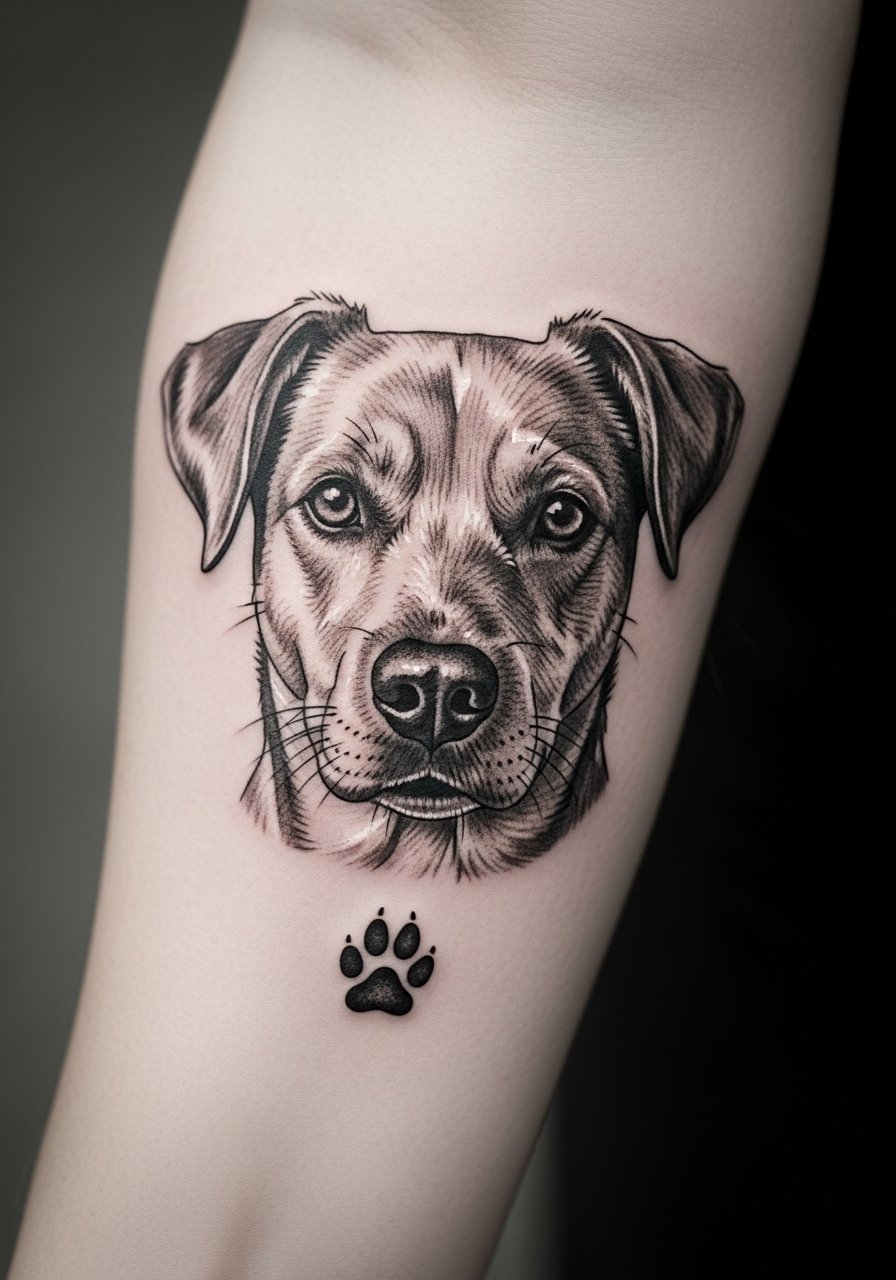
Someone I know got a micro-realism forearm portrait and kept a small paw print under it to anchor the composition. For this one bring 8 to 12 reference photos including side profiles and a close-up of the eyes. Tell the artist you want layered saturation in black and gray, not a single flat wash, so the fur texture reads after six months. Expect a medium pain level and a two-session run for 3 to 4 inches. A common mistake is going too small on micro-realism, which forces the artist to compress detail and invites early blurring. Plan a touch-up at 6 to 12 months, and ask about portfolio examples of healed pet portraits.
2. Minimalist paw print outline with the dog's name on the wrist
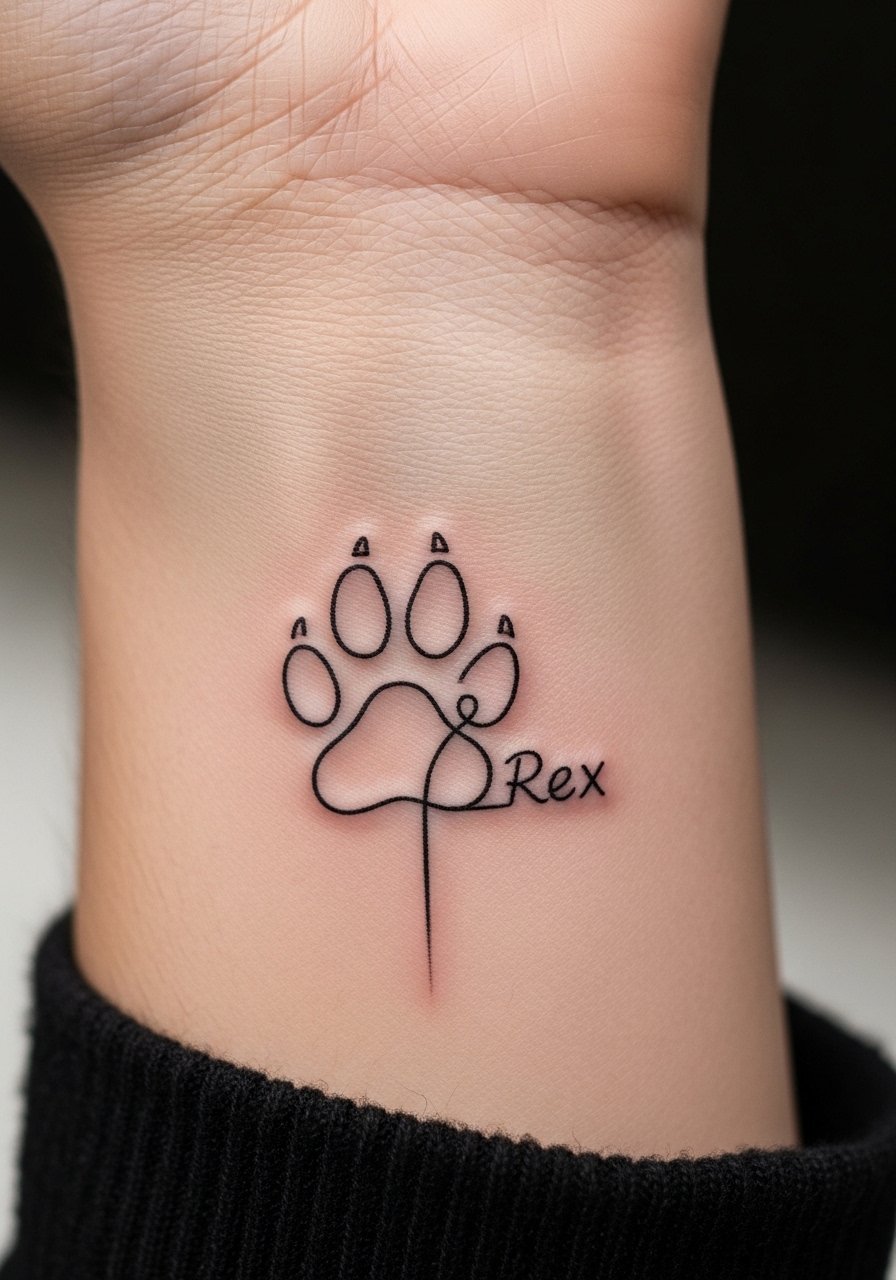
Fair warning: the wrist is a high-motion spot and needs tidy linework to avoid quick blurring. This style is fast and low commitment, usually one short session. Tell your artist you want a slightly thicker fine line so the name and paw hold up, especially if you have darker skin. The biggest mistake is asking for ultra-fine script under 1 inch, which fades and merges when the skin ages or stretches. For first-timers this is a good starter design, but confirm touch-up policy and ask to see healed wrist examples on similar skin tones. If you need a low-profile option, move the placement to the inner forearm.
3. Blackwork dog silhouette with a small heart on the chest
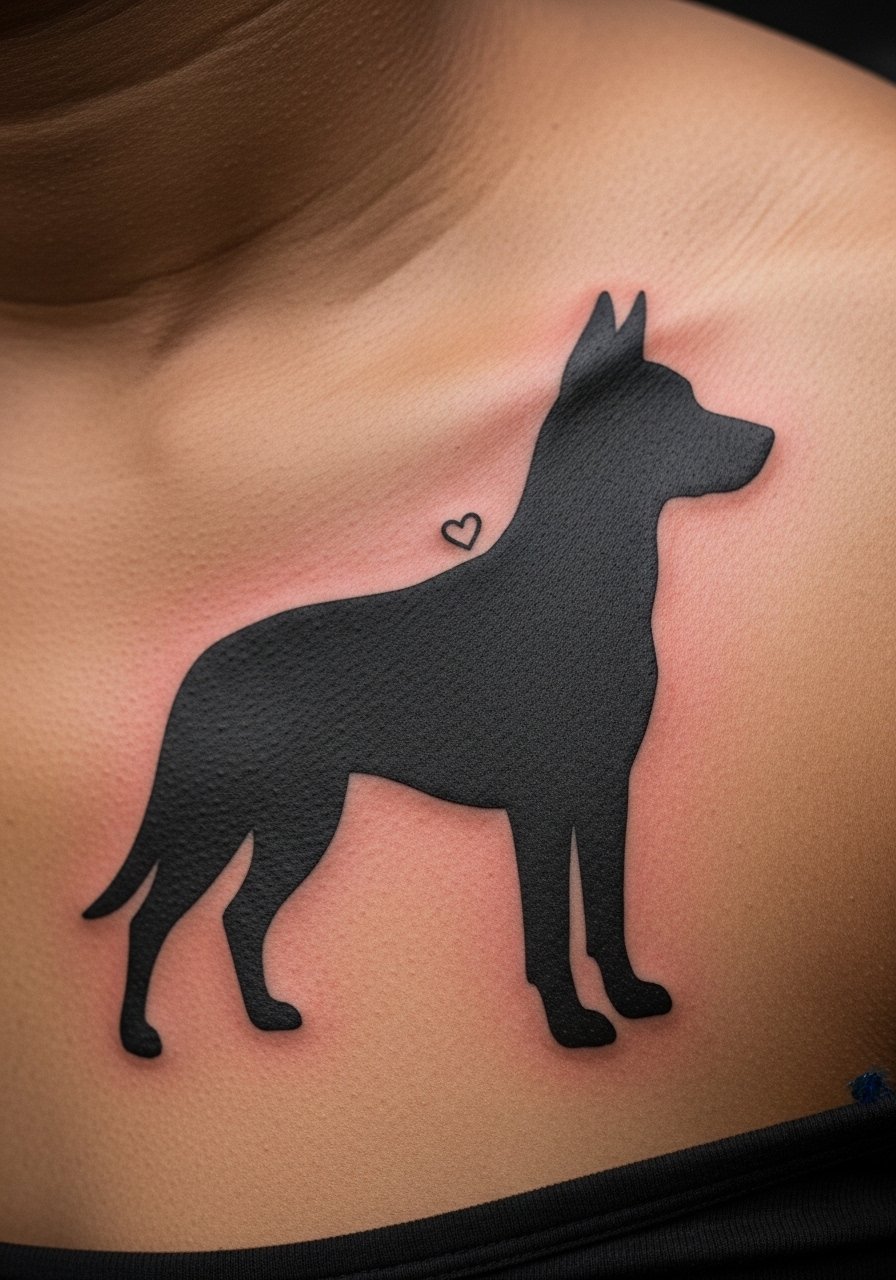
Most people like this for how it reads from a distance. A silhouette is forgiving of small reference errors and it ages well because it relies on saturated black, not fragile lines. It is a higher pain area on the chest but a single session usually covers a 4 to 6 inch design. Ask for crisp edge linework and full saturation so the black does not thin out over time. Avoid adding thin interior detailing that will blur into a single dark mass. If you expect body changes, the chest moves less than the abdomen, so this is a safer spot long term.
4. Watercolor dog face splash on the shoulder blade
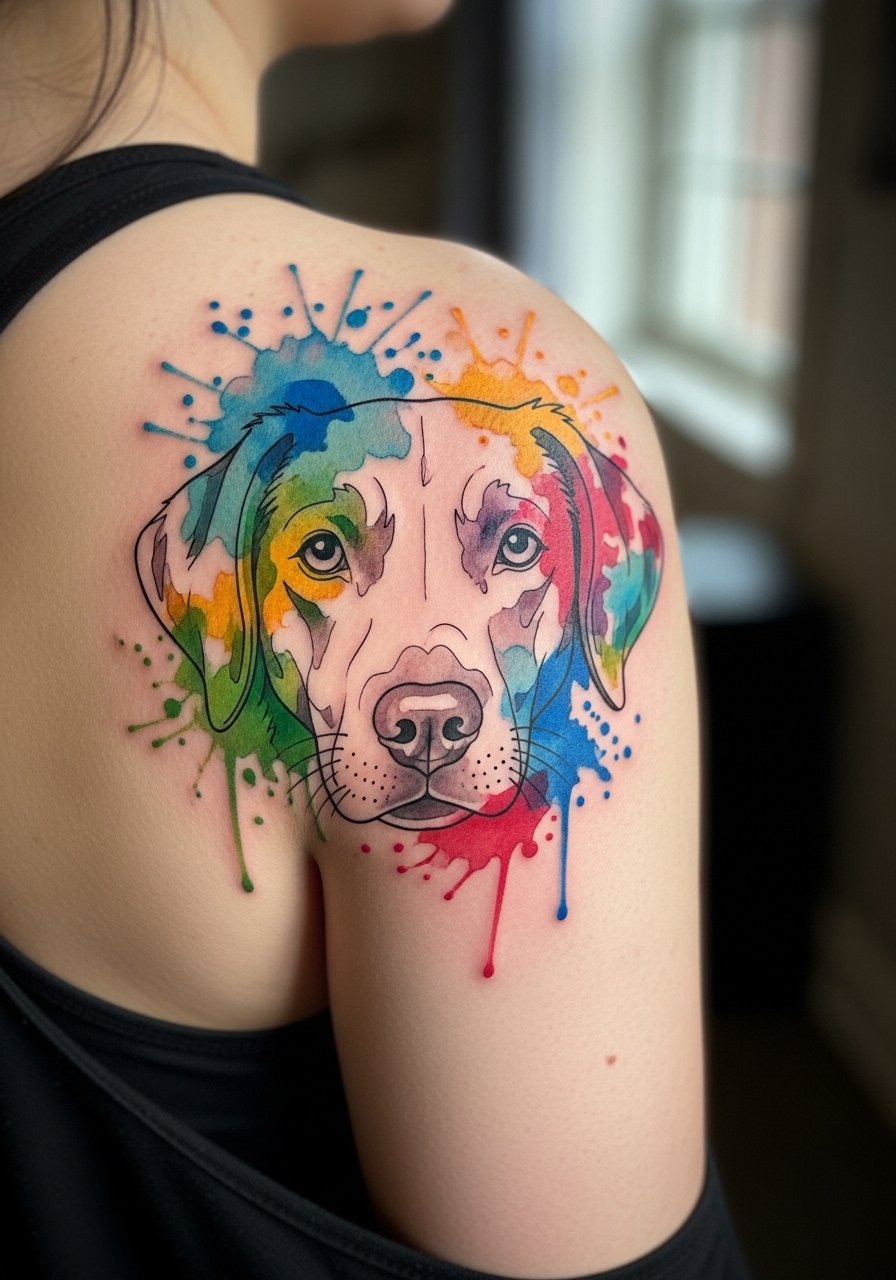
There is visual payoff in color that mimics the pet's playful energy, but watercolor is a high-maintenance choice. Expect a medium to high pain level on the shoulder blade and two sessions for a 5-inch piece. Tell your artist you want the black linework to anchor the color so the design still reads when pigments soften. The common aging problem is color migration into a bruise-like blur after two years. If you love the palette but want less upkeep, request more blackwork outlines and smaller color fields. Think about sun exposure too, since color fades faster on exposed skin.
5. Neo-traditional dog portrait with collar and toys on the back
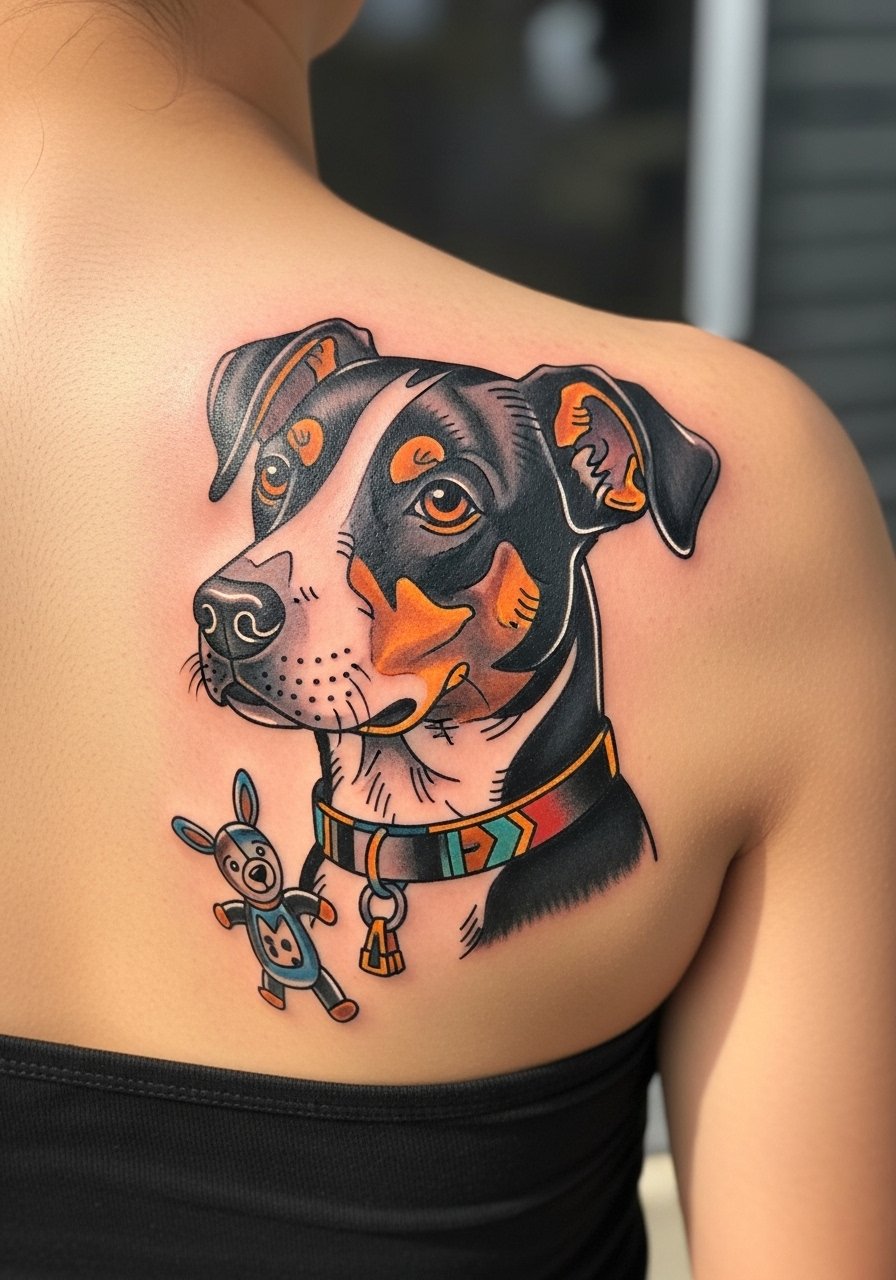
The playful details give this style personality, so bring photos of the actual collar or favorite toy to the consult. Expect a three-session process for a 6-inch piece and a medium to high pain rating on the back. Tell the artist you want bold linework around color fills to protect saturation during healing. A frequent mistake is asking for overly fine interior detail in neon color, which can muddy. For privacy during grief processing, the back is a good concealable placement. Plan to avoid direct sun for at least four weeks to keep the color dense.
6. Dot work dog portrait mandala blending fur patterns
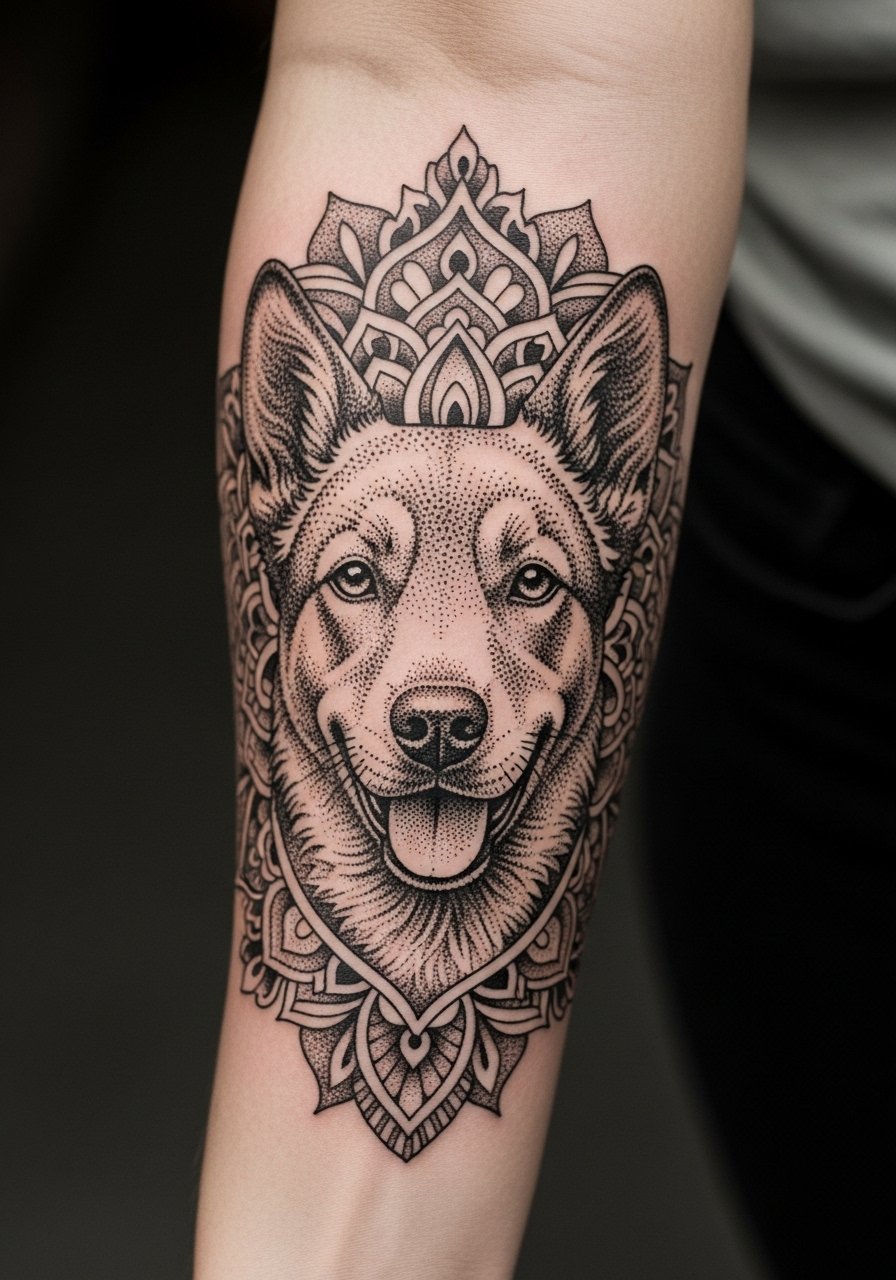
When you want something spiritual and tactile, dot work can translate unique markings like heterochromia into the mandala pattern. Bring clear close-ups of the dog's fur and eye colors so the artist can map the stipple shading. This is a long session process and usually requires multiple visits for an 8-inch design. Dot work ages predictably if the dots have room to breathe, so avoid cramming detail into a small circle. The downside is session length; prepare for focused breaks and steady care. Discuss touch-up timelines up front because dense stippling can lighten unevenly.
7. Fine line dog profile with a short quote on the collarbone
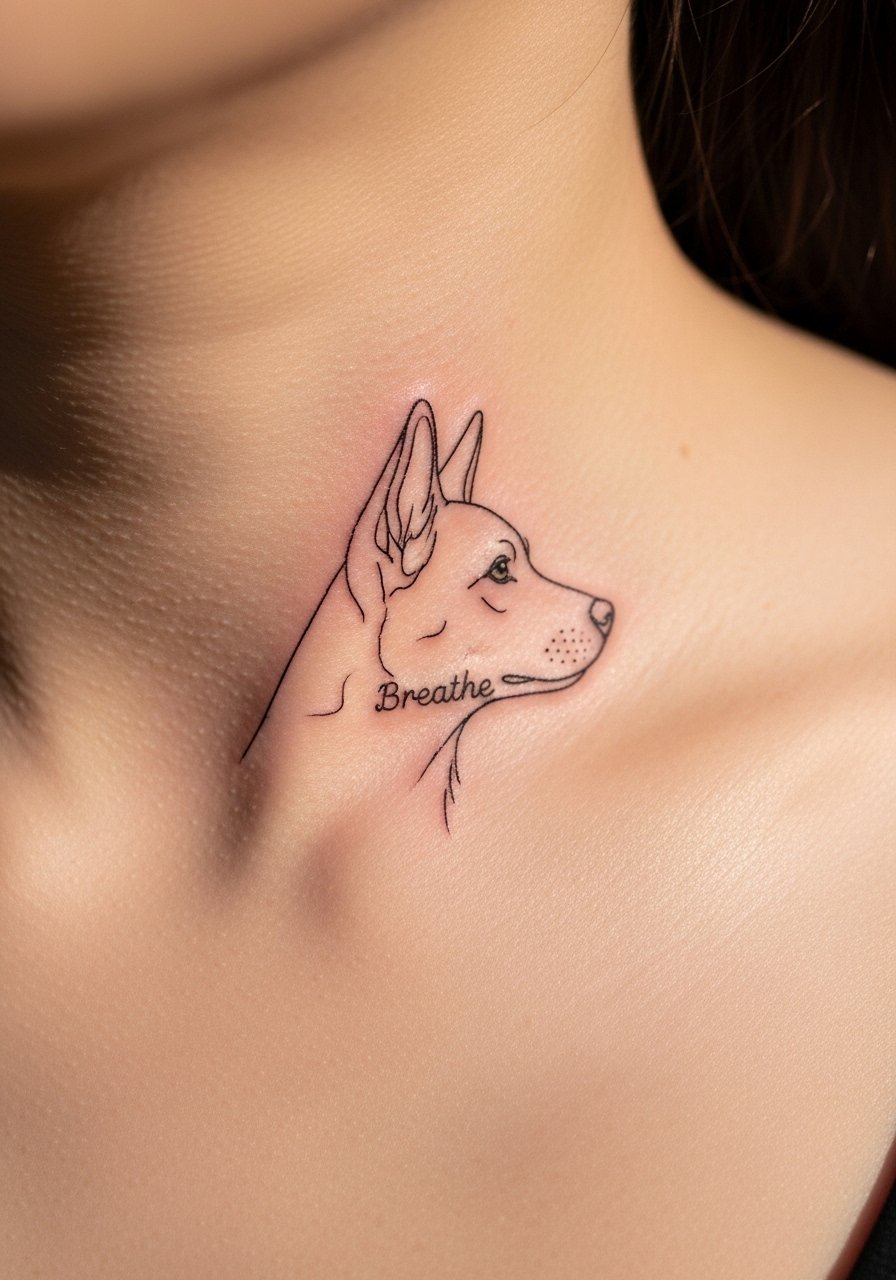
Artists split on fine line on the collarbone. One camp says the collarbone and thin skin cause lines to blur within two years. The other camp argues that with correct needle depth and slightly thicker fine line the work settles well. If you favor the look, ask your artist whether they use a "thick fine line" approach as part of their method. Expect light to medium pain and a single short session. Avoid really tiny script under 2 inches on this placement. On darker skin tones consider a bolder contour version so the profile remains visible in photos.
8. Ornamental paw print trail wrapping the ankle or spine
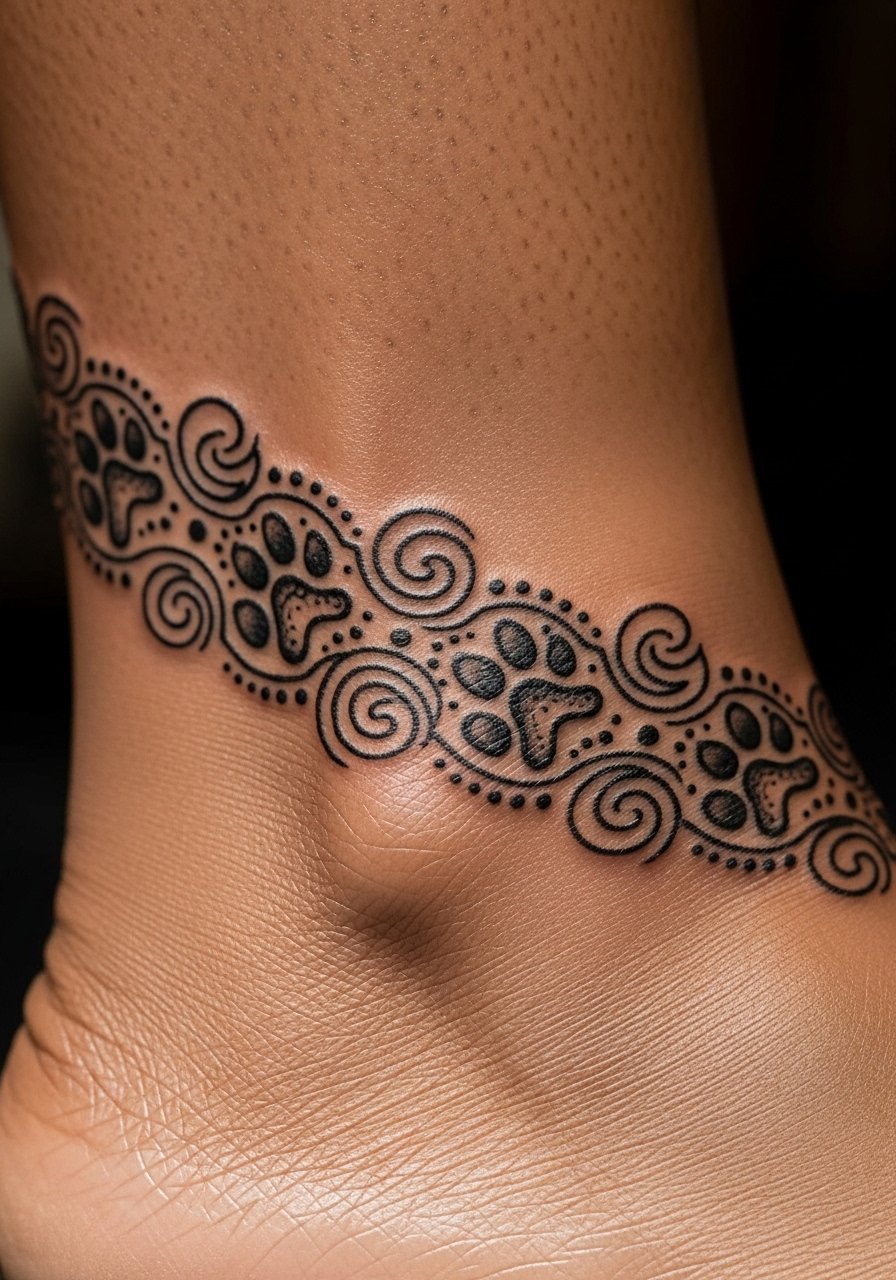
I've seen paw trails used as a visual timeline. Decide whether you want equal spacing for a regular rhythm or variable spacing to mark specific milestones. For ankles a wrap of 4 to 7 inches usually needs two sessions, and the ankle is a medium pain spot because of thin tissue. A common mistake is making the prints too small, which accelerates blur. If you plan weight changes, a spine placement will stretch differently than the ankle, so choose placement based on body stability. Ask for mockups on your body so you can preview spacing.
9. Mid-century modern dog face framed with flowers on the thigh
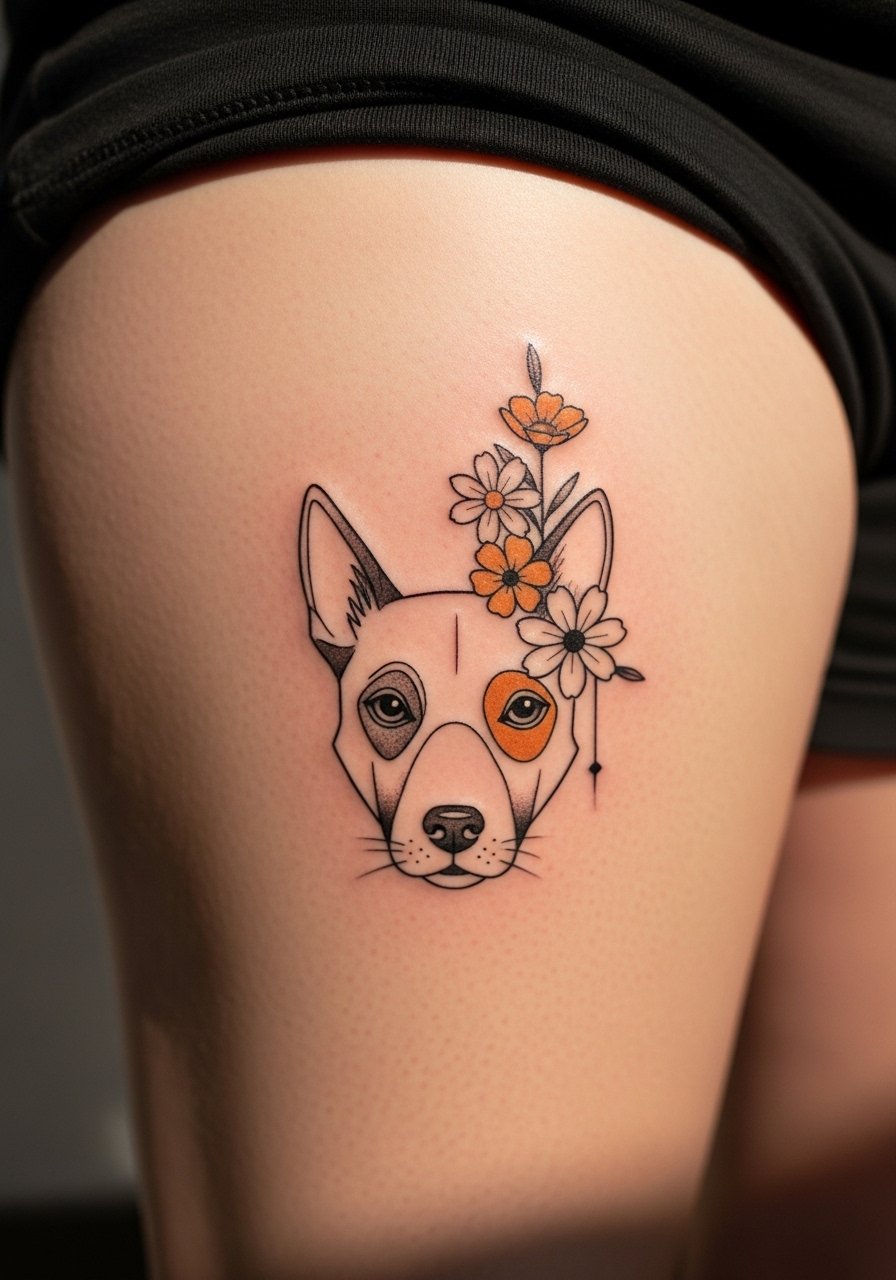
The thigh is comfortable for large, concealable pieces and it handles color saturation well. Expect two sessions for a 5-inch square and a lower pain rating than ribs. Tell the artist you want simplified shapes and solid color blocks so the retro look does not dissolve into mush as the piece heals. A common error is over-detailing a mid-century layout, which defeats the point of negative space. Thigh placement is a smart choice if you prefer privacy while grief processes.
10. Symbolic dog spirit silhouette with a tiny landscape on the back canvas
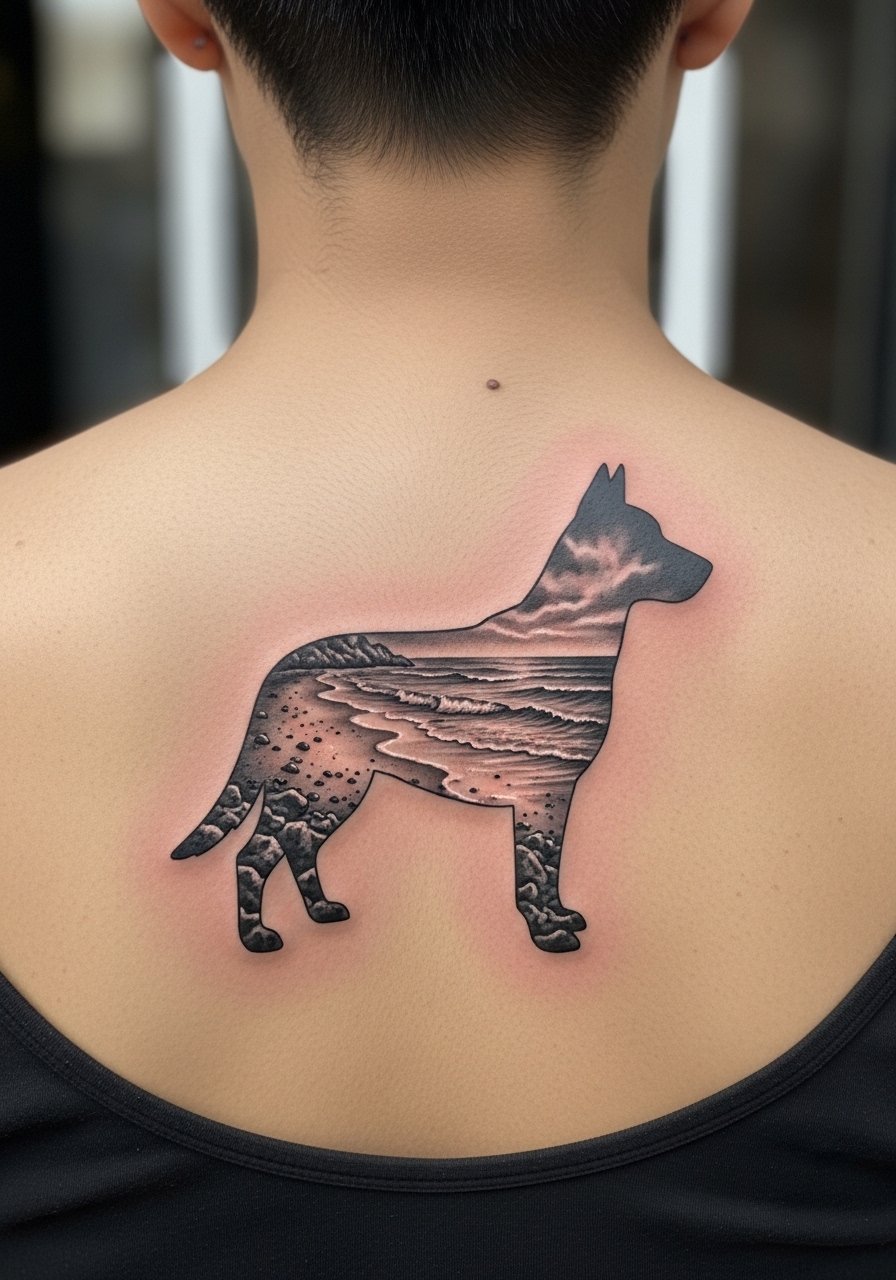
Most people use this style to combine a pet portrait with a place that mattered, like a park or coastline. This is a large piece that takes multiple sessions and careful saturation to preserve the tiny landscape detail. Tell the artist to keep the landscape simplified to avoid loss of detail after healing. If you want a dramatic statement, full black silhouette with a small, finely shaded scene inside can read well from across a room. Be realistic about session time and book a guest spot if your local calendar is tight.
11. Cartoonish stylized dog with exaggerated personality traits on the forearm
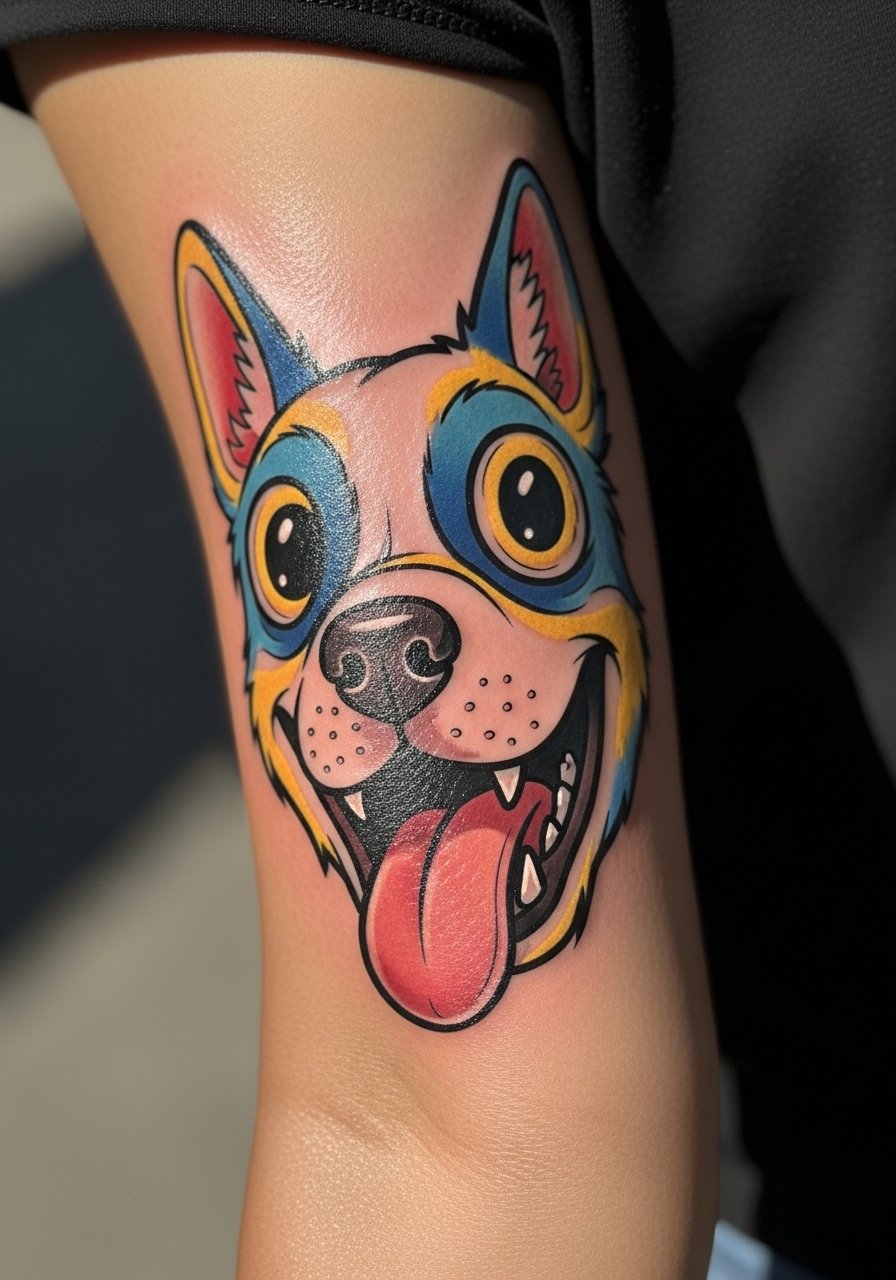
When the goal is lightness, an illustrated cartoon piece captures quirks without the pressure of perfect likeness. Bring reference photos that show the dog’s signature expression so the artist can translate it into stylized features. This is a moderate session and usually holds up well because of bold outlines and saturated color. Avoid asking for micro-detail inside the cartoon face, which will blur into color blocks after a few years. If you want a softer option, ask for thicker black contours to protect the color fields.
12. Black and gray fur-texture focus on the chest or upper back
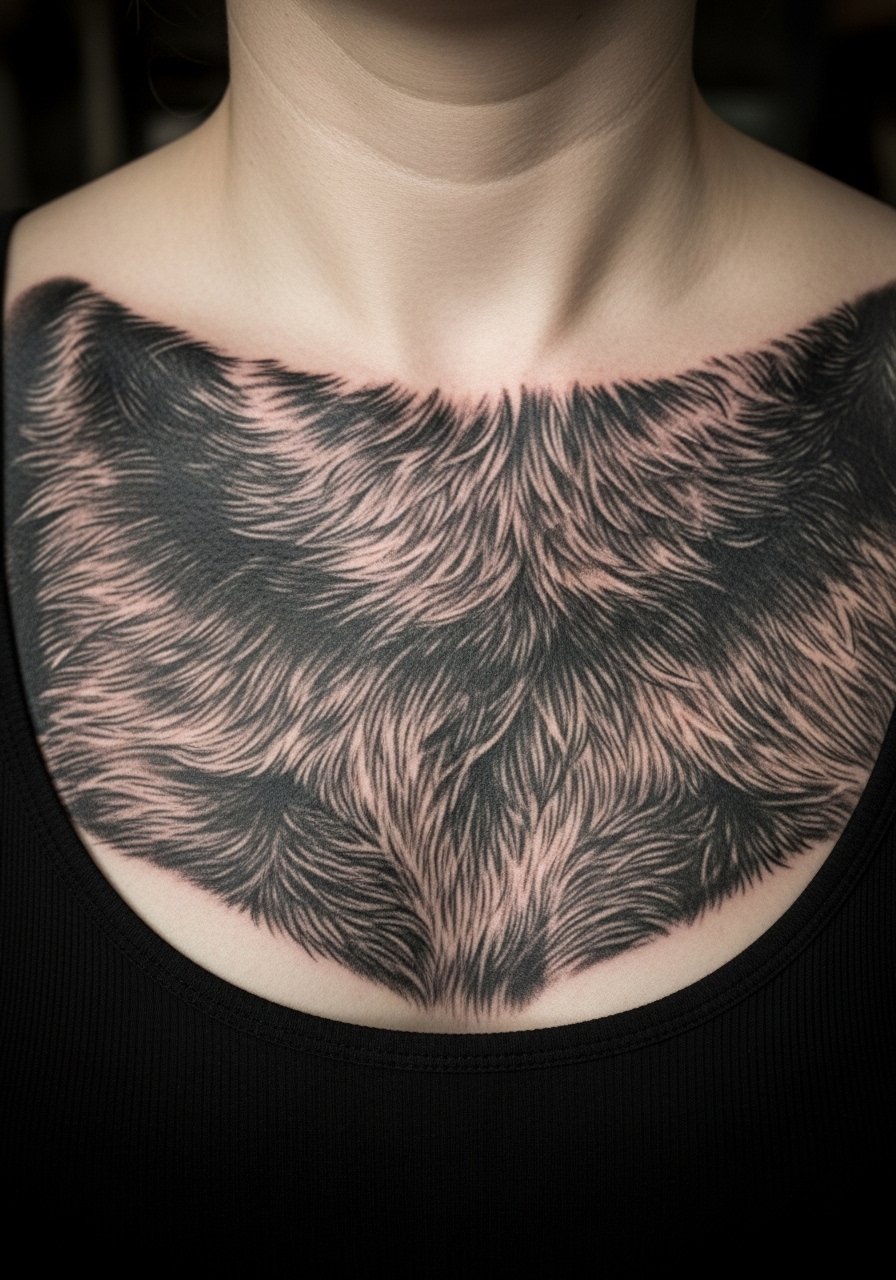
A fur-texture piece asks for layered shading and multiple passes to mimic tactile qualities. This is not a quick in-and-out session, expect medium to longer sessions and a three-visit plan for a 6-inch portrait. Tell your artist you want varied stipple and whip shading to recreate curl or straight fur patterns. A typical mistake is asking for all mid-tone gray instead of distinct highlights, which flattens the image. For darker skin tones prefer stronger contrast and deeper black saturation so the texture reads in photos.
Tattoo Prep and Aftercare Essentials
Here are practical products and items that people in tattoo communities use for dry climates, humid summers, and sensitive skin. I include options that artists on forums recommend and a couple of generic essentials to round out the kit.
Tattoo Goo Original Ointment. A classic balm users report as less greasy than heavy petroleum but still protective during the damp phase of healing. Use after initial scab shedding when your artist says to moisturize.
H2Ocean Piercing & Tattoo Aftercare Spray. A saline-based spray suitable for gentle cleaning in the first week when showers are your main cleaning option.
Unko Wax style non-clogging balm alternative. Lightweight description useful when artists recommend something thinner for color work. Use sparingly to avoid white cast on dark skin.
Indie Ink Butter alternative light balm. A softer butter used in some UK and forum circles to prevent heavy occlusion. Apply a pea-size amount after the initial healing phase.
Lightweight fragrance-free moisturizing balm. Generic but essential for daily moisturizing after scabs fall. Use a thin layer twice daily.
Medical-grade occlusive second skin bandage, 6-inch roll. Useful for the first 24 to 72 hours when recommended by the artist, or for long flights.
Gentle fragrance-free foaming cleanser for tattoos. Use in the shower for light cleaning without stripping pigment during the first two weeks.
Hustle Butter Deluxe Tattoo Aftercare Balm. A single mainstream balm included for those who prefer a non-petroleum option and faster absorption. Use cautiously in humid conditions to avoid pore clogging.
Every tattoo is different. Always follow your artist's specific aftercare instructions. Consult a dermatologist if you have skin concerns or unusual healing issues.
Frequently Asked Questions
Q: How long will a micro-realism dog portrait on the forearm stay crisp before needing a touch-up?
A: From what I have seen, a well-done micro-realism forearm portrait usually needs a touch-up between six months and two years depending on sun exposure and your skin type. Plan for an initial touch-up around the six to twelve month mark to correct any early fading and then a longer-term yearly check if you notice softening.
Q: Will fine line collarbone pieces blur faster than on the forearm?
A: It depends on the artist technique and your skin. Many artists say collarbone skin moves and thins more, which can cause fine lines to spread. If you favor a collarbone placement, ask for a slightly thicker fine line approach and to see healed examples they did on collarbones specifically before booking.
Q: Do watercolor dog tattoos need different aftercare than blackwork pieces?
A: Yes and no. The basic cleaning steps are the same, but watercolor styles rely on softer color fields so limiting sun exposure and following a light moisturizing routine is crucial. Artists often recommend stronger outlines or anchoring black around watercolor fields to preserve shape during natural color fade.
Q: For someone with dark skin, which styles hold up best for a dog memorial?
A: Blackwork and bold line neo-traditional pieces tend to hold up best on darker skin because they provide strong contrast and saturation. If you love fine line, consider a thicker "thick fine line" approach or black contour so the design reads in photos and at a distance.
Q: Is Saniderm necessary or is dry healing better for a fresh memorial tattoo?
A: Communities are split on this. One camp prefers Saniderm for a cleaner healing window and less mess. The other camp favors dry healing to let scabs form and fall naturally. Ask artists which method they usually use and why, and follow the method that matches the studio's experience with your skin type.
Q: What should I bring to the consultation to get the best likeness of a curly-coated dog?
A: Bring 8 to 10 high-resolution photos from multiple angles, including close-ups of unique markings like ear folds, whisker direction, and any heterochromia. Tell the artist you need clear texture reference and ask if they prefer vet photos or action shots. A short discussion about desired sizing and touch-up policy will save time later.