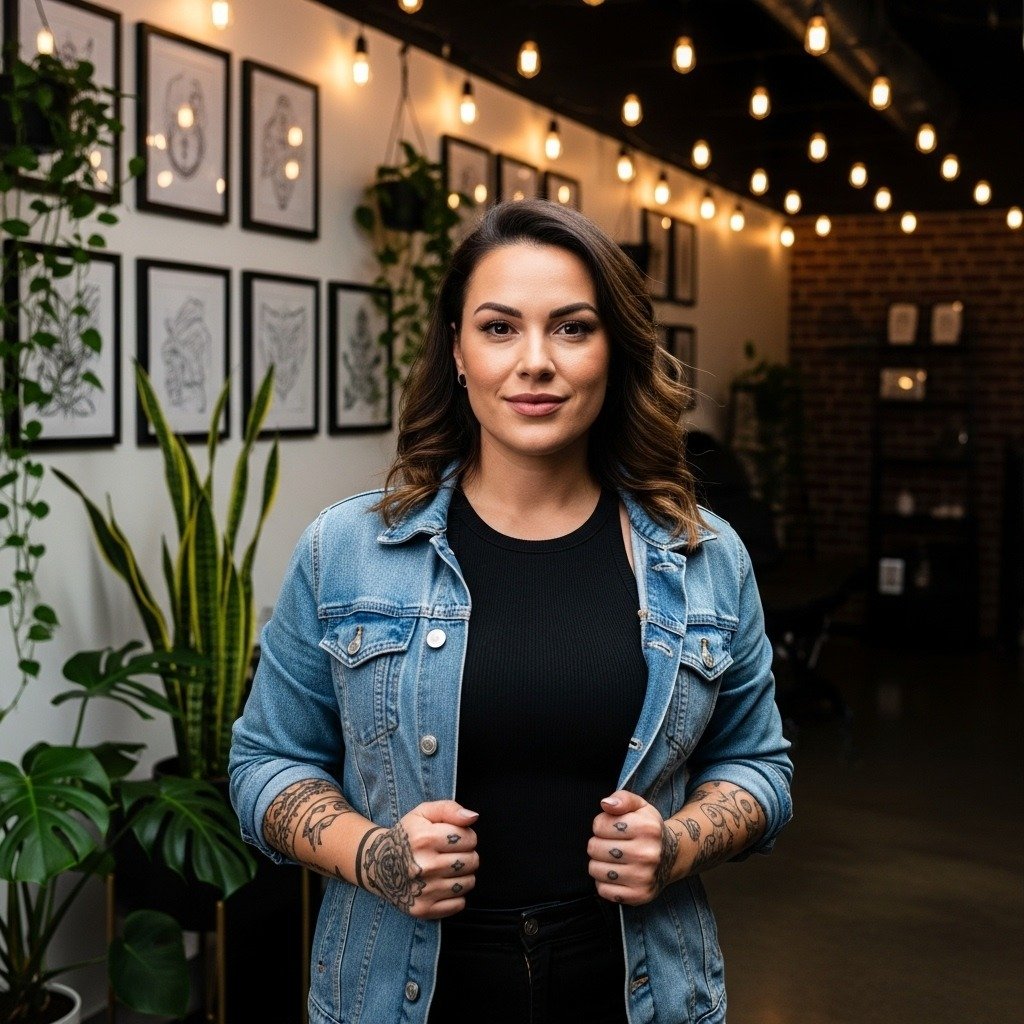
Neon wiring and motherboard traces fill feeds, but most of those tiny, single-needle circuit tattoos lose their crispness after a summer of sun and sweat. If you want cyberpunk elements that still read as intentional art in year three, think black and grey foundations with neon as accents, slightly heavier linework, and a realistic plan for touch-ups. Below you will find 25 ideas that balance showmanship with longevity and outfit pairings that make them pop.
1. Neon Circuit Board, Inner Forearm
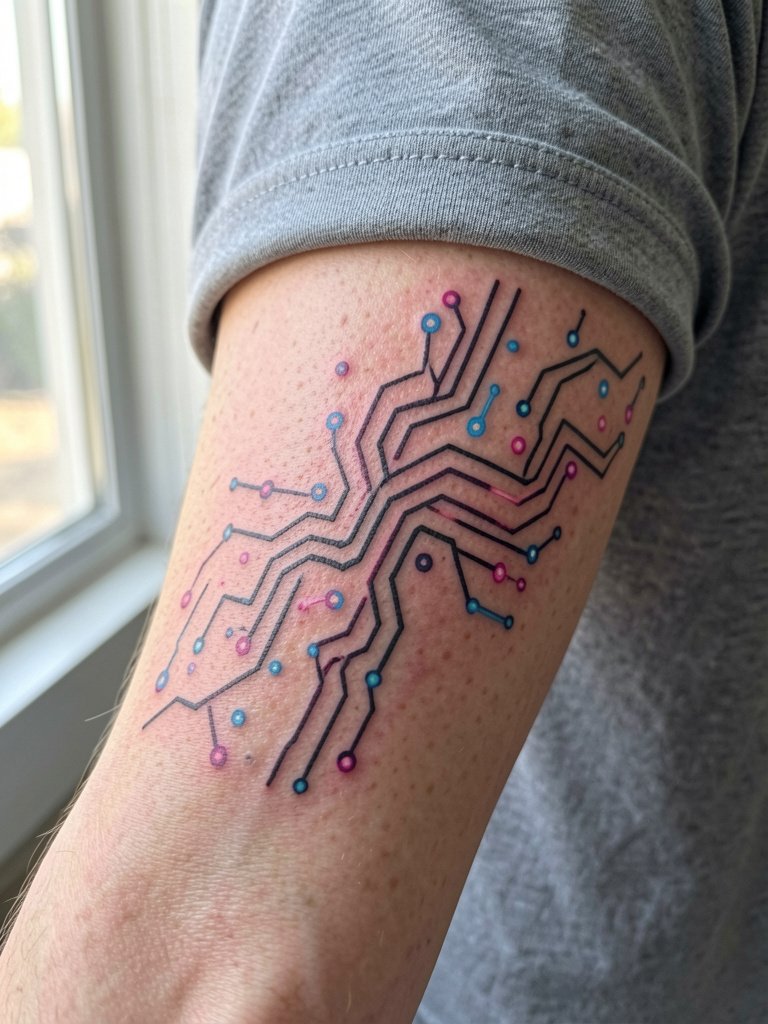
A clean inner forearm circuit reads like wearable tech when the linework is a touch bolder than Pinterest single-needle pieces. Choose 1–2mm line weight so the pattern survives typing and daily wear, and bring scaled references that show the spacing you want. Common mistake: requesting ultra-thin traces that blur into a gray wash by year two. Expect a single 60–90 minute session for a medium-length board motif and a touch-up around year one for neon dots. For the appointment, roll up a linen button down shirt so the artist has cuff-free access and the shirt doubles as show-off styling after healing.
2. Biomechanical Hand Sleeve, Palm Side to Knuckles
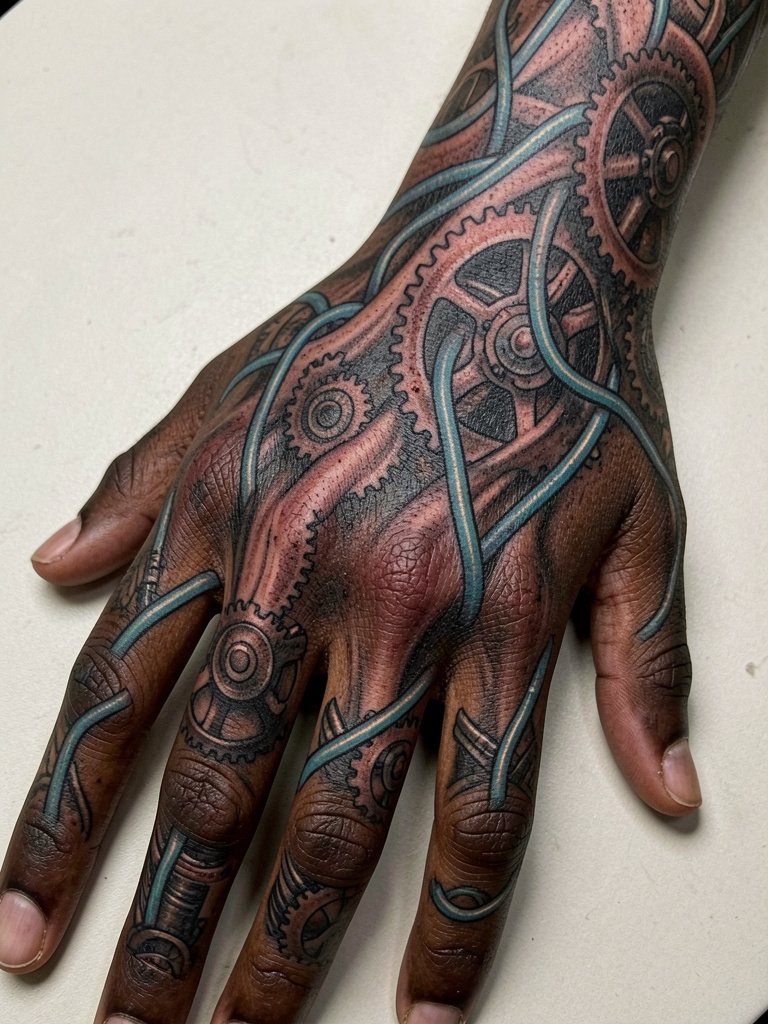
A hand sleeve that reads like fused flesh and machine needs bold blackwork for longevity because hands see a lot of wash cycles and friction. Expect multiple short sessions. One real mistake is asking for fine stipple shading across the knuckles. That fades fast and invites blowout. For showing the piece, pair it with a minimalist watch on the opposite wrist so the biomech detail stays the visual focus. During the session, wear a short sleeve so the artist can work unobstructed.
3. Glitch Portrait, Collarbone
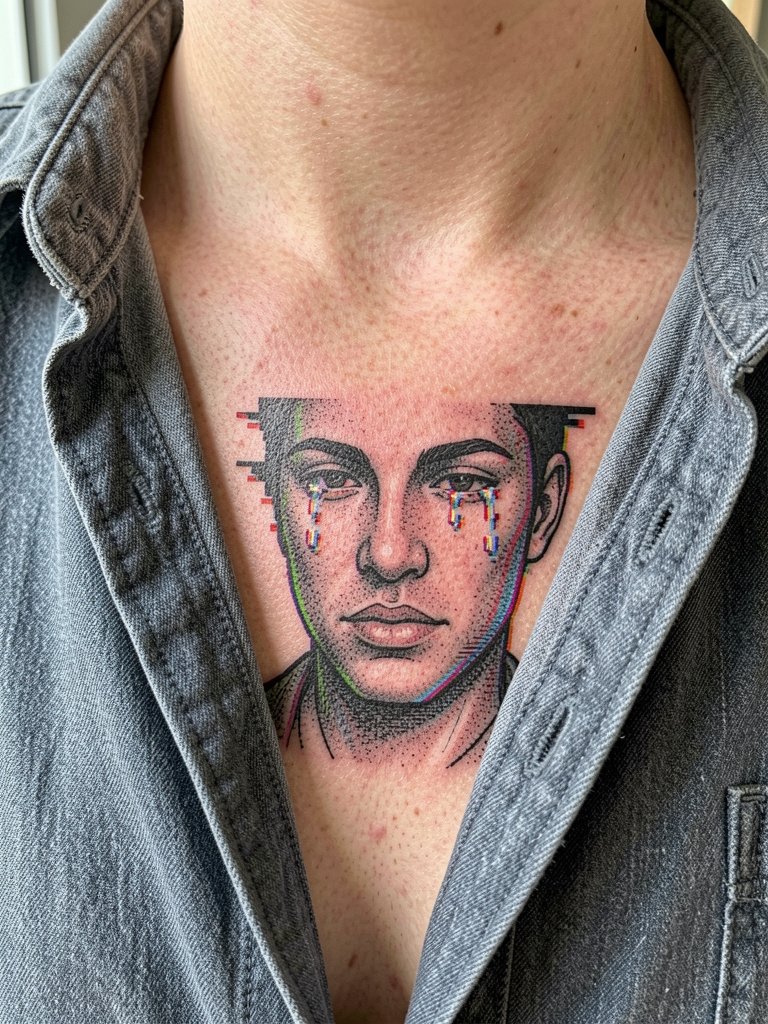
A collarbone glitch portrait works best at 2–3 inches so the facial distortion remains legible as it settles. The mistake I see most is shrinking portraits too small, which turns pixel tears into smudges over time. Bring a photo showing the exact chromatic offset you want and ask for slightly heavier contrast in the base black for longer visual life. For an outfit that frames the piece, try an open collar button down that exposes the clavicle without pulling at the stencil during placement.
4. Holographic Skull, Ribcage
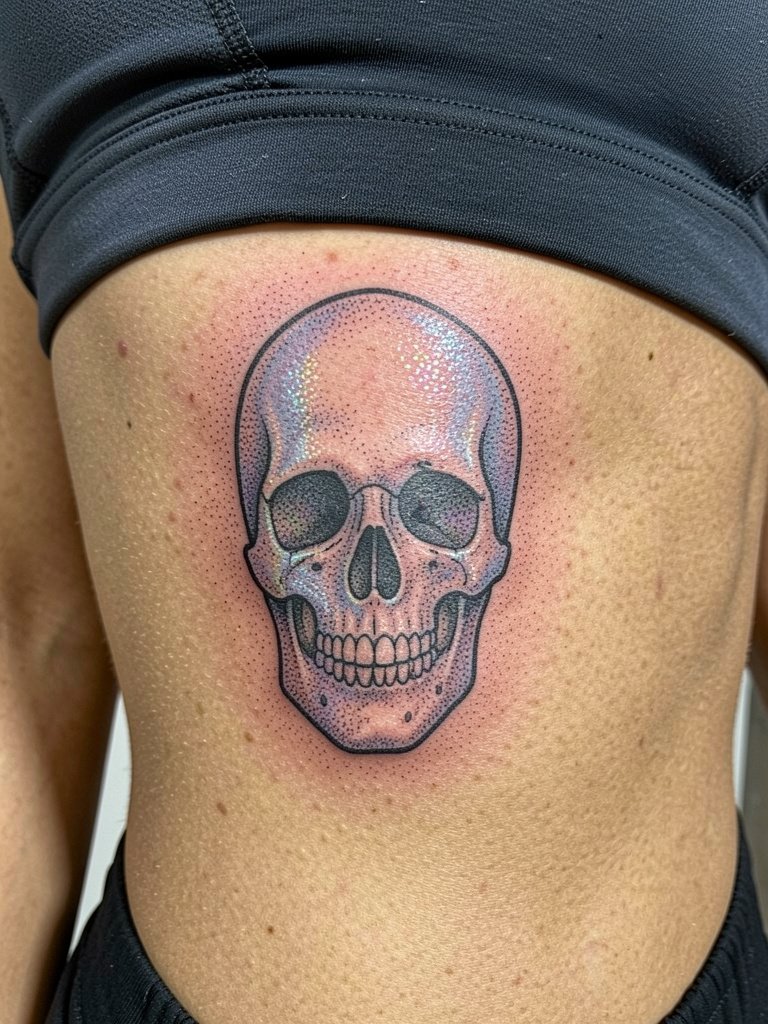
Fine line work on the ribcage sparks a real split among artists. One camp says fine line on ribs blurs within two years because the skin there stretches and shifts constantly, especially under clothing pressure. The other camp says fine line settles fine on ribs when artists use correct needle depth and slightly wider spacing, and they'll point to three-year healed photos as evidence. If you want hologram gradients, plan for 2–3 sessions and accept touch-ups in the first two years if you choose full neon saturation. Note: ribcage sessions are higher on the pain scale, so schedule breaks and a fitted top that gives the artist access without shifting the stencil.
5. Isolated Circuit, Wrist
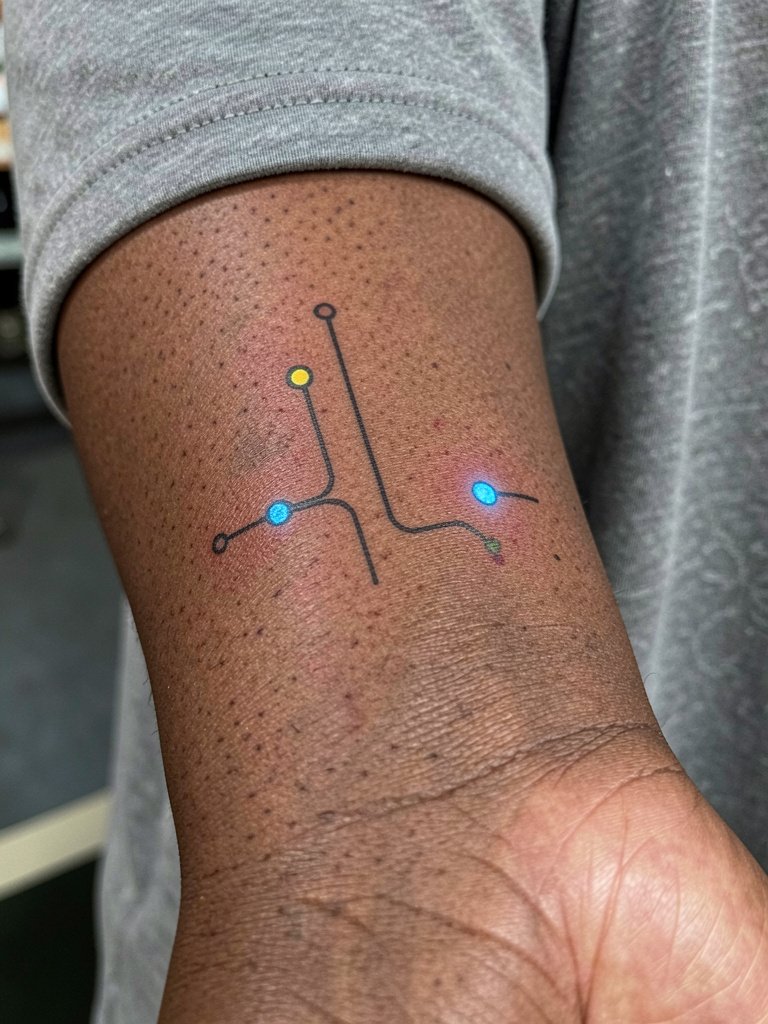
Wrist circuits are ideal for first-timers who want discreet cyber motifs. The wrist eats ultra-fine detail, so request slightly thicker linework from the start and expect touch-ups sooner than on the forearm. A frequent mistake is insisting on a tiny one-millimeter trace that disappears into wash lines. For session comfort and showing the final piece, wear a dainty gold stacked bracelet set on the opposite wrist so the circuit remains the focal point.
6. Cyber Fine-Line Botanical Sleeve, Inner Forearm to Upper Arm
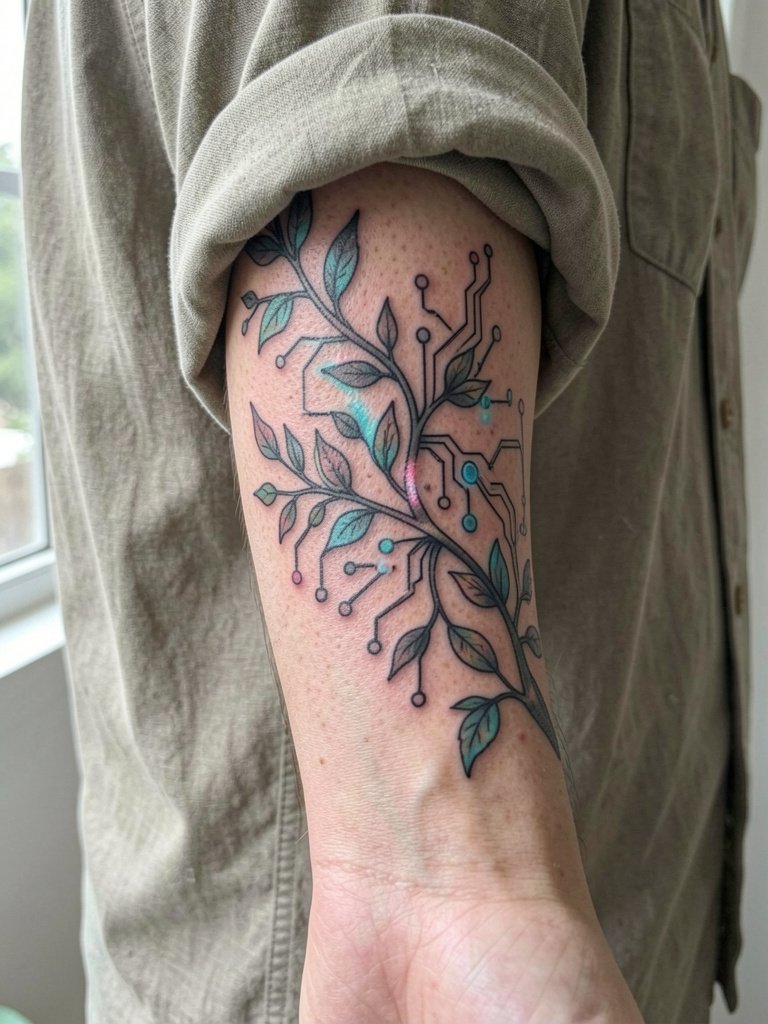
This hybrid sleeve keeps cyber elements soft and wearable by weaving vines around the circuitry. If you want longevity, tell the artist you prefer single-needle detail with strategic black anchors so the composition holds as the pastel accents fade. A common mistake is asking for full neon fills across every vine, which reads patchy after the first touch-up window. For showing off, pair the sleeve with a black tank top men and a vintage leather jacket for that armor-meets-garden look. Expect 4–6 sessions for a full inner sleeve.
Pre-Session Essentials
The wrist and rib pieces above heal differently from large sleeves, so a few small items smooth both the session and the first week.
-
NeonGuard neon-safe balm search. Thinner than heavy ointments and mentioned by collectors for keeping blue neon brighter during the first weeks.
-
TechBalm fine-line aftercare search. Favored by some fine-line specialists because it does not clog needle channels and helps preserve micro detail.
-
HoloHeal lightweight healing balm search. Reported to be less greasy than large-jar ointments and useful for hologram gradients on side-body work.
-
CyberEarth muted ink set search. A muted earth tone palette for artists who prefer pastels over saturated neon for better long-term readability.
-
Saniderm second skin search. A mainstream protective film many collectors use for detailed cyber work to reduce scabbing and protect neon accents during the initial healing window.
7. Glitch Text, Sternum
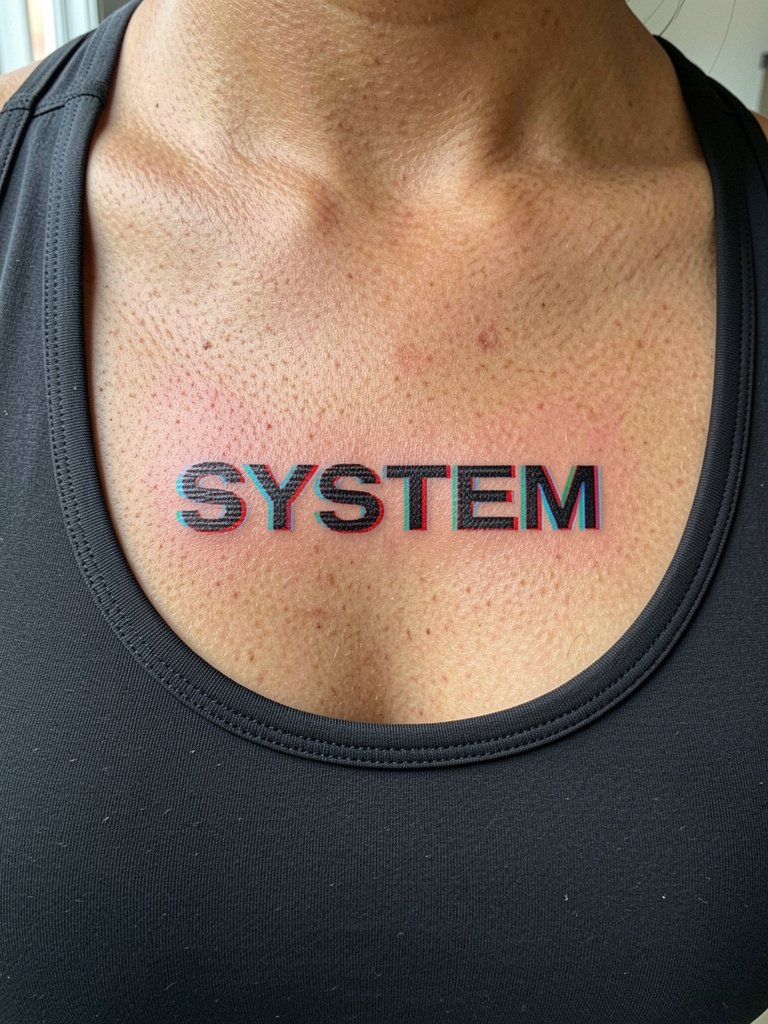
Sternum text benefits from slightly more spacing and bold black for contrast because chest movement can soften tight scripts. The common error is crowding letters to appear delicate; that design loses legibility fast. One session usually does the job for a 2–4 inch band, but expect neon offset touch-ups. For the appointment, a button-down shirt that opens easily makes positioning simpler.
8. Neon Wire, Inner Bicep Wrap
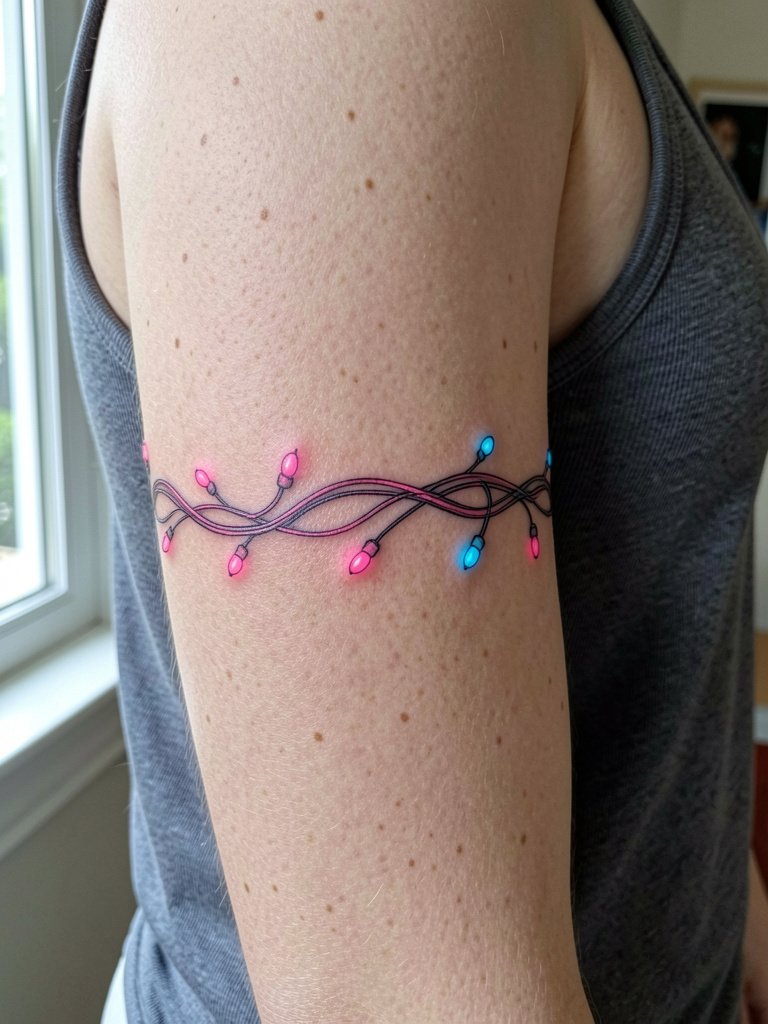
Inner bicep wraps look great because they follow the arm's curve, but they live in a high-friction zone from sleeve seams. A common mistake is requesting micro-dot nodes that fade fast from rubbing. When you consult, bring a reference showing node scale at full size so spacing is precise. For showing off, a black tank top men exposes the wrap cleanly. Expect one to two sessions and a touch-up in the first year if you want neon to stay bright.
9. Coded Script, Lower Back
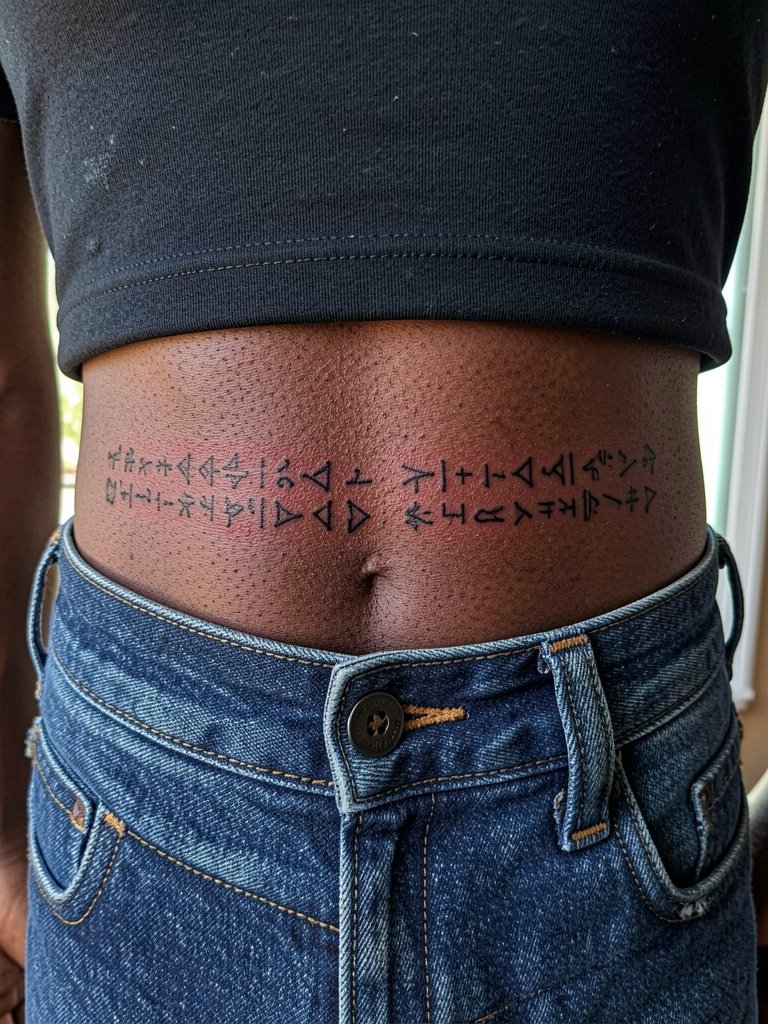
Lower back coded scripts reward negative space and crisp counter lines. They age well when the glyphs have breathing room. The mistake I see is compressing too many marks into a narrow band to force meaning. For the session, wear open back shirt men style clothing so your artist can access the area without shifting the stencil. Plan on one to two sessions depending on line count.
10. Biomech Shoulder Cap
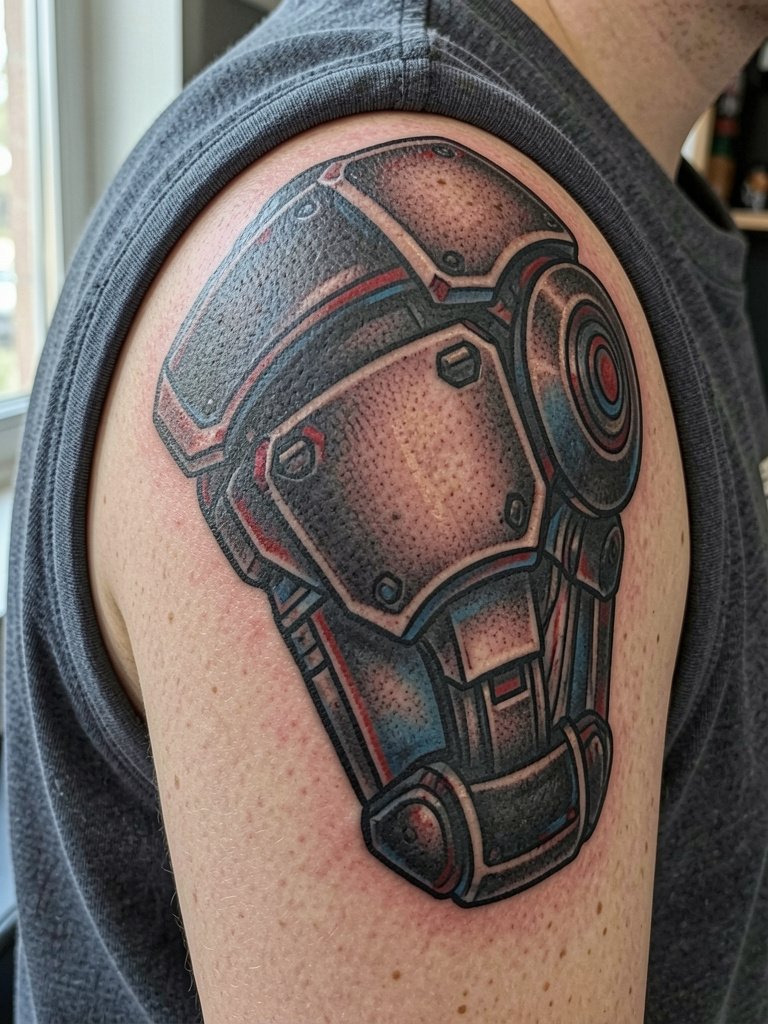
Shoulder plates work as armor-like cover ups and age well because the deltoid cap sees less abrasion than forearms or hands. A common mistake is tiny plating details that lose definition when the shoulder moves. For sessions, wear a loose tank or sleeveless garment so the artist can rotate the arm freely. The piece typically finishes in two to three sessions and holds strong with bold outlines.
11. Hologram Gradient, Finger
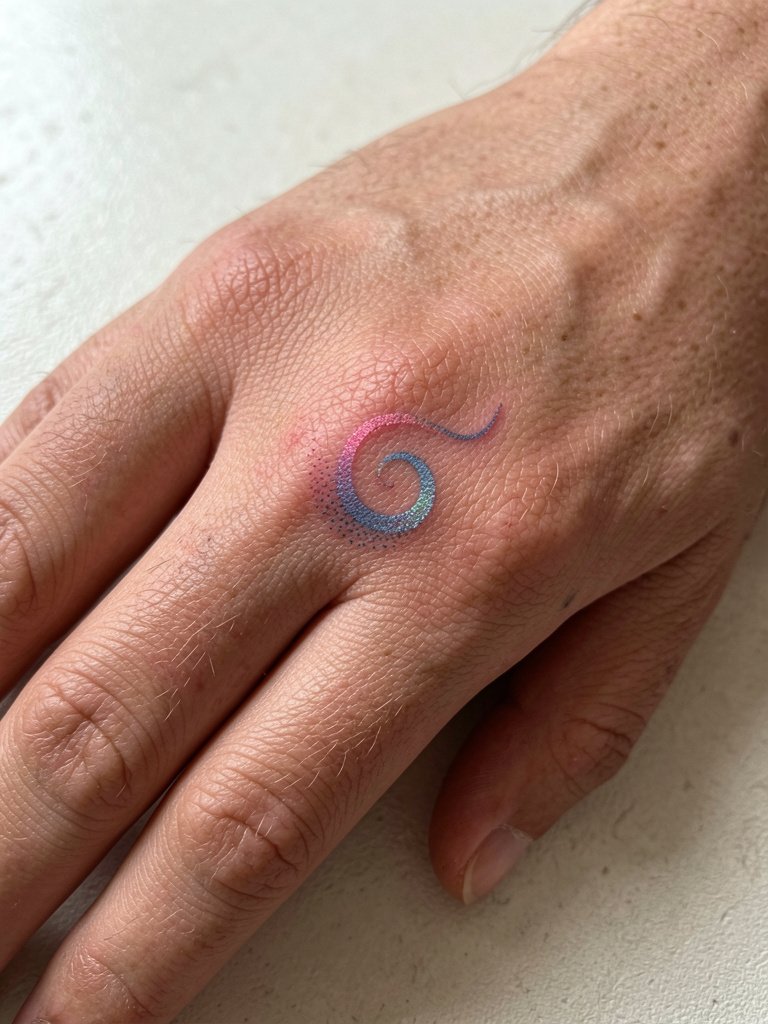
Finger tattoos fade fast because of constant washing and skin renewal. The best bets are bolder micro-motifs rather than ultra-fine gradients. Expect touch-ups every year or two and plan for some softening. For showing off a tiny hologram, pair with a minimalist ring men on the opposite hand rather than heavy stacking that competes with the finger detail. Keep expectations realistic for longevity.
12. Cyberpunk Eyes, Nape
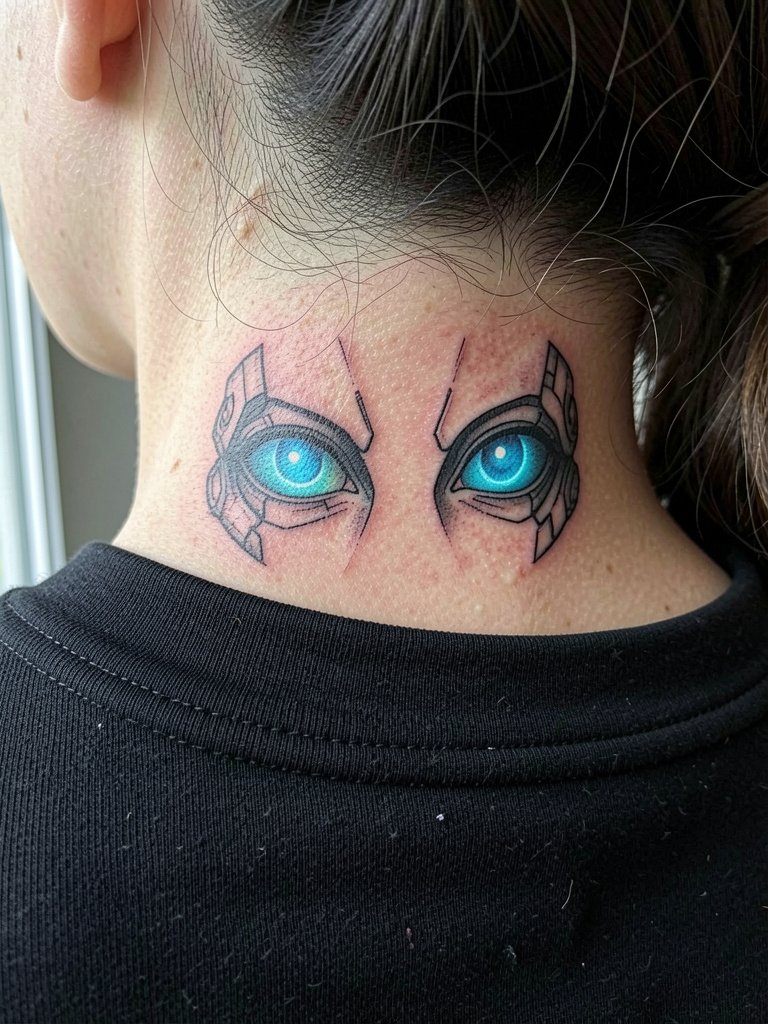
Nape eyes are great for people who like to hide and reveal their ink with hair or collars. A key consultation point is how visible you want the pupils when hair is down. People often ask for tiny pupils that vanish on medium to dark hair. For showing the piece, open collars and hoodies pulled down work well, and a layered silver chain men balances the look without stealing focus. A single session typically suffices for a 2–3 inch nape motif.
13. Geometric Circuit Fingers, Patchwork
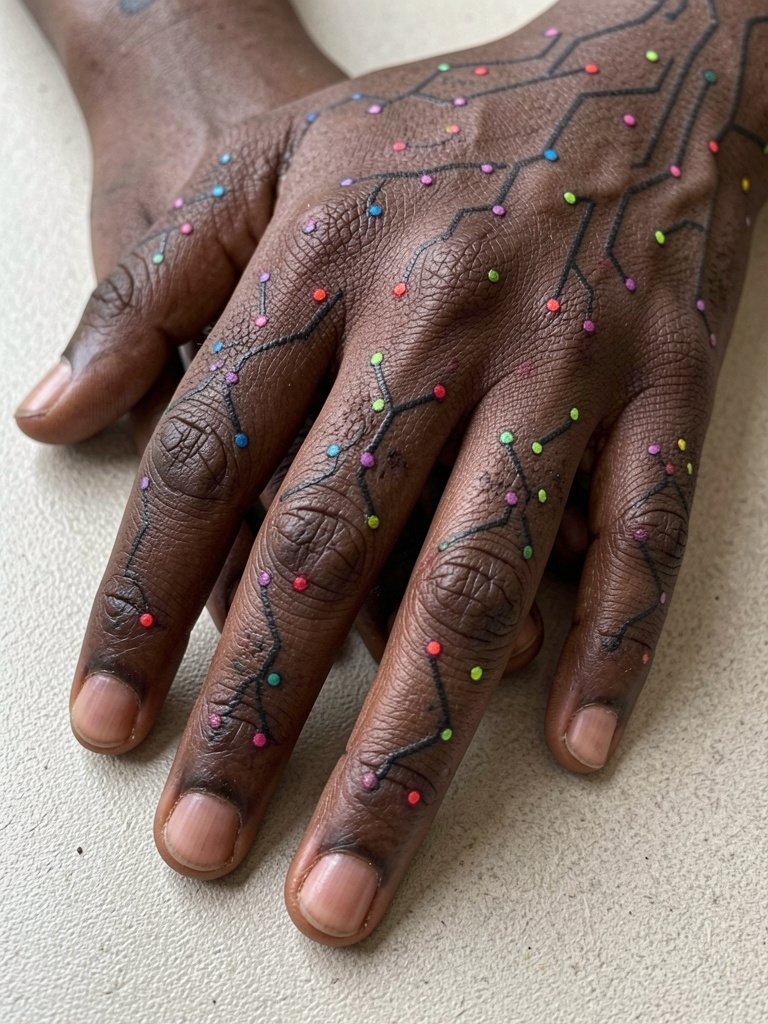
Patchwork finger circuits let you build a modular look over time. The real mistake is trying to cram too much detail into each phalanx. Start with key nodes and add later. For styling, keep jewelry minimal and try a thin chain bracelet set men rather than chunky pieces. Plan for 3–4 short sessions and budget annual touch-ups for neon highlights.
14. Dystopian Cityscape, Full Back
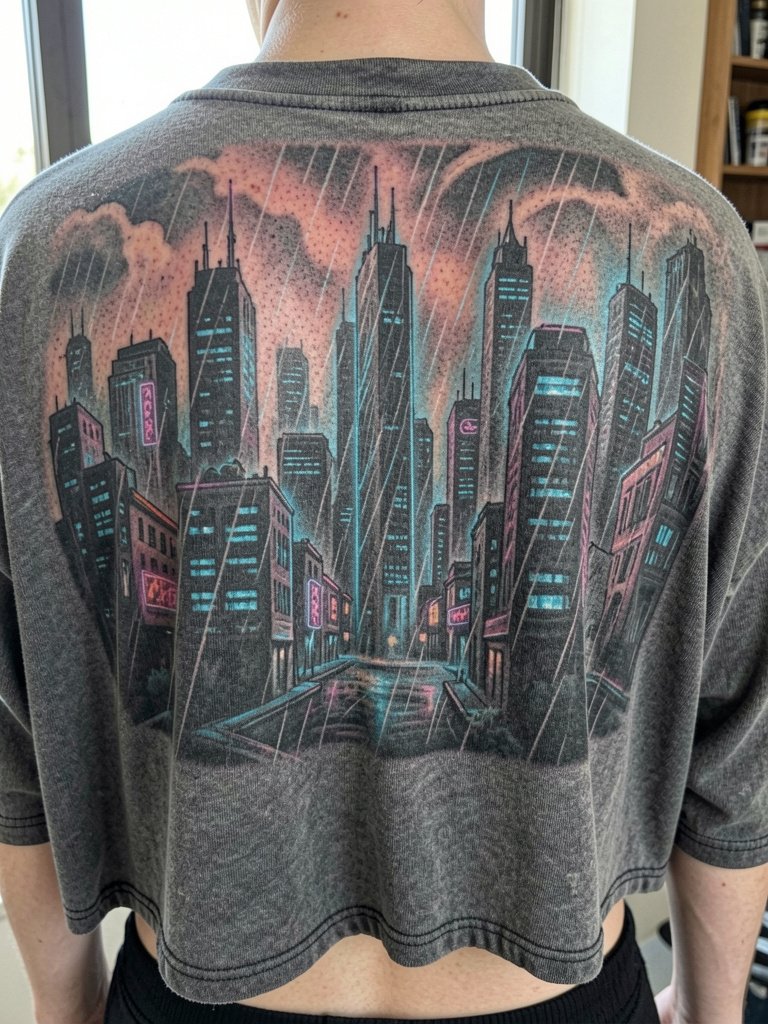
Full-back cityscapes are cinematic and tell layered visual stories. For longevity, anchor neon highlights to bold black structures so the composition reads even as accents fade. A frequent error is overloading the skyline with tiny neon windows that blur into a glow. This is multi-session work, expect four to six sessions and plan wardrobe for reveal nights with open-back shirt men. Healed contrast is what sells these at year three.
15. AI-Generated Abstract Chest Pattern
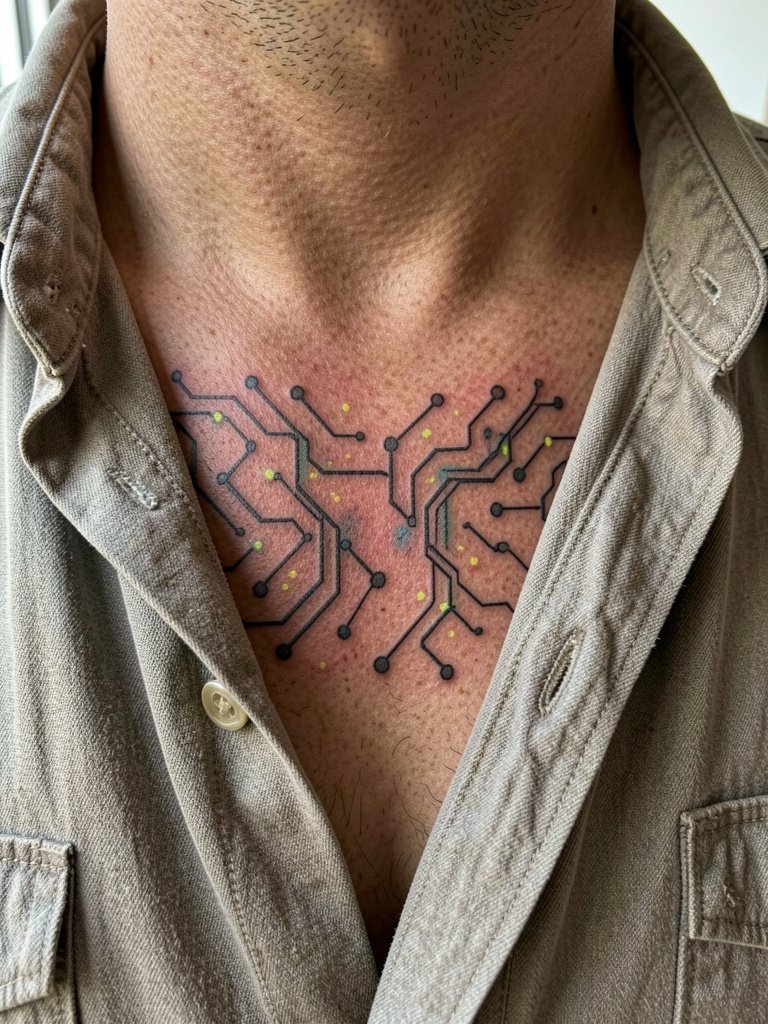
AI-assisted patterns can produce truly unique layouts, but they need human editing to avoid repetition artifacts that register as a mistake after healing. Bring the algorithm output plus human-edited refinements and specify which nodes you want emphasized. For session wear, an open collar button down makes positioning simpler. Expect one to two sessions for a chest panel and a potential touch-up if neon accents are dense.
16. Micro Dotwork Hologram, Calf
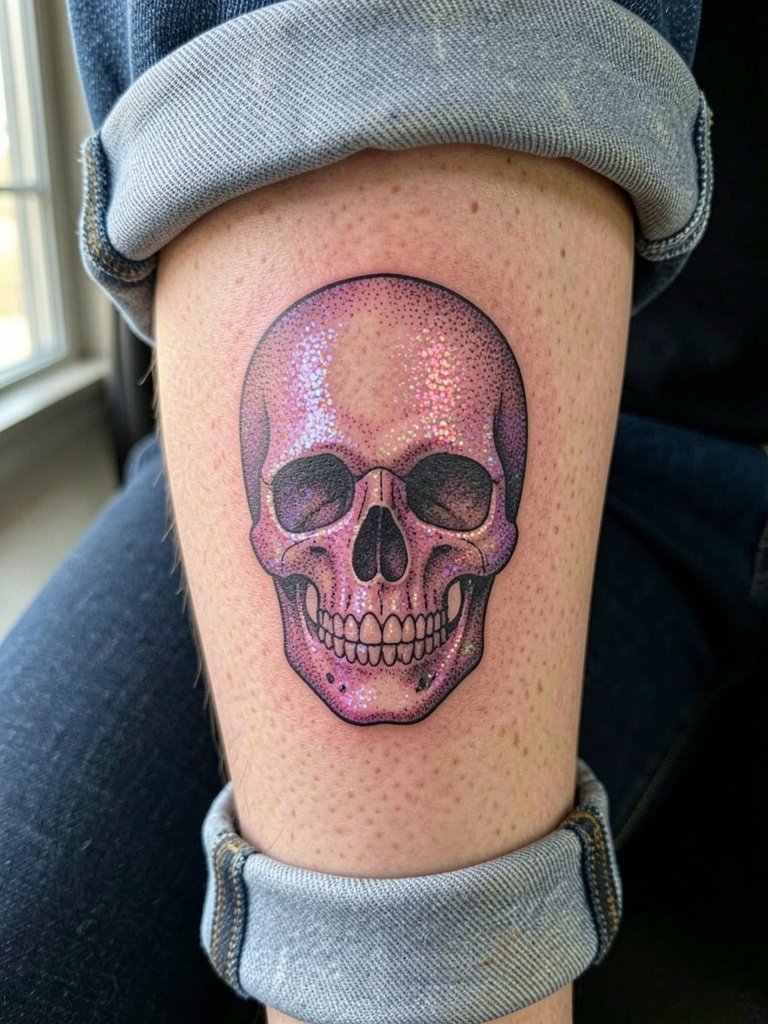
Calf pieces are forgiving for dotwork and provide a good canvas for hologram gradients. A typical mistake is pushing too much neon saturation into the stipple, which flattens the detail as it fades. For showing off on summer days, wear cuffed jeans or shorts, and try a rolled cuff linen shirt if you want a coordinated neutral look. Expect two sessions for complex stipple gradients.
17. Minimalist Circuit, Behind the Ear
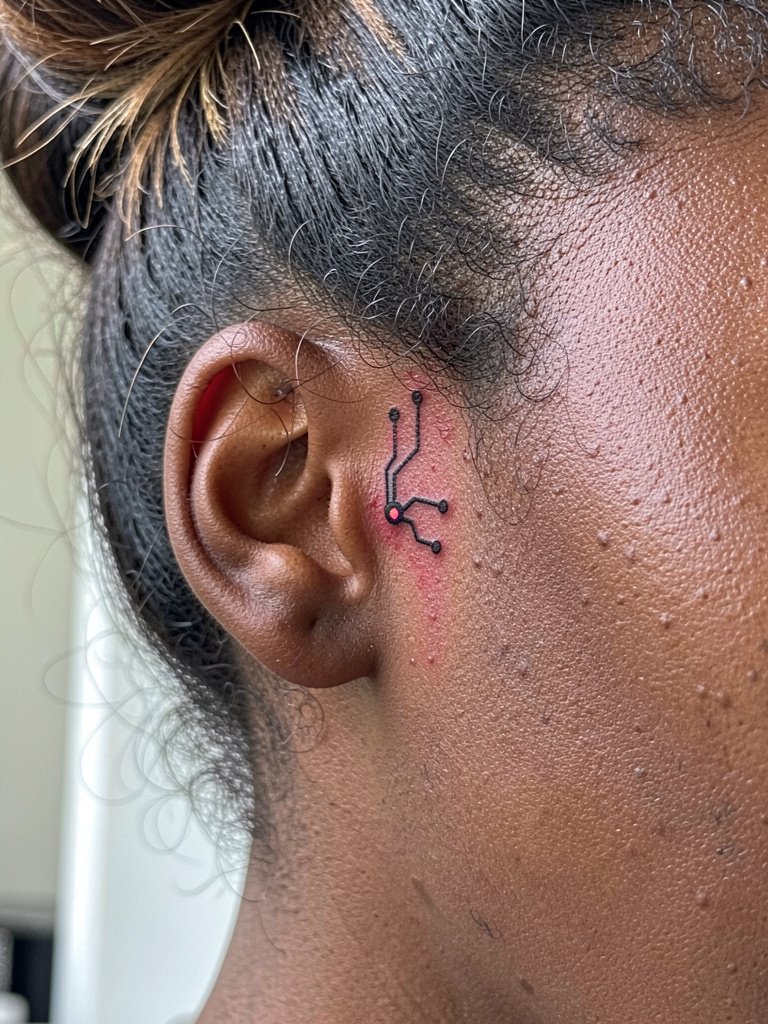
Behind-the-ear circuits are intimate and subtle. The main error is asking for too much fine detail in a tiny area. Keep the motif to one or two nodes that read from a short distance. For session wear, pull hair into a natural updo and bring a photo of the exact scale you want. Healed pieces here look sharp if the nodes have clean, slightly heavier dots at the time of inking.
18. Radial PCB Mandala, Thigh
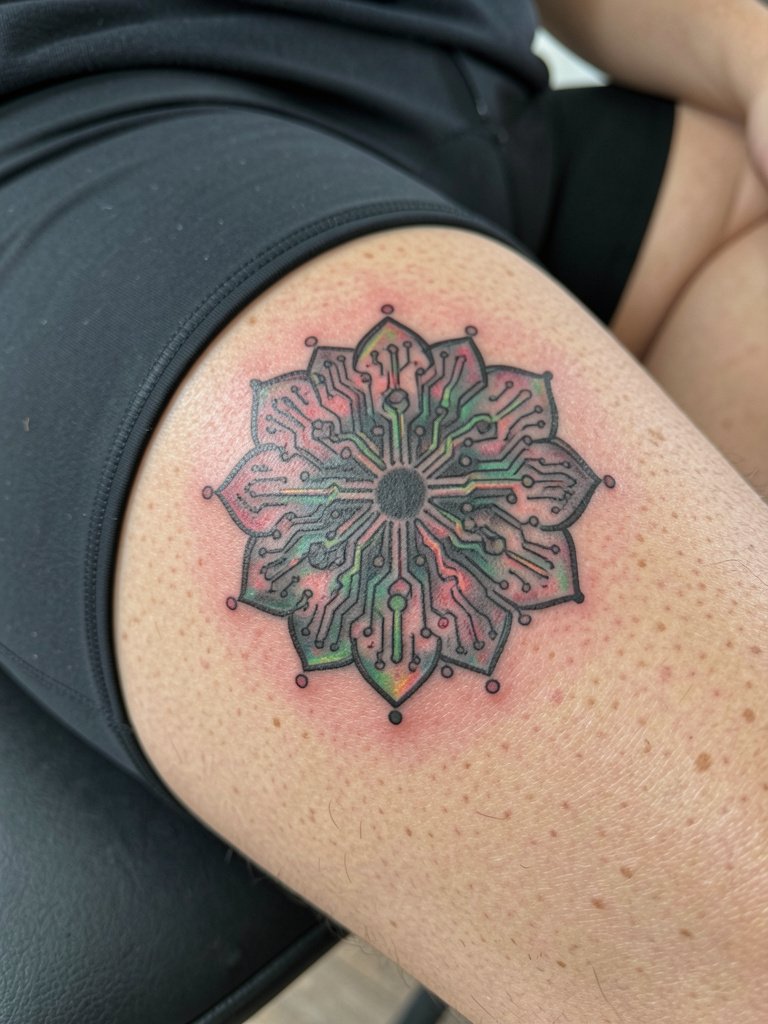
Upper thigh allows for larger radial patterns that keep detail without risking blowout from high-movement zones. The mistake I see is shrinking a mandala so small it bleeds into an ugly ring within a year. For session wear pick fitted shorts so the artist can roll the leg without pressure. When you want to show it off, low-rise jeans with a cropped hem work well. This placement is forgiving and ages nicely with moderate touch-ups.
19. Subtle Neon Chip, Behind Shoulder Blade
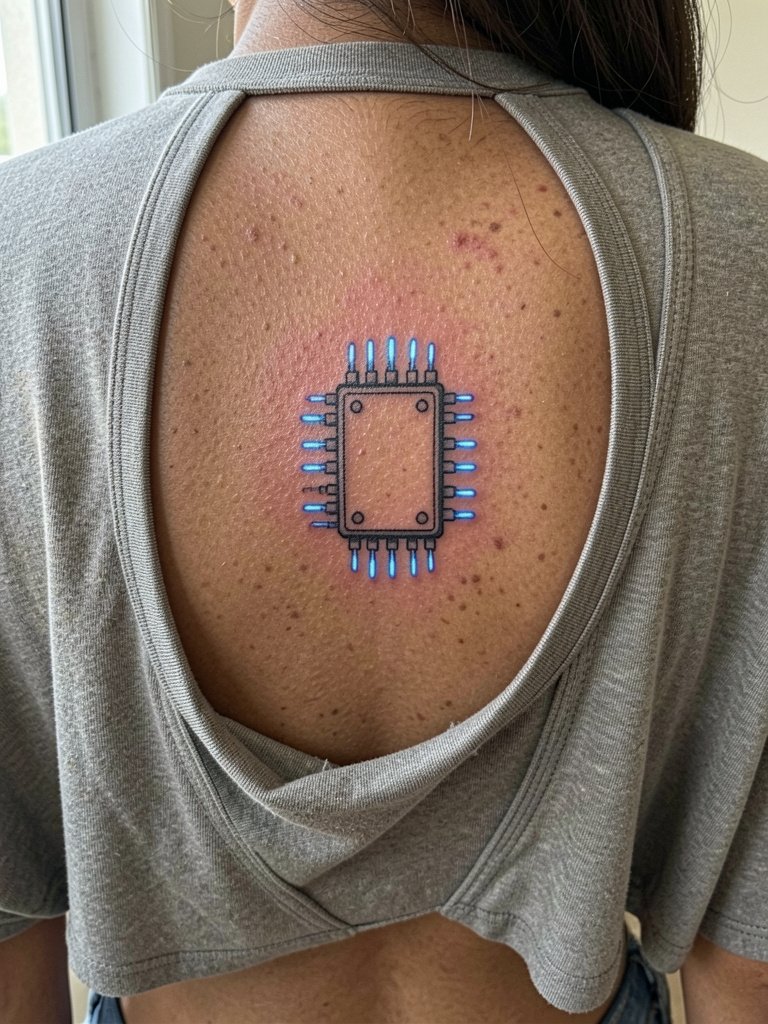
A chip motif behind the shoulder is a quiet collector's detail. The risk is making it too intricate relative to the canvas, which leads to soft edges later. The session is short and tolerable. For outfits, try an open-back shirt men to frame the piece. Because the area has moderate sun exposure, plan for a protective routine during sunny months to keep neon accents bright.
20. Circuit Band, Ankle
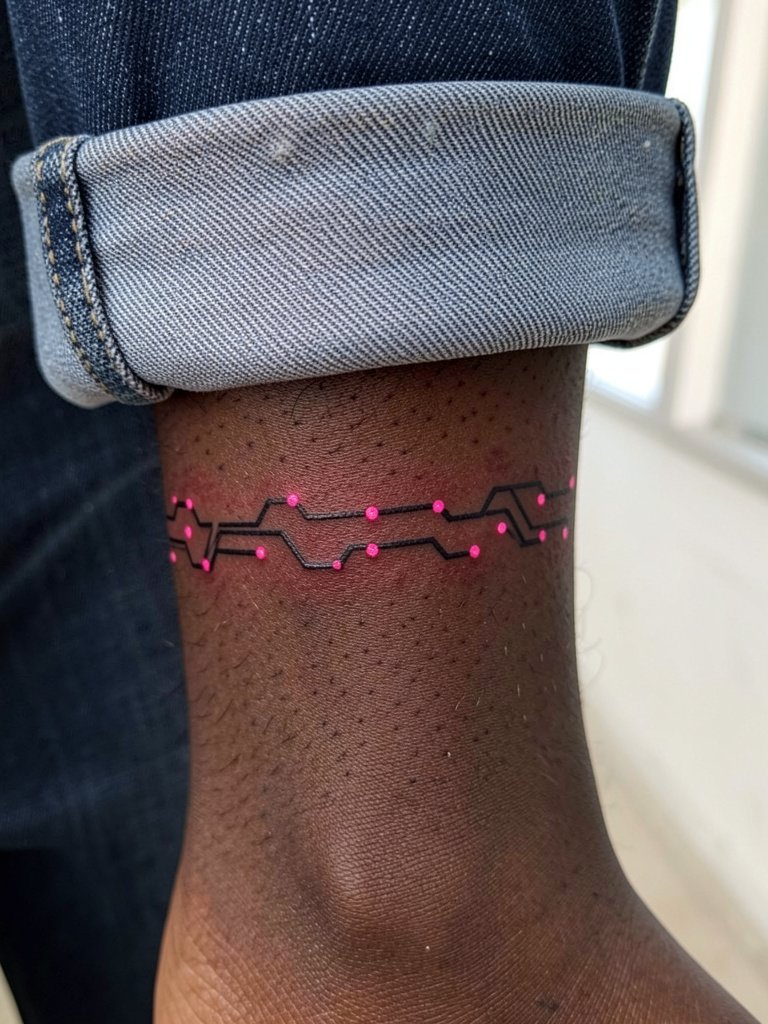
Ankle bands are visible and subtle, but they deal with shoe friction and socks. A common mistake is placing extremely fine nodes where daily friction will erase them. For showing off with footwear, cuff your jeans or choose low-top sneakers and a minimalist watch men to balance wrist and ankle accents. Expect one short session and annual neon touch-ups.
21. Neo-Mechanical Rib Armor, Side Torso
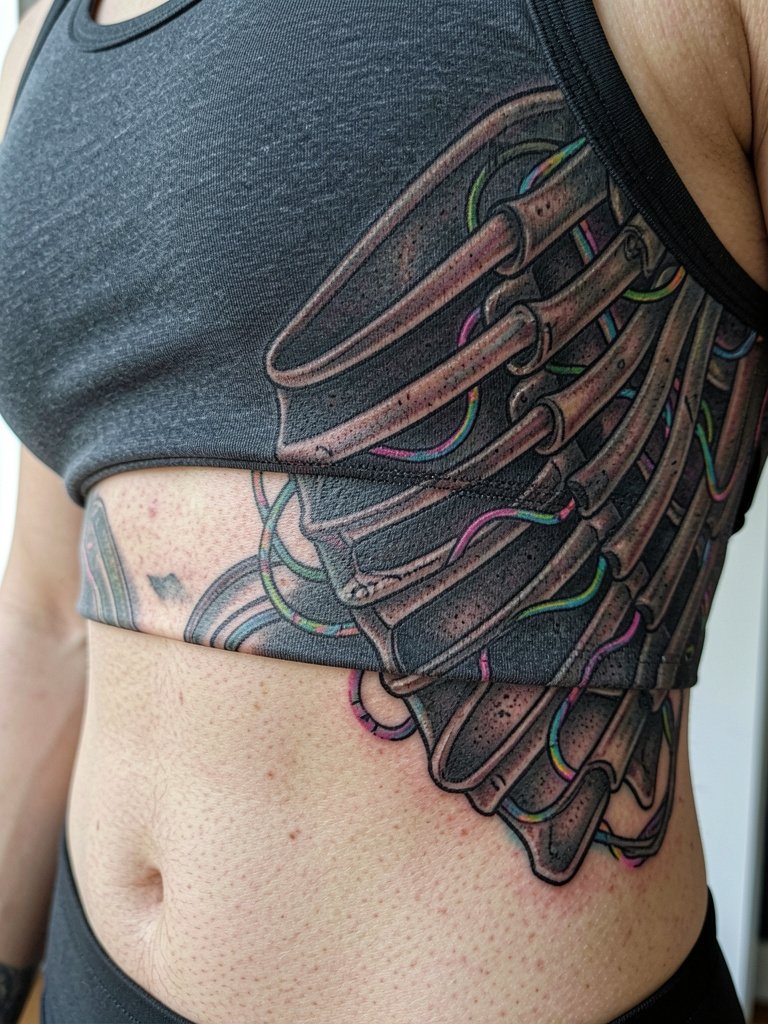
Side-torso armor looks purposeful when plates are scaled to body curvature. The risk is too-small serrations that blur with respiration and movement. Expect multi-session work and negotiate breaks because ribs and side torso can be uncomfortable. For reveal nights a fitted cropped top frames the armor and layered silver chains create a tech aesthetic.
22. Micro-Realism Circuit Eye, Forearm Inner
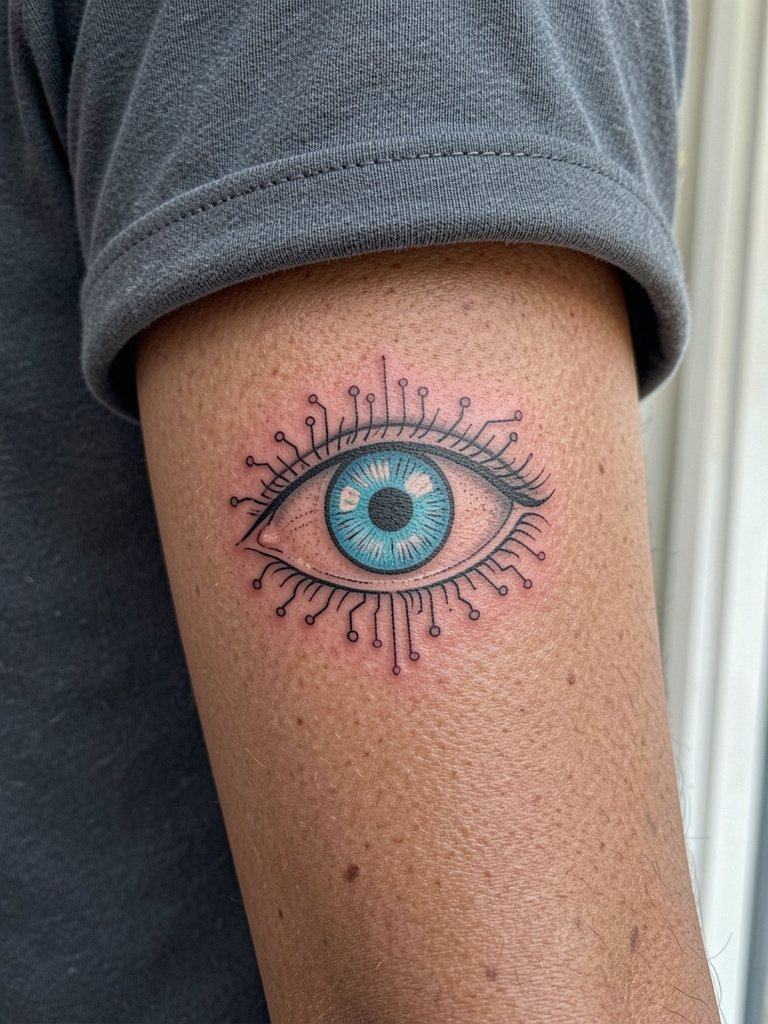
A micro-realism eye needs contrast and a slightly heavier base line to survive skin movement. The common mistake is asking for an ultra-fine iris that becomes a gray disk later. Bring the exact scale you want and a second image showing how it reads at three inches. For showing, rolled sleeves and a minimalist watch men on the other wrist balance the look. Plan a one to two hour session and budget a minor touch-up if neon is heavy.
23. Layered QR Glyph, Upper Arm
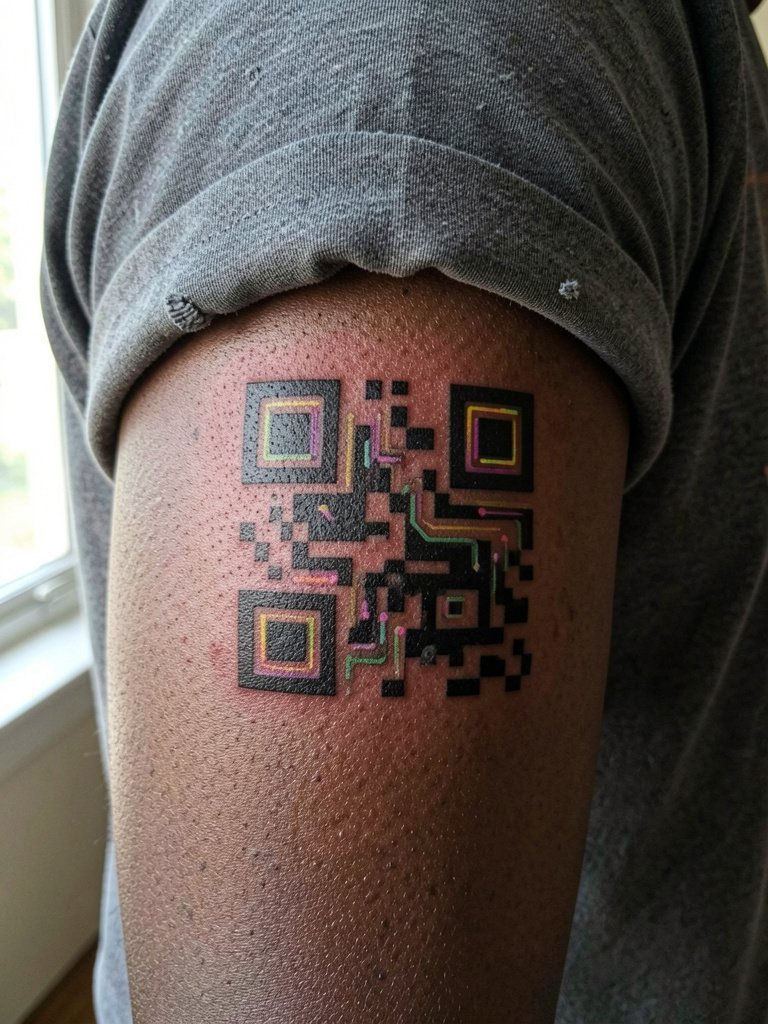
Upper arm glyphs read well at a distance because the outer arm gets less abrasion. Avoid trying to encode actual scannable data unless you accept distortion with movement. The typical mistake is making scannable blocks too small. For sessions wear a loose tee and show-off styling with a vintage leather jacket men to give that armor vibe. Expect one to two sessions and solid long-term readability.
24. Muted Earth-Tone Circuit Collar, Chest Pocket Area
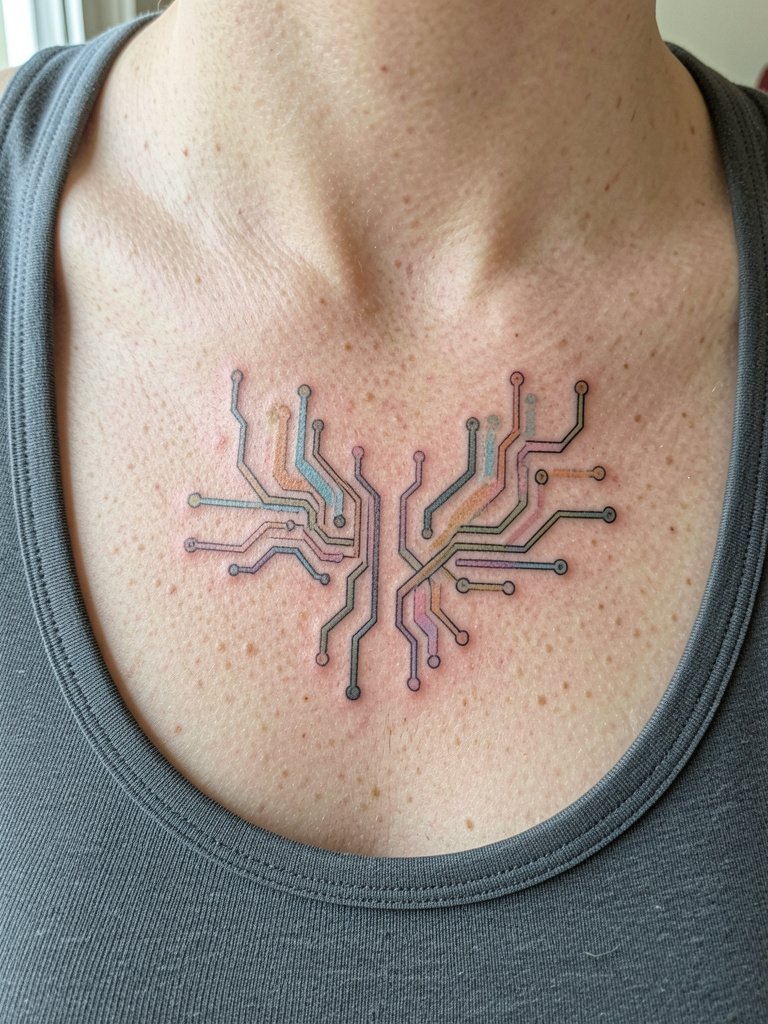
Muted palettes are trending for chest motifs because they avoid the rapid fade problem of saturated neon. A common mistake is choosing pastel fills without a black base, which weakens contrast. For outfit pairing, try neutral tones like cream or olive and add a minimalist pendant necklace men on the opposite side for balance. One session is often enough for a pocket-area piece with subtle touch-ups later.
25. Patchwork PCB Sleeve, Full Arm
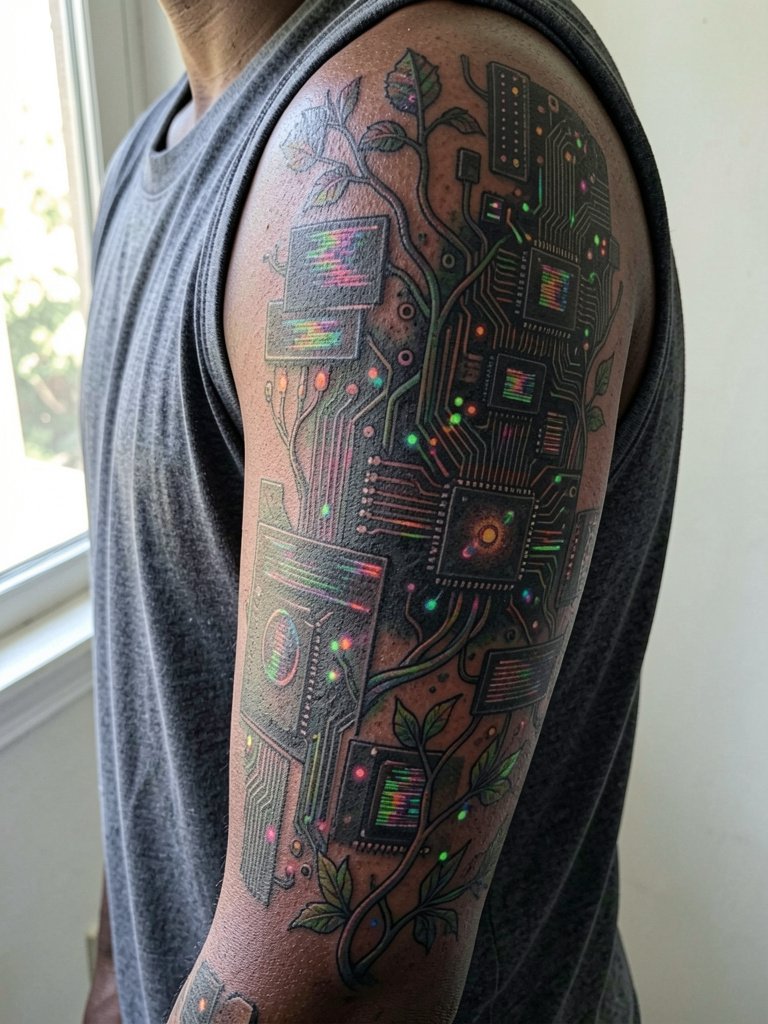
A full patchwork sleeve lets you mix styles so different panels age differently without losing the whole story. Plan the sequence so high-fade neon panels sit adjacent to strong black anchors that will age gracefully. A typical error is making every panel the same scale and detail level, which flattens after blending. For session comfort and show-off looks, sleeveless tops and a vintage leather jacket men over the shoulder create the intended armor vibe. Expect many sessions over months and a planned touch-up schedule for neon accents.
Frequently Asked Questions
Q: What makes a cyberpunk tattoo hold up over time on different skin tones?
A: Heavier black base with neon accents preserves contrast on darker skin, while lighter skin reads neon longer but still benefits from black anchors. For medium tones, muted pastels with strategic neon points tend to age in a balanced way. If you want specific color choices, bring photos showing the healed look you prefer and ask for a small healed mockup on a comparable skin tone.
Q: How do I find artists who actually do cyberpunk work without naming specific shops?
A: Search hashtags like #cyberpunktattoo, #cyberfinelinetattoo, and #neoncircuit on Instagram and TikTok then filter by location. Use Tattoodo and Inked App keyword searches like "cyberpunk dotwork" to see portfolios and prefer portfolios that include healed shots. Reddit communities such as r/tattoos and r/cyberpunktattoo often share peer recommendations and healed examples across skin tones.
Q: Should I use Saniderm or dry healing for neon accents?
A: Artists are split. One group recommends Saniderm and second-skin products because they protect neon pigments from early scabbing and reduce external contamination during the first week. The opposing group prefers traditional dry healing or thin moisturizers, arguing that heavier occlusive ointments can trap fluid and cause pigment migration for ultra-fine details. Choose based on the artist's documented healed photos and what matches the piece's detail level.
Q: What size should a fine-line circuit be so it still reads at year two?
A: Start at roughly two to three inches for forearm motifs and slightly larger for chest or rib layouts. Smaller than that risks blurring, especially on high-movement areas like fingers and wrists. Bring scaled references and request a mockup at full size so you can see how spacing and node scale will read over time.
Q: How often will I need touch-ups for neon highlights?
A: Neon accents commonly need touch-ups every one to two years if you want them bright. If you pick muted earth tones with neon sparing, you can stretch touch-ups to two to three years. Keep sun protection in mind because UV is the main accelerant of neon fading.
Q: Any wardrobe tips for sessions and reveals?
A: For sessions pick clothing that gives clear access without tugging stencils: loose tanks for shoulders and biceps, open-collar shirts for chest and collarbone, and fitted shorts for thigh work. For styling reveals, neutral linens, rolled sleeves, and vintage leather pieces frame cyberpunk linework well. If you want a direct suggestion, a rolled cuff linen shirt is a versatile session and reveal staple.