
The tiniest cross tattoos ask a lot from a small patch of skin. Pick too-thin a line for a fast-shedding spot and the symbol softens into a ghost. Choose the right style for the placement and the result still reads crisp after years. Read on for 23 compact cross ideas that favor real-world aging, session comfort, and wardrobe pairings that actually work.
1. Minimalist Double-Line Cross with End Dots
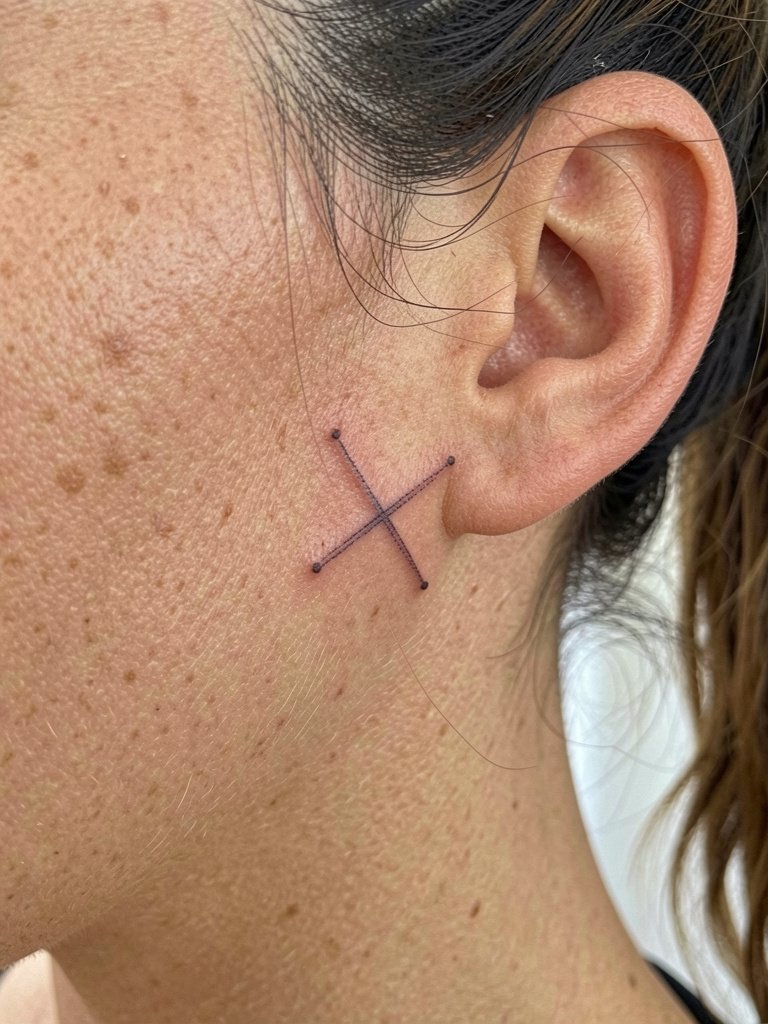
Behind-the-ear pieces show up when you tuck hair up and disappear when you let it down, so plan with both looks in mind. For this design ask for slightly bolder twin lines than your reference so the dots retain crisp separation after a year of washing and hair products. Expect a 15 to 30 minute session and low bleeding pain, but mention scalp product residue that might irritate the area. Pair it with a delicate gold ear cuff while the hair is short, for a clean reveal on show days [https://www.amazon.com/s?k=delicate+gold+ear+cuff&tag=inkalerts-20]. Small note for pros: nape and behind-ear work are best with an artist comfortable placing stencils on curved skin.
2. Pencil-Style Sketch Cross on Inner Forearm
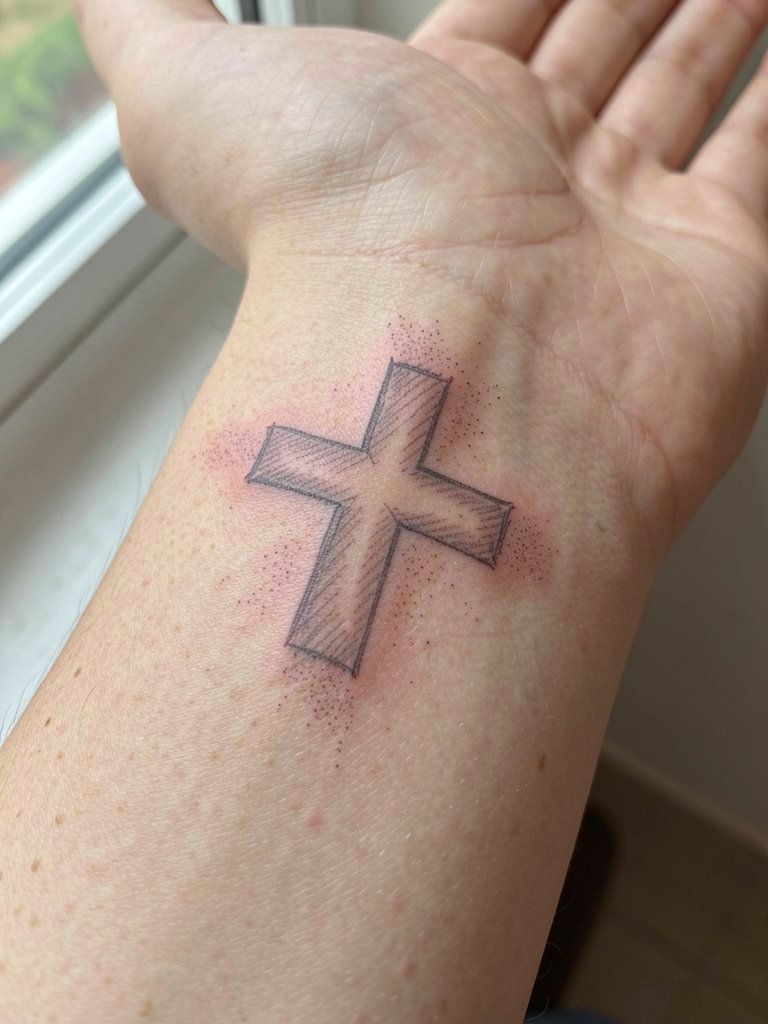
This "wobbly" pencil look reads organic because the imperfections are intentional. When you bring reference, bring two sizes so the artist can show how the sketch reads at three inches versus five inches. The inner forearm holds detail well, so ask for visible hatch marks rather than a flat outline to keep personality after one to two years. Session time runs around 20 to 30 minutes and feels mild. For showing it off, roll up a linen button-down and wear a dainty gold stacked bracelet on the opposite wrist [https://www.amazon.com/s?k=linen+button+down+shirt&tag=inkalerts-20].
3. Ornate Filigree Mini Cross for the Wrist
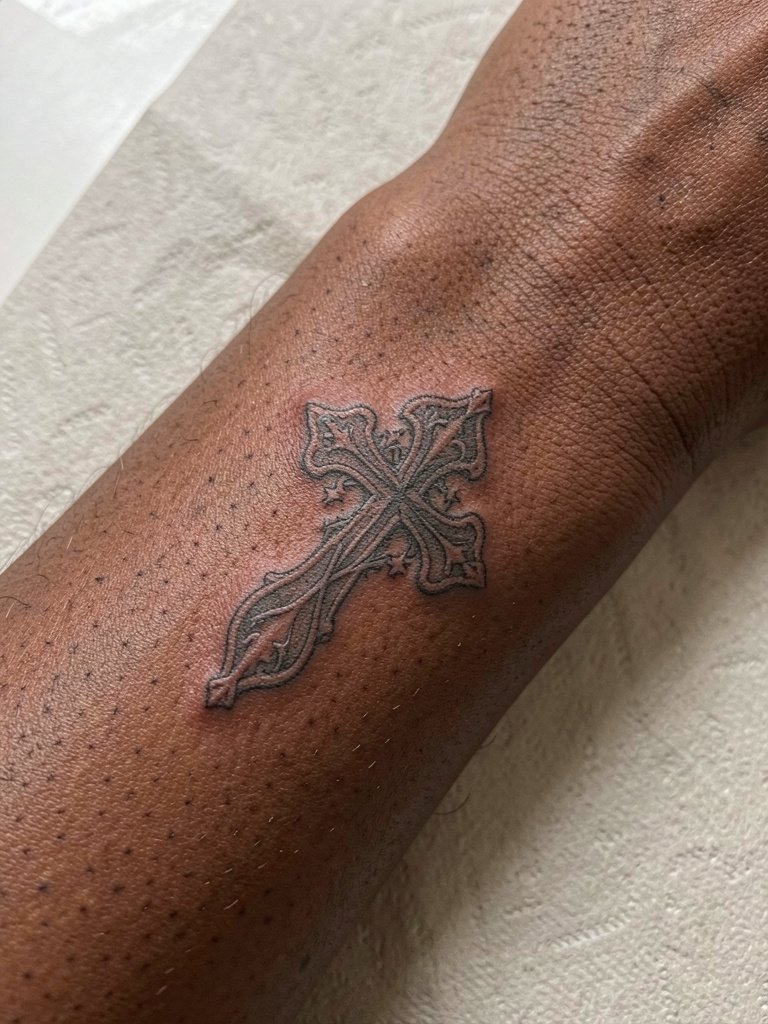
Wrist tattoos can show a lot of personality in a small space, but very fine filigree needs a steady hand. Request a printed stencil that keeps the negative space inside the filigree open so lines do not merge at six months. Common mistake is cramming too much ornament into a one-inch square. Expect 45 to 60 minutes with moderate tenderness on the inner wrist. Style it with a thin chain bracelet on the opposite wrist for balance [https://www.amazon.com/s?k=thin+chain+bracelet+set&tag=inkalerts-20]. Remove watches on session day so the artist has clear access.
4. Geometric 3D Overlap Cross on Inner Upper Arm
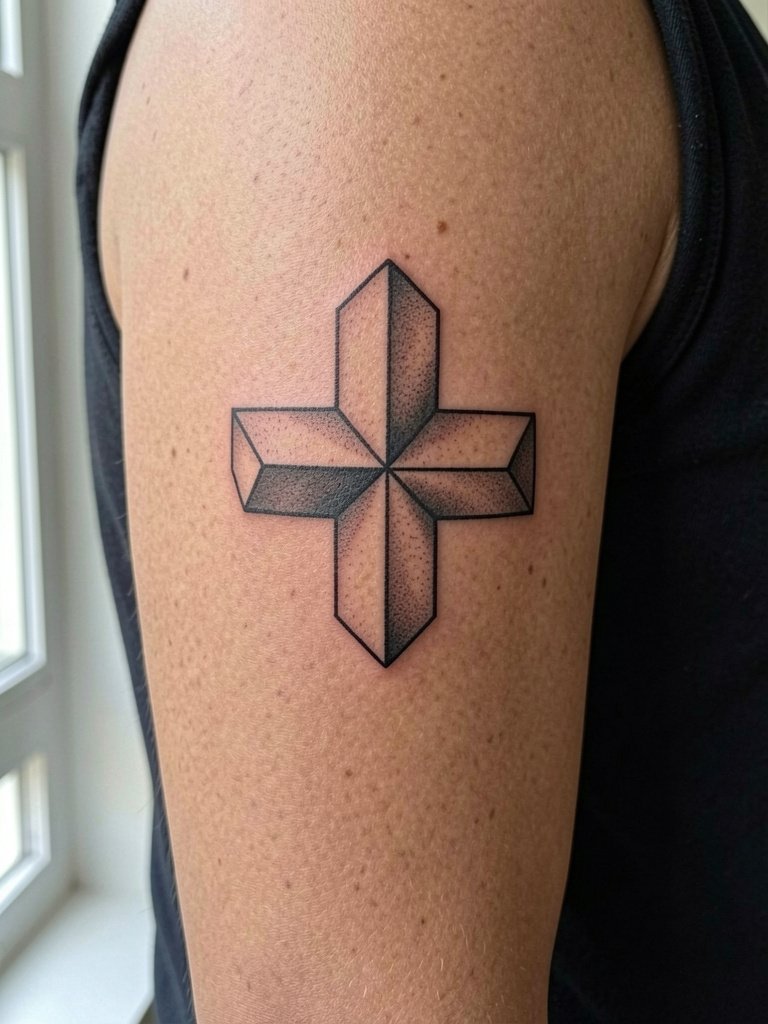
The inner upper arm gives room for geometric shapes to breathe, which makes tiny 3D crosses look intentional instead of cramped. Tell the artist you want extra spacing between planes so the form separates as lines age. A typical session is 30 to 45 minutes and feels like steady pressure. Match the tattoo to sleeveless tops or cropped tanks when you want to show it off [https://www.amazon.com/s?k=sleeveless+cropped+tank+top&tag=inkalerts-20]. Bring a loose tank for the session so sleeves do not rub the site afterward.
5. Watercolor Splatter Cross Outline on the Ribcage
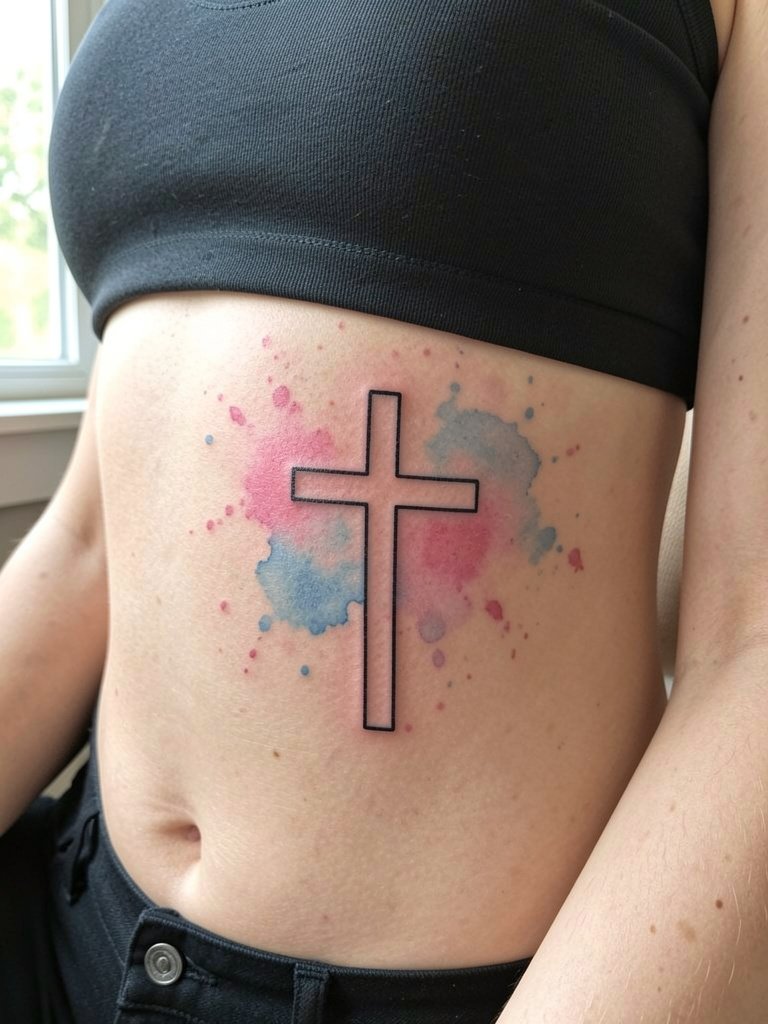
Watercolor around a tiny black outline looks delicate, but artists split on longevity. One camp argues watercolor splatters fade faster on stretchy rib skin and can look washed in a year. The other camp accepts that clients prefer the painterly look despite faster fading and treats the color as intentionally ephemeral. If you want the color to last longer, ask for denser pigment placement near the outline and plan for a touch-up at the one-year mark. Rib sessions can be higher on the pain scale and take 45 to 60 minutes. For show-off outfits choose a high-waisted cropped top so the splatter peeks out [https://www.amazon.com/s?k=high+waisted+cropped+top&tag=inkalerts-20]. Schedule the appointment when you can rest for a few days.
6. Tiny Finger Knuckle Cross
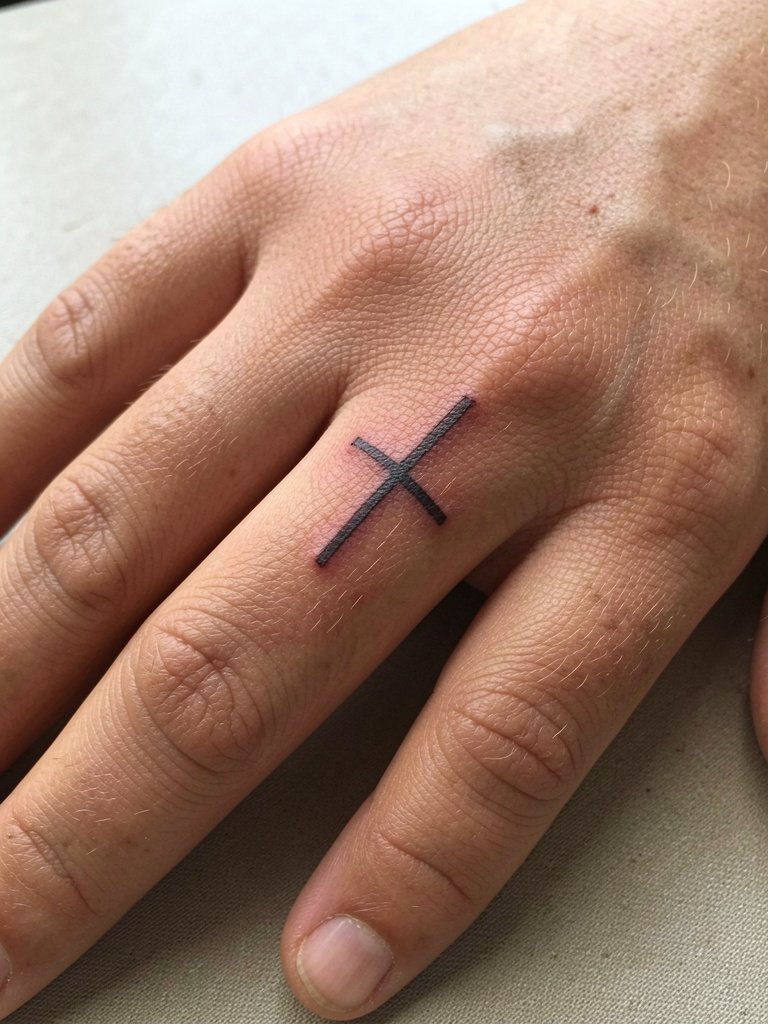
Finger skin sheds quickly, so micro crosses here often fade into ghosting within months unless planned differently. One camp says fine single-needle finger lines blur within one to two years because of constant washing and friction. The other camp says with slightly thicker line weight and deeper initial saturation the work can hold for three years or more. Expect a quick 10 to 20 minute session but accept a likely touch-up schedule of once a year. Keep rings minimal on adjacent fingers and wear thin stackable rings to complement the tiny cross [https://www.amazon.com/s?k=minimal+thin+ring+set&tag=inkalerts-20]. Avoid tight rings on the tattooed finger during the first month.
Session Day Picks
The first six ideas include sensitive spots like the ribcage and fingers, so a few specific items smooth the session and the first healing days.
- Japanese aftercare ointment (search Kirei style). Lighter texture than heavy balms, useful for thin-skin areas where grease can trap moisture.
- Tattoo Warrior balm style. Recommended by some fine-line artists for non-clogging hydration on stretch-prone sites.
- Ink Guard lightweight spray. A spray option to protect watercolor pigments without saturating the skin.
- Specialty tattoo balm like Hustle Butter. Good for thicker areas after the initial scab phase when you need consistent moisture.
- Aquaphor healing ointment. Familiar for many people and handy for short-term occlusion on larger healed surfaces.
7. Chest Center Minimal Cross on the Sternum
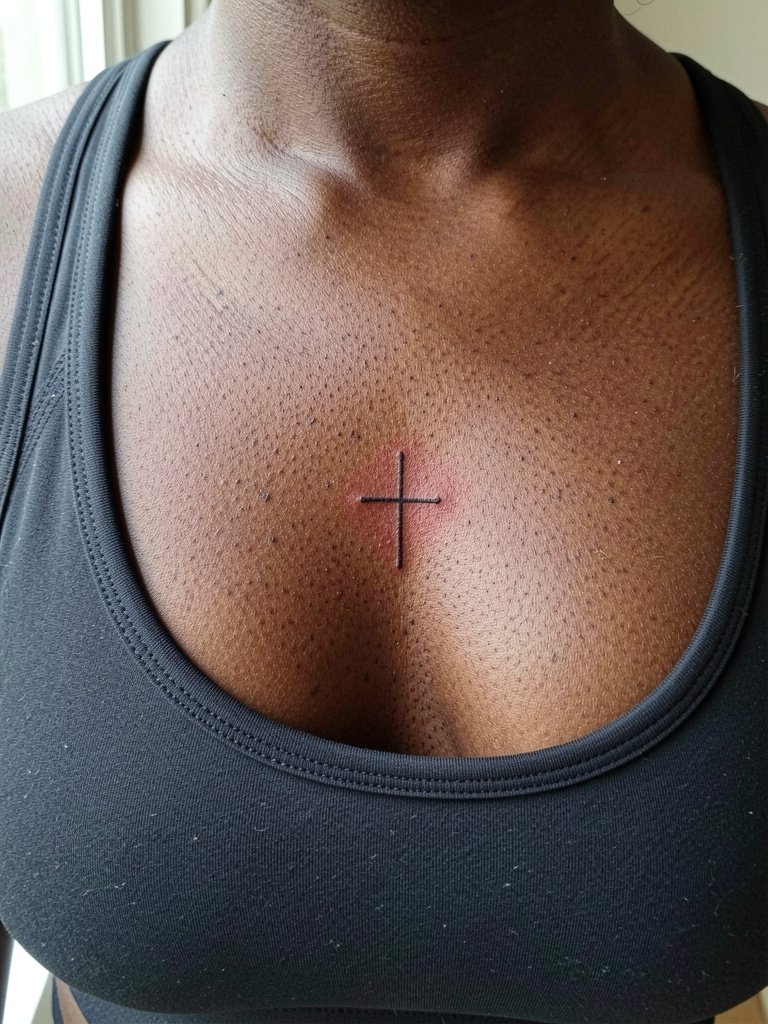
Sternum placements are intimate and read well when centered. Ask the artist to show the stencil with your posture both relaxed and chest-lifted so the vertical spacing suits your natural stance. The session is usually 20 to 30 minutes and can be sensitive near the bone. For outfits, a delicate pendant necklace or open-neck top frames the area without covering the cross [https://www.amazon.com/s?k=delicate+pendant+necklace&tag=inkalerts-20]. Expect to avoid heavy bras or pressure on the site while it heals.
8. Nape Center Cross
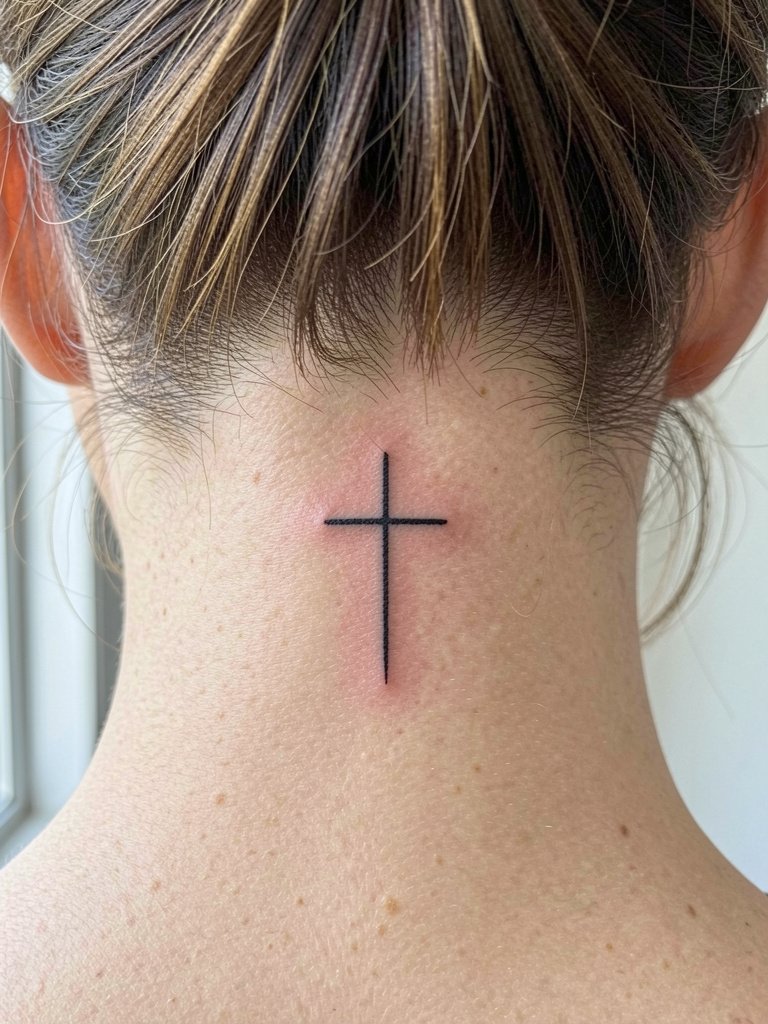
The nape is a quiet place that shows when hair is up. For a small cross, decide if you want thin single-needle elegance or a slightly bolder lash that stands up to sun and hair-product exposure. Sessions last about 20 to 30 minutes and the area tolerates healing well if you avoid tight collars. Show it off with high ponytails or minimalist hair clips like a simple high ponytail holder. If your hair is frequently covered, favor a bolder lineweight for longevity.
9. Upper Bicep Inner Cross
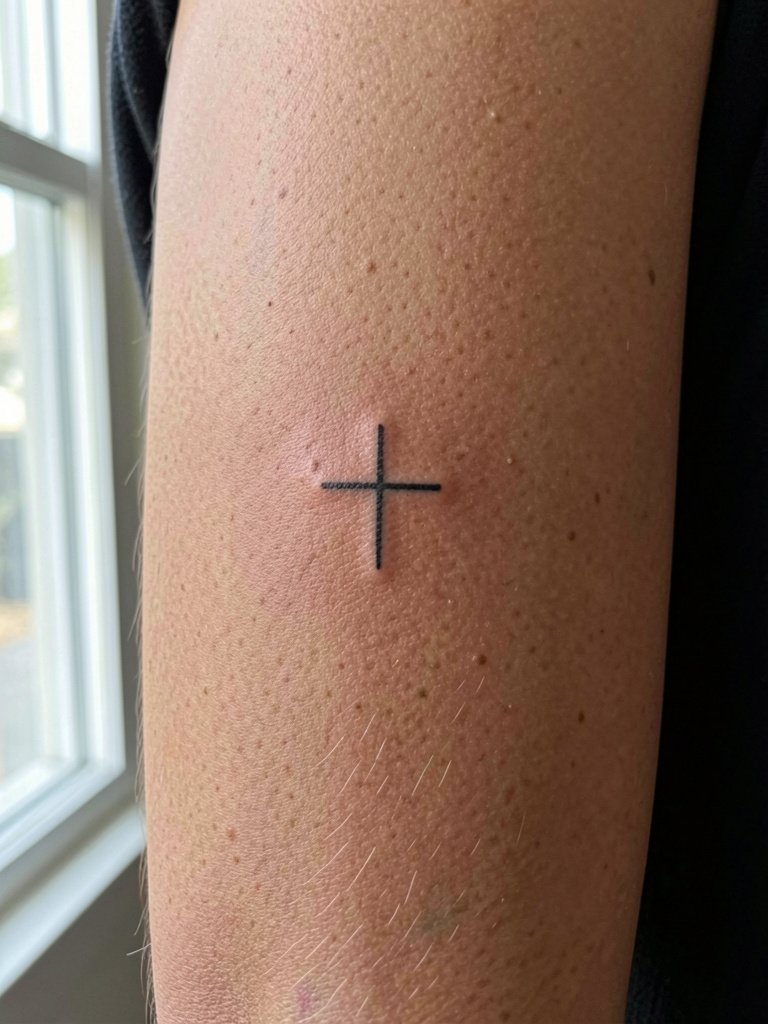
The inner bicep is private and ages pleasantly because the skin is less exposed. Ask the artist to preview how the cross looks with your arm both relaxed and flexed so proportions stay steady. Sessions are about 20 to 30 minutes and feel like moderate pressure. This is a great spot for someone who wants a personal piece that rarely needs touch-ups compared with hand or foot work. Wear a loose short-sleeve top on the day so the sleeve does not press a fresh tattoo.
10. Foot Top Mini Cross
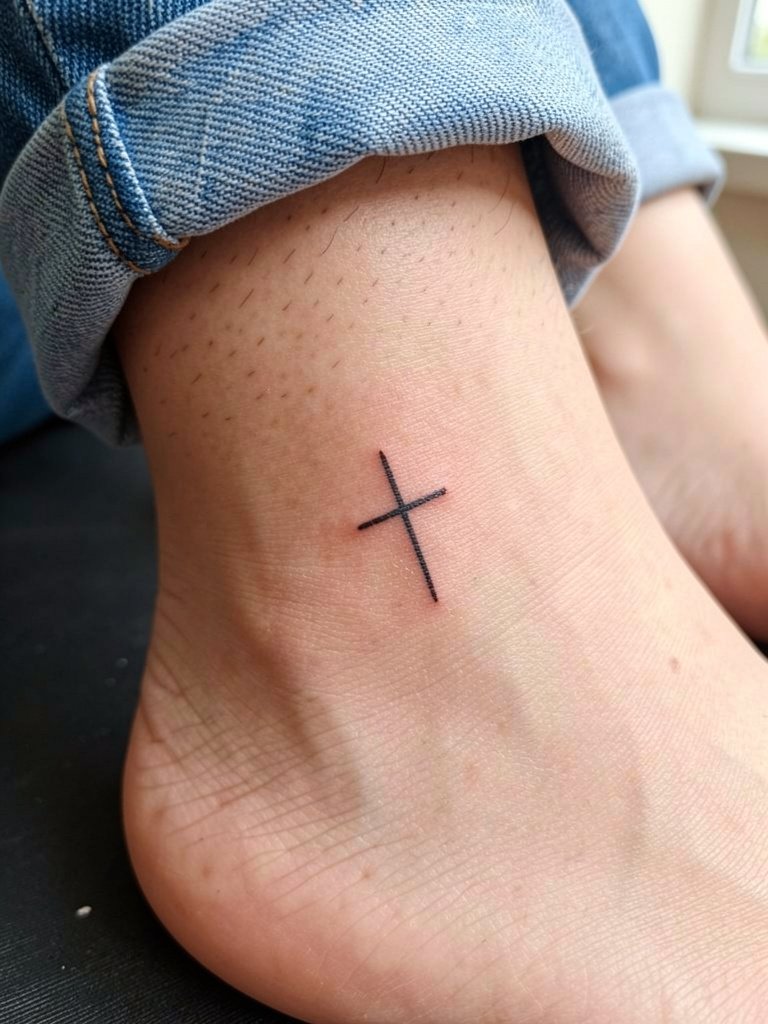
Top-of-foot tattoos look charming with sandals but they require extra care. The skin here is thin and healing is prolonged because of shoe friction. Plan to wear open-toed sandals and avoid tight socks for at least two weeks. Sessions usually take 30 to 40 minutes and can be quite painful. For summer reveals choose open-toe sandals to let the design breathe [https://www.amazon.com/s?k=open+toe+sandals&tag=inkalerts-20]. If you need to schedule in cooler months, plan footwear that keeps the area protected without rubbing.
11. Bold Solid Small Cross on Inner Forearm
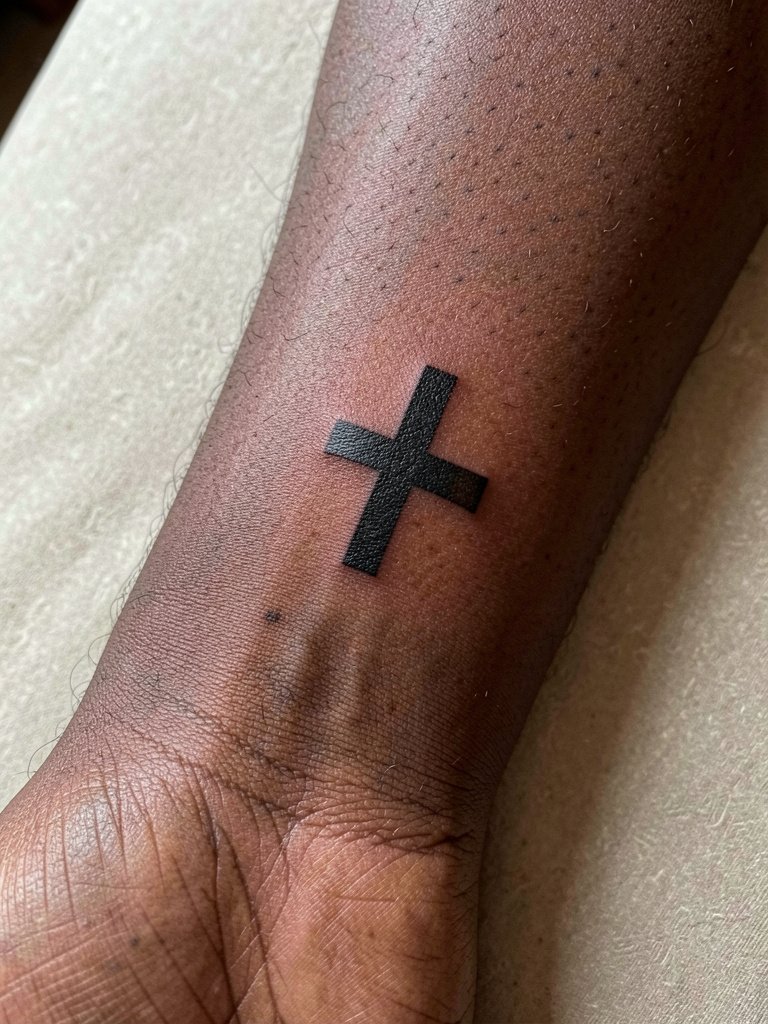
Solid black micro crosses read clearly from a distance and tend to age more predictably than single-needle versions in mobile zones. Ask for sealed edges, where the artist beefs up the junctions slightly to avoid feathering. A 30 minute session gives the artist time to saturate the fill properly. This style pairs with rolled sleeves and minimal wrist jewelry when you want it visible. Bold small crosses can also survive occasional touch-ups without losing silhouette.
12. Inner Wrist Cross
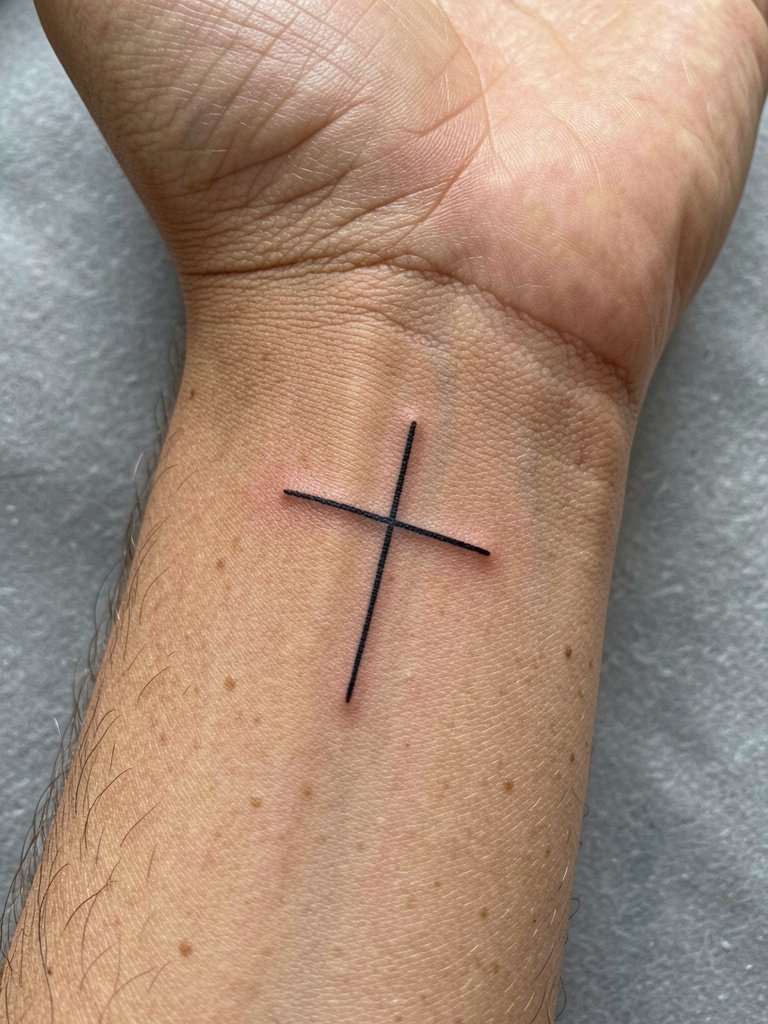
Inner wrist pieces are visible to you and others, so think about daily friction from watches and bracelets. Request a line weight that is slightly bolder than ultra-fine to help maintain contrast on your skin tone. Sessions are quick at about 20 minutes but sensitivity is moderate. Style it with thin chain bracelet stacks on the opposite wrist or choose sleeves that can cover it for formal settings [https://www.amazon.com/s?k=dainty+wrist+bracelet+stack&tag=inkalerts-20]. Remove jewelry during the session so nothing rubs fresh ink.
13. Cross with Tiny Dot Accent on the Collarbone
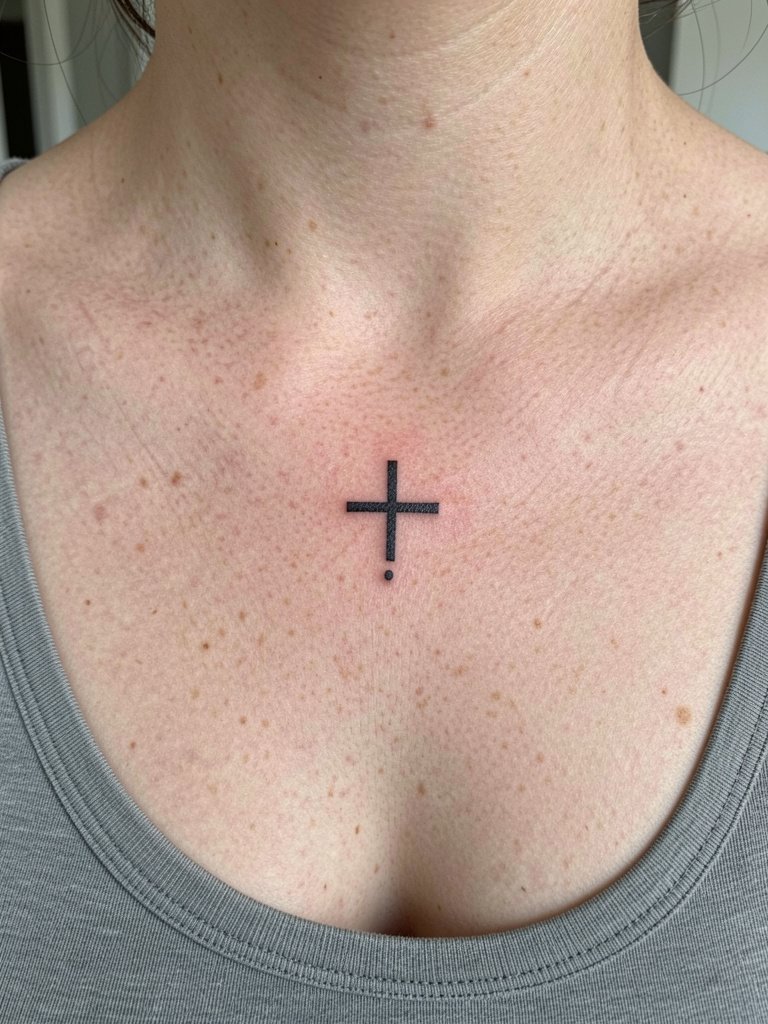
A single dot breaks symmetry and makes a classic motif feel customized. For collarbone placement ask the artist to center the cross relative to your clavicle shape while you are standing naturally. Sessions take about 20 minutes and the area can be tender near the bone. Pair with V-neck or scoop-neck tops and a delicate collarbone necklace to frame the piece [https://www.amazon.com/s?k=v+neck+top&tag=inkalerts-20]. Avoid heavy pendant chains that sit across the tattoo while it heals.
14. Geometric Circle-Enclosed Cross on the Shoulder
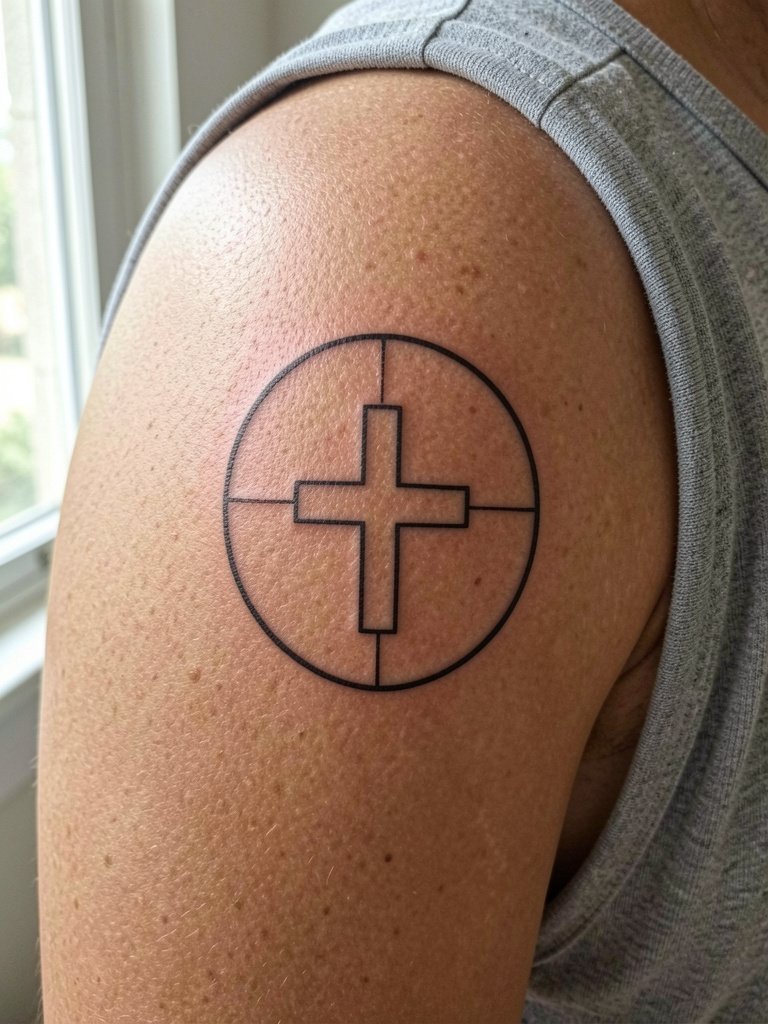
Framed crosses read as intentional geometry, which helps them resist looking like a smudge as lines age. Ask for the circle to be slightly thicker than the cross so the silhouette stays readable in five years. Shoulder sessions take 30 to 40 minutes and feel like moderate vibration. Show it in sleeveless tops or off-shoulder styles for evenings out [https://www.amazon.com/s?k=off+shoulder+top&tag=inkalerts-20]. Avoid tight straps that could rub the spot during the first week.
15. Vine-Integrated Mini Cross on the Inner Thigh
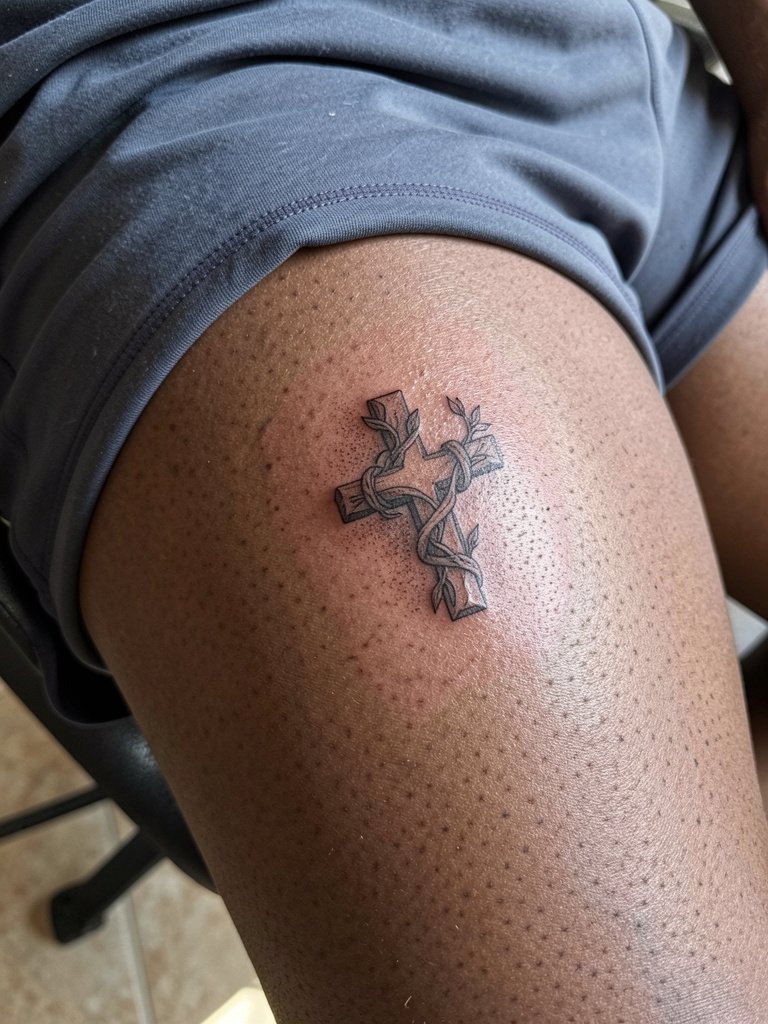
Inner-thigh placements are intimate and require an artist experienced with that anatomy. Ask for the vines to have clear negative space so the botanical lines do not collapse together as the skin shifts. Sessions run about 45 minutes and the area can bruise easily, so plan for comfortable clothing afterward. Because this is a private spot, most people skip visible styling advice and focus on recovery and modest session wear. Expect to avoid tight shorts for two weeks post-session.
16. Ankle Pulse Cross
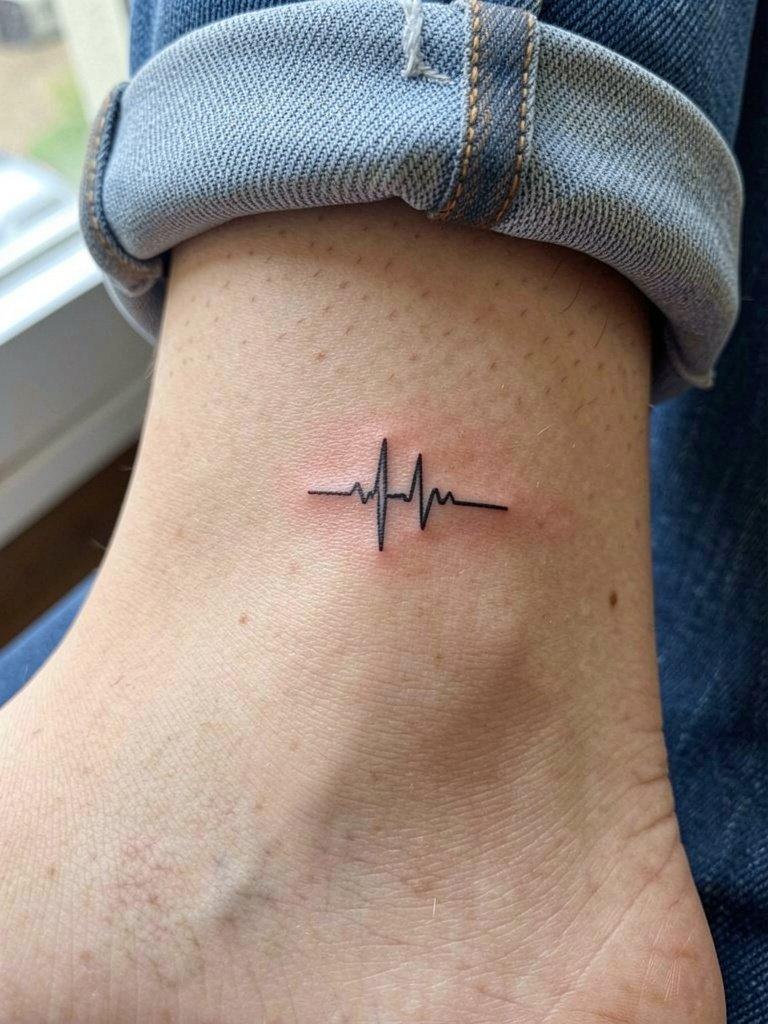
Ankle placements show well with sandals and sit between easy visibility and concealment. For the pulse accent specify how much gap you want between the cross and the heartbeat so the motif does not blur. Expect a 20 to 30 minute session with moderate tenderness near the bone. Pair it with ankle bracelets or open sandals for summer [https://www.amazon.com/s?k=thin+ankle+bracelet&tag=inkalerts-20]. Avoid tight boots during the first week.
17. Dotwork Stipple Mini Cross on the Shoulder Blade
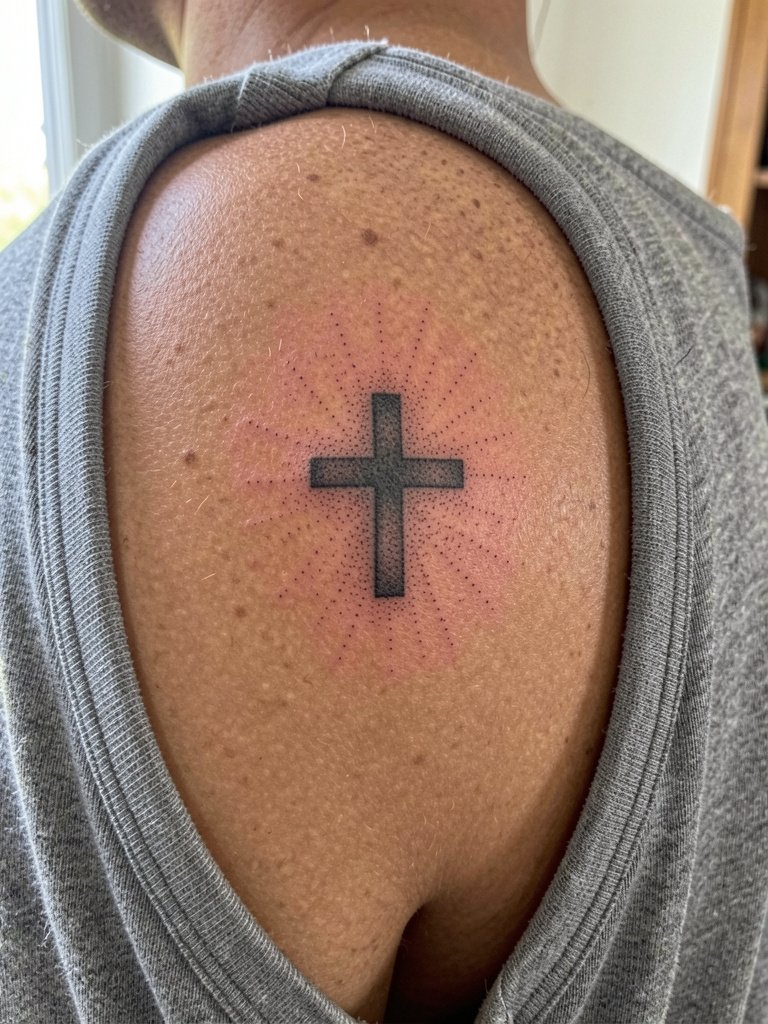
Dotwork gives a soft presence without heavy lines, which is ideal for a subtle shoulder-blade cross. Tell the artist the maximum overall diameter you want so stipple density is planned accordingly. Sessions run around 30 minutes and the spot is low in sensitivity. Off-shoulder garments naturally show the area without risking contact during healing. For long-term contrast ask for slightly higher dot density at the center to retain a focal point.
18. Upper Back Tiny Cross Below the Nape
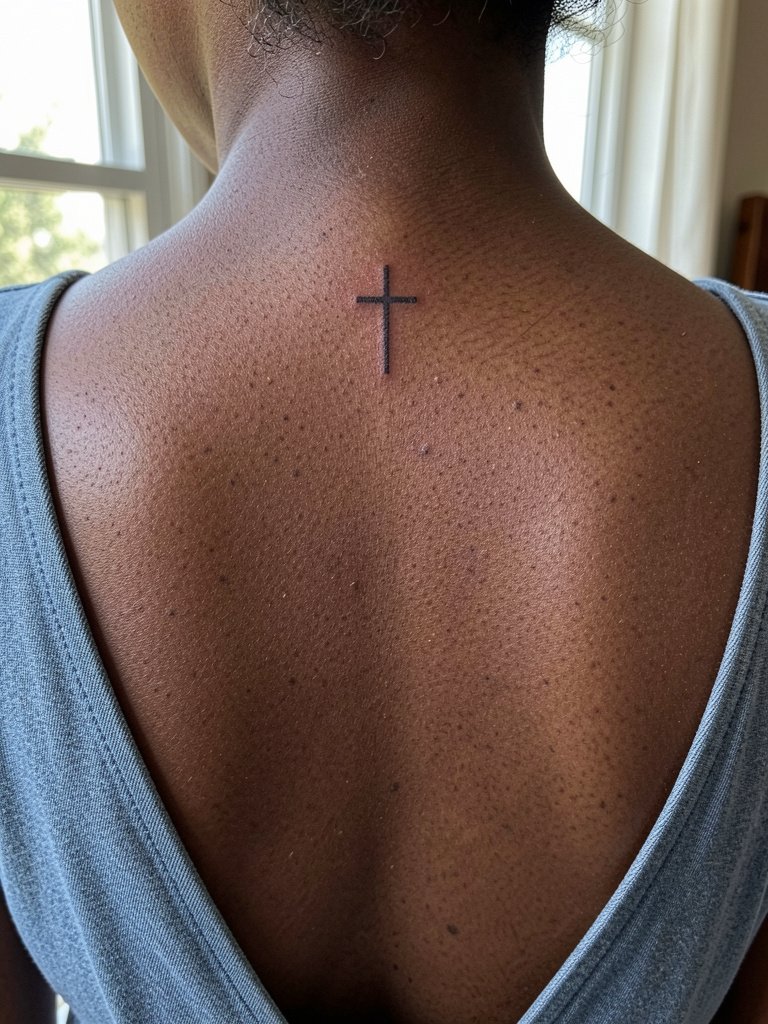
Upper-back micros are easy to conceal and elegant when placed just below the hairline. Have the artist mark the stencil while you are standing so the placement sits where low necklines reveal it. Sessions take 20 to 30 minutes and the area heals quickly. Backless dresses reveal this spot beautifully; try an open-back midi when you want to show it off [https://www.amazon.com/s?k=open+back+midi+dress&tag=inkalerts-20]. Keep in mind sun exposure on the upper back when planning color or fine details.
19. Celtic Knot Micro Cross on the Ring Finger
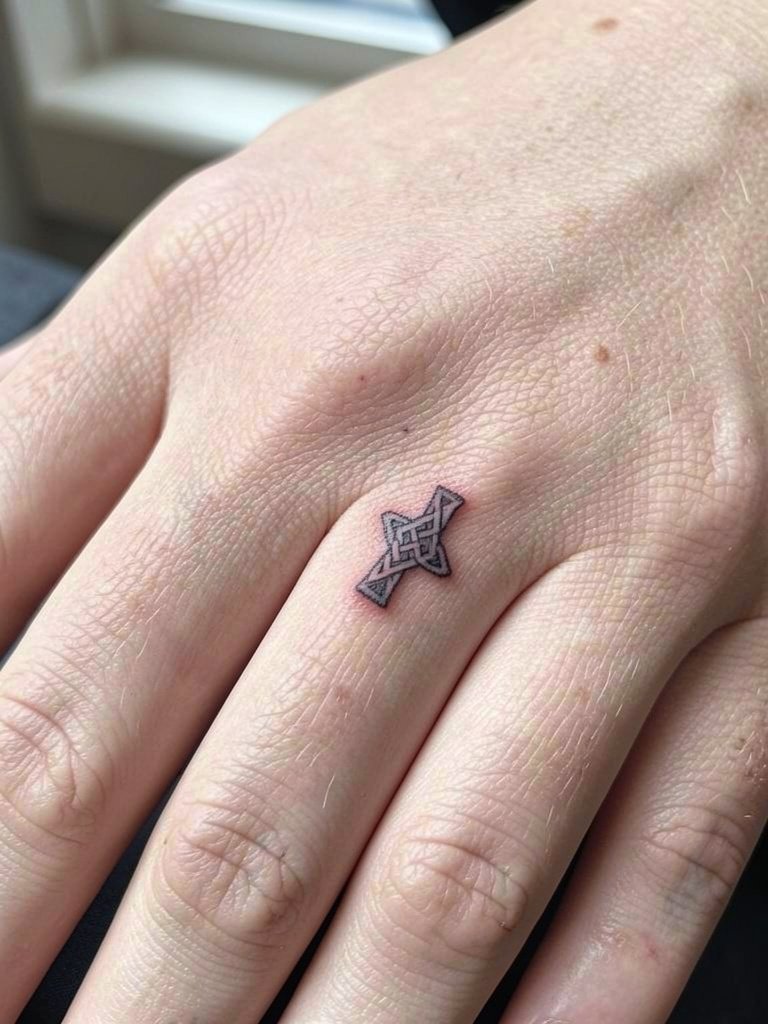
Celtic knots carry cultural history. If you choose knotwork, state the origin respectfully and avoid appropriating symbols tied to a living community. Finger knotwork needs slightly bolder line weight than a standard micro cross to stay legible as the skin moves. Sessions are short, about 15 to 25 minutes, but expect annual touch-ups. Pair with a dainty gold ring set on the adjacent finger rather than stacking heavy bands [https://www.amazon.com/s?k=dainty+gold+ring&tag=inkalerts-20].
20. Drop-Shadow Micro Cross on the Outer Forearm
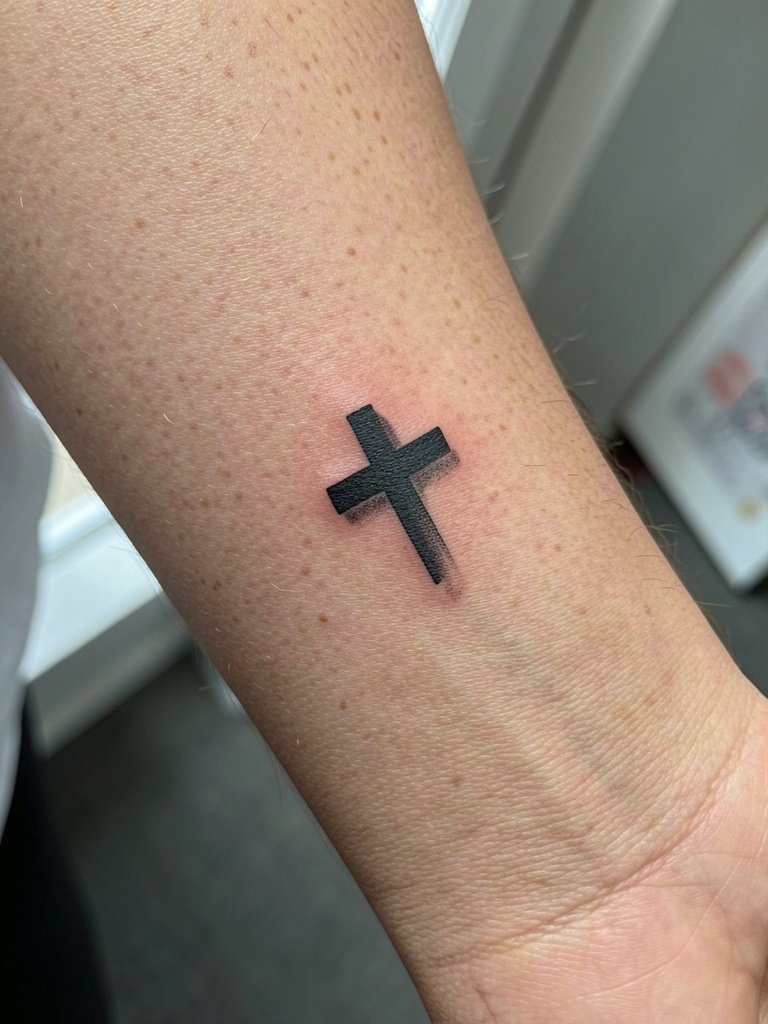
A tiny drop shadow gives a modern touch to a plain cross and reads especially well on the forearm where there is room for the offset. Ask for shadow spacing that mirrors your wrist length so scale looks intentional. Session time is 20 to 30 minutes with low to moderate discomfort. Keep sleeves loose the day of the appointment so the fresh ink is not pressed. This style photographs well in natural light when you wear rolled cuffs.
21. Cross with Roman Numeral Base on the Lower Rib
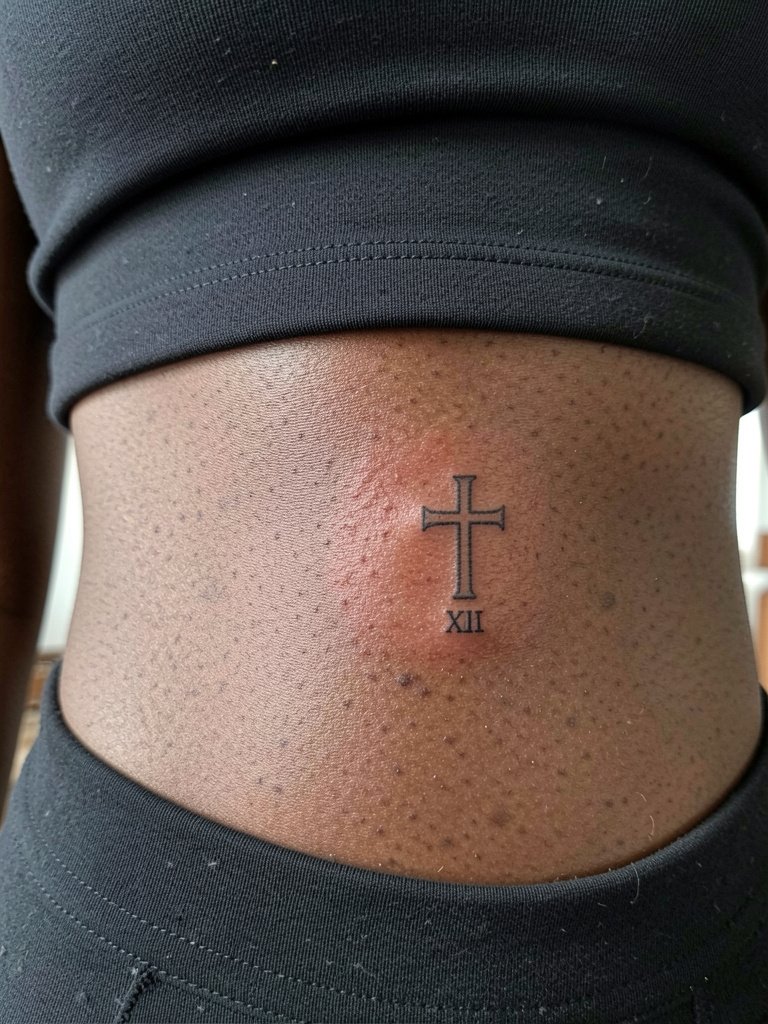
Placing a small cross with Roman numerals on the lower rib creates a discreet commemorative touch. Because rib skin stretches, opt for slightly stronger line weight on the numerals to reduce blur over time. Sessions are around 30 to 45 minutes and can be high on the pain scale. Wear a loose top for session access and expect to avoid tight waistbands while the site settles.
22. Micro Cross with Tiny Star Field on the Calf
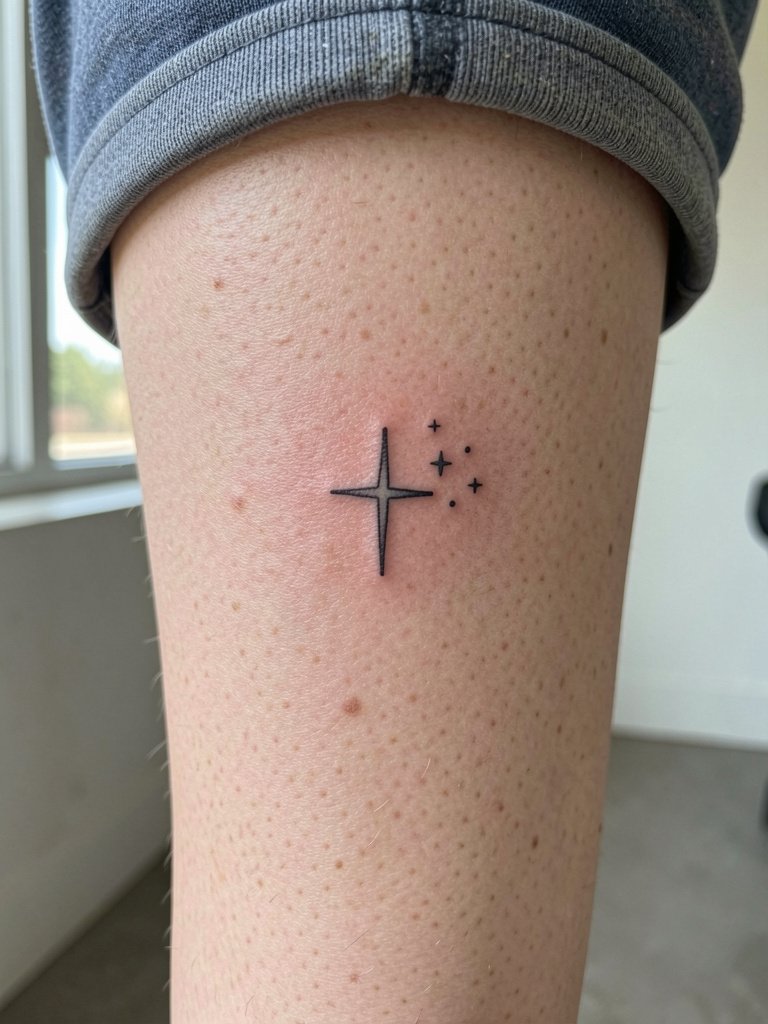
Calf placements handle small compositions well because the skin is stable and visibility is easy. For the star cluster ask for negative space so the dots remain distinct against motion. Sessions take 20 to 30 minutes with moderate discomfort if needles hit denser muscle. Summer shorts frame the calf nicely if you want to show the design. Calf tattoos are lower maintenance compared with hands and feet.
23. Twin-Line Parallel Cross on the Lower Back
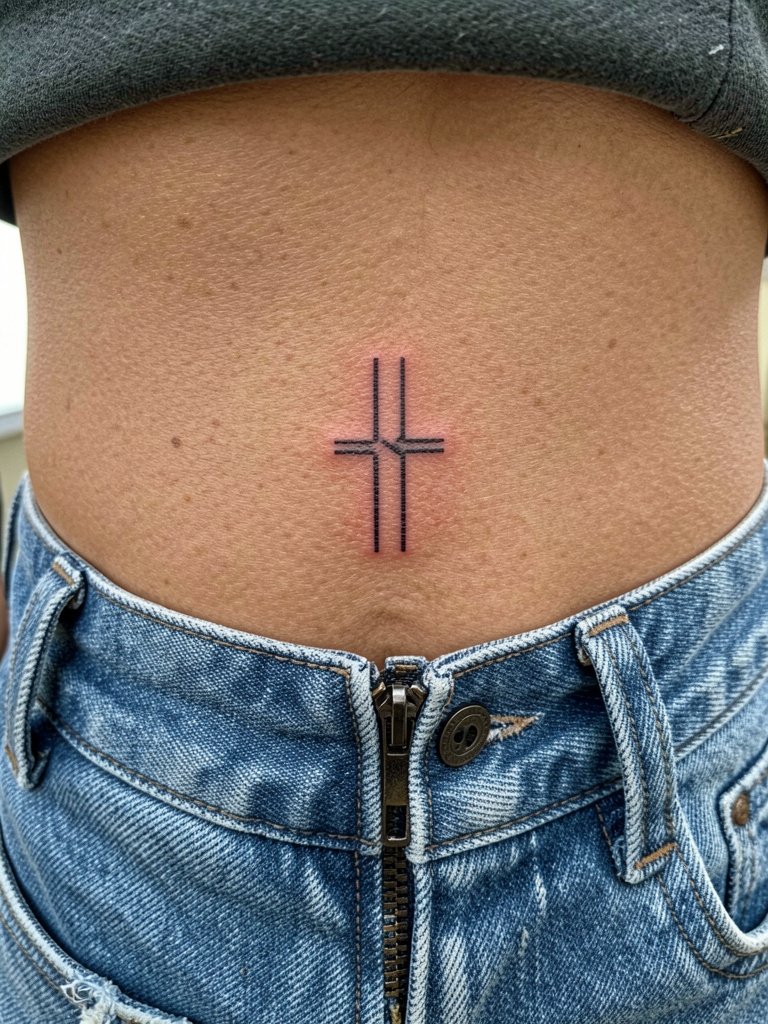
Lower-back micro crosses can be hidden by waistlines and revealed with low-rise styling. Ask the artist to mark the stencil while you stand to ensure the cross sits above the waistband in everyday clothes. Sessions are about 20 to 30 minutes and sensitivity is mild to moderate. For wardrobe, low-rise jeans and cropped tops reveal the placement when you want it visible [https://www.amazon.com/s?k=high+waisted+shorts&tag=inkalerts-20]. Avoid prolonged pressure from waistbands during the first week.
Frequently Asked Questions
Q: How often will a finger cross need a touch-up?
A: Finger cross touch-ups are common. Many people budget for a yearly touch-up because hand skin sheds and fades faster than other areas. Choosing a slightly thicker line and accepting an annual refresh often yields the best long-term look.
Q: Is watercolor on ribs a bad idea if I want it to last?
A: Artists disagree. One camp says watercolor on the ribs fades quickly because the skin stretches and color disperses. Another camp says denser pigment and careful placement can extend visible color, and some clients accept fading as part of the aesthetic. If longevity matters, favor denser color near outlines and plan for a one-year touch-up.
Q: Where can I find healed small-cross portfolios and local artists without naming specific shops?
A: Search hashtags like #cross tattoo, #smallcross, #finelinecross, and #minimalcross on Instagram and TikTok while using your city name as a filter. Tattoodo and the Inked App allow keyword and location filters with portfolio images. Reddit threads in r/tattoos and r/tattooadvice can point to healed examples across skin tones.
Q: What should I wear to a rib or sternum session?
A: For rib sessions wear a loose button-down or a cropped top so the artist can access the side torso without you fully disrobing. For sternum work a strapless or button-down top is simplest. Bring clothes you can sleep in comfortably, and avoid tight waistbands for the first week.
Q: How do I make a fine-line cross read on darker skin?
A: On darker tones ask for slightly bolder line weight and strong black ink saturation so the silhouette keeps contrast in photos and in person. Avoid relying on pastel watercolor for micro details; blackwork retains clarity better on deeper tones.
Q: Can I still tip 15 to 25% for a tiny piece?
A: Tipping practices vary. Many people tip within the 15 to 25 percent range even for small pieces because the work requires skill and studio overhead is fixed. Consider the shop minimum when budgeting and factor tip into that total.