
Bold black crosses and heavy neo-traditional work keep their punch long after trendy watercolor and hairline scripts soften. Men asking for crosses want a symbol that reads clearly at six months and still reads clearly at six years. Below you will find cross designs that consider placement, how they age, what to bring to the chair, and how to show them off.
1. Three Crosses on the Chest for Wide Canvas
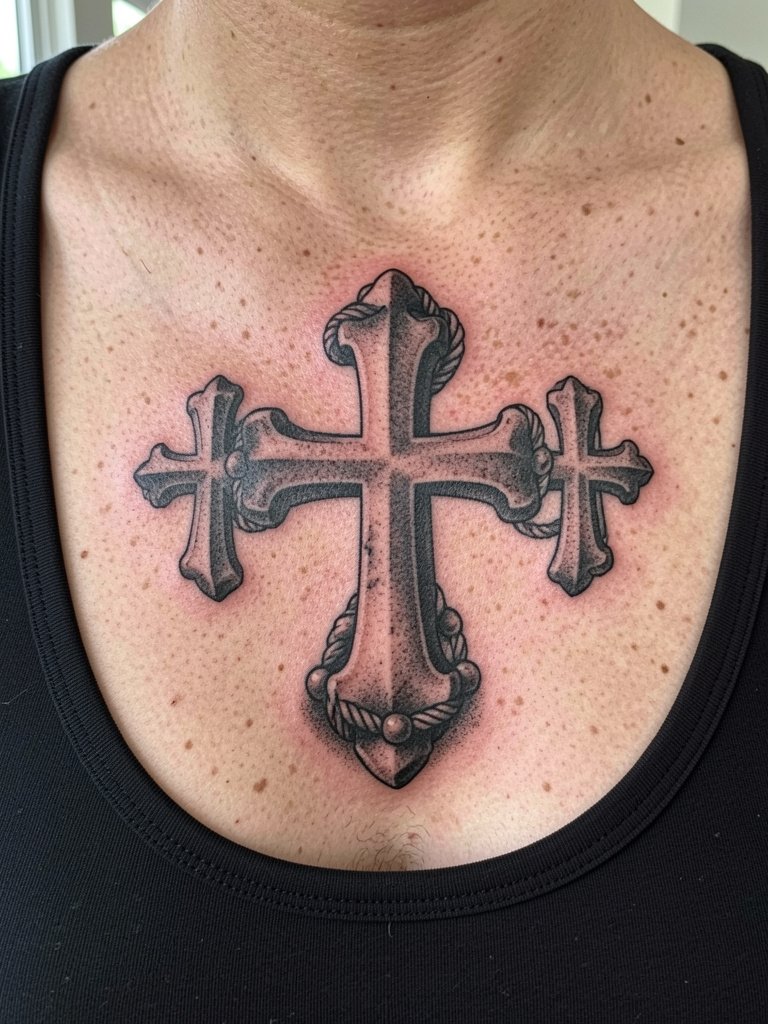
A three-cross chest piece plays to scale. On a broad pectoral canvas the middle cross breathes while the flanking crosses give narrative weight. For consultations bring photos that show the chest at the exact size you want, and ask your artist to mock the negative space over the muscle grain so the piece reads while you move. Expect a multi-hour session that feels like steady pressure rather than sharp stabs. A common mistake is packing detail too tightly near the sternum; leave room for shading to avoid early merge. For showing off, open-collar linen shirts frame this placement well, try open-collar linen shirt men for the look.
2. Tribal Fusion Cross on Outer Forearm
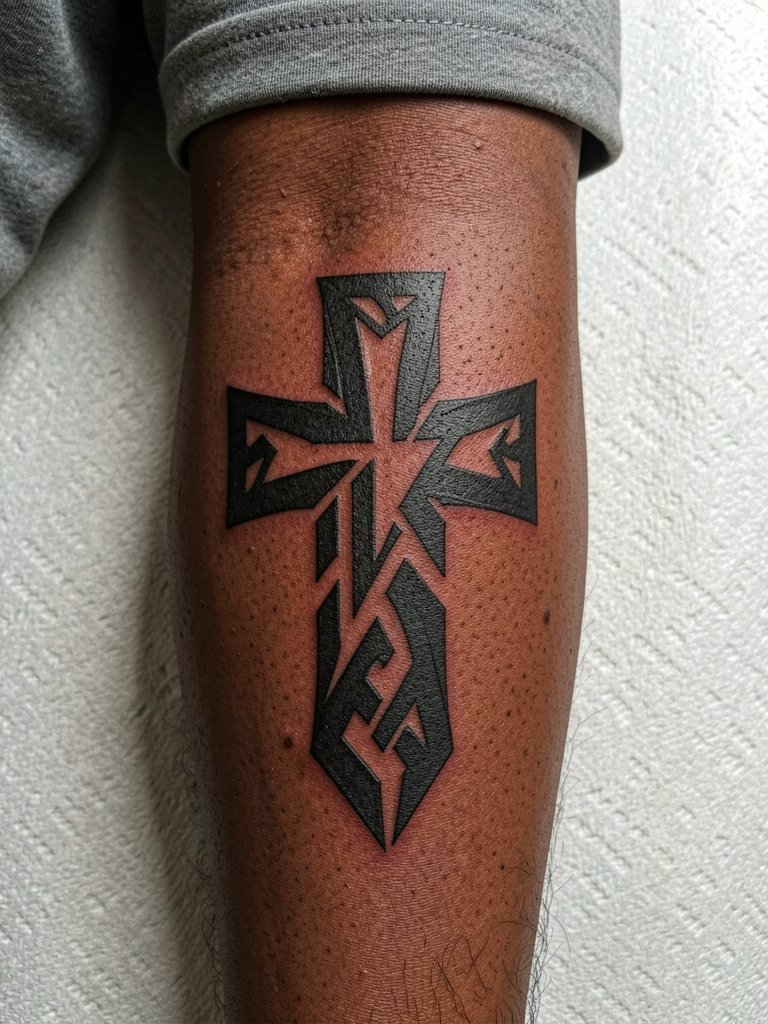
Tribal fusion crosses use bold fills so they stay crisp on active forearms. I recommend a thicker line weight than a minimalist sketch because the palm-down surface sees constant friction. During the consult, bring examples of negative space work and request the artist show how much solid fill they will need to keep contrast on darker tones. Session time is typically one long pass for medium sizes, and the sensation is rolling pressure with concentrated spots near the wrist. Roll cuffs or a short-sleeve denim that you can push back pairs perfectly. Try rolled sleeve denim shirt men for show-off styling.
3. Typographic Faith Cross on Inner Forearm
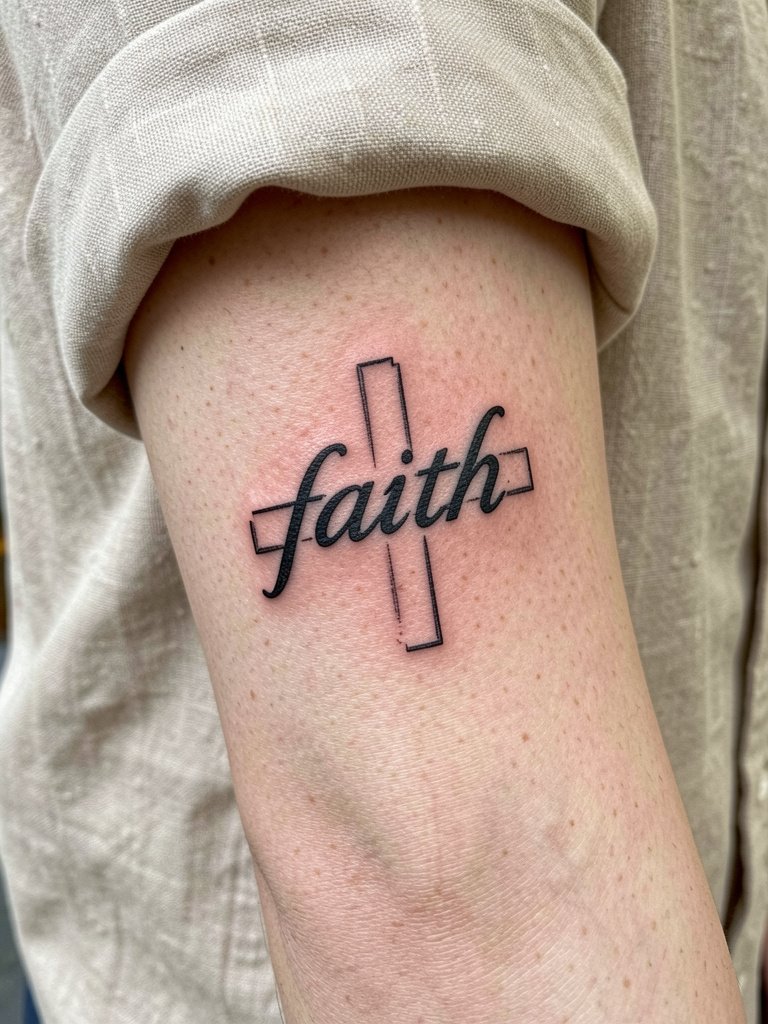
A typographic cross acts like a daily anchor when placed on the palm-up forearm. For this one, ask for single-needle script but with line weight nudged up a hair so the letters do not blur and fill in after a year. Bring two reference sizes so the artist can show how the word reads at three inches versus five. The inner forearm is forgiving for fine detail, but smaller scripts can soften by year three, so plan touch-up windows in advance. This placement looks tidy with rolled cuffs and a stacked bracelet on the opposite wrist. Pair it with beige linen button down shirt men to keep the focus on the linework.
4. Gothic Armor Cross on Upper Back
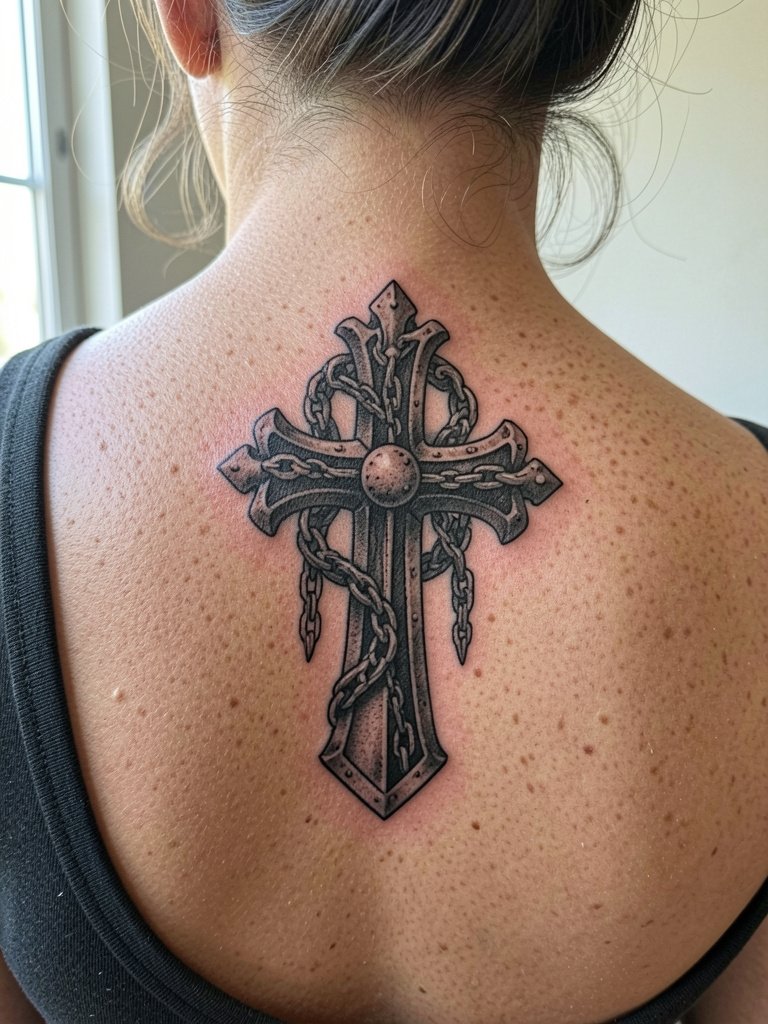
Gothic armor crosses read like spiritual shields across the upper back. On this placement heavier saturation and deep filling prevent early softening of the metalwork details. In the consult, specify the amount of stone texture you want and request healed photos of similar fills from the artist. The session can take multiple passes with mid-session breaks, and the upper back feels like a long pressure with localized soreness along the spine. For evenings out, an open-back linen or sleeveless top complements the piece. Try open back linen shirt men for the show-off look.
5. Rose Cross Intertwining on Upper Arm
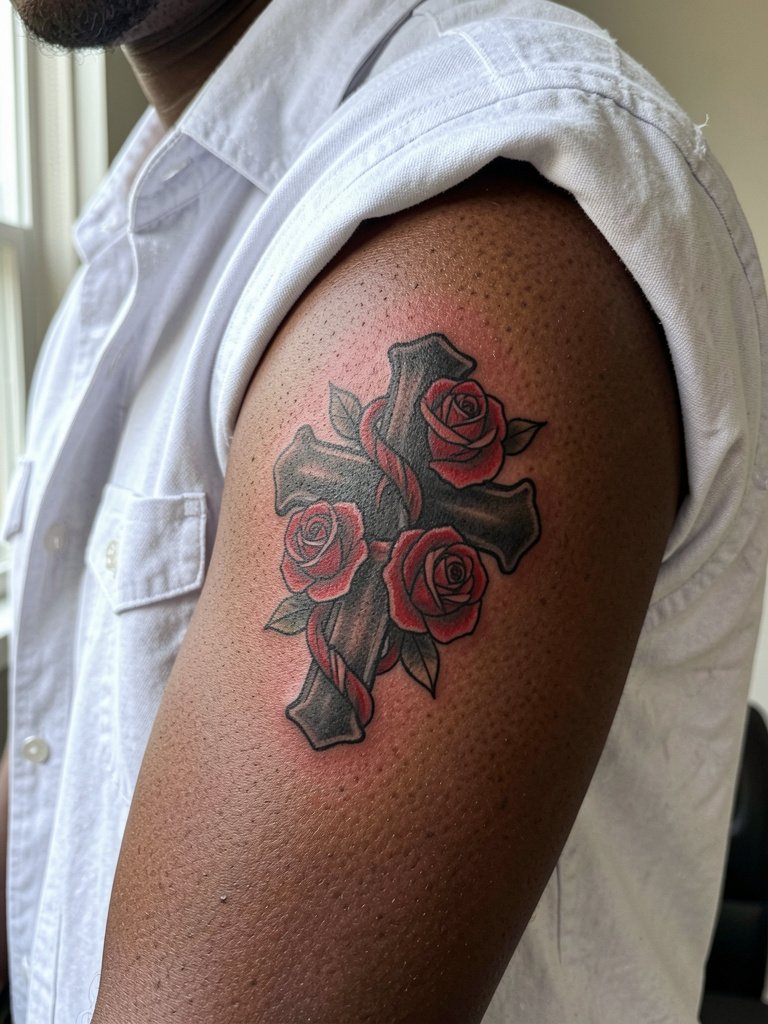
A rose-wrapped cross softens harsh lines while keeping readable contrast. On the lateral bicep the floral forms sit naturally with the muscle, so ask the artist to orient petals along the muscle grain for movement. The usual mistake is over-detailing petals at tiny scales, which ends up muddying after a year. This style pairs well with open-collar cotton shirts and a bronze cuff on the opposite wrist. For appointments, wear a loose t-shirt or tank so the artist can access the whole upper arm. Try cotton open collar shirt men sand as a show-off option.
6. Geometric Cross Integration for Inner Forearm or Wrist
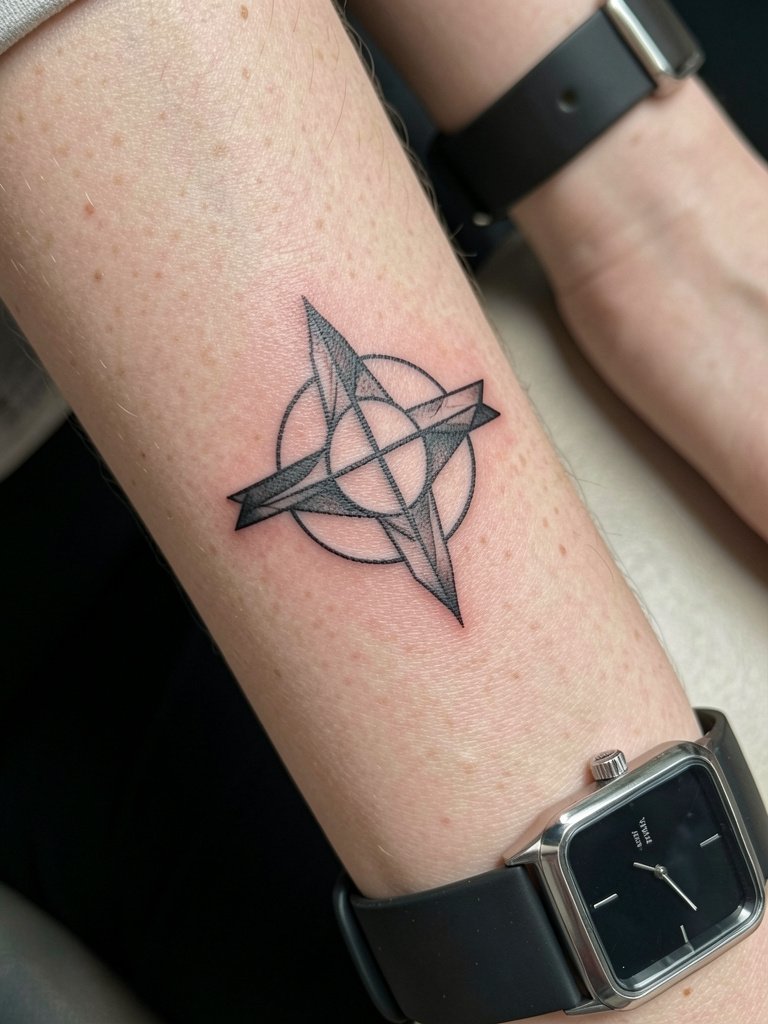
Geometric crosses need space so lines do not crowd. On the inner forearm a 4–6 inch layout gives negative space room to hold, while the wrist benefits from a smaller, simplified cross. Bring the exact scale you want and ask the artist to show how negative space will age at different sizes. Expect a one-hour to two-hour session for medium sizes with a low but steady ache on the wrist. Style it with a minimalist watch on the opposite wrist. Consider minimalist watch men to balance the geometry.
Pre-Session Essentials
The first six ideas vary from inner forearm scripts to heavy chest pieces, so a few well-chosen items smooth the session and the first healing week.
-
Mad Rabbit Tattoo Balm. An indie balm used by many for the final healing stage that feels less greasy while keeping ink saturated.
-
Japanese Kinu Rose Oil. Lightweight post-healing oil that artists and collectors use for faded color touch-ups and a subtle sheen.
-
Australian Aftercare Serum. A thinner formula some people prefer in humid months to avoid heavy occlusion on fresh skin.
-
Dotwork Healing Pen. Useful for precise moisturizing around small crosses so you do not over-apply product on tiny lines.
-
Hustle Butter. A widely used specialty balm in the chair and for first-week hydration that many clients find less greasy than petroleum-based ointments.
7. Dark Gothic Cross with Thorns for Ribcage
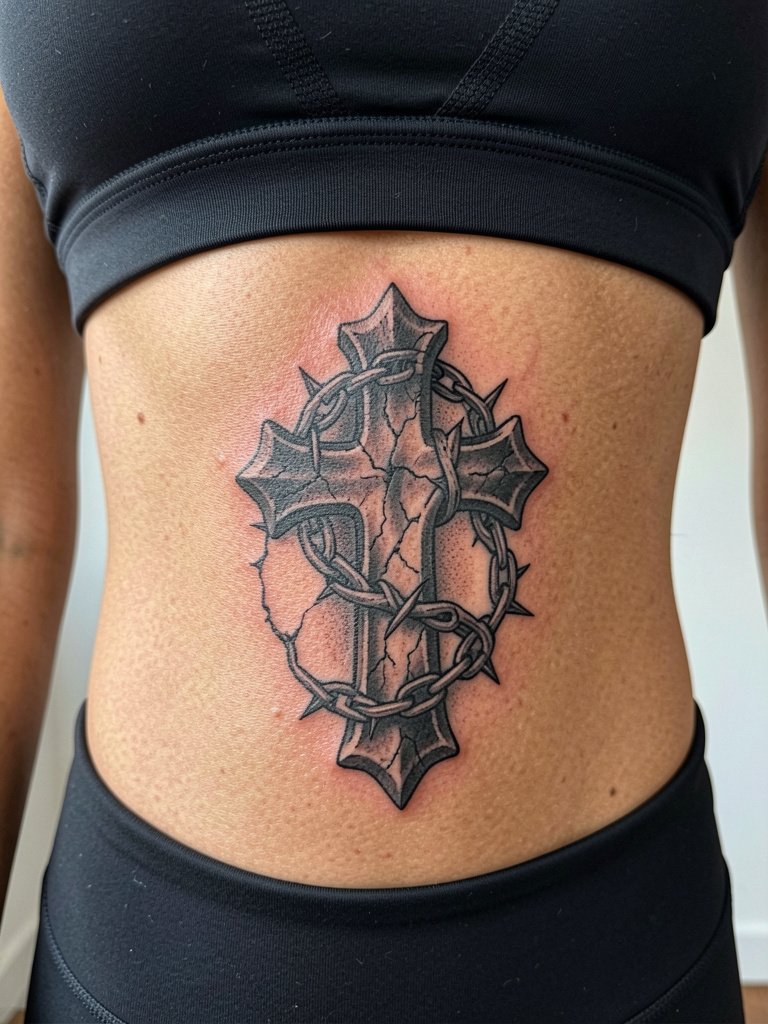
Ribcage pieces show drama and also present a real longevity debate. One camp argues fine line on ribs blurs within two years because the skin stretches and shifts constantly, especially near the lower rib and undergarment pressure. The other camp says fine line settles fine with precise needle depth and slightly wider spacing, and they point to healed portfolios to support that claim. For rib work I favor stronger line weight and deliberate spacing so the thorn detail keeps contrast over years. Expect higher pain on the ribs and multiple short passes, and wear a loose button-down or tank for the session.
8. Watercolor Cross with Splashed Background on Outer Forearm
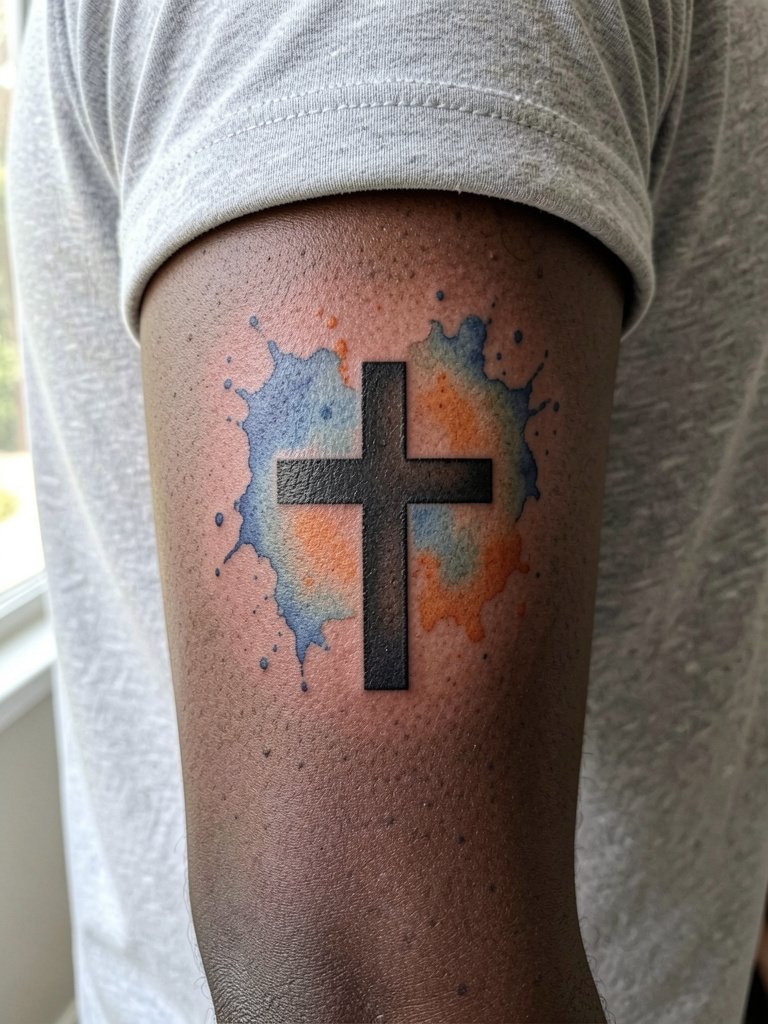
A watercolor cross reads best when the cross stays solid and the color is background accent. The common mistake is making the color the main element on darker skin or placing thin washes where saturation will drop quickly. If you want watercolor, ask for saturated edges around the cross so the color retains shape, and plan for a touch-up timeline in the first 12–18 months. Healing on the outer forearm is straightforward with light stinging in the first 48 hours. For a casual show-off, roll sleeves on a navy denim or matte black watch on the opposite wrist. Consider short sleeve black shirt men to highlight the contrast.
9. Minimalist Outline Cross for Wrist or Inner Forearm
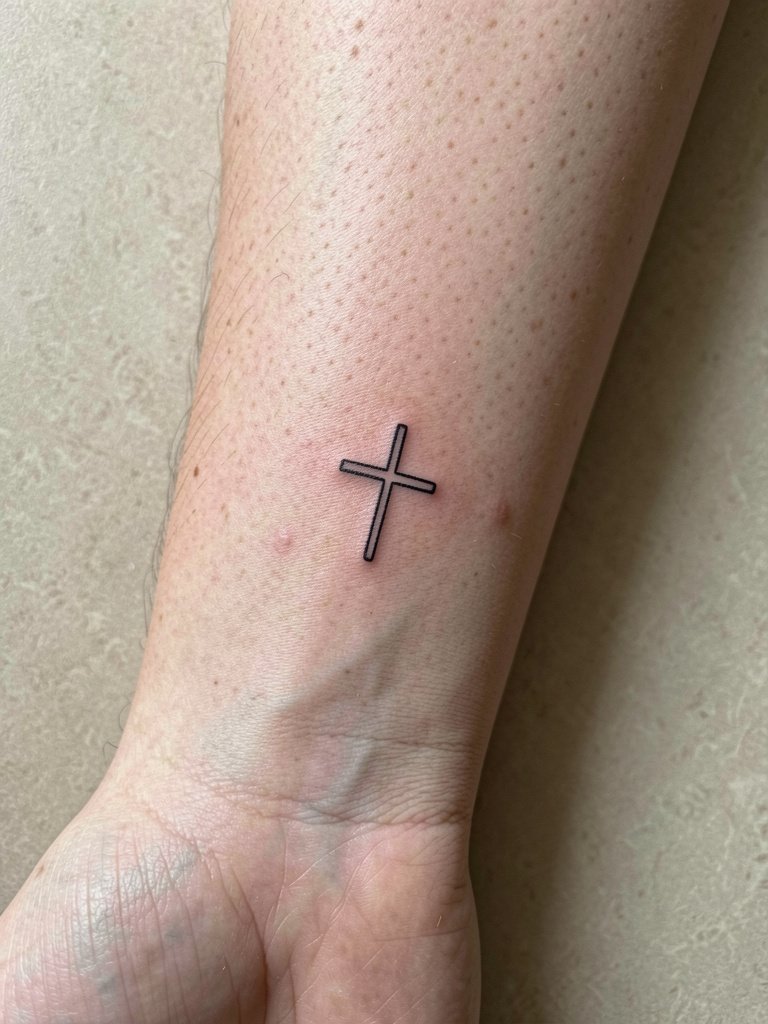
Minimalist wrist crosses are a popular first tattoo, but tiny single-needle work has limits. The wrist eats ultra-fine detail over a couple of years, so a common error is going too thin. Ask the artist for a single-needle script but with slightly increased spacing and a hair more weight so the cross reads in photos and daily life. Session is short with a sharp, quick sting that calms rapidly. Style this with a thin chain bracelet or a minimalist watch on the opposite wrist. Try thin chain bracelet set men to complement the look.
10. Ornamental Mandala Cross Across Upper Back
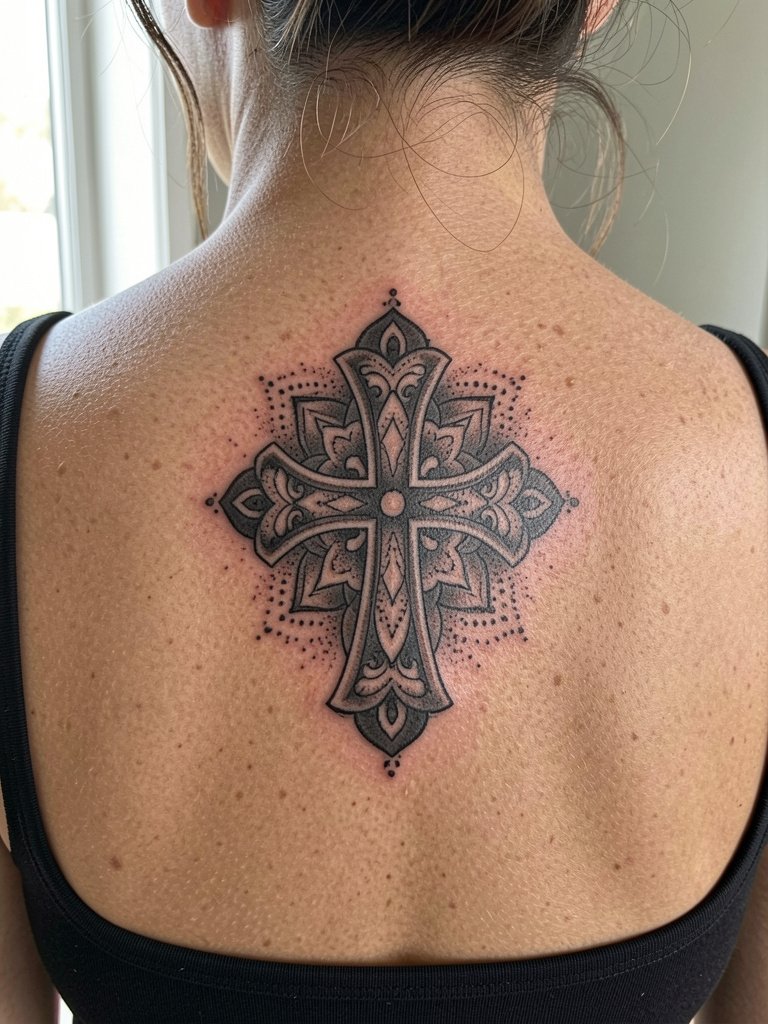
Mandala crosses reward patience and a clean stencil. The upper back gives room for radial patterns, but the mistake is compressing too many dotwork rings into a small area. Ask the artist to space dots so stipple shading keeps contrast by year three. Sessions are longer and require breaks, and the back feels more like a deep pressure than sharp localized pain. For evenings wear sleeveless or open-back shirts to show the symmetry. Try layered leather cord necklace as a complementary accessory.
11. Skull-and-Cross Fusion on Chest or Forearm
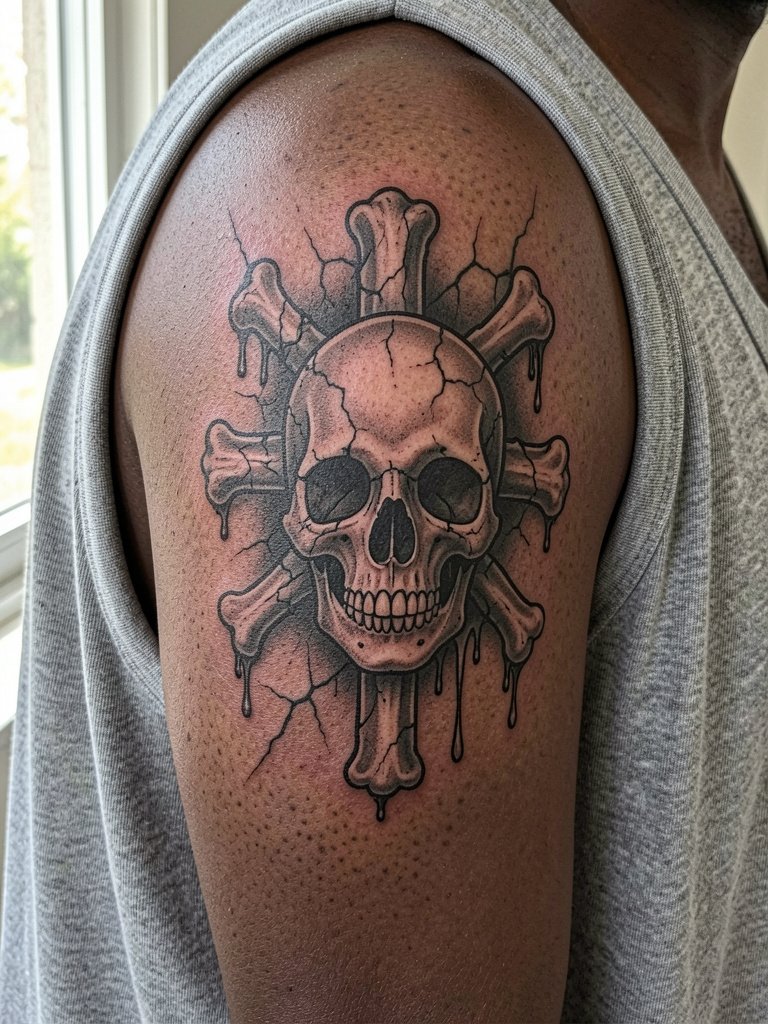
Skull-and-cross hybrids work as bold central pieces or as forearm backdrops. When placed on the chest, the skull details need heavier contrast to read at distance. In the consult show the artist any cracked texture you like and request gritty shading rather than soft blur. Chest sessions are longer with steady pressure; forearm versions are shorter but see more sunlight, which affects later fading. Pair the chest piece with open-collar shirts and avoid tight compression that flattens the detail. Try open collar linen shirt men for a balanced look.
12. Anchor Cross Hybrid on Outer Forearm
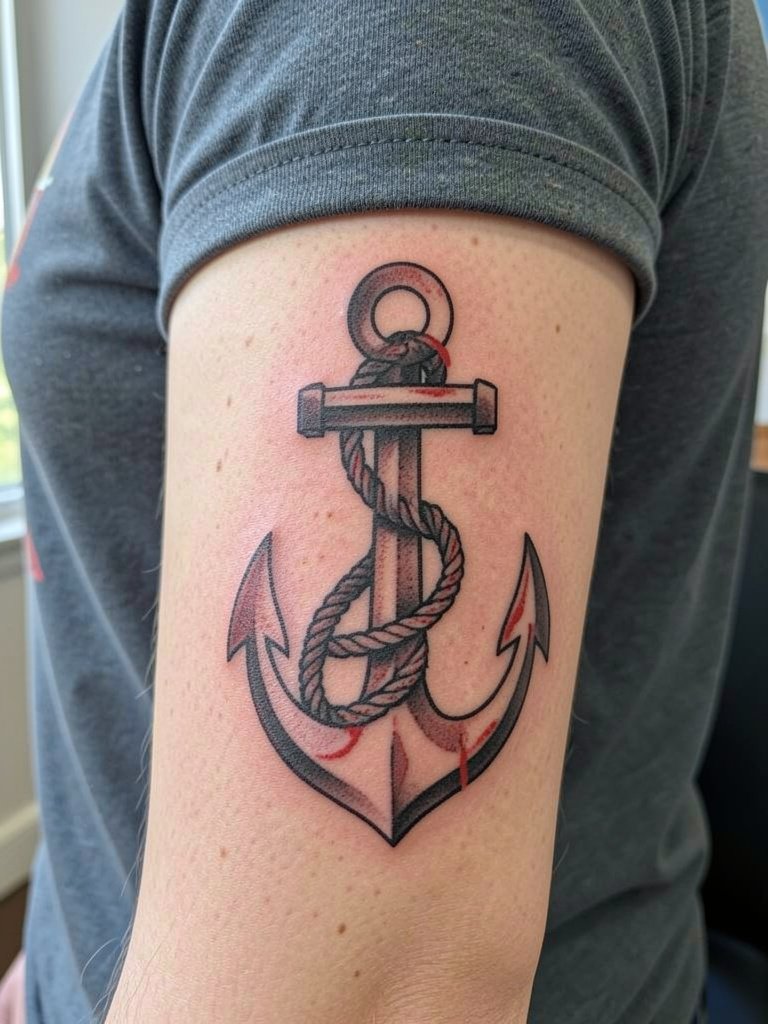
An anchor-cross blends nautical stability with faith symbolism. On the outer forearm thick lines and rope texture prevent early softening. Bring reference images showing rope thickness and ask the artist to map the rope around the anchor at full scale so the knot reads long term. A mid-length session feels like rolling pressure near the wrist. Roll your sleeves to show this design; a matte black watch on the opposite wrist balances the nautical vibe. Consider matte black wristwatch men for finishing touches.
13. Celtic Knot Cross on Upper Back or Chest
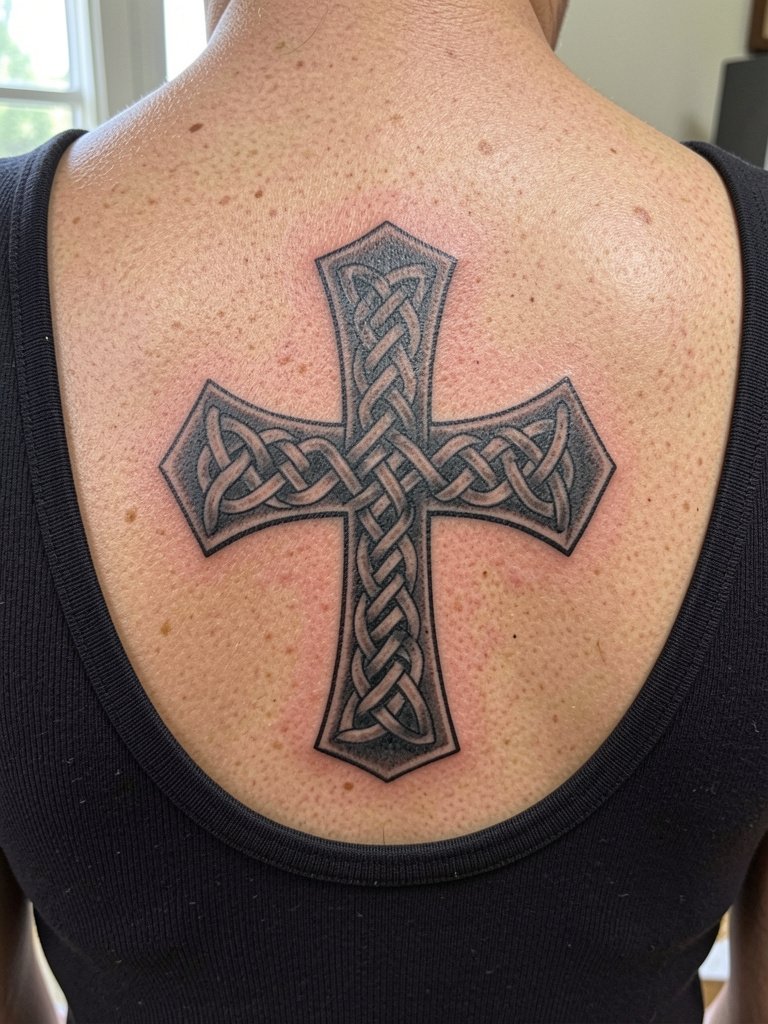
Celtic knotwork needs continuous flow to read. Respect the cultural origin by asking about traditional knot patterns and confirming that the symbols are used thoughtfully. The key technical ask is to keep intersections clean and slightly bolder so the loops do not merge over time. Expect longer sessions and plan for follow-up touch-ups if dense knotwork blurs. For show-off moments try open-back shirts or neutral tops that let the pattern breathe. A layered leather cord necklace works well as an accessory. Try layered leather cord necklace to complement the look.
14. Broken or Cracked Cross on Ribcage or Chest
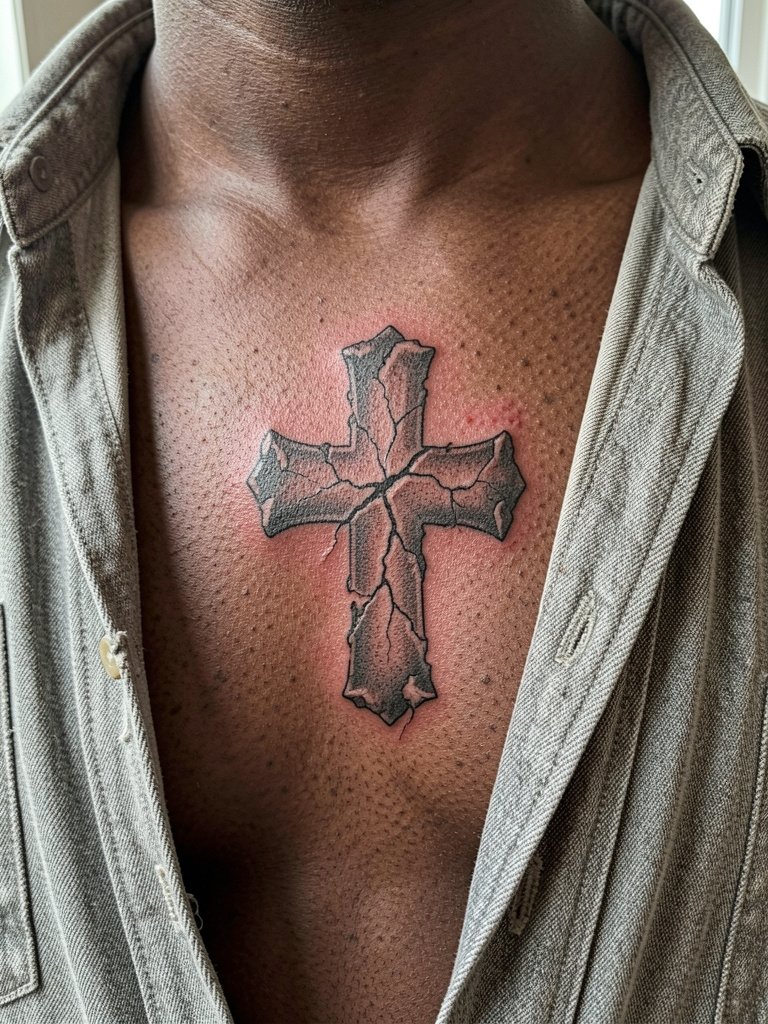
A cracked cross can be intensely personal, symbolizing resilience. For a ribcage placement prefer bolder fracture lines so the distressed look holds when skin stretches. The typical error is making hairline fissures that blend into flesh after movement. Plan the texture and ask the artist to show a healed mockup scaled to your rib dimensions. Rib sessions have higher pain and uneven surface sensitivity, so use the appointment-day guidance to numb or pace breaks if needed. Wear a loose button-down or a low-rise tank so the artist can access the side torso.
15. Flame Cross on Chest or Upper Arm
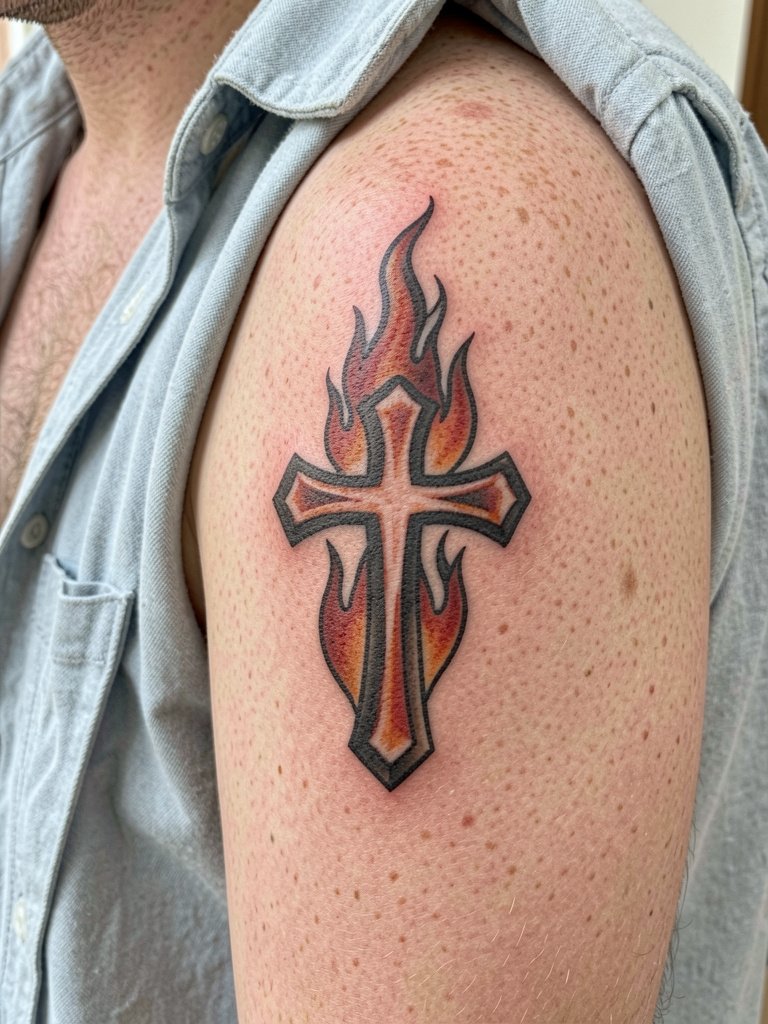
Flame crosses read dynamically when the flames have clear negative space between tongues. Ask the artist for saturated color edges and a bold black silhouette so the fire remains legible for years. The chest placement gives a powerful centerline anchor, and the upper arm version offers more frequent visibility. Sessions range from medium to long and produce steady soreness in the chest. For wardrobe, open-collar cotton in earth tones complements red or orange accents. Try open-collar cotton shirt men sand to let the flames pop.
16. Micro-Realism Cross on Inner Wrist
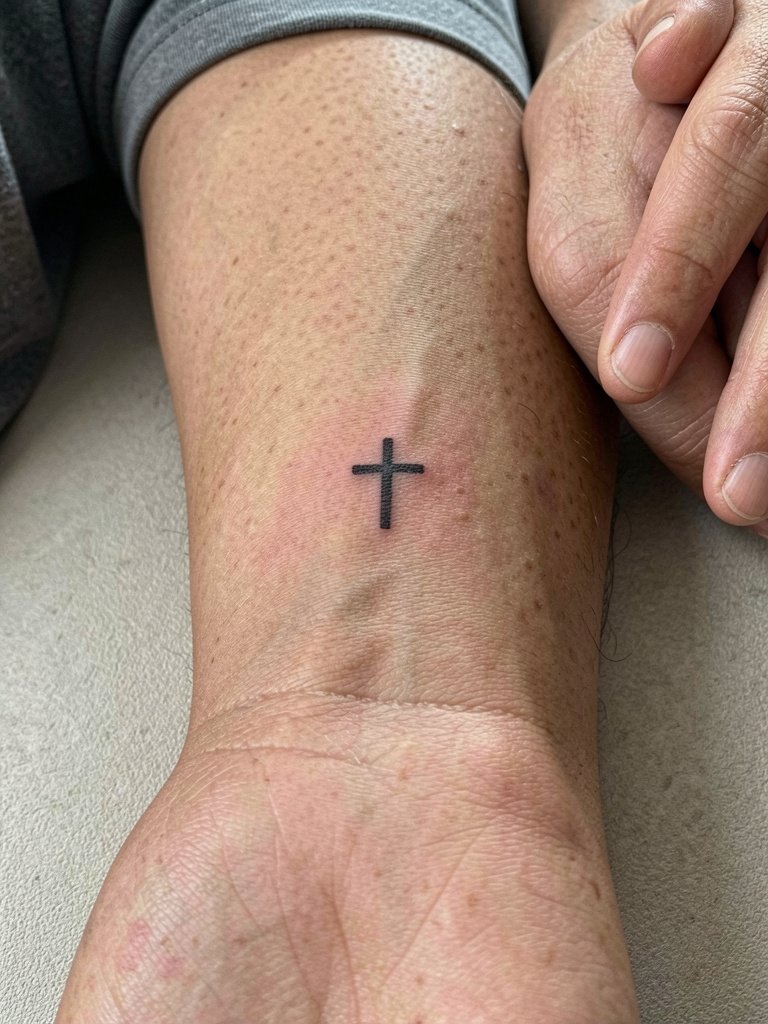
Micro-realism crosses are intimate and delicate, best kept small and meant to age with realistic shading rather than ornate detail. The inner wrist is prone to fading from sunlight and washing, so request a slightly heavier lineup on the contour to ensure the tiny cross reads after a year. Sessions are brief and feel like quick pinpricks. Avoid chunky bracelets on the same wrist for the first month. For accessories use a thin chain on the opposite wrist to keep the focus. Try dainty gold stacked bracelet set to pair without crowding.
17. Anchor with Rope and Cross on Upper Arm
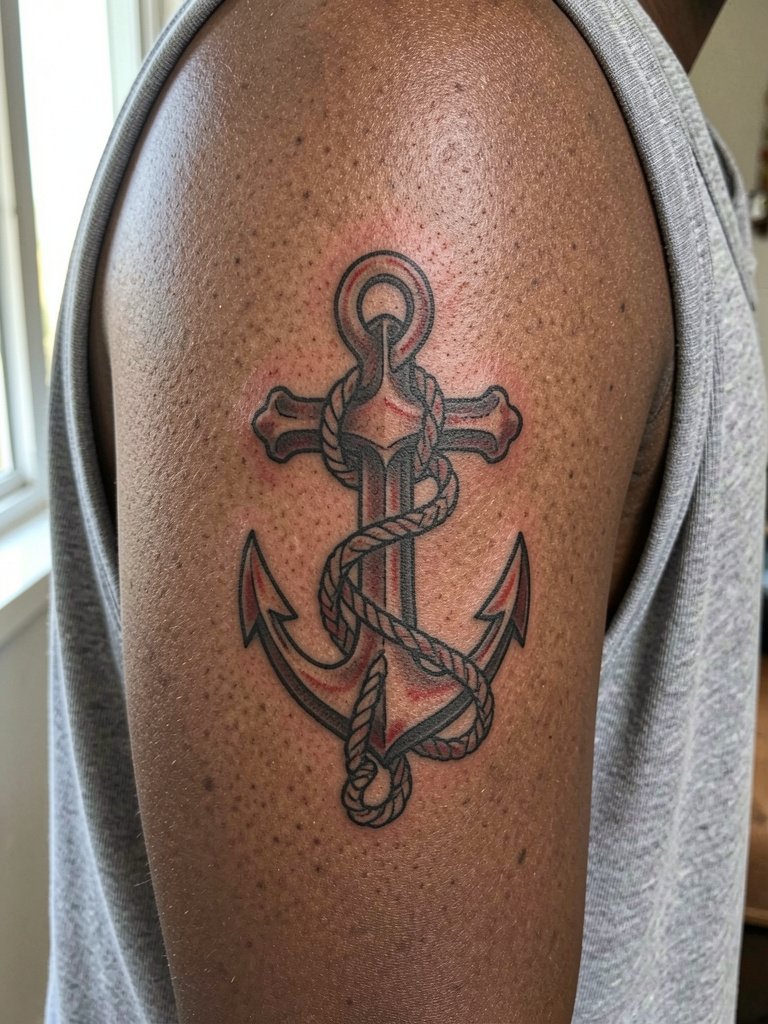
On the upper arm the rope detail can be given depth with stipple highlights and a slightly heavier outline so it does not blur into the anchor over time. Mention the rope thickness you prefer and ask to see healed examples of similar wrapping to confirm readability. Upper arm sessions are moderate in pain with steady pressure. Open-collared cotton shirts pair well for showing the motif. Consider loose tank top men for session comfort and later display.
18. Geometric Minimal Cross on Wrist or Finger
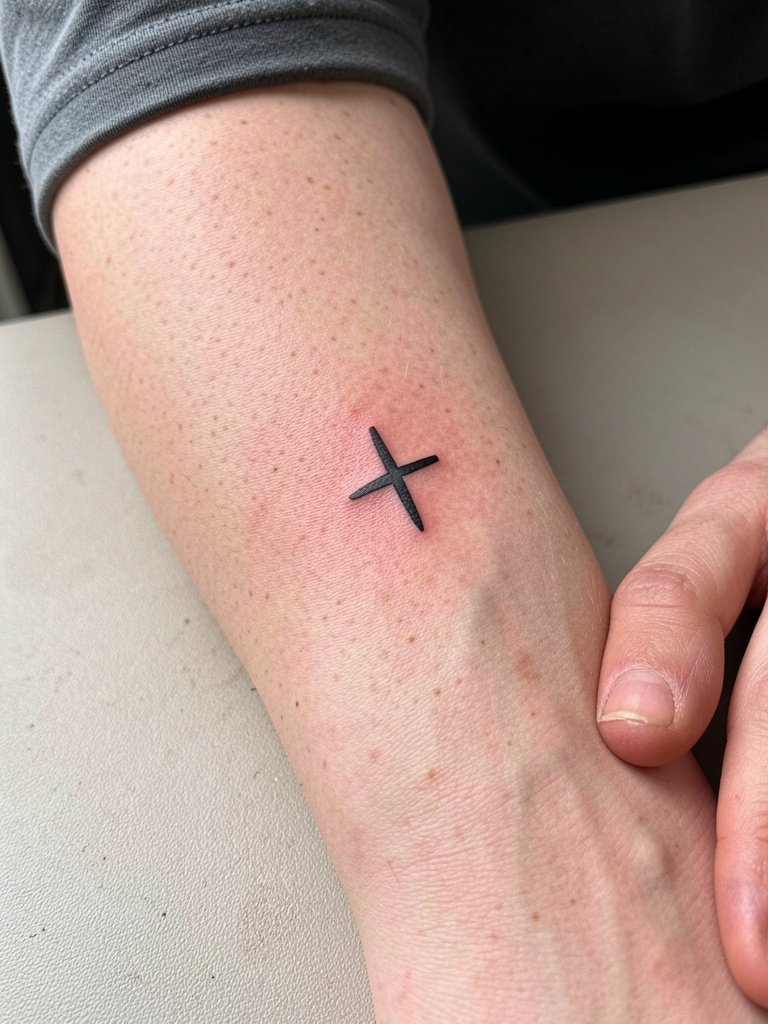
Fingers and wrists cause particular wear. A geometric minimal cross must be executed with confident linework and not be too tiny. For fingers ask for stiffer lines and discuss touch-up timelines because hands see more friction and frequent washing. Finger sessions are short but the healing window is hands-on with daily activity. Keep jewelry minimal on the tattooed hand during the first month. A thin bracelet on the opposite wrist complements the tiny geometry.
19. Stippled Mandala Cross on Upper Back
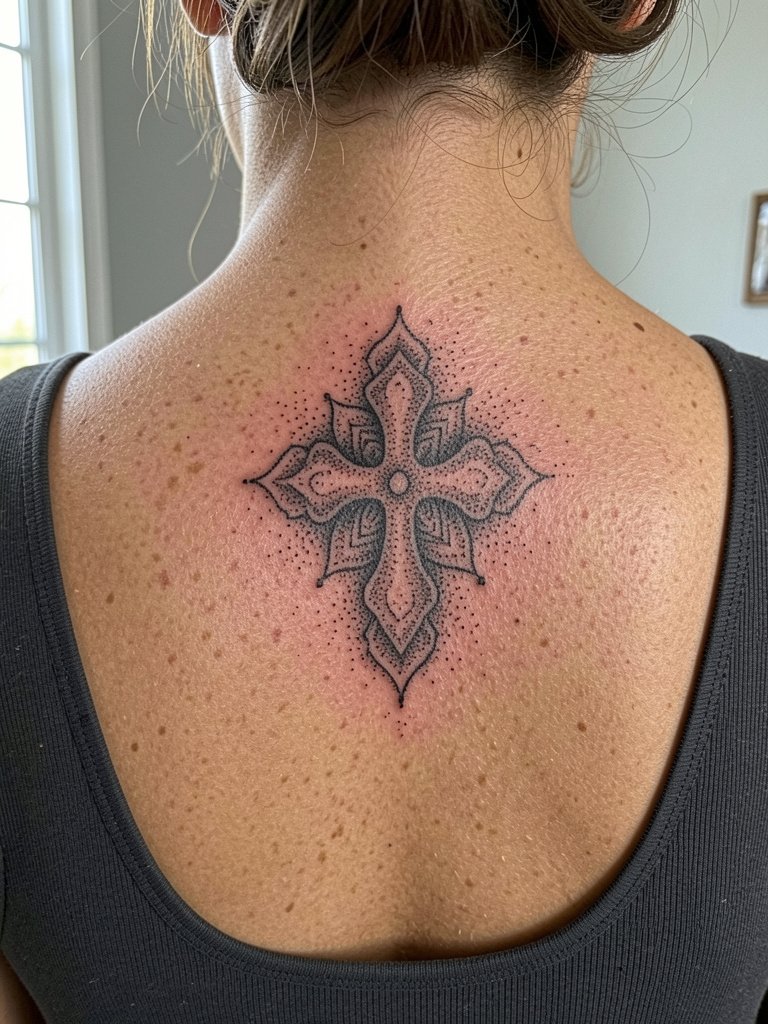
Stipple shading gives mandala crosses a meditative surface, but tiny dots need room to avoid blending. Ask the artist for a stipple map at the size you want so the dot density holds at five years. Sessions tend to be long and require resting breaks. For display, open-back tops show the radial symmetry well. Try sleeveless top men for easy reveal.
20. Shielded Cross with Metalwork on Chest
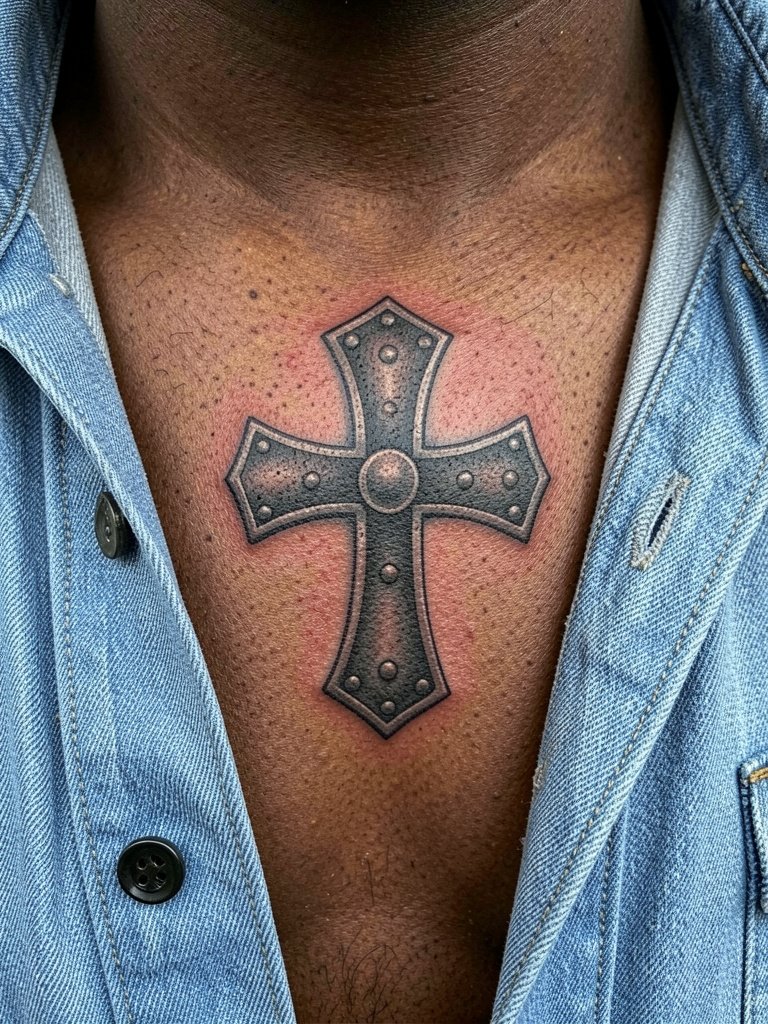
Turning a cross into a shield adds a guardian motif that reads well on the chest. The key ask is to specify metal texture and contrast points so rivets and plates do not wash into flat gray. Chest sessions are longer with steady pressure and deep shading. For wardrobe pick an open button-down that sits comfortably around the shoulders to avoid fabric pressure on fresh ink.
21. Geometric Arc Cross on Wrist or Collarbone
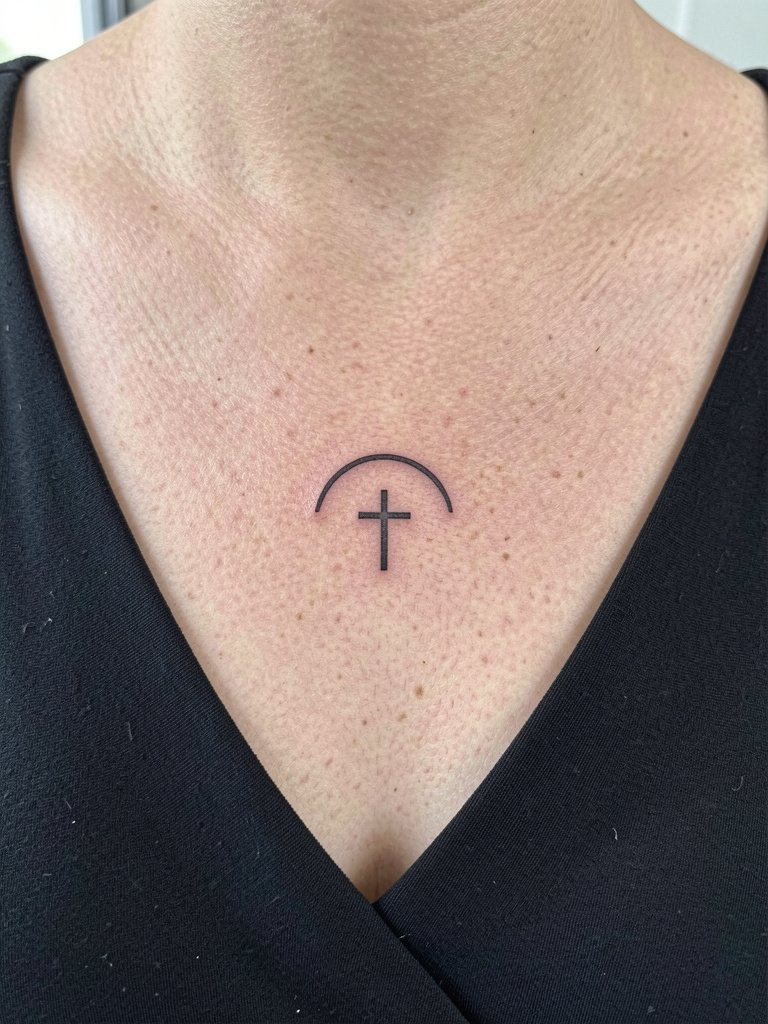
A small arc cross reads modern and works well on collarbone lines or the wrist. On the collarbone the arc should follow the bone line so motion complements the design. The common mistake is trying to cram too many geometric details into a tiny collarbone piece. Request an on-skin stencil at your size so you can walk the line before the needle. For showing off pair with a wide V-neck or thin chain on the opposite side. Try dainty wrist bracelet stack men for subtle balance.
Frequently Asked Questions
Q: How much does a cross tattoo usually cost?
A: Expect a wide range depending on size and detail, roughly in the typical session spread from the low hundreds up to larger multi-hour pieces that can exceed a thousand. Small, single-needle crosses often start at studio minimums while chest or back compositions need longer sessions and more budget. Consider planning for a touch-up in the first year for fine-line work.
Q: Will a fine-line cross on the ribs blur faster than on the forearm?
A: The ribcage is a high-movement and high-stretch area so fine-line tends to face more risk of blurring than forearm placements. Some artists and clients report blurring within about two years on ribs while others maintain that precise depth and slightly wider spacing keeps fine-line readable. If you want detailed ribs ask for slightly heavier line weight and a staged touch-up plan so you get the look without losing long-term clarity.
Q: Which aftercare approach is best for a new cross, petroleum ointment or a thin specialty balm?
A: Artists and collectors split into two camps on this. One group favors thin specialty balms because they say heavy petroleum products can trap debris and cause lifting. The other group uses small amounts of petroleum ointment carefully and reports good barrier protection when not over-applied. The practical middle path is to follow the artist's specific timeline for application amount and frequency and to monitor the first week for signs of clogged pores or excessive scabbing.
Q: How do I find artists who show healed cross photos and work near me?
A: Search location-filtered hashtags on Instagram and TikTok like #crosstattoo and #tribaltattoo then check portfolio galleries and the artist's recent healed shots. Use tattoo directories such as Tattoodo or local booking apps and read Reddit threads for peer-shared healed examples. Filter for studios that post healed photos across different skin tones so you can see how a style will look on you.
Q: What should I wear to a chest or ribcage session?
A: Wear clothing that gives the artist full access without you needing to undress, such as a loose button-down or a tank that stays in place. For rib and side torso work a button-down or low-ride tank lets the artist expose only the needed area and keeps you comfortable during long sessions. Avoid tight fabrics that will press against fresh ink afterward.
Q: How often do different cross styles need touch-ups?
A: Bold blackwork and heavy fills often hold longer and may need touch-ups less frequently, perhaps every few years depending on sun exposure. Fine-line and watercolor accents usually need a touch-up within the first 12–24 months. Plan for a realistic touch-up window when you book so the artist can schedule follow-ups and preserve line clarity.