
Realism and trash polka compasses are dominating men's ink right now, but what looks striking in a flash photo can age very differently depending on size, placement, and line weight. If you want a compass that keeps its geometry and depth over the years, placement and spacing matter as much as style. Below you'll find practical compass designs, where to put them, and how to show them off so circles stay round and grey shading keeps contrast.
1. Black & Grey Realism Compass with Map
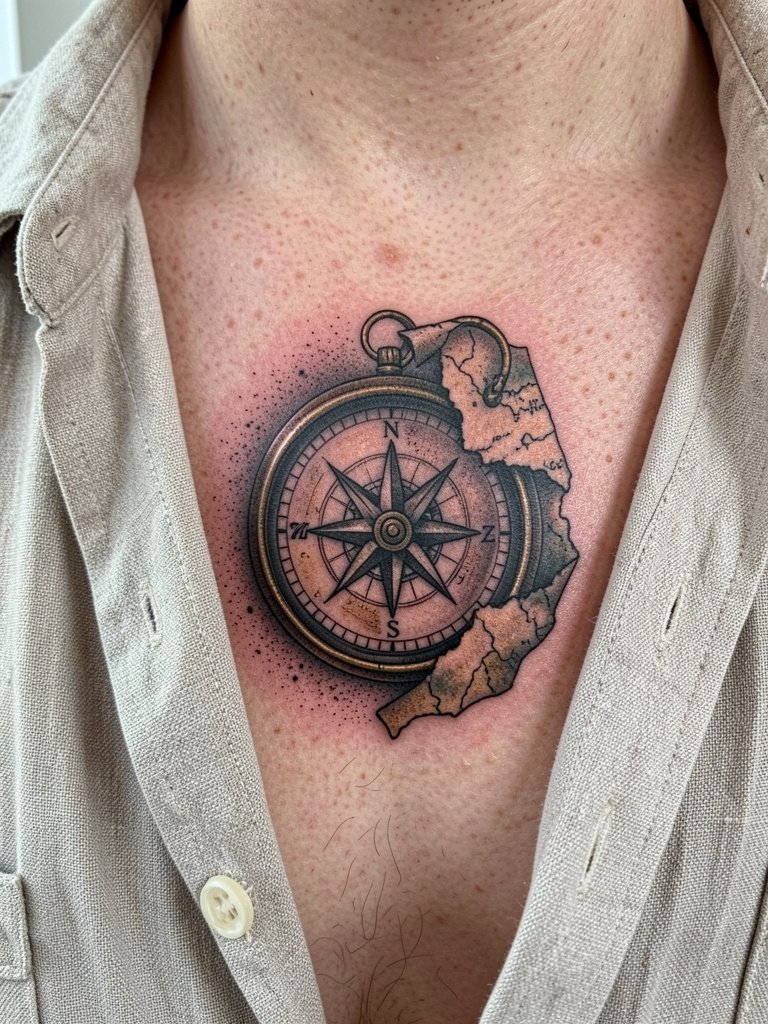
A black and grey compass with a map fragment reads like a small narrative on the chest and holds up well because saturation is concentrated in the outlines and high-contrast areas. For this placement expect a multi-hour session that can be split across two sittings if you want ultra-fine metal textures. The common aging mistake is trusting faint grey washes to hold contrast; plan on a contrast-boost touch-up in five to eight years for realism shading. During a consultation bring a healed photo showing the exact metal finish you want and ask for slightly heavier linework around the dial so the compass still reads after light fading. This pairs with open-collar shirts in cream or sand, try an open-collar linen button-down when you want to show it off.
2. Trash Polka Compass with Red Brush Strokes
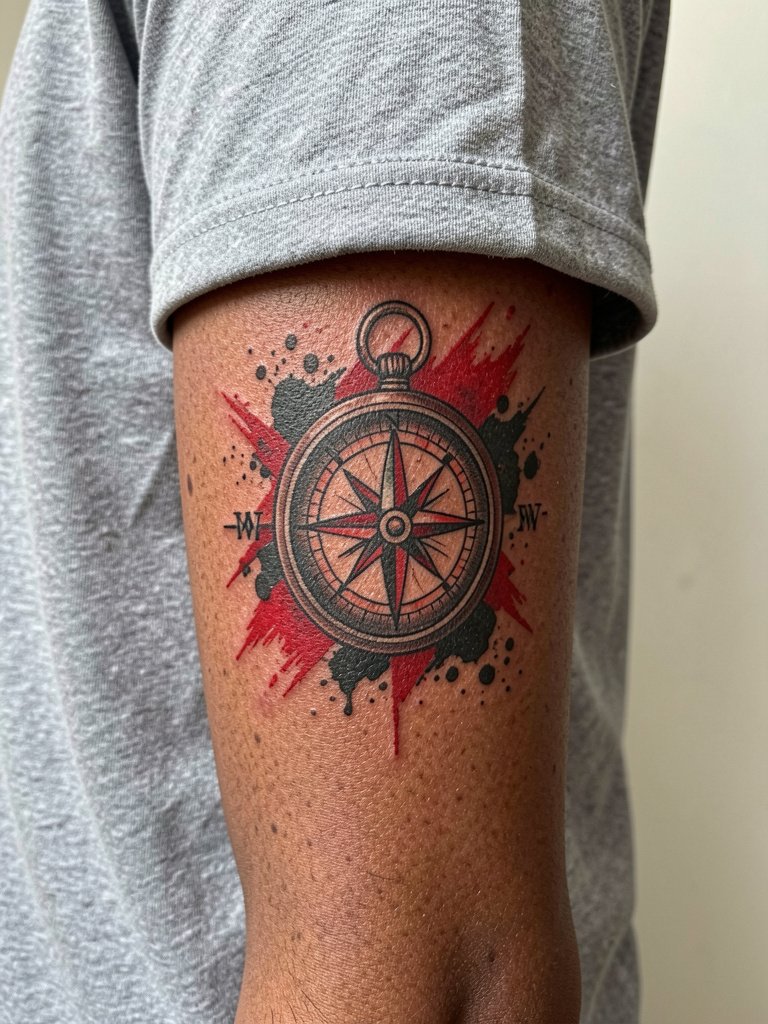
Trash Polka reads aggressively on the outer forearm because the red brush strokes provide motion behind the compass. The session feels like steady solid work, not fiddly fine line, so pain is moderate and the session length usually fits a single long appointment. Artists split on whether heavy color washes in Trash Polka will need touch-ups sooner than saturated black. One camp says red accents often soften and need a refresh in five to seven years. The other camp points out red that is densely saturated and properly healed can stay vivid much longer. For showing off, solid black or red tees complement the composition, try a solid black tee to frame the piece.
3. Viking Vegvisir (Nordic Compass)
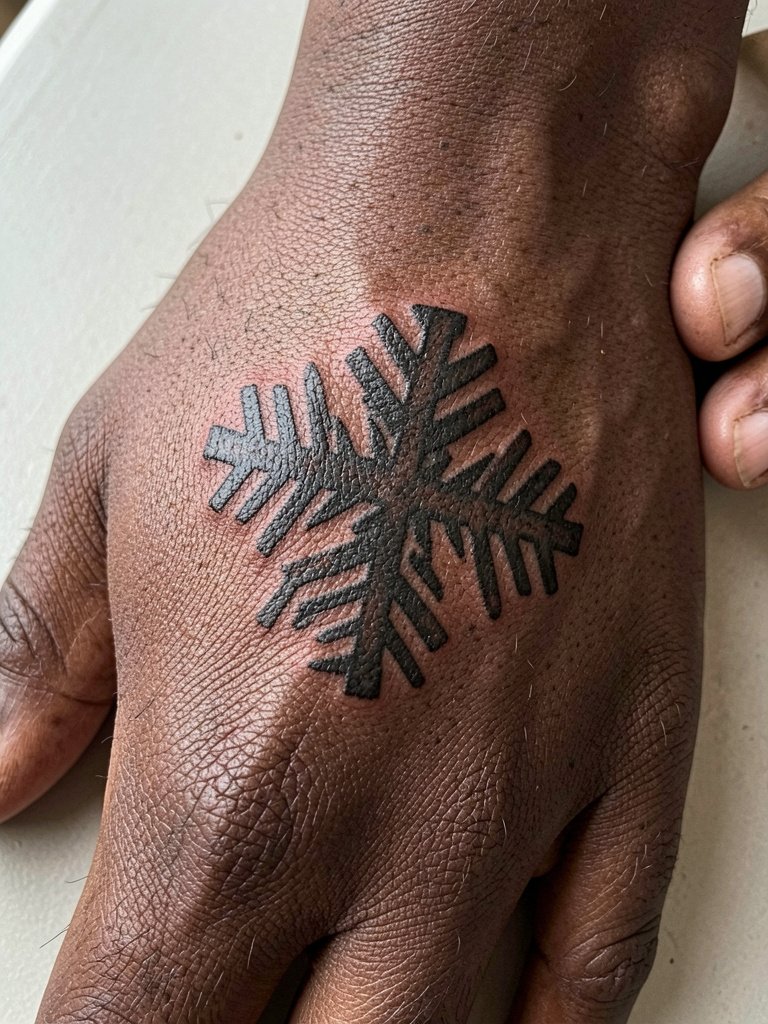
Vegvisir styling uses thick black lines so it endures tougher surfaces like the back of the hand. Expect a short, high-contrast session and a higher chance of touch-ups because hands see a lot of sun and washing. If you want raw ancestral energy, specify exact line thickness in your reference and request solid fills rather than gradation. Be explicit about spacing between the arms so the symbol does not merge with repeated use patterns on the hand. For casual wear, keep sleeves short or use rolled-up shirts when you want the hand visible; a short-sleeve crew neck tee is an easy pairing.
4. Minimalist Crossed Arrows with Cardinal Letters
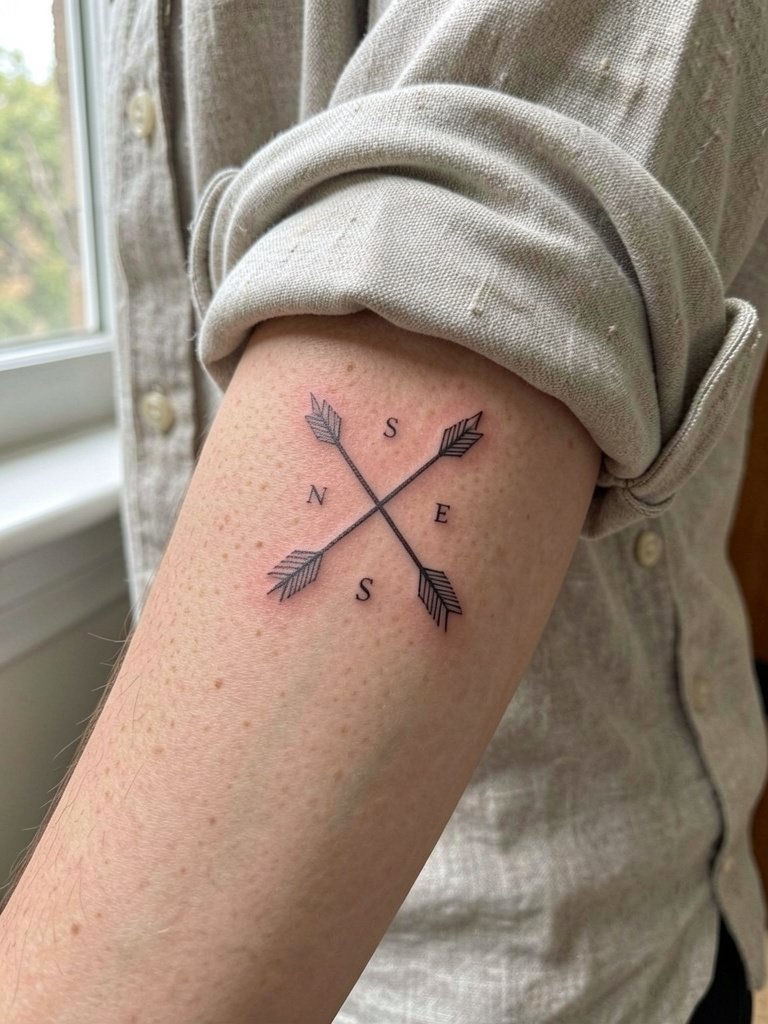
Minimalist crossed arrows are ideal for first tattoos because they scale down and sit nicely on the inner forearm, where healing is predictable. The common mistake is requesting ultra-hairline single-needle weight and then wondering why the lines blur after a year. Instead ask for slightly heavier needle groupings and wider letter spacing so the N S E W stays legible in the long term. For session wear, roll sleeves and bring a loose button-down so the artist can access the palm-up surface without cuff pressure. When you want to show it off, rolled linen shirts in sand or olive let the thin linework breathe, try a linen button-down for that look.
5. Geometric Sharp-Line Compass
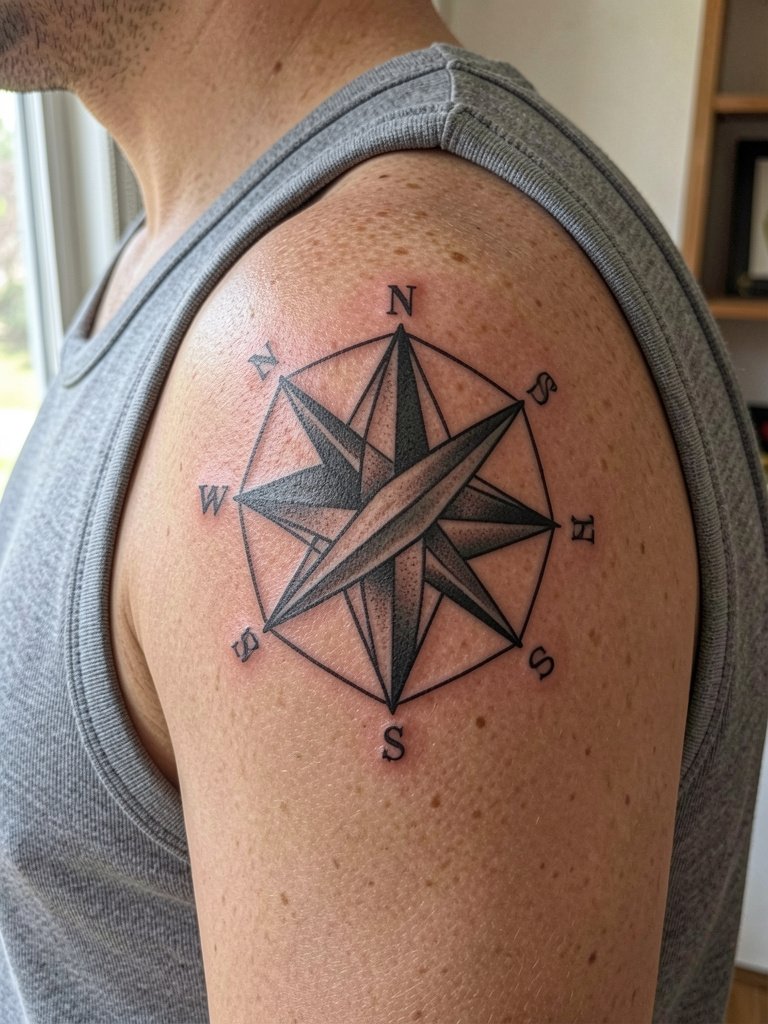
Geometric compasses need room to breathe. The biggest error is shrinking the pattern until the angles lose crispness. For preserving geometry, increase the scale slightly and ask the artist to map the longest axis to the shoulder cap so the design reads from multiple angles. This placement is a one-session piece for most artists and pain levels are low to moderate. For show-off outfits, a V-neck tee or tank highlights the shoulder cap cleanly; consider a v-neck tee so the shoulder reads against a simple backdrop.
6. Celestial Compass with Stars and Moon
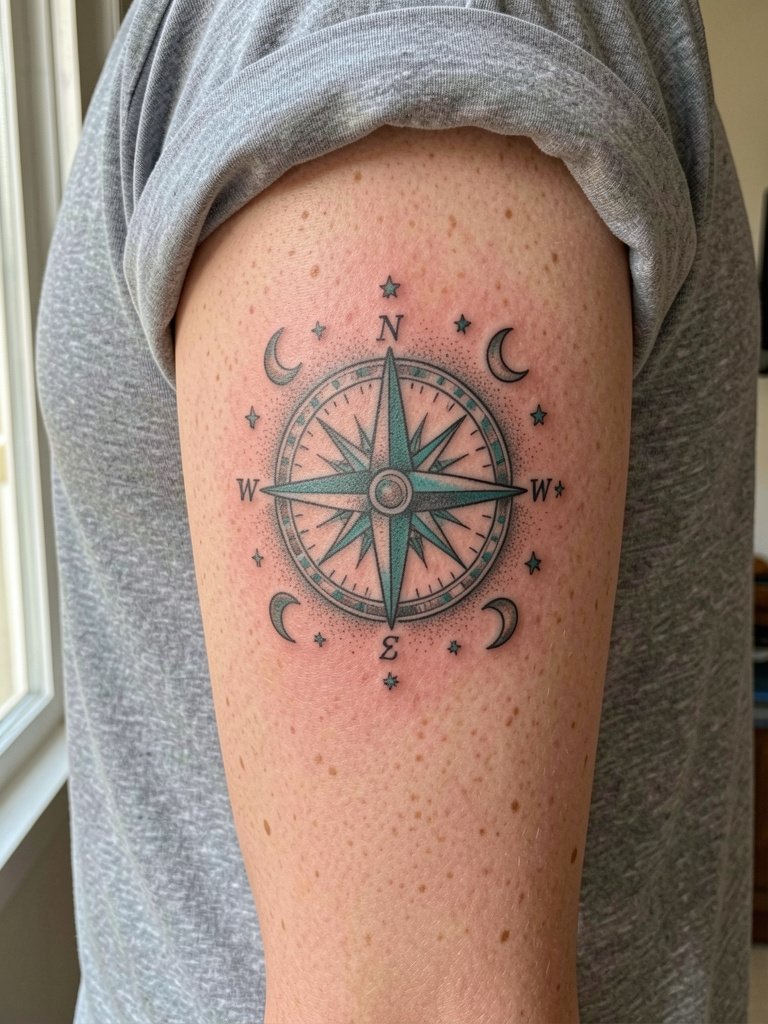
A celestial compass works best as part of a sleeve. Expect multiple sessions and plan how stars and moons frame the compass so they do not clutter the focal point. Visual hierarchy matters here, so bring examples showing the compass as dominant and the celestial elements as accents. The sleeve route suits collectors who want storytelling continuity across sessions. For fitting wardrobe, neutral short sleeves keep the sleeve visible without adding competing patterns; a rolled-up long sleeve shirt makes for a casual reveal during warm seasons.
Session Day Picks
A few products smooth the first week for both detailed realism and high-contrast blackwork pieces covered above.
-
Japanese aftercare balm. Lightweight, non-greasy balms from Japanese indie makers soak in fast and are gentle on dense blackwork, which helps preserve saturation in realism compasses.
-
Indie blackwork balm. Formulated for bold outlines, it reduces flaking while keeping thick traditional lines crisp during the critical first ten days.
-
Australian mineral sunscreen SPF 50+. High-protection mineral sunscreens limit UV-driven grey loss on shaded realism areas, which preserves contrast over years.
-
Fragrance-free gentle body wash. A soap without perfumes avoids irritation on fresh work and is useful for daily cleansing without stripping pigments.
-
Aquaphor healing ointment. A thin layer in the first 48 hours can protect micro-channels in fine detail work without clogging, useful after heavy chest or forearm sessions.
7. Tribal/Traditional Bold Compass
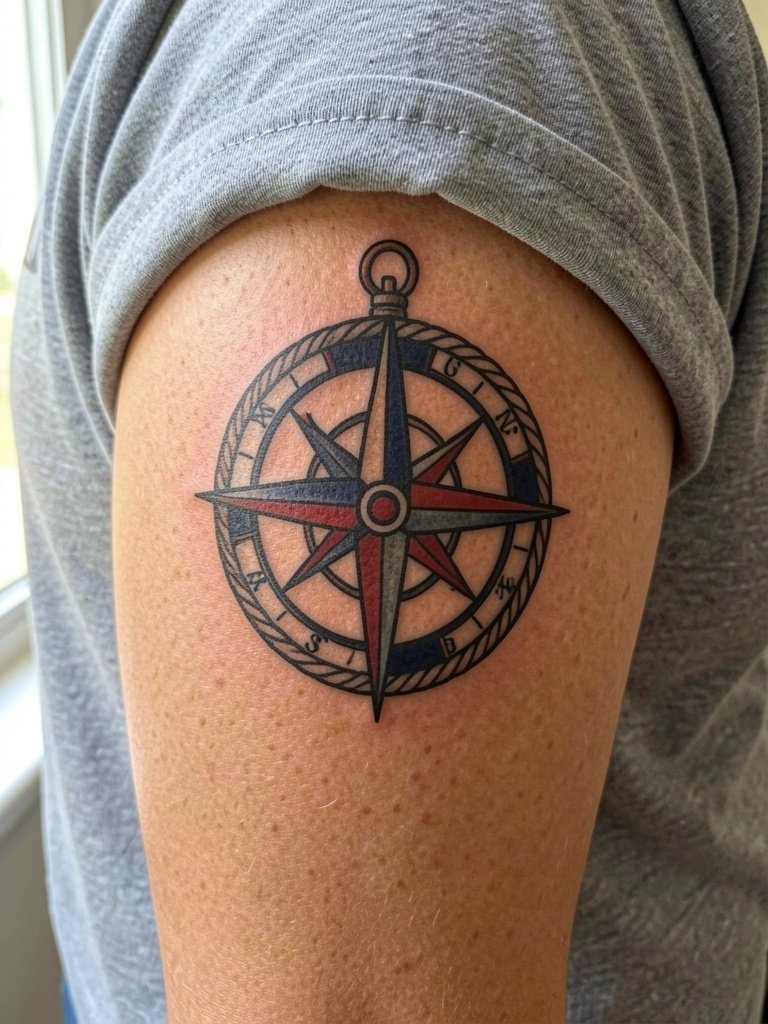
Classic bold compasses age predictably because thick outlines resist early blurring. This is the style to pick if you want less maintenance and strong silhouette from across a room. Session time is usually under two hours for a bicep piece and pain is moderate. If you plan to add more nautical elements later, leave a three-inch buffer so new pieces can flow into the rope. For a vintage sailor look, short-sleeve crew necks in charcoal or olive frame the outer bicep; try a charcoal crew neck tee when you want the piece visible.
8. Ankle Minimalist Compass
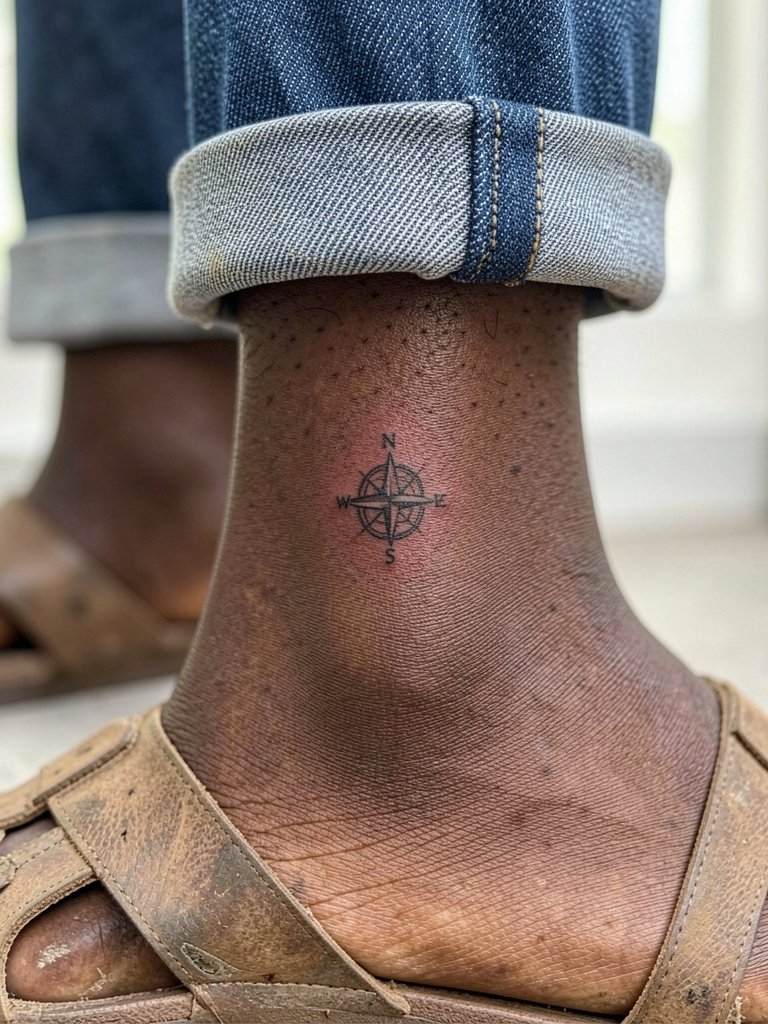
Tiny ankle compasses are discreet but face friction from socks and footwear. The common mistake is demanding ultra-fine detail in an area that endures constant abrasion. If you want longevity, increase the line weight slightly and expect a six-month check to see how edges settled. For seasonal showing, open-toe sandals and cropped pants work best; consider open-toe sandals for summer reveals. During the session wear shorts or pants with a loose cuff so the artist can access the ankle without tight fabric pressing the area.
9. Behind-the-Ear Tiny Compass
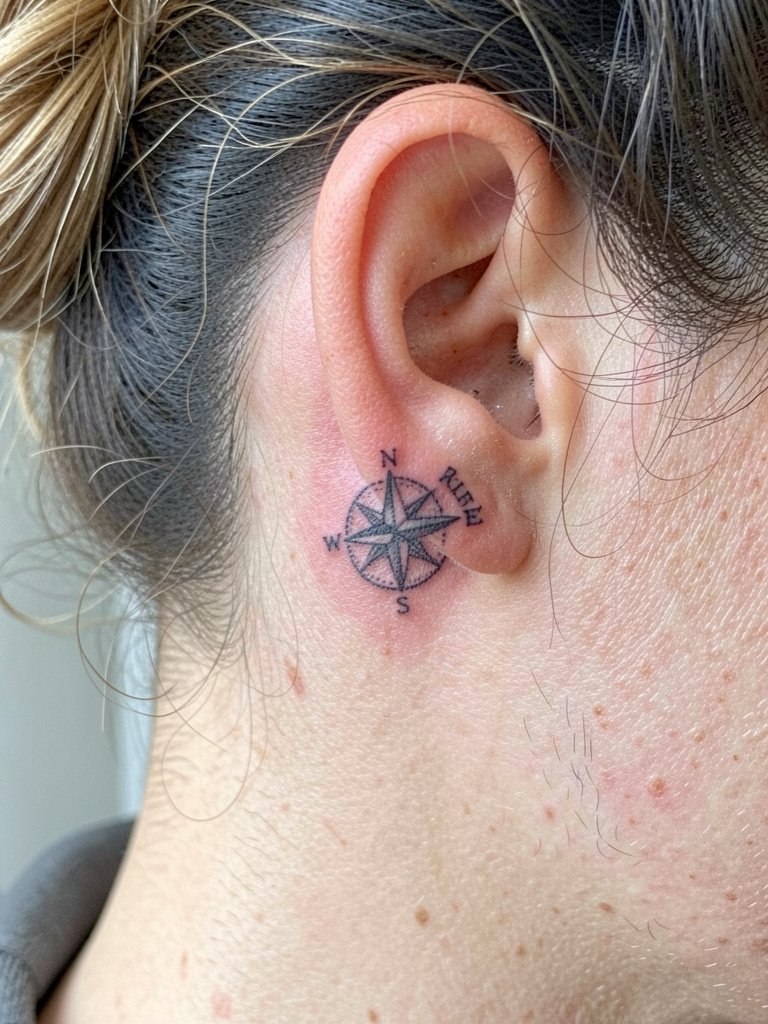
A behind-the-ear compass is intimate and we recommend tiny scale, but be wary of ultra-fine single-needle work that blurs when hair rubs it. The skin here heals fast but requires careful aftercare to avoid scabbing that pulls fine dots. For session day, wear a collared shirt or hoodie with a wide neck so the artist has clean access to the nape. Short hair or a simple updo shows it off when you want to reveal the ink.
10. Rope-Wrapped Compass Nautical
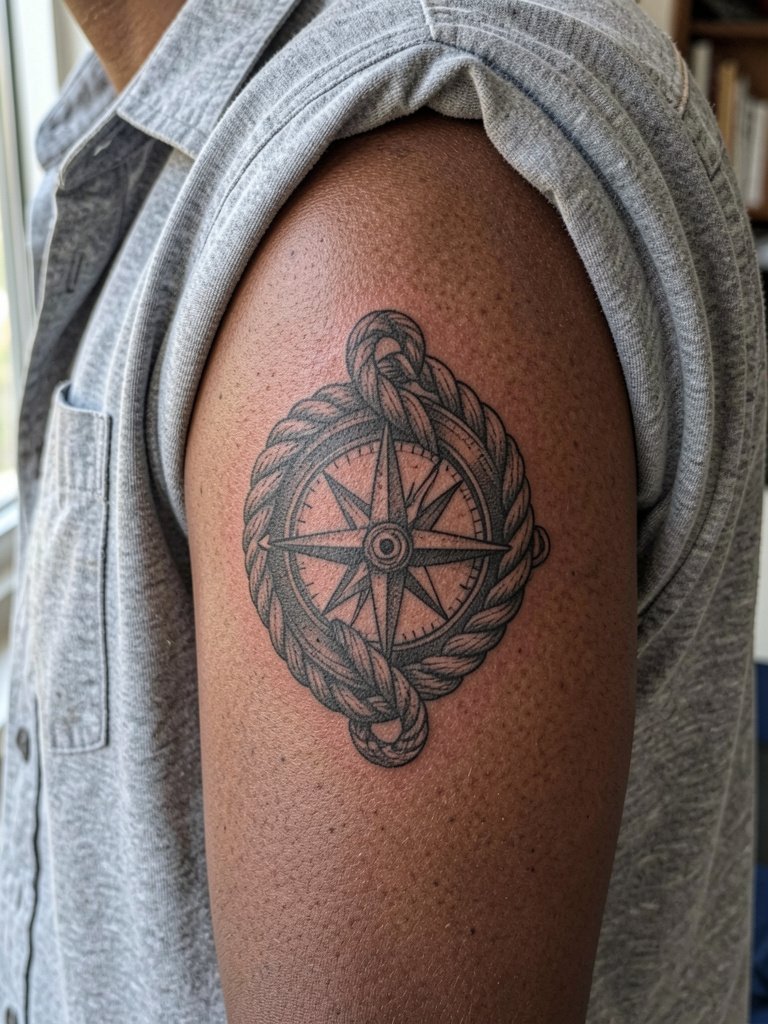
Rope-wrapped compasses pair tactile shading with a narrative maritime feel. The most common error is putting too many tiny rope strands into a small tattoo. Increase scale slightly so the rope texture reads after healing. For a chest placement the session can sit at two hours or more and pain is higher. Outer bicep versions are easier on pain and heal faster. Show-off pairing for both placements includes linen button-downs or rolled sleeves; a linen open-collar shirt fits the aesthetic when you want to reveal the piece.
11. Hourglass and Compass Timepiece
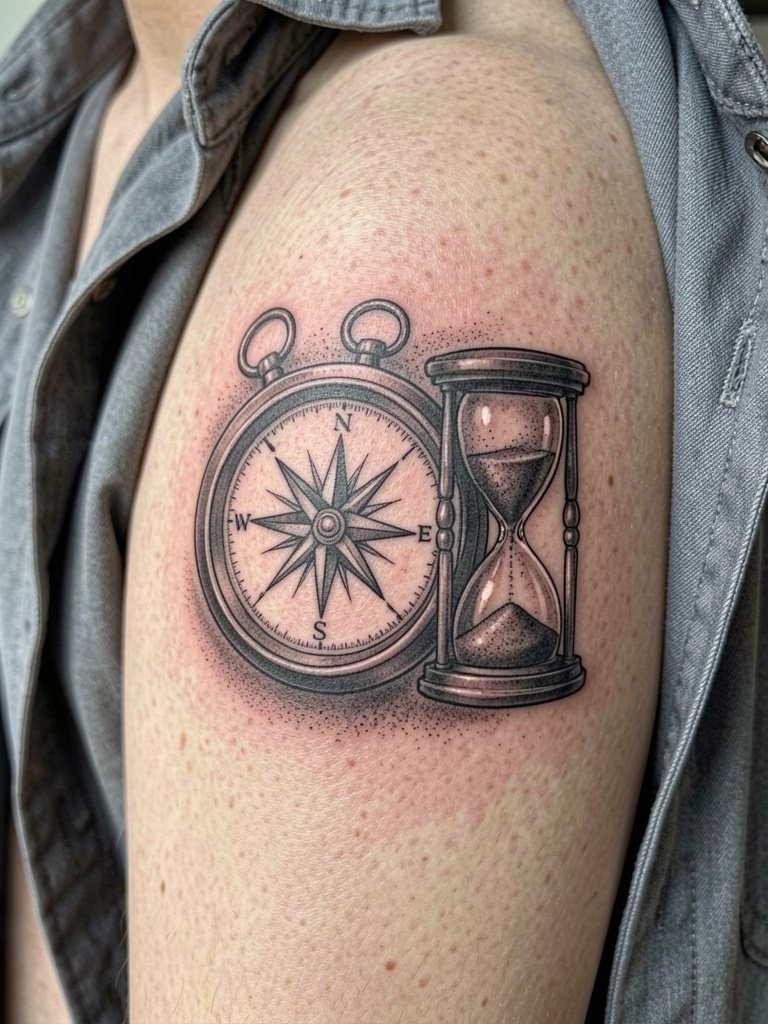
Pairing a compass with an hourglass adds a philosophical layer about direction and time, but keep shading controlled so both elements remain legible. Realism groups disagree about long-term grey stability. One camp says soft grey shading in realism fades noticeably by year ten and needs contrast boosts every five to eight years. The other camp argues careful saturation and healed touch-ups can keep the shading balanced for much longer and points to multi-year healed examples as evidence. For sleeves this becomes a multi-session project; plan the narrative flow ahead of the first visit and bring photos showing exact shading weight you want.
Frequently Asked Questions
Q: How long before a realism compass needs a touch-up?
A: For high-contrast black and grey realism expect a contrast-boost touch-up in about five to eight years to re-darken greys that soften relative to saturated black. Lighter grey washes will show the most change, so if you want less work over time ask for stronger initial contrast and plan a five-year check.
Q: Can you put a perfect circular compass on an elbow or knee?
A: Artists split on this. One group says mobile joints warp perfect circles into ovals because skin stretches and compresses; they advise avoiding central joint placement for round dials. The opposing group says a skilled artist can adapt the design and placement to minimize distortion, but that approach is riskier and requires careful staging and acceptance of potential future distortion.
Q: Where can I find artists who actually specialize in realism or Trash Polka without naming names?
A: Search hashtags like #compassTattoo, #realismCompass, #trashpolkaTattoo, and #vegvisirTattoo on Instagram and TikTok, then filter by location. Use Tattoodo and the Inked App to look up healed portfolios with those keywords, and check Reddit threads in r/tattoos and r/tattooadvice for peer recommendations and heal shots across skin tones.
Q: What should I wear to a chest or shoulder compass session?
A: Wear clothing that gives the artist direct access without tugging at the area. For chest pieces an open-collar linen shirt or a tank top works well; for shoulder work a loose tank or sleeveless tee keeps the shoulder cap free. If you want a quick option, bring a loose tank top to change into at the studio.
Q: How painful are these placements for a compass tattoo?
A: Pain varies by placement. Outer bicep and shoulder are low to moderate, forearm is moderate, chest and ribcage are higher. Micro areas like behind the ear and ankle are short but sharp. If pain is a concern, break the project into shorter sessions and consider topical numbing strategies discussed with your studio.
Q: What red flags should I watch for when researching photographers of healed work?
A: Look for consistent healed shots at multiple ages and on varied skin tones. Avoid portfolios showing only fresh work with bright redness. If a shop cannot show healed images for the specific style you want, consider seeking a specialist who documents long-term results.