Collarbone fine-line work looks fragile on a mood board and stubborn in reality. Trends love whisper-thin stems and single-word scripts, but the collarbone is thin skin over bone and that combination changes how linework settles. Read this as a mix of design inspiration and practical choices you can make now so the piece still reads clean after a couple of seasons and a handful of sun-soaked summers.
1. Single stem wildflower, single-needle collarbone piece
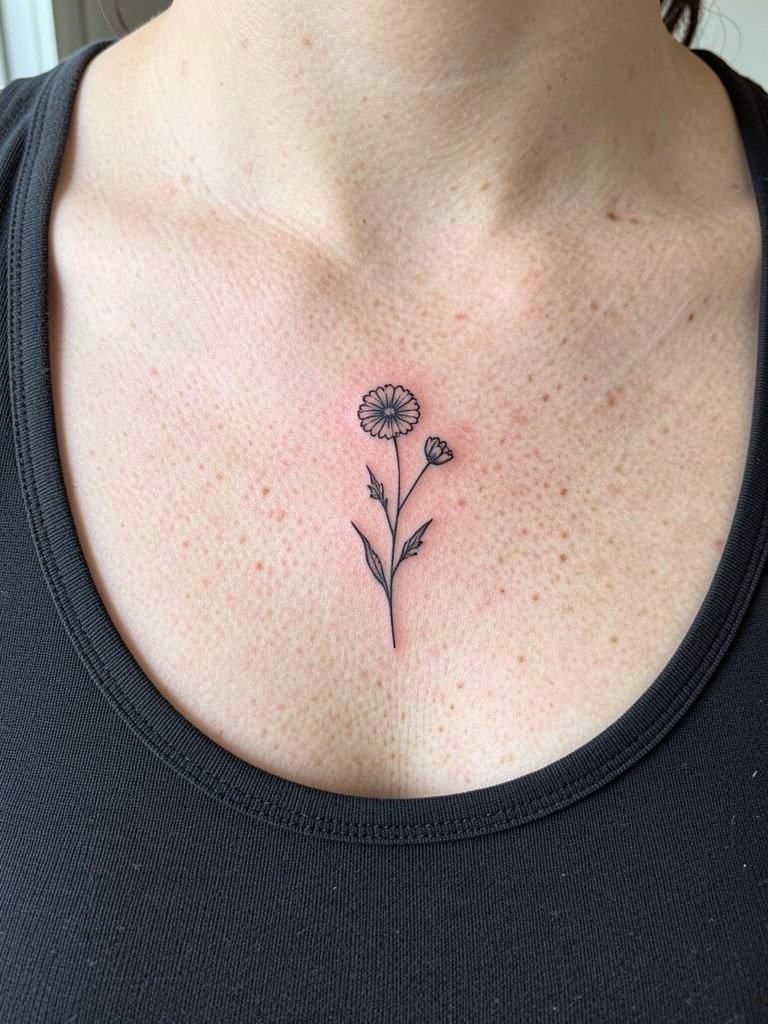
A single-needle wildflower on the collarbone reads like a whisper and is a classic pick for first-timers. I recommend sizing it so the stem has millimeters of breathing room from the bone ridge, because ultra-micro stems tend to merge with movement and bra straps over time. For the consultation bring a photo that shows the exact petal count and line weight you want, and ask the artist to show how the design looks at three sizes so you can avoid micro collapse. Expect one short session and sharp pain when the needle crosses the clavicle. For showing it off, pair with an off-the-shoulder top in a neutral tone to frame the linework.
2. Micro botanical cluster positioned across the clavicle
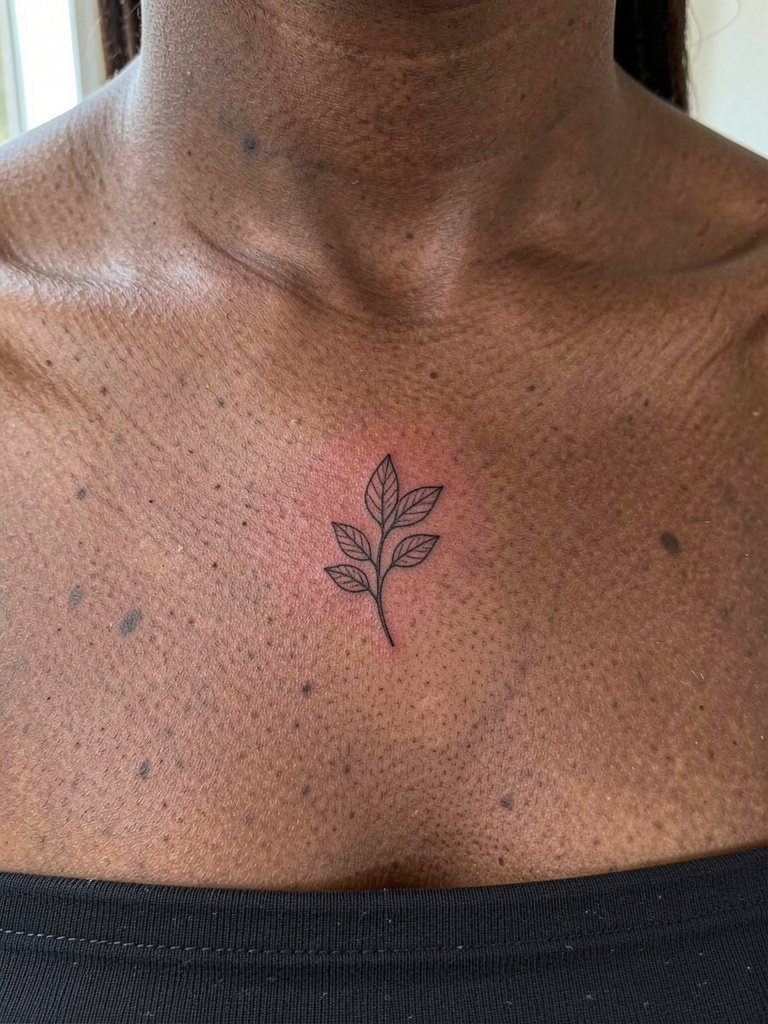
A tiny cluster of leaves or a single stem with a leaf cluster works when you want an organic accent that can follow the collarbone curve. Common mistakes are trying to cram too much detail into a tiny space and leaving no margin for skin movement. In practice I tell people to add a millimeter or two of spacing between leaves so the dots and thin veins do not blur into one shape after a year. Linework should be a hair stronger than the reference image. Session time is short, but the collarbone crossing feels sharp. Style it with a dainty gold stacked necklace set on the opposite side so the tattoo remains the focal point.
3. Delicate handwritten script across the clavicle
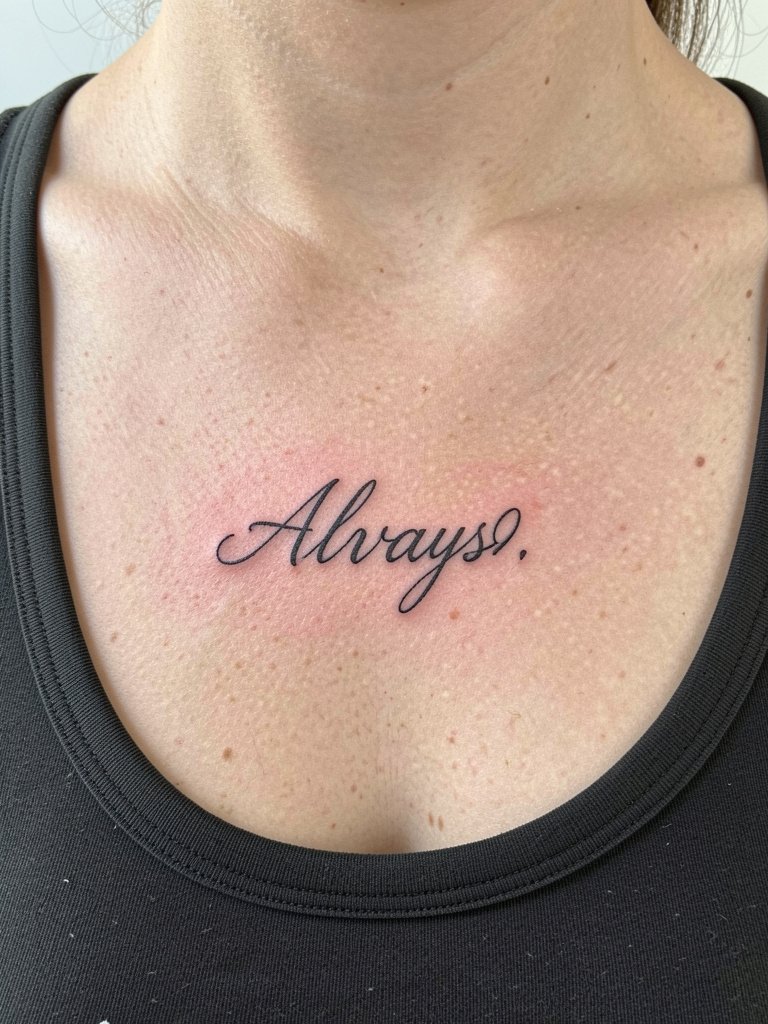
A short handwritten word looks intimate across the collarbone when spaced and scaled properly. The most frequent regret I hear is that the script was drawn at three letters per inch and later reads like a smudge. Bring your actual handwriting sample and ask for a mock stencil that shows how each letter opens at two sizes. For visibility on darker skin tones, consider a slightly heavier stroke or a tiny dot accent at the start and end of the word to create contrast. Expect a 30 to 45-minute session and a high pain spike at the bone. When you want it visible, a strapless top keeps the linework unobstructed.
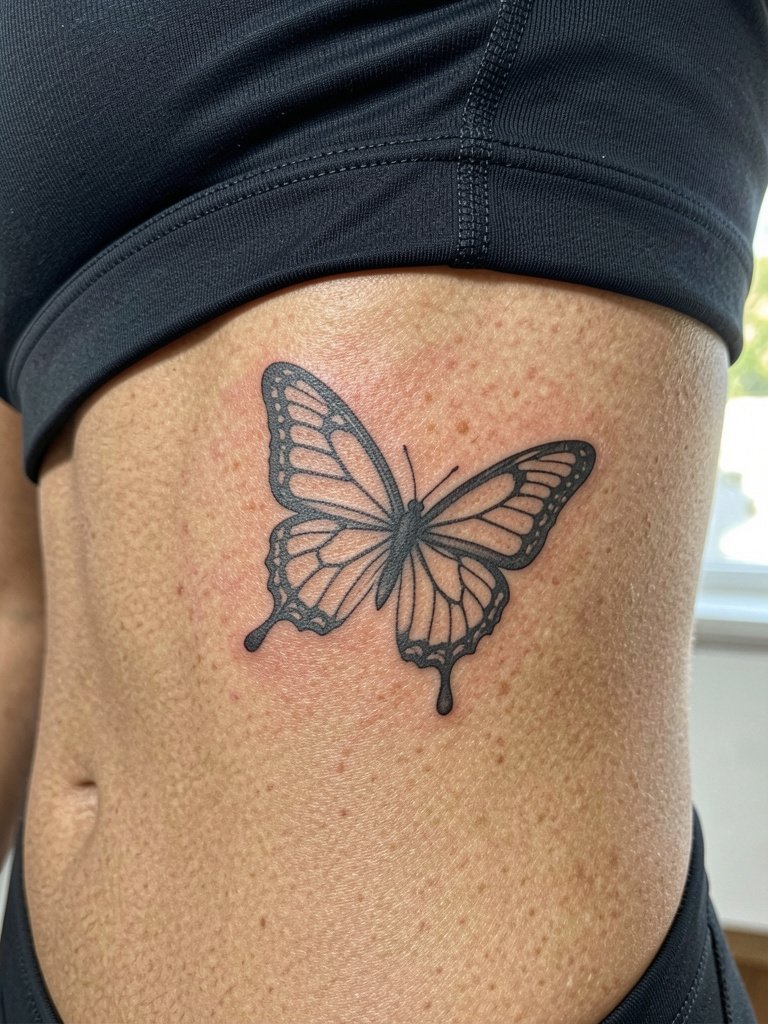
4. Fine line butterfly that wraps slightly to the side torso
A butterfly whose wings graze the side-body gives motion without a full ribcage commitment. One camp argues that any micro-detail placed near the ribs blurs rapidly. The other camp says that if the artist slightly opens the negative space in the wings and uses a steadier single-needle rhythm, the pattern holds. Both views matter for this placement. If you prefer the safer option, ask the artist to mock the piece at a 2.5 to 3 inch width so the veins in the wing are not hairline thin. For outfit pairings try a side-tie crop top in sage to show the wrap without exposing the whole torso.
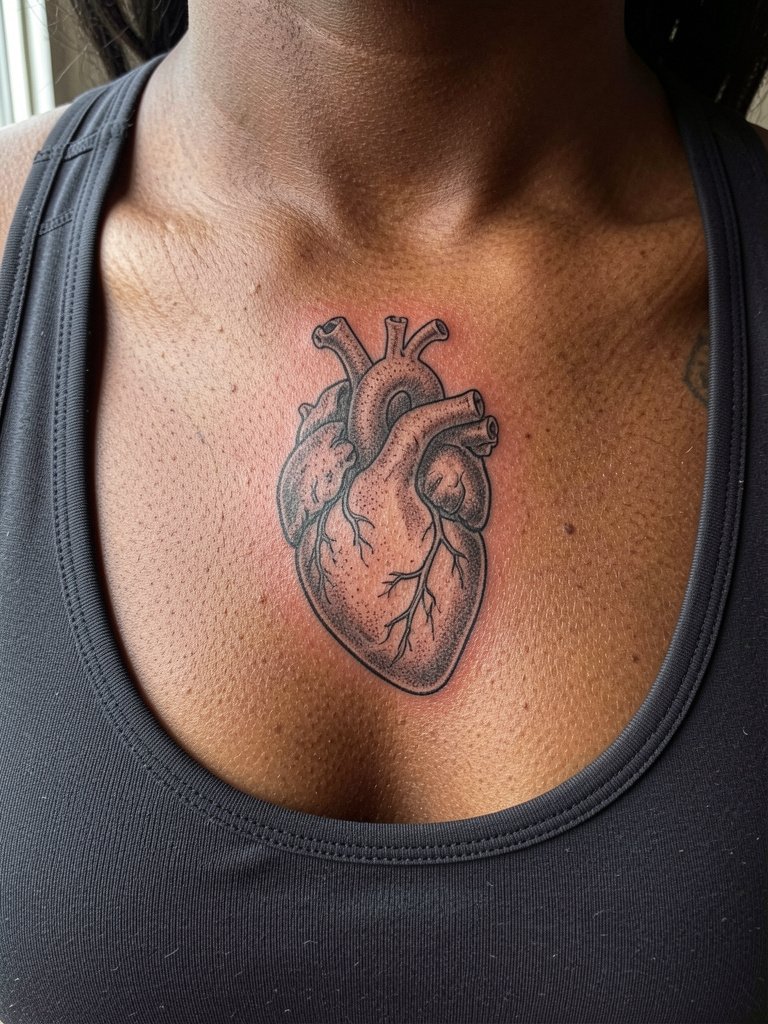
5. Micro anatomical heart tucked near the sternum edge
Anatomical hearts in micro-realism read bold when small and crisp when executed in black and grey with subtle stipple shading. Because this sits close to the sternum and rib movement, some artists say fine detail can soften over time while others point to healed three-year examples that still read crisply when spacing is increased. Name that debate out loud at your consult and decide if you want micro detail now or room to age. Session time can run longer for the extra shading. Wear a strapless or loose tank top to the appointment so the artist can access the area cleanly.
6. Minimal constellation map across the clavicle
Tiny dots and connecting lines map a compact constellation that follows the collarbone arc. The practical risk is spacing that is too tight so dots merge across years. I tell clients to choose a pattern where the largest dot is about the size of a pinhead and the connecting lines are slightly thicker than their initial reference. That little adjustment buys two to three years of crispness. This design is a one-session piece and the pain is sharp at the bony points. For nights out, pair it with an off-the-shoulder top in cream to keep attention on the printed map.
Pre-Session Essentials
Those collarbone ideas sit on thin skin and can react differently in the first 72 hours. A few items smooth the session and the healing window based on the pieces above.
-
Kure Breeze Japanese aftercare balm. A thinner plant-based balm many people prefer over thick ointments while healing fine line pieces without clogging pores.
-
Ink Wash Australian tattoo soap. A gentle pH-balanced soap that cleanses fresh ink without stripping moisture for delicate linework.
-
Midjourney custom design tool search. Use AI-assisted mockups to iterate composition and layout before your consult so you can show clear reference options.
-
Hustle Butter UK thin balm. A thinner regional formulation that users say keeps fine lines hydrated without heavy buildup.
-
Emily's topical numbing cream. Helpful for first-timers on the collarbone who worry about passing out from the sharp, bone-adjacent pain.
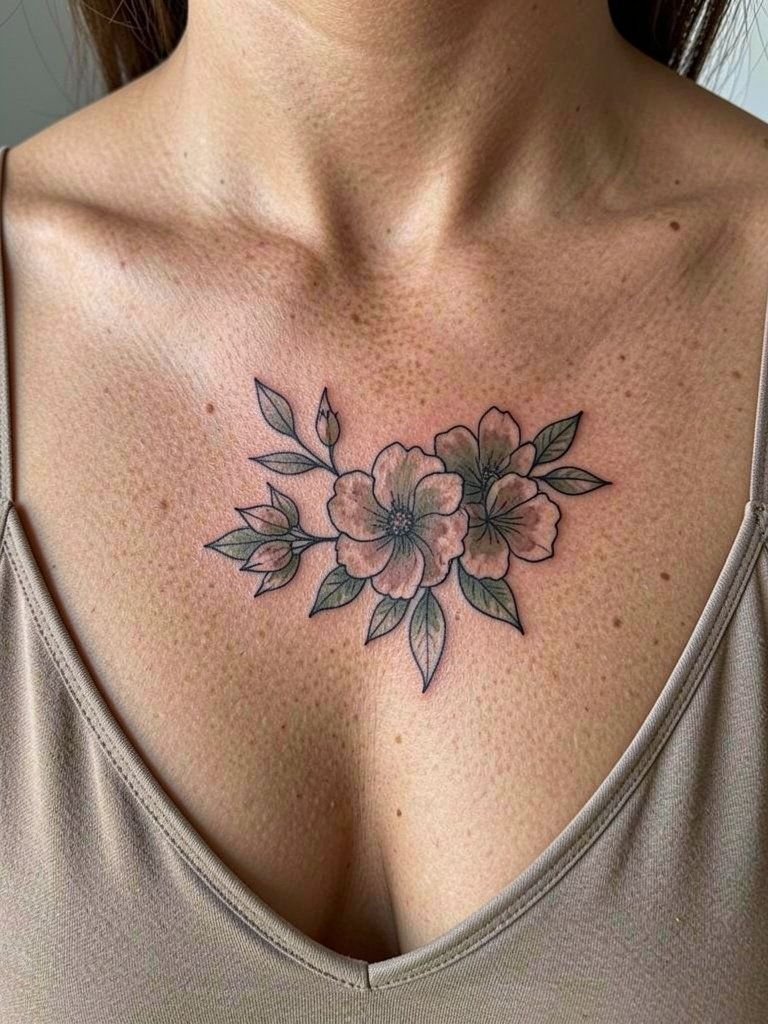
7. Muted earth tone floral with soft washes
Muted sage and dusty rose washes inside fine line flowers give a softer read than flat black, while still keeping longevity in mind. Colored fine line needs slightly bolder linework to hold against fading, especially on the collarbone. That means the artist balances single-needle strokes with subtle color layering. If you like seasonal palettes, ask for a swatch mock on the back of your hand so you can see how muted pigments photograph. For outfits, a low cut camisole in cream frames the floral without crowding the neckline.
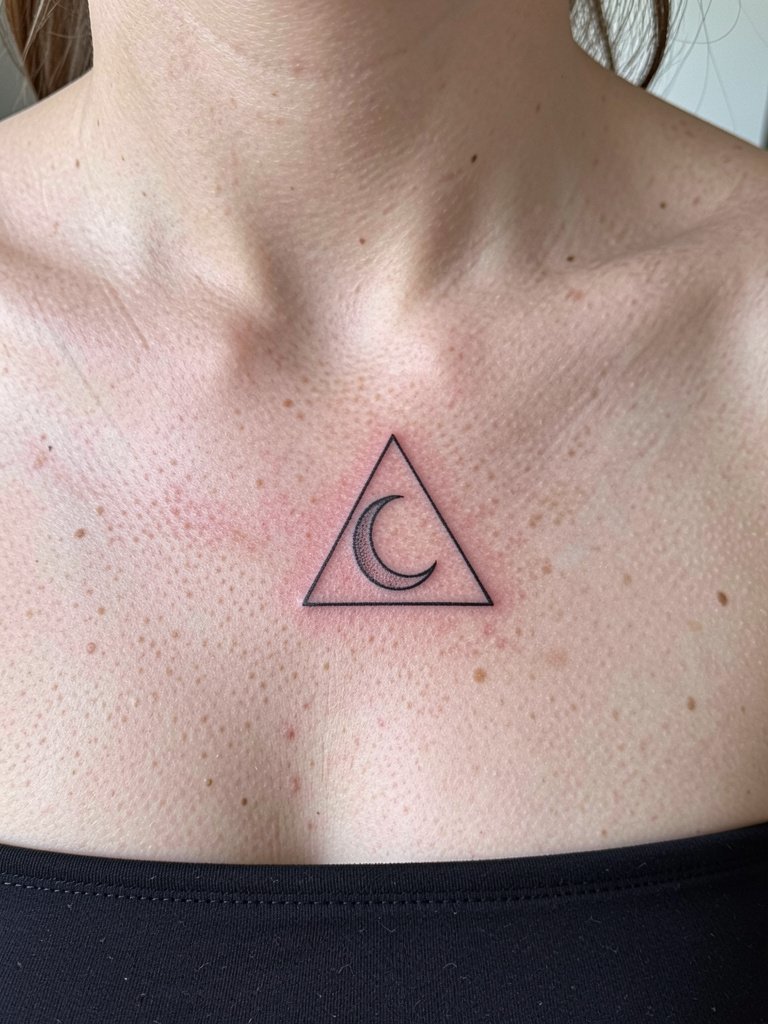
8. Thin geometric shape with a tiny internal detail
A thin triangle or circle with a small inner dot or crescent looks purposeful and wears well when given breathing room. The common mistake is cutting the outer shape too small. If the circumference is under an inch the inner detail will collapse into a blur over time. For better longevity ask the artist to set outer lines at a consistent micro weight and to scale the internal motif at 30 to 40 percent of the overall size. This is a fast appointment and low shading risk. Pair it with a dainty gold stacked necklace set on the opposite side for editorial balance.
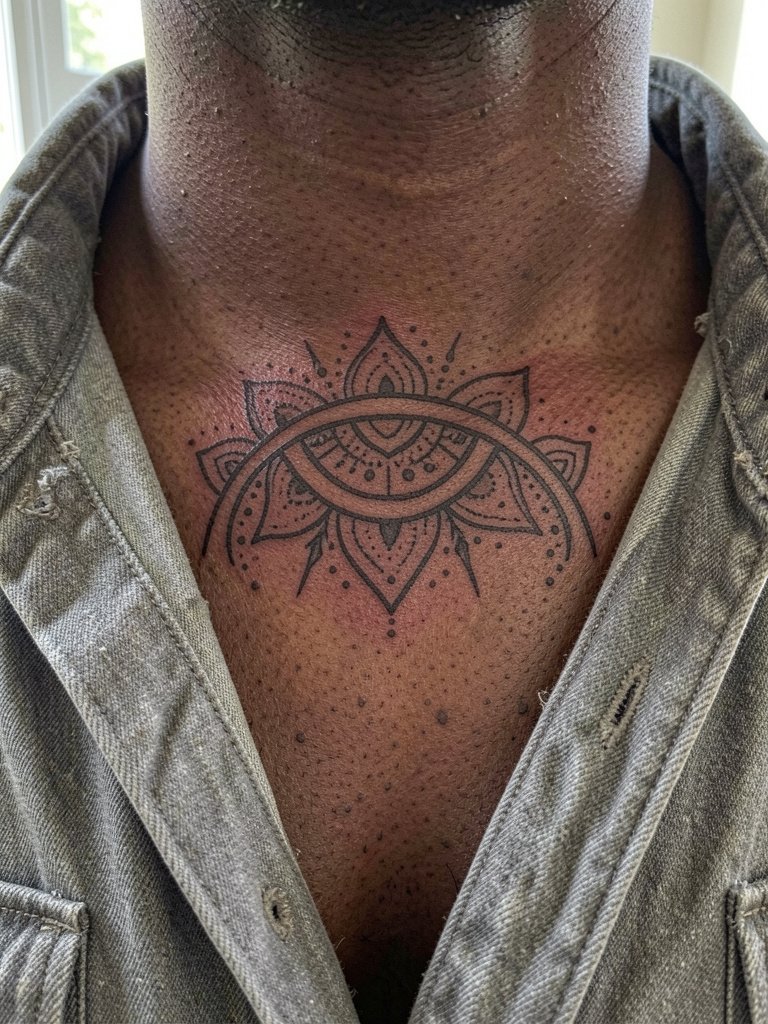
9. Ornamental mandala half-accent perched on the clavicle
A partial mandala that arcs above or below the collarbone reads ornamental without overwhelming. The trick is to keep the filigree open and avoid tiny dot clusters that fill in. Ask for the stencil to be moved slightly along the bone so you can see how the curve sits with natural movement. This placement benefits from a slightly longer session because dot work and micro arches take time to execute cleanly. For showing it off, layered thin chains above the piece create a complementary rhythm. Try a layered thin chain necklace set.
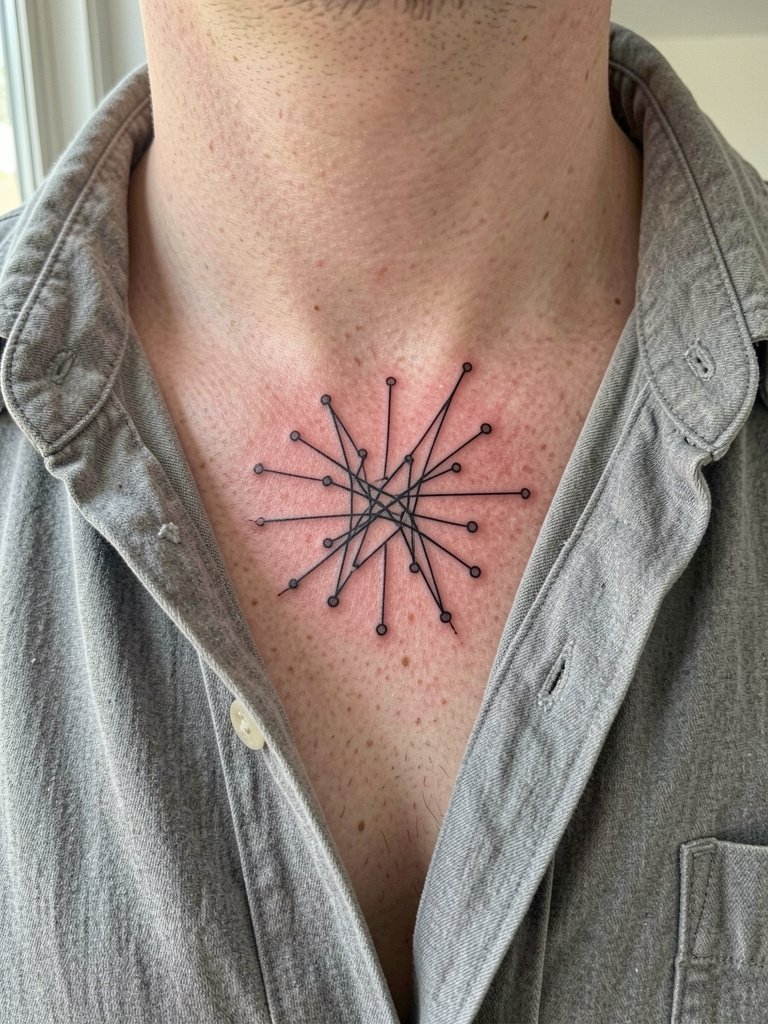
10. Cyber fine-line abstract pattern for a tech edge
Complex intersecting ultra-thin lines and tiny circuit-like nodes make a collarbone accent that feels futuristic. This is a niche choice and it ages based on spacing. One camp warns that ultra-dense cyber patterns can blur quickly. The other camp says careful negative space planning prevents that. If you want a sci-fi look, pick fewer nodes and larger negative gaps so the geometry reads at three years. Consider a small neon accent only if you plan for touch-ups. For session-day wear, a loose button-down helps the artist access the area without strap pressure.
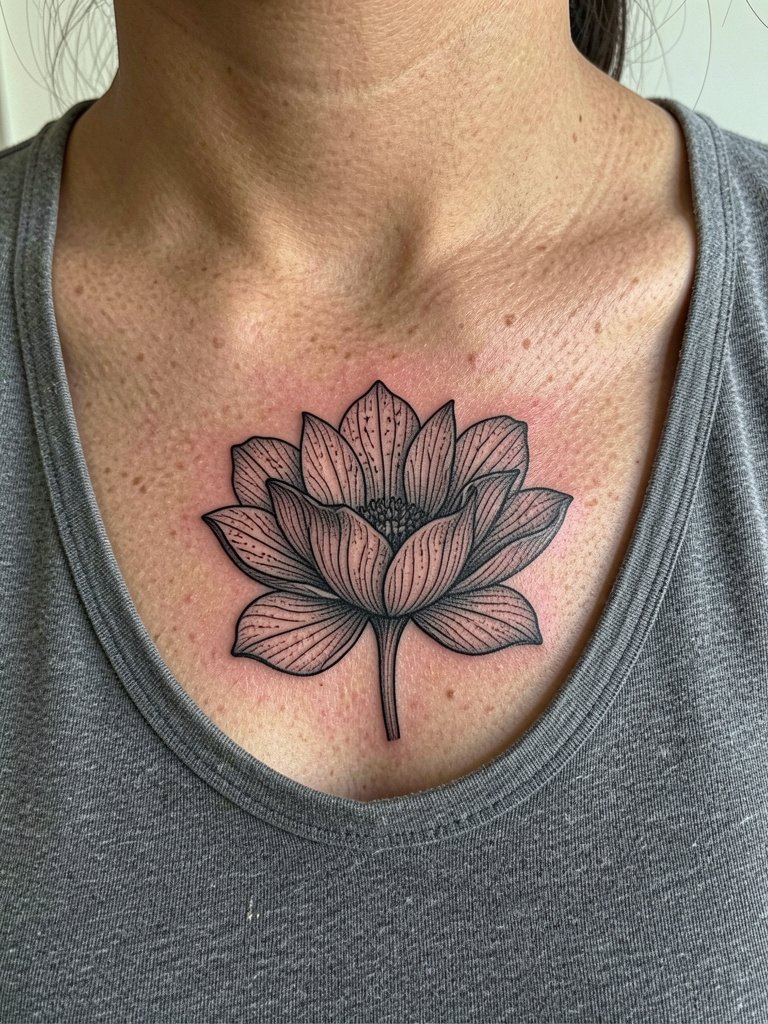
11. AI-assisted botanical cross-section for technical detail
Medical-style cross-sections of a flower translate beautifully to fine line when the artist designs with intentional spacing. Because these designs can be dense I advise asking for an AI-refined mockup that the artist then simplifies by removing every third internal filament. That keeps the idea but reduces blur risk. Expect a slightly longer session and a touch-up window at year two. For a quiet reveal try a sleeveless top to frame the upper chest.
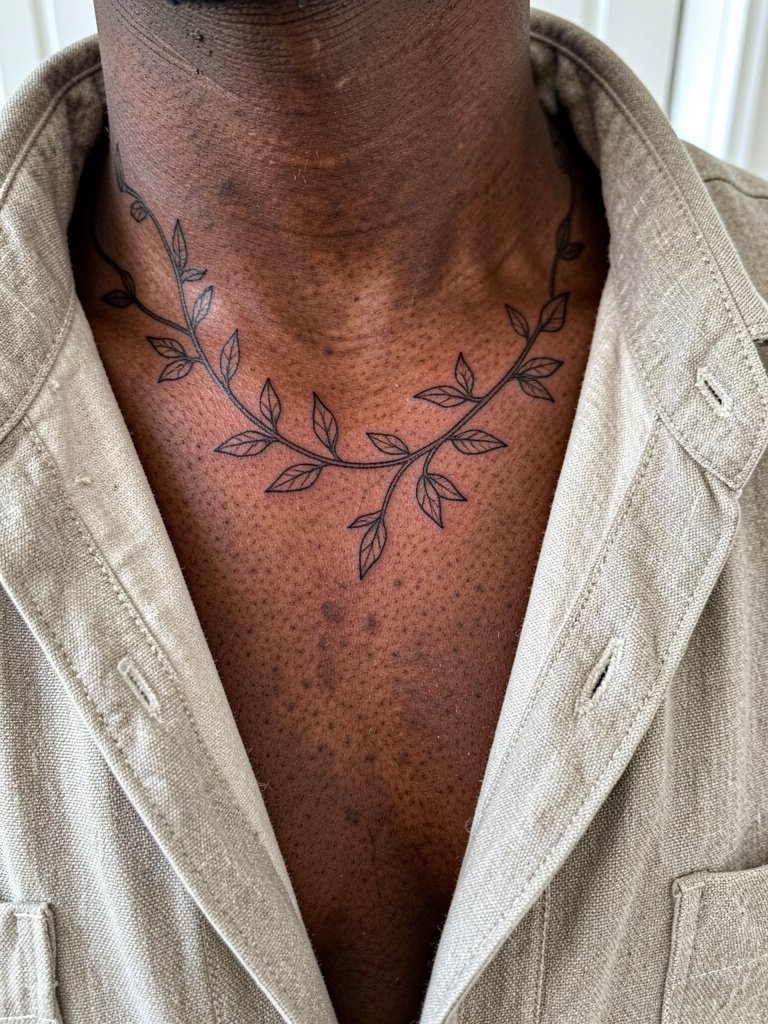
12. Vine wrap that follows the clavicle toward the shoulder
A flowing vine that curls around the collarbone looks organic and editorial when each leaf is given room. The common mistake is too many tiny leaves tightly packed. If you want longevity, scale each leaf to read at 6 months and at 2 years in the mockup. The session feels longer because the artist works along the bone angle and must pause over the ridge. For outfit pairing roll up linen sleeves or go with a linen button down shirt so the movement of fabric complements the vine.
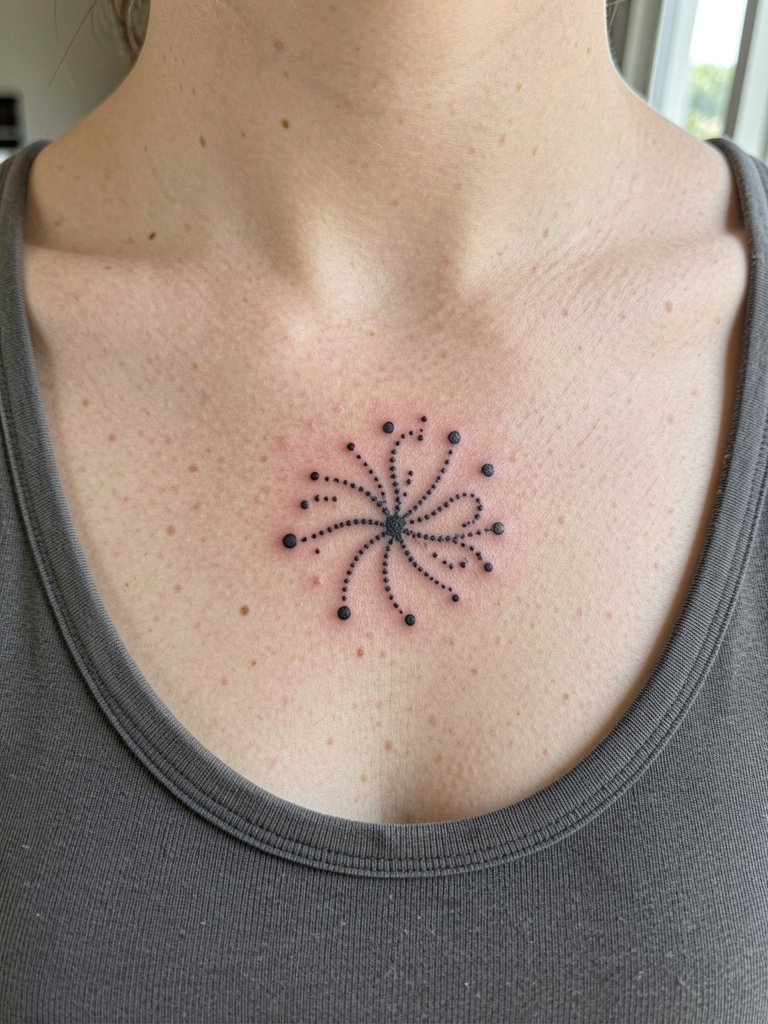
13. Soft ornamental accent made from dots and lines
Small clusters of dots and thin connecting lines can create an abstract piece that sits above the collarbone like jewelry. The trick is spacing. Too many dots in a confined area will dull into a smudge. I usually recommend a grid test on the forearm to observe dot retention at six months before committing to the collarbone. This design is low session time and low blowout risk when done with open negative space. Pair with a dainty gold stacked bracelet set on the wrist for balanced editorial weight.
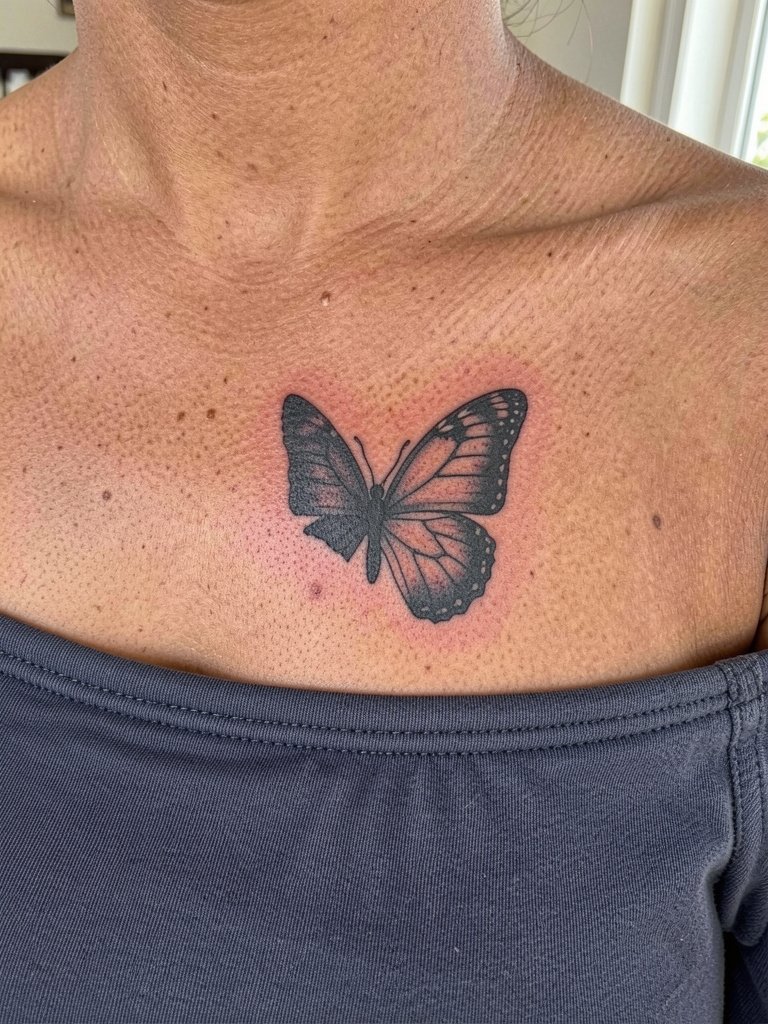
14. Butterfly wing fragment for asymmetrical collarbone detail
A single butterfly wing fragment feels like a hint rather than a motif and works well for asymmetric styling. The common error is pairing it with heavy interior veins that blur. Keep the surface area a bit larger and the internal veins fewer. For session prep wear a loose button-down or strapless top so the artist can angle the stencil precisely. For nights out try an off-the-shoulder top in olive to let the fragment read like a brooch.
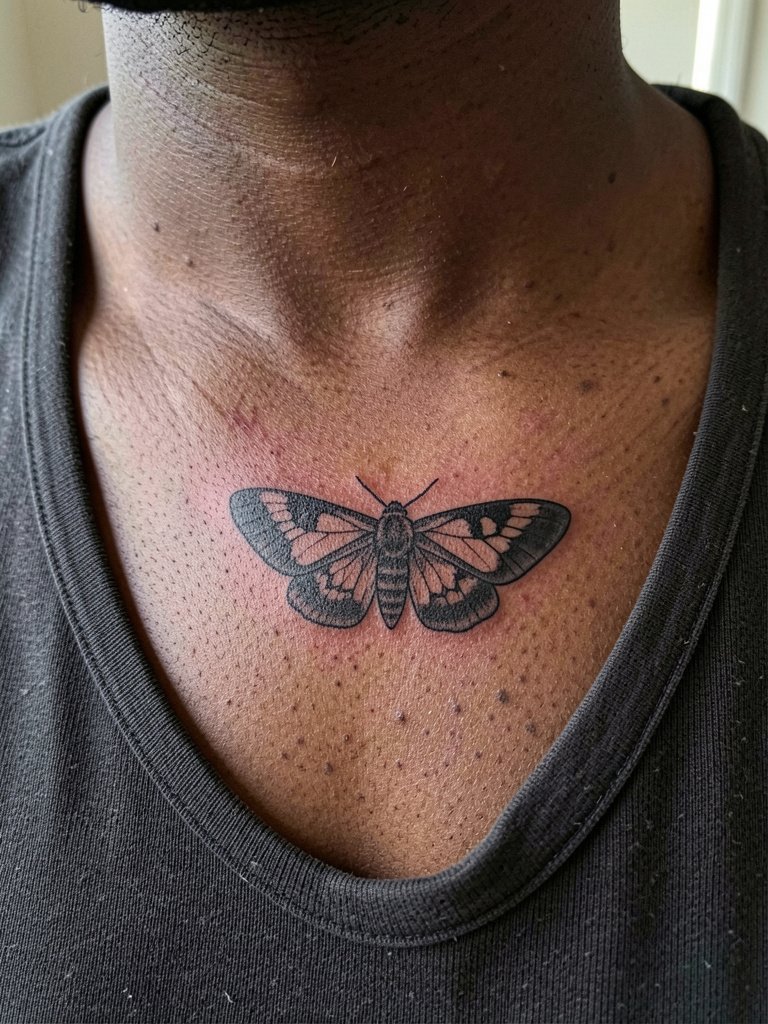
15. Minimalist moth in blackwork with negative space
A tiny moth rendered with high-contrast blackwork and careful negative space reads strong without bold saturation. The design should avoid micro stippling across the thorax or the tiny dots can merge. This style ages differently from single-needle scripts because the heavier black anchors the piece. Expect a slightly longer session for crisp fills and let the artist show healed blackwork examples rather than fresh photos. Pair with a sleeveless top or a delicate shoulder chain to keep attention on the silhouette.
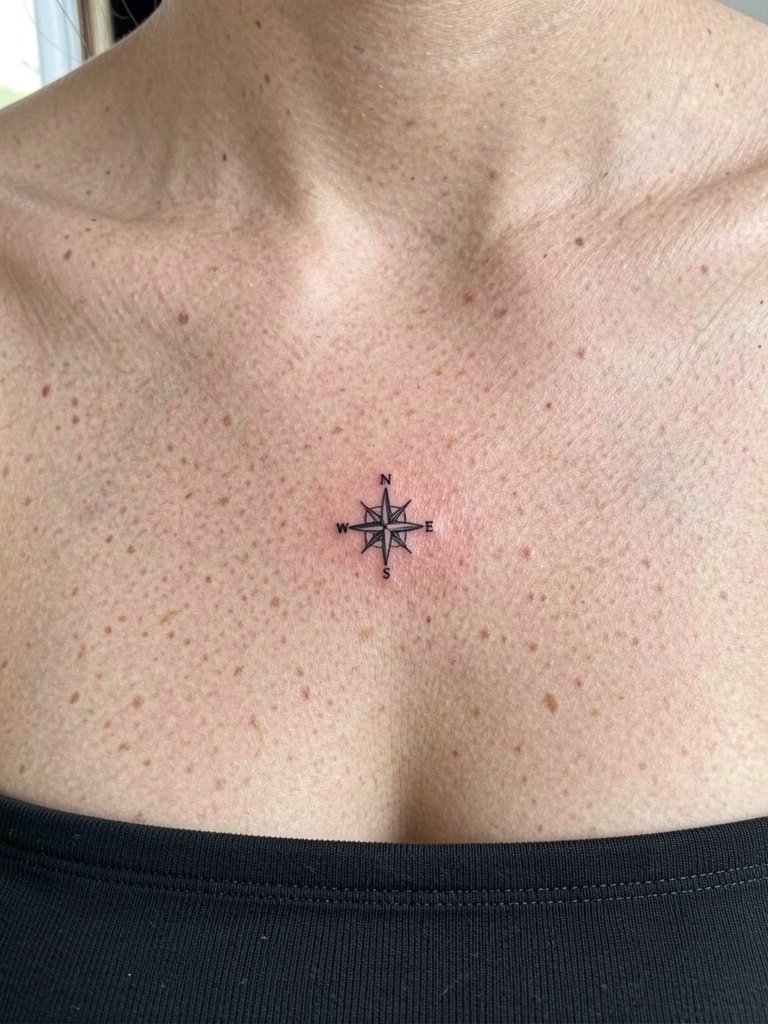
16. Tiny compass or anchor for subtle directional ink
Small navigational motifs work when you want literal symbolism but discreet scale. The mistake is making the directional points too thin. I recommend geometric anchors or compass roses where the main spokes are slightly thicker and the inner detail is simplified to preserve readability at two years. This is a short session and low blowout risk, but expect sharp pain at the bone edge. For a casual reveal, a strapless top keeps the chest area uncluttered.
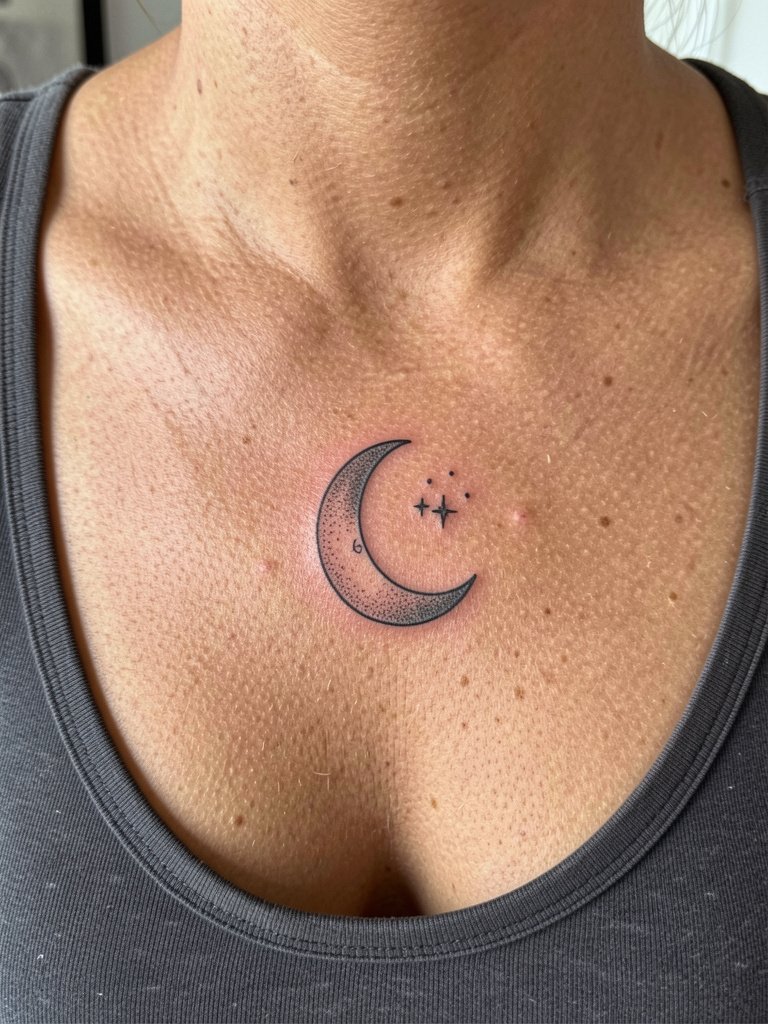
17. Stippled crescent moon with dot star cluster
A crescent moon rendered in thin line with stipple shading and a handful of dot stars creates an elegant, low-profile collarbone accent. The key is to keep stipple density moderate. Overly dense stippling flattens into a darker patch as it heals. For durability, ask the artist to show the same technique on forearm healed photos so you can judge stipple retention. Session is comfortable and short. Pair it with a dainty gold stacked necklace set for a jewelry-like presentation.
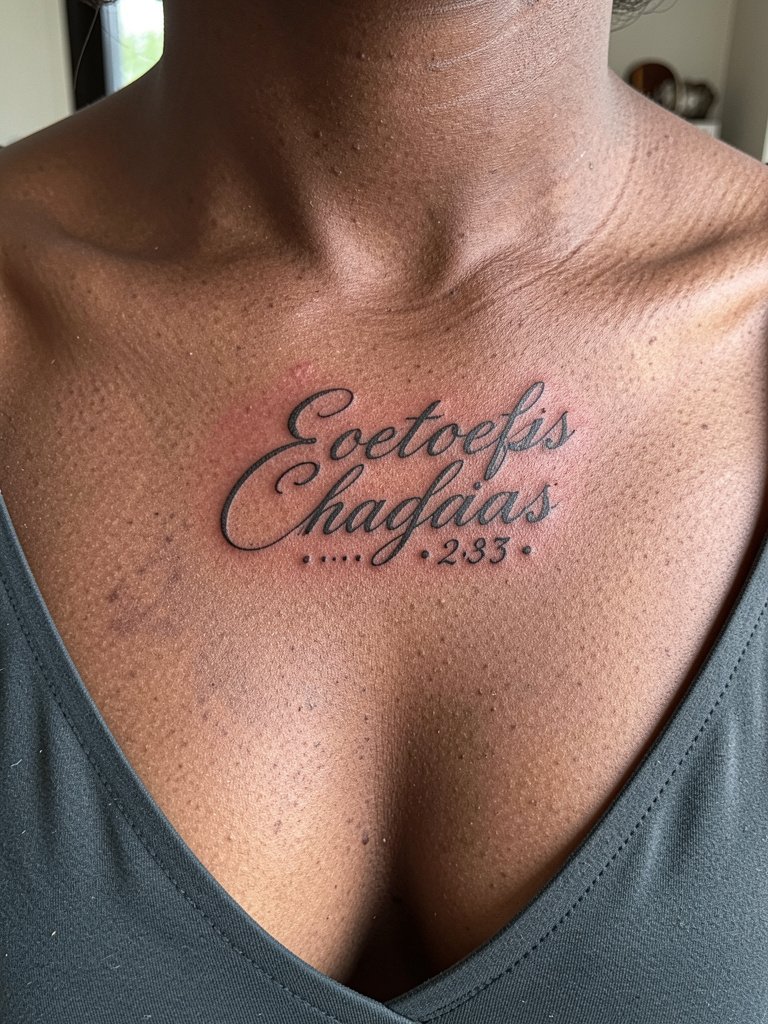
18. Layered script with dot-work connector
Stacking a tiny second line of script or dates beneath a short word with dot-work separators gives more context without adding bulk. A frequent mistake is making both lines equally thin. Instead ask for the primary line to be the focal weight and the secondary line about 70 percent of that thickness. Expect an appointment under an hour. For an understated look that still photographs well, try a low cut camisole with thin straps.
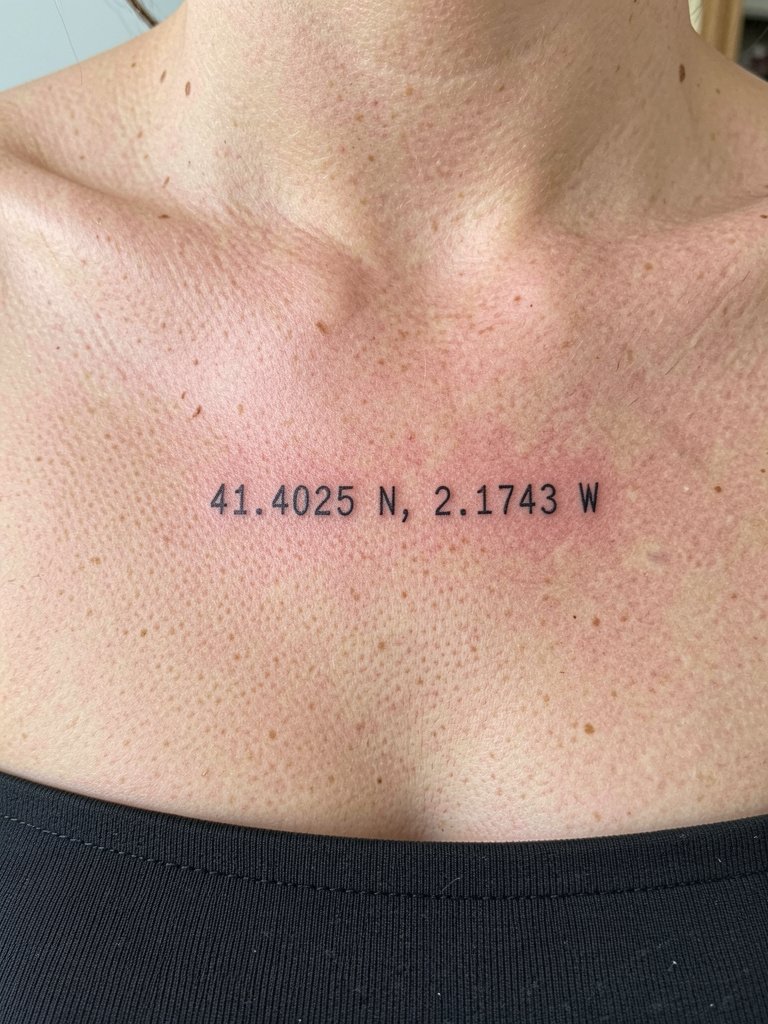
19. Micro map coordinates tucked under the clavicle
Latitude and longitude in a fine monospace font read crisp when the characters are spaced and scaled properly. The common problem is squeezing long coordinate strings into a small area. Have the artist show the stencil at your preferred size and ask for a version with slightly wider kerning. This is short, straightforward ink with low blowout risk if the script is clear. For session comfort wear a strapless top so the artist can work without tight straps cutting into the stencil.
Frequently Asked Questions
Q: Will fine line collarbone tattoos blur faster than bolder work?
A: There are two clear camps. One group says the collarbone’s thin, moving skin and repeated pressure from straps cause ultra-thin lines to blur within one to two years. The other group argues that if you increase spacing slightly and use a modestly stronger line weight, fine line pieces can stay readable for years and may only need a touch-up at year two or three.
Q: How painful is a collarbone session and how can I prepare?
A: The collarbone is widely reported as one of the sharper, more intense spots because the needle rides over bone. Eat a protein-rich meal two hours before, avoid caffeine, stay hydrated, and bring a small snack. Some people use topical numbing applied per the artist’s guidance to get through the sharp moments.
Q: What should I wear to the appointment for a collarbone tattoo?
A: Wear something that gives the artist clear access without tight straps digging into fresh ink. Good options are a strapless top or a loose button-down shirt you can remove easily. The goal is easy access and a resting clothing state that will not rub against the area immediately after the session.
Q: Where can I find artists and healed portfolio examples for fine line collarbone work?
A: Search location filters on Instagram and TikTok and use hashtags like #finelinetattoo, #collarbonetattoo, and #microfineline then filter by location to find artists nearby. Browse Tattoodo and similar portfolio sites for keyword combos like "fine line collarbone botanical" to find healed work. Reddit communities also share peer recommendations and healed photos across skin tones.
Q: How often do fine line collarbone pieces need touch-ups?
A: Expect variable timelines based on line weight and placement. Many small fine line pieces benefit from a light touch-up every two to three years to restore crispness. If you plan for periodic maintenance in year two you can be more adventurous with ultra-fine details.
Q: Do fine line designs show up on darker skin tones in photos?
A: Thin black lines can photograph muddy on darker skin in low light if the line weight is too fine. A practical fix is modestly heavier linework, contrast-creating negative space, or a subtle internal highlight where possible. Ask the artist to preview ink visibility on your skin before the needle touches.
Q: Can I still wear my favorite tops after getting a collarbone tattoo?
A: Yes, but plan wardrobe around the healing window. High-neck tops and scarves hide fresh ink while you heal. Off-the-shoulder and low-cut camisoles frame healed collarbone work beautifully when you want to show it.