
Time keeps moving whether you notice it or not, and clock tattoos let you pin a moment to skin with style choices that matter for how the piece looks in five years. Trends push fine-line icons onto wrists while experience nudges people toward bolder outlines or slightly enlarged spacing so gears, numerals, and tiny hands stay readable. Below are clock concepts that balance meaning, placement, and real-world aging so you pick something that still reads like yours down the road.
1. Melting Clock with Floral Border, Inner Forearm
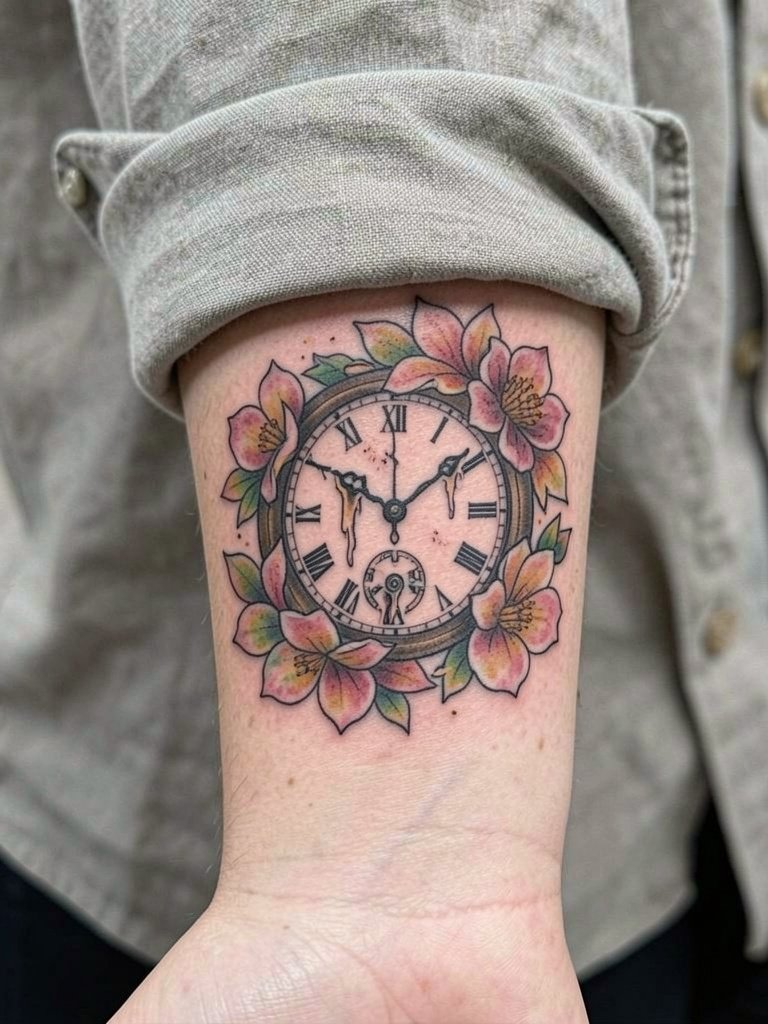
This neo-traditional melting clock leans into fluid shapes so the dial reads like a motif rather than a precise time. For this placement the linework should be slightly bolder than a single-needle reference so the drips keep definition at two years. Expect a one to two hour session depending on color. A common mistake is cramming tiny floral detail into the drip areas, which blurs faster. For showing it off, pair with a rolled cuff linen button-down shirt in cream or olive and keep bracelets minimal on the opposite wrist to avoid distraction.
2. Minimalist Geometric Clock with Single Hand, Wrist
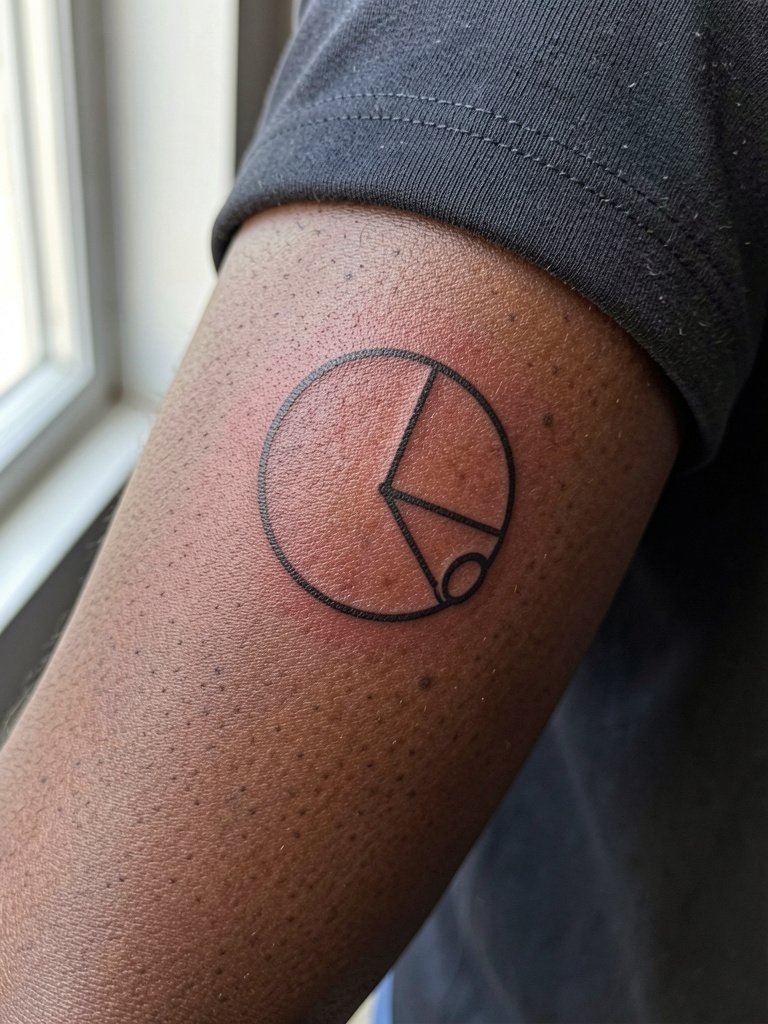
This small geometric clock suits first tattoo seekers who want subtle symbolism without visual clutter. On the wrist the skin flexes, so plan on slightly wider spacing between lines and ask for a firmer line weight than the Pinterest single-needle sample. Healed at six months it will look crisp if spacing is right, but by year two ultra-thin variants often soften. The session is quick, usually under 45 minutes. For showing it off try a thin chain bracelet set on the opposite wrist and avoid watches on the tattoo side during the first two weeks.
3. Vintage Pocket Watch with Open Gears, Upper Chest
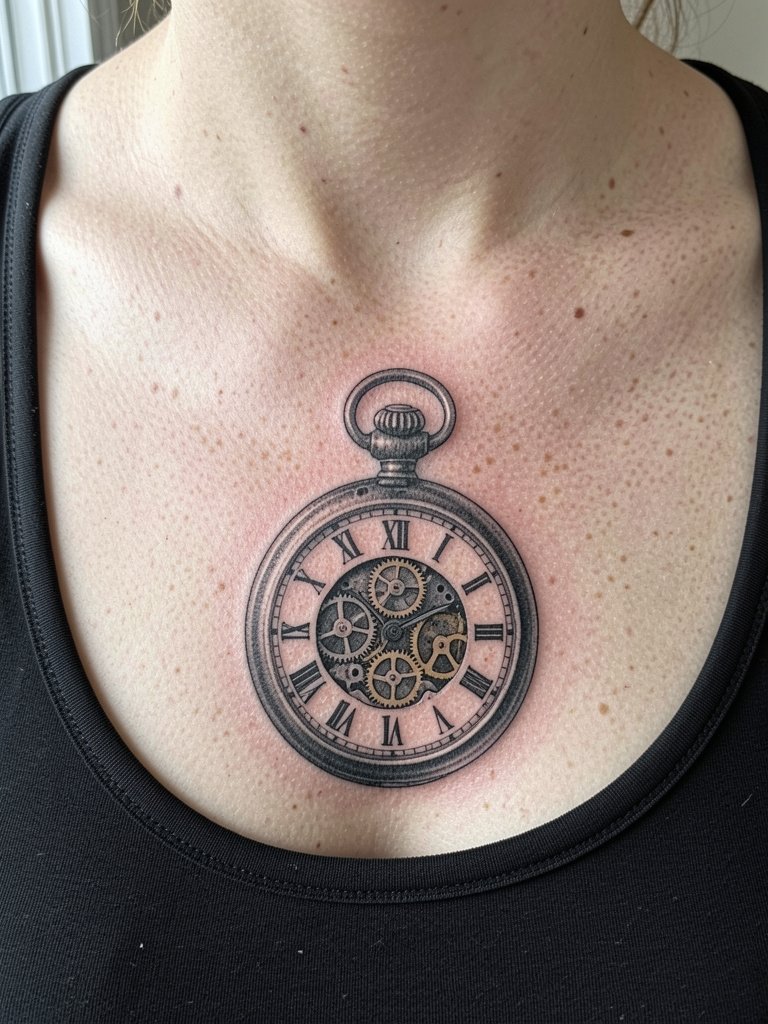
A pocket watch with exposed gears reads nostalgic and personal when scaled across the upper chest. For a photoreal effect bring reference photos that show the gear spacing at different scales, and specify the size you want the teeth and screws to be so the artist can maintain texture without turning parts into blotches. Expect multi-session shading for medium detail. The chest moves less than ribs, so this placement preserves small gear work better over time. Pair the piece with a layered silver chain necklace that sits above the watch and does not overlap the tattoo.
4. Broken or Shattered Clock Face, Lateral Hip
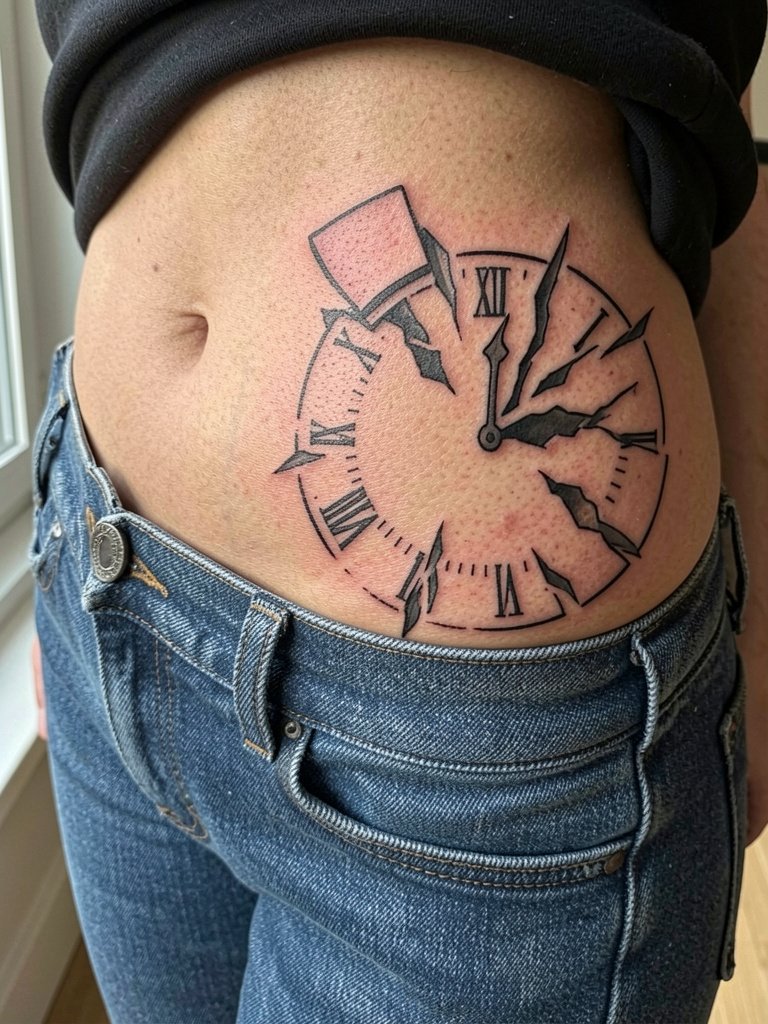
Shattered clock faces work well on the lateral hip because larger shards give the artist room to use negative space, which ages better than tiny filigree. One mistake is trying to compress the shard pattern into a coin-sized tattoo. For this placement expect moderate pain because of thin skin near the pelvis. Session time depends on size but plan for at least one two-hour block for moderate detail. To style it for outings, high-waisted cropped tops in solid colors reveal the side hip area, so try a high waist cropped top for a clean reveal.
5. Roman Numeral Clock with Birth/Death Date, Inner Forearm
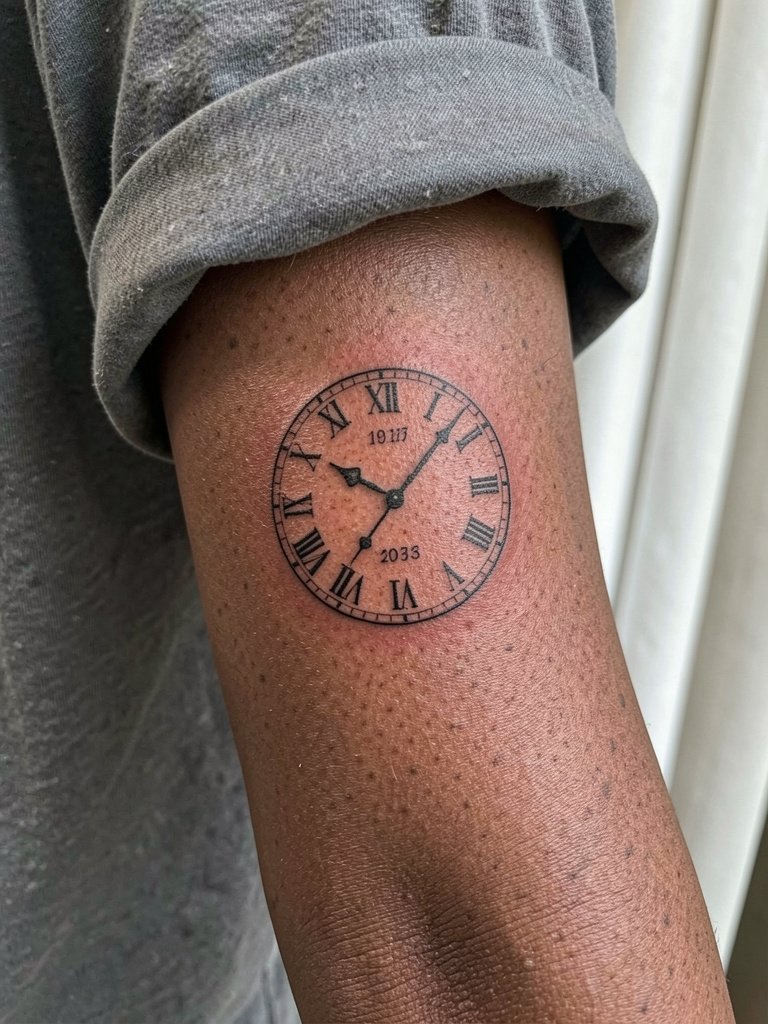
Roman numeral clocks make precise memorial markers when you lock in a timestamp. Bring the exact Roman numerals formatted the way you want them so there is zero guesswork. At this placement a common error is making numerals too small, which leads to blurring; scale them to breathe at three to four inches across. Expect a one-hour to two-hour session. For session wear pick a neutral tank top so the artist has full forearm access without tight cuffs.
6. Grandfather Clock with Pendulum Motion, Side Torso Ribcage
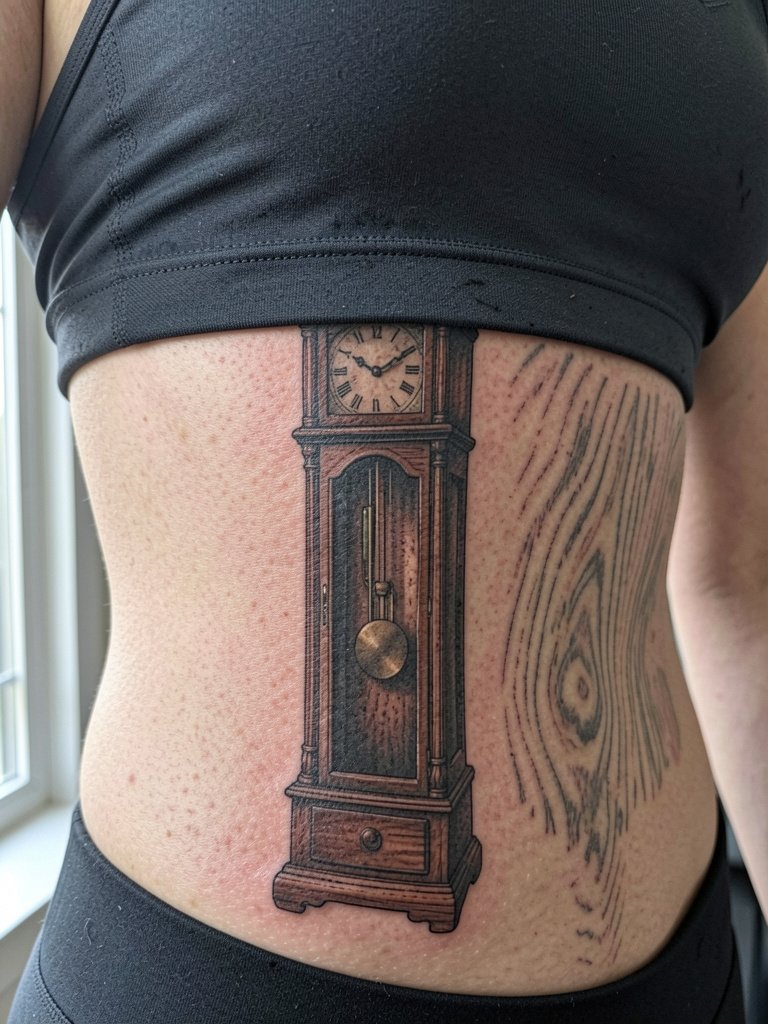
A full grandfather clock across the ribs reads ancestral and formal, but the ribs stretch with body changes. If you expect weight fluctuations avoid ultra-precise hands and prioritize overall silhouette. Pain here is higher than forearms, so numbing strategies and a split session are common. One mistake is asking for tiny internal wood grain detail at small scale; that detail washes out after healing. For wardrobe, side-tie crop tops or off-shoulder dresses in solid colors let the motion-forward pendulum show without competing patterns, so consider a side tie crop top for reveal days.
Pack Smart
The six ideas above touch both quick wrist icons and larger chest pieces, so a few session and healing helpers smooth the chair day and the first week.
-
Tsubaki Japanese balm. A thinner-feeling balm some people use after the initial crusting stage to keep fine-line edges from looking clogged, helpful for delicate gear detail described above.
-
Hustle Butter Deluxe. Popular for daily maintenance after the first week on neo-traditional colorwork seen in the melting clock and rose pieces.
-
TattooGoo healing lotion. A gentler option some folks prefer for dry-healing phases on areas with heavy friction like hips.
-
Saniderm or second-skin bandage. Used by people who want to reduce scabbing on fine-line faces and keep edges crisp during the first 3 to 5 days.
-
Fragrance-free gentle body wash. Keeps the area clean without irritating the new ink while showering.
7. Digital LED Clock Display, Inner Forearm
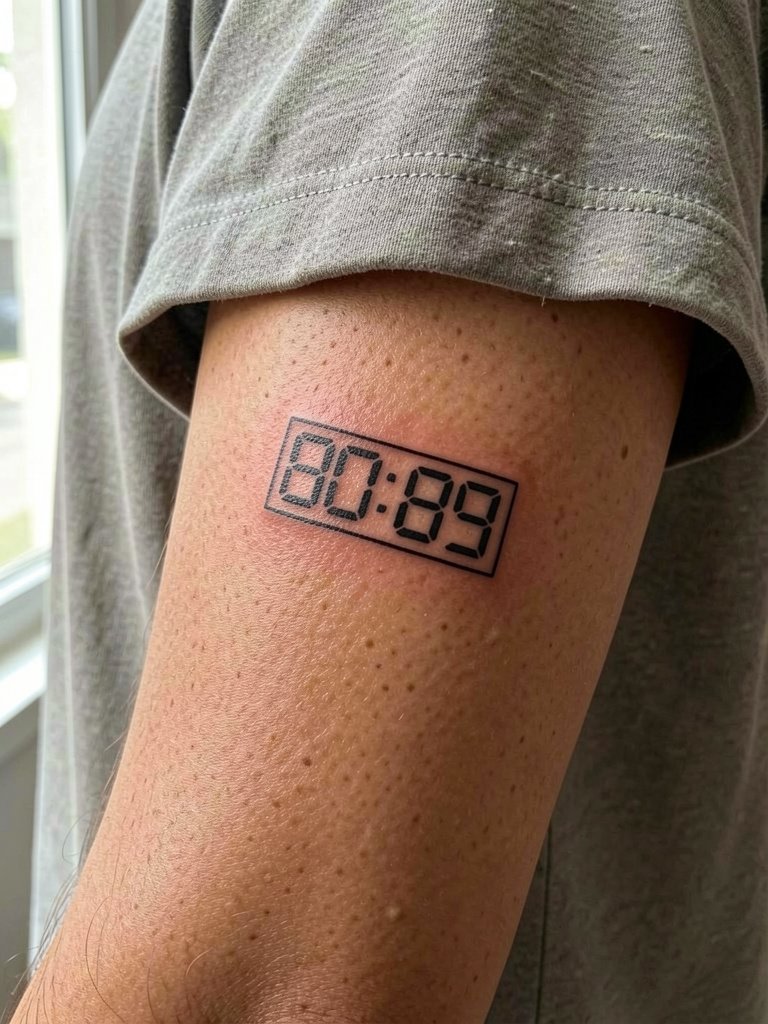
A digital LED display feels modern and reads well as a compact forearm piece. Pixelated numerals need slightly heavier black blocks than micro-line numerals so the digits stay legible at two years. The usual mistake is using too many tiny pixels, which softens into indistinct blocks. Plan for a one-hour session for small sizes. For appointments wear a loose short-sleeve shirt so the artist can roll the sleeve up without tugging at a cuff.
8. Mandala Clock with Circular Patterns, Lower Back
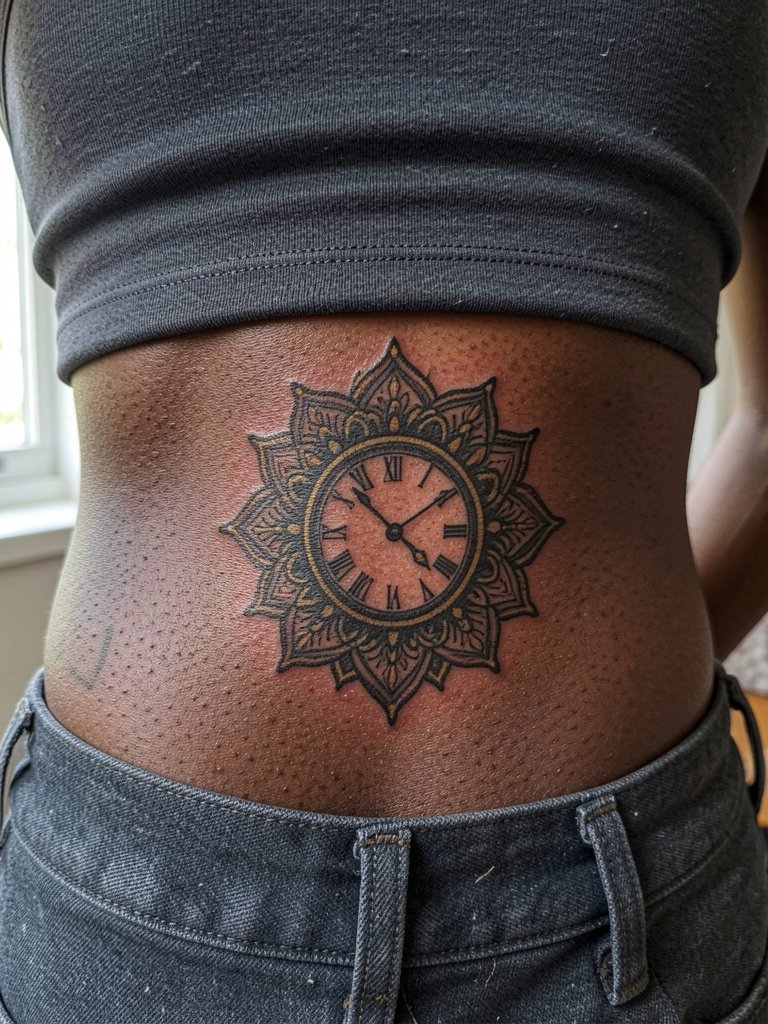
Mandala clocks hide small imperfections because the radial pattern distributes attention away from any single line. For lower-back pieces, symmetry and spacing are the elements that preserve the design as the body moves. If you want color, discuss saturation expectations so the gold accents do not appear faded against darker tones. Expect a two to three hour session for medium-sized mandalas. For showing off, backless tops or cropped cardigans in neutral tones frame the lower back, so try a backless crop top.
9. Hourglass with Clock Face Inside, Sternum
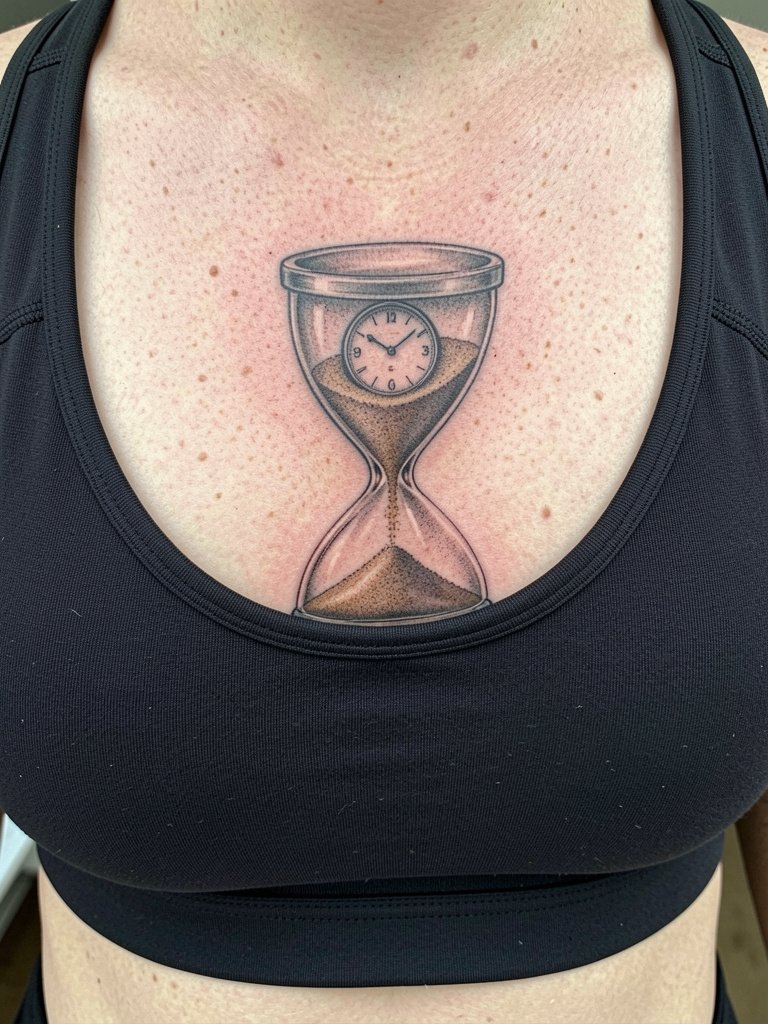
The hourglass-clock hybrid emphasizes finite time in a compact vertical composition that fits the sternum well. Sternum skin has variable sensitivity and can require breaks during shading. One mistake is placing very dense stipple shading over the sternum crease which can heal patchy. Bring posture photos so the artist sees how the chest moves when you breathe and can place the glass curve where it reads best. For session comfort wear a strapless top or tank so the artist can work without fabric interference.
10. Clock with Rose and Thorns, Inner Upper Arm
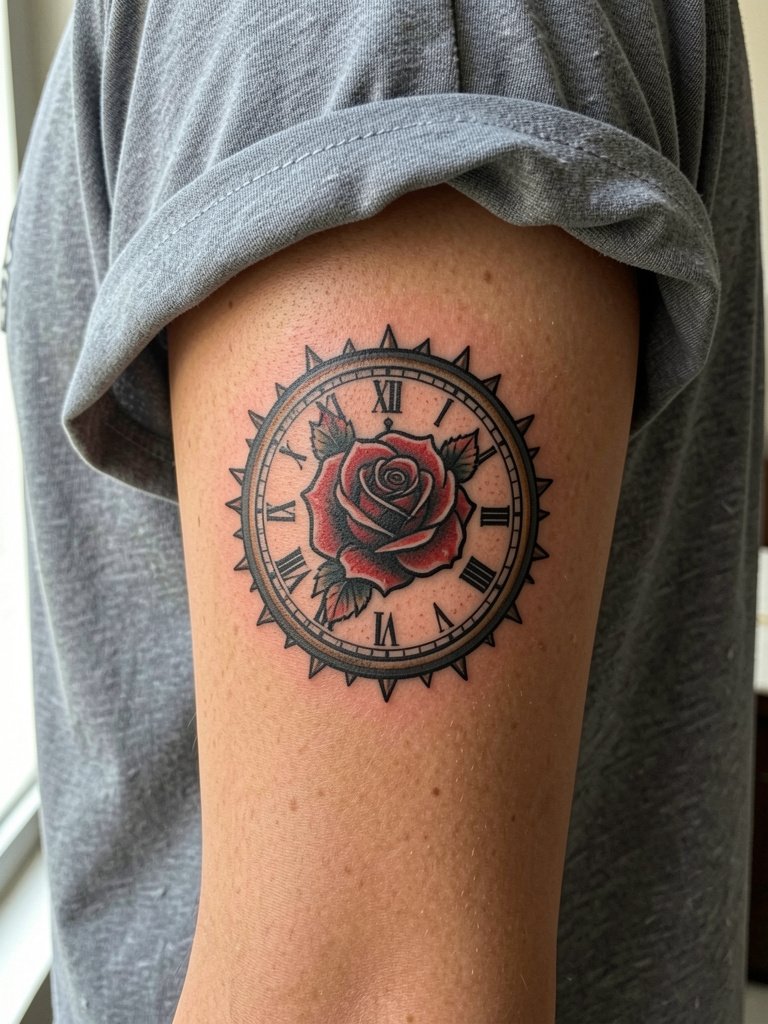
Rose and thorn combos anchor clocks with emotional contrast. For the inner upper arm pick a saturation approach that suits your skin tone because reds can fade faster on melanin-rich skin. A frequent error is asking for a tiny saturated red bloom that loses color at year three. The session is moderate in discomfort and often done in one block for medium size. For wardrobe pairings try a boat neck short sleeve top that frames the inner arm without rubbing the area.
11. Small Ticking Clock with Sound Waves, Behind the Ear
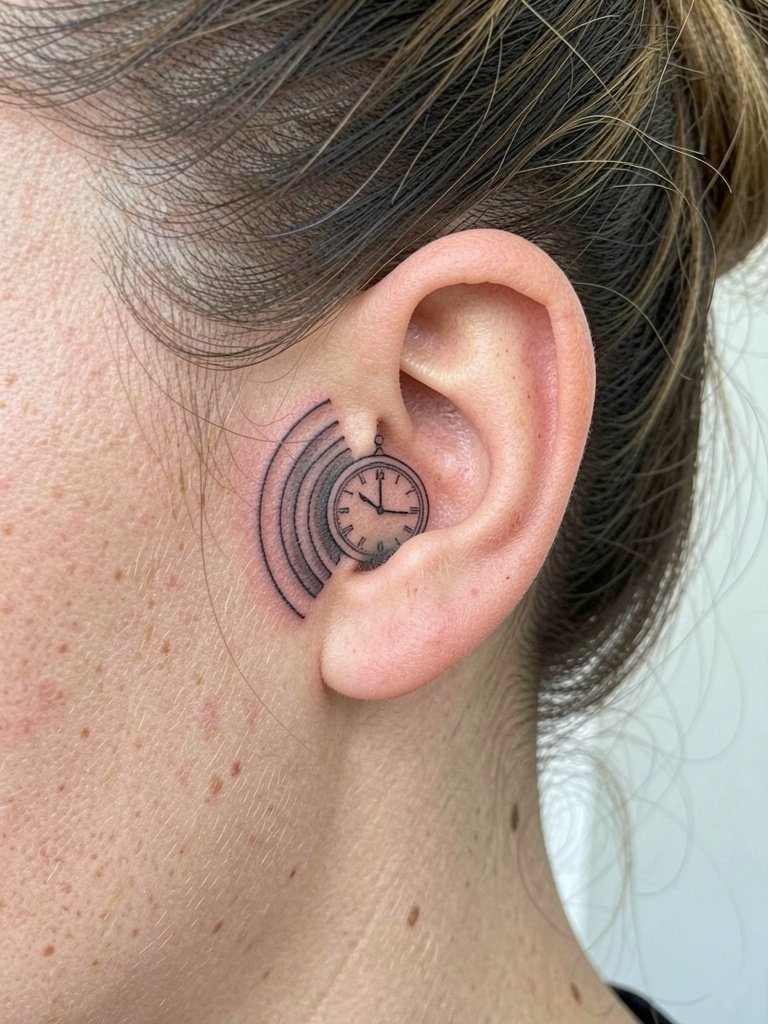
Tiny clocks with radiating tick marks read like sound visualizers and suit discreet placements behind the ear. Because the area is small, ask for slightly wider spacing between radiating waves than the reference to avoid merging. Healed at six months a single-needle piece can look delicate, but by two years very thin radiating lines may soften. Session time is short. For reveal looks keep hair up in a clip or bun and consider a minimal ear cuff to balance the silhouette.
12. Clock with Portrait Integration, Upper Chest
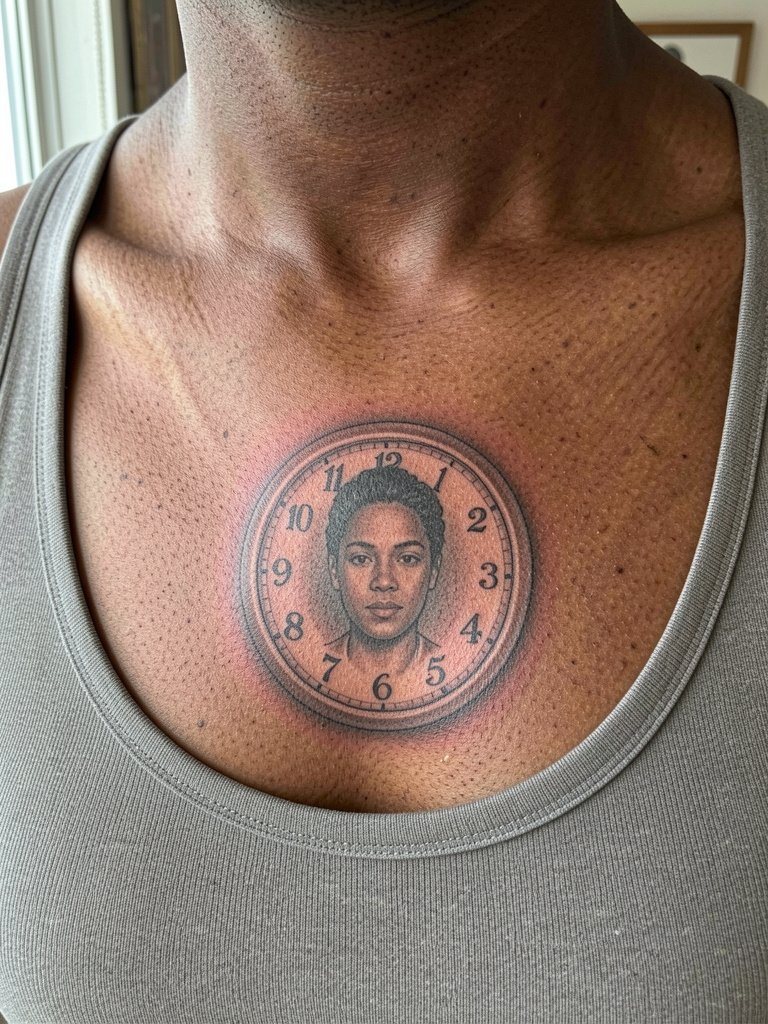
Portrait clocks demand accurate contrast and scale so the face remains identifiable within the dial. You should bring a high-resolution reference and ask the artist to do a scaled stencil at the intended size. Portrait detail can fade into grey if the piece is too small. Multi-session realism drives cost and time. For session clothing wear a tank top to give the artist collarbone access and avoid necklaces during shading.
13. Abstract Clock with No Hands, Wrist
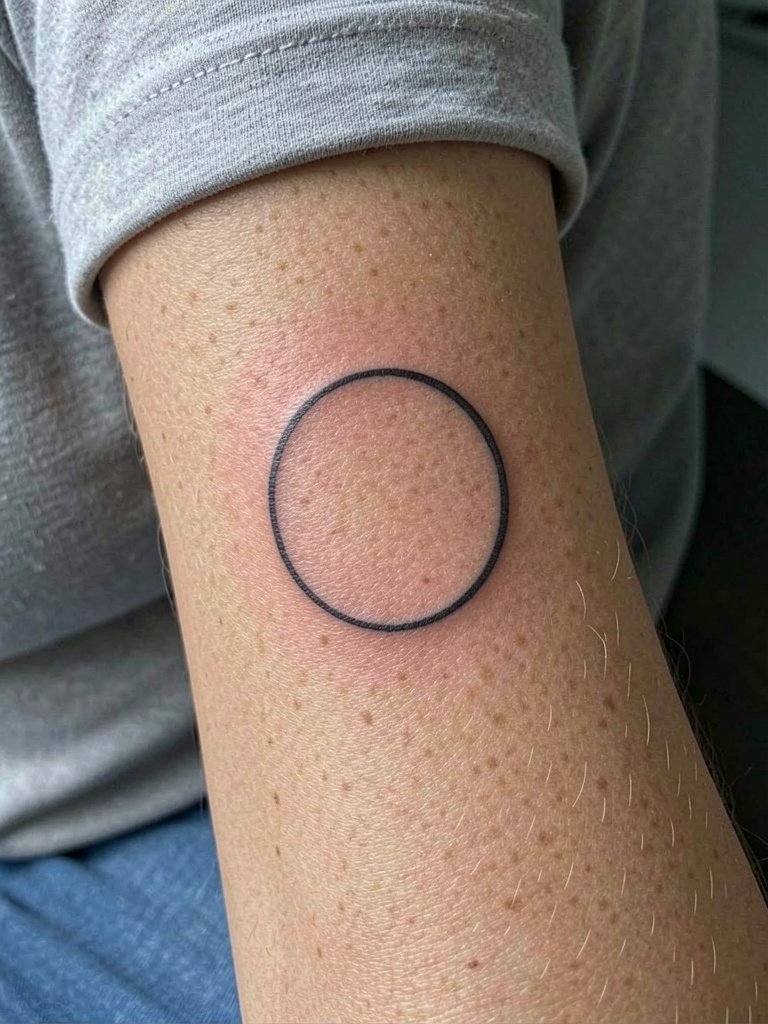
A clock without hands reads like open possibility and fits the wrist well. Because the wrist flexes, a hair-thicker outline and at least a two to three inch diameter prevents the ring from blurring into a halo. The most common mistake is going coin-sized with a single-needle line. Expect a quick 30 to 45 minute session. For display consider a minimalist watch on the opposite wrist to anchor the look.
14. Clock with Family Tree Roots, Lateral Hip
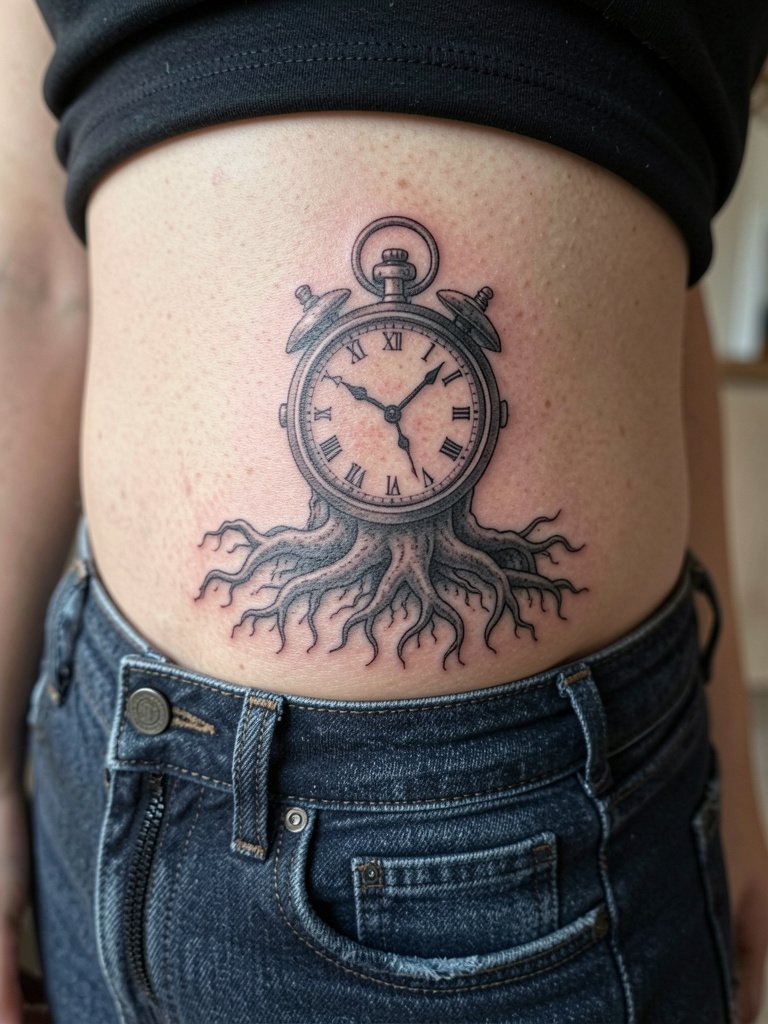
Combining clock faces with tree roots ties time to lineage. On the hip, roots can exploit negative space so the image ages like a silhouette rather than a detail map. Avoid putting micro-detail roots into a small footprint. Session time varies by wrap; plan for at least two hours for a medium piece. For reveal outfits pick low-rise skirts or cropped tops so the lateral hip shows, and try low rise shorts when you want it visible.
15. Melting Clock with Watercolor Splash, Inner Upper Arm
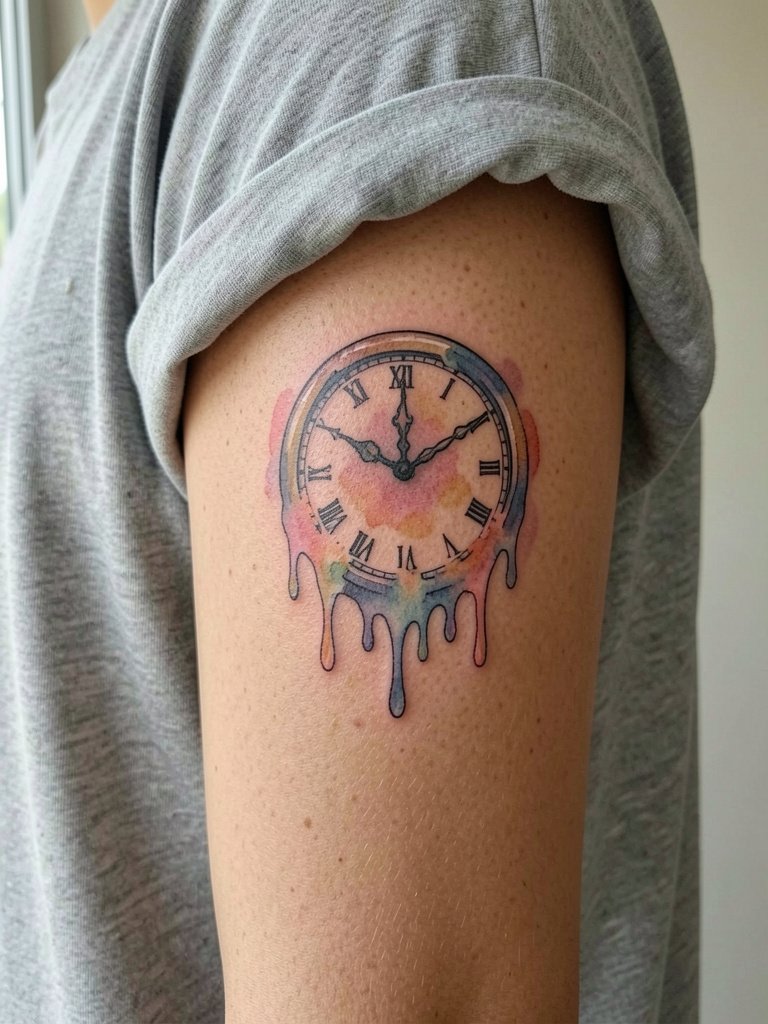
Watercolor melting clocks read emotional and painterly but can patch unevenly as pigments settle. Because watercolor on skin is less predictable, ask for black outlines to anchor washes. A typical mistake is asking for full watercolor with no black anchor, which looks faded after a few years. Sessions often take one to two hours depending on color layering. For styling try short-sleeve boat-neck tops in cream or olive to complement the soft palette, and consider a thin gold bangle on the opposite arm for balance.
16. Micro-Realism Gear Cluster, Upper Arm
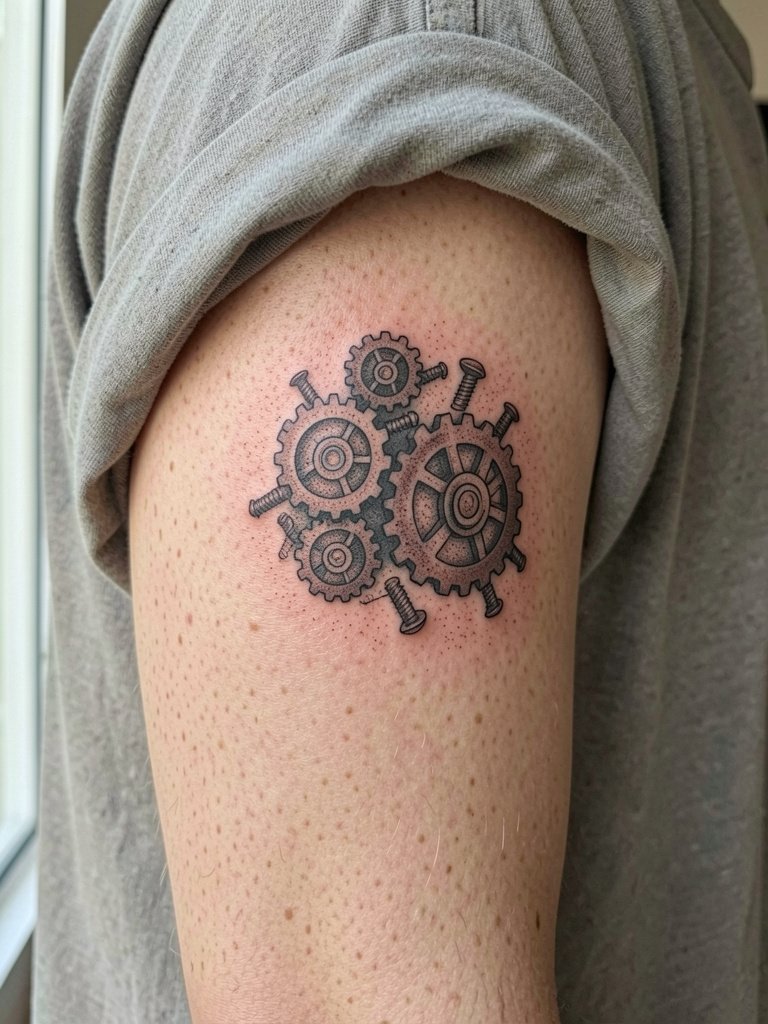
Micro-realism gears demand precision and contrast. If you want gears without a face, ask the artist to scale each gear tooth to a minimum width so the form does not fuse. This style often requires tighter needle work and more touch-up risk if placed on high-stretch areas. Expect multi-hour sessions. For casual reveal wear a loose short-sleeve shirt that keeps the upper arm accessible.
17. Compass-Style Clock, Ankle
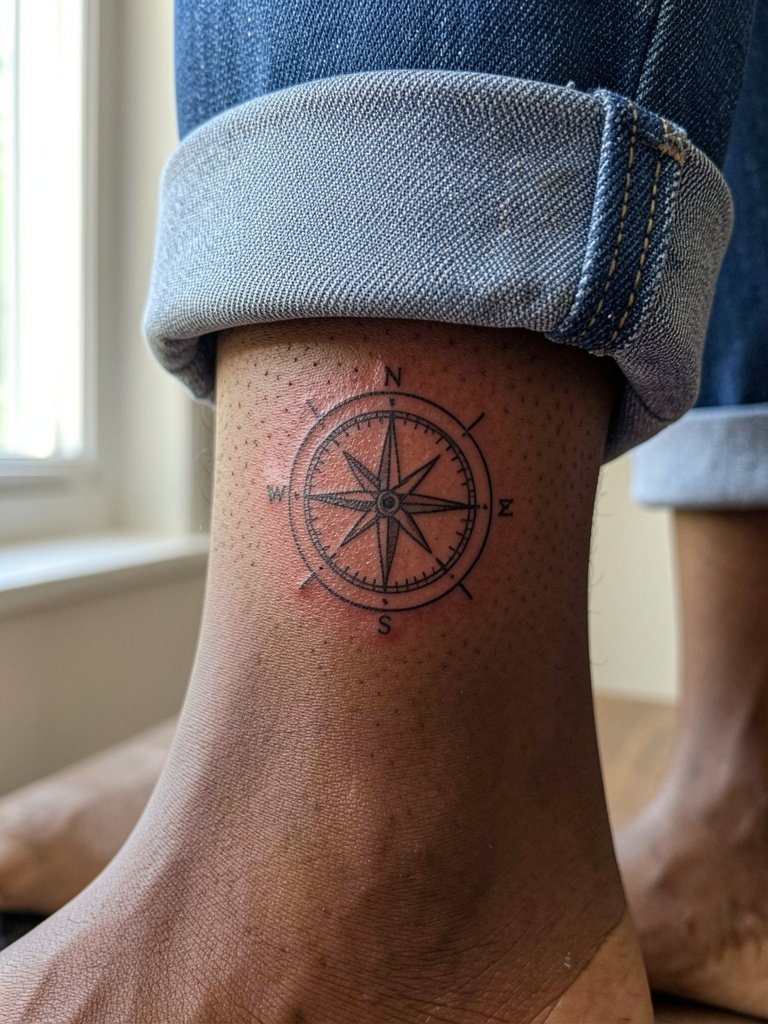
Ankle clocks are charming but face friction from socks and shoes. Choose a simple silhouette and slightly thicker lines to resist the rubbing. A common mistake is packing too much tiny directional detail into the compass points. Sessions are short. For styling roll your jeans cuff to reveal the ankle, and consider a dainty ankle chain for evenings out.
18. Keyhole Clock, Inner Thigh
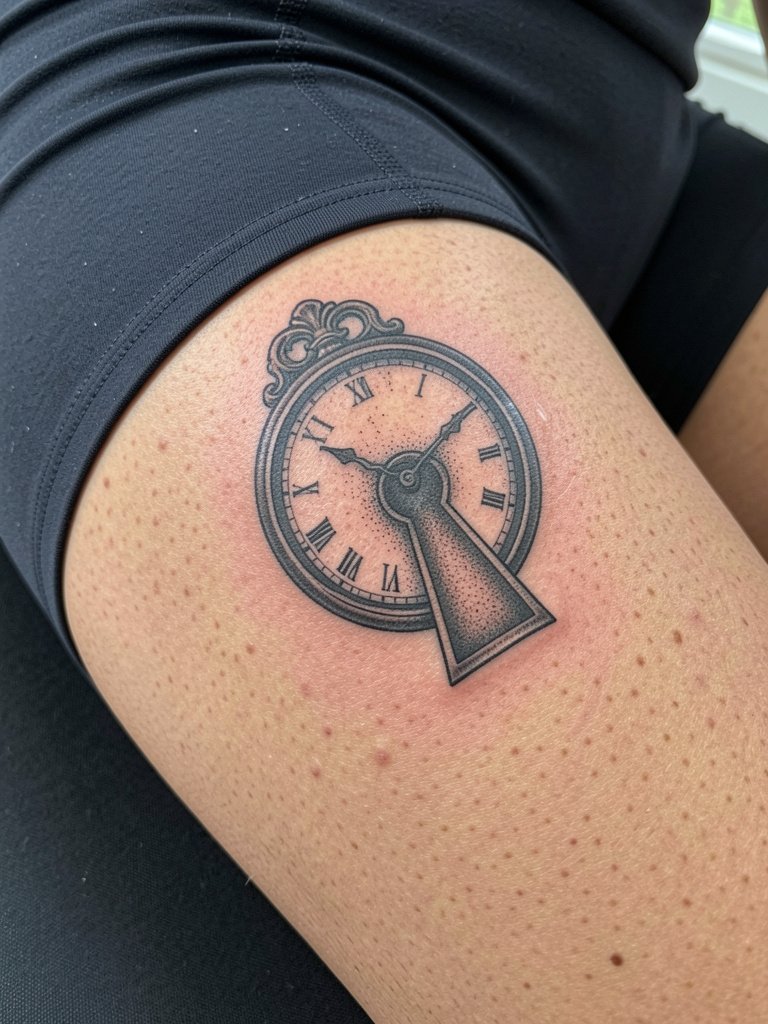
Inner thigh clocks are intimate and often age well because they avoid daily sun and abrasion. The key is avoiding over-detailed filigree in a small area. Expect moderate discomfort and a session that can be split. For session wear fitted bike shorts so the artist can roll the hem without tugging at material.
19. Minimal Pocket Watch Outline, Calf
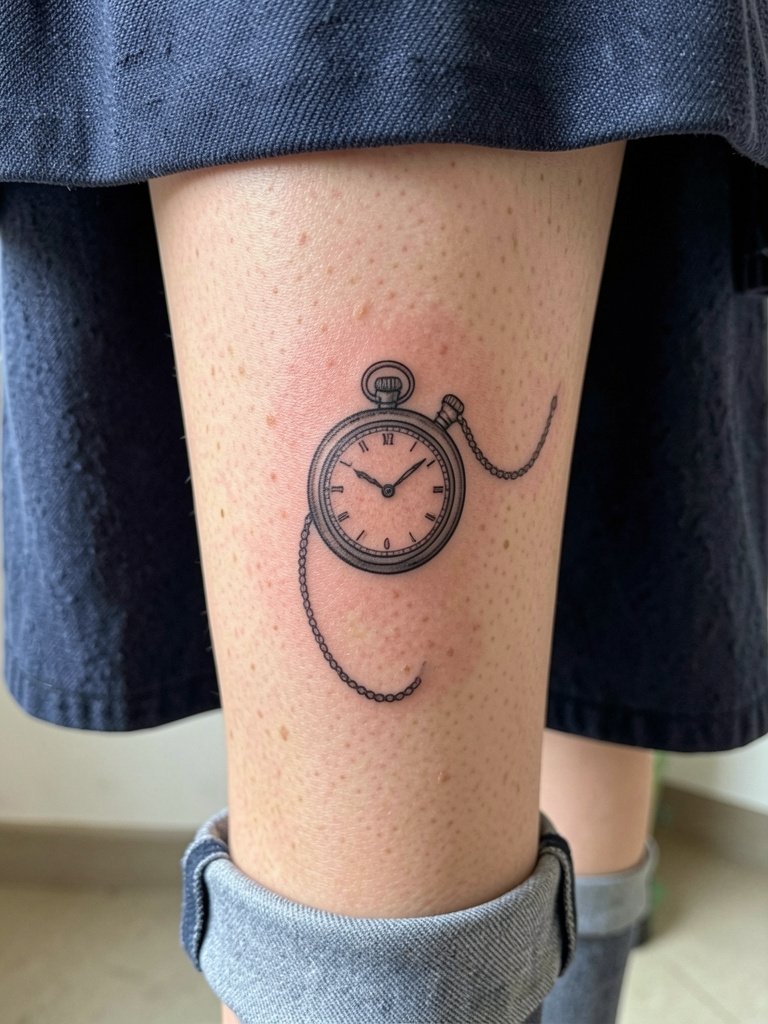
A minimal pocket watch on the calf scales nicely for visibility and tends to keep contour without extreme blowout risk. Avoid shrinking the chain into a hairline or it will ghost with time. Sessions are straightforward and frequently done in under an hour for small sizes. For revealing the art with outfits, consider skirts or cuffed jeans and try a rolled cuff linen pant option.
20. Steampunk Clockwork Sleeve Accent, Forearm
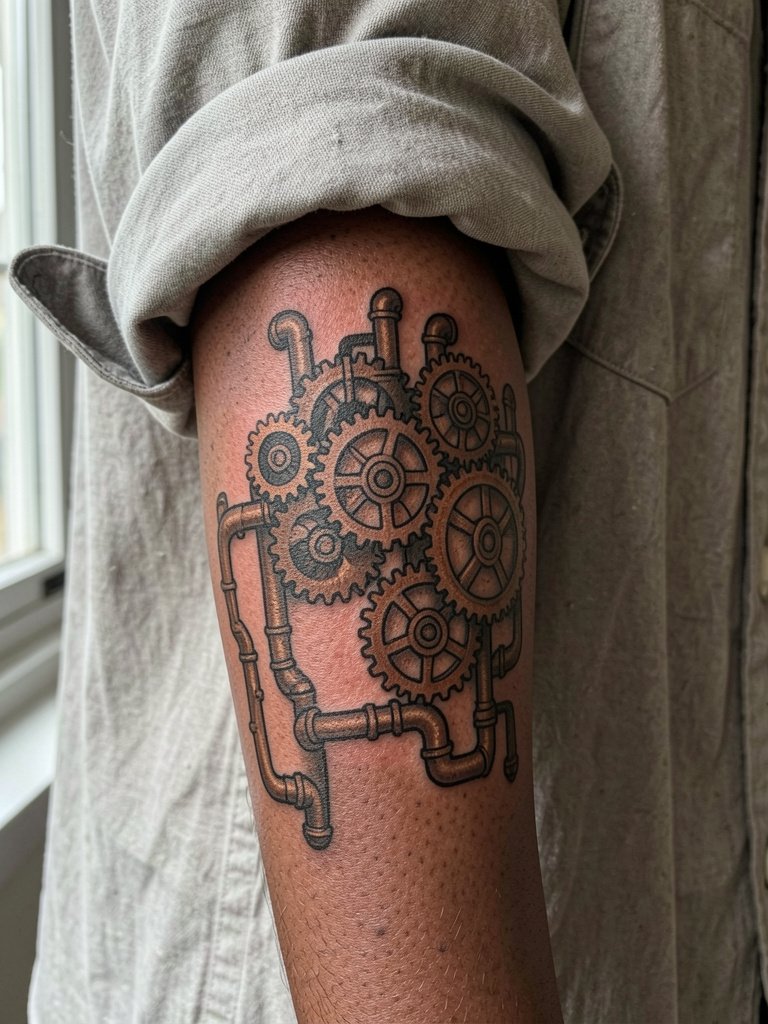
Steampunk clockwork fits as an accent in forearm sleeves because the repeating gear motif hides small touch-up needs. When you want industrial texture, request heavier outlines for the outermost gears and stipple shading inside. A common mistake is over-texturing small gears that merge after healing. Sessions scale by coverage. For the session wear a loose button-down shirt so the artist can roll the sleeve without tight cuffs.
21. Sundial Clock, Shoulder Blade
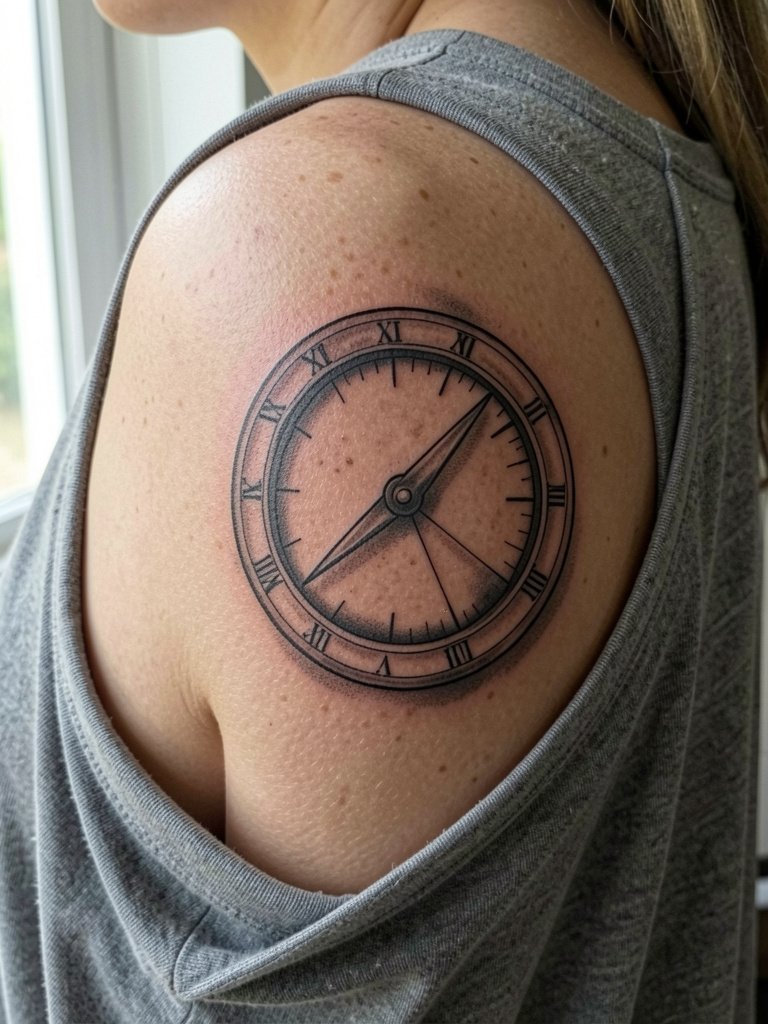
Sundials are symbolic and sit neatly on the shoulder blade where movement is moderate and sunlight exposure can be controlled. The key is the shadow angle; discuss the intended light source with the artist so the shadow reads consistently. A common error is misaligning the gnomon shadow with body lines. Sessions are medium in length. For reveal days pick a backless or thin-strap top that frames the shoulder area.
22. Pocket Watch with Floral Locket, Upper Arm Outside
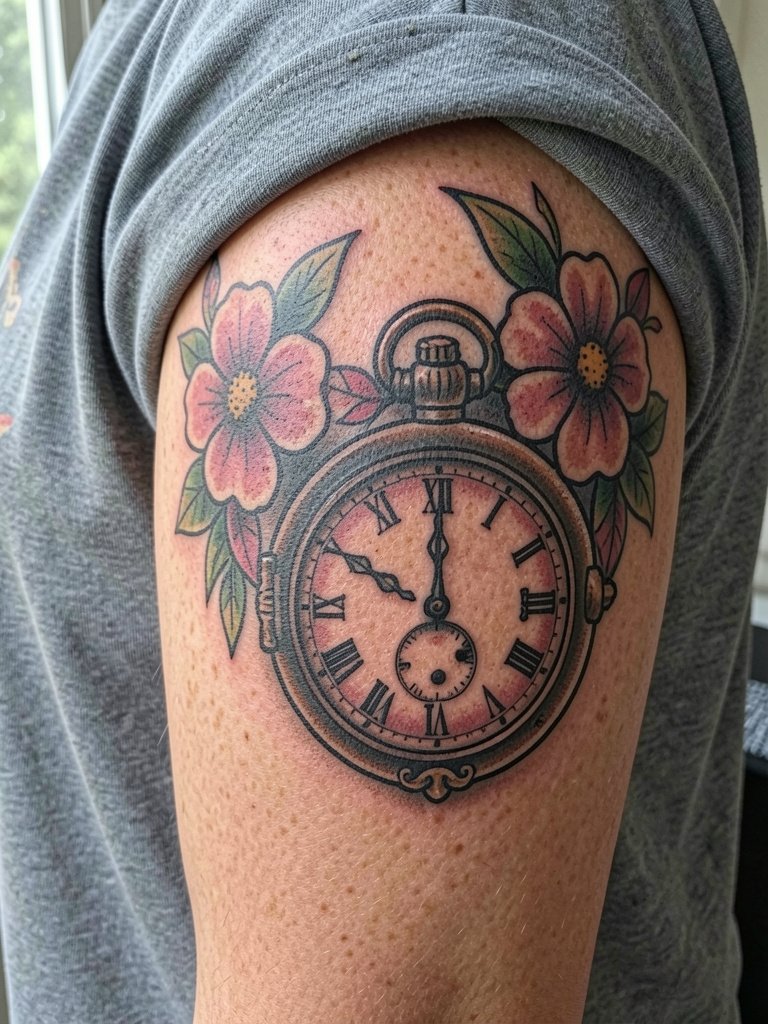
A locket-like pocket watch reads as wearable memory when placed on the outer upper arm. Bold outlines and saturated floral fills will age better than tiny shaded petals, especially if you want long-term color retention. Ask for palette suggestions for your skin tone to keep contrast high. Typical session time is one to two hours. Pair the piece with short sleeves and layered chains on the opposite side to balance the look, and try a layered silver chain necklace to echo the locket feel.
23. Single-Hand Nautical Clock, Sternum Edge
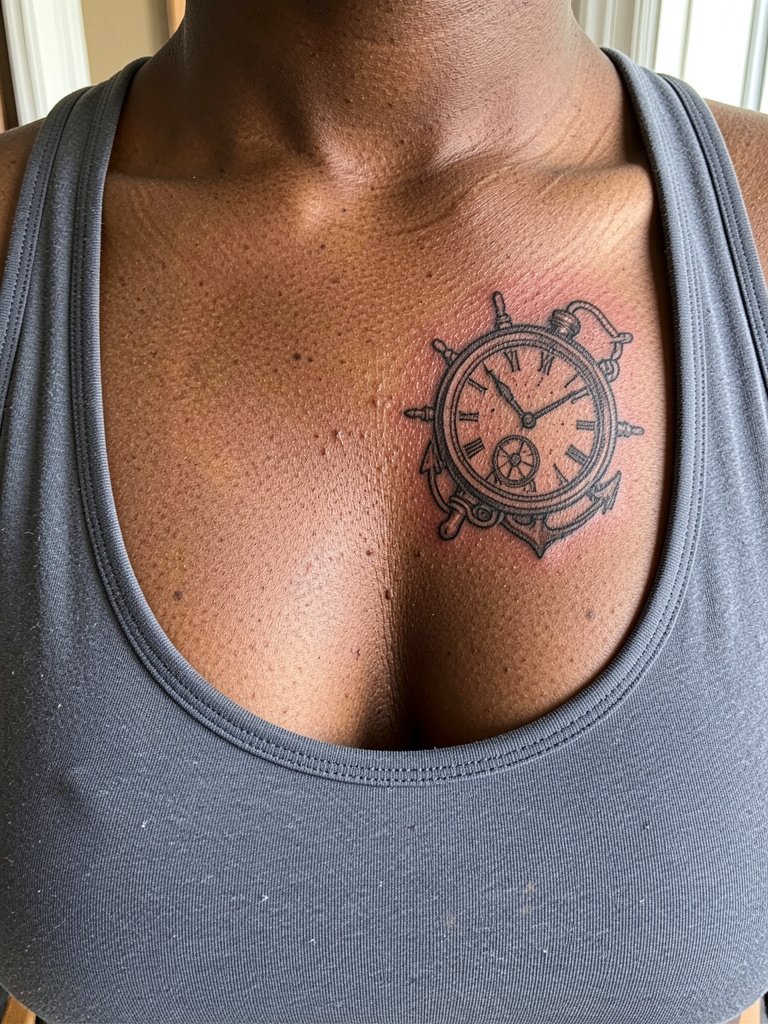
Nautical single-hand clocks combine travel-minded symbolism with a compact sternum placement. Because the sternum moves with breath, ask the artist to preview the stencil while you breathe so the hand sits where it reads well. A common mistake is tiny anchor details that disappear; keep accents simple. Session time is moderate. For styling choose low-cut or strapless tops that expose the sternum area and try a minimal pendant necklace that sits above the clock.
24. QR-Code Integrated Clock, Upper Arm
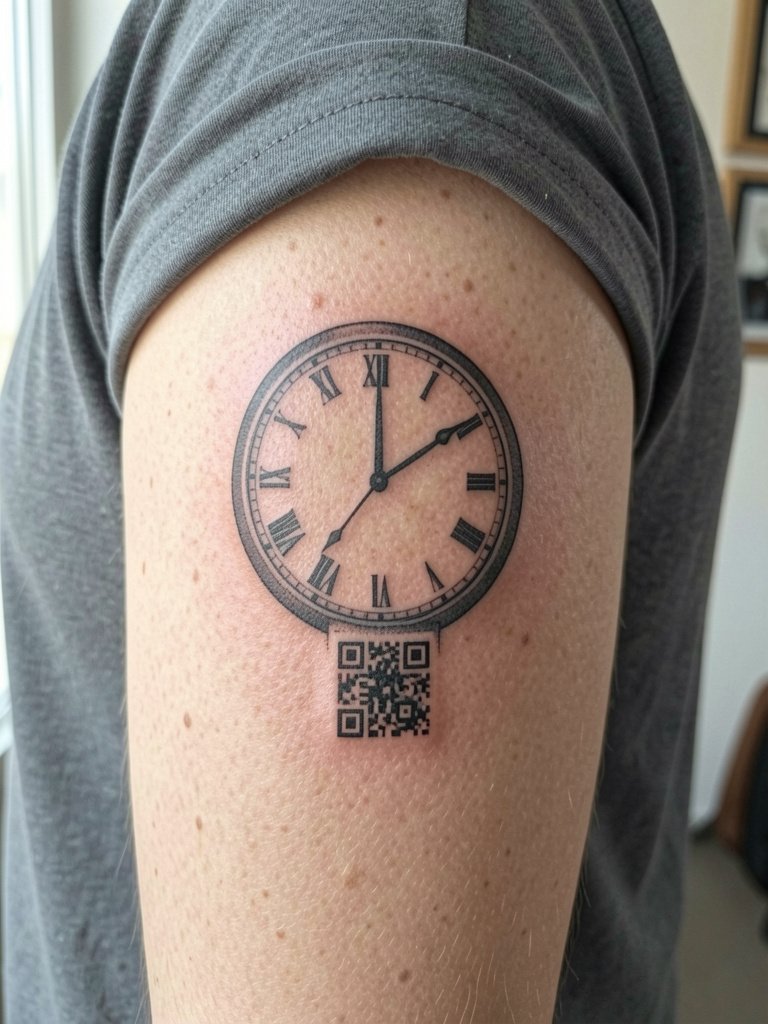
QR-coded clocks are a new hybrid for digital memorials. If you want the QR to work, discuss precise sizing and contrast with the artist and plan a test scan of the healed stencil area. Low-contrast skin tones and small scaling reduce scannability. This is a technical balance between design and function so expect careful stencil placement. For display, short sleeves keep the arm visible and clean, so a short-sleeve tee is handy.
25. Pocket Watch Key with Date, Inner Wrist
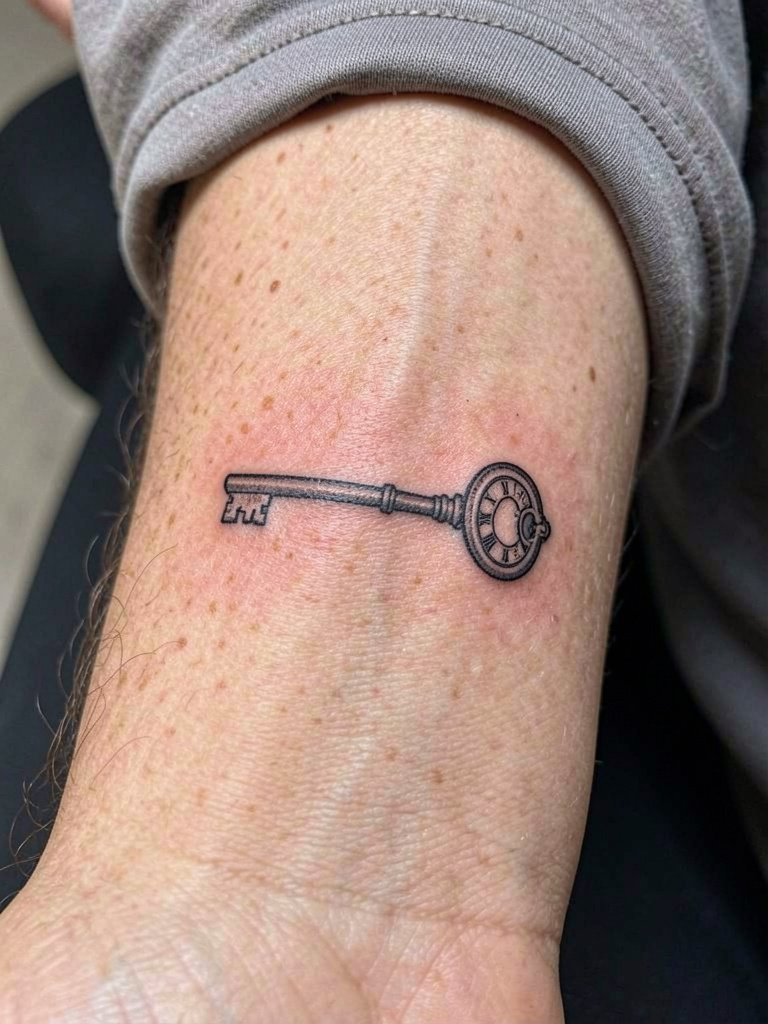
A pocket watch key with a date is compact and sentimental. Because the inner wrist eats fine work, pick slightly heavier line weight for the key shank and set the Roman numerals at a readable scale. The common complaint is numerals that blur into a smudge by year two. Sessions are short. For showing it off, avoid wrist cuffs and consider stacking a thin chain on the opposite wrist like a dainty wrist bracelet stack.
26. Broken Hour Hand with New Growth, Outer Forearm
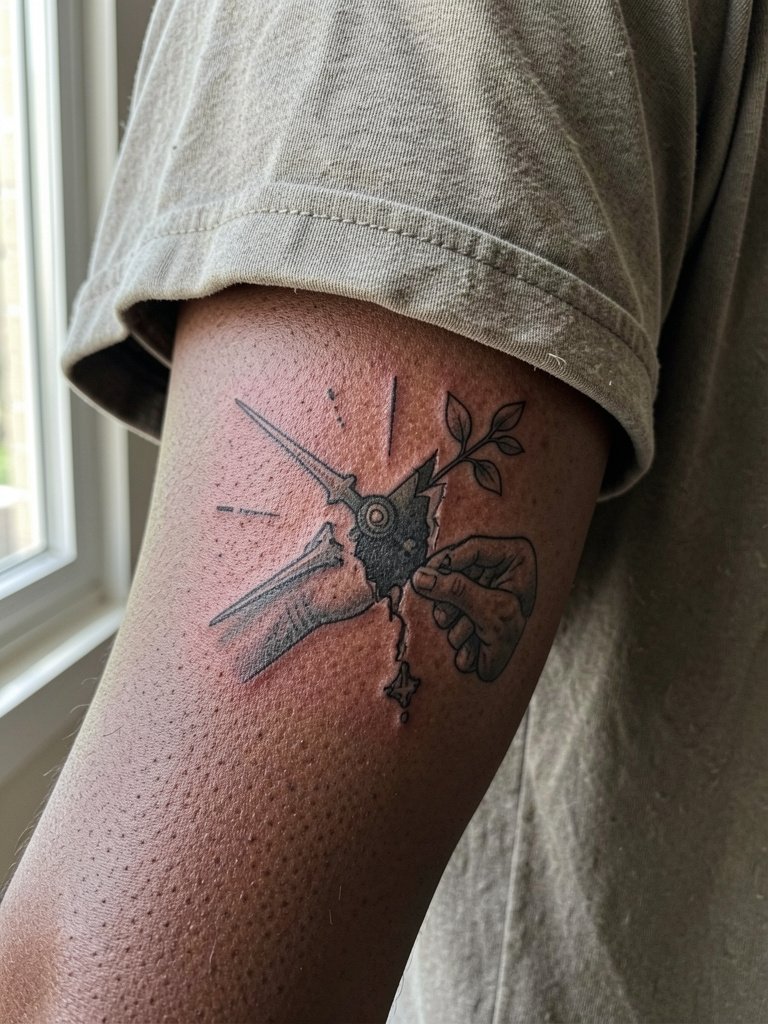
A broken hand with new growth reads resilience. For longevity, request contrast between the metal texture and organic sprout using stipple shading for the plant. Small botanical lines soften faster than bolder silhouettes, so scale accordingly. Expect an hour-plus session depending on detail. For styling pair with rolled sleeve shirts and a cream linen top to highlight the outer forearm.
27. Celestial Clock with Moon Phases, Back
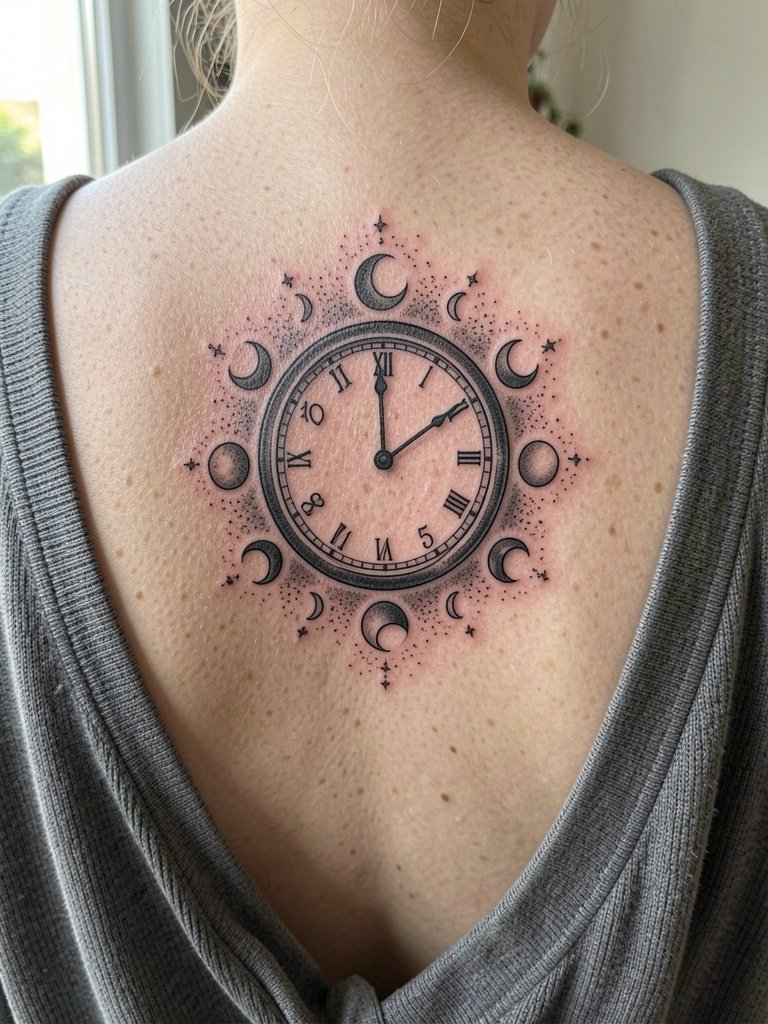
Moon-phase clocks pair time with lunar cycles and look strong on the upper back because symmetry reads well. Dot work requires spacing so stippling does not merge into patches. One mistake is stacking phases too tightly. Sessions vary by size. For showing it off choose backless tops or cropped cardigans and try a cropped cardigan neutral.
28. Pocket Watch Tattooed into a Hand, Dorsal Hand
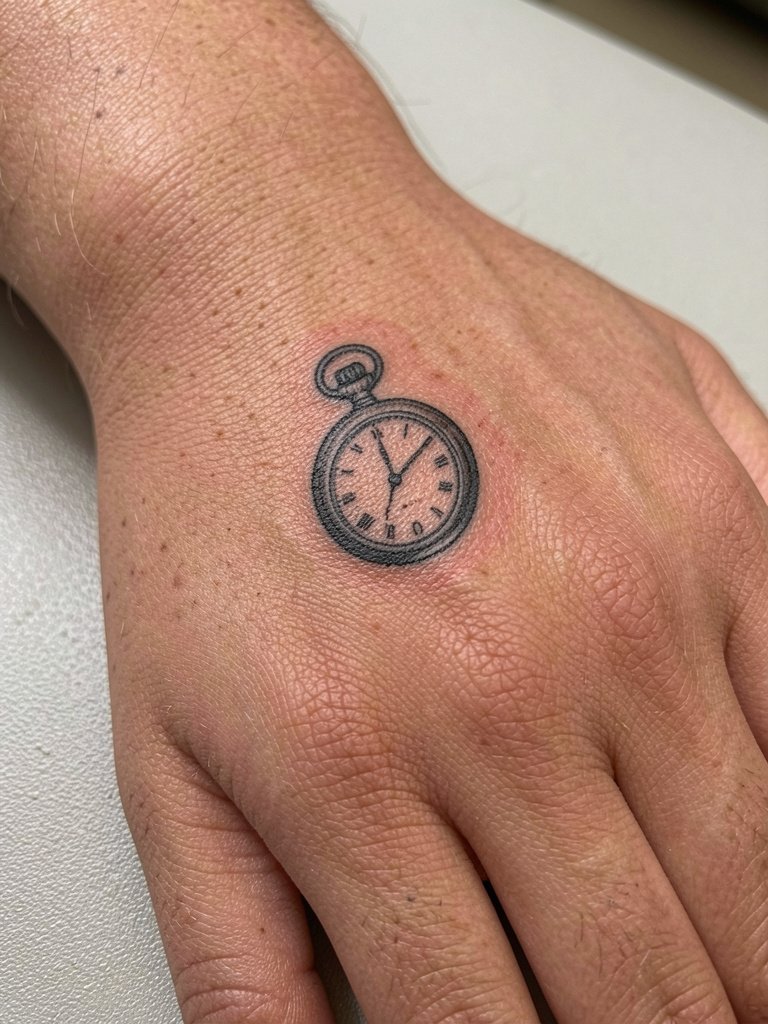
Hand tattoos face constant abrasion and washing, so choose bold simplified motifs that accept some softening. A common mistake is asking for micro gearwork on the hand. Expect a touch-up need earlier than forearm pieces and plan on annual check-ins. Sessions are short but sometimes uncomfortable. For styling keep accessories minimal and avoid rings that sit over the design during healing.
29. Antique Clock Face as Ribcage Panel
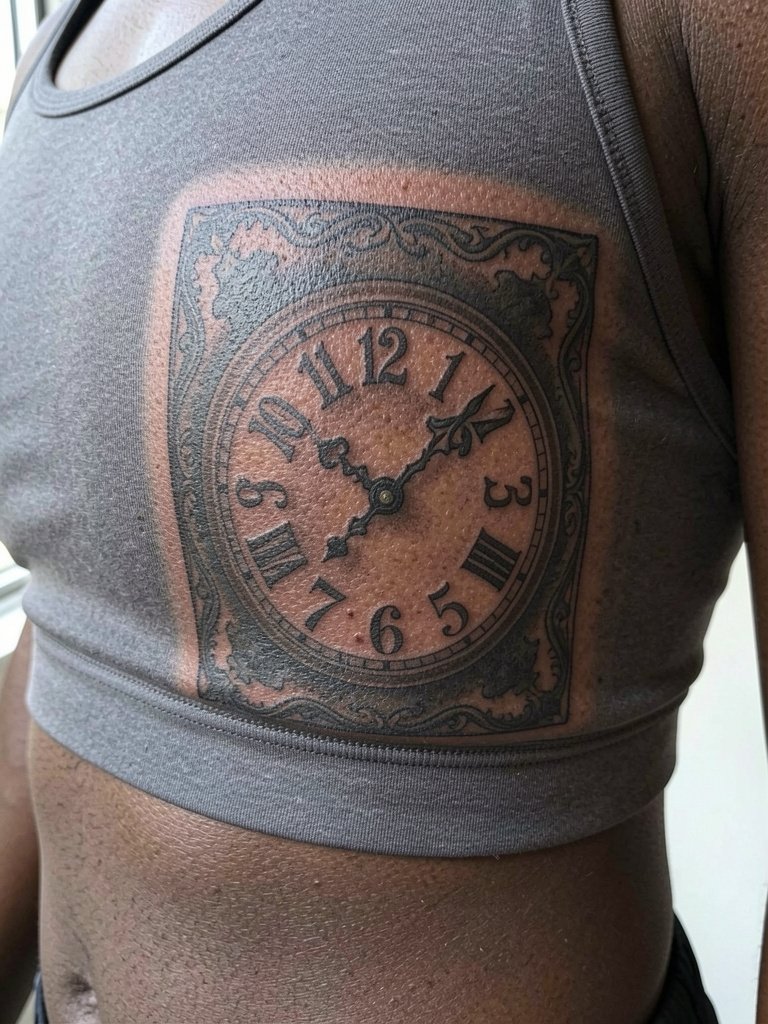
An antique clock across the ribs reads formal but needs planning because ribs stretch with weight changes. Artists split on fine-line ribs. One camp says fine line blurs within two years because that skin flexes and spreads the ink. The other camp argues that with precise needle depth and slightly wider spacing fine line can hold up, and they will point to two- to three-year healed examples as evidence. If you expect body changes skip ultra-precise hands and favor a slightly larger face so numerals stay legible. Pain is high on the ribs and sessions are often split.
Frequently Asked Questions
Q: How long will a fine-line clock on my wrist stay readable?
A: It depends on line weight and placement. The inner wrist flexes and often blurs thin single-needle work by year two, while slightly bolder linework with wider spacing can remain readable longer. If you want a small wrist piece ask the artist to show healed examples at two years so you can compare expected outcomes.
Q: Is color worth it for a clock with roses if I want longevity?
A: People split on this. One view says reds and bright pigments fade faster and need touch-ups, especially on areas exposed to sun. The other view is that modern color inks can hold up well with careful saturation and regular sunscreen use. If longevity is a priority pick stronger black outlines and use color as accent, not the primary contrast.
Q: Where can I find artists and healed examples without relying on names?
A: Search hashtags like #clocktattoo, #finelinetattoo, and #romannumeralclock on Instagram and TikTok, then filter by location. Use Tattoodo and Booksy to search keywords such as "pocket watch realism" or "minimalist clock fine line" and look specifically for healed photos. Reddit communities like r/tattoos and r/TattooDesigns also surface peer recommendations and healed shots across skin tones.
Q: What should I wear to a ribcage or sternum session for comfort and access?
A: For ribs and sternum wear a button-down shirt or a fitted tank that the artist can easily move without tugging at fabric. A loose tank top or a strapless top is often the most practical choice for upper-chest and sternum work.
Q: When should I expect a touch-up for a detailed gear tattoo on the chest?
A: Expect to assess at the six- to twelve-month mark and again around two years. Fine internal gear shading sometimes needs a touch-up sooner if the design was very detailed at small scale. Plan for touch-up timelines when budgeting and book a follow-up appointment during your initial consultation window.
Q: Are there signs a studio might not be right for detailed clock work?
A: Red flags include a portfolio that only shows icon-style or flash work when you asked for realism gears, no healed photos, or an inability to explain how they will scale detail for longevity. Prefer studios that show healed shots at multiple time points and who can explain spacing and line weight choices.