The chest is one of the few canvases that reads clearly from a distance and still holds detail up close. Men who plan chest pieces are balancing surface area, movement, and future expansions. Pick a design that respects muscle flow and the sternum crease, plan sessions by complexity, and think about what you want visible when you wear an open shirt. Below are concrete looks that hold up on different skin tones and placements.
1. American Traditional Eagle

The eagle is built for chest anatomy because its wings follow the shoulder sweep. I recommend the upper chest and shoulder area for this style rather than the sternum because those meatier zones take saturation and bold linework better. During consultation bring two scale references so the artist can show how the wings read at full pec span versus shoulder wrap. The common mistake is shrinking the design too small which collapses the detail and invites blowout along the curved shoulder. Expect one to three sessions depending on color saturation and blending. For showing this off, an open collar linen shirt complements the vintage palette.
2. Half-Chest Tribal Phoenix
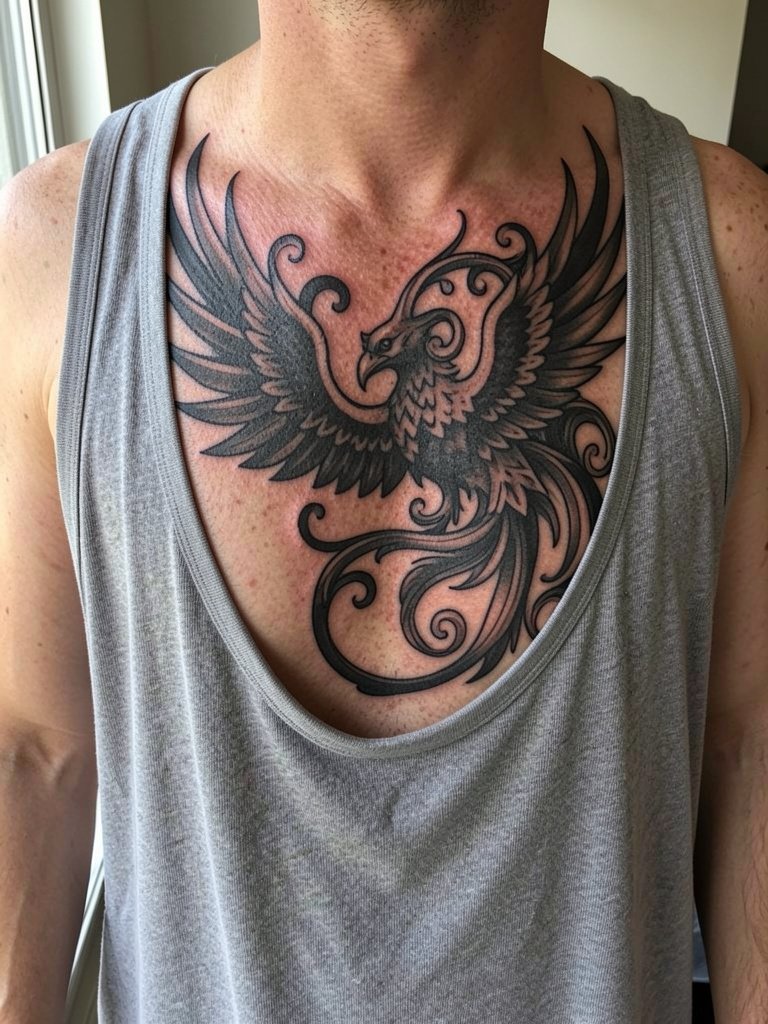
Half-chest blackwork is everything that favors bold lineweight, heavy saturation, and body-flow orientation. I push clients toward asymmetry here because the design reads more dynamic and leaves one side ready for future sleeve work. Common aging notes: saturated black holds far better than tiny stippling in this area. Bring photos showing how you want negative space treated so the artist can set the rhythm of filled panels. Session feel is medium to high because of large solid fills; expect breaks between passes. Wear a v-neck tank top to the appointment so the artist can access the shoulder and sternum edge.
3. Central Lion Portrait

Sternum centerpieces like a lion need a surgeon's attention to reference scale and symmetry. Fair warning, the sternum is a high-pain zone because the skin sits directly over bone and the client will feel constant pressure. Numbing cream is a split topic in the community. One camp warns that numbing cream masks the tape of feedback the artist needs and can encourage overworking, which risks poor depth control. Another camp says numbing cream is a legitimate tool for first-timers in sensitive zones and that experienced artists can adjust technique with it in place. For this realism piece bring high-resolution photos so the artist can plan 3 to 5 sessions for layering and touch-ups. During the session wear a fully open button-down shirt for easy access and to protect the area on the way home.
4. Fine Line Collarbone Jewelry
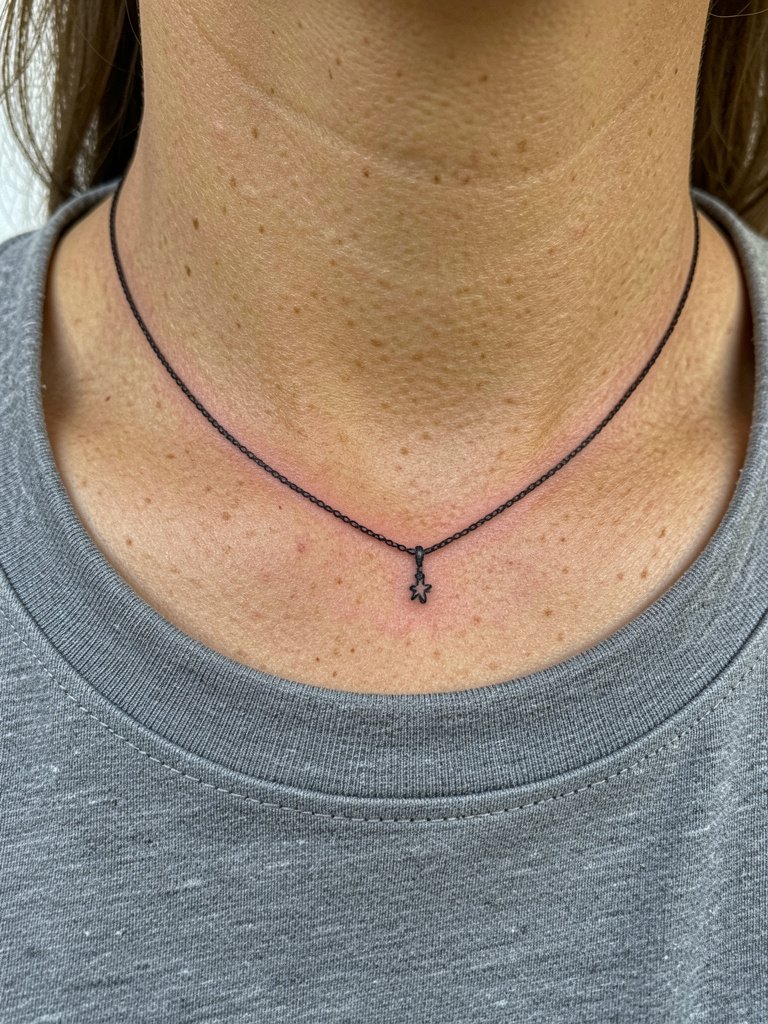
Single-needle collarbone jewelry reads elegant at first but it exposes the fine-line longevity controversy. One camp says fine line on chest blurs within two to three years because the skin stretches and daily movement compresses the lines. The other camp argues that with correct needle depth and slightly wider spacing fine line can hold beyond three years and they point to healed examples. The practical takeaway is to ask for a slightly heavier hairline than a social-media reference so the chain still reads at two-year and five-year marks. Session time is short. For post-session photos and regular wear, a crew neck shirt in cream frames the collarbone without covering the tattoo.
5. Red Ink Half-Chest Phoenix
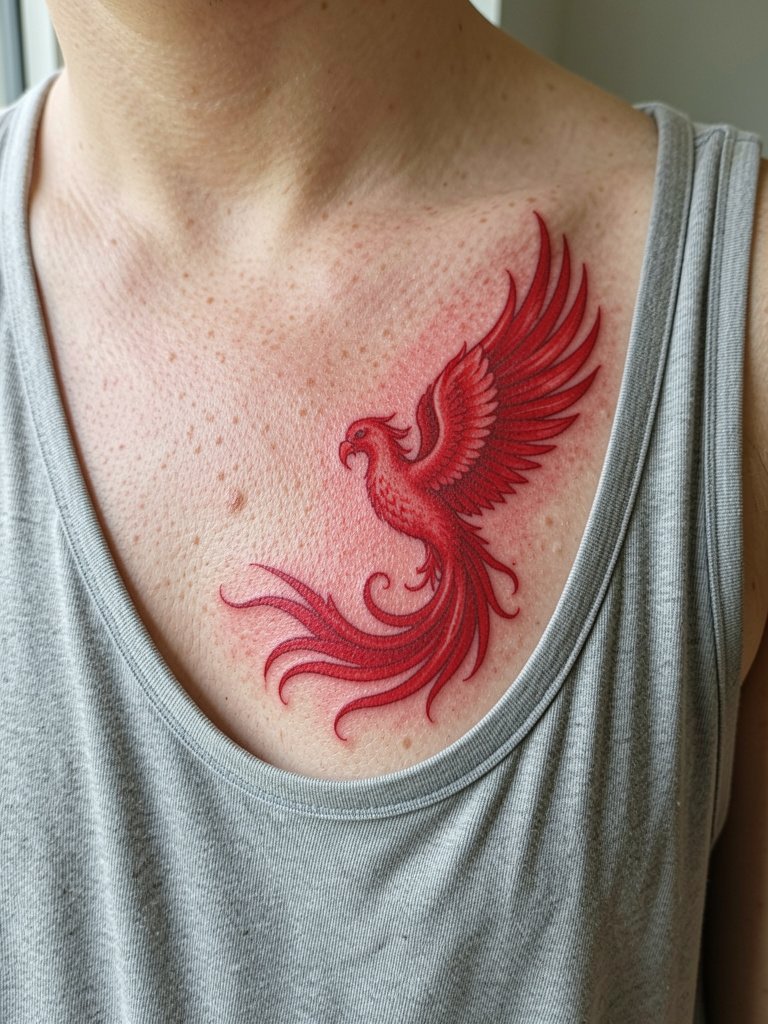
A saturated red phoenix is a showpiece that ages differently from blackwork. Red can fade to a pink haze if not saturated deeply, so session planning matters. The typical mistake is treating red like black and skimping on saturation passes. During the consultation be specific about the red tone you want and ask to see healed red examples on comparable skin tones. Expect two to three sessions for full saturation. For the reveal, a v-neck in olive or black frames the asymmetry without competing with the red field.
6. Symmetrical Tribal Blackwork
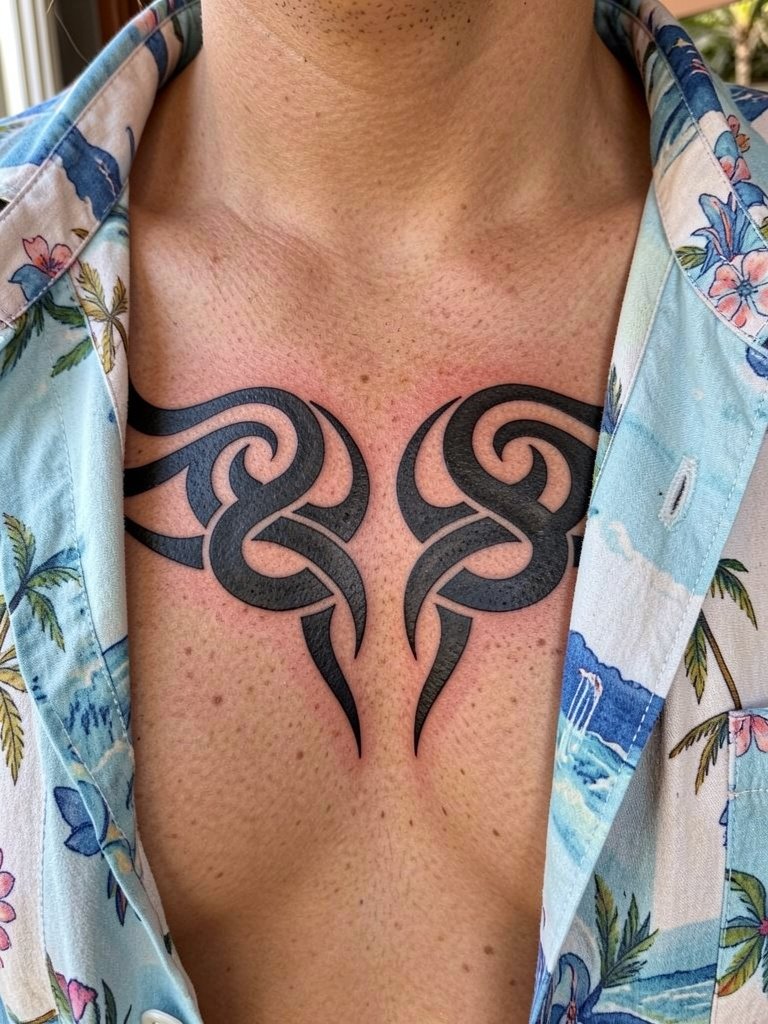
Symmetrical blackwork performs well when the design follows the sternum line and collarbone plane. This pattern is less forgiving to fine-line detail and benefits from heavier outlines to prevent early blur. A common mistake is collapsing too much negative space in the center which makes the piece read muddy after a few years. Touch-up needs are moderate, usually one session within two to four years. For showing off this coverage, an open beach shirt in blue complements the maritime contrast and keeps the chest visible for casual wear.
Session Day Picks
The first six ideas above range from collarbone jewelry to full upper-chest blackwork, so these items smooth session logistics and the early healing window.
- Tattoo Shang balm. A thinner balm option that people buy when they say Aquaphor felt too heavy during the first days after a collarbone or sternum session.
- Ink Guard Pre-Neem. A barrier spray some clients prefer before a sensitive sternum appointment to reduce surface irritation and make the stencil sit calmly.
- Dr. Woo balm. Lightweight and non-greasy, this one is handy for delicate single-needle work along the clavicle and for clients who say heavier ointments clogged their pores.
- Tattoo San balm. Artist-preferred style balms that are less sticky than legacy options, useful when you need to keep the chest area breathable in humid weather.
- Hustle Butter. A mainstream, readily available balm many choose after the first 48 hours to reduce itching and seal pigment gently during the initial week.
7. Celtic Knot Interweave
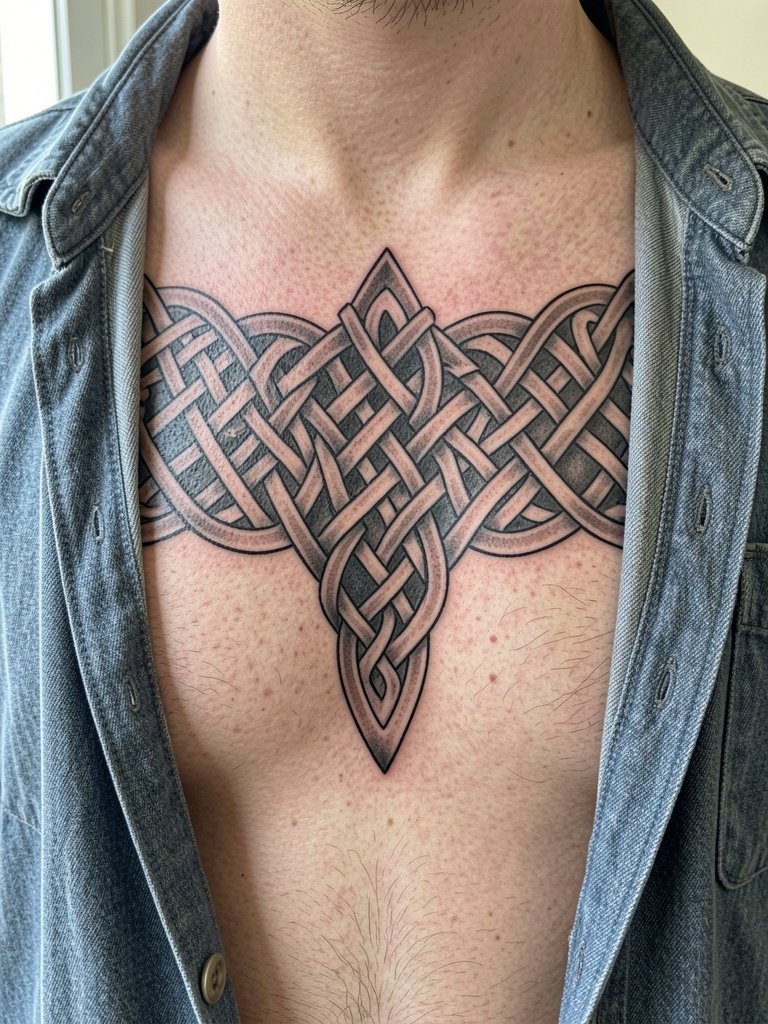
Complex interweaves demand spacing discipline because overlapping lines can merge with age. One practical tip is to size the knotwork so there are at least three to four millimeters of spacing between crossing lines. A common mistake is shrinking Celtic detail into too small a medallion which invites blur. For cultural motifs, note their origin and treat them respectfully by describing intended symbolism to your artist. Sessions usually run two to three passes with touch-ups later. To frame this look, an open-collar button-down in navy gives the pattern room to breathe against dark fabric.
8. Minimalist Geometric Triangle and Circle
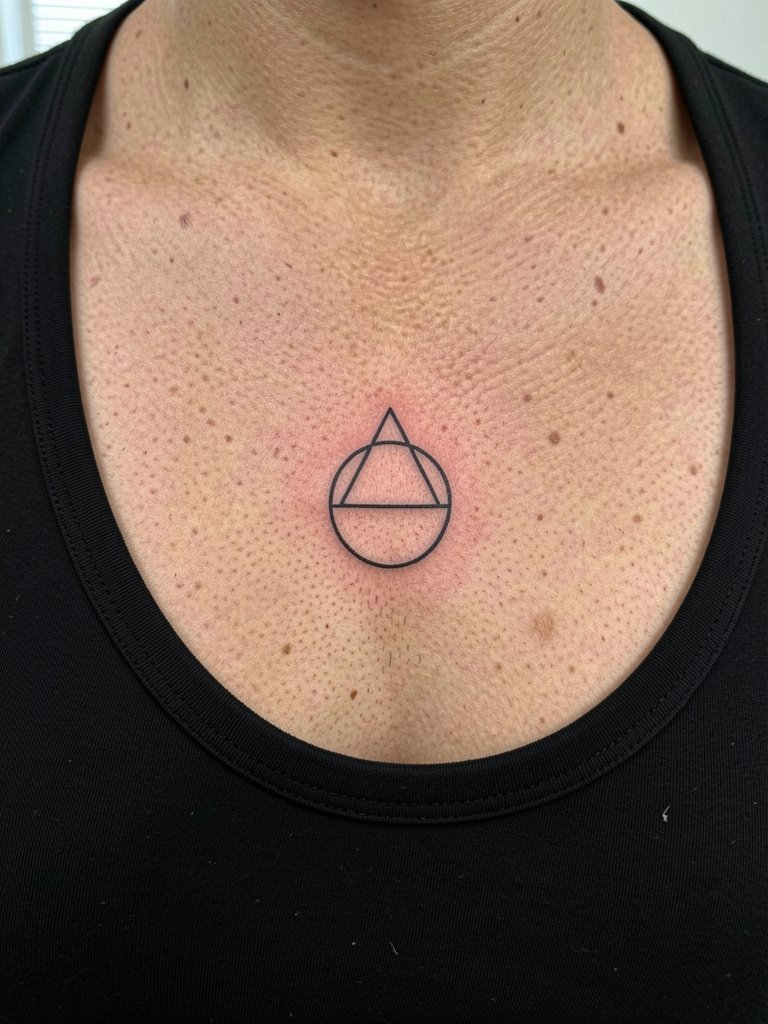
Small geometry between the pecs looks crisp when the lines have breathing room. The mistake is going too small. I tell clients the triangle needs at least three inches across to avoid merging lines at year two. For placement reasons this is a sternum-adjacent piece, so pain and movement require a steady hand from the artist. Expect one short session and a likely touch-up within a year if you sweat heavily. For daily wear, a tight black t-shirt will frame the clean shapes without distraction.
9. Nautical Compass and Ship Scene

A full-chest nautical scene needs composition that honors the collarbone and sternum. The trick is keeping the compass large enough so the points do not collapse with time. When clients ask about placement, suggest a collarbone-spanning compass top with the ship lower toward the mid-sternum so the reading remains balanced. Large shaded backgrounds may need a multi-session plan to avoid overworking the skin. For a maritime look, an open beach shirt in sand or blue complements this motif.
10. Cross and Wings
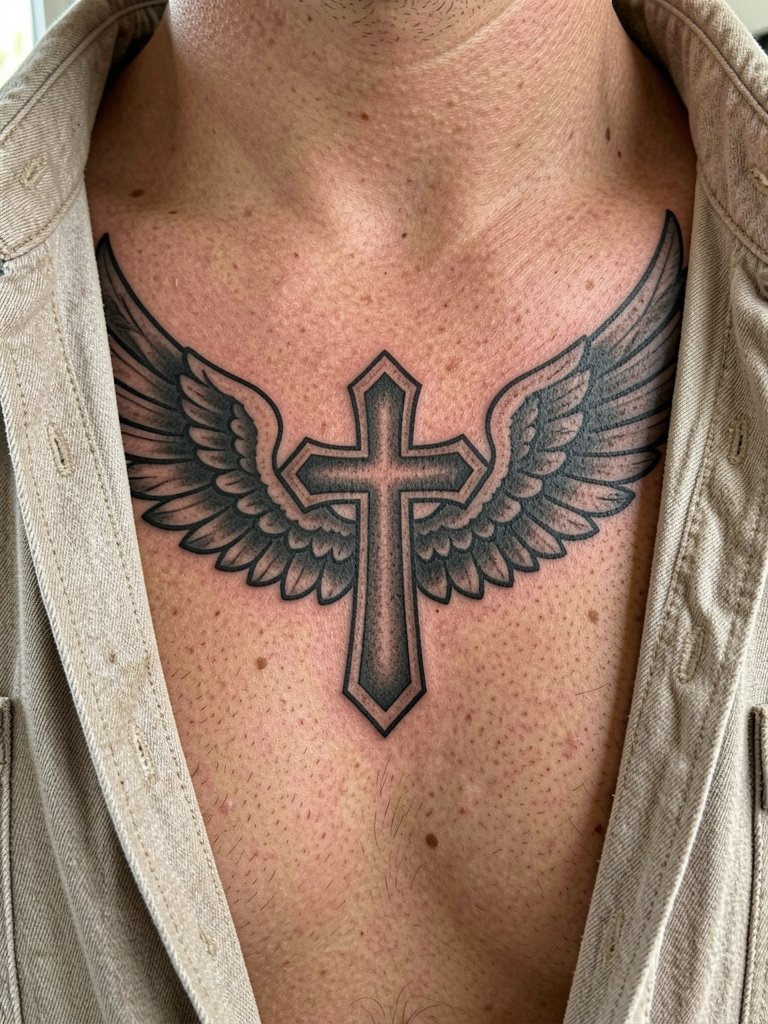
Cross-and-wing combos are classic but read differently depending on scale. Small crosses over the heart can feel lost when combined with long feather work. If you want longevity, scale the cross to match wing span and ask about feather spacing to avoid muddiness. The session is moderate intensity because wing feathers require fine directional shading. A simple reveal outfit is an open button-down in charcoal.
11. Name Script Tribute
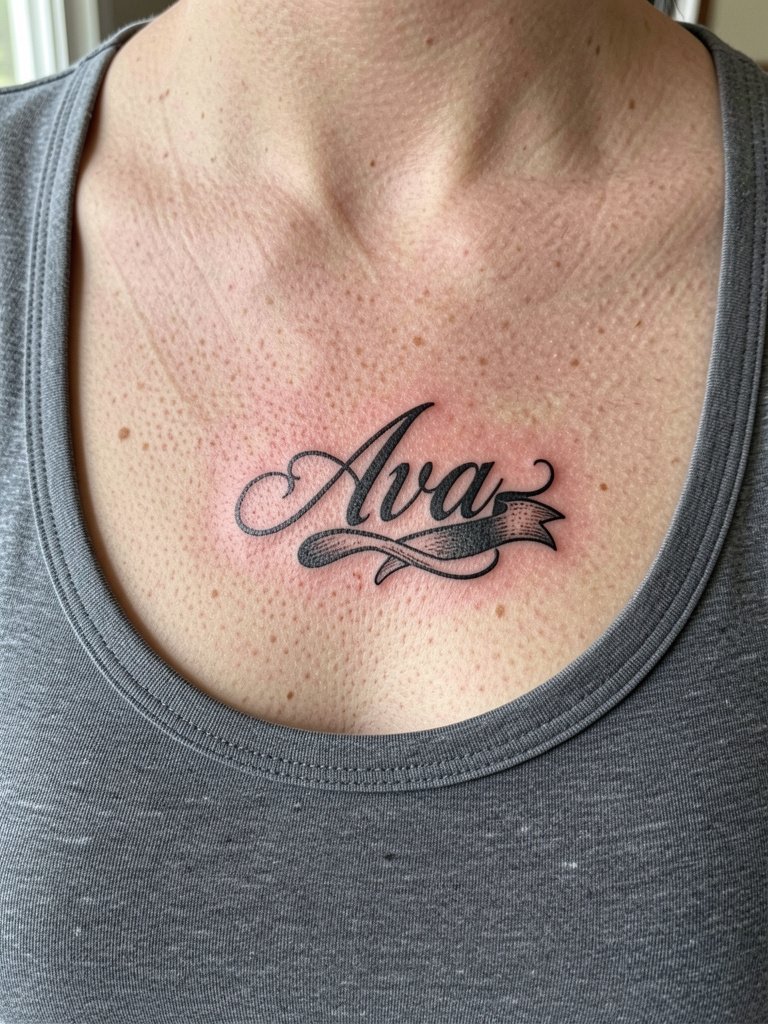
Script over the heart is emotionally charged so get the lettering exact. Bring printed examples of the exact font and the precise spelling you want so the artist can scale the stroke weight. The mistake I most often see is copying a social-media single-needle reference without asking for slightly bolder strokes to account for chest skin movement. Session time is usually short. For appointments, wear a crew-neck or scoop-neck top that allows easy access and protects the area after the session.
12. Mandala Shapes

Mandala work requires high-precision spacing so that circles maintain rhythm as the chest moves. A common error is starting the center too small which forces outer rings into tight, unreadable bands. For longevity, ask for slightly bolder primary rings and lighter stippling in secondary zones. Mandalas often need two sessions for crisp linework and dot shading. If you like symmetry framed by daily wear, try an open-collar linen shirt that keeps the medallion visible.
13. Tiger Eyes Detail
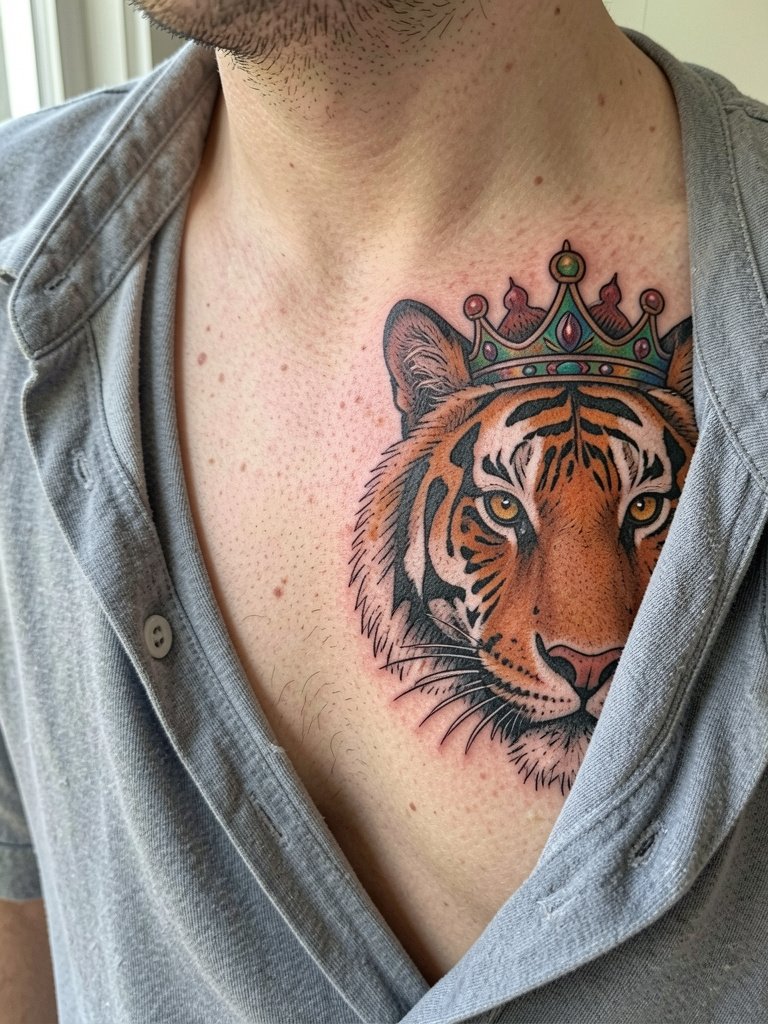
A focused portrait of eyes can pack drama because the gaze anchors the chest visually. The most frequent mistake is over-detailing small eyes which fades into smudge after a few years. I recommend scaling the eyes so the pupils have room for sharp contrast and keeping the crown detail slightly graphic rather than photoreal. For the session wear a rolled short-sleeve shirt to let the artist work the shoulder-to-sternum flow.
14. Floral Piece (Rose or Peony)
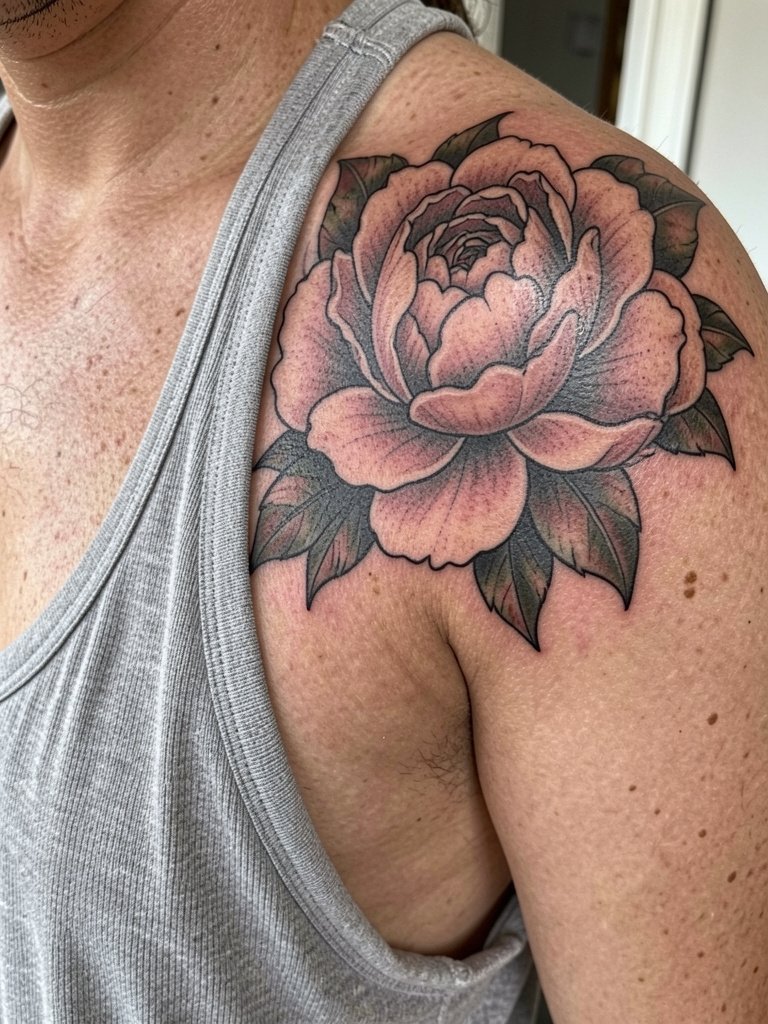
Botanicals on the chest can feel feminine or masculine depending on lineweight and color. For men I often suggest denser petals and stronger shadow planes so the flower reads from a distance. A common client mistake is picking a tiny blossom that loses form when wearing a shirt. Floral pieces are forgiving for half-chest placement and pair nicely with sleeve work. For the appointment wear a loose tank top so the artist can roll the fabric without rubbing the area.
15. Map and Travel Scene
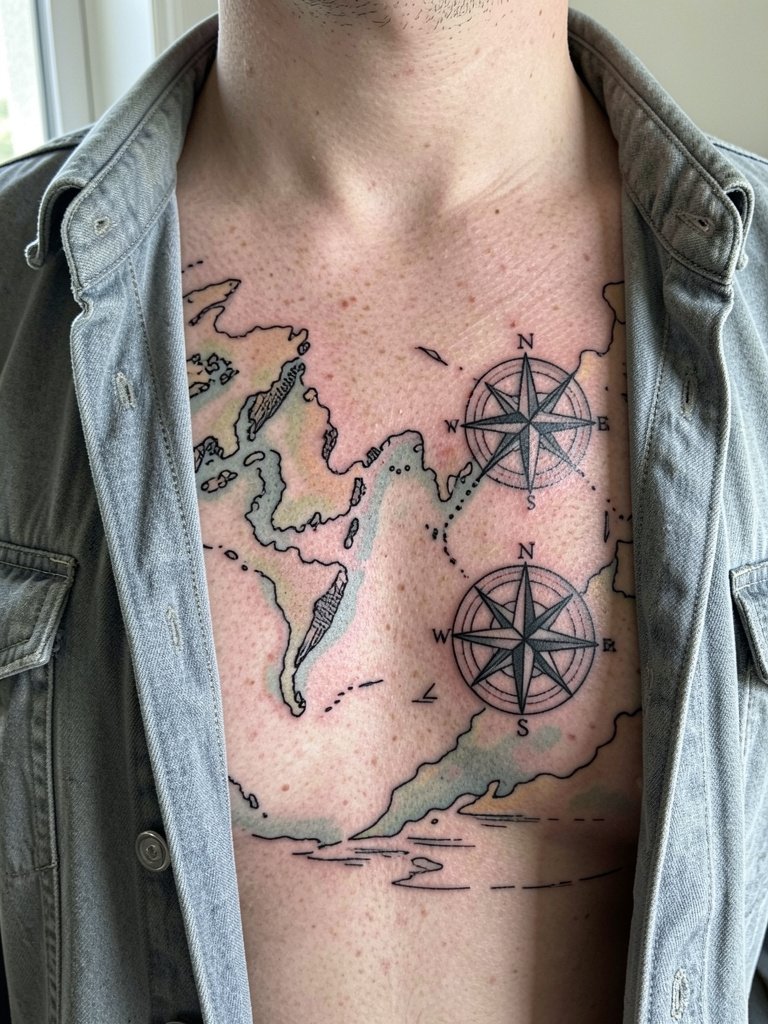
Large map pieces need careful session planning because they combine fine cartographic lines with broader backgrounds. The typical error is cramming micro-detail into areas that will later need touch-ups. I advise sending the artist your favored map fragments and specifying which landmarks must remain crisp. This one usually takes multiple sessions for linework, wash, and final saturation. For a coordinated outfit try an open beach shirt in blue or sand.
16. Broken Compass with Map Fragments
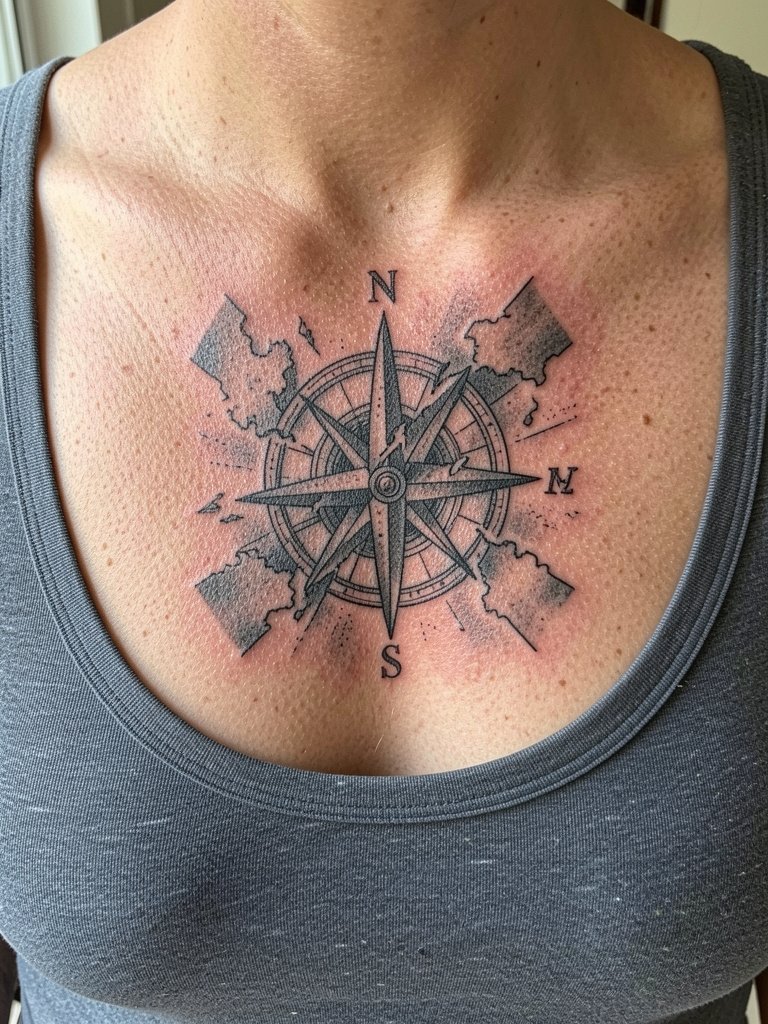
A cracked or broken compass reads like movement and history when done with texture. The mistake is overworking the distressed look which can blur sooner than clean lines. For this motif ask how much weathering the artist recommends for a five-year look. Session feel is moderate because it blends crisp points and soft shading. A fitted scoop-neck tee displays the symmetry without covering the midline.
17. Gothic Script Quote Over the Heart
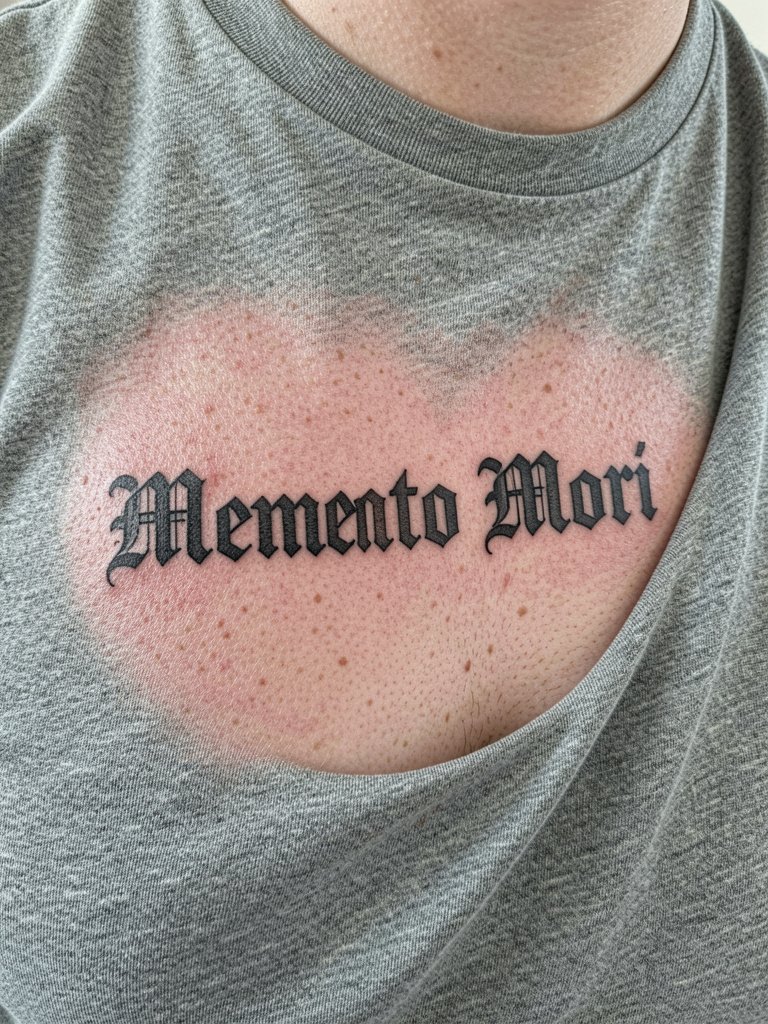
Script choices matter on the chest because letter spacing compresses with movement. I advise choosing a font the artist has executed before and asking for a mock stencil to see scale. A common mistake is selecting ultra-thin gothic strokes that disappear by year three. Session time is short but precise. For a discreet reveal, a crew-neck shirt in deep tones holds the area steady while you heal.
18. Neo-Traditional Dagger and Bloom
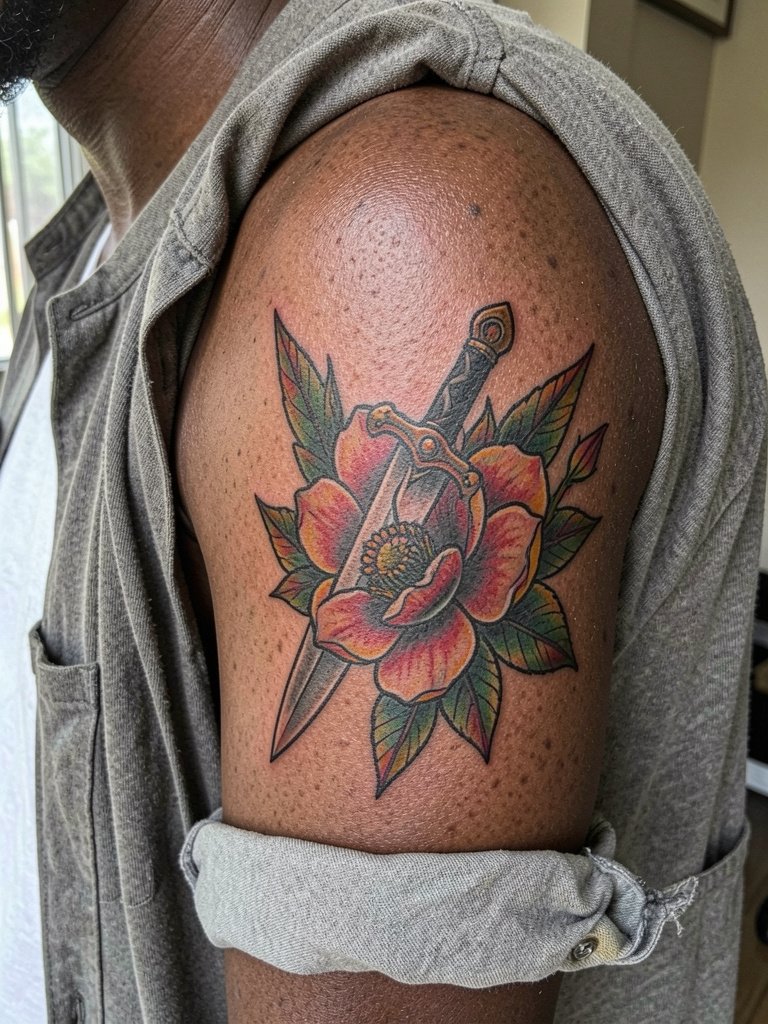
Daggers paired with a bloom create contrast and anchor the shoulder-to-chest flow. The visual error I see is a tiny dagger whose hilt details vanish with touch-up needs. Size it so the hilt reads at arm distance. This style ages well because of bold outlines and color saturation. Expect two sessions for linework and color pack. For session wear try a loose short-sleeve shirt that won’t chafe the fresh ink.
19. Armor Plate Chest (Biomechanical/Plate)
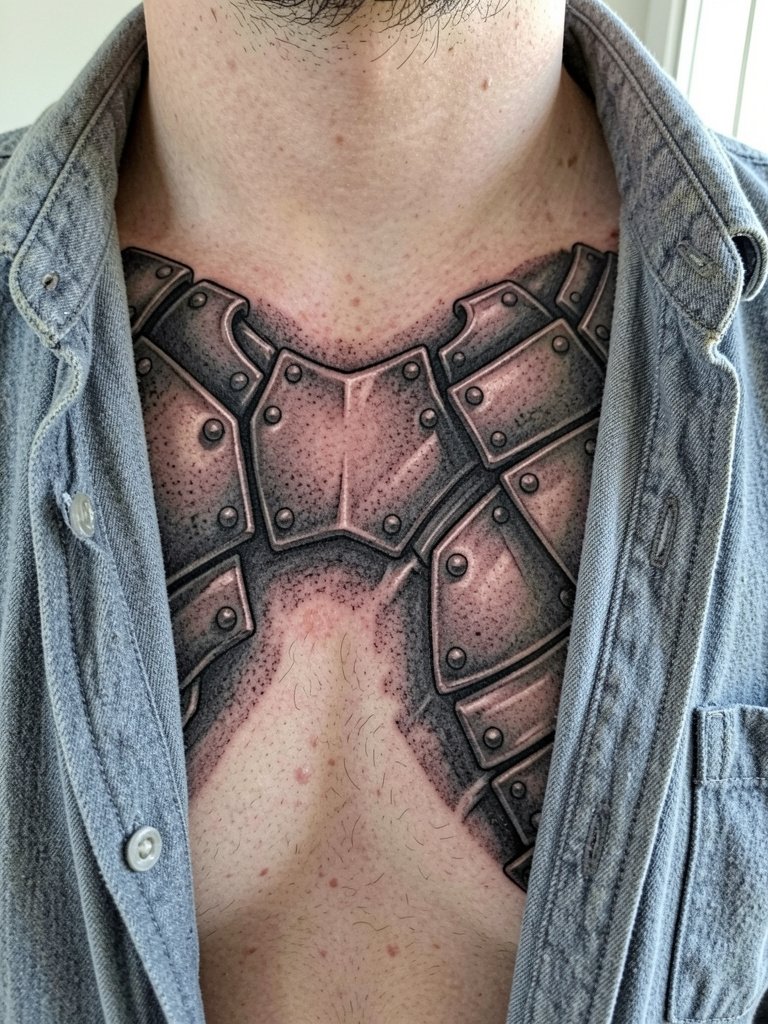
Armor-style chest work benefits from high-contrast shading to create depth. The main mistake is flat shading without clear highlights which makes the plates read like a dull patch. For a convincing finish, ask the artist about contrast points and where touch-ups might be needed to keep metallic edges crisp. These pieces often require multi-session layering. Wear an open-collar button-down so your artist can evaluate how the plates sit when you move.
20. Sacred Geometry Sternum Panel
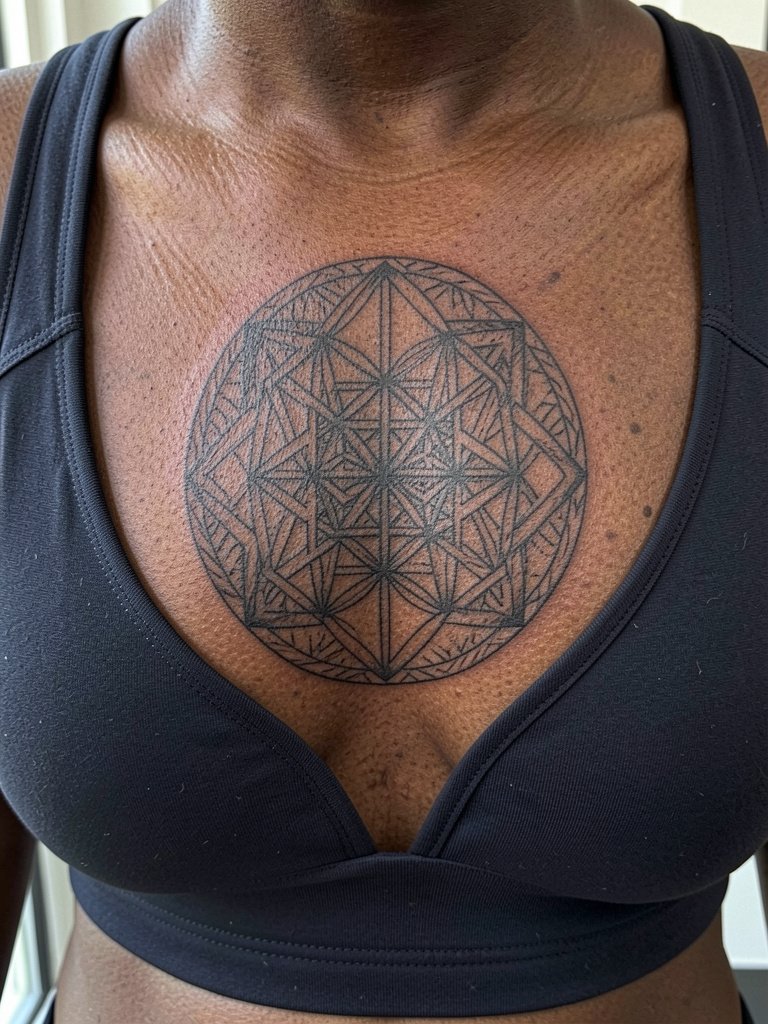
Sacred geometry relies on perfect spacing which sternum movement can test. If you want this pattern to age cleanly, request slightly heavier primary lines and lighter interior detail to preserve the radial impression. The mistake I often see is overcrowding the center which leads to blotching. Plan for longer stencil and careful single-pass linework. This is a high-precision piece that typically needs one long session and a touch-up later.
21. Warrior Helmet (Spartan or Grecian Style)

Helmet portraits need clear shadow languages so metal and leather read separately. A typical mistake is over-detailing small metallic scratches that stop reading after a few years. For longevity, ask for clear planes and firm contrast between helmet and background. Session timing depends on detail. For a reveal, an open button-down in dark navy keeps the chest focal.
22. Minimal Arrow Across Sternum
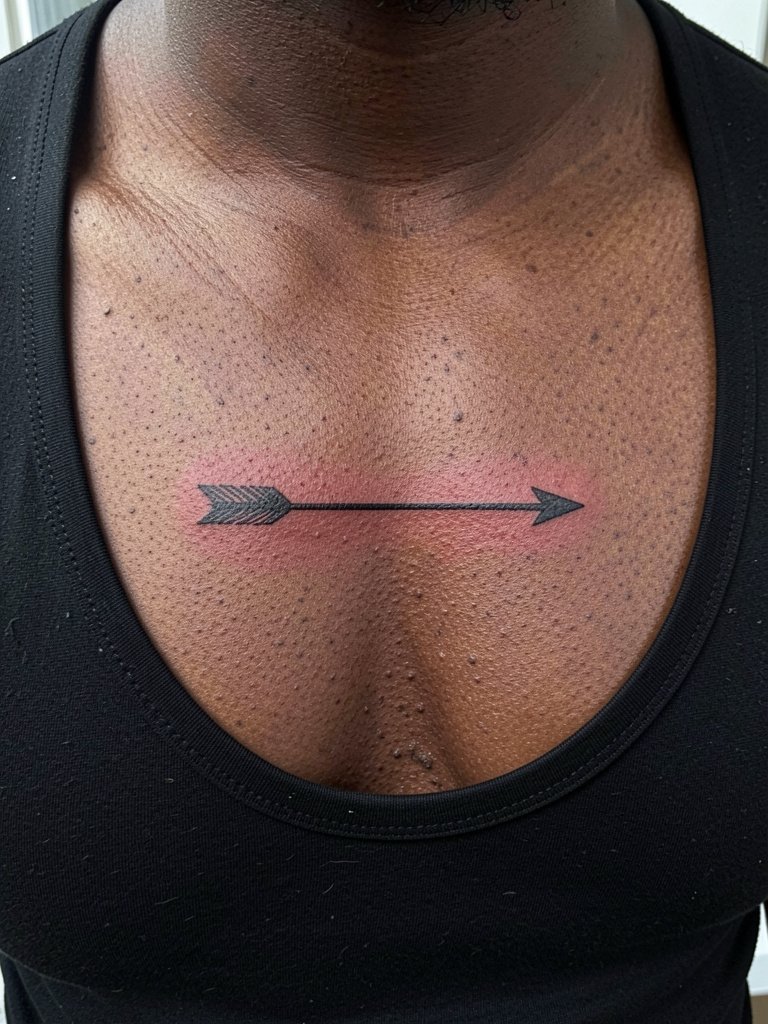
A simple arrow can be deceptively tricky on the sternum because the line must be straight and the fletching proportionate. The common mistake is going too thin. I tell clients to go a hair heavier than their preferred reference so the arrow still reads clearly at year three. This is a one-pass session for most artists and a possible touch-up down the line. For daily wear, a tight black t-shirt frames this minimalist placement.
23. Mirror-Style Split Portrait
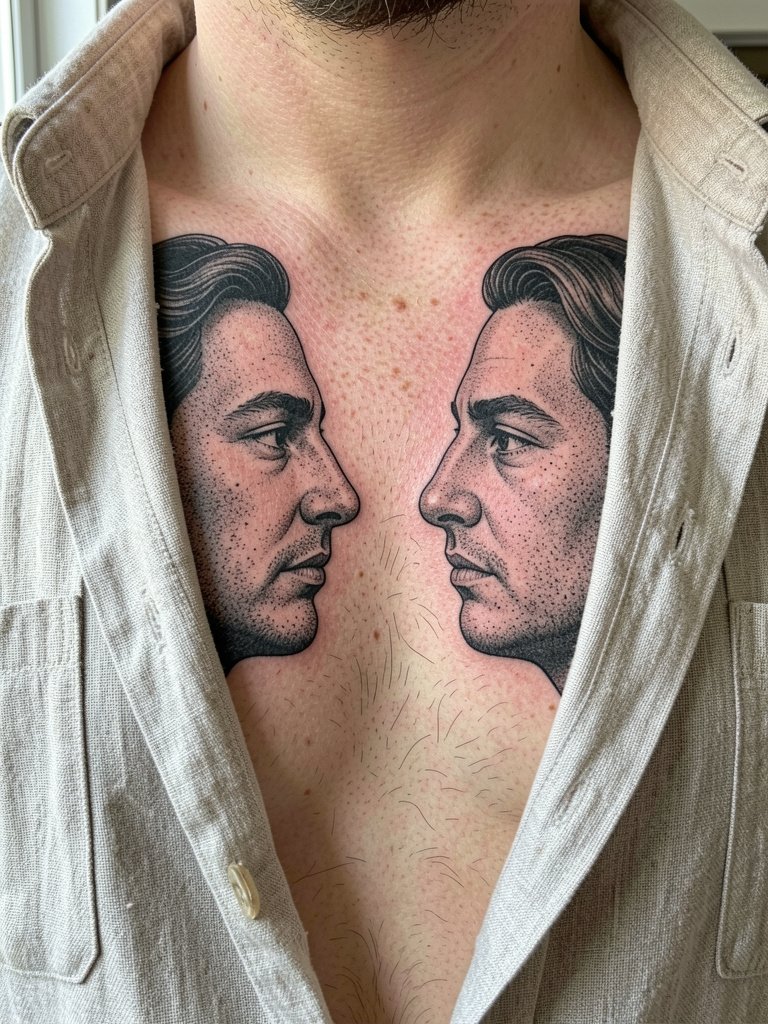
Split portraits read dramatically because the sternum becomes the central seam. The biggest mistake is mismatched scale so the halves look unbalanced. Bring front-facing portrait references and ask the artist to preview the mirrored stencil to check symmetry. These pieces usually span multiple sessions for layering and shading. For reveal styling, an open-collar linen shirt in cream keeps attention on the faces.
24. Solar System Line-Up Between Pecs

Tiny planetary systems look crisp if the spacing is generous. The common error is compressing the planets too close which makes them blur into a smeared line. I advise clients to pick the vertical scale first and then have the artist add microdot orbit accents. This is a low-pain, short session. For everyday wear, a tight black tee frames the vertical motif cleanly.
25. Blackwork Shield Emblem

A shield emblem is a bold choice that benefits from large negative field borders to keep edges crisp. The mistake to avoid is too much internal detail that will blur behind saturated fills. These black shields often need touch-ups at seams where skin folds. For a rugged reveal, try an open-collar button-down that keeps the chest accessible for showing.
26. Subtle Scar Cover-Up Panel
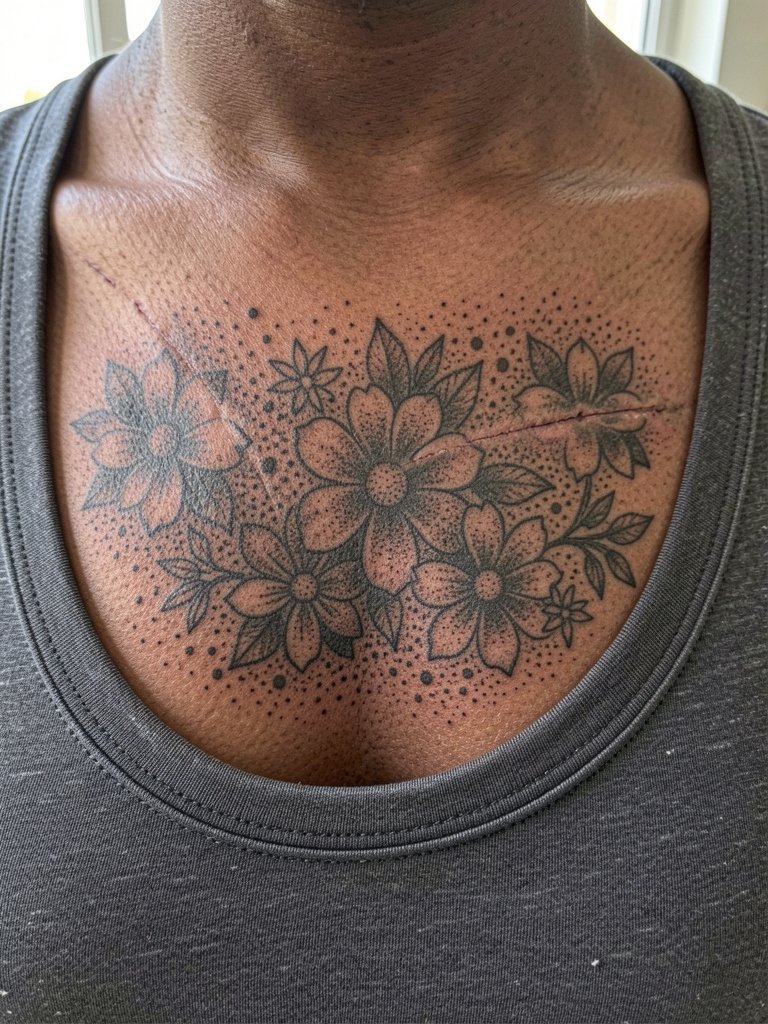
Cover-ups need an honest run-through with the artist about scar texture and pigment differences. Ask for a mock stencil and a healed-case example so you know how shading hides raised tissue. A common error is forcing a delicate design over a thick scar which will reveal itself over time. These projects usually need careful layered sessions and a realistic touch-up plan. For sessions, wear a fitted scoop-neck tee to give the artist unobstructed access.
27. Anchor and Rope Fusion
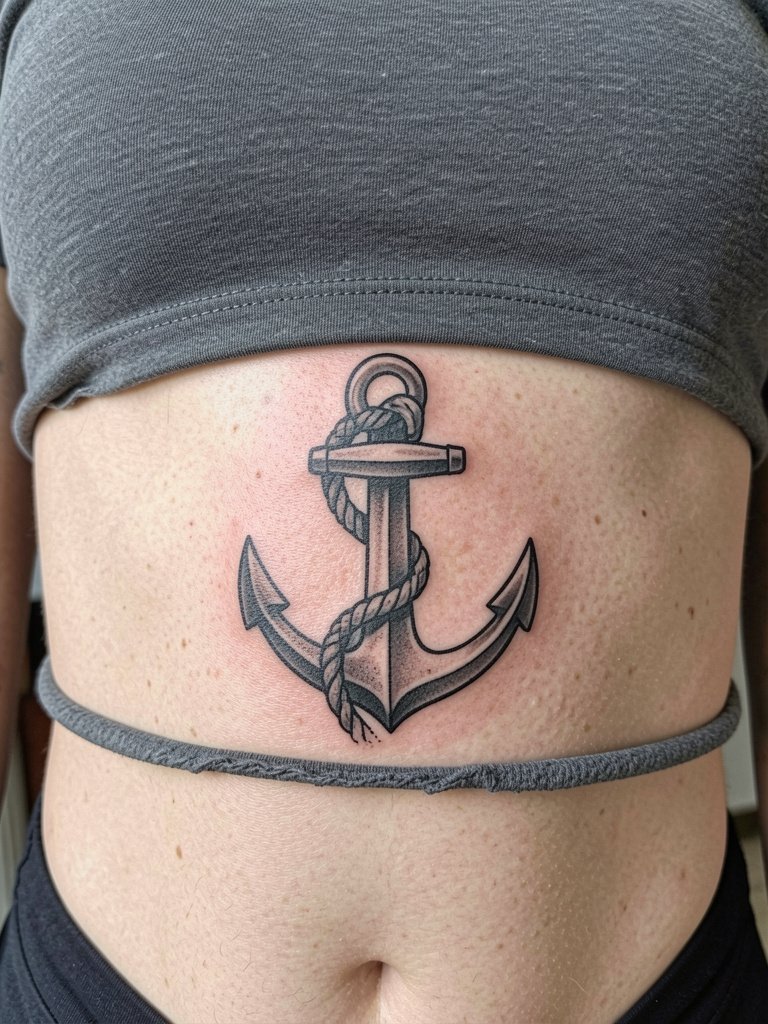
Anchors are chest-friendly because they read well at medium distances and work with collarbone lines. The typical error is diminishing the rope detail until it becomes an indistinct smudge. I recommend stronger rope texture and slightly larger knots so the whole composition stays legible. For session wear, a fitted cropped tee that exposes the lower chest keeps the area accessible.
28. Mythic Serpent Encircling the Sternum
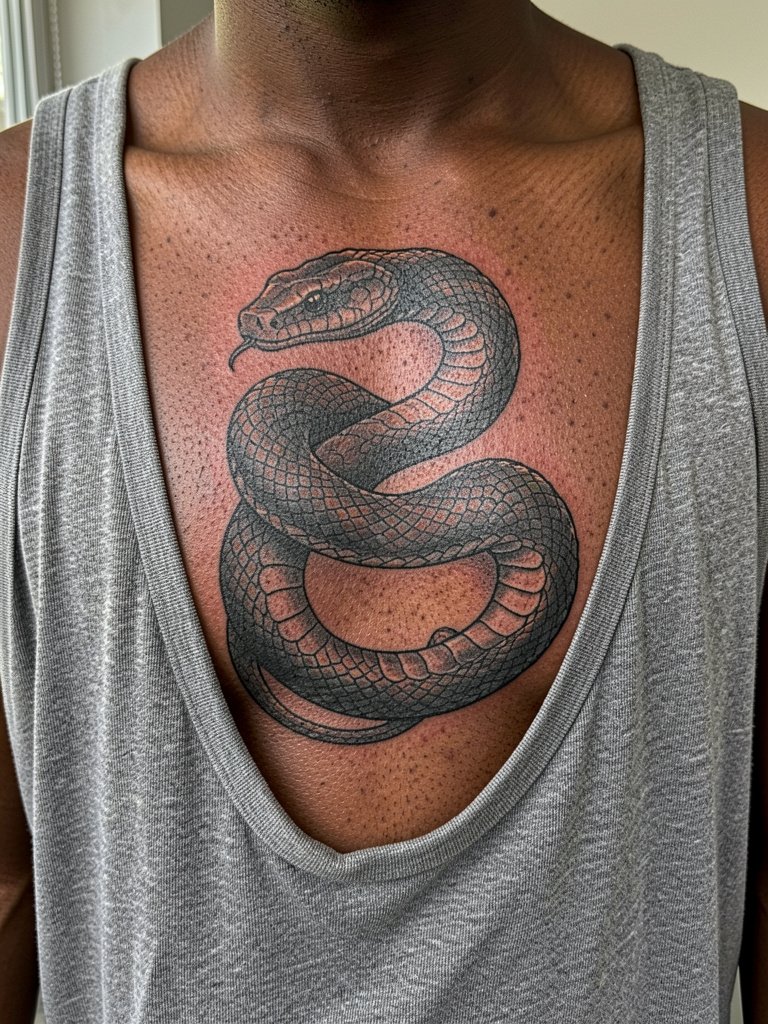
A wrapped serpent benefits from clear negative space between coils so the head, eye, and tail stay distinct. The error clients make is asking for tiny scale texture across tight coils which leads to blur. For a durable outcome ask the artist to outline the primary coils with confident lineweight and reserve fine detail for open areas. These typically need two to three sessions. For display, a v-neck in black sets the curve of the serpent against simple fabric.
29. Stippled Portrait Medallion
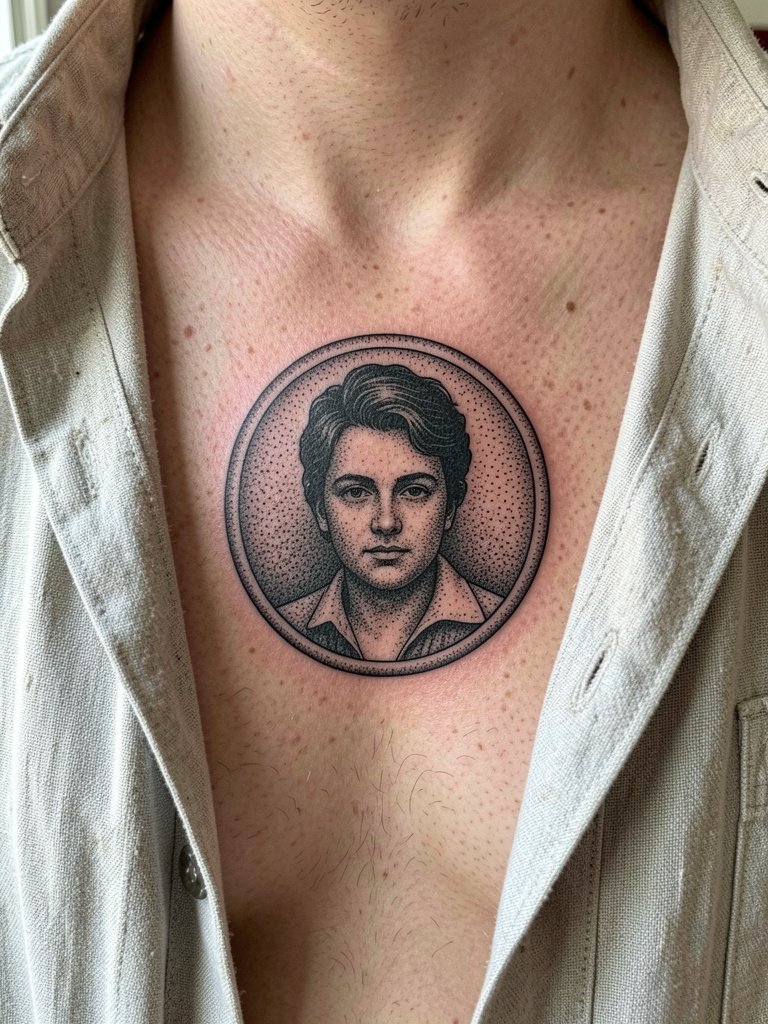
Stipple medallions are striking because the dot work creates soft tonal range without heavy black fields. The main mistake is making the portrait too small which loses facial definition in stippling. Ask the artist how large the face needs to be to keep eyes and nose readable at one and three years. Session counts depend on stipple density. For a refined reveal, an open-collar linen shirt gives the medallion a clean backdrop.
Frequently Asked Questions
Q: How painful are chest tattoos and which areas hurt most?
A: Sternum and ribs are commonly the most painful because the skin sits close to bone while the upper chest and shoulder areas tend to be meatier and less sharp. If you are nervous about pain, start on the upper chest or shoulder and plan multiple shorter sessions so you can assess tolerance.
Q: What budget range should I expect for chest tattoos?
A: Small chest pieces often fall into the mid-range while full-chest projects can run much higher. Expect a small-to-medium chest design to be in the 1,000 to 3,000 range and large, highly detailed realism or full-chest work to start around 2,000 and go up from there depending on sessions and color needs.
Q: How should I find artists who show healed chest work?
A: Search hashtags and platform filters like chest-focused tags, then use location filters on TikTok and Instagram and Tattoodo keyword searches to find portfolios that include healed shots. Look for client photos that show settled linework at multiple time points and ask to see healed examples in the style and on the skin tone you have in mind.
Q: What do I wear to appointments for different chest placements?
A: For collarbone work wear a crew or scoop-neck top that the artist can move without stretching, for half-chest pieces a loose tank top works best, and for sternum work choose a button-down you can open fully. If you want a specific suggestion, a loose tank top is a reliable pick for many upper-chest and shoulder sessions.
Q: Fine-line vs bold blackwork, which holds better on chest skin?
A: There is a clear debate. One side says fine-line blurs within two to three years on chest skin because of daily movement and skin stretch, especially near sternum and ribs. The opposing side contends that with slightly wider spacing and proper needle depth, fine-line pieces can remain legible for three-plus years and they point to healed portfolios showing that outcome. Choose based on how long you want crispness and be specific about line weight in the consultation.
Q: Aquaphor versus specialty tattoo balms after a chest tattoo?
A: People split into two camps. One camp prefers thinner specialty balms because they say Aquaphor can clog pores and promote itching in sensitive chest areas. The other camp uses Aquaphor because it is inexpensive and has worked for them during the initial days. Try to see healed examples from the balm your artist recommends and use what keeps your skin from cracking or scratching during the first week.