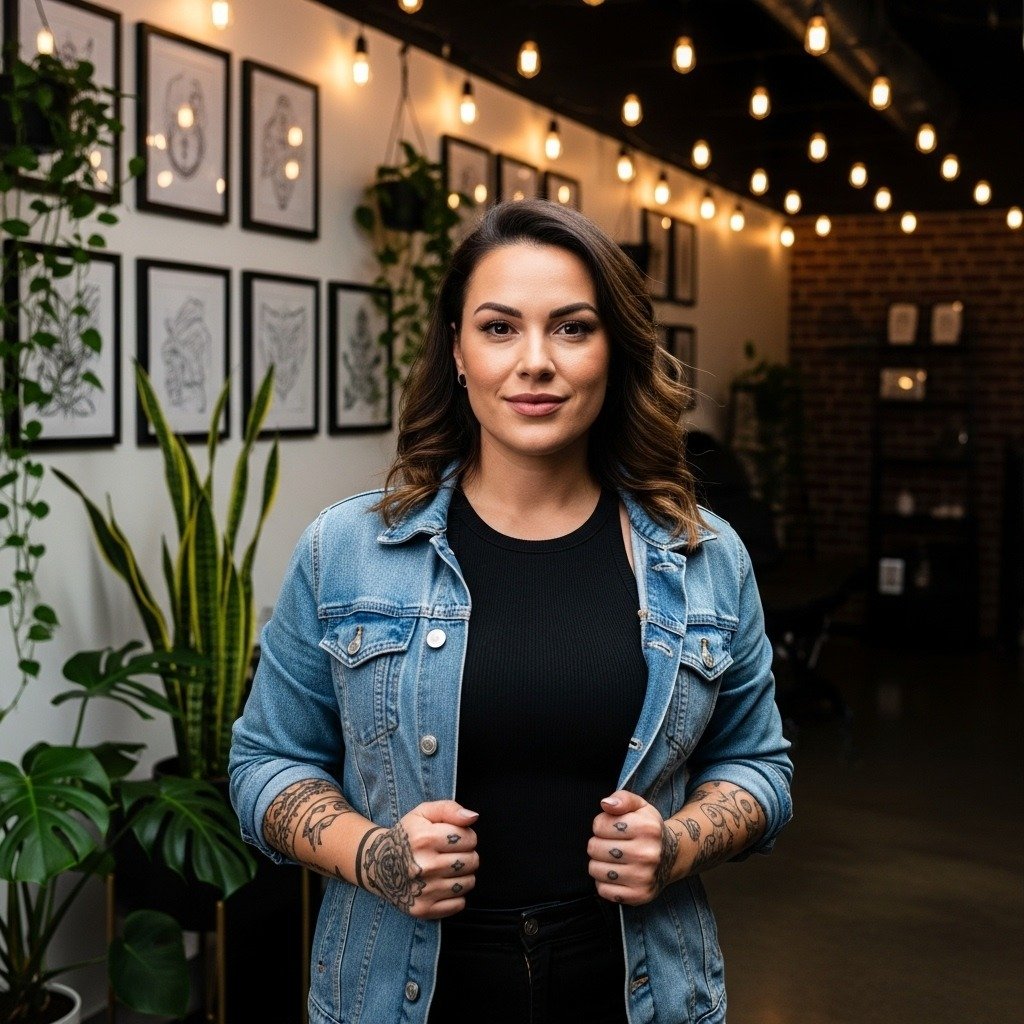
Tiny, single-needle butterfly tattoos placed without thought to skin movement often blur within a few years, and I have seen stencils redrawn mid-session to avoid that fate. Bigger silhouettes, slight spacing, or selective saturation keep wings readable longer. These ideas lean practical first and pretty second, so you will find butterfly approaches that hold up, photograph well, and pair with what you wear.
1. Fine-Line Micro Butterfly on Inner Wrist
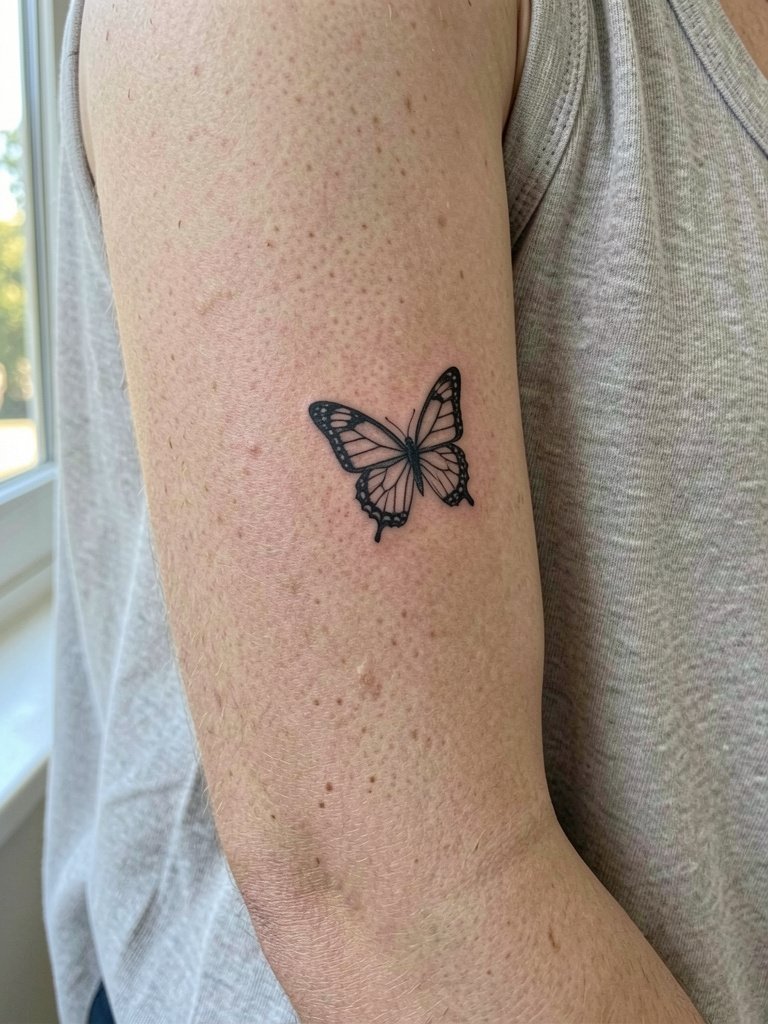
A micro butterfly on the inner wrist reads like jewelry when the linework survives. Pain is low to moderate for this spot and sessions run about 20 to 40 minutes. The main mistake is going too thin; inner wrist skin moves and eats single-needle detail. One camp argues ultra-fine lines look elegant at the start. The other camp says slightly bolder line weight preserves the silhouette for years. For longevity request a hair heavier line weight than your favorite reference image and expect a touch-up around year two. This piece shows well with stacked open-cuff bracelets and a slim watch, try delicate cuff bracelets to frame the area.
2. Watercolor Wash on the Shoulder Blade
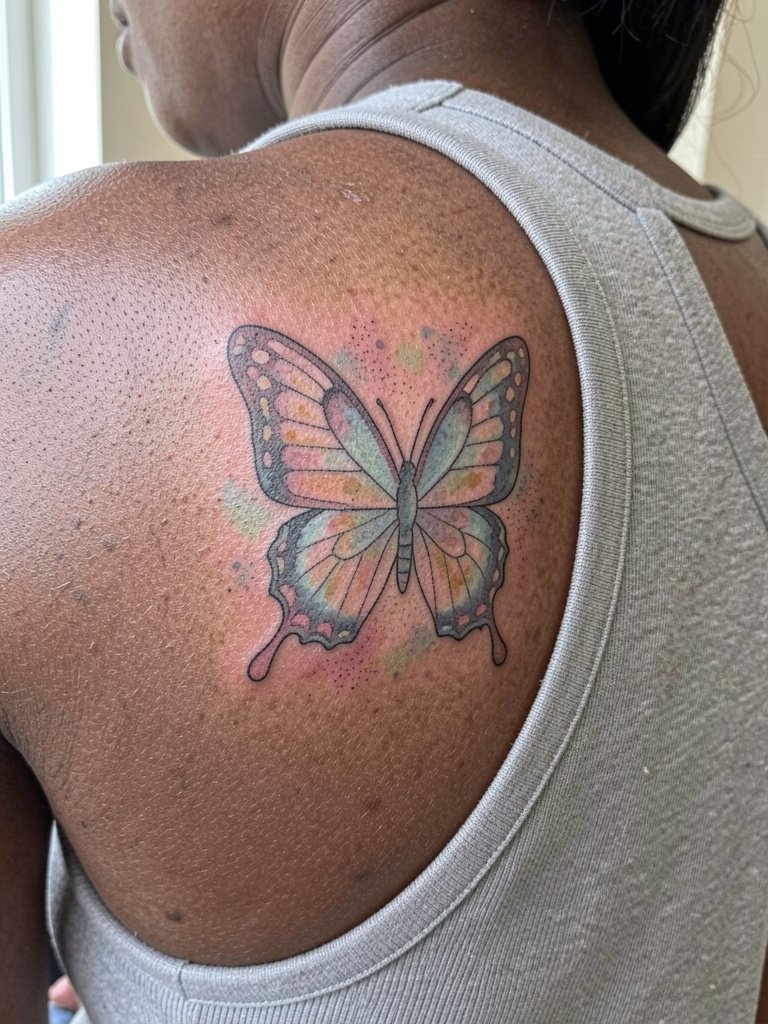
Shoulder blades give room for painterly color and movement and the session usually lasts one to two hours. Watercolor fades differently across skin tones because saturation holds better with deeper pigment application. One group of artists says the washed edges are part of the charm and will accept periodic softening as the palette ages. Another group insists on adding subtle outlines for longevity and clearer healed edges. If you want the wash look ask for gentle color saturation and a thin anchor outline so the wings keep shape. Wear an open-back dress or a wide-strap tank to show this placement; try open-back midi dresses for evenings that let the back read.
3. Tiny Butterfly Behind the Ear
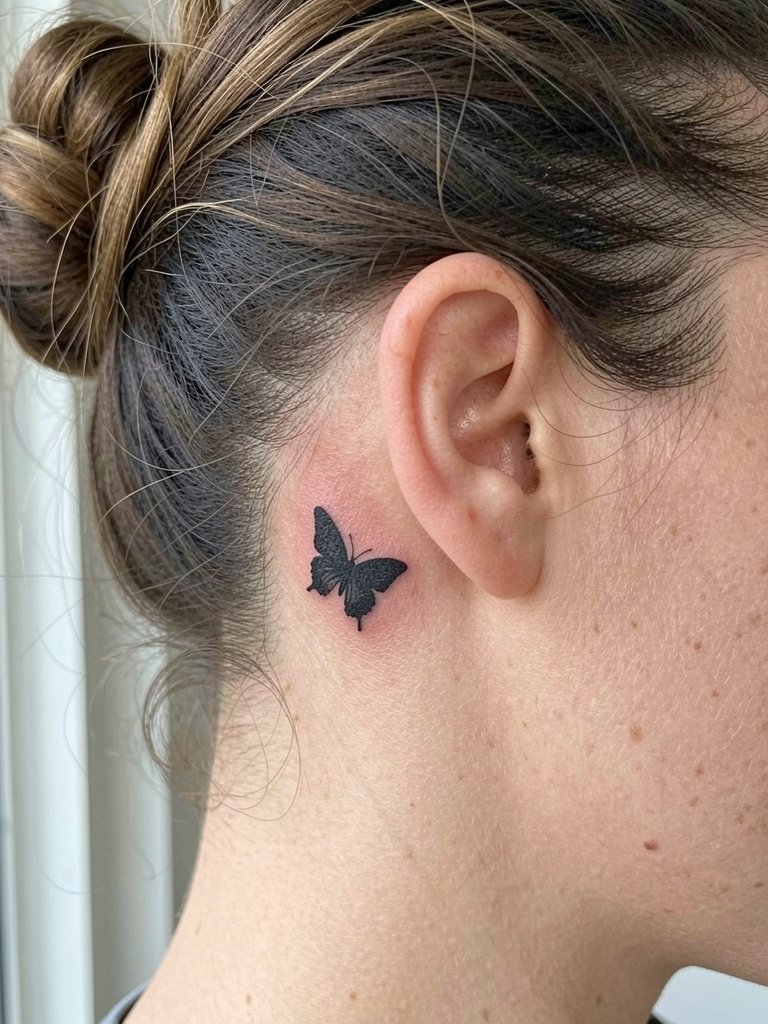
Behind-the-ear butterflies are intimate and subtle with a 10 to 25 minute session time. Expect sharper sensation because bone is near the surface, but recovery is quick. Common errors include asking for too much interior detail in a tiny space, which becomes blotchy. For long-term clarity pick a bold silhouette rather than delicate internal veins. For the appointment wear your hair up or bring a hair tie so the artist can see the mastoid area clearly. Pair this spot with small hoop earrings for balance and shop for simple small hoop earrings to frame the area.
4. Geometric Butterfly Cluster on Outer Forearm
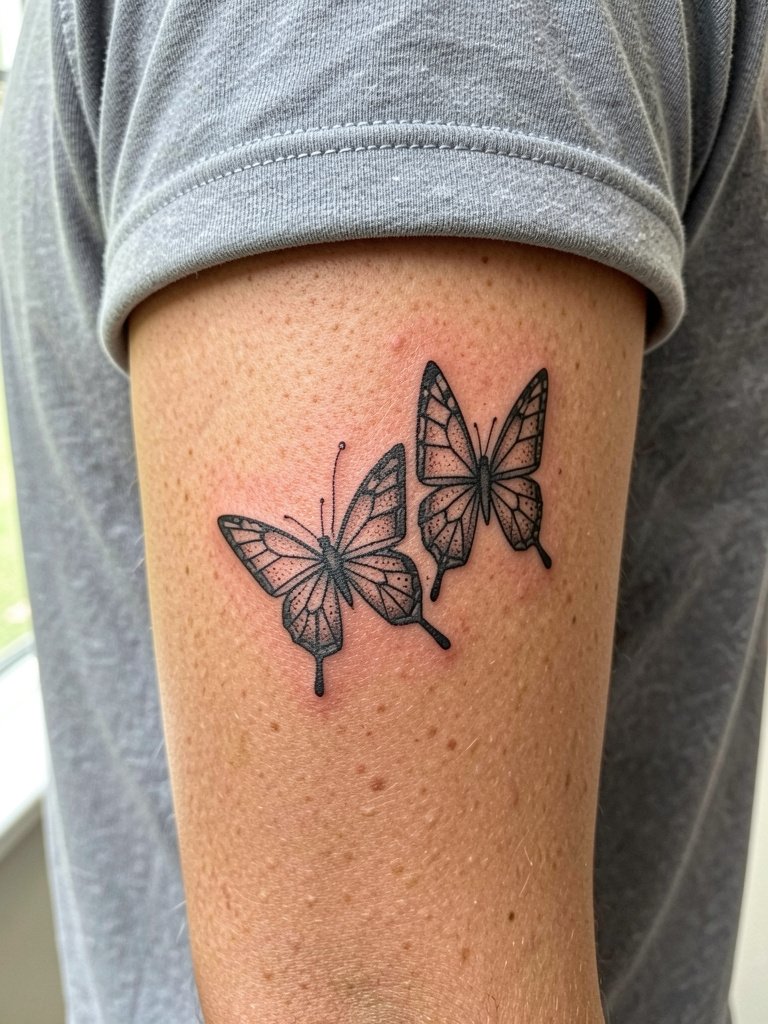
Outer forearm clusters photograph well and take one to two hours depending on detail. A frequent mistake is cramming too many tiny geometric shapes, which causes the pattern to lose definition after healing. If you want lines to pop request slightly increased spacing between elements and dot work for texture. This placement tolerates iterative touch-ups well, expect a minor touch-up around year three for crispness. For show-off styling roll sleeves to three-quarter length or wear cropped linen shirts that let the forearm sit in natural light.
5. Tiny Realism Butterfly on the Collarbone
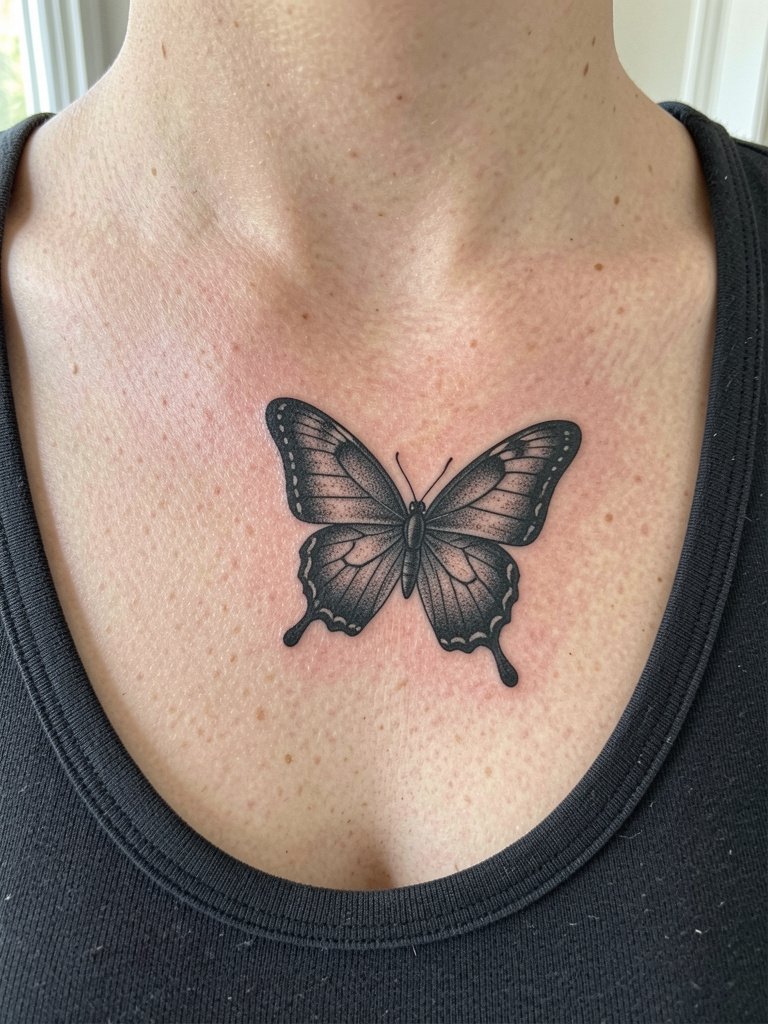
Collarbone butterflies read like jewelry and the session is typically 30 to 60 minutes. Because the area flexes with shoulder movement, tiny realism requires slightly heavier contrast so key features do not fade into shadow over time. One common misstep is asking for extreme micro detail without accepting a denser dot pattern that gives the illusion of realism. Plan for a possible touch-up at 12 to 18 months if you want the tiny antennae to remain crisp. Pair this placement with wide V-neck tops or delicate layered necklaces. Consider delicate layered necklaces that sit below the tattoo.
6. Neo-Traditional Butterfly on the Upper Arm
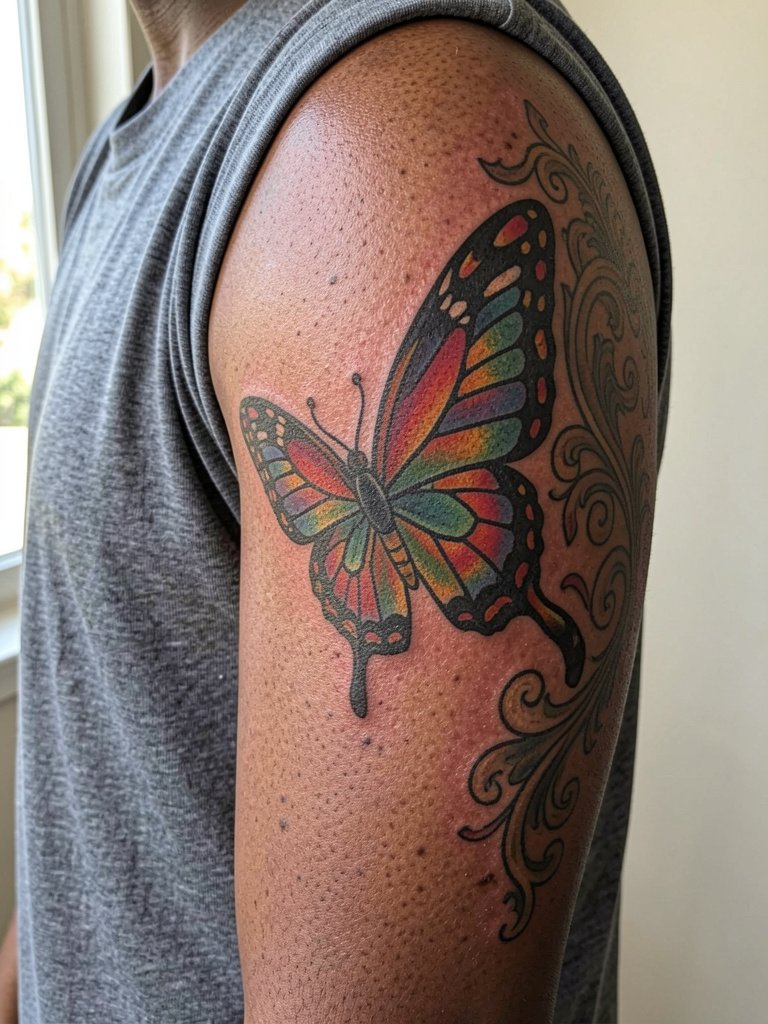
Upper-arm neo-traditional butterflies age into a solid presence and sessions typically take one to three hours depending on color. The strength here is saturation; heavier pigment hides minor spreading and keeps motion visible. Mistakes include tiny interior details that compete with the bold outline. If you want a lasting visual, ask for saturated fills and clean outlines. This placement pairs well with sleeveless tops and structured jackets. Try an open-shoulder blouse or a sleeveless summer dress for outfits that show the art.
Session Day Picks
These products smooth the small-session and touch-up needs for the wrist, collarbone, and forearm pieces above.
-
Stencil transfer paper kit. Lets you preview exact placement on the skin for tiny butterflies so you avoid awkward spacing on wrists and collarbones.
-
Topical numbing cream. Applied before shorter sessions eases wrist and sternum sensitivity without altering ink absorption when used correctly.
-
Thin protective film roll. Keeps small wrist and finger tattoos clean during the first days of heavy hand washing.
-
Disposable razors for prep. Smooth shave lines reduce stenciling issues on areas like the collarbone and shoulder blade.
-
Fragrance free gentle body wash. Cleans the healing area without stripping delicate ink, useful for the outer forearm and upper arm pieces.
7. Tiny Chain of Butterflies Along the Spine
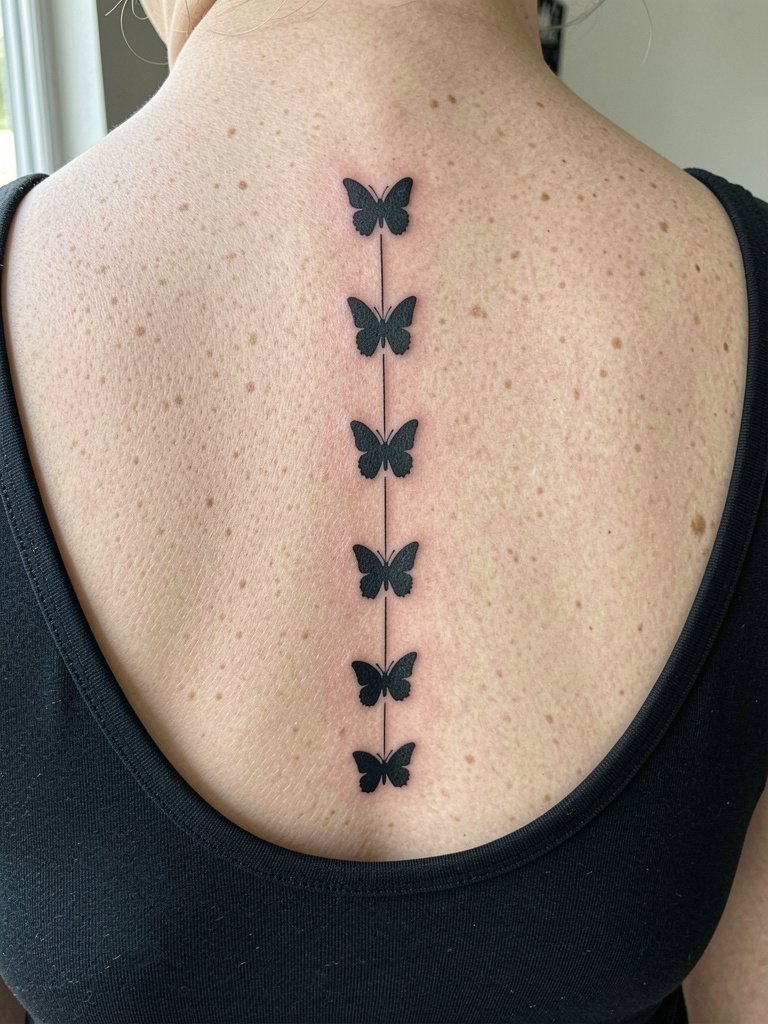
Spine chains look elegant when given breathing room and a session is usually 45 to 90 minutes. A frequent error is compressing the butterflies too tightly, which makes the chain read as a single blob after healing. For better longevity ask for slightly increased vertical spacing and confirm the placement while standing and bending. The spine can be more painful than the forearm because of proximity to bone. Show these with scoop-back tops or backless dresses to let the chain read; a scoop-back dress highlights the line.
8. Blackwork Solid Butterfly on the Calf
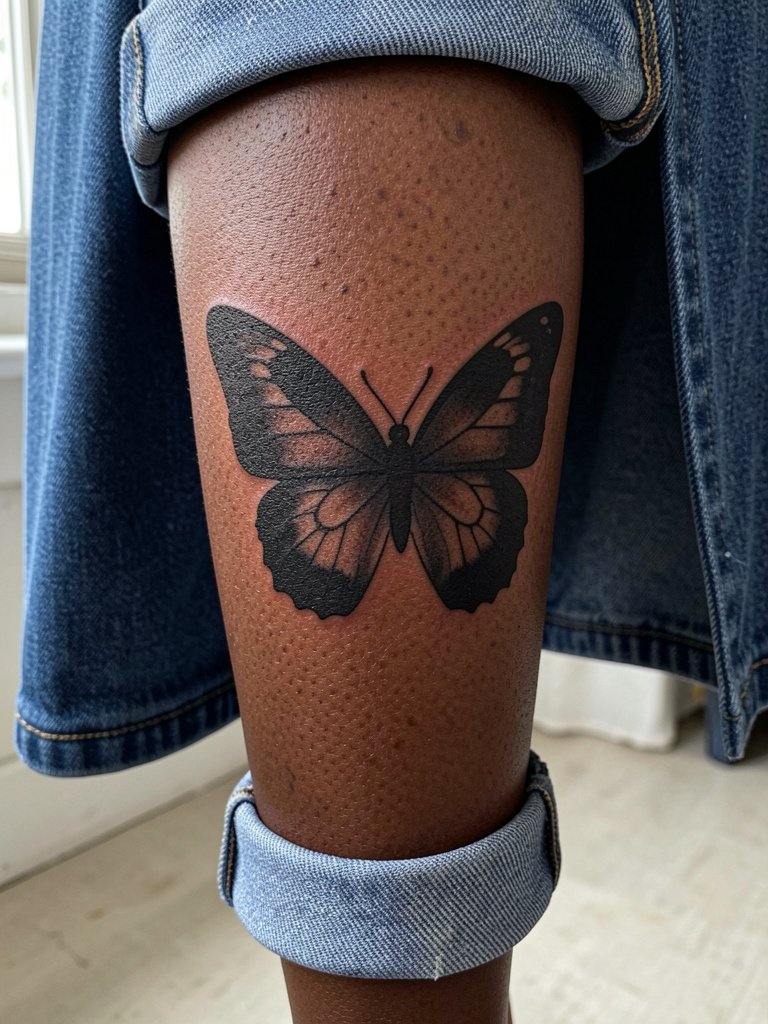
Calf placements allow for big visual statements and sessions run one to three hours. Solid blackwork resists the subtle blowout that affects tiny linework because saturation dominates. The mistake is asking for intricate internal detail inside a heavy black field, which can read muddy when ink settles. Calves handle heavier touch with lower blowout risk, but expect some softening along edges over time. Show this with fitted skirts or rolled jeans and consider midi skirts that let the piece be seen.
9. Watercolor Sleeve Accent with Butterflies
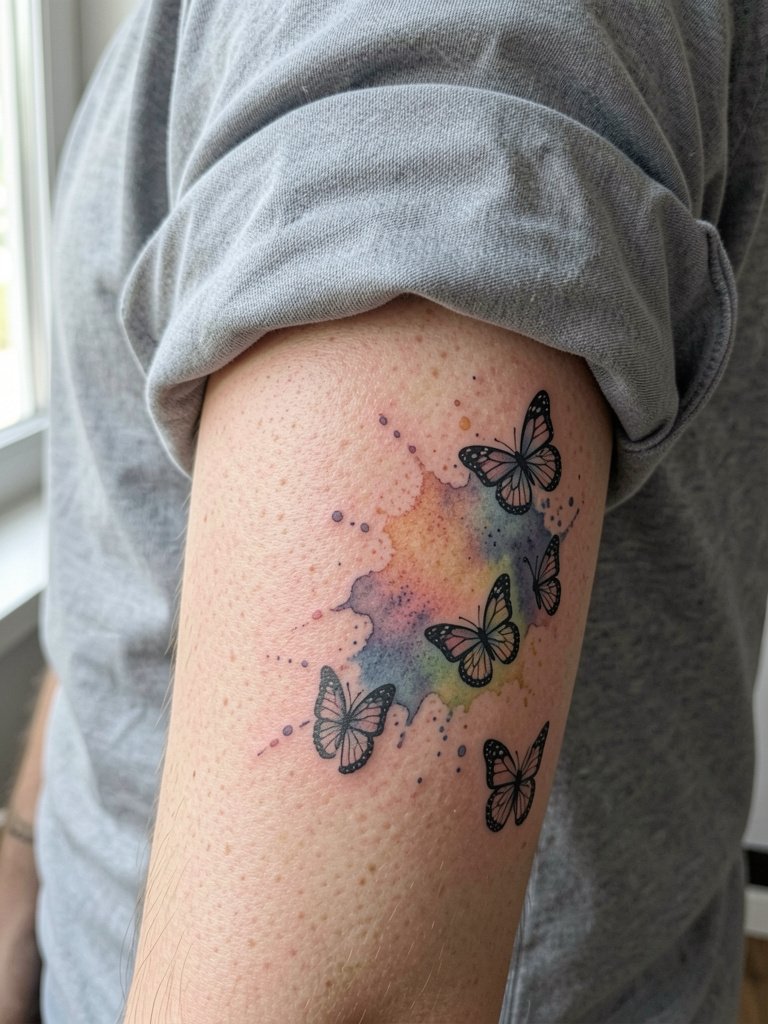
Using butterflies as sleeve accents gives flexibility in scale and narrative and sessions will be ongoing across multiple appointments. A common error is mixing too many soft watercolor patches without anchor lines, causing the sleeve to blur into an indistinct wash. One practical approach is alternating softer color windows with crisp black-outline butterflies. Sleeve work ages with the arm and may need periodic saturation touch-ups. During appointments wear short sleeves you can roll, and bring a loose button-down shirt or loose cotton button-up shirt to stay comfortable between passes.
10. Watercolor Versus Line Debate for Chest Butterflies
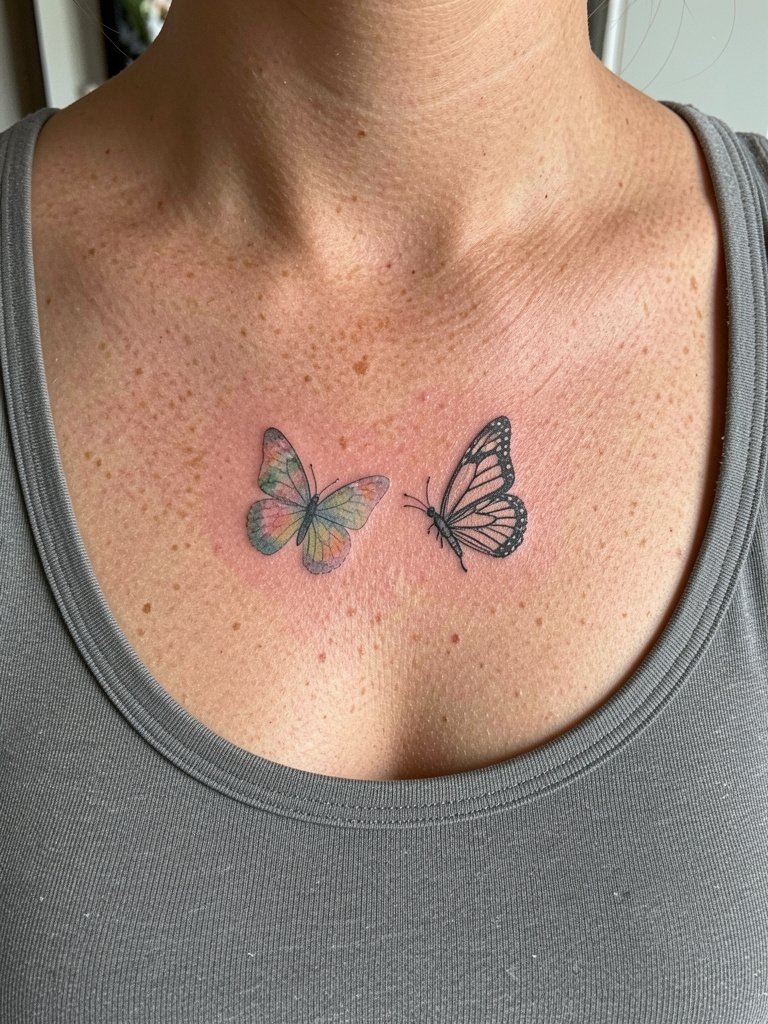
Butterfly placement on the chest has a clear debate that divides artists. One camp favors watercolor and says the soft look reads as personal art and is worth periodic softening as part of the aesthetic. The other camp insists on line anchors so the wings retain definition against skin movement and clothing friction. If you lean toward watercolor ask for slightly stronger saturation near the wing base to avoid complete fade over time. Pain on the chest ranges higher than the shoulder but many clients find the visual payoff worth the tolerance. Wear a fitted scoop-top for the session and consider layering with a wide strap tank afterward.
11. Micro Black Butterfly on the Side Rib
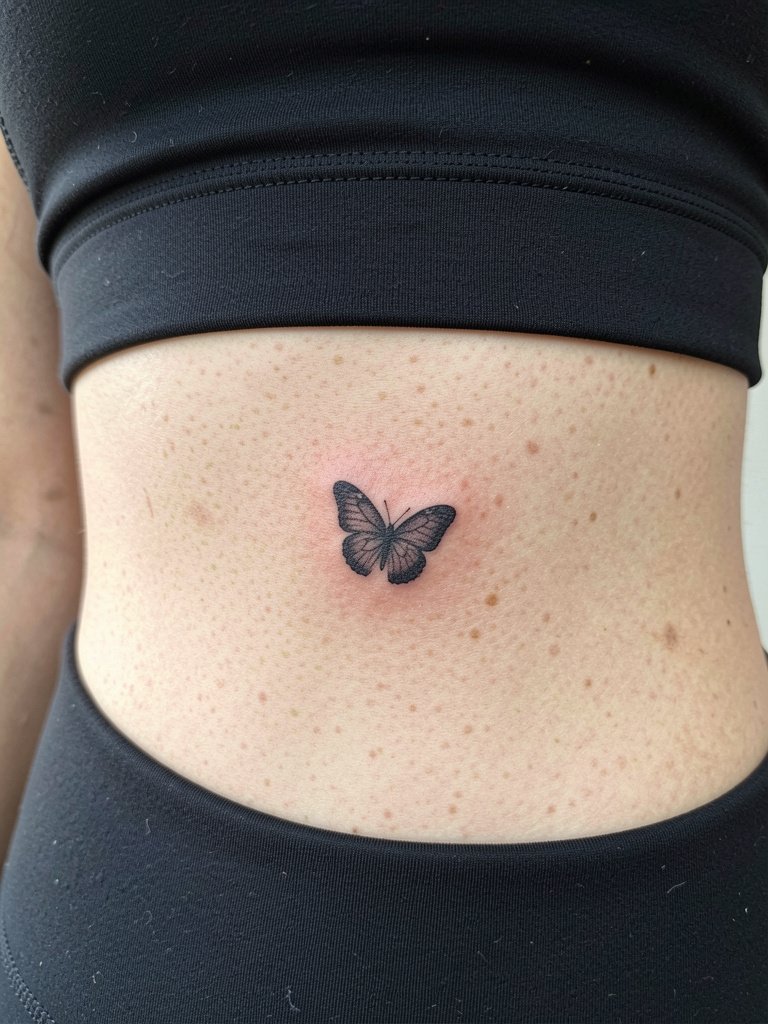
Ribcage tattoos carry higher pain and session time varies with size, often 20 to 60 minutes for a micro piece. The common mistake is underestimating movement and stretch; small details can distort with breathing cycles. Some artists avoid ultra-fine single-needle work here because the skin stretches. If you want the area to stay readable pick a solid silhouette and plan for a touch-up at 12 months. sensitive placements may require slower pacing and breath control. For the session, wear a fitted cropped top that stays put and keeps the artist's access clear.
12. Tiny Butterfly Ring on the Finger
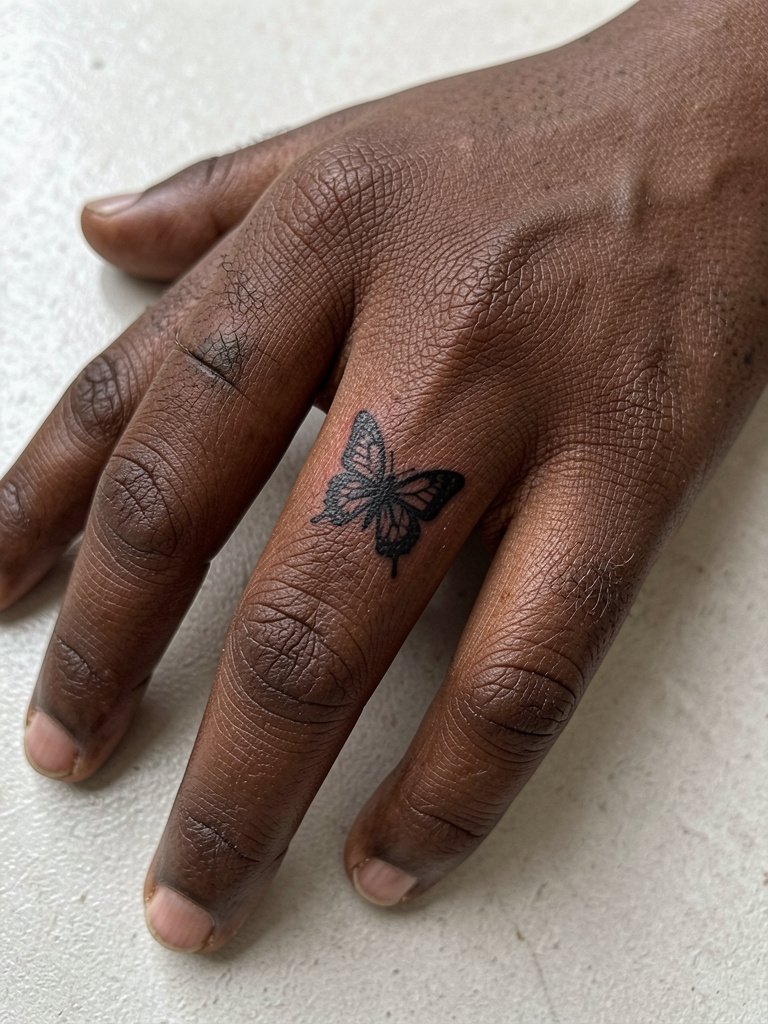
Finger tattoos are high-risk for fading and blowout because of constant use and thin skin. Sessions are short, around 10 to 30 minutes, but expect faster degradation. One typical mistake is choosing too much internal detail. A ring-style butterfly as a silhouette keeps it readable longer. Plan on touch-ups every 12 to 18 months for best results. For show-off styling consider thin stacking rings or midi bands. Try delicate stacking rings that echo the tattoo without hiding it.
13. Lace-Inspired Butterfly on the Hip
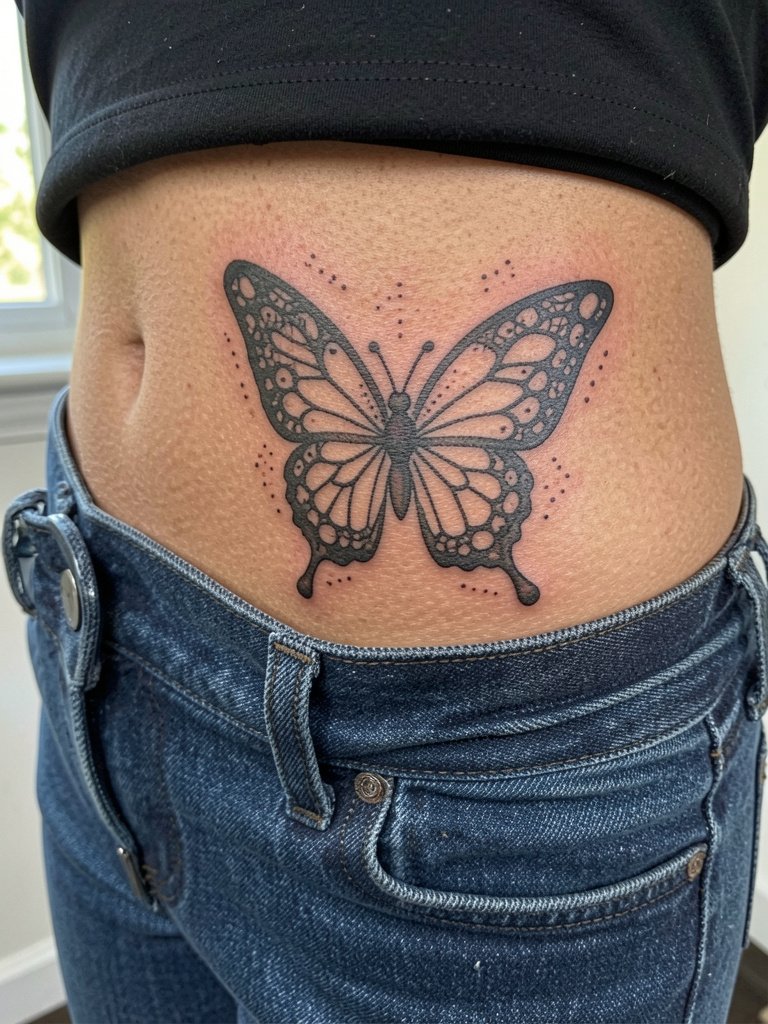
Hip butterflies read sexy and hidden and sessions run 45 to 90 minutes for detailed lace work. The hip moves with clothing and hips, so too-fine filigree is often the first to wash out. One practical route is to combine lace detail near the center of the wing with bolder outer lines. This placement photographs well in swimwear and low-rise jeans. For the session wear low-rise bottoms that stay put and give clear access without you adjusting them repeatedly.
14. Minimal Dot Work Butterflies Around the Ankle
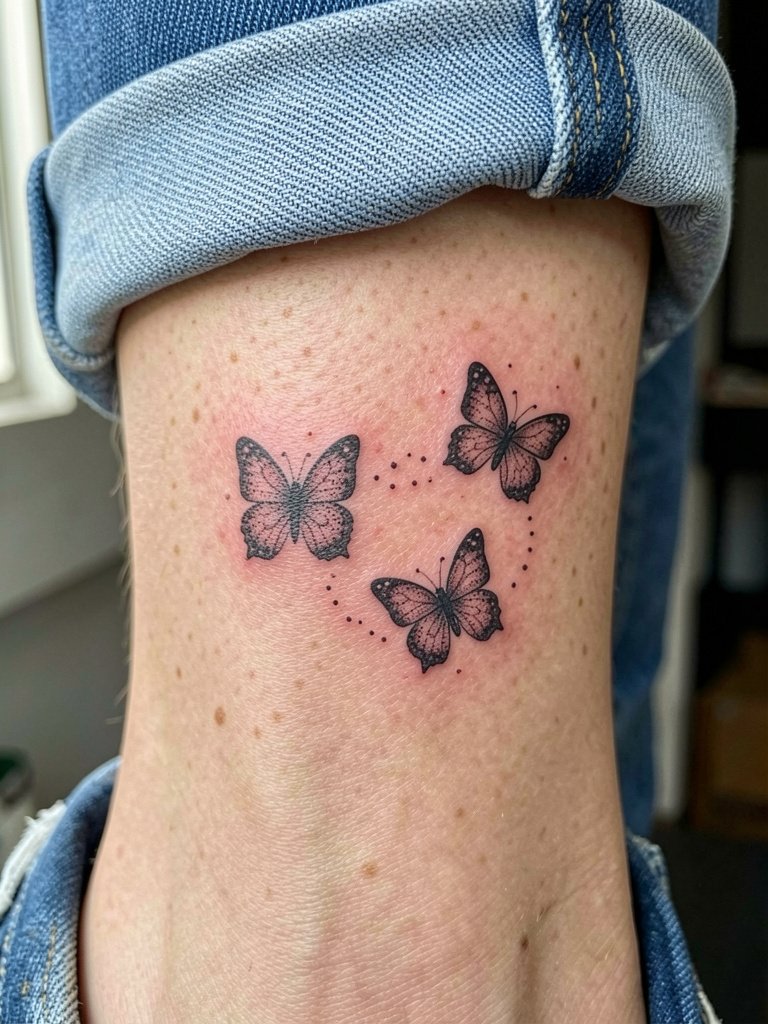
Ankle work takes about 20 to 45 minutes and the area sees a lot of friction from socks and shoes. Dot work softens into texture over time and may need a refresh if you want the stippling to stay detailed. Avoid placing dots too tightly together because blowout on this thin skin can smear the stipple. For show-off styling try low top sneakers or rolled jeans and pick low top white sneakers that let the ankle be seen.
15. Hyper-Realistic Monarch on the Thigh
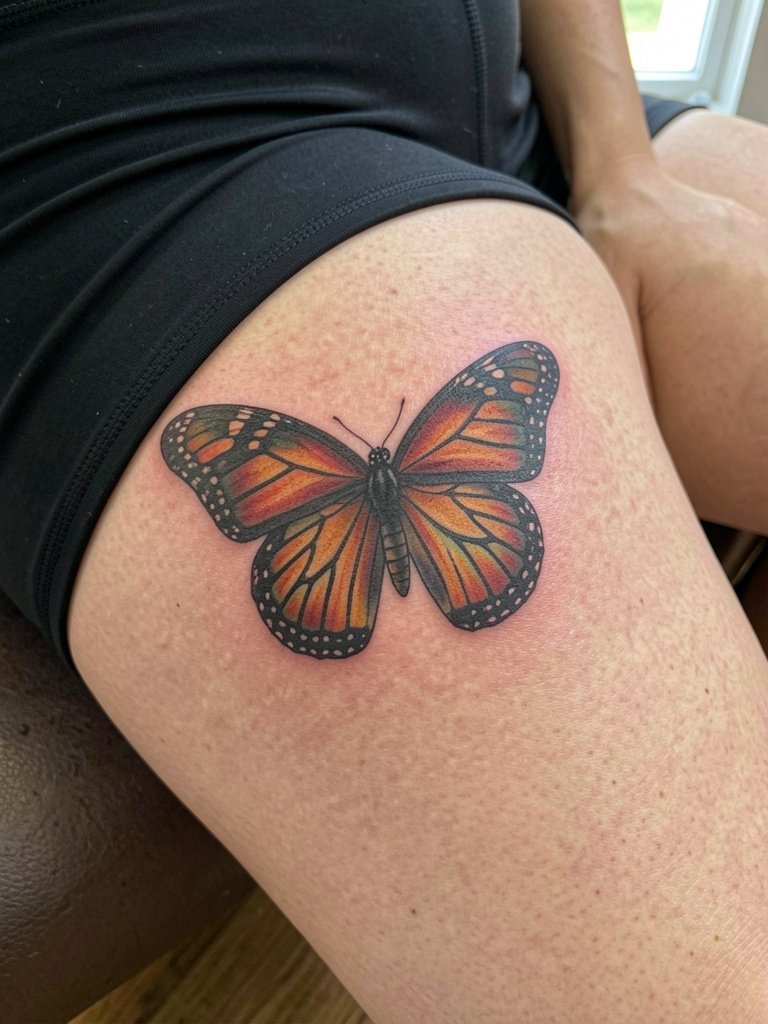
Upper-thigh realism allows room for detail and sessions can range from two to five hours depending on scale. The thigh holds saturation well, so hyper-real color stays vibrant longer than thin placements. A common error is under-saturating the base color, which causes the wings to look patchy after healing. Plan for a longer initial session and possible follow-up for color boost. For reveal outfits look to high-waist skirts or swimwear and consider high waisted swim bottoms that frame the area.
16. Small Pierced Butterfly below the Collarbone
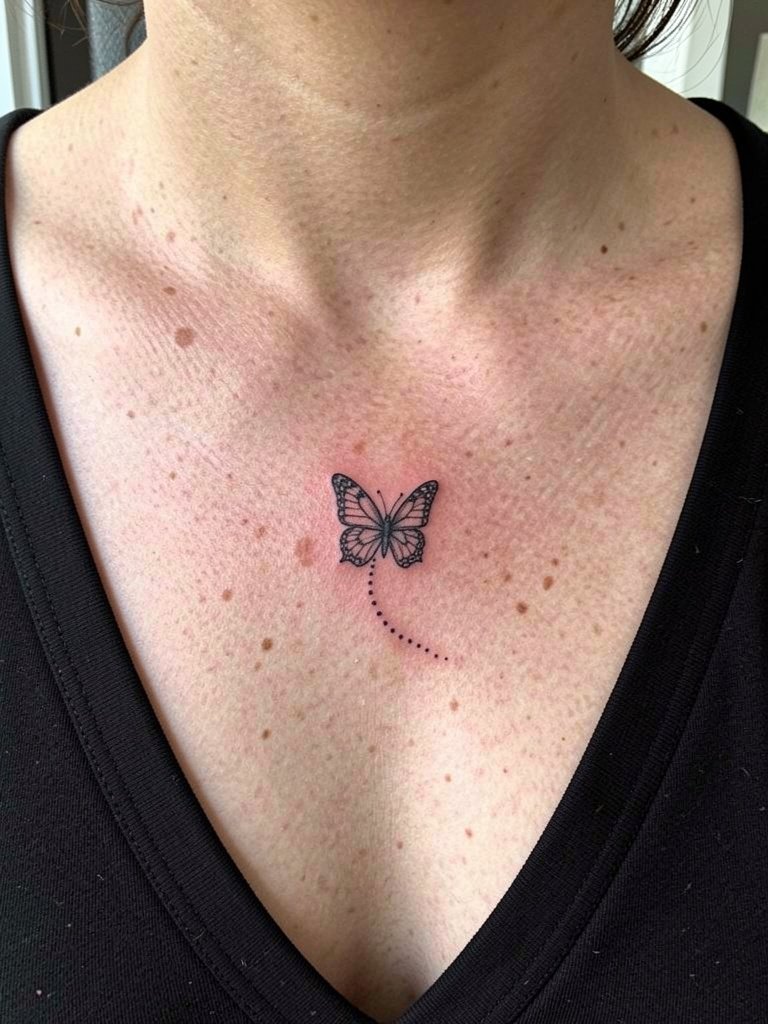
Delicate pieces below the collarbone take 20 to 40 minutes and the area tends to show slight movement with breathing. The risk is losing tiny dots that mimic jewelry. I advise a slightly bolder central dot to anchor the composition and reduce the chance of the trail disappearing. If you want to preserve the pierced look, plan for a touch-up within 18 months. This pairs well with low-profile necklaces and thin chain chokers.
17. Back-of-Neck Butterfly with Script
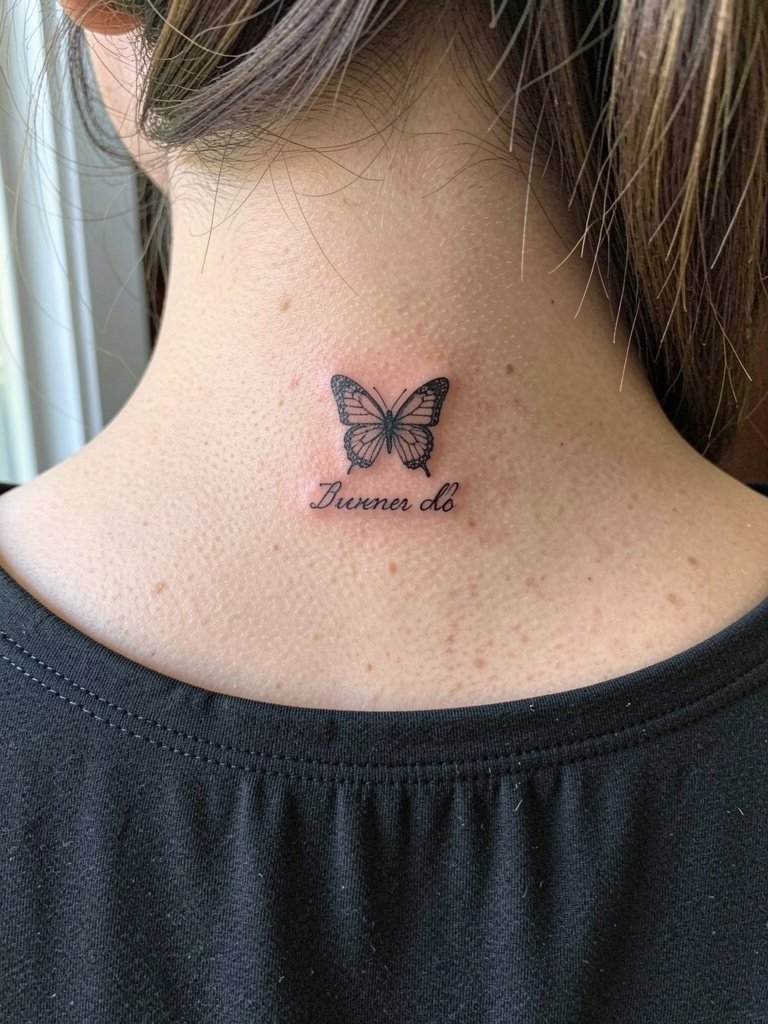
Nape tattoos take 20 to 60 minutes and can be visible or hidden depending on hair. A common mistake is tiny script that becomes unreadable against the natural neck lines. Ask for a slightly larger script baseline and spacing so the word stays legible. If you plan to show this often wear scoop-neck tees or updos; a hair tie set for updos keeps it easy to switch looks between sessions and reveals.
18. Tiny Butterfly on the Side of the Foot
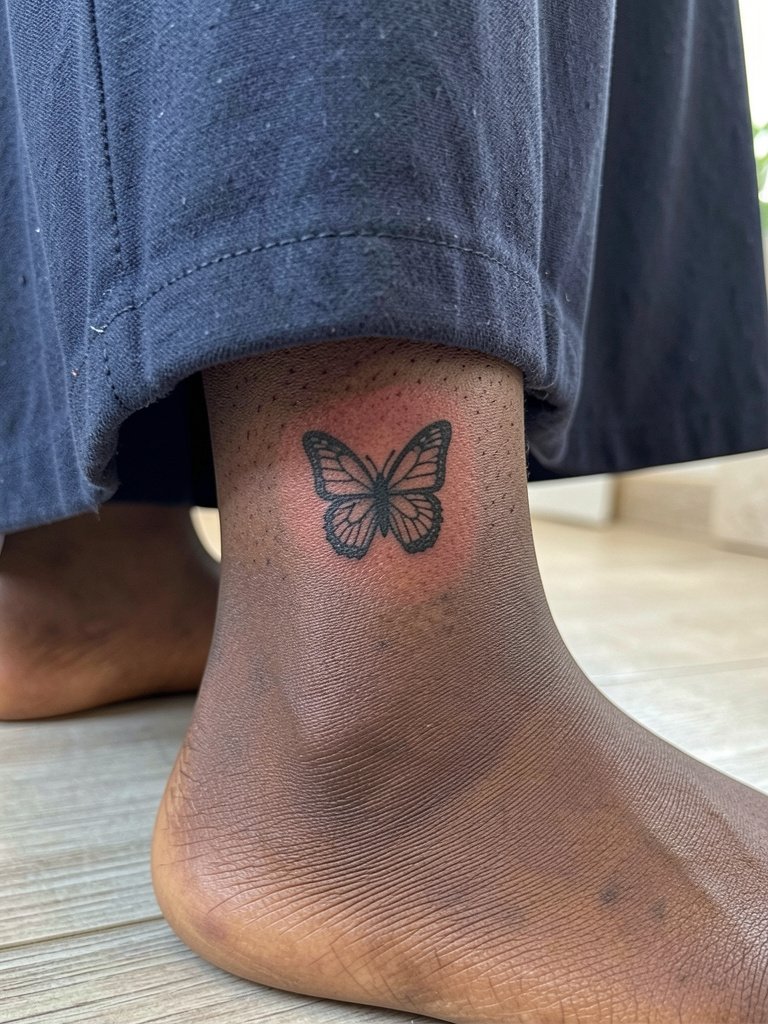
Foot tattoos sit close to bone and can feel sharp during the session, which is usually 20 to 40 minutes. The area suffers from abrasion and frequent contact, so tiny butterflies need denser outlines to stay crisp. Many people underestimate aftercare friction from shoes. For showing off opt for sandals that let the art breathe and try simple flat sandals that reduce rubbing.
19. Outline Butterfly Over a Scar
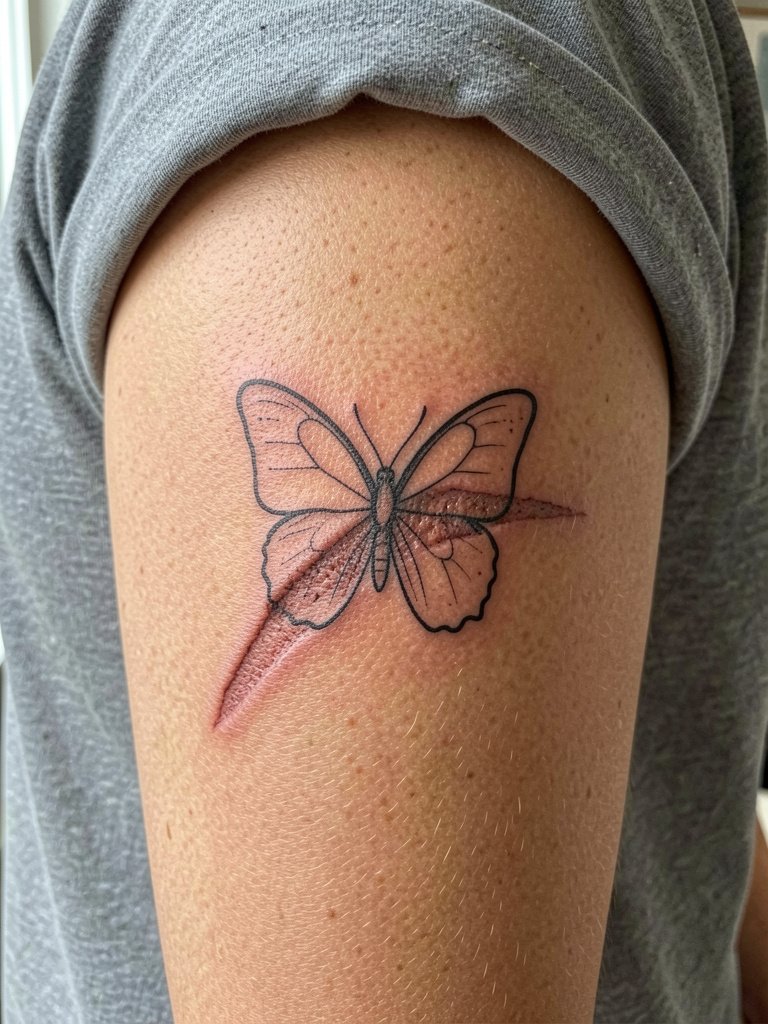
Working over scar tissue requires a specialized approach and sessions can take longer because the skin responds differently. One camp of artists prefers to avoid scarred skin because needle depth and ink uptake can be unpredictable. Another camp embraces careful custom work that uses scars as compositional elements. If you choose the latter, plan a consultation that maps how the butterfly will sit relative to the scar tissue and expect a gentle test patch in some cases. For styling, short sleeves let the healed piece breathe and be seen.
20. Neo-Traditional Butterfly on the Chest Center
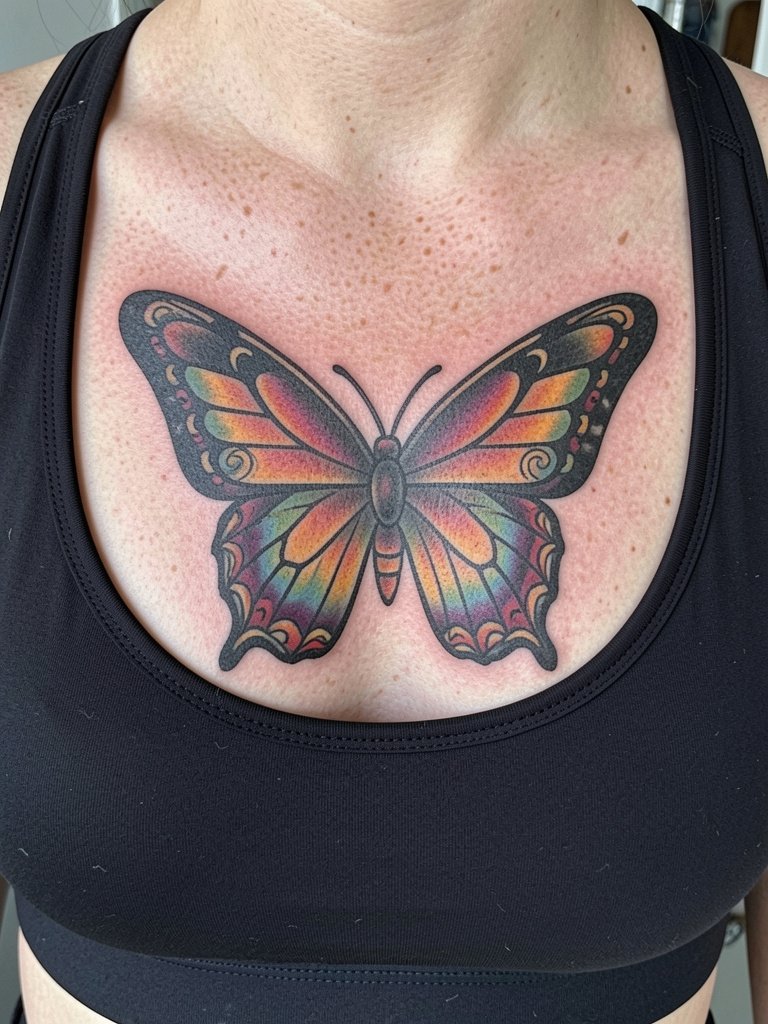
Sternum centerpieces are bold and sessions vary from one to four hours depending on size and color. The sternum is a sensitive area and requires steady breathing and pacing. A repeated mistake is requesting tiny filigree too close to the breast crease; that detail often merges with time. Plan for slightly more spacing and heavier outlines so the design keeps its central symmetry. For the session wear a fitted sports bra or bandeau that the artist can move without you needing to adjust mid-session.
21. Butterfly with Moon Phases on the Rib Side
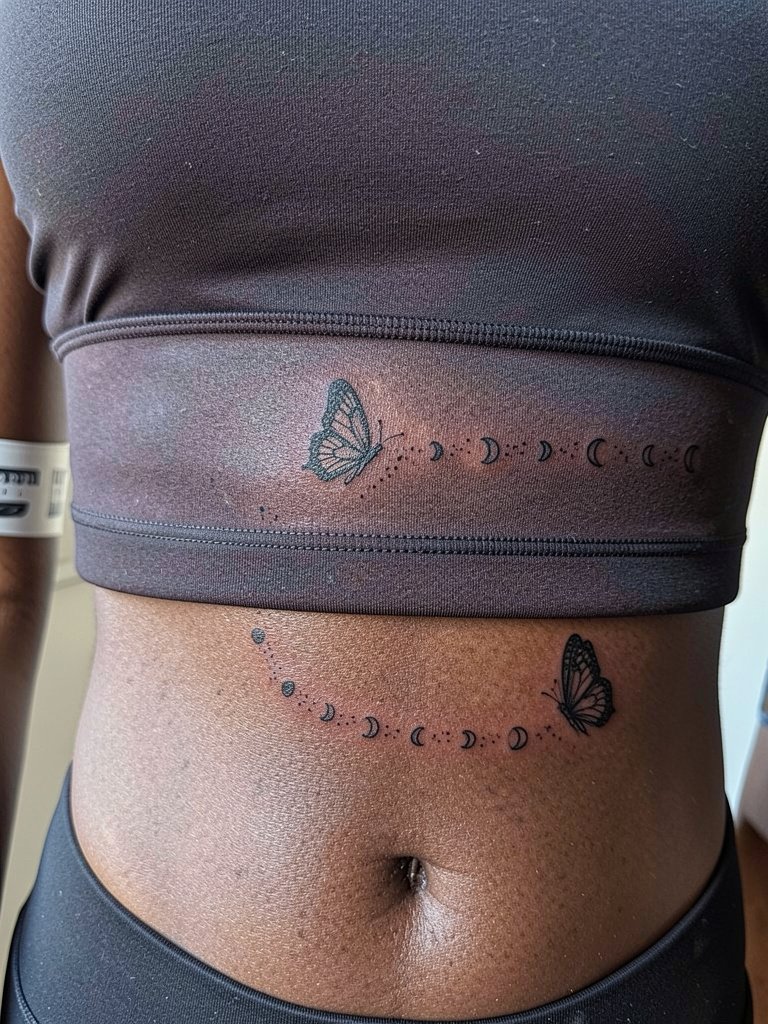
Rib-side tattoos are high on the pain scale and sessions may be broken into short passes. One frequent mistake is clustering icons and small script too close to the butterfly. If you want both elements to remain clear, ask for simplified moon phases that act as visual rhythm rather than ornament. Expect a stronger sensation but the area photographs well under side lighting. For comfort bring a loose cotton top that you can keep on and shift minimally.
22. Stylized Monarch Over the Heart
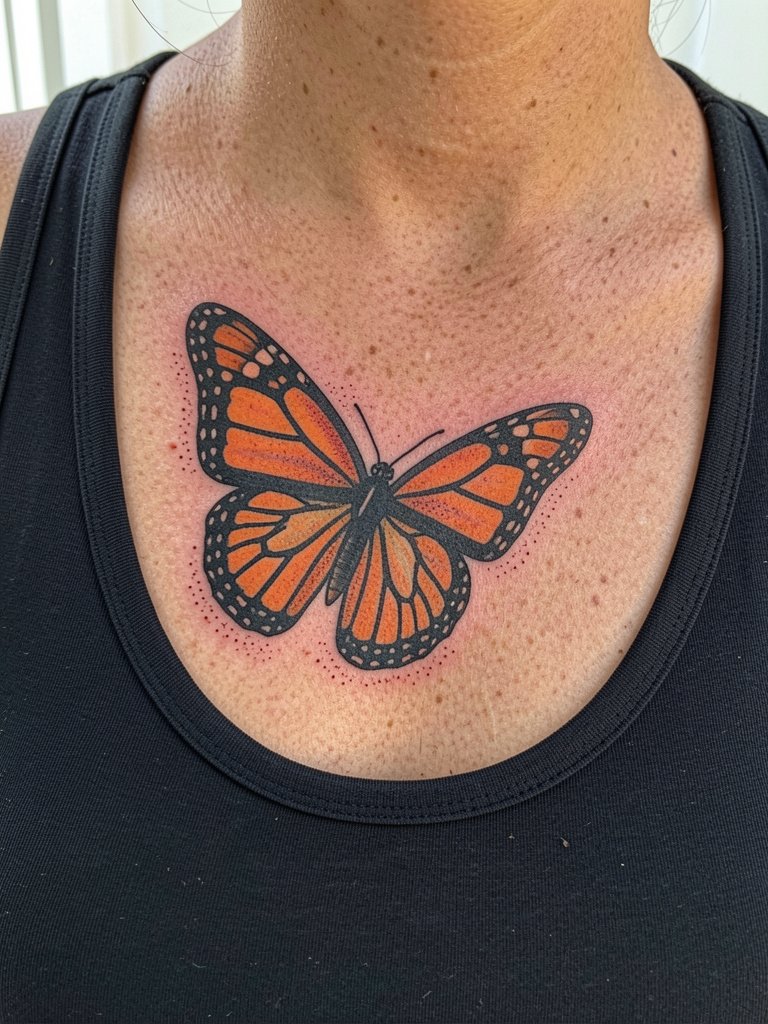
Heart-area butterflies are intimate statements and sessions usually require careful pacing because rib and chest sensitivity vary. A common mistake is going too small with color blocks, which can result in patchiness after healing. Ask for consistent saturation and accept that touch-ups may be recommended to even color across pigment-rich areas. For showing the piece, scoop-neck tops or layered necklaces that sit below the work let the design be visible.
23. Full Back Butterfly Mural
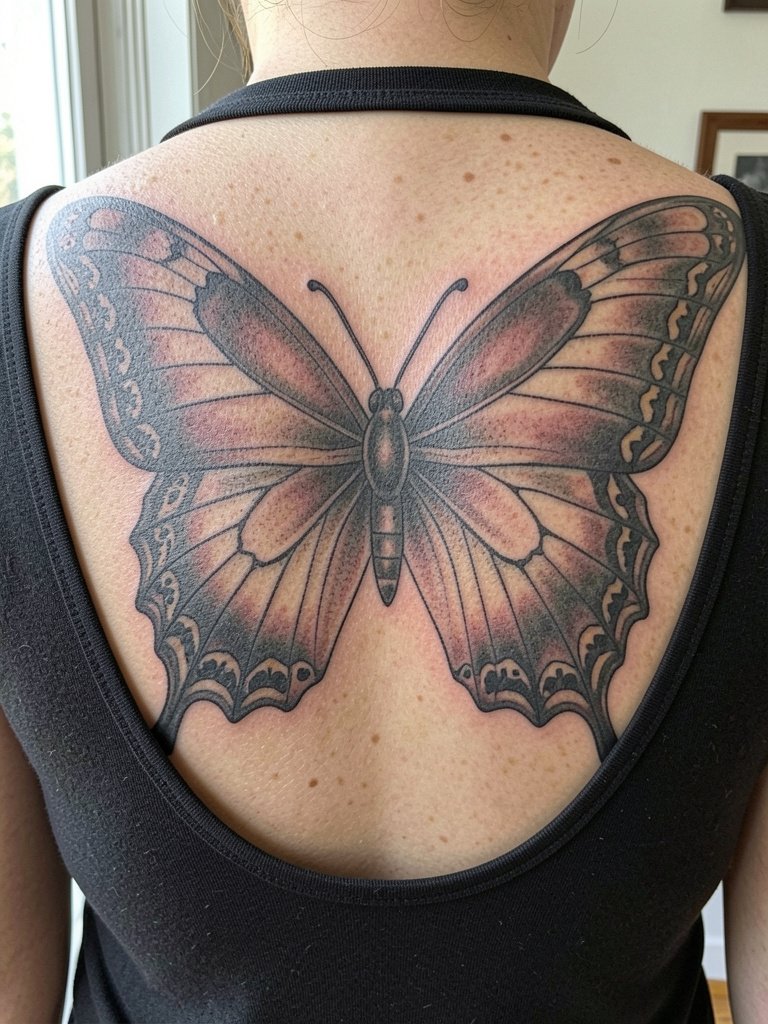
Full-back butterfly murals are major commitments and will be done over several long sessions. The reward is longevity and a canvas for complex shading techniques like whip shading and stipple shading. A common error is over-detailing small wing areas that become invisible at a distance. Plan the composition with clear focal points and allow the artist to scale motifs so the mural reads both close-up and across a room. For reveal outfits choose open-back garments and consider a wide-back top that sits naturally and showcases the work.
Frequently Asked Questions
Q: How do watercolor butterfly tattoos age compared with bold blackwork?
A: In my experience watercolor softens faster and sometimes looks like a faint wash after several years, while bold blackwork holds shape and contrast longer. One camp accepts this as part of the living look and schedules occasional color refreshes. The other prioritizes anchors and outlines for durability and fewer touch-ups.
Q: Where can I find healed portfolio examples and inspiration without naming specific artists?
A: Use platform searches and niche hashtags with location filters to find healed examples. Try searching hashtags on Instagram and TikTok, add location filters to narrow to nearby portfolios, and browse forum threads for user-shared healed shots that show how butterflies hold up on different skin tones.
Q: What's realistic pain and session time for a rib versus a calf butterfly?
A: Ribs are commonly more painful and often require breaks, so plan multiple short sessions for sensitive rib work. Calves tolerate longer sessions with less bone proximity, so full saturation pieces there usually finish faster per sitting.
Q: Can small text or dates survive near butterfly designs on collarbones?
A: Small text near collarbones can stay legible if you enlarge the letter spacing slightly and ask for clean baseline spacing. Tiny script often blurs into skin texture, so increase size and accept a possible touch-up window.
Q: How often will my tiny wrist or finger butterfly need touch-ups?
A: Expect more frequent refreshes for fingers and wrists because of daily wear and washing. A realistic maintenance rhythm is every 12 to 24 months depending on your lifestyle and how dense the original ink was.
Q: What should I wear to the studio for a thigh or hip butterfly session?
A: Choose fitted pieces that expose the area without being adjusted, such as bike shorts for thighs or low-rise bottoms for hips. For a longer session bring a loose button-up or a loose cotton button-up shirt to stay comfortable between passes.