Fine-line birth-year numbers look fragile and modern on a scrollable feed, but the reality is different. Many people trade that thin, Instagram-ready look for bolder linework once they see years blur or sink into the skin. This list leans on what actually holds up and what reads as intended at six months, two years, and beyond so you can bring clearer references to your first consultation.
1. Roman Numerals on the Inner Forearm
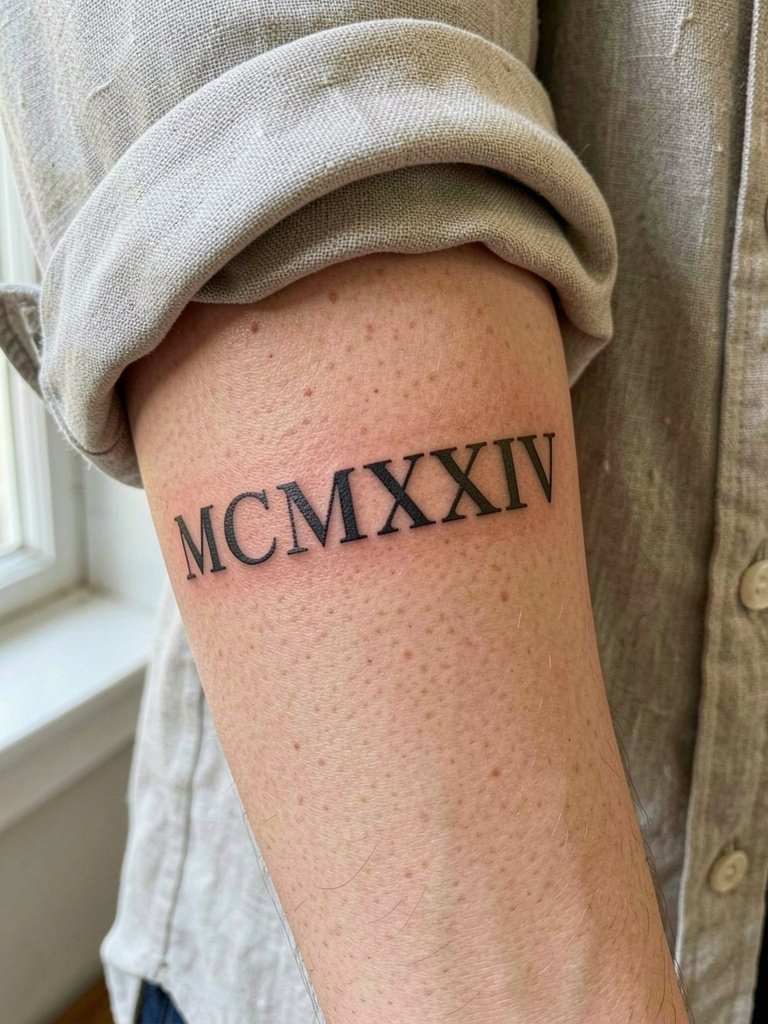
Roman numerals read clean and formal when you give them room. For an inner forearm piece plan for a stroke weight the artist can measure on paper. Request slightly heavier serif terminals so the characters keep crisp edges at two years. Common mistakes are asking for single-needle hairlines and keeping the numerals an inch tall. The inner forearm sits where skin moves but not as much as the wrist, so expect a 1.5 hour session for a two- to three-inch band. Wear a linen button-down that rolls easily so the artist can access the palm-up surface without cuff pressure. Typical touch-up timelines are one touch-up after six months for fine adjustments and another at year two if you want the lines crisp again.
2. Minimalist Numbers on the Inner Wrist
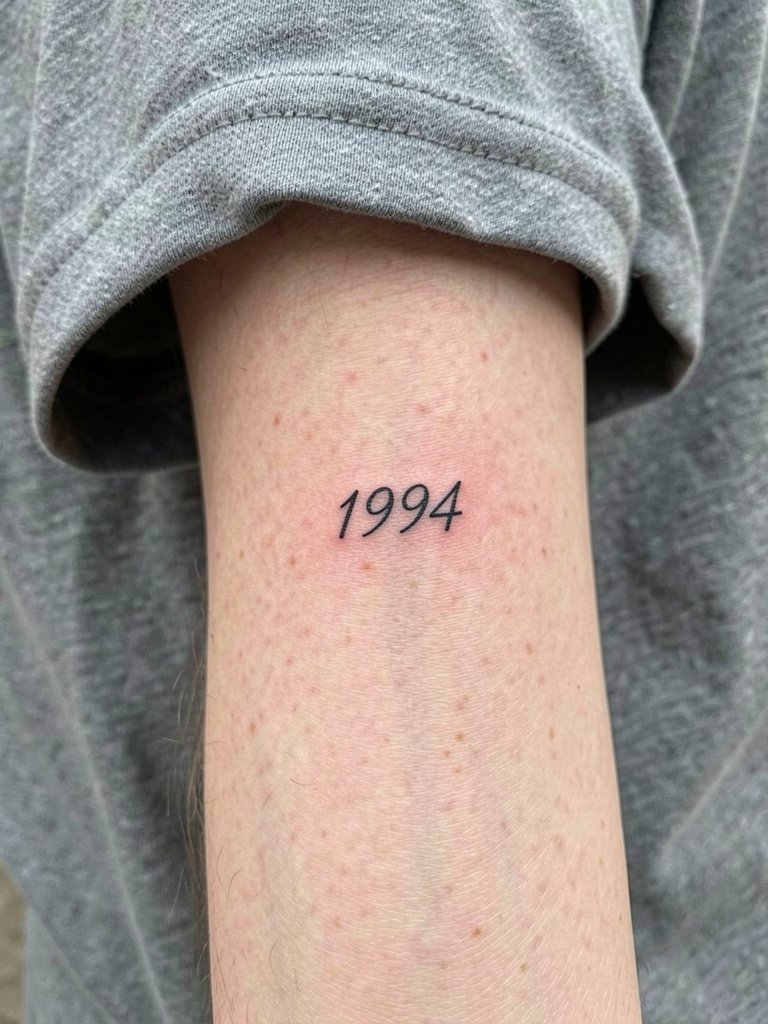
The inner wrist is a high-sensitivity area that also gets a lot of motion and soap exposure. One camp of artists says single-needle fine lines on the wrist blur within 12 to 24 months because the skin flexes and the needle sits too shallow. Another camp insists that if you use slightly wider spacing and controlled depth the fine-line look can settle well, and they point to two-year healed examples from their portfolios. For this placement ask for a hairline style that is a touch bolder than your Instagram reference. During the appointment wear a short sleeve top and keep the opposite wrist free of a watch. To show the piece off pair it with a thin chain bracelet on the other wrist. Expect a 30–45 minute single-pass session and a likely touch-up at one year if the numbers soften.
3. Zodiac Symbol Plus Year on the Outer Shoulder
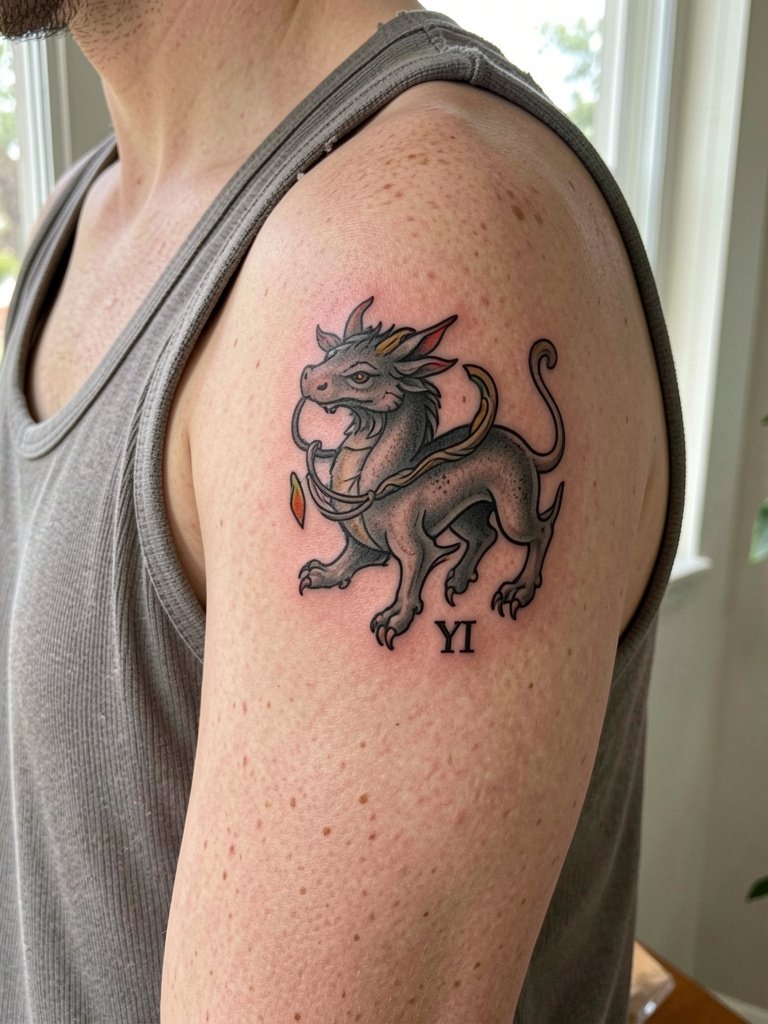
Pairing a zodiac glyph with a birth year gives the mark a celestial anchor. If you want the glyph to remain legible while the year stays readable, start with bold outlines for the symbol and place the numerals in a slightly condensed serif type underneath. A common aging mistake is crowding the glyph and the date; that causes the inner details to merge after sun exposure. Session-wise the shoulder is forgiving. Expect a single two-hour pass for a 2.5- to 4-inch piece. For showing it off try an off-the-shoulder top in a solid color so the icon reads cleanly at a distance. Ask the artist how much contrast they use in the fill so the glyph keeps separation from the numbers over time.
4. Birth Flower with Year on the Inner Thigh
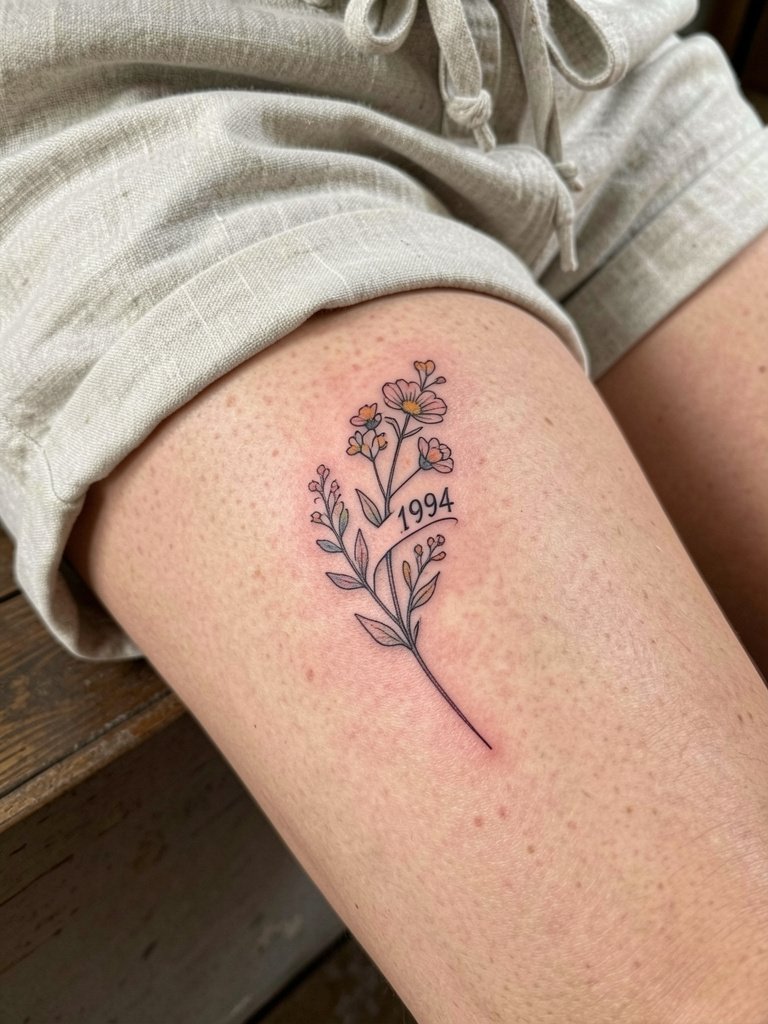
A floral motif softens numeric rigidity and makes the year feel integrated rather than pasted on. For inner-thigh work pick an illustrative single-needle stem if you plan to keep it private and small, or ask for slightly thicker linework if you want the piece to be visible longer. The inner thigh is a low-friction, lower-blowout area but the skin can darken with friction from clothing. During the session wear loose drawstring linen shorts so the artist can roll the fabric down without pressure. For outings pair the tattoo with high-waisted shorts that reveal the mid-thigh subtly. Expect one to two sessions depending on color and size and a touch-up around the one-year mark to refresh fine details.
5. Custom Symbol Mashup on the Lateral Hip Bone
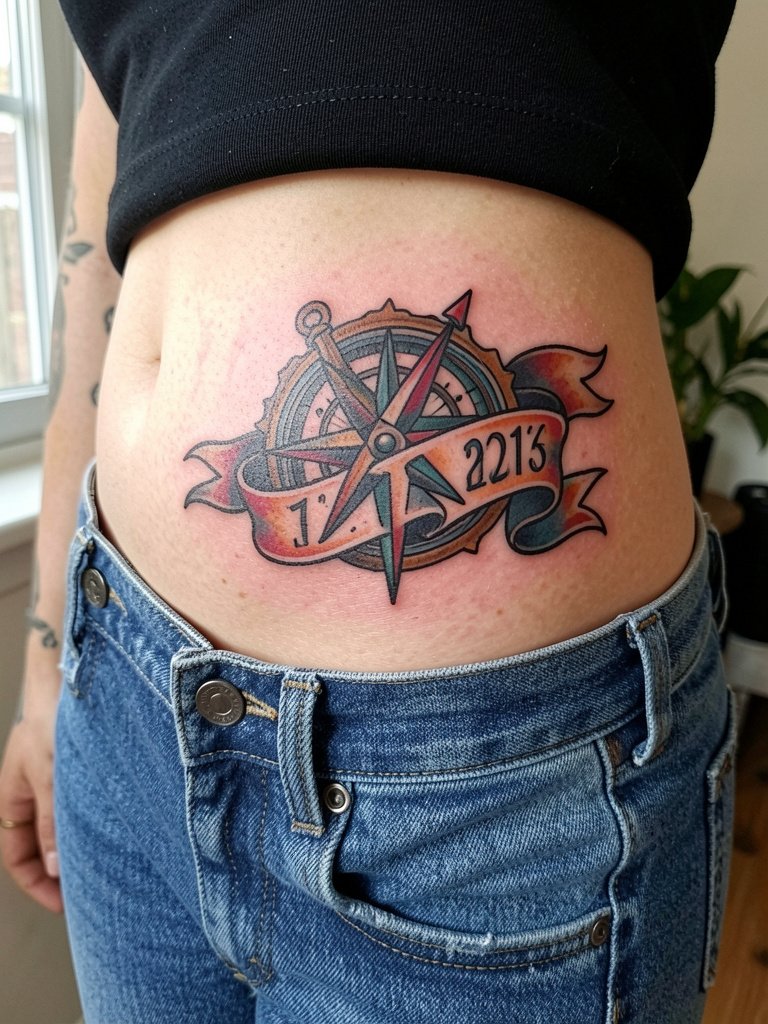
Combining numbers with personal icons gives you a shorthand story that reads at a glance. For a hip placement choose thicker outlines and saturated fills so the badge does not go muddy as the skin ages. A frequent mistake is over-detailing small symbols on the hip; the skin there benefits from breathing room. The lateral hip often takes two sessions for color saturation and layering. For styling pair the piece with low-rise jeans and a crop that balances the visual weight. During the consult bring reference photos at two scales so the artist can show how scale affects detail retention and long-term saturation.
6. Mathematical Equation Date on the Inner Forearm
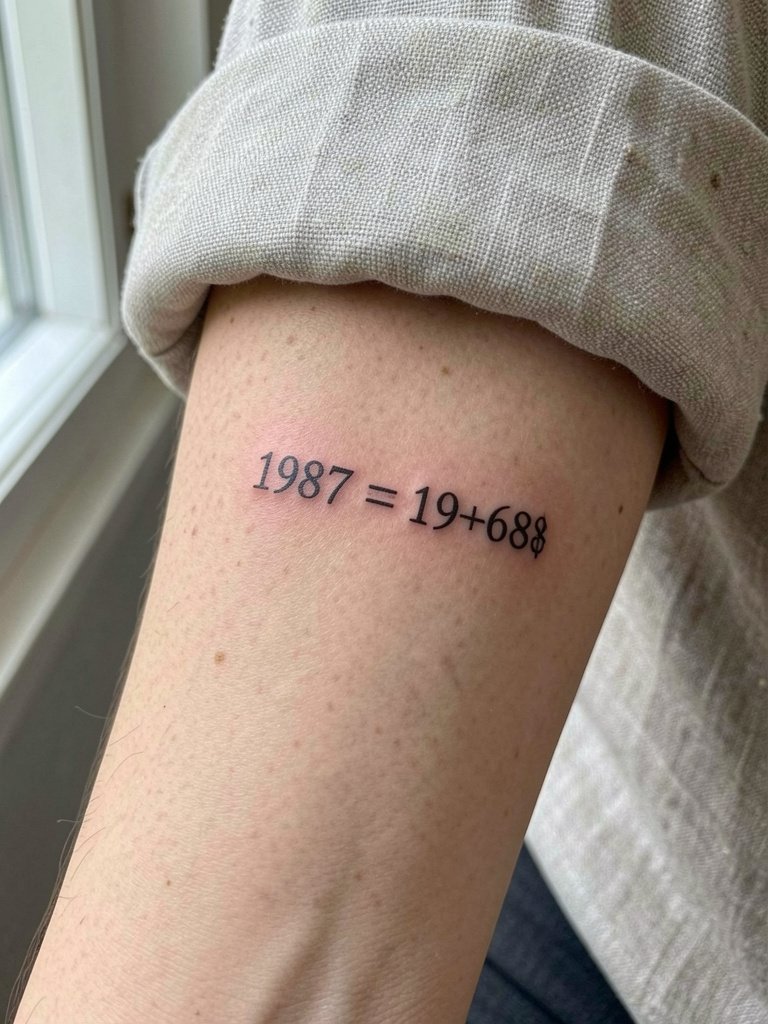
Turning a date into an equation is a clever, private twist that still reads to anyone who studies it. This design needs consistent spacing and crisp monospaced numerals so the arithmetic reads as intentional. A common session mistake is letting the font become too ornamental, which kills the puzzle aspect. The inner forearm is stable enough for fine typography, though line weight should be a touch heavier than single-needle. For the appointment wear a rolled cuff linen shirt so your artist can access the palm-up surface. Expect a one- to two-hour session and a possible touch-up at the one-year mark where tiny numerals can soften.
Session Day Essentials
These first six ideas vary from wrist scripts to hip emblems, so a few small things smooth the session and the first week of healing.
-
Dr. Bronner’s Hemp Salve. An organic, thin salve some artists recommend for sensitive skin types and darker skin tones where heavier ointments have trapped ink in the past.
-
Bernard’s Balm. A lighter healer that performs well on thin-line work without leaving a waxy film that can affect fine numerals.
-
Hustle Butter Original. The thinner original formula helps keep small lines moisturized without the heavy barrier some people blame for clogged scabbing.
-
Saniderm Mini Patches. Small protective film patches for wrist or ankle pieces that reduce friction during the first 2–4 days.
-
Mad Rabbit Tattoo Balm. A commonly used thinner balm for the switch-off period after a protective film, recommended by many clients for thin-line healing.
7. Lunar Cycle Circle Framing a Year on the Sternum
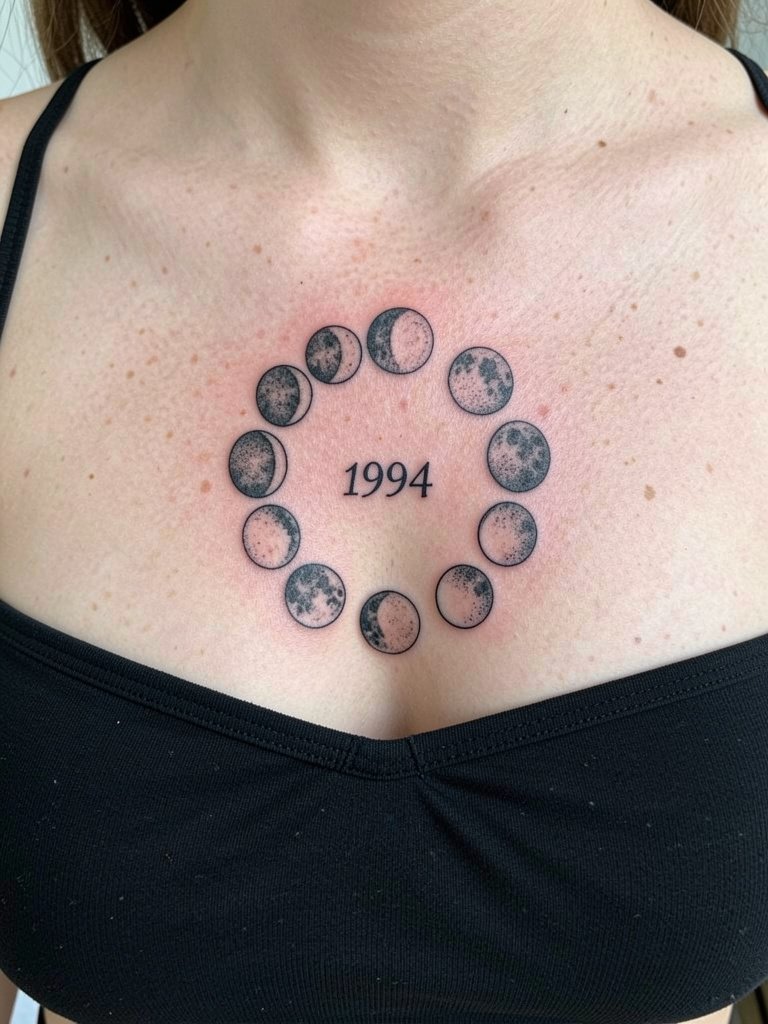
Circular moon designs frame a year and create a strong central focal point. Sternum skin is more sensitive and has a unique curvature, so line spacing must account for how ink sits across a slightly convex surface. The sternum also often needs an artist experienced in chest symmetry. For the session wear a strapless or bandeau top that the artist can work around without tugging. People sometimes try single-needle stippling across the center and then find blur at year two. Opt for slightly stronger linework on the ring and fine stipple inside to keep the phases distinct. Sessions can be longer due to the sensitivity and contour, expect planned breaks and a one- to two-session schedule.
8. Progressive Moon Sequence on the Ribcage
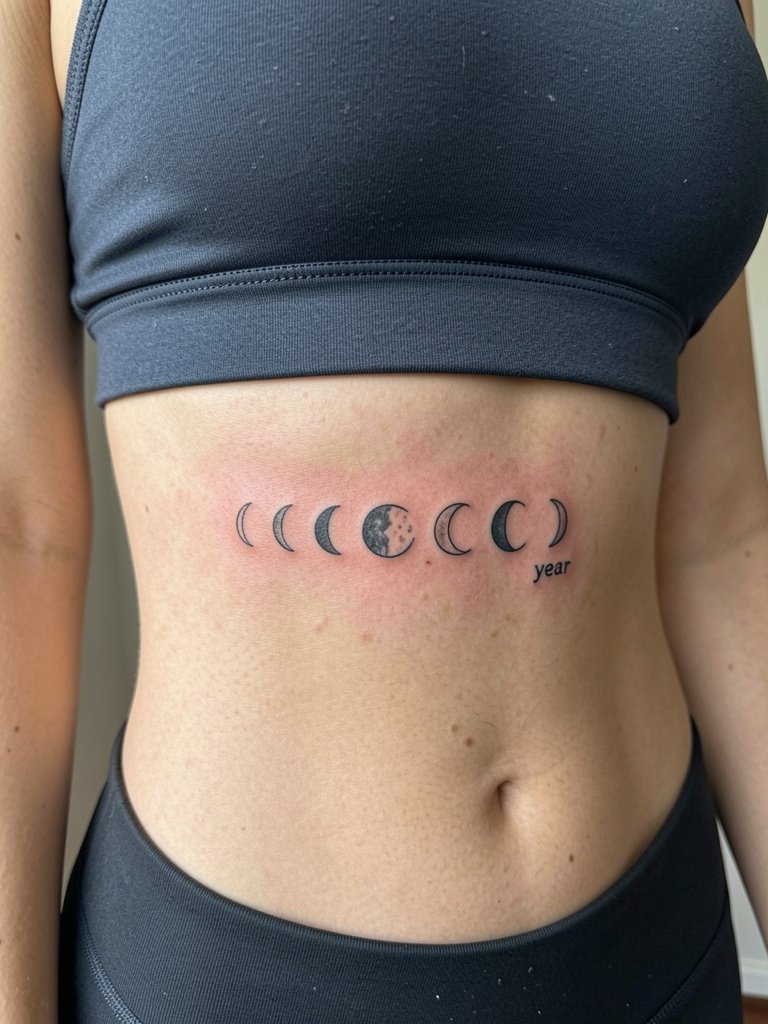
Fine line on ribs sparks a clear divide. One camp says the constant stretch of rib skin and breathing motion blurs thin lines within one to two years. The other camp argues that with accurate needle depth and slightly wider spacing the same fine work settles fine and holds up. If you favor the delicate look, insist on slightly more spacing between phases and plan for a two-year touch-up. Rib sessions are tender and often require breaks. Wear a tank or crop that gives full rib access. Expect a single session for a three- to five-inch linear sequence but plan recovery time given the pain and aftercare demands.
9. Black and Gray Numbers Below the Clavicle
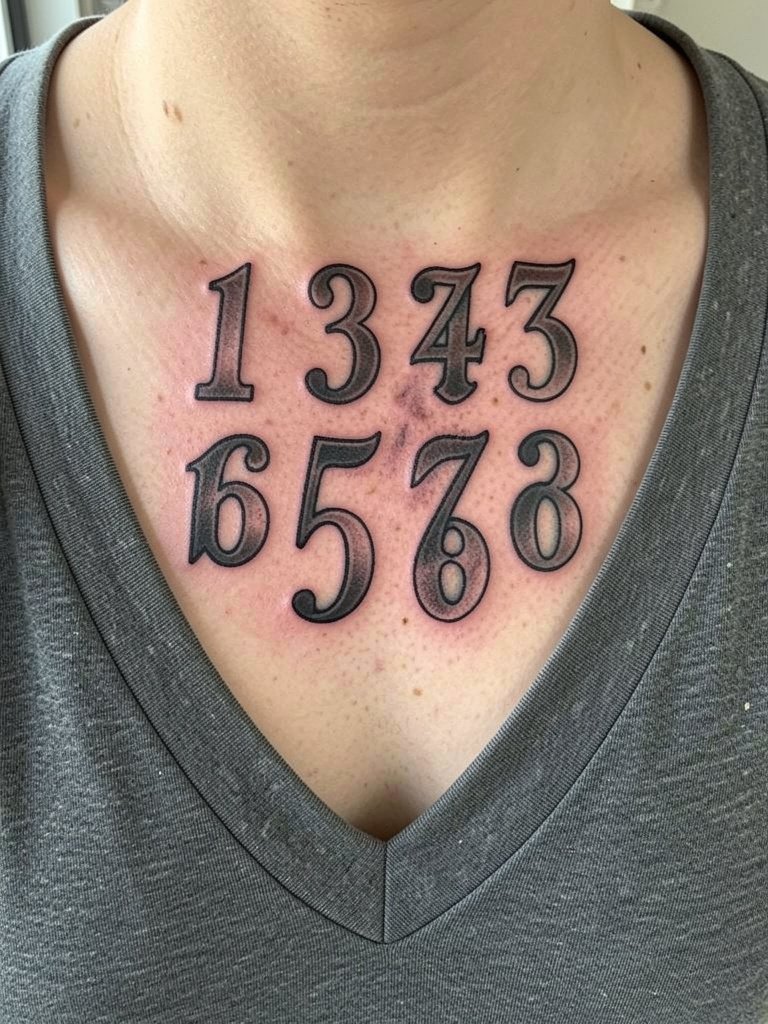
Bolder black-and-gray numerals under the collarbone hold contrast across skin tones. For this area ask for stronger outlines and a mid-tone wash so the numbers remain legible in photos. A common mistake is selecting too small a font which vanishes against chest movement and sun exposure. Sessions are usually one to two hours depending on shading. For outfits try a collared shirt left slightly open so layered chains sit above the numerals and the design still reads. Plan for a one-year touch-up if you spend a lot of time in sunlight.
10. Realistic Portrait with Year on the Inner Upper Arm
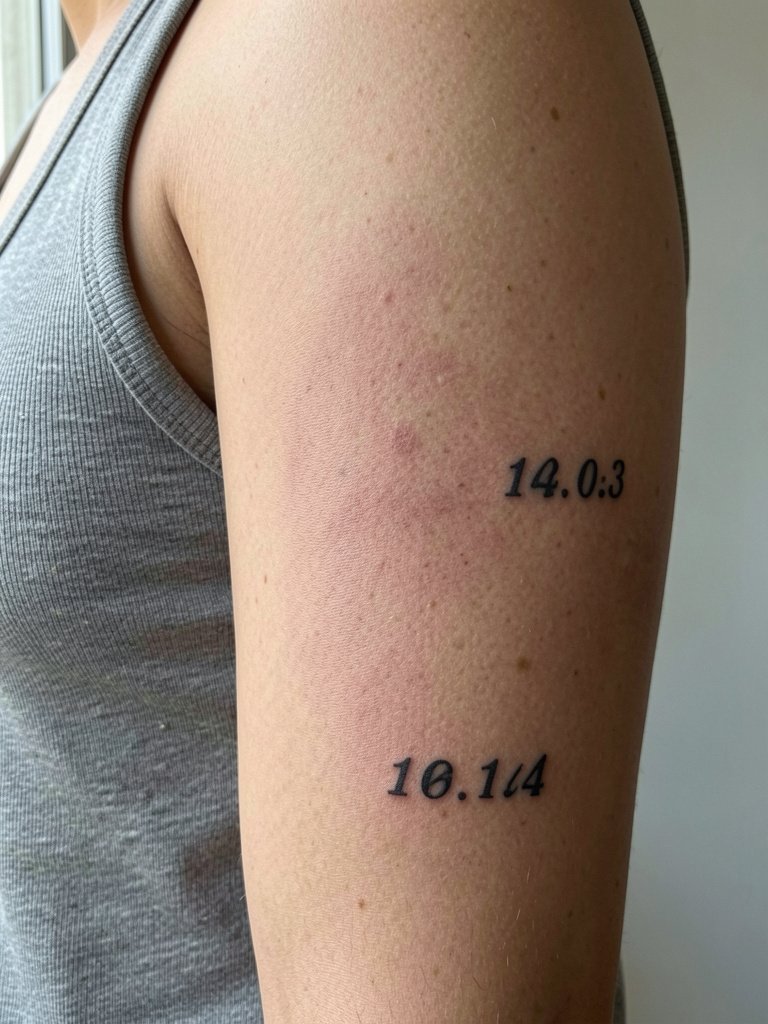
Portrait work demands a skilled micro-realism artist. For a year paired with a face choose a subtle placement and scale so the portrait keeps fine details. A common error is compressing a photo-real face into too small a space which muddies after healing. Sessions run long, often multiple sittings to allow for detail and saturation. For showing this arm piece choose off-the-shoulder tops that let the inner arm be seen naturally. Bring reference photos with clear lighting and varying scales so the artist can map tonal values and predict how the numeral will sit beside the portrait.
11. Military Time Stamp on the Inner Wrist
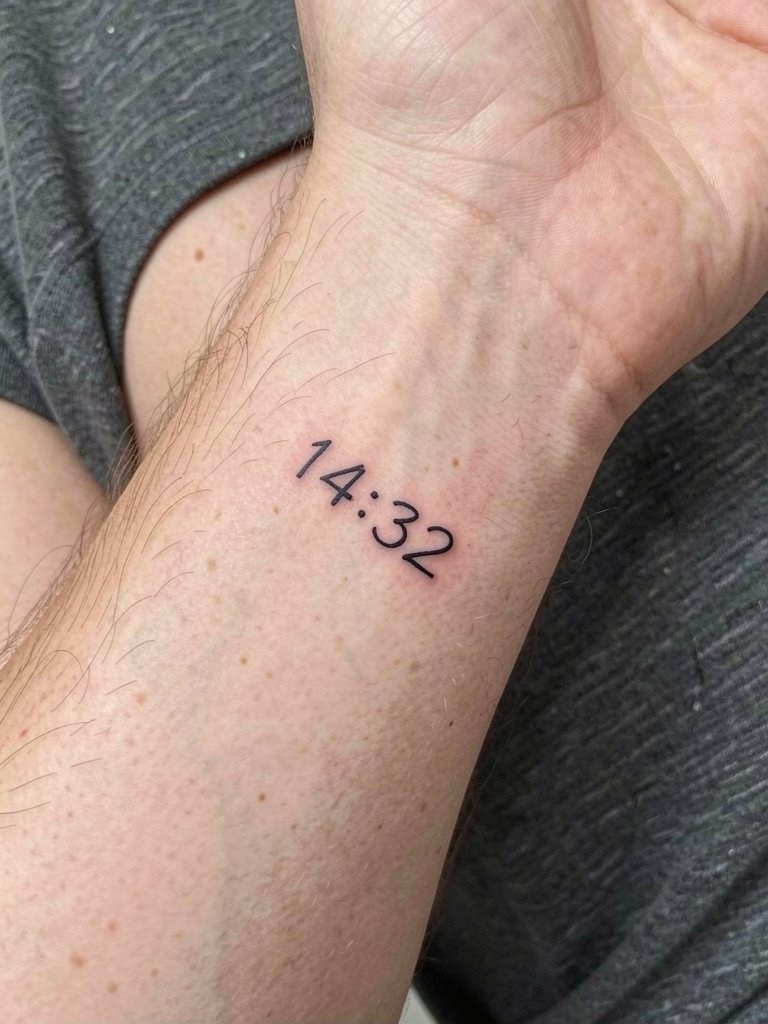
Military time stamps are a compact, modern way to encode a birth moment without ceremony. Keep the digits condensed but not too narrow, because the wrist flexes and thin monospace digits can feather. Another common issue is pairing a tiny time with ornate script nearby; the contrast kills readability. Expect a quick 20–40 minute session. For everyday wear opt for a minimalist watch on the opposite wrist to balance the visual weight, paired with a minimalist watch on the non-tattooed wrist. Touch-ups are common around the one-year mark for wrist numbers.
12. Coordinates and Year on the Outer Forearm
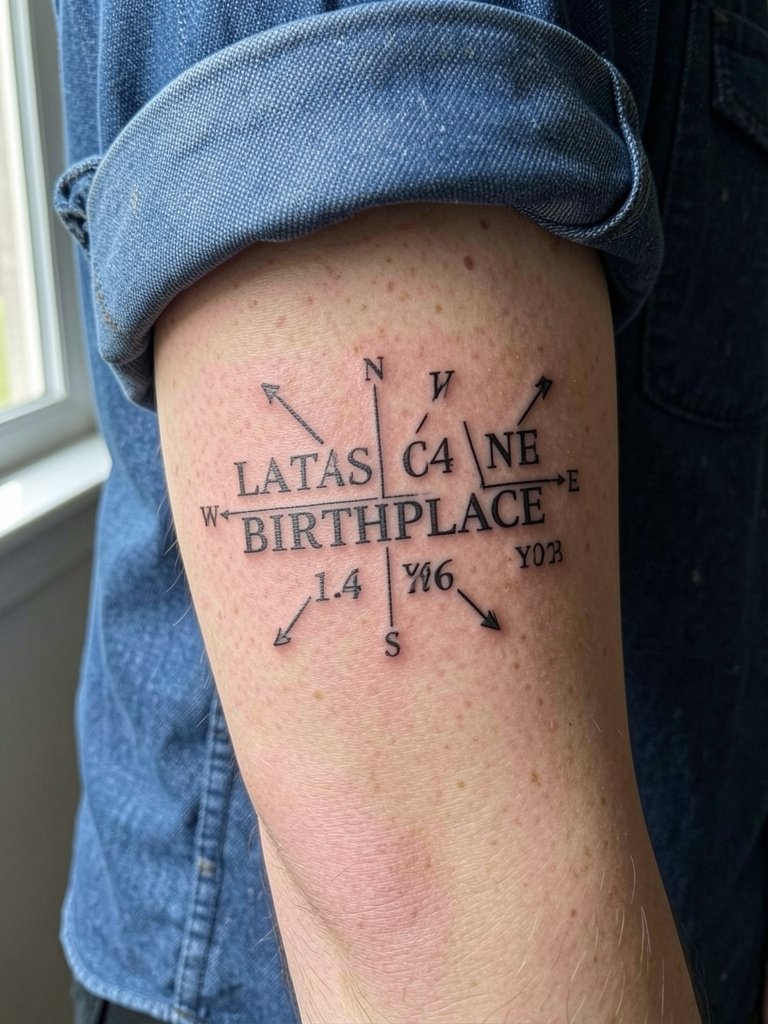
Coordinates with a year read like a subtle map for people who travel or moved countries. Keep the numbers in a clean monospaced or small serif so they stay legible and avoid ornate ligatures. Outer forearm placement is forgiving for clarity but sunlight can wash faint numerals. For a practical session wear a rolled chambray shirt that shows off the forearm and gives the artist unhindered thumb-side surface access. Pair this piece with rolled chambray shirts when you want a casual reveal. One session usually does the job unless you want map texture shading.
13. Barcode with Year on the Inner Forearm
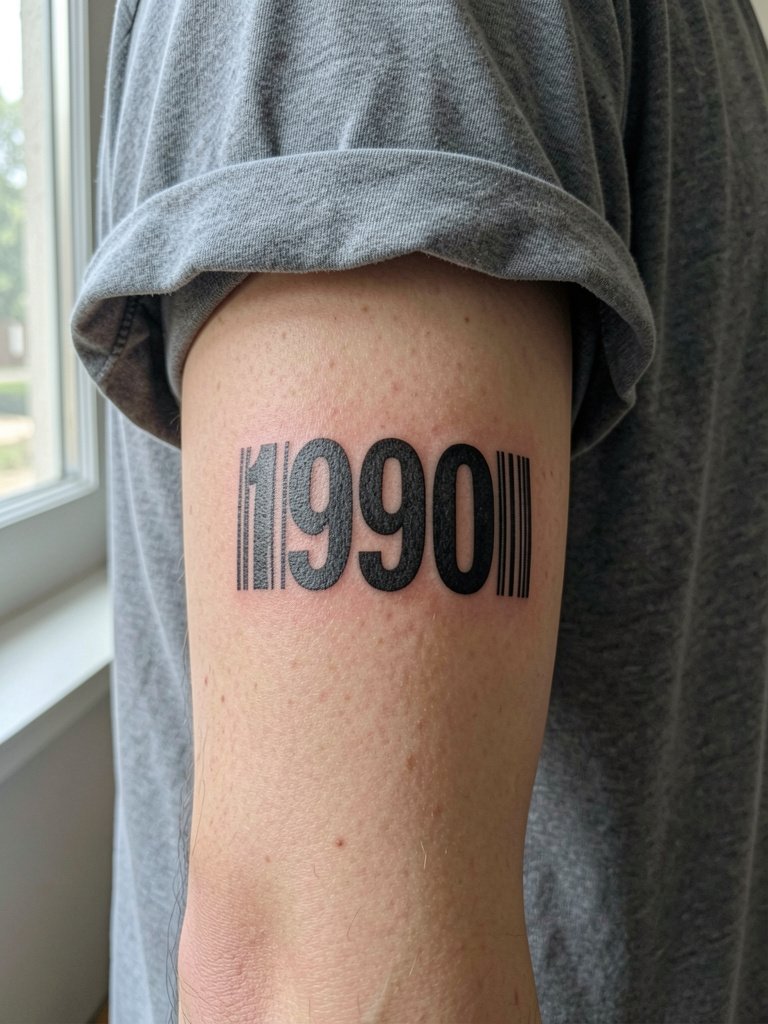
Barcode designs make the date feel like a modern code. The trick is to set bar widths and spacing large enough to avoid merging. Tiny barcodes on soft skin will appear as a blur after time. For durability pick thicker bars and plan a one-hour session for a two- to three-inch piece. This placement looks sharp with rolled linen sleeves or a casual sleeveless top that keeps the forearm visible. Since the design is pure black, expect strong saturation which ages predictably but may require a touch-up at year two if lines soften.
14. Geometric Frame Around Year on the Hip
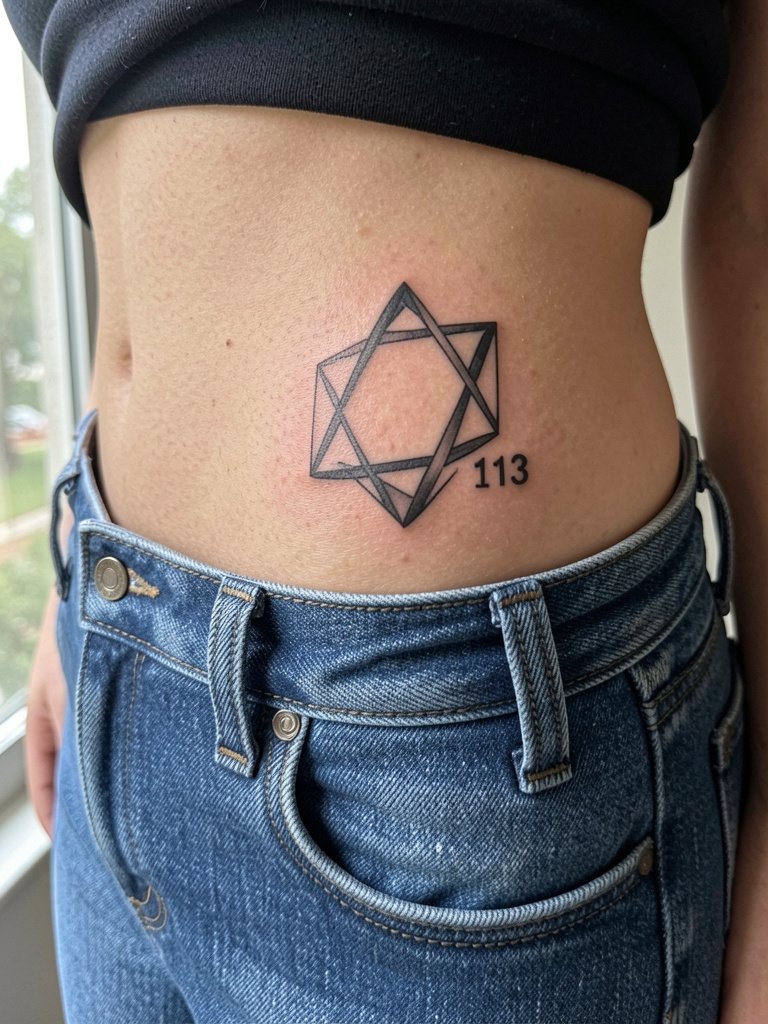
A geometric frame gives numbers structure and a modern edge. Keep negative space inside the shape so the numerals have breathing room and do not get swallowed by angles. The hip is forgiving for crisp lines if the artist maps the angles to the body contour. For appointment day wear low-rise jeans so the artist can access the lateral hip without tight waistbands. For outfits the piece pairs with a crop top in neutral tones so the geometry becomes a styling focal. Plan for a two-hour session if the frame has multiple layered lines.
15. Constellation Pattern with Year on the Inner Upper Arm
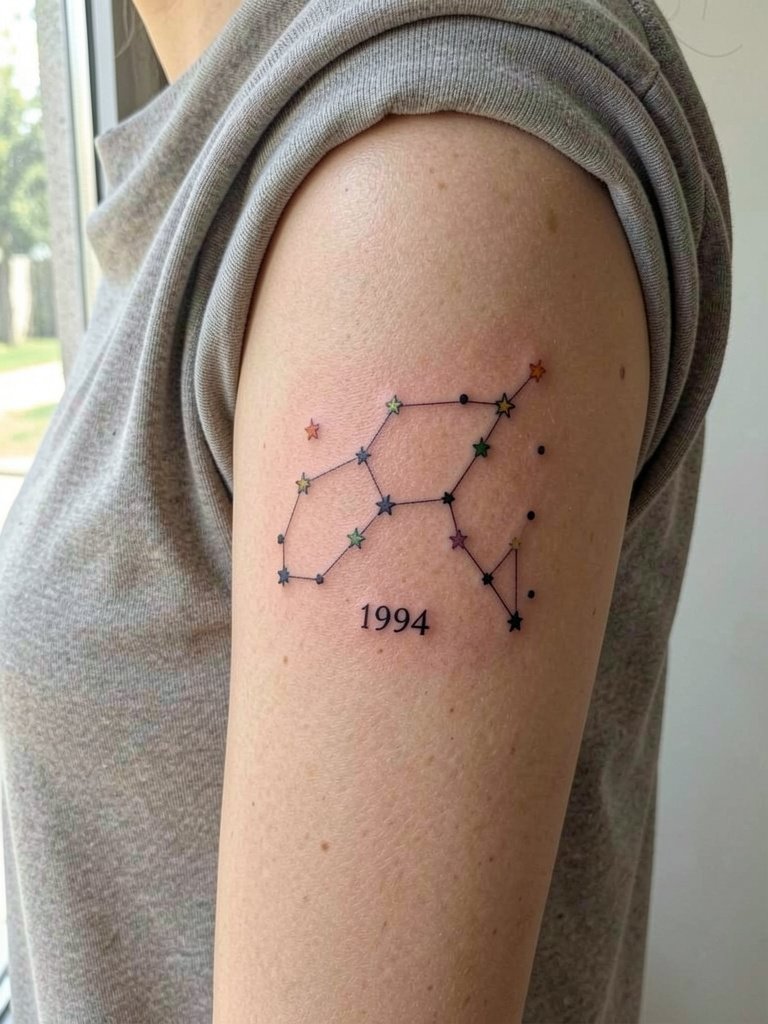
Constellations pair nicely with birth years when you want a cosmic connection that reads subtly. For inner upper-arm work use slightly larger star dots and room between connector lines so the pattern keeps clarity as the arm moves. The inner upper arm is low on blowout risk but can sit near soft tissue that changes with weight. Wear an off-the-shoulder top to show the piece naturally. This placement often takes one session for the linework and a small follow-up if the dots need reinforcement after healing. Bring an image of the exact star layout so the artist can translate it cleanly into tattoo scale.
Frequently Asked Questions
Q: How much should I budget for a small birth-year tattoo on the forearm?
A: Most shops have a minimum that covers set time. Expect a small inner-forearm number band to fall into the typical small-tattoo bracket. Prices vary by shop and artist demand so plan for the shop minimum plus a tip in the 15–25 percent range. If you want extra lines, color, or portrait detail the session time grows and so does the price.
Q: Which placements are best for first-timers worried about aging and touch-ups?
A: Inner forearm and upper shoulder are stable picks because they move less and take ink in a predictable way. Avoid ribs or the inner wrist for very fine single-needle numerals unless your artist shows healed two-year examples of the exact line weight. Plan for a possible touch-up around year two for fine work, and budget the artist time accordingly.
Q: Where can I find healed portfolios and local artists without naming people directly?
A: Search hashtags like #birthyeartattoo and #romannumeraltattoo on Instagram and TikTok and filter by location. Tattoodo and the Inked App let you search by keywords such as "birth flower + year" or "bold line numerals" and show portfolios with healed shots. Reddit communities like r/tattoos and r/tattooadvice are also good for peer recommendations and healed photos across skin tones. Use Booksy for local studio filters and follow guest-spot announcements to catch visiting specialists.
Q: For darker skin tones what should I ask about pigment and contrast?
A: Ask the artist how they adjust saturation and line weight for deeper skin. Specific requests work better than general ones. For instance request bolder outlines and denser black saturation in small numerals so the design photographs clearly. If you want a color accent ask how it appears on medium and dark tones, and whether a test patch is possible.
Q: What should I wear to my appointment for a shoulder, sternum, or hip tattoo?
A: Wear clothing that gives the artist easy, comfortable access without tugging. For shoulders pick a tank or sleeveless top. For sternum bring a fitted bandeau or strapless top. For the hip choose low-rise jeans that are fully zipped and buttoned. A simple wardrobe choice like a tank top covers most access needs while keeping you comfortable during longer sessions.