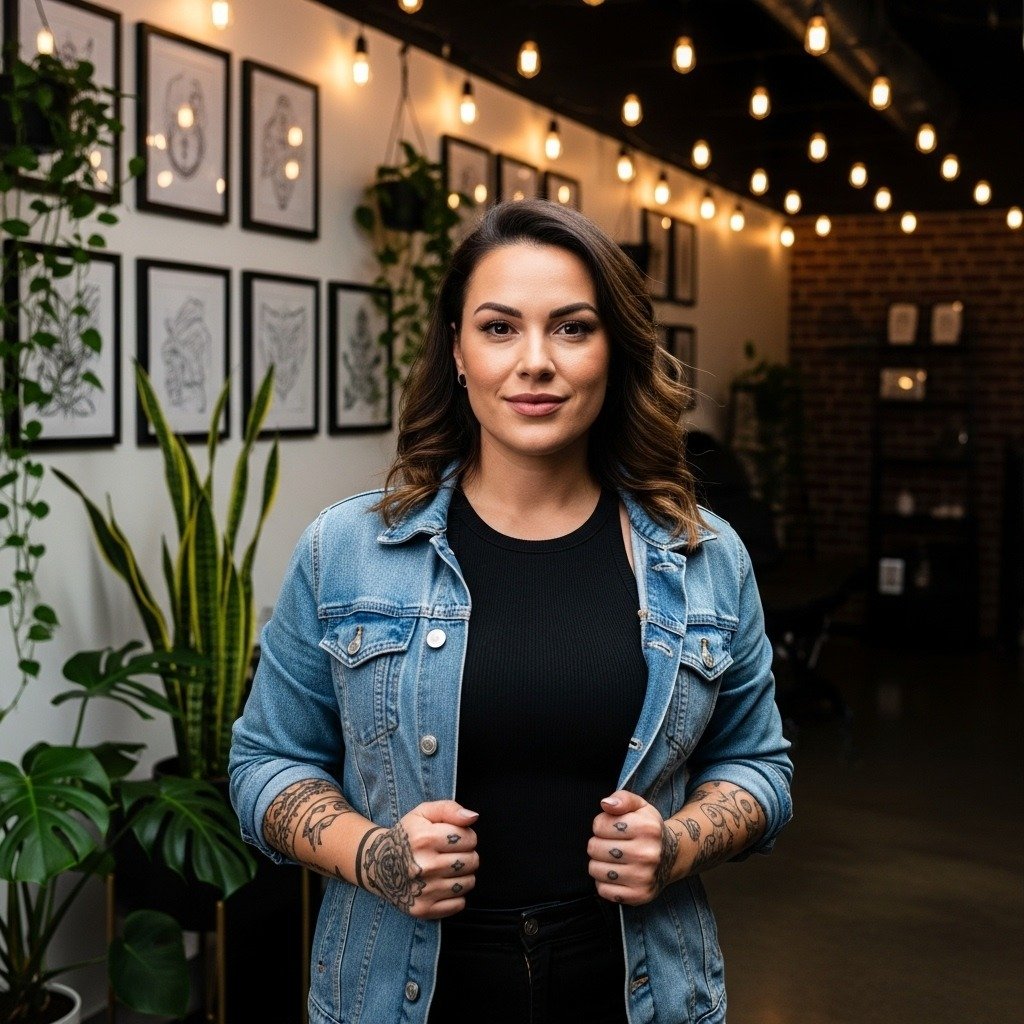
Fine line blooms often look perfect in the chair and soft in photos six months later. Small floral work can fade or blur faster than people expect, and pricing for tiny pieces has climbed with shop minimums. I notice the best long-term results come from picking the right style for the placement and planning touch-ups up front, and the sections below start with designs that suit specific bodies and wardrobes.
1. Fine Line Single-Flower Carnation on Inner Upper Arm
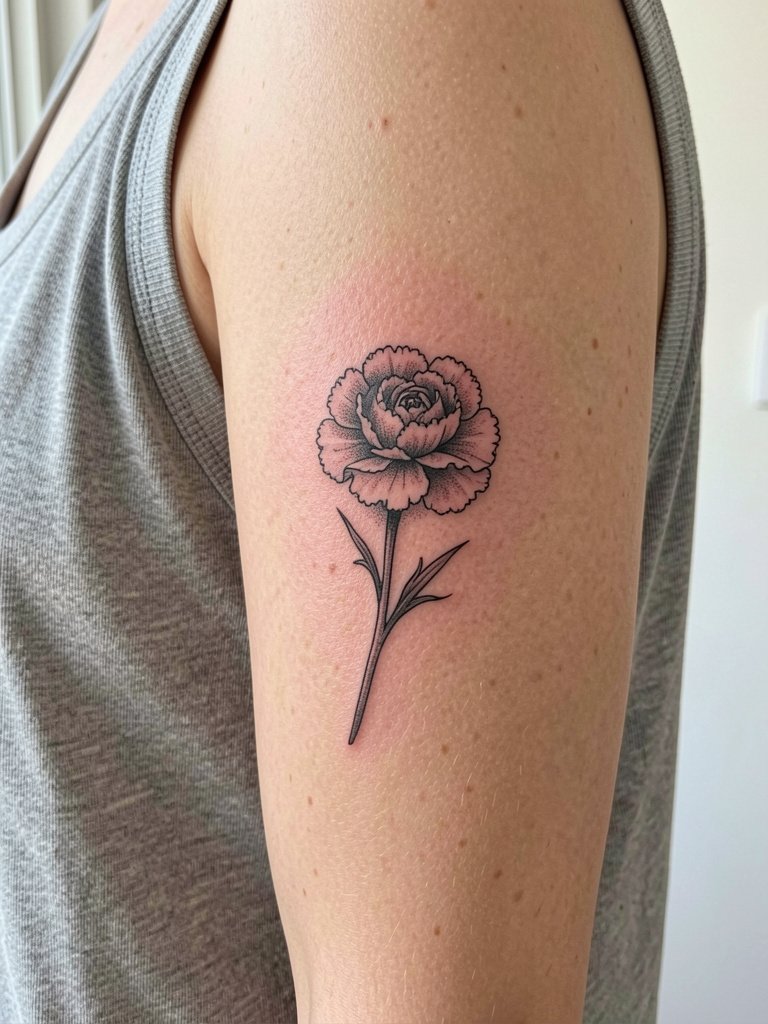
A single carnation in fine line reads clean on inner upper arm skin because the area moves less than the wrist. Expect a one-session piece that takes about 30 to 60 minutes and rates moderate on most pain charts for upper arm work. I've seen versions that use ultra-thin single-needle lines and lose presence in photos on darker tones, so plan slightly heavier linework if you have medium or dark skin. For the appointment wear a loose tank top so the artist can access the medial bicep without tugging fabric. A common mistake is asking for super tiny flourishes that clog together after a year.
2. Watercolor Violet Bouquet on Lateral Hip Bone
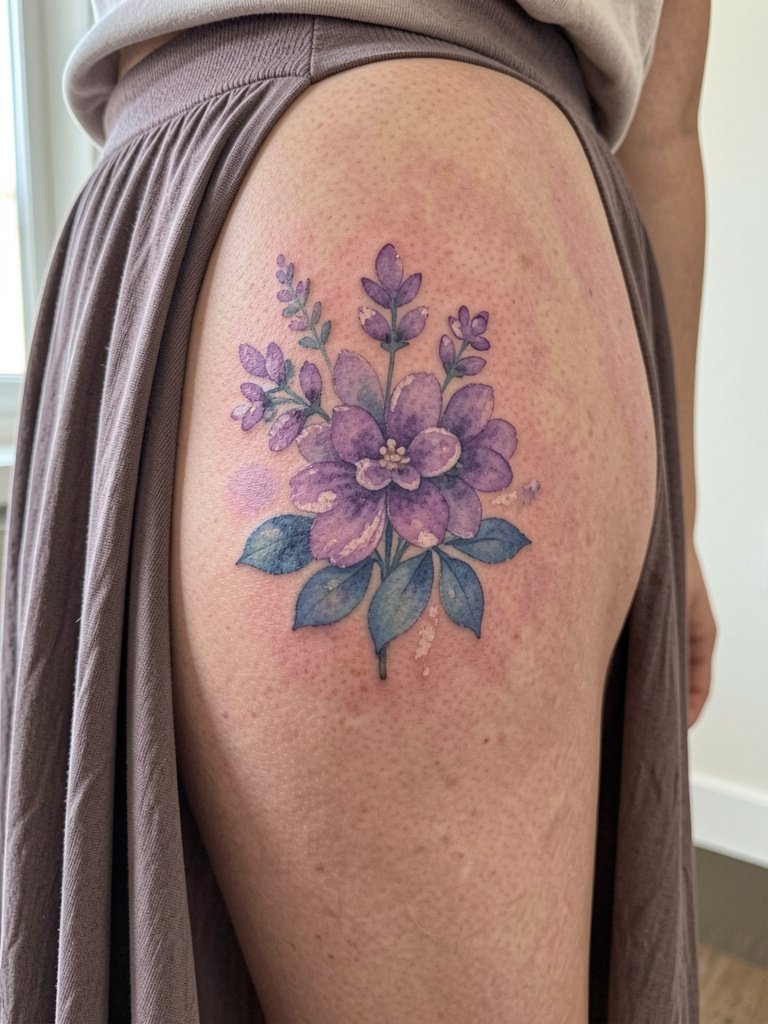
Watercolor violets give a painterly look on the hip, but they need more saturation and occasional touch-ups to keep the colors lively. The session can run 60 minutes for a 3–5 cm bouquet and feels like a prolonged pressure point along the hip bone. For show-off outfits choose a flowy midi skirt in soft tones that echo the watercolor palette. A frequent mistake is placing watercolor too close to waistbands where friction fades pigment faster. If you like stained-ink edges, bring healed reference photos so the artist matches the balance of softness and readable petals.
3. Minimalist Daffodil Stem on Inner Forearm
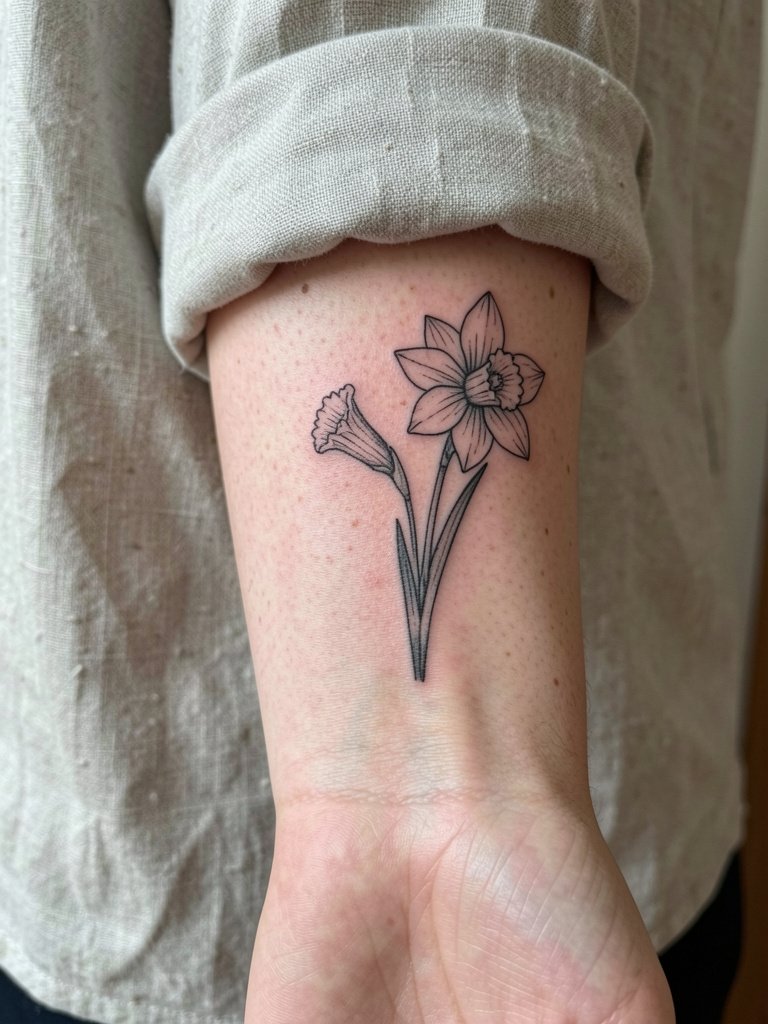
A minimalist daffodil on the palm-up forearm is a top pick for a first tattoo because the surface heals predictably and reads well in photos. Session time for a 2–3 cm stem is short, often under 45 minutes, and forearm pain is mild to moderate. If you want the line to last, request a slightly heavier spacing between strokes so the stem does not blur into a single shadow after a few years. Wear a linen button-down you can roll up for the session. The common error is asking for ultra-fine single-needle detail smaller than the skin texture can hold.
4. Fine Line Daisy Sprig on Wrist
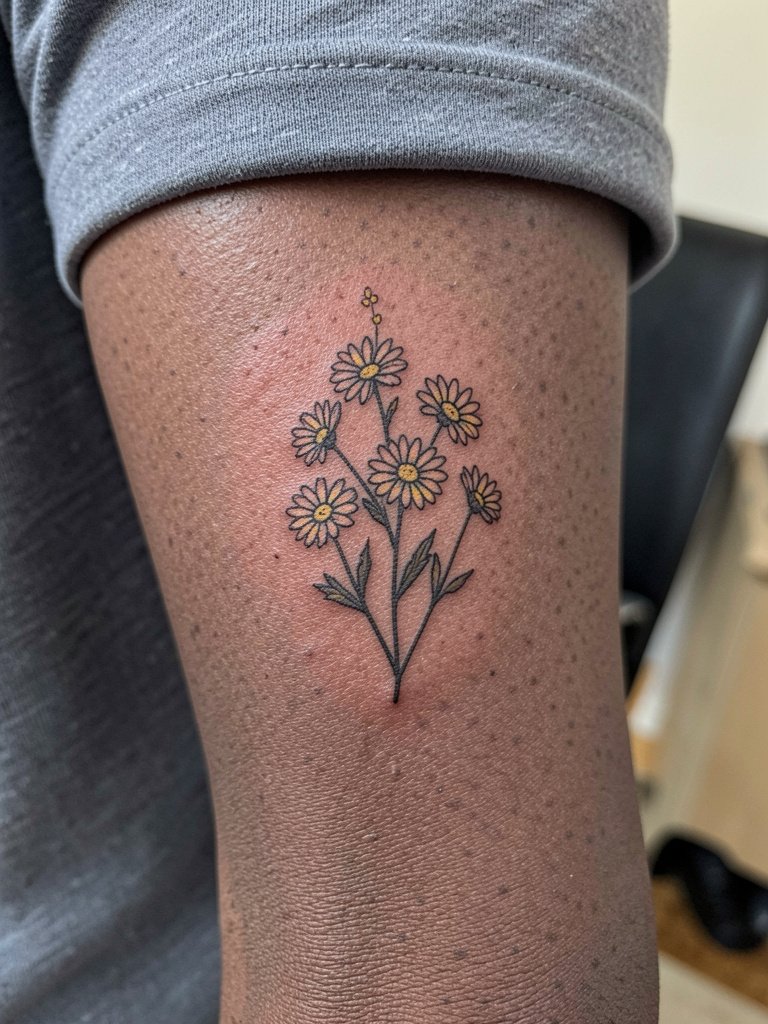
Wrist daisies look charming but wrist skin sees constant friction, so linework needs room to breathe. Expect a 30 to 45 minute session and a higher chance of touch-up within two years. For showing off the piece try a minimalist watch on the opposite wrist so the tattoo wrist stays free of bracelets that rub. People often request micro petals that the wrist eats, so scale up the petals by 10 to 20 percent from the reference. If you have darker skin ask for higher contrast pigments so the daisy centers read in photos.
5. Neo-Traditional Lily of the Valley Cluster on Shoulder
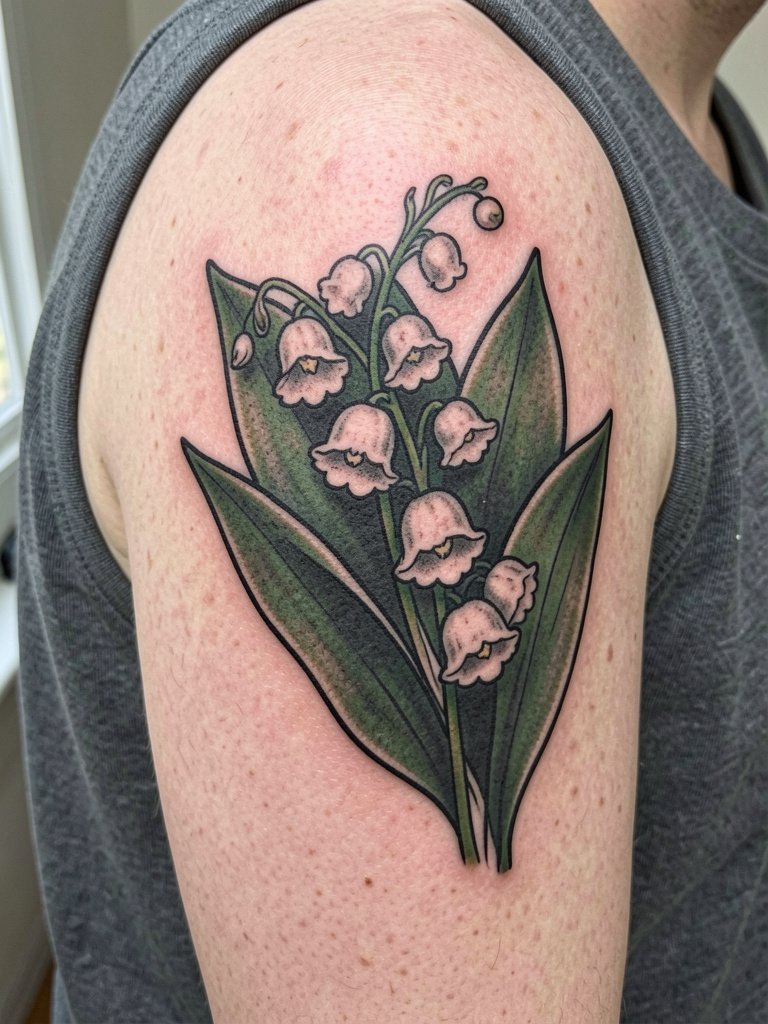
A neo-traditional lily of the valley benefits from bold outlines that hold up as the skin ages. Sessions for a 4–6 cm cluster usually last one to two hours and feel like steady pressure on the deltoid. For wardrobe pairing choose a sleeveless top in a solid hue to let the color fields read. A common mistake is scrawling too many tiny buds into the shoulder wedge, which compresses and muddies after healing. If you plan layered jewelry, think about chain placement so necklaces do not sit over the shoulder cluster.
6. Illustrative Rose with Vine on Inner Forearm
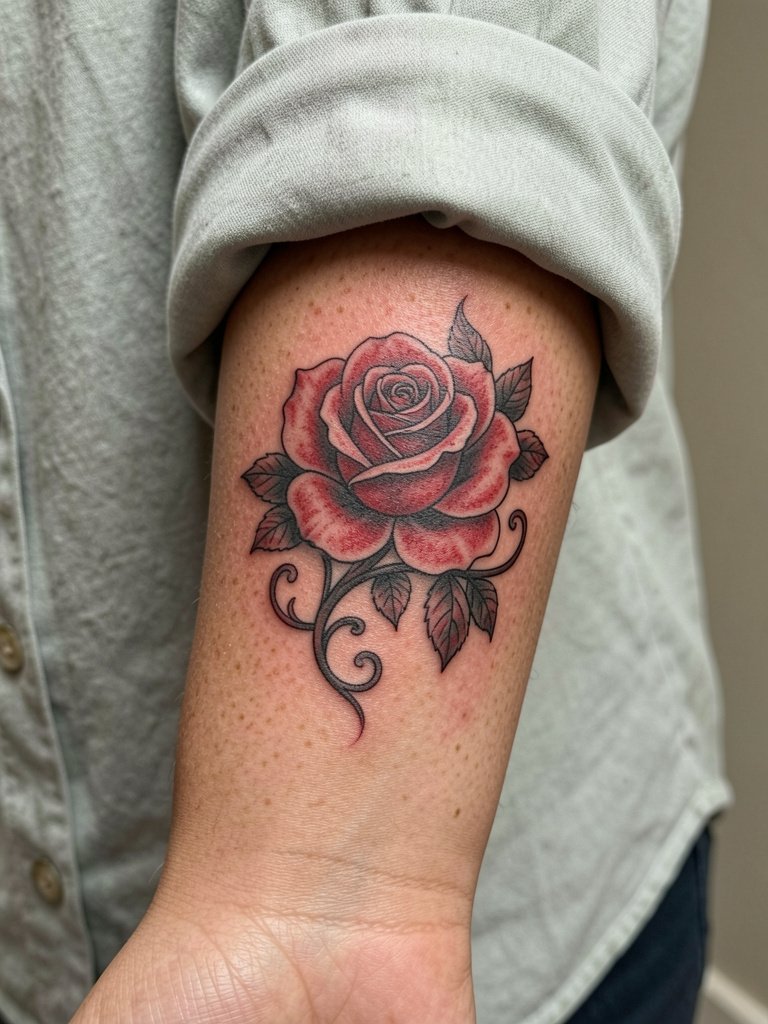
Roses with a trailing vine read well on the inner forearm and let artists show illustrative shading without overworking the skin. A 3–5 cm piece usually fits in a single session of under two hours and causes moderate soreness during the first day. For outfits try rolled blouses in cream so the tattoo sits in clean negative space when you gesture. The most common regret is shrinking a rose down to a size that collapses into a smudge after a year. Ask for the artist to map how each petal will age in photos at the consultation.
Pre-Session Essentials
The inner arm and rib pieces above have different healing patterns, so these five items make the appointment and first week less fussy.
-
Mad Rabbit Tattoo Balm. A thinner balm some artists recommend for color retention on small blooms without the heavy residue of ointments.
-
Tattoo Revive Aftercare Salve. Plant-based formula that users say reduces itching and helps micro-realism petals keep edge definition.
-
Hustle Butter Deluxe. Newer formula with zinc to soothe the first-week itch and assist with saturation on watercolors.
-
Dr. Bronner's Hemp Salve. Lightweight and less greasy for people who dislike thick ointments during the initial healing window.
-
Saniderm Second Skin. Transparent film option for the first 48 to 72 hours to protect fine line work on wrists and forearms from daily friction.
7. Fine Line Larkspur Vertical Stem on Forearm
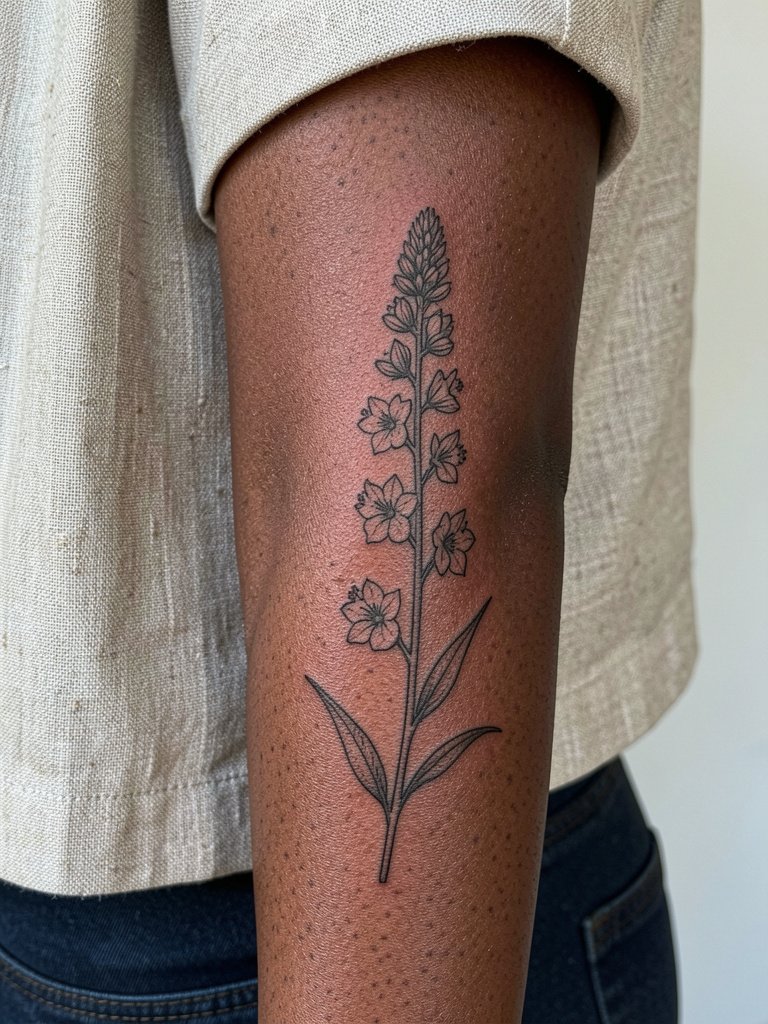
A tall larkspur stem suits vertical placements and reads best at 5–7 cm so the spikes stay distinct. Expect a 45 to 75 minute session and a low to moderate pain level depending on forearm location. For showing it off try a cropped linen top so the vertical stem sits in view when you lift your arms. Mistakes include compressing the bloom cluster into a small space which turns the spikes into a gray blur after two years. On darker skin choose thicker linework and ask the artist to test contrast on a healed patch.
8. Ornamental Gladiolus with Mandala Base on Ribcage
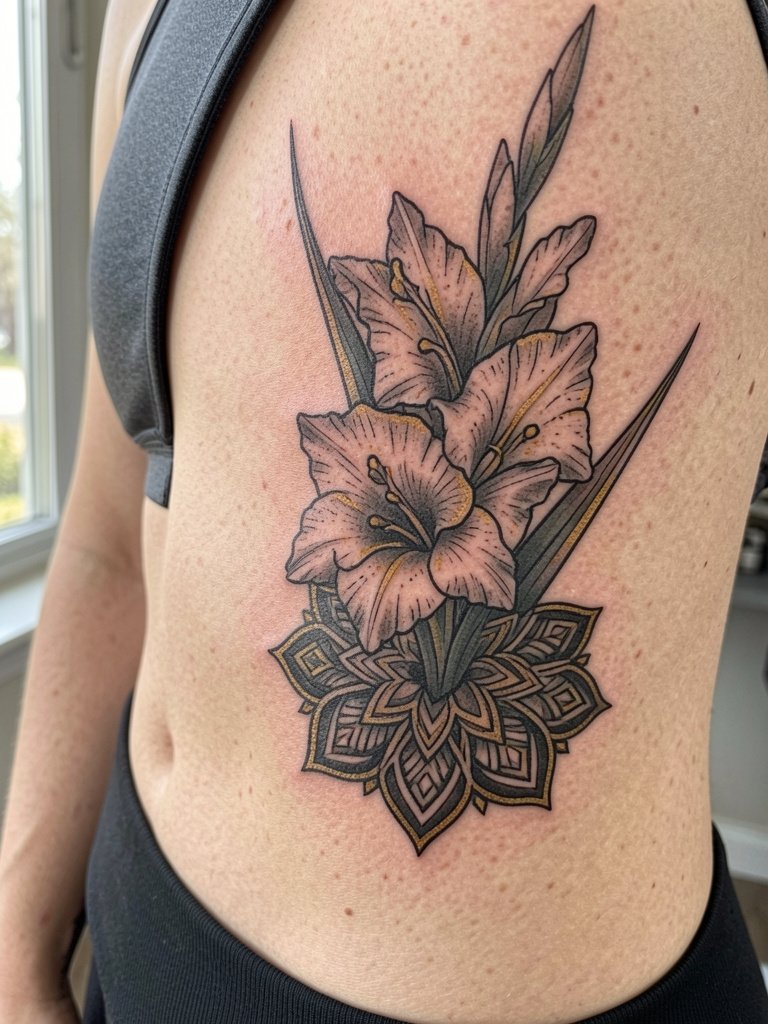
Fine line on the ribs sparks a clear split among practitioners. One camp argues ribs blur within two years because the skin stretches and shifts daily, especially under bra lines. The other camp says fine line settles fine on ribs when the artist uses correct needle depth and slightly wider spacing, and they point to three-year healed examples to back that up. If you want an ornamental gladiolus here, plan for a one to two hour session and expect higher pain on the ribcage. For show-off looks choose high-waisted skirts that reveal the side when you move. Consider a slightly bolder outline to improve long-term readability.
9. Micro-Realism Aster Cluster on Collarbone
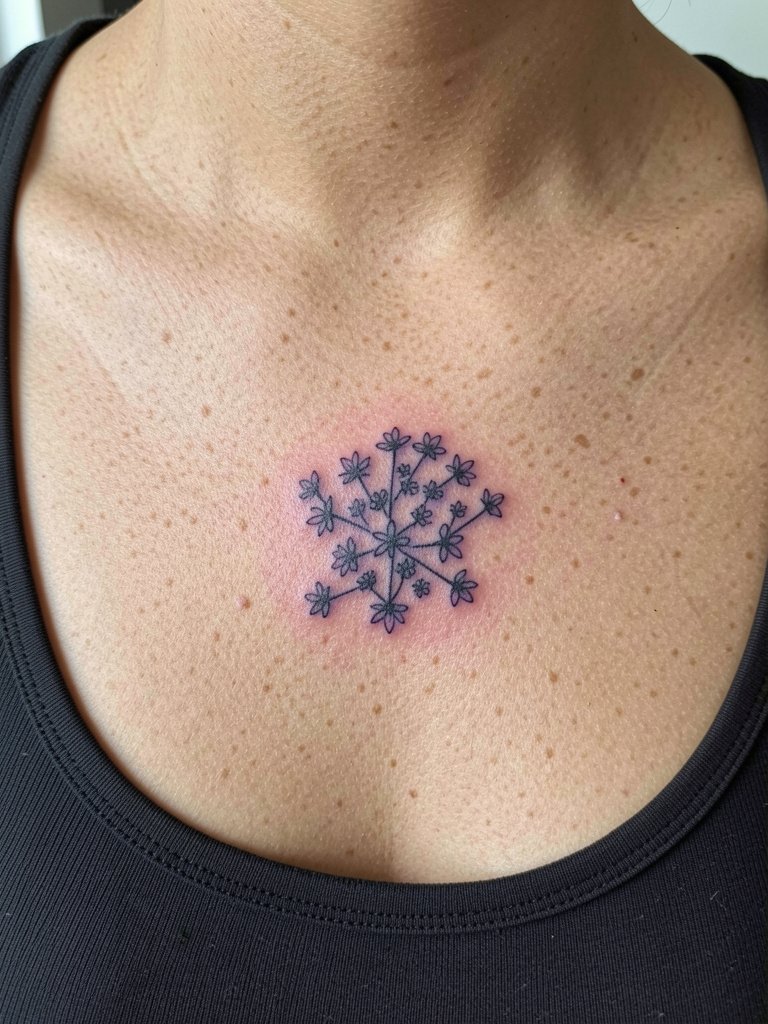
Micro-realism asters look striking on the collarbone but need precision and occasionally a touch-up for clarity. A 2–3 cm cluster is typically one session lasting 60 to 90 minutes and the area ranks low to moderate on pain charts. Pair it with layered gold chains that sit above the piece to frame the flowers. Common mistakes are overloading the cluster with tiny elements that disappear when the skin settles. Ask the artist how the piece will photograph in flash and natural light to set expectations.
10. Watercolor Marigold Patchwork on Outer Upper Arm
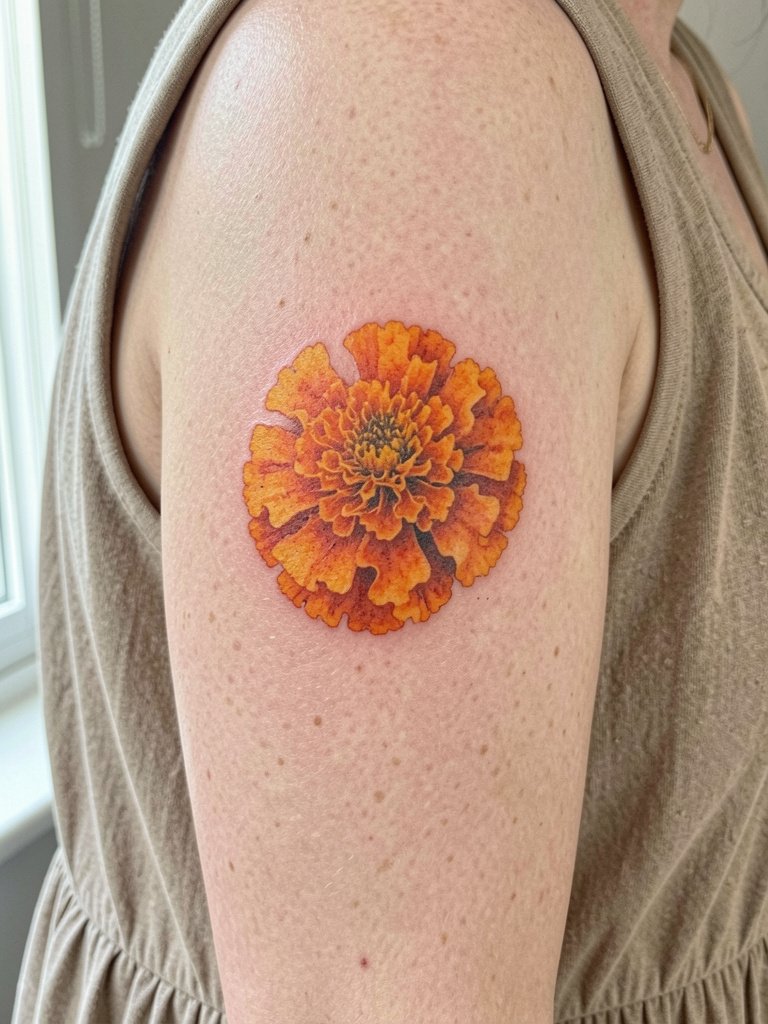
Marigold watercolors make bold color statements on the outer arm and work well as part of a patchwork sleeve. Each 4–6 cm bloom may take 45 to 90 minutes depending on saturation, and watercolor needs more frequent touch-ups than black work. Wear a sleeveless dress in warm tones to let the marigolds read in warm light. A typical error is using diluted color without sufficient saturation, which looks like a bruise after a year. If longevity matters, add subtle black outlines to anchor the petals.
11. Fine Line Chrysanthemum Bloom on Inner Thigh
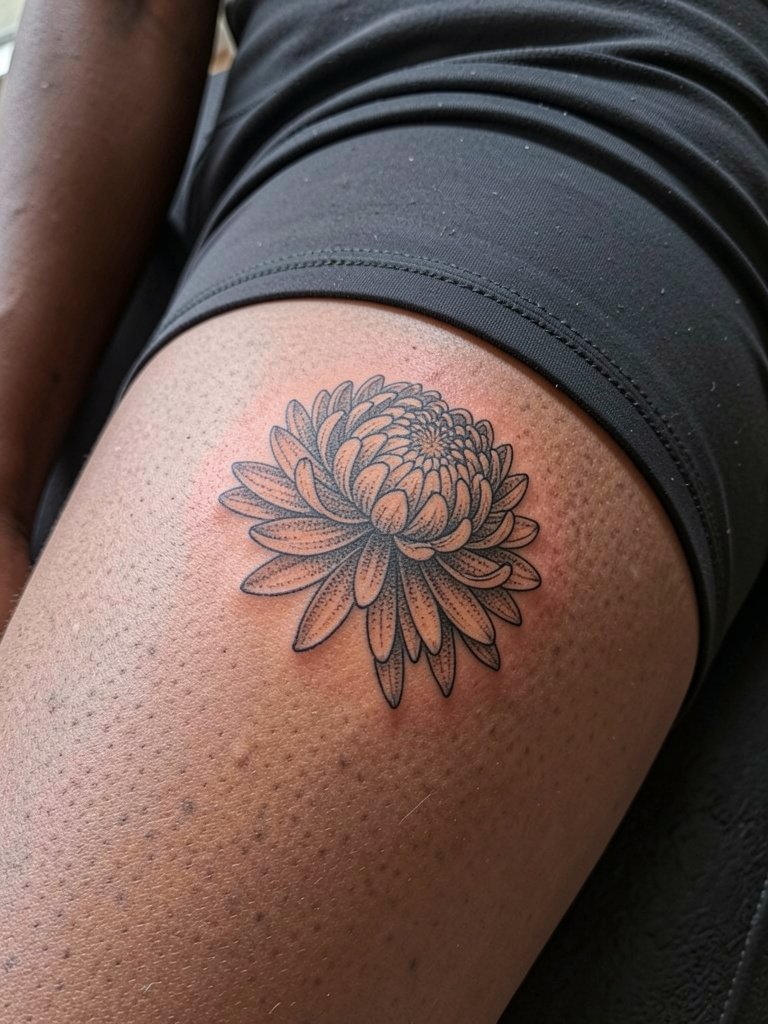
Inner thigh chrysanthemums can be intimate and read beautifully when placed mid-thigh away from high-stretch zones. Sessions for a 3–4 cm bloom are about 60 minutes and pain varies with sensitivity. For outfits think high-waisted shorts and a thin chain belt for glimpses in summer. The main regret I see is choosing the medial inner thigh for people planning significant weight changes, which can distort the composition. Pick lateral thigh if you want more stability over time.
12. Illustrative Narcissus with Dew Drops on Ankle/Calf
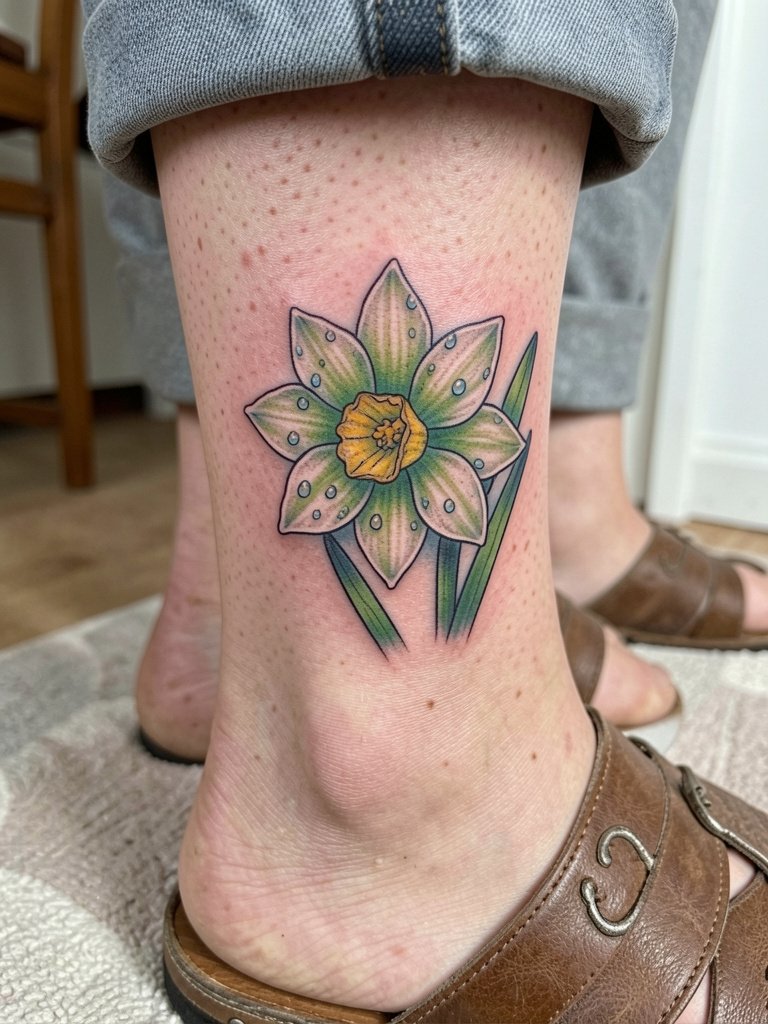
Narcissus with dew details reads like a small painting on the ankle or calf and benefits from crisp dot work for the droplets. Sessions of 45 to 75 minutes are common and pain is lower on the calf than on the ankle. Summer footwear like open-toe sandals makes the piece visible. Avoid placing the tiny drops where shoe straps rub, which causes early fading. A touch-up at year two is standard to refresh delicate highlights.
13. Matching Two Flowers, One Stem Duo on Inner Forearm
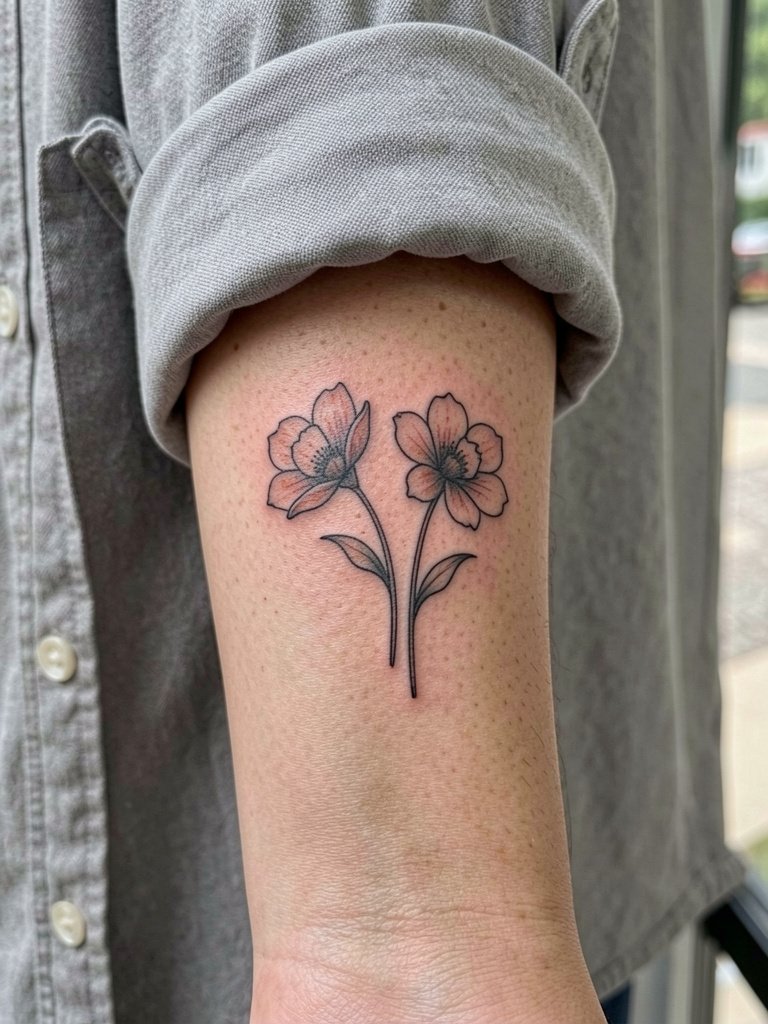
A shared-stem duo works well for sisters or couples and usually needs 6–8 cm for the composition to read. Plan a 60 to 90 minute session and expect low to moderate forearm soreness. For presentation try a rolled shirt look so the split blooms show when you gesture. When booking decide up front which bloom is the focal point so the artist can size each petal proportionally. The common mistake is forcing two equally tiny flowers onto a small forearm space, which makes both unreadable in photos.
14. Mini Bouquet Birth Flower Collection on Collarbone
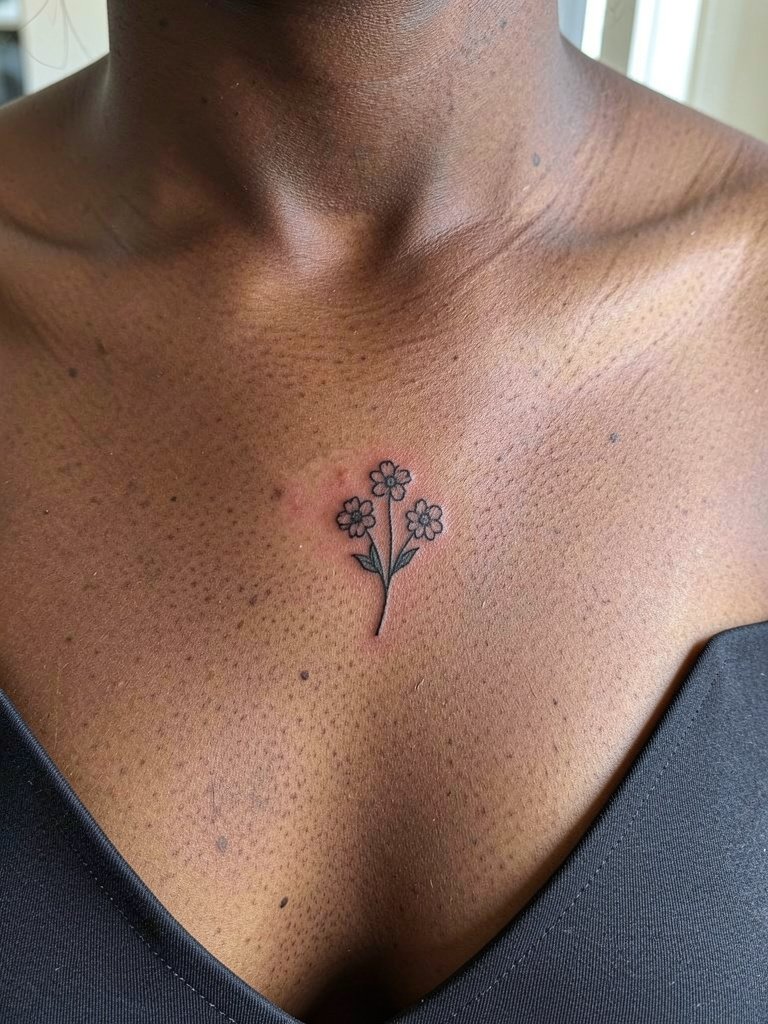
Mini bouquet clusters on the collarbone let you encode multiple birth flowers without a sleeve. Expect a single session of about 45 to 75 minutes for a 4–6 cm cluster. Pair the placement with layered gold chains so the flowers sit in the décolletage. A frequent error is compressing too many blooms into a narrow collarbone strip. Ask for scale mockups so the artist can show how each bloom reads at different distances.
15. Vertical Iris with Tucked Violets Base on Forearm
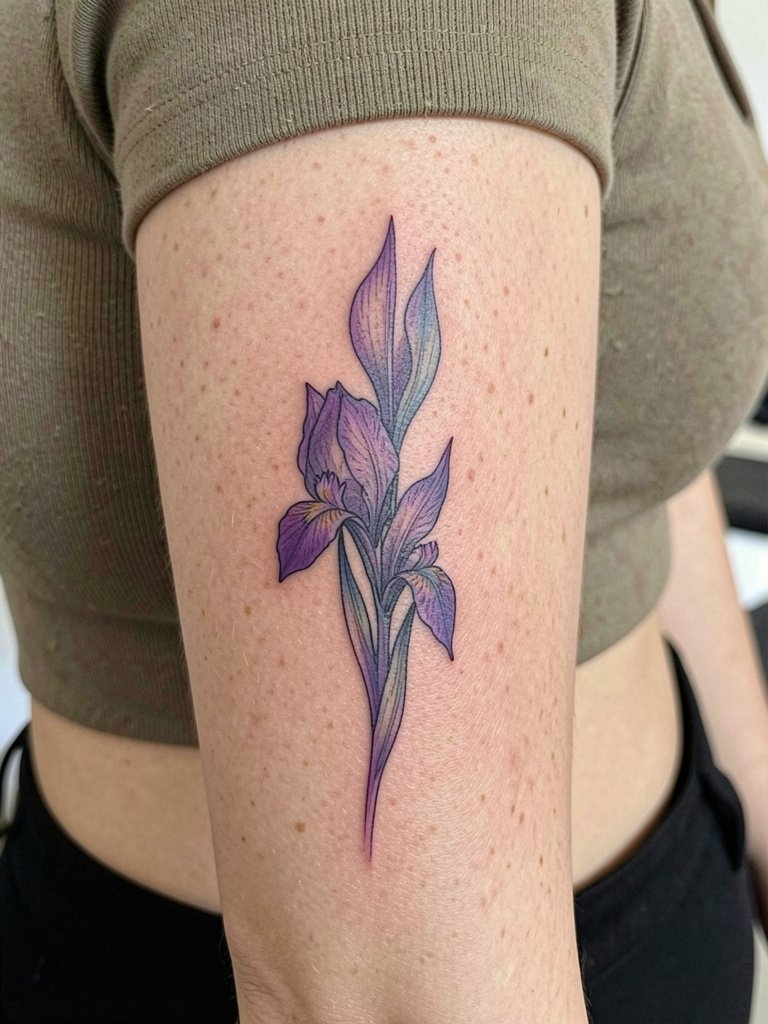
A vertical iris with violets at the base reads elegantly along the forearm and favors a taller canvas, so 7 cm or more preserves detail. Sessions often last around 90 minutes depending on color. Show it off with cropped tops that expose the vertical flow. The usual mistake is compressing the iris to under five centimeters which flattens the petals. If you plan a matching duo, align stems so the negative space between pieces breathes.
16. Shared Stem Family Piece on Inner Forearm
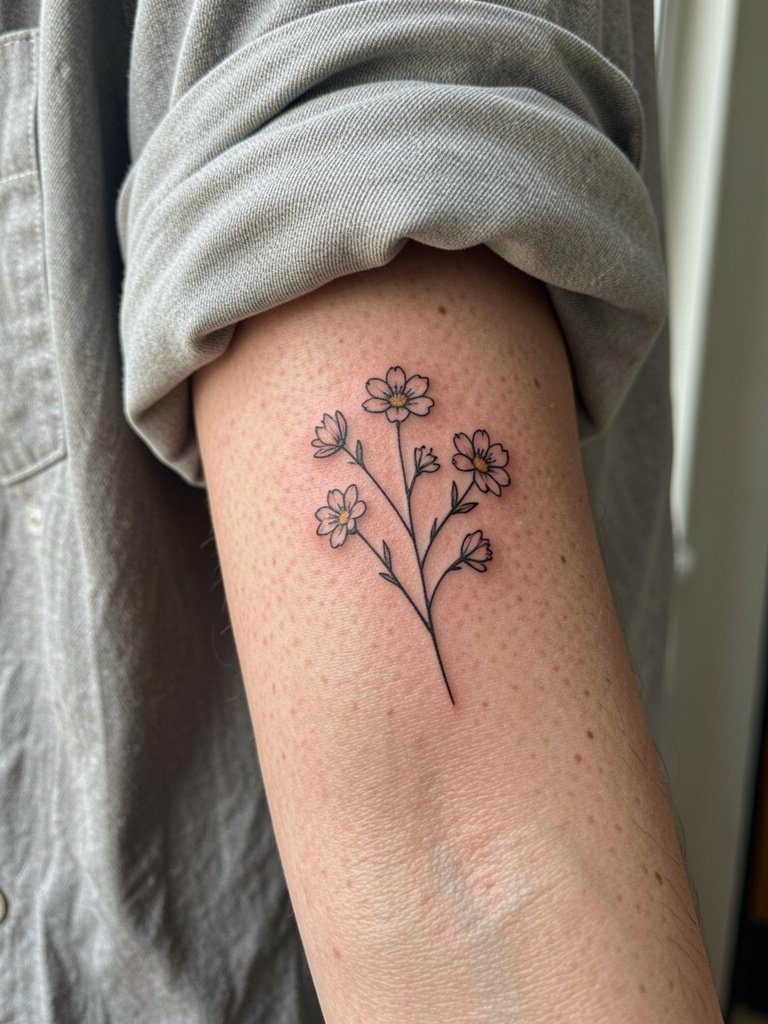
A family collection on one stem is a compact way to represent several people and usually fits in a single forearm session under two hours. Pain is moderate and touch-ups at two years are common for tiny connecting stems. For session comfort wear a linen button-down that you can roll and re-drape without pressure. The frequent error is cramming five distinct blooms into a narrow band, which reduces each flower to a dot in photos. Scale each bloom so its identity remains clear at arm's length.
17. Cusp Bloom Pairing: Iris with Violets Base on Forearm
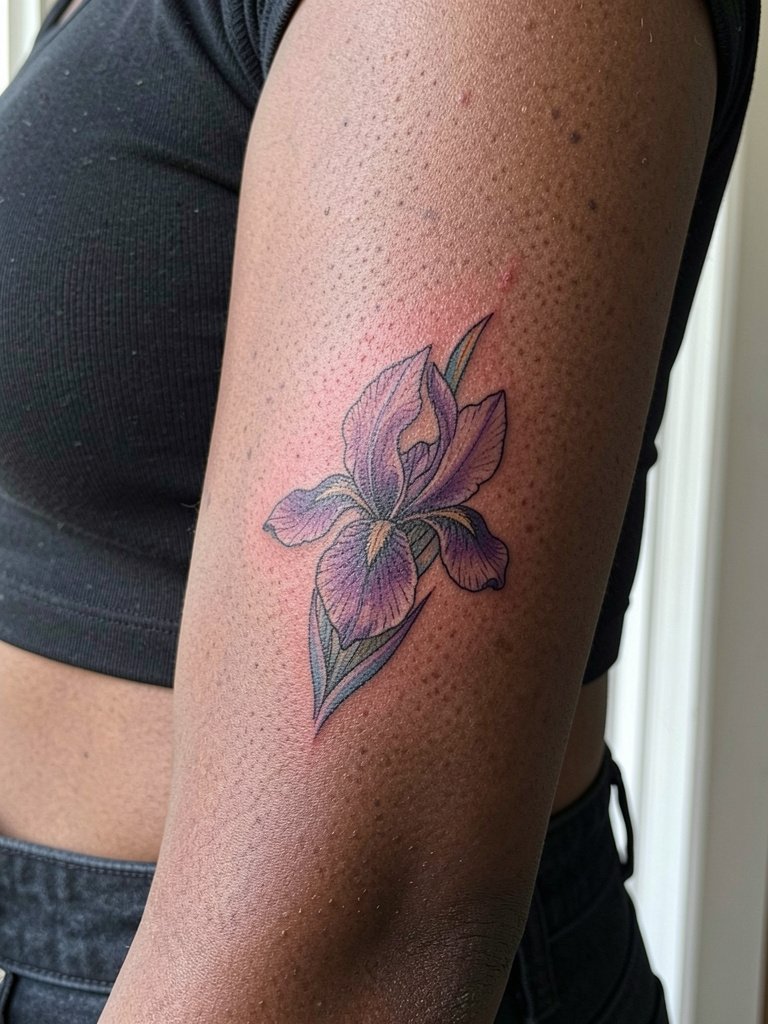
This cusp pairing blends two birth months into one vertical story and needs at least 7 cm for legibility. Expect a session of 60 to 120 minutes depending on color and linework. For outfits favor cropped tops so the layered blooms show when you move. A mistake is sketching the violets too small under a large iris, which hides the secondary bloom in photos. Ask for a layout that keeps ratios consistent at arm's length.
Frequently Asked Questions
Q: How do I find artists who show healed birth flower photos across skin tones?
A: Search hashtags like #birthflowertattoo, #finelinetattoo, and #botanicaltattoo on Instagram and TikTok then filter by location to spot local portfolios. Tattoodo and the Inked App let you search keywords such as "fine line carnation" and surface healed examples. Reddit threads on r/tattoos and r/tattooadvice often share real healed shots across skin tones, which helps set expectations.
Q: Will a fine line design on my ribs hold up long term?
A: Artists disagree openly on this. One camp says ribs blur within two years because daily movement and garment pressure compress the lines, especially near bra seams. Another camp argues fine line settles fine on ribs when the artist spaces strokes a bit wider and controls depth, and they point to multi-year healed examples as proof. If you choose ribs, consider slightly bolder spacing to improve readability and plan for a touch-up in year two if needed.
Q: Which aftercare product should I use for small floral work, Aquaphor or plant-based balms?
A: There is a split in the community. Some people report Aquaphor clogs pores and creates tiny bumps on fresh tattoos, and they prefer thinner plant-based balms for the first week. Others use Aquaphor sparingly for a short moisture barrier and find it keeps fine line work protected early on. Try a thin film approach for the first 48 hours, then switch to a lighter balm if you notice pore congestion.
Q: What placement avoids stretching if my weight fluctuates?
A: Avoid medial inner thigh and very low stomach areas if you anticipate significant weight changes. Lateral hip, outer thigh, and the outer upper arm tend to keep composition stable. I have seen inner thigh chrysanthemum pieces distort when people gained 10 to 20 pounds, which is why lateral alternatives are safer for longevity.
Q: How much should I budget for a fine line birth flower on an inner forearm?
A: Pricing varies by city and studio, but expect shop minimums and the going rate for fine line work to be higher than early-pandemic numbers. Small fine line pieces are commonly in a moderate price band and quality often requires accepting a reasonable minimum. Budget for the quality tier you want and remember touch-ups might add a modest follow-up cost.