
Someone I know spent eight months scrolling images before realizing the real problem was picking a style that would actually age well on the thin skin behind the ear. After visiting five shops across Brooklyn and chatting with an artist who focuses on fine line work, I collected twenty tiny ideas that sit comfortably in that spot and stand a better chance of staying crisp as they heal. Below are fresh visuals and practical notes on pain, session time, and what to ask at your consultation.
1. Tiny floral spring with lavender or baby's breath behind the ear

Someone I know chose a lavender sprig because it reads clearly at 1.5 to 2 cm and can be tucked under hair. Expect a short single session, roughly 20 to 40 minutes, and a sharp buzzing that feels more like vibration than deep pain. Tell your artist you want slightly bolder main stems and very light secondary stems so the tiny leaves do not blur together. A common mistake is asking for too many petals in a 1.5 cm area. At six months the linework should look mostly settled. At two years expect softer edges and possible touch-up needs around year two to three.
2. Mini butterfly outline tucked low behind the ear

Fair warning: the lower rim of the ear sits close to bone and that can amplify vibration. This outline works best at about 2 cm so the antennae and wing tips have room. In consultation, show a clean outline reference and ask for single-needle linework with slightly increased line weight on the outer contour. One common error is requesting filled color in that tight space. At six months the outline reads crisp. At two to five years the wings soften and may need a light touch-up if you want them to stay sharp.
3. Open-ended flame tip for an under-the-hair edge

When you sit with your artist for this piece, bring photos that show the exact curve you want. The flame reads best at 1.2 to 1.8 cm and the session is often under 30 minutes. Artists split on how much taper to give the tip. One camp prefers a very thin taper to keep the shape minimal. The other camp adds a slightly thicker base so the tattoo ages without disappearing. Ask which approach your artist recommends and why. Avoid tiny inner details that will blur into a smudge in a year or two.
4. Shooting stars with mixed filled and unfilled icons

Most people pick this when they want motion without a large piece. Expect a 20 to 45 minute session depending on how many tails you add. A useful tip is to tell your artist you want alternating filled and outline stars so contrast helps the shapes hold up. The usual mistake is cramming several stars into a 2 cm span. At six months the filled star keeps saturation better than thin outlines. Plan for a touch-up at year two if outlines begin to soften.
5. Daisy chain that dips to the neck base

There is real value in extending a tiny floral to the neck base if you want an easy reveal when your hair is up. Expect 30 to 60 minutes for a small chain. Ask your artist to space each flower for breathing room and to avoid tiny shaded centers that will blur. A common mistake is asking for full color washes in that area. At six months the chain should still read as separate blooms. Over two to five years the connectors may need a touch-up, especially if you wear sunscreen inconsistently on the neck.
6. Compact whale silhouette for a low-key ocean nod
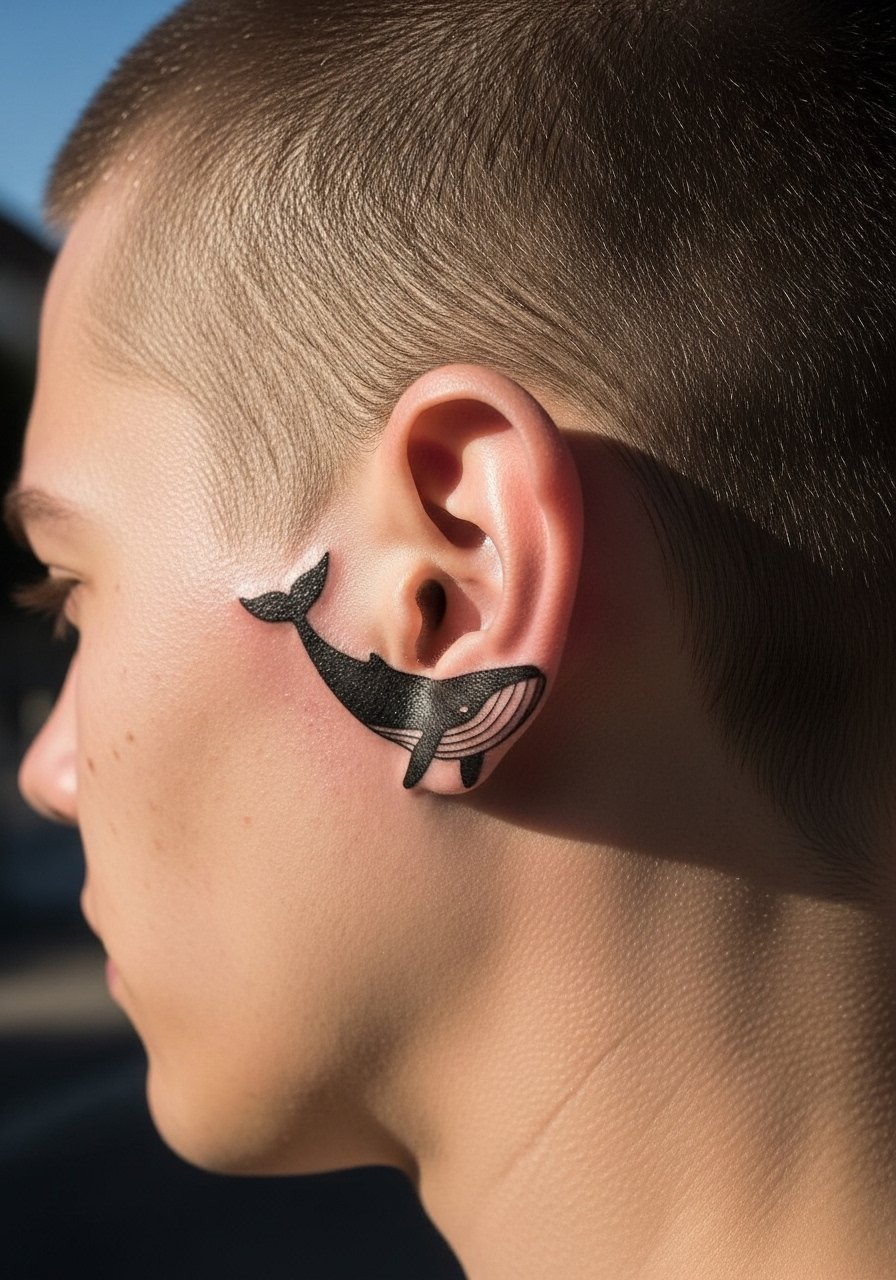
Most people choose a silhouette for longevity since solid black holds better than thin shading in this spot. The session is usually under 30 minutes and the pain is moderate because of the underlying bone. Tell your artist you want a slightly thicker outer contour and minimal interior detail so the silhouette stays readable. A real mistake is asking for fine internal detail in a 2 cm shape. At two years the black usually softens but will remain recognizable. Expect touch-ups after two to three years if you want to maintain deep saturation.
7. Musical notes on a tiny staff tucked above the ear

The visual payoff is high for music fans and the session is quite short. Ask your artist to prioritize clear spacing between staff lines and to keep note heads slightly bold so they age better. A mistake people make is shrinking the staff to less than 2 cm which causes lines to merge. At six months the staff will look neat. By year two the lines might soften and you may want a touch-up to restore crisp spacing.
8. Small peony outline nestled in the ear fold

I recommend this if you like traditional floral shapes but want a micro version. Expect a 25 to 45 minute session and a sensation more like buzzing against bone. During consultation say you want simplified petal shapes and no tiny internal stippling. The common mistake is asking for heavy stipple shading inside each petal at 1.5 cm. At six months a clean peony outline reads well. At two to five years petals can bleed slightly into each other, so plan a touch-up if you want fine separation long term.
9. Minimalist script word tucked behind the ear base

Fair warning: lettering in tiny spots splits artists into two camps. One group says very thin script will blur within a year. The other group argues that with the right spacing and slightly heavier stroke the word can last for years. Ask your artist which camp they are in and request a drawn stencil that you can photograph and live with for a day. Typical session time is 20 to 40 minutes. Avoid ultra-fine cursive that loops tightly in 1 to 2 cm.
10. Ornamental vine tendril wrapping under hairline

There is a strong visual rhythm when a vine follows the ear curve. Expect 30 to 45 minutes. Tell your artist you want each leaf separated and to keep the main stem a touch bolder than the offshoots. The common mistake is asking for dense stipple shading in tight leaves. At six months the shape will look soft and living. After two years connectors may need a small touch-up, especially where hair rubs during sleep.
11. Micro rose with stem placed high on the mastoid

Visual impact leads many to choose a single small rose because micro-realism holds up well when shading is subtle. A 20 to 40 minute session is common. In consultation specify no heavy gray fills and request defined outer petals so the silhouette stays readable. The classic error is asking for dense tonal fills in a 1 cm space. At six months the rose should be soft but distinct. Plan for a touch-up around year two if shading starts to break down.
12. Jellyfish outline for fluid, organic motion

A visual impact lead fits this design because the tentacles can be long and subtle. Expect roughly 30 to 50 minutes depending on tentacle length. Tell your artist you want tapered tentacles with slight spacing so they do not merge over time. A common mistake is packing too many tentacles into a tiny vertical span. At six months the tentacles look airy. By two years thin tentacles can blur, so leave a little breathing room when designing.
13. Tiny constellation map, personal star group
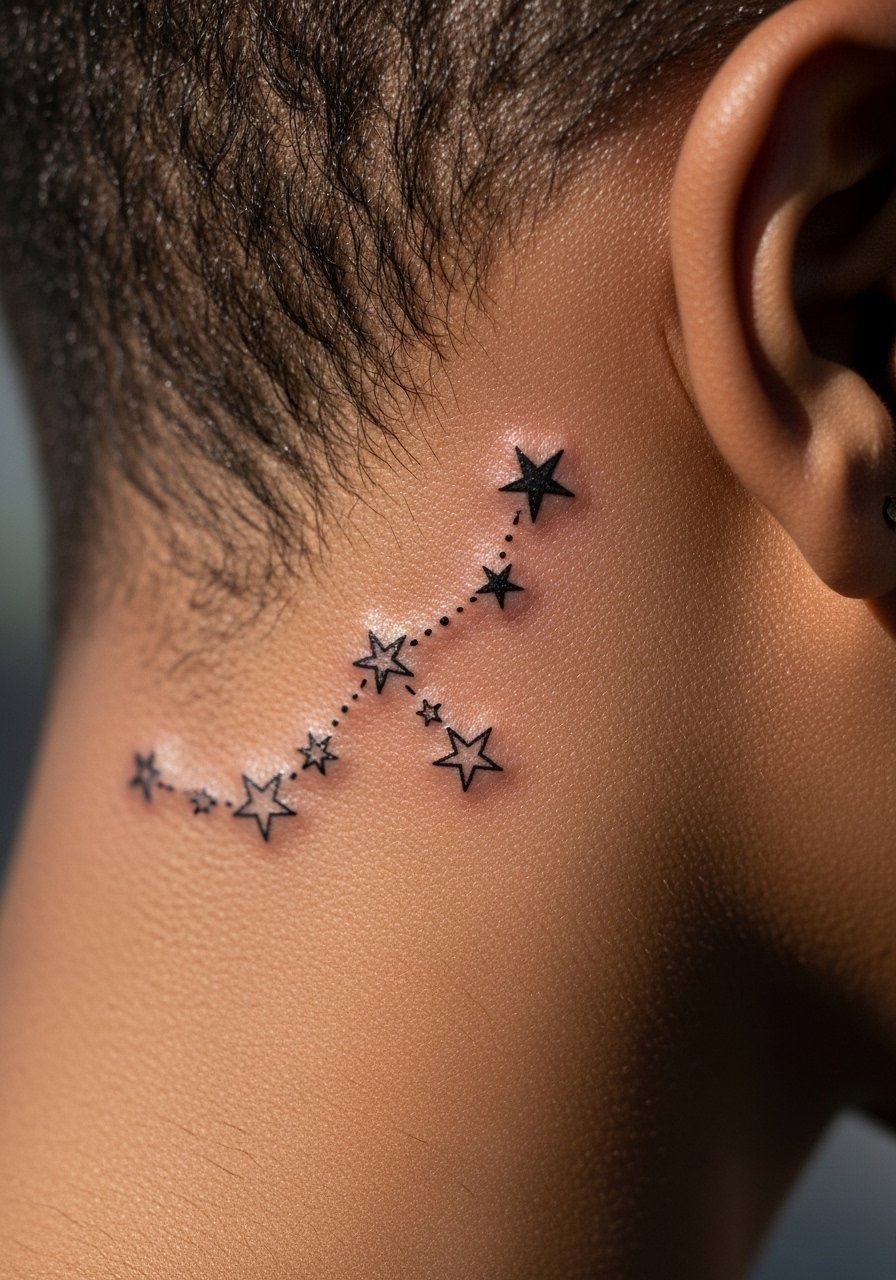
When I see this design people use it to mark a meaningful date without text. The session time is short. Ask for simple dots and slightly heavier anchors at constellation points so the pattern reads from a distance. The mistake is squeezing too many points into a 2 cm area. At six months the pattern still reads clearly. Over several years tiny dot work can soften and may need a refresh to keep points distinct.
14. Single-line mountain silhouette that follows the skull curve

The visual is architectural and sits nicely where the skull curves. Expect a 20 to 35 minute session. Tell your artist you want a continuous line with varied peaks and at least one peak slightly thicker for longevity. A typical mistake is trying to include too many peaks in a very small band. At two years the silhouette tends to hold because the single contour gives the eye a clear read.
15. Micro geometric glyph for a subtle emblem
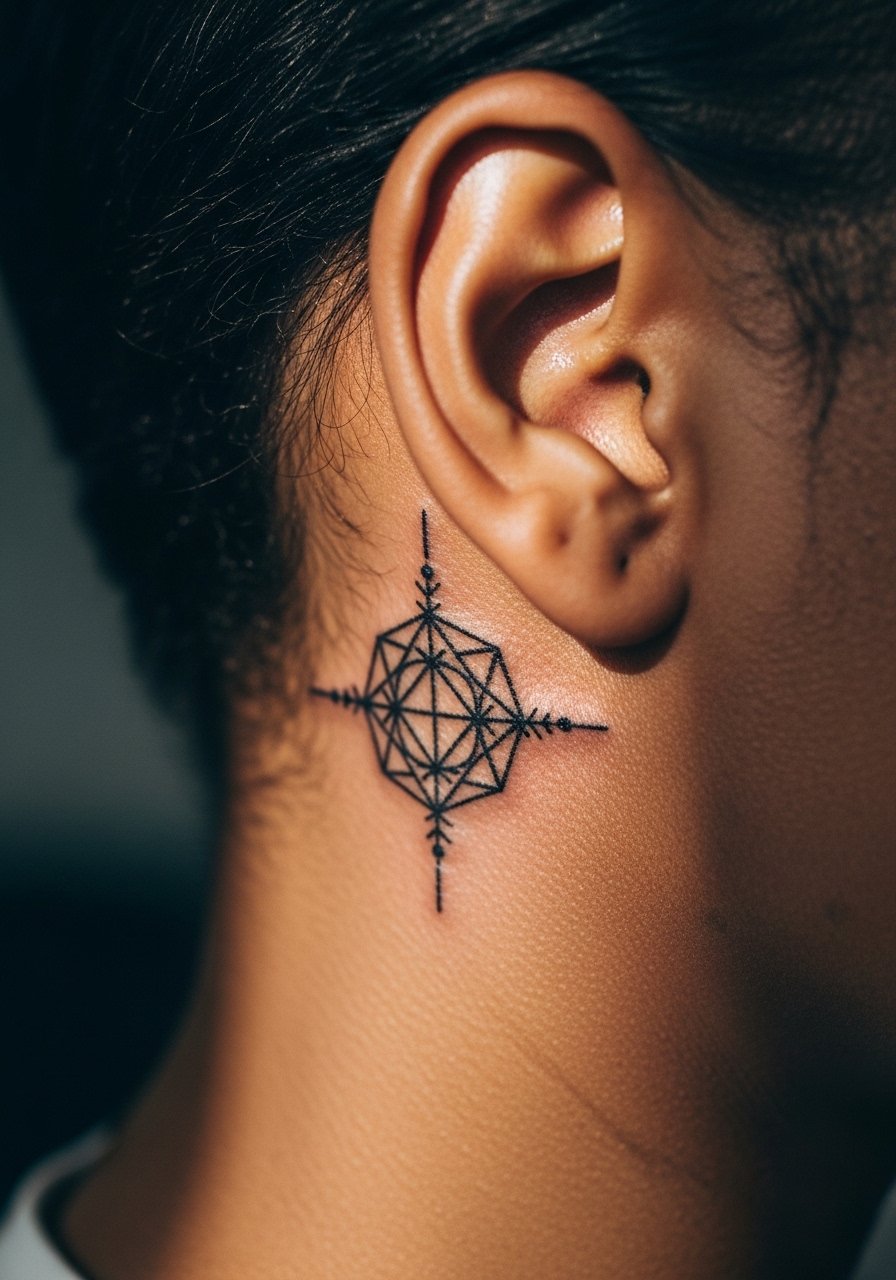
Most people pick a glyph for its graphic clarity and the session is brief. Ask your artist to keep angles crisp and to avoid ultra-thin interior lines. The controversy here mirrors fine line debates. One camp says tiny geometry will blur if the lines are too close. The other camp insists that correct spacing and slightly heavier strokes will keep the geometry intact. Ask for a test stencil and imagine it on you for a day before committing. At two years properly executed angles usually remain legible.
16. Open crescent moon with a few dot-work stars

Aging and healing lead many to pick this because dot work paired with a single contour moon has staying power. Session time is commonly 20 to 35 minutes. During consultation request slightly larger dot anchors and a crescent width that is not hair-thin. People often ask for micro dots that are too close together. At six months the dot work should read as texture. At two to five years the moon contour usually lasts longer than clustered tiny dots.
17. Tiny compass rose pointing toward the jawline

A personal observation: compass roses read as a single idea even at small scale when the cardinal points are simplified. Expect a 25 to 45 minute session. Tell your artist you want only primary points and a slightly bolder outer ring. The typical misstep is requesting ornate internal detail in a sub-2 cm piece. At two years simplified points remain obvious and need less frequent touch-ups.
18. Minimalist heart outline with tiny stipple shadow
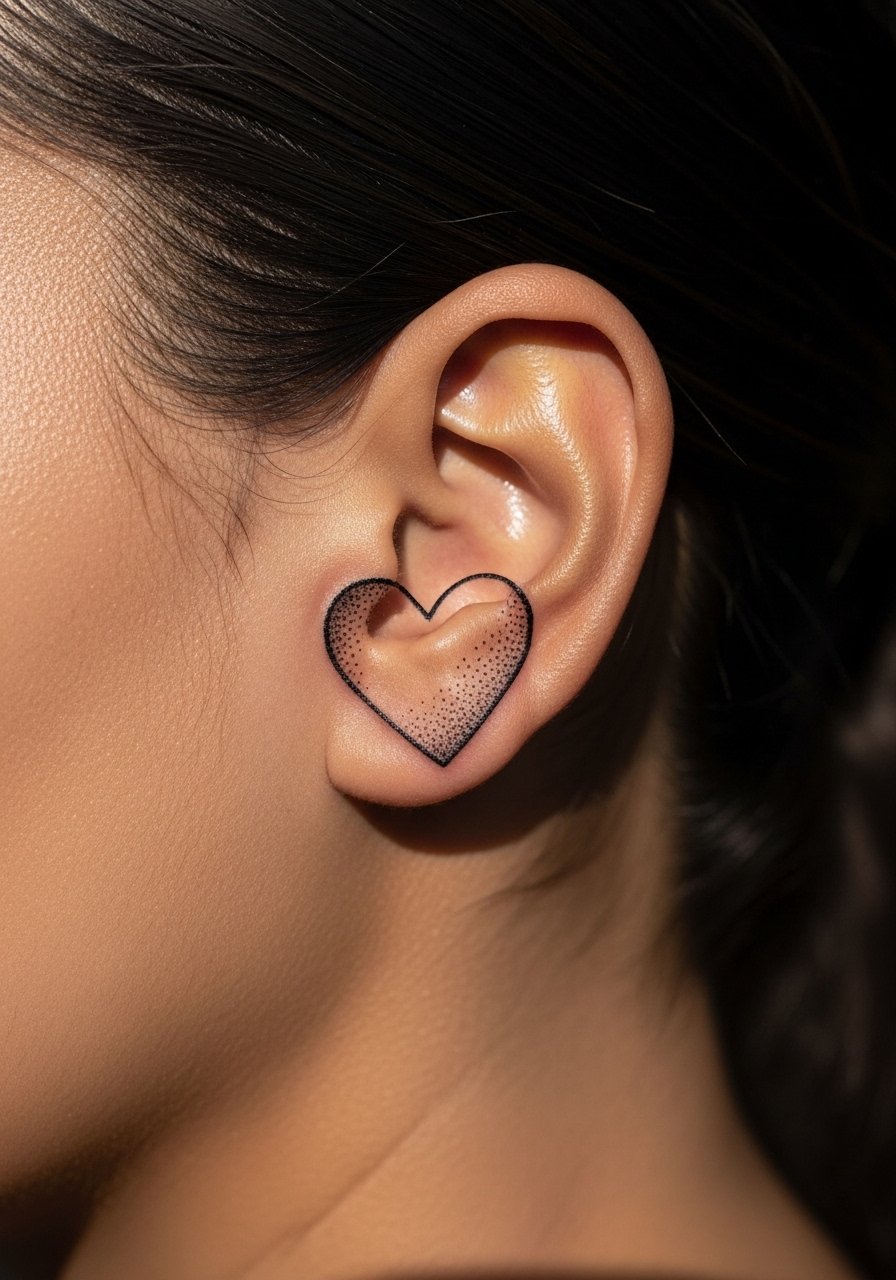
This design is a visual impact pick for someone who wants an instantly readable symbol. Session time is about 15 to 30 minutes. Ask for a clean outer line and light stippling placed intentionally, not scattered. A common mistake is over-stippling which ages into a gray blotch. At six months the shadow looks intentional. After two years stippling can merge so keep dots spaced and subtle.
19. Micro script coordinates tucked low behind the ear

Consultation lead: when the tattoo includes text or numbers, specify the exact string in your reference. This runs 20 to 40 minutes. Ask for a slightly increased letter width so numbers do not close up. A big mistake is shrinking coordinates to less than 1.2 cm. At six months numerals should still be legible. Over years, thin numerals can merge so plan for a touch-up timeline after one to three years if you want precise legibility.
20. Tiny floral crescent combining baby’s breath with a single bloom
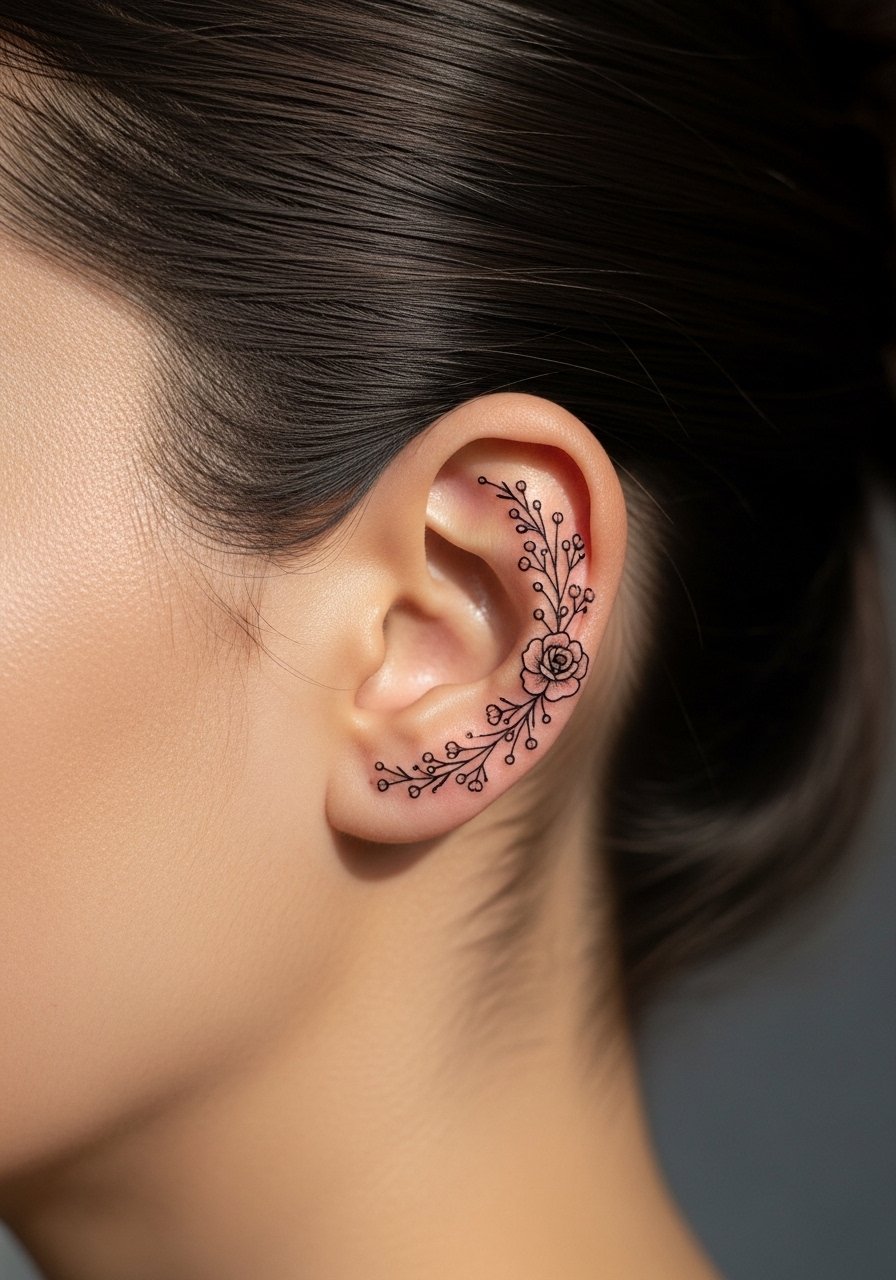
A consultation note: customize the single bloom to match a family flower for real meaning, and ask for spaced baby’s breath dots instead of dense clusters. The session is commonly 30 to 50 minutes. Avoid packing too many tiny dots into the crescent. At six months the crescent reads airy. At two to five years the bloom may need a small touch-up to restore petal definition.
Tattoo Prep and Aftercare Essentials
Below are practical items to bring or buy for a behind-ear tattoo plus a realistic shopping list you can find on Amazon. I relied on conversations with artists at local shops and common aftercare advice from online communities when assembling this.
Healing/aftercare essentials
Fragrance-free moisturizing balm for tattoos, lightweight, non-comedogenic. Use sparingly after the initial closed healing phase to prevent over-moisturizing. Apply a thin layer once the tattoo is no longer weeping and your artist approves.
Medical-grade breathable film bandage, small squares. Good for covering the area during the first few hours if your artist uses a second skin approach. Helps keep hair products off fresh ink.
Gentle, fragrance-free foaming cleanser. Use a light lather to clean the area twice a day during the first week. Pat dry with a clean towel.
Lightweight fragrance-free balm stick for spot reapplication. Handy for travel and for keeping the behind-ear fold from drying out, especially while sleeping.
Pre-appointment prep
Silk or satin sleep cap or pillowcase to limit friction the night after your session. Use the first three nights to reduce rubbing against the healed area.
Soft hair clips or a low-hold tie for keeping hair off the area while healing. Choose clips that do not press hard against the fresh tattoo.
Long-term maintenance
Broad-spectrum SPF lip-safe sunscreen for areas near the ear and neck. UV exposure fades ink. Apply to exposed neck and behind the ear once healed.
Small microfiber travel towel for gentle patting after cleansing. Use a clean towel each day to avoid bacteria.
Fragrance-free, non-greasy daily moisturizer for neck skin. Keeps the skin healthy and can slow visible fading over years.
Every tattoo is different. Always follow your artist's specific aftercare instructions. Consult a dermatologist if you have skin concerns or unusual healing issues.
Frequently Asked Questions
Q: How painful is a behind ear tattoo compared with other small spots like the wrist or ankle?
A: Pain varies, but behind-ear sessions often feel sharper because the bone is close and vibrations travel. Most people describe a strong buzz for short bursts rather than long, deep pain. If you are sensitive, choose designs under 2 cm and schedule a brief session.
Q: Will fine line florals blur faster behind the ear and when should I expect a touch-up?
A: Fine line florals do tend to soften sooner than heavier blackwork because of thin strokes and thin skin. From what I have seen, expect a touch-up between one and three years if you want crisp edges. Ask your artist about slight line weight increases to extend clarity.
Q: What should I tell an artist when I want a script or numeric tattoo in that spot?
A: Give the exact text or numbers and request a printed or photographed stencil before the needle hits skin. Ask for slightly wider letterforms and for the artist to show you the stencil at full scale on your ear so you can check spacing. That step prevents common shrinking mistakes.
Q: How do hair products affect healing behind the ear and what can I do to minimize irritation?
A: Hair oils and sprays can irritate healing skin. Keep hair clean and away from the fresh tattoo for the first week. Use breathable bandage options in the first 6 to 24 hours and a gentle hair clip to keep the area exposed while you sleep. If irritation appears, contact your artist or a dermatologist.
Q: Where should I look online to find artists who specialize in the fine line or micro styles used here?
A: Search hashtags like #BehindEarTattoo and #FineLineEar on Instagram and explore TikTok for recent soft aesthetic videos. Use Tattoodo filters and local searches like "[city] fine line behind ear studio" to find portfolios. Community forums such as Reddit r/tattoos can also point to reliable walk-in shops.
Q: Is there a compact aftercare product you recommend for travel after a behind-ear session?
A: A small fragrance-free balm stick is handy for reapplication once the tattoo has closed. One option in the shopping list above is a lightweight balm stick that fits in a pocket. Use it only after the initial scabbing phase and after your artist clears you to re-moisturize.