
A clean little mark tucked behind your ear can feel like a private talisman when your hair is down and a quiet signature when it is up. I remember seeing a single-word script in that exact spot and how people only noticed it when she tied her hair in a knot. That reveal is part of the appeal. Below are small, well-considered mastoid designs that work with the curve behind the ear and how to get them to age well.
1. Single-Needle "Always" Script
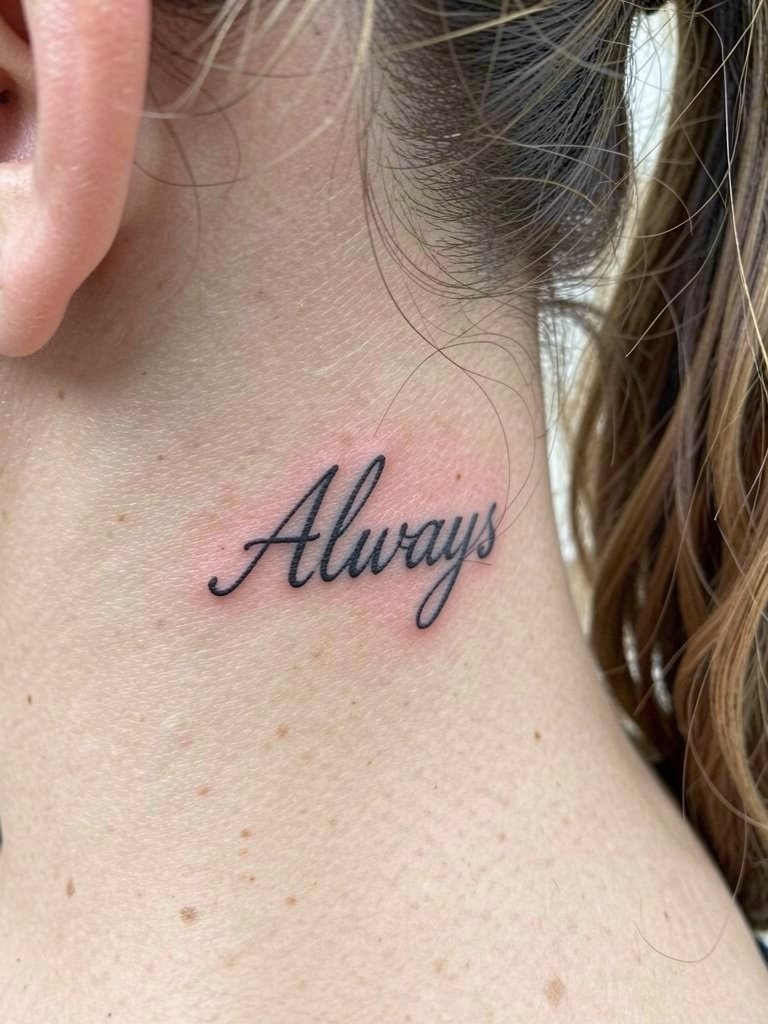
A single-word single-needle script reads intimate because of its scale. I recommend this over a loopy ornamental script when you want the word to stay legible for years. Specifically request the artist increase line weight slightly compared with your reference, the mastoid skin tends to soften ultra-thin strokes by year two. Expect a short session, often under 30 minutes, and a sharp but brief sting while the needle passes near the bone. Common mistake is asking for cursive flourishes that blur together. For discussion bring the exact font and ask the artist to show a 0.5-inch mockup on skin so you can see how spacing holds up. Professional note. Neck work benefits from an artist experienced with small script on thin skin.
2. Minimalist Crescent Moon
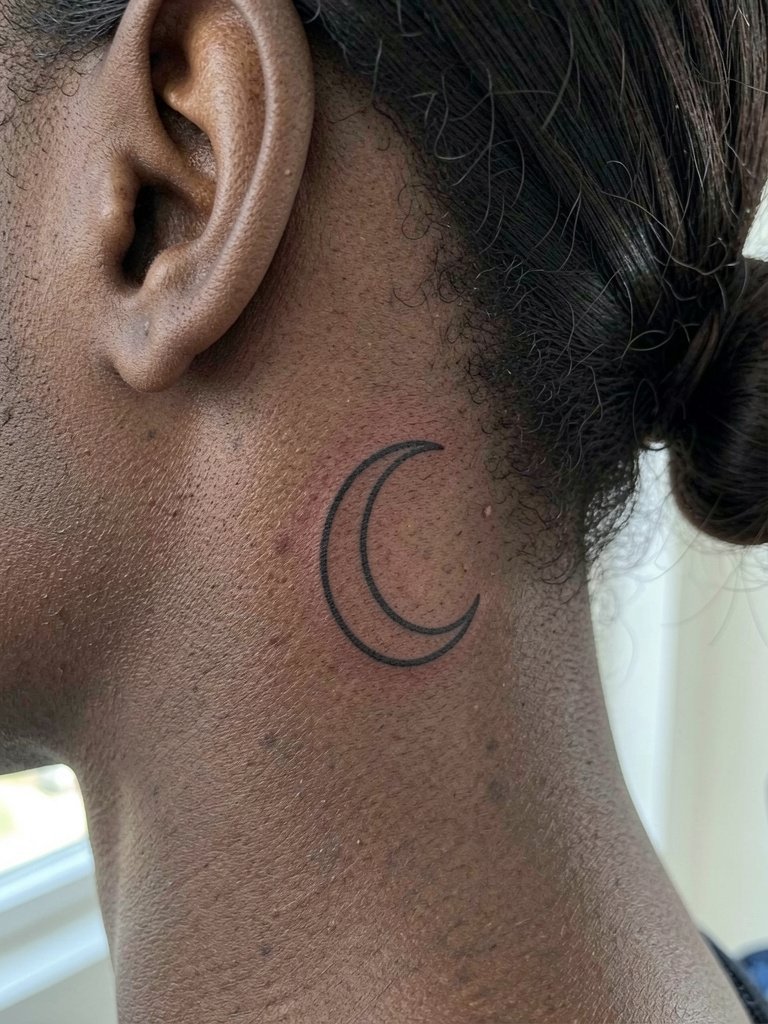
The crescent follows the mastoid curve naturally so it reads crisp even when very small. Choose a half-moon outline rather than a filled-in shape to avoid pooling and early saturation. Talk specifics with the artist about the arc radius and the smallest width you will accept. In practice a 0.5–0.75 inch diameter keeps the shape readable at six months and at two years. Mistakes include asking for extra interior detail that will smudge over time. Session prep is minimal so wear a shirt with an open collar for easy access. Professional note. Small neck placements need steady hands and healed photo examples.
3. Tiny Heart Outline
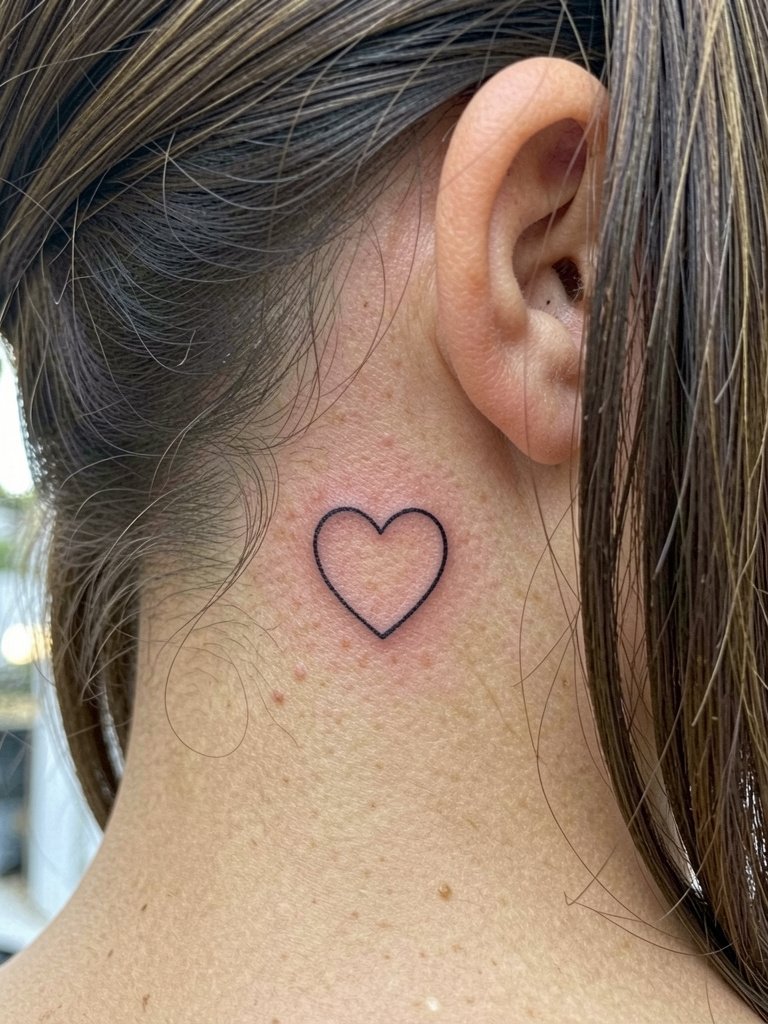
A tiny open-heart avoids the cliché of a filled red heart and ages cleaner because there is no color to fade. I suggest a single-needle outline with slightly thicker spacing between strokes than you might think necessary. Tell the artist you want the center negative space maintained rather than a dense outline. Many people regret asking for narrower lines that disappear after a year. The session is fast and the pain brief but near the bone you will feel more repeat sharp pricks. Styling tip. Show it off with a high pony hair clip when you tie your hair up.
4. Micro-Floral Stem (Peony or Rose)
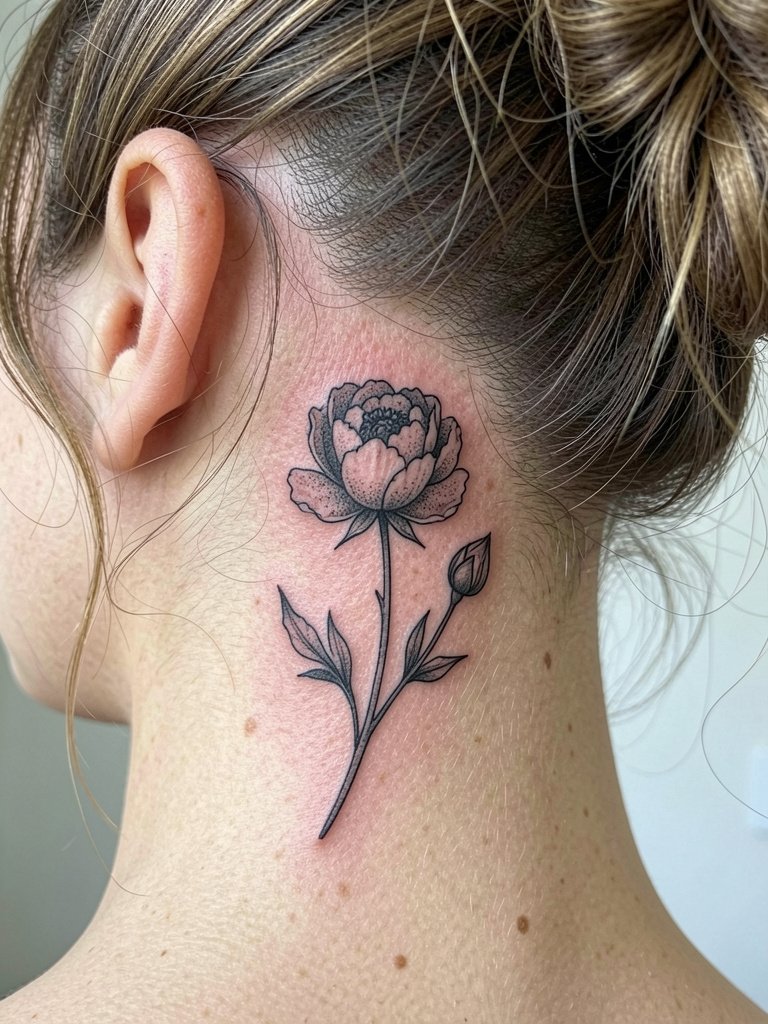
Botanical stems look intentional when they run with the vertical mastoid space. Pick a single-bud peony or small rose rather than a cluster to avoid congestion as the piece settles. During consultation show two healed examples of same-size florals and ask which shading technique the artist will use for longevity. A common aging issue is over-detailing the petals; fresh work can look great but petal veins blur over time. Touch-up is often recommended at year one for single-needle floral on the neck. Session wear. Choose an open collar shirt for comfort and easy access.
5. Dotwork Star Cluster
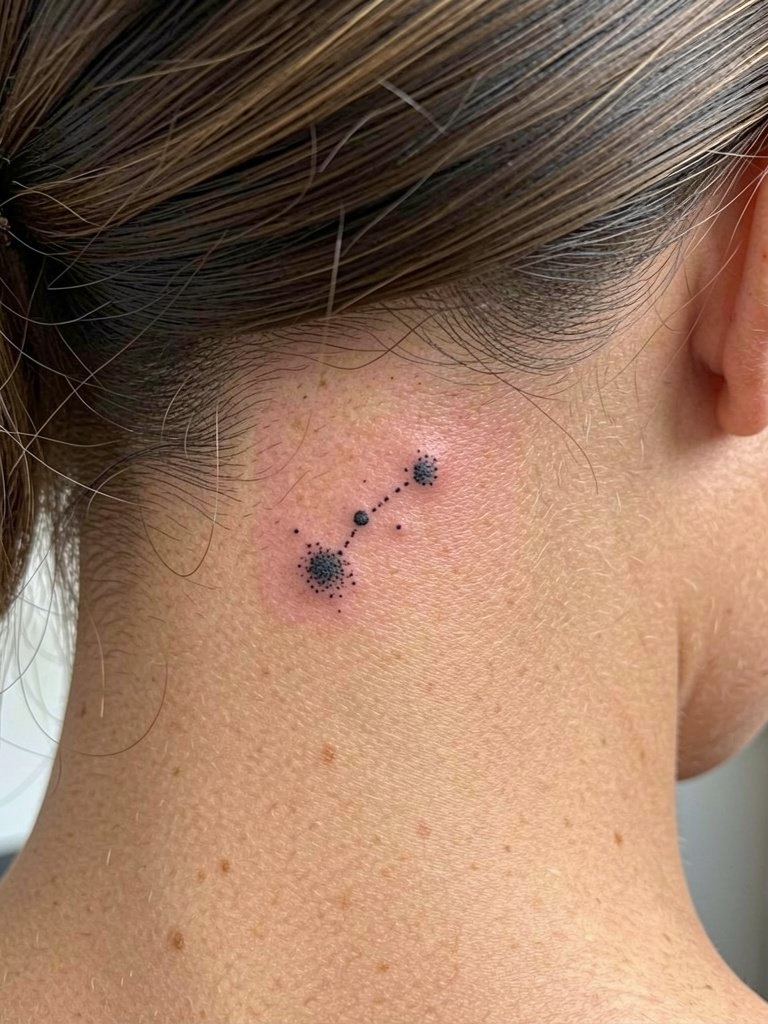
Dotwork wins here because tiny stipple holds up better on thin, mobile neck skin than ultra-fine continuous lines. I recommend asking for dot spacing that creates subtle texture rather than fused solid dots. A practical discussion item is how many dots and the nearest spacing in millimeters, not just "make it light." People who ask for hairline dots without spacing often see the dots join into a blob. Expect a quick session, low pain, and a likely touch-up window around year one to keep the cluster crisp. Styling tip. Pair this with a delicate gold chain necklace that sits above the mastoid area so it frames the tattoo.
6. Abstract Line Wave
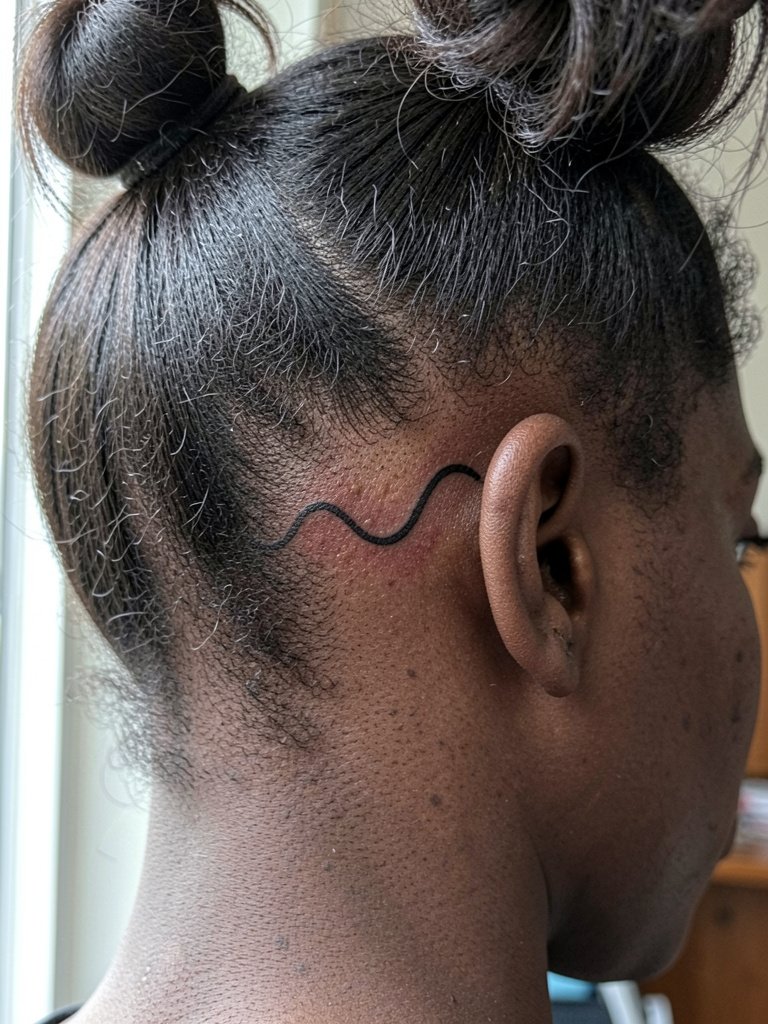
A single continuous wave reads modern and complements the ear contour. Choose this when you want nonliteral design that still looks intentional. Describe the curve radius and final length in inches so the artist can test how it flows with your mastoid anatomy. A typical mistake is requesting an overly elaborate curve that becomes visually noisy as the skin stretches. Pain is brief and localized. Session time is usually under 30 minutes. Styling note. Wear a sleeveless top in a neutral tone when you want to show it off with hair up.
Heal Smart
The designs above share the same aftercare headaches around shampoo and friction, so a few products make the first week far easier.
-
Mad Rabbit Tattoo Balm (Light Version). A thinner balm many people prefer behind the ear because it does not trap hair product as easily, which reduces dulling and buildup.
-
Japanese Aftercare Spray Elevate. A quick-dry aftercare spray that reviewers mention keeps the area from feeling soggy during short showers and deters shampoo residue.
-
Silk Hair Wrap for Night Use. Keeps hair off the mastoid area while you sleep so you avoid friction and product transfer in the first week.
-
Cetaphil Gentle Cleanser. A pH-balanced non-foaming wash that rinses away shampoo residue without stripping ink or irritating the healing skin.
-
Hustle Butter Regular. A widely used balm that many prefer over thicker ointments because it spreads thinly and does not sit as a heavy film against the mastoid skin.
7. Tiny Infinity Symbol
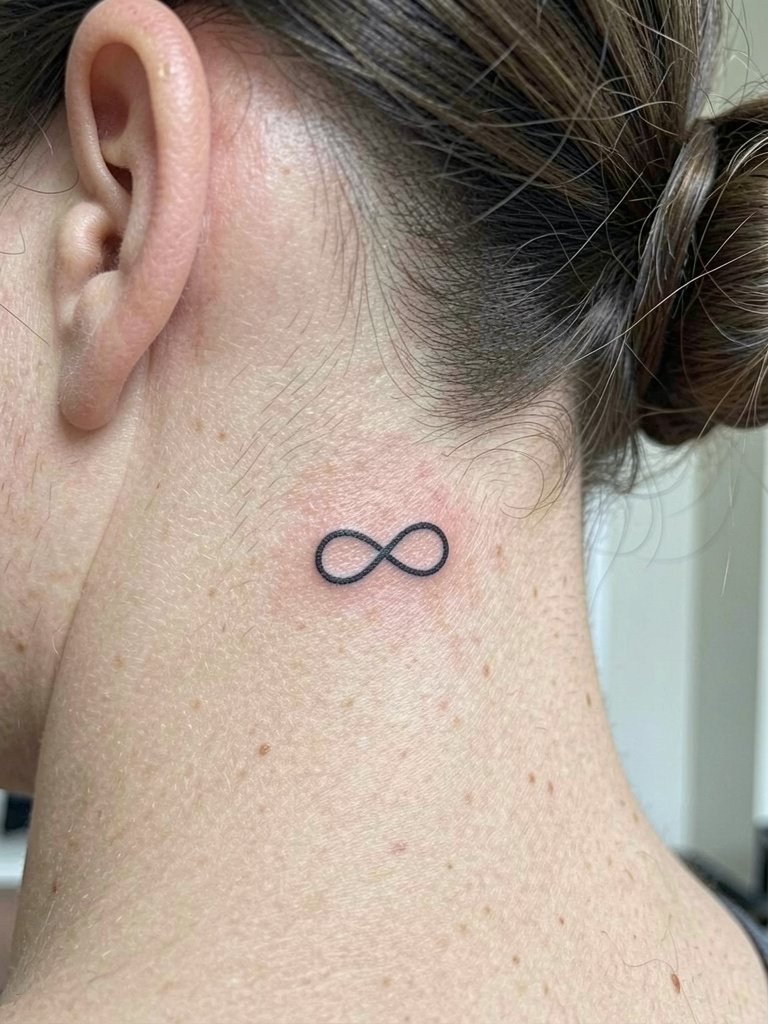
An infinity symbol is compact and reads well when kept simple. Ask for uniform line weight and confirm the exact width in inches during consultation. Many clients regret tiny loops that sit too close together and blur into an indistinct knot. Expect a brisk session and short sharp stings near the mastoid bone. Touch-up is common around year one for micro symbols. Styling tip. This looks neat with a half-up hair claw when you want the mark to peek out.
8. Single Leaf (Olive or Fern)
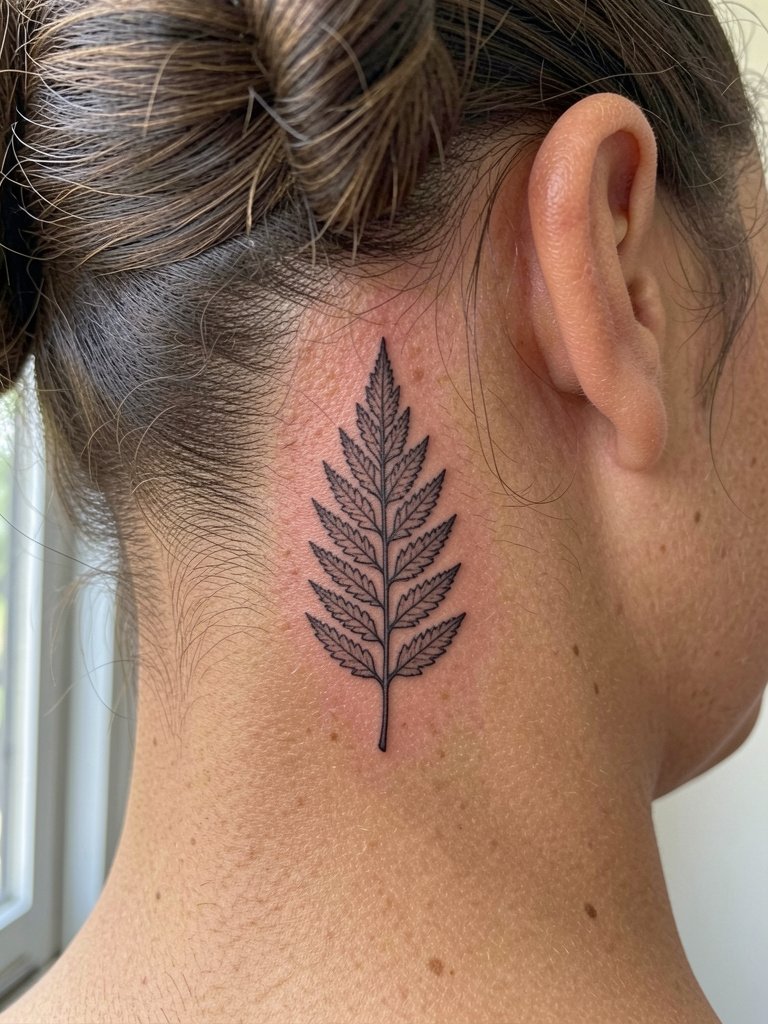
Leafwork follows the mastoid's natural vertical line so it reads elegant rather than crowded. Specify whether you want a single central vein or just an outline because tiny vein marks tend to soften with movement. A practical consultation item is to ask the artist for a 1-inch mockup to check how the stem sits against the ear. Common mistake is packing multiple leaves into the small space, which reduces clarity. Session length is short and pain is tolerable. Styling tip. Wear a linen blouse with an open collar to frame the linework when you go out.
9. Micro-Cross Outline
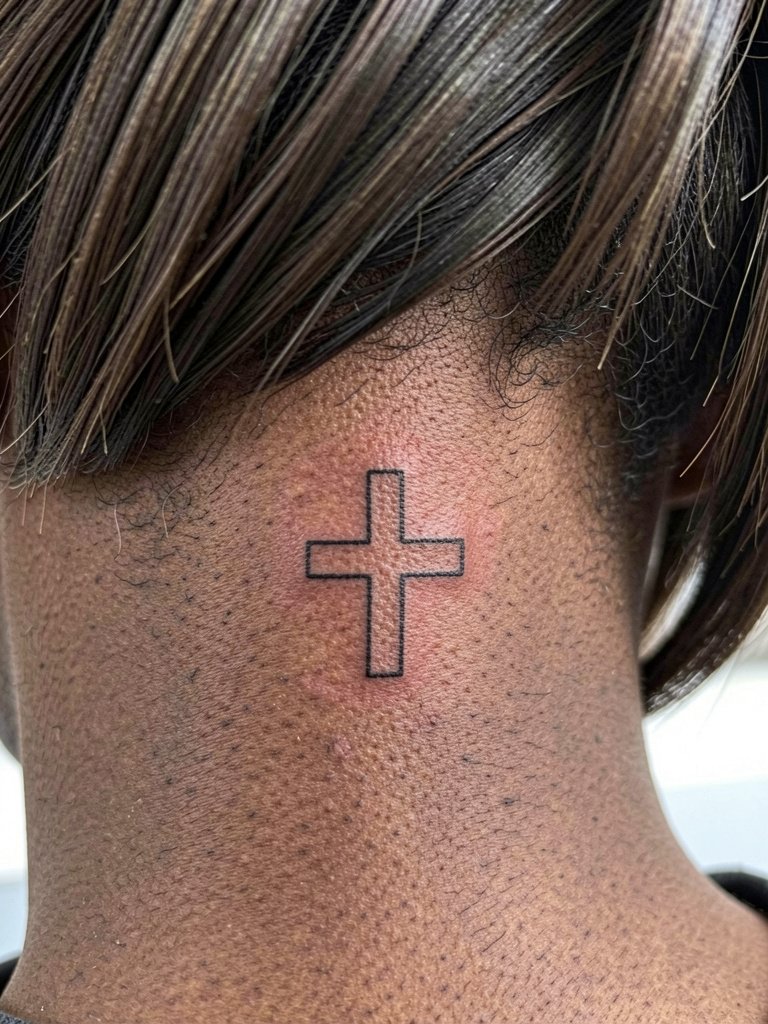
A thin outlined cross avoids saturation problems that filled shapes encounter on thin neck skin. Ask the artist to map out exact arm lengths in millimeters so symmetry remains visible at six months. The mistake I see most often is requesting a filled cross at 0.5 inch, which reads heavy and blurs. Session time is very short and discomfort is brief. Touch-up may be requested within the first two years to crisp the outline. Styling tip. Let it peek from a low bun hair clip to create a subtle frame against neutral clothing.
10. Tiny Butterfly Side Profile
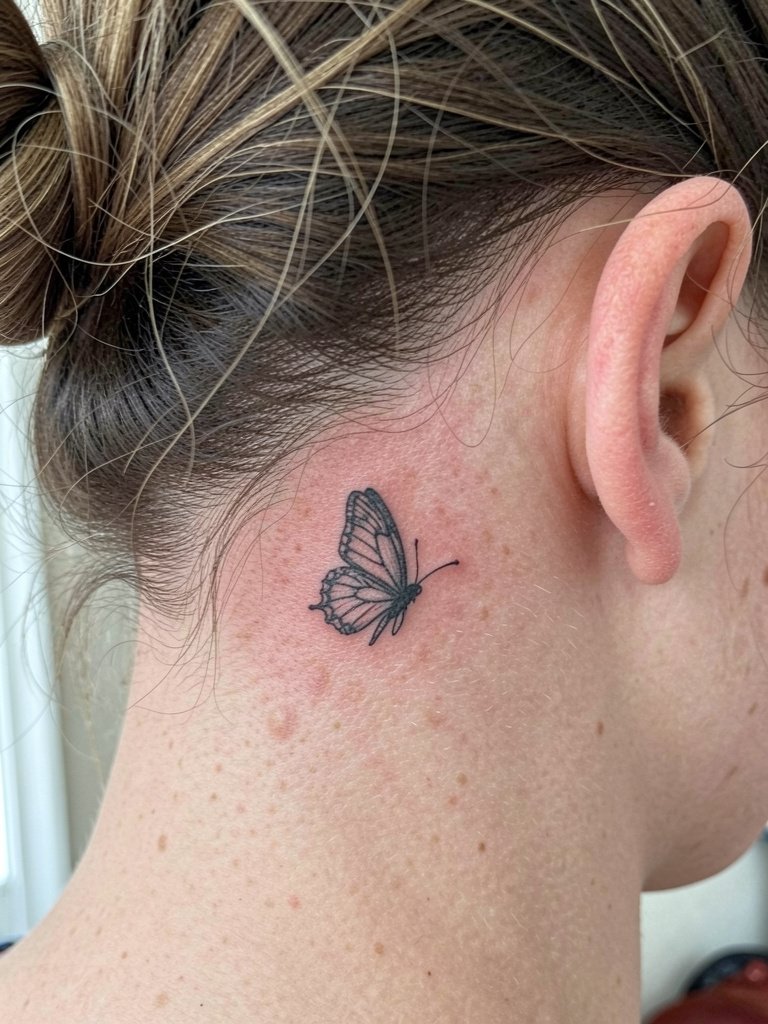
A side-profile butterfly reads more delicate than a frontal view because it uses less surface area. Ask the artist to avoid heavy wing detail at this scale and to show a healed-size mockup. The common error is asking for ornate wing veins that merge as the skin moves. Session length is short but you will feel the needle near the bone. Expect a touch-up discussion ahead of time for fine wing lines. Styling tip. Pair this with a delicate scarf or thin chain that does not sit directly on the mastoid area so you avoid rubbing.
11. Small Arrow Single Line
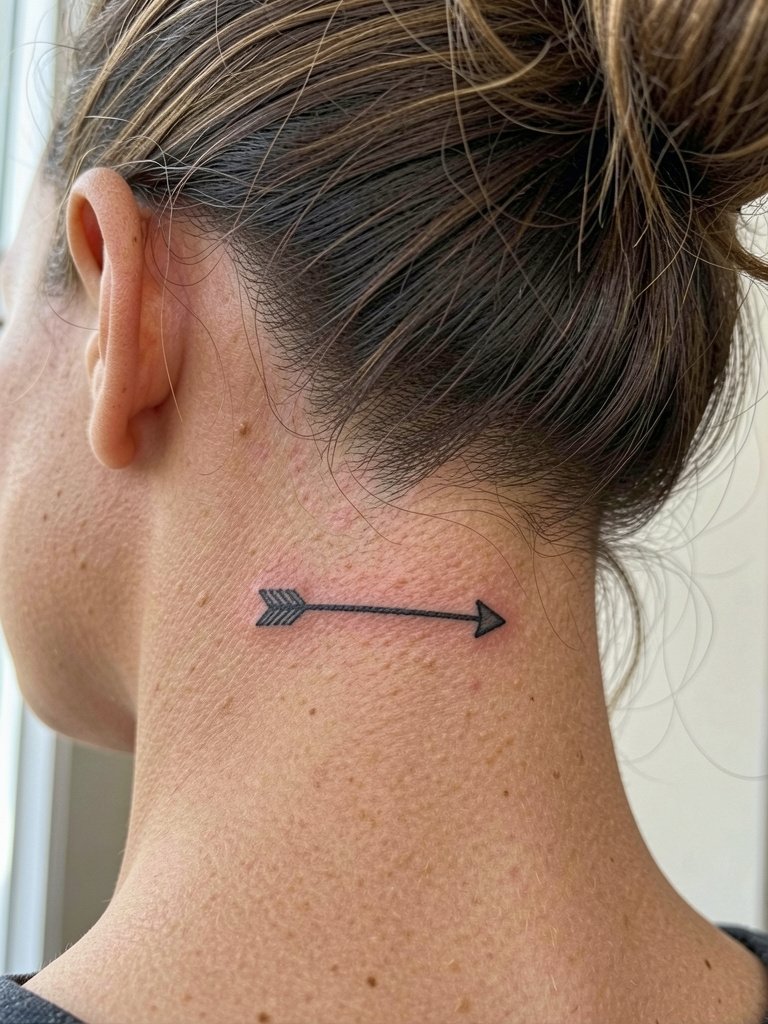
The single-line arrow is a quietly directional motif that holds up because of its simple geometry. Request a slightly broader shaft than your reference to avoid the line vanishing as the skin shifts. Many people choose an arrow for symbolism without specifying scale, which leads to lines too fine to last. The procedure is quick and the pain is manageable. Ask specifically for the arrow length in millimeters so expectations match healed results. Styling tip. This pairs well with a messy bun hair clip when you want the mark visible.
12. Micro-Compass Outline
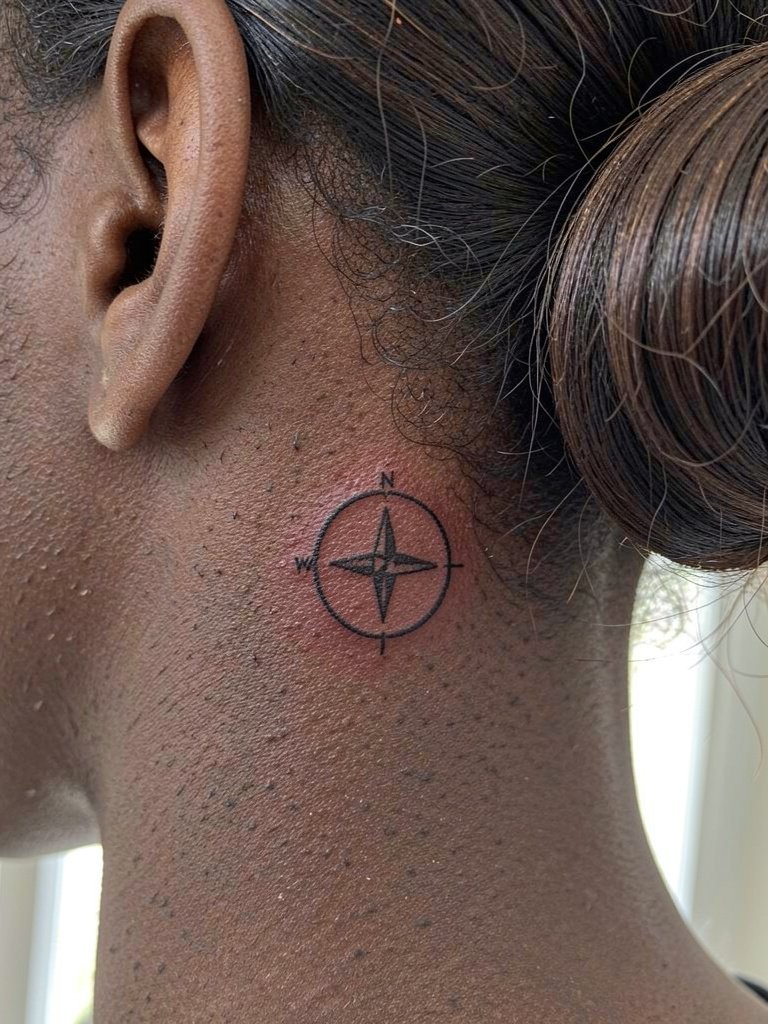
Outline-only compasses avoid interior clutter that tends to muddy with skin movement. When you consult, ask the artist how much negative space they will keep inside the circle so the points do not fuse. The common mistake is insisting on inner ornamentation at micro scale. Expect a calm short session and a likely touch-up at the one-year mark. Styling tip. Show it with a half-up hair claw that reveals one side when you want a subtle accent.
13. Single-Needle Tiny Word
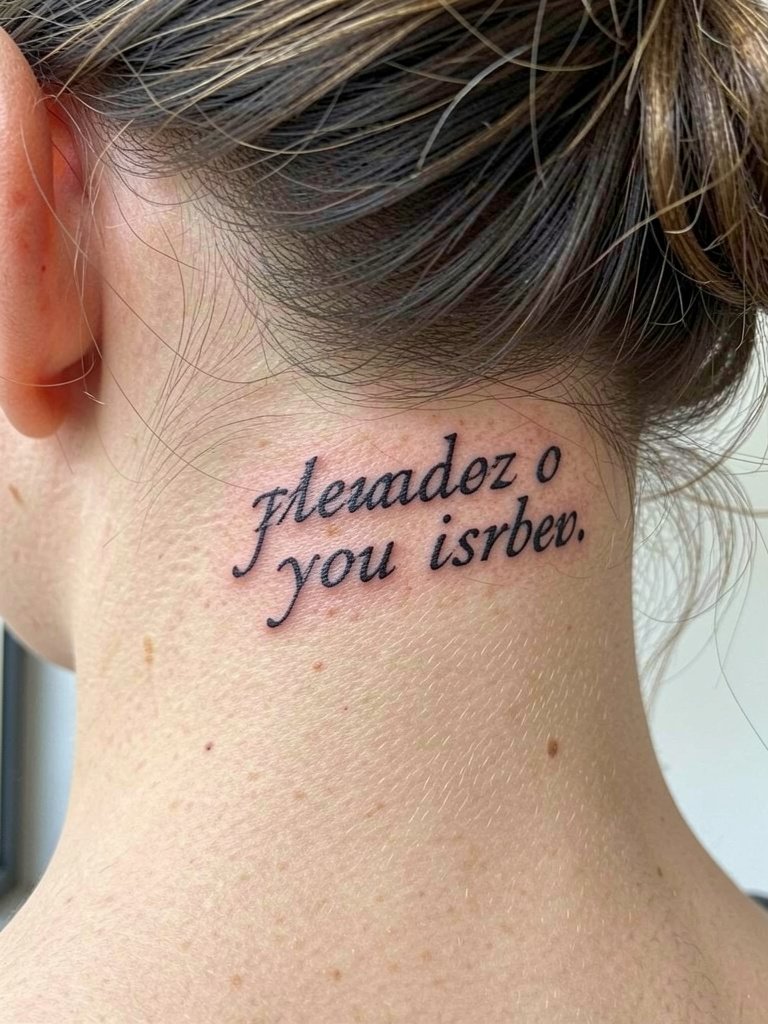
Short words in single-needle script can be powerful but they need spacing and moderate line weight to survive. Bring two font options scaled to 0.5 inch and 0.75 inch so the artist can show which reads better at one year. A frequent mistake is choosing a delicate calligraphy reference that has hairlines too thin for mastoid anatomy. Session time is brief and pain is short. Touch-up is common. Styling tip. Pair with a sleeveless neutral top to let the word peek through a bun.
14. Tiny Geometric Dot Triangle
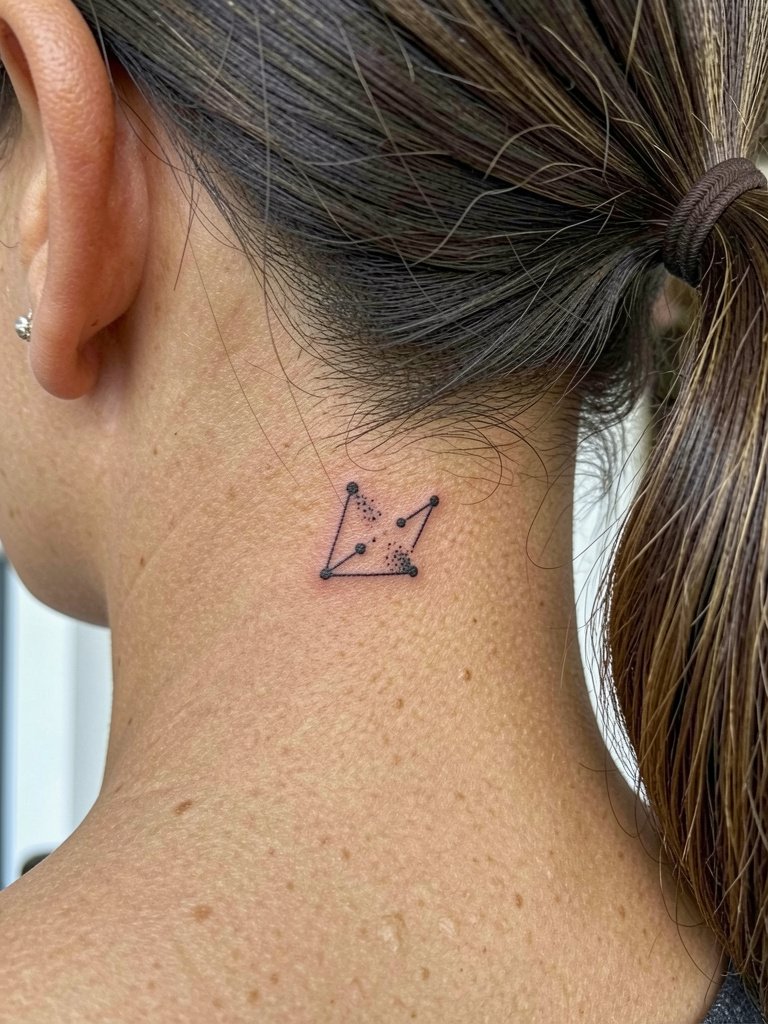
Geometric micro shapes stay readable when you allow negative space between the nodes. Ask the artist to preview the dot spacing in millimeters so the corners do not merge into a rounded blob. The mistake I see is pushing too many internal lines into a sub-inch design. Session is quick and pain is minimal. Plan for a possible touch-up within one to two years. Styling tip. This pairs with a delicate gold chain necklace that sits above the mastoid so it complements the geometry without rubbing the tattoo.
15. Minimalist Musical Note
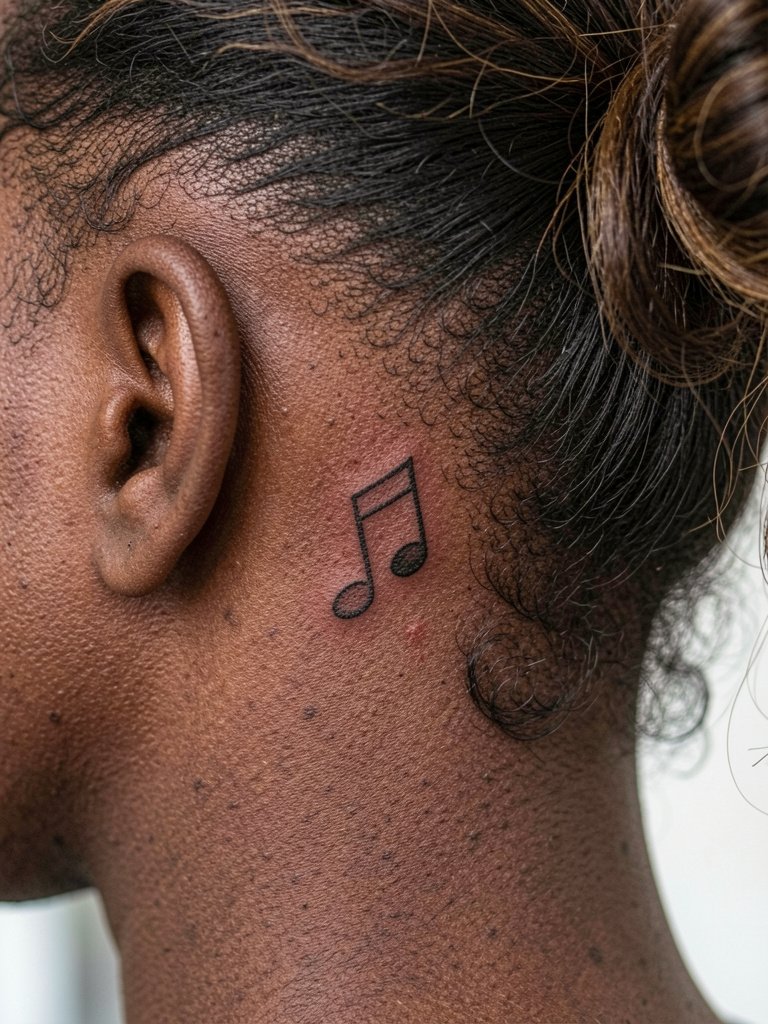
A small musical note is a compact option that reads clearly when the head is filled and the stem is short. During consultation, ask the artist to show the exact head diameter in millimeters to prevent the head from turning into a blot. People who ask for a needle-thin stem without a filled head often lose the form quickly. Expect a quick session with a short sting. Touch-up timing is usually one to two years for micro black shapes. Styling tip. This plays nicely with a low bun hair clip when you want to let the note peek out.
Frequently Asked Questions
Q: How long will a fine-line behind-the-ear tattoo actually stay crisp?
A: Expect micro fine-line work to soften faster on mastoid skin than on your forearm because the neck stretches and moves constantly. One camp says fine line blurs into a smudge within one to two years due to thin, mobile skin and exposure to hair products. The other camp argues that with correct needle depth and slightly wider spacing, fine line can remain crisp for three years or more and they will point to healed examples to back that up. Plan for a likely touch-up at year one or two, and bring healed photos of same-size pieces to your consult.
Q: Is dotwork better than fine line for longevity behind the ear?
A: Dotwork tends to age more predictably on the mastoid area because individual dots leave little continuous channel for ink to spread. Artists who favor dotwork say the stipple method reduces blur. Artists who favor fine line say proper depth and spacing keeps the script and lines readable, and they will show healed single-needle pieces as evidence. If longevity is your priority, favor dotwork or ask the artist to thicken lines slightly compared with your reference.
Q: Should I use Saniderm or dry healing for a behind-the-ear tattoo?
A: Some people avoid wet healing products near the mastoid because trapped shampoo and hair product under the film can cause soggy scabs. That is one camp. Another camp says second-skin products reduce scabbing and are safe if you modify shower technique and keep the area free of hair product. If you use a film, tilt your head back in the shower and rinse meticulously, and consider switching to a quick-dry aftercare spray after the first 48 hours.
Q: Where can I find artists and healed portfolios for behind ear tattoos without naming individuals?
A: Search hashtags like #behindeartattoo, #finelinetattoo, and #microtattoo on Instagram and TikTok then filter by your city to find local portfolios. Use Tattoodo or the Inked App and search keywords such as "behind ear fine line" to surface portfolios with healed shots. Reddit threads in r/tattoos and r/finelinetattoos also surface peer-shared healed examples across skin tones.
Q: What should I wear to my appointment for a behind-the-ear piece?
A: Wear a button-down or a top with an open neckline so the artist can access the mastoid area without you tugging at clothing. For comfort and minimal friction in the first week, consider a loose short-sleeve top that does not press at the nape while you sleep.
Q: How do shop minimums work for micro tattoos?
A: Shop minimums vary and can feel steep for micro work because the setup time is the same regardless of design size. One group of clients argues for a lower micro-tier for tiny designs. Studios generally maintain their minimums for sustainability. If price is a concern, ask about booking multiple small pieces in one session or check for apprentice walk-in options from reputable shops.
Q: Are there red flags to avoid when choosing an artist for behind-the-ear micro work?
A: Avoid artists who cannot show healed photos of work at the same scale, who use only fresh photos, or who refuse to discuss line weight and touch-up timelines. Seek artists who document healed results and who will give a clear plan for spacing and possible touch-ups.