
Saint Patrick’s Day requests start as party impulses a lot more often than people admit. A small shift in symbol or line weight makes the difference between a design that reads as costume and one that reads as heritage. Pick a piece that survives a decade of sleeves, sleeves, and life by thinking about spacing, pigment choice, and where the body moves.
1. Three-Leaf Shamrock on Inner Forearm
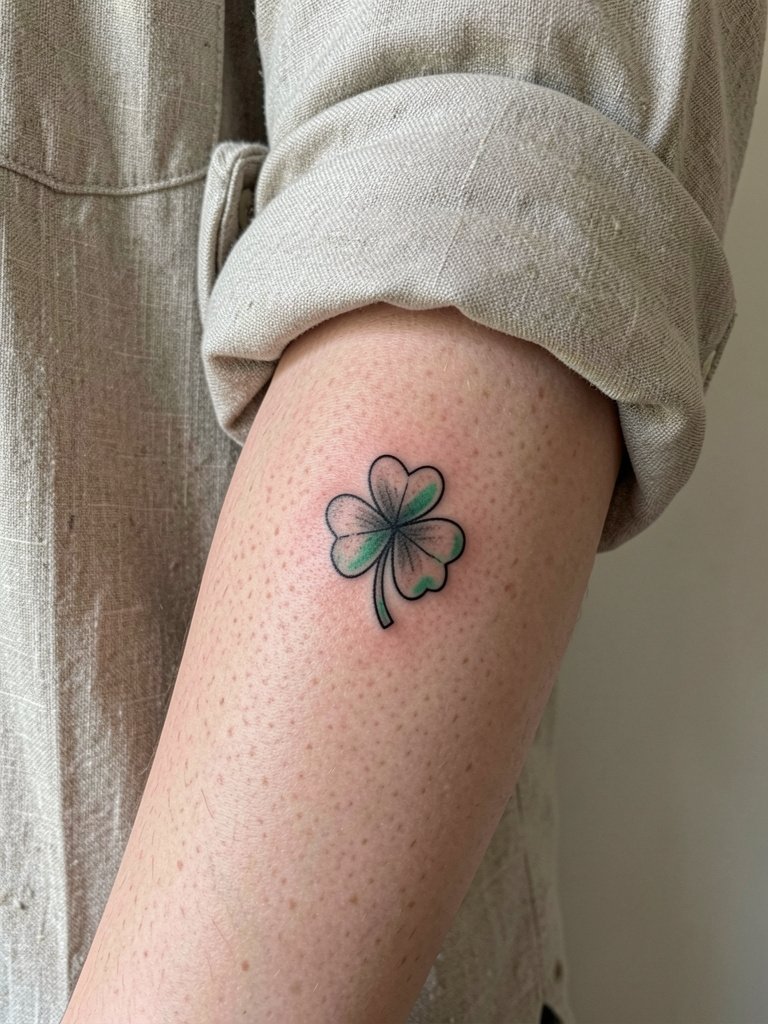
The three-leaf shamrock is the original Trinity teaching symbol, and it reads like a quiet statement when done small on the inner forearm. Choose single-needle linework with a tiny emerald wash inside one leaf for a modern feel. Forearm placements age predictably. At six months the single-needle shows crisp linework, at two years thin lines will soften a bit, and at five years the outline may benefit from a light touch-up if you want the leaf to keep pop. A common mistake is asking for neon green. Use emerald or forest green instead so color saturation holds. For showing it off, roll the cuff of a linen button-down shirt so the tattoo is visible without shouting.
2. Celtic Trinity Knot on Inner Upper Arm
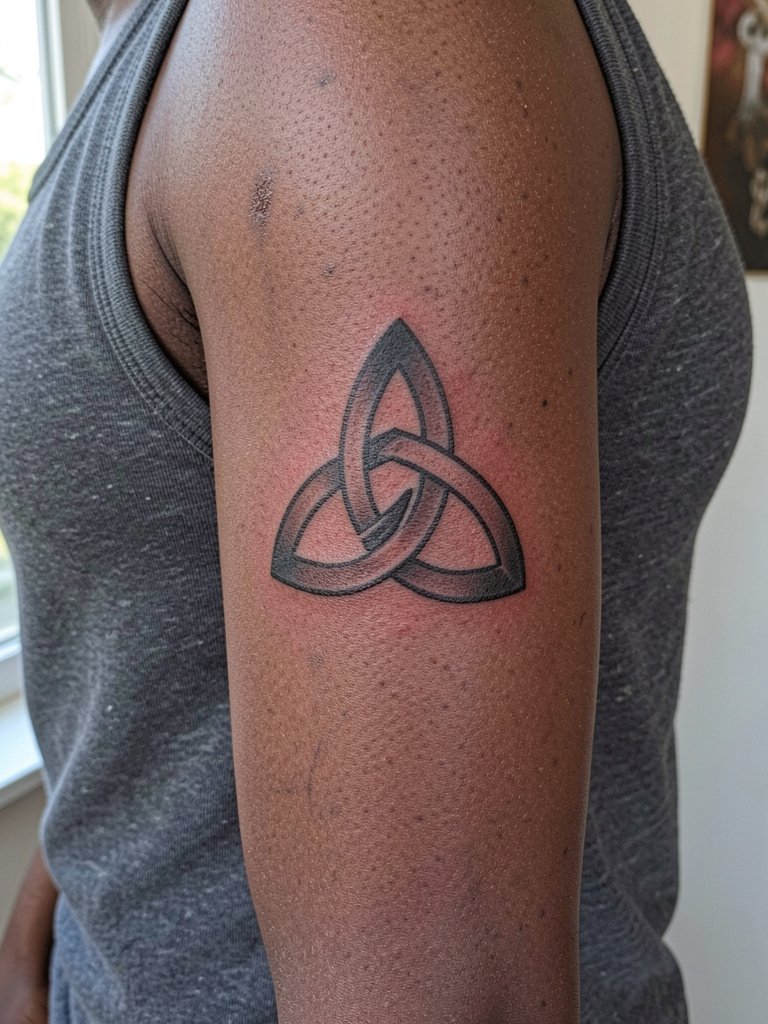
The Trinity knot works best in blackwork for clarity and longevity. One camp argues that green accents risk fading and muddiness over time. Another camp says a careful emerald accent preserves cultural context and is worth the extra touch-ups. Make the knot slightly wider than the smallest reference you like so the loops do not merge as the skin ages. Expect session time around 45 to 90 minutes depending on size. In consultation, specify continuous unbroken linework and bring healed photos showing similar spacing so the artist can match spacing that holds at two and five years.
3. Claddagh Mini on Inner Finger
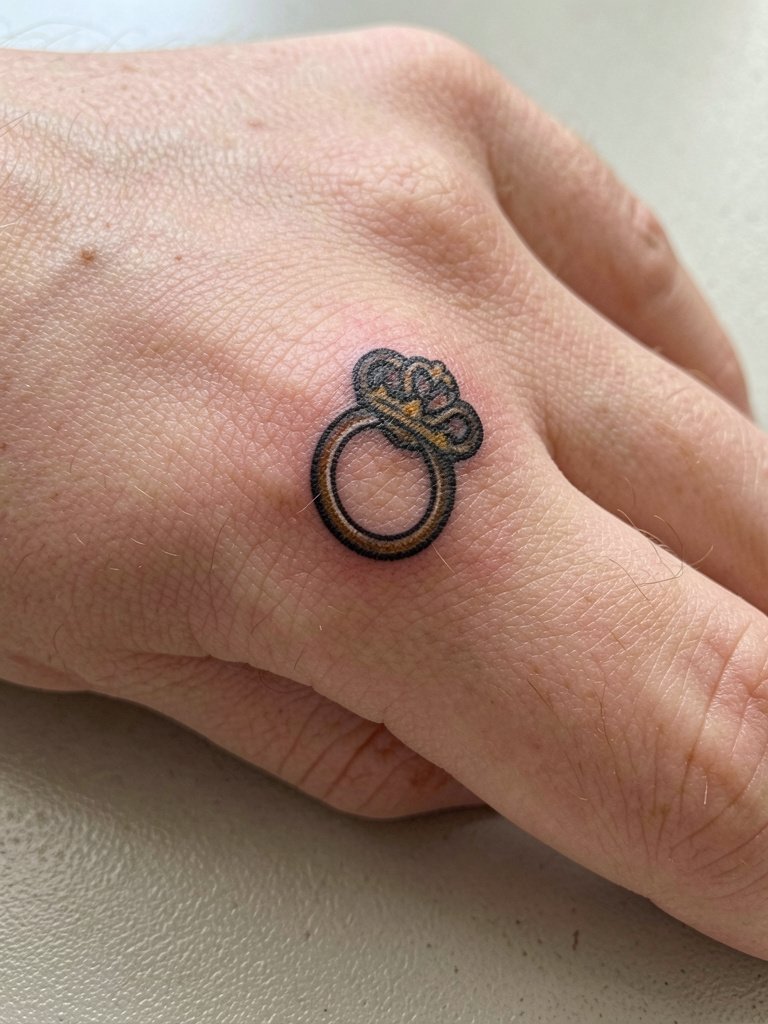
Finger work eats detail quickly, so scale matters. For a Claddagh on the finger, choose thicker linework and keep the crown and hands simplified. Finger tattoos tend to blur faster than forearm pieces because of constant washing and friction, so plan for touch-ups sooner. The session itself is shorter, usually under 30 minutes, but healing needs careful care. Wear a slightly loose glove on the other hand when commuting to avoid accidental rubs. A common mistake is requesting tiny filigree. Ask for bold simplified elements instead so the symbol still reads at year two.
4. Book of Kells Initials on Inner Forearm
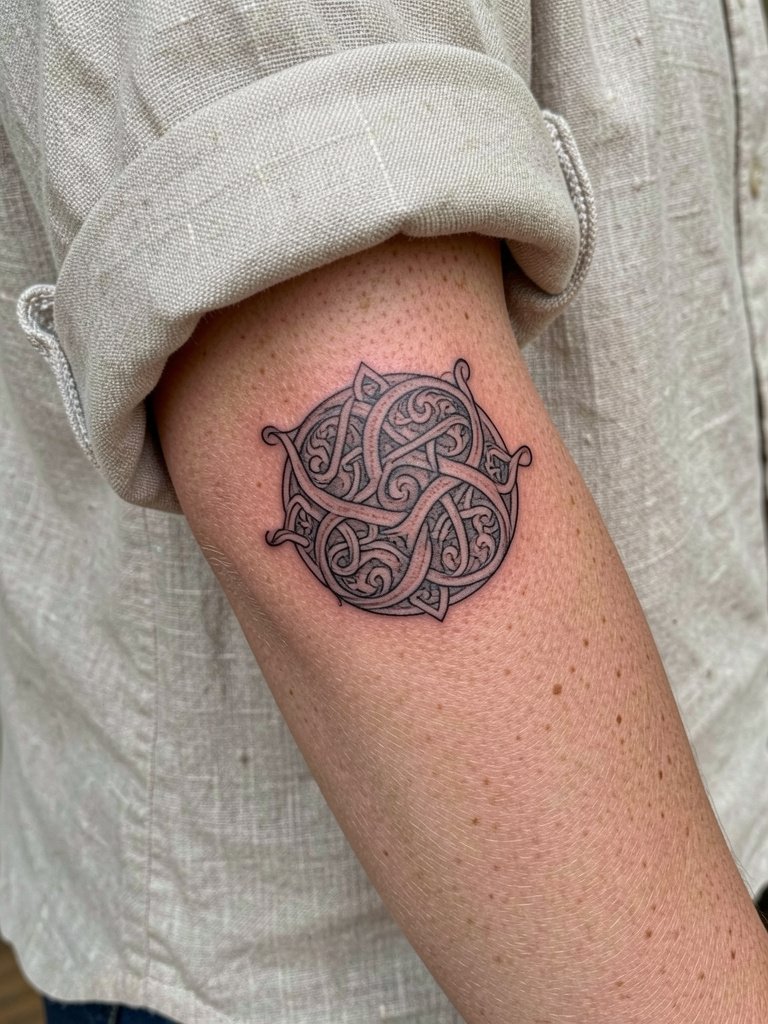
Turning a historic Insular script into a monogram gives the lettering an authentic look. The trick is spacing the interlace so letters do not collapse. A typical mistake is using a modern cursive reference, which makes the piece read wrong by year one. In the consult, bring both a scaled reference and the exact initials at the exact size you want so the artist can draft a layout that breathes. For sessions, expect 60 to 90 minutes depending on complexity. Pair this with rolled cuffs and a neutral linen top to frame the work when you want to show it.
5. Irish Harp on Lateral Hip Bone
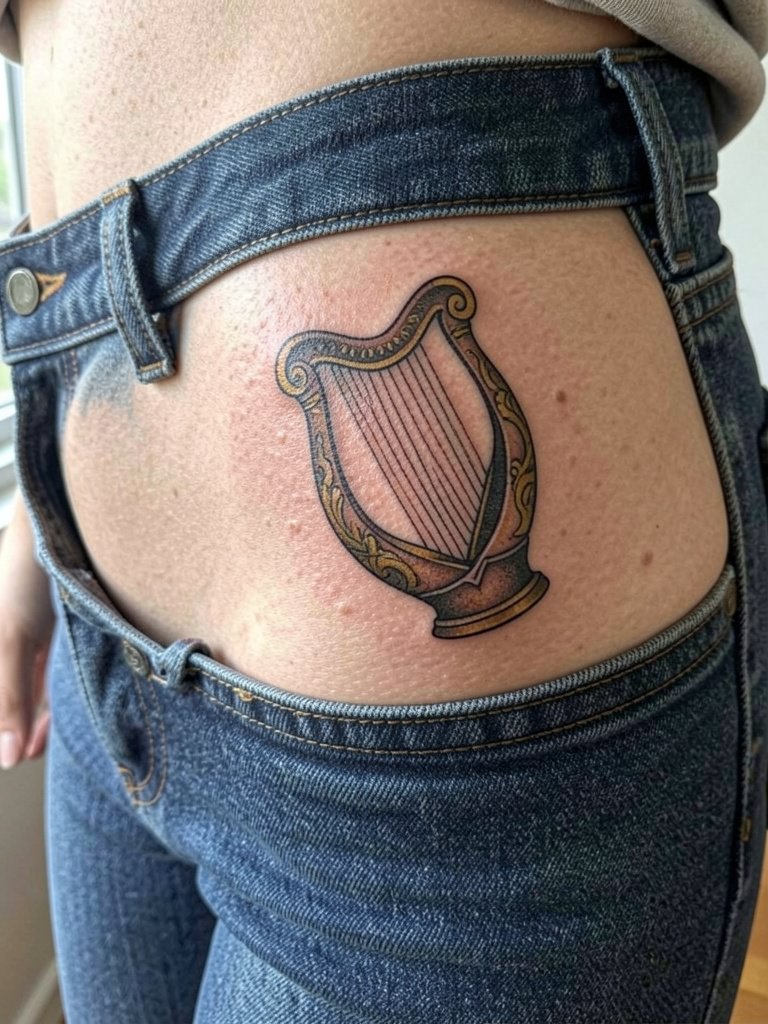
The national harp reads elegantly on the hip because the area is low friction and allows slightly more detail. Be aware that hip skin can stretch with weight changes, so place the focal harp lines over the firmest part of the lateral hip. Session time runs around 90 minutes for a medium-sized harp. Wear low-rise pants so the artist can access the area without fabric pressure. A common error is packing too much tiny shading into the column of the harp. Keep the strings and frame clean so the emblem stays legible through touch-ups.
6. Celtic Knotwork Band Around Wrist
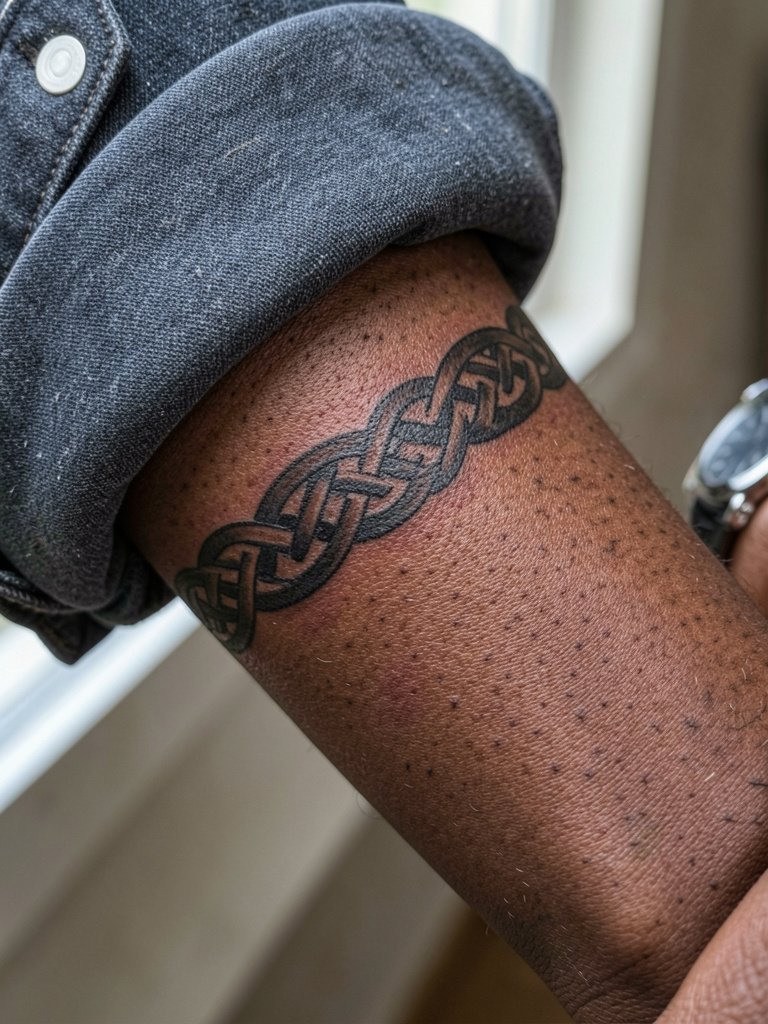
Knot bands need even spacing. Too tight a repeat will merge after a year. Ask the artist to lay out a one- to two-inch test section on skin so you can see scale before committing to the full band. Wrist skin faces constant movement and friction, so expect touch-ups earlier than on the forearm. For showing off the band, a rolled cuff or a simple bracelet frames the knotwork well. Session time for a wrist band is usually 60 minutes.
Pre-Session Essentials
The forearm, wrist, and finger pieces above have different healing needs, so these picks help the first week go smoother.
- Euc Betro Tattoo Balm. A low-irritant balm that keeps color stable during the first week, useful if you want emerald tones to hold on sensitive skin.
- Green Tea Healing Gel. Lightweight gel with antioxidant properties that artists mention for preserving green vibrancy without heavy occlusion.
- Lough Herbal Soap. Gentle wash options like this keep the healing area clean without stripping pigment on the first several showers.
- Astroskin Second Skin. A breathable protective film for the immediate post-session window that prevents accidental contamination on waist and hip placements.
- Hustle Butter Deluxe. A popular balm for the later stage of healing that helps maintain saturation in colored accents.
7. Shamrock + Celtic Knot Hybrid on Inner Thigh
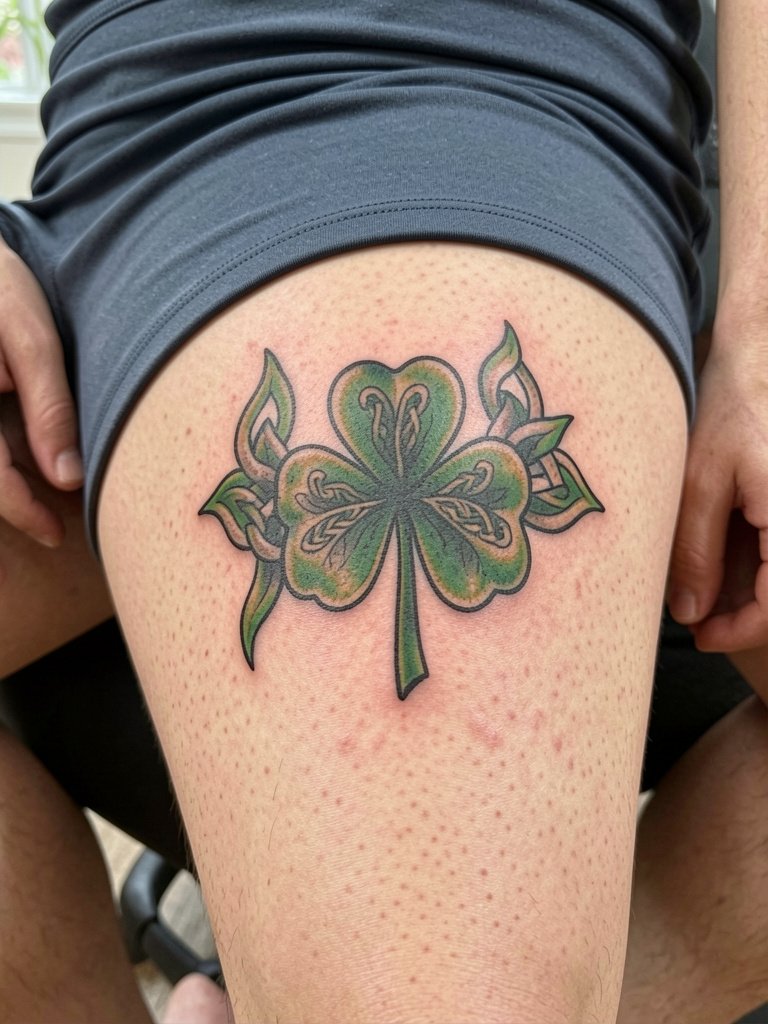
The inner thigh gives room for a denser combination piece that mixes the three-leaf form and knotwork. Because the area is intimate, find someone experienced with thigh anatomy. Healing here is slower because clothing often rubs the site, so wear loose shorts for the first two weeks. The session can be 90 minutes or more. A common mistake is placing the shamrock too close to the groin line. Center it on mid-thigh so motion and fabric do not distort the edges as you heal.
8. Minimalist Single-Leaf Shamrock at Nape
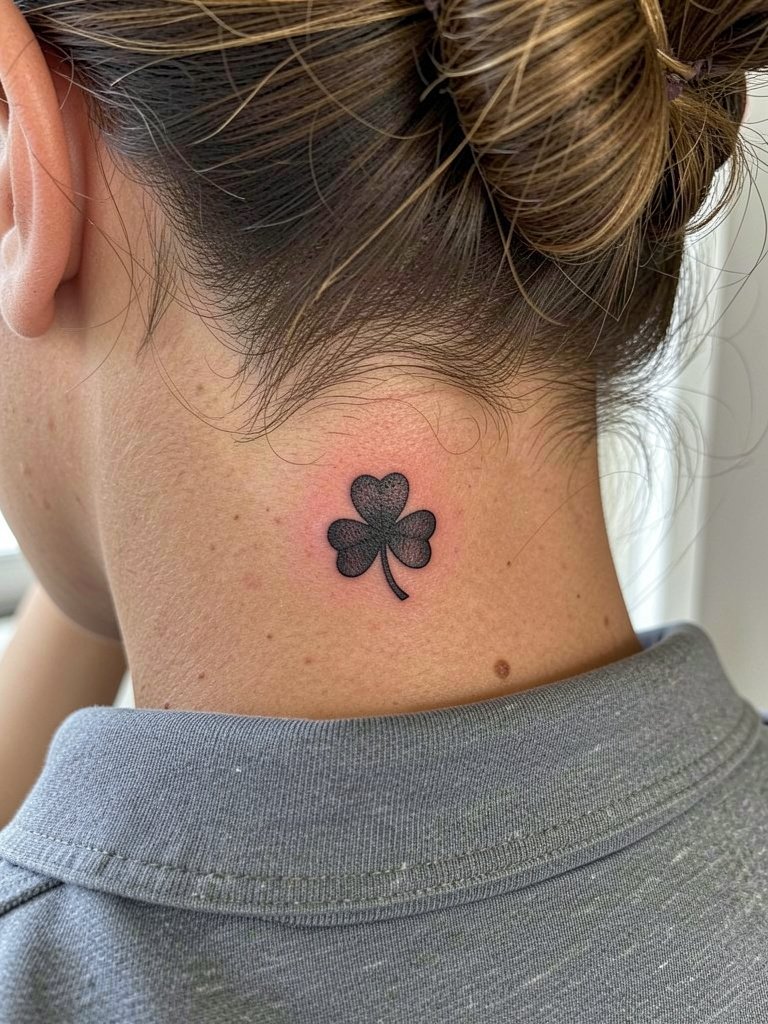
The nape is discreet and ages well because it sees less sunlight. Pain is moderate. For session comfort, wear hair up and a button-down you can open. The minimalist single-leaf works as a subtle nod without reading like seasonal flash. A typical mistake is requesting hairline-thin loops that disappear under hair and time. Keep the outline confident enough to read at six months.
9. Triskele Spiral on Shoulder Blade
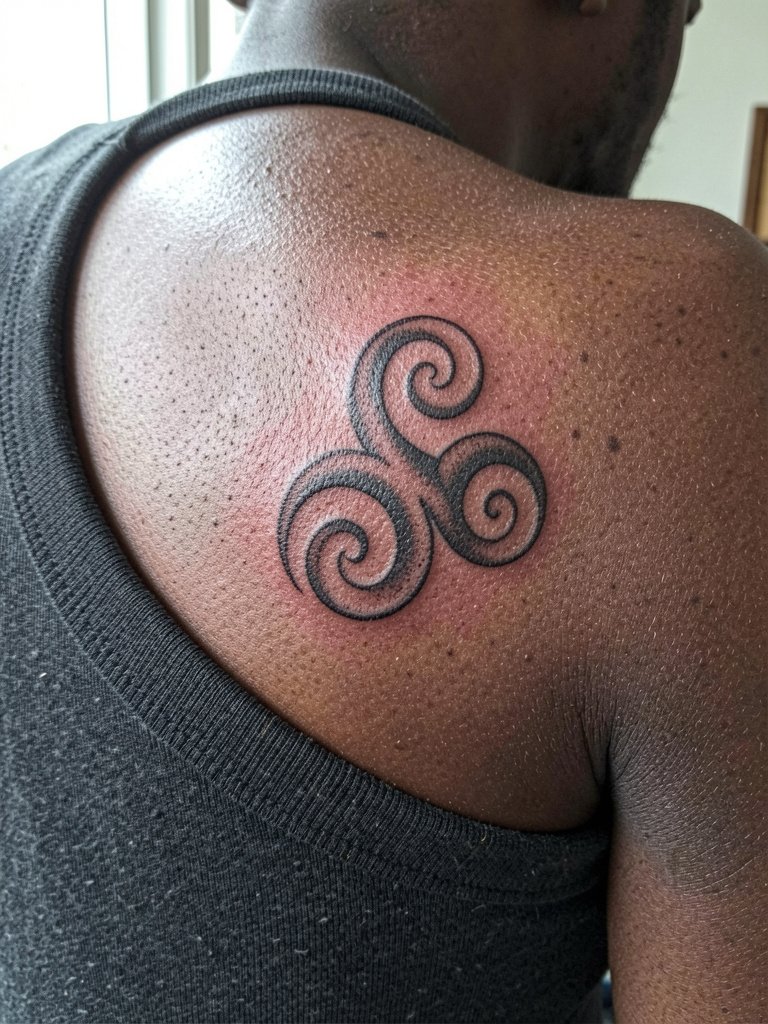
The triskele is ancient and reads beautifully as a shoulder blade piece. Skin there is stable and holds blackwork strongly. If you want subtle green accents, place them in the negative space rather than as full fills. Shoulder blade sessions are usually under 90 minutes and react well to bold linework. A common mistake is overcomplicating the interior loops, which makes the spiral lose its motion as lines settle.
10. Family or County Heraldry on Upper Chest
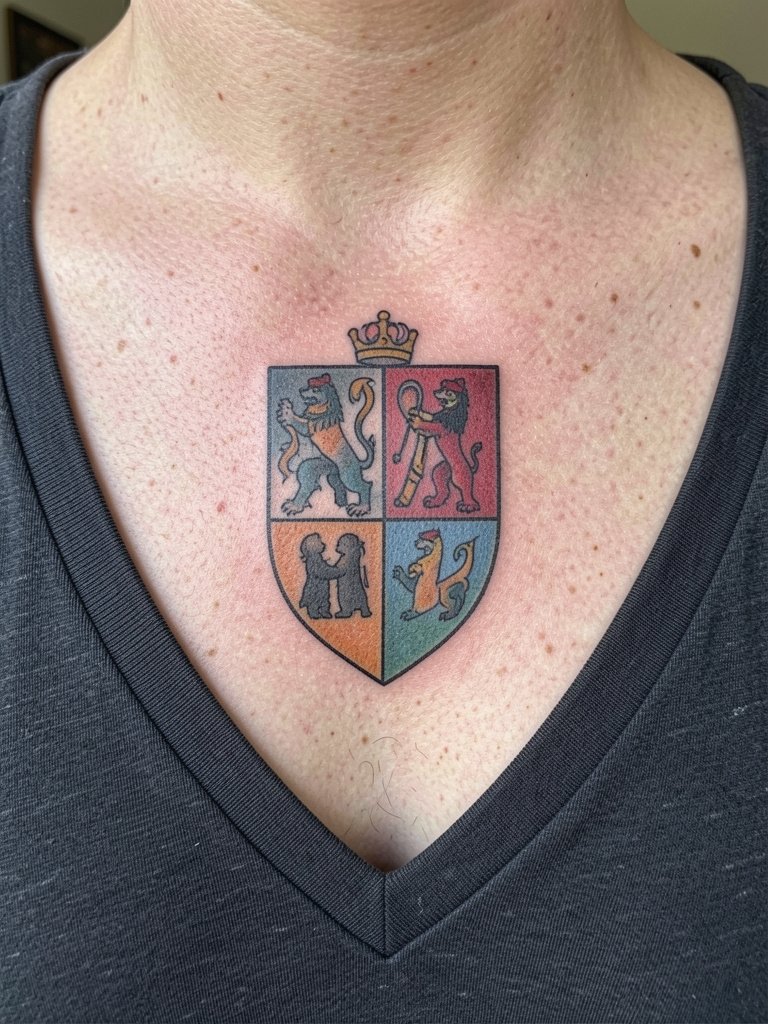
Documented heraldry is the highest level of specificity for ancestral designs. If you have county records, bring copies so the artist can reproduce the correct colors and motifs. Pieces on the upper chest settle well with proper spacing. Because this is visible with V-necks, think about neckline pairing when you plan placement. Sessions can take multiple hours based on color and shading, and touch-ups are common for heraldic color blocks.
11. Celtic Cross with Carved Stone Texture on Sternum
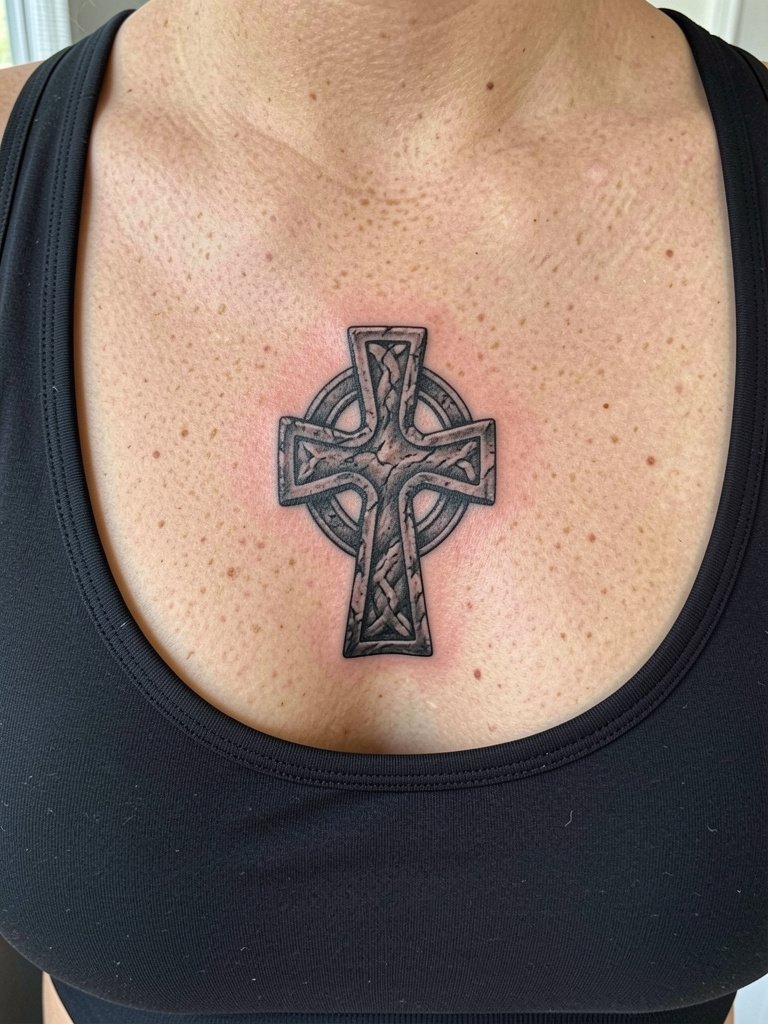
Sternum placements require careful depth planning because the central chest moves with breathing. One camp emphasizes classic blackwork for durability. The other camp suggests tasteful color highlights to connect to national identity. Sessions here can be uncomfortable for some. If you choose this area, schedule a consult about spacing across the sternum so the carved texture reads after healing. Professionals will map the piece in a sitting to account for chest expansion.
12. Book of Kells Pattern as Sleeve Filler
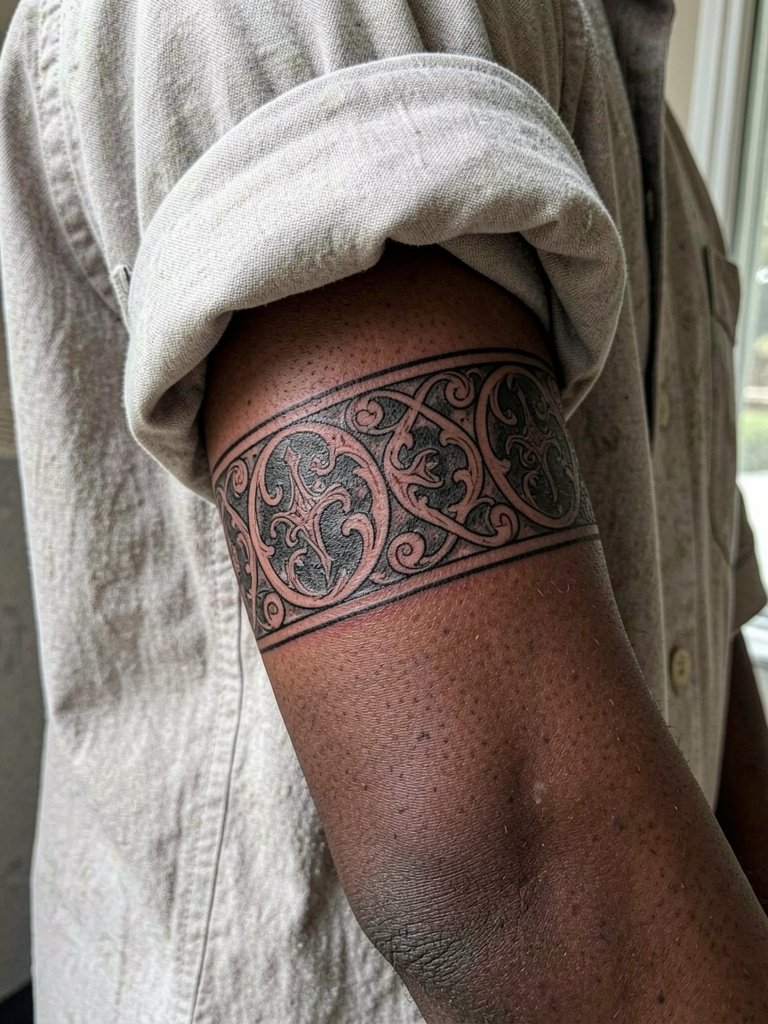
Using Kells patterns as geometric fill avoids the script translation pitfalls and makes a great sleeve filler. The pattern needs breathing room. A common error is compressing the interlace too tightly which later results in blurring. For sessions, break the work into multiple one- to two-hour blocks so the artist can preserve clean spacing between repeats. Pairing note: rolled sleeves in neutral linens complement the blackwork and keep focus on the interlace.
13. Trinity Knot with Emerald Accent on Inner Upper Arm
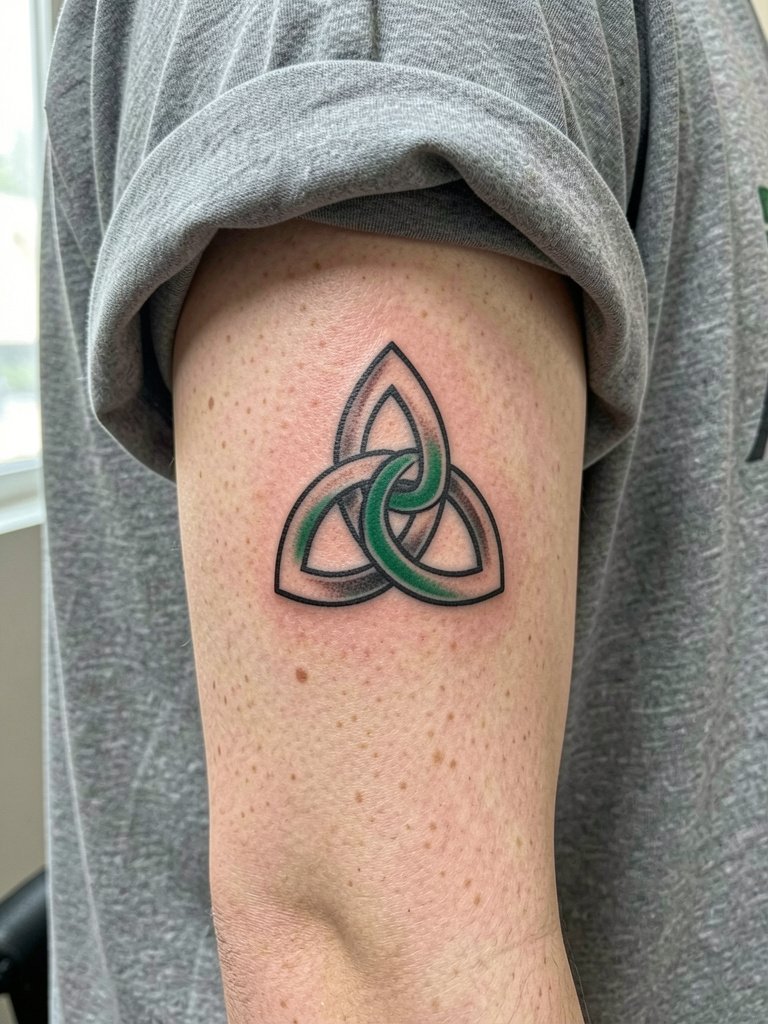
Green accents create cultural resonance but spark debate. One position says green fades and muddies faster than black, making black-only knots better for longevity. The opposing position says modern emerald pigments and small accents maintain identity without compromising longevity, and that the visual benefit outweighs future touch-ups. If you choose green, request a single accent rather than full fills. For the session, bring a tank top or loose tee so the artist has easy access to the inner arm.
14. Tiny Shamrock Behind the Ear
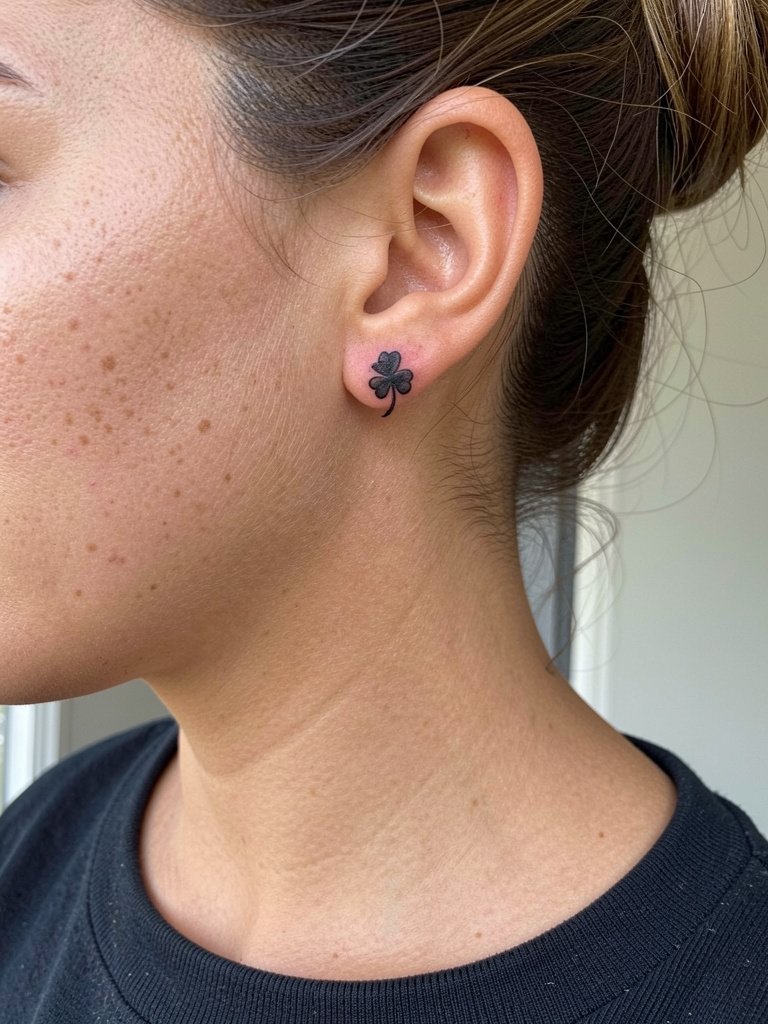
Behind-the-ear pieces are discreet and age well in terms of visibility. Take care with exact placement; that tiny area gives no room for spacing errors. The session is quick, often under 20 minutes, but the skin is thin and can be sensitive. A typical mistake is forcing too much detail into the size. Keep the shamrock a simple silhouette for the cleanest long-term read.
15. Temporary Sticker Shamrock for Party Testing
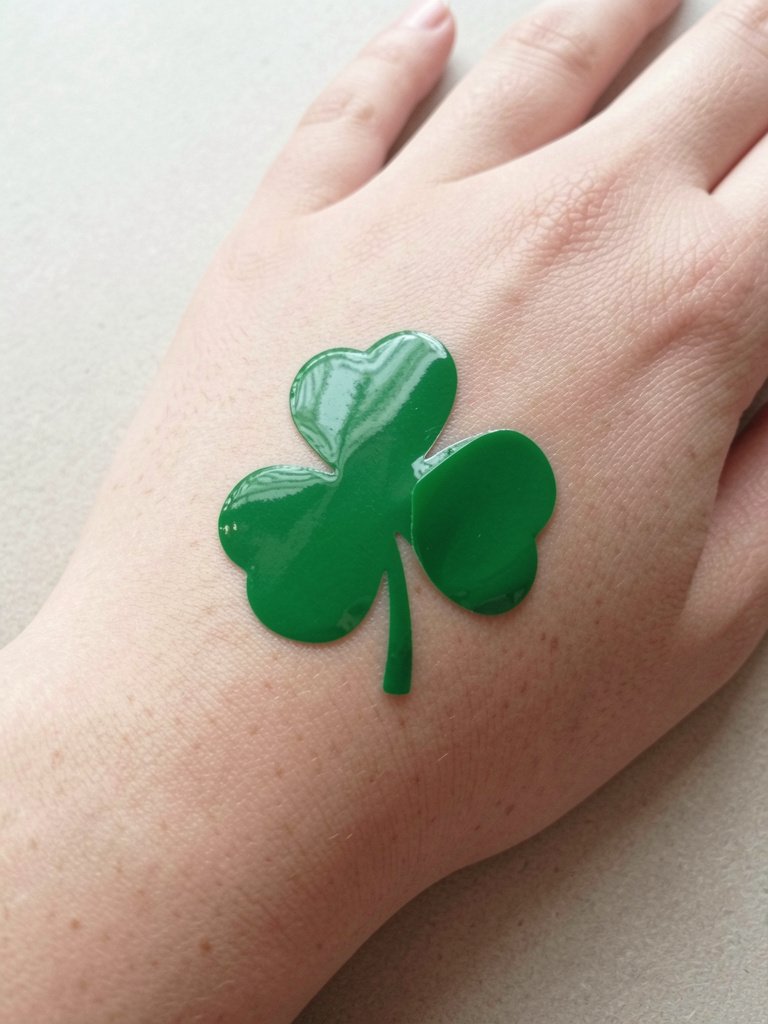
Temporary motifs are valid as test drives. Some argue holiday stickers should remain temporary and never become permanent. Others say a holiday-inspired permanent piece that carries personal meaning is acceptable. Use temporary stickers to preview placement and wardrobe pairings before committing. If you like the look on your wrist or hand in real life for a full week, you will be better informed about size and placement for a permanent version.
16. Irish Harp with Stave Detail on Lower Rib
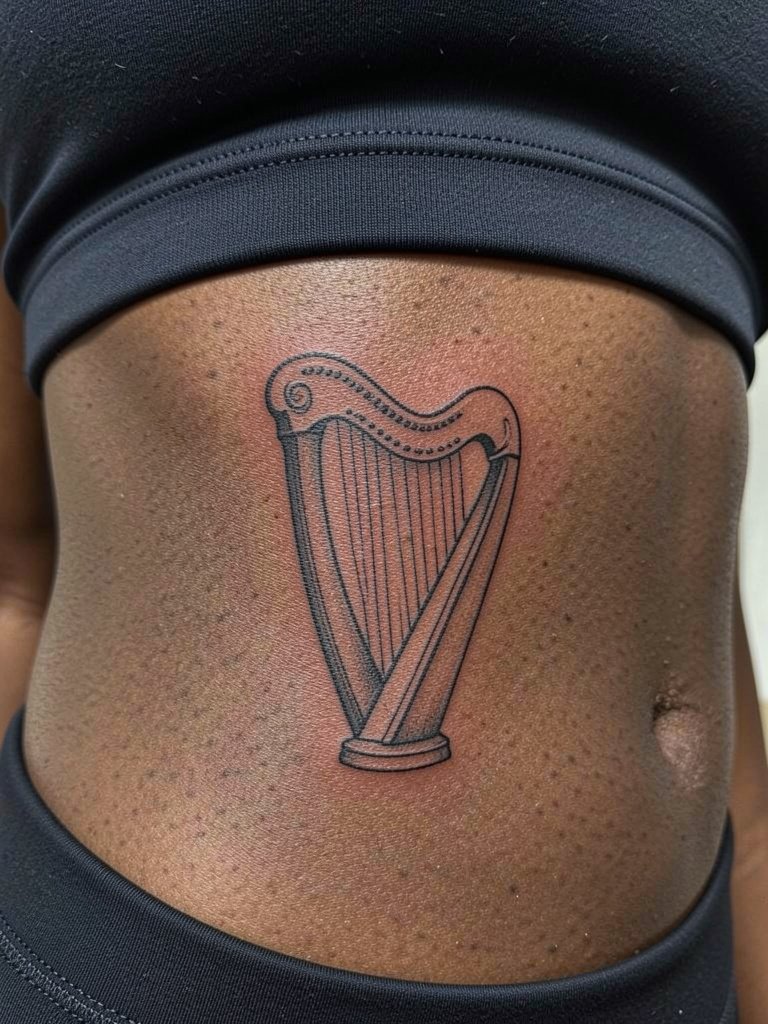
Rib placements are high on the movement scale. Lines need to be slightly bolder to accommodate breathing and skin stretch. Discuss spacing and how the piece sits when you inhale and exhale so the stave lines do not warp. Pain is higher and sessions can be split into two. For showing the harp, low-cut tops or open-back dresses that reveal part of the rib line work well. Expect a touch-up at year two for fine-line details.
17. Large Knotwork Panel for Outer Thigh
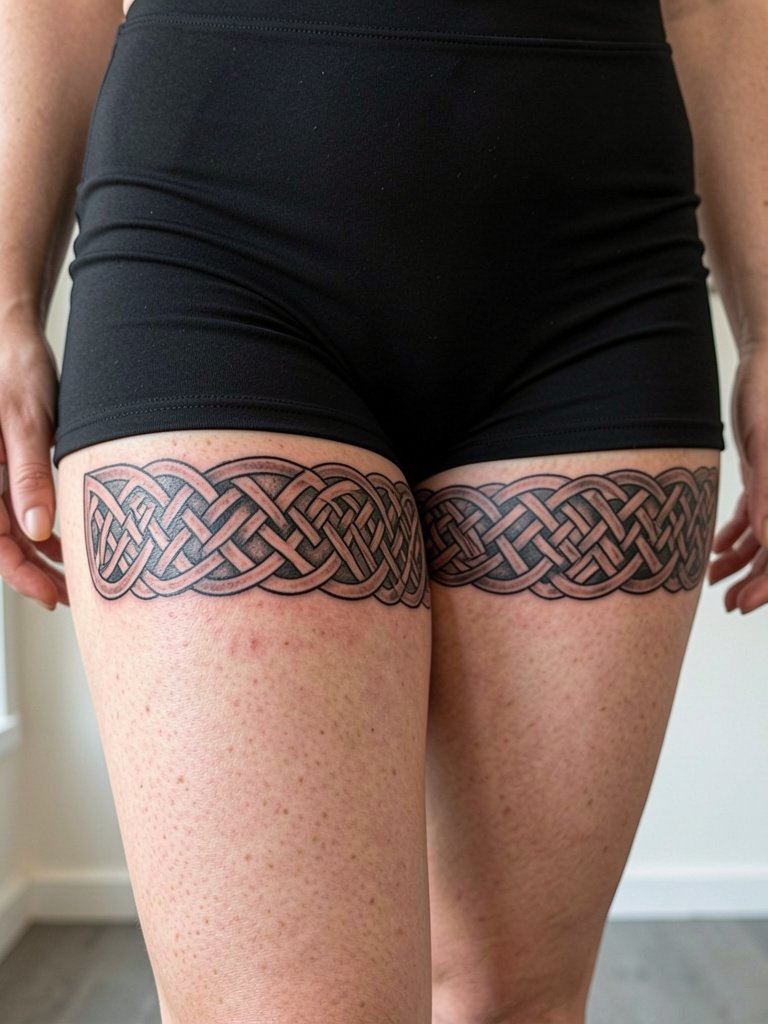
The outer thigh offers a large canvas and relatively low friction for large knot panels. Make sure the repeats are large enough to breathe. Session time is long, so plan for breaks and a loose skirt or shorts for the ride home. A common mistake is asking for needle-thin interlace across the whole panel. Slightly amplifying line weight preserves the geometry at two and five years.
18. Monogram in Insular Script on Collarbone
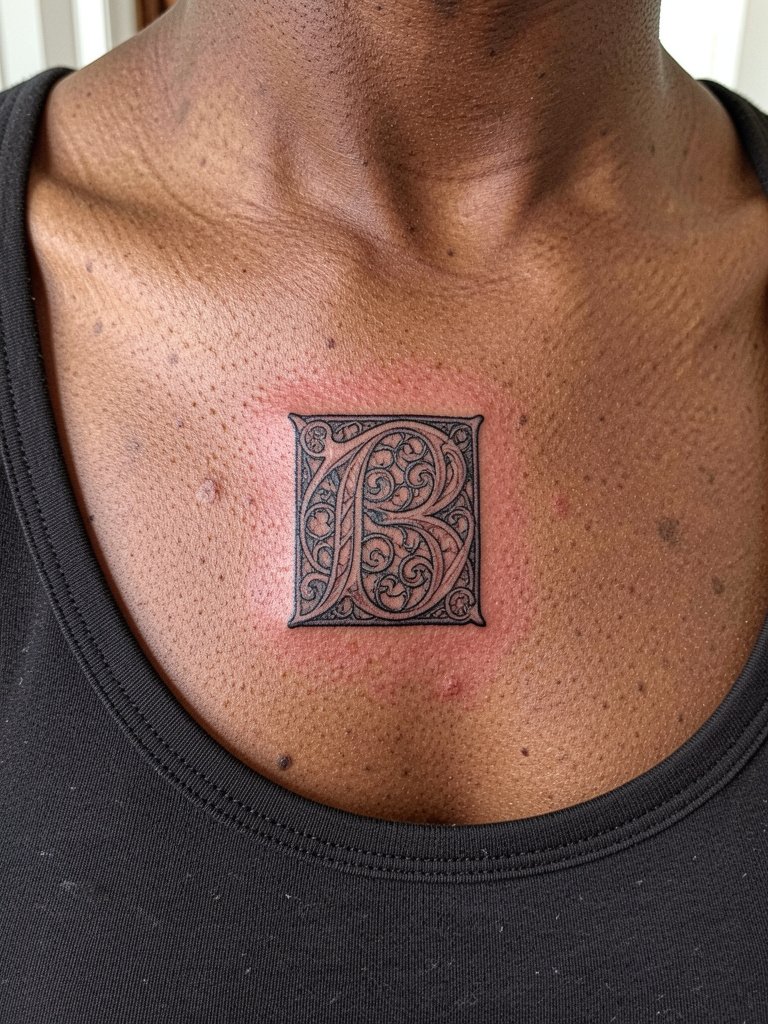
Collarbone placements are visible and flattering for script-like monograms. Keep letterforms large enough to keep interior details from merging. Sessions are moderate in length. For showing off the piece, scoop-neck or V-neck tops draw attention toward the clavicle. Avoid overly decorative flourishes that age into smudges.
19. Triskelion on Calf
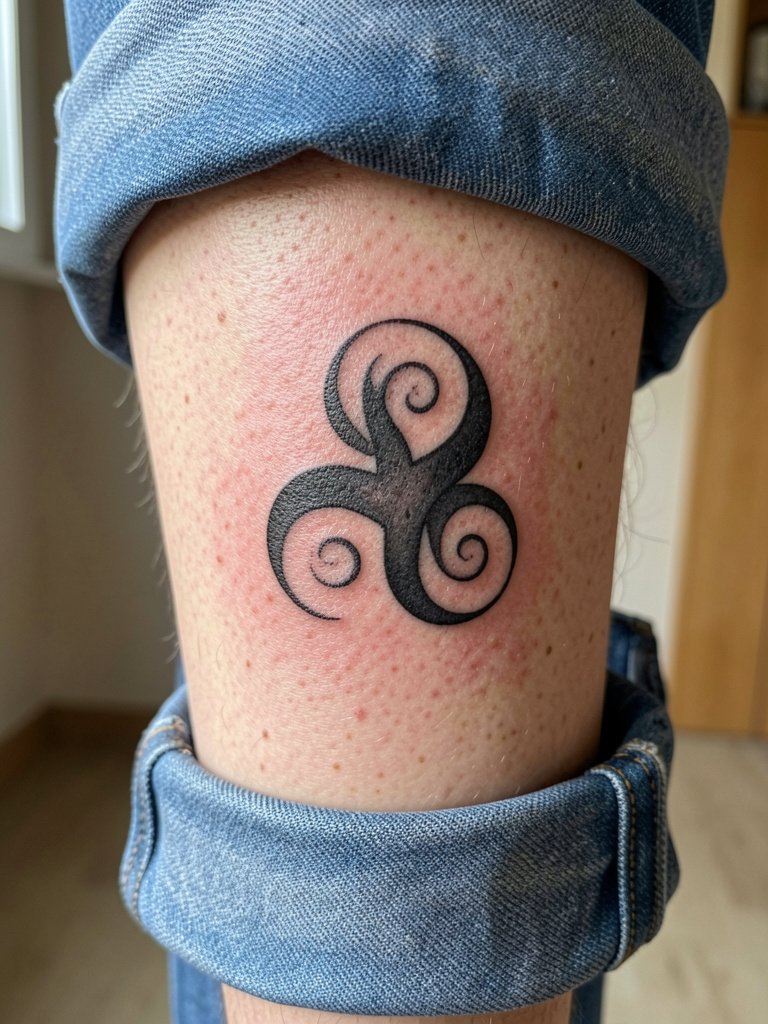
Calf skin tolerates bold shapes well and is a good choice for a triskelion that wants to read from a distance. Sessions are comfortable with the leg supported. The main mistake is choosing tiny proportions. Amplify the central circular motion so the three arms remain distinct as the ink settles. For wardrobe, rolled jeans or midi skirts reveal the calf without exposing too much.
20. Celtic Band Around Bicep
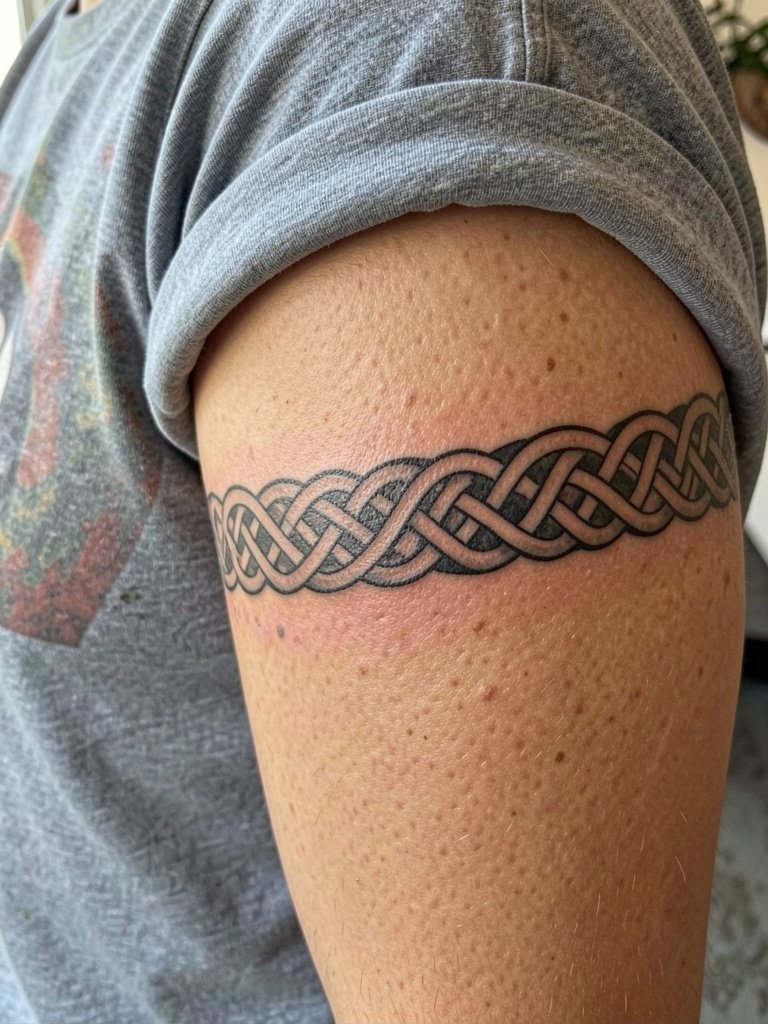
Upper arm bands sit well because the area changes little with daily life. Make the knot repeats slightly larger than you think you need. Tight repeats can merge as years pass. Sessions are usually one to two hours. For show-off looks, short sleeves or rolled sleeves work well and make the band peek out without full exposure.
21. Claddagh Ring on Inner Wrist
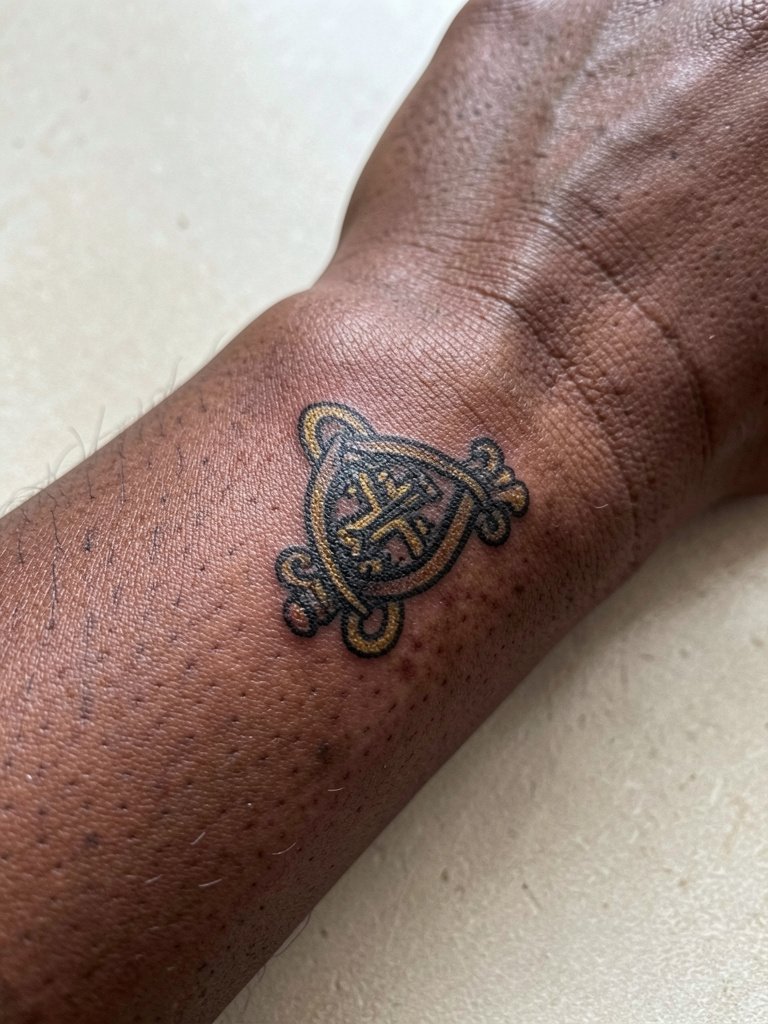
Inner wrist placements are visible daily and make sentimental symbols feel immediate. Keep the Claddagh simplified and slightly larger than a ring version so details do not blur. Expect touch-ups sooner than on the hip. For session wear, remove bracelets and wear a short-sleeve or rolled cuff so the artist has unhindered access. A common mistake is asking for micro-dots in the hands which disappear quickly.
22. Gaelic Phrase in Book Script on Inner Forearm
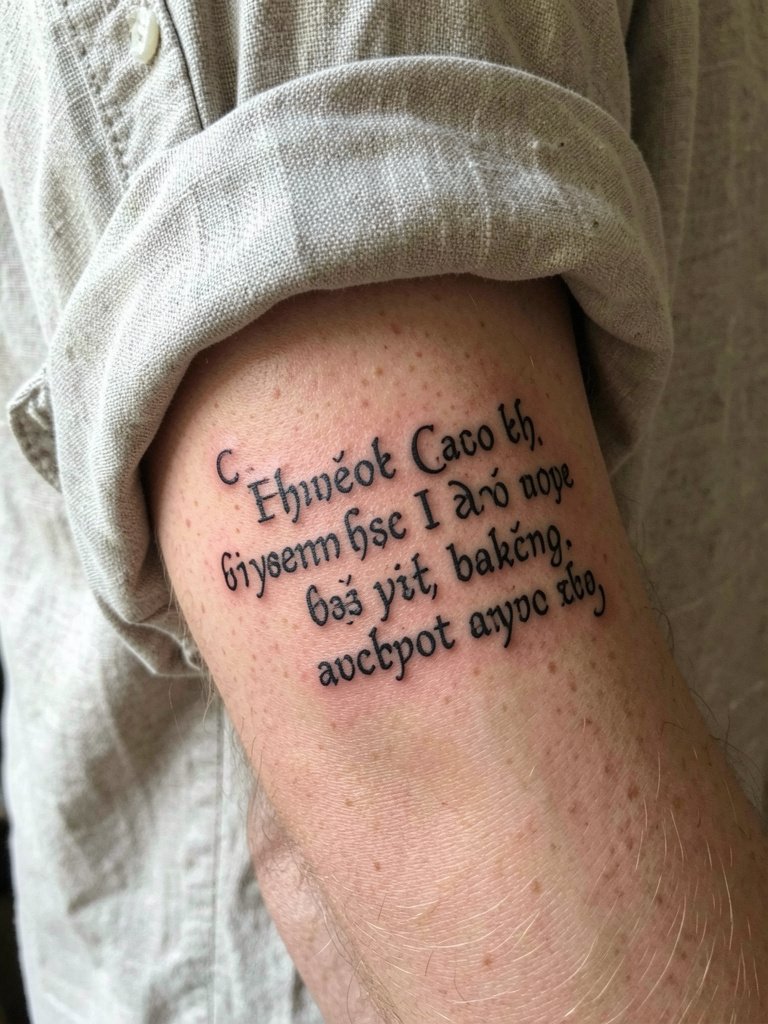
Gaelic script requires verification. A common and costly mistake is trusting an unverified translation. One useful step is to provide the artist with a screenshot of an official language resource or a verified native speaker's text so the tattoo lettering is exact. Font choice matters. Single-needle script looks elegant at first but needs slightly more spacing than Latin script to remain legible at two years. For showing off, rolled cuffs or short sleeves frame the phrase nicely.
23. County Crest Sleeve Cap on Upper Arm
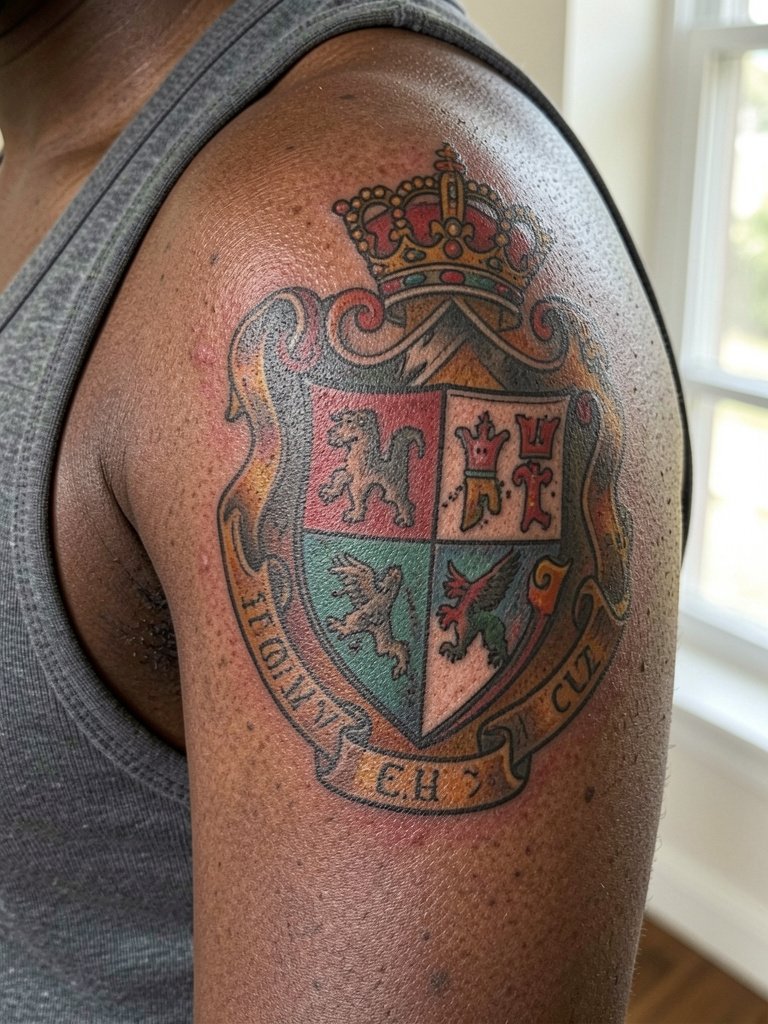
A sleeve cap built around county crests gives a clear link to place. Plan composition so the crest becomes the focal panel and knotwork radiates outward. Sessions will be multiple hours. If your ancestry is documented, bring the crest art so the artist can match the heraldic components. For showing off, tank tops and slat-neck shirts reveal the cap without needing a full sleeve display.
Frequently Asked Questions
Q: How much does a Celtic or Irish-symbol tattoo cost?
A: Expect small pieces to range $150 to $400, medium detailed pieces to run $250 to $800, and large multi-session work to land $800 or higher depending on color and time. These are broad ranges. Exact quotes depend on studio rates, location, and how many sessions a design needs.
Q: Will green ink work on darker skin tones?
A: Green can read differently across skin tones. Lighter emerald or forest greens tend to show better than neon shades. On medium to dark skin, small green accents are usually safer than full green fills. Ask for healed photos of similar skin tones and request an accent test patch or swatch if you are concerned.
Q: How do I verify a Gaelic phrase before it is permanent?
A: Use a verified native speaker or an official Irish language resource and bring that exact script to the consult. Ask for the exact lettering in the font at the size you want so the artist can proof it on skin. One practical step is to copy-paste the final line into your phone and show it in person when approving the stencil.
Q: Where can I find artists who actually do Book of Kells or Celtic knotwork without naming anyone?
A: Search hashtags like #celtictattoo, #trinityknot, and #bookofkells on Instagram and TikTok and filter by your city. Use Tattoodo or Inked App to search keywords such as "Book of Kells lettering" or "fine line Celtic knot" and review healed photos. Reddit communities like r/CelticTattoos and r/tattoos often have peer-shared healed examples across skin tones.
Q: Do temporary shamrocks help decide permanent placement and size?
A: Yes. Temporary stickers give realistic feedback on how a placement reads with your clothing and gestures. Wear a temporary shamrock for a few days in the exact spot you plan to tattoo. If you find yourself constantly covering it or annoyed by visibility, adjust size or position before booking a session.