Bold trends and archival reality collide fast with Chinese-themed ink. Watercolor dragons flood feeds, then soften into muddy washes within a year. Black ink wash dragons and solid calligraphy tend to read cleaner over time when scaled and spaced correctly. Keep your priorities clear during the stencil stage and you will end up with a piece that heals into its shape, not one that needs a redo in two years.
1. Traditional Chinese Dragon (Serpentine with Whiskers)
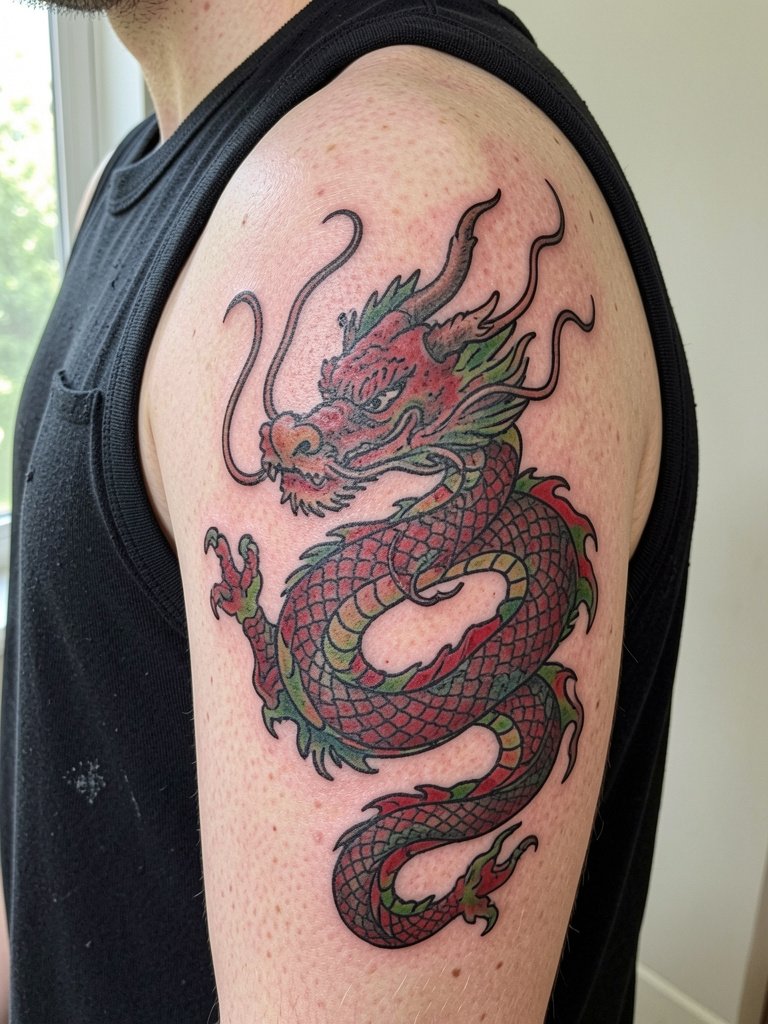
A full dragon on the outer upper arm reads well from a distance because the surface is broad and the skin here holds saturation. For collectors I recommend two to four sessions so the artist can build bold outlines, then layer color for depth. A common mistake is shrinking a sleeve-style dragon into a tiny bicep emblem. That version loses all whisker detail and softens into a blur at year two. During the consult bring a photo of desired scale, and ask for reference shots showing healed work at three to five years. For show-off wear try a sleeveless black tank men so the red and green accents pop against dark fabric.
2. Simplified Chinese Character (Minimalist Script)
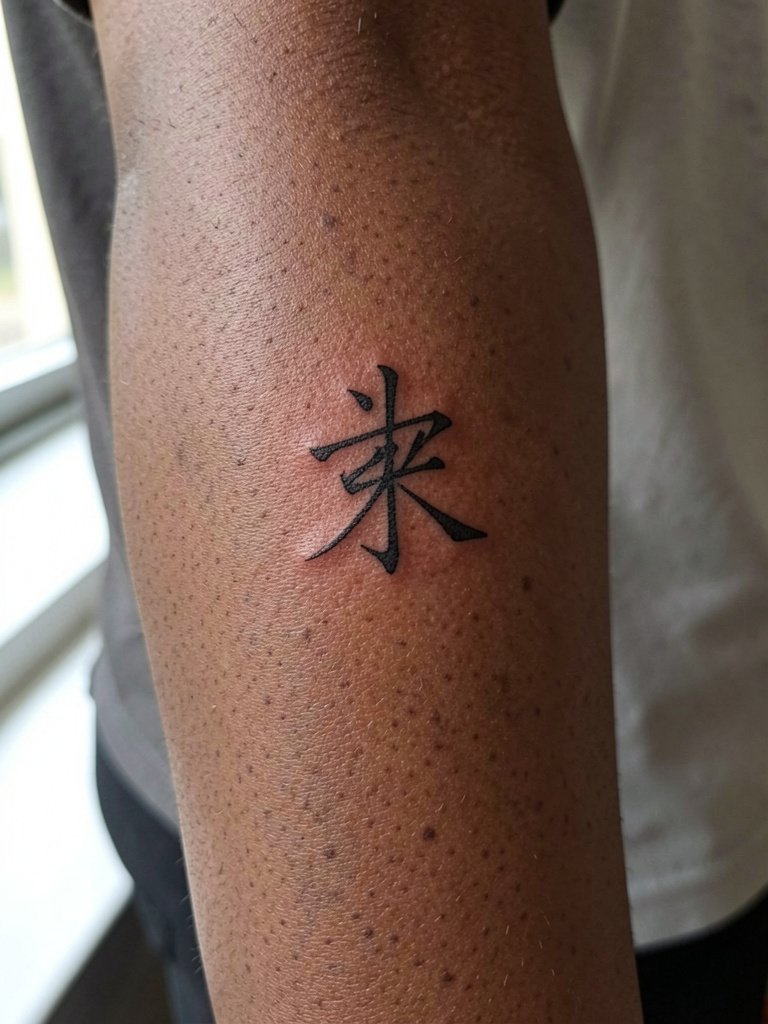
Fine-line single characters look crisp at first but the design choice raises a known split in opinion. One camp says fine line on high-friction surfaces like the wrist fades and blurs within two years because thin strokes spread under the skin. The other camp argues that with accurate needle depth and slightly wider negative space the same fine work can stay legible beyond three years. If you prefer the minimalist look ask about slight lineweight increases and spacing adjustments so the character reads well healed. Verify the exact character and tone with a native speaker before booking. For session comfort roll up a linen shirt and wear a rolled cuff linen shirt so the artist has clean access to the palm-up surface.
3. Traditional Calligraphy (Kai Shu Style)
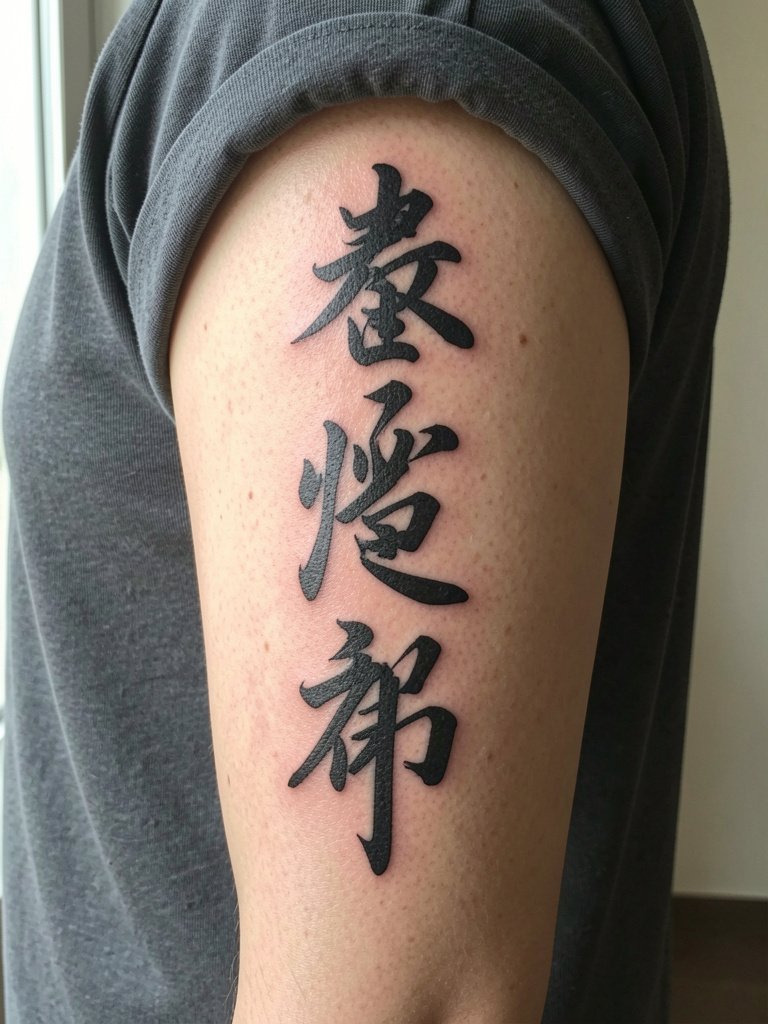
Kai Shu calligraphy uses thicker strokes which makes it a solid choice for pieces meant to last on moderate-friction areas. The session is typically short for 3–5 characters, and the pain on the inner upper arm rates moderate. A frequent mistake is requesting ultra-thin strokes while keeping characters small. That combo loses contrast as the ink spreads slightly while healing. Bring printed examples that show desired stroke width and ask for mockups scaled at three and five inches so you can see how the composition reads on skin. This style honors a long visual tradition, so mention that you want characters rendered with authentic stroke order and balance.
4. Yin-Yang Symbol (Ornamental Interpretation)
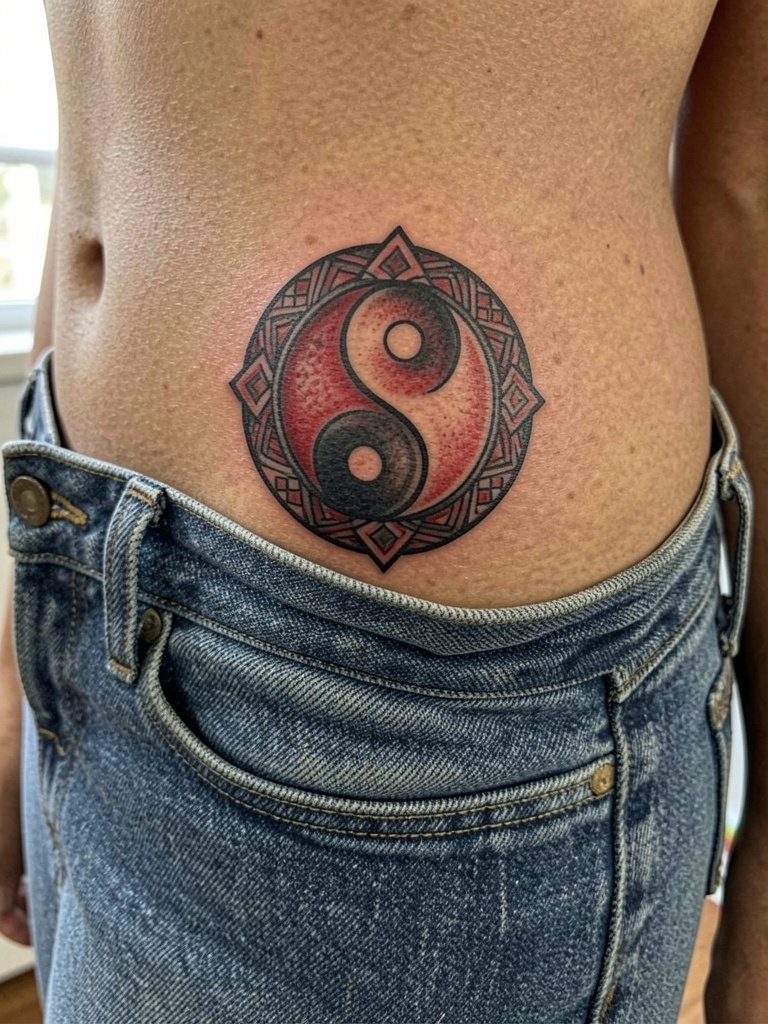
The yin-yang adapts well to ornamental treatments because the central shape stays readable when surrounded by symmetric flourishes. On the lateral hip this design benefits from mid-size scaling; too small and the dots inside the circle blur after a year. A common version that ages poorly is a tiny, heavily ornamented circle near the waistband. Heat and friction at the hip can soften tiny fills. For the appointment wear low-rise jeans that are easy to shift without being undone. If you want a balanced look for outings try low-rise jeans with a cropped top to show the counterpoint between black and red fills.
5. Buddha Portrait (Chinese Brush Style)
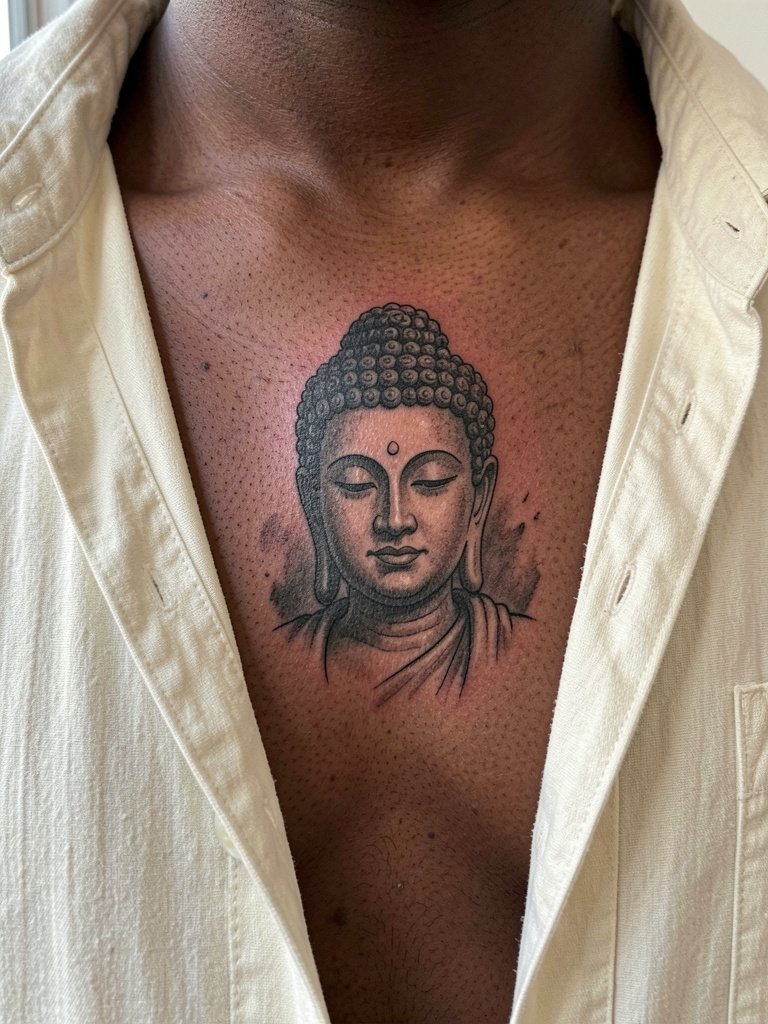
Chinese brush-style portraits rely on ink intensity rather than color, which helps them age gracefully on chest skin. Sessions for medium-to-large portraits usually span two sessions so the artist can refine tonal transitions. A mistake I see is over-coloring a brush-style reference with bright pigments; the subtle ink wash loses its atmospheric feel when mixed with saturated color. Mention that you want grayscale wash with high-contrast blacks during your consult so the portrait reads at varying distances. For showing the piece off an open button-down in cream or olive complements the grayscale shading and keeps the focus on tonal depth. Respect the religious origin by discussing intended symbolism and placement.
6. Watercolor Splash Ink Dragon
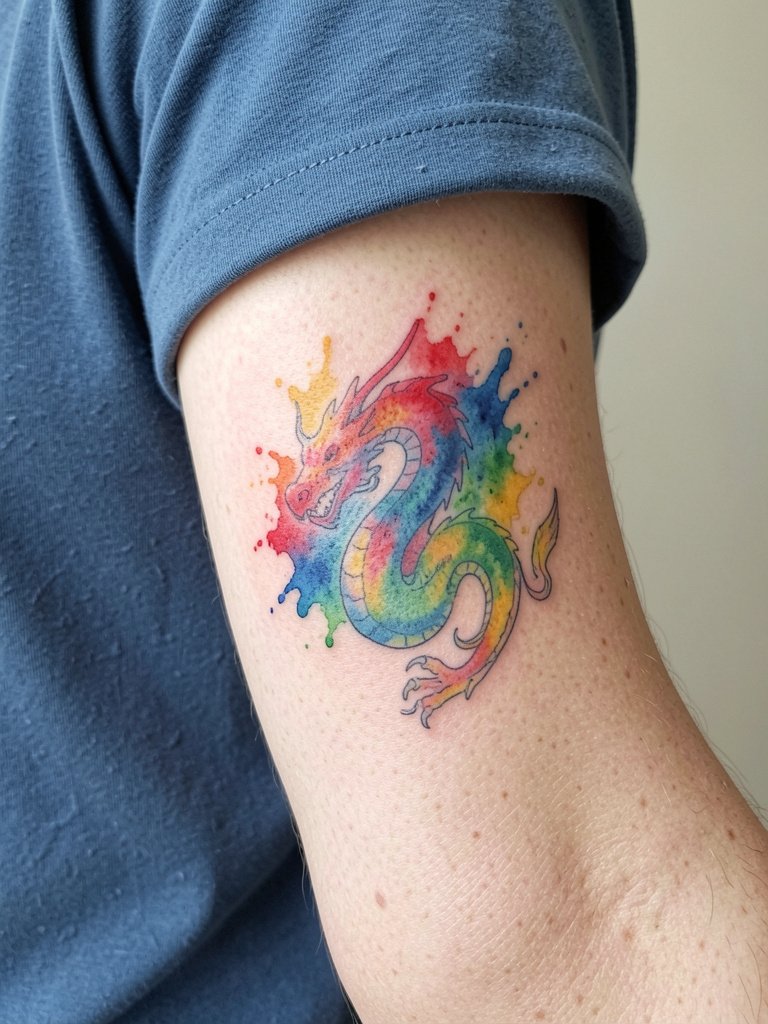
Watercolor dragons look incredible fresh but spark a clear debate in the community. One camp argues the multi-color watercolor approach fades and muddies within a year because the pigments sit more superficially than dense black ink. The other camp says modern pigments and layering techniques keep colors vibrant longer, and showcased healed work backs that claim. If longevity matters choose a palette with fewer colors and ask for higher saturation in edge lines so the silhouette remains crisp. For daily wear pick solid color tees that do not compete with your gradients.
Pre-Session Essentials
The dragon pieces and delicate character work above both need small session-day preparation items to smooth the first week of healing.
-
Japanese Ink Wash Balm. A thinner, artist-favored balm that keeps black-only work moist without clogging pores, helpful for ink wash portraits and dense dragons.
-
Australian Tattoo Clay. Natural clay salves are used by people who prefer dryer healing on brush-style pieces and can reduce shiny buildup on chest portraits.
-
UK Black Ink Seal. Specialty balms aimed at high-contrast black work, useful on fine calligraphy to slow edge blur during initial healing.
-
Matte Aftercare Balm. Lighter than petroleum options, this keeps saturated work from appearing too glossy while it heals.
-
UV-Protective Tattoo Sunscreen. Bright watercolor pieces need SPF protection long term to slow color loss from sun exposure.
7. Oriental Warrior (Graphic Style)
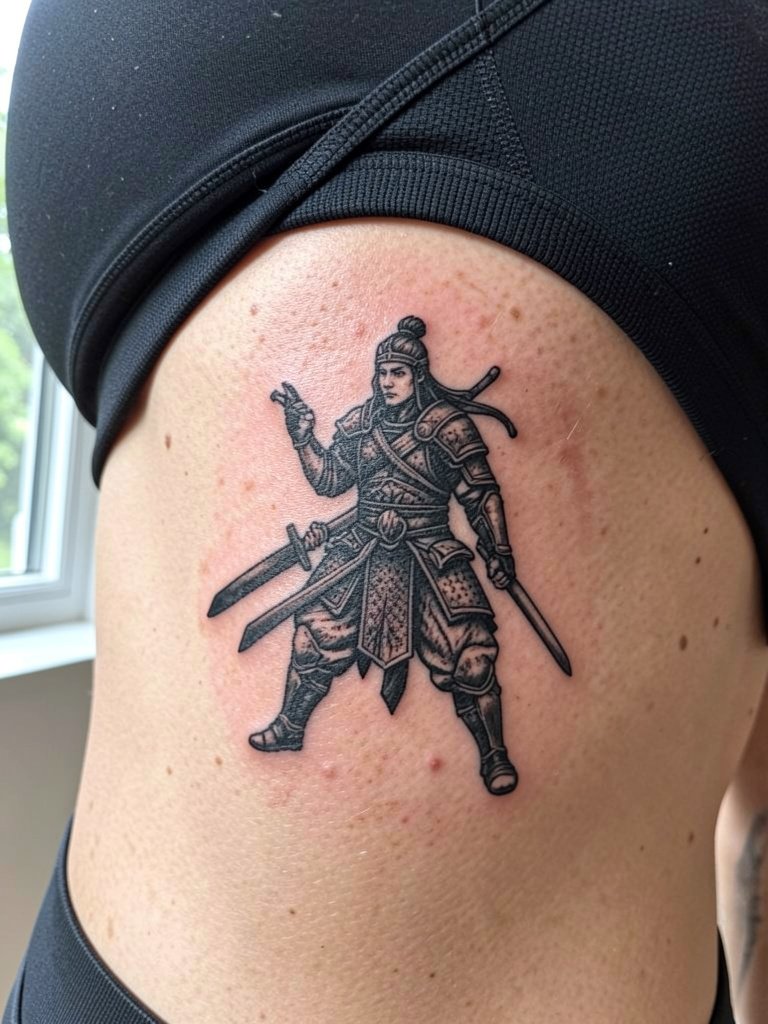
Graphic blackwork warriors suit the ribcage because the long vertical canvas lets powerful silhouettes read at life size. Expect one to two sessions for a medium piece, and plan breaks; ribs register higher on pain charts. Artists vary on spacing. A common error is packing too many fine internal details into a piece meant to be read from the side. Bold shapes age well here because fewer tiny fills mean less risk of blur. Be ready for a sore, sensitive healing week and wear a loose top so the artist can access the side without fabric rubbing.
8. Traditional Calligraphy (Xing Shu Style)
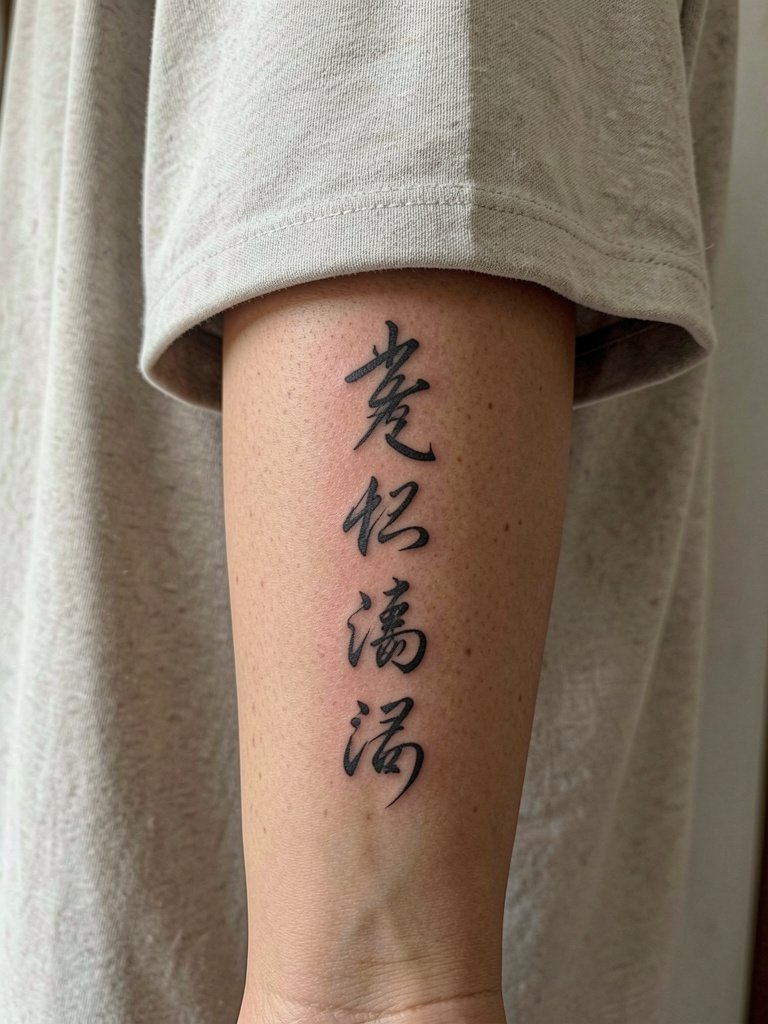
Xing Shu bridges readability with artistic cursive flow, so it suits people who want script with movement. For three to five characters plan a single session with careful stencil placement. The inner forearm handles single-needle work well but avoid making the characters tiny. A frequent mistake is copying a calligraphy photo without asking how the strokes will scale on skin. Bring examples of healed pieces to see line weight in action. The inner forearm is visible and heals fast, but protection from sun keeps the black crisp.
9. Minimalist Dragon Silhouette
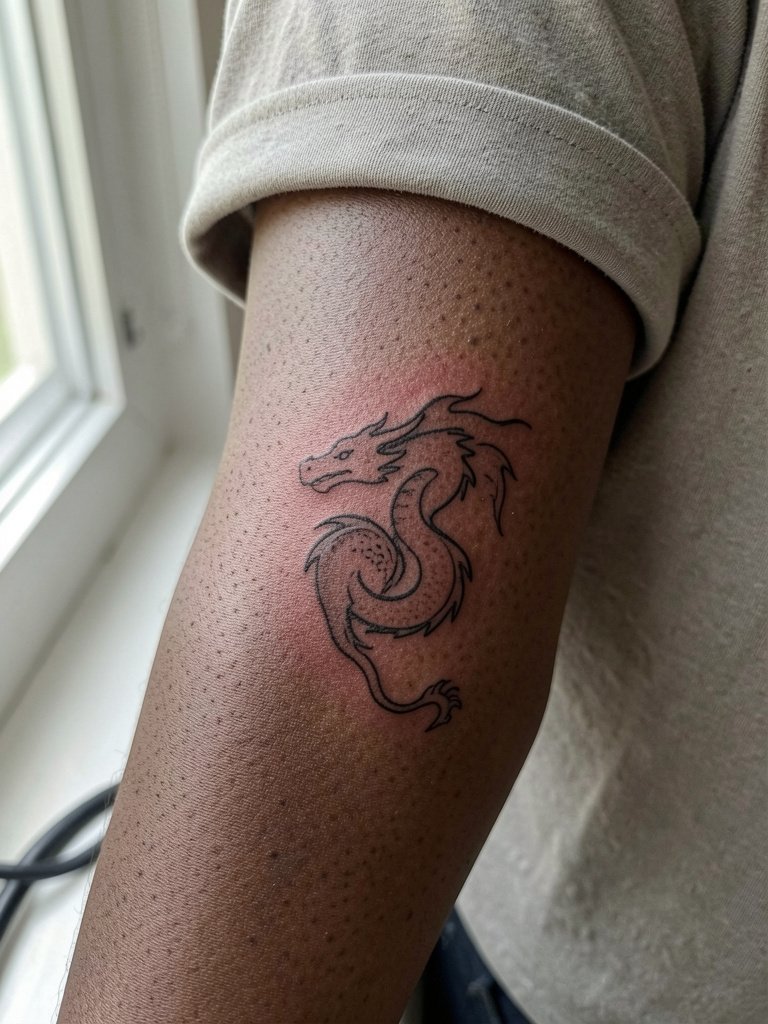
Small silhouettes excel on wrists when the shape is simplified and given breathing room. The wrist is an unforgiving surface for single-needle finery, so I push for a hair heavier line weight than the artist shows in very small references. A mistake is exact-copying a three-inch design into a one-inch wrist stamp. Expect a quick session and possible touch-up at the one-year mark for saturated edges. For everyday outfits choose short sleeves or a solid color short sleeve tee so the negative space reads against uncluttered fabric.
10. Chinese Realistic Painting (Center Pen Style)
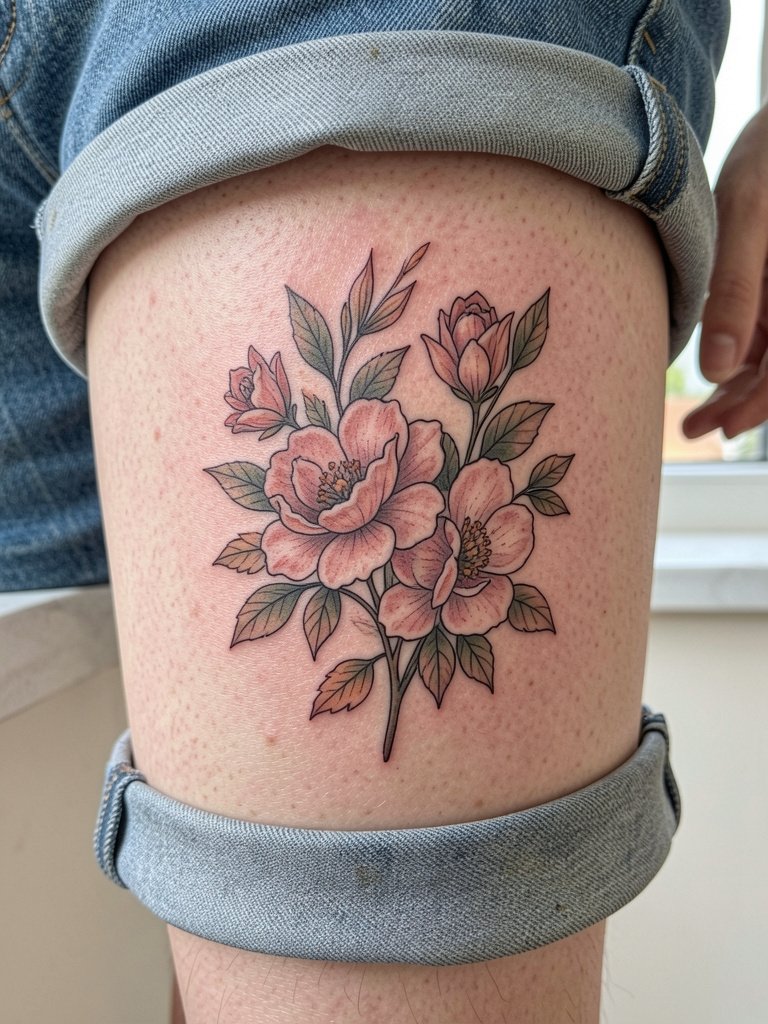
Center pen realism uses refined lines and controlled color palettes which can be striking on the thigh. Sessions run two to three sittings for medium to large pieces, and the area tolerates long sessions well. Mistakes come from asking for too many tiny highlights; they can fade into a mottled look after a couple of years. Talk specifics about color saturation and healed contrast so an artist knows how to layer. For session day wear bring loose shorts or drawstring pants that the artist can roll up without pressure on the area.
11. Circular Mandala Character Pattern
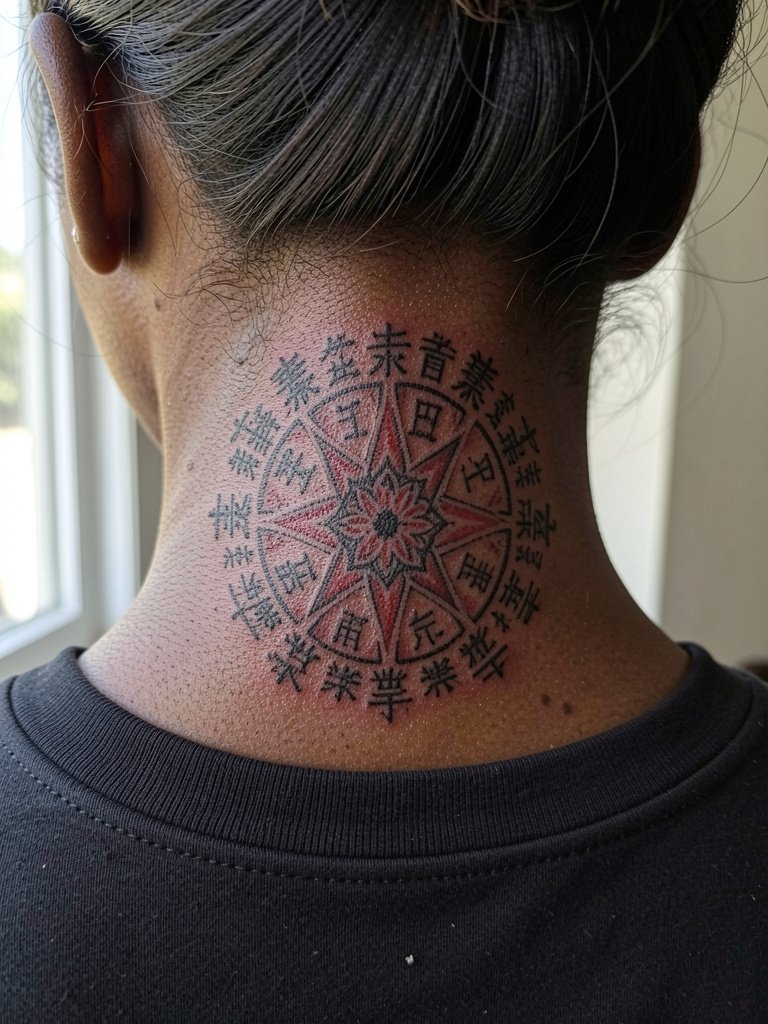
Turning characters into a mandala-like ring gives a spiritual balance while keeping each glyph legible. The nape is a sensitive spot for placement because hairline movement and collars impact healing. Common mistakes include cramming too many characters into a tight ring. Ask for a stencil mockup with spacing shown on someone with similar neck proportions so you can see scale. For showing the piece pair a crew neck tee or pin hair up with a simple clip so the mandala centers visually.
12. Linear Geometric Character Formation
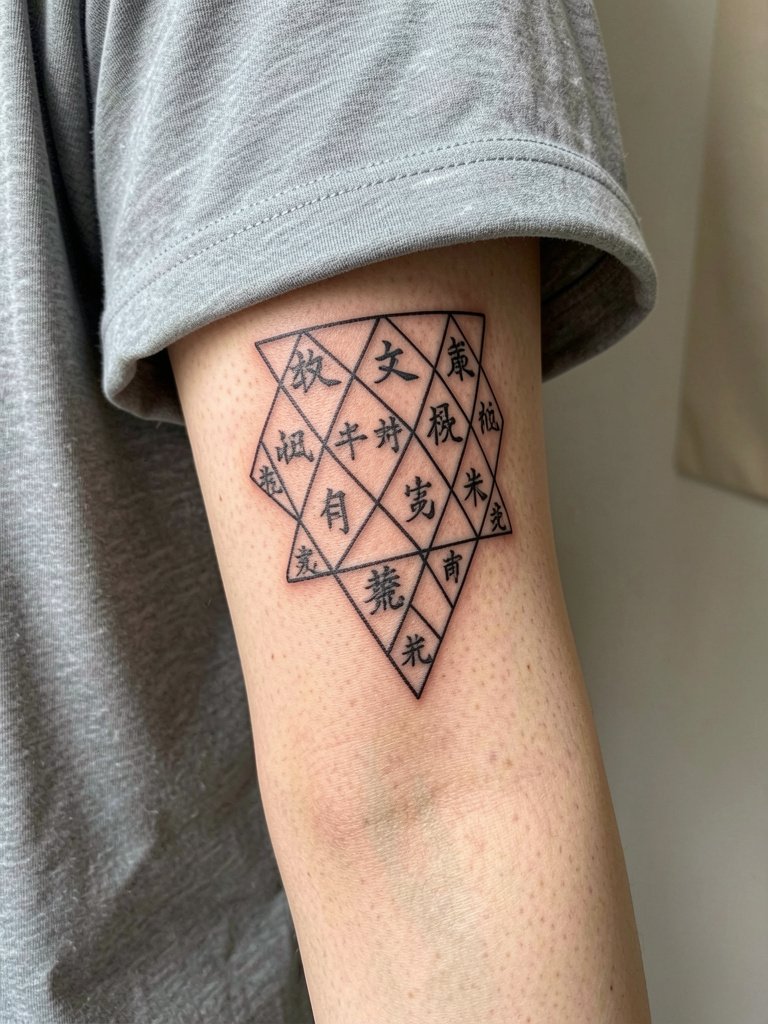
Geometric arrangements give characters a modern architecture but demand precise spacing so the grid does not collapse when lines soften. A frequent error is using characters with uneven stroke density which makes some boxes appear heavier. Decide on character selection first and then lay out the grid around that. Touch-ups at two years are common if the panel sits on a high-motion part of the arm. If you want a clean reading size ask for one with larger negative space around each glyph.
13. Bixi or Suanni Animal Variation
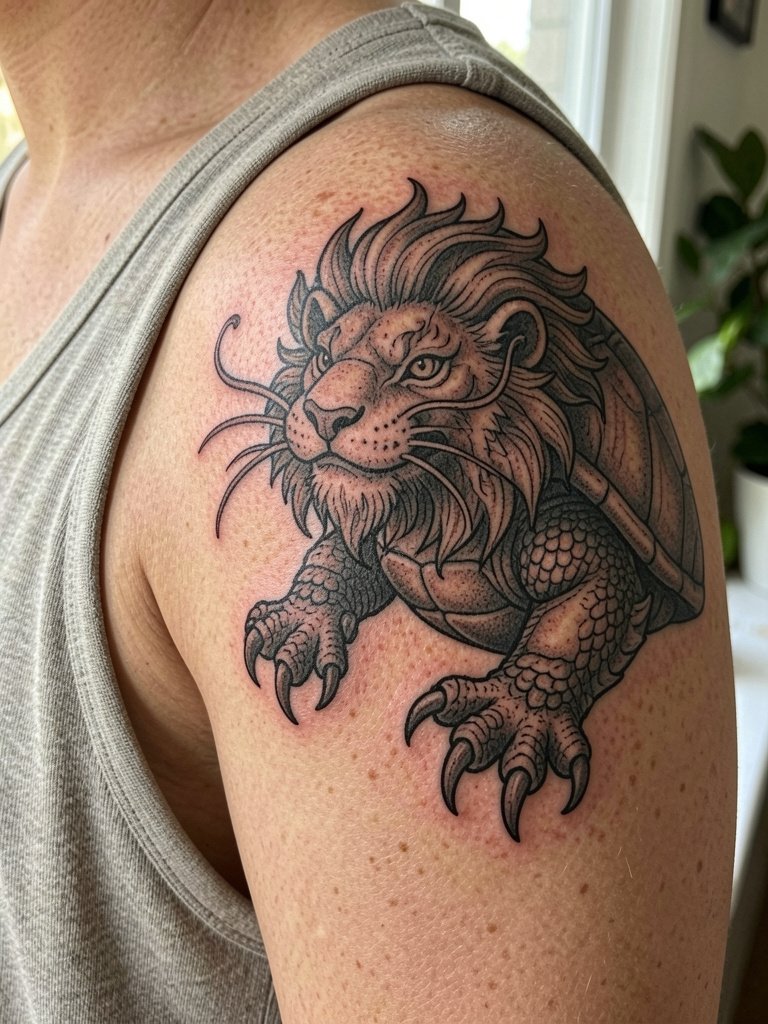
Variations like Bixi or Suanni mix mythic animal features into dragon anatomy for a collector-friendly twist. The shoulder cap is forgiving for detailed claws and manes, but small micro-detail near the deltoid edge can blur. I ask people to size these so the claws have room. Sessions are usually two to three passes if you want deep contrast. For the session wear a loose tank so the artist has shoulder access and the fabric does not rub the tattoo immediately afterwards.
14. Simplified Character with Gradient Background
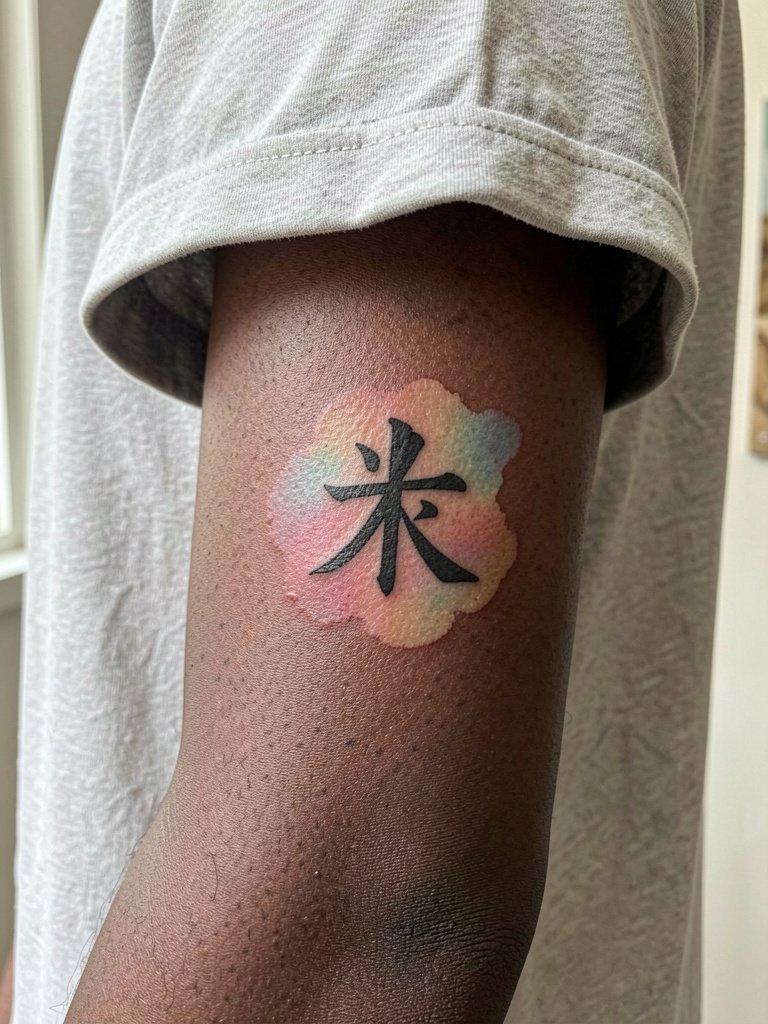
Combining a bold character with a subtle gradient wash gives a modern contrast that reads well on the inner forearm when the character stays pure black. The main failure mode is using too many colors in the wash, which can muddy and make the character float visually. For longevity prefer one soft wash hue behind a saturated black glyph. Expect a light touch-up for the wash at the one-year mark on high-sun areas. For daily outfits short sleeves or rolled cuffs keep the forearm visible with minimal distractions.
15. Traditional Warrior (Old Skool Style)
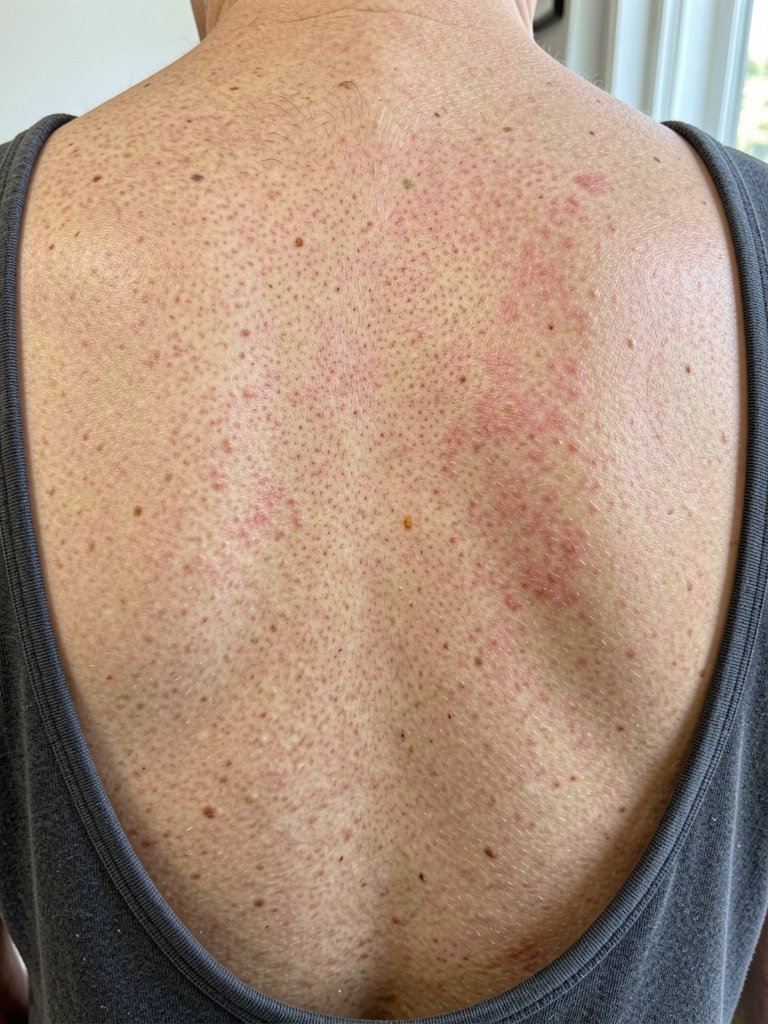
Old skool warriors read strongly on the upper back because the area handles broad color fields without the abrasion smaller sites see. The session time is usually one to two sittings depending on color blocks. Artists sometimes shrink classic flash into smaller sizes which robs the piece of its straightforward presence. If you want a classic healed look specify bold outlines and avoid micro-details inside armor plates. For showing off choose an open-back tank that frames the shoulder line and lets the saturated fills anchor the silhouette.
Frequently Asked Questions
Q: How much should I budget for a Chinese-style tattoo?
A: Expect a wide range. Small single-character pieces commonly fall in the lower tier and often land between one hundred fifty and four hundred dollars. Larger works like chest dragons or full sleeves typically start in the mid thousands. Tipping fifteen to twenty-five percent at the shop is common practice and helps secure good aftercare service.
Q: How do I confirm a Chinese character actually means what I want?
A: Send the exact character image to a native speaker or a language forum and ask for the character, tone, and common usage. Bring that confirmation to your consult and request the artist show you the character at the final stencil size so spacing and stroke order are correct.
Q: Watercolor or ink wash for a dragon, which holds up better?
A: Two camps exist. One group says watercolor fades and muddies faster because pigments are layered more superficially. The other group points to modern pigment tech and meticulous layering to argue colors can last if properly saturated and maintained. If you prioritize longevity pick ink wash or monochrome approaches and use UV protection for any color work.
Q: Where can I find healed portfolios and artists without naming anyone?
A: Search hashtags like #chinesedragon #chinesecharacter and filter by location on Instagram and TikTok to find local healed portfolios. Use directories like Tattoodo or the Inked App and read Reddit threads for peer-shot healed pictures. Those platforms help you spot artists who post time-stamped healed work across skin tones.
Q: What should I wear to the appointment for a chest or ribcage piece?
A: For chest or sternum sessions wear an open button-down shirt or a fitted sports bra that the artist can slide aside without disrobing you. For ribcage sittings a loose cropped athletic top works so the artist can expose the side without you having to remove more clothing than necessary. For showing the healed piece, an open shirt in a neutral palette keeps focus on shading and linework.