Couples keep pinning tiny matching symbols, but what shows up clean at year three is not always what looks best on day one. Trend photos push wispy watercolor and micro-script, yet artists I talk to keep steering clients toward solid contrast and smart spacing so the design still reads after a few touch-ups. Read through these paired ideas with placement notes and session tips so you can bring a clearer brief to your consultation.
1. Complementary Puzzle Halves on Inner Forearm
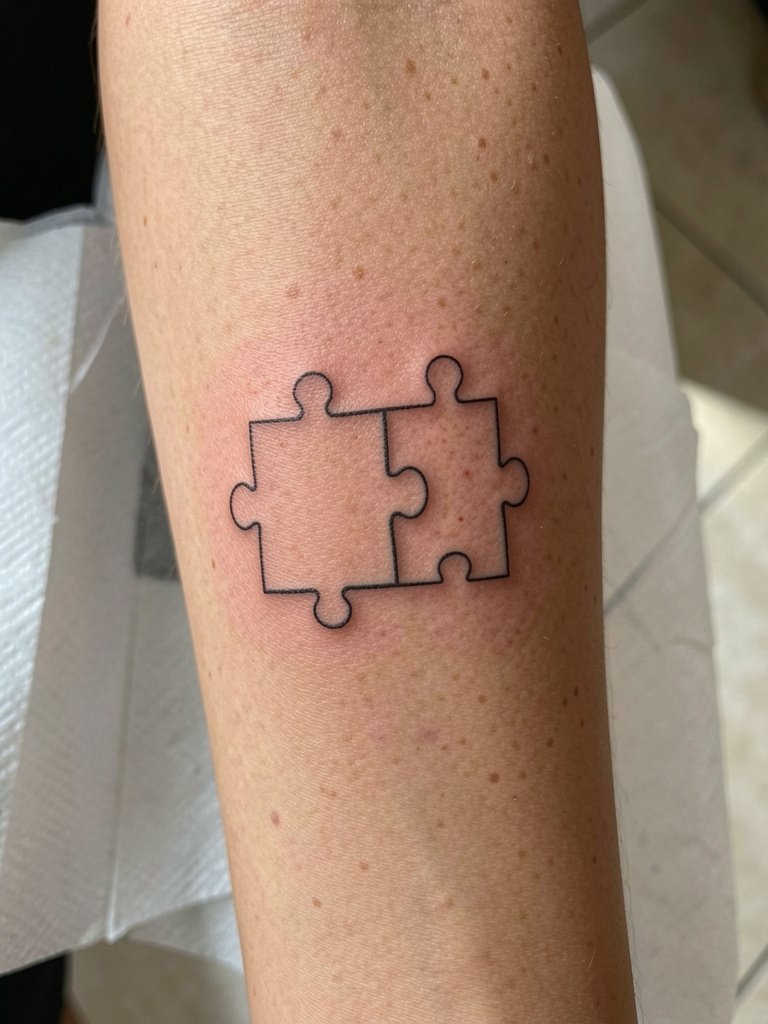
This design reads best when each half is drawn with matching line weight but enough room to breathe. For first-timers I recommend keeping each piece around 1.5 to 2 cm so the edges do not blur together with time. During your consult bring a photo scaled to actual size and ask for the line thickness to be shown on paper at three different sizes. The inner forearm has medium pain and most people handle a tiny piece in one short session. A common mistake is asking for ultra-fine detail at a 1 cm scale. Expect a touch-up at 12 to 18 months if you want the junction to stay crisp. For showing it off, roll a linen button-down shirt sleeve so the forearm is visible without competing accessories.
2. Anchor and Ship Wheel Pair, Inner Upper Arm
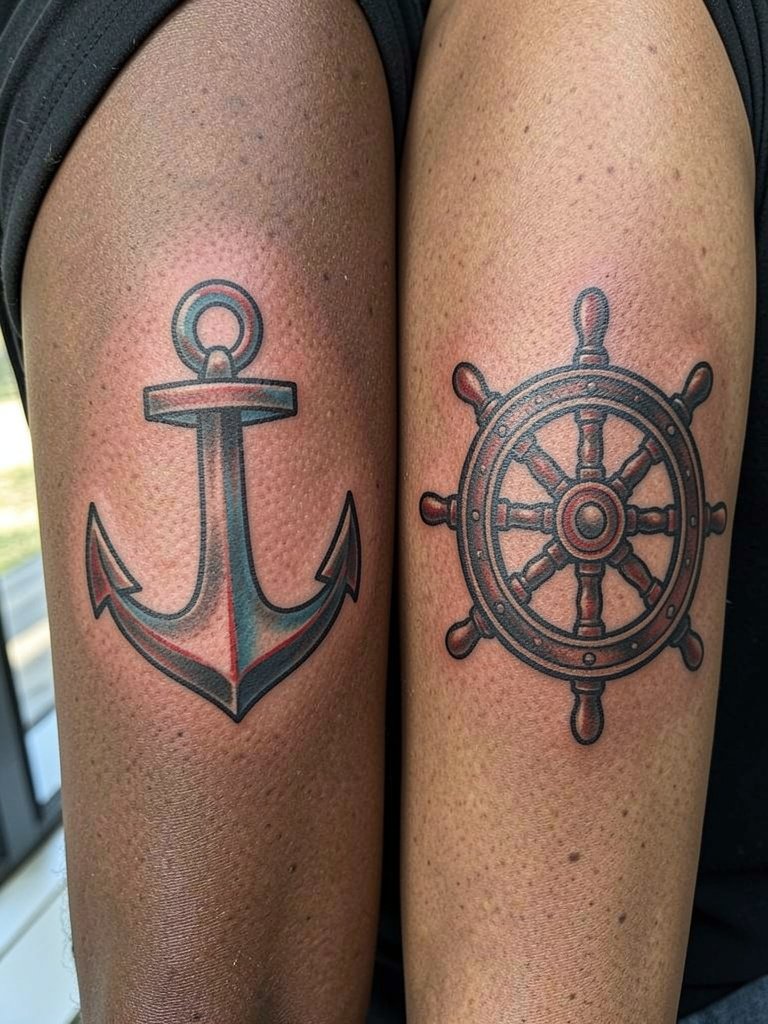
This balance pair reads like two roles that complete each other without matching exactly. Ask the artist to map how the wheel spokes will sit when the arm is relaxed toward the torso so spokes do not warp across muscle creases. The inner biceps can be tender for some, but a medium piece like this is usually one session. Neo-traditional black outlines with selective color keep saturation high so the wheel and anchor remain legible for years. Avoid asking for tiny ornamental flourishes that will age into a blur. For styling, a sleeveless tank top in a solid color frames the bicep without distracting from the design.
3. Opposing Arrows That Form an Infinity on the Wrist
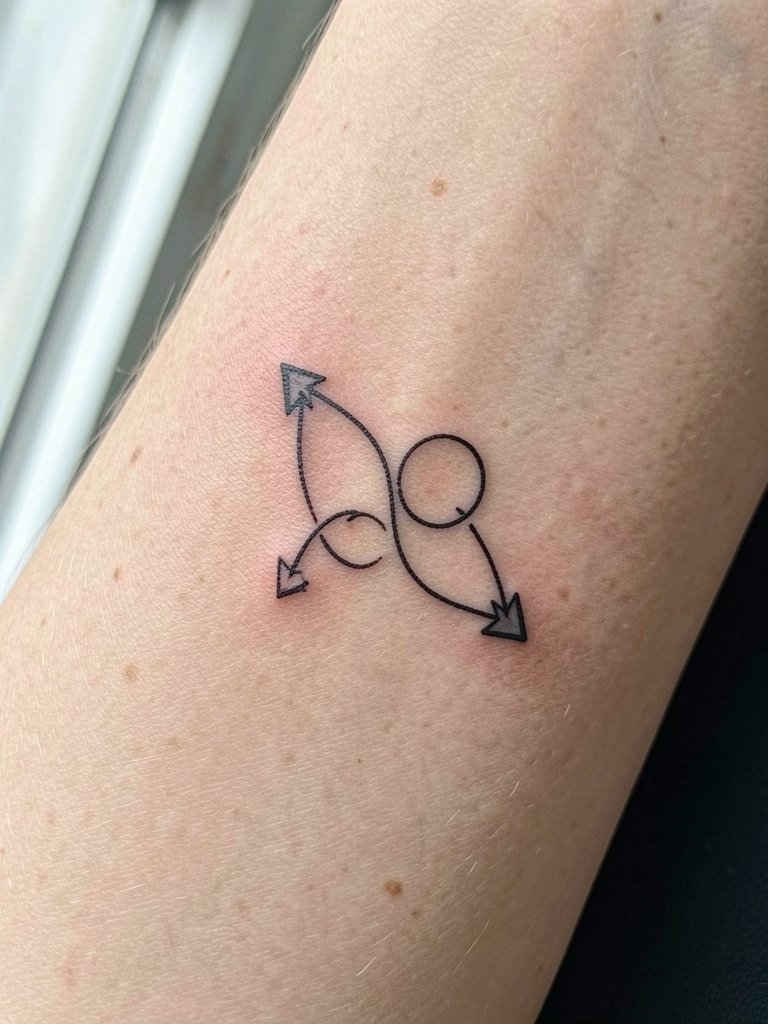
Wrist pieces age differently because of daily friction and hand washing. For an opposing-arrow motif, opt for a hair stronger lineweight than your reference so it stays visible after the first year. Ask the artist to show the arrows on a printed wrist mockup at actual scale. The wrist is more painful than an outer arm and sessions are quick. Blowout risk is moderate on thin wrists, so the artist should plan spacing rather than squeeze the design smaller. For everyday wear pair the wrist piece with a thin chain bracelet set on the opposite wrist so the tattoo reads cleanly from photos without being crowded.
4. Compass and Pocket Map Duo on the Hip
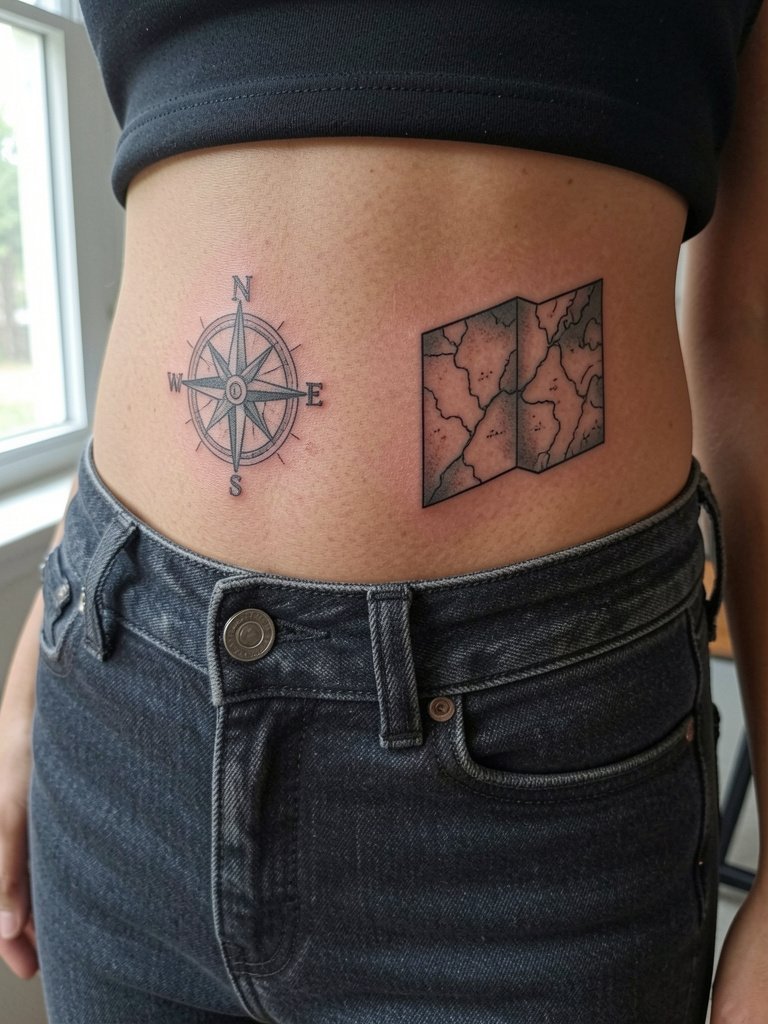
The hip is a great spot for travel-themed duos because the skin provides a flat canvas under clothing lines. Ask for slightly heavier contour lines around the compass so the inner details do not merge under light movement. This placement is low-to-moderate pain and session time depends on size. A frequent mistake is packing intricate map text into a tiny space. Instead embed a hidden date into an empty fold of the map if you want personalization without clutter. For summer reveals, wear high-waisted shorts that let the lateral hip show subtly.
5. Tree Above, Roots Below on Inner Thigh
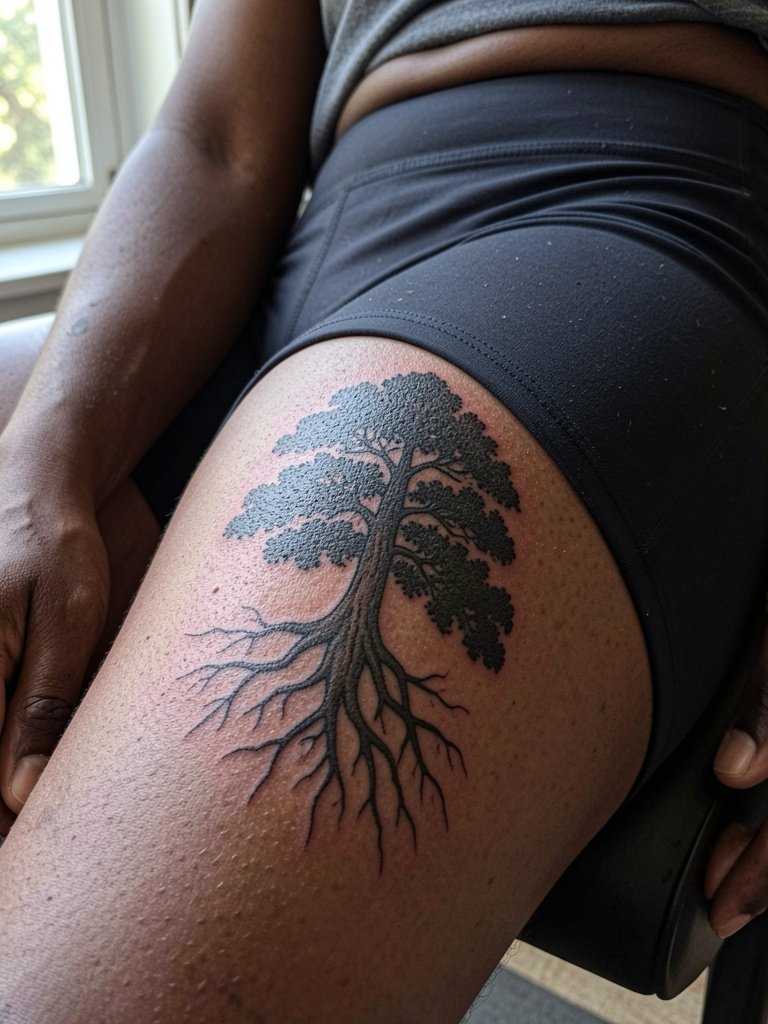
One partner wearing the visible tree and the other the hidden roots makes a literal visible-foundation pairing. Inner thigh skin moves with weight changes so request a composition with bold negative space and less tiny detail. Pain tends toward moderate and sessions require comfort breaks. A common error is asking for stipple micro-shading in extremely dense areas. Expect a touch-up after a year if you sit a lot and the skin rubs fabric. For post-session wardrobe choose flowy maxi skirts with a slit when you want the thigh tattoo to peek through without constant friction.
6. Tiny Matching Infinity at the Nape
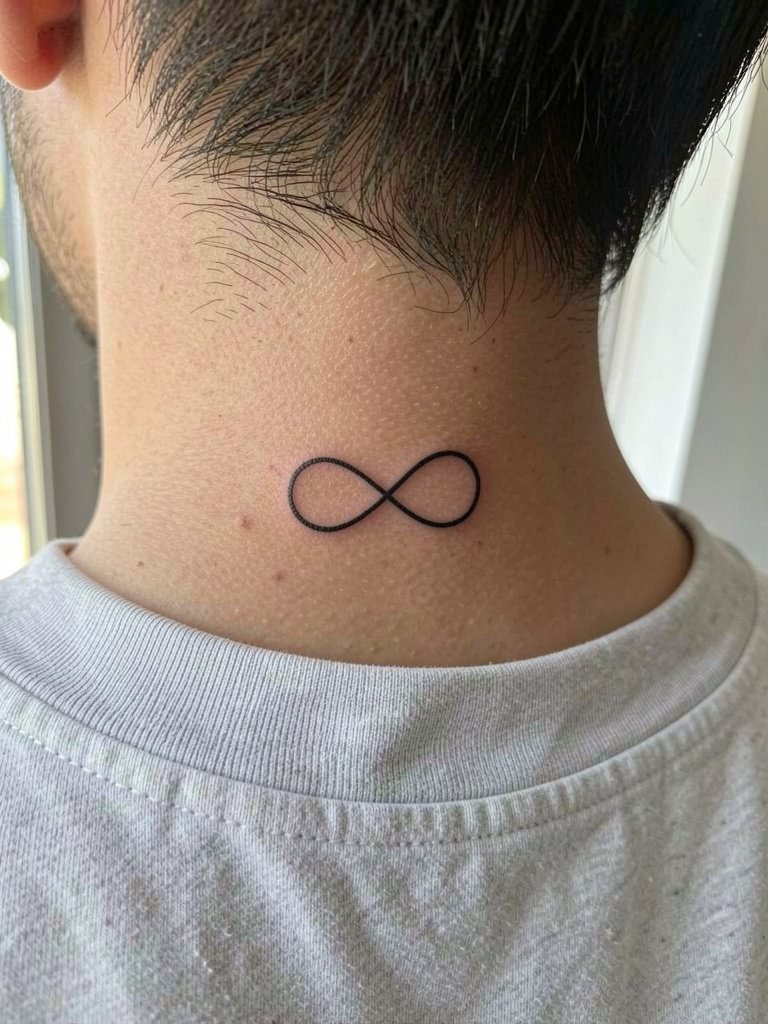
Nape pieces read intimate and discrete. Single-needle work needs slightly more space than you expect. Ask for the symbol to be drawn at final size on a sheet and taped to the nape so you can confirm exact placement. The nape is lower-pain for many but can be tender along the hairline. Fine lines here will soften faster than bold blackwork, so plan a touch-up option at 18 months. For styling, a high-neck top or short hair will let the tiny infinity peek through without distraction.
Pre-Session Essentials
The small placements above have different healing quirks, so these items help across wrist, nape, and forearm work.
- Hustle Butter Original Tattoo Aftercare Balm. A non-greasy balm that many clients prefer after the initial scab phase because it hydrates without heavy residue.
- Mad Rabbit Tattoo Balm Duo. Keeps color vibrant on medium-saturated pieces and soothes irritated skin during the first week.
- Dr. Bronner's Unscented Liquid Soap. A tiny amount on gentle showers cleans the area without overdrying the skin.
- Saniderm Tattoo Bandage (Second Skin). Useful for protecting small wrist and nape pieces during the first 3 to 5 days of healing.
- Specialized Tattoo Balm Travel Kit. Compact tubes are handy for keeping tiny placements moisturized while you travel or after sweaty sessions.
7. Lock and Key Set on the Collarbone
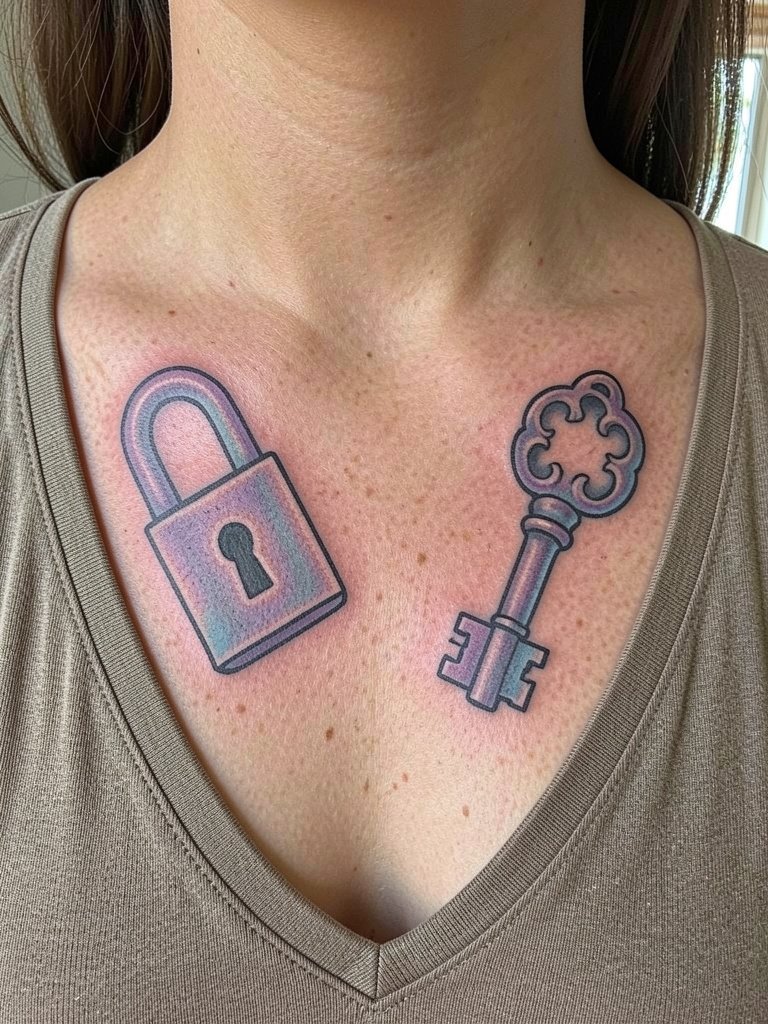
Collarbone work needs careful siting so the design flows with bone contours. Ask the artist to mark the clavicle line and show how the lock and key sit when you move your shoulders. The collarbone can sting more than the upper arm, but a medium neo-traditional piece is usually done in one session. Heavy pastel accents can fade faster on pale fills, so request slightly higher saturation and plan for a touch-up in two to three years. When you want to frame the art wear a V-neck top that leaves the upper chest open without pressing on fresh ink.
8. Birds in Flight, Watercolor Outer Shoulder
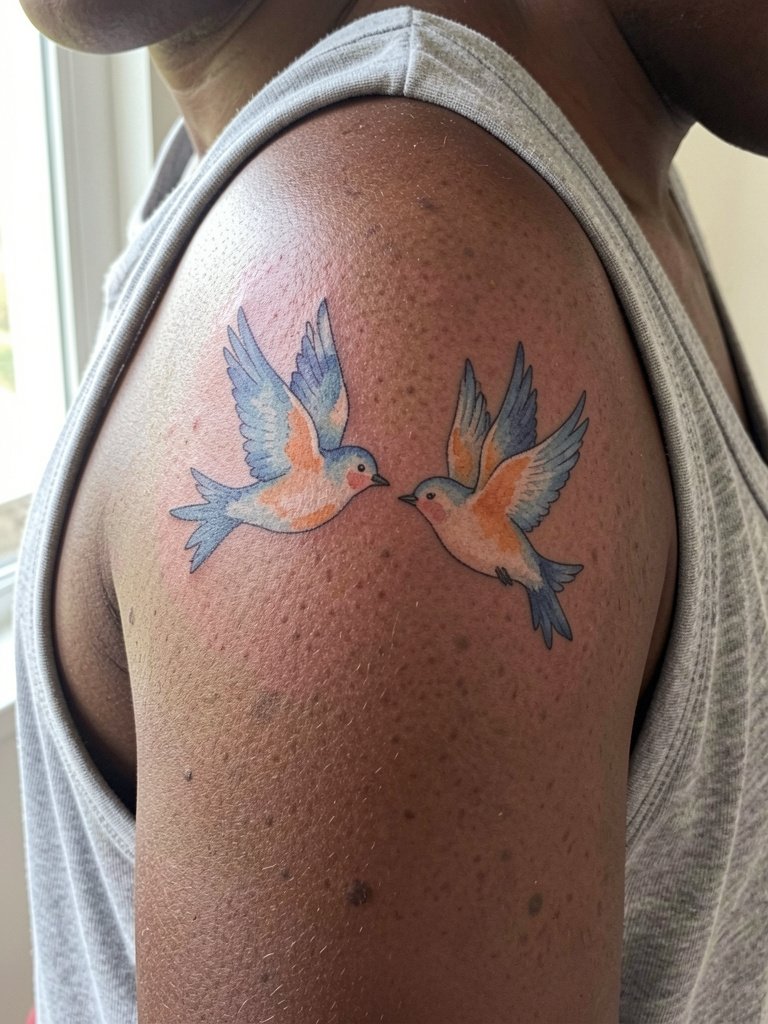
Artists disagree about watercolor for small couple pieces. One camp says watercolor blurs and fades into indistinct patches within two to three years, especially on small placements. The other camp argues that modern inks and layering techniques can hold watercolor looks for five years or longer with careful touch-ups. If you like the watercolor look but worry about longevity, ask for a soft black outline or a denser wash where skin tone varies. The outer shoulder handles color well and is lower pain. For show-off moments pick sleeveless tops that let the shoulder color shine.
9. Micro Heartbeat Line on the Sternum
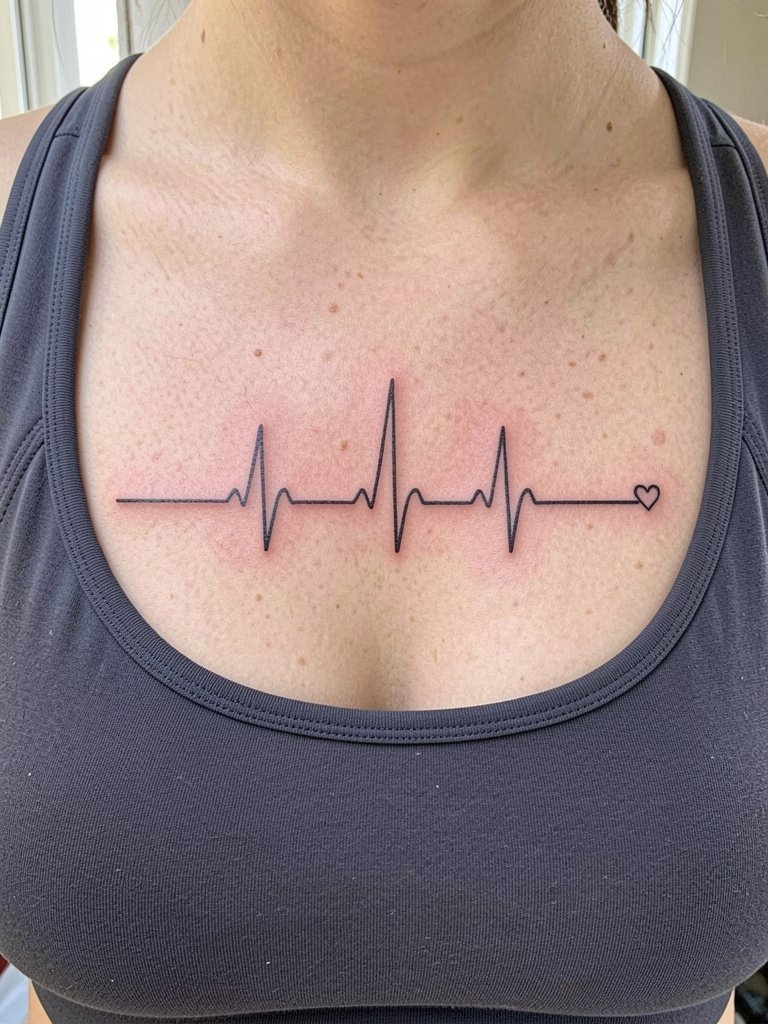
Sternum tattoos are intimate and can be more painful for many people. For a clean heartbeat line request the artist to pin the needle depth and show a healed sample of single-needle work on similar skin. A common error is keeping the line too thin through the entire length. Slightly heavier lineweight near directional turns helps the waveform remain readable after a year. Expect a longer healing window due to chest movement and clothing contact. For evenings out the tattoo pairs with a low-cut top or layered long chains that draw the eye without pressing on fresh skin.
10. Handwritten Birth Date Script on Inner Forearm
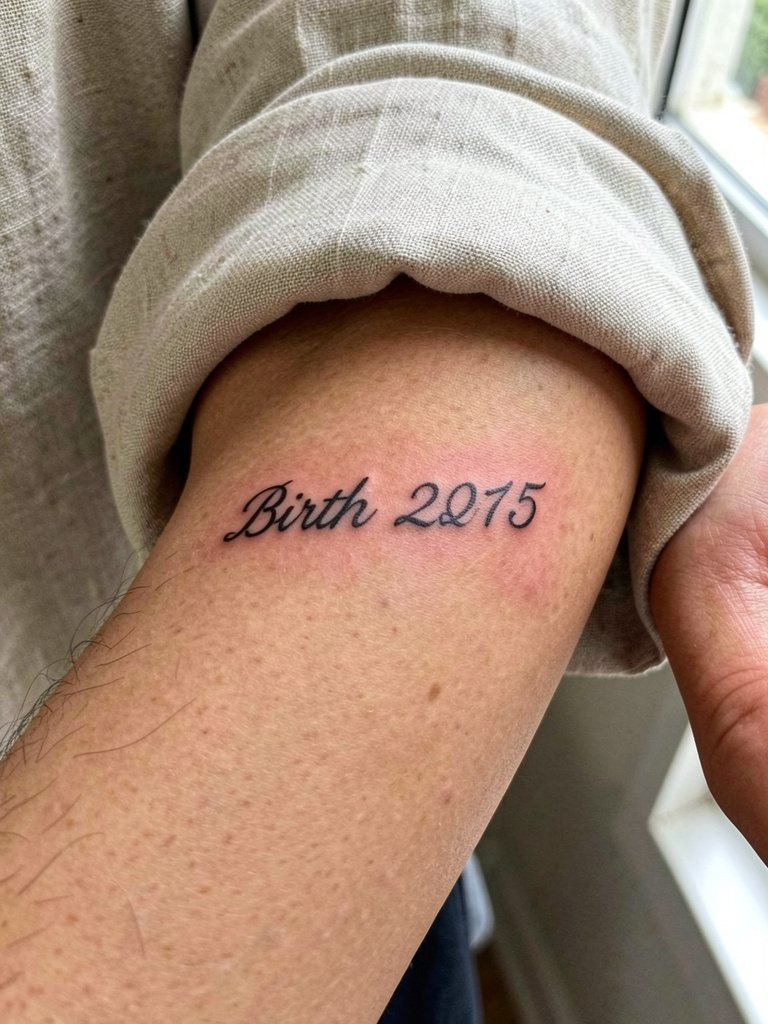
Script feels personal, but tiny letters can blur on the forearm if spacing is too tight. Bring a handwritten sample and ask the artist to redraw it at actual scale so spacing and letterforms remain legible. Forearm sessions are quick and pain is low. Avoid ultra-fine micro-lettering or ornate flourishes at that small scale. Most script clients schedule a touch-up at the one-year mark to re-establish crisp counters. For everyday styling the single-line script pairs with a dainty gold stacked bracelet set on the opposite wrist.
11. Sun and Moon Facing, Inner Upper Arm
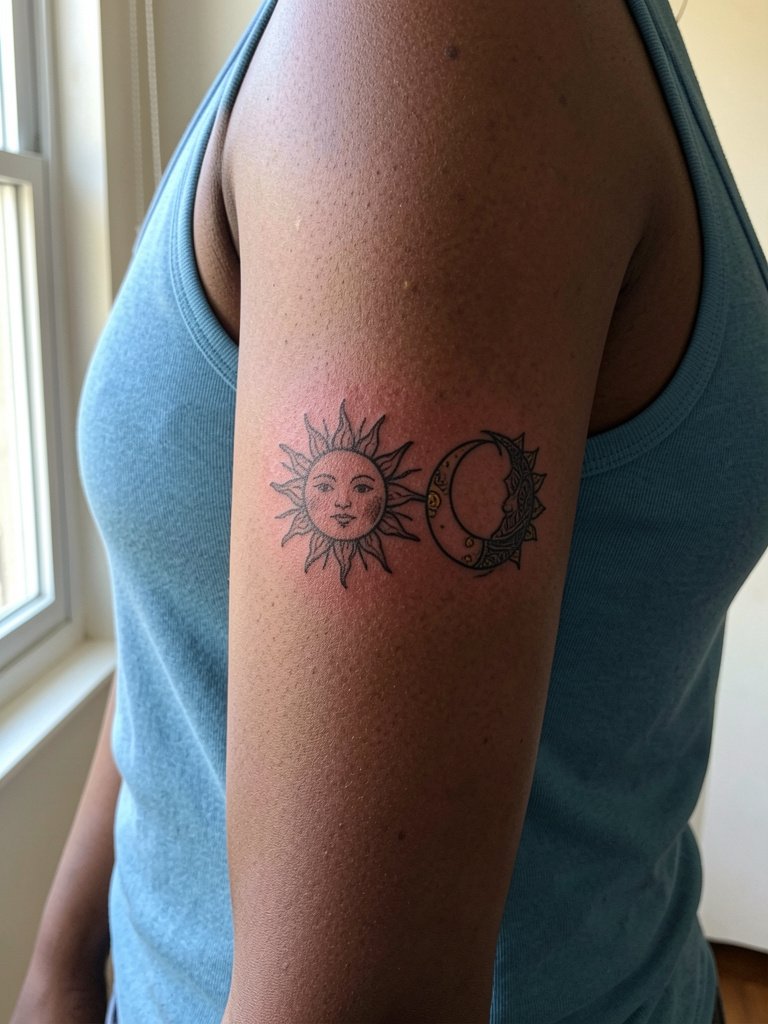
Ornamental circles need negative space to prevent interior details from filling in. On inner upper arm ask the artist to space mandala elements so stipple shading sits outside of the smallest inner rings. The inner arm has medium pain and usually heals predictably. A mistake is packing too many tiny dots inside a three-inch circle. If you want subtle color, request small metallic ink accents rather than broad washes. For showing the pair, sleeveless tops in solid tones let the black and gold contrast pop without competing prints.
12. Tiny Locking Fingers Behind the Ear
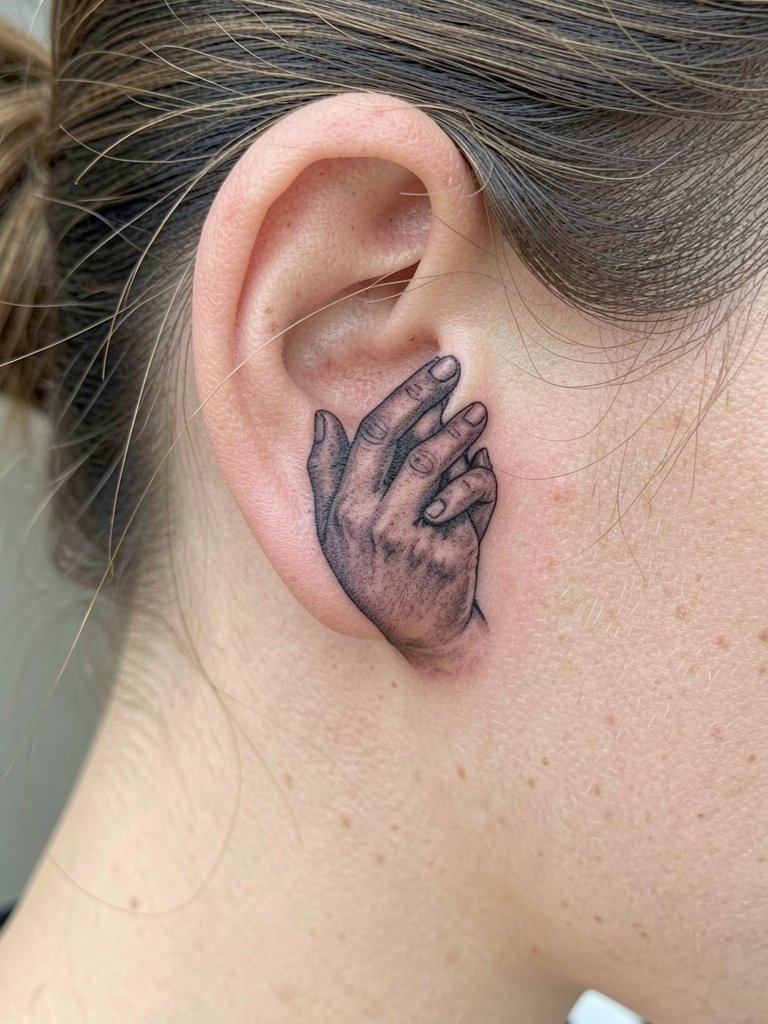
Behind-the-ear tattoos are tiny and intimate. For realistic fingers request examples of healed micro shading on similar skin so you can see long-term contrast. This area has low-to-moderate pain but is prone to early rubbing from hair. A common mistake is insisting on extreme detail in a space that cannot hold it. Expect touch-ups at 12 to 24 months depending on hair friction. For wear, short hair or hair pulled back with a natural updo keeps the area visible without constant contact.
13. Coordinates or Hidden Date Inside a Minimal Heart
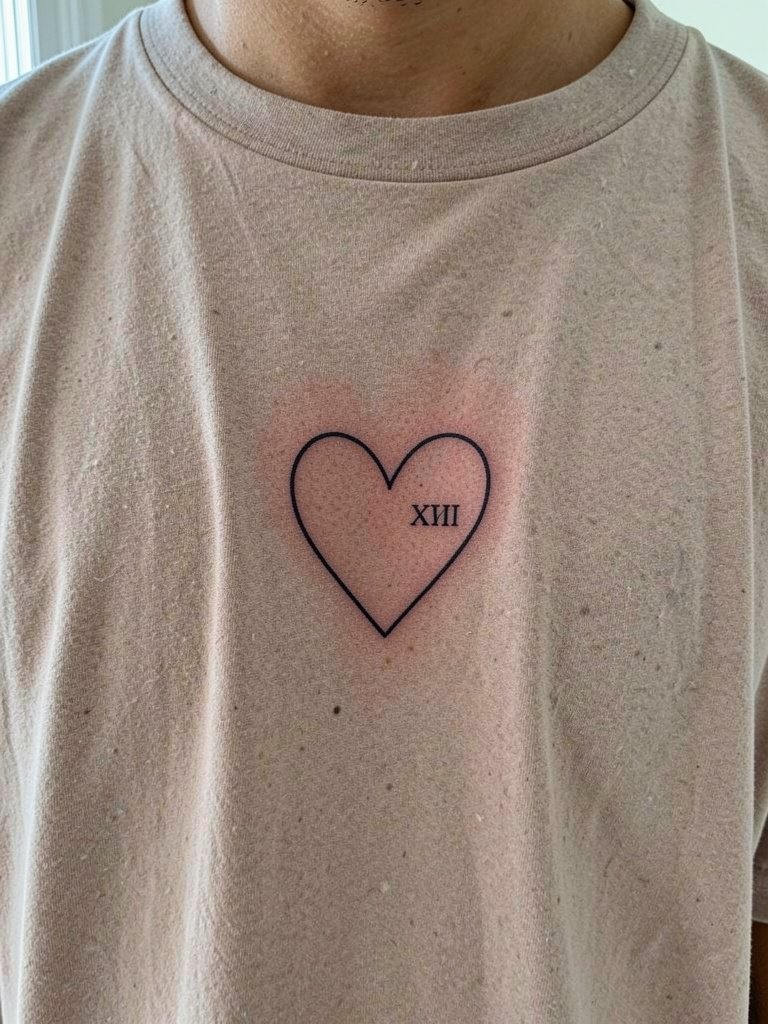
Embedding coordinates or a date inside a larger symbol is an elegant personalization technique that most people appreciate when they want privacy. Make sure the numerals are shown at actual scale during the consult so the artist can confirm legibility. This method avoids the "forever evidence" problem while keeping the piece meaningful to both partners. The placement you choose will change how obvious the hidden detail is, so decide if it should be discoverable in photos. Expect a small touch-up if the numerals sit in a high-movement spot.
14. Matching Minimal Mountains on the Ribcage
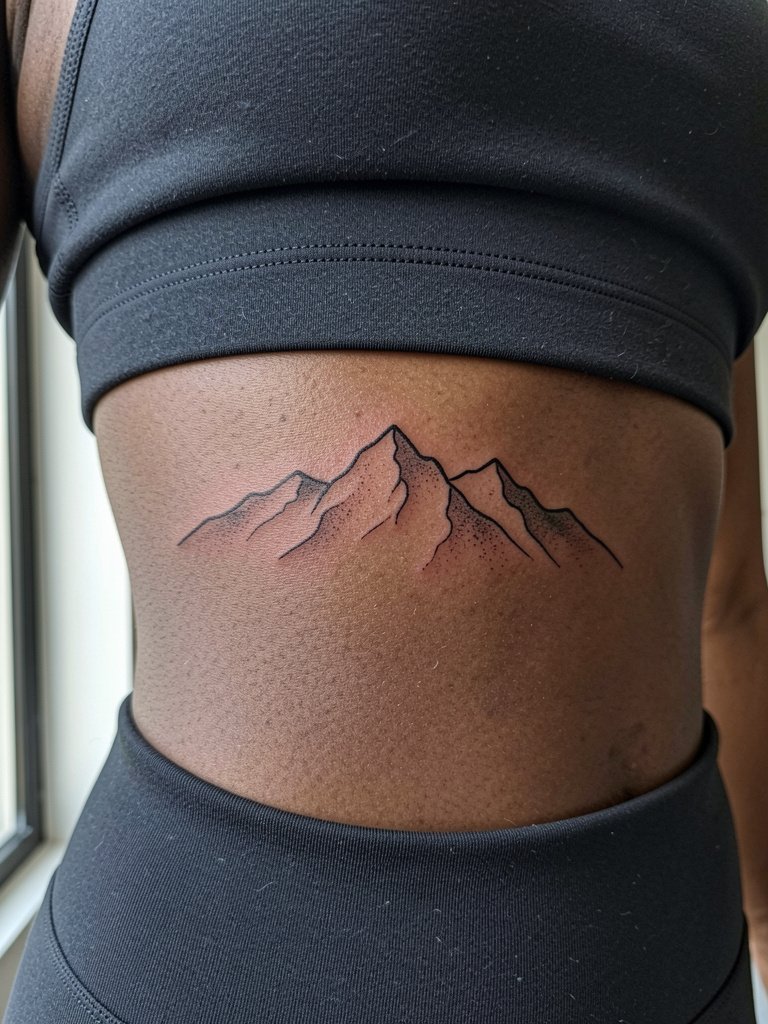
Ribcage placements spark a debate. One group of artists warns that fine line on ribs blurs quickly because the skin stretches and moves with breathing. The other group says that with slightly wider spacing and correct needle depth, fine line can settle cleanly on ribs and they show healed photos as proof. If you lean toward minimal mountains, ask the artist to draw the design with spacing adjusted for breathing and to show healed examples from three years post-session. Ribs are high on the pain scale, so plan for breaks and a comfy chair companion.
15. Constellation Match on the Ankle
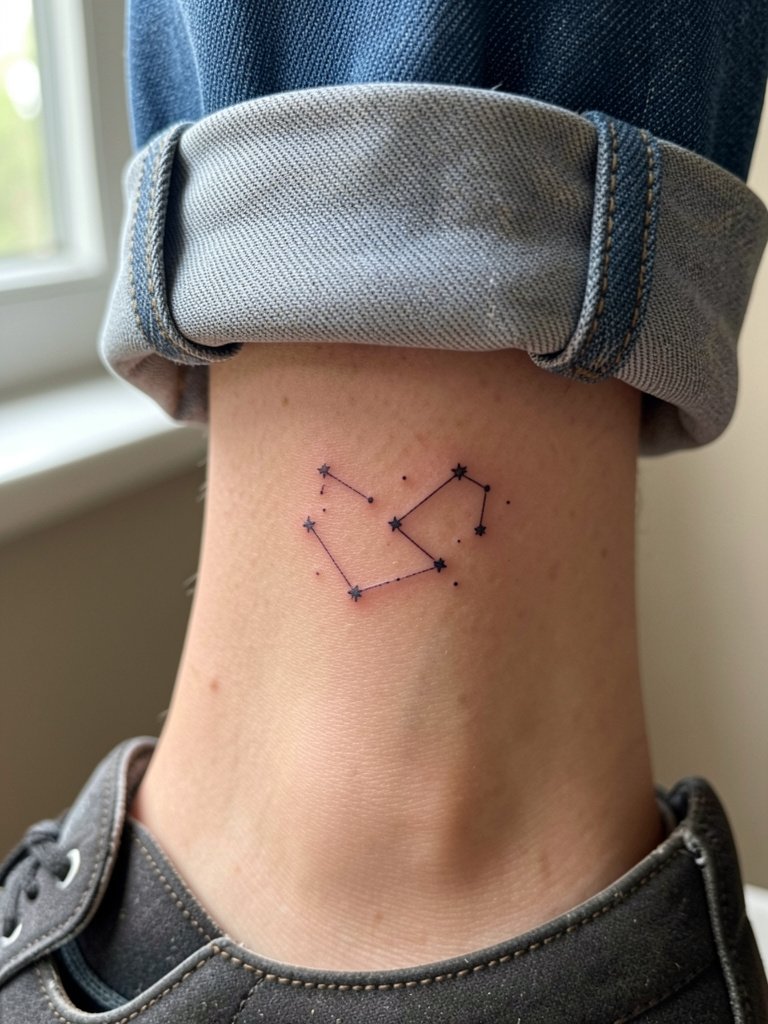
Ankle pieces face friction from socks and shoes so simple silhouettes outperform filigree here. Specify to the artist that dots and connecting lines should be spaced to tolerate daily abrasion. The ankle is low-to-moderate pain and sessions are quick. A frequent mistake is requesting tiny dot clusters that vanish under footwear rubbing. Expect a protective bandage and to keep the area dry until the initial scab lifts. For casual reveals roll your jeans cuff or wear low shoes so the stars are on clear display.
16. Small Script Coordinates on the Collarbone Edge
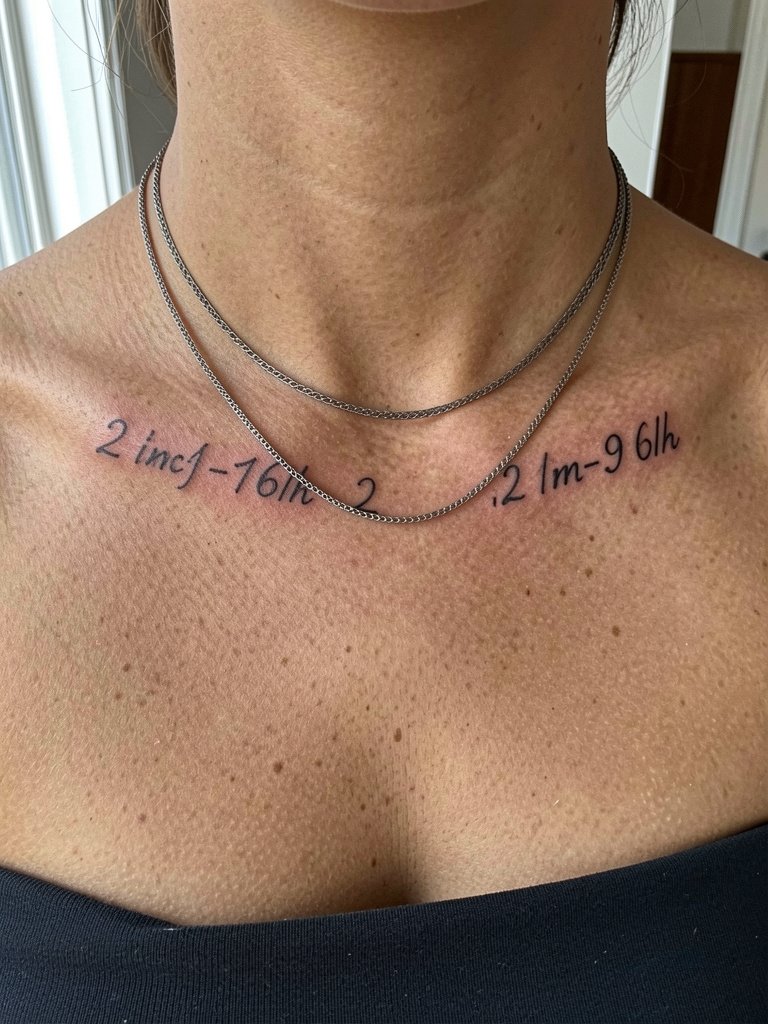
Coordinates near the collarbone work as discreet shared markers. Ask the artist to print the exact coordinates in the chosen script and tape it to the bone so you can confirm curvature and spacing. The collarbone sits on thin skin over bone so pain is higher than soft tissue spots. Expect subtle softening of thin scripts over the first two years and plan a touch-up if you want the digits to remain crisp. For styling, layered thin chains that sit just above the tattoo highlight the coordinates without covering them.
17. Two Matching Seedlings on the Calf
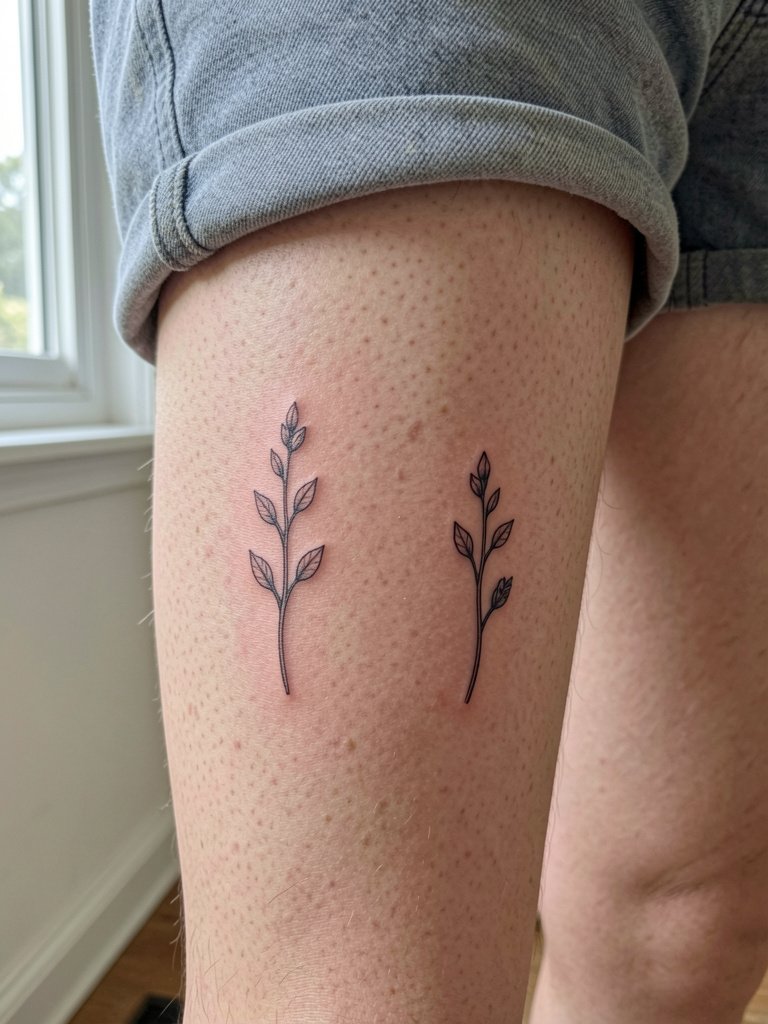
Calf placements are forgiving and show well when standing. For a seedling motif request slightly bolder stems so the tiny leaves do not disappear with muscle movement. Calf pain is lower and larger pieces can be done in one sitting. A common mistake is putting micro leaves too close together. For session comfort wear loose drawstring shorts so the artist can roll the leg up without tight fabric pressing on the fresh ink.
Frequently Asked Questions
Q: How long should we wait before getting matching couple tattoos?
A: Many people wait one to two years to feel steady about a shared symbol. Some couples choose to get ink earlier as a bonding ritual. Consider starting with complementary pieces that work independently so either of you can keep your own story if circumstances change.
Q: Watercolor or fine line for small matching pieces which ages better?
A: Fine line and solid blackwork tend to retain legibility longer on micro placements. Watercolor looks great at first, but tiny washes can blur and require touch-ups sooner. If you love watercolor, combine a faint outline or denser anchor points so the composition still reads as it softens.
Q: What should we bring to the consultation to get a custom complementary design?
A: Bring two or three clear reference images and a printed mockup at actual size. Ask the artist to draw the piece on tracing paper to show line weight and spacing. Be specific about which parts you want preserved and which parts you are open to them changing.
Q: Where can I find healed portfolio examples and local artists without naming people directly?
A: Search hashtags like #coupletattoo, #matchingtattoos, and #finelinetattoo on Instagram and TikTok, then filter by your city. Tattoodo and Booksy let you search portfolios by style terms such as "puzzle piece fine line" or "neo-traditional anchor wheel." Reddit communities like r/tattoos and r/tattooadvice surface peer recommendations and healed shots across skin tones.
Q: How often do couple tattoos need touch-ups?
A: Touch-up frequency depends on style and placement. Fine line wrist or nape pieces often benefit from a touch-up at 12 to 18 months. Colored or watercolor fills can need refreshes every two to five years. Consider budgeting a small session in your plan when you book the original appointment.
Q: Any wardrobe tips for session day and the first week of healing?
A: Wear clothing that lets the artist access the area without rubbing fresh ink. For forearm work choose a rolled cuff linen shirt or short sleeves. For hip and thigh sessions bring loose drawstring shorts so you can roll or slide fabric without pressure.