
Chest eagle tattoos age in ways newbies do not expect. Tiny fine-line heads on the collarbone look crisp in studio photos and then smear into an indistinct bird within a year. Bigger, heavier compositions with clear spacing and saturated fills keep their shape through movement, weight changes, and time. Read on for chest-specific layouts, session realities, and wardrobe tips that actually help the design last.
1. Full-Spread Traditional American Eagle on Chest
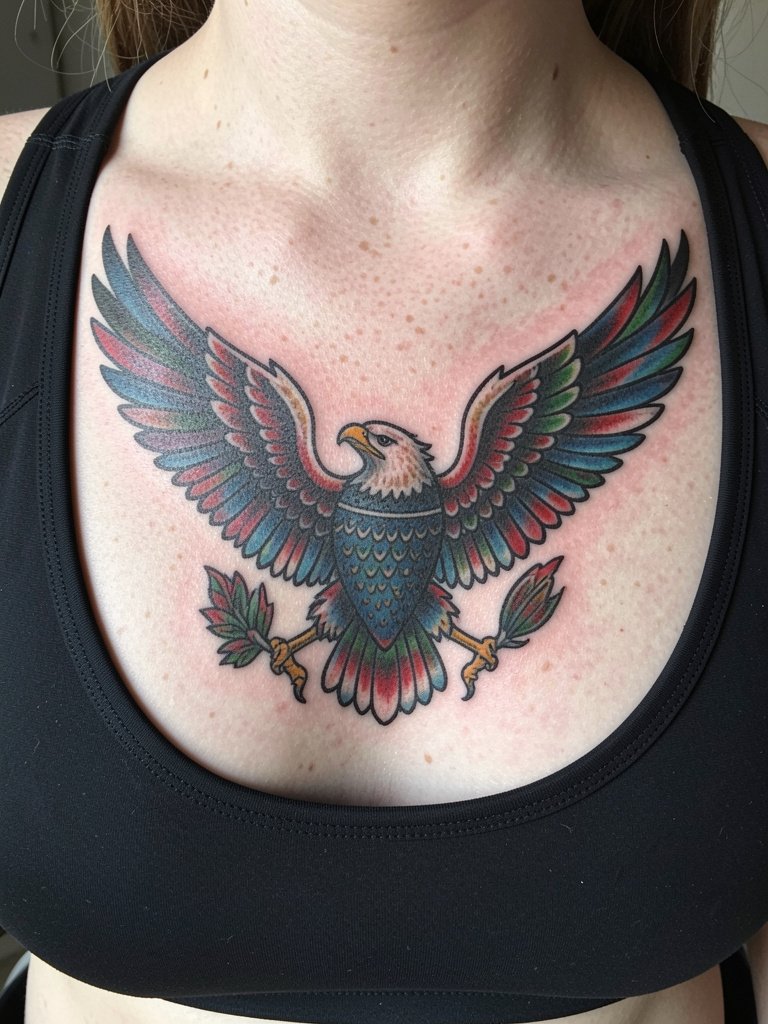
This is the archetypal chest eagle that reads from across a room. It favors bold linework and broad feather blocks so the wings stay distinct as the skin moves. Expect 2 or 3 sessions with long stretches of shading and color packing. A common mistake is shrinking the design to fit a narrow chest and keeping thin outlines, which causes feather detail to merge over time. For show-off outfits, an open-collar button-down frames the sternum without hiding the wings, and a thin layered chain adds texture without competing with heavy linework. Try an open-collar button-down and a thin silver chain for evenings out.
2. Neo-Traditional Eagle with Detailed Shading
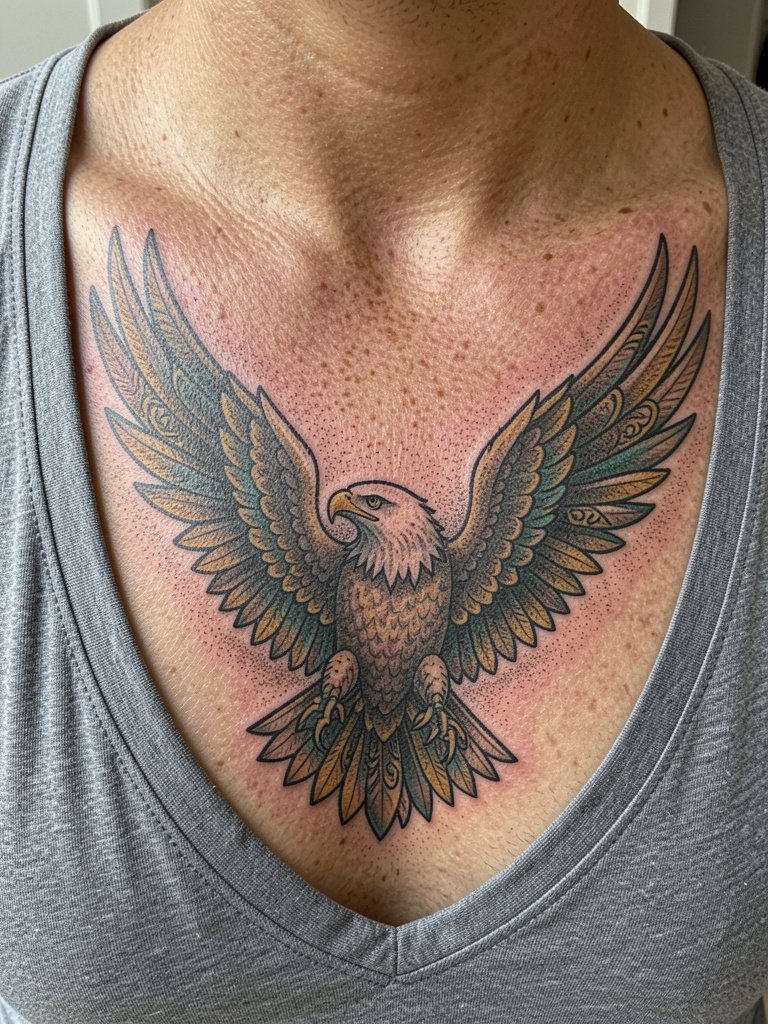
Collectors choose neo-traditional when they want traditional presence with painterly depth. This style uses heavier saturation than pure realism, and that saturation helps the image stay readable through the first five years. Tell your artist which color accents you want and bring swatches so the gold or teal matches your vision rather than being improvised. For session comfort wear a v-neck tee so the artist can reach the chest and shoulder seam easily. Expect moderate-to-high pain around the sternum and a multi-session schedule to let color layers heal between passes.
3. Photorealistic Bald Eagle Head Portrait
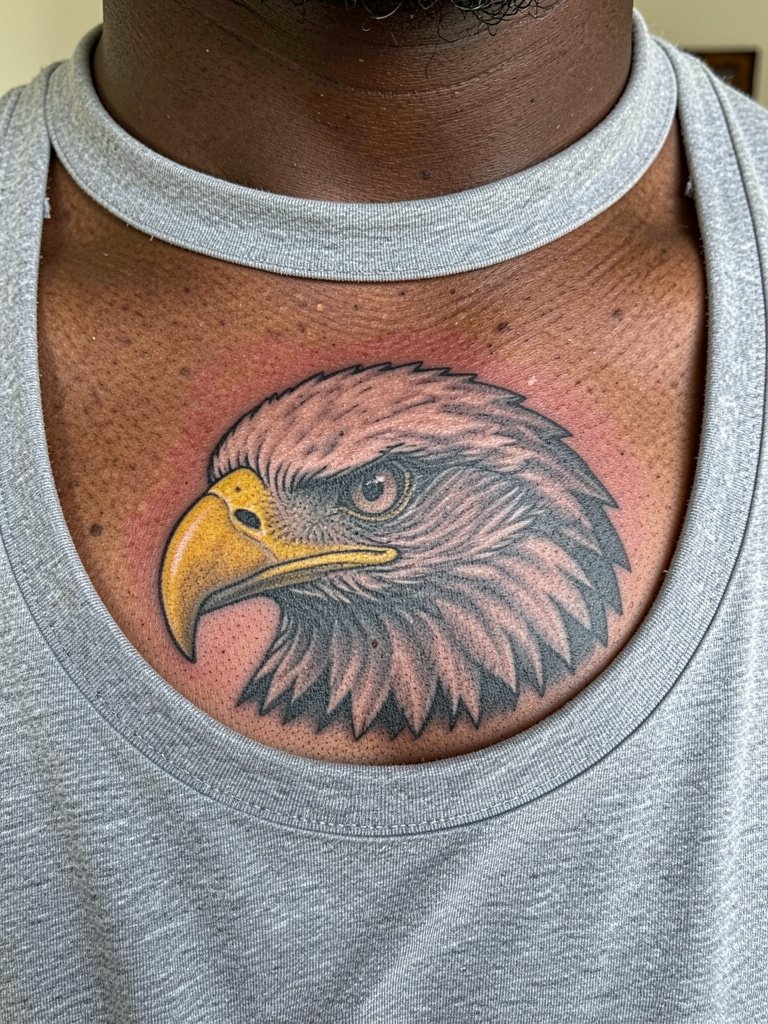
Photorealism demands space for feather gradients and contrast. Sessions usually run shorter than wingspan pieces, but artists focus intensely on tonal transitions. There is a practical debate about numbing cream. One camp says numbing cream helps first-timers and long sessions without harming healing. The other camp warns that numbing can mask tissue stress and prefers natural pain management. If you plan to use topical numbing, ask about timing and brand so the artist can adjust depth and shading accordingly. Crew-neck tees in neutral shades keep attention on the eye detail when you are out and about.
4. Wings-Spread Eagle Wrapping Around Shoulder
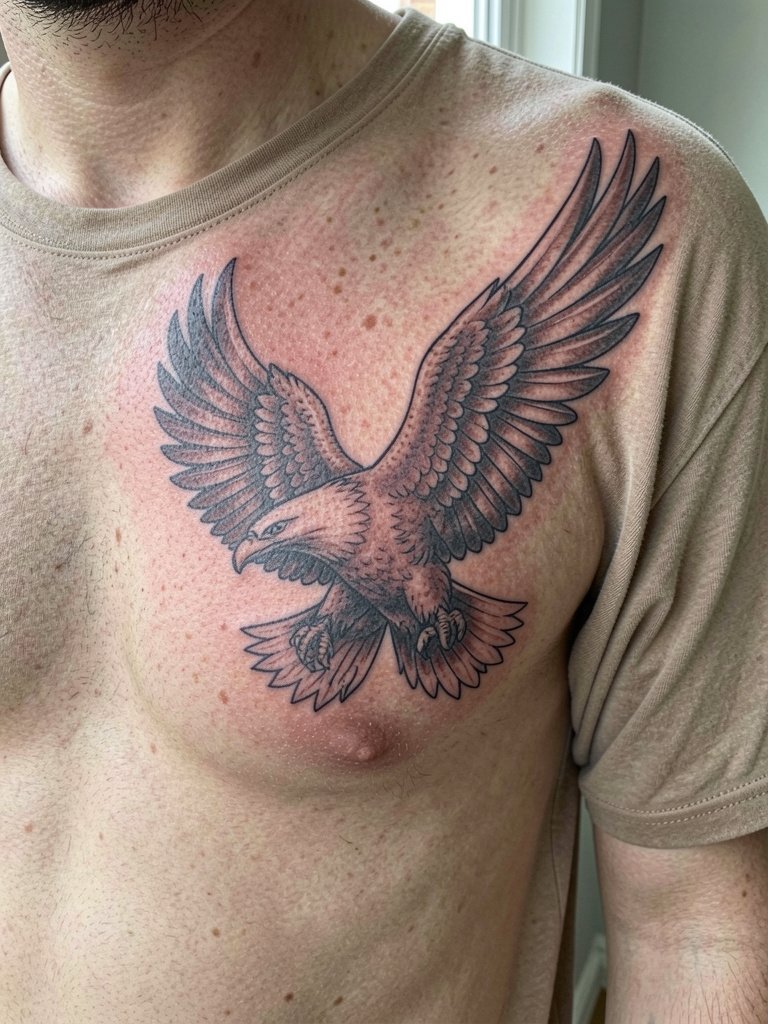
This layout turns the chest piece into a half-sleeve when the wings sweep onto the deltoid. The session feels like alternating long shading passes and linework checks. A common mistake is leaving the shoulder connection underresolved, which makes the wing tips look crowded. For the session wear a short-sleeve shirt with roomy armholes so the artist can move around the deltoid without the fabric tugging. When showing off the wrap, a V-neck tee in black or navy creates a continuous visual line from sternum to shoulder.
5. Geometric or Tribal Eagle Silhouette
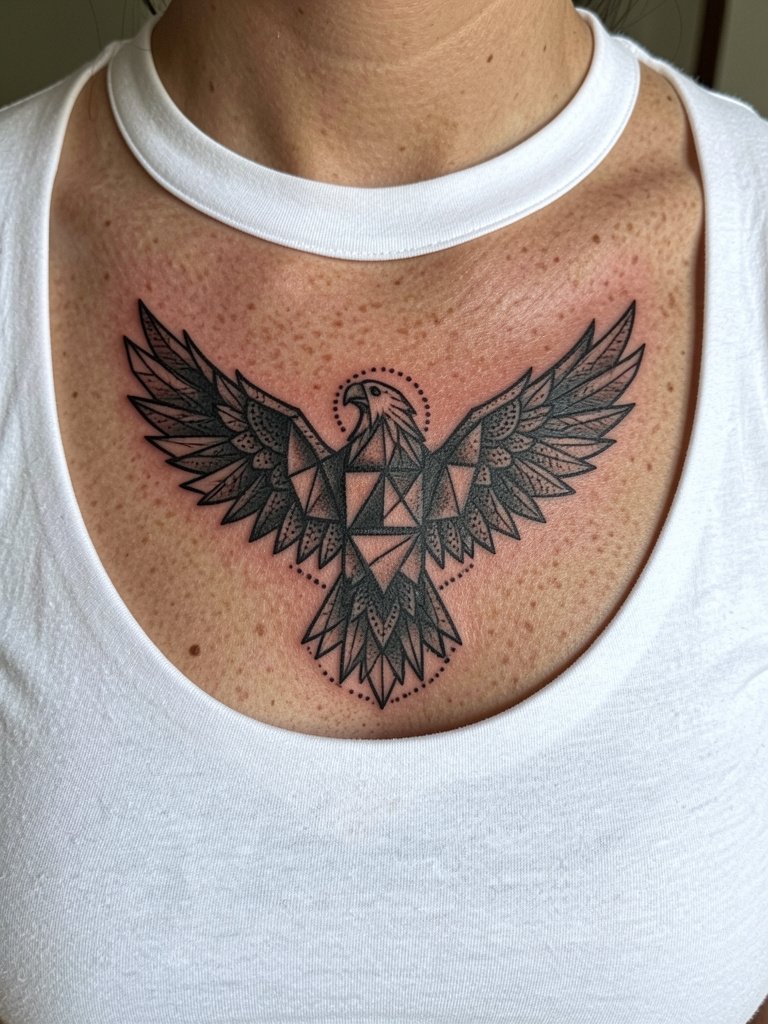
Abstract forms read differently as skin moves, so geometry relies on perfect spacing from the stencil stage. The design works for people who want symbolic eagle energy without literal feathers. Mistakes happen when designers cram too many small triangles into a 4-inch area, which blurs into a dark shape over time. For show-off wear, a slim white tee frames the negative-space silhouette cleanly. Ask for healed photo references from the artist that show this exact geometry on chest skin rather than just fresh, saturated flash.
6. Perched Eagle on a Mountain Peak
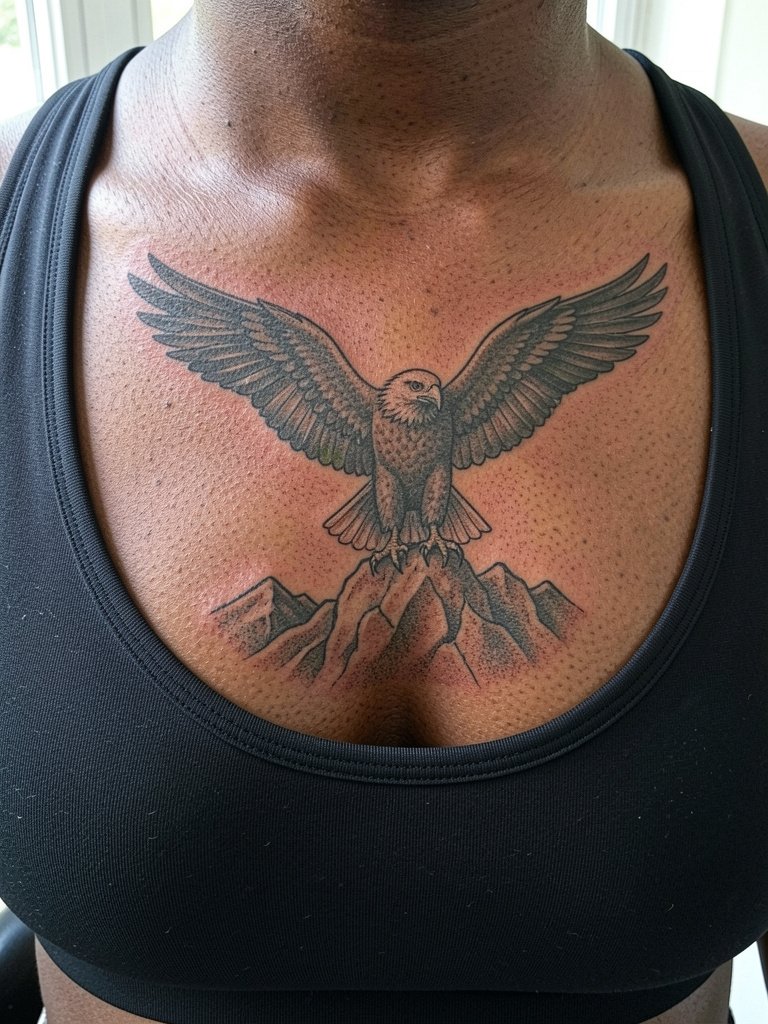
This narrative composition pairs an eagle with landscape cues to add personal meaning. It reads as a scene rather than an emblem, so spacing and negative areas are critical for long-term clarity. A practical error is adding tiny mountain detail that fades into a gray patch by year two. For session wear choose a loose button-down or bandeau so the artist has sternum access without fabric rubbing post-session. The piece suits collectors who want a centerpiece that leaves room for future chest additions.
Session Day Picks
The first six designs above cover big chest layouts and head-only placements, so these items smooth the session and the first week of healing.
-
Hustle Butter Deluxe Tattoo Aftercare. A non-petroleum balm some people use during the later healing window to keep larger chest areas supple and reduce scab cracking after the initial ointment stage.
-
Mad Rabbit Tattoo Aftercare Salve. Keeps shaded areas from drying out and helps preserve stipple and subtle gradients from cracking during the SCN phase.
-
Topical Tattoo Numbing Cream. Useful for longer sternum and wingspan sessions when you want an easier first few passes, but check artist comfort before applying.
-
Fragrance Free Gentle Body Wash. Mild cleansers help the chest area avoid irritation during daily showers while the skin repairs itself.
-
Aquaphor Healing Ointment. A thin layer in the first 48 to 72 hours helps lock in moisture on larger color blocks without clogging the needle channels.
7. Soaring Eagle with Sunrise or Flags
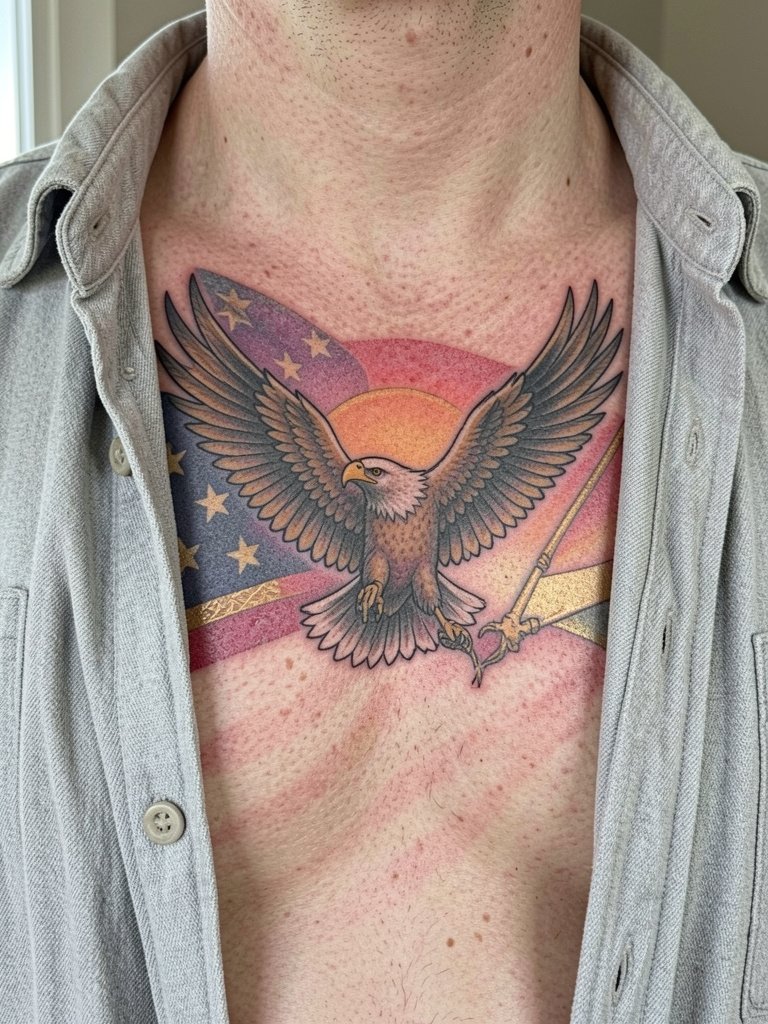
Patriotic or sunrise motifs amplify the eagle's narrative. When combined with flags or rays, keep those background elements broad so they remain legible on the chest. A typical error is squeezing detailed flags into small negative spaces which end up as muddled color blocks later. For wear, an open-collar linen shirt in navy or olive frames the color and keeps the chest visible without overstating anything. Expect the color work to need careful layering to keep the sunrise gradient smooth over multiple sittings.
8. Minimalist Eagle Head Outline
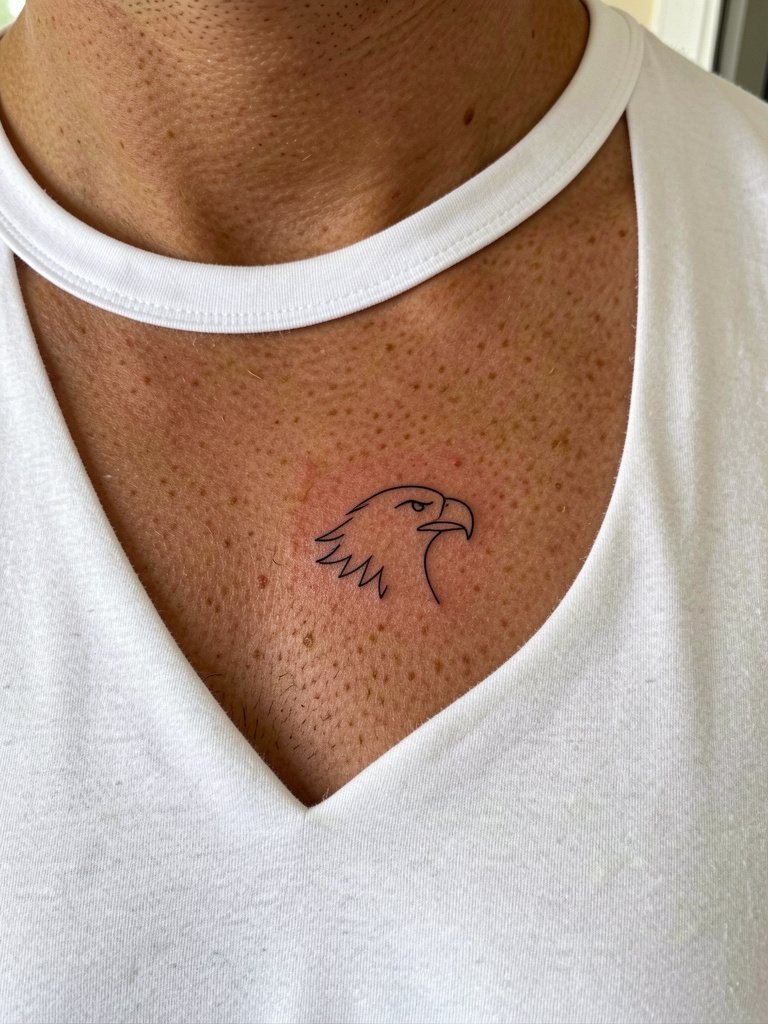
Fine-line chest pieces spark a real split in opinion. One camp insists that thin single-needle work on the chest blurs within two to three years because the skin stretches and breath-driven movement softens lines. The opposing camp argues that with slightly heavier spacing and expert depth control, minimalist heads can sit clean for three or more years and point to healed photos as proof. If you prefer minimalism, ask the artist to show healed close-ups on chest skin and plan for a likely touch-up in the second year. A slim white tee showcases delicate contours and keeps the composition subtle.
9. Eagle Feather Floating in Sky
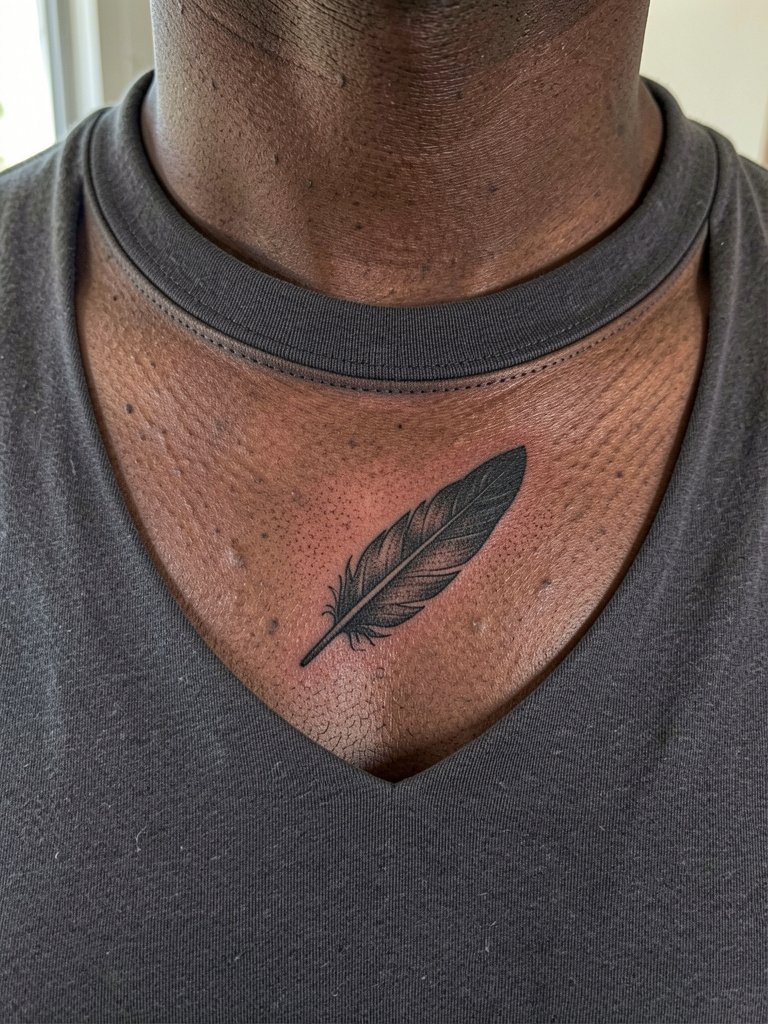
A single feather reads as a lighter, poetic take on eagle symbolism and is easier to place on narrower chest areas. The trick is keeping it at least four inches long so the barbs hold definition. Tiny filigree feathers shrink into shadow when the skin moves and when the area heals. For appointment day wear a crew-neck shirt you can lift without tugging the chest, and plan for a one-session visit with focused stipple shading that preserves texture.
10. Bald Eagle with Yellow Eye and Beak Accent
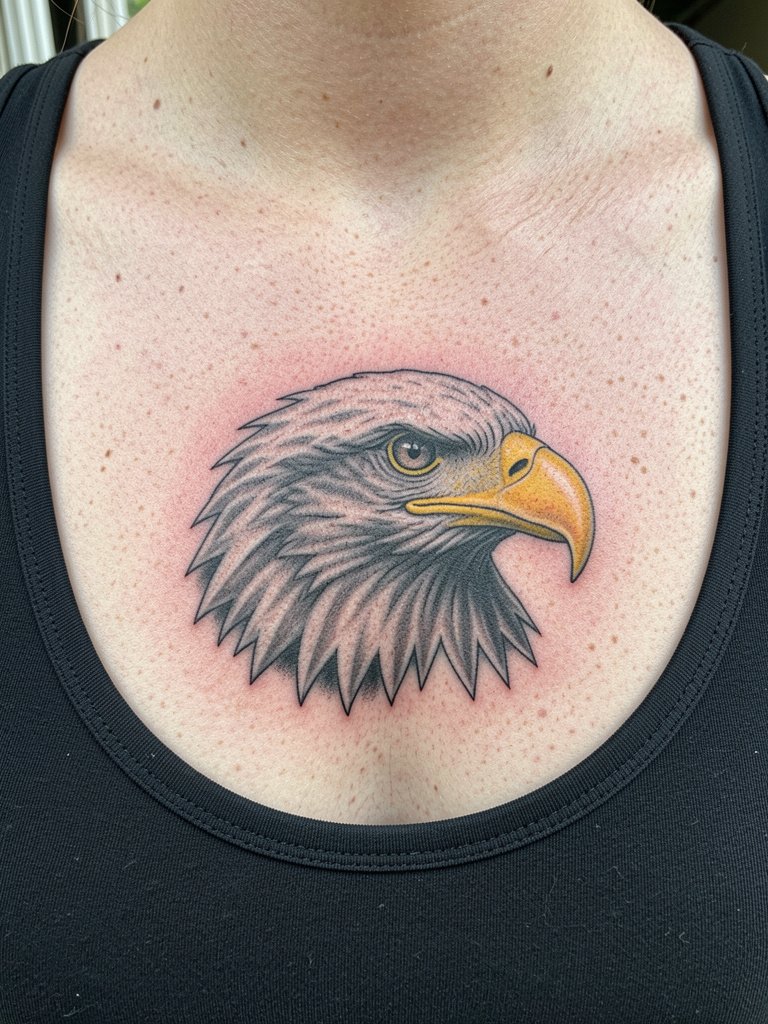
A single bright color used sparingly can become the optical anchor for a black & grey composition. The yellow eye is both a visual pop and a narrative accent some people tie to luck. Keep the accent limited so it reads as intentional contrast rather than a faded color block down the line. For evenings out pair the piece with a crew-neck in charcoal or heather gray so the yellow snaps against neutral fabric. Plan for a two-session timeline if you want the black & grey depth and a saturated yellow that keeps its tone.
11. Eagle Clutching Shield and Arrows (Great Seal Style)
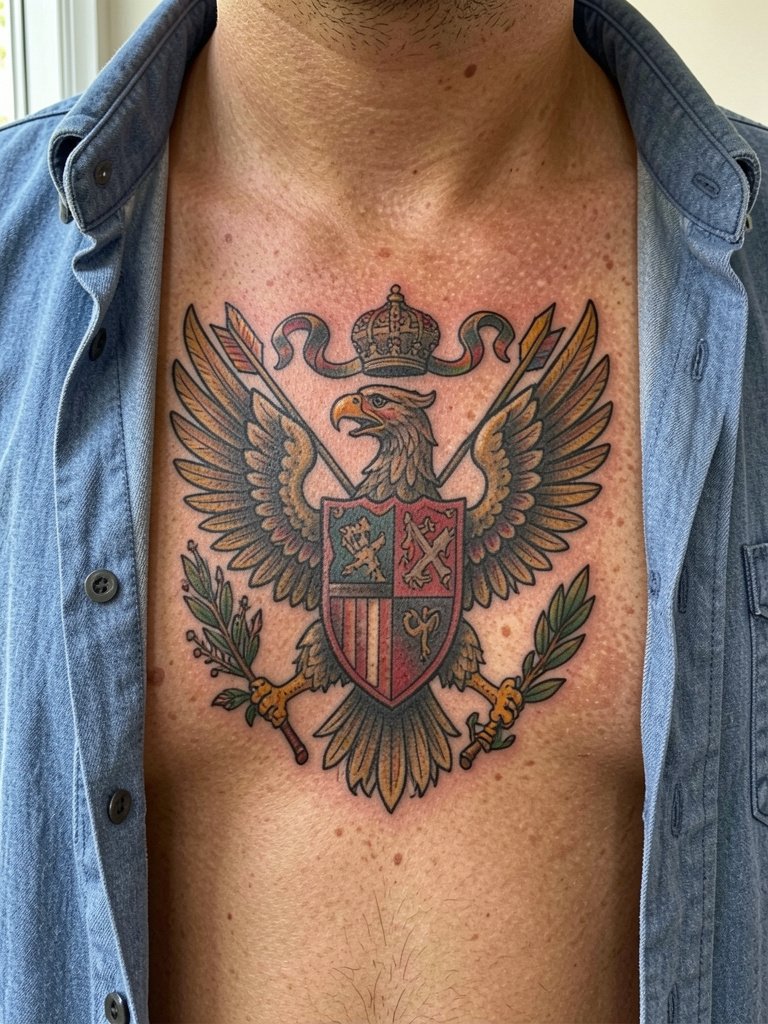
Heraldic compositions need scale to keep every element legible, so this design is for collectors prepared to commit to a multi-session project. A common misstep is compressing the shield detail into too small an area. The shield, arrows, and olive branch only resolve cleanly when the piece is large enough for the artist to render each motif with proper spacing. For the session wear an open-collar shirt so the artist can check symmetry across the sternum quickly between passes. This is the kind of chest centerpiece that becomes the anchor for future torso work.
Frequently Asked Questions
Q: How big should an eagle be on the chest to avoid blurring?
A: For feather detail allow at least five inches for a head-only portrait and eight to ten inches for clear wing definition. Smaller than that the bird risks becoming a silhouette over time, so size is less about ego and more about long-term legibility.
Q: Is a full wingspan worth the extra pain and sessions compared with a head-only piece?
A: It depends on your goals. One camp feels a full wingspan delivers the heraldic presence only large work can achieve. Another camp favors head-only portraits as wearable, quicker, and easier to care for. If you want a chest centerpiece that anchors future sessions, plan for the full wingspan and the 2 to 3 sittings that come with it.
Q: Should I use numbing cream for a sternum or wingspan session?
A: There is a split opinion. Some people find topical numbing cream makes long chest work manageable without harming healing when applied correctly. Others worry it masks pain that signals tissue stress and prefer no numbing. If you are considering numbing, tell the shop which product and timing you have in mind so the artist can adapt their technique.
Q: Where can I find good portfolios and healed examples without naming artists?
A: Search hashtags like #baldagletattoo, #eaglechesttattoo, and #neoagletattoo on Instagram and TikTok, then filter by location to find nearby studios. Tattoodo and the Inked App let you search keywords such as "eagle chest traditional" and show healed examples. Reddit threads on r/tattoos and r/tattooadvice are useful for peer recommendations and real healed photos across skin tones.
Q: What should I wear to my appointment for a sternum or collarbone eagle?
A: For sternum pieces wear a fitted bandeau, sports bra, or an open-collar shirt so the artist has direct access and the fabric does not rub the fresh ink afterward. For collarbone head-only tattoos choose a crew-neck or slim tee you can lift without stretching. A simple accessory such as a thin chain can frame the area after healing if you want to highlight the piece.