Pixelated trailers and glitch overlays dominate feeds, but what actually holds up on skin is different from what trends hard on TikTok. Bold blocky pixels and strategic blackwork tend to age better than ultra-fine 8-bit squares done too small. Read on for 29 sleeve concepts that balance fandom fidelity with how the ink behaves over months and years, plus smart session and wardrobe notes that help these designs read tricked-out, not muddled.
1. Pixel Art Retro Gaming Sleeve (Outer Forearm)
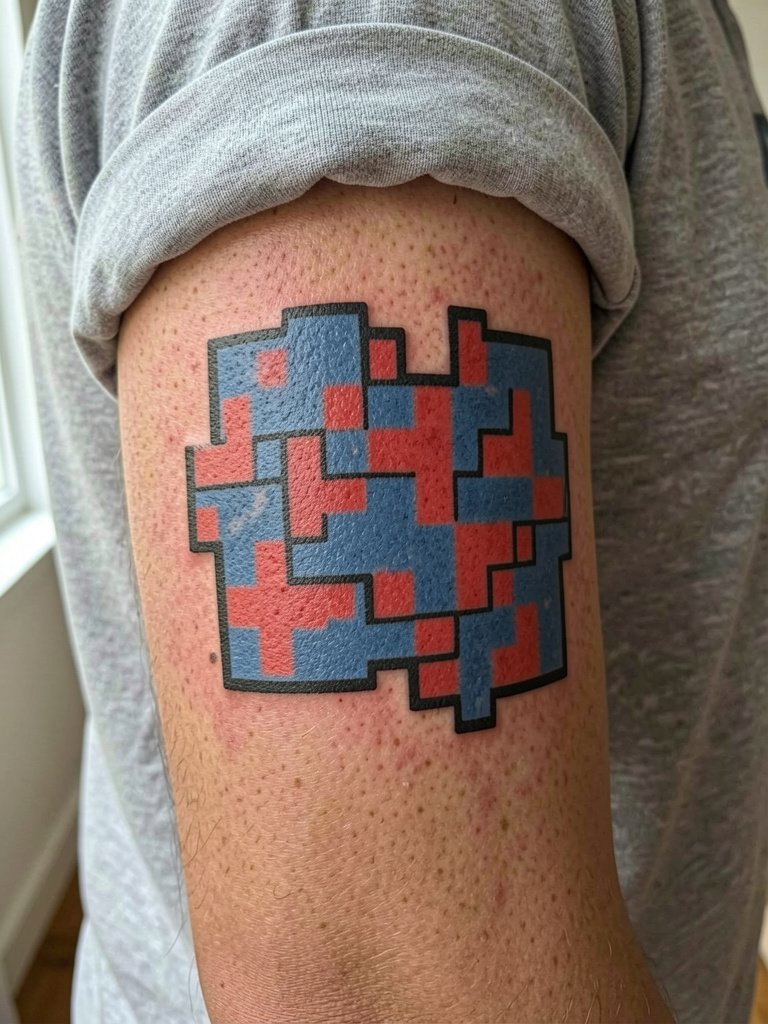
Pixel retro sleeves look best when the pixels have breathing room. One camp says tiny pixel blocks on the outer forearm blur within two years because the skin flexes and small dots spread. The other camp says slightly oversized blocks with strict black outlines hold for much longer, and they point to healed three-year examples as proof. If you want the 8-bit vibe without early mush, ask for blocky pixels scaled up and firm outlines. For the session wear a rolled short-sleeve tee so the artist has clear access, and for showing off try short sleeve graphic tees in neutral shades.
2. Cybersigilism Glitch Sleeve (Inner Forearm)
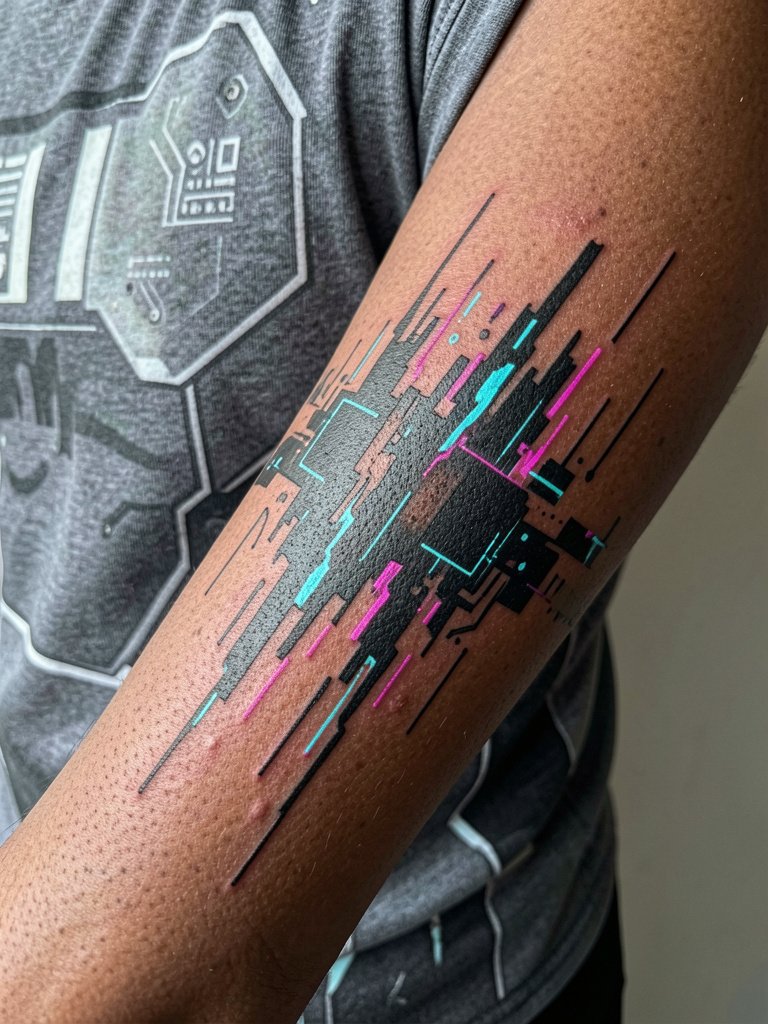
Cybersigilism reads like motion on stationary skin when done with crisp, controlled linework. The common mistake is soft, blurred accents that read like a watercolor attempt. I recommend strong black anchors with narrow neon touches to keep the glitch energy. Session-wise the inner forearm is easy for long passes, so expect multi-hour detail work and stipple shading. For evenings out, the sleeve pairs well with black mesh or tech-wear tops that echo the cyan accents without washing them out.
3. Patchwork Video Game Icon Sleeve (Shoulder and Upper Arm)
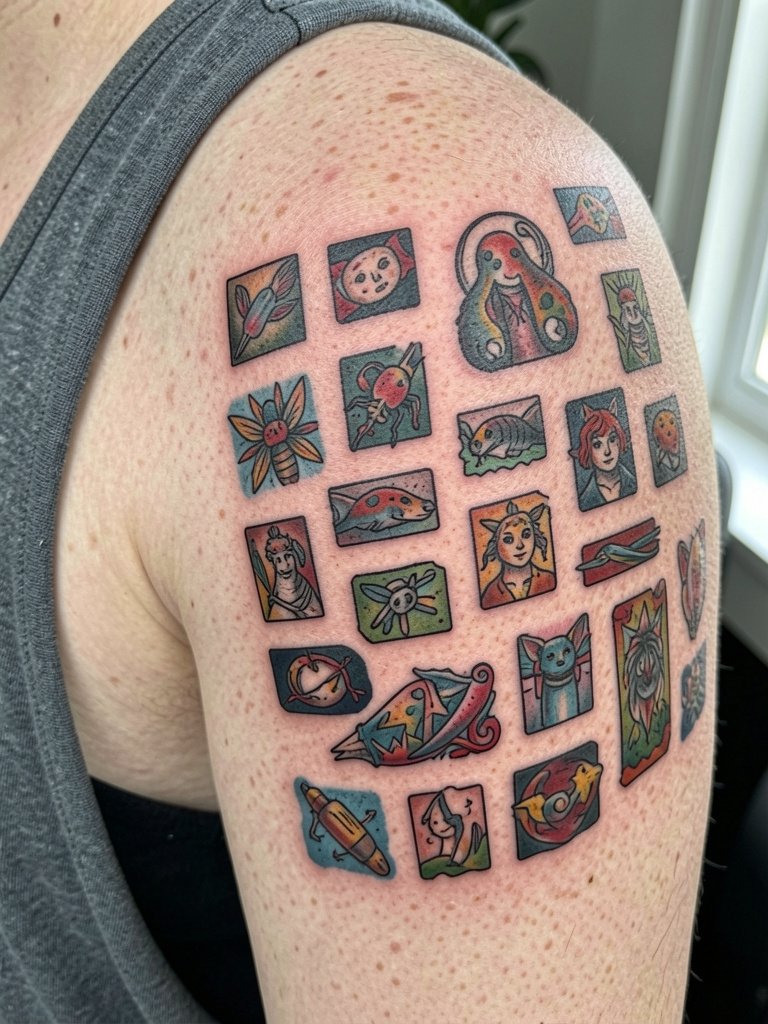
Patchwork is a collectors' approach that lets you add icons over years. The mistake people make is clumping icons too close, which causes internal detail to fuse as the ink settles. Plan icon spacing so each piece can age with a small touch-up window. Bring two reference photos at different scales so the artist can show how a three-inch icon reads against a five-inch background. For show-off styling try open-back tank tops that expose the shoulder canvas.
4. Full-Scene Fantasy Game Sleeve (Outer Upper Arm or Inner Forearm)
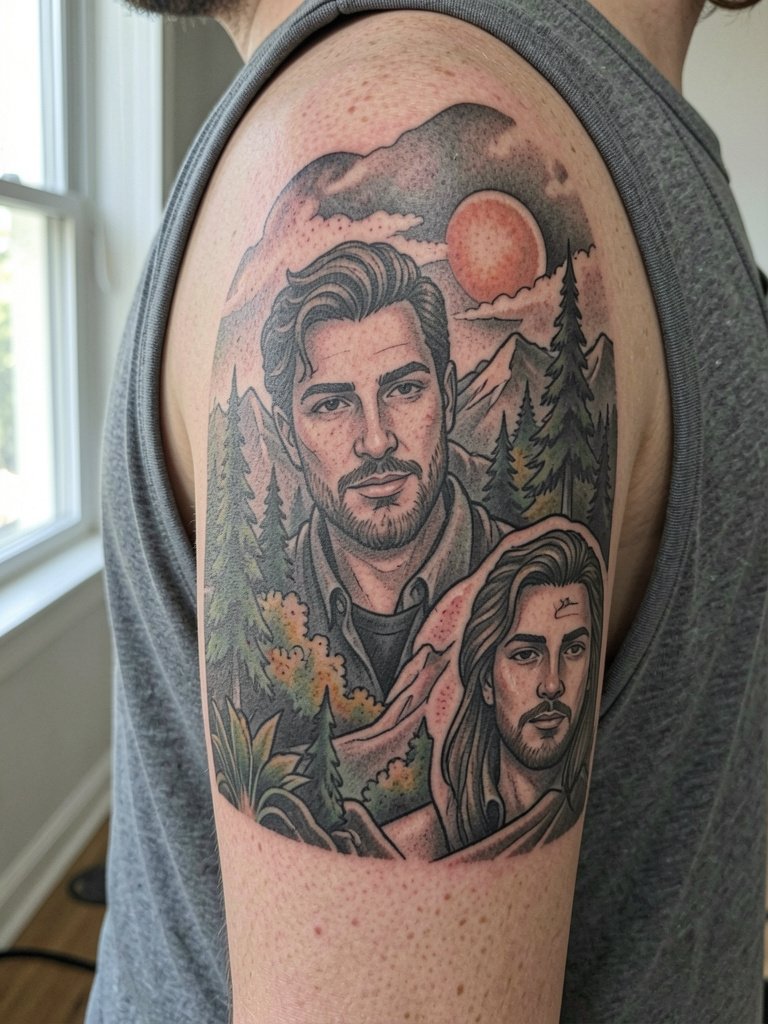
Full-color character scenes split artists into two camps. One group argues that full-color character sleeves fade to muddy tones after five years, especially on sun-exposed arms. The other group argues that accurate saturated palettes are essential to capture iconic characters and that modern inks can last seven years or more with careful aftercare. Choose if you want fidelity or longevity, and plan a conservative color palette if fade risk worries you. For sessions wear an open-back tank so the shoulder is free, and consider layered antique pendant necklaces to complement mythic themes when you show it off.
5. Minimalist Abstract Line Game Symbol Sleeve (Inner Wrist)
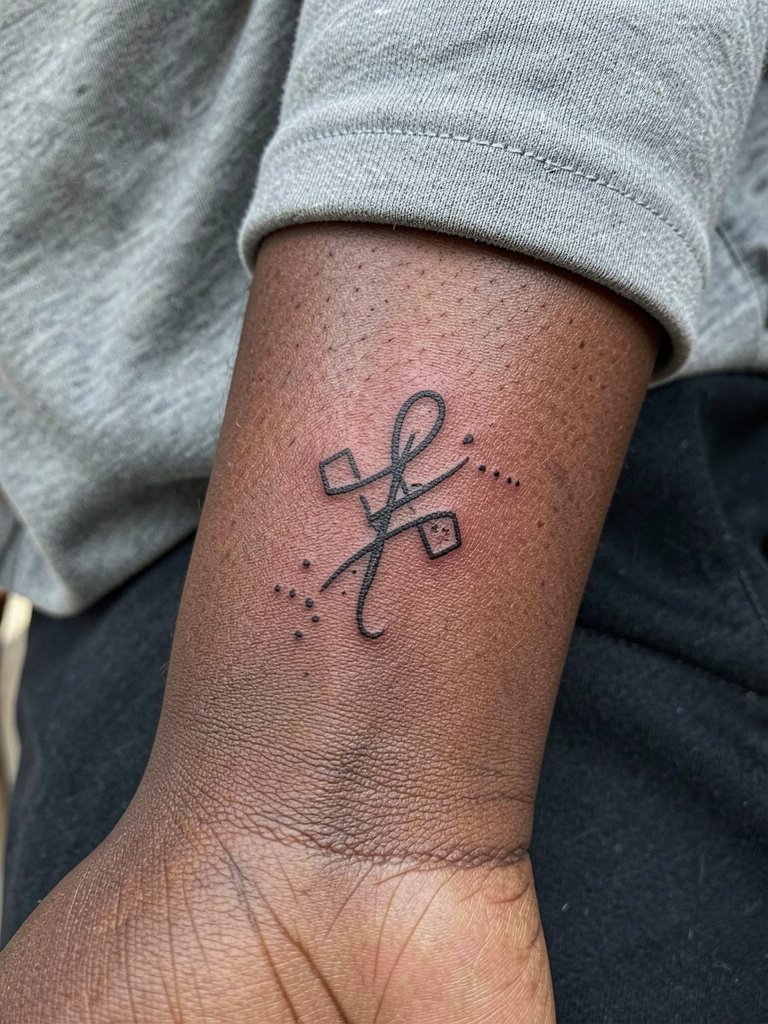
Minimalist wrist symbols photograph small and intimate but they also blur fastest on high-motion skin. The biggest mistake is going too tiny with single-needle work. If you want the subtle look but longer life, increase the line weight slightly and plan a touch-up in 12 to 18 months. For the appointment remove watches and slip on minimalist watch styles on the opposite wrist to keep the focus balanced.
6. Black-and-Grey Duality Character Sleeve (Outer Upper Arm)
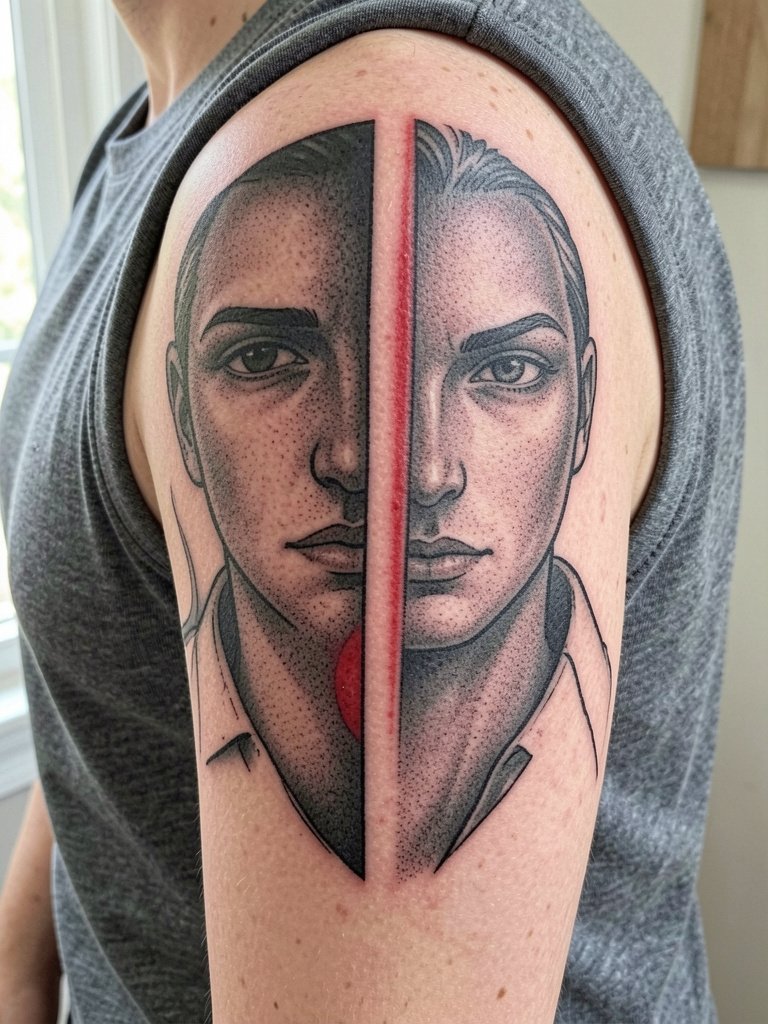
Duality pieces are all about contrast and composition. The common misstep is trying to cram two detailed portraits into a small bicep area. Opt for one large focal portrait and a mirrored silhouette for the opposing side. Plan one or two touch-up sessions early to keep high-contrast edges crisp. For evenings pair the sleeve with open-shoulder cuts in charcoal or olive that let the grayscale read without competing color.
Pre-Session Essentials
The first six sleeve concepts often need different prep gear for long color fills and tight linework. A few targeted items smooth the chair day and the first week of healing.
-
GlitchFix Spray. Useful for cyber or glitch sleeves because it helps keep sharp edges from softening during the first few days of healing.
-
OutlineGel Pro. Designed for pixel-style outlines and larger blocky pixels to reduce dot spread that causes early blur.
-
EverMatte Duo. Matte black plus white highlight pairing for micro-realism portraits to keep contrast strong across skin tones.
-
Solar Gold Accent Ink. A restrained gold tone that lifts black-and-grey palettes on darker skin while avoiding muddy fades.
-
Black Mat Ink. A mainstream matte black option that many people prefer for long-term saturation, especially on deeper skin tones.
7. Mythology-Inspired Game Deity Sleeve (Shoulder and Upper Arm)
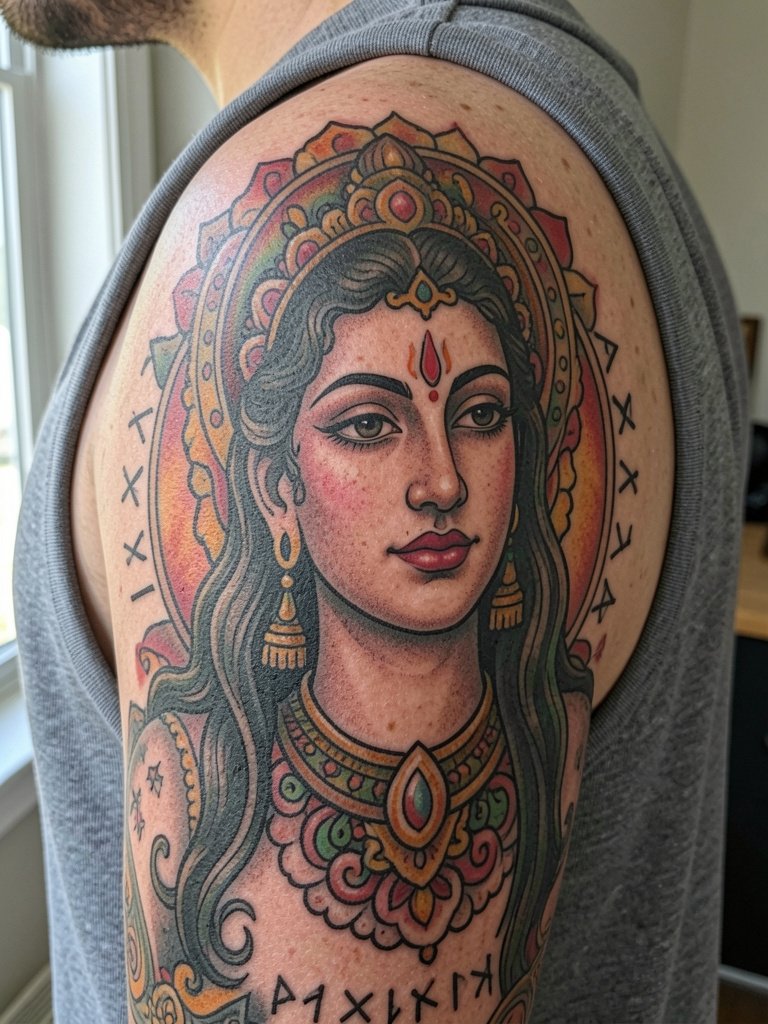
Mythic game deities benefit from scale and ornament. The mistake is shrinking intricate runes and borders down until they lose definition. Pick a scale that lets the rune strokes sit cleanly after healing, and expect a longer session for ornamental fills. For showing off choose antique gold pendant necklaces that echo the mythic palette without competing with the shoulder piece.
8. Intricate Floral + Game Symbol Mixed Sleeve (Inner Forearm)
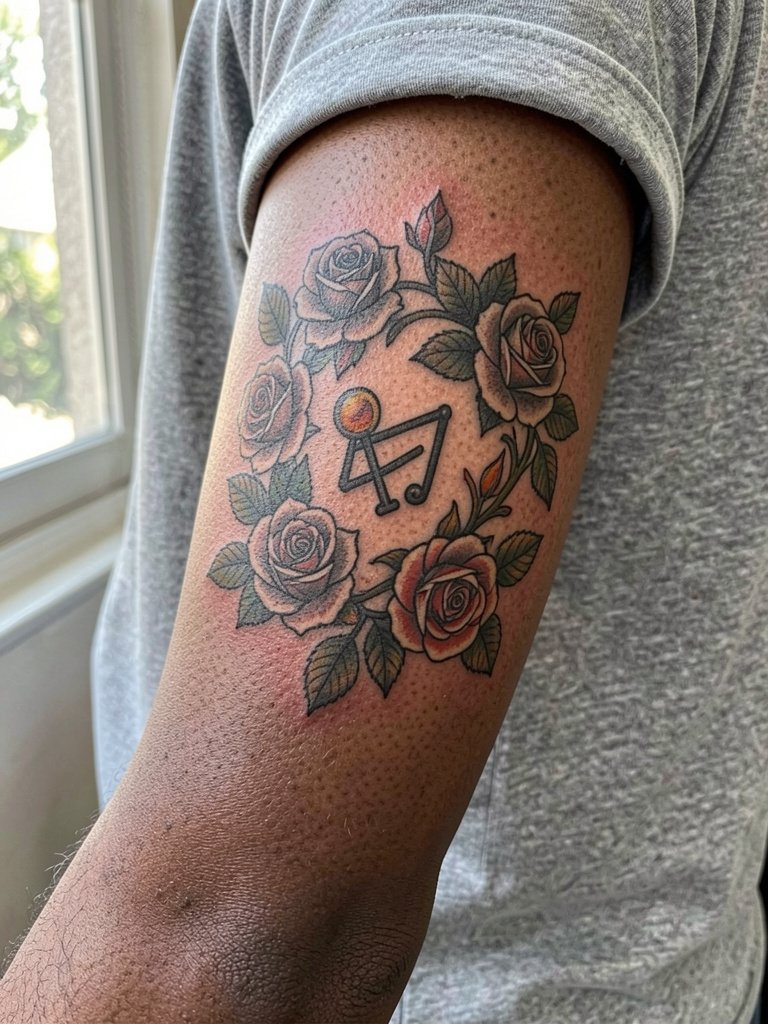
Botanicals soften the gaming motif and help with aging because organic shapes hide small shifts in linework. A common error is over-detailing tiny petals next to a pixel icon. Keep floral elements bold and use one accent color to tie the icons into the composition. For the session wear a loose short-sleeve so the artist can work the inner forearm easily, and for nights out try rolled cuff tees in muted tones.
9. Micro-Realism Pop Culture Portrait Sleeve (Inner Upper Arm)
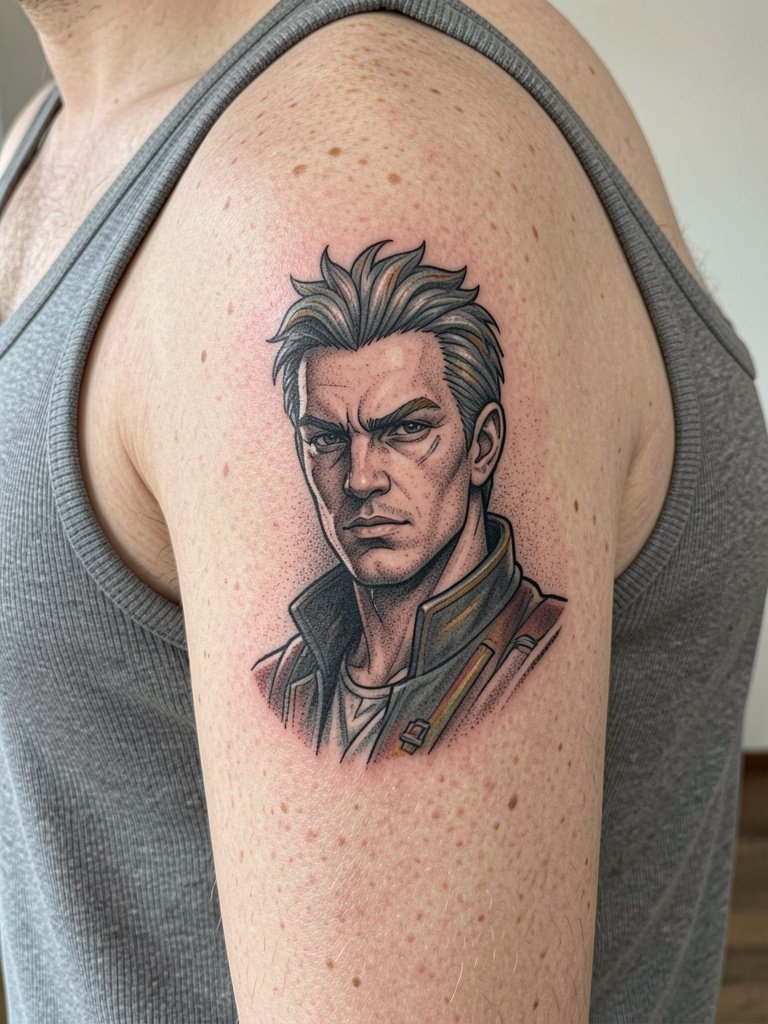
Micro-realism portraits are high-demand but they need scale and careful highlight balance. Tiny portraits on high-motion skin will soften quickly. Plan a portrait at 1.5 to 3 inches and expect a six-month check for saturation. For showing off, delicate layered gold chains in cream or sand tones keep the look editorial without obscuring the inner arm.
10. Ignorant-Style Retro Game Character Sleeve (Outer Forearm)
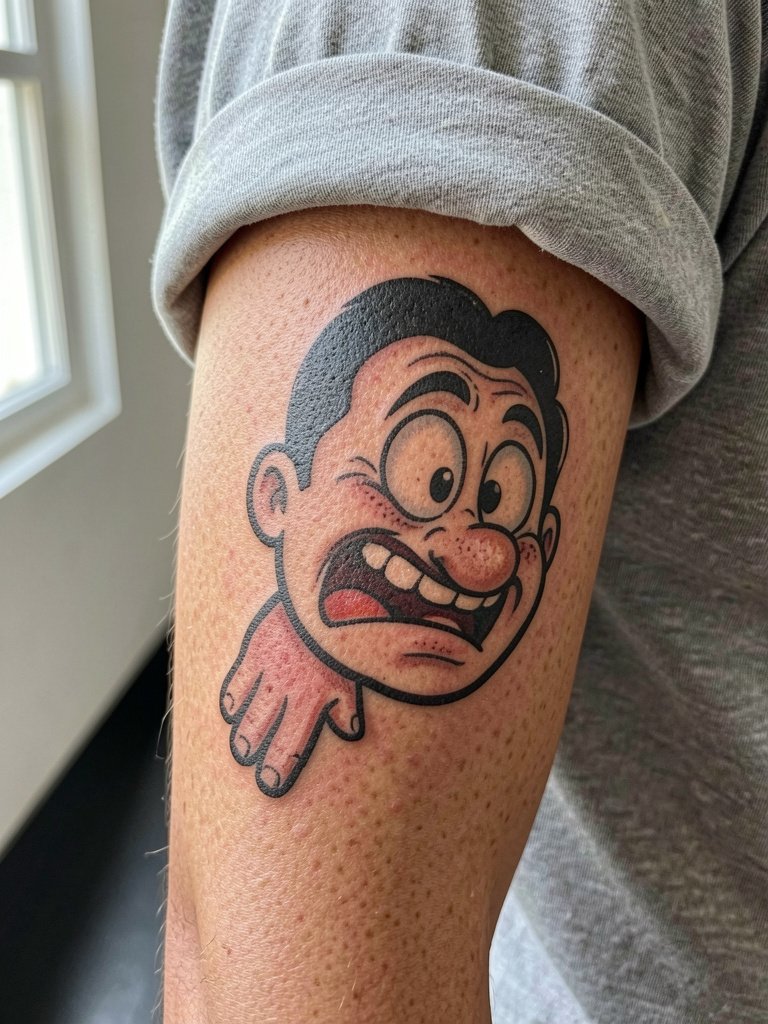
Ignorant-style pieces thrive on thick outlines and playful proportions. The usual mistake is dialing down the outline thickness to look "clean" in photos, which loses the style's energy in person and ages poorly. Keep outlines chunky and flat fills even. For a casual fit, pair the sleeve with layered silver chain bracelets on the opposite wrist and a rolled cuff tee during show-off moments.
11. Ornamental Mandala + Game HUD Sleeve (Inner Forearm)
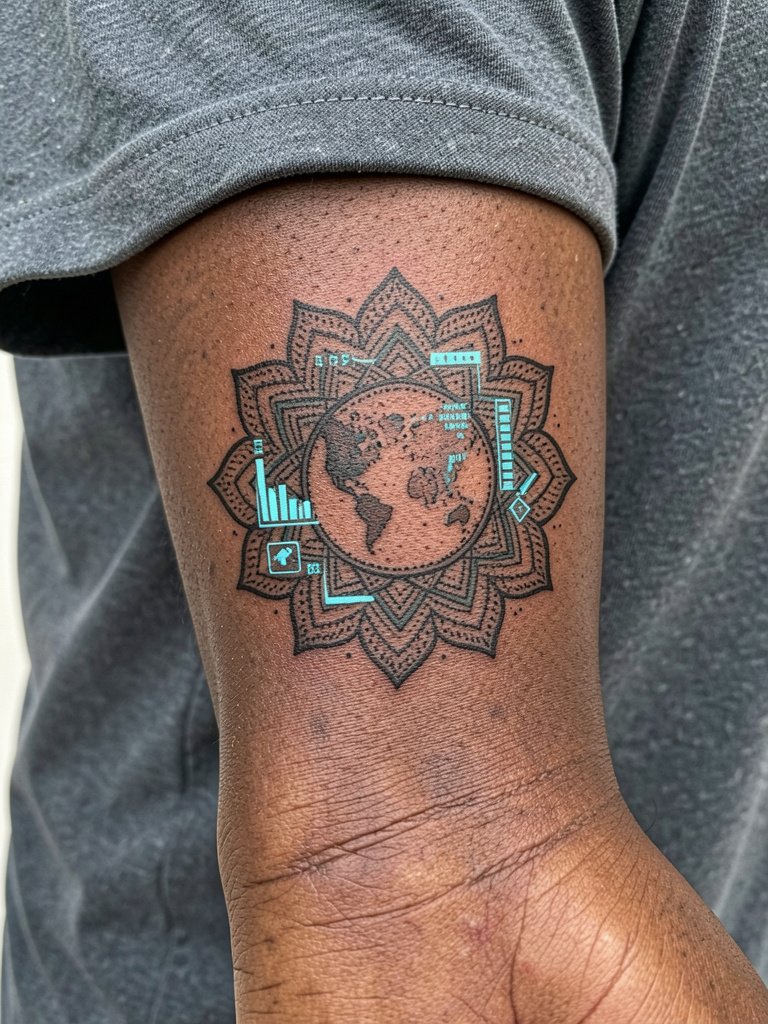
Mandala integration creates tech-meets-spiritual contrast and gives HUD elements structure. A common error is packing HUD icons too small inside dense geometry. Increase icon scale and pick one accent color so readability holds as the piece ages. For sessions wear a short sleeve or sleeveless top and consider thin silver geometric rings to echo the pattern when you show the tattoo.
12. Watercolor-Less Abstract Game Scene Sleeve (Outer Upper Arm)
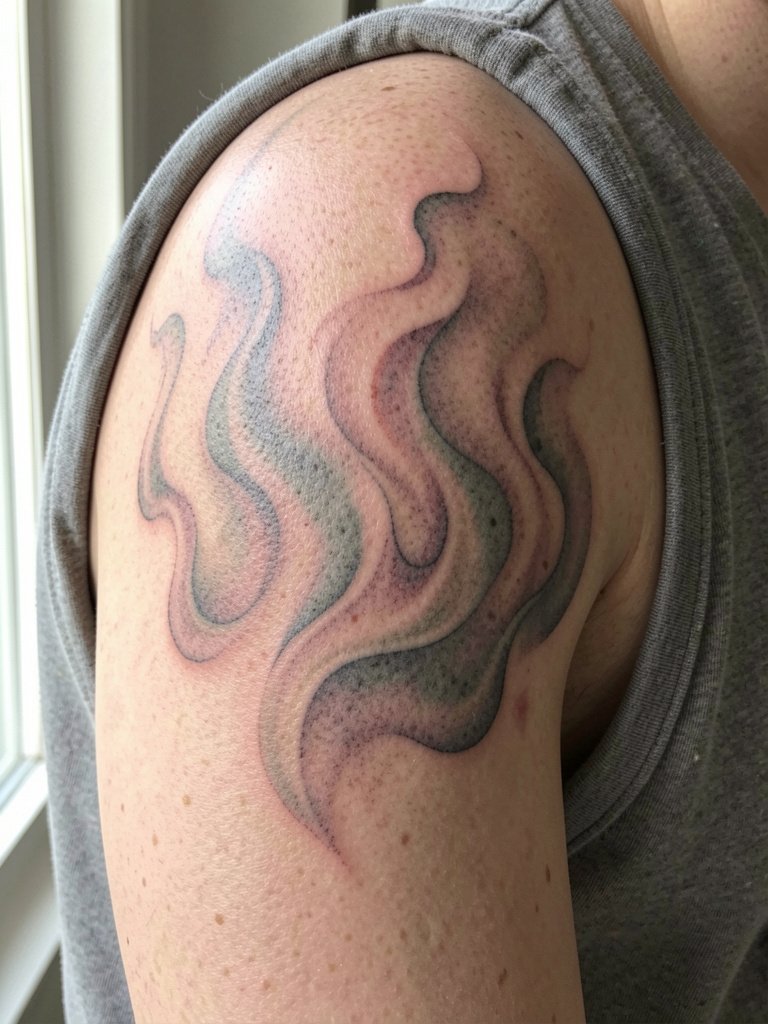
The move away from literal watercolor toward flowing organic textures is practical. Pure watercolor without structure often looks like a bruise once healed. Instead, pick soft gradients with subtle line anchors that preserve form. The outer upper arm accepts longer sessions for blending work. Pair the piece with open-shoulder cuts that show off the gradient flow.
13. Tribal Revival + Game Symbol Sleeve (Shoulder and Upper Arm)
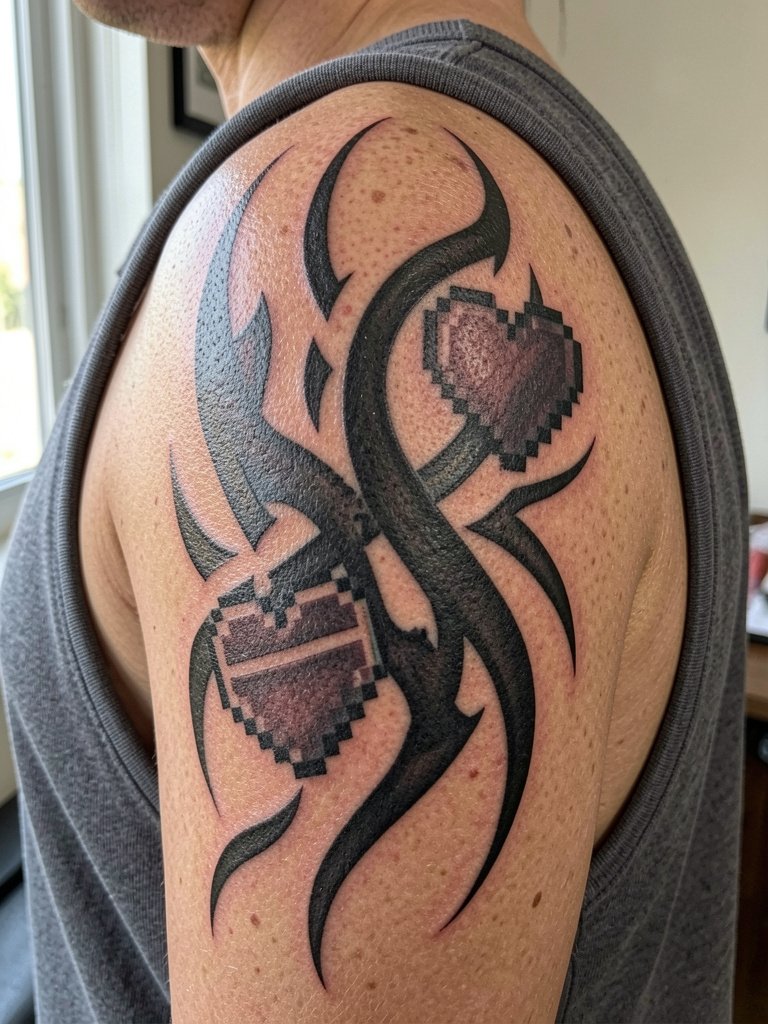
Tribal revival pairs nicely with retro motifs if you respect the visual origins. For culturally rooted patterns, mention the origin and ask for respectful adaptation. The error is copying sacred patterns without context. This placement reads well with bold black lines, so keep motifs large and let pixel icons sit as highlighted elements. For show-off wear open-back blouses in deep tones.
14. Butterfly + Retro Game Icon Sleeve (Inner Forearm)
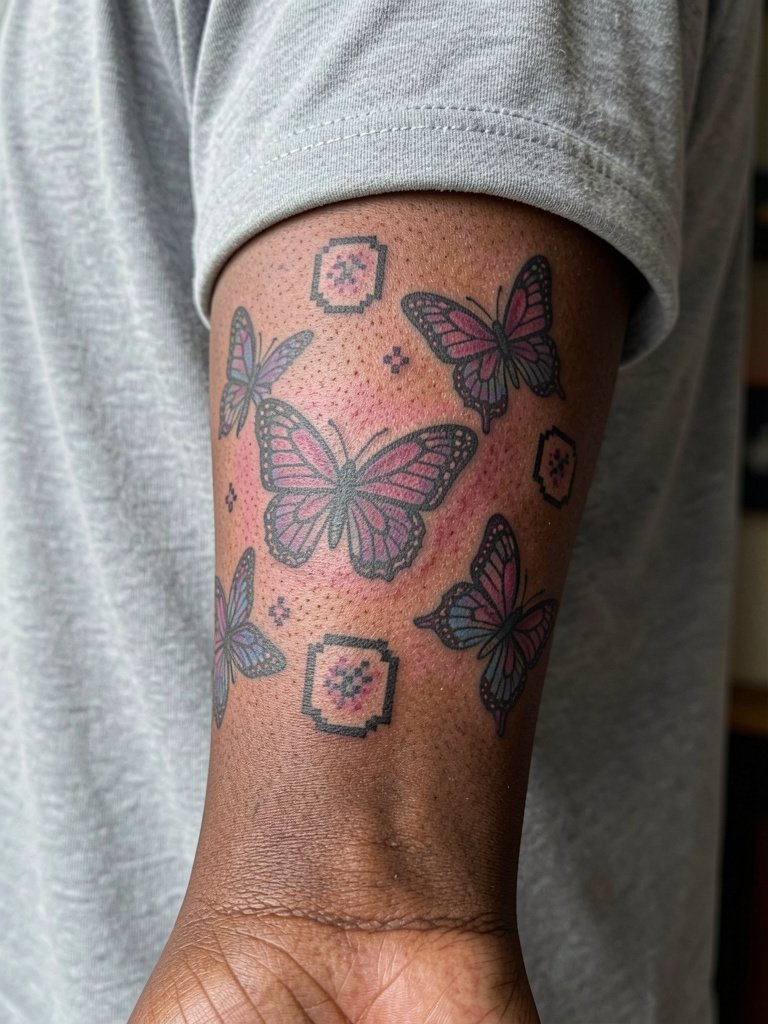
Pairing butterflies with pixel icons gives a Y2K nostalgia that photographs well. Overloading with tiny wing filigree is the usual mistake. Keep wing details bold enough to avoid early fuzzing and choose saturated accent colors that contrast on darker skin. For outings choose crop tops in complementary hues, and for sessions wear a loose short sleeve so the artist can reach the inner forearm comfortably. Consider silver chain bracelets on the opposite wrist.
15. Spine + Game Symbol Patchwork (Spine and Upper Back)
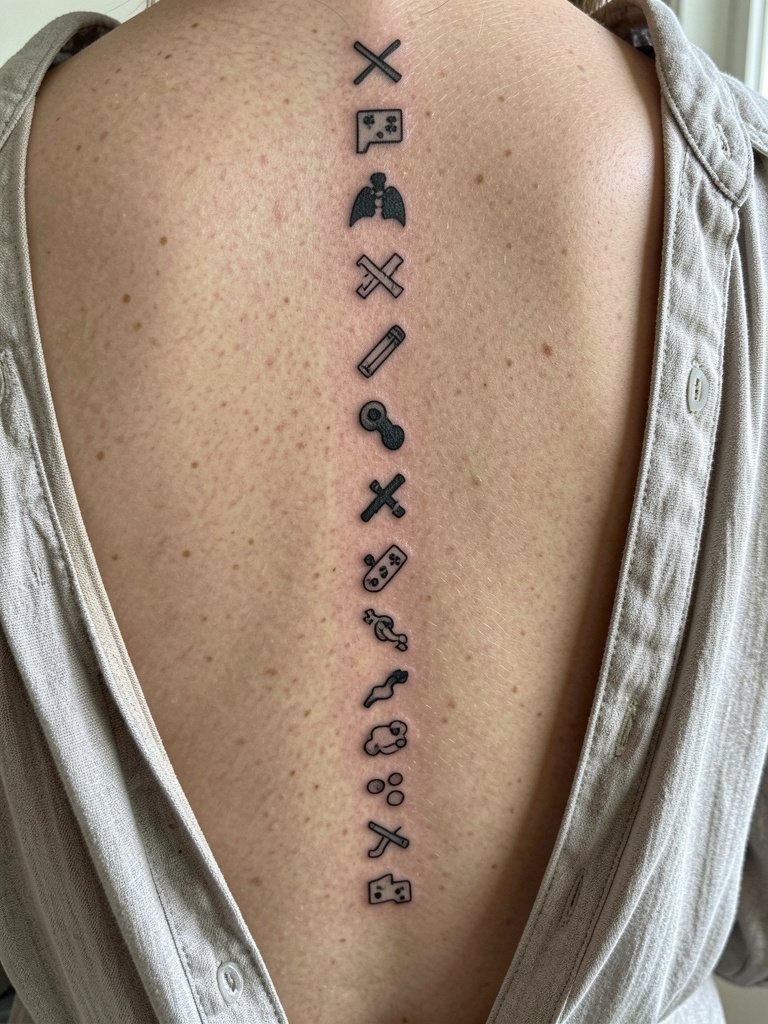
Spine patchwork is a notice-me placement and needs vertical breathing room. The frequent mistake is crowding icons so the spine line reads muddled. Keep icons spaced and vary size slightly to avoid one long ridge of detail. For sessions wear an open-back top and for show-off pairing try thin gold spine chains or crop tops in dark colors that let the vertical composition read clearly. A reminder that spine work often feels more sensitive than arm work, plan shorter passes.
16. Micro-Realism on Inner Upper Arm for Small Portraits
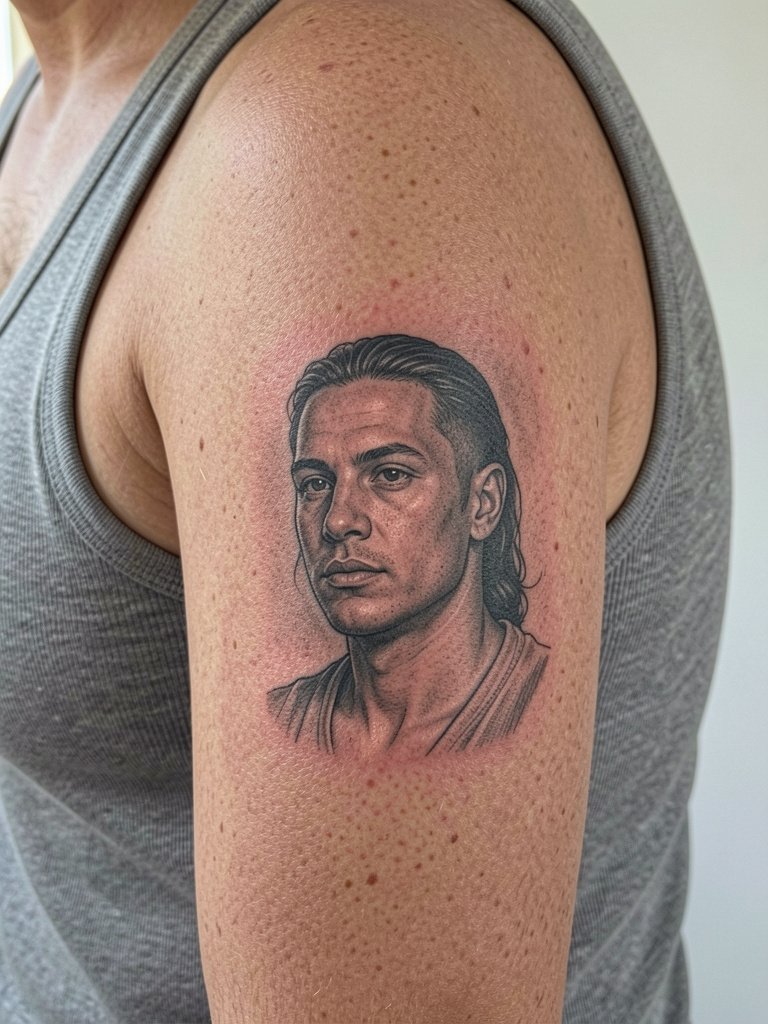
Inner upper arm portraits age differently because the area gets less sun and friction. That is an advantage for micro-realism. The mistake is trying to compress too much facial detail into too small an area. Aim for a portrait that lets the stipple shading read, and plan a touch-up at six to twelve months. For session day, wear a strap top so the artist can access the medial bicep without fabric pressure. Delicate layered gold chains work well for evening styling.
17. Micro-Realism Pop Culture Portraits as Small Scale Icons
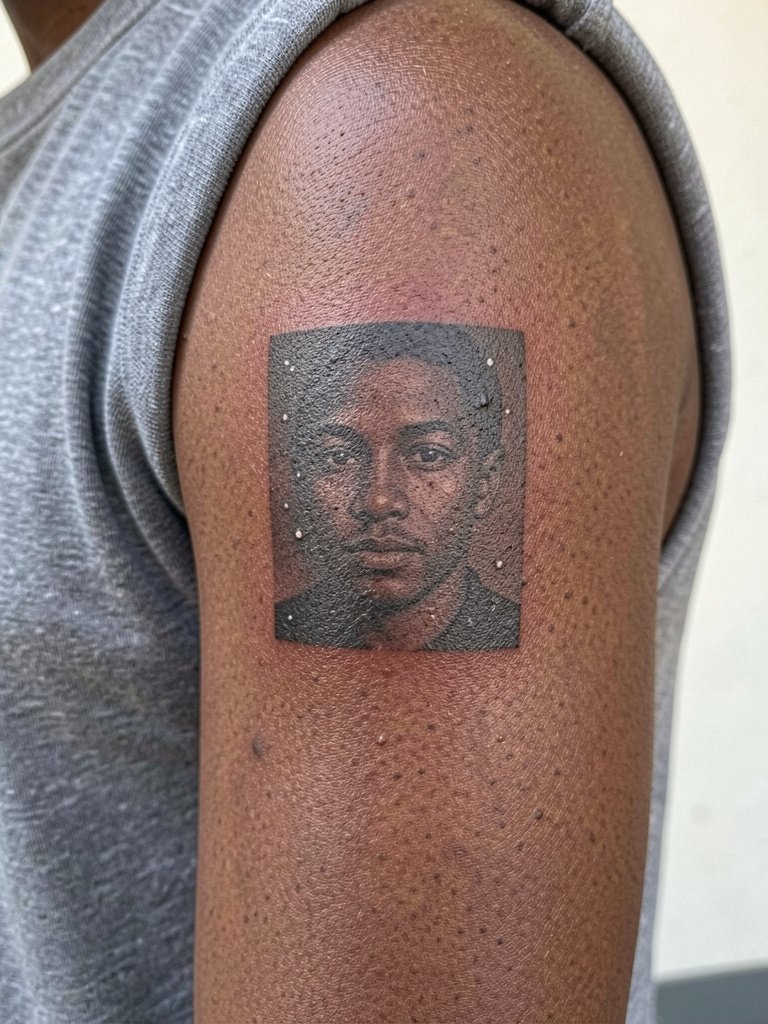
Mini portraits are portable nostalgia, but they need planned contrast to survive months of life. The error is over-softening highlights and skipping white ink where needed for eyes or glints. Expect a follow-up touch-up and keep portraits slightly larger than the social-media thumbnail you saved. For nights out pick clean neutral tanks and subtle layered jewelry that do not compete with the portrait.
18. Game HUD Strip Sleeve (Inner Forearm Ribbon)
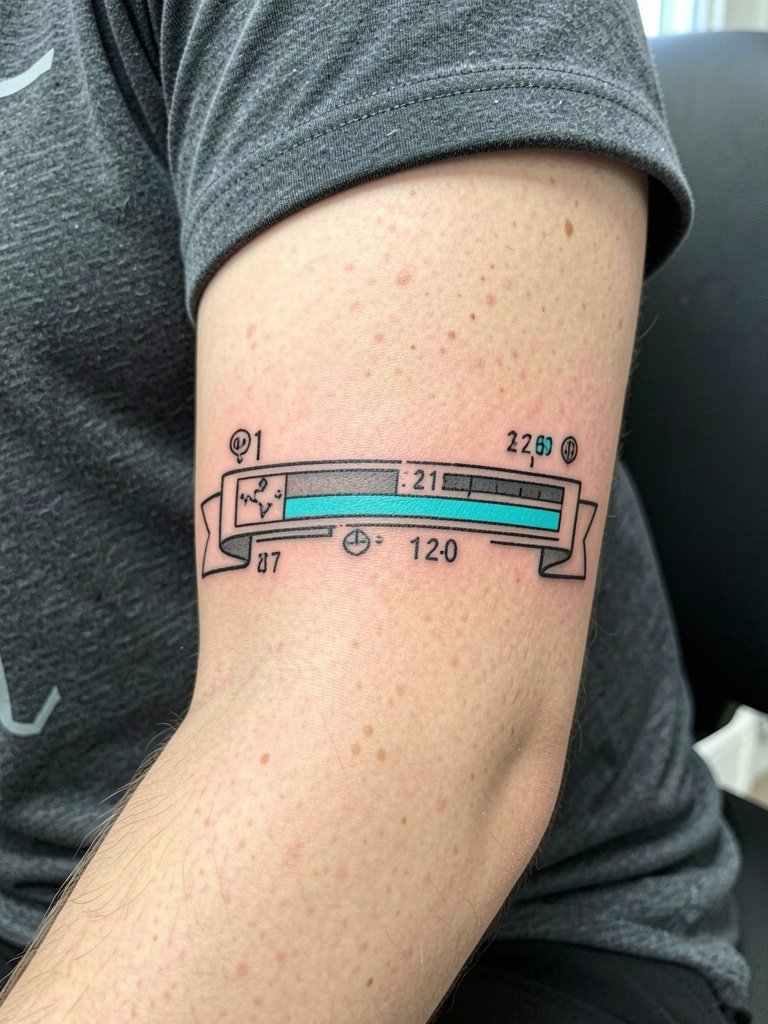
HUD strips can look very contemporary if the glyphs are sized for visibility. The common mistake is tiny numerals that vanish after a year. Make each icon legible at arm length and use a single accent color to retain clarity. For show-off styling try tech crop tops in black or cyan, and bring a photo of the exact HUD layout so the artist can scale the numerals correctly.
19. Neo-Traditional Pixel Mash Sleeve (Outer Forearm)
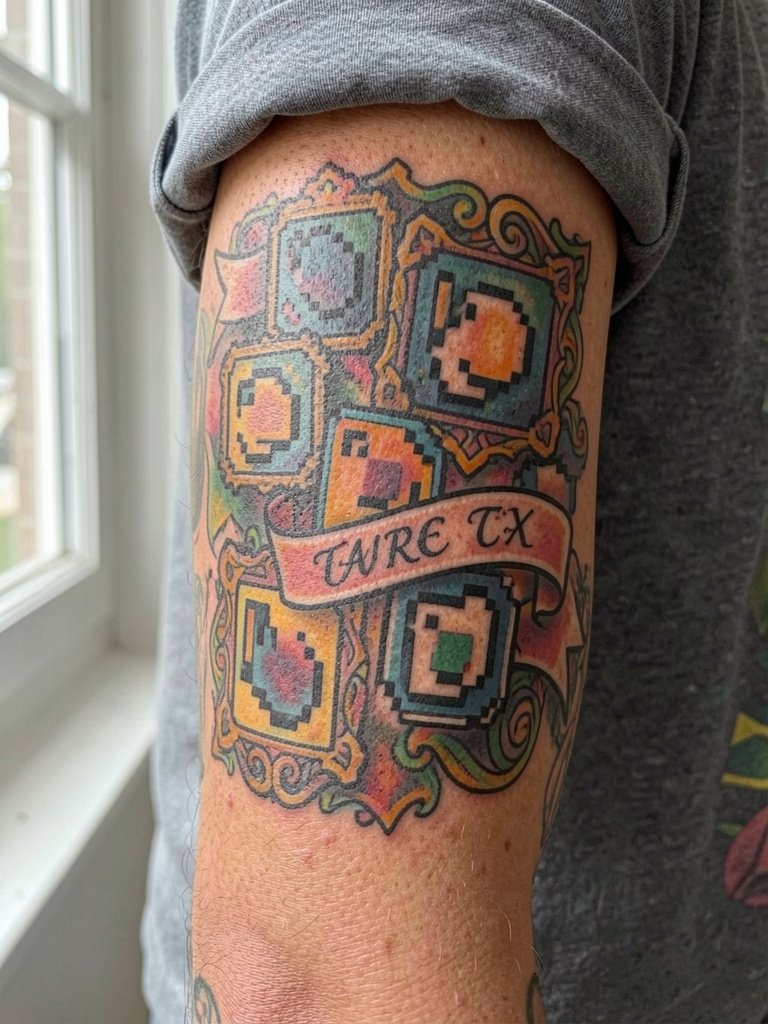
Mixing neo-trad frames with pixel blocks helps bridge nostalgia with longevity. The usual mistake is borrowing tiny internet sprites and shrinking them into decorative filigree. Keep the pixel blocks bold and use the frames as anchors rather than micro-detail. For the appointment wear a rolled sleeve tee and for show-off try layered silver chains or graphic tees.
20. Single-Color Blackwork Legend Sleeve (Bicep Band)
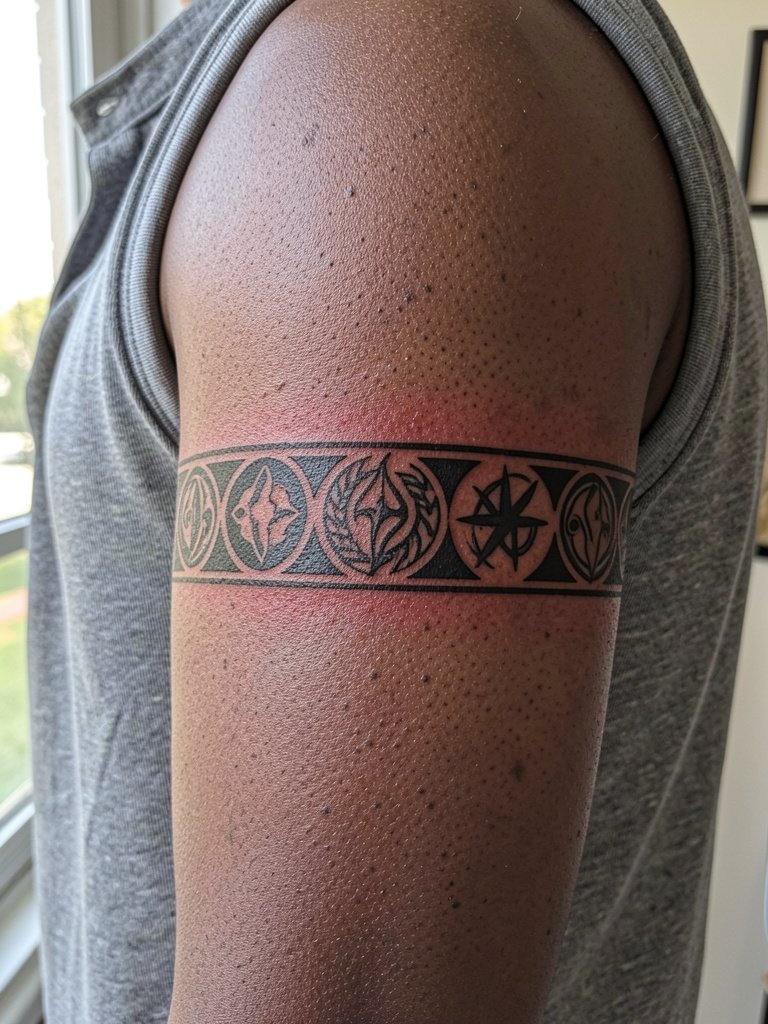
Blackwork legend bands read bold and age very well because saturation is concentrated. The mistake is inserting tiny internal detail that fills in. Opt for larger negative-space rhythms and plan the band width to match muscle curves. For evenings, open-shoulder shirts in olive or navy work well, and on session day bring a sleeveless top to give the artist full bicep access.
21. Minimal Pixel Heart Cluster (Outer Forearm Accent)
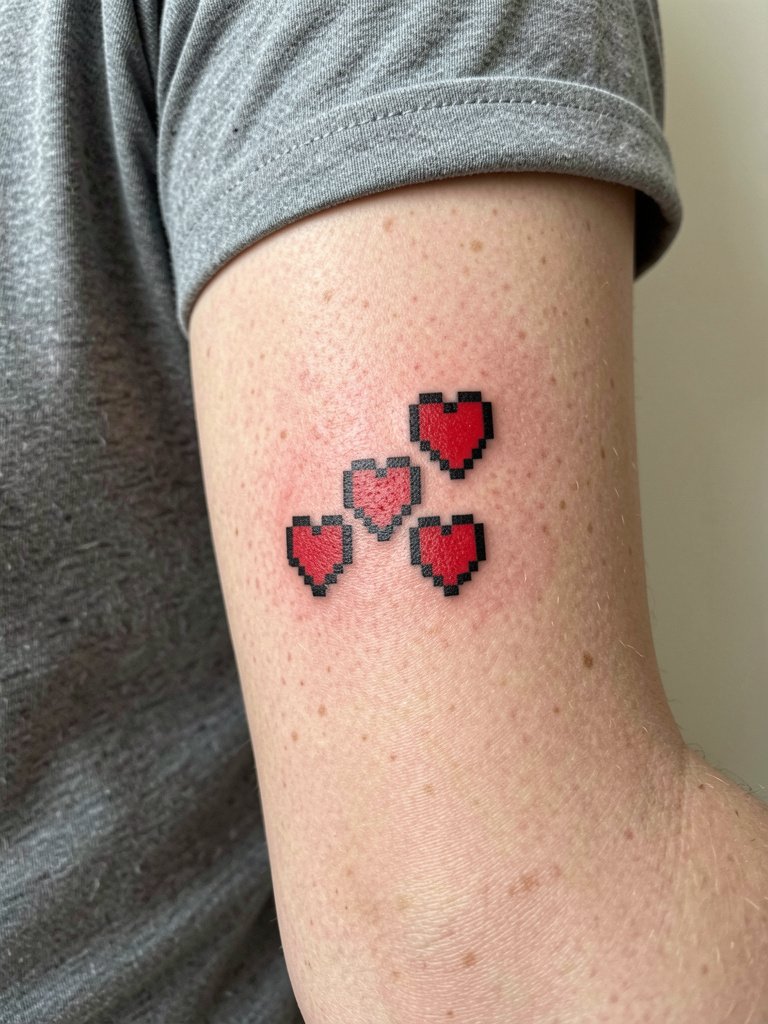
Small pixel clusters are a good entry point for a sleeve. The error is making hearts too tiny. Scale each heart just large enough to keep the fill saturated for multiple years. For casual wear try graphic tees with rolled sleeves to keep the focus on the wrist cluster.
22. Stippled Map Fragment Sleeve (Inner Forearm Map Panel)
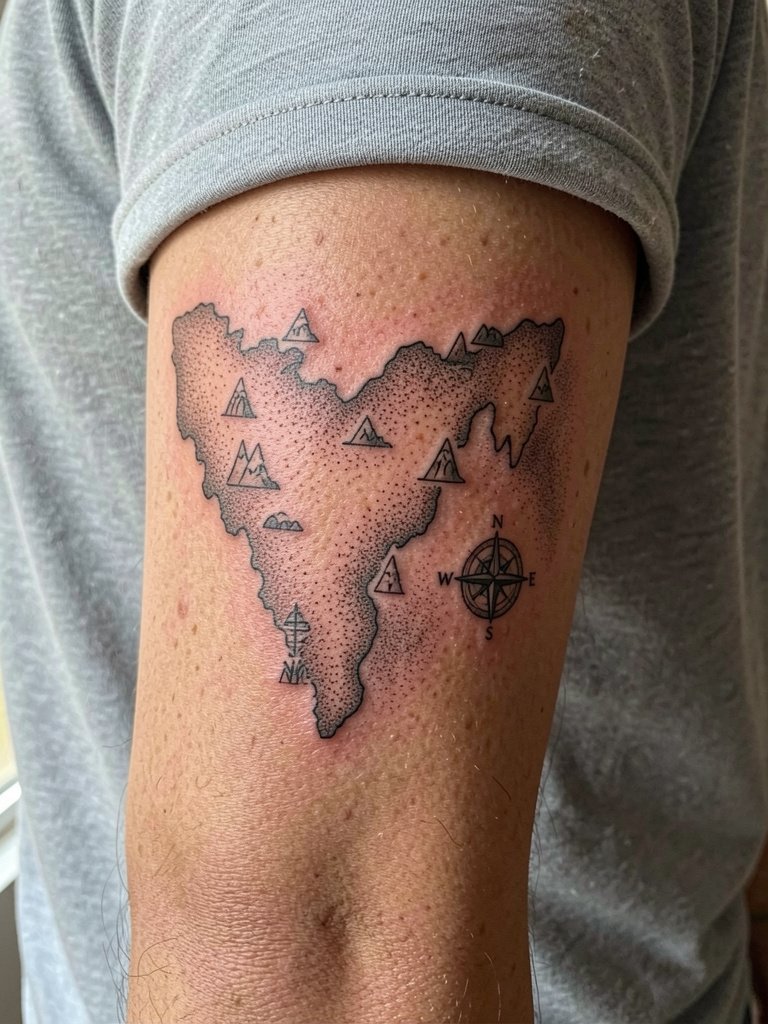
Map fragments let you hint at game worlds without full characters. The common mistake is heavy black lines that make the map read like a stamp. Stipple shading with soft contour lines creates depth and hides small shifts. For show-off styling try slim strap tanks in neutral tones and delicate layered necklaces that do not distract.
23. Weapon Signature Sleeve (Outer Upper Arm Blade Piece)
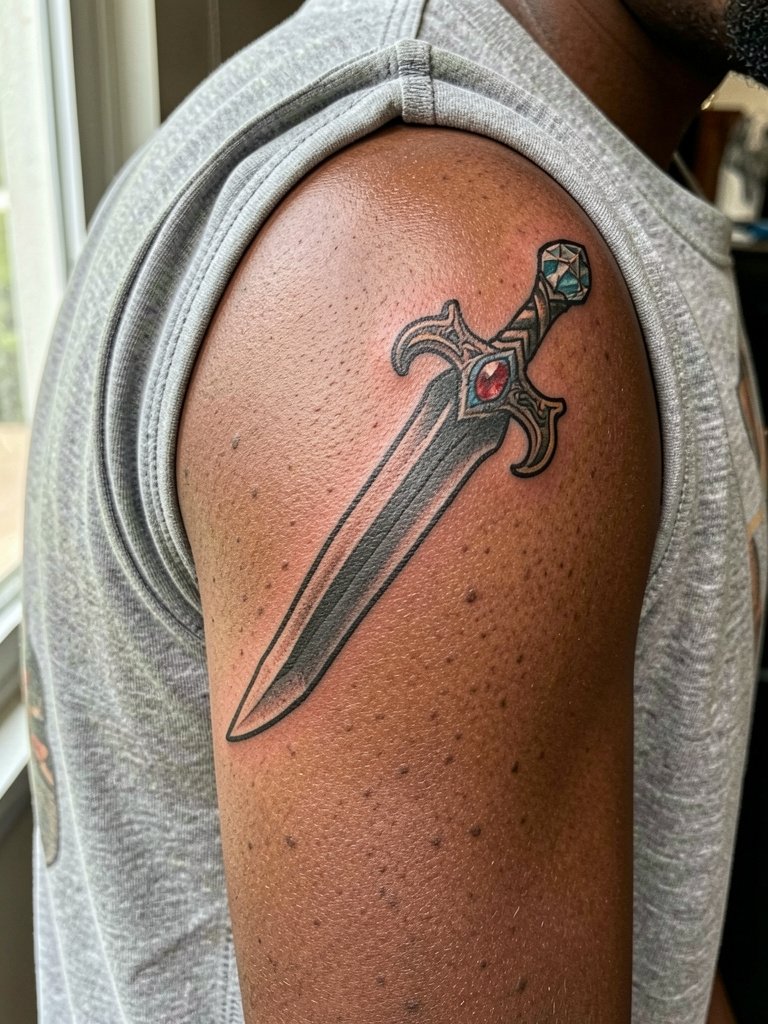
Weapon portraits demand composition and edge clarity. The mistake is over-finessing blade filigree that disappears when the skin moves. Bold outlines and one color gem accent keep the piece legible. Wear a loose tank on session day and try open-back tops with pendant necklaces to complement the weapon motif when you wear it.
24. Ignorant-Style Mixed Character Panel (Outer Forearm)
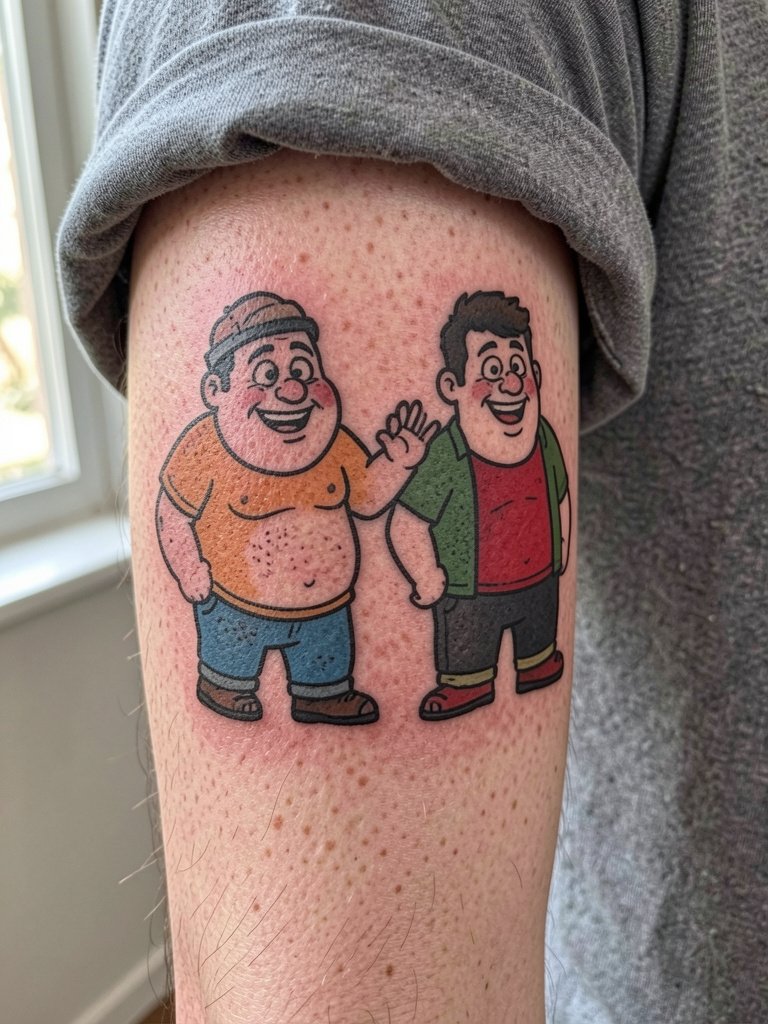
Ignorant-style panels are forgiving stylistically because they celebrate rough edges. The trap is trying to convert the style into micro-detail, which defeats the aesthetic. Keep outlines unapologetic and fills flat. For showing off, pair the sleeve with a graphic tee or chain bracelet that matches the panel's attitude.
25. Ornamental Circuit Sleeve Accent (Inner Forearm)
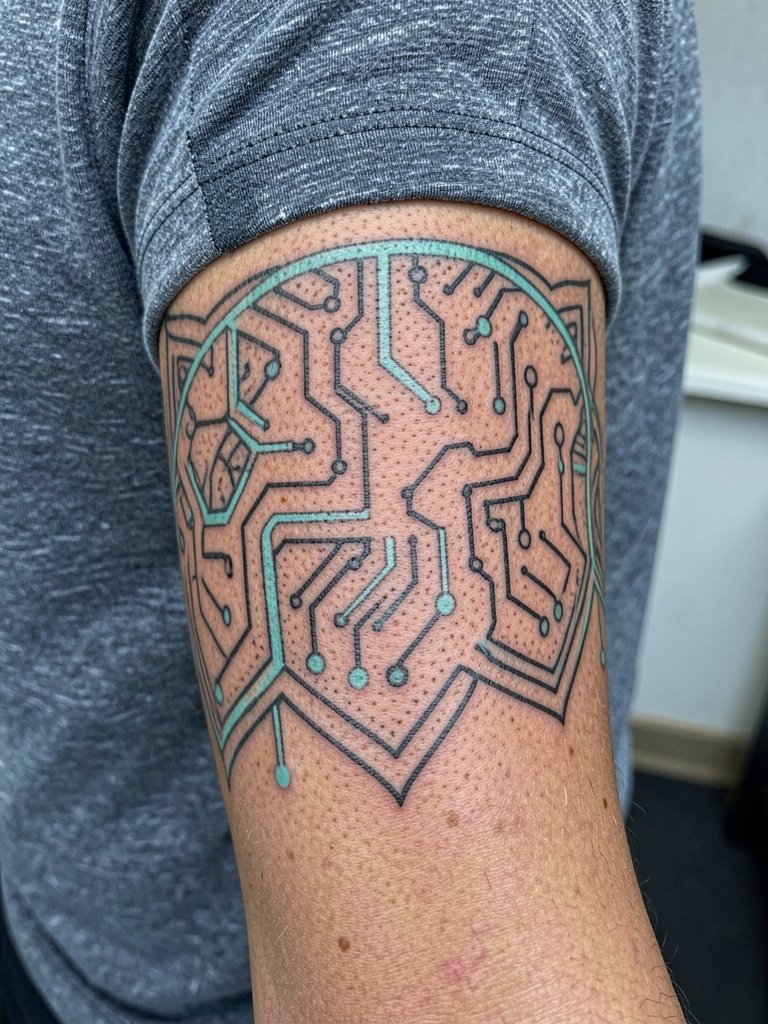
Circuit ornaments blend hardware aesthetics with decorative logic. The common misstep is tiny trace lines that blur. Keep traces slightly thicker than you think and use negative space to separate elements. For style, tech-wear tops in black or cyan help the cyan highlights pop.
26. Patchwork of Power-Ups (Shoulder and Upper Arm)
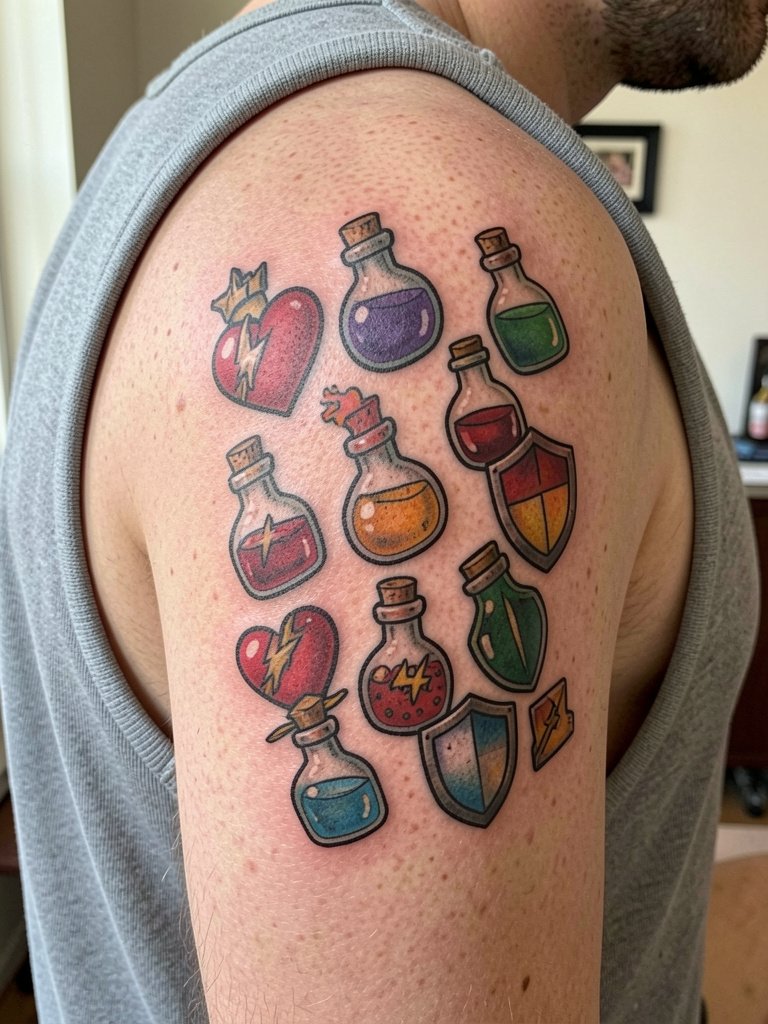
Power-up patchwork lets you collect memories without committing to a scene. The mistake is trying to force too many icons into a small deltoid patch. Start with five to seven and add over time. For show-off wear an open-back tank and accessorize with antique-style pendants that complement the palette.
27. Butterfly and Pixel Y2K Sleeve Accent (Inner Forearm Detail)
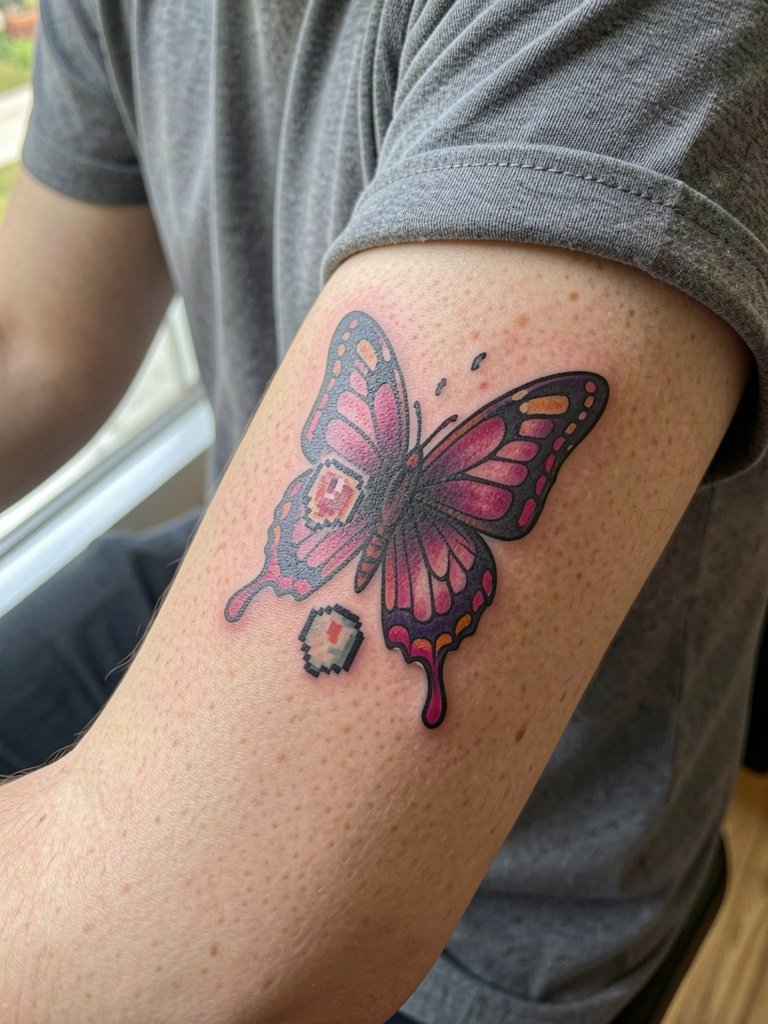
This Y2K hybrid works well as an accent or connector between larger icons. The main pitfall is over-detailing the wing edges. Keep wing veins bold enough to retain shape and pick saturated accents that resist early fading. For styling, cropped tees in complementary hues keep the forearm visible and balanced.
28. Spine-to-Scapula Narrative Strip (Back Panel)
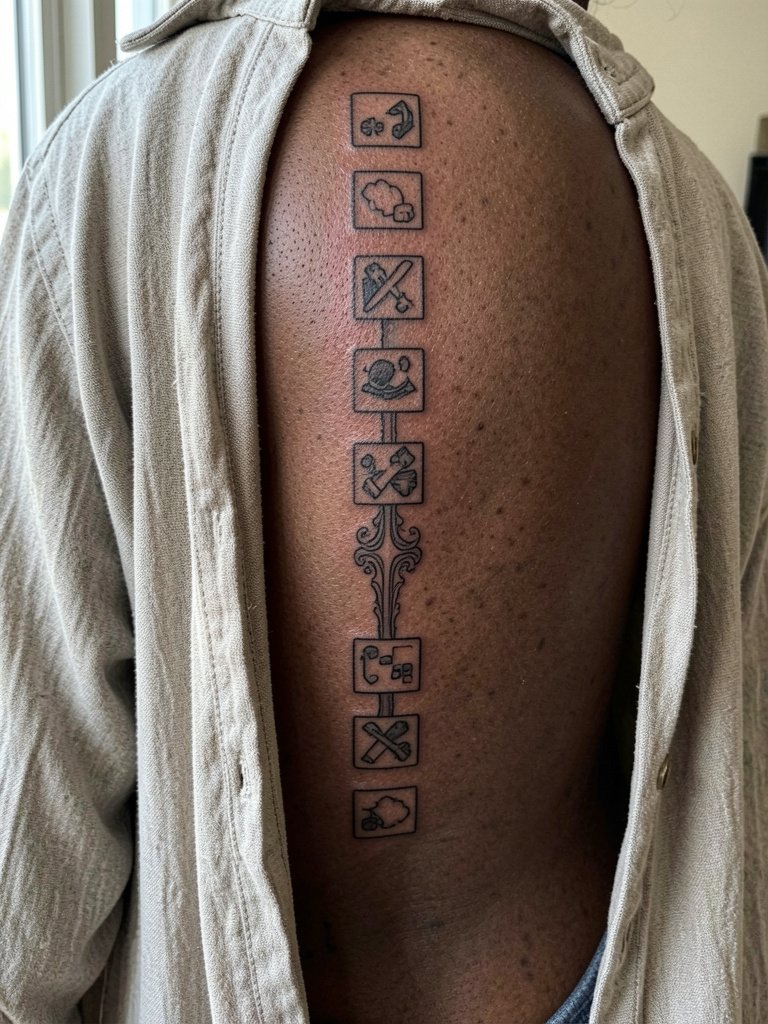
Back narrative strips are dramatic but require long-term planning. The error is underestimating scale, which makes scanning the narrative confusing. Design each icon to read from a few feet away and consider how shirts and jackets will fold over the piece. For show-off choose open-back dresses or crop tops that reveal the vertical composition.
29. Final Boss Sleeve Panel (Outer Upper Arm to Forearm)
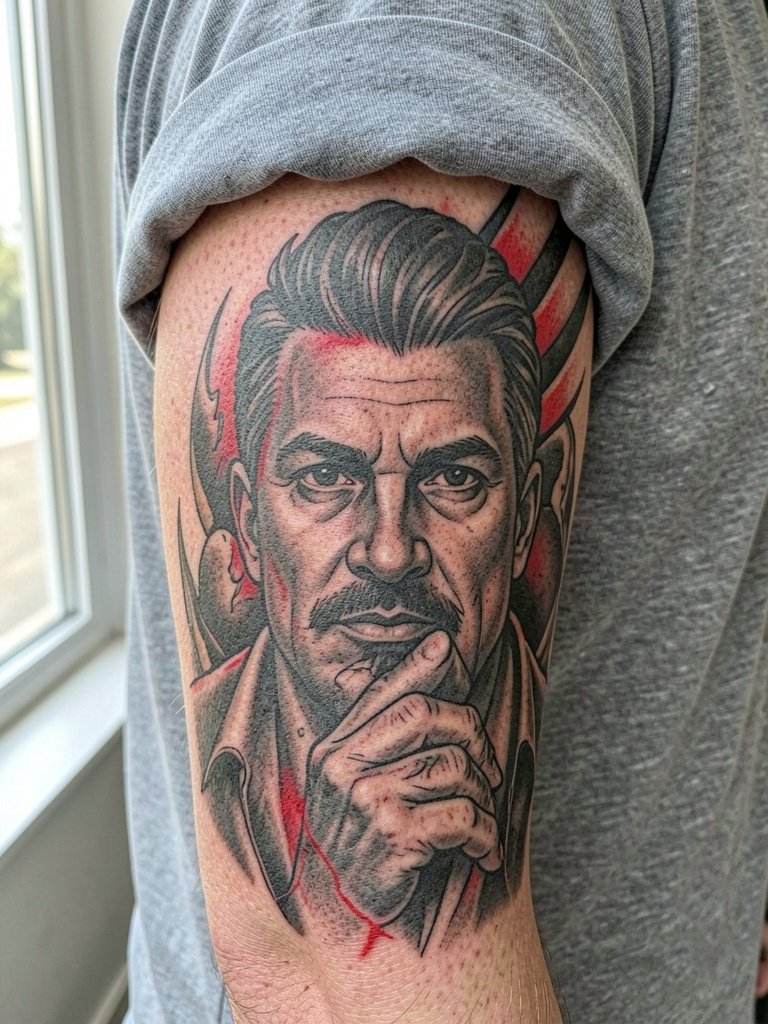
Boss portraits are headline pieces for a sleeve and need composition breathing room. A common mistake is packing the background so fully that the portrait loses separation. Use layered value and one accent glow color to keep the focal area crisp. For session wear bring a relaxed tee you can roll and for photos choose neutral tops that let the panel dominate.
Frequently Asked Questions
Q: How long does pixel art on the forearm actually hold up, and what causes blurring?
A: In my experience the forearm shows pixel blur most often when pixels are tiny and outlines are faint. Skin motion, sun exposure, and very tight dot placements are the main culprits. Increase block size, use firm black outlines, and expect a touch-up window in 2 to 3 years if you want crisp 8-bit reads long term.
Q: Should I pick full-color or black-and-grey for a character sleeve if I care about longevity?
A: There are two clear positions. One side favors black-and-grey with a single accent color because it stays cleaner over many years on sun-exposed arms. The other side says full color is essential to capture iconic palettes and that modern inks with disciplined sun protection can keep color vivid for seven years or more. Decide which you value more and plan touch-ups if you choose full color.
Q: Where can I find healed gaming tattoo portfolios without naming specific artists?
A: Search hashtags like #gamingtattoo, #pixelarttattoo, and #cybersigilismtattoo on Instagram and TikTok, then filter by location to find nearby portfolios. Tattoodo and Booksy let you search by keywords such as "neo-traditional pixel" and often show healed examples. Reddit communities like r/gamingtattoos surface peer-shared healed shots across skin tones.
Q: I am on a smaller budget but want a sleeve eventually. What is a smart starter approach?
A: Start with a patchwork plan of 5 to 7 icons in a visible area like the shoulder or outer forearm. That spreads cost over time and gives you reference for how ink on your skin ages. Add pieces annually and keep a running list of what needs slightly larger scale to avoid early blur.
Q: What should I wear to a long sleeve session that includes shoulder and inner forearm work?
A: Wear layered pieces that are easy to remove and not tight around the work area. For shoulder and upper arm a loose button-down or open-back tank is helpful. If you are showing or photographing afterward try open-back tank tops in olive or charcoal to complement fantasy palettes without tugging the fresh ink.
Q: How often do gaming sleeves need touch-ups and what parts typically require them first?
A: Small high-contrast details and tiny pixel fills tend to need touch-ups first, often between one and three years. Portrait highlights and thin single-needle lines can need attention at the six- to twelve-month mark. Plan realistic follow-up sessions in your budget and expect color refreshes more often than blackwork refreshes.