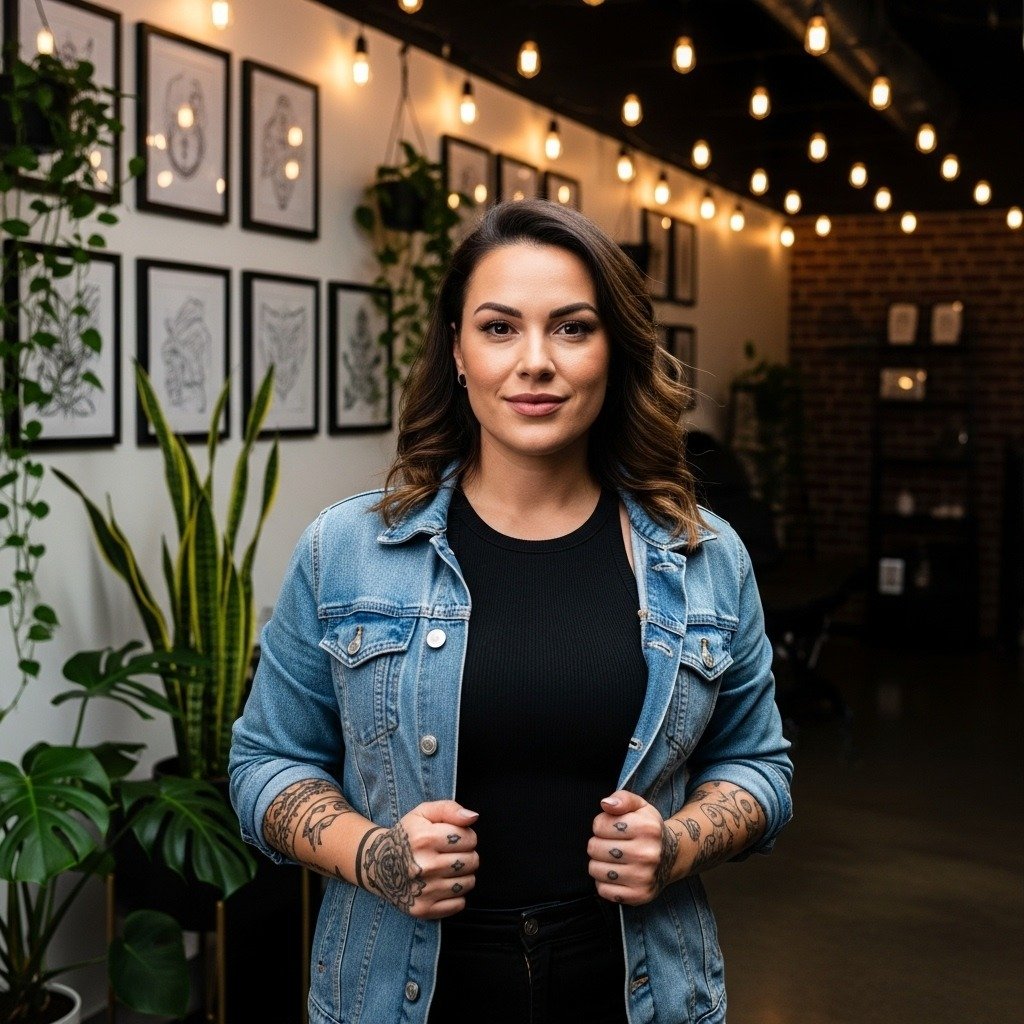
A lot of couple coordinate tattoos look great in photos and fall apart in real life if line weight and placement are treated like an afterthought. Pick slightly heavier fine line rather than micro-single-needle for numbers that need to stay legible. Test the stencil at life size, rehearse the mirrored layout in a mirror, and wear the exact session clothes at the consultation so the artist can plan access and spacing.
1. Matching half-circle coordinates on the inner forearm
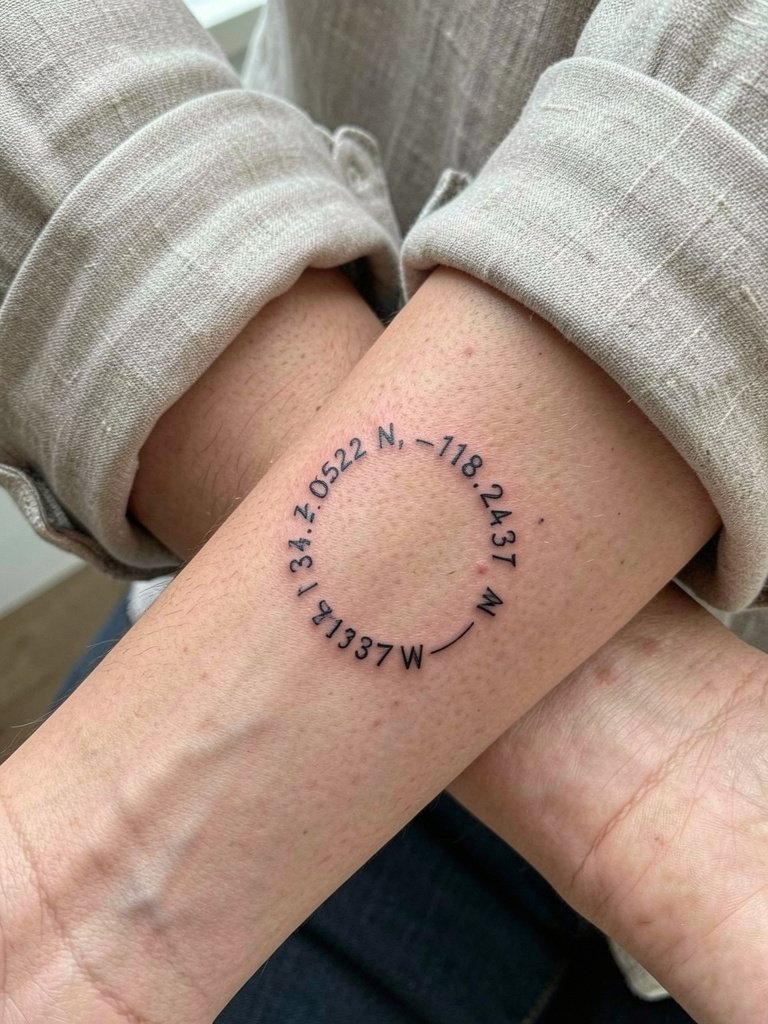
A half-circle pair reads like a single shape when you press forearms together, and that effect depends on millimeter-precise placement. For numbers to stay crisp ask for 0.25–0.30mm line weight and a slightly wider arc so the numerals do not crowd. The typical mistake is asking for micro-single-needle detail then shrinking the design to wrist size, which blurs by year two. Plan touch-ups around the six to twelve month mark for fine-line work, especially on the inner forearm where movement causes subtle spreading. For the appointment wear a linen button down shirt so the cuff can roll without pressure on fresh ink.
2. Edge-of-forearm coordinate pairs for the matching circle
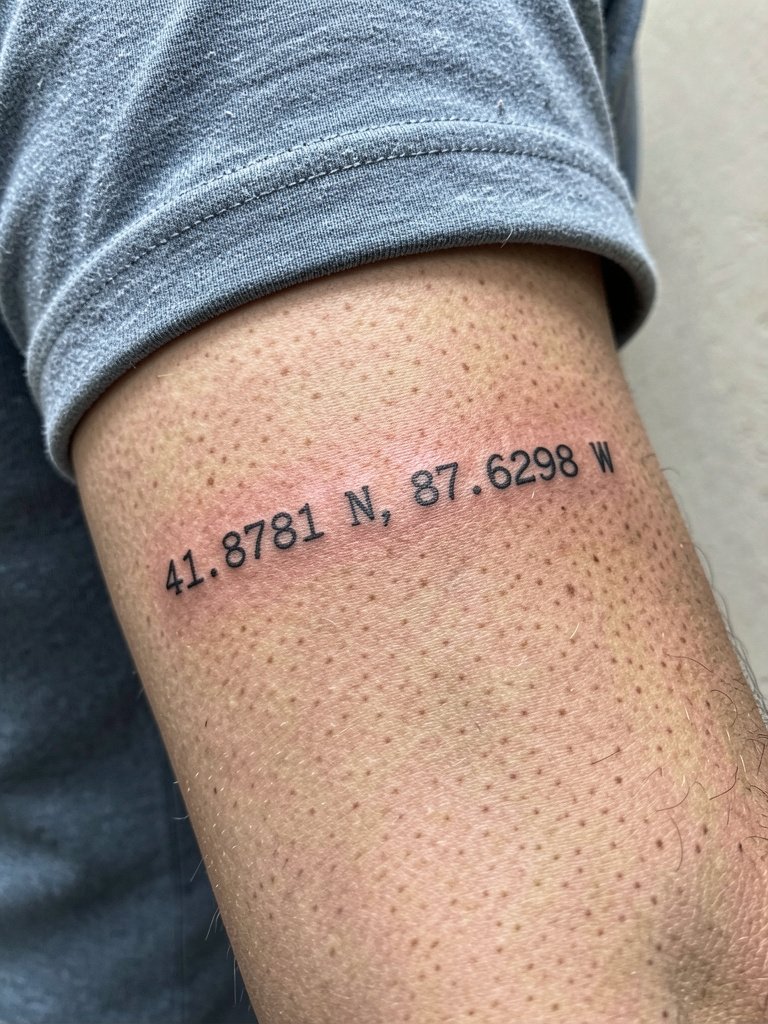
This placement needs extreme stencil accuracy because the arc sits on the arm edge where curvature alters perceived spacing. Bring two life-size stencils so you can check alignment in different poses. A common aging issue is overly tight spacing that looks fine day one and reads like a gray line by year two. For longevity choose bold fine line and avoid single-needle micro work on this edge, because the skin here flexes during daily movement. The session is short for each piece, about 20 to 40 minutes. Wear a short sleeve shirt that the artist can push up without rubbing the fresh ink.
3. Complementary coordinates with a small icon on the inner wrist
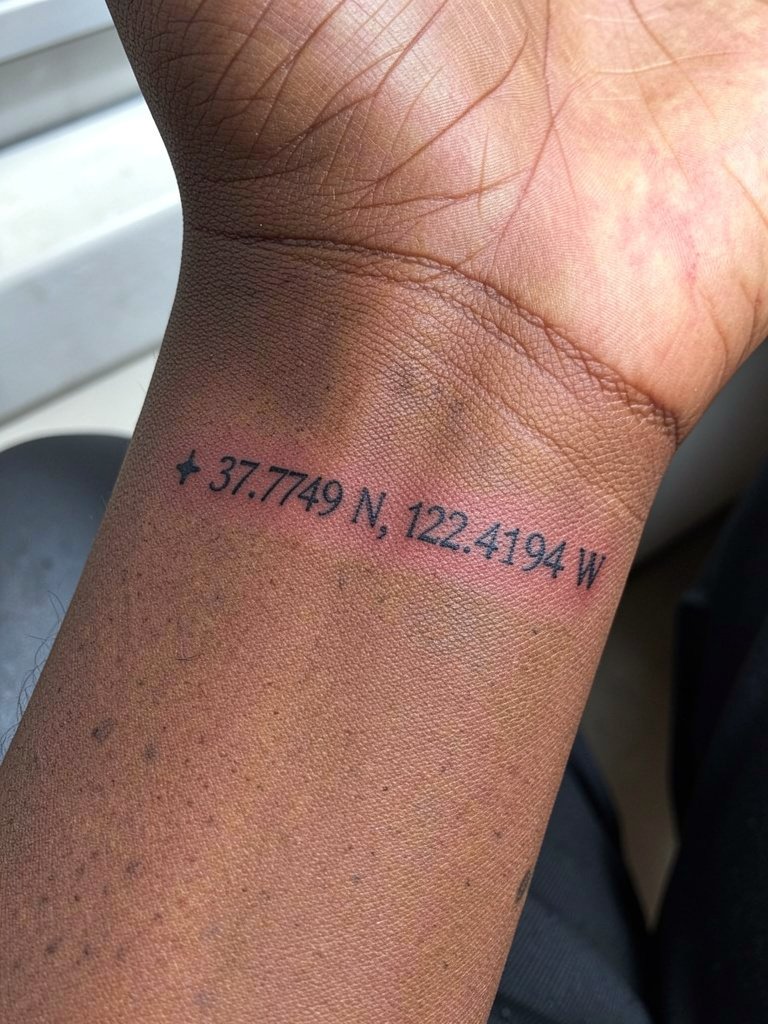
Pairing coordinates with an icon gives the design context and creates breathing room so numbers do not appear cramped. The wrist eats detail over time, so increase number size by at least 10 percent compared with your on-screen mock. Tell the artist you want a higher contrast stencil and 0.30mm line weight for dark skin. Expect a bit more sting here and a short session of 20 to 30 minutes. For showing the piece, a dainty stacked bracelet on the opposite wrist frames the area without covering the tattoo, and a dainty gold stacked bracelet set pairs nicely for photos.
4. Mirrored reflection coordinates on the inner upper arm
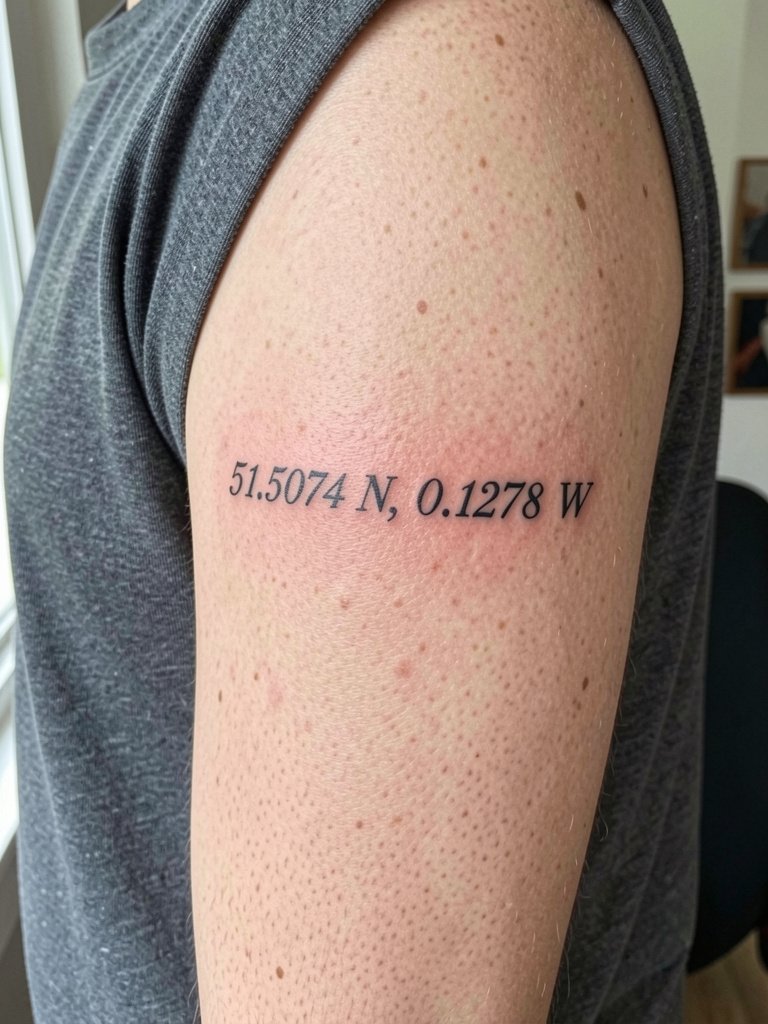
Mirrored coordinates split opinion and that deserves naming. One camp says reversed text is clever and creates a private reveal only when partners align, and that intimacy is the point. The other camp says mirrored numbers look like a typo when you are apart, which leads to regret for daily wearers. If you want the secret effect rehearse the mirror setup and have the artist flip the stencil exactly as you tested, then preview the stencil on both partners before the needle touches skin. The inner upper arm is forgiving on touch-ups, but weight changes can affect how numbers sit, so plan a touch-up around the one year mark if you expect body shifts.
5. Single-location coordinate script on the inner forearm
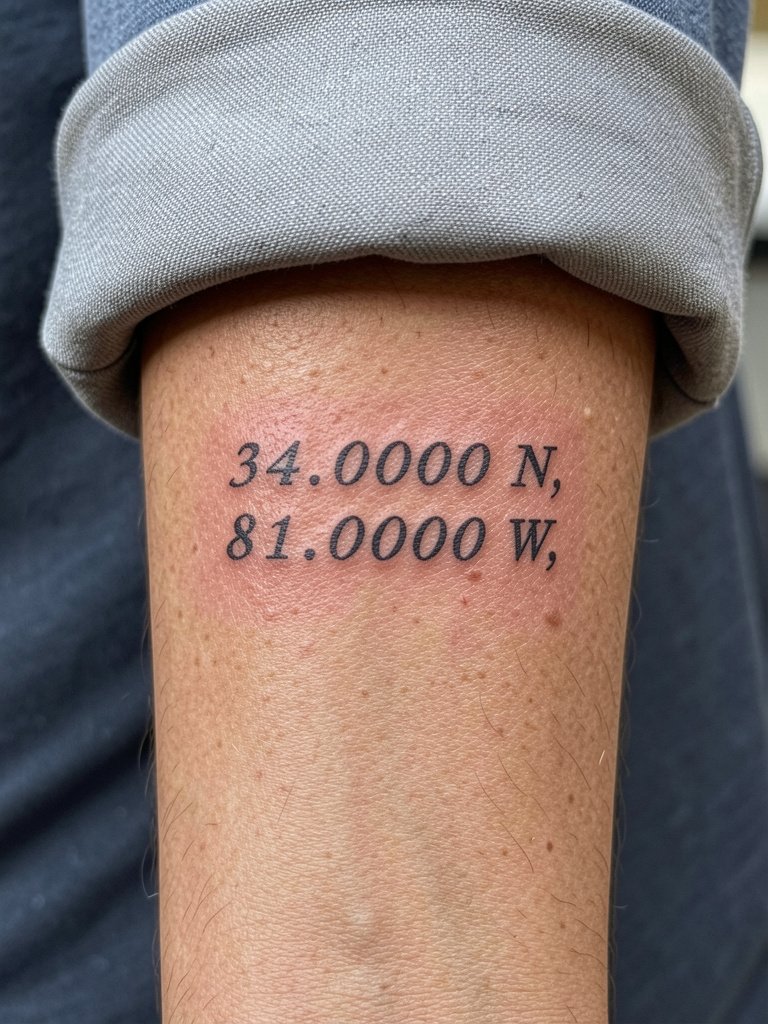
Fine-line longevity splits artists into two clear positions. One camp argues micro-fine numbers blur into a gray smudge within two years because the thin strokes lack saturation and the forearm stretches with movement. The other camp says that with a 0.25–0.30mm needle and correct depth the numbers will hold for five years or more, and they point to healed portfolios as evidence. For a clean single-location script pick a slightly wider line than your mood board shows and request a touch-up check at six months. During the consult bring a printed stencil at your intended size so the artist can scale the numerals for legibility.
6. Coordinate heart arc on the lateral hip bone
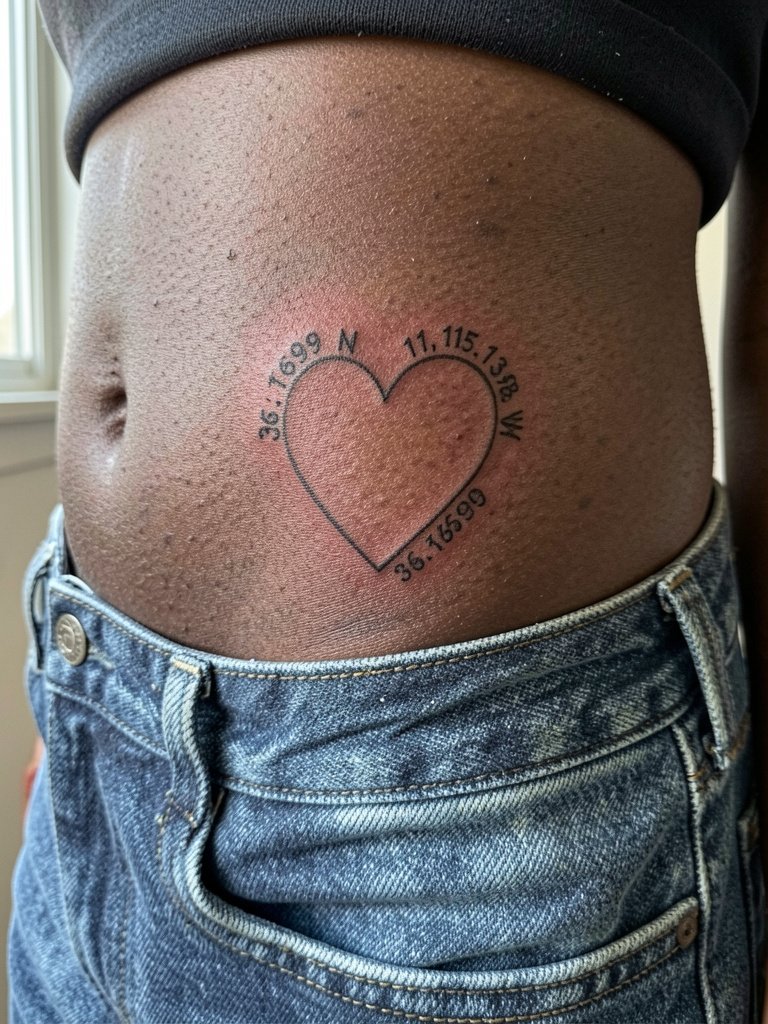
The lateral hip is private and shows only when you choose to reveal it, which helps reduce daily wear issues linked to the wrist or hand. Because the hip area sees friction from waistbands keep the design slightly higher than your waistband line and wear loose bottoms the week after. Avoid micro-fine numbers here because denim and belts create friction during healing. The session feels hands-off once you lie on your side, but plan for a 30 to 60 minute block if the arc needs careful symmetry.
Pack Smart
The forearm and wrist pieces above are small, but a few items smooth the session and first week.
-
Hustle Butter Deluxe. Non-greasy balm that many people use for fine-line pieces because it does not cake and helps with the initial moisturized healing stage.
-
Saniderm Clear Bandage. A second-skin film that protects delicate linework from friction and keeps the area clean during the first 24 to 72 hours.
-
Dr. Bronner's Tea Tree Soap. Gentle cleansing option some people prefer when healing to reduce irritation on sensitive skin types.
-
Aquaphor Healing Ointment. A thin layer in the very early days locks in moisture for fine line work without excessive clogging when applied sparingly.
-
Mad Rabbit Tattoo Balm. Lightweight balm for dry healed skin that helps preserve contrast in thin numerals as they settle.
7. Mini coordinate on the collarbone
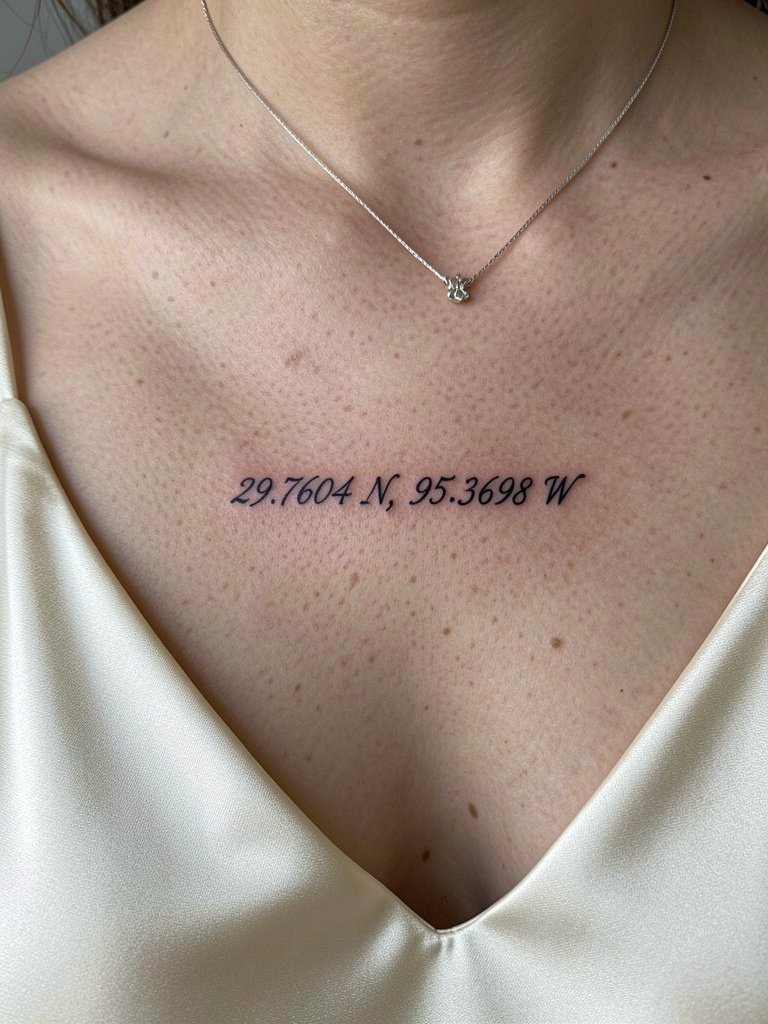
Tiny collarbone coordinates are intimate and photograph well, but micro-fine lines here need careful planning because the clavicle area moves with shoulder motion. Prefer single-needle only if the artist shows healed work on that placement and skin tone. For session wear bring a strapless or wide-neck top so the artist has clear access. To show the piece try thin pendant necklaces that frame the collarbone without covering the numbers, such as a delicate pendant necklace. Expect light discomfort where bone is close to the skin and a 20 to 40 minute session for a tiny script.
8. Coordinate with date overlay on the inner forearm
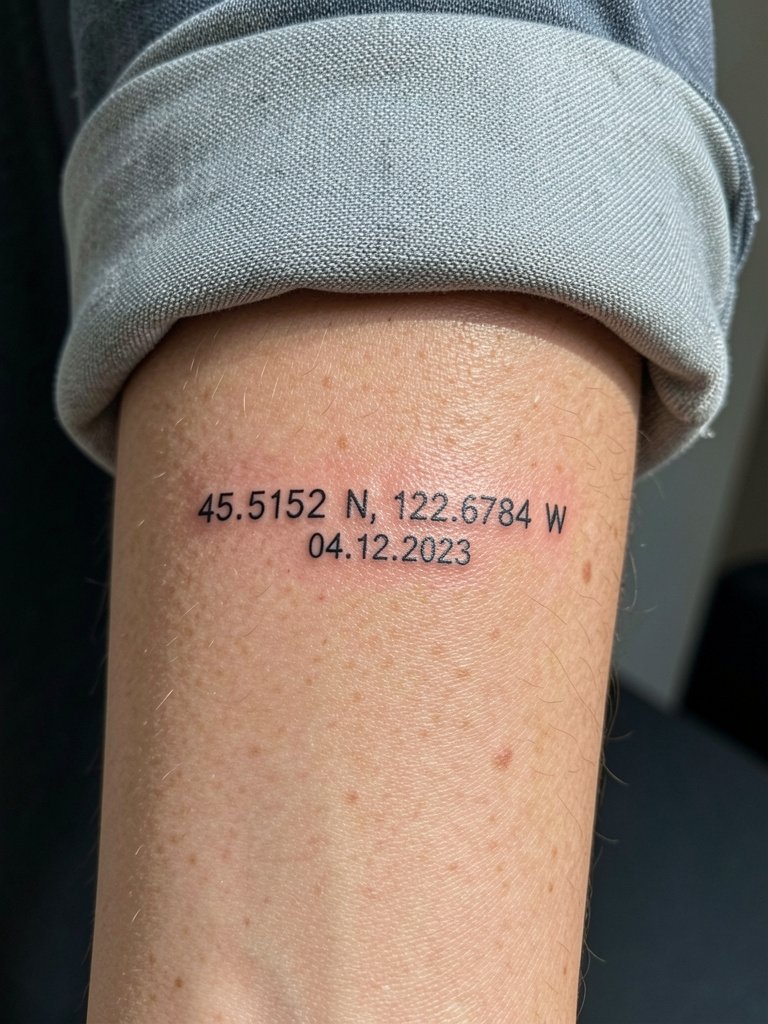
Layering a date under coordinates lets the numbers serve two roles without cluttering. Keep separators consistent and larger than you think to prevent crowding as the piece ages. A realistic touch-up window for this stacked layout is between six months and one year, when any softening of numerals can be corrected. During the consult bring the exact date format you want, down to periods or slashes, because the artist will stencil that text exactly. The session is usually under an hour unless you add ornamentation.
9. Coordinate band around the wrist or ankle
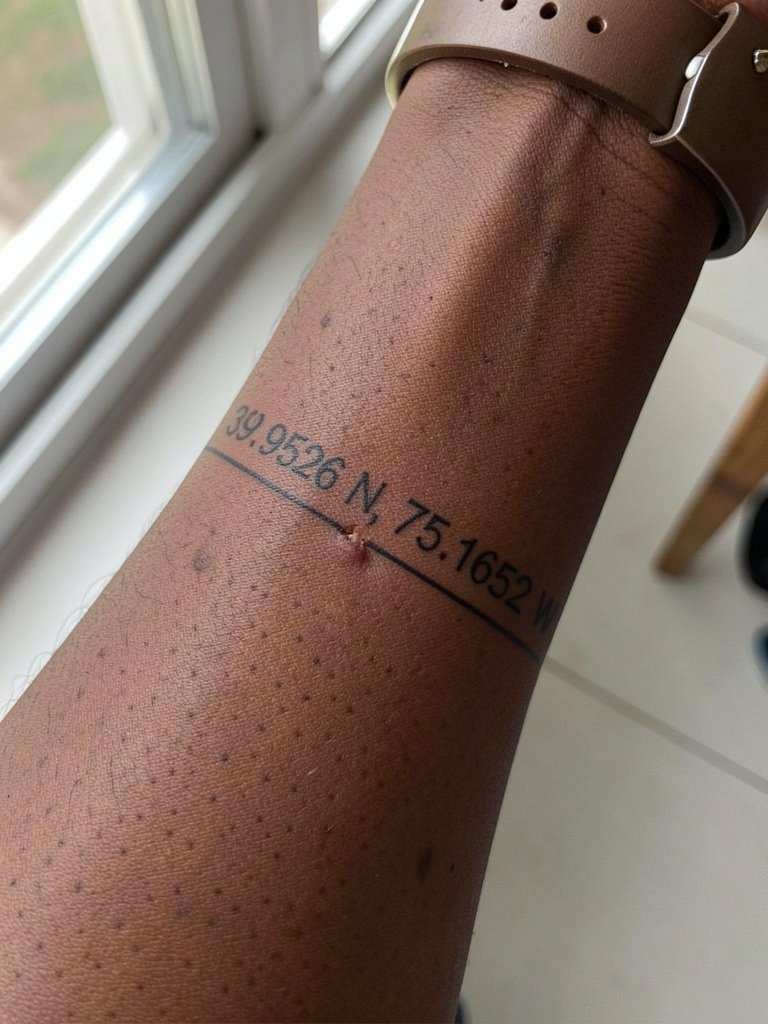
A coordinate band reads like jewelry but avoids metal allergy risks. For an ankle band choose slightly thicker numbers because footwear and socks rub the area during healing. Wrist bands have the same risk and need at least 0.30mm line weight for dark skin to maintain contrast. The session time for a thin band is short, but plan for a touch-up six to twelve months after if any numbers soften. For showing off a wrist band balance it with a minimalist watch on the opposite wrist so the tattoo is not crowded.
10. Dual-place stacked coordinates for two locations
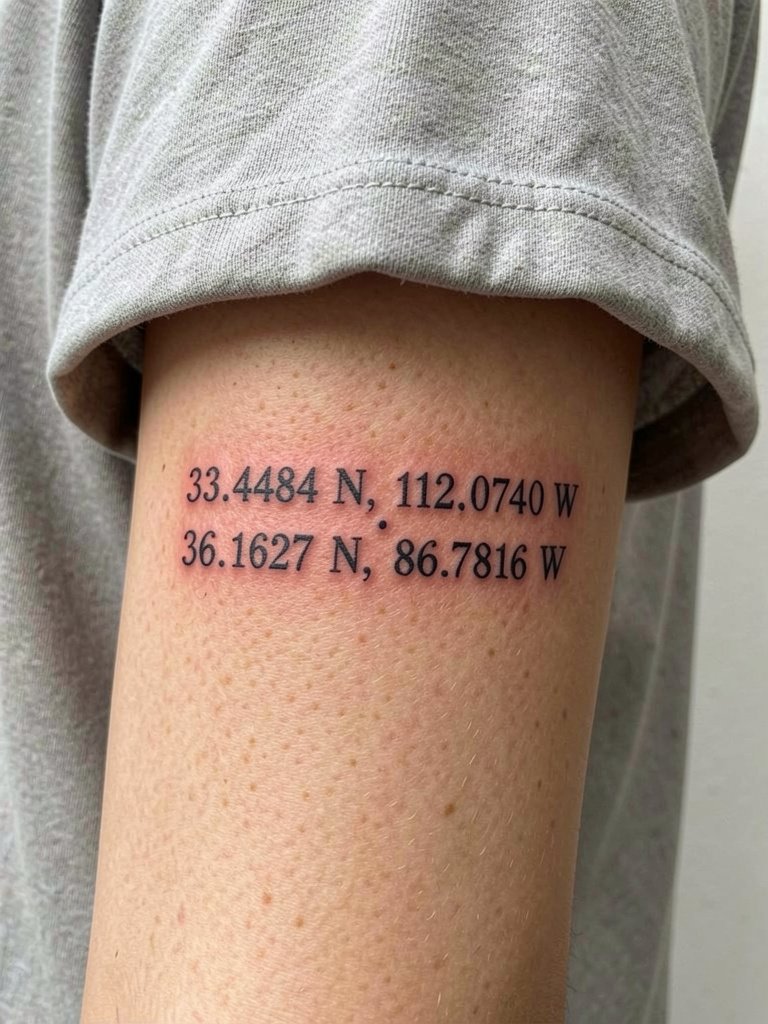
Stacking two coordinate sets keeps each line readable when you give each set room. The common error is choosing tiny type to squeeze both lines into a wrist-sized rectangle. Instead enlarge the layout slightly and place on the inner forearm for clarity. Ask the artist to space numerals for legibility at three to five inches in scale and schedule a one-year check for touch-ups. The session runs 30 to 50 minutes depending on spacing and whether you add a divider icon.
11. Compact compass icon with coordinates on the inner forearm
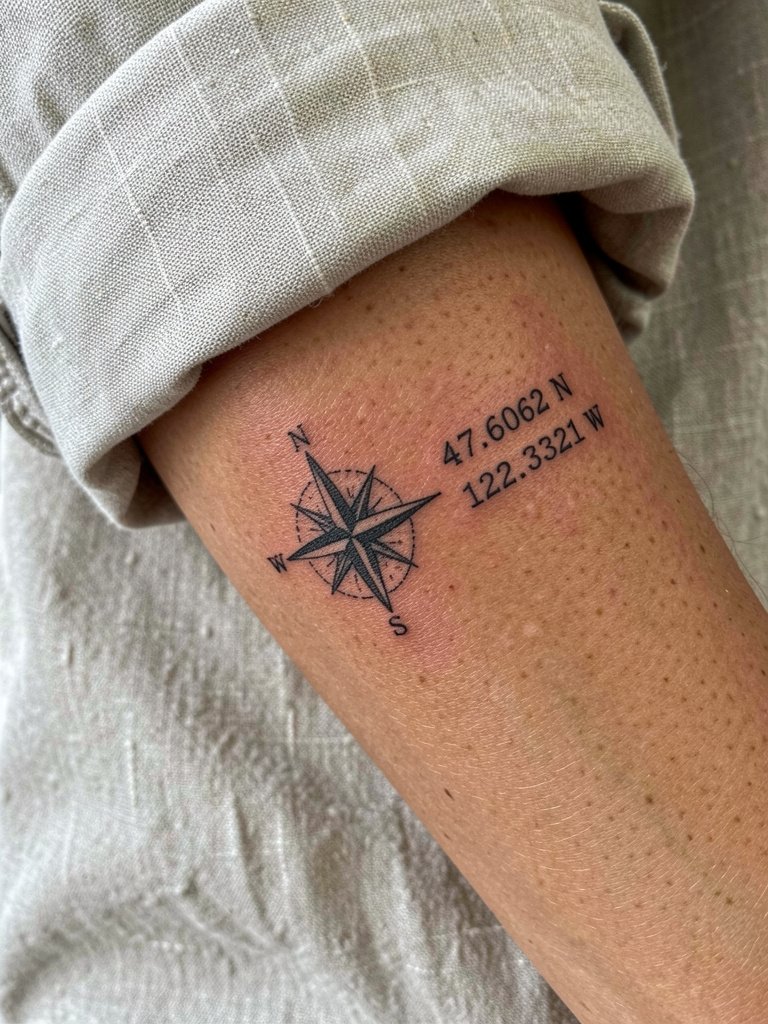
A tiny compass can visually anchor the numbers and add meaning without extra text. The inner forearm is forgiving but motion still pulls at the edges, so keep elements compact and request a clean negative space buffer around the icon to prevent merging. If you plan to show it, pair with rolled-up linen shirts in cream or olive that let the linework stand out and consider a rolled cuff linen shirt for shoots. The session is quick and usually under 45 minutes.
12. Coordinates on the ribcage for a private placement
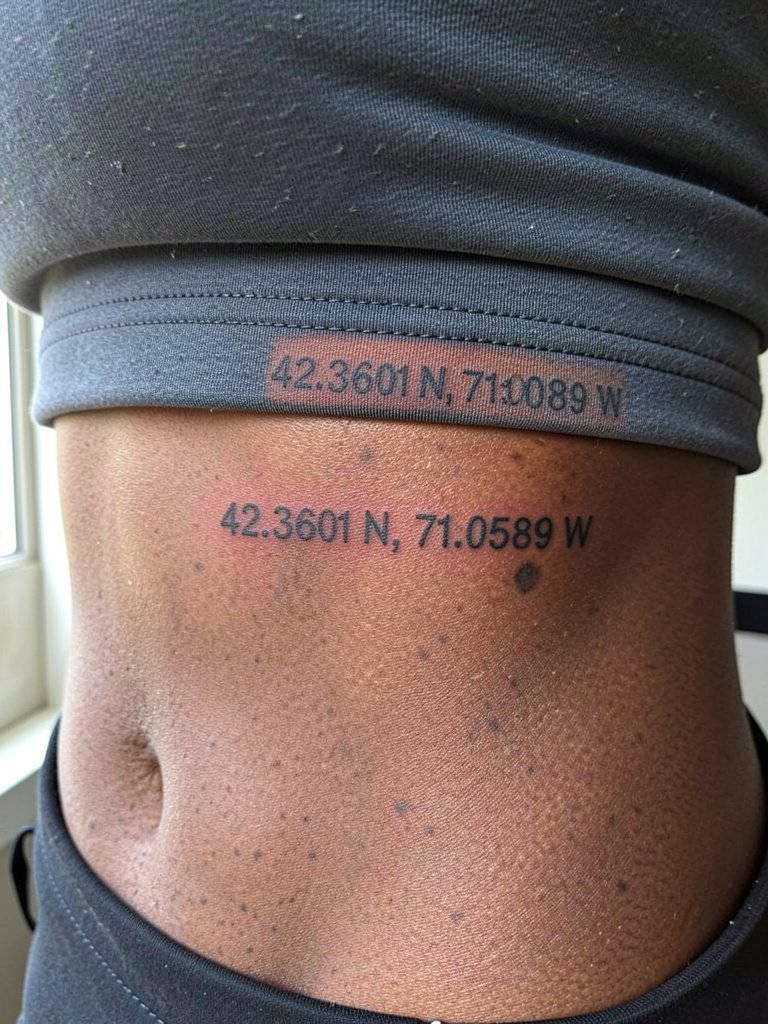
Ribcage placements are intimate and can look crisp when planned well, but fine line here divides artists. One camp warns that the skin stretch and movement cause thin scripts to blur within two years, especially when the piece sits near curves. The other camp says that with slightly wider spacing and precise needle depth fine line can settle clean and remain readable for many years. If you choose the ribs be explicit about spacing so the artist increases letter gaps slightly and plan a touch-up after eight to twelve months. Expect a higher pain level and break the session into manageable passes if needed.
13. Matching coordinate anklets
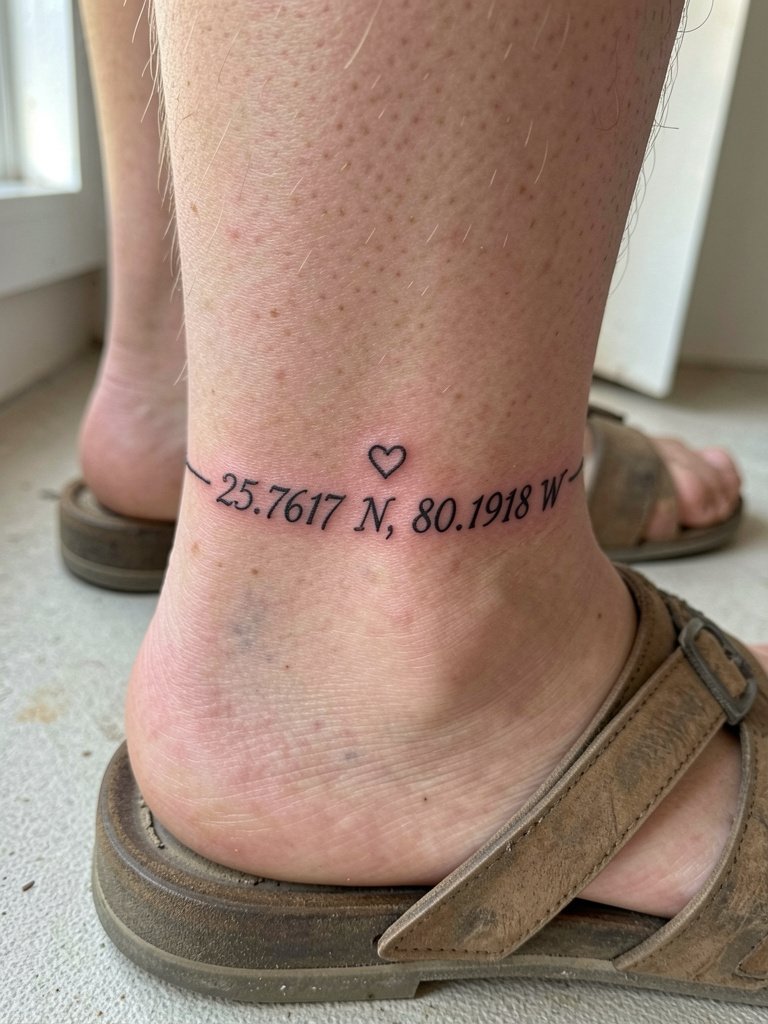
Anklet coordinates are a travel-friendly couple idea and avoid daily visibility if you prefer subtlety. Because shoes and socks rub the area during healing choose open-toe footwear for two weeks and expect a short 20 to 30 minute session. For showing off an anklet choose open-toe sandals or slip-on mules and consider a thin ankle chain on the opposite foot for balance. Make sure the artist inks the band slightly thicker than a single-needle line to prevent early fading.
14. Coordinates with shared monogram on the inner upper arm
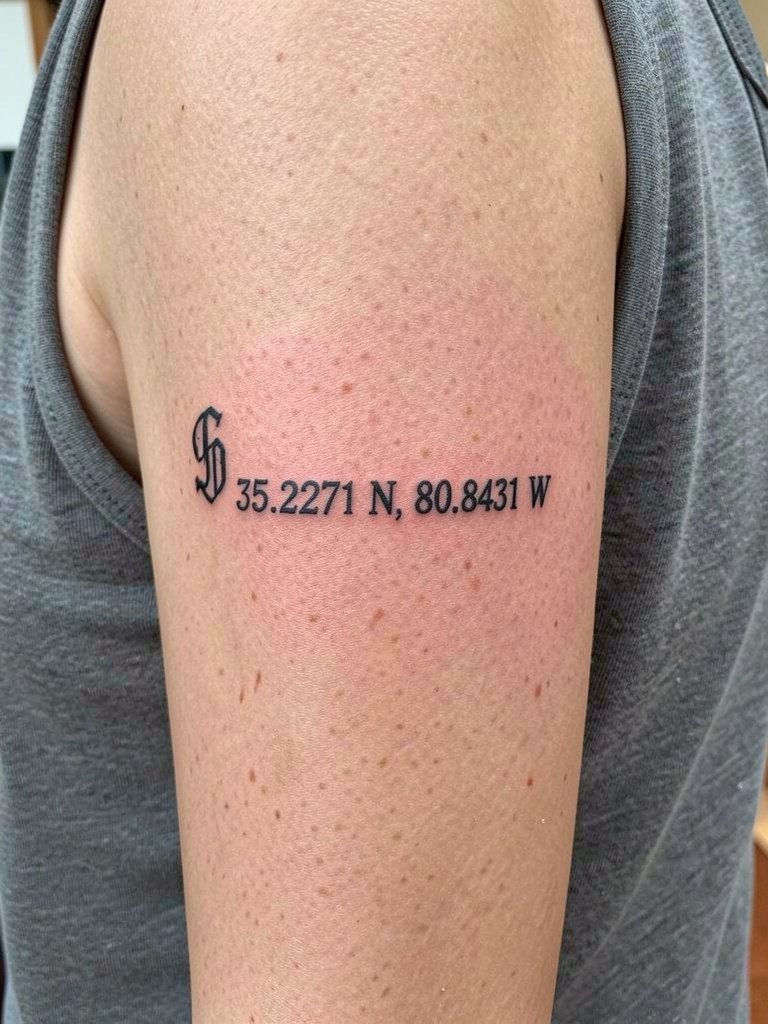
Combining coordinates with initials gives the piece a personal anchor while keeping the layout clean. A frequent error is crowding initials too close to numbers; leave at least the width of one numeral between elements. The inner upper arm hides well and responds to touch-ups easily, but ask for a slightly heavier outline on initials so they do not soften faster than the numbers. Session time is typically 30 to 45 minutes depending on monogram detail.
15. Tiny coordinates on the back of the neck
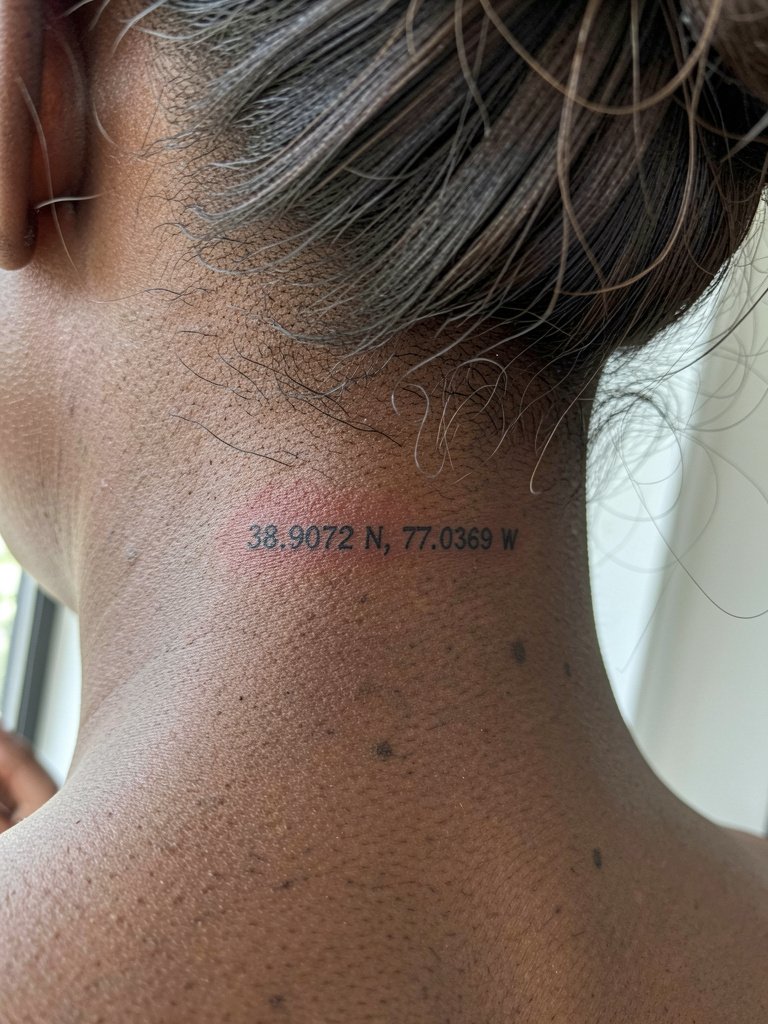
The nape is discreet and reads well when hair is up, but single-needle scripts can fade faster here if they are too thin. For dark skin request 0.30mm fine line to keep strong contrast. To reveal the piece deliberately wear hair up styles and a thin choker that sits just below the nape during photo moments. Expect a quick session of 15 to 25 minutes and plan for a six month check if the numerals soften.
16. QGIS map overlay with embedded coordinates on the side torso
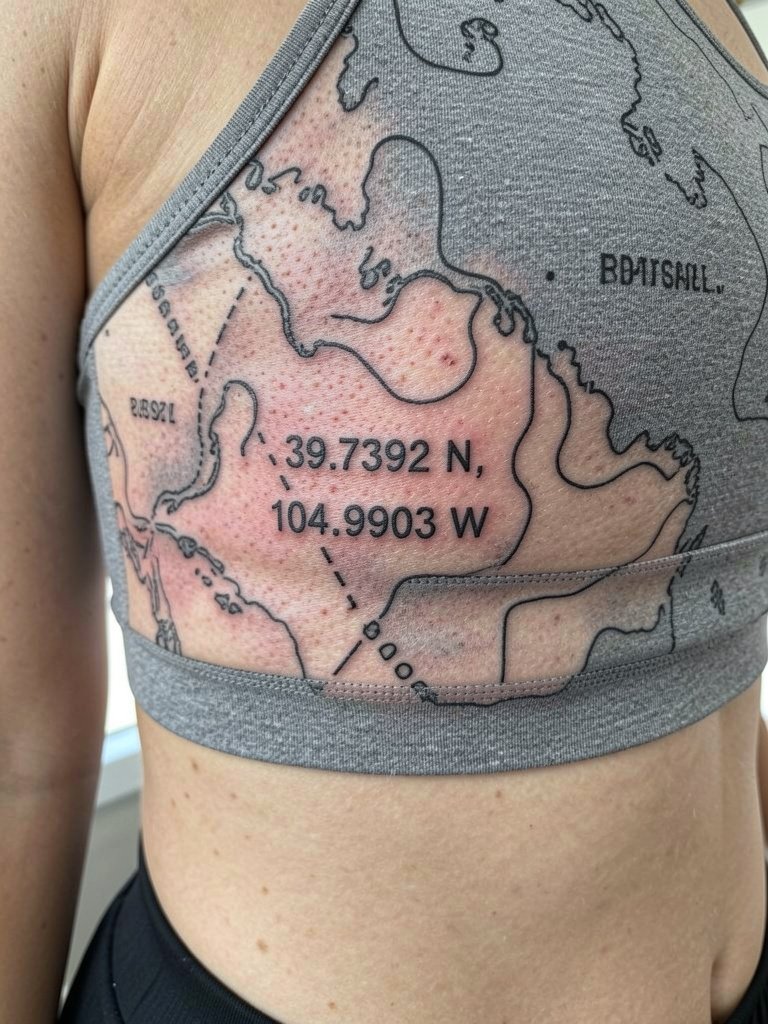
Using a GIS-style background creates a unique visual anchor beyond numbers, and it makes the tattoo read like a tiny map. This is a more complex layout so plan for a longer session and expect the artist to stencil the contour lines on a separate pass. The rib area can shift with weight, so avoid ultra-tight numerals and prioritize spacing over tiny detail. Because this is a larger custom piece get a portfolio of healed side-torso work before you book and set a one-year touch-up expectation.
17. Time zone variant: coordinates plus time on the inner wrist
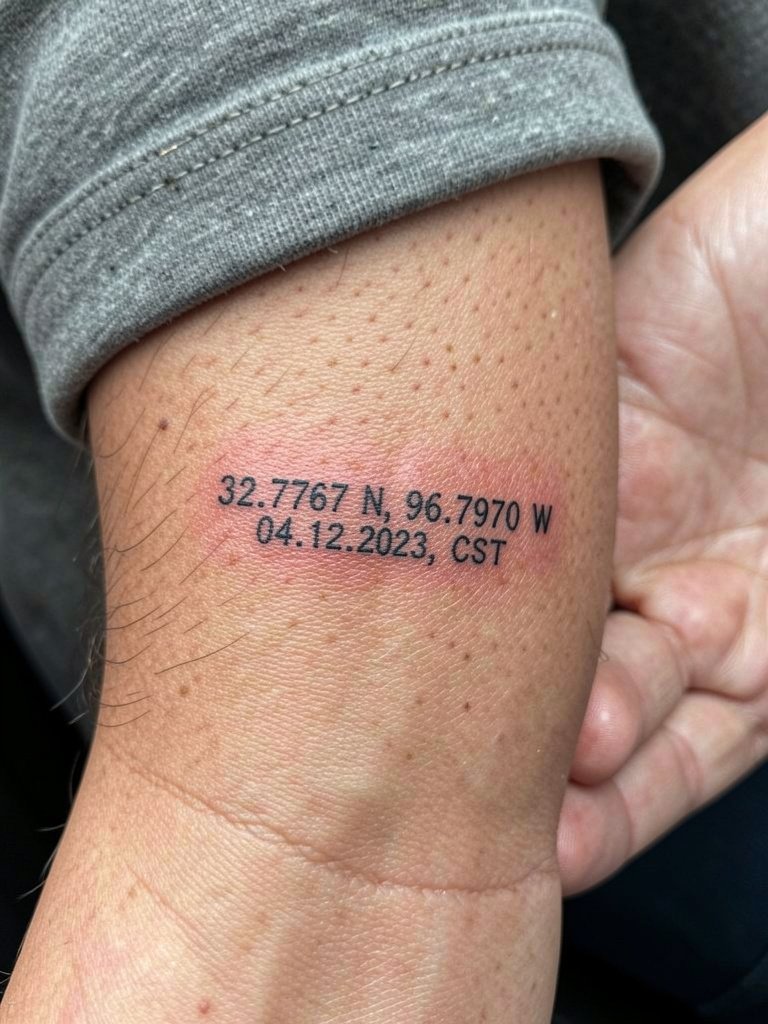
Adding the time zone gives coordinate tattoos temporal context and helps disambiguate places when coordinates alone might be replicated across regions. Make sure the time zone shorthand is clear and placed smaller than the numbers so it reads as metadata not the primary text. The wrist will need a bold enough line to stay legible, and plan for a six to twelve month touch-up if the numerals soften. For the session wear a loose short sleeve top so the artist can access the area without cuff pressure.
18. Behind-the-ear mastoid area tiny coordinates
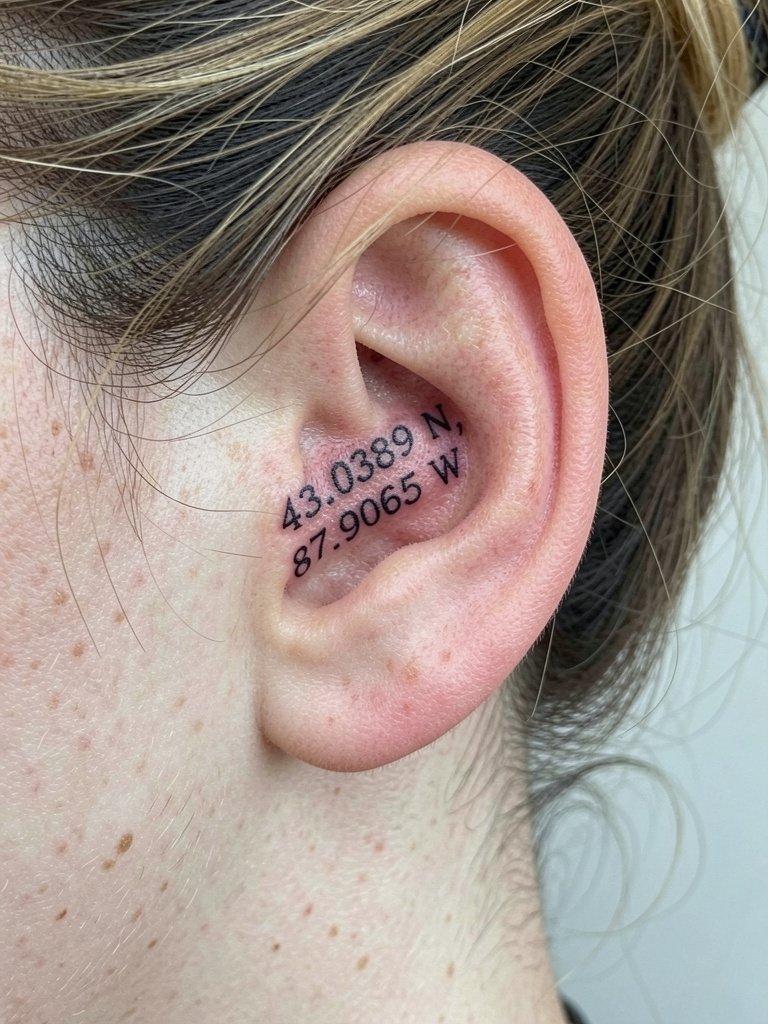
This is a rare placement that keeps coordinates private yet easy to reveal with hair styles. The area is small so avoid too many numerals and prefer a single concise coordinate set. Because the skin is thin here the session is short but slightly tender. If you plan to show the piece use hair-up looks and a thin choker below the nape to frame the neck. Ask for a high-contrast stencil so the artist can place hairlines around the number without losing clarity.
19. Dual-coordinate "first home + engagement spot" stacked with a tiny heart
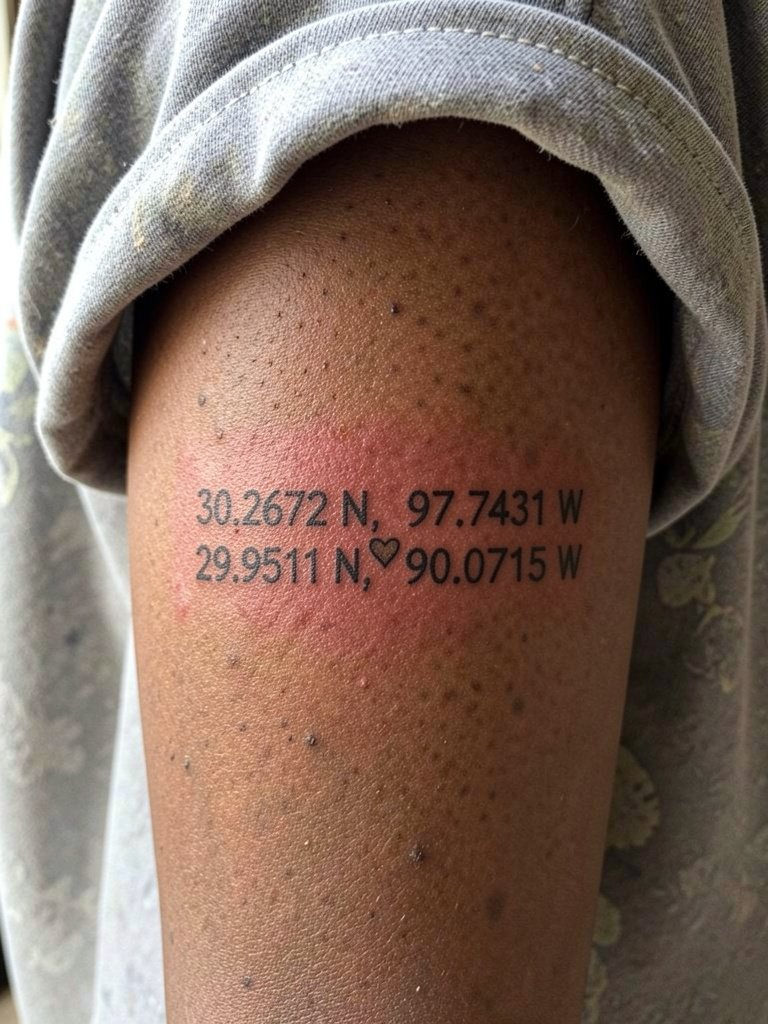
Stacking two meaningful coordinates with a tiny heart in the center allows both locations to share a single visual axis. The inner upper arm keeps spacing stable as bodies change, but avoid compressing the lines too tightly. Schedule a touch-up around the eight to twelve month window, especially if initials or icons sit close to numerals. For style pairings short-sleeve tops with a relaxed fit reveal the inner arm naturally and keep the focus on the design.
20. Negative-space compass rose with coordinates
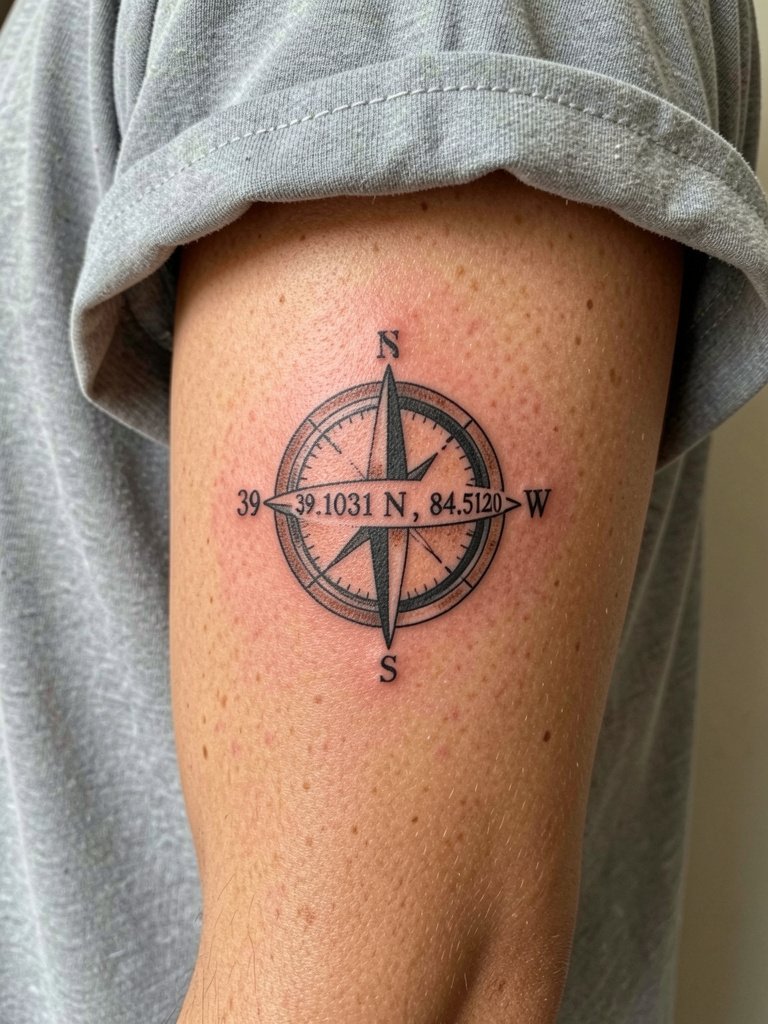
Using negative space gives the compass a lighter visual weight while keeping the coordinates readable. The outer forearm tolerates ornamentation well, but keep the numbers spaced away from the compass border to prevent merging at six months. During consult request a clean negative buffer zone and a touch-up check at one year. This style photographs well in casual shirts with sleeves rolled or pushed up.
21. Thin numerical script on the ankle
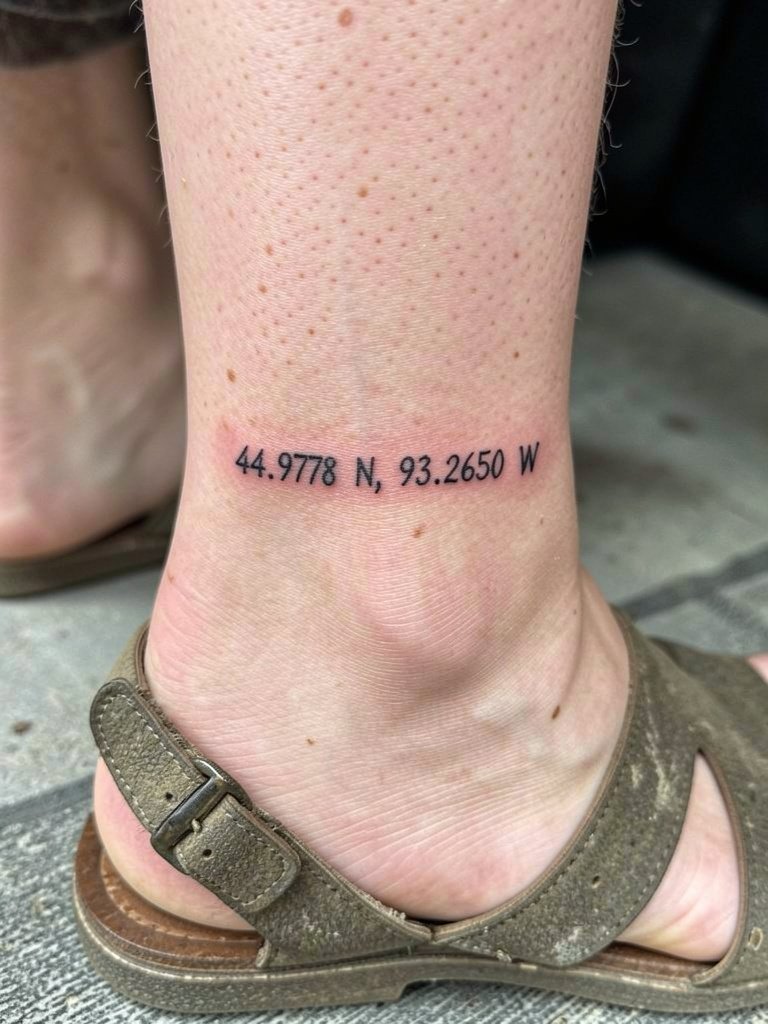
Ankle numerals need to be slightly bolder than wrist-sized text because shoes and socks create friction during healing. Expect a 20 to 30 minute session and plan to wear sandals for the first week. For showing the piece choose neutral open-toe sandals and consider a thin chain on the opposite ankle for editorial balance. If any numbers soften schedule a touch-up in six to nine months.
22. Minimalist semiarc across opposite sides for when you hug
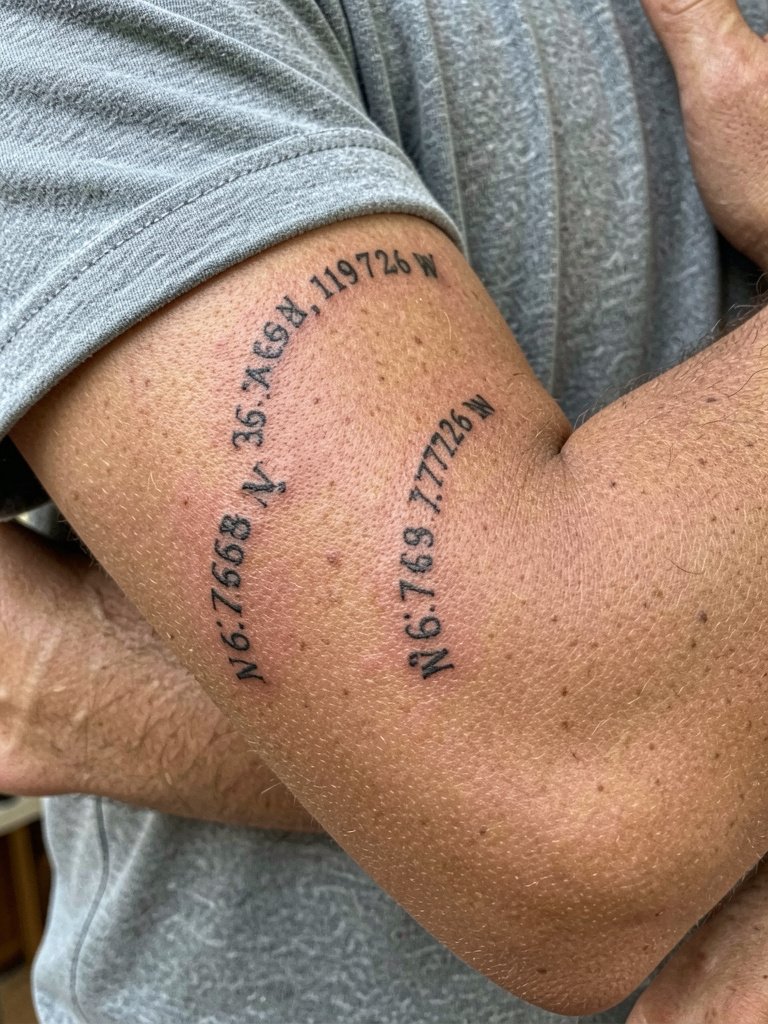
This variation plays with how the design completes in physical contact. It works best when both partners check the stencil alignment together during consultation and mark exact reference points like the ulna or wrist crease. The biggest mistake is assuming identical arm shapes will line up without testing. Keep the numerals larger than micro-fine to avoid early blurring where skin bends. The session for each arc is brief, usually 15 to 30 minutes.
23. Barcode-style numeric coordinates on the inner upper arm
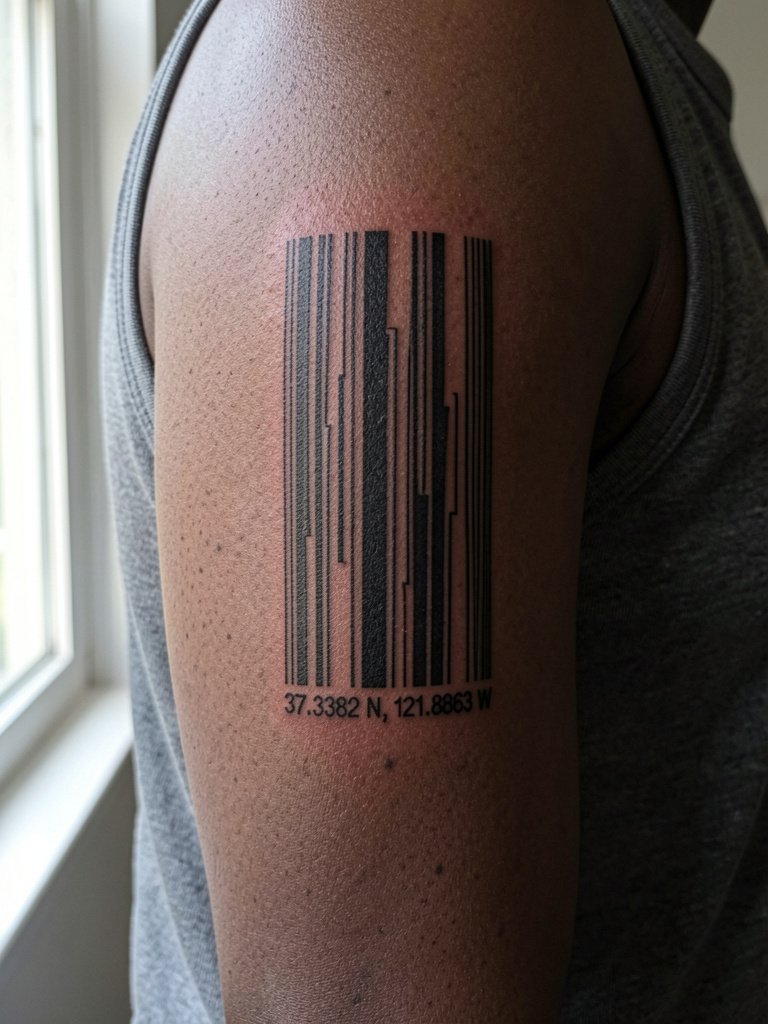
A barcode translation of coordinates gives a contemporary edge while keeping the actual numbers discrete. The design reads best at a slightly larger scale to prevent the barcode bars from bleeding together as they settle. Ask for proof of healed barcode-style work in portfolios because line spacing is everything here. A typical session runs 40 to 60 minutes depending on complexity and you may want a one-year touch-up to keep the verticals crisp.
Frequently Asked Questions
Q: How much does a small coordinate tattoo usually cost?
A: Expect small coordinate pieces to fall in the typical small tattoo range of about 100 to 300 dollars for a single session. Budget for the shop minimum and factor in a 15 to 25 percent tip. If the layout requires custom work like map overlays or negative-space compasses the total can run higher.
Q: Are coordinates safe on dark skin and what should I change?
A: Coordinates work well on darker tones when the line weight is slightly heavier, around 0.30mm, and black ink is used for contrast. Request a high-contrast stencil and look at healed examples on similar skin tones so you can judge legibility before booking.
Q: Where can I find local artists who show healed coordinate work across skin tones?
A: Search platform tags like #coincoupletattoo and #finelinetattoo and filter by location on Instagram and TikTok. Tattoodo and booking apps let you search by keywords such as "coordinate script" and often show healed portfolios. Reddit threads in communities like r/tattoos and r/tattooadvice surface peer examples and recommendations.
Q: How long until I should plan a touch-up for fine-line coordinates?
A: For most fine-line coordinate pieces a smart window to check healed work is six months to a year. Many people schedule a light touch-up at eight to twelve months to correct any softening and preserve clarity.
Q: What should I wear to the appointment for an inner forearm coordinate?
A: Wear a loose button-down or a short sleeve shirt that can roll up without tight cuffs. A practical option is a linen button down shirt, which lets the artist access the forearm cleanly and keeps the fresh tattoo from being compressed.
Q: Is mirrored text a good idea for daily life?
A: Mirrored or backwards coordinates create an intimate reveal when you align with your partner, which some people love. Others find them odd when seen alone and later regret the choice, so rehearse the mirror setup and preview both stencils before committing.
Q: What are red flags when choosing an artist for fine-line coordinates?
A: If a portfolio lacks healed photos, shows only fresh ink, or the artist insists on micro-single-needle for tiny numerals without healed examples that contradict that approach, consider that a red flag. Look for artists who present healed shots at the scale you want and who can explain spacing and touch-up plans.